View allAll Photos Tagged miscarriage
October is pregnancy and Infant loss awareness month. ( I'm a little late but for good reason)
2 week's ago I suffered my own loss an early miscarriage, This is in honor of my little Carter... Mommy can't wait to hold you.
I swore I'd never jump on the rainbow baby bandwagon, but alas....I had to for Sylvie. She came to us after 2 back to back miscarriages - thus, the rainbow after the storm. The heart symbolizes the fact that she is a strong, brave heart baby, as well as the immense love we have for her, and how deeply we wanted her and waited for her. She is surrounded by so much love, she has no idea yet. I tried to put my own spin on this type of shot and this is what I came up with. <3
Also called Winter Cherry, Japanese Lantern, and Bladder Cherry.
The juicy, acrid and bitter fruits have both food and medicinal uses. They can be used fresh or dried and are eaten by many Europeans. They are used to treat kidney stones, fevers and gout. They have also been used like quinine to treat malaria and after-effects of scarlet fever, but because its side effects include miscarriage and abdominal pain, it must be used in moderation.
This is a bit how I felt sometimes recently. Isolated, windswept, things around me burnt and ruined, yet somehow it's all so beautiful. ♥
---
Most of you that have been on years like me
remember the days, I would pray for a grand child....
After many tears, 4 miscarriages, heart aches and wondering why?? God in HIS wisdom ,gave us Caleb and Abby, We are so blessed ,to have them in our lives ..
Today this young man is a BIG FIVE ...AND going to the " real school" as he calls it ...IN another year Abby will attend Pre K ...
OH MY! where has the years flown? I dont know ...
Pays not to blink, for in a snap they are grown!
Lets wish this young man a Happy Birthday, He is dressed mighty dapper, to get his picture taken , about as happy about it as I am at times ...Abby is a sweet heart !!! She always gives a good picture when not sleepy
Happy Birthday CJ !!!! I am crazy over you !!! and I wish you the happiest birthday ever...I pray, Jesus leads you in the right direction, all the days of your life, and HE will bless you ,in an overflowing way
Nana sure does love you BIG ! Have a wonderful happy day ...
To all out Flicker Friends, we wish you nothing but a Wonderful Happy Day and a Happy Easter Week....Blessings to Everyone
Happy Birthday Little Man, and to all our friends, Happy day to them ...
Jane Lane (c. 1626 – 9 September 1689) played a heroic role in the Escape of Charles II in 1651. The main significance of the story is the key part that the escape played in forming the character and the opinions of Charles.
Jane was the daughter of Thomas Lane and Anne Bagot of the parish of Bentley and Hyde (near Walsall). Her parents had married at Blithfield, Staffordshire in 1608. Their son, John, was born on April 8, 1609, the first child of what was to be four sons and five daughters. There are several early christening dates for a Jane Lane in the International Genealogical Index which have been estimated by contributors, most probably based on a spurious date for her marriage. However she was known as Jane Lane in 1651 and so was unmarried at that date. Her eventual marriage to Sir Clement Fisher (of Packington Hall, Warwickshire) is known to have occurred on December 8, 1663, being performed by the Most Rev. Gilbert Sheldon, Archbishop of Canterbury.
Known birth (and other) dates for Jane Lane's siblings are:
* Colonel John Lane -- born April 8, 1609.
* Walter Lane -- born May 1611.
* William Lane -- baptised August 7, 1625.
* Richard Lane -- youngest son (became a Groom of the Bedchamber).
* Withy Lane (married John Petre). Withy is stated in the book Flight of the King (Alan Fea, 1908, Methuen) as being the eldest daughter of the family.
* Jane Lane
* Anne Lane (married Edward Birch).
* Mary Lane -- born 1619 (married Edward Nicholas, Esq.)
* Elizabeth Lane.
After the Battle of Worcester in 1651 in the English Civil War, Charles II escaped and headed north into Shropshire and Staffordshire with several companions, including Lord Derby and Lord Henry Wilmot. A reward of £1000 was offered for the capture of the King. It is likely that the King and anyone helping him would have been executed for treason, if caught. The King had a distinctive appearance: very dark and six foot two inches tall (1.92 m). Furthermore there were cavalry patrols specifically tasked with finding the King. At this time it was illegal for Catholics to travel more than five miles away from their homes without a pass from the Sheriff of the County. Helping the King would therefore be hazardous.
Wilmot had gone to Bentley Hall, the home of Colonel John Lane, who had been an officer in the Royalist Army since 1642. His sister was Jane Lane. She was described by John Evelyn as "an acute wit", "an excellent disputant" though "no beauty". Wilmot learned that Jane had obtained a permit from the military for herself and a servant to travel to the seaport of Bristol, to visit a relation, Ellen Norton, who was having a baby. Lord Wilmot saw the opportunity of escaping through Bristol in the guise of the servant, since no lady would travel alone. On learning of the King's failure to reach Wales, Wilmot decided that the King should take advantage of the military pass and travel to Bristol as Jane Lane's servant, and then find a ship to take him to France.
When the King reached Bentley Hall early on 10 September 1651, he was quickly dressed as a tenant farmer’s son and adopted the alias ‘William Jackson’ for the next part of his journey. The party then set out, Charles riding the same horse as Jane Lane. They were accompanied by Withy Petre (Jane Lane’s sister), her husband John Petre, and Henry Lascelles, another related Royalist officer.
Lord Wilmot refused to travel in disguise; he rode openly half a mile ahead of the party and if challenged he said he would claim to be out hunting. This was a risky yet useful decoy. The party rode through Rowley Regis then Quinton to Bromsgrove. When they arrived at Bromsgrove they found that the horse ridden by Charles and Jane had lost a shoe. The King, playing the role of servant, took the horse to a blacksmith.
The King when he later told his story to Samuel Pepys said, "As I was holding my horse's foot, I asked the smith what news. He told me that there was no news that he knew of, since the good news of the beating the rogues of the Scots. I asked him whether there was none of the English taken that joined with the Scots, He answered he did not hear if that rogue, Charles Stuart, were taken; but some of the others, he said, were taken. I told him that if that rogue were taken, he deserved to be hanged more than all the rest, for bringing in the Scots. Upon which he said I spoke like an honest man; and so we parted."
The party reached Wootton Wawen where cavalry had gathered outside the inn. Here John and Withy Petre went ahead of the party. The King, Jane and Henry Lascelles with great coolness rode through the troops and then on to Stratford-upon-Avon, where they spent the night of 10 September at the house of John Tomes, another relation of Jane’s.
On Thursday 11 September they continued through Chipping Campden and then to Cirencester, where it is claimed they spent the night of 11 September at the Crown Inn. The next morning they travelled on to Chipping Sodbury and then to Bristol, arriving at Abbots Leigh on the evening of 12 September 1651. They stayed at the home of Mr and Mrs George Norton, who were also Jane’s relations. The Nortons were unaware of the King's identity during his three-day stay at Abbots Leigh. While staying there Charles deflected suspicion by asking a trooper, who had been in the King's personal guard, to describe the King's appearance and clothing at the battle. The man looked at Charles and said, "The King was at least three inches taller than you."
Attempts were made to find a ship from Bristol to France but without success. Charles and Wilmot therefore decided to try the south coast. Ellen Norton had a miscarriage and felt that Jane should stay. Consequently Jane had to counterfeit a letter apparently calling her back to Bentley so that she could leave with the King. On the morning of 16 September Charles and Jane set out and reached the Manor House, Castle Cary. The next day they reached Trent in Dorset. They stayed at Trent House, the home of Colonel Francis Wyndham, another Royalist officer. The King spent the next few days hiding at Trent whilst Wyndham and Wilmot attempted to find a ship from Lyme Regis or Weymouth. It was whilst he was at Trent that the King witnessed a bizarre event where the local villagers were celebrating, believing that he had been killed at Worcester. It was also this point that Jane Lane and Lascelles returned home.
However Jane heard on 14 October that the Council of State had been told she had helped with the escape. Before Bentley Hall was searched, she left, walking to Yarmouth posing as a "country wench" and travelled to France. She arrived in Paris in December 1651 and was welcomed by the Court in exile. She developed a strong friendship with the King and with Queen Henrietta Maria. The King held her in great esteem. So much so that John Fisher reported a scurrillous rumour had circulated that she was the King's mistress. Even the King's sister, Mary, in a letter from Holland jokingly referred to Jane as the King's 'wife'.
In 1652 Charles arranged for Jane to become a lady-in-waiting for his sister Princess Mary in Holland. Throughout his exile Charles carried on affectionate correspondence with Jane Lane and often said that he wished he could help her more. Jane received the following letter from Charles in reply to a letter in which Jane had said he had probably forgotten her by now:
1652 the last of June
Mrs. Lane, I did not thinke I should ever have begun a letter to you in [chiding?] but you give me so just cause by telling me you feare you are wearing out of [my?] memory that I cannot chuse but tell you I take it very unkindly that after [all?] the obligations I have to you 'tis possible for you to suspect I can ever [be so?] wanting to myselfe as not to remember them on all occasions to your advan[tage?], which I assure you, I shall and hope before long I shall have it in my power to give you testimonyes of my kindnesse to you which I desire. I am very [sorry?] to hear that your father and brother are in prison, but I hope it is of no [other?] score than the general claping of all persons who wish me well and I am the more sorry for it. Now it hath hindered you from coming along with my [sister?] that I might have assured you myself how truly I am
Your Most affectionate friend, For Mrs. Lane
Charles R.
Only when the Restoration finally came did Jane return to England. Charles was then able to give her a pension of £1000 per year and many gifts, including portraits of the King and a lock of his hair. Parliament also voted her £1000 to buy a jewel to commemorate her service. Her courageous loyalty earned for her family the right to add the three Lions of England to the Coat of Arms. (In later years the lions exempted the Lane family from a tax on coats of arms, as the royal arms were exempt.)
She was married to Sir Clement Fisher of Packington (1613-1683) on 8 December 1663 by the Archbishop of Canterbury. Fisher had served under Jane's brother, John Lane, as a captain in the First Civil War. There were no children from the marriage.
In later life she lived extravagantly and there were arrears of £6500 in the payment of her pension. Consequently she was deeply in debt. Lady Fisher died at Packington Hall, between Birmingham and Coventry, on 9 September 1689 and was buried at Packington Hall. Because of her debts, her estate was only £10.
Several paintings of Jane exist including one in the collection of the National Portrait Gallery of the King and Jane Lane on a horse (NPG 5251). It was part of a romanticised series about the escape painted by Isaac Fuller shortly after the Restoration.
This is an especially special piece for me, the girl in the picture had had a miscarriage earlier in the week while visiting me in Tampa, it was hard for everybody involved, I tried to accommodate and be there for here ( she was my cousin) but it was her fiancé, the man in the picture that never left her side and was there for every tear, after a few day they had to leave, and I told her it might not be a bad idea to see the ocean and part ways there, we were by the shore, when he grabbed her pulled her in and said You’ll never lose me... the sway is a reflection of the waves breaking on the shore, hitting and giving, receding and taking, like that’s life, but it’s better together, you, me and the Sway Make Three this was back in mid 2018................. one year later they had a beautiful little girl and are planning there wedding 6/20/20
The historic old court (Alte Hofhaltung) is a historic building complex in the vicinity of Bamberg Cathedral. Today used as a museum and cathedral building hut.
Imprison: From 964 Berengar II the King of Italy and his wife Willa were held captive by the Roman-German Emperor Otto I. Berengar died here in 966, the widow Willa went to a monastery.
Murder and manslaughter: In June 1208, the Roman-German King Philip of Swabia was murdered in the old court. Shortly before his election as emperor, the Bavarian Count Palatine Otto II of Wittelsbach killed him with the sword. Queen Irene, Phillips' pregnant widow, suffered a miscarriage soon after and died as a result.
Otto was caught and killed near Kehlheim in March 1209. His head was cut off and thrown into the River Danube.
I received a text from a colleague today, it read:
"On 15th October we remember all the babies who were carried but never met, those born sleeping, those who were held but could not be taken home, and the little ones who came home but could not stay. Please join the wave of light to mark the end of baby loss awareness week by lighting a candle at 7pm and leaving it burning for an hour"
The candle is burning, I wish I could do more. I'm thinking of a lot of people today x
Hase-dera Temple.
- Un incensiere in bronzo.
- Un bassorilievo con figure di Benzaiten (la dea della saggezza e della longevità).
- Centinaia di piccole statue di Jizō, collocate dai genitori in lutto per aborti spontanei e bambibini nati morti.
Hase-dera Temple.
- A bronze censer.
- A bas-relief with figures of Benzaiten (the goddess of wisdom and longevity).
- Hundreds of small Jizō statues, placed by mourning parents for miscarriages and stillborn babies.
IMG_6931m
Excerpt from basilicaofourlady.com:
A few years ago I (Jakki Jeffs) had an inspiration to provide a space for all parents who grieved the loss of these tiniest of children. I ran the idea by a colleague of mine who had experienced abortion and she was so over- whelmed she could not speak. Finally she told me that the Garden of Grace would be a gift from God for her and the millions of other mothers and fathers who have no place to grieve their loss. Many of these babies are named and will be remembered in our beautiful garden which we hope will be a silent witness to the grief and sorrow carried in so many hearts across our land and a place of healing and remembrance.
The statues will be placed in April and we have an official opening set for May 31st 2017 which is the Feast of the Visitation.
The Garden of Grace will be dedicated to the memory of Denise Brazolot who was a great pro-life warrior. Denise had nine living children and experienced six miscarriages, and we are certain that she will be a Guardian Angel for our garden. I cannot thank Peter Brazolot enough for making it financially possible to complete this amazing project.
Hasedera Temple in Kamakura is renowned for its numerous small Jizō statues.
Jizō statues, often called "mizuko Jizo" or "water child Buddhas", are placed as memorials for children lost to miscarriage, stillbirth, or abortion, serving as a way to remember and honor them.
das warten hat ein Ende - mein 2. Schwalbenschwanz ist nun geschlüpft
natürlich hab ich ihn wieder etwas spät entdeckt, er kroch schon an der Gardine hoch...
ich dachte erst, es wäre wohl eine Fehlgeburt, aber nun ist er wunderschön und ruht sich im Steingarten aus, bis seine Flügel ausgehärtet sind und er fliegen kann
the wait is over - now slipped my dovetail 2.
of course I saw him again a little late, he crawled up on the curtain...
I only thought it would probably be a miscarriage, but now he is beautiful and is resting in the rock garden, until its wings are hardened and he can fly
Being a mom to me is something that is so special to me. That I will never take for granted. Being a parent is such a special gift that I feel so blessed, more so that past year that we are able to parent 4 beautiful children. When you struggle to get pregnant so much more comes into play and into view that you never really thought about before. This is the first time I have shared this publicly other than my personal page. We are trying for #5 and its been rough. 2 miscarriages and lots of let downs each month. But staying positive and just being grateful for being able to already be a parent is where I am taking this struggle.
4 beautiful, healthy children..... We are very blessed.
I try to find happiness through hard times because there is always something to be grateful for. And cherish every special moment I get to capture of these 4 beauties of ours!!!
#379 on explore at 2009-01-26! Der Gewöhnliche Schneeball (Viburnum opulus), auch Gemeiner Schneeball, Herzbeer, Blutbeer, Drosselbeerstrauch, Geißenball, Glasbeere, Schlangenbeere, Wasserholder, Wasser-Schneeball genannt, ist eine Pflanzenart aus der Gattung der Schneebälle (Viburnum)
Die rote, erbsengroße Beere enthält einen herzförmigen Samen. Die Früchte reifen von August bis November.
Rinde, Blätter und unreife Früchte enthalten verschiedene Giftstoffe, wie Oxalate, Saponine, Gerbstoffe, Bitterstoffe, Pectin und das Glykosid Viburnin. Die reifen Früchte werden als schwach giftig klassifiziert. Trotzdem wird der Schneeball nur in die gleiche Giftigkeitsstufe eingeordnet wie beispielsweise Johanniskraut.
Die Rinde wird bis heute als krampflösendes Mittel, insbesondere bei Menstruationsbeschwerden, arzneilich verwendet. Die Früchte sind gekocht für Marmelade oder Gelee verwendbar. In Teilen Osteuropas werden die reifen „Beeren“ auch roh gegessen.
In osteuropäischen Ländern werden die roten Beeren gegen Erkältung in heißem Wasser zerdrückt, mit Honig gesüßt getrunken. Werden im Herbst auf allen kleinen Märkten verkauft. Die Beeren werden üblicherweise nach dem ersten Frost geerntet und gelten erst dann als reif, vermutlich werden Giftstoffe durch Gefrieren abgebaut. Außerdem kristallisiert bei Frost Fruchtzucker aus, der den ansonsten stark säuerlich-bitteren Geschmack überdeckt.
Viburnum opulus (Guelder Rose, Water Elder, European Cranberrybush, Cramp Bark, Snowball Tree) is a species of Viburnum, native to Europe and Asia. Some botanists also treat the closely related North American species Viburnum trilobum as a variety of it (as Viburnum opulus var. americanum Ait.), or a subspecies, Viburnum opulus subsp. trilobum (Marshall) Clausen.
It is commonly grown as an ornamental plant for its flowers and berries, growing best on moist, moderately alkaline soils, though tolerating most soil types well. Several cultivars have been selected, including 'Roseum' (synonym 'Sterile') ("Snowball Tree"), in which all the flowers are only of the larger sterile type, making it more conspicuous, but it does not produce any fruit.
Snowball bush is a name often given to Viburnum opulus for its white clusters of flowers that appear in spring. There is some confusion, as there are a few other bushes, including other members of the Viburnum genus, also referred to as "snowball bush". It is naturalised in North America, where it has been misleadingly re-named as "European Cranberrybush" (it is not a cranberry).
The fruit is edible in small quantities, with a very acidic taste; it can be used to make jelly. It is however very mildly toxic, and may cause vomiting or diarrhea if eaten in large amounts (Plants for a Future).
The dried bark is used in a tincture, known as "Cramp Bark," to alleviate painful menstrual cramps.
This herb is mainly used for treating feminine problems like menstrual cramps, postpartum discomfort, preventing miscarriages and internal hemorrhages and is used as a uterine sedative also.
I found them yesterday, the were looking so great with the blue sky and sun was shining so wonderful. Enjoy the new week, my dear flickr friends!
Ich entdeckte sie gestern bei einer ausgiebigen Wanderung, sie strahlten so herrlich vor dem blauen Himmel, lachten mich voller Sonne an... ich wünsche einen guten Start in die neue Woche!!
The Old Jewish Cemetery is a Jewish cemetery in Prague, Czech Republic, which is one of the largest of its kind in Europe and one of the most important Jewish historical monuments in Prague. It served its purpose from the first half of 15th century until 1786. Renowned personalities of the local Jewish community were buried here; among them rabbi Jehuda Liva ben Becalel – Maharal (ca. 1526–1609), businessman Mordecai Meisel (1528–1601), historian David Gans (ca. 1541–1613) and rabbi David Oppenheim (1664–1736). Today the cemetery is administered by the Jewish Museum in Prague.
The cemetery is mentioned in Umberto Eco's The Prague Cemetery, the novel which was named after it.
The Old Jewish Cemetery is not the first Jewish cemetery in Prague – its predecessor was so-called "Jewish Garden“ located in the area of present New Town of Prague. This cemetery was closed by order of King Vladislaus II in 1478 because of complaints of Prague citizens. Later it disappeared under the streets of New Town.
We know that the history of the Old Cemetery started before the old one being closed, but the exact date when it was founded is unknown. The only clue is the oldest gravestone in the cemetery from 1439 which belongs to rabbi and poet Avigdor Kara.
Starting at the middle of the 15th century, the gravestones record is a continual time line of burials. The final gravestone is dated 1787; three years earlier, the enlightened sovereign Emperor Josef II had banned burials inside the city walls for hygienic reasons. Later Prague Jews used a cemetery in Žižkov, founded in the 17th century because of plague epidemic.
During the more than three centuries in which it was in active use, the cemetery continually struggled with the lack of space. Piety and respect for the deceased ancestors does not allow the Jews to abolish old graves. Only occasionally the Jewish Community was allowed to purchase grounds to expand the cemetery and so many times it had to gain space in other ways; if necessary, a new layer of soil was heaped up on the available area. For this reason, there are places where as many as twelve layers now exist. Thanks to this solution the older graves themselves remained intact. However, as new levels were added it was necessary either to lay over the gravestones associated with the older (and lower) graves to protect them, or else to elevate the stones to the new, higher surface. This explains the dense forest of gravestones that one sees today; many of them commemorate an individual who is buried several layers further down. This also explains why the surface of the cemetery is raised several meters higher than the surrounding streets; retaining walls are necessary to hold the soil and the graves in place.
There are two kinds of Jewish burial monuments (in Hebrew matzevot) – the older is a slab of wood or stone, basically rectangular, but with various endings at the top. Tumba (in Hebrew ohel – tent) appears later, in baroque times. It is generally more representative than the first mentioned kind and resembles a little house. Such tumbas commemorate on the cemetery for example Maharal or Mordecai Maisel. Tumbas do not contain the remains; they are buried underneath in ground.
The oldest gravestones on Old Jewish cemetery are plain, yet very soon the number of ornaments (pilasters, volutes, false portals, etc.) began to increase. Most decorated gravestones come from 17th century. However, on every gravestone there are Hebrew letters that inform about the name of the deceased person and the date of his or her death or burial. Copious praise of deceased' virtues appears beside brief eulogy ("of blessed memory") in Renaissance time. From 16th century the gravestones characterize the deceased also through various symbols, hinting at the life, character, name or profession of the people.
This list follows the numbering of the plan on the right.
A small gravestone with triangular ending and engraved symbols of Magen David and a goose (gans means goose in German) belongs to David Gans (1541–1613), a contemporary of Maharal and other significant Jewish figures of the 16th century, a mathematician, astronomer, geographer and historian, whose chronicle Cemah David includes also Czech history.
A gravestone of Gersonides – Mordecai Katz ben Gershom (died 1592) and his son Betzalel (d. 1589) – marks the place of eternal rest of important Prague Jewish printers. One of their works, Prague hagadah, was known throughout Europe.
A tumba with a hexagram on the top of the front wall, which refers to name David, belongs to rabbi David Oppenheim (1664–1736). His book collection constitutes an important part of the Hebrew section of Bodleian Library in Oxford.
A plain rectangular gravestone of rabbi and poet Avigdor Kara (died 1439) is the oldest on the cemetery. His elegy which describes a great pogrom of the Prague Ghetto in 1389 is still recited on Yom Kippur in Old-New Synagogue.
A high rectangular gravestone commemorates Aharon Meshulam Horowitz (d. ca. 1545), the richest Jew of his time, who initiated building Pinkas Synagogue.
On the hill Nephele (nephele is a miscarriage in Hebrew) were buried children who died before the age of one month. Remains and gravestones found during construction of modern Prague were transferred to this place, too.
The oldest tumba on the cemetery belongs to a businessman, benefactor and renowned public person of the ghetto Mordecai Maisel (1528–1601). He built a synagogue in the Jewish quarter which is named after him.
Rabbi Judah Löw ben Betzalel (1512–1609) and his wife rest under another tumba, decorated with symbols of a lion and wine grapes. Rabbi Judah, also called Maharal, wrote numerous religious and philosophical treatises. His name is also connected with legends; a legend about Golem is the most famous.
A tumba belonging to Hendl Bassevi (died 1628) is probably the most representative on the cemetery. The lions seated on the gables of the tumba do not symbolize the name Judah; they carry the coat of arms of Hendl's husband Jacob Bassevi. He was the first Jew in Habsburg Empire to receive a title of nobility. A grave of this successful businessman cannot, however, be found on Prague Cemetery, because he died and was buried in Mladá Boleslav.
The last tumba to be mentioned covers the grave of Joseph Solomon Delmedigo (1591–1655), a physician and a remarkable scholar born in Crete, who worked in many scientific fields and lived in many places in Europe, Asia and Africa.
about Mariana Linares Currea... the fruit of my loins
(miscarriage)
self-portrait
(fragmento de collage) CCG
2016 was a very busy year for our family, we moved, I did courses besides working, lots of hours at work for my husband and I had two miscarriage.
Since at the end of the year there was no strength left I talked to my doctor to get a mother and child rehab.
Now we are there. In the bavarian woods and there is lots of snow here!
The snow is very hard so I don't sink in. This feels good like being Legolas :-)
With a lot of effort an risk, using simple, manamade equipment, they try to lift the abandoned car and put it on the truck.. they haven't got help from any sophisticated machinery.. They have to pull the chain with their hands.. Hard work for who knows how little money.. As I heard from the husband, his wife, the women in the picture, had a miscarriage twice as a result of pulling this stuff for a leaving.. Life has many faces, the life of this people, is one of them. Their life has often been the topic of intellectuals who talk about equality, and they try to talk on behalf of the working women.. I am not sure how real all these discussions are.. One thing that is real however, is the life of this people..
PS: I have promised to this couple that I will not take a picture of their faces..
Με πολύ κόπο και πολύ ρίσκο, ανασηκώνουν το παρατημένο αυτοκίνητο με απλούς μηχανισμούς (μοχλούς αλυσίδας) επάνω στο φορτηγό. Δεν υπάρχει μηχάνημα, η αλυσίδα τραβιέται με το χέρι. Σκληρή δουλειά για πολύ λίγα λεφτά. Όπως μου είπε ο σύζυγος, η γυναίκα του έχει αποβάλλει ήδη 2 φορές εξαιτίας αυτής της δουλειάς.
Η ζωή έχει πολλα προσωπα, και αυτό εδώ, με τη γυναίκα να τραβά την αλυσίδα με τόσο κόπο, είναι ένα που εχει γίνει τροφή συζήτησης για τους διάφορους intellectuals που πετάγονται σαν πορδές να "υπερασπίσουν" το γυναικείο φύλλο και τη ισότητα και ότι άλλο... όμως η αλήθεια είναι μία, το ότι αυτή είναι η πραγματικότητα.
Athens, 2008.
Beau Hamilton Wilkes is Melanie and Ashley's only surviving child born in war torn Atlanta just before the flight to Tara. When she knows she will not survive her miscarriage, Melanie calls Rhett to her side and asks him to watch over Beau as he grows up. He seems to have quite a different character to his parents and is strong minded and passionate as well as kind hearted and gentle. Melanie has an ulterior motive in asking Rhett to do this as she has asked the same of Scarlett - she hopes her action might lead to a loving reconciliation between Rhett and Scarlett sometime in the future. When Beau turns 18 he decides to look up 'Uncle Rhett' who is now a successful nightclub owner in New Orleans... Rhett feels it is time to 'complete' Beau's education...
I was going to cast Kieron as Rhett but he looks far too young so I decided instead that he would join the cast for the next generation. I am excited to see what will happen when the daughter Rhett never knew he had - Esmeray Blakely - turns up in New Orleans to seek out her father and finds Beau staying with him...
In The Beginning...
Every woman who has been pregnant still carries cells from her foetus/fetus within her bloodstream. Cells from the pregnancy will reside within the mother’s bloodstream and organs for the rest of her life. Even if the pregnancy was terminated or if there was a miscarriage these said genes would remain with the Mother. There is a name for this so-called condition, it is called microchimerism , which is named after the Greek chimera.
Defined as a mythical, monstrous fire-breathing animal that is composed of the parts of three animals : a lion, a snake and a goat. Also an illusion or fabrication of the mind; especially : an unrealisable dream, "a fancy, a chimera in my brain, troubles me in my prayer" — John Donne
Nava Dekel: Fruit of Discovery
Prof. Dekel’s fertility research made lives whole
Weizmann Compass
May 31, 2015
Prof Nava Dekel 1
Some research changes lives; some research makes lives. Such is the case for the Kaman family of Toronto, who had an emotional meeting with the scientist and clinician whose fertility research led to a much-desired pregnancy - and the birth of their daughter Hannah in 2008.
In the late 1990s, Prof. Nava Dekel of the Department of Biological Regulation and clinicians at Kaplan Medical Center in Rehovot made a serendipitous discovery that inflicting a slight injury to the lining of the uterus before women undergo in vitro fertilization (IVF) dramatically increases the chances of a successful pregnancy. Since then, Prof. Dekel’s studies at the Weizmann Institute unveiled the mechanism of this beneficiary intervention and hundreds of fertility clinics worldwide have changed their IVF protocol accordingly. The result has been higher pregnancy success rates - and lots of babies who might otherwise not have been born.
Roslyn and Howard Kaman of Toronto credit the procedure with their first successful pregnancy after nine years of trying and four years of endless fertility treatments. In April, the family of three came to the Weizmann Institute to meet Prof. Dekel in person for the first time, as well as Dr. Irit Granot of Kaplan who was Prof. Dekel’s main partner in the discovery.
It was an emotional meeting for all. “Nava and Irit, and their research, totally changed our lives - they brought us Hannah,” says Roslyn Kaman. Even Hannah, age 6 and in first grade, articulately described how she was born. “It was because of the scratch,” she explains, using the now-colloquial reference used by practitioners and patients alike for the uterine biopsy.
Nava Dekel 2
Hannah
Prof. Dekel says seeing Hannah and her parents was “very special” and she recalls being deeply moved after receiving an e-mail from the Kamans with Hannah’s picture days after her birth. “Seeing Hannah’s picture was more meaningful to me than having a paper published in the best journal,” she says.
Before her pregnancy with Hannah, Roslyn Kaman had experienced the gamut of fertility failures: miscarriages, ectopic pregnancies, 11 artificial inseminations and three IVF treatments. The couple had all but given up and were considering adoption when Howard read about a lecture by Prof. Dekel hosted by Weizmann Canada. She described her research study that had enabled numerous Israeli women with fertility problems to conceive and carry viable pregnancies.
Nava Dekel Fruit Of Discovery
l to r: Dr. Irit Granot, Roslyn, Hannah, and Howard Kaman, Prof. Nava Dekel
Prof. Dekel’s original discovery arose when she began studying a protein that plays a role in implanting embryos in the uterus. In collaboration with physicians at Kaplan, she performed an endometrial biopsy (a procedure in which a small sample is taken from the lining of the uterus) on 12 women who had failed to conceive after numerous IVF treatments. To the surprise of the team of researchers, 11 of the women conceived during their next IVF treatment. The team repeated the results in a larger-scale study, and published their groundbreaking results in 2003. The results: those women who had undergone a uterine biopsy before IVF had almost twice the success rate of pregnancies and births compared to a control group.
“We have been looking forward to this day - coming to the Weizmann Institute and meeting the scientist and clinician who helped give us Hannah - for a long time,” says Howard Kaman.
Prof. Nava Dekel is supported by the Richard F. Goodman Yale/Weizmann Exchange Program, the Rising Tide Foundation, the Maurice and Vivienne Wohl Biology Endowment, Andrew Adelson of Canada, and the estate of John Hunter.
TAGS: Children, Fertility, Women
n Japan, Ksitigarbha, known as Jizō, or Ojizō-sama as he is respectfully known, is one of the most loved of all Japanese divinities. His statues are a common sight, especially by roadsides and in graveyards. Traditionally, he is seen as the guardian of children, and in particular, children who died before their parents. He has been worshipped as the guardian of the souls of mizuko, the souls of stillborn, miscarried or aborted foetuses, in the ritual of mizuko kuyō (水子供養, lit. offering to water children). In Japanese mythology, it is said that the souls of children who die before their parents are unable to cross the mythical Sanzu River on their way to the afterlife because they have not had the chance to accumulate enough good deeds and because they have made the parents suffer. It is believed that Jizō saves these souls from having to pile stones eternally on the bank of the river as penance, by hiding them from demons in his robe, and letting them hear mantras
Dutch postcard by NS, no. 20. Sophia Loren in The Millionairess (Anthony Asquith, 1960).
Sophia Loren (1934) rose to fame in post-war Italy as a voluptuous sex goddess. Soon after, she became one of the most successful stars of the 20th Century, who won an Oscar for her mother role in La ciociara (Vittorio De Sica, 1960).
Sophia Loren was born Sofia Villani Scicolone in the charity ward of a Roman hospital in 1934. She was the illegitimate daughter of construction engineer Riccardo Scicolone and piano teacher and aspiring actress Romilda Villani. Riccardo was married to another woman and refused to marry Romilda, leaving her without support. Romilda, Sofia, and sister Maria returned to Pozzuoli to live with Sofia's grandmother. Pozzuoli was a small town outside Naples and one of the hardest hit during World War II. The family shared a two-room apartment with the grandmother and several aunts and uncles. The shy, stick-thin girl regularly went hungry and had to flee from bombings. At 14, Sofia had a voluptuous figure and entered a beauty contest. She was selected as one of the finalists but did not win. In 1950, she was one of the contestants in the Miss Italia competition. She earned 2nd place and was awarded ‘Miss Eleganza’. While attending the Miss Rome beauty contest, earlier in 1950, she had met judge Carlo Ponti, an up-and-coming film producer, 22 years her senior. Ponti had helped launch Gina Lollobrigida's career and now began grooming Sofia for stardom. He hired an acting coach to tutor her. At 16 she was in her first film, the Totó comedy Le Sei Mogli di Barbablù/Bluebeard’s Six Wives (Carlo Ludovico Bragaglia, 1950) under the name Sofia Lazzaro. She also appeared as an extra in Luci del varietà/Lights of the Variety (Federico Fellini, 1950), the smash hit Anna (Alberto Lattuada, 1951), and Quo Vadis (Mervyn Leroy, 1951). During the early 1950s, she secured work modelling for fumetti magazines. These comic-like magazines used actual photographs. The dialogue bubbles were called 'fumetti' - hence the popular name. At 17, she was cast by Ponti in her first larger role as the commoner who caught the prince's eye in the filmed opera La Favorita/The Favorite (Cesare Barlacchi, 1952). The next year she earned third billing after Silvana Pampanini and Eleanora Rossi-Drago in La Tratta Delle Bianche/The White Slave Trade (Luigi Comencini, 1953) and she played, complete with blackface and an Afro, the lead in another filmed opera, Aida (Clemente Fracassi, 1953) by Giuseppe Verdi. Her singing was dubbed by Renata Tebaldi. Ponti eventually changed her name to Sophia Loren.
Sophia Loren appeared for the first time with Marcello Mastroianni in the romantic comedy Peccato che sia una canaglia/Too Bad She's Bad (Alessandro Blasetti, 1954). They would make 13 films together, including Tempi nostri/A Slice of Life (Alessandro Blasetti, Paul Paviot, 1954), La bella mugnaia/The Miller's Wife (Mario Camerini, 1955), and La fortuna di essere donna/What A Woman (Alessandro Blasetti, 1956). L'Oro di Napoli/Gold of Naples (Vittorio de Sica, 1954), an anthology of tales depicting various aspects of Neapolitan life, was distributed internationally. At AllMovie, Jason Ankeny writes that in reviews "Loren was singled out for the strength of her performance as a Neapolitan shopkeeper, surprising many critics who had dismissed her as merely another bombshell". The film established her persona as a sensuous working-class earth mother. It also began a fruitful, career-long collaboration with De Sica. Sophia’s first film to find international success was La Donna del Fiume/The River Girl (Mario Soldati, 1955), in which she danced sensually the Mambo Bacan. Hal Erickson at AllMovie: "Through it all, Sophia Loren looks like a million lire - and she even gets to sing and dance!". She came to the attention of Stanley Kramer who offered her the female lead in The Pride And The Passion (Stanley Kramer, 1957) opposite Cary Grant and Frank Sinatra. Sophia played a Spanish peasant girl involved in an uprising against the French. This was the turning point in her career, and the film proved to be one of the top US box office successes of the year. Her next English-language film was Boy on a Dolphin (Jean Negulesco, 1957) with Alan Ladd, where she was memorable mostly for emerging from the water in a wet, skin-tight, transparent dress. With her va-va-va-voom image, she became an international film star and got a five-picture contract with Paramount Pictures. Among her Paramount films were Desire Under the Elms (Delbert Mann, 1958) with Anthony Perkins and based upon the Eugene O'Neill play, Houseboat (Melville Shavelson, 1958), a romantic comedy co-starring Cary Grant, and the Western Heller in Pink Tights (George Cukor, 1960) in which she appeared for the first time with blonde hair (a wig). Most of these films were received lukewarmly at best.
In 1960 Sophia Loren returned to Italy to star in the biggest success of her career, La Ciociara/Two Women (Vittorio De Sica, 1960). She played a widow desperately trying to protect her daughter from danger during WW II, only to end up in a destructive love triangle with a young radical (Jean-Paul Belmondo). Hal Erickson at AllMovie: "A last-minute replacement for Anna Magnani, Sophia Loren brought hitherto untapped depths of emotion to her performance in Two Women; she later stated that she was utilizing 'sensory recall,' dredging up memories of her own wartime experiences." Loren won the Best Actress Oscar for her performance, and also the Cannes, Venice ánd Berlin Film Festivals' best performance prizes. Next, she played in Spain Samuel Bronston's epic production of El Cid (Anthony Mann, 1961) with Charlton Heston, followed by the De Sica episode of the anthology Boccaccio '70 (Vittorio De Sica, Federico Fellini, Luchino Visconti, 1962). On the strength of her Oscar win, she also returned to English-language fare with Five Miles to Midnight (Anatole Litvak, 1963), followed a year later by The Fall of the Roman Empire (Anthony Mann, 1964), for which she received $1 million. Among Loren's other films of this period are The Millionairess (Anthony Asquith, 1960) with Peter Sellers, It Started in Naples (Melville Shavelson, 1960) with Clark Gable, Lady L (Peter Ustinov, 1965) with Paul Newman, Arabesque (Stanley Donen, 1966) with Gregory Peck, and Charlie Chaplin's final film, A Countess from Hong Kong (1967) with Marlon Brando. Despite the failure of many of her films to generate sales at the box office, she invariably turned in a charming performance and she wore some of the most lavish costumes ever created for the cinema. Her best Italian films include the triptych Ieri, oggi, domani/Yesterday, Today And Tomorrow (Vittorio De Sica, 1963), a comedy that poked fun at a Catholic priest and gently mocked the Italian law on birth control, and Matrimonio all' Italiana/Marriage Italian Style (Vittorio De Sica, 1964) with Loren as the hooker who lures Mastroianni into marriage.
After several miscarriages and a highly-publicized struggle to become pregnant, Sophia Loren gave birth to her son Hubert Leoni Carlo Ponti in 1968. She started to work less and moved into her 40s and 50s with roles in films like De Sica's war drama I Girasoli/The Sunflowers (Vittorio De Sica, 1972), Il Viaggio/The Voyage (Vittorio De Sica, 1974) opposite Richard Burton, and reuniting with Marcello Mastroianni in the mob comedy La Pupa del Gangster/Get Rita (Giorgio Capitani, 1975). An artistic highlight was Una giornata particolare/A Special Day (Ettore Scola, 1977) which earned a Golden Globe for Best Foreign Film. Loren played a bored housewife on the day of the first meeting between Mussolini and Hitler. Left alone in her tenement home when her fascist husband runs off to attend the historic event, Loren strikes up a friendship with her homosexual neighbour (Marcello Mastroianni). As the day segues into night, Loren and Mastroianni develop a very special relationship that will radically alter both of their outlooks on life. When a dubbed version of Una giornata particolare/A Special Day found favour with American audiences, Hollywood again came calling, resulting in a pair of thrillers, The Brass Target (John Hough, 1978) and Firepower (Michael Winner, 1979) which offered her a central role as a widow seeking answers in the murder of her chemist husband. In 1980, Loren portrayed herself, as well as her mother, in Sophia Loren: Her Own Story (Mel Stuart, 1980), a made-for-television biopic adaptation of her autobiography. Actresses Ritza Brown and Chiara Ferrari played Loren at younger ages. She made headlines in 1982 when she served an 18-day prison sentence in Italy on tax evasion charges, a fact that didn't damage her career or popularity. In her 60s, Loren ventured into various areas of business, including cookbooks, eyewear, jewellery, and perfume. In honour of her lengthy career, Loren was the recipient of a special Oscar in 1991. She also made well-received appearances in her final film with Mastroianni, Prêt-à-Porter/Ready to Wear (1994), Robert Altman's take on the French fashion scene, and in the comedy hit Grumpier Old Men (Howard Deutch, 1995) playing a femme fatale opposite Walter Matthau and Jack Lemmon. In 1995 she received the Golden Globe Cecil B. DeMille Award. At the age of 72, she appeared scantily clad in the 2007 edition of the famous calendar of Italian racing tire giant Pirelli. It made her the oldest model in the calendar's history. The photos by Dutch photographers Inez van Lamsweerde and Vinoodh Matadin proved that she was still a major international sex symbol. In 2007 Carlo Ponti died. It had been controversial in her native Italy when Sophia Loren had married her mentor Ponti in 1957. Not only was he 45 to her 23, but he had been married previously, and neither the Catholic Church nor the Italian government recognised his Mexican divorce. Ponti was charged with bigamy, but the charges were dropped when they had their marriage annulled. They continued living together - scandalous at the time - and remarried after his legal problems had been cleared. Ponti and Loren made three dozen films together. They had two children, symphony conductor Carlo Ponti Jr. and film director Edoardo Ponti. After four years off the big screen, Sophia Loren co-starred in a film version of the Broadway musical Nine (Rob Marshall, 2009). She played the mother of famous film director Guido Contini, portrayed by Daniel Day-Lewis. According to Jason Ankeny at AllMovie, "Loren proved she still had movie star charisma with a role in Chicago director Rob Marshall's Nine - a lavish tribute to all things Italian." Loren made a two-part television biopic of her early life titled La Mia Casa È Piena di Specchi/My House Is Full of Mirrors (Vittorio Sindoni, 2010), based on of the memoir written by her sister Maria Scicolone. At 80, Sophia Loren returned to the screen in Human Voice (2014) directed by her son Edoardo Ponti. At the presentation at the Tribeca Film Festival in New York, 'the timeless beauty' stunned the press once again when she walked on the red carpet in a chic red pantsuit hand-in-hand with her 41-year-old son to promote the short film. Human Voice is based on the play by iconic French playwright Jean Cocteau and sees La Loren play a woman in her twilight years facing revelations from her past. In late 2014, she also presented her first memoir, Ieri, oggi, domani. La mia vita/Today and Tomorrow: My Life as a Fairy Tale. It includes old pictures, letters, and notes detailing encounters with Cary Grant and other film partners. In 2020, Sophia Loren returned to cinema after an 11-year absence. At the age of 86, she played a Jewish Holocaust survivor who befriends a 12-year-old Senegalese orphan in the Netflix film La vita davanti a sé/The Life Ahead, directed by her son Edoardo Ponti. The film is based on the novel 'La vie devant soi' by French author Romain Gary.
Sources: Jason Ankeny (AllMovie), Hal Erickson (AllMovie), Shyam Dodge (Daily Mail), Jenny (IMDb), Wikipedia, NNDB, TCM, and IMDb.
And, please check out our blog European Film Star Postcards.
Jizō is the guardian of the souls of "mizuko", the souls of stillborn, miscarried, or aborted fetuses. He's also a guardian of children who die before their parents and helps those suffering in the underworld as well.
He holds in his left hand a wish-fulfilling jewel and in his right hand and a monk's staff with six rings that jingle to announce his arrival. From hell to paradise, Jizō's compassionate presence illuminates the righteous way, and he saves from harm those who call out to him.
……………………………….
Locandina:
pad.mymovies.it/filmclub/2016/04/067/coverlg_home.jpg
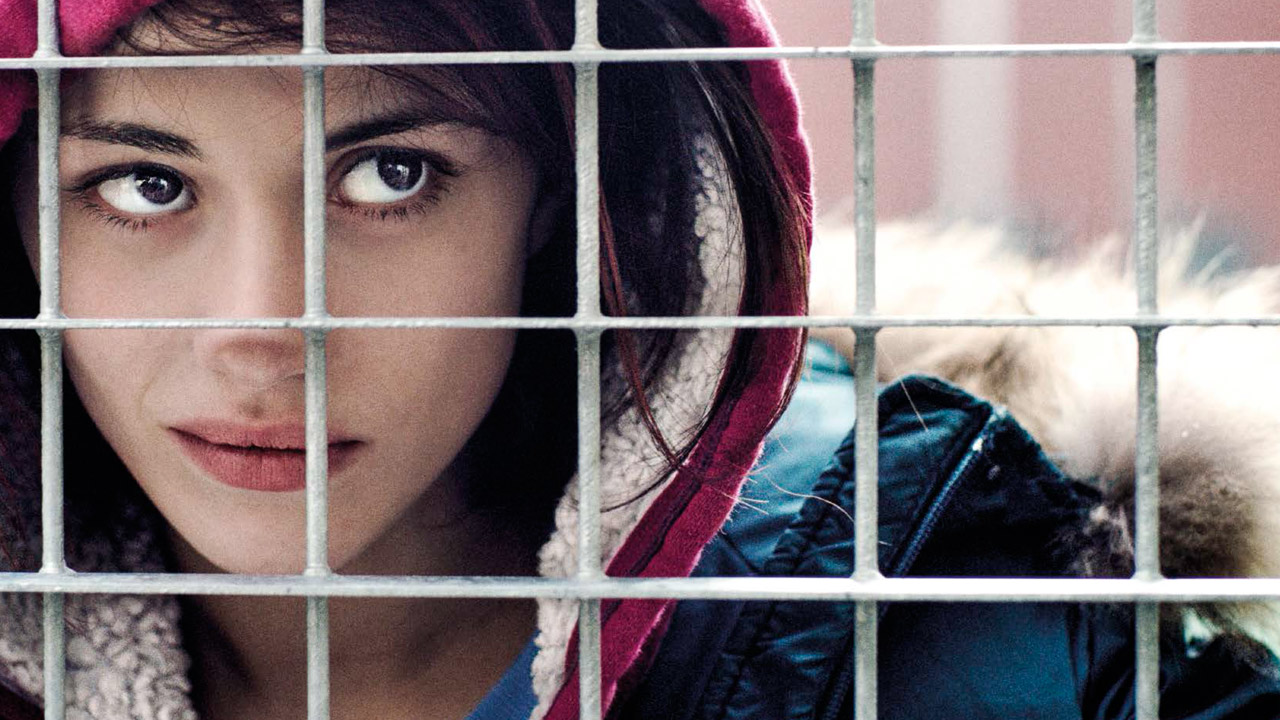
variety.com/wp-content/uploads/2016/05/fiore_06.jpg?w=100...

www.nonsolocinema.com/wp/wp-content/uploads/2016/05/MG_76...

amnc.it/wp-content/uploads/2023/11/perdialogocarcere_post...

www.italyformovies.com/film-serie-tv-games/detail/56/fiore
----------------------------------------------------------
click to activate the small icon of slideshow: the small triangle inscribed in the small rectangle, at the top right, in the photostream (it means the monitor);
or…. Press the “L” button to zoom in the image;
clicca sulla piccola icona per attivare lo slideshow: sulla facciata principale del photostream, in alto a destra c'è un piccolo rettangolo (rappresenta il monitor) con dentro un piccolo triangolo nero;
oppure…. premi il tasto “L” per ingrandire l'immagine;
www.worldphoto.org/sony-world-photography-awards/winners-...
www.fotografidigitali.it/gallery/2726/opere-italiane-segn...
………………………………………………………………………
The municipality of Mongiuffi Melia (ME), not far from Taormina, is made up of two villages, Mongiuffi and Melia, separated by a valley, a bridge joins them, they climb up the opposite ridge of two mountains, looking at each other; in this municipality (defined as a "scattered municipality" for not having a single inhabited center), there are two patron saints, San Sebastian for Melia (his float was built with the money collected by Sicilian soldiers sent to the front, to fight in Greece during the Second World War, hoping in this way to receive His intercession to save their lives), and San Leonard di Noblac (or Abbot) for Mongiuffi; but in this municipality there is also the cult of the "Virgin Mary of the Chain", whose sanctuary attracts pilgrims from everywhere. I have made this description to introduce a singular coincidence that not everyone is aware of, and to do this it is necessary to describe the figure of Saint Leonard (a kind of Saint Francis), and that of the Virgin Mary of the Chain, trying to be concise. Saint Leonard was born in Orléans around 496 (and died in Noblac, on November 6 – the feast day – of 545 or 559), and for most of his life (very interesting) he lived as a hermit; one episode of his life in particular I would like to recall, he received from Clovis, king of the Franks, the privilege of being able to free those prisoners, who he believed had been unjustly imprisoned, so from that moment on, he incessantly committed himself to giving freedom to all those prisoners who were reduced to visibly critical conditions. Let us leave this Saint for a moment, the cult of the “Virgin Mary of the Chain”, this name given to the Blessed Virgin, derives from a prodigious event that occurred in Palermo in 1392, known as the “miracle of the chains”. In short, in August 1392 in Palermo, three men for a glaring miscarriage of justice, were sentenced to death by hanging, shortly before going up to the gallows a violent storm broke out, which forced the three unfortunates and the gendarmes to take refuge in the nearby church of Saint Mary of the Port, close to the sea, also called "Churc of the Chain" due to the presence of a chain that, when positioned, prevented the Saracen pirate ships from accessing the inside of the port; in this holy place, the three condemned, were tied with double chains, in the meantime the door of the church was barred, in fact the storm did not seem to stop and in addition night had come, clearly the execution was now postponed to the next day. The three desperate men, in chains, under the gaze of the gendarmes, approached the painting of the Madonna in tears, imploring her to intercede for them, a voice was heard coming from the painting, which reassured them of their new freedom, this while the chains broke, and the door of the little church was thrown open. From then on, the cult of the Virgin Mary of the Chain spread from Palermo throughout Sicily, and even beyond. Now let's get to the coincidences I mentioned before, both Saint Leonard and the Virgin Mary of the Chain (and also Her Child that She holds in Her arms) carry a long chain in their hands, in fact both the Saint and the Blessed Virgin have given freedom to prisoners, furthermore to access Mongiuffi Melia, coming from Letojanni, you have to pass through a tunnel, called "Gallery of Postoleone" dug in the rock in 1916, with bare hands or with pickaxe blows, as explosives could not be used, by 300 Austrian prisoners, during the First World War (and also on this occasion, in Mongiuffi Melia, there are prisoners forced to do forced labor). Finally, a curiosity, very often from the cult of the Virgin Mary of the Chain, comes a singular name, very common in these parts, both in the masculine with the name of "Cateno" and in the feminine "Catena" (to quote a well-known character, the writer Catena Fiorello). Furthermore, if it rains, whatever the religious procession-feast, with the float carried on the shoulders, the float with the saint does not come out, but if the rain arrives during the event, then the event becomes a source of strong psycho-physical stress for the devotee-bearers (not for the devotee-pullers or devotee-pushers...), as the ground made slippery by the rain (or perhaps, worse, by the presence of mud mixed with water) makes the route risky due to the possibility that one, or more, bearers, could slip, with the possible overturning of the float, and easily imaginable consequences.
The photographic story that I present here was created by assembling photographs taken on November 6, 2022, November 6 and 10 of this year 2024; the heart of the celebration-procession is when the priest hangs a large “cuddurra” (donut) on the hand of Sint Leonard, on that occasion small “cuddure” (donuts) are offered to the population (prepared by hand in the days preceding the procession); there are girls wearing a typical monk's habit-like dress, adorning their head with a veil, they belong to the congregation of the "daughters of Mary" (third order Carmelite); at the end of the procession, with the float that has returned to the church, we witness a rite that has the "affective" purpose of keeping it alive, it is done so as not to lose its memory, even if it has not lost its original meaning, what remains is now only a symbolic fact, it is the ritual of "weighing" (in some centers of Sicily, it has maintained its original meaning) a wooden board is placed "in balance" on one of the two beams that are used to carry the float with the Saint on the shoulders, at the two ends a child is placed on one side, and on the other side a sack with grain, filled until the weight of the grain reaches the weight of the child, and that grain will be given as a gift to the Saint, in reality the symbolic aspect of the procedure remains, and the donation is still made to the Saint, but in paper money.
Postscript: Our Lady of the Chain and Saint Leonard freed from chains, these as such, are not only physical, there are also psychic ones, and perhaps they are the worst….
……………………………..
Il comune di Mongiuffi Melia (ME), non molto distante da Taormina, è formato da due borghi, Mongiuffi e Melia, separati da una vallata, un ponte li congiunge, essi si inerpicano sul crinale opposto di due monti, guardandosi l’un l’altro; in questo comune (definito “comune sparso” per non avere un centro abitato unico), si hanno due santi patroni, San Sebastiano per Melia (la sua vara fu costruita con i soldi racimolati dai soldati Siciliani mandati al fronte, a combattere in Grecia durante la seconda guerra mondiale, sperando così facendo di ricevere la Sua intercessione per avere salva la vita), e San Leonardo di Noblac (o Abate) per Mongiuffi; ma in questo comune vi è anche il culto per la “Madonna della Catena”, il cui santuario attira pellegrini da ogni dove. Ho fatto questa descrizione, per introdurre una singolare coincidenza della quale non tutti sono a conoscenza, e per far questo è necessario descrivere la figura di San Leonardo (una specie di San Francesco), e quella della Madonna della Catena, cercando di essere sintetico. San Leonardo nasce ad Orléans nel 496 circa (e morto a Noblac, il 6 novembre – giorno della festa – del 545 o 559), per gran parte della sua vita (interessantissima) visse da eremita; un episodio della sua vita in particolare desidero ricordare, egli riceve da Clodoveo, re dei Franchi, il privilegio di poter rendere liberi quei prigionieri, che egli riteneva fossero stati incarcerati ingiustamente, egli così, da quel momento, si impegna incessantemente a dare la libertà a tutti quei prigionieri che erano ridotti in condizioni visibilmente critiche. Lasciamo per un attimo questo Santo, il culto della “Madonna della Catena”, questo nome dato alla Beata Vergine, deriva da un evento prodigioso avvenuto a Palermo nel 1392, conosciuto come “miracolo delle catene”. In breve, nell’agosto del 1392 a Palermo, tre uomini per un eclatante errore giudiziario, furono condannati a morte per impiccagione, poco prima di salire sul patibolo si scatenò un violento temporale, che costrinse i tre malcapitati ed i gendarmi a riparare nella vicina chiesa di S. Maria del Porto, a ridosso del mare, detta anche “Chiesa della Catena” per la presenza di una catena che, quando posizionata, impediva alle navi pirata Saracene di accedere all’interno del porto; in questo luogo santo, i tre condannati, furono legati con doppie catene, nel mentre la porta della chiesa veniva sbarrata, infatti il temporale non accennava a smettere ed in più era subentrata la notte, chiaramente l’esecuzione era oramai rimandata al giorno dopo. I tre disperati, in catene, sotto lo sguardo dei gendarmi, si avvicinarono in lacrime al quadro della Madonna implorandola di intercedere per loro, dal quadro si udì provenire una voce, che li rassicurava sulla sopraggiunta libertà, questo mentre le catene si spezzavano, e la porta della chiesetta si spalancava. Da allora il culto per la Madonna della Catena si diffuse da Palermo in tutta la Sicilia, ed anche oltre. Veniamo adesso alle coincidenze di cui accennavo prima, sia San Leonardo che la Madonna della Catena (ed anche il suo Bimbo che regge in braccio) recano in mano una lunga catena, infatti sia San Leonardo che la Beata Vergine hanno dato la liberà a dei prigionieri, inoltre per accedere a Mongiuffi Melia, provenendo da Letojanni, si deve passare necessariamente da una galleria, chiamata “Galleria di Postoleone” scavata nel 1916 nella roccia, a mani nude o con colpi di piccone, in quanto non si poteva usare l’esplosivo, da parte di 300 prigionieri austriaci, durante la prima guerra mondiale (ed anche in questa occasione, a Mongiuffi Melia, si ha la presenza di prigionieri costretti ai lavori forzati). Infine una curiosità, molto spesso dal culto della Madonna della Catena, proviene un singolare nome, molto comune da queste parti, sia al maschile col nome di “Cateno” che al femminile, “Catena” (per citare un personaggio noto, la scrittrice Catena Fiorello). Inoltre, se piove, qualsiasi sia la processione-festa religiosa, con la vara portata in spalla, la vara col santo non esce, se invece la pioggia arriva durante la manifestazione, allora l’evento acquista per i devoti-portatori (non per i devoti-tiratori o devoti-spingitori…) un motivo di forte stress psico-fisico, in quanto il terreno reso scivoloso dalla pioggia (o magari, peggio, dalla presenza di fango misto ad acqua) rende rischioso il percorso per la possibilità che uno, o più portatori, possano scivolare, con il possibile ribaltamento della vara, e conseguenze facilmente immaginabili.
Il racconto fotografico che qui presento, è stato realizzato assemblando fotografie fatte il 6 novembre del 2022, il 6 ed il 10 novembre di quest’anno 2024; il fulcro della festa-processione è quando il sacerdote appende una grande cuddurra (ciambella) sulla mano di San Leonardo, in quella occasione piccole cuddure vengono offerte alla popolazione (preparate ed intrecciate a mano nei giorni precedenti la processione); sono presenti delle ragazze che indossano un tipico vestito “tipo saio di monaco”, adornando il capo con un velo, appartengono alla congregazione delle “figlie di Maria” (terz’ordine carmelitano); alla fine della processione, con la vara che ha fatto rientro in chiesa, si assiste ad un rito che ha lo scopo “affettivo” di tenerlo in vita, viene fatto per non disperderne la memoria, pur non avendo perso il suo significato originario, quel che resta è oramai solamente un fatto simbolico, è il rito della “pesatura” (in alcuni centri della Sicilia, esso ha mantenuto il suo significato originario) un asse di legno viene messo “in equilibrio” su di una delle due travi che servono a portare in spalla la vara col Santo, alle due estremità si pongono da un lato un bimbo/a, e dall’altro lato un sacco con del grano, riempito fino a quando il peso del grano raggiungerà il peso del bimbo/a, e quel grano verrà dato in dono al Santo, in realtà resta l’aspetto simbolico della procedura, la donazione viene ugualmente fatta al Santo, ma in cartamoneta.
P.S. La Madonna della Catena e San Leonardo liberavano dalle catene, queste in quanto tali, non sono solo fisiche, ci sono anche quelle psichiche, e forse sono le peggiori….
………………………………………………………………..
San Sebastiano Mongiuffi Melia 20gennaio 2015
FESTA SAN LEONARDO DI NOBLAC ( MONGIUFFI MELIA 2017 )
San Leonardo a Mongiuffi Melia
Le cuddure di San Leonardo - Mongiuffi
Promo San leonardo 2016 - Mongiuffi Melia
Promo Madonna della Catena - Mongiuffi Melia
………………………………………………….
Fiore - Video intervista a Claudio Giovannesi 1
Fiore - Clip - Il primo colloquio
Fiore - Clip - L'inizio del film
Fiore - Video Intervista a Daphne Scoccia
Fiore - Clip - Il bacio e le bolle di sapone
Fiore clip: ''Maledetta Primavera'' - Greta Manuzi
...........................................................
October 15th is Pregnancy and Infant Loss Remembrance Day across the world.
Every day, thousands of babies around the world are lost to miscarriage, stillbirth, neonatal death, Sudden Infant Death Syndrome (SIDS) and other illnesses.
Tonight I'll be lighting a candle for all those babies gone too soon and remembering how lucky I have been.
Explore #489
In loving memory of Francis Hope, born sleeping at 22 weeks 1st December 2006 and with love to my wonderful friend x x x
Some cold, hard facts:
•17 babies die every day in the UK (10 are stillbirths, 7 are neonatal deaths) totalling almost 6,500 baby deaths a year - the equivalent of 16 jumbo jets crashing every year with no survivors
•This is four times the number of people who die every year of MRSA
•This is double the number of adults who lose their lives on Britain’s roads every year
•Ten times more babies are stillborn than die of cot death every year in the UK.
•The stillbirth rate has remained almost unchanged for the past 10 years. (CEMACH)
•1 in every 200 babies are stillborn in the UK
•1 in every 300 babies born in the UK die in the first four weeks of life
•In half of all stillbirths the cause remains unexplained, although in more than half of these pregnancies the baby is smaller than it should be
•Many of these babies are born perfectly formed, with no clear reason why they died. We need to understand what is causing these deaths and take action to prevent avoidable losses
•The majority of unexplained stillbirths are in pregnancies that were previously considered low risk
Sands is the UK’s Stillbirth and Neonatal Death charity, an organisation which offers support to everyone affected by the death of a baby during pregnancy or after birth.
Sands’ core aims are to:
•Support anyone affected by the death of a baby;
•To work in partnership with health professionals to improve the quality of care and services offered to bereaved families; and
•To promote research and changes in practice that could help to reduce the loss of babies' lives
The death of a baby is a devastating experience. The effects of grief can be overwhelming and parents, their families and friends can be left feeling dazed, disorientated, isolated and exhausted.
The death of a baby can happen to any one of us. It has happened to too many of us.
What brings people together through Sands is the common experience of this painful loss.
June is the national awareness month; with this photograph I hope to do something to raise awareness of the work of this charity. What can you do?
151010 - Baby Loss Awareness Day
October 15th is Pregnancy and Infant Loss Remembrance Day across the world.
Every day, thousands of babies around the world are lost to miscarriage, stillbirth, neonatal death, Sudden Infant Death Syndrome (SIDS) and other illnesses. Tonight I shall light a candle at 7pm and support the Wave of Light, to pay my respect to those babies and the parents who have had to experience the unimaginable.
I'd have liked to have been able to dedicate this personally to those close to me who have suffered the heartache of babyloss. Sadly there are far too many to name individually, so for my family, my friends and myself, much love xx
Contrary Mary
I would like to think, that Mary had a bit of a wild side to her. I did find some interesting facts about the rhyme, through Wikipedia.Which of these 3 explanations do you agree with? I prefer the third version, as I've always liked, darker portrayals, and I've especially loved, the Brother's Grim.I was entertained, creating this "doll like" version with my friend LORIE . She created her own, processed version, with a similar setup. Here is my other gal pals version, Rochelle's.
tweet Me YOU KNOW YOU WANT TO!
This is the oldest known version:
Mistress Mary, Quite contrary,
How does your garden grow?
With Silver Bells, And Cockle Shells,
And so my garden grows.[1]
Like many nursery rhymes, it has acquired various historical explanations. These include:
* That it is a religious allegory of Catholicism, with bells representing the sanctus bells, the cockleshells the badges of the pilgrims to the shrine of Saint James in Spain (Santiago de Compostela) and pretty maids are nuns, but even within this strand of thought there are differences of opinion as to whether it is lament for the reinstatement of Catholicism or for its persecution.[1]
* Another theory sees the rhyme as connected to Mary, Queen of Scots, with "how does your garden grow" referring to her reign over her realm, "silver bells" referring to (Catholic) cathedral bells, "cockle shells" insinuating that her husband was not faithful to her, and "pretty maids all in a row" referring to her ladies-in-waiting - "The four Maries".[1]
* These explanations vary; it is identified with Mary I of England for roughly the same reasons as with her Scottish counterpart. The "How does your garden grow?" may make mocking reference to her womb and the fact that she gave birth to no heirs, or to the common idea that England had become a Catholic vassal or "branch" of Spain and the Habsburgs, or may even be a punning reference to her chief minister, Stephen Gardiner ("gardener"). "Quite contrary" could be a reference to her unsuccessful attempt to reverse ecclesiastical changes effected by her father Henry VIII and her brother Edward VI. The "pretty maids all in a row" could be a reference to miscarriages as with the other Mary or her execution of Lady Jane Grey after coming to the throne. "Rows and rows" may refer to her infamous burnings and executions of Protestants. Alternatively, capitalizing on the Queen's portrayal by Whig historians as "Bloody Mary", the "silver bells and cockle shells" referred to in the nursery rhyme could be colloquialisms for instruments of torture.[2]
Still others argue that no proof has been found that the rhyme was known before the eighteenth century, while Mary I of England and Mary, Queen of Scots, were contemporaries in the sixteenth century.[1]
Portrait statue of a priestess (?), so-called Poppaea Sabina, from Olympia Heraion.
The high quality of its workmanship and heroic size originally prompted a tentative identification with Poppaea Sabina, second wife of the emperor Nero. This identification is now rejected. Poppaea’s images suffered the “Damnatio Memoriae”, i.e., a similar fate to the sculptures of her husband, and as a result, securely identified sculptural representations of the empress are completely lacking.
Poppaea was married initially to Rufius Crispinus and then to the future emperor Marcus Salvius Otho. While still married to Otho, Poppaea became Nero’s mistress, sometime in A.D. 58. Nero and Poppaea were finally married in A.D. 62, only twelve days after Nero’s divorce from Claudia Octavia. At that time Poppaea was awarded the title of Augusta. She bore Nero one child, Claudia Augusta, who died in infancy. Poppaea’s death in 65 was rumored to have been caused by a miscarriage induced when Nero kicked her in the stomach.
Source: Eric R. Varner, “Mutilation and Transformations - Damnatio Memoriae and Roman Imperial Portraiture
”
Parian marble statue
2nd half of the 1st century AC
From the Heraion of Olympia.
Olympia, Archaeological Museum, Inv. no. Λ 144
There are thousands of small statues donated by parents of miscarried, stillborn, or aborted children representing Jizo-Bosatsu (Bodhisatva), the guardian deity of children. These statues guarding the tiny souls are believed to ease the pain of the mother. Hasedera shrine, Hase, Kamakura, Japan [April 2007 / Photo by Navinda / Canon EOS 350D]
[Explore #66 on 27-04-07]
“I was pregnant few times but every time I miscarried. I pray a lot, esp. to Mary to help me, to give me a child.” - Madelaine Toure (35), mutilated at age of 2.
A candle, for many babies lost, many families left behind, too soon...........
October 15th is the International Pregnancy and Infant Loss Awareness Day, a global expression of sympathy, remembrance and support for those too many families who are affected by the loss of a baby in pregnancy or beyond.
Across the world, at 7pm local time, candles will be lit for those babies who have died. At this time we will remember them all; either our own children or babies of others who have nonetheless touched our lives in such a brief time.
In the UK, Babyloss is a collaborative awareness effort involving charities and voluntary organisations which support those affected, and lobby for research and action to understand more about and, where possible, prevent pregnancy loss.
You don't have to have been affected by loss yourself to help; though sadly the numbers of families affected makes it unlikely that there in no-one in your circle that has not suffered in this way.
You can help in so many ways:
* If you know someone grieving for their child - drop them a line today. Give them a hug. Show them you remember their loss and that you are there to share their memories and sadness. Too many families feel locked in silence, afraid to start a conversation, afraid to upset others, and alone in their grief.
* Click on the site www.babyloss.com, and find out more about the organisations who support those in need. Could you volunteer? Could you raise money or awareness for these causes?
* Even quietly finding out more and being able to pay that understanding and support forward if you encounter a person in need in the future is invaluable. Sometimes the biggest change is in thought, not just in deed.
With this shot I am marking the day, and I welcome you to share in marking it.
Beau Hamilton Wilkes is Melanie and Ashley's only surviving child born in war torn Atlanta just before the flight to Tara. When she knows she will not survive her miscarriage, Melanie calls Rhett to her side and asks him to watch over Beau as he grows up. He seems to have quite a different character to his parents and is strong minded and passionate as well as kind hearted and gentle. Melanie has an ulterior motive in asking Rhett to do this as she has asked the same of Scarlett - she hopes her action might lead to a loving reconciliation between Rhett and Scarlett sometime in the future. When Beau turns 18 he decides to look up 'Uncle Rhett' who is now a successful nightclub owner in New Orleans... Rhett feels it is time to 'complete' Beau's education...
I was going to cast Kieron as Rhett but he looks far too young so I decided instead that he would join the cast for the next generation. I am excited to see what will happen when the daughter Rhett never knew he had - Esmeray Blakely - turns up in New Orleans to seek out her father and finds Beau staying with him...
Legend of Misarela. - The Ponte da Misarela, or Devil's Bridge, is located in the parish of Ferral, in the municipality of Montalegre. This construction built over the River Rabagão is home to two of Portugal's most unusual legends.
It is believed to have been built by the Devil himself.
In ancient times, a nobleman from the Douro (or was he a terrible criminal?) ran wildly from his pursuers. Frightened by his imminent capture, the man ventured into the Rabagão, which was running stormy at the time. Unable to pass the current, he asked in vain for divine intervention. He then remembered to invoke the power of the Devil, promising him his soul if he helped him escape. At that moment, the Devil appeared and granted his request by extending a bridge in front of him. And so the man fled and lived in the area for many years. At death's door, with his soul about to be handed over to the Devil, the man revealed his pact to a priest, who absolved him of all his sins. Driven by faith, the priest travelled, disguised as a farmer and under cover of night, to the place where the Devil had built the bridge. There he invokes Satan, promising him his soul in exchange for the bridge. The bridge appears as if by magic in front of him and the priest crosses it, blessing it with holy water soaked in a sprig of heather (or is it rosemary?) while reciting an exorcism. The black figure of Satan, covered by a thick cloud of sulphur, disappears as if by magic, leaving a strong smell of pitch and incense in the air, but... the bridge remains standing, firm and beautiful, linking the two banks.
The Misarela Bridge preserves a ritual, now practically extinct, which consecrates the monument as a mythical, sacred and magical place in popular culture:
Pregnant women, afraid of miscarrying, accompanied by their husbands and other family members are willing to stay overnight on the bridge. They have to hope that no animals pass by after sunset and wait for the first person to pass by who, in turn, will be invited to sponsor the future child. No-one has ever refused this request, which is considered a moral duty. The baptism takes place at the same time: from a long rope is suspended a black clay jar, lowered into the depths of the abyss that collects the water for the ceremony. The mother-to-be receives the water from the Rabagão in her womb and the godfather recites the prayer "I baptise you, creature of God, by the power of God and the Virgin Mary, if you are a boy you will be Gervaz, if you are a girl you will be Senhorinha."
Today there are still Gervásios and Senhorinhas throughout the region, which are living proof of their rituals.
The Municipality of Montalegre, together with the Municipality of Vieira do Minho and local associations, have been promoting the Ponte da Misarela as a tourist and cultural attraction, namely by organising walking routes, trail races, the celebration of Carnival and the annual Festa da Ponte da Misarela, where the legendary, fantastic and historical elements that make this bridge and its surroundings a truly magical place are recreated.
Wave of light organised by The Vishaal Foundation in Slough
on 15th October 2017
the Vishaal Foundation, a charitable service whose purpose is to help relieve the suffering and emotional distress of those who have experienced loss in respect of the short-lived life of an infant or child due to miscarriage, neonatal death or other tragic causes and circumstances.
The Foundation was set up by Madhu Bedi, a mother who had to endure the heart breaking loss of her first born son Vishaal in 2003 when he was just a day old. Instead of the joy of bringing home their new born, Madhu and her family were left with empty arms and the unimaginable void that was to follow. Over the coming months and years Madhu realised there were others like her who also had to face the enormity of this indescribable loss as well as having to live with the aching love, longing and nurturing that continued to exist within. A parent’s love for their children is eternal; whilst our children are no longer with us they live on within every heartbeat.
It was this realisation that led Madhu to commence the annual Little Angels Memorial Service a day which allowed families and friends to come together and collectively acknowledge their loss in an environment of love, support and understanding whilst honouring the memory of the brief, yet incredibly meaningful lives of their little angels no matter how long it has been.
www.facebook.com/thevishaalfoundation/
DSC_0025
My son is extra special to me because I had him at an older age. Since I waited so long to have children, when I finally did get pregnant the first time, I made it into my second trimester went to the doctor for my routine visit, I had to have an ultrasound, I could tell by the look on the woman's face that something was wrong, I lost my baby! I was devastated! I remember the doctor saying in a laughing voice of just try again, it's no big deal! When do you want your D&C. If I ever hated anyone, I hated that man with all my heart that day!
After that I had 4 more miscarriages, I demanded to be sent to a fertility clinic in Hamilton, Ontario. So I went to McMaster University. They did a battery of tests on me and my husband. Of course, he was fine, it was me that was f%cked up! Everything is wrong with me. Anyway we did only one around of in uterine semination. I had 5 fertile eggs, they warned me I should stop this round. I said no, this is it, I am through! Well, I knew I was pregnant right away and I knew it was a boy. I never picked out girl names. I named him Justin Harry (Harry in honour of my dad). I always thought that Justin would look like his Dad, but he doesn't look like him at all : ) He is the spitting image of me as a baby! He looks just like my dad and I look my dad! He is the best thing that I have ever done. ❤❤❤
Beau Hamilton Wilkes is Melanie and Ashley's only surviving child born in war torn Atlanta just before the flight to Tara. When she knows she will not survive her miscarriage, Melanie calls Rhett to her side and asks him to watch over Beau as he grows up. He seems to have quite a different character to his parents and is strong minded and passionate as well as kind hearted and gentle. Melanie has an ulterior motive in asking Rhett to do this as she has asked the same of Scarlett - she hopes her action might lead to a loving reconciliation between Rhett and Scarlett sometime in the future. When Beau turns 18 he decides to look up 'Uncle Rhett' who is now a successful nightclub owner in New Orleans... Rhett feels it is time to 'complete' Beau's education...
I was going to cast Kieron as Rhett but he looks far too young so I decided instead that he would join the cast for the next generation. I am excited to see what will happen when the daughter Rhett never knew he had - Esmeray Blakely - turns up in New Orleans to seek out her father and finds Beau staying with him...
Dear anyone who lands on this page, please know you are not alone. There is support out there and you can talk about how you feel. It's an extremely emotional time for you and you might tell yourself you are not loved but please know, you are. If you are considering abortion, please seek medical advice. I sometimes recieve views from people searching for "self abortion" but please dont. It's very risky and you could be seriously harmed. There are free and confidential clinics in most developed countries where you can discuss your options.
----------------------------------------
Today is international Women's Day (March 8th) so Happy Women's Day!!!
The picture represents several very important issues to me which include menstruation, abortion, miscarriage, self harm and domestic violence.
This image was shot to visualise the emotions women feel when we are presented with these issues. While there are many websites and books dedicated to talking about these issues, they mostly just talk of the physical aspects to them rather than the emotional. A big part of these is the emotional factors that come with them. I wanted to create an image to show that emotion and to show women they are not alone in the way they may feel. I only hope it has helped at least one woman out there in feeling supported.
no group icons/images please.
Be warned: some of you might find this a difficult "Backgrounder" to read, but you see: The Bouquet featured above is a special one that's...
A. in memory of Matthew (who was our third child), and
B. a tribute to the courage and strength of a wonderful woman...
Matthew was born in the early hours of 20th March, 1987. Unbeknown to us, he had died the night before...
At 6pm that previous evening, Averil had stuck her head around the kitchen door and muttered, "Wow... I have my first contraction and I feel like I could fall over dead!"
THAT statement alone should have meant a Triple One call to Emergency Services; we did nothing, and seconds later, she reappeared in the doorway and muttered, "Well, I don't know what happened then, but tonight's the - WOW... That's one heck of a contraction!!!"
And so at 9:30pm that evening, leaving the older two children in the care of a Baby Sitter, we made our way in the midst of a fierce thunder storm to the local maternity hospital 20 kilometres away...
As the Nursing Shifts changed at 11pm that night, I heard the outgoing Midwife quietly mutter to her colleague, "There's something wrong with this monitoring machine. Look, it's only giving a print-out on one side of the graph!"
I watched her colleague check the machine, and then she kicked her colleague in the shin and muttered in an audible whisper, "You fool... Can't you read what this is telling us???" And with that, the Midwife going off-duty fled the room - in tears!
I put that exchange out of my mind; Averil didn't hear it, and a doctor - whom I'd never met because we'd only moved to the town a weeks earlier - turned up, did a quick examination and quietly muttered, "We've got to move in to surgery and we've got to move very, very quickly!"
Still the alarm bells didn't ring...
Ten minutes later, the Doctor announced, "We have a boy..." and Averil and I both burst into tears of relief and happiness; Matthew had arrived...
There was just one "small" problem: the Doctor had a strange look on his face, and the support nurses had started to cry... In the midst of the short silence that followed, the Doctor cleared his throat, and quietly announced, "You didn't let me finish my sentence. We have a boy... but we don't have a heartbeat...!"
I can only liken that moment to stepping out of an aircraft at 40,000 feet only to find that the parachute is not going to open... The ground comes up mighty fast, and we hit it - hard!!!
So... After a perfectly healthy pregnancy, what on earth had happened??? We were left alone for a couple of hours to hold our beautiful little boy, but when the Doctor returned, he said, "I'm guessing you got your first contractions at about 6pm last night (He was spot on!), and with that first contraction, the Umbilical Cord snapped. It is extremely unusual; I've never heard of that ever happening before, but for the Baby, death was immediate. For you (looking at Averil) the miracle is that you didn't hemorrhage immediately...!"
In the weeks that followed, a lot of people were very supportive. Many didn't know what to say, and with an honesty that we so appreciated, they admitted just that.
Some used clichés, (That wasn't at all helpful. We didn't want God to have another angel in heaven; we wanted our son!), and some people actually said, "Well, you didn't know the Baby. Why are you so upset?"
Make no mistake about it: we - and especially Averil - had known this Baby in a unique and special way which only a pregnant woman can, and THAT is the worst possible thing anyone can say to anyone who has just lost a child in late pregnancy (Miscarriage), at birth, or in early childhood (Cot Death or whatever one might want to call it)...
If you don't know what to say to someone in deep grief, admit it. It's better to be honest than to blunder about trying to find the right words because the crunch is: you'll probably fail miserably!
FOOTNOTE
It is said that a woman wont get pregnant if she has Breast Milk. Don't you believe it...!!! Three months after Matthew's birth, Averil quietly said, "I don't know how to tell you this, but I'm pregnant again!"
That wasn't supposed to have happened, but the pregnancy brought about some healing for both of us AND for our two children (who were 4 and a half and two and to whom we had been open and honest about what had happened; they in turn had grasped an understanding of what had happened in a way that we didn't think small children would ever manage to do!!!).
And so it came to pass that 9 months after our last visit to the Maternity Hospital, we returned - having made sure that the Midwife who had so badly mis-read the monitoring machine that fateful night would not be on duty..
However, minutes before the Baby was to be born, the Duty Midwife quietly muttered, "She's had to change Shifts, but she's at the other end of the hospital and will stay there!"
On a whim, I asked - then demanded - that she join us for the baby's delivery, and she arrived just in time... And this time, a healthy little girl came into the world (A little girl who is about to turn 33 and who is currently 6 weeks out from having her third child!)...
The next day, that Midwife from the earlier birth came to visit, and after a few moments of - well - awkwardness - she blurted out, "Fifteen years ago, I gave birth to Twins - and one of the two died at birth. I actually saw what had happened to your baby last year when I was reading the monitoring machine, but I suffered a terrible flash-back to my own tragedy, and couldn't bring myself to warn you... I just want you to know that your inviting me back for the birth of THIS baby has meant SO much to me, and I can only hope that you're not angry with me!"
We joined for a "Threesome Hug"...!
A couple of days later, our Doctor admitted that when he'd arrived home in the early hours of the previous morning, he'd blurted out to his wife, "The baby is healthy and well!" and burst into tears of relief.
A baby's death can ripple outward to unexpected people...!
For us, God was in the midst of our Grief, but keep in mind that for others, that may not be the case. We're all different...!
Life has of course moved on for us; the old saying, "Time heals" is at least partly true! Averil was so courageous coping with another pregnancy so close to Matthew's birth, and we went on to have a 5th baby two and a half years later - and she is also "preggy" with her 3rd baby! We can only hope and pray that both Babies are born without complications.
This morning, we as an extended Family gathered - with the respective spouses and grandchildren - for a quiet morning tea in the local shopping mall to mark what would have been Matthew's 34th Birthday. yes, we've moved on from that night, but just every now and again, we still choke up a bit, and yes: I have shed a tear or two as I've written this...
We don't tend to talk about a Baby's death. All too often it's too easy to say, "Oh get over it. You didn't know the child!" without realising that there's so much Grief involved for the parent/s. Angela my dear Flickr Friend (www.flickr.com/photos/maorlando/with/51037002188/): you asked me some years ago what had happened. I actually started to answer your question, but found that even after 30 or so years, I was still too choked up, and I let the answer drift. Here, however, is that answer. I'm just sorry it's taken so long to reach you...!
Somewhere way up above, I said that these flowers were
A. in memory of Matthew (who was our third child), and
B. a tribute to the courage and strength of a wonderful woman,
and I count myself most fortunate that I've been married to this woman for nearly 44 years...!!!
And if you've managed to keep reading to this point, well: you've done extremely well; thank you!
Thanks for visiting my Site (and especially this posting(!), and thanks for taking the time and trouble to leave a Comment. It\'s always nice to hear from you...!
Pithecellobium dulce is a species of flowering plant in the pea family, Fabaceae, that is native to the Pacific Coast and adjacent highlands of Mexico, Central America, and northern South America.[2] It is an Introduced species and extensively naturalized in the Caribbean, Florida, Guam, India, Bangladeshand the Philippines.
As food
The seed pods contain a sweet and sour pulp that which in Mexico is eaten raw as an accompaniment to various meat dishes and used as a base for drinks with sugar and water ('agua de guamúchil'). The seeds are also edible and refined to extract oil, which amounts to 10% of their weight. They also contain 28% protein.
As medicine
The bark and pulp are astringent and hemostatic. The indigenous peoples of Mesoamerica use the pulp and bark against gum ailments, toothache, and hemorrhages in general. A bark extract is also used against dysentery, chronic diarrhea, and tuberculosis.[medical citation needed] An extract of the leaves is used for gall ailments and to prevent miscarriage.[medical citation needed] The ground seed is used to clean ulcers.[5]
- Wikipedia
Hase-dera (海光山慈照院長谷寺, Kaikō-zan Jishō-in Hase-dera), commonly called the Hase-kannon (長谷観音) is one of the Buddhist temples in the city of Kamakura in Kanagawa Prefecture, Japan, famous for housing a massive wooden statue of Kannon.
The temple originally belonged to the Tendai sect of Buddhism, but eventually became an independent temple of the Jōdo-shū.
Legend has it that the temple was established in the Tenpyō era (729-749 C.E.). However, documents at the temple suggest that the temple really came into its own during the Kamakura period (1192-1333).
The main statue of Kannon is one of the largest wooden statues in Japan, with a height of 9.18 metres (30.1 ft), and is made from camphor wood and gilded in gold. It has 11 heads, each of which represents a different phase in the search for enlightenment.
According to legend, the statue is one of two images of Kannon carved by a monk named Tokudō in 721. The camphor tree was so large, according to legend, that he decided that he could carve two statues with it. One was enshrined in Hase-dera in the city of Nara, Yamato Province, while the other was set adrift in the sea to find the place with which it had a karmic connection. The statue washed ashore on Nagai Beach on the Miura Peninsula near Kamakura in the year 736. The statue was immediately brought to Kamakura where a temple was built to honor it.
The temple sits about half-way up Mount Kamakura, southwest of the city of Kamakura. The temple commands an impressive view over Yuigahama.
Seven buildings make up the temple complex.
The temple is built on two levels and also includes a cave. The cave, called benten kutsu (Benzaiten Grotto), contains a long winding tunnel with a low ceiling and various statues and devotionals to Benzaiten, the sea goddess and the only female of the Seven Lucky Gods in Japanese mythology.
The temple is famous for its hydrangeas, which bloom along the Hydrangea Path in June and July.
The grounds of the temple are home to hundreds of small Jizō statues, placed by parents mourning offspring lost to miscarriage, stillbirth, or abortion. These statues remain in place for about a year, before being removed to make way for more statues; it is estimated that some 50,000 Jizō statues have been placed at Hase-dera since World War II.
The temple is the fourth of the 33 stations of two different pilgrimage routes:
1) Bandō Sanjūsankasho pilgrimage circuit dedicated to the goddess Benzaiten.
2) Kantō Pilgrimage.
Hase-dera (Kamakura) - Wikipedia
Hase-dera (ン光ン慈照院長谷寺, Kaikō-zan Jishō-in Hase-dera), comúnmente llamado Hase-kannon (長谷観CESIS) es uno de los templos budistas en la ciudad de Kamakura en la prefectura de Kanagawa, Japón,famoso por albergar una enorme estatua de madera de Kannon.
El templo originalmente pertenecía a la secta Tendai del budismo, pero finalmente se convirtió en un templo independiente del Jōdo-shū.
Cuenta la leyenda que el templo fue establecido en la era Tenpyō (729-749 d.C.E.). Sin embargo, los documentos en el templo sugieren que el templo realmente entró en su propio durante el período Kamakura (1192-1333).
La estatua principal de Kannon es una de las estatuas de madera más grandes de Japón, con una altura de 9,18 metros (30,1 pies), y está hecha de madera de alcanfor y dorada en oro. Tiene 11 cabezas, cada una de las cuales representa una fase diferente en la búsqueda de la iluminación.
Según la leyenda, la estatua es una de las dos imágenes de Kannon talladas por un monje llamado Tokudō en 721. El alcanfor era tan grande, según la leyenda, que decidió que podía tallar dos estatuas con él. Uno fue consagrado en Hase-dera en la ciudad de Nara,provincia de Yamato,mientras que el otro fue puesto a la deriva en el mar para encontrar el lugar con el que tenía una conexión kármica. La estatua se lavó en tierra en la playa de Nagai, en la península de Miura, cerca de Kamakura, en el año 736. La estatua fue inmediatamente llevada a Kamakura, donde se construyó un templo para honrarla.
El templo se encuentra a la mitad del monte Kamakura, al suroeste de la ciudad de Kamakura. El templo tiene una vista impresionante sobre Yuigahama.
El templo está construido en dos niveles y también incluye una cueva. La cueva, llamada benten kutsu (Gruta de Benzaiten), contiene un largo túnel sinuoso con un techo bajo y varias estatuas y devocionales a Benzaiten,la diosa del mar y la única hembra de los Siete Dioses afortunados en la mitología japonesa.
El templo es famoso por sus hortensias,que florecen a lo largo del Camino de Hydrangea en junio y julio.
Los terrenos del templo son el hogar de cientos de pequeñas estatuas de Jizō, colocadas por padres que lloran a los descendientes perdidos por aborto espontáneo, mortinato o aborto. Estas estatuas permanecen en su lugar durante aproximadamente un año, antes de ser retiradas para dar paso a más estatuas; se estima que unas 50.000 estatuas de Jizō han sido colocadas en Hase-dera desde la Segunda Guerra Mundial.
El templo es la cuarta de las 33 estaciones de dos rutas de peregrinación diferentes:
1) Circuito de peregrinación Bandō Sanjūsankasho dedicado a la diosa Benzaiten.
2) Peregrinación Kantō.