View allAll Photos Tagged leopard
My weekly rant, taken from www.facebook.com/jackkinross and other places...
WE NEED TO BE CLEVER, LIKE SNOW LEOPARDS ARE, TO SAVE THE WILD TIGER. DO WE BAN THE CELEBRITY BLOGGER?
I’ve counted about 60 news items at www.wildtiger.org since my last rant. It’s the usual mix, good, bad, happy, sad, insane and fantastic… a bit like life really. There were a few more stories than usual on Snow Leopards, those elusive mountain cats, including great images from Panthera of a clever specimen trying to steal camera trap, very cool.
A friend of mine calls Snow Leopards “Sneakies” as a term of endearment and pure respect. She is amazed at the incredibly clever way this animal operates in some of the harshest terrain on the planet. This brings me to my point.
For several years now I’ve been receiving (and so has Mark, our analyst) a news feed which gives overviews of environmental, political and humanitarian events and how they might affect the work we do at WildTiger. The feed comes from someone I respect immensely, a highly skilled researcher I have known for many years now. His organization supplies this information, at a fair price, to a small clientele he trusts to handle information responsibly.
Since we restarted our news section properly at the start of this year, coinciding with increased use of the social networks, I’ve had a lot more time online myself. I was warned there were some crazies out there, of course I already knew this but after a few weeks I am surprised at the extent of it. On our actual news feed we simply post from respected media, lobby groups, government and non-government organizations. Where we can we try to verify but we also make it clear on our website “that truth is in the eye of the beholder” and that everything has to be read for what it is, no more.
What we don’t post is poorly researched, regurgitated crap. The crazy stuff. And wow, as I said, there is a fair bit of it out there. I’m not really talking about media sources (we all know there are some real spinners as well as brilliant researchers in that area) but more about the counterproductive blogging and commentary that seems to just spit out negative stuff we already know about…
And now I’m really at my point! That stuff does not help anyone. It does not help save the tiger, it does not help save anything. It does more harm than good.
Recently, a “celebrity blogger” decided to climb on the bandwagon regarding the tiger trade and do some serious China bashing. The blog piece gave us nothing new, either in information or images. I got advice not to name this person (do some trawling if you must but trust me, it was crap) but what I will say is that the biggest irony was that while the “celebrity” got stuck into China and their treatment of tigers there was a convenient neglect of mentioning the slaughter of tigers and wildlife by the British Raj, interesting because of where this blogger hailed from.
WildTiger didn’t post the article. The piece gave no mention of the work by Chinese activists and lobby groups, in fact I don’t think the blogger has even been to China. The blogger did endorse the Ban Tiger Trade petition, which I have signed, and my thanks to the many of you who have signed as well but that petition is being run in a professional, respectful manner. My immediate instinct was to start a “Ban the Celebrity Blogger” petition.
I’m only using this as an example. There is a so much negative, ill informed, racist commentary from people who have never ever been to a tiger reserve or a buffer zone, even a third world country. This lack of understanding of the true dynamics of tiger conservation (and when I use that term I mean conservation in general) when aired on social networks and blogs actually harms the good work being done and the positivity of many of those doing it. It is not clever.
There is some brilliant writing out there regarding the plight of wildlife, the environment, human interaction with natural forces. John Vaillant’s brilliant book “The Tiger” has become a bible to many, a bit like Peter Matthiessen’s “The Snow Leopard” several years ago. These books are “clever” like the snow leopard itself.
Soon I’ll be back in the jungle supplying equipment and training to anti-poaching teams as part of WildTiger project work. I’ll also be conducting interviews with some excellent tiger people outside the jungle, bringing those feeds to show the people in isolated areas that the world does care, that there are people working hard globally to win this thing.
What I won’t be doing is showing the guys certain “celebrity bloggers” and the idiotic crap which can appear on Facebook etc because that would be a very stupid thing to do.
And to save the Tiger we have to be clever, like a Snow Leopard…
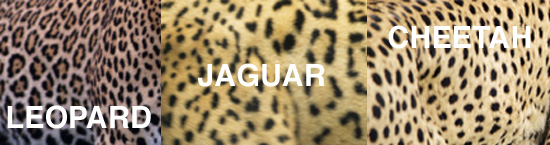
Do you know how to differentiate between Leopard, Jaguar and Cheetah.
Most people interchange the names.
There is a small trick . Check the first comment or this
Because the snow leopard lives in such inaccessible places the size of the wild population is very difficult to estimate, but could be as low as 600. These are distributed over a vast area including parts of Mongolia, USSR, China, Bhutan, N. India, Pakistan, Nepal and Afghanistan. Numbers are few and are restricted to the higher colder regions above the forests, where permanent snow is found.
Seasonal migrations occur, descending from altitudes of over 4000m to around 2000m, where they spend the winter months. Snow leopards prey on mountain goats, ibex, gazelle, boar and smaller mammals and birds which they hunt at night and in the early morning. They retreat to rocky lairs during the day. Snow leopards are usually solitary but have been seen to hunt in pairs (This is usually a mother and cub). Unless they have cubs they do not stay long in an area. The cubs are born in May - June. They receive milk up to 4 months but will also take meat brought to the den after 1.5 - 2 months. The nest is abandoned after about 3 to 4 months, the young staying with the mother through the following winter. They reach their full size at 1½ years.
As demand for more land has increased, domestic stock have been brought into the remote mountain areas, once the sole domain of the snow leopard. Inevitably occasional stock are killed, with the result that the snow leopard is persecuted by farmers. Hunting for the fur trade has also taken its toll, as has the reduction in the populations of its main prey species due to habitat destruction.
Photographed at Marwell Zoo, Thompsons Lane, Colden Common, Winchester, Hampshire, SO21 1JH
Panthera pardus kotiya
Yala National Park - Sri Lanka
Press "L" to view in better quality and full screen mode.