oil paintings reproduction
View allAll Photos Tagged ikram
Una prestigiosa egiptóloga pakistaní que investiga los secretos de las momias y de los animales que entierran con ellos. Tiene numerosos libros y trabajos publicados sobre estos temas. La foto se la hice en Luxor y fue muy amable conmigo. En la actualidad da clases en El Cairo.
Featured items...
Sintiklia - Hair Irene(Shop&Hop gift) - Fatpack
Guapa - Aylla Skin 2K (LELUTKA EVOX)
ncludes 12 tones, with and without brows, 6 lipstick options, 3 eyebrow colors, and a custom shape for Lelutka Avalon Head 4.0 and Body Reborn Body.
Compatible with Velour body skin.
Melody Ikram// special edition Pride Fatpack
❤️Melody Ikram
Hud 50 color
20 special Pride
30 heart
Adapted for the bodies:Bombshell-GenX Classic&Curvy-Kalhene Erika-Juicy-Kupra-LaraX-Legac-Legacy Perky-Reborn-Waifu
Always try a product demo before purchasing.
100% original mesh ❤️
[InDiGo] Malu Breathing & Static Stands Set
[ sᴀᴛᴏ ] Marcrame Curtains
backdrop texture
@ Shop&Hop
SATO Flickr ▶ www.flickr.com/photos/198174939@N02/
SATO Flickr Group: www.flickr.com/groups/14921723@N22/
Face Tattoo: Absinthe - Head Alien - Blue Gradient
Eyes: Absinthe - Icey Eyes
Dress: KIB - Lyra
Bolero: KIB - Ikram
The Lady Of The Southern Seas by Daniel Arrhakis (2018)
With the music : Mystic Sea by Dyan Garris
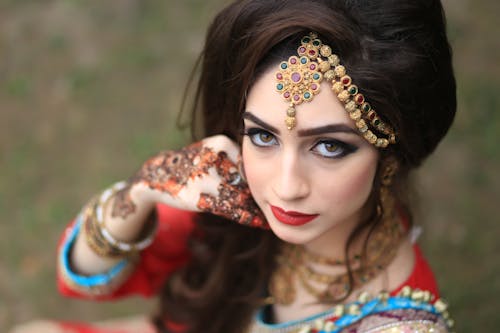
Work made with images of mine and stock images in a creative Art Collage composition. Textured layered techniques, digital painting processes and color saturation techniques, model from Pexels by the Photographer Qazi Ikram Ul Haq (C0 License) modified for this work .
images.pexels.com/photos/1385472/pexels-photo-1385472.jpe...
________________________________________________
A Wonderful Holidays Season dear friends ! : )
Thank you to your kind visit, comments and invitations during all this year, wish to you all a wonderful Christmas and Happy New Year ! You are always in my heart ! : )
Sponsor: ^^Melody Originals^^ ❤️ Mainstore: HERE📌
^^ Melody^^ Ikram Dress Cosmopolitan
🌟 Hud 60 Colors 🌟 30 solids 🌟 30 animal 🌟
Adapted for the bodies:Bombshell-GenX Classic&Curvy-Kalhene Erika-Juicy-Kupra-LaraX-Legac-Legacy Perky-Reborn-Waifu
❤️ Marketplace
****************************************
Sponsor: [Essenz] ❤️ Mainstore: HERE 📌
[Essenz] ❤️ Vicenza Heels & Stockings @ Kinky Event
🌟 18 colors, available in singles, 3 color packs or a fatpack.
+ 18 stocking colors 🌟
🌟 Requires Maitreya Lara X, Legacy or eBody 🌟
❤️ Kinky Event: February 28 - March 23 HERE📌
❤️ Marketplace
Sponsor: ^^Melody Originals^^ ❤️ Mainstore: HERE📌
☾❤️Melody Ikram {Chaotic} Pride Event
🌟 Hud 50 color
20 special Pride & 30 heart
Adapted for the bodies:Bombshell-GenX Classic&Curvy-Kalhene Erika-Juicy-Kupra-LaraX-Legac-Legacy Perky-Reborn-Waifu
100% original mesh ❤️☽
❤️ Marketplace
****************************************
Sponsor: [Essenz] ❤️ Mainstore: HERE 📌
[Essenz] ❤️ Manila Heels @Summerfest:
🌟 18 colors, available in singles, 3 color packs or a fatpack.
🌟+ 4 heel patterns
🌟 Requires Maitreya Lara X, Legacy or eBody
❤️ Summerfest: June 27 - July 13 HERE📌
❤️ Marketplace
****************************************
This Photo Was Taken @ Sunny's Studio : HERE 📌
Pose Name - There's No Better Place Than Dubai -
Open from March 2nd to March 16th
☾❤️Melody Ikram Cosmopolitan Event
Hud 60 Colors
30 solids
30 animal
Body: Bombshell-GenX Classic&Curvy-Kalhene Erika-Juicy-Kupra-LaraX-Legac-Legacy Perky-Reborn-Waifu
Mystery Feathers by Daniel Arrhakis (2019)
With the music : BROKEN DREAMS - Music by Fractured Light Music
Work made with images of mine and stock images. Model from Pexels by the Photographer Qazi Ikram Ul Haq (C0 License) modified for this work .
images.pexels.com/photos/1385472/pexels-photo-1385472.jpe...
_______________________________________________
✧ Sponsors ──✧ Melody
Melody Ikram// Fatpack
@Cosmopolitan Event
♥Cosmopolitan Event Open from March 2nd to March 16th
maps.secondlife.com/secondlife/No%20Comment/128/128/39
♥Sizes:Bombshell-GenX
Classic&Curvy-Kalhene Erika-
Juicy-Kupra-LaraX-Legac-Legacy Perky-Reborn-Waifu
The Flower Czarina by Daniel Arrhakis (2019)
With the music : Tchaikovsky-Hymn of the Cherubim - Liturgy of St John Chrysostom
Work made with stock images and images of mine. Model from Pexels by the Photographer Qazi Ikram Ul Haq (C0 License) modified for this work :
images.pexels.com/photos/1385472/pexels-photo-1385472.jpe...
_______________________________________________
Receb ayı
Hürmet edilmesi gereken dört kıymetli aydan birisidir. Kur'an-ı kerimde mealen buyuruluyor ki:
Allah'ın, gökleri ve yeri yarattığı günden beri, ayların sayısı on ikidir. Bunlardan dördü, haram [hürmetli] olan aylardır. [Tevbe 36]
Resulullah efendimiz, Receb ayına çok değer verir ve "Ya Rabbi, Receb ve Şabanı bizler için mübarek kıl ve bizi Ramazana eriştir" diye dua ederdi. Hadis-i şeriflerde buyuruldu ki:
Haram aylar, Receb, Zilkade, Zilhicce ve Muharremdir. [İbni Cerir]
Haram aylarda Perşembe, Cuma ve Cumartesi günleri oruç tutana iki yıllık ibadet sevabı yazılır. [Taberani]
Haram aylarda bir gün oruç tutup bir gün yemek çok faziletlidir. [Ebu Davud]
Receb ayında Allahü teâlâya çok istiğfar edin; çünkü Allahü teâlânın, Receb ayının her vaktinde Cehennemden azat ettiği kulları vardır. Ayrıca Cennette öyle köşkler vardır ki, ancak Receb ayında oruç tutanlar girer. [Deylemi]
Allahü teâlâ, Receb ayında oruç tutanları mağfiret eder. [Gunye]
Receb-i şerifin bir gün başında, bir gün ortasında ve bir gün de sonunda oruç tutana, Recebin hepsini tutmuş gibi sevap verilir. [Miftah-ül-cenne]
Ramazan ayı dışında Allah rızası için bir gün oruç tutan, iyi bir yarış atının bir asırda alacağı mesafe kadar Cehennemden uzaklaşır. [Ebu Ya'la]
Şu beş gecede yapılan dua geri çevrilmez: Regaib gecesi, Şabanın 15. gecesi, Cuma gecesi, Ramazan bayramı ve Kurban bayramı gecesi. [İ.Asakir]
Receb büyük bir aydır. Allahü teâlâ bu ayda hasenatı kat kat eder. Receb ayında bir gün oruç tutan, bir yıl oruç tutmuş gibi sevaba kavuşur. 7 gün oruç tutana, Cehennem kapıları kapanır. 8 gün oruç tutana Cennetin 8 kapısı açılır. On gün oruç tutana, Allahü teâlâ istediğini verir. 15 gün oruç tutana, bir münadi, "Geçmiş günahların af oldu" der. Receb ayında Allahü teâlâ Nuh aleyhisselamı gemiye bindirdi ve o da, Receb ayını oruçlu geçirdi. Yanındakilere de oruç tutmalarını emretti. [Taberani]
Receb ayında, takva üzere bir gün oruç tutana, oruç tutulan günler dile gelip "Ya Rabbi onu mağfiret et" derler. [Ebu Muhammed]
Recebin ilk Cuma gecesine Regaib gecesi denir. Her Cuma gecesi kıymetlidir. Bu iki kıymetli gece bir araya gelince, daha kıymetli oluyor. Allahü teâlâ, bu gecede, müminlere, ragibetler [ihsanlar, ikramlar] yapar. Regaib, ihsanlar, ikramlar demektir. Bu geceye hürmet edenleri affeder. Regaib gecesi yapılan dua kabul olur, namaz, oruç, sadaka gibi ibadetlere, sayısız sevaplar verilir.
Princess Noura University girl Abdul Rahman Al-Saud
Honor to honor the talibes
Ikram Aledeiana
The occasion of excellence in the second Almatmralalma
We wish her more creative
Dean of the College: Dr. Ashraf emotions
·ï¡÷¡ï· Sponsors ·ï¡÷¡ï·
★━━─ Melody ─━━★
★ Ikram
Open from March 2nd to March 16th
☾❤️Melody Ikram Cosmopolitan Event Open
maps.secondlife.com/secondlife/No%20Comment/128/128/39
Hud 60 Colors
30 solids
30 animal
Adapted for the bodies:Bombshell-GenX Classic&Curvy-Kalhene Erika-Juicy-Kupra-LaraX-Legac-Legacy Perky-Reborn-Waifu
Always try a product demo
maps.secondlife.com/secondlife/Mystery%20Shack/193/41/28
www.facebook.com/photo/?fbid=1019774999937834&set=a.5...
www.facebook.com/Melodyorginalssecondlife/
www.flickr.com/photos/azaharamora/
www.primfeed.com/melodyshop.resident
www.instagram.com/melodyoriginal8_/?hl=es
LouChara Designs
Deja Bedroom
maps.secondlife.com/secondlife/Tropical%20Bay/120/188/2703
www.flickr.com/photos/192782842@N04/
“A morning is a wonderful blessing, either cloudy or sunny. It stands for hope, giving us another start of what we call Life. Good morning & have a nice day.” (Ikram Uzzal)
The road along the Lahore canal, from the Mall to Jail Road, was named after Goethe; but the road across the canal was dedicated to Annemarie Schimmel. The twin roads are a befitting symbol of Pakistan’s special relationship with Germany created by Pakistan’s national poet during his academic sojourn there in the beginning of the 20th century. Schimmel used to say, laughingly: “Pakistan didn’t even wait for me to die before naming a road after me.”
The first disciple of Rumi in our times was Allama Iqbal. In his Persian magnum opus “Javidnamah,” Rumi was his Virgil. Annemarie Schimmel, the greatest living authority on Islamic culture and civilization who passed away in February, loved Iqbal and Rumi with equal intensity.
When she came to Lahore in 1996 to deliver a lecture on “Islam and the West” at the Goethe Institute, she was hardly in her room at Hotel Avari for 10 minutes when the phone bell rang and someone requested her for a meeting. She said she was booked for every hour of the day until June 1997, which included her Iqbal Lecture in London.
She had delivered a lecture on Rahman Baba in Peshawar in Pashtu, which, together with Sindhi, she thought more difficult than her first love, Turkish. (Linguists are agreed that Turkish is one of the most difficult languages to learn.) She loved Sindh, admired its intellectuals, tolerant culture, and its great poet Shah Abdul Latif on whom she wrote a book. She remembered fondly Sindh’s foremost intellectual, Allama I. I. Kazi and his disciple Pir Hisamuddin Rashdi, and visited the Makli tombs many times. Sitting in a café in Bonn once, journalist Tony Rosini told me in a whisper that she wanted to be buried at Makli.
In 1982, she had requested the government of Pakistan to name a road after Goethe, the German national poet that Iqbal admired, on the occasion of his 150th birth anniversary. But Pakistan went one better. The road along the Lahore canal, from the Mall to Jail Road, was named after Goethe; but the road across the canal was dedicated to Annemarie Schimmel. She was in her mid eighties, in good health, with a mind whose clarity was astounding.
She was recognized by the Islamic world for her knowledge of Islamic civilization. When she went to Egypt lecturing in Arabic about classical Arab poetry, she was received by President Hosni Mubarak. She lectured in Yemen, Syria and Morocco, talking about a heritage that most Arabs have forgotten. In Tunis, she introduced the revivalist thought of Allama Iqbal; in Teheran, she spoke in Persian about the love of the Holy Prophet (PBUH) in Rumi, disabusing today’s revolutionary Islamists of the misconceptions made current about the great Sufis of the past. She was in Uzbekistan talking to the Uzbeks about their great Muslim heritage. “If an Uzbek speaks slowly I can understand him, and I can answer in Osmanli,” she used to say.
Her first love was Pakistan and Pakistan responded to her in equal measure. She fondly remembered the President of the National Bank of Pakistan, Mumtaz Hassan, the great teacher of philosophy M. M. Sharif, the historian S. M. Ikram, the scholar Khalifa Abdul Hakim and Pir Hisamuddin Rashdi, who welcomed her again and again to Pakistan when she was young. She recalled her Urdu lecture on Iqbal in Government College Lahore in 1963 on the invitation of Bazm-e-Iqbal. Befittingly, Allama Iqbal’s son, Dr. Javid Iqbal, is a devotee who often visited her at her residence on Lennestrasse in Bonn. When national awards were set up, she received the highest of them, Hilal-e-Imtiaz and Sitara-e-Quaid-e-Azam.
She was so completely at ease with her subject that she hardly realized that she was working so hard, teaching at Bonn University since 1961, and at Harvard University since 1970. The Islamic world did not ignore her work. She received the First Class Award for Art and Science from Egypt’s president Hosni Mubarak, and a Gold Medal from Turkey for her services to Turkish cultural heritage. Austria gave her the prestigious Hammar-Purgstall prize; Los Angeles had given her the Della Vida award for Excellence in Islamic Studies; Germany bestowed upon her the famous Ruecart Medal and Voss Medal for Translation; and the Union of German Publishers recently gave her their highest Peace Prize which she treasured. There are many other German awards that celebrated her work in the promotion of understanding between religions.
Annemarie Schimmel was born in Erfurt, a town that fell to East Germany after the Second World War, in the family of a civil servant who greatly loved poetry and philosophy. She recalled reading the German classics at home, including the poetry of Rilke. Her interest in the Orient grew out of the classical trend of treating oriental themes in German poetry and drama. When she was seven, her parents already knew she was a special child on whom normal laws of upbringing couldn’t be applied. At 15, she was able to get hold of a teacher of Arabic who had a taste in Arabic classical poetry. Her second love was Turkish which she learned before she went to the university.
Her subject led her to Persian, which she learned enough to be smitten by the poetry of Rumi. She regretted that she didn’t learn English well since she was busy passing two classes in a term. (She was an extremely articulate speaker in English.) One is not surprised that when she finally finished her doctorate, she was only 19, a German record at a time when women were not encouraged in higher learning. (She once remarked that the bias still existed because she was not given a chair at the University of Bonn.) The topic of her Ph.D. dissertation was “Position of Caliph and Qazi in Mameluke Egypt.” She recalled that her father was killed four days before the war came to an end, and while she studied, she had to do six months of forced labour and work six days a week in a factory. After the war, she went to West Germany, interpreting and translating in Turkish for the Foreign Office and working on her thesis for teaching. Marburg University took her in as a professor of Arabic, Persian, Turkish, history of Islamic art and religion after her graduation when she was only 23!
In 1949, she did another Ph.D. in history of religions and went to Sweden to pursue theological and oriental studies for two months. In 1952, she was able to travel in Turkey, keen to visit Konia where her “murshid” Jalauddin Rumi lay buried. She said that Konia was a sleepy little town where the genius of Rumi was easily invoked. In 1953, she was again at Ankara University lecturing on Islamic art and religion in Turkish. The university offered her, a non-Muslim, the chair of history of religion and she stayed there for five years, writing her books in Turkish, including a Turkish version of Allama Iqbal’s “Javidnamah.” She had written hundreds of books and papers as far apart in subject matter as the mystery of numbers in Arabic, Arabic Names and Persian Sufi poet Qurat-ul-Ain Tahira who she called the first Muslim feminist. Her first book to be known in Pakistan was “Gabriel’s Wing” but it was published in Holland and was not properly distributed in Pakistan.
It is surprising that Pakistani publishers have not tried to get the publishing rights of her great books like “Islam in the Indian Subcontinent” printed 20 years ago, and others like “Deciphering the Science of God” and “Mystery of Numbers” and “Gifford Lectures on Islam.” She translated hundreds of Islamic classics, as is manifest from the awards she received. Her work in German will probably take a long time in reaching the international audience (for instance her beautifully produced work on imagery in Persian poetry), but what she published in English is lying with such obscure publishers in Europe and the United States that it has no way of reaching the Pakistani market.
She remained a recluse in matters of publishing; her publishers seldom wrote to her because of bad marketing. “I don’t care that I haven’t made money from my books; I have enough to live on,” she used to say thoughtfully. Her house in Lennestrasse was full of rare manuscripts on Islam but she gradually began to give them away to institutions, like Bonn University, as she thought they would take care of them and make good use of them.
Annemarie Schimmel was not into the politics of orientology as most of us who are busy thinking about civilizational conflict are inclined to think. While she considered Edward Said’s critique of Western orientalism justified, she believed it was misapplied to German and Russian orientology. Her interest in Islam sprang from her great reverence for its intellectual and spiritual genius. She was a “practicing” scholar who admired Massignon and was deeply involved in the philosophical aspects of the religion of Islam. She believed that Iqbal was the only Muslim genius who responded intellectually to Goethe’s “West-Eastern Divan.” She was the only western intellectual who responded to the true spirit of Islam. Her poems in German and English were published in two volumes and proved that her interest was not merely restricted to bloodless research. She was of no use to those who study a religion only to find fault with it. She has passed away but her work on and love for Islam will continue to illuminate the true path.
30 May 2003
Saqqara es el emplazamiento de la necrópolis principal de la ciudad de Menfis, en la ribera occidental del Nilo, situada a unos 30 km de El Cairo y 17 de la ciudad de Guiza. Funcional desde la Dinastía I (ca. 3050 a. C.) hasta época cristiana (ca. 540).
En 1979, el conjunto de Menfis con sus necrópolis y campos de pirámides (Guiza, Abusir, Saqqara y Dahshur) fue declarado Patrimonio de la Humanidad por la Unesco, con el nombre de Menfis y su necrópolis - Zonas de las pirámides desde Guiza hasta Dahshur.
La importancia de la necrópolis se debe a los restos de complejos funerarios, erigidos por los faraones del Imperio Antiguo y la gran cantidad de tumbas de nobles, pues el lugar, consagrado al dios Sokar, fue elegido por los faraones del Imperio Antiguo para establecer su necrópolis; ésta fue saqueada desde tiempos antiguos.
La tumba del monarca más antiguo posiblemente enterrado en esta necrópolis pudo ser la de Narmer, aunque tiene una tumba, o cenotafio, la B17 en la necrópolis de Umm el Qaab, en Abidos, lejos de Saqqara, en el Alto Egipto, y otra en la necrópolis de Tarjan.
En Saqqara Imhotep (el primer arquitecto conocido del mundo) diseñó para su faraón Zoser (Dyeser), de la dinastía III, una tumba con un diseño revolucionario, la pirámide escalonada, la primera de grandes dimensiones erigida en Egipto. También se encuentran muchas mastabas de miembros de la élite del Imperio Antiguo, que solían disponerse próximas a las pirámides de sus soberanos, desde Zoser (Dyeser) hasta Pepi II.
Durante el Imperio Antiguo, Saqqara fue abandonada como lugar real de enterramiento, eligiéndose Guiza como nueva necrópolis real, durante la dinastía IV. Shepseskaf volvió a utilizarla, así como los faraones siguientes de la dinastías V y VI.
A partir del periodo tardío se enterraron en el norte de la necrópolis, posiblemente por la relación que tiene la zona con Imhotep, gran número de animales sagrados, sobre todo bueyes sagrados (encarnación de Apis), así como babuinos, halcones e ibis. Un poco más hacia el este hay sepulcros de perros, chacales y gatos, llegando hasta época grecorromana.
Con posterioridad, ya en época copta, se estableció el monasterio copto de Apa Jeremias, un pequeño asentamiento, al sur de la calzada procesional de Unis, utilizando materiales de antiguas construcciones.
Edificaciones más importantes
Necrópolis con mastabas de adobe de los faraones de la dinastía I.
Tumbas de los faraones de la dinastía II.
Complejos funerarios de Dyeser (Zoser) y Shepseskaf de la dinastía III.
Pirámide de Sejemjet de la dinastía IV.
Pirámides de Userkaf, Dyedkara-Isesi, Unis de la dinastía V.
Pirámides de Teti, Pirámide de Pepy I, Merenra I y Pepy II de la dinastía VI.
Mastabas de los cortesanos Ti, Nebet, Unisanj, Iynefert, Mehu, Ajethotep, Mereruka, Idut, Ptahhotep y Ajuthotep, Neferptah, Kagemni, Nianjnum y Jnumhotep.
El Serapeum, lugar de enterramiento de los toros sagrados Apis.
Necrópolis de animales
Saqqara, independientemente del Serapeum para los toros Apis, fue un importante centro de culto donde se producían grandes cantidades de animales momificados para su venta y posterior enterramiento en zonas especializadas en donde se depositaban. Estos animales momificados servían como intermediarios en sus oraciones entre los fieles y sus dioses.
Durante las excavaciones de 2011 en la catacumba del perro (dedicada a Anubis) de la necrópolis, un equipo internacional de egiptólogos al frente de Salima Ikram y de Paul Nicholson descubrieron allí casi ocho millones de momias de animales. Entre los animales momificados, se encuentran principalmente perros, pero también había gatos y mangostas. Se está estudiando qué tipo de relación podía existir para que en un lugar de culto a Anubis, se encontrasen depositados otros animales diferentes a los caninos.
For more pictures, please visit My Tumblr
Canon AE1-Program - Canon FD 50mm f/1.4 - Kodak Color Plus 200 ASA
Bolivar - Paris
September 2015
☾❤️Melody Ikram {Chaotic} Pride Event Special Edition
maps.secondlife.com/secondlife/Aladona%20Island/89/44/527
Hud 50 color
20 special Pride
30 heart
Adapted for the bodies: Bombshell-GenX Classic&Curvy-Kalhene Erika-Juicy-Kupra-LaraX-Legac-Legacy Perky-Reborn-Waifu
Always try a product demo before purchasing.
100% original mesh ❤️
☾❤️Melody: Mainstore
LM: maps.secondlife.com/seco.../Mystery%20Shack/207/42/27
Group Flickr: www.flickr.com/groups/14710877@N20/
Sevgilerin coşkuyla yaşandığı,
İkramların özenle sunulduğu..
Büyüklerin hatırlarının alındığı
Hasretlerin buluştuğu
Hatıraların yad edildip
Yenilerinin yazıldığı
Güzel bayramlar adına..
Sevgiyle..
..Özlem Uluğ..
PLEASE, NO invitations or self promotions, THEY WILL BE DELETED. My photos are FREE to use, just give me credit and it would be nice if you let me know, thanks.
In the Parque de las Esculturas (Sculpture Park) there was a international competition going on. The competition was called "6th International Symposium of Sculpture Group", I had never seen sculptures being created before, they had 13 days to make the sculptures.
Radoslav Sultov from Bulgaria
Karin Van Ommeren from Holland
Patricia Sonville from Belgium
Carlos Monge from Mexico
Jose Vicente Gajardo from Chile
Felipe Loyola from Chile
Ikram Kabbaj from Morocco
Behnam Akharbin from Iran
Francisco Gazitua from Chile
PLEASE, NO invitations or self promotions, THEY WILL BE DELETED. My photos are FREE to use, just give me credit and it would be nice if you let me know, thanks.
In the Parque de las Esculturas (Sculpture Park) there was a international competition going on. The competition was called "6th International Symposium of Sculpture Group", I had never seen sculptures being created before, they had 13 days to make the sculptures.
Radoslav Sultov from Bulgaria
Karin Van Ommeren from Holland
Patricia Sonville from Belgium
Carlos Monge from Mexico
Jose Vicente Gajardo from Chile
Felipe Loyola from Chile
Ikram Kabbaj from Morocco
Behnam Akharbin from Iran
Francisco Gazitua from Chile
Cemal Sepici'nin Foto Kadraj isimli işyerinin resmî açılışında Biga Belediye Başkanı Ak Partili Bülent Erdoğan ve CHP Belediye Başkan adayı Alper Şen aralarına Cemal Sepici ve eşi Aynur Sepici'yi alarak kurdele kesimini yaptılar. Kurdele kesenler arasında Esnaf ve Sanatkarlar Kooperatifi başkanı İbrahim Mutur da vardı.. Açılıştan önce dua yaptıran fotoğrafçı arkadaşımız emekli din görevlisi Şerif Arslan'ın duasına amin diye katılan hazırda bulunanlar daha sonra Gökçe Dıramalı ve İrem Dıramalı kardeşlerin kurduğu Mandalina Organizasyonun süsleme çalışmaları altında Habip Yüksel'e ait Sunum pasta tarafından hazırlanmış ikramlara geçti.
Nikon D300S + Sigma 10-20mm F:4-5.6 EX DC HSM
For more pictures, please visit My Tumblr
Canon AE1-Program - Canon FD 50mm f/1.4 - Kodak Color Plus 200 ASA
Paris
September 2015