View allAll Photos Tagged http
Hear: ... 5. Sinfonie 1. Satz - alegro con brio - Ludwig van Beethoven ... AND
see SLIDE Show: from our Newest or Unvalued ... or look ... in bigly . or . in map
☻ Ort: Landstraße Neu-Fahrland • Landkreis Potsdam • Brandenburg • Deutschland
☻ Place.: Country Road Neu-Fahrland • Counties Potsdam MIttelmark• Brandenburg • Germany
☻ KOMMENTAR: ► Klick "Links" ( oben ▲) =Wikiepedia- Info:
… ... und der Nebel kriecht in deine Seele ...
☻ COMMENT: ► Click "Links" ( above ▲) = Wikiepedia- Info
… ... and the fog truckles in your soul ...
photo rights reserved by Ben
In the heart of Skopje, the vibrant capital of North Macedonia, where ancient trade routes once crossed, stands the Church of the Ascension of Jesus (Voznesenie Hristovo). Skopje is a city of contrasts: you can walk from the Ottoman bazaar to Orthodox churches, from mosques to modern monuments. In the middle of this melting pot of cultures and styles lies a place of silence and devotion. The church was built in the 16th century and has been restored several times after earthquakes and fires. From the outside it appears simple, almost modest, hidden behind walls and trees. But inside unfolds a wealth of religious art. The church is especially known for its imposing wooden iconostasis from the 19th century, a masterpiece of fine woodcarving. It is also the resting place of the national hero Goce Delčev, seen as a symbol of the Macedonian struggle for independence. In the photo, the quiet cloister can be seen along the side of the church. The dark wooden beams and doors lead along the walls to the sacred spaces, while plants and flowers enliven the stone floor. To the right, a green garden opens up, where a hanging flower basket and tall trees create an intimate, sheltered atmosphere. In the distance rises the bell tower, with its wooden roof and cross, typical of Macedonian architecture. The composition of this image reveals something special: the serene silence of a religious place that has endured for centuries, a site where faith, history, and nature come together in harmony. While outside modern Skopje bustles with life, this church radiates a timeless peace.
In the heart of Skopje, North Macedonia’s lively capital, stands the Church of the Ascension of Jesus, a 16th-century treasure hidden behind walls and trees. Simple on the outside yet rich within, it is famed for its 19th-century wooden iconostasis and as the resting place of national hero Goce Delčev.
In het hart van Skopje, de bruisende hoofdstad van Noord-Macedonië, waar eeuwenoude handelsroutes elkaar kruisten, staat de Church of the Ascension of Jesus (Voznesenie Hristovo). Skopje is een stad vol contrasten: je wandelt er van de Ottomaanse bazaar naar orthodoxe kerken, van moskeeën naar moderne monumenten. Midden in deze smeltkroes van culturen en stijlen ligt een plek van stilte en devotie. De kerk werd gebouwd in de 16e eeuw en meerdere keren hersteld na aardbevingen en branden. Van buiten oogt ze eenvoudig, bijna bescheiden, verscholen achter muren en bomen. Maar binnen ontvouwt zich een rijkdom aan religieuze kunst. De kerk staat vooral bekend om haar imposante houten iconostase uit de 19e eeuw, een meesterwerk van fijn houtsnijwerk. Ook rust hier de nationale held Goce Delčev, die wordt gezien als symbool van de Macedonische onafhankelijkheidsstrijd. Op de foto is de rustige kloostergang te zien aan de zijkant van de kerk. De donkere houten balken en deuren leiden langs de muren naar de ruimtes van het heiligdom, terwijl planten en bloemen de stenen vloer verlevendigen. Rechts opent zich een groene tuin, waar een hangende plantenbak en hoge bomen voor een intieme, beschutte sfeer zorgen. In de verte doemt de klokkentoren op, met zijn houten kap en kruis, typisch voor de Macedonische bouwstijl. De compositie van dit beeld laat iets bijzonders zien: de serene stilte van een religieuze plek die al eeuwen standhoudt, een plaats waar geloof, geschiedenis en natuur harmonieus samenkomen. Terwijl buiten het moderne Skopje bruist, straalt deze kerk een tijdloze rust uit.
We're Here! : Macaroni, Pasta,Spaghetti, Noodles !
Want more interaction on flickr? Join We're Here!
Image by Richard Cawood | www.RichardCawood.com
This photo is licensed under a Creative Commons license.
If you wish to use this photo, please contact me.
This photo must be credited to "Richard Cawood" and a link to www.RichardCawood.com must accompany the image.
Follow me on Facebook
Follow me on Twitter
Follow me on 500px
Follow me on Google+
Follow me on Vimeo
Les Mosaïcultures telles que vues par Clo,Lou et Geneviève au Jardin Botanique...Visitons avec elles...
www.mosaiculturesinternationales.ca/
Photos par Geneviève...
*******
Ces mosaïcultures font partie de l'oeuvre:
L’HOMME QUI PLANTAIT DES ARBRES
Hommage à Frédéric Back
Œuvre réalisée par Mosaïcultures Internationales de Montréal
« Quand je réfléchis qu’un homme seul, réduit à ses simples ressources physiques et morales, a suffi pour faire surgir du désert ce pays de Chanaan, je trouve que, malgré tout, la condition humaine est admirable. » - Jean Giono,L’Homme qui plantait des arbres
L’Homme qui plantait des arbres se veut un hommage à Frédéric Back, qui a réalisé ce film d’animation exceptionnel inspiré d’une nouvelle de Jean Giono.
Première œuvre phare de l’exposition, elle représente l’action positive de l’homme sur son environnement, l’un des cinq sous-thèmes de la compétition.
L’œuvre de L’Homme qui plantait des arbres a été conçue comme un véritable jardin de mosaïculture issu de l’action d’un seul homme, Elzéard Bouffier. Ce berger, par son intervention constante et patiente, a transformé un territoire désolé et désert en paysage champêtre et forestier où la vie a pu se manifester.
Elzéard Bouffier est représenté ici, en train de planter un jeune chêne, dans un désert qu’évoque la surface de pierres où broutent ses moutons. Son chien est intrigué par les visiteurs qui défilent.
Les chevaux qui courent dans la prairie et la chèvre qui s’abreuve au puits symbolisent le retour à la vie généré par l’action de cet homme seul, action représentée par sa cape qui s’étend sur l’ensemble du site.
SAVIEZ-VOUS QUE?
L’Homme qui plantait des arbres est un film à portée environnementale et philosophique qui a remporté une quarantaine de prix à la suite de sa sortie en 1987. Il a surtout raflé l’Oscar du meilleur film d’animation à l’occasion de la 60e cérémonie de l’Academy of Motion Picture Arts and Sciences tenue le 11 avril 1988 à Hollywood. La narration française était assurée par le comédien Philippe Noiret. Christopher Plummer avait enregistré la narration en anglais.
L’œuvre de mosaïculture L’Homme qui plantait des arbres a remporté le Grand Prix d’honneur du jury international et le Prix du public aux Mosaïcultures Internationales Hamamatsu 2009, tenues sous l’égide de la famille impériale du Japon.
Frédéric Back a collaboré au design de l’œuvre présentée à Hamamatsu.
L’œuvre de L’Homme qui plantait des arbres a, par la suite, été présentée à l’Exposition universelle de Shanghai, en 2010.
Elle est actuellement présentée à la 9e Exposition internationale des Jardins de Beijing en même temps qu’elle est présentée à Montréal.
Frédéric Back a prodigué moult conseils pour améliorer l’ensemble des œuvres de mosaïculture présentées aux MIM2013 et réalisées par Mosaïcultures Internationales de Montréal. Plusieurs innovations sont issues de ses recommandations. Ses deux leitmotivs : vie et mouvement!
*******
Vous lire est un plaisir.Merci de vos commentaires,votre visite,vos invitations et favoris!
To read your comments is a pleasure.Thank you for your visit,comments,invitations and faves
PhotoAwardsCounter
Click here to see the awards count for this photo. (?)
www.facebook.com/linh.jenny.9028
Ai chơi FB add nào >:D<
Có những chuyện đôi khi ta cố gắng tìm hiễu đễ biết
Nhưng khi biết được rồi thì giá như đừng biết sẽ tốt hơn
Teaser - youtu.be/LOlY5xJ2x5k
V-Blog - bit.ly/EJDER3200
More Pix: Patreon.com/IchWillMehr
Social Media Links:
www.instagram.com/ichwillmehrlifestyle
www.facebook.com/IchWillMehrErleben
More information about Ejder3200 World Skicenter - Ejder3200.com
More information about Snowdora Hotel & Snowdora Villas - Snowdora.com
Skiing scences filmed with GoPro - amzn.to/30ahoet
Lena's ski-googles you can find here - amzn.to/2XGpXJr bestellen.
Find me uncensored on:
Follow Me on Medium For articles on various topics:
medium.com/@brechtcorbeel
Writing a book here: open.spotify.com/show/3mMrq70ofFvPputOjQIiGU?si=kwclM6f8Q...
www.google.com/search?q=brecht+corbeel
Free images:
unsplash.com/@brechtcorbeel
Follow me on:
www.instagram.com/brechtcorbeel/
twitter.com/BrechtCorbeel
www.artstation.com/brechtcorbeel
www.flickr.com/photos/brechtcorbeel/
www.facebook.com/brecht.corbeel
www.pinterest.com/bcorbeel/pins
www.linkedin.com/in/brecht-corbeel-a81b82184/
#visionary #illustration #2danimation #digitalpainting #conceptart #characterdesign #visualdevelopment #conceptdesign #characterartist #photoshop #environmentdesign #story #storytelling #movie #gaming #industry #Photo #Photography #work #talk #3d #cg #blender #brechtcorbeel #psyberspace #psyberverse #Xrystal #Aescermonium
Lacking inspiration? Join We're Here!
Strobist: AB1600 with gridded 60 X30 softbox camera left. Triggered by Cybersync.
-
Voir d'autres nuages en noir et blanc avec le groupe Flickr La tête dans les nuages
For my video; youtu.be/4d4rFoyDq_0,
VanDusen Botanical Garden,
2013, All-British Field Meet, Vancouver, British Columbia, Canada.
The Bentley S1 (originally simply "Bentley S") was a luxury car produced by Bentley Motors Limited from 1955 until 1959. The S1 was derived from Rolls-Royce's complete redesign of its standard production car after World War II, the Silver Cloud. Each was its maker's last standard production car with an independent chassis. The S-series Bentley was given the Rolls-Royce - Bentley L Series V8 engine in late 1959 and named the S2. Twin headlamps and a facelift to the front arrived in late 1962, resulting in the S3. In late 1965 the S3 was replaced by the new unitary construction Rolls-Royce Silver Shadow-derived T series.
el.easternlightning.org/videos/age-of-kingdom-age-of-exce...
Ο Παντοδύναμος Θεός λέει: «Στην Εποχή της Βασιλείας, ο Θεός χρησιμοποιεί τον λόγο για να αναγγείλει μια νέα εποχή, να αλλάξει τα μέσα του έργου Του και να επιτελέσει το έργο όλης της εποχής. Αυτή είναι η θεμελιώδης αρχή, σύμφωνα με την οποία ο Θεός εργάζεται στην Εποχή του Λόγου. Ενσαρκώθηκε για να μιλήσει από διαφορετικές οπτικές γωνίες, επιτρέποντας στον άνθρωπο να δει αληθινά τον Θεό, ο οποίος είναι ο Λόγος που εμφανίζεται στη σάρκα, και η σοφία και το θαύμα Του. Αυτό το έργο επιτελείται ώστε να επιτύχει πιο καλύτερα τους στόχους της κατάκτησης του ανθρώπου, της τελείωσης του ανθρώπου και τηςεξόντωσης του ανθρώπου. Αυτό είναι το πραγματικό νόημα της χρήσης του λόγου για την επιτέλεση του έργου στην Εποχή του Λόγου. Μέσω του λόγου, ο άνθρωπος καταφέρνει να γνωρίσει το έργο του Θεού, τη διάθεση του Θεού, την ουσία του ανθρώπου και σε τι οφείλει να εισέλθει ο άνθρωπος. Μέσω του λόγου, ολοκληρώνεται το σύνολο του έργου που ο Θεός επιθυμεί να επιτελέσει στην Εποχή του Λόγου. Μέσω του λόγου, ο άνθρωπος αποκαλύπτεται, αποκλείεται και δοκιμάζεται. Ο άνθρωπος έχει δει τον λόγο, έχει ακούσει τον λόγο και έχει επίγνωση της ύπαρξης του λόγου. Ως αποτέλεσμα, ο άνθρωπος πιστεύει στην ύπαρξη του Θεού. Ο άνθρωπος πιστεύει στην παντοδυναμία και τη σοφία του Θεού, καθώς και στην καρδιά του Θεού που είναι γεμάτη αγάπη για τον άνθρωπο, και στην επιθυμία Του να σώσει τον άνθρωπο. Μολονότι η λέξη ""λόγος"" είναι απλή και συνηθισμένη, ο λόγος που προέρχεται από το στόμα του ενσαρκωμένου Θεού συγκλονίζει ολόκληρο το σύμπαν. Ο λόγος Του μεταμορφώνει την καρδιά του ανθρώπου, τις αντιλήψεις και την παλαιά διάθεση του ανθρώπου, καθώς και την παλαιά εμφάνιση ολόκληρου του κόσμου. Μέσα από τις διάφορες εποχές, μόνο ο Θεός της σημερινής εποχής εργάζεται κατ’ αυτόν τον τρόπο, και μόνο Αυτός μιλά και σώζει τον άνθρωπο κατ’ αυτόν τον τρόπο. Εφεξής, ο άνθρωπος ζει υπό την καθοδήγηση του λόγου, ποιμαίνεται και εφοδιάζεται από τον λόγο. Ζει στον κόσμο του λόγου, ζει μέσα στο ανάθεμα και τις ευλογίες του λόγου του Θεού και υπάρχουν ακόμα περισσότεροι άνθρωποι που ζουν υπό την κρίση και την παίδευση του λόγου. Αυτός ο λόγος και αυτό το έργο είναι όλα χάριν της σωτηρίας του ανθρώπου, την επίτευξη του θελήματος του Θεού και την αλλαγή της αρχικής εμφάνισης του κόσμου της παλαιάς δημιουργίας. Ο Θεός δημιούργησε τον κόσμο με τον λόγο, οδηγεί τους ανθρώπους σε όλο το σύμπαν με τον λόγο, κατακτά και τους σώζει με τον λόγο. Εν τέλει, θα χρησιμοποιήσει τον λόγο για να θέσει τέλος σε ολόκληρο τον παλαιό κόσμο. Μόνο τότε θα ολοκληρωθεί πλήρως το σχέδιο διαχείρισης. Καθ’ όλη τη διάρκεια της Εποχής της Βασιλείας, ο Θεός χρησιμοποιεί τον λόγο για να επιτελέσει το έργο Του και να επιτύχει τα αποτελέσματα του έργου Του. Δεν κάνει τερατουργίες ούτε κάνει θαύματα. Απλώς επιτελεί το έργο Του μέσω του λόγου. Εξαιτίας του λόγου, ο άνθρωπος τρέφεται και εφοδιάζεται. Εξαιτίας του λόγου, ο άνθρωπος κερδίζει τη γνώση και την αληθινή εμπειρία. Ο άνθρωπος στην Εποχή του Λόγου έχει πράγματι λάβει εξαιρετικές ευλογίες. Ο άνθρωπος δεν υποφέρει από πόνους της σάρκας και απλώς απολαμβάνει την πλούσια προσφορά του λόγου του Θεού. Δεν χρειάζεται να αναζητήσει ή να ταξιδέψει, και βλέπει με άνεση την εμφάνιση του Θεού, Τον ακούει να μιλάει προσωπικά, λαμβάνει την προσφορά Του και να Τον βλέπει προσωπικά να επιτελεί το έργο Του. Ο άνθρωπος στο παρελθόν δεν ήταν σε θέση να τα απολαύσει αυτά, και δεν θα μπορούσε ποτέ να λάβει αυτές τις ευλογίες».
Ο λόγος του Θεού
Πηγή εικόνας: Αστραπή της Ανατολής
Όροι Χρήσης: el.easternlightning.org/disclaimer.html
www.spurnpoint.com/Spurn_Point.htm
Spurn is a very unique place in the British Islands. Three and a half miles long and only fifty metres wide in places.
Extending out in to the Humber Estuary from the Yorkshire coast it has always had a big affect to the navigation of all vessels over the years. Help to some and a danger or hindrance to others. This alone makes Spurn a unique place.
Spurn is made up of a series of sand and shingle banks held together with mainly Marram grass and Seabuckthorn. There are a series of sea defence works built by the Victorians and maintained by the Ministry of Defence, till they sold Spurn to the Yorkshire Wildlife Trust in the 1950s. The defences are in a poor state, breaking down and crumbling. This is making Spurn a very fragile place wide open to the ravages of the North Sea.
One of the most striking features of Spurn is the black and white lighthouse near to the end of Spurn. Now just an empty shell not used since it was closed down at dawn on the thirty first of October 1986.
There have been many Lighthouses on Spurn over the years the first recorded at around 1427. The present light was built from 1893 TO 1895. The small tower on the beach on the Estuary side was originally the low light. It was built and put in to operation at around 1852. This light was no longer needed when the present lighthouse was opened in 1895.At a later date the light was removed and it was used as a store for explosives and later as a water tower. The tank can still be seen on the top. When it was operational there was a raised walkway from the shore to the lighthouse so it could be reached at all stages of the tide.
The present lighthouse was built to replace an old lighthouse that was positioned just to the south of the present one. You can still see the round perimeter wall surrounding the old keepers cottages and the base of the old lighthouse which had to be demolished due to it settling on it's foundations making it unsafe.
The only light on Spurn today is a flashing green starboard light on the very end of the point and the fixed green lights marking the end of the Pilots jetty.
Because of Spurns ever moving position there have been many Lighthouses over the years. There is a very good book by George.de.BOAR, called History of the Spurn Lighthouses, produced by the East Yorkshire Local History Society. This is one of a series of books on local history.
www.spurnpoint.com/Around_and_about_at_Spurn.htm
Around and about there are plenty of places to eat and drink. Starting from the north of Spurn at Kilnsea there is the Riverside hotel offering good quality food drink and accommodation. Coming south towards Spurn and still in Kilnsea there is the Crown and Anchor pub. A welcoming place serving bar meals fine beers and offering bed and breakfast at very reasonable rates. At the crossroads before you turn towards Spurn there is the Spurn heritage coast visitors centre. Where there is a small cafe and exhibition. At the entrance Spurn point nature reserve is an information centre and bird observatory selling books pamphlets, etc., and the last toilet on Spurn.
Past the lighthouse is the last car park. Two hundred metres further on you find the Humber Lifeboat and Pilot stations. Near the houses is a Small caravan selling tea, coffee, cold cans, hot and cold food, crisps and sweets.
All are open all year round apart from the heritage centre which is open thought the season.
BIRD WATCHING.
Is a very popular pastime as Spurn is internationally famous for birds. There are up to two hundred species recorded at spurn every year. Some of which are extremely rare. The Marmora's Warbler seen at Spurn In June 1992 was only the third recorded in Britain.
SEA FISHING.
The beaches of Spurn provide some of the best sea fishing in the area, with Cod and Whiting and Flats being caught through the winter and Skate, Flats and Bass through the summer. There is sport to be had all the year.
At the very end of Spurn is deep water ideal for Cod but this only fishes best two hours either side of low water, the tide is to strong at other times. All along the seaward side of Spurn is good for all species of fish at all times though over high water being the better. The riverside of Spurn is very shallow and only produces Flats and the bass over high water.
THE BEACH.
The beaches at Spurn are of soft sand and shingle. Whichever way the wind is blowing you can just pop over the dunes to the outer side. There are fossils and all manners of things to find beach combing. Swimming is not safe any were near the point end as there are very strong tides at up to six knots at times. But in side Spurn around the point car park is perfect at high water. The beach does not shelf to fast and very little tide. You can have the place to your self at times, as Spurn is never really busy weekdays.#
A very popular pastime at Spurn is Fossil hunting. There is a good abundance of fossils to be found in amongst the pebbles and shingle.
The Shark Trust has a very interesting PDF file tell you all about Shark Skate and rays the mermaids purses you find on the beach are egg shells from sharks and Rays. Click the link to down load the Shark Trust Brochure.
WALKING.
Walking or strolling at spurn is very easy, as there are no hills. There are various sign posted paths up and down the point. For the fit a complete walk round the whole point is about 8 miles, taking in all the point round the point end and back to the "warren" information place at the start of Spurn. You will need good footwear, as much of the paths are sand. There is limited access for disabled, but not to the point end, as you have to go via the beach.
You can park your car at the point car park and walk round the point end and back to the car park about a mile, or just stroll around the point were you choose. The only place you are not allowed to go are down the pilot's jetty and the centre square of the Lifeboat houses.
In spring and early summer Spurn is covered with a large amount of wild flowers of all species.
There are common to the not so common; from Orchids to bluebells. I must remind you Spurn is a nature reserve and the picking of all flowers is prohibited. When visiting please enjoy Spurn, as it is a very beautiful place and leave only your footprints.
Horse Riding.
There is riding available nearby at the North Humberside Riding Centre. The stables are ideally located with rides along quiet country lanes, by-ways, plus miles of sandy beach and riverbanks. The cross-country course offers a variety of fences for both the novice and the more experienced rider.
www.spurnbirdobservatory.co.uk/
A Brief History of Spurn Bird Observatory
Following visits to Spurn by several members of the Yorkshire Naturalists' Union in the late 1930's, a communal log for ornithological observations was instituted in 1938. This included a roll-call of species, the beginnings of a recording system, which later became standard in bird observatories. Realising the potential of the Spurn peninsula for the regular observation of bird migration a group of enthusiasts, notably Ralph Chislett, George Ainsworth, John Lord and R.M. Garnett, had the idea of setting up a bird observatory, with the Warren Cottage at the northern end of the peninsula as an ideal headquarters. Unfortunately the outbreak of war forced them to put their plans on hold but shortly after hostilities ceased a lease for Warren Cottage was obtained from the War Department and the observatory was established shortly afterwards under the auspices of the Y.N.U. with the four members mentioned above forming the first committee. A preliminary meeting was held in September 1945 to decide on the site for a Heligoland trap, work on which was begun almost immediately and the first bird (a Blackbird) was ringed on November 17th. The first minuted committee meeting was held on March 9th 1946 and the observatory was opened to visitors at Whitsuntide that year.
Initially coverage was limited to the main migration seasons, being extended to winter weekends in the early 1950's to trap and ring some of the large numbers of Snow Buntings which used to occur at that time of year and gradually coverage was increased (whenever possible) to cover the late spring and summer. In 1959 there was an important development when the Yorkshire Naturalists' Trust (now the Yorkshire Wildlife Trust) became the owners of the peninsula and thus the observatory's landlord. In 1960 a full time warden was appointed by the Trust, and although having no official connection with the observatory the fact of having an observer on the peninsula year-round inevitably helped to improve the ornithological coverage. This was especially the case from 1964 when the current warden, Barry Spence, was appointed, in conjunction with the fact that an interest in birds and their migrations was steadily growing and more bird-watchers were staying at the observatory, often for longer periods.
When the observatory opened there was accommodation for seven visitors in Warren Cottage and facilities included two chemical toilets, the Warren Heligoland trap and an ex-army hut as a ringing hut. Over the next ten years a further five Heligoland traps were constructed along the peninsula, although today only three remain in existence. In 1959 the observatory gained the use of the Annexe, one of two ex W.D. bungalows built at the Warren during the early 1950's, thus increasing the accommodation capacity to seventeen and providing much improved toilet facilities. Over the years the accommodation and facilities have been gradually improved to try to make the visitor's stay at Spurn as comfortable as possible. Other improvements have also taken place, in 1968 part of one of the derelict buildings at the Point was converted into a ringing laboratory ready for the first B.T.O. Ringing Course, held in autumn of that year and in 1971 part of one of the derelict buildings at the Warren was also converted into a ringing laboratory. The other part of this building became a laboratory for the use of students of Leeds University but this also became available to the observatory in the mid 1980's when the University no longer had a use for it. Subsequently it was converted into a self-contained accommodation unit for two, complete with kitchen facilities, and although officially known by the somewhat unimaginative name of Room F (the rooms in the Annexe being known as Rooms A, C, D & E, - whatever happened to Room B?), it was somewhat irreverently christened "Dunbirdin" by regular visitors to Spurn.
In 1965 a sea-watching hut was erected east of the Warren beyond the line of the former railway track. Due to coastal erosion it became necessary to move this in late 1974, when it was hoped that it would last at least as long as it had in its first position. Alas this was not to be, as the rate of erosion increased dramatically in the mid 1970's, necessitating a further move in early December 1977. In that year a clay bank had been built across the field behind Warren Cottage (Clubley's field) to prevent the flooding of arable land by wind-blown sea water, but on January 11th 1978 Spurn suffered its worst flooding ever when a strong to gale-force north-westerly wind combined with a spring tide. In late 1981 due to extensive construction works at Easington a large quantity of boulder clay became available and this was used to build up and extend the bank across Clubley's field, south towards Black Hut and north beyond Big Hedge to join up with an existing bank (which had been built in 1974) behind the scrape. In 1982 the sea-watching hut was repositioned on top of this bank, where it remained until the bank itself was washed away in the early 1990's.
A number of other changes to the observatory recording area began to take place from the early 1970's, including extensive building operations at the Point, commencing in 1974, with the construction of a new jetty for the Humber Pilot boats, new housing for the Spurn Lifeboat crew and the conversion and renovation of various existing buildings for use by the Coastguard and the Pilots. In 1978 following damage to the existing road south of the Warren area a new tarmac road was laid to the west of the original one, this lasted until 1988 when a second "new road" loop had to be laid, followed in 1991 by the construction of the existing loop road running along the Humber shore from just south of the Warren to just beyond Black Hut. The construction of this road resulted in the destruction of the actual Black Hut, although the area still bears the name. In 1981 the lines of wartime concrete anti-tank blocks running from the seashore to the Canal Zone were removed to fill in a breach at the Narrow Neck. This resulted in the southward extension of the Scrape field by the farmer up to Big Hedge and the start of a gradual decline in the condition of this hedge and its attractiveness to birds. In 1982 a local resident excavated a pond for shooting purposes in the wet area adjoining the Canal Zone. This never really proved successful and the land was later purchased by the Y.W.T. and the pond enlarged to become what is now known as Canal Scrape. In 1984 a famous Spurn landmark, the Narrows "Hut", a wooden migration watch shelter which had stood at the Narrow Neck for twenty-three years, was set fire to by person or persons unknown and completely destroyed, it was replaced the following year by a more solid construction made from breeze-blocks.
A period of considerable change began in 1988 when the Spurn peninsula was designated as part of the Spurn Heritage Coast. Projects undertaken include the enlargement of the Canal Scrape mentioned above and the erection of a hide overlooking it, a hide overlooking the Humber wader roost at Chalk Bank, a public sea-watching hide alongside the observatory one, provision of additional car-parking space, the restoration of the short-turf habitat in the Chalk Bank area, provision of footpaths, etc. A major project was the renovation of the Blue Bell in Kilnsea for use as offices, an information centre and a small cafe, which became fully operational in 1995. Another fairly recent project has been the creation of another scrape/pond on Clubley's field.
In 1996 the observatory celebrated its fiftieth anniversary, and for the first time in its history SBO employed a full time seasonal warden. This position has since been expanded and the observatory now enjoys the services of a year- round warden. In 1998, with a view to the future, a small bungalow in Kilnsea was purchased with money bequeathed by the late John Weston, a long time committee member, who regrettably died in 1996. This was followed in 1999 by the purchase of a strip of land adjacent to the property and is now known as the ‘Church Field’, this is planted with a sacrificial crop every year, and has also had several groups of trees planted and a feeding station placed in the north-east corner. Access to this field is available by becoming a member of ‘Friends of Spurn Bird Observatory’, a venture set up in 2003 to eventually help with the building of a new observatory when the old one falls way to the sea.
72/365 - In The Colors - Ben Harper

Tough start of a new week. Bad results in several stupid tests at school lately and a lot of work to finish before intense days of practice tests next week. You see what I'm talking about ?
So after courses me and Loic had to made a new shot for the school project we've been working on all the weekend. The theme is "Do it as..." a (famous or not so) photographer.
The original feelings we had with this work were very great, we found we had to understand the style of a photographer and shot new pictures with this particular style. We also have to redact about this photographer, define his style and explain his pictures.
In fact, that's basically less interesting, we have to purely copy two pictures of a photographer like a xerox and describe "technically" the original pictures.
Whatever, it's been several weeks that I wanted to make a tribute to Dustin Diaz with this theme, cause he has been inspiring for me. But in the end, I was really unmotivated to just copy his work.
Don't think that's the better way to learn something...
I've been working on learning how Dustin does his pictures for few months to inspire my own ones and be able to shoot something decent for this theme.
Finally I decided to change and try some new things, I wanted to make fashion pictures outdoor with the spring feeling, I found great fashion pictures by Ted Grambeau, but that was not really what I wanted to do. I've shot some pics as Ted Grambeau this Sunday with Emmeline, but finally we ended with the Dustin like picture in the subway that I really liked.
With no fashion photographer name found, I decided to get back on my first idea, that's why we had to shot another one this Monday with Loic.
First we went to a lake outside Toulouse with Melissa and Florent where Loic wanted to shoot his theme picture. Found the place interesting and decided to go for a fashion shoot with Melissa for today's shot. After that, we went back to my place to pack the rest of the things we needed for my DD shot and we went to the center to find the right spot.
A lot of hard work. Hope you'll enjoy it cause we don't have that much sleep theese days...
Love to read your comments. Take care, see ya tomorrow.
Link to In The Colors - Ben Harper live music video.
Light :
- 1 flash Canon speedlite 540EZ through 24" square softbox 35mm on the left of Melissa
- 1 flash Canon speedlite 540EZ backlighting
Fired by Cactus V4.
Canon EOS 7D - EF 50mm f/1.4 USM
Sébastien Huruguen
Video available: youtu.be/AyKQHItm8Z4
The Lambda Class Shuttle is one of my favorite spaceship designs with its birdlike look. I like the elegant curves and the transformative wing mechanism, furthermore the landing gear setup with just two legs is exciting!
With the introduction of all the recent new parts I was able to create the round forms and fluent lines of the original studio model.
It is difficult to find exact reference material for this ship, most of the blueprints and imagery, which are available online, are not correct to the original studio models. I've ended up using my own photographs I've managed to take at the amazing Star Wars Identities exhibition.
The model is a scratch build MOC, there are some familiar elements to the LEGO UCS model as well as Dmac's www.flickr.com/photos/dmaclego original design. My main focus was an accurate cockpit design (it’s still not perfect but I like my solution), the inclusion of play features, a full interior completed with PF functions, lights and more.
The model features:
- motorized foldable wings
- boarding ramp
- retractable landing gear
- detailed cockpit and interior
- turning canons
- landing lights
- working sublight engine
It is bigger than the official set with 94 cm in width and 102 cm in hight (on the stand). I've used up to 6000 parts for the model including an PF medium motor and 7 PF lights.
For the scenes I've used secondary builds, the Death Star ll and a midscaled Star Destroyer based on Brickdoctors www.flickr.com/photos/legoarts/ design both of which are adding several hundred parts. For the Endor scene I've used around 10000 parts. Even the planets used for the space scenes are based on LEGO parts (Planet series: Endor and Tatooin for the red Planet).
I'm happy how my build came together, I hope you like it as well! Thanks.
Source: en.wikipedia.org/wiki/Budapest
Budapest is the capital and most populous city of Hungary. It is the tenth-largest city in the European Union by population within city limits and the second-largest city on the river Danube. The estimated population of the city in 2025 is 1,782,240. This includes the city's population and surrounding suburban areas, over a land area of about 525 square kilometres (203 square miles). Budapest, which is both a city and municipality, forms the centre of the Budapest metropolitan area, which has an area of 7,626 square kilometres (2,944 square miles) and a population of 3,019,479. It is a primate city, constituting 33% of the population of Hungary.
The history of Budapest began when an early Celtic settlement transformed into the Roman town of Aquincum, the capital of Lower Pannonia. The Hungarians arrived in the territory in the late 9th century, but the area was pillaged by the Mongols in 1241–42. Re-established Buda became one of the centres of Renaissance humanist culture by the 15th century. The Battle of Mohács, in 1526, was followed by nearly 150 years of Ottoman rule. After the reconquest of Buda in 1686, the region entered a new age of prosperity, with Pest-Buda becoming a global city after the unification of Buda, Óbuda and Pest on 17 November 1873, with the name 'Budapest' given to the new capital. Budapest also became the co-capital of the Austro-Hungarian Empire, a great power that dissolved in 1918, following World War I. The city was the focal point of the Hungarian Revolution of 1848 and the Battle of Budapest in 1945, as well as the Hungarian Revolution of 1956.
Budapest is a global city with strengths in commerce, finance, media, art, fashion, research, technology, education, and entertainment. Budapest is Hungary's financial centre. Budapest hosts the headquarters of the European Institute of Innovation and Technology, the European Police College and the first foreign office of the China Investment Promotion Agency. Over 40 colleges and universities are located in Budapest, including Eötvös Loránd University, Corvinus University, Semmelweis University, University of Veterinary Medicine Budapest and the Budapest University of Technology and Economics. Opened in 1896, the city's subway system, the Budapest Metro, serves 1.27 million, while the Budapest Tram Network serves 1.08 million passengers daily.
The central area of Budapest along the Danube is classified as a UNESCO World Heritage Site and has several notable monuments of classical architecture, including the Hungarian Parliament and the Buda Castle. The city also has around 80 geothermal springs, the largest thermal water cave system, second largest synagogue, and third largest Parliament building in the world. Budapest attracts around 12 million international tourists per year, making it a highly popular destination in Europe.
Additional Foreign Language Tags:
(Hungary) "المجر" "匈牙利" "Hongrie" "Ungarn" "הונגריה" "हंगरी" "ハンガリー" "헝가리" "Венгрия" "Hungría"
(Budapest) "بودابست" "布达佩斯" "בודפשט" "बुडापेस्ट" "ブダペスト" "부다페스트" "Будапешт"
(Europe) Europa "European Union" "أوروبا" "欧洲" "אירופה" "यूरोप" "ヨーロッパ" "유럽" "Европа"
www.thefirearmblog.com/blog/2012/02/21/zeiss-zo-4x30i-com...
Zeiss ZO 6x36i pastebin.com/raw.php?i=jy5Mcsny
Carl Zeiss ZO 4x30i pastebin.com/raw.php?i=nUyrcB1F
Recolours smoothly after a single ungroup, spawns at correct size, no whiteys.
www.youtube.com/watch?v=79fQ0_lJiyI
We visited Dilham Canal - something a littie different.
Do please use the link and read how the wherry builder in the pic above built this boat making good use of the time we all dealt with COVID. What an achievement!
I watched this Blue Jay and her mate for some time and they didn't go far without the other. While one came down for a visit the other waited patiently on top of our evestrough lol ;) I never saw the two of them together on the railing........They were always calling out to one another .........Noisy birds that's for sure ;) Cool to watch though...I'm happy they visiting our backyard so frequently.
Happy Thanksgiving to my American Flickr friends ;)
Enjoy! Best viewed LARGE.
Dafydd Dale-Jones es un artista galés que utiliza papel holográfico para crear sus obras. El skateboard que sostiene en la foto está decorado con esta técnica.
Actualmente reside y expone entre Barcelona e Ibiza.
Podéis ver más sobre su obra y seguirlo en su facebook y en su Instagram
Dafydd Dale-Jones is a welsh artist that uses holographic paper to create his pieces. The skateboard he is holding on the photo is decorated with this technique.
Nowadays he is living and exhibiting between Barcelona and Ibiza.
You can see more and follow him on his facebook and his Instagram
All photo in my photostream are copyright © 2015 Emo Durá. All rights reserved. They may not be used or reproduced in any way without my permission. If you would like to use one of my images for any reason, please contact me.
Strobist Info:
Triopo 982: Octobox 80 Lateral izquierdo 45º M 1/32
Triopo 982: Softbox 60 x 90 Lateral derecho 15º M 1/16
www.fuji-xperience.blogspot.com.es
Don't use this image on websites, blogs or other media without my explicit permission. © All rights reserved
Follow me at:
FACEBOOK: Fuji-Xperience // J.G. Damlow
TWITTER: @fujixperience // @jgdamlow
Flickr Portfolios: Main // Portrait // Urbex
Links: Facebook // Flickriver Most Interesting
Copyright: This image is Not for any commercial use, web sites or printing without my written consent. Any posting of this image on twitter, facebook or the like are to be a LINK to this Flickr page only.
* Please contact me on Flickr mail or Facebook if you would like to purchase or use this image.
www.vox.com/identities/2018/8/6/17653252/unite-the-right-...
www.washingtonpost.com/news/politics/wp/2018/08/22/on-thr...
www.nbcnews.com/politics/politics-news/russian-spokesman-...
www.newyorker.com/books/double-take/sunday-reading-trump-...
www.politico.com/story/2018/12/01/mattis-putin-midterms-r...
Mateo es un bebé de dos meses al que le han diagnosticado leucemia, es nieto de Arturo ... necesita un transplante de médula, es probable que hayáis visto, o leído, algo sobre él en los medios de comunicación, por favor dad un vistazo a estos link
On Tumblr:taniakoleska
On 500Px: taniakoleska
On instagram: instagram.com/taniakoleska
Follow me on Facebook: taniaphotography .gr
Press L to see Large in Black...
::: Click here to view my latest images.
::: Click here for my most interesting photos.
Camera Model: Canon EOS 6D ; Lens’s focal length: Canon EF 50mm f/1.4 USM;
All rights reserved - Copyright © Tania Koleska
It was a theme she had
On a scheme he had
Told in a foreign land
To take life on earth
To the second birth
And the man was in
Command
It was a flight on the wings
Of a young girls dreams
That flew too far away
And we could make the monster live again
Oh hands move and heart beat on
Now life will return in this electric storm
A prophecy for a fantasy
The curse of a vivid mind
Don't push too far
Your Dreams are china in your hand
Don't wish too hard
Because they may come true
And you can't help them
You don't know what you might
Have set upon yourself
China in your hand
Come from greed
Never born of the seed
Took life from a barren hand
On eyes wide
Like a child in the form of a man
A story told
A mind of his own
An omen for our time
We take a flight on the wings of fantasy
Then you push too far
And make your dreams reality
Yeah! china in your hand
But they're only dreams
And you shouldn't push too far
Taken at Yellowstone National Park. Other photos from this nature's marvel are here.
People are Strange for //SLANG Magazine
Model, Make Up & Styling Giorgia Alderuccio.
*expired 35mm color film, no manipulations, no post-production
Portfolio | Facebook | MM | Tumblr | Twitter | instagram | Pinterest
Visita mi fotolog - Visit my photolog - http://pedroferrerfotografia.blogspot.com<
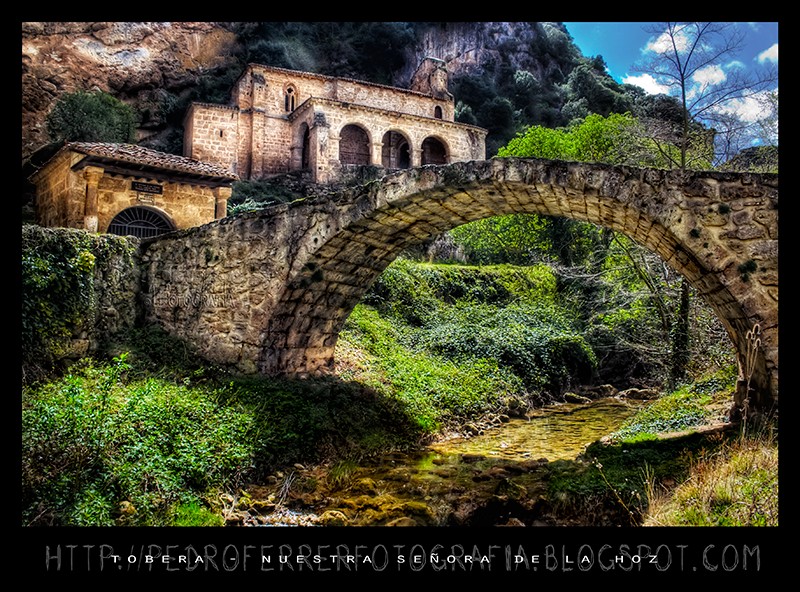
En el Norte de Burgos, la comarca de Las Merindades tiene un paisaje espectacular y pintoresco. En mi serie sobre esta zona de la pasada Semana Santa, visité, además de las cascadas del Valle de Mena y los pueblos de La Bureba, el Valle de Tobalina y el pueblo (ciudad, dicen) de Frías.
Frías es un pueblo muy conocido y explotado turísticamente. Ya lo había visitado varias veces, pero lo que no sabía es que tan sólo unos cientos de metros más arriba, se encuentra su barrio de Tobera, en una estrecha garganta por la que cae el río Molinar en un sinfín de cascadas sonoras, saltando entre las casas de este barrio. En la parte alta de este barrio de Tobera se encuentra, abrigado por una pared vertical de roca, el Santuario de Nuestra Señora de la Hoz, y el Humilladero del Cristo, con un pequeño puente sobre el Molinar.
En próximos días espero subir alguna foto del paisaje que encuentras al descender junto al río entre las casas de Tobera.
Ver en grande - Best view large
Cómo/How I did it
Canon EOS450D + Tokina 12-24
12mm f/8 1/250 ISO200
abril 2009
al atardecer, con el sol en la derecha
Que maravilla es la fotografía digital. En cada viaje, puedes disparar sin más límite que la capacidad de tus tarjetas de memoria, es gratis. Luego, en casa, con calma, procesas aquellas fotos que más te gustan, y siempre te dejas alguna para más adelante, o bien porque no la ves clara o, como es el caso, porque no sabes como "meterle mano" para que quede bien. No pasa nada, sólo ocupa unos megas en tu disco duro, y ya aprenderás como hacerlo más adelante.
Esta fotografia me encanta como composición, pero ha sido muy dificil. La he intentado procesar varias veces pero el cielo estaba bastante quemado y había sombras muy profundas, demasiado contraste.
A partir de un solo raw obtengo 6 exposiciones desde -4 hasta +2ev, hdr, mezcla con capa cero, máscara para arreglar el cielo, pincel en modo subexponer color para aumentar detalle en las sombras del puente y en modo luz intensa para los muros de la ermita, ajuste curvas en color lab para aumentar saturación y máscara de enfoque selectiva en la piedra.
Copyright © 2009 Pedro Ferrer. All Rights Reserved. Todos los derechos reservados.
Please don't use this image on websites, blogs or other media without my explicit permission.
Contact: fieraz@gmail.com
Por favor, no utilices esta imagen en páginas web, blogs u otros medios sin mi permiso explícito.
Contacto: fieraz@gmail.com
Medieval Byzantine Chant.
Title: "Θεαρχίω νεύματι"
.
.
.
photo:
Samurcasesti Monastery, in Ciorogarla village, Ilfov county, near Bucharest
Mănăstirea Samurcășești, comuna Ciorogârla, județul Ilfov, aproape de București
www.monumenteromania.ro/index.php/monumente/detalii/en/Ma...
ro.wikipedia.org/wiki/M%C4%83n%C4%83stirea_Samurc%C4%83%C...
en.flickeflu.com/photos/cliffzener/1
This was taken on a section of Starvationcreek in Oregon's Columbia River Gorge that usually gets passed over.
On my way back to the car (in an attempt to get out of the rain) i decided to take a quick peek and I saw a couple spots that were right up my alley. If you've viewed my photostream you know that these small creek scenes are some of my favorites. To this day I'm trying to figure out exactly why???? Thanks for having a look.
Dates
Taken on October 30, 2010 at 8.31am PDT (edit)
Posted to Flickr November 1, 2010 at 8.39PM PDT (edit)
Exif data
Camera Canon EOS Digital Rebel XTi
Exposure 1.6
Aperture f/7.1
Focal Length 13 mm
ISO Speed 400
Exposure Bias 0 EV
Library of Congress Blanche Satchel
I claim no rights other than colorizing this image if you wish to use let me know
Title
Blanche Satchel
Contributor Names
Bain News Service, publisher
Created / Published
[no date recorded on caption card]
Format Headings
Glass negatives.
Notes
- Title from unverified data provided by the Bain News Service on the negatives or caption cards.
- Forms part of: George Grantham Bain Collection (Library of Congress).
- General information about the Bain Collection is available at hdl.loc.gov/loc.pnp/pp.ggbain
Medium
1 negative : glass ; 5 x 7 in. or smaller.
Call Number/Physical Location
LC-B2- 6431-5 [P&P]
Repository
Library of Congress Prints and Photographs Division Washington, D.C. 20540 USA hdl.loc.gov/loc.pnp/pp.print
Digital Id
ggbain 38624 //hdl.loc.gov/loc.pnp/ggbain.38624
Control Number
ggb2006014029
Reproduction Number
LC-DIG-ggbain-38624 (digital file from original negative)
Rights Advisory
No known restrictions on publication.
Online Format
image
Description
1 negative : glass ; 5 x 7 in. or smaller.