View allAll Photos Tagged gardenaction
French Beans
French Beans are also known by a variety of names such as kidney beans, flageolets and haricot beans - these names refer to the beans when left to mature fully'. Refer: Search Gardenaction.
French Beans
French Beans are also known by a variety of names such as kidney beans, flageolets and haricot beans - these names refer to the beans when left to mature fully.
Search Gardenaction.
A deciduous tree that can grow up to 30 feet. It has over 300 varieties of hybrids. Dwarf varieties of the plant can be grown in pots. It needs slightly acidic soil to grow. The species in the picture is a Sekka Yatsubasa. The tree is native to Japan, Northeast China, and Korea. They are normally shaded by bigger in their natural habitats.
www.gardenaction.co.uk/plantfinder/japanese_maple-1.asp
www.my-photo-gallery.com/tag/japanese-maple/
A deciduous tree that can grow up to 30 feet. It has over 300 varieties of hybrids. Dwarf varieties of the plant can be grown in pots. It needs slightly acidic soil to grow. The species in the picture is a Sekka Yatsubasa. The tree is native to Japan, Northeast China, and Korea. They are normally shaded by bigger in their natural habitats.
www.gardenaction.co.uk/plantfinder/japanese_maple-1.asp
www.my-photo-gallery.com/tag/japanese-maple/
Brzo vyjde první díl našeho filmu o hasičích a bude to fakt stát za to, tak se těšte=)
www.youtube.com/watch?v=10wDk9nmu5Q
Fire brigade in action!!!
We will soon relase first part of our film about fire brigade and it will be really worth watching, so look forward to=)
Takhle nějak jsme se bavili celej jeden den u Bětky na chatě...Fakt hodnotná zábava nemyslíte?
www.youtube.com/watch?v=10wDk9nmu5Q
Fire brigade in action!!!
This was our entertainment for one whole day at Betka cottage...Really worthy fun dont you think so?
Přesně ve chvíli, kdy se majkl rozhodl,že mně přetáhne tim kroketovym kladivem po hlavě...
Fire brigade in action
Just when Majkl decided to strike me with crocket hammer he was holding...
Vim, že to asi nevypadá jako bůhvíjak vynalézavá zábava, ale dvě takovýhle hadice a spousta deštový vody nás zabavily na víc než dva dny=)
Majkl and hosepipe=)
I know that you wont admit this as much inventional entartainment, but this pipe and a lot of rain-water entertain us for more then two days=)
No. 3 - 5 - Exploring Limerick -
Hydrangea macrophylla x serrata Preziosa.-
This fluorescent little blooming hydrangea is beyond belief. It will have a multitude of colours on the flowers and leaves when grown in full sun. This plant will feature blooms in all stages at once with breathtaking effect. The dark maroon stems contrast against the foliage adding to its richness. Make sure that it grows in plenty of moist soil. 4-5 foot height at maturity. www.gardenworld.co.uk/hydrangea2a.asp
Key Hydrangea Facts
Botanical Name:- .......Hydrangea
Common Name:-.........Lacecap, Mop head, Oak leaf
Type:- ...........................Deciduous shrub or small tree; summer flowering.
Size (after 5 years):-...Varies considerably depending on the variety
Position:-.......................Full sun or partial shade depending on variety.
Soil:-...............................Light and well-drained
Hardy:-..........................Yes but depends on the variety
Flower:- ........................Blue, pink or white
Foliage:- .......................Mid green
Scent :- ..........................No
Season of Interest:- ....Summer.
Propagate:- ..................Greenwood cuttings when flowers are dying or by layering,
www.gardenaction.co.uk/plantfinder/hydrangea-1.asp
A History of Hydrangeas.
Many people remember hydrangeas from their childhood. Today we are falling in love with them all over again. It's easy to find hydrangeas that will bloom in almost any location since the selection is now so large.
Hydrangeas have a truly unique history, that begins with an early settler in America, John Bartram, who is credited with the discovery of the species and its introduction to "New World" gardens in the 1730s. He began to explore the wilderness in his quest for plants, travelling thousands of miles, including trips through dangerous frontier country, into the wilds of the Appalachian Mountains and as far south as Florida.
In later years, his son accompanied him on his travels and they discovered a hydrangea species native to Georgia. The two set up a five-acre botanic garden at the Bartram home in the Philadelphia area. Bartram exported plants from the Oakleaf variety to England and eventually became the "the King's Botanist" to George III. In the U.S., he is regarded as "the father of American botany."
Hydrangea, the name, comes from the Greek words "hydro" or water, and "angeion," or vase -- water vase. Much as we would like to say that it's descriptive of how the flowers can be used, the name actually relates to the shape of the plant's seed capsule. Fossils show that hydrangeas grew in North America 40-70 million years ago and up to 25 million years ago in Asia.
The first hydrangea in Europe was Hydrangea arborescens, imported into England in 1739. The plant was found growing wild in the colony called Pennsylvania by a botanist named Peter Collinson. The plant was popular immediately and quickly spread from England to The Continent.
While Europeans, notably the French, have put the plant "on the map" in the last century, they did it with imported plants as the hydrangea is native only to the North American and Asian continents! Hydrangea arborescens and Hydrangea quercifolia are native to America; all others are native to Asia.
In the early 1800s, specimens of Hydrangea macrophylla, Bigleaf Hydrangea, started to show up in Europe. It is this plant, with its colourful blue to pink hues which was interesting to botanists, collectors and later, to hybridizers.
One of the first was Dr. Philipp Franz von Siebol, a physician and botanist, who spent two long periods in Japan. He imported numerous hydrangeas and other plants and created a botanical garden and nursery in France and display gardens throughout his native Germany. It is Dr. von Siebol who is credited with being the "Father of the European Hydrangea Movement."
It was the French who began hybridizing Bigleaf Hydrangeas to give us the rainbows of Summer colour we enjoy today. Hydrangea macrophylla 'Mariesii Perfecta,' hybridized by Victor Lemoine in 1904, was one of the earliest hybrids on the European market.
www.gardenworld.co.uk/hydrangea.asp
To look large:-
farm4.static.flickr.com/3086/3243359035_2f81a129eb_b.jpg

Taken on
July 11, 2007 at 11:59 BST
Zleva...Kája, Majkl a já.
www.youtube.com/watch?v=10wDk9nmu5Q
Fire brigade in action!!!
From left...Kája, Majkl and me.
www.gardenaction.co.uk/fruit_veg_diary/fruit_veg_mini_pro...
Runner Beans
The ideal plant for the beginner gardener. If the soil is prepared well with lots of compost, runner beans are very forgiving vegetables. The foliage is attractive, and the red or white flowers making this a beautiful garden feature.
Originally a perennial plant from South America, they are grown in the UK as a half-hardy annual, being struck down each year by the frost. They produce large amounts of beans and juicy flesh which are best eaten soon after picking, but also freeze well.
Many varieties grow to about 2m (6ft) tall and therefore need support. Some of the more recent varieties are dwarfs and need no support making them particularly easy to grow.
RUNNER BEAN QUICK GUIDE
Folklore
None available
Latin Name
Phaseolus coccineus
Type
Perennial, but grown in UK as half-hardy annual.
Site and Soil
Full sun, sheltered from wind. Well-dug water retaining soil, do not add additional nitrogen
Plant to Harvest Time
13 weeks
How Many?
5kg (11lb) per metre (yard)
VIDEO: The KING of EXTREME-ENDURO – Graham Jarvis trainiert auf Gartenmöbel / Graham Jarvis trains on garden furniture! 😂😂😂
#awesome #Covid19 #crazy #Enduroaction #Enduropassion #ExtremEnduro #gardenaction #GrahamJarvis #hammer #Hardenduro #thekingofextremeenduro #training #verrückt offroadcracks.com/video-the-king-of-extreme-enduro-graham...
Photo: Björn Geldermann
Now that we have the grill, there's no turning back. This is THE place to be in the summer.
Photo: Björn Geldermann
Somebody has finally photographed me in action. Usually I'm behind the camera.
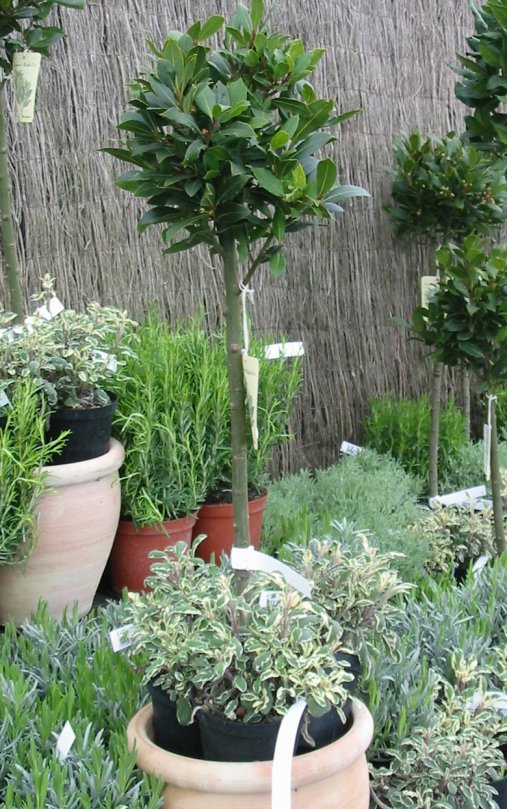
Thought I would try my hand at starting herbs from seeds. I have always wished for more throughout the season ... especially Basil (for pesto) ... We shall see! Much more economical $1.25 for a packet OR $4/$5 for 1. :) I hope for this look eventually www.gardenaction.co.uk/images/bay_laurel_standard_origina...