View allAll Photos Tagged frasi
L’inchiostro verde crea giardini, selve, prati,
fogliame dove cantano le lettere,
parole che son alberi,
frasi che sono costellazioni.
(Octavio Paz)
Green is the prime color of the world, and that from which its loveliness arises. .
(Pedro Calderon de la Barca)
“Vertes sont les prairies, couleur de citron !
Ainsi sont les yeux de mon coeur.” (Luís de Camões)
-----------------------------------------------------------------------------------------------
FOR SALE
WIRESTOCK
This image is sold via WIRESTOCK by
Alessandro Giorgi Art Photography complete COLLECTION FOR SALE on WIRESTOCK
...At my house the moon never knocked, it always came overwhelmingly through the shutters. Like the strong emotions that never knock, those !!!
...A casa mia la luna non ha mai bussato. È sempre entrata prepotentemente dalle persiane. Come le emozioni forti. Ché mica bussano mai, quelle!!!
( frasi dal web )
2016 - Rome ( Piazza Cola di Rienzo )
…Il problema, se così si può chiamare,è che i “libri” degli youtuber,grazie alla fama dei loro autori e aiutati da eventi come i famigerati e oltremodo squallidi firmacopie, sfiorano spesso,o superano, le centomila copie, obiettivo che in Italia è raggiunto da autori che si contano con le dita di una mano. Loro invece diventano agilmente best seller vendendo libri a non–lettori, adolescenti che in libreria non ci entrano mai ( e forse non ci entreranno mai più) e acquistano il libro soprattutto come un feticcio. Basta dargli un’occhiata, a queste pubblicazioni: ad esempio VERI AMICI , “scritto” dagli youtuber del momento, i cosiddetti MATES (alias Vegas,St3Ny,Surrealpower e Anima),che ha appena festeggiato le 100.000 copie vendute.
Centotrentacinque pagine,di cui metà fatte, come quasi tutti i libri di queste star del web, di immagini, foto, disegni di supereroi da videogames. Frasi indimenticabili come “quello che vogliamo comunicare è che l’unione fa la forza” o “in fondo la normalità è la cosa più difficile da ottenere”…
Elisabetta Ambrosi
( da Il FATTO QUOTIDIANO del 7 Marzo 2017 )
... The problem, if you can call it, is that the "books" of youtuber, thanks to the fame of the author and helped by events such as the notorious and extremely squalid signature copies, skim often, or exceeding, one hundred thousand copies, an objective that Italy is reached by authors who can be counted with the fingers of one hand. They instead become easily best-selling books to selling non-readers, teenagers who do not come to the library ever (and perhaps there never will come) and buy the book primarily as a fetish. Just look at it, these publications: for example REAL FRIENDS, "written" by youtuber of the moment, the so-called MATES (aka Vegas, St3Ny, Surrealpower and Soul), which has just celebrated the 100,000 copies sold.
One hundred and thirty five pages, half of whom made, as almost all the books of these web star, pictures, photos, drawings of superheroes from videogames. unforgettable phrases as "what we want to communicate is that the union is strength" or "at the bottom of normality is the hardest thing to get" ...
Elisabetta Ambrosi ( from The DAILY FACT of March 7, 2017)
Che ci volete fare, la stagione è quella che è... d'altra parte, se non piove adesso, quando? Perchè se no non ci sono più le mezze stagioni.... e non c'è più il tempo di una volta... e blah blah (discorsi e frasi stereotipate, che quando non si sa di cosa parlare si comincia sempre a discutere di che tempo fa)
Comunque, buon martedì a tutti (sperando naturalmente che il tempo migliori!) Con un brano stupendo, ideale per oggi!
What can you do, the season is what it is ... on the other hand, if it isn't raining now, when? Because there are no more between seasons .... and there isn't the weather as once upon a time ... and blah blah (speeches and stereotyped phrases, that when you do not know what to talk about you always starts to talk about the weather)
However, good Tuesday to all (of course hoping the weather improves!) With a wonderful song, right for today!!!
Inquietante non trovate? E' il primo esperimento che faccio di questo tipo.
Creepy, isn't it? First experiment of this kind of stuff.
Rhythms Of The Ravine.
Toin Eclipse beacha trua seoda luachmhara nathanna cruthaitheacha an dúlra a chlaochlú armóiní amhránaithe bród dána forthoin,
teintes pompeuses profondeurs émotionnelles institutions fiers philistins bogues philosophes ombres poète espiègle passant en revue les ennemis ennemis mouvement littéraire mers à voile,
πνευματικές εικόνες μηχανικά πολιτικοποιημένα μυαλά ενθουσιώδεις συζητήσεις καταστάσεις περιστάσεις περίπλοκες ερμηνείες πολυεπίπεδες επιπτώσεις ριζοσπάστες καλλιτέχνες πολλαπλασιάζονται,
artis innovationes extraordinariae documenta ideologiae missae quaestiones imperiales influentiales coetus facultatum culturas essentiales educationem docuerunt,
rassegne internazionali visioni utopiche che effettuano cambiamenti frasi disinibite catalizzatori cosmici forme imperative stimolanti passioni dibattiti montagne,
イデオロギーの変化 協会 冷たい前衛的な焦点 モダニズムの抽象化 矮小化する 商業主義 厳格な法律 革命的な芸術 .
Steve.D.Hammond.
Guardate le altre foto del SET... DREAM LAND
See other pictures of SET... DREAM LAND
.
Il palindromo (dal greco antico πάλιν "indietro" e δρóμος "corsa", col significato "che corre all'indietro") è una sequenza di caratteri che, letta a rovescio, rimane identica.
Il concetto si riferisce principalmente a parole, frasi e numeri.
Ma anche le immagini possono essere palindrome? Sembrerebbe di si ...
The palindrome (from the ancient greek πάλιν "back" and δρóμος "race", meaning "running backwards") is a sequence of characters which, read backwards, remains the same.
The concept refers mainly to words, phrases and numbers.
But the images can be palindromes? It would seem so ...
“things only exist if they are told/narrated”
(maybe of Alessandro Baricco);
“le cose esistono solo se vengono raccontate”
(probabile, di Alessandro Baricco).
POSTER - LOCANDINA –
www.primevideo.com/-/it/detail/Angel-A/0KVPRDXIFFVZY10Y02...
www.imdb.com/de/title/tt0473753/
www.moviemag.it/angel-a-la-recensione-del-film-di-luc-bes...
----------------------------------------------------------
click to activate the small icon of slideshow: the small triangle inscribed in the small rectangle, at the top right, in the photostream (it means the monitor);
or…. Press the “L” button to zoom in the image;
clicca sulla piccola icona per attivare lo slideshow: sulla facciata principale del photostream, in alto a destra c'è un piccolo rettangolo (rappresenta il monitor) con dentro un piccolo triangolo nero;
oppure…. premi il tasto “L” per ingrandire l'immagine;
www.worldphoto.org/sony-world-photography-awards/winners-...
www.fotografidigitali.it/gallery/2726/opere-italiane-segn...
………………………………………………………
I present here a “Sicilian Festival”, with images and words, which was held this year in what is a “scattered municipality”, since it is composed of the two hamlets of Mongiuffi and Melia, separated by a valley in which a river flows, close to the more famous Taormina; the festival is celebrated on Easter Monday, this year the festival, which began normally, was interrupted shortly after due to the arrival of the sad news of the Holy Father Francis, who passed away, so the festival was postponed and celebrated on Sunday 27 April. Historically, the news that I report here, briefly, are taken from the book written by the historian, researcher of popular traditions and photographer, Giovanni Curcuruto, title of the work "Monfelia" (ETNA printing house, OCTOBER 2006): this festival, initially called "Festa della Pace" (later indicated as "Festa degli Angeli"), was established by the Marquis Francesco Rao Corvaja in 1830, to try to bring harmony between the two villages, Mongiuffi and Melia, which had disagreed in the past years for trivial reasons. The festival was celebrated until 1843, the year in which the two villages argued again (the two communities argued as if they were stadium fans, one sided with the clergy, the other with the nobles), the festival was then suspended, and was only reinstated in 1929; the celebration when it was established required that forty days before Easter Monday, the two communities would gather in the church of San Sebastiano di Melia, to select eight children, four from Mongiuffi in honor of the Madonna, and four from Melia in honor of the Risen Christ, between ten and fifteen years old, on the day of the celebration they would then be dressed in white clothes and “wings”, embellished with ribbons and bows; the children were instructed to recite a text in Sicilian dialect mixed with Latin phrases, written in 1833 by the priest Giovanni Cuzari. On Easter Monday, the various brotherhoods had a lot to do preparing the ceremony; from the church of San Sebastiano di Melia, a procession of only men came out, the bearers carried the float with the Risen Christ on their shoulders, while from Mongiuffi a procession of only women set out, with their heads covered by a black veil, the float with the the Virgin of Sorrows was carried on their shoulders, a black veil covered her completely, leaving only her face uncovered, (underneath there was a white veil, which would have “appeared” at the moment of the encounter with the Risen Son): the two processions met in Melia (and still meet today), in an area called “’nto chianu di l’Angiuli” (the square of the Angels), in reality now it is little more than a narrow street: what happened in the past, still happens today (except that, the procession with the the Virgin of Sorrows no longer comes from Mongiuffi, but comes from Melia itself), the two processions coming from the two opposite directions, carrying the float with the the Virgin of Sorrows, and the one with the Risen Christ, stop one in front of the other. First there is a particular ceremony, two boys meet with their respective Crucifixes making three bows to each other, the same happens with two girls and then two men, with their banners, finally the highly emotional “Meeting” takes place between the Mother (the black cloak flies away, and the white one appears) with her Risen Son! Finally, hidden until then behind a curtain on a stage, there is the appearance of the children dressed as Angels, who undertake the traditional recitation. The historian, passionate about popular traditions, Giovanni Curcuruto, has always been close to the “little angels” having acted as director and choreographer, of this moving, very beautiful, “traditional Sicilian ceremony-festival”.
…………………………………………….
Presento qui una “Festa Siciliana”, con immagini e parole, che si è tenuta quest’anno in quello che è un “comune sparso”, poiché composto dalle due borgate di Mongiuffi e Melia, separate da una vallata nella quale scorre un fiume, vicine alla più conosciuta Taormina; la festa viene celebrata il giorno di Pasquetta (o Lunedì dell’Angelo), quest’anno la festa, iniziata normalmente, è stata poco dopo interrotta per l’arrivo della triste notizia del Santo Padre Francesco, venuto a mancare, quindi la festa è stata rinviata e celebrata domenica 27 aprile.
Storicamente le notizie che qui riporto, sinteticamente, sono tratte dal libro scritto dallo storico, ricercatore di tradizioni popolari e, fotografo, Giovanni Curcuruto, titolo dell’opera “Monfelia” (tipografia ETNA, OTTOBRE 2006): questa festa, chiamata inizialmente “Festa della Pace”, (poi indicata come “Festa degli Angeli”), fu istituita dal Marchese Francesco Rao Corvaja nel 1830, per tentare di portare armonia tra i due borghi, Mongiuffi e Melia, entrati in disaccordo negli anni passati per futili motivi, la festa fu celebrata fino al 1843, anno in cui i due borghi litigarono nuovamente, (le due comunità litigarono come se fossero tifoserie di stadio, una parteggiava per il clero, l’altra per i nobili), la festa venne quindi sospesa, e fu ripristinata solamente nel 1929; la festa quando venne istituita prevedeva che quaranta giorni prima del Lunedì di Pasqua, le due comunità si riunissero nella chiesa di San Sebastiano di Melia, per selezionare otto ragazzini, quattro di Mongiuffi in in onore della Madonna, e quattro di Melia in onore del Cristo Risorto, tra i dieci ed i quindici anni, il giorno della celebrazione sarebbero poi stati vestiti con abiti ed “ali” di colore bianco, impreziositi con nastri e fiocchetti; i ragazzini venivano istruiti a recitare un testo in dialetto siciliano misto a frasi in latino, scritto nel 1833 dal sacerdote Giovanni Cuzari. Il Lunedì dell’Angelo, le varie confraternite avevano un gran da fare per la preparazione della cerimonia; dalla chiesa di San Sebastiano di Melia, usciva una processione di soli uomini, i portatori recavano in spalla la vara col Cristo Risorto, mentre da Mongiuffi partiva una processione di sole donne, col capo coperto da un velo nero, veniva portata in spalla la vara con la Madonna Addolorata, un velo nero la copriva completamente, lasciandole scoperto solamente il volto, (sotto era presente un velo bianco, che sarebbe “apparso” nel momento dell’incontro col Figlio Risorto): le due processioni si incontravano a Melia (e si incontrano tutt’ora), in una zona chiamata “’nto chianu di l’Angiuli” (la piazza degli Angeli), in realtà adesso è poco più di una stretta stradina: quanto accadeva in passato, accade tutt’ora (tranne che, la processione con la Madonna Addolorata non proviene più da Mongiuffi, ma giunge dalla stessa Melia), le due processioni provenienti dalle due opposte direzioni, recanti la vara con la Madonna Addolorata, e quella col Cristo Risorto, si fermano una di fronta l’altra, dapprima
c’è una particolare cerimonia, due ragazzi si incontrano coi rispettivi Crocefissi facendosi l’un l’altro tre inchini, lo stesso accade con due ragazze e poi due uomini, con i loro stendardi, infine avviene “l’Incontro” altamente emozionante tra la Madre (vola via il mantello nero, ed appare quello bianco) col suo Figlio Risorto! Infine, nascosti fino ad allora dietro una tenda su di un palco, c’è l’apparizione dei ragazzini vestiti da Angeli, che intraprendono la recita tradizionale. Lo storico, appassionato di tradizioni popolari, Giovanni Curcuruto, è stato sempre accanto agli “angioletti” avendo fatto da regista e coreografo, di questa commovente, molto bella, “cerimonia – festa tradizionale Siciliana”.
…………………………………………………….
“things only exist if they are told/narrated”
(maybe of Alessandro Baricco);
“le cose esistono solo se vengono raccontate”
(probabile, di Alessandro Baricco).
POSTER - LOCANDINA –
www.primevideo.com/-/it/detail/Angel-A/0KVPRDXIFFVZY10Y02...
www.imdb.com/de/title/tt0473753/
www.moviemag.it/angel-a-la-recensione-del-film-di-luc-bes...
----------------------------------------------------------
click to activate the small icon of slideshow: the small triangle inscribed in the small rectangle, at the top right, in the photostream (it means the monitor);
or…. Press the “L” button to zoom in the image;
clicca sulla piccola icona per attivare lo slideshow: sulla facciata principale del photostream, in alto a destra c'è un piccolo rettangolo (rappresenta il monitor) con dentro un piccolo triangolo nero;
oppure…. premi il tasto “L” per ingrandire l'immagine;
www.worldphoto.org/sony-world-photography-awards/winners-...
www.fotografidigitali.it/gallery/2726/opere-italiane-segn...
………………………………………………………
I present here a “Sicilian Festival”, with images and words, which was held this year in what is a “scattered municipality”, since it is composed of the two hamlets of Mongiuffi and Melia, separated by a valley in which a river flows, close to the more famous Taormina; the festival is celebrated on Easter Monday, this year the festival, which began normally, was interrupted shortly after due to the arrival of the sad news of the Holy Father Francis, who passed away, so the festival was postponed and celebrated on Sunday 27 April. Historically, the news that I report here, briefly, are taken from the book written by the historian, researcher of popular traditions and photographer, Giovanni Curcuruto, title of the work "Monfelia" (ETNA printing house, OCTOBER 2006): this festival, initially called "Festa della Pace" (later indicated as "Festa degli Angeli"), was established by the Marquis Francesco Rao Corvaja in 1830, to try to bring harmony between the two villages, Mongiuffi and Melia, which had disagreed in the past years for trivial reasons. The festival was celebrated until 1843, the year in which the two villages argued again (the two communities argued as if they were stadium fans, one sided with the clergy, the other with the nobles), the festival was then suspended, and was only reinstated in 1929; the celebration when it was established required that forty days before Easter Monday, the two communities would gather in the church of San Sebastiano di Melia, to select eight children, four from Mongiuffi in honor of the Madonna, and four from Melia in honor of the Risen Christ, between ten and fifteen years old, on the day of the celebration they would then be dressed in white clothes and “wings”, embellished with ribbons and bows; the children were instructed to recite a text in Sicilian dialect mixed with Latin phrases, written in 1833 by the priest Giovanni Cuzari. On Easter Monday, the various brotherhoods had a lot to do preparing the ceremony; from the church of San Sebastiano di Melia, a procession of only men came out, the bearers carried the float with the Risen Christ on their shoulders, while from Mongiuffi a procession of only women set out, with their heads covered by a black veil, the float with the the Virgin of Sorrows was carried on their shoulders, a black veil covered her completely, leaving only her face uncovered, (underneath there was a white veil, which would have “appeared” at the moment of the encounter with the Risen Son): the two processions met in Melia (and still meet today), in an area called “’nto chianu di l’Angiuli” (the square of the Angels), in reality now it is little more than a narrow street: what happened in the past, still happens today (except that, the procession with the the Virgin of Sorrows no longer comes from Mongiuffi, but comes from Melia itself), the two processions coming from the two opposite directions, carrying the float with the the Virgin of Sorrows, and the one with the Risen Christ, stop one in front of the other. First there is a particular ceremony, two boys meet with their respective Crucifixes making three bows to each other, the same happens with two girls and then two men, with their banners, finally the highly emotional “Meeting” takes place between the Mother (the black cloak flies away, and the white one appears) with her Risen Son! Finally, hidden until then behind a curtain on a stage, there is the appearance of the children dressed as Angels, who undertake the traditional recitation. The historian, passionate about popular traditions, Giovanni Curcuruto, has always been close to the “little angels” having acted as director and choreographer, of this moving, very beautiful, “traditional Sicilian ceremony-festival”.
…………………………………………….
Presento qui una “Festa Siciliana”, con immagini e parole, che si è tenuta quest’anno in quello che è un “comune sparso”, poiché composto dalle due borgate di Mongiuffi e Melia, separate da una vallata nella quale scorre un fiume, vicine alla più conosciuta Taormina; la festa viene celebrata il giorno di Pasquetta (o Lunedì dell’Angelo), quest’anno la festa, iniziata normalmente, è stata poco dopo interrotta per l’arrivo della triste notizia del Santo Padre Francesco, venuto a mancare, quindi la festa è stata rinviata e celebrata domenica 27 aprile.
Storicamente le notizie che qui riporto, sinteticamente, sono tratte dal libro scritto dallo storico, ricercatore di tradizioni popolari e, fotografo, Giovanni Curcuruto, titolo dell’opera “Monfelia” (tipografia ETNA, OTTOBRE 2006): questa festa, chiamata inizialmente “Festa della Pace”, (poi indicata come “Festa degli Angeli”), fu istituita dal Marchese Francesco Rao Corvaja nel 1830, per tentare di portare armonia tra i due borghi, Mongiuffi e Melia, entrati in disaccordo negli anni passati per futili motivi, la festa fu celebrata fino al 1843, anno in cui i due borghi litigarono nuovamente, (le due comunità litigarono come se fossero tifoserie di stadio, una parteggiava per il clero, l’altra per i nobili), la festa venne quindi sospesa, e fu ripristinata solamente nel 1929; la festa quando venne istituita prevedeva che quaranta giorni prima del Lunedì di Pasqua, le due comunità si riunissero nella chiesa di San Sebastiano di Melia, per selezionare otto ragazzini, quattro di Mongiuffi in in onore della Madonna, e quattro di Melia in onore del Cristo Risorto, tra i dieci ed i quindici anni, il giorno della celebrazione sarebbero poi stati vestiti con abiti ed “ali” di colore bianco, impreziositi con nastri e fiocchetti; i ragazzini venivano istruiti a recitare un testo in dialetto siciliano misto a frasi in latino, scritto nel 1833 dal sacerdote Giovanni Cuzari. Il Lunedì dell’Angelo, le varie confraternite avevano un gran da fare per la preparazione della cerimonia; dalla chiesa di San Sebastiano di Melia, usciva una processione di soli uomini, i portatori recavano in spalla la vara col Cristo Risorto, mentre da Mongiuffi partiva una processione di sole donne, col capo coperto da un velo nero, veniva portata in spalla la vara con la Madonna Addolorata, un velo nero la copriva completamente, lasciandole scoperto solamente il volto, (sotto era presente un velo bianco, che sarebbe “apparso” nel momento dell’incontro col Figlio Risorto): le due processioni si incontravano a Melia (e si incontrano tutt’ora), in una zona chiamata “’nto chianu di l’Angiuli” (la piazza degli Angeli), in realtà adesso è poco più di una stretta stradina: quanto accadeva in passato, accade tutt’ora (tranne che, la processione con la Madonna Addolorata non proviene più da Mongiuffi, ma giunge dalla stessa Melia), le due processioni provenienti dalle due opposte direzioni, recanti la vara con la Madonna Addolorata, e quella col Cristo Risorto, si fermano una di fronta l’altra, dapprima
c’è una particolare cerimonia, due ragazzi si incontrano coi rispettivi Crocefissi facendosi l’un l’altro tre inchini, lo stesso accade con due ragazze e poi due uomini, con i loro stendardi, infine avviene “l’Incontro” altamente emozionante tra la Madre (vola via il mantello nero, ed appare quello bianco) col suo Figlio Risorto! Infine, nascosti fino ad allora dietro una tenda su di un palco, c’è l’apparizione dei ragazzini vestiti da Angeli, che intraprendono la recita tradizionale. Lo storico, appassionato di tradizioni popolari, Giovanni Curcuruto, è stato sempre accanto agli “angioletti” avendo fatto da regista e coreografo, di questa commovente, molto bella, “cerimonia – festa tradizionale Siciliana”.
…………………………………………………….
Mongiuffi Melia - lunedì dell'Angelo - Pasqua
Mongiuffi Melia - Valle del Ghiodaro (dji mavic mini) Travel Sicily
.............................................................................
Jamel Debbouze "Angel-a" | INA Arditube
Angel-a di Luc Besson "il suicidio e salvataggio"
"E' adesso che sei nella merda!" - Angel-a - Luc Besson
dagli ciò che merita .. (Angel-A)
Eat - Crossroads (Angel-A OST)
........................................................................
Freely inspired by:
Vedi cara, è difficile a spiegare
È difficile parlare dei fantasmi di una mente
Vedi cara, tutto quel che posso dire
È che cambio un po' ogni giorno, è che sono differente
Vedi cara, certe volte sono in cielo
Come un aquilone al vento che poi a terra ricadrà
Vedi cara, è difficile spiegare
È difficile capire se non hai capito già
Vedi cara, certe crisi son soltanto
Segno di qualcosa dentro che sta urlando per uscire
Vedi cara, certi giorni sono un anno
Certe frasi sono un niente che non serve più sentire
Vedi cara, le stagioni ed i sorrisi
Son denari che van spesi con dovuta proprietà
Vedi cara è difficile a spiegare
È difficile capire se non hai capito già
Non capisci quando cerco in una sera
Un mistero d' atmosfera che è difficile afferrare
Quando rido senza muovere il mio viso
Quando piango senza un grido, quando invece vorrei urlare
Quando sogno dietro a frasi di canzoni
Dietro a libri e ad aquiloni, dietro a ciò che non sarà
Vedi cara è difficile spiegare
È difficile capire se non hai capito già
Non rimpiango tutto quello che mi hai dato
Che son io che l'ho creato e potrei rifarlo ora
Anche se tutto il mio tempo con te non dimentico perché
Questo tempo dura ancora
Non cercare in un viso la ragione
In un nome la passione che lontano ora mi fa
Vedi cara è difficile spiegare
È difficile capire se non hai capito già
Tu sei molto, anche se non sei abbastanza
E non vedi la distanza che è fra i miei pensieri e i tuoi
Tu sei tutto, ma quel tutto è ancora poco
Tu sei paga del tuo gioco ed hai già quello che vuoi
Io cerco ancora e così non spaventarti
Quando senti allontanarmi: fugge il sogno, io resto qua
Sii contenta della parte che tu hai
Ti do quello che mi dai, chi ha la colpa non si sa
Cerca dentro per capir quello che sento
Per sentir che ciò che cerco non è il nuovo o libertà
Vedi cara è difficile spiegare
È difficile capire se non hai capito già
(Francesco Guccini)
You see dear, it's hard to explain
It's hard to talk about the ghosts of a mind
You see dear, all I can say
Is that I change a little each day, I'm different
You see dear, sometimes I'm up in the sky
Like a kite in the wind that's gonna come crashing down
You see dear, it's hard to explain
It's hard to understand if you haven't understood already
You see dear, some crises are just
Sign of something inside that's screaming to get out
You see dear, some days are a year
Some phrases are nothing you don't need to hear anymore
You see dear, seasons and smiles
Are money that must be spent with due propriety
You see dear it's hard to explain
It's hard to understand if you haven't already understood
You don't understand when I look for in an evening
A mystery of atmosphere that is difficult to grasp
When I laugh without moving my face
When I cry without a cry, when I would like to scream instead
When I dream behind phrases of songs
Behind books and kites, behind what will not be
You see dear it is difficult to explain
It's hard to understand if you haven't understood already
I don't regret all that you gave me
That it was me who created it and I could do it again now
Although all my time with you I don't forget why
This time still lasts
Don't look for the reason in a face
In a name the passion that now makes me far away
You see dear it is difficult to explain
It's hard to understand if you haven't understood already
You are a lot, even if you are not enough
And you don't see the distance that is between my thoughts and yours
You are everything, but that everything is still little
You are paid for your game and you already have what you want
I'm still searching and so don't be afraid
When you hear me leave: the dream flees, I remain here
Be happy with the part that you have
I give you what you give me, who's to blame we don't know
Search inside to understand what I feel
To feel that what I'm looking for is not new or freedom
You see dear it is difficult to explain
It's hard to understand if you haven't understood already
Textureb:
manuscript
1435
2270
POSTER - LOCANDINA -
www.chiesasarda.it/wp-content/uploads/2020/11/de-andre_la...
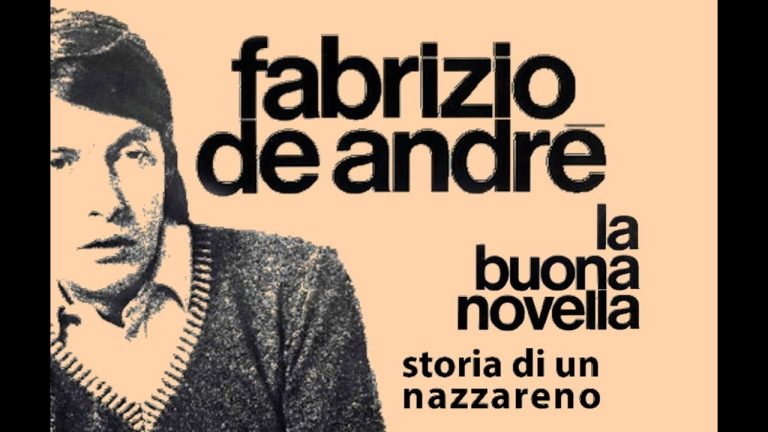
www.900letterario.it/wp-content/uploads/2014/06/fabrizio-...
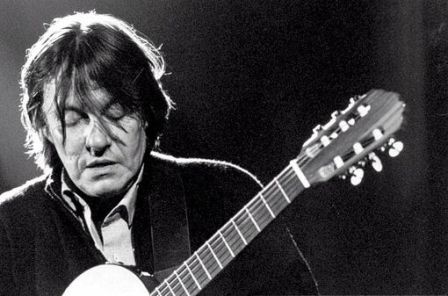
img.ubiklibri.it/images/9788896212042_0_900_0_0.jpg
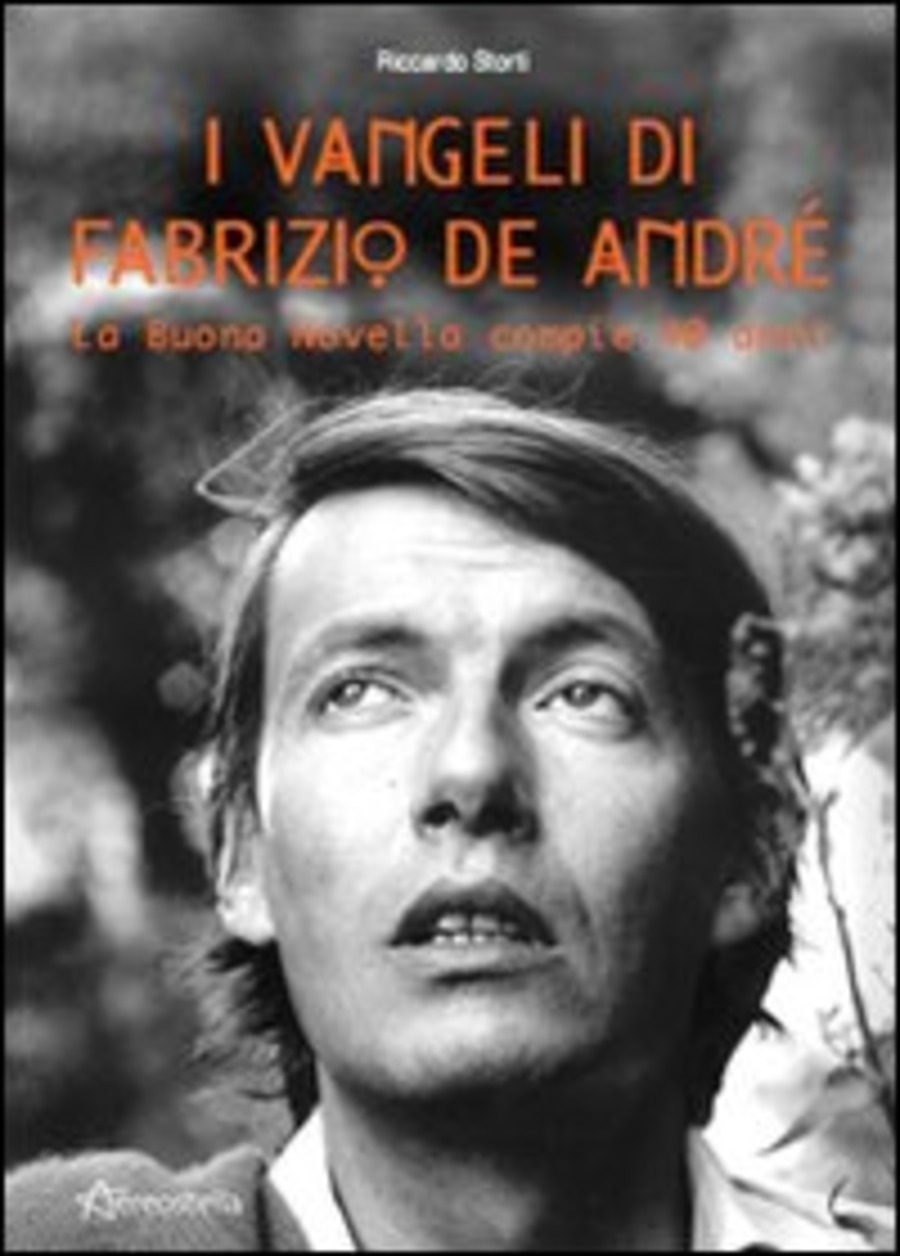
www.musiculturaonline.it/p/wp-content/uploads/2021/02/b-M...

Phrases from “The Good News - Frasi da “La Buona Novella” –
In the pity that does not give in to rancor, mother, I learned love.
Nella pietà che non cede al rancore, madre, ho imparato l’amore.
(il testamento di Tito);
I don't want to think of you as the son of God, but as the son of man, my brother too.
Non voglio pensarti figlio di Dio, ma figlio dell’uomo, fratello anche mio.
(Laudate Hominem);
If you had not been the son of God, I would still have you as my son.
Non fossi stato figlio di Dio, t’avrei ancora per figlio mio.
(Tre Madri);
……………………..
Alda Merini:
“The Cross is not a Roman pole, but the wood on which God wrote his gospel”.
“La Croce non è un palo dei romani, ma il legno su cui Dio ha scritto il suo vangelo.
----------------------------------------------------------
click to activate the small icon of slideshow: the small triangle inscribed in the small rectangle, at the top right, in the photostream (it means the monitor);
or…. Press the “L” button to zoom in the image;
clicca sulla piccola icona per attivare lo slideshow: sulla facciata principale del photostream, in alto a destra c'è un piccolo rettangolo (rappresenta il monitor) con dentro un piccolo triangolo nero;
oppure…. premi il tasto “L” per ingrandire l'immagine;
www.worldphoto.org/sony-world-photography-awards/winners-...
www.fotografidigitali.it/gallery/2726/opere-italiane-segn...
………………………………………………………
Good Friday is an anniversary which in Sicily acquires a cathartic meaning for those who are searching, not only photographically, for popular traditions (we find them widespread throughout Sicily), which are nothing other than a social, cultural event, which merge into a single past and present; from the web "popular traditions are a historical memory linked to customs and rituals that have given shape to the values and beliefs of that culture". Easter in Sicily can be a source of research, it can appear not without contradictions, citing the thoughts of that great Sicilian thinker Leonardo Sciascia, for him Sicily cannot be called Christian referring to the Sicilian festivals, at most it is only in appearance, in those properly pagan explosions tolerated by the Church; Sciascia addresses the topic as an introductory essay in the book "Religious celebrations in Sicily", illustrated with photographs of a young and still unknown Ferdinando Scianna, a book that did not fail to raise some controversy due to the Sicilian thinker's introductory note, thus being in open controversy with the sacredness of that popular Sicilian devotion (the book was criticized by the Holy See newspaper, the Osservatore Romano), Sciascia writes: “what is a religious festival in Sicily? It would be easy to answer that it is anything but a religious holiday. It is, first of all, an existential explosion; the explosion of the collective id, where the collectivity exists only at the level of the id. Since it is only during the celebration that the Sicilian emerges from his condition of a single man, which is the condition of his vigilant and painful superego, to find himself part of a class, of a class, of a city". Another Sicilian thinker, writer and poet, Gesualdo Bufalino, provides interesting indications on the meaning that Sicilians give to these traditional popular events, he says "during Easter every Sicilian feels not only a spectator, but an actor, first sorrowful and then exultant , for a Mystery that is its very existence. The time of the event is that of Spring, the season of metamorphosis, just as the very nature of the rite is metamorphic in which, as in a story from the Puppet Opera, the battle of Good against Evil is fought. Deception, Pain and Triumph, Passion, Death and Resurrection of Christ are present."
In short, Easter in Sicily is a deeply felt anniversary throughout the island since ancient times, it has always had as its fulcrum the emotional participation of the people, with representations and processions which have become rites and traditions which unequivocally characterize numerous Sicilian centres, which they recall the most salient moments narrated in the Gospels and which recall the Passion, Death and Resurrection of Jesus Christ, with processions formed by the various brotherhoods (sometimes with theatrical re-enactments) which have within them contents and symbols often coming from the Spanish domination, which took place in Sicily between the 16th and 17th centuries
This year, for Good Friday, I was looking for traditions that were "outside the most well-known circuits", in the past I have alternated traditional religious processions known, with lesser-known ones; I considered various possibilities, then I decided to go to a town that is described as being located in a remote and isolated location in the province of Messina, the town is Capizzi. Good Friday in Capizzi takes place in two phases, there is the daytime procession in which three floats are carried on the shoulders, that of the Ecce Homo, that of the Sorrowful Virgin, and that of the Pietà (with the Virgin Mary holding her Dead Son in her arms), then there is the afternoon procession, which continues until late in the evening, in this evening procession the float carrying the Ecce Homo is missing, while two others are added, there is the one with the Urn carrying the Dead Christ (this figure, that of the Dead Christ, in Capizzi, is called "Father of Divine Providence"), and there is the float carrying the "Holy Cross", on it, during the route along the streets of the town, you can see the villagers placing long linen sheets, who often lean out directly from the balconies or windows of their houses to place them over it. The procession is made up of devotees and local personalities, the police and Capizzi's musical band, and two brotherhoods, that of the SS. Sacrament (the brothers are recognizable by a light yellow cloak), and that of the Good Death (whose followers wear a black cloak); the procession advances along the route in absolute silence, silence is Sacred, the bells stop ringing, the procession walks slowly, an exception to the silence comes from the sad, mournful music played by the band and the drumbeats played in mourning; the route includes steep descents, and equally steep (and tiring) climbs. The afternoon-evening procession reaches the locality of "Tre Croci", here the Archpriest, Don Antonio, delivered his panegyric, using profound words, full of Hope, Charity, Love, remembering that Christ always forgives everyone. In the afternoon, in the Mother Church, the celebration of the Passion of Christ takes place; we witness the rite of the Adoration of the Holy Cross, and the veneration of the "Father of Divine Providence", subsequently there is the rite in which the Archpriest sprinkles the body of the Dead Christ with rose petals, and anoints it with perfumed oils (to recall what is written in the Gospel of John (19:38-42), Joseph of Arimathea, a disciple of Jesus, secretly for fear of the Jews, asked Pilate for permission to take the body of Jesus, Pilate agreed, but Nicodemus also joined Joseph, carrying about thirty kilos of a mixture of myrrh and aloe, sprinkling it on the body: they took the body of Jesus, wrapped it in bandages together with the aromas, according to the funeral custom of the Jews). During the rite of the Adoration of the Cross, in the Mother Church (and also in the Tre Croci area), there is a song sung by the young people of the village, who in chorus sing the “song of the improperia”, which would be in sung form the reproaches that Jesus Christ addresses to his people, because they were responsible for His crucifixion: it is therefore a plaintive dialogue between the crucified Christ and his people; this song dates back to the sixth century, having arrived in the West from the Church of Jerusalem.
…………………………………………………
Il Venerdì Santo è una ricorrenza che in Sicilia acquista un significato catartico per chi è alla ricerca, non solo fotografica, delle tradizioni popolari (le troviamo diffuse in tutta la Sicilia), che altro non sono che un evento sociale, culturale, che fondono in un tutt’uno passato e presente; dal web “le tradizioni popolari sono una memoria storica legata ad usanze e ritualità che hanno dato forma ai valori e alle credenze di quella cultura”. La Pasqua in Sicilia può essere fonte di ricerca, essa può apparire non priva di contraddizioni, citando il pensiero di quel grande pensatore Siciliano che fu Leonardo Sciascia, per lui la Sicilia non può dirsi cristiana riferendosi alle feste Siciliane, al massimo lo è solo in apparenza, in quelle esplosioni propriamente pagane, tollerate dalla Chiesa; Sciascia affronta l’argomento come saggio introduttivo nel libro “Feste religiose in Sicilia”, illustrato con fotografie di un giovane ed ancora sconosciuto Ferdinando Scianna, libro che non mancò di sollevare qualche polemica per la nota introduttiva del pensatore Siciliano, essendo così in aperta polemica con la sacralità di quella devozione popolare Siciliana (il libro fu oggetto di una stroncatura da parte del quotidiano della Santa Sede, l’Osservatore Romano), Sciascia scrive: “che cos’ è una festa religiosa in Sicilia? Sarebbe facile rispondere che è tutto, tranne che una festa religiosa. E’, innanzi tutto, un’esplosione esistenziale; l’esplosione dell’es collettivo, dove la collettività esiste soltanto a livello dell’es. Poiché e soltanto nella festa che il siciliano esce dalla sua condizione di uomo solo, che è poi la condizione del suo vigile e doloroso super io, per ritrovarsi parte di un ceto, di una classe, di una città ”. Altro pensatore, scrittore e poeta Siciliano, Gesualdo Bufalino, fornisce indicazioni interessanti sul senso che i Siciliani danno a questi eventi popolari tradizionali, egli dice “durante la Pasqua ogni siciliano si sente non solo uno spettatore, ma un attore, prima dolente e poi esultante, per un Mistero che è la sua stessa esistenza. Il tempo dell’evento è quello della Primavera, la stagione della metamorfosi, così come metamorfica è la natura stessa del rito nel quale, come in un racconto dell’Opera dei Pupi, si combatte la lotta del Bene contro il Male. Sono presenti l’Inganno, il Dolore e il Trionfo, la Passione, la Morte e la Resurrezione di Cristo”.
In breve, la Pasqua in Sicilia è una ricorrenza profondamente sentita in tutta l’isola fin dall’antichità, essa ha sempre avuto come fulcro la commossa partecipazione del popolo, con rappresentazioni e processioni divenuti riti e tradizioni che caratterizzano inequivocabilmente numerosissimi centri Siciliani, che rievocano i momenti più salienti narrati nei Vangeli e che ricordano la Passione, la Morte e la Resurrezione di Gesù Cristo, con cortei formati dalle varie confraternite (a volte con rievocazioni teatrali) che hanno in se contenuti e simbologie spesso provenienti dalla dominazione Spagnola, avvenuta in Sicilia tra il XVI ed il XVII secolo.
Quest’anno, per il Venerdì Santo, ero alla ricerca di tradizioni che fossero “al di fuori dei circuiti più noti”, in passato ho alternato processioni tradizionali religiose note, a quelle meno note; ho preso in considerazione diverse possibilità, poi ho deciso di recarmi in un paese che viene descritto essere situato in una località remota ed isolata della provincia di Messina, il paese è Capizzi. Il Venerdì Santo a Capizzi, si svolge in due fasi, c’è la processione diurna nella quale vengono portate in spalla tre vare, quella dell’Ecce Homo, quella della Vergine Addolorata, e quella della Pietà (con la Vergine Maria che tiene in braccio suo Figlio Morto), poi c’è la processione del pomeriggio, che prosegue fino a sera inoltrata, in questa processione serale manca la vara che reca l’Ecce Homo, mentre se ne aggiungono altre due, c’è quella con l’Urna che reca il Cristo Morto ( questa figura, quella del Cristo Morto, a Capizzi, viene chiamata “Padre della Divina Provvidenza”), e c’è la vara che reca la “Santa Croce”, su di essa, durante il percorso lungo le vie del paese, si assiste al poggiare di lunghe lenzuola di lino da parte dei paesani, che spesso si sporgono direttamente dai balconi o dalle finestre delle loro case per deporle a scavalco su di essa. La processione è formate, oltre che dai devoti e dalle personalità del paese, dalle forze dell’ordine e dalla banda musicale di Capizzi, da due confraternite, quella del SS. Sacramento (i confratelli sono riconoscibili da un mantello giallo chiaro), e quella della Buona Morte (i cui adepti recano un mantello nero); la processione avanza lungo il percorso in assoluto silenzio, il silenzio è Sacro, le campane smettono di suonare, la processione cammina lenta, una eccezione al silenzio proviene dalla musica mesta, triste, suonata dalla banda e dai colpi di tamburo suonati a lutto; il percorso prevede ripide discese, ed altrettanto ripide (e faticose) salite. La processione pomeridiana-serale giunge fino alla località “Tre Croci”, qui l’Arciprete, Don Antonio, ha proferito il suo panegirico, usando parole profonde, colme di Speranza, Carità, Amore, ricordando che Cristo perdona sempre, tutti. Il pomeriggio, in Chiesa Madre, si assiste alla celebrazione della Passione di Cristo; si assiste al rito dell’Adorazione della Santa Croce, ed alla venerazione del “Padre della Divina Provvidenza”, successivamente c’è il rito nel quale l’Arciprete cosparge il corpo del Cristo Morto con petali di rosa, e lo unge con olii profumati (a rievocare quante scritto nel Vangelo di Giovanni (19:38-42), Giuseppe di Arimatea, discepolo di Gesù, in segreto per timore dei Giudei, chiese a Pilato il permesso di prendere il corpo di Gesù, Pilato acconsentì, ma anche Nicodemo, si unì a Giuseppe, portando circa trenta chili di una mistura di mirra e di aloe, cospargendone il corpo: essi presero il corpo di Gesù, lo avvolsero in bende insieme con gli aromi, secondo l'usanza funebre dei Giudei). Durante il rito dell’Adorazione della Croce, in Chiesa Madre (ed anche in località Tre Croci), c’è il canto intonato dai giovani del paese, che in coro cantano il “canto degli improperia”, che sarebbe in forma cantata i rimproveri che Gesù Cristo rivolge al suo popolo, poiché si è reso responsabile della Sua crocifissione: esso è quindi un dialogo lamentoso tra Cristo crocifisso e il suo popolo; questo canto risalirebbero al VI secolo, giunto in occidente proveniente dalla Chiesa di Gerusalemme.
………………………………………….
“things only exist if they are told/narrated”
(maybe of Alessandro Baricco);
“le cose esistono solo se vengono raccontate”
(probabile, di Alessandro Baricco).
POSTER - LOCANDINA –
www.primevideo.com/-/it/detail/Angel-A/0KVPRDXIFFVZY10Y02...
www.imdb.com/de/title/tt0473753/
www.moviemag.it/angel-a-la-recensione-del-film-di-luc-bes...
----------------------------------------------------------
click to activate the small icon of slideshow: the small triangle inscribed in the small rectangle, at the top right, in the photostream (it means the monitor);
or…. Press the “L” button to zoom in the image;
clicca sulla piccola icona per attivare lo slideshow: sulla facciata principale del photostream, in alto a destra c'è un piccolo rettangolo (rappresenta il monitor) con dentro un piccolo triangolo nero;
oppure…. premi il tasto “L” per ingrandire l'immagine;
www.worldphoto.org/sony-world-photography-awards/winners-...
www.fotografidigitali.it/gallery/2726/opere-italiane-segn...
………………………………………………………
I present here a “Sicilian Festival”, with images and words, which was held this year in what is a “scattered municipality”, since it is composed of the two hamlets of Mongiuffi and Melia, separated by a valley in which a river flows, close to the more famous Taormina; the festival is celebrated on Easter Monday, this year the festival, which began normally, was interrupted shortly after due to the arrival of the sad news of the Holy Father Francis, who passed away, so the festival was postponed and celebrated on Sunday 27 April. Historically, the news that I report here, briefly, are taken from the book written by the historian, researcher of popular traditions and photographer, Giovanni Curcuruto, title of the work "Monfelia" (ETNA printing house, OCTOBER 2006): this festival, initially called "Festa della Pace" (later indicated as "Festa degli Angeli"), was established by the Marquis Francesco Rao Corvaja in 1830, to try to bring harmony between the two villages, Mongiuffi and Melia, which had disagreed in the past years for trivial reasons. The festival was celebrated until 1843, the year in which the two villages argued again (the two communities argued as if they were stadium fans, one sided with the clergy, the other with the nobles), the festival was then suspended, and was only reinstated in 1929; the celebration when it was established required that forty days before Easter Monday, the two communities would gather in the church of San Sebastiano di Melia, to select eight children, four from Mongiuffi in honor of the Madonna, and four from Melia in honor of the Risen Christ, between ten and fifteen years old, on the day of the celebration they would then be dressed in white clothes and “wings”, embellished with ribbons and bows; the children were instructed to recite a text in Sicilian dialect mixed with Latin phrases, written in 1833 by the priest Giovanni Cuzari. On Easter Monday, the various brotherhoods had a lot to do preparing the ceremony; from the church of San Sebastiano di Melia, a procession of only men came out, the bearers carried the float with the Risen Christ on their shoulders, while from Mongiuffi a procession of only women set out, with their heads covered by a black veil, the float with the the Virgin of Sorrows was carried on their shoulders, a black veil covered her completely, leaving only her face uncovered, (underneath there was a white veil, which would have “appeared” at the moment of the encounter with the Risen Son): the two processions met in Melia (and still meet today), in an area called “’nto chianu di l’Angiuli” (the square of the Angels), in reality now it is little more than a narrow street: what happened in the past, still happens today (except that, the procession with the the Virgin of Sorrows no longer comes from Mongiuffi, but comes from Melia itself), the two processions coming from the two opposite directions, carrying the float with the the Virgin of Sorrows, and the one with the Risen Christ, stop one in front of the other. First there is a particular ceremony, two boys meet with their respective Crucifixes making three bows to each other, the same happens with two girls and then two men, with their banners, finally the highly emotional “Meeting” takes place between the Mother (the black cloak flies away, and the white one appears) with her Risen Son! Finally, hidden until then behind a curtain on a stage, there is the appearance of the children dressed as Angels, who undertake the traditional recitation. The historian, passionate about popular traditions, Giovanni Curcuruto, has always been close to the “little angels” having acted as director and choreographer, of this moving, very beautiful, “traditional Sicilian ceremony-festival”.
…………………………………………….
Presento qui una “Festa Siciliana”, con immagini e parole, che si è tenuta quest’anno in quello che è un “comune sparso”, poiché composto dalle due borgate di Mongiuffi e Melia, separate da una vallata nella quale scorre un fiume, vicine alla più conosciuta Taormina; la festa viene celebrata il giorno di Pasquetta (o Lunedì dell’Angelo), quest’anno la festa, iniziata normalmente, è stata poco dopo interrotta per l’arrivo della triste notizia del Santo Padre Francesco, venuto a mancare, quindi la festa è stata rinviata e celebrata domenica 27 aprile.
Storicamente le notizie che qui riporto, sinteticamente, sono tratte dal libro scritto dallo storico, ricercatore di tradizioni popolari e, fotografo, Giovanni Curcuruto, titolo dell’opera “Monfelia” (tipografia ETNA, OTTOBRE 2006): questa festa, chiamata inizialmente “Festa della Pace”, (poi indicata come “Festa degli Angeli”), fu istituita dal Marchese Francesco Rao Corvaja nel 1830, per tentare di portare armonia tra i due borghi, Mongiuffi e Melia, entrati in disaccordo negli anni passati per futili motivi, la festa fu celebrata fino al 1843, anno in cui i due borghi litigarono nuovamente, (le due comunità litigarono come se fossero tifoserie di stadio, una parteggiava per il clero, l’altra per i nobili), la festa venne quindi sospesa, e fu ripristinata solamente nel 1929; la festa quando venne istituita prevedeva che quaranta giorni prima del Lunedì di Pasqua, le due comunità si riunissero nella chiesa di San Sebastiano di Melia, per selezionare otto ragazzini, quattro di Mongiuffi in in onore della Madonna, e quattro di Melia in onore del Cristo Risorto, tra i dieci ed i quindici anni, il giorno della celebrazione sarebbero poi stati vestiti con abiti ed “ali” di colore bianco, impreziositi con nastri e fiocchetti; i ragazzini venivano istruiti a recitare un testo in dialetto siciliano misto a frasi in latino, scritto nel 1833 dal sacerdote Giovanni Cuzari. Il Lunedì dell’Angelo, le varie confraternite avevano un gran da fare per la preparazione della cerimonia; dalla chiesa di San Sebastiano di Melia, usciva una processione di soli uomini, i portatori recavano in spalla la vara col Cristo Risorto, mentre da Mongiuffi partiva una processione di sole donne, col capo coperto da un velo nero, veniva portata in spalla la vara con la Madonna Addolorata, un velo nero la copriva completamente, lasciandole scoperto solamente il volto, (sotto era presente un velo bianco, che sarebbe “apparso” nel momento dell’incontro col Figlio Risorto): le due processioni si incontravano a Melia (e si incontrano tutt’ora), in una zona chiamata “’nto chianu di l’Angiuli” (la piazza degli Angeli), in realtà adesso è poco più di una stretta stradina: quanto accadeva in passato, accade tutt’ora (tranne che, la processione con la Madonna Addolorata non proviene più da Mongiuffi, ma giunge dalla stessa Melia), le due processioni provenienti dalle due opposte direzioni, recanti la vara con la Madonna Addolorata, e quella col Cristo Risorto, si fermano una di fronta l’altra, dapprima
c’è una particolare cerimonia, due ragazzi si incontrano coi rispettivi Crocefissi facendosi l’un l’altro tre inchini, lo stesso accade con due ragazze e poi due uomini, con i loro stendardi, infine avviene “l’Incontro” altamente emozionante tra la Madre (vola via il mantello nero, ed appare quello bianco) col suo Figlio Risorto! Infine, nascosti fino ad allora dietro una tenda su di un palco, c’è l’apparizione dei ragazzini vestiti da Angeli, che intraprendono la recita tradizionale. Lo storico, appassionato di tradizioni popolari, Giovanni Curcuruto, è stato sempre accanto agli “angioletti” avendo fatto da regista e coreografo, di questa commovente, molto bella, “cerimonia – festa tradizionale Siciliana”.
…………………………………………………….
POSTER - LOCANDINA -
www.chiesasarda.it/wp-content/uploads/2020/11/de-andre_la...
www.900letterario.it/wp-content/uploads/2014/06/fabrizio-...
img.ubiklibri.it/images/9788896212042_0_900_0_0.jpg
www.musiculturaonline.it/p/wp-content/uploads/2021/02/b-M...
Phrases from “The Good News - Frasi da “La Buona Novella” –
In the pity that does not give in to rancor, mother, I learned love.
Nella pietà che non cede al rancore, madre, ho imparato l’amore.
(il testamento di Tito);
I don't want to think of you as the son of God, but as the son of man, my brother too.
Non voglio pensarti figlio di Dio, ma figlio dell’uomo, fratello anche mio.
(Laudate Hominem);
If you had not been the son of God, I would still have you as my son.
Non fossi stato figlio di Dio, t’avrei ancora per figlio mio.
(Tre Madri);
……………………..
Alda Merini:
“The Cross is not a Roman pole, but the wood on which God wrote his gospel”.
“La Croce non è un palo dei romani, ma il legno su cui Dio ha scritto il suo vangelo.
----------------------------------------------------------
click to activate the small icon of slideshow: the small triangle inscribed in the small rectangle, at the top right, in the photostream (it means the monitor);
or…. Press the “L” button to zoom in the image;
clicca sulla piccola icona per attivare lo slideshow: sulla facciata principale del photostream, in alto a destra c'è un piccolo rettangolo (rappresenta il monitor) con dentro un piccolo triangolo nero;
oppure…. premi il tasto “L” per ingrandire l'immagine;
www.worldphoto.org/sony-world-photography-awards/winners-...
www.fotografidigitali.it/gallery/2726/opere-italiane-segn...
………………………………………………………
Good Friday is an anniversary which in Sicily acquires a cathartic meaning for those who are searching, not only photographically, for popular traditions (we find them widespread throughout Sicily), which are nothing other than a social, cultural event, which merge into a single past and present; from the web "popular traditions are a historical memory linked to customs and rituals that have given shape to the values and beliefs of that culture". Easter in Sicily can be a source of research, it can appear not without contradictions, citing the thoughts of that great Sicilian thinker Leonardo Sciascia, for him Sicily cannot be called Christian referring to the Sicilian festivals, at most it is only in appearance, in those properly pagan explosions tolerated by the Church; Sciascia addresses the topic as an introductory essay in the book "Religious celebrations in Sicily", illustrated with photographs of a young and still unknown Ferdinando Scianna, a book that did not fail to raise some controversy due to the Sicilian thinker's introductory note, thus being in open controversy with the sacredness of that popular Sicilian devotion (the book was criticized by the Holy See newspaper, the Osservatore Romano), Sciascia writes: “what is a religious festival in Sicily? It would be easy to answer that it is anything but a religious holiday. It is, first of all, an existential explosion; the explosion of the collective id, where the collectivity exists only at the level of the id. Since it is only during the celebration that the Sicilian emerges from his condition of a single man, which is the condition of his vigilant and painful superego, to find himself part of a class, of a class, of a city". Another Sicilian thinker, writer and poet, Gesualdo Bufalino, provides interesting indications on the meaning that Sicilians give to these traditional popular events, he says "during Easter every Sicilian feels not only a spectator, but an actor, first sorrowful and then exultant , for a Mystery that is its very existence. The time of the event is that of Spring, the season of metamorphosis, just as the very nature of the rite is metamorphic in which, as in a story from the Puppet Opera, the battle of Good against Evil is fought. Deception, Pain and Triumph, Passion, Death and Resurrection of Christ are present."
In short, Easter in Sicily is a deeply felt anniversary throughout the island since ancient times, it has always had as its fulcrum the emotional participation of the people, with representations and processions which have become rites and traditions which unequivocally characterize numerous Sicilian centres, which they recall the most salient moments narrated in the Gospels and which recall the Passion, Death and Resurrection of Jesus Christ, with processions formed by the various brotherhoods (sometimes with theatrical re-enactments) which have within them contents and symbols often coming from the Spanish domination, which took place in Sicily between the 16th and 17th centuries
This year, for Good Friday, I was looking for traditions that were "outside the most well-known circuits", in the past I have alternated traditional religious processions known, with lesser-known ones; I considered various possibilities, then I decided to go to a town that is described as being located in a remote and isolated location in the province of Messina, the town is Capizzi. Good Friday in Capizzi takes place in two phases, there is the daytime procession in which three floats are carried on the shoulders, that of the Ecce Homo, that of the Sorrowful Virgin, and that of the Pietà (with the Virgin Mary holding her Dead Son in her arms), then there is the afternoon procession, which continues until late in the evening, in this evening procession the float carrying the Ecce Homo is missing, while two others are added, there is the one with the Urn carrying the Dead Christ (this figure, that of the Dead Christ, in Capizzi, is called "Father of Divine Providence"), and there is the float carrying the "Holy Cross", on it, during the route along the streets of the town, you can see the villagers placing long linen sheets, who often lean out directly from the balconies or windows of their houses to place them over it. The procession is made up of devotees and local personalities, the police and Capizzi's musical band, and two brotherhoods, that of the SS. Sacrament (the brothers are recognizable by a light yellow cloak), and that of the Good Death (whose followers wear a black cloak); the procession advances along the route in absolute silence, silence is Sacred, the bells stop ringing, the procession walks slowly, an exception to the silence comes from the sad, mournful music played by the band and the drumbeats played in mourning; the route includes steep descents, and equally steep (and tiring) climbs. The afternoon-evening procession reaches the locality of "Tre Croci", here the Archpriest, Don Antonio, delivered his panegyric, using profound words, full of Hope, Charity, Love, remembering that Christ always forgives everyone. In the afternoon, in the Mother Church, the celebration of the Passion of Christ takes place; we witness the rite of the Adoration of the Holy Cross, and the veneration of the "Father of Divine Providence", subsequently there is the rite in which the Archpriest sprinkles the body of the Dead Christ with rose petals, and anoints it with perfumed oils (to recall what is written in the Gospel of John (19:38-42), Joseph of Arimathea, a disciple of Jesus, secretly for fear of the Jews, asked Pilate for permission to take the body of Jesus, Pilate agreed, but Nicodemus also joined Joseph, carrying about thirty kilos of a mixture of myrrh and aloe, sprinkling it on the body: they took the body of Jesus, wrapped it in bandages together with the aromas, according to the funeral custom of the Jews). During the rite of the Adoration of the Cross, in the Mother Church (and also in the Tre Croci area), there is a song sung by the young people of the village, who in chorus sing the “song of the improperia”, which would be in sung form the reproaches that Jesus Christ addresses to his people, because they were responsible for His crucifixion: it is therefore a plaintive dialogue between the crucified Christ and his people; this song dates back to the sixth century, having arrived in the West from the Church of Jerusalem.
…………………………………………………
Il Venerdì Santo è una ricorrenza che in Sicilia acquista un significato catartico per chi è alla ricerca, non solo fotografica, delle tradizioni popolari (le troviamo diffuse in tutta la Sicilia), che altro non sono che un evento sociale, culturale, che fondono in un tutt’uno passato e presente; dal web “le tradizioni popolari sono una memoria storica legata ad usanze e ritualità che hanno dato forma ai valori e alle credenze di quella cultura”. La Pasqua in Sicilia può essere fonte di ricerca, essa può apparire non priva di contraddizioni, citando il pensiero di quel grande pensatore Siciliano che fu Leonardo Sciascia, per lui la Sicilia non può dirsi cristiana riferendosi alle feste Siciliane, al massimo lo è solo in apparenza, in quelle esplosioni propriamente pagane, tollerate dalla Chiesa; Sciascia affronta l’argomento come saggio introduttivo nel libro “Feste religiose in Sicilia”, illustrato con fotografie di un giovane ed ancora sconosciuto Ferdinando Scianna, libro che non mancò di sollevare qualche polemica per la nota introduttiva del pensatore Siciliano, essendo così in aperta polemica con la sacralità di quella devozione popolare Siciliana (il libro fu oggetto di una stroncatura da parte del quotidiano della Santa Sede, l’Osservatore Romano), Sciascia scrive: “che cos’ è una festa religiosa in Sicilia? Sarebbe facile rispondere che è tutto, tranne che una festa religiosa. E’, innanzi tutto, un’esplosione esistenziale; l’esplosione dell’es collettivo, dove la collettività esiste soltanto a livello dell’es. Poiché e soltanto nella festa che il siciliano esce dalla sua condizione di uomo solo, che è poi la condizione del suo vigile e doloroso super io, per ritrovarsi parte di un ceto, di una classe, di una città ”. Altro pensatore, scrittore e poeta Siciliano, Gesualdo Bufalino, fornisce indicazioni interessanti sul senso che i Siciliani danno a questi eventi popolari tradizionali, egli dice “durante la Pasqua ogni siciliano si sente non solo uno spettatore, ma un attore, prima dolente e poi esultante, per un Mistero che è la sua stessa esistenza. Il tempo dell’evento è quello della Primavera, la stagione della metamorfosi, così come metamorfica è la natura stessa del rito nel quale, come in un racconto dell’Opera dei Pupi, si combatte la lotta del Bene contro il Male. Sono presenti l’Inganno, il Dolore e il Trionfo, la Passione, la Morte e la Resurrezione di Cristo”.
In breve, la Pasqua in Sicilia è una ricorrenza profondamente sentita in tutta l’isola fin dall’antichità, essa ha sempre avuto come fulcro la commossa partecipazione del popolo, con rappresentazioni e processioni divenuti riti e tradizioni che caratterizzano inequivocabilmente numerosissimi centri Siciliani, che rievocano i momenti più salienti narrati nei Vangeli e che ricordano la Passione, la Morte e la Resurrezione di Gesù Cristo, con cortei formati dalle varie confraternite (a volte con rievocazioni teatrali) che hanno in se contenuti e simbologie spesso provenienti dalla dominazione Spagnola, avvenuta in Sicilia tra il XVI ed il XVII secolo.
Quest’anno, per il Venerdì Santo, ero alla ricerca di tradizioni che fossero “al di fuori dei circuiti più noti”, in passato ho alternato processioni tradizionali religiose note, a quelle meno note; ho preso in considerazione diverse possibilità, poi ho deciso di recarmi in un paese che viene descritto essere situato in una località remota ed isolata della provincia di Messina, il paese è Capizzi. Il Venerdì Santo a Capizzi, si svolge in due fasi, c’è la processione diurna nella quale vengono portate in spalla tre vare, quella dell’Ecce Homo, quella della Vergine Addolorata, e quella della Pietà (con la Vergine Maria che tiene in braccio suo Figlio Morto), poi c’è la processione del pomeriggio, che prosegue fino a sera inoltrata, in questa processione serale manca la vara che reca l’Ecce Homo, mentre se ne aggiungono altre due, c’è quella con l’Urna che reca il Cristo Morto ( questa figura, quella del Cristo Morto, a Capizzi, viene chiamata “Padre della Divina Provvidenza”), e c’è la vara che reca la “Santa Croce”, su di essa, durante il percorso lungo le vie del paese, si assiste al poggiare di lunghe lenzuola di lino da parte dei paesani, che spesso si sporgono direttamente dai balconi o dalle finestre delle loro case per deporle a scavalco su di essa. La processione è formate, oltre che dai devoti e dalle personalità del paese, dalle forze dell’ordine e dalla banda musicale di Capizzi, da due confraternite, quella del SS. Sacramento (i confratelli sono riconoscibili da un mantello giallo chiaro), e quella della Buona Morte (i cui adepti recano un mantello nero); la processione avanza lungo il percorso in assoluto silenzio, il silenzio è Sacro, le campane smettono di suonare, la processione cammina lenta, una eccezione al silenzio proviene dalla musica mesta, triste, suonata dalla banda e dai colpi di tamburo suonati a lutto; il percorso prevede ripide discese, ed altrettanto ripide (e faticose) salite. La processione pomeridiana-serale giunge fino alla località “Tre Croci”, qui l’Arciprete, Don Antonio, ha proferito il suo panegirico, usando parole profonde, colme di Speranza, Carità, Amore, ricordando che Cristo perdona sempre, tutti. Il pomeriggio, in Chiesa Madre, si assiste alla celebrazione della Passione di Cristo; si assiste al rito dell’Adorazione della Santa Croce, ed alla venerazione del “Padre della Divina Provvidenza”, successivamente c’è il rito nel quale l’Arciprete cosparge il corpo del Cristo Morto con petali di rosa, e lo unge con olii profumati (a rievocare quante scritto nel Vangelo di Giovanni (19:38-42), Giuseppe di Arimatea, discepolo di Gesù, in segreto per timore dei Giudei, chiese a Pilato il permesso di prendere il corpo di Gesù, Pilato acconsentì, ma anche Nicodemo, si unì a Giuseppe, portando circa trenta chili di una mistura di mirra e di aloe, cospargendone il corpo: essi presero il corpo di Gesù, lo avvolsero in bende insieme con gli aromi, secondo l'usanza funebre dei Giudei). Durante il rito dell’Adorazione della Croce, in Chiesa Madre (ed anche in località Tre Croci), c’è il canto intonato dai giovani del paese, che in coro cantano il “canto degli improperia”, che sarebbe in forma cantata i rimproveri che Gesù Cristo rivolge al suo popolo, poiché si è reso responsabile della Sua crocifissione: esso è quindi un dialogo lamentoso tra Cristo crocifisso e il suo popolo; questo canto risalirebbero al VI secolo, giunto in occidente proveniente dalla Chiesa di Gerusalemme.
………………………………………….
Napoli, un vicolo che parte dalla via Toledo: pieno centro storico ed entra nel quartiere popolare.
L'inventiva del napoletano si esprime al meglio, semplice e diretta, e non manca un tocco d'umorismo, come si legge nelle frasi d'amore: mancavano pochi giorni alla festa della donna!
Napoli, an alley that starts from Via Toledo: the historic center and enters in the neighborhood.
The inventiveness of the Neapolitan is at its best, simple and direct, and there is a touch of humor, as we read in the words of love: it was a few days after International Women's Day!
DSC06283
I don't care, i love it
Non mi importa, lo voglio
.: CORAZON:. Tattoo DEVIL
:.:CORAƵ♥Ɲ: ❣ EXCLUSIVE ... Tattoo DEVIL ❣ -COLOR - -Light-Medium-Dark- -LeL EVO X and Classic -Only Bakes on Mesh - MANCAVE -17 February :https://maps.secondlife.com/secondlife/Match/160/130/46
G R E A T VIDEO:
Animation by www.JensIsensee.de
Music by www.OlafurArnalds.com
This Video is an atmospherical speculation about what unexpected things might be happening in the unattended flow of light and time. It's a short version of the composition with the same name from the Album "For now I am Winter" by Ólafur Arnalds.
Maybe you know these birds or rather their shadows from an older tour visual i once created for him. So he kindly allowed me to put this piece of animationon on Youtube as I developed the visuals into a miscvideo. I hope you enjoy it.
www.youtube.com/watch?v=vX2NYgZUUoY
Musica
"Only The Winds" di Ólafur Arnalds
Artista
>Ólafur Arnalds
G R E A T >Ólafur Arnalds
Best vision ............
ON FLUIDR:
www.fluidr.com/photos/patrizia_9
It's time to dream away...
Festa paesana , nella campagna toscana, la più bella campagna del mondo, dove puoi vivere senza fretta, e dove c'è veramente "amicizia" tra le persone adulte ......e anche tra i bimbi che ti accolgono sempre con sorrisi sinceri.
E non occorre modificarli...., sono sempre così.
Forse una scelta di vita...., e un modo di vivere diverso che ti ripaga sempre.
N. 5 my fav A great smile on Flickr.
Carpe diem,"cogli il giorno", i migliori contatti sono questi,
e lo stare insieme ai bambini , fa crescere sempre...
Non me ne faccio niente dei falsi sorrisi della gente, delle frasi fatte, delle parole di circostanza; preferisco un vaffanculo sincero ad una sorta di falsa apparenza.
Gracias por pasar aquí.
Thanks for visit in Tuscany ...........I'm Dan!
POSTER - LOCANDINA -
www.chiesasarda.it/wp-content/uploads/2020/11/de-andre_la...
www.900letterario.it/wp-content/uploads/2014/06/fabrizio-...
img.ubiklibri.it/images/9788896212042_0_900_0_0.jpg
www.musiculturaonline.it/p/wp-content/uploads/2021/02/b-M...
Phrases from “The Good News - Frasi da “La Buona Novella” –
In the pity that does not give in to rancor, mother, I learned love.
Nella pietà che non cede al rancore, madre, ho imparato l’amore.
(il testamento di Tito);
I don't want to think of you as the son of God, but as the son of man, my brother too.
Non voglio pensarti figlio di Dio, ma figlio dell’uomo, fratello anche mio.
(Laudate Hominem);
If you had not been the son of God, I would still have you as my son.
Non fossi stato figlio di Dio, t’avrei ancora per figlio mio.
(Tre Madri);
……………………..
Alda Merini:
“The Cross is not a Roman pole, but the wood on which God wrote his gospel”.
“La Croce non è un palo dei romani, ma il legno su cui Dio ha scritto il suo vangelo.
----------------------------------------------------------
click to activate the small icon of slideshow: the small triangle inscribed in the small rectangle, at the top right, in the photostream (it means the monitor);
or…. Press the “L” button to zoom in the image;
clicca sulla piccola icona per attivare lo slideshow: sulla facciata principale del photostream, in alto a destra c'è un piccolo rettangolo (rappresenta il monitor) con dentro un piccolo triangolo nero;
oppure…. premi il tasto “L” per ingrandire l'immagine;
www.worldphoto.org/sony-world-photography-awards/winners-...
www.fotografidigitali.it/gallery/2726/opere-italiane-segn...
………………………………………………………
Good Friday is an anniversary which in Sicily acquires a cathartic meaning for those who are searching, not only photographically, for popular traditions (we find them widespread throughout Sicily), which are nothing other than a social, cultural event, which merge into a single past and present; from the web "popular traditions are a historical memory linked to customs and rituals that have given shape to the values and beliefs of that culture". Easter in Sicily can be a source of research, it can appear not without contradictions, citing the thoughts of that great Sicilian thinker Leonardo Sciascia, for him Sicily cannot be called Christian referring to the Sicilian festivals, at most it is only in appearance, in those properly pagan explosions tolerated by the Church; Sciascia addresses the topic as an introductory essay in the book "Religious celebrations in Sicily", illustrated with photographs of a young and still unknown Ferdinando Scianna, a book that did not fail to raise some controversy due to the Sicilian thinker's introductory note, thus being in open controversy with the sacredness of that popular Sicilian devotion (the book was criticized by the Holy See newspaper, the Osservatore Romano), Sciascia writes: “what is a religious festival in Sicily? It would be easy to answer that it is anything but a religious holiday. It is, first of all, an existential explosion; the explosion of the collective id, where the collectivity exists only at the level of the id. Since it is only during the celebration that the Sicilian emerges from his condition of a single man, which is the condition of his vigilant and painful superego, to find himself part of a class, of a class, of a city". Another Sicilian thinker, writer and poet, Gesualdo Bufalino, provides interesting indications on the meaning that Sicilians give to these traditional popular events, he says "during Easter every Sicilian feels not only a spectator, but an actor, first sorrowful and then exultant , for a Mystery that is its very existence. The time of the event is that of Spring, the season of metamorphosis, just as the very nature of the rite is metamorphic in which, as in a story from the Puppet Opera, the battle of Good against Evil is fought. Deception, Pain and Triumph, Passion, Death and Resurrection of Christ are present."
In short, Easter in Sicily is a deeply felt anniversary throughout the island since ancient times, it has always had as its fulcrum the emotional participation of the people, with representations and processions which have become rites and traditions which unequivocally characterize numerous Sicilian centres, which they recall the most salient moments narrated in the Gospels and which recall the Passion, Death and Resurrection of Jesus Christ, with processions formed by the various brotherhoods (sometimes with theatrical re-enactments) which have within them contents and symbols often coming from the Spanish domination, which took place in Sicily between the 16th and 17th centuries
This year, for Good Friday, I was looking for traditions that were "outside the most well-known circuits", in the past I have alternated traditional religious processions known, with lesser-known ones; I considered various possibilities, then I decided to go to a town that is described as being located in a remote and isolated location in the province of Messina, the town is Capizzi. Good Friday in Capizzi takes place in two phases, there is the daytime procession in which three floats are carried on the shoulders, that of the Ecce Homo, that of the Sorrowful Virgin, and that of the Pietà (with the Virgin Mary holding her Dead Son in her arms), then there is the afternoon procession, which continues until late in the evening, in this evening procession the float carrying the Ecce Homo is missing, while two others are added, there is the one with the Urn carrying the Dead Christ (this figure, that of the Dead Christ, in Capizzi, is called "Father of Divine Providence"), and there is the float carrying the "Holy Cross", on it, during the route along the streets of the town, you can see the villagers placing long linen sheets, who often lean out directly from the balconies or windows of their houses to place them over it. The procession is made up of devotees and local personalities, the police and Capizzi's musical band, and two brotherhoods, that of the SS. Sacrament (the brothers are recognizable by a light yellow cloak), and that of the Good Death (whose followers wear a black cloak); the procession advances along the route in absolute silence, silence is Sacred, the bells stop ringing, the procession walks slowly, an exception to the silence comes from the sad, mournful music played by the band and the drumbeats played in mourning; the route includes steep descents, and equally steep (and tiring) climbs. The afternoon-evening procession reaches the locality of "Tre Croci", here the Archpriest, Don Antonio, delivered his panegyric, using profound words, full of Hope, Charity, Love, remembering that Christ always forgives everyone. In the afternoon, in the Mother Church, the celebration of the Passion of Christ takes place; we witness the rite of the Adoration of the Holy Cross, and the veneration of the "Father of Divine Providence", subsequently there is the rite in which the Archpriest sprinkles the body of the Dead Christ with rose petals, and anoints it with perfumed oils (to recall what is written in the Gospel of John (19:38-42), Joseph of Arimathea, a disciple of Jesus, secretly for fear of the Jews, asked Pilate for permission to take the body of Jesus, Pilate agreed, but Nicodemus also joined Joseph, carrying about thirty kilos of a mixture of myrrh and aloe, sprinkling it on the body: they took the body of Jesus, wrapped it in bandages together with the aromas, according to the funeral custom of the Jews). During the rite of the Adoration of the Cross, in the Mother Church (and also in the Tre Croci area), there is a song sung by the young people of the village, who in chorus sing the “song of the improperia”, which would be in sung form the reproaches that Jesus Christ addresses to his people, because they were responsible for His crucifixion: it is therefore a plaintive dialogue between the crucified Christ and his people; this song dates back to the sixth century, having arrived in the West from the Church of Jerusalem.
…………………………………………………
Il Venerdì Santo è una ricorrenza che in Sicilia acquista un significato catartico per chi è alla ricerca, non solo fotografica, delle tradizioni popolari (le troviamo diffuse in tutta la Sicilia), che altro non sono che un evento sociale, culturale, che fondono in un tutt’uno passato e presente; dal web “le tradizioni popolari sono una memoria storica legata ad usanze e ritualità che hanno dato forma ai valori e alle credenze di quella cultura”. La Pasqua in Sicilia può essere fonte di ricerca, essa può apparire non priva di contraddizioni, citando il pensiero di quel grande pensatore Siciliano che fu Leonardo Sciascia, per lui la Sicilia non può dirsi cristiana riferendosi alle feste Siciliane, al massimo lo è solo in apparenza, in quelle esplosioni propriamente pagane, tollerate dalla Chiesa; Sciascia affronta l’argomento come saggio introduttivo nel libro “Feste religiose in Sicilia”, illustrato con fotografie di un giovane ed ancora sconosciuto Ferdinando Scianna, libro che non mancò di sollevare qualche polemica per la nota introduttiva del pensatore Siciliano, essendo così in aperta polemica con la sacralità di quella devozione popolare Siciliana (il libro fu oggetto di una stroncatura da parte del quotidiano della Santa Sede, l’Osservatore Romano), Sciascia scrive: “che cos’ è una festa religiosa in Sicilia? Sarebbe facile rispondere che è tutto, tranne che una festa religiosa. E’, innanzi tutto, un’esplosione esistenziale; l’esplosione dell’es collettivo, dove la collettività esiste soltanto a livello dell’es. Poiché e soltanto nella festa che il siciliano esce dalla sua condizione di uomo solo, che è poi la condizione del suo vigile e doloroso super io, per ritrovarsi parte di un ceto, di una classe, di una città ”. Altro pensatore, scrittore e poeta Siciliano, Gesualdo Bufalino, fornisce indicazioni interessanti sul senso che i Siciliani danno a questi eventi popolari tradizionali, egli dice “durante la Pasqua ogni siciliano si sente non solo uno spettatore, ma un attore, prima dolente e poi esultante, per un Mistero che è la sua stessa esistenza. Il tempo dell’evento è quello della Primavera, la stagione della metamorfosi, così come metamorfica è la natura stessa del rito nel quale, come in un racconto dell’Opera dei Pupi, si combatte la lotta del Bene contro il Male. Sono presenti l’Inganno, il Dolore e il Trionfo, la Passione, la Morte e la Resurrezione di Cristo”.
In breve, la Pasqua in Sicilia è una ricorrenza profondamente sentita in tutta l’isola fin dall’antichità, essa ha sempre avuto come fulcro la commossa partecipazione del popolo, con rappresentazioni e processioni divenuti riti e tradizioni che caratterizzano inequivocabilmente numerosissimi centri Siciliani, che rievocano i momenti più salienti narrati nei Vangeli e che ricordano la Passione, la Morte e la Resurrezione di Gesù Cristo, con cortei formati dalle varie confraternite (a volte con rievocazioni teatrali) che hanno in se contenuti e simbologie spesso provenienti dalla dominazione Spagnola, avvenuta in Sicilia tra il XVI ed il XVII secolo.
Quest’anno, per il Venerdì Santo, ero alla ricerca di tradizioni che fossero “al di fuori dei circuiti più noti”, in passato ho alternato processioni tradizionali religiose note, a quelle meno note; ho preso in considerazione diverse possibilità, poi ho deciso di recarmi in un paese che viene descritto essere situato in una località remota ed isolata della provincia di Messina, il paese è Capizzi. Il Venerdì Santo a Capizzi, si svolge in due fasi, c’è la processione diurna nella quale vengono portate in spalla tre vare, quella dell’Ecce Homo, quella della Vergine Addolorata, e quella della Pietà (con la Vergine Maria che tiene in braccio suo Figlio Morto), poi c’è la processione del pomeriggio, che prosegue fino a sera inoltrata, in questa processione serale manca la vara che reca l’Ecce Homo, mentre se ne aggiungono altre due, c’è quella con l’Urna che reca il Cristo Morto ( questa figura, quella del Cristo Morto, a Capizzi, viene chiamata “Padre della Divina Provvidenza”), e c’è la vara che reca la “Santa Croce”, su di essa, durante il percorso lungo le vie del paese, si assiste al poggiare di lunghe lenzuola di lino da parte dei paesani, che spesso si sporgono direttamente dai balconi o dalle finestre delle loro case per deporle a scavalco su di essa. La processione è formata, oltre che dai devoti e dalle personalità del paese, dalle forze dell’ordine, dalla banda musicale di Capizzi, e da due confraternite, quella del SS. Sacramento (i confratelli sono riconoscibili da un mantello giallo chiaro), e quella della Buona Morte (i cui adepti recano un mantello nero); la processione avanza lungo il percorso in assoluto silenzio, il silenzio è Sacro, le campane smettono di suonare, la processione cammina lenta, una eccezione al silenzio proviene dalla musica mesta, triste, suonata dalla banda e dai colpi di tamburo suonati a lutto; il percorso prevede ripide discese, ed altrettanto ripide (e faticose) salite. La processione pomeridiana-serale giunge fino alla località “Tre Croci”, qui l’Arciprete, Don Antonio, ha proferito il suo panegirico, usando parole profonde, colme di Speranza, Carità, Amore, ricordando che Cristo perdona sempre, tutti. Il pomeriggio, in Chiesa Madre, si assiste alla celebrazione della Passione di Cristo; si assiste al rito dell’Adorazione della Santa Croce, ed alla venerazione del “Padre della Divina Provvidenza”, successivamente c’è il rito nel quale l’Arciprete cosparge il corpo del Cristo Morto con petali di rosa, e lo unge con olii profumati (a rievocare quanto scritto nel Vangelo di Giovanni (19:38-42), Giuseppe di Arimatea, discepolo di Gesù, in segreto per timore dei Giudei, chiese a Pilato il permesso di prendere il corpo di Gesù, Pilato acconsentì, ma anche Nicodemo, si unì a Giuseppe, portando circa trenta chili di una mistura di mirra e di aloe, cospargendone il corpo: essi presero il corpo di Gesù, lo avvolsero in bende insieme con gli aromi, secondo l'usanza funebre dei Giudei). Durante il rito dell’Adorazione della Croce, in Chiesa Madre (ed anche in località Tre Croci), c’è il canto intonato dai giovani del paese, che in coro cantano il “canto degli improperia”, che sarebbero in forma cantata i rimproveri che Gesù Cristo rivolge al suo popolo, poiché si è reso responsabile della Sua crocifissione: esso è quindi un dialogo lamentoso tra Cristo crocifisso e il suo popolo; questo canto risalirebbero al VI secolo, giunto in occidente proveniente dalla Chiesa di Gerusalemme.
………………………………………….
.............................................................................
Capizzi processione Venerdi santo
Capizzi processione venerdi santo 2022
Capizzi (Me) Mattina Venerdi Santo 2023
Capizzi 2019 Processione Venerdì Santo
……………………………………………………..
Fabrizio De Andrè La Buona Novella Full Album
Fabrizio De Andrè presenta La buona novella
LA BUONA NOVELLA - Omaggio a Fabrizio De Andrè
Fabrizio De Andrè La buona novella con Claudio Bisio & Lina Sastri
"La Buona Novella"...e non solo, di Fabrizio de Andrè (integrale)
concerto LA BUONA NOVELLA - Fonte 25-02-2023
Fabrizio De André - L'infanzia di Maria (Live)
Fabrizio De André - Il ritorno di Giuseppe (Live)
Fabrizio De André - Il sogno di Maria (Live)
Maria nella bottega del falegname (Live)
Fabrizio De André - Tre madri (Live)
Fabrizio De André - Il testamento di tito (Live)
……………………………………………………………
Perché amiamo tanto le giornate di commemorazione, ma quando arriva il momento di fare davvero la differenza, riappare la signora Ipocrisia con il suo sorriso di circostanza?
Perché feriamo le persone e poi ci giustifichiamo dicendo che lo facciamo “per amore”, per difendere valori, idee, convinzioni… dimenticandoci l’umanità?
Perché nessuno mette mai in dubbio il proprio operato, e tutto ciò che non è conforme diventa subito “sbagliato”?
Perché si diffonde più facilmente un giudizio che un pensiero?
Anche i virus si diffondono. E le brutte abitudini, pure.
Tante domande ancora ci sarebbero da fare. Ma pensare, davvero pensare, sembra ormai un atto rivoluzionario.
I post pieni di cuori e frasi morali spesso funzionano come anestetico collettivo: danno l’impressione di partecipare al bene senza cambiare nulla. Il conforto della superficie: accendere una candela per sentirsi buoni, senza guardare il buio che quella fiamma dovrebbe illuminare.
Quando feriamo “per amore” — di un valore, di una fede, di una patria, di un’idea — stiamo in realtà difendendo la nostra identità. L’amore travestito da giustificazione diventa un’arma contro il disagio del dubbio. Il dubbio è scomodo: sradica, disorienta, mette in crisi. E molti preferiscono il dogma alla fatica dell’autenticità.
La certezza assoluta è un virus mentale potentissimo: si trasmette con lo sguardo approvante del gruppo e cresce nella paura di restare soli o “diversi”. Pensare fino in fondo significa spesso perdere un po’ di appartenenza. Non tutti sono pronti a quella libertà.
Chi si ferma a riflettere vede quanto le convinzioni comuni siano fatte di cartone dipinto. E proprio in quel momento nasce la possibilità di fare la differenza: non contro il mondo, ma diversamente da esso.
Come mantenere vivo il pensiero in una società che ama più la commemorazione che la coscienza?
Why do we love days of commemoration so much, yet when it comes time to truly make a difference, Mrs. Hypocrisy reappears with her polite smile?
Why do we hurt others and then justify it by saying we do it “out of love,” to defend values, ideas, convictions… while forgetting humanity?
Why does no one ever question their own actions, and everything that doesn’t conform is immediately deemed “wrong”?
Why does a judgment spread more easily than a thought?
Viruses spread. Bad habits do too.
There are countless more questions to ask. But thinking—really thinking—seems almost revolutionary nowadays.
Posts full of hearts and moral phrases often act as collective anesthetics: they give the illusion of doing good without changing anything. Comfort on the surface: lighting a candle to feel virtuous, without looking at the darkness that flame is supposed to illuminate.
When we hurt “out of love”—for a value, a faith, a country, an idea—we are really defending our identity. Love, disguised as justification, becomes a weapon against the discomfort of doubt. Doubt is uncomfortable: it uproots, disorients, destabilizes. Many prefer dogma over the effort of authenticity.
Absolute certainty is a powerful mental virus: it spreads through the approving gaze of the group and grows in the fear of being alone or “different.” Thinking deeply often means losing a bit of belonging. Not everyone is ready for that freedom.
Those who pause to reflect see how much common belief is made of painted cardboard. And in that very moment, the real chance to make a difference arises: not against the world, but differently from it.
How can we keep thought alive in a society that values commemoration more than conscience?
“things only exist if they are told/narrated”
(maybe of Alessandro Baricco);
“le cose esistono solo se vengono raccontate”
(probabile, di Alessandro Baricco).
POSTER - LOCANDINA –
www.primevideo.com/-/it/detail/Angel-A/0KVPRDXIFFVZY10Y02...
www.imdb.com/de/title/tt0473753/
www.moviemag.it/angel-a-la-recensione-del-film-di-luc-bes...
----------------------------------------------------------
click to activate the small icon of slideshow: the small triangle inscribed in the small rectangle, at the top right, in the photostream (it means the monitor);
or…. Press the “L” button to zoom in the image;
clicca sulla piccola icona per attivare lo slideshow: sulla facciata principale del photostream, in alto a destra c'è un piccolo rettangolo (rappresenta il monitor) con dentro un piccolo triangolo nero;
oppure…. premi il tasto “L” per ingrandire l'immagine;
www.worldphoto.org/sony-world-photography-awards/winners-...
www.fotografidigitali.it/gallery/2726/opere-italiane-segn...
………………………………………………………
I present here a “Sicilian Festival”, with images and words, which was held this year in what is a “scattered municipality”, since it is composed of the two hamlets of Mongiuffi and Melia, separated by a valley in which a river flows, close to the more famous Taormina; the festival is celebrated on Easter Monday, this year the festival, which began normally, was interrupted shortly after due to the arrival of the sad news of the Holy Father Francis, who passed away, so the festival was postponed and celebrated on Sunday 27 April. Historically, the news that I report here, briefly, are taken from the book written by the historian, researcher of popular traditions and photographer, Giovanni Curcuruto, title of the work "Monfelia" (ETNA printing house, OCTOBER 2006): this festival, initially called "Festa della Pace" (later indicated as "Festa degli Angeli"), was established by the Marquis Francesco Rao Corvaja in 1830, to try to bring harmony between the two villages, Mongiuffi and Melia, which had disagreed in the past years for trivial reasons. The festival was celebrated until 1843, the year in which the two villages argued again (the two communities argued as if they were stadium fans, one sided with the clergy, the other with the nobles), the festival was then suspended, and was only reinstated in 1929; the celebration when it was established required that forty days before Easter Monday, the two communities would gather in the church of San Sebastiano di Melia, to select eight children, four from Mongiuffi in honor of the Madonna, and four from Melia in honor of the Risen Christ, between ten and fifteen years old, on the day of the celebration they would then be dressed in white clothes and “wings”, embellished with ribbons and bows; the children were instructed to recite a text in Sicilian dialect mixed with Latin phrases, written in 1833 by the priest Giovanni Cuzari. On Easter Monday, the various brotherhoods had a lot to do preparing the ceremony; from the church of San Sebastiano di Melia, a procession of only men came out, the bearers carried the float with the Risen Christ on their shoulders, while from Mongiuffi a procession of only women set out, with their heads covered by a black veil, the float with the the Virgin of Sorrows was carried on their shoulders, a black veil covered her completely, leaving only her face uncovered, (underneath there was a white veil, which would have “appeared” at the moment of the encounter with the Risen Son): the two processions met in Melia (and still meet today), in an area called “’nto chianu di l’Angiuli” (the square of the Angels), in reality now it is little more than a narrow street: what happened in the past, still happens today (except that, the procession with the the Virgin of Sorrows no longer comes from Mongiuffi, but comes from Melia itself), the two processions coming from the two opposite directions, carrying the float with the the Virgin of Sorrows, and the one with the Risen Christ, stop one in front of the other. First there is a particular ceremony, two boys meet with their respective Crucifixes making three bows to each other, the same happens with two girls and then two men, with their banners, finally the highly emotional “Meeting” takes place between the Mother (the black cloak flies away, and the white one appears) with her Risen Son! Finally, hidden until then behind a curtain on a stage, there is the appearance of the children dressed as Angels, who undertake the traditional recitation. The historian, passionate about popular traditions, Giovanni Curcuruto, has always been close to the “little angels” having acted as director and choreographer, of this moving, very beautiful, “traditional Sicilian ceremony-festival”.
…………………………………………….
Presento qui una “Festa Siciliana”, con immagini e parole, che si è tenuta quest’anno in quello che è un “comune sparso”, poiché composto dalle due borgate di Mongiuffi e Melia, separate da una vallata nella quale scorre un fiume, vicine alla più conosciuta Taormina; la festa viene celebrata il giorno di Pasquetta (o Lunedì dell’Angelo), quest’anno la festa, iniziata normalmente, è stata poco dopo interrotta per l’arrivo della triste notizia del Santo Padre Francesco, venuto a mancare, quindi la festa è stata rinviata e celebrata domenica 27 aprile.
Storicamente le notizie che qui riporto, sinteticamente, sono tratte dal libro scritto dallo storico, ricercatore di tradizioni popolari e, fotografo, Giovanni Curcuruto, titolo dell’opera “Monfelia” (tipografia ETNA, OTTOBRE 2006): questa festa, chiamata inizialmente “Festa della Pace”, (poi indicata come “Festa degli Angeli”), fu istituita dal Marchese Francesco Rao Corvaja nel 1830, per tentare di portare armonia tra i due borghi, Mongiuffi e Melia, entrati in disaccordo negli anni passati per futili motivi, la festa fu celebrata fino al 1843, anno in cui i due borghi litigarono nuovamente, (le due comunità litigarono come se fossero tifoserie di stadio, una parteggiava per il clero, l’altra per i nobili), la festa venne quindi sospesa, e fu ripristinata solamente nel 1929; la festa quando venne istituita prevedeva che quaranta giorni prima del Lunedì di Pasqua, le due comunità si riunissero nella chiesa di San Sebastiano di Melia, per selezionare otto ragazzini, quattro di Mongiuffi in in onore della Madonna, e quattro di Melia in onore del Cristo Risorto, tra i dieci ed i quindici anni, il giorno della celebrazione sarebbero poi stati vestiti con abiti ed “ali” di colore bianco, impreziositi con nastri e fiocchetti; i ragazzini venivano istruiti a recitare un testo in dialetto siciliano misto a frasi in latino, scritto nel 1833 dal sacerdote Giovanni Cuzari. Il Lunedì dell’Angelo, le varie confraternite avevano un gran da fare per la preparazione della cerimonia; dalla chiesa di San Sebastiano di Melia, usciva una processione di soli uomini, i portatori recavano in spalla la vara col Cristo Risorto, mentre da Mongiuffi partiva una processione di sole donne, col capo coperto da un velo nero, veniva portata in spalla la vara con la Madonna Addolorata, un velo nero la copriva completamente, lasciandole scoperto solamente il volto, (sotto era presente un velo bianco, che sarebbe “apparso” nel momento dell’incontro col Figlio Risorto): le due processioni si incontravano a Melia (e si incontrano tutt’ora), in una zona chiamata “’nto chianu di l’Angiuli” (la piazza degli Angeli), in realtà adesso è poco più di una stretta stradina: quanto accadeva in passato, accade tutt’ora (tranne che, la processione con la Madonna Addolorata non proviene più da Mongiuffi, ma giunge dalla stessa Melia), le due processioni provenienti dalle due opposte direzioni, recanti la vara con la Madonna Addolorata, e quella col Cristo Risorto, si fermano una di fronta l’altra, dapprima
c’è una particolare cerimonia, due ragazzi si incontrano coi rispettivi Crocefissi facendosi l’un l’altro tre inchini, lo stesso accade con due ragazze e poi due uomini, con i loro stendardi, infine avviene “l’Incontro” altamente emozionante tra la Madre (vola via il mantello nero, ed appare quello bianco) col suo Figlio Risorto! Infine, nascosti fino ad allora dietro una tenda su di un palco, c’è l’apparizione dei ragazzini vestiti da Angeli, che intraprendono la recita tradizionale. Lo storico, appassionato di tradizioni popolari, Giovanni Curcuruto, è stato sempre accanto agli “angioletti” avendo fatto da regista e coreografo, di questa commovente, molto bella, “cerimonia – festa tradizionale Siciliana”.
…………………………………………………….
“things only exist if they are told/narrated”
(maybe of Alessandro Baricco);
“le cose esistono solo se vengono raccontate”
(probabile, di Alessandro Baricco).
POSTER - LOCANDINA –
www.primevideo.com/-/it/detail/Angel-A/0KVPRDXIFFVZY10Y02...
www.imdb.com/de/title/tt0473753/
www.moviemag.it/angel-a-la-recensione-del-film-di-luc-bes...
----------------------------------------------------------
click to activate the small icon of slideshow: the small triangle inscribed in the small rectangle, at the top right, in the photostream (it means the monitor);
or…. Press the “L” button to zoom in the image;
clicca sulla piccola icona per attivare lo slideshow: sulla facciata principale del photostream, in alto a destra c'è un piccolo rettangolo (rappresenta il monitor) con dentro un piccolo triangolo nero;
oppure…. premi il tasto “L” per ingrandire l'immagine;
www.worldphoto.org/sony-world-photography-awards/winners-...
www.fotografidigitali.it/gallery/2726/opere-italiane-segn...
………………………………………………………
I present here a “Sicilian Festival”, with images and words, which was held this year in what is a “scattered municipality”, since it is composed of the two hamlets of Mongiuffi and Melia, separated by a valley in which a river flows, close to the more famous Taormina; the festival is celebrated on Easter Monday, this year the festival, which began normally, was interrupted shortly after due to the arrival of the sad news of the Holy Father Francis, who passed away, so the festival was postponed and celebrated on Sunday 27 April. Historically, the news that I report here, briefly, are taken from the book written by the historian, researcher of popular traditions and photographer, Giovanni Curcuruto, title of the work "Monfelia" (ETNA printing house, OCTOBER 2006): this festival, initially called "Festa della Pace" (later indicated as "Festa degli Angeli"), was established by the Marquis Francesco Rao Corvaja in 1830, to try to bring harmony between the two villages, Mongiuffi and Melia, which had disagreed in the past years for trivial reasons. The festival was celebrated until 1843, the year in which the two villages argued again (the two communities argued as if they were stadium fans, one sided with the clergy, the other with the nobles), the festival was then suspended, and was only reinstated in 1929; the celebration when it was established required that forty days before Easter Monday, the two communities would gather in the church of San Sebastiano di Melia, to select eight children, four from Mongiuffi in honor of the Madonna, and four from Melia in honor of the Risen Christ, between ten and fifteen years old, on the day of the celebration they would then be dressed in white clothes and “wings”, embellished with ribbons and bows; the children were instructed to recite a text in Sicilian dialect mixed with Latin phrases, written in 1833 by the priest Giovanni Cuzari. On Easter Monday, the various brotherhoods had a lot to do preparing the ceremony; from the church of San Sebastiano di Melia, a procession of only men came out, the bearers carried the float with the Risen Christ on their shoulders, while from Mongiuffi a procession of only women set out, with their heads covered by a black veil, the float with the the Virgin of Sorrows was carried on their shoulders, a black veil covered her completely, leaving only her face uncovered, (underneath there was a white veil, which would have “appeared” at the moment of the encounter with the Risen Son): the two processions met in Melia (and still meet today), in an area called “’nto chianu di l’Angiuli” (the square of the Angels), in reality now it is little more than a narrow street: what happened in the past, still happens today (except that, the procession with the the Virgin of Sorrows no longer comes from Mongiuffi, but comes from Melia itself), the two processions coming from the two opposite directions, carrying the float with the the Virgin of Sorrows, and the one with the Risen Christ, stop one in front of the other. First there is a particular ceremony, two boys meet with their respective Crucifixes making three bows to each other, the same happens with two girls and then two men, with their banners, finally the highly emotional “Meeting” takes place between the Mother (the black cloak flies away, and the white one appears) with her Risen Son! Finally, hidden until then behind a curtain on a stage, there is the appearance of the children dressed as Angels, who undertake the traditional recitation. The historian, passionate about popular traditions, Giovanni Curcuruto, has always been close to the “little angels” having acted as director and choreographer, of this moving, very beautiful, “traditional Sicilian ceremony-festival”.
…………………………………………….
Presento qui una “Festa Siciliana”, con immagini e parole, che si è tenuta quest’anno in quello che è un “comune sparso”, poiché composto dalle due borgate di Mongiuffi e Melia, separate da una vallata nella quale scorre un fiume, vicine alla più conosciuta Taormina; la festa viene celebrata il giorno di Pasquetta (o Lunedì dell’Angelo), quest’anno la festa, iniziata normalmente, è stata poco dopo interrotta per l’arrivo della triste notizia del Santo Padre Francesco, venuto a mancare, quindi la festa è stata rinviata e celebrata domenica 27 aprile.
Storicamente le notizie che qui riporto, sinteticamente, sono tratte dal libro scritto dallo storico, ricercatore di tradizioni popolari e, fotografo, Giovanni Curcuruto, titolo dell’opera “Monfelia” (tipografia ETNA, OTTOBRE 2006): questa festa, chiamata inizialmente “Festa della Pace”, (poi indicata come “Festa degli Angeli”), fu istituita dal Marchese Francesco Rao Corvaja nel 1830, per tentare di portare armonia tra i due borghi, Mongiuffi e Melia, entrati in disaccordo negli anni passati per futili motivi, la festa fu celebrata fino al 1843, anno in cui i due borghi litigarono nuovamente, (le due comunità litigarono come se fossero tifoserie di stadio, una parteggiava per il clero, l’altra per i nobili), la festa venne quindi sospesa, e fu ripristinata solamente nel 1929; la festa quando venne istituita prevedeva che quaranta giorni prima del Lunedì di Pasqua, le due comunità si riunissero nella chiesa di San Sebastiano di Melia, per selezionare otto ragazzini, quattro di Mongiuffi in in onore della Madonna, e quattro di Melia in onore del Cristo Risorto, tra i dieci ed i quindici anni, il giorno della celebrazione sarebbero poi stati vestiti con abiti ed “ali” di colore bianco, impreziositi con nastri e fiocchetti; i ragazzini venivano istruiti a recitare un testo in dialetto siciliano misto a frasi in latino, scritto nel 1833 dal sacerdote Giovanni Cuzari. Il Lunedì dell’Angelo, le varie confraternite avevano un gran da fare per la preparazione della cerimonia; dalla chiesa di San Sebastiano di Melia, usciva una processione di soli uomini, i portatori recavano in spalla la vara col Cristo Risorto, mentre da Mongiuffi partiva una processione di sole donne, col capo coperto da un velo nero, veniva portata in spalla la vara con la Madonna Addolorata, un velo nero la copriva completamente, lasciandole scoperto solamente il volto, (sotto era presente un velo bianco, che sarebbe “apparso” nel momento dell’incontro col Figlio Risorto): le due processioni si incontravano a Melia (e si incontrano tutt’ora), in una zona chiamata “’nto chianu di l’Angiuli” (la piazza degli Angeli), in realtà adesso è poco più di una stretta stradina: quanto accadeva in passato, accade tutt’ora (tranne che, la processione con la Madonna Addolorata non proviene più da Mongiuffi, ma giunge dalla stessa Melia), le due processioni provenienti dalle due opposte direzioni, recanti la vara con la Madonna Addolorata, e quella col Cristo Risorto, si fermano una di fronta l’altra, dapprima
c’è una particolare cerimonia, due ragazzi si incontrano coi rispettivi Crocefissi facendosi l’un l’altro tre inchini, lo stesso accade con due ragazze e poi due uomini, con i loro stendardi, infine avviene “l’Incontro” altamente emozionante tra la Madre (vola via il mantello nero, ed appare quello bianco) col suo Figlio Risorto! Infine, nascosti fino ad allora dietro una tenda su di un palco, c’è l’apparizione dei ragazzini vestiti da Angeli, che intraprendono la recita tradizionale. Lo storico, appassionato di tradizioni popolari, Giovanni Curcuruto, è stato sempre accanto agli “angioletti” avendo fatto da regista e coreografo, di questa commovente, molto bella, “cerimonia – festa tradizionale Siciliana”.
…………………………………………………….
“things only exist if they are told/narrated”
(maybe of Alessandro Baricco);
“le cose esistono solo se vengono raccontate”
(probabile, di Alessandro Baricco).
POSTER - LOCANDINA –
www.primevideo.com/-/it/detail/Angel-A/0KVPRDXIFFVZY10Y02...
www.imdb.com/de/title/tt0473753/
www.moviemag.it/angel-a-la-recensione-del-film-di-luc-bes...
----------------------------------------------------------
click to activate the small icon of slideshow: the small triangle inscribed in the small rectangle, at the top right, in the photostream (it means the monitor);
or…. Press the “L” button to zoom in the image;
clicca sulla piccola icona per attivare lo slideshow: sulla facciata principale del photostream, in alto a destra c'è un piccolo rettangolo (rappresenta il monitor) con dentro un piccolo triangolo nero;
oppure…. premi il tasto “L” per ingrandire l'immagine;
www.worldphoto.org/sony-world-photography-awards/winners-...
www.fotografidigitali.it/gallery/2726/opere-italiane-segn...
………………………………………………………
I present here a “Sicilian Festival”, with images and words, which was held this year in what is a “scattered municipality”, since it is composed of the two hamlets of Mongiuffi and Melia, separated by a valley in which a river flows, close to the more famous Taormina; the festival is celebrated on Easter Monday, this year the festival, which began normally, was interrupted shortly after due to the arrival of the sad news of the Holy Father Francis, who passed away, so the festival was postponed and celebrated on Sunday 27 April. Historically, the news that I report here, briefly, are taken from the book written by the historian, researcher of popular traditions and photographer, Giovanni Curcuruto, title of the work "Monfelia" (ETNA printing house, OCTOBER 2006): this festival, initially called "Festa della Pace" (later indicated as "Festa degli Angeli"), was established by the Marquis Francesco Rao Corvaja in 1830, to try to bring harmony between the two villages, Mongiuffi and Melia, which had disagreed in the past years for trivial reasons. The festival was celebrated until 1843, the year in which the two villages argued again (the two communities argued as if they were stadium fans, one sided with the clergy, the other with the nobles), the festival was then suspended, and was only reinstated in 1929; the celebration when it was established required that forty days before Easter Monday, the two communities would gather in the church of San Sebastiano di Melia, to select eight children, four from Mongiuffi in honor of the Madonna, and four from Melia in honor of the Risen Christ, between ten and fifteen years old, on the day of the celebration they would then be dressed in white clothes and “wings”, embellished with ribbons and bows; the children were instructed to recite a text in Sicilian dialect mixed with Latin phrases, written in 1833 by the priest Giovanni Cuzari. On Easter Monday, the various brotherhoods had a lot to do preparing the ceremony; from the church of San Sebastiano di Melia, a procession of only men came out, the bearers carried the float with the Risen Christ on their shoulders, while from Mongiuffi a procession of only women set out, with their heads covered by a black veil, the float with the the Virgin of Sorrows was carried on their shoulders, a black veil covered her completely, leaving only her face uncovered, (underneath there was a white veil, which would have “appeared” at the moment of the encounter with the Risen Son): the two processions met in Melia (and still meet today), in an area called “’nto chianu di l’Angiuli” (the square of the Angels), in reality now it is little more than a narrow street: what happened in the past, still happens today (except that, the procession with the the Virgin of Sorrows no longer comes from Mongiuffi, but comes from Melia itself), the two processions coming from the two opposite directions, carrying the float with the the Virgin of Sorrows, and the one with the Risen Christ, stop one in front of the other. First there is a particular ceremony, two boys meet with their respective Crucifixes making three bows to each other, the same happens with two girls and then two men, with their banners, finally the highly emotional “Meeting” takes place between the Mother (the black cloak flies away, and the white one appears) with her Risen Son! Finally, hidden until then behind a curtain on a stage, there is the appearance of the children dressed as Angels, who undertake the traditional recitation. The historian, passionate about popular traditions, Giovanni Curcuruto, has always been close to the “little angels” having acted as director and choreographer, of this moving, very beautiful, “traditional Sicilian ceremony-festival”.
…………………………………………….
Presento qui una “Festa Siciliana”, con immagini e parole, che si è tenuta quest’anno in quello che è un “comune sparso”, poiché composto dalle due borgate di Mongiuffi e Melia, separate da una vallata nella quale scorre un fiume, vicine alla più conosciuta Taormina; la festa viene celebrata il giorno di Pasquetta (o Lunedì dell’Angelo), quest’anno la festa, iniziata normalmente, è stata poco dopo interrotta per l’arrivo della triste notizia del Santo Padre Francesco, venuto a mancare, quindi la festa è stata rinviata e celebrata domenica 27 aprile.
Storicamente le notizie che qui riporto, sinteticamente, sono tratte dal libro scritto dallo storico, ricercatore di tradizioni popolari e, fotografo, Giovanni Curcuruto, titolo dell’opera “Monfelia” (tipografia ETNA, OTTOBRE 2006): questa festa, chiamata inizialmente “Festa della Pace”, (poi indicata come “Festa degli Angeli”), fu istituita dal Marchese Francesco Rao Corvaja nel 1830, per tentare di portare armonia tra i due borghi, Mongiuffi e Melia, entrati in disaccordo negli anni passati per futili motivi, la festa fu celebrata fino al 1843, anno in cui i due borghi litigarono nuovamente, (le due comunità litigarono come se fossero tifoserie di stadio, una parteggiava per il clero, l’altra per i nobili), la festa venne quindi sospesa, e fu ripristinata solamente nel 1929; la festa quando venne istituita prevedeva che quaranta giorni prima del Lunedì di Pasqua, le due comunità si riunissero nella chiesa di San Sebastiano di Melia, per selezionare otto ragazzini, quattro di Mongiuffi in in onore della Madonna, e quattro di Melia in onore del Cristo Risorto, tra i dieci ed i quindici anni, il giorno della celebrazione sarebbero poi stati vestiti con abiti ed “ali” di colore bianco, impreziositi con nastri e fiocchetti; i ragazzini venivano istruiti a recitare un testo in dialetto siciliano misto a frasi in latino, scritto nel 1833 dal sacerdote Giovanni Cuzari. Il Lunedì dell’Angelo, le varie confraternite avevano un gran da fare per la preparazione della cerimonia; dalla chiesa di San Sebastiano di Melia, usciva una processione di soli uomini, i portatori recavano in spalla la vara col Cristo Risorto, mentre da Mongiuffi partiva una processione di sole donne, col capo coperto da un velo nero, veniva portata in spalla la vara con la Madonna Addolorata, un velo nero la copriva completamente, lasciandole scoperto solamente il volto, (sotto era presente un velo bianco, che sarebbe “apparso” nel momento dell’incontro col Figlio Risorto): le due processioni si incontravano a Melia (e si incontrano tutt’ora), in una zona chiamata “’nto chianu di l’Angiuli” (la piazza degli Angeli), in realtà adesso è poco più di una stretta stradina: quanto accadeva in passato, accade tutt’ora (tranne che, la processione con la Madonna Addolorata non proviene più da Mongiuffi, ma giunge dalla stessa Melia), le due processioni provenienti dalle due opposte direzioni, recanti la vara con la Madonna Addolorata, e quella col Cristo Risorto, si fermano una di fronta l’altra, dapprima
c’è una particolare cerimonia, due ragazzi si incontrano coi rispettivi Crocefissi facendosi l’un l’altro tre inchini, lo stesso accade con due ragazze e poi due uomini, con i loro stendardi, infine avviene “l’Incontro” altamente emozionante tra la Madre (vola via il mantello nero, ed appare quello bianco) col suo Figlio Risorto! Infine, nascosti fino ad allora dietro una tenda su di un palco, c’è l’apparizione dei ragazzini vestiti da Angeli, che intraprendono la recita tradizionale. Lo storico, appassionato di tradizioni popolari, Giovanni Curcuruto, è stato sempre accanto agli “angioletti” avendo fatto da regista e coreografo, di questa commovente, molto bella, “cerimonia – festa tradizionale Siciliana”.
…………………………………………………….
Can't you see, up in the sky
Strange black figures coming down
It's raining stoopid people (uah uah)
It's raining stoopid people (oh yeah)
But don't be afraid
'Cause our umbrellas will protect us
Our umbrellas
Our umbrellas of ingenuity.
(It's raining stoopid people (but we have umbrellas), Lukasik)
YEP!
I am on Rude magazine, p. 13-18
download it (20 mb): www.davilkinshots.com/rudemag2.pdf
browse it : www.davilkinshots.com/rudeissue2/rude2.html
(english txt here: www.box.net/shared/9a0cp644c8)
YEP! YEP!
I'm on FFFFOUND!
ffffound.com/image/f6ecb22e351a241a297abe67f83cd17a7d8590...
last minute edit
8|
Threadless says "Your photograph has been declined"
Hello, Eleonora
Unfortunately your photograph was not accepted into the Threadless gallery. Your submission may have been declined if 3/4 of the design was not visible, there was nobody wearing the tee shirt, your face wasn't 3/4 visible(above the eyes down), the photo is not right side up, the photo is reversed(a mirror shot), a filter was used, or of a really low quality. You can only submit one gallery photo per design and should submit different photos for each shirt. We cannot post the same picture for multiple designs, even if there are several designs in the photo.
If you're having a cropping issue you need to resize your photo yourself to the requested 380x272pixels
Thank you,
Threadless.com
(io: Eleonora Anzini)
15/05/2010 edit
I'm here too, 69 Clichés del indie snob and here, even if they didn't put credits :P
“things only exist if they are told/narrated”
(maybe of Alessandro Baricco);
“le cose esistono solo se vengono raccontate”
(probabile, di Alessandro Baricco).
POSTER - LOCANDINA –
www.primevideo.com/-/it/detail/Angel-A/0KVPRDXIFFVZY10Y02...
www.imdb.com/de/title/tt0473753/
www.moviemag.it/angel-a-la-recensione-del-film-di-luc-bes...
----------------------------------------------------------
click to activate the small icon of slideshow: the small triangle inscribed in the small rectangle, at the top right, in the photostream (it means the monitor);
or…. Press the “L” button to zoom in the image;
clicca sulla piccola icona per attivare lo slideshow: sulla facciata principale del photostream, in alto a destra c'è un piccolo rettangolo (rappresenta il monitor) con dentro un piccolo triangolo nero;
oppure…. premi il tasto “L” per ingrandire l'immagine;
www.worldphoto.org/sony-world-photography-awards/winners-...
www.fotografidigitali.it/gallery/2726/opere-italiane-segn...
………………………………………………………
I present here a “Sicilian Festival”, with images and words, which was held this year in what is a “scattered municipality”, since it is composed of the two hamlets of Mongiuffi and Melia, separated by a valley in which a river flows, close to the more famous Taormina; the festival is celebrated on Easter Monday, this year the festival, which began normally, was interrupted shortly after due to the arrival of the sad news of the Holy Father Francis, who passed away, so the festival was postponed and celebrated on Sunday 27 April. Historically, the news that I report here, briefly, are taken from the book written by the historian, researcher of popular traditions and photographer, Giovanni Curcuruto, title of the work "Monfelia" (ETNA printing house, OCTOBER 2006): this festival, initially called "Festa della Pace" (later indicated as "Festa degli Angeli"), was established by the Marquis Francesco Rao Corvaja in 1830, to try to bring harmony between the two villages, Mongiuffi and Melia, which had disagreed in the past years for trivial reasons. The festival was celebrated until 1843, the year in which the two villages argued again (the two communities argued as if they were stadium fans, one sided with the clergy, the other with the nobles), the festival was then suspended, and was only reinstated in 1929; the celebration when it was established required that forty days before Easter Monday, the two communities would gather in the church of San Sebastiano di Melia, to select eight children, four from Mongiuffi in honor of the Madonna, and four from Melia in honor of the Risen Christ, between ten and fifteen years old, on the day of the celebration they would then be dressed in white clothes and “wings”, embellished with ribbons and bows; the children were instructed to recite a text in Sicilian dialect mixed with Latin phrases, written in 1833 by the priest Giovanni Cuzari. On Easter Monday, the various brotherhoods had a lot to do preparing the ceremony; from the church of San Sebastiano di Melia, a procession of only men came out, the bearers carried the float with the Risen Christ on their shoulders, while from Mongiuffi a procession of only women set out, with their heads covered by a black veil, the float with the the Virgin of Sorrows was carried on their shoulders, a black veil covered her completely, leaving only her face uncovered, (underneath there was a white veil, which would have “appeared” at the moment of the encounter with the Risen Son): the two processions met in Melia (and still meet today), in an area called “’nto chianu di l’Angiuli” (the square of the Angels), in reality now it is little more than a narrow street: what happened in the past, still happens today (except that, the procession with the the Virgin of Sorrows no longer comes from Mongiuffi, but comes from Melia itself), the two processions coming from the two opposite directions, carrying the float with the the Virgin of Sorrows, and the one with the Risen Christ, stop one in front of the other. First there is a particular ceremony, two boys meet with their respective Crucifixes making three bows to each other, the same happens with two girls and then two men, with their banners, finally the highly emotional “Meeting” takes place between the Mother (the black cloak flies away, and the white one appears) with her Risen Son! Finally, hidden until then behind a curtain on a stage, there is the appearance of the children dressed as Angels, who undertake the traditional recitation. The historian, passionate about popular traditions, Giovanni Curcuruto, has always been close to the “little angels” having acted as director and choreographer, of this moving, very beautiful, “traditional Sicilian ceremony-festival”.
…………………………………………….
Presento qui una “Festa Siciliana”, con immagini e parole, che si è tenuta quest’anno in quello che è un “comune sparso”, poiché composto dalle due borgate di Mongiuffi e Melia, separate da una vallata nella quale scorre un fiume, vicine alla più conosciuta Taormina; la festa viene celebrata il giorno di Pasquetta (o Lunedì dell’Angelo), quest’anno la festa, iniziata normalmente, è stata poco dopo interrotta per l’arrivo della triste notizia del Santo Padre Francesco, venuto a mancare, quindi la festa è stata rinviata e celebrata domenica 27 aprile.
Storicamente le notizie che qui riporto, sinteticamente, sono tratte dal libro scritto dallo storico, ricercatore di tradizioni popolari e, fotografo, Giovanni Curcuruto, titolo dell’opera “Monfelia” (tipografia ETNA, OTTOBRE 2006): questa festa, chiamata inizialmente “Festa della Pace”, (poi indicata come “Festa degli Angeli”), fu istituita dal Marchese Francesco Rao Corvaja nel 1830, per tentare di portare armonia tra i due borghi, Mongiuffi e Melia, entrati in disaccordo negli anni passati per futili motivi, la festa fu celebrata fino al 1843, anno in cui i due borghi litigarono nuovamente, (le due comunità litigarono come se fossero tifoserie di stadio, una parteggiava per il clero, l’altra per i nobili), la festa venne quindi sospesa, e fu ripristinata solamente nel 1929; la festa quando venne istituita prevedeva che quaranta giorni prima del Lunedì di Pasqua, le due comunità si riunissero nella chiesa di San Sebastiano di Melia, per selezionare otto ragazzini, quattro di Mongiuffi in in onore della Madonna, e quattro di Melia in onore del Cristo Risorto, tra i dieci ed i quindici anni, il giorno della celebrazione sarebbero poi stati vestiti con abiti ed “ali” di colore bianco, impreziositi con nastri e fiocchetti; i ragazzini venivano istruiti a recitare un testo in dialetto siciliano misto a frasi in latino, scritto nel 1833 dal sacerdote Giovanni Cuzari. Il Lunedì dell’Angelo, le varie confraternite avevano un gran da fare per la preparazione della cerimonia; dalla chiesa di San Sebastiano di Melia, usciva una processione di soli uomini, i portatori recavano in spalla la vara col Cristo Risorto, mentre da Mongiuffi partiva una processione di sole donne, col capo coperto da un velo nero, veniva portata in spalla la vara con la Madonna Addolorata, un velo nero la copriva completamente, lasciandole scoperto solamente il volto, (sotto era presente un velo bianco, che sarebbe “apparso” nel momento dell’incontro col Figlio Risorto): le due processioni si incontravano a Melia (e si incontrano tutt’ora), in una zona chiamata “’nto chianu di l’Angiuli” (la piazza degli Angeli), in realtà adesso è poco più di una stretta stradina: quanto accadeva in passato, accade tutt’ora (tranne che, la processione con la Madonna Addolorata non proviene più da Mongiuffi, ma giunge dalla stessa Melia), le due processioni provenienti dalle due opposte direzioni, recanti la vara con la Madonna Addolorata, e quella col Cristo Risorto, si fermano una di fronta l’altra, dapprima
c’è una particolare cerimonia, due ragazzi si incontrano coi rispettivi Crocefissi facendosi l’un l’altro tre inchini, lo stesso accade con due ragazze e poi due uomini, con i loro stendardi, infine avviene “l’Incontro” altamente emozionante tra la Madre (vola via il mantello nero, ed appare quello bianco) col suo Figlio Risorto! Infine, nascosti fino ad allora dietro una tenda su di un palco, c’è l’apparizione dei ragazzini vestiti da Angeli, che intraprendono la recita tradizionale. Lo storico, appassionato di tradizioni popolari, Giovanni Curcuruto, è stato sempre accanto agli “angioletti” avendo fatto da regista e coreografo, di questa commovente, molto bella, “cerimonia – festa tradizionale Siciliana”.
…………………………………………………….
The price of anything is the amount of life you exchange for it.
ODC- "Henry David Thoreau" Quotes is the topic for Sunday May 31st, 2020
On January 6th in Italy we "burn" the witch. With this custom we represent the burning of the past year and we make wishes for the new one.
Il 6 Gennaio da noi si brucia la vecia. Si dicono frasi scaramantiche ed augurali.
“things only exist if they are told/narrated”
(maybe of Alessandro Baricco);
“le cose esistono solo se vengono raccontate”
(probabile, di Alessandro Baricco).
POSTER - LOCANDINA –
www.primevideo.com/-/it/detail/Angel-A/0KVPRDXIFFVZY10Y02...
www.imdb.com/de/title/tt0473753/
www.moviemag.it/angel-a-la-recensione-del-film-di-luc-bes...
----------------------------------------------------------
click to activate the small icon of slideshow: the small triangle inscribed in the small rectangle, at the top right, in the photostream (it means the monitor);
or…. Press the “L” button to zoom in the image;
clicca sulla piccola icona per attivare lo slideshow: sulla facciata principale del photostream, in alto a destra c'è un piccolo rettangolo (rappresenta il monitor) con dentro un piccolo triangolo nero;
oppure…. premi il tasto “L” per ingrandire l'immagine;
www.worldphoto.org/sony-world-photography-awards/winners-...
www.fotografidigitali.it/gallery/2726/opere-italiane-segn...
………………………………………………………
I present here a “Sicilian Festival”, with images and words, which was held this year in what is a “scattered municipality”, since it is composed of the two hamlets of Mongiuffi and Melia, separated by a valley in which a river flows, close to the more famous Taormina; the festival is celebrated on Easter Monday, this year the festival, which began normally, was interrupted shortly after due to the arrival of the sad news of the Holy Father Francis, who passed away, so the festival was postponed and celebrated on Sunday 27 April. Historically, the news that I report here, briefly, are taken from the book written by the historian, researcher of popular traditions and photographer, Giovanni Curcuruto, title of the work "Monfelia" (ETNA printing house, OCTOBER 2006): this festival, initially called "Festa della Pace" (later indicated as "Festa degli Angeli"), was established by the Marquis Francesco Rao Corvaja in 1830, to try to bring harmony between the two villages, Mongiuffi and Melia, which had disagreed in the past years for trivial reasons. The festival was celebrated until 1843, the year in which the two villages argued again (the two communities argued as if they were stadium fans, one sided with the clergy, the other with the nobles), the festival was then suspended, and was only reinstated in 1929; the celebration when it was established required that forty days before Easter Monday, the two communities would gather in the church of San Sebastiano di Melia, to select eight children, four from Mongiuffi in honor of the Madonna, and four from Melia in honor of the Risen Christ, between ten and fifteen years old, on the day of the celebration they would then be dressed in white clothes and “wings”, embellished with ribbons and bows; the children were instructed to recite a text in Sicilian dialect mixed with Latin phrases, written in 1833 by the priest Giovanni Cuzari. On Easter Monday, the various brotherhoods had a lot to do preparing the ceremony; from the church of San Sebastiano di Melia, a procession of only men came out, the bearers carried the float with the Risen Christ on their shoulders, while from Mongiuffi a procession of only women set out, with their heads covered by a black veil, the float with the the Virgin of Sorrows was carried on their shoulders, a black veil covered her completely, leaving only her face uncovered, (underneath there was a white veil, which would have “appeared” at the moment of the encounter with the Risen Son): the two processions met in Melia (and still meet today), in an area called “’nto chianu di l’Angiuli” (the square of the Angels), in reality now it is little more than a narrow street: what happened in the past, still happens today (except that, the procession with the the Virgin of Sorrows no longer comes from Mongiuffi, but comes from Melia itself), the two processions coming from the two opposite directions, carrying the float with the the Virgin of Sorrows, and the one with the Risen Christ, stop one in front of the other. First there is a particular ceremony, two boys meet with their respective Crucifixes making three bows to each other, the same happens with two girls and then two men, with their banners, finally the highly emotional “Meeting” takes place between the Mother (the black cloak flies away, and the white one appears) with her Risen Son! Finally, hidden until then behind a curtain on a stage, there is the appearance of the children dressed as Angels, who undertake the traditional recitation. The historian, passionate about popular traditions, Giovanni Curcuruto, has always been close to the “little angels” having acted as director and choreographer, of this moving, very beautiful, “traditional Sicilian ceremony-festival”.
…………………………………………….
Presento qui una “Festa Siciliana”, con immagini e parole, che si è tenuta quest’anno in quello che è un “comune sparso”, poiché composto dalle due borgate di Mongiuffi e Melia, separate da una vallata nella quale scorre un fiume, vicine alla più conosciuta Taormina; la festa viene celebrata il giorno di Pasquetta (o Lunedì dell’Angelo), quest’anno la festa, iniziata normalmente, è stata poco dopo interrotta per l’arrivo della triste notizia del Santo Padre Francesco, venuto a mancare, quindi la festa è stata rinviata e celebrata domenica 27 aprile.
Storicamente le notizie che qui riporto, sinteticamente, sono tratte dal libro scritto dallo storico, ricercatore di tradizioni popolari e, fotografo, Giovanni Curcuruto, titolo dell’opera “Monfelia” (tipografia ETNA, OTTOBRE 2006): questa festa, chiamata inizialmente “Festa della Pace”, (poi indicata come “Festa degli Angeli”), fu istituita dal Marchese Francesco Rao Corvaja nel 1830, per tentare di portare armonia tra i due borghi, Mongiuffi e Melia, entrati in disaccordo negli anni passati per futili motivi, la festa fu celebrata fino al 1843, anno in cui i due borghi litigarono nuovamente, (le due comunità litigarono come se fossero tifoserie di stadio, una parteggiava per il clero, l’altra per i nobili), la festa venne quindi sospesa, e fu ripristinata solamente nel 1929; la festa quando venne istituita prevedeva che quaranta giorni prima del Lunedì di Pasqua, le due comunità si riunissero nella chiesa di San Sebastiano di Melia, per selezionare otto ragazzini, quattro di Mongiuffi in in onore della Madonna, e quattro di Melia in onore del Cristo Risorto, tra i dieci ed i quindici anni, il giorno della celebrazione sarebbero poi stati vestiti con abiti ed “ali” di colore bianco, impreziositi con nastri e fiocchetti; i ragazzini venivano istruiti a recitare un testo in dialetto siciliano misto a frasi in latino, scritto nel 1833 dal sacerdote Giovanni Cuzari. Il Lunedì dell’Angelo, le varie confraternite avevano un gran da fare per la preparazione della cerimonia; dalla chiesa di San Sebastiano di Melia, usciva una processione di soli uomini, i portatori recavano in spalla la vara col Cristo Risorto, mentre da Mongiuffi partiva una processione di sole donne, col capo coperto da un velo nero, veniva portata in spalla la vara con la Madonna Addolorata, un velo nero la copriva completamente, lasciandole scoperto solamente il volto, (sotto era presente un velo bianco, che sarebbe “apparso” nel momento dell’incontro col Figlio Risorto): le due processioni si incontravano a Melia (e si incontrano tutt’ora), in una zona chiamata “’nto chianu di l’Angiuli” (la piazza degli Angeli), in realtà adesso è poco più di una stretta stradina: quanto accadeva in passato, accade tutt’ora (tranne che, la processione con la Madonna Addolorata non proviene più da Mongiuffi, ma giunge dalla stessa Melia), le due processioni provenienti dalle due opposte direzioni, recanti la vara con la Madonna Addolorata, e quella col Cristo Risorto, si fermano una di fronta l’altra, dapprima
c’è una particolare cerimonia, due ragazzi si incontrano coi rispettivi Crocefissi facendosi l’un l’altro tre inchini, lo stesso accade con due ragazze e poi due uomini, con i loro stendardi, infine avviene “l’Incontro” altamente emozionante tra la Madre (vola via il mantello nero, ed appare quello bianco) col suo Figlio Risorto! Infine, nascosti fino ad allora dietro una tenda su di un palco, c’è l’apparizione dei ragazzini vestiti da Angeli, che intraprendono la recita tradizionale. Lo storico, appassionato di tradizioni popolari, Giovanni Curcuruto, è stato sempre accanto agli “angioletti” avendo fatto da regista e coreografo, di questa commovente, molto bella, “cerimonia – festa tradizionale Siciliana”.
…………………………………………………….
Inventions.
Weerstandloze bewegingen dansende standbeelden onbewust genot animatie wandtapijten cavaliers tongen nauwkeurig onderzoek van de onderdanige rust van de nauwkeurigheid,
ελκυστική εμφάνιση παθιασμένοι πόροι ακούσια αντικείμενα παρεμπόδισαν την ύπαρξη πολλαπλασιάζοντας τον ενθουσιασμό που φαντάζεται τις αφαιρέσεις συνειδητές στιγμές,
coquilles brillantes répandant des signaux langues hautes étoiles ludiques poissons sans voix examens extraordinaires félicitant les réponses des juges roulants,
necăjitori chinuiți chinuiți obiceiuri zvâcnitoare inamici vizibili ceasuri amare care se apropie dinți întuneric îngrozitor diferite temeri flăcări vicisitudinale,
porte spregevoli ingoiare persecuzione insulti molestie oltraggi motivi volti tremanti vizi invadenti frasi popolari ostentate,
生気のない労働者の表情アテンダント暗い鉄鋼インテリジェンスアカウント不安な審議無期限の雲が羊皮紙をつかみ、結果をまとめる原稿のコミュニケーションが冷たく配信された.
Steve.D.Hammond.
“things only exist if they are told/narrated”
(maybe of Alessandro Baricco);
“le cose esistono solo se vengono raccontate”
(probabile, di Alessandro Baricco).
POSTER - LOCANDINA –
www.primevideo.com/-/it/detail/Angel-A/0KVPRDXIFFVZY10Y02...
www.imdb.com/de/title/tt0473753/
www.moviemag.it/angel-a-la-recensione-del-film-di-luc-bes...
----------------------------------------------------------
click to activate the small icon of slideshow: the small triangle inscribed in the small rectangle, at the top right, in the photostream (it means the monitor);
or…. Press the “L” button to zoom in the image;
clicca sulla piccola icona per attivare lo slideshow: sulla facciata principale del photostream, in alto a destra c'è un piccolo rettangolo (rappresenta il monitor) con dentro un piccolo triangolo nero;
oppure…. premi il tasto “L” per ingrandire l'immagine;
www.worldphoto.org/sony-world-photography-awards/winners-...
www.fotografidigitali.it/gallery/2726/opere-italiane-segn...
………………………………………………………
I present here a “Sicilian Festival”, with images and words, which was held this year in what is a “scattered municipality”, since it is composed of the two hamlets of Mongiuffi and Melia, separated by a valley in which a river flows, close to the more famous Taormina; the festival is celebrated on Easter Monday, this year the festival, which began normally, was interrupted shortly after due to the arrival of the sad news of the Holy Father Francis, who passed away, so the festival was postponed and celebrated on Sunday 27 April. Historically, the news that I report here, briefly, are taken from the book written by the historian, researcher of popular traditions and photographer, Giovanni Curcuruto, title of the work "Monfelia" (ETNA printing house, OCTOBER 2006): this festival, initially called "Festa della Pace" (later indicated as "Festa degli Angeli"), was established by the Marquis Francesco Rao Corvaja in 1830, to try to bring harmony between the two villages, Mongiuffi and Melia, which had disagreed in the past years for trivial reasons. The festival was celebrated until 1843, the year in which the two villages argued again (the two communities argued as if they were stadium fans, one sided with the clergy, the other with the nobles), the festival was then suspended, and was only reinstated in 1929; the celebration when it was established required that forty days before Easter Monday, the two communities would gather in the church of San Sebastiano di Melia, to select eight children, four from Mongiuffi in honor of the Madonna, and four from Melia in honor of the Risen Christ, between ten and fifteen years old, on the day of the celebration they would then be dressed in white clothes and “wings”, embellished with ribbons and bows; the children were instructed to recite a text in Sicilian dialect mixed with Latin phrases, written in 1833 by the priest Giovanni Cuzari. On Easter Monday, the various brotherhoods had a lot to do preparing the ceremony; from the church of San Sebastiano di Melia, a procession of only men came out, the bearers carried the float with the Risen Christ on their shoulders, while from Mongiuffi a procession of only women set out, with their heads covered by a black veil, the float with the the Virgin of Sorrows was carried on their shoulders, a black veil covered her completely, leaving only her face uncovered, (underneath there was a white veil, which would have “appeared” at the moment of the encounter with the Risen Son): the two processions met in Melia (and still meet today), in an area called “’nto chianu di l’Angiuli” (the square of the Angels), in reality now it is little more than a narrow street: what happened in the past, still happens today (except that, the procession with the the Virgin of Sorrows no longer comes from Mongiuffi, but comes from Melia itself), the two processions coming from the two opposite directions, carrying the float with the the Virgin of Sorrows, and the one with the Risen Christ, stop one in front of the other. First there is a particular ceremony, two boys meet with their respective Crucifixes making three bows to each other, the same happens with two girls and then two men, with their banners, finally the highly emotional “Meeting” takes place between the Mother (the black cloak flies away, and the white one appears) with her Risen Son! Finally, hidden until then behind a curtain on a stage, there is the appearance of the children dressed as Angels, who undertake the traditional recitation. The historian, passionate about popular traditions, Giovanni Curcuruto, has always been close to the “little angels” having acted as director and choreographer, of this moving, very beautiful, “traditional Sicilian ceremony-festival”.
…………………………………………….
Presento qui una “Festa Siciliana”, con immagini e parole, che si è tenuta quest’anno in quello che è un “comune sparso”, poiché composto dalle due borgate di Mongiuffi e Melia, separate da una vallata nella quale scorre un fiume, vicine alla più conosciuta Taormina; la festa viene celebrata il giorno di Pasquetta (o Lunedì dell’Angelo), quest’anno la festa, iniziata normalmente, è stata poco dopo interrotta per l’arrivo della triste notizia del Santo Padre Francesco, venuto a mancare, quindi la festa è stata rinviata e celebrata domenica 27 aprile.
Storicamente le notizie che qui riporto, sinteticamente, sono tratte dal libro scritto dallo storico, ricercatore di tradizioni popolari e, fotografo, Giovanni Curcuruto, titolo dell’opera “Monfelia” (tipografia ETNA, OTTOBRE 2006): questa festa, chiamata inizialmente “Festa della Pace”, (poi indicata come “Festa degli Angeli”), fu istituita dal Marchese Francesco Rao Corvaja nel 1830, per tentare di portare armonia tra i due borghi, Mongiuffi e Melia, entrati in disaccordo negli anni passati per futili motivi, la festa fu celebrata fino al 1843, anno in cui i due borghi litigarono nuovamente, (le due comunità litigarono come se fossero tifoserie di stadio, una parteggiava per il clero, l’altra per i nobili), la festa venne quindi sospesa, e fu ripristinata solamente nel 1929; la festa quando venne istituita prevedeva che quaranta giorni prima del Lunedì di Pasqua, le due comunità si riunissero nella chiesa di San Sebastiano di Melia, per selezionare otto ragazzini, quattro di Mongiuffi in in onore della Madonna, e quattro di Melia in onore del Cristo Risorto, tra i dieci ed i quindici anni, il giorno della celebrazione sarebbero poi stati vestiti con abiti ed “ali” di colore bianco, impreziositi con nastri e fiocchetti; i ragazzini venivano istruiti a recitare un testo in dialetto siciliano misto a frasi in latino, scritto nel 1833 dal sacerdote Giovanni Cuzari. Il Lunedì dell’Angelo, le varie confraternite avevano un gran da fare per la preparazione della cerimonia; dalla chiesa di San Sebastiano di Melia, usciva una processione di soli uomini, i portatori recavano in spalla la vara col Cristo Risorto, mentre da Mongiuffi partiva una processione di sole donne, col capo coperto da un velo nero, veniva portata in spalla la vara con la Madonna Addolorata, un velo nero la copriva completamente, lasciandole scoperto solamente il volto, (sotto era presente un velo bianco, che sarebbe “apparso” nel momento dell’incontro col Figlio Risorto): le due processioni si incontravano a Melia (e si incontrano tutt’ora), in una zona chiamata “’nto chianu di l’Angiuli” (la piazza degli Angeli), in realtà adesso è poco più di una stretta stradina: quanto accadeva in passato, accade tutt’ora (tranne che, la processione con la Madonna Addolorata non proviene più da Mongiuffi, ma giunge dalla stessa Melia), le due processioni provenienti dalle due opposte direzioni, recanti la vara con la Madonna Addolorata, e quella col Cristo Risorto, si fermano una di fronta l’altra, dapprima
c’è una particolare cerimonia, due ragazzi si incontrano coi rispettivi Crocefissi facendosi l’un l’altro tre inchini, lo stesso accade con due ragazze e poi due uomini, con i loro stendardi, infine avviene “l’Incontro” altamente emozionante tra la Madre (vola via il mantello nero, ed appare quello bianco) col suo Figlio Risorto! Infine, nascosti fino ad allora dietro una tenda su di un palco, c’è l’apparizione dei ragazzini vestiti da Angeli, che intraprendono la recita tradizionale. Lo storico, appassionato di tradizioni popolari, Giovanni Curcuruto, è stato sempre accanto agli “angioletti” avendo fatto da regista e coreografo, di questa commovente, molto bella, “cerimonia – festa tradizionale Siciliana”.
…………………………………………………….
POSTER - LOCANDINA -
www.chiesasarda.it/wp-content/uploads/2020/11/de-andre_la...
www.900letterario.it/wp-content/uploads/2014/06/fabrizio-...
img.ubiklibri.it/images/9788896212042_0_900_0_0.jpg
www.musiculturaonline.it/p/wp-content/uploads/2021/02/b-M...
Phrases from “The Good News - Frasi da “La Buona Novella” –
In the pity that does not give in to rancor, mother, I learned love.
Nella pietà che non cede al rancore, madre, ho imparato l’amore.
(il testamento di Tito);
I don't want to think of you as the son of God, but as the son of man, my brother too.
Non voglio pensarti figlio di Dio, ma figlio dell’uomo, fratello anche mio.
(Laudate Hominem);
If you had not been the son of God, I would still have you as my son.
Non fossi stato figlio di Dio, t’avrei ancora per figlio mio.
(Tre Madri);
……………………..
Alda Merini:
“The Cross is not a Roman pole, but the wood on which God wrote his gospel”.
“La Croce non è un palo dei romani, ma il legno su cui Dio ha scritto il suo vangelo.
----------------------------------------------------------
click to activate the small icon of slideshow: the small triangle inscribed in the small rectangle, at the top right, in the photostream (it means the monitor);
or…. Press the “L” button to zoom in the image;
clicca sulla piccola icona per attivare lo slideshow: sulla facciata principale del photostream, in alto a destra c'è un piccolo rettangolo (rappresenta il monitor) con dentro un piccolo triangolo nero;
oppure…. premi il tasto “L” per ingrandire l'immagine;
www.worldphoto.org/sony-world-photography-awards/winners-...
www.fotografidigitali.it/gallery/2726/opere-italiane-segn...
………………………………………………………
Good Friday is an anniversary which in Sicily acquires a cathartic meaning for those who are searching, not only photographically, for popular traditions (we find them widespread throughout Sicily), which are nothing other than a social, cultural event, which merge into a single past and present; from the web "popular traditions are a historical memory linked to customs and rituals that have given shape to the values and beliefs of that culture". Easter in Sicily can be a source of research, it can appear not without contradictions, citing the thoughts of that great Sicilian thinker Leonardo Sciascia, for him Sicily cannot be called Christian referring to the Sicilian festivals, at most it is only in appearance, in those properly pagan explosions tolerated by the Church; Sciascia addresses the topic as an introductory essay in the book "Religious celebrations in Sicily", illustrated with photographs of a young and still unknown Ferdinando Scianna, a book that did not fail to raise some controversy due to the Sicilian thinker's introductory note, thus being in open controversy with the sacredness of that popular Sicilian devotion (the book was criticized by the Holy See newspaper, the Osservatore Romano), Sciascia writes: “what is a religious festival in Sicily? It would be easy to answer that it is anything but a religious holiday. It is, first of all, an existential explosion; the explosion of the collective id, where the collectivity exists only at the level of the id. Since it is only during the celebration that the Sicilian emerges from his condition of a single man, which is the condition of his vigilant and painful superego, to find himself part of a class, of a class, of a city". Another Sicilian thinker, writer and poet, Gesualdo Bufalino, provides interesting indications on the meaning that Sicilians give to these traditional popular events, he says "during Easter every Sicilian feels not only a spectator, but an actor, first sorrowful and then exultant , for a Mystery that is its very existence. The time of the event is that of Spring, the season of metamorphosis, just as the very nature of the rite is metamorphic in which, as in a story from the Puppet Opera, the battle of Good against Evil is fought. Deception, Pain and Triumph, Passion, Death and Resurrection of Christ are present."
In short, Easter in Sicily is a deeply felt anniversary throughout the island since ancient times, it has always had as its fulcrum the emotional participation of the people, with representations and processions which have become rites and traditions which unequivocally characterize numerous Sicilian centres, which they recall the most salient moments narrated in the Gospels and which recall the Passion, Death and Resurrection of Jesus Christ, with processions formed by the various brotherhoods (sometimes with theatrical re-enactments) which have within them contents and symbols often coming from the Spanish domination, which took place in Sicily between the 16th and 17th centuries
This year, for Good Friday, I was looking for traditions that were "outside the most well-known circuits", in the past I have alternated traditional religious processions known, with lesser-known ones; I considered various possibilities, then I decided to go to a town that is described as being located in a remote and isolated location in the province of Messina, the town is Capizzi. Good Friday in Capizzi takes place in two phases, there is the daytime procession in which three floats are carried on the shoulders, that of the Ecce Homo, that of the Sorrowful Virgin, and that of the Pietà (with the Virgin Mary holding her Dead Son in her arms), then there is the afternoon procession, which continues until late in the evening, in this evening procession the float carrying the Ecce Homo is missing, while two others are added, there is the one with the Urn carrying the Dead Christ (this figure, that of the Dead Christ, in Capizzi, is called "Father of Divine Providence"), and there is the float carrying the "Holy Cross", on it, during the route along the streets of the town, you can see the villagers placing long linen sheets, who often lean out directly from the balconies or windows of their houses to place them over it. The procession is made up of devotees and local personalities, the police and Capizzi's musical band, and two brotherhoods, that of the SS. Sacrament (the brothers are recognizable by a light yellow cloak), and that of the Good Death (whose followers wear a black cloak); the procession advances along the route in absolute silence, silence is Sacred, the bells stop ringing, the procession walks slowly, an exception to the silence comes from the sad, mournful music played by the band and the drumbeats played in mourning; the route includes steep descents, and equally steep (and tiring) climbs. The afternoon-evening procession reaches the locality of "Tre Croci", here the Archpriest, Don Antonio, delivered his panegyric, using profound words, full of Hope, Charity, Love, remembering that Christ always forgives everyone. In the afternoon, in the Mother Church, the celebration of the Passion of Christ takes place; we witness the rite of the Adoration of the Holy Cross, and the veneration of the "Father of Divine Providence", subsequently there is the rite in which the Archpriest sprinkles the body of the Dead Christ with rose petals, and anoints it with perfumed oils (to recall what is written in the Gospel of John (19:38-42), Joseph of Arimathea, a disciple of Jesus, secretly for fear of the Jews, asked Pilate for permission to take the body of Jesus, Pilate agreed, but Nicodemus also joined Joseph, carrying about thirty kilos of a mixture of myrrh and aloe, sprinkling it on the body: they took the body of Jesus, wrapped it in bandages together with the aromas, according to the funeral custom of the Jews). During the rite of the Adoration of the Cross, in the Mother Church (and also in the Tre Croci area), there is a song sung by the young people of the village, who in chorus sing the “song of the improperia”, which would be in sung form the reproaches that Jesus Christ addresses to his people, because they were responsible for His crucifixion: it is therefore a plaintive dialogue between the crucified Christ and his people; this song dates back to the sixth century, having arrived in the West from the Church of Jerusalem.
…………………………………………………
Il Venerdì Santo è una ricorrenza che in Sicilia acquista un significato catartico per chi è alla ricerca, non solo fotografica, delle tradizioni popolari (le troviamo diffuse in tutta la Sicilia), che altro non sono che un evento sociale, culturale, che fondono in un tutt’uno passato e presente; dal web “le tradizioni popolari sono una memoria storica legata ad usanze e ritualità che hanno dato forma ai valori e alle credenze di quella cultura”. La Pasqua in Sicilia può essere fonte di ricerca, essa può apparire non priva di contraddizioni, citando il pensiero di quel grande pensatore Siciliano che fu Leonardo Sciascia, per lui la Sicilia non può dirsi cristiana riferendosi alle feste Siciliane, al massimo lo è solo in apparenza, in quelle esplosioni propriamente pagane, tollerate dalla Chiesa; Sciascia affronta l’argomento come saggio introduttivo nel libro “Feste religiose in Sicilia”, illustrato con fotografie di un giovane ed ancora sconosciuto Ferdinando Scianna, libro che non mancò di sollevare qualche polemica per la nota introduttiva del pensatore Siciliano, essendo così in aperta polemica con la sacralità di quella devozione popolare Siciliana (il libro fu oggetto di una stroncatura da parte del quotidiano della Santa Sede, l’Osservatore Romano), Sciascia scrive: “che cos’ è una festa religiosa in Sicilia? Sarebbe facile rispondere che è tutto, tranne che una festa religiosa. E’, innanzi tutto, un’esplosione esistenziale; l’esplosione dell’es collettivo, dove la collettività esiste soltanto a livello dell’es. Poiché e soltanto nella festa che il siciliano esce dalla sua condizione di uomo solo, che è poi la condizione del suo vigile e doloroso super io, per ritrovarsi parte di un ceto, di una classe, di una città ”. Altro pensatore, scrittore e poeta Siciliano, Gesualdo Bufalino, fornisce indicazioni interessanti sul senso che i Siciliani danno a questi eventi popolari tradizionali, egli dice “durante la Pasqua ogni siciliano si sente non solo uno spettatore, ma un attore, prima dolente e poi esultante, per un Mistero che è la sua stessa esistenza. Il tempo dell’evento è quello della Primavera, la stagione della metamorfosi, così come metamorfica è la natura stessa del rito nel quale, come in un racconto dell’Opera dei Pupi, si combatte la lotta del Bene contro il Male. Sono presenti l’Inganno, il Dolore e il Trionfo, la Passione, la Morte e la Resurrezione di Cristo”.
In breve, la Pasqua in Sicilia è una ricorrenza profondamente sentita in tutta l’isola fin dall’antichità, essa ha sempre avuto come fulcro la commossa partecipazione del popolo, con rappresentazioni e processioni divenuti riti e tradizioni che caratterizzano inequivocabilmente numerosissimi centri Siciliani, che rievocano i momenti più salienti narrati nei Vangeli e che ricordano la Passione, la Morte e la Resurrezione di Gesù Cristo, con cortei formati dalle varie confraternite (a volte con rievocazioni teatrali) che hanno in se contenuti e simbologie spesso provenienti dalla dominazione Spagnola, avvenuta in Sicilia tra il XVI ed il XVII secolo.
Quest’anno, per il Venerdì Santo, ero alla ricerca di tradizioni che fossero “al di fuori dei circuiti più noti”, in passato ho alternato processioni tradizionali religiose note, a quelle meno note; ho preso in considerazione diverse possibilità, poi ho deciso di recarmi in un paese che viene descritto essere situato in una località remota ed isolata della provincia di Messina, il paese è Capizzi. Il Venerdì Santo a Capizzi, si svolge in due fasi, c’è la processione diurna nella quale vengono portate in spalla tre vare, quella dell’Ecce Homo, quella della Vergine Addolorata, e quella della Pietà (con la Vergine Maria che tiene in braccio suo Figlio Morto), poi c’è la processione del pomeriggio, che prosegue fino a sera inoltrata, in questa processione serale manca la vara che reca l’Ecce Homo, mentre se ne aggiungono altre due, c’è quella con l’Urna che reca il Cristo Morto ( questa figura, quella del Cristo Morto, a Capizzi, viene chiamata “Padre della Divina Provvidenza”), e c’è la vara che reca la “Santa Croce”, su di essa, durante il percorso lungo le vie del paese, si assiste al poggiare di lunghe lenzuola di lino da parte dei paesani, che spesso si sporgono direttamente dai balconi o dalle finestre delle loro case per deporle a scavalco su di essa. La processione è formate, oltre che dai devoti e dalle personalità del paese, dalle forze dell’ordine e dalla banda musicale di Capizzi, da due confraternite, quella del SS. Sacramento (i confratelli sono riconoscibili da un mantello giallo chiaro), e quella della Buona Morte (i cui adepti recano un mantello nero); la processione avanza lungo il percorso in assoluto silenzio, il silenzio è Sacro, le campane smettono di suonare, la processione cammina lenta, una eccezione al silenzio proviene dalla musica mesta, triste, suonata dalla banda e dai colpi di tamburo suonati a lutto; il percorso prevede ripide discese, ed altrettanto ripide (e faticose) salite. La processione pomeridiana-serale giunge fino alla località “Tre Croci”, qui l’Arciprete, Don Antonio, ha proferito il suo panegirico, usando parole profonde, colme di Speranza, Carità, Amore, ricordando che Cristo perdona sempre, tutti. Il pomeriggio, in Chiesa Madre, si assiste alla celebrazione della Passione di Cristo; si assiste al rito dell’Adorazione della Santa Croce, ed alla venerazione del “Padre della Divina Provvidenza”, successivamente c’è il rito nel quale l’Arciprete cosparge il corpo del Cristo Morto con petali di rosa, e lo unge con olii profumati (a rievocare quante scritto nel Vangelo di Giovanni (19:38-42), Giuseppe di Arimatea, discepolo di Gesù, in segreto per timore dei Giudei, chiese a Pilato il permesso di prendere il corpo di Gesù, Pilato acconsentì, ma anche Nicodemo, si unì a Giuseppe, portando circa trenta chili di una mistura di mirra e di aloe, cospargendone il corpo: essi presero il corpo di Gesù, lo avvolsero in bende insieme con gli aromi, secondo l'usanza funebre dei Giudei). Durante il rito dell’Adorazione della Croce, in Chiesa Madre (ed anche in località Tre Croci), c’è il canto intonato dai giovani del paese, che in coro cantano il “canto degli improperia”, che sarebbe in forma cantata i rimproveri che Gesù Cristo rivolge al suo popolo, poiché si è reso responsabile della Sua crocifissione: esso è quindi un dialogo lamentoso tra Cristo crocifisso e il suo popolo; questo canto risalirebbero al VI secolo, giunto in occidente proveniente dalla Chiesa di Gerusalemme.
………………………………………….
“things only exist if they are told/narrated”
(maybe of Alessandro Baricco);
“le cose esistono solo se vengono raccontate”
(probabile, di Alessandro Baricco).
POSTER - LOCANDINA –
www.primevideo.com/-/it/detail/Angel-A/0KVPRDXIFFVZY10Y02...
www.imdb.com/de/title/tt0473753/
www.moviemag.it/angel-a-la-recensione-del-film-di-luc-bes...
----------------------------------------------------------
click to activate the small icon of slideshow: the small triangle inscribed in the small rectangle, at the top right, in the photostream (it means the monitor);
or…. Press the “L” button to zoom in the image;
clicca sulla piccola icona per attivare lo slideshow: sulla facciata principale del photostream, in alto a destra c'è un piccolo rettangolo (rappresenta il monitor) con dentro un piccolo triangolo nero;
oppure…. premi il tasto “L” per ingrandire l'immagine;
www.worldphoto.org/sony-world-photography-awards/winners-...
www.fotografidigitali.it/gallery/2726/opere-italiane-segn...
………………………………………………………
I present here a “Sicilian Festival”, with images and words, which was held this year in what is a “scattered municipality”, since it is composed of the two hamlets of Mongiuffi and Melia, separated by a valley in which a river flows, close to the more famous Taormina; the festival is celebrated on Easter Monday, this year the festival, which began normally, was interrupted shortly after due to the arrival of the sad news of the Holy Father Francis, who passed away, so the festival was postponed and celebrated on Sunday 27 April. Historically, the news that I report here, briefly, are taken from the book written by the historian, researcher of popular traditions and photographer, Giovanni Curcuruto, title of the work "Monfelia" (ETNA printing house, OCTOBER 2006): this festival, initially called "Festa della Pace" (later indicated as "Festa degli Angeli"), was established by the Marquis Francesco Rao Corvaja in 1830, to try to bring harmony between the two villages, Mongiuffi and Melia, which had disagreed in the past years for trivial reasons. The festival was celebrated until 1843, the year in which the two villages argued again (the two communities argued as if they were stadium fans, one sided with the clergy, the other with the nobles), the festival was then suspended, and was only reinstated in 1929; the celebration when it was established required that forty days before Easter Monday, the two communities would gather in the church of San Sebastiano di Melia, to select eight children, four from Mongiuffi in honor of the Madonna, and four from Melia in honor of the Risen Christ, between ten and fifteen years old, on the day of the celebration they would then be dressed in white clothes and “wings”, embellished with ribbons and bows; the children were instructed to recite a text in Sicilian dialect mixed with Latin phrases, written in 1833 by the priest Giovanni Cuzari. On Easter Monday, the various brotherhoods had a lot to do preparing the ceremony; from the church of San Sebastiano di Melia, a procession of only men came out, the bearers carried the float with the Risen Christ on their shoulders, while from Mongiuffi a procession of only women set out, with their heads covered by a black veil, the float with the the Virgin of Sorrows was carried on their shoulders, a black veil covered her completely, leaving only her face uncovered, (underneath there was a white veil, which would have “appeared” at the moment of the encounter with the Risen Son): the two processions met in Melia (and still meet today), in an area called “’nto chianu di l’Angiuli” (the square of the Angels), in reality now it is little more than a narrow street: what happened in the past, still happens today (except that, the procession with the the Virgin of Sorrows no longer comes from Mongiuffi, but comes from Melia itself), the two processions coming from the two opposite directions, carrying the float with the the Virgin of Sorrows, and the one with the Risen Christ, stop one in front of the other. First there is a particular ceremony, two boys meet with their respective Crucifixes making three bows to each other, the same happens with two girls and then two men, with their banners, finally the highly emotional “Meeting” takes place between the Mother (the black cloak flies away, and the white one appears) with her Risen Son! Finally, hidden until then behind a curtain on a stage, there is the appearance of the children dressed as Angels, who undertake the traditional recitation. The historian, passionate about popular traditions, Giovanni Curcuruto, has always been close to the “little angels” having acted as director and choreographer, of this moving, very beautiful, “traditional Sicilian ceremony-festival”.
…………………………………………….
Presento qui una “Festa Siciliana”, con immagini e parole, che si è tenuta quest’anno in quello che è un “comune sparso”, poiché composto dalle due borgate di Mongiuffi e Melia, separate da una vallata nella quale scorre un fiume, vicine alla più conosciuta Taormina; la festa viene celebrata il giorno di Pasquetta (o Lunedì dell’Angelo), quest’anno la festa, iniziata normalmente, è stata poco dopo interrotta per l’arrivo della triste notizia del Santo Padre Francesco, venuto a mancare, quindi la festa è stata rinviata e celebrata domenica 27 aprile.
Storicamente le notizie che qui riporto, sinteticamente, sono tratte dal libro scritto dallo storico, ricercatore di tradizioni popolari e, fotografo, Giovanni Curcuruto, titolo dell’opera “Monfelia” (tipografia ETNA, OTTOBRE 2006): questa festa, chiamata inizialmente “Festa della Pace”, (poi indicata come “Festa degli Angeli”), fu istituita dal Marchese Francesco Rao Corvaja nel 1830, per tentare di portare armonia tra i due borghi, Mongiuffi e Melia, entrati in disaccordo negli anni passati per futili motivi, la festa fu celebrata fino al 1843, anno in cui i due borghi litigarono nuovamente, (le due comunità litigarono come se fossero tifoserie di stadio, una parteggiava per il clero, l’altra per i nobili), la festa venne quindi sospesa, e fu ripristinata solamente nel 1929; la festa quando venne istituita prevedeva che quaranta giorni prima del Lunedì di Pasqua, le due comunità si riunissero nella chiesa di San Sebastiano di Melia, per selezionare otto ragazzini, quattro di Mongiuffi in in onore della Madonna, e quattro di Melia in onore del Cristo Risorto, tra i dieci ed i quindici anni, il giorno della celebrazione sarebbero poi stati vestiti con abiti ed “ali” di colore bianco, impreziositi con nastri e fiocchetti; i ragazzini venivano istruiti a recitare un testo in dialetto siciliano misto a frasi in latino, scritto nel 1833 dal sacerdote Giovanni Cuzari. Il Lunedì dell’Angelo, le varie confraternite avevano un gran da fare per la preparazione della cerimonia; dalla chiesa di San Sebastiano di Melia, usciva una processione di soli uomini, i portatori recavano in spalla la vara col Cristo Risorto, mentre da Mongiuffi partiva una processione di sole donne, col capo coperto da un velo nero, veniva portata in spalla la vara con la Madonna Addolorata, un velo nero la copriva completamente, lasciandole scoperto solamente il volto, (sotto era presente un velo bianco, che sarebbe “apparso” nel momento dell’incontro col Figlio Risorto): le due processioni si incontravano a Melia (e si incontrano tutt’ora), in una zona chiamata “’nto chianu di l’Angiuli” (la piazza degli Angeli), in realtà adesso è poco più di una stretta stradina: quanto accadeva in passato, accade tutt’ora (tranne che, la processione con la Madonna Addolorata non proviene più da Mongiuffi, ma giunge dalla stessa Melia), le due processioni provenienti dalle due opposte direzioni, recanti la vara con la Madonna Addolorata, e quella col Cristo Risorto, si fermano una di fronta l’altra, dapprima
c’è una particolare cerimonia, due ragazzi si incontrano coi rispettivi Crocefissi facendosi l’un l’altro tre inchini, lo stesso accade con due ragazze e poi due uomini, con i loro stendardi, infine avviene “l’Incontro” altamente emozionante tra la Madre (vola via il mantello nero, ed appare quello bianco) col suo Figlio Risorto! Infine, nascosti fino ad allora dietro una tenda su di un palco, c’è l’apparizione dei ragazzini vestiti da Angeli, che intraprendono la recita tradizionale. Lo storico, appassionato di tradizioni popolari, Giovanni Curcuruto, è stato sempre accanto agli “angioletti” avendo fatto da regista e coreografo, di questa commovente, molto bella, “cerimonia – festa tradizionale Siciliana”.
…………………………………………………….
Ci sono dolci frasi e aforismi sulla bellezza degli occhi che grandi scrittori o poeti ci hanno lasciato dediche a uno sguardo che esprime intelligenza e amore.
Come il viso è l'immagine dell'anima, i tuoi occhi ne sono gli interpreti.
There are sweet phrases and aphorisms about the beauty of the eyes that great writers or poets have left us dedications to a gaze that expresses intelligence and love.
As the face is the image of the soul, your eyes are its interpreters.
entri in una pizzeria a taglio per aumentare in allegria i lardominali e finisci per sentirti più vecchio di un vero vecchio
“things only exist if they are told/narrated”
(maybe of Alessandro Baricco);
“le cose esistono solo se vengono raccontate”
(probabile, di Alessandro Baricco).
POSTER - LOCANDINA –
www.primevideo.com/-/it/detail/Angel-A/0KVPRDXIFFVZY10Y02...
www.imdb.com/de/title/tt0473753/
www.moviemag.it/angel-a-la-recensione-del-film-di-luc-bes...
----------------------------------------------------------
click to activate the small icon of slideshow: the small triangle inscribed in the small rectangle, at the top right, in the photostream (it means the monitor);
or…. Press the “L” button to zoom in the image;
clicca sulla piccola icona per attivare lo slideshow: sulla facciata principale del photostream, in alto a destra c'è un piccolo rettangolo (rappresenta il monitor) con dentro un piccolo triangolo nero;
oppure…. premi il tasto “L” per ingrandire l'immagine;
www.worldphoto.org/sony-world-photography-awards/winners-...
www.fotografidigitali.it/gallery/2726/opere-italiane-segn...
………………………………………………………
I present here a “Sicilian Festival”, with images and words, which was held this year in what is a “scattered municipality”, since it is composed of the two hamlets of Mongiuffi and Melia, separated by a valley in which a river flows, close to the more famous Taormina; the festival is celebrated on Easter Monday, this year the festival, which began normally, was interrupted shortly after due to the arrival of the sad news of the Holy Father Francis, who passed away, so the festival was postponed and celebrated on Sunday 27 April. Historically, the news that I report here, briefly, are taken from the book written by the historian, researcher of popular traditions and photographer, Giovanni Curcuruto, title of the work "Monfelia" (ETNA printing house, OCTOBER 2006): this festival, initially called "Festa della Pace" (later indicated as "Festa degli Angeli"), was established by the Marquis Francesco Rao Corvaja in 1830, to try to bring harmony between the two villages, Mongiuffi and Melia, which had disagreed in the past years for trivial reasons. The festival was celebrated until 1843, the year in which the two villages argued again (the two communities argued as if they were stadium fans, one sided with the clergy, the other with the nobles), the festival was then suspended, and was only reinstated in 1929; the celebration when it was established required that forty days before Easter Monday, the two communities would gather in the church of San Sebastiano di Melia, to select eight children, four from Mongiuffi in honor of the Madonna, and four from Melia in honor of the Risen Christ, between ten and fifteen years old, on the day of the celebration they would then be dressed in white clothes and “wings”, embellished with ribbons and bows; the children were instructed to recite a text in Sicilian dialect mixed with Latin phrases, written in 1833 by the priest Giovanni Cuzari. On Easter Monday, the various brotherhoods had a lot to do preparing the ceremony; from the church of San Sebastiano di Melia, a procession of only men came out, the bearers carried the float with the Risen Christ on their shoulders, while from Mongiuffi a procession of only women set out, with their heads covered by a black veil, the float with the the Virgin of Sorrows was carried on their shoulders, a black veil covered her completely, leaving only her face uncovered, (underneath there was a white veil, which would have “appeared” at the moment of the encounter with the Risen Son): the two processions met in Melia (and still meet today), in an area called “’nto chianu di l’Angiuli” (the square of the Angels), in reality now it is little more than a narrow street: what happened in the past, still happens today (except that, the procession with the the Virgin of Sorrows no longer comes from Mongiuffi, but comes from Melia itself), the two processions coming from the two opposite directions, carrying the float with the the Virgin of Sorrows, and the one with the Risen Christ, stop one in front of the other. First there is a particular ceremony, two boys meet with their respective Crucifixes making three bows to each other, the same happens with two girls and then two men, with their banners, finally the highly emotional “Meeting” takes place between the Mother (the black cloak flies away, and the white one appears) with her Risen Son! Finally, hidden until then behind a curtain on a stage, there is the appearance of the children dressed as Angels, who undertake the traditional recitation. The historian, passionate about popular traditions, Giovanni Curcuruto, has always been close to the “little angels” having acted as director and choreographer, of this moving, very beautiful, “traditional Sicilian ceremony-festival”.
…………………………………………….
Presento qui una “Festa Siciliana”, con immagini e parole, che si è tenuta quest’anno in quello che è un “comune sparso”, poiché composto dalle due borgate di Mongiuffi e Melia, separate da una vallata nella quale scorre un fiume, vicine alla più conosciuta Taormina; la festa viene celebrata il giorno di Pasquetta (o Lunedì dell’Angelo), quest’anno la festa, iniziata normalmente, è stata poco dopo interrotta per l’arrivo della triste notizia del Santo Padre Francesco, venuto a mancare, quindi la festa è stata rinviata e celebrata domenica 27 aprile.
Storicamente le notizie che qui riporto, sinteticamente, sono tratte dal libro scritto dallo storico, ricercatore di tradizioni popolari e, fotografo, Giovanni Curcuruto, titolo dell’opera “Monfelia” (tipografia ETNA, OTTOBRE 2006): questa festa, chiamata inizialmente “Festa della Pace”, (poi indicata come “Festa degli Angeli”), fu istituita dal Marchese Francesco Rao Corvaja nel 1830, per tentare di portare armonia tra i due borghi, Mongiuffi e Melia, entrati in disaccordo negli anni passati per futili motivi, la festa fu celebrata fino al 1843, anno in cui i due borghi litigarono nuovamente, (le due comunità litigarono come se fossero tifoserie di stadio, una parteggiava per il clero, l’altra per i nobili), la festa venne quindi sospesa, e fu ripristinata solamente nel 1929; la festa quando venne istituita prevedeva che quaranta giorni prima del Lunedì di Pasqua, le due comunità si riunissero nella chiesa di San Sebastiano di Melia, per selezionare otto ragazzini, quattro di Mongiuffi in in onore della Madonna, e quattro di Melia in onore del Cristo Risorto, tra i dieci ed i quindici anni, il giorno della celebrazione sarebbero poi stati vestiti con abiti ed “ali” di colore bianco, impreziositi con nastri e fiocchetti; i ragazzini venivano istruiti a recitare un testo in dialetto siciliano misto a frasi in latino, scritto nel 1833 dal sacerdote Giovanni Cuzari. Il Lunedì dell’Angelo, le varie confraternite avevano un gran da fare per la preparazione della cerimonia; dalla chiesa di San Sebastiano di Melia, usciva una processione di soli uomini, i portatori recavano in spalla la vara col Cristo Risorto, mentre da Mongiuffi partiva una processione di sole donne, col capo coperto da un velo nero, veniva portata in spalla la vara con la Madonna Addolorata, un velo nero la copriva completamente, lasciandole scoperto solamente il volto, (sotto era presente un velo bianco, che sarebbe “apparso” nel momento dell’incontro col Figlio Risorto): le due processioni si incontravano a Melia (e si incontrano tutt’ora), in una zona chiamata “’nto chianu di l’Angiuli” (la piazza degli Angeli), in realtà adesso è poco più di una stretta stradina: quanto accadeva in passato, accade tutt’ora (tranne che, la processione con la Madonna Addolorata non proviene più da Mongiuffi, ma giunge dalla stessa Melia), le due processioni provenienti dalle due opposte direzioni, recanti la vara con la Madonna Addolorata, e quella col Cristo Risorto, si fermano una di fronta l’altra, dapprima
c’è una particolare cerimonia, due ragazzi si incontrano coi rispettivi Crocefissi facendosi l’un l’altro tre inchini, lo stesso accade con due ragazze e poi due uomini, con i loro stendardi, infine avviene “l’Incontro” altamente emozionante tra la Madre (vola via il mantello nero, ed appare quello bianco) col suo Figlio Risorto! Infine, nascosti fino ad allora dietro una tenda su di un palco, c’è l’apparizione dei ragazzini vestiti da Angeli, che intraprendono la recita tradizionale. Lo storico, appassionato di tradizioni popolari, Giovanni Curcuruto, è stato sempre accanto agli “angioletti” avendo fatto da regista e coreografo, di questa commovente, molto bella, “cerimonia – festa tradizionale Siciliana”.
…………………………………………………….
L'aspetto migliore di una relazione è proprio il conforto, la confidenza, l'intimità di qualcuno che ti dice ciò di cui hai bisogno.
E' bello quando qualcuno riesce a terminare le tue frasi, è bello essere complici e capirsi al volo.
Laurie Frankel
Copyright © Giorgia Antoni - All rights reserved - Use without permission is illegal
Originariamente esso era un semplice muro della città, ma improvvisamente a partire dagli anni '80 divenne un simbolo di pace e libertà per la popolazione, soprattutto i giovani che iniziarono a riempirlo con graffiti e disegni ispirati a John Lennon, nonché con frasi tratte da canzoni dei Beatles. Il regime comunista allora al potere nel paese, ovviamente non gradiva la presenza del muro che era ben presto diventato un fondamentale punto di riferimento dal punto di vista politico e sociale per i giovani di Praga che continuavano a riempirlo di frasi e disegni. Ben presto fecero compagnia le scritte dei giovani provenienti da ogni parte del mondo.
POSTER - LOCANDINA -
www.chiesasarda.it/wp-content/uploads/2020/11/de-andre_la...
www.900letterario.it/wp-content/uploads/2014/06/fabrizio-...
img.ubiklibri.it/images/9788896212042_0_900_0_0.jpg
www.musiculturaonline.it/p/wp-content/uploads/2021/02/b-M...
Phrases from “The Good News - Frasi da “La Buona Novella” –
In the pity that does not give in to rancor, mother, I learned love.
Nella pietà che non cede al rancore, madre, ho imparato l’amore.
(il testamento di Tito);
I don't want to think of you as the son of God, but as the son of man, my brother too.
Non voglio pensarti figlio di Dio, ma figlio dell’uomo, fratello anche mio.
(Laudate Hominem);
If you had not been the son of God, I would still have you as my son.
Non fossi stato figlio di Dio, t’avrei ancora per figlio mio.
(Tre Madri);
……………………..
Alda Merini:
“The Cross is not a Roman pole, but the wood on which God wrote his gospel”.
“La Croce non è un palo dei romani, ma il legno su cui Dio ha scritto il suo vangelo.
----------------------------------------------------------
click to activate the small icon of slideshow: the small triangle inscribed in the small rectangle, at the top right, in the photostream (it means the monitor);
or…. Press the “L” button to zoom in the image;
clicca sulla piccola icona per attivare lo slideshow: sulla facciata principale del photostream, in alto a destra c'è un piccolo rettangolo (rappresenta il monitor) con dentro un piccolo triangolo nero;
oppure…. premi il tasto “L” per ingrandire l'immagine;
www.worldphoto.org/sony-world-photography-awards/winners-...
www.fotografidigitali.it/gallery/2726/opere-italiane-segn...
………………………………………………………
Good Friday is an anniversary which in Sicily acquires a cathartic meaning for those who are searching, not only photographically, for popular traditions (we find them widespread throughout Sicily), which are nothing other than a social, cultural event, which merge into a single past and present; from the web "popular traditions are a historical memory linked to customs and rituals that have given shape to the values and beliefs of that culture". Easter in Sicily can be a source of research, it can appear not without contradictions, citing the thoughts of that great Sicilian thinker Leonardo Sciascia, for him Sicily cannot be called Christian referring to the Sicilian festivals, at most it is only in appearance, in those properly pagan explosions tolerated by the Church; Sciascia addresses the topic as an introductory essay in the book "Religious celebrations in Sicily", illustrated with photographs of a young and still unknown Ferdinando Scianna, a book that did not fail to raise some controversy due to the Sicilian thinker's introductory note, thus being in open controversy with the sacredness of that popular Sicilian devotion (the book was criticized by the Holy See newspaper, the Osservatore Romano), Sciascia writes: “what is a religious festival in Sicily? It would be easy to answer that it is anything but a religious holiday. It is, first of all, an existential explosion; the explosion of the collective id, where the collectivity exists only at the level of the id. Since it is only during the celebration that the Sicilian emerges from his condition of a single man, which is the condition of his vigilant and painful superego, to find himself part of a class, of a class, of a city". Another Sicilian thinker, writer and poet, Gesualdo Bufalino, provides interesting indications on the meaning that Sicilians give to these traditional popular events, he says "during Easter every Sicilian feels not only a spectator, but an actor, first sorrowful and then exultant , for a Mystery that is its very existence. The time of the event is that of Spring, the season of metamorphosis, just as the very nature of the rite is metamorphic in which, as in a story from the Puppet Opera, the battle of Good against Evil is fought. Deception, Pain and Triumph, Passion, Death and Resurrection of Christ are present."
In short, Easter in Sicily is a deeply felt anniversary throughout the island since ancient times, it has always had as its fulcrum the emotional participation of the people, with representations and processions which have become rites and traditions which unequivocally characterize numerous Sicilian centres, which they recall the most salient moments narrated in the Gospels and which recall the Passion, Death and Resurrection of Jesus Christ, with processions formed by the various brotherhoods (sometimes with theatrical re-enactments) which have within them contents and symbols often coming from the Spanish domination, which took place in Sicily between the 16th and 17th centuries
This year, for Good Friday, I was looking for traditions that were "outside the most well-known circuits", in the past I have alternated traditional religious processions known, with lesser-known ones; I considered various possibilities, then I decided to go to a town that is described as being located in a remote and isolated location in the province of Messina, the town is Capizzi. Good Friday in Capizzi takes place in two phases, there is the daytime procession in which three floats are carried on the shoulders, that of the Ecce Homo, that of the Sorrowful Virgin, and that of the Pietà (with the Virgin Mary holding her Dead Son in her arms), then there is the afternoon procession, which continues until late in the evening, in this evening procession the float carrying the Ecce Homo is missing, while two others are added, there is the one with the Urn carrying the Dead Christ (this figure, that of the Dead Christ, in Capizzi, is called "Father of Divine Providence"), and there is the float carrying the "Holy Cross", on it, during the route along the streets of the town, you can see the villagers placing long linen sheets, who often lean out directly from the balconies or windows of their houses to place them over it. The procession is made up of devotees and local personalities, the police and Capizzi's musical band, and two brotherhoods, that of the SS. Sacrament (the brothers are recognizable by a light yellow cloak), and that of the Good Death (whose followers wear a black cloak); the procession advances along the route in absolute silence, silence is Sacred, the bells stop ringing, the procession walks slowly, an exception to the silence comes from the sad, mournful music played by the band and the drumbeats played in mourning; the route includes steep descents, and equally steep (and tiring) climbs. The afternoon-evening procession reaches the locality of "Tre Croci", here the Archpriest, Don Antonio, delivered his panegyric, using profound words, full of Hope, Charity, Love, remembering that Christ always forgives everyone. In the afternoon, in the Mother Church, the celebration of the Passion of Christ takes place; we witness the rite of the Adoration of the Holy Cross, and the veneration of the "Father of Divine Providence", subsequently there is the rite in which the Archpriest sprinkles the body of the Dead Christ with rose petals, and anoints it with perfumed oils (to recall what is written in the Gospel of John (19:38-42), Joseph of Arimathea, a disciple of Jesus, secretly for fear of the Jews, asked Pilate for permission to take the body of Jesus, Pilate agreed, but Nicodemus also joined Joseph, carrying about thirty kilos of a mixture of myrrh and aloe, sprinkling it on the body: they took the body of Jesus, wrapped it in bandages together with the aromas, according to the funeral custom of the Jews). During the rite of the Adoration of the Cross, in the Mother Church (and also in the Tre Croci area), there is a song sung by the young people of the village, who in chorus sing the “song of the improperia”, which would be in sung form the reproaches that Jesus Christ addresses to his people, because they were responsible for His crucifixion: it is therefore a plaintive dialogue between the crucified Christ and his people; this song dates back to the sixth century, having arrived in the West from the Church of Jerusalem.
…………………………………………………
Il Venerdì Santo è una ricorrenza che in Sicilia acquista un significato catartico per chi è alla ricerca, non solo fotografica, delle tradizioni popolari (le troviamo diffuse in tutta la Sicilia), che altro non sono che un evento sociale, culturale, che fondono in un tutt’uno passato e presente; dal web “le tradizioni popolari sono una memoria storica legata ad usanze e ritualità che hanno dato forma ai valori e alle credenze di quella cultura”. La Pasqua in Sicilia può essere fonte di ricerca, essa può apparire non priva di contraddizioni, citando il pensiero di quel grande pensatore Siciliano che fu Leonardo Sciascia, per lui la Sicilia non può dirsi cristiana riferendosi alle feste Siciliane, al massimo lo è solo in apparenza, in quelle esplosioni propriamente pagane, tollerate dalla Chiesa; Sciascia affronta l’argomento come saggio introduttivo nel libro “Feste religiose in Sicilia”, illustrato con fotografie di un giovane ed ancora sconosciuto Ferdinando Scianna, libro che non mancò di sollevare qualche polemica per la nota introduttiva del pensatore Siciliano, essendo così in aperta polemica con la sacralità di quella devozione popolare Siciliana (il libro fu oggetto di una stroncatura da parte del quotidiano della Santa Sede, l’Osservatore Romano), Sciascia scrive: “che cos’ è una festa religiosa in Sicilia? Sarebbe facile rispondere che è tutto, tranne che una festa religiosa. E’, innanzi tutto, un’esplosione esistenziale; l’esplosione dell’es collettivo, dove la collettività esiste soltanto a livello dell’es. Poiché e soltanto nella festa che il siciliano esce dalla sua condizione di uomo solo, che è poi la condizione del suo vigile e doloroso super io, per ritrovarsi parte di un ceto, di una classe, di una città ”. Altro pensatore, scrittore e poeta Siciliano, Gesualdo Bufalino, fornisce indicazioni interessanti sul senso che i Siciliani danno a questi eventi popolari tradizionali, egli dice “durante la Pasqua ogni siciliano si sente non solo uno spettatore, ma un attore, prima dolente e poi esultante, per un Mistero che è la sua stessa esistenza. Il tempo dell’evento è quello della Primavera, la stagione della metamorfosi, così come metamorfica è la natura stessa del rito nel quale, come in un racconto dell’Opera dei Pupi, si combatte la lotta del Bene contro il Male. Sono presenti l’Inganno, il Dolore e il Trionfo, la Passione, la Morte e la Resurrezione di Cristo”.
In breve, la Pasqua in Sicilia è una ricorrenza profondamente sentita in tutta l’isola fin dall’antichità, essa ha sempre avuto come fulcro la commossa partecipazione del popolo, con rappresentazioni e processioni divenuti riti e tradizioni che caratterizzano inequivocabilmente numerosissimi centri Siciliani, che rievocano i momenti più salienti narrati nei Vangeli e che ricordano la Passione, la Morte e la Resurrezione di Gesù Cristo, con cortei formati dalle varie confraternite (a volte con rievocazioni teatrali) che hanno in se contenuti e simbologie spesso provenienti dalla dominazione Spagnola, avvenuta in Sicilia tra il XVI ed il XVII secolo.
Quest’anno, per il Venerdì Santo, ero alla ricerca di tradizioni che fossero “al di fuori dei circuiti più noti”, in passato ho alternato processioni tradizionali religiose note, a quelle meno note; ho preso in considerazione diverse possibilità, poi ho deciso di recarmi in un paese che viene descritto essere situato in una località remota ed isolata della provincia di Messina, il paese è Capizzi. Il Venerdì Santo a Capizzi, si svolge in due fasi, c’è la processione diurna nella quale vengono portate in spalla tre vare, quella dell’Ecce Homo, quella della Vergine Addolorata, e quella della Pietà (con la Vergine Maria che tiene in braccio suo Figlio Morto), poi c’è la processione del pomeriggio, che prosegue fino a sera inoltrata, in questa processione serale manca la vara che reca l’Ecce Homo, mentre se ne aggiungono altre due, c’è quella con l’Urna che reca il Cristo Morto ( questa figura, quella del Cristo Morto, a Capizzi, viene chiamata “Padre della Divina Provvidenza”), e c’è la vara che reca la “Santa Croce”, su di essa, durante il percorso lungo le vie del paese, si assiste al poggiare di lunghe lenzuola di lino da parte dei paesani, che spesso si sporgono direttamente dai balconi o dalle finestre delle loro case per deporle a scavalco su di essa. La processione è formate, oltre che dai devoti e dalle personalità del paese, dalle forze dell’ordine e dalla banda musicale di Capizzi, da due confraternite, quella del SS. Sacramento (i confratelli sono riconoscibili da un mantello giallo chiaro), e quella della Buona Morte (i cui adepti recano un mantello nero); la processione avanza lungo il percorso in assoluto silenzio, il silenzio è Sacro, le campane smettono di suonare, la processione cammina lenta, una eccezione al silenzio proviene dalla musica mesta, triste, suonata dalla banda e dai colpi di tamburo suonati a lutto; il percorso prevede ripide discese, ed altrettanto ripide (e faticose) salite. La processione pomeridiana-serale giunge fino alla località “Tre Croci”, qui l’Arciprete, Don Antonio, ha proferito il suo panegirico, usando parole profonde, colme di Speranza, Carità, Amore, ricordando che Cristo perdona sempre, tutti. Il pomeriggio, in Chiesa Madre, si assiste alla celebrazione della Passione di Cristo; si assiste al rito dell’Adorazione della Santa Croce, ed alla venerazione del “Padre della Divina Provvidenza”, successivamente c’è il rito nel quale l’Arciprete cosparge il corpo del Cristo Morto con petali di rosa, e lo unge con olii profumati (a rievocare quante scritto nel Vangelo di Giovanni (19:38-42), Giuseppe di Arimatea, discepolo di Gesù, in segreto per timore dei Giudei, chiese a Pilato il permesso di prendere il corpo di Gesù, Pilato acconsentì, ma anche Nicodemo, si unì a Giuseppe, portando circa trenta chili di una mistura di mirra e di aloe, cospargendone il corpo: essi presero il corpo di Gesù, lo avvolsero in bende insieme con gli aromi, secondo l'usanza funebre dei Giudei). Durante il rito dell’Adorazione della Croce, in Chiesa Madre (ed anche in località Tre Croci), c’è il canto intonato dai giovani del paese, che in coro cantano il “canto degli improperia”, che sarebbe in forma cantata i rimproveri che Gesù Cristo rivolge al suo popolo, poiché si è reso responsabile della Sua crocifissione: esso è quindi un dialogo lamentoso tra Cristo crocifisso e il suo popolo; questo canto risalirebbero al VI secolo, giunto in occidente proveniente dalla Chiesa di Gerusalemme.
………………………………………….
Lomé Grand Market - Pagne (Tessuti stampati a cera).
La tecnica di fabbricazione trae ispirazione dai batik giavanesi , realizzati con cere idrofobe.
I primi tessuti di questo stile furono importati dai mercenari ghanesi che lavoravano in Indonesia per gli inglesi e gli olandesi.
La creazione e la tessitura di questi "pagne" hanno dato vita a una vera e propria industria.
I motivi, a volte umoristici o popolari (immagini di eroi di serie televisive, frasi shock, ecc.), sono ideati principalmente da artisti burkinabé, maliani e ivoriani, facendo spesso di questo indumento un mezzo di comunicazione con spiccati valori socio-simbolici
Il commercio molto redditizio di questi tessuti, inizialmente, era nelle mani delle famose "mama-benz".
Il nome "mama-benz" deriva dal fatto che queste donne erano le uniche, in Togo, ad essere proprietarie di auto Mercedes Benz.
Lomé Grand Market - Pagne (Wax-printed fabrics).
The manufacturing technique is inspired by Javanese batiks, made with hydrophobic waxes.
The first fabrics of this style were imported by Ghanaian mercenaries who worked in Indonesia for the English and Dutch.
The creation and weaving of these "pagne" gave rise to a real industry.
The motifs, sometimes humorous or popular (images of TV series heroes, shock phrases, etc.), are mainly designed by Burkinabe, Malian and Ivorian artists, often making this garment a means of communication with strong socio-symbolic values.
The very profitable trade of these fabrics was initially in the hands of the famous "mama-benz".
The name "mama-benz" comes from the fact that these women were the only ones, in Togo, to own Mercedes Benz cars.
IMG20250220131424m
“things only exist if they are told/narrated”
(maybe of Alessandro Baricco);
“le cose esistono solo se vengono raccontate”
(probabile, di Alessandro Baricco).
POSTER - LOCANDINA –
www.primevideo.com/-/it/detail/Angel-A/0KVPRDXIFFVZY10Y02...
www.imdb.com/de/title/tt0473753/
www.moviemag.it/angel-a-la-recensione-del-film-di-luc-bes...
----------------------------------------------------------
click to activate the small icon of slideshow: the small triangle inscribed in the small rectangle, at the top right, in the photostream (it means the monitor);
or…. Press the “L” button to zoom in the image;
clicca sulla piccola icona per attivare lo slideshow: sulla facciata principale del photostream, in alto a destra c'è un piccolo rettangolo (rappresenta il monitor) con dentro un piccolo triangolo nero;
oppure…. premi il tasto “L” per ingrandire l'immagine;
www.worldphoto.org/sony-world-photography-awards/winners-...
www.fotografidigitali.it/gallery/2726/opere-italiane-segn...
………………………………………………………
I present here a “Sicilian Festival”, with images and words, which was held this year in what is a “scattered municipality”, since it is composed of the two hamlets of Mongiuffi and Melia, separated by a valley in which a river flows, close to the more famous Taormina; the festival is celebrated on Easter Monday, this year the festival, which began normally, was interrupted shortly after due to the arrival of the sad news of the Holy Father Francis, who passed away, so the festival was postponed and celebrated on Sunday 27 April. Historically, the news that I report here, briefly, are taken from the book written by the historian, researcher of popular traditions and photographer, Giovanni Curcuruto, title of the work "Monfelia" (ETNA printing house, OCTOBER 2006): this festival, initially called "Festa della Pace" (later indicated as "Festa degli Angeli"), was established by the Marquis Francesco Rao Corvaja in 1830, to try to bring harmony between the two villages, Mongiuffi and Melia, which had disagreed in the past years for trivial reasons. The festival was celebrated until 1843, the year in which the two villages argued again (the two communities argued as if they were stadium fans, one sided with the clergy, the other with the nobles), the festival was then suspended, and was only reinstated in 1929; the celebration when it was established required that forty days before Easter Monday, the two communities would gather in the church of San Sebastiano di Melia, to select eight children, four from Mongiuffi in honor of the Madonna, and four from Melia in honor of the Risen Christ, between ten and fifteen years old, on the day of the celebration they would then be dressed in white clothes and “wings”, embellished with ribbons and bows; the children were instructed to recite a text in Sicilian dialect mixed with Latin phrases, written in 1833 by the priest Giovanni Cuzari. On Easter Monday, the various brotherhoods had a lot to do preparing the ceremony; from the church of San Sebastiano di Melia, a procession of only men came out, the bearers carried the float with the Risen Christ on their shoulders, while from Mongiuffi a procession of only women set out, with their heads covered by a black veil, the float with the the Virgin of Sorrows was carried on their shoulders, a black veil covered her completely, leaving only her face uncovered, (underneath there was a white veil, which would have “appeared” at the moment of the encounter with the Risen Son): the two processions met in Melia (and still meet today), in an area called “’nto chianu di l’Angiuli” (the square of the Angels), in reality now it is little more than a narrow street: what happened in the past, still happens today (except that, the procession with the the Virgin of Sorrows no longer comes from Mongiuffi, but comes from Melia itself), the two processions coming from the two opposite directions, carrying the float with the the Virgin of Sorrows, and the one with the Risen Christ, stop one in front of the other. First there is a particular ceremony, two boys meet with their respective Crucifixes making three bows to each other, the same happens with two girls and then two men, with their banners, finally the highly emotional “Meeting” takes place between the Mother (the black cloak flies away, and the white one appears) with her Risen Son! Finally, hidden until then behind a curtain on a stage, there is the appearance of the children dressed as Angels, who undertake the traditional recitation. The historian, passionate about popular traditions, Giovanni Curcuruto, has always been close to the “little angels” having acted as director and choreographer, of this moving, very beautiful, “traditional Sicilian ceremony-festival”.
…………………………………………….
Presento qui una “Festa Siciliana”, con immagini e parole, che si è tenuta quest’anno in quello che è un “comune sparso”, poiché composto dalle due borgate di Mongiuffi e Melia, separate da una vallata nella quale scorre un fiume, vicine alla più conosciuta Taormina; la festa viene celebrata il giorno di Pasquetta (o Lunedì dell’Angelo), quest’anno la festa, iniziata normalmente, è stata poco dopo interrotta per l’arrivo della triste notizia del Santo Padre Francesco, venuto a mancare, quindi la festa è stata rinviata e celebrata domenica 27 aprile.
Storicamente le notizie che qui riporto, sinteticamente, sono tratte dal libro scritto dallo storico, ricercatore di tradizioni popolari e, fotografo, Giovanni Curcuruto, titolo dell’opera “Monfelia” (tipografia ETNA, OTTOBRE 2006): questa festa, chiamata inizialmente “Festa della Pace”, (poi indicata come “Festa degli Angeli”), fu istituita dal Marchese Francesco Rao Corvaja nel 1830, per tentare di portare armonia tra i due borghi, Mongiuffi e Melia, entrati in disaccordo negli anni passati per futili motivi, la festa fu celebrata fino al 1843, anno in cui i due borghi litigarono nuovamente, (le due comunità litigarono come se fossero tifoserie di stadio, una parteggiava per il clero, l’altra per i nobili), la festa venne quindi sospesa, e fu ripristinata solamente nel 1929; la festa quando venne istituita prevedeva che quaranta giorni prima del Lunedì di Pasqua, le due comunità si riunissero nella chiesa di San Sebastiano di Melia, per selezionare otto ragazzini, quattro di Mongiuffi in in onore della Madonna, e quattro di Melia in onore del Cristo Risorto, tra i dieci ed i quindici anni, il giorno della celebrazione sarebbero poi stati vestiti con abiti ed “ali” di colore bianco, impreziositi con nastri e fiocchetti; i ragazzini venivano istruiti a recitare un testo in dialetto siciliano misto a frasi in latino, scritto nel 1833 dal sacerdote Giovanni Cuzari. Il Lunedì dell’Angelo, le varie confraternite avevano un gran da fare per la preparazione della cerimonia; dalla chiesa di San Sebastiano di Melia, usciva una processione di soli uomini, i portatori recavano in spalla la vara col Cristo Risorto, mentre da Mongiuffi partiva una processione di sole donne, col capo coperto da un velo nero, veniva portata in spalla la vara con la Madonna Addolorata, un velo nero la copriva completamente, lasciandole scoperto solamente il volto, (sotto era presente un velo bianco, che sarebbe “apparso” nel momento dell’incontro col Figlio Risorto): le due processioni si incontravano a Melia (e si incontrano tutt’ora), in una zona chiamata “’nto chianu di l’Angiuli” (la piazza degli Angeli), in realtà adesso è poco più di una stretta stradina: quanto accadeva in passato, accade tutt’ora (tranne che, la processione con la Madonna Addolorata non proviene più da Mongiuffi, ma giunge dalla stessa Melia), le due processioni provenienti dalle due opposte direzioni, recanti la vara con la Madonna Addolorata, e quella col Cristo Risorto, si fermano una di fronta l’altra, dapprima
c’è una particolare cerimonia, due ragazzi si incontrano coi rispettivi Crocefissi facendosi l’un l’altro tre inchini, lo stesso accade con due ragazze e poi due uomini, con i loro stendardi, infine avviene “l’Incontro” altamente emozionante tra la Madre (vola via il mantello nero, ed appare quello bianco) col suo Figlio Risorto! Infine, nascosti fino ad allora dietro una tenda su di un palco, c’è l’apparizione dei ragazzini vestiti da Angeli, che intraprendono la recita tradizionale. Lo storico, appassionato di tradizioni popolari, Giovanni Curcuruto, è stato sempre accanto agli “angioletti” avendo fatto da regista e coreografo, di questa commovente, molto bella, “cerimonia – festa tradizionale Siciliana”.
…………………………………………………….
A casa comando io quando la moglie non c'è 😉😜
I am the master of the house when my wife is not at home😉😜
Il grembiule blu
Ai turisti salta subito all’occhio il grembiule blu, che i contadini indossano anche nei giorni feriali. Senza il grembiule blu, che arriva fino alle ginocchia, si sentono vestiti a metà.
Il grembiule blu è diventato il distintivo dei lavoratori altoatesini e il suo colore vistoso ravviva la vita quotidiana.
Il grembiule è molto pratico e si presta a diversi usi. Spesso viene persino abbellito con un ricamo di fiori o con frasi umoristiche.
The blue apron
Visitors to South Tyrol cannot fail to notice that local farmers tend to wear a blue apron on weekdays. Without this blue apron, which reaches down to the knees, they would feel only half-dressed.
The blue apron has become a living symbol of the South Tyrolean working male and its pleasant blue colour brightens up daily life. The apron is very practical and has a variety of uses, often sporting a humorous saying or decorated with embroidered flowers.
"Smile"
Smile though your heart is aching
Smile even though it's breaking
When there are clouds in the sky, you'll get by
If you smile through your fear and sorrow
Smile and maybe tomorrow
You'll see the sun come shining through for you
Light up your face with gladness
Hide every trace of sadness
Although a tear may be ever so near
That's the time you must keep on trying
Smile, what's the use of crying?
You'll find that life is still worthwhile
If you just smile
(Charlie Chaplin)
Best vision on FLUIDR:
www.fluidr.com/photos/patrizia_9
Un sorriso, non costa niente..
Non me ne faccio niente dei falsi sorrisi della gente, delle frasi fatte, delle parole di circostanza; preferisco un vaffanculo sincero ad una sorta di falsa apparenza.
Purtroppo nel mondo di oggi di falsa apparenza ce n'è a volontà..........
Thanks for visit, buenas noches a todos.... Dan !