Donation to Hindu temples and Muktidham by Dr.Dayaram Aalok
View allAll Photos Tagged donations
・Request for donation/support
Paypal is also possible. At the request of the government, two exhibitions were postponed in April and June in order to prevent the spread of new pneumonia virus. I wanted support from the administration of the Japanese government, but the administration will not support it even after 4 months.
paypal→ www.paypal.me/shinikegami
Click here for details → www.shinikegami.com/donation
・寄付・サポートのお願いです。
政府の要請で新型肺炎ウイルスの感染拡大を防止するために4月と6月の二つの展示が延期になりました。日本政府の行政から支援を望みましたが、4ヶ月経っても行政は支援をしません。
詳細はこちら → www.shinikegami.com/donation
ゆうちょ銀行 金融コード:9900 店番号:018 普通 店名:ゼロイチハチ店 口座番号:9428021 イケガミシン
三井住友銀行 金融コード:0009 店番号843 普通 店名:八王子支店 口座番号:8371084 イケガミシン
paypal www.paypal.me/shinikegami
*応援・ご寄付のお願い* *Request of support/donation.*
Click here for details. → www.shinikegami.com/donation
*My planet, My Life.*
*Simple reason, Simple stories, Planet is circulate and “Life” is a season. *
* SONY ILCE‑7M2 / Lomography New Jupiter 3+ 1.5/50 L39/M *
・Link: Official photo gallery.
・Work - `work`
・Street - `Street wark`
Official Photo gallery, Art/snap works Updates every Monday.
*応援・ご寄付のお願い* *Request of support/donation.*
Click here for details. → www.shinikegami.com/donation
*My planet, My Life.*
*Simple reason, Simple stories, Planet is circulate and “Life” is a season. *
* SONY ILCE‑7M2 / Lomography New Jupiter 3+ 1.5/50 L39/M *
・Link: Official photo gallery.
・Work - `work`
・Street - `Street wark`
Official Photo gallery, Art/snap works Updates every Monday.
... a solo by Louis Sclavis, performing an improvisation on his clarinet without winding... together with Aki Takase and Han Bennink at the Münster Jazz festival 2023
Online photo exhibition→ note.com/shin_ikegami/n/nb29be9e76180
*応援・ご寄付のお願い* *Request of support/donation.* Click here for details. → www.shinikegami.com/donation
*My planet, My Life.*
*Simple reason, Simple stories, Planet is circulate and “Life” is a season. *
* SONY ILCE‑7M2 / Lomography New Jupiter 3+ 1.5/50 L39/M *
・Link: Official photo gallery.
・Work - `work`
・Street - `Street wark`
Official Photo gallery, Art/snap works Updates every Monday.
Online photo exhibition→ note.com/shin_ikegami/n/nb29be9e76180
*応援・ご寄付のお願い* *Request of support/donation.* Click here for details. → www.shinikegami.com/donation
*My planet, My Life.*
*Simple reason, Simple stories, Planet is circulate and “Life” is a season. *
* SONY ILCE‑7M2 / Lomography New Jupiter 3+ 1.5/50 L39/M *
・Link: Official photo gallery.
・Work - `work`
・Street - `Street wark`
Official Photo gallery, Art/snap works Updates every Monday.
*応援・ご寄付のお願い* *Request of support/donation.* Click here for details. → www.shinikegami.com/donation
*My planet, My Life.*
*Simple reason, Simple stories, Planet is circulate and “Life” is a season. *
* SONY ILCE‑7M2 / Lomography New Jupiter 3+ 1.5/50 L39/M *
・Link: Official photo gallery.
・Work - `work`
・Street - `Street wark`
Official Photo gallery, Art/snap works Updates every Monday.
❤ New Post Featuring Something New & InCloset Style
❤ My Blog: azizastyle.blogspot.com/2020/01/australia-is-burning-plea...
❤ My Flickr: www.flickr.com/photos/azizaharvy/
Something New: 100% sales to go to RSPCA NSW- Bushfire Appeal
maps.secondlife.com/secondlife/Rainbow%20Illuzion/72/74/22
InCloset Style: Exclusive for the UP Event January 1st to 15th
maps.secondlife.com/secondlife/Sylvhara/53/92/3802
See link below if you would like to donate to the Bushfire Services in Australia:
7news.com.au/news/bushfires/bushfire-donations-heres-you-...
*応援・ご寄付のお願い* *Request of support/donation.* Click here for details. → www.shinikegami.com/donation
*My planet, My Life.*
*Simple reason, Simple stories, Planet is circulate and “Life” is a season. *
* SONY ILCE‑7M2 / Lomography New Jupiter 3+ 1.5/50 L39/M *
・Link: Official photo gallery.
・Work - `work`
・Street - `Street wark`
Official Photo gallery, Art/snap works Updates every Monday.
Support your local historical society or museum...
Shot for Our Daily Challenge :“Locks-Keys & Mysteries”
MTM announced this week at SDP40 325 and GN coach 1096 were being shipped to Albia Iowa in the coming weeks for repaints.
A massive private donation is seeing that both 325 and 1096 are repainted in Great Northern orange and green.
The 325 wore the simplified orange scheme for the first few years of her existence. seen here:
www.rrpicturearchives.net/showPicture.aspx?id=114373
Both will return to the roundhouse in time for the 2023 operating season, so I've heard.
Being with the "big leagues" I've mostly fallen out of touch with MTM but maintain a few connections.
Fundraisers to repaint it Big Sky Blue (plan A) were deemed not successful, and the museum is giving the option of refund, reallocation, or hold for future 325 cosmetics.
Seen here are 325 & 1096 at Osceola in October 2018, when I made my last run as a volunteer.
Looking forward to seeing the finished product in a few months.
Honestly, with the chaos that is MTM the past year, I didn't think there was a snowball's chance in hell it would happen. But, money talks and the money wanted orange, even though I, along with many others, was rooting for blue.
Jervaulx Abbey is England’s largest privately owned Cistercian Abbey and relies totally on donations to survive. Jervaulx Abbey in East Witton, near the city of Ripon, was one of the great Cistercian abbeys of Yorkshire, dedicated to St. Mary in 1156. It is a Grade I listed building. The place-name Jervaulx is first attested in 1145, where it appears as Jorvalle.
The wharf in Coupeville Washington was built in 1905 to export grain produced on Whidbey Island. The town sits on Penn Cove, a sheltered bay that provided a safe, sheltered harbor during the early settlement of the area. In 1792 Capt. George Vancouver named the harbor in honor of, as he wrote, “a particular friend.” It is thought that the person honored was either John or Richard Penn, both of whom were grandsons of William Penn, founder of Pennsylvania.
Before European settlement, 3 permanent villages inhabited by the Lower Skagit People were located around Penn Cove. The largest village called at bəc̓adᶻali, or “snake place" occupied the site of present day town of Coupeville.
Cmdr. Charles Wilkes of the US Navy charted the small bay in 1841. Wilkes was the American born great nephew of the former Lord Mayor of London John Wilkes. He led US Expeditions to the South Pacific (including Antarctica) and Puget Sound. He was an important and controversial naval leader during the Civil War and ended his career with the rank of Rear Admiral (retired).
In 1850 Issac Neff Ebey became one of the first non-native American settlers and farmers in the area. Others soon followed and made land claims as provided by the Donation Land Act of 1850. Also, in 1850 Captain Thomas Coupe laid out a town on the shores of Penn Cove which today bears his name, Coupeville. It became the center of commerce for the Island, an important port, and during the late 1800s, home to many active and retired sea captains and mariners.
The wharf is a contributing property to the Central Whidbey Island Historic District which was listed on the National Register of Historic Places in 1973. To better protect the unique history and landscape, Coupeville and its wharf was included in Ebey's Landing National Historical Reserve in 1978. This one-of-a-kind unit of the National Park System preserves and protects the historical record of the exploration and settlement of central Whidbey Island from 19th century to the present.
References:
www.nps.gov/ebla/learn/historyculture/index.htm
en.wikipedia.org/wiki/Ebey%27s_Landing_National_Historica...
www.ebeysreserve.com/learn-about-the-reserve
en.wikipedia.org/wiki/Isaac_N._Ebey
en.wikipedia.org/wiki/Coupeville,_Washington
npshistory.com/publications/ebla/nr-cent-whidbey-is-hd.pdf
en.wikipedia.org/wiki/Coupeville_grain_wharf
The St Kilda Botanical Gardens are a very beautiful place to visit, not least for all for their wonderful array of roses found in the Alister Clarke Rose Garden.
Bred by David Austin in 1995, "Jude the Obscure" is a very free flowering rose, bearing very striking large, incurved, chalice-shaped flowers. The petals are medium yellow on the inside and pale yellow on the outside. It has a beautifully sweet and strong fragrance.
The site of the St Kilda Botanical Gardens were established in the 1800's. The municipal council petitioned the Department of Lands and Survey to make this segment of land bordered by Dickens Street, Tennyson Street and Blessington Street a Botanic Garden. The gardens were formally established in 1859 when a boundary fence was erected. By 1907 significant donations of money and plant material had led to the establishment of a rosary, extensive flower beds and a nursery. Exotic forest trees were planted during the 1870s and Australian species were included in 1932. In the 1950s the Alister Clarke Rose Garden was established and a Sub-Tropical Rain-forest conservatory added in the early 1990's.
Currently, I'm running a crowd funding activity to initiate my 2016 personal Flickr's Project, Here I sincerely need each and every kind souls to pay some effort and attention,
Any Amount
Crowds funding donation can send straight to my Paypal account if you really appreciate and wish my photography project to come alive.
Please directly PayPal any amount of your contribution to : men4r@yahoo.com
Email me or public comments below your contribution amount for good records purpose and i shall sent out my very good condition canon 6D as random draw to either one Thankful contributor once crowd funding target achieve.
Now, I cordially invite and look forward with eagerness a strong pool of unity zealous strength to participate in this fundermental ideology yet sustainable crowd fund raising task.
Basically is a substantial crowd funding amount achievable with many even those with just good heart and might not even be filty rich nor famous to help me accomplish raising my long yearning photography career fund that been schedules down the journey but unfortunately, somehow I had badly fall shortage behind racing with time due to personal limited financial and some gradual physical inability to fulfill in near future time soon.
Honestly, with aspiration and hope, I appeal to urge on this media for a strong humanity mandate through good faith of sharing and giving generously on this particular crowd funding excercise to achieve my desire n is not just purely a dread dream , is also flickers first starter own crowds funding strength turning impossible into reality through this pratical raising method that I confidently trust it will turn fruitful from all your small effort participation, every single persistency will result consolidating piling up every little tiny bricks into an ultimate huge strong living castle.
In reality, I have trust and never look down on every single peny efforts that been contributed as helpful means, turning unrealistic dream alive is the goal in crowd funding excercise, No reason any single amount is regard to be too small when the strength of all individual wish gather to fulfill my little desire to make exist and keep alive. .
I sincerely look forward each and every participants who think alike crowds funding methodlogy works here no matter who come forwards with regardless any capital amount input be big or small , please help gather and pool raise my objective target amount as close to USD$10K or either acquisition from donation item list below:
1- ideally a high mega pixel Canon 5DS ( can be either new or use ok)
2- Canon 70-200mm F2.8 L IS lens ( can be either new or use ok)
Last but not least, a photography journey of life time for a trip to explore South Island of New Zealand and Africa.
.
My intended schedule may estimate about 1 month round trip self drive traveling down scenic Southern Island of New Zealand for completing the most captivating landscape photography and wander into the big five, the wilderness of untamed Africa nature for my project 2016 before my physical body stamina eventually drain off.
During the course, I also welcome sponsor's to provide daily lodging/accommodation, car rental/transportation, Fox Glacier helicopter ride and other logistic funding expenses, provide photographic camera equipments or related accessories .
Kindly forward all sponsors request terms of condition n collaboration details for discussion soon.
Great Ocean Drive- the 12 Apostle's
Please Click Auto Slide show for ultimate viewing pleasure in Super Large Display .to enjoy my photostream . ..
Due to copyright issue, I cannot afford to offer any free image request. Pls kindly consult my sole permission to purchase n use any of my images.You can email me at : men4r@yahoo.com.
Don't use this image on Websites/Blog or any other media
without my explicit permission.
For Business, You can find me here at linkedin..
Follow me on www.facebook.com here
Fantasy Faire is here another year. An event that nobody can miss
My new release, Shaira Dress, is there as a donation for Relay for Life in the 7 available colors
Includes a texture change Hud for the metal harness in bronze and iron colors.
Available for Maitreya Lara and Petite.
Ostara - Fantasy Faire
This is a super special and exclusive item for the
Toby's Fundraiser & Block Party!
A fundraiser event organized by Trixie and Astoria Knot.
You can get more info about this event here
Toby's Fundraiser & Block Party!FACEBOOK INFO
100% donation
Available only 29 on July !!!
I've just finished setting up the 'Moor Than Tors Exhibition' this afternoon and I am glad to say, as of tomorrow, it will be officially open!
There are 40 prints on display and also a short film to watch, entrance is free, although donations to the park are always welcomed but not expected.
Prints are available to buy framed or mounted at a very reasonable cost. They will also be available online, from tomorrow, on my website if you can't get there. Go to: Moor Than Tors > Exhibition Shop.
I am finalising a date for an open afternoon when you can come and chat and look at the exhibits and also hopefully a talk in January.
Architectes : Peter Busmann et Godfrid Haberer.
Lorsque le contrat de donation entre Peter et Irene Ludwig et la ville de Cologne fut signé en 1976, le musée Wallraf-Richartz était déjà devenu trop petit pour présenter de manière appropriée toutes les œuvres d'art qui lui étaient confiées. Le conseil municipal et l'administration ont donc décidé de faire construire un nouveau bâtiment, le Musée Ludwig, pour abriter conjointement les collections d'art du XXe siècle des deux musées.
L'emplacement choisi pour le nouveau « double musée » était une zone située entre le chœur est de la cathédrale et le Rhin. Le site était délimité au nord par les voies ferrées et à l'ouest par le Römisch- Germanisches Museum (Musée romano-germanique) et la cathédrale. Le projet offrait l'occasion d'envisager à nouveau de relier la région au Rhin, longtemps isolée par une route nationale et une ligne ferroviaire très fréquentées, puisque le trafic ferroviaire à cet endroit devait être interrompu en 1978. Le trafic automobile devait également passer par le Rhin. Tunnel des Banques, achevé en 1982. Le centre-ville historique a ainsi pu à nouveau s'ouvrir sur le Rhin.
Une superficie de 260 000 mètres cubes a été aménagée pour la structure, soit un volume correspondant à celui de la cathédrale de Cologne. Si cet immense volume évite de paraître intimidant ou oppressant, c’est avant tout grâce aux éléments du complexe superbement agencés et élégamment combinés. Cela est évident dans les toits en appentis recouverts de zinc, qui contribuent de manière significative à l’apparence distinctive du bâtiment dans le paysage urbain. Les façades sont revêtues de briques dont les rangées verticales animent l’extérieur du bâtiment par leur modeste structure ornementale. Contribuant également à éviter une apparence intimidante, les architectes ont situé sous terre les parties du complexe qui ne nécessitent pas de lumière naturelle. Il s'agit notamment de la salle de concert de la Philharmonie ainsi que des espaces techniques et des parkings.
Initialement construit pour deux musées, le bâtiment abrite désormais uniquement le Musée Ludwig. Ses propriétés n’ont cessé de s’étendre, notamment grâce au mécénat soutenu des Ludwig. En 1994, le couple fait également don de son importante collection Picasso au musée. La liaison avec le Musée Wallraf-Richartz a été dissoute et en 2001 l'institution, rebaptisée Musée Wallraf-Richartz Fondation Corboud, a ouvert ses portes dans un nouveau bâtiment qui lui est propre. Conçu par Oswald Mathias Ungers, il est situé entre l'hôtel de ville et la salle des fêtes de Gürzenich.
Architectes : Peter Busmann et Godfrid Haberer
When the donation contract between Peter and Irene Ludwig and the city of Cologne was signed in 1976, the Wallraf-Richartz Museum had already become too small to adequately present all the works of art entrusted to it. The municipal council and the administration therefore decided to build a new building, the Ludwig Museum, to jointly house the 20th century art collections of the two museums.
The location chosen for the new "double museum" was an area between the east choir of the cathedral and the Rhine. The site was bounded to the north by the railway lines and to the west by the Römisch-Germanisches Museum (Roman-Germanic Museum) and the cathedral. The project offered the opportunity to once again consider connecting the region to the Rhine, long isolated by a busy national road and railway line, since rail traffic there was to be discontinued in 1978. Automobile traffic was also to pass by the Rhine. Bank Tunnel, completed in 1982. The historic city center was thus able to open up onto the Rhine again.
An area of 260,000 cubic meters was provided for the structure, a volume corresponding to that of Cologne Cathedral. If this immense volume avoids appearing intimidating or oppressive, it is above all thanks to the superbly arranged and elegantly combined elements of the complex. This is evident in the zinc-clad shed roofs, which contribute significantly to the building's distinctive appearance in the urban landscape. The facades are clad in bricks, the vertical rows of which enliven the exterior of the building with their modest ornamental structure. Also helping to avoid an intimidating appearance, the architects located underground those parts of the complex that do not require natural light. These include the Philharmonie concert hall as well as technical spaces and car parks.
Originally built for two museums, the building now houses only the Ludwig Museum. Its properties continued to expand, notably thanks to the sustained patronage of the Ludwigs. In 1994, the couple also donated their important Picasso collection to the museum. The connection with the Wallraf-Richartz Museum was dissolved and in 2001 the institution, renamed the Wallraf-Richartz Museum Corboud Foundation, opened its doors in a new building of its own. Designed by Oswald Mathias Ungers, it is located between the town hall and the Gürzenich village hall.
The location for the first synagogue in South Australia was selected by the Adelaide Hebrew Congregation, off of Rundle Street, on the street that would later be named Synagogue Place. The land fronting Rundle Street was bought from George Morphett for £280 in 1848, with the synagogue completed two years later in August 1850. The building was small, 35 by 25 feet, and had a capacity for 150 worshipers. It was made of stone and of an ‘Egyptian’ style, which was popular among Jewish populations in Australia during the nineteenth century. This style, reminiscent of ancient temples and sygnifying the ancient origins of Judaism, made the synagogue stand out from the surrounding buildings. The interior of the synagogue featured a partially screened women’s gallery, polished cedar pews and bronze chandeliers, and was described by The South Australian Register in 1850 as ‘handsome, appropriate, and strongly demonstrative of the liberal spirit which characterises the Jewish community in this province.’ The combined costs of buying and building the synagogue were reportedly £950. This was raised by the Adelaide Hebrew Congregation through loans and donations from both the Jewish and wider Christian communities.
The synagogue, however, became inadequate within ten years of its establishment, as the Jewish community in Adelaide outgrew its capacity. Extensions were added in 1859 and 1860, with additional meeting chambers constructed adjacent to the synagogue and an extension added to the women’s gallery. However, these were not sufficient enough to meet the needs of the community, with thoughts of building a new synagogue already being entertained. In May 1870 it was decided to build on the existing site next to the original synagogue. The new synagogue was designed by South Australian architects Edmund Wright, Edward Woods and Edward Hamilton in an ‘Italian’ style, which drew influences from the architecture of the Italian renaissance. This stone building had a capacity for 370 people, dwarfing the adjacent 1850 synagogue that was converted into a classroom. This substantial building cost £1,065 and consolidated the position of the Jewish community in South Australia. The entrance to this building originally faced Rundle Street and featured a lawn and fountain leading up to it. However, the construction of the Rundle Buildings on the corner of Rundle Street and Synagogue Place during the building boom of the 1890s forced the entrance of the synagogue to move to its current location in Synagogue Place.
Further changes were made to the building in 1938, with both the synagogue and Rundle Buildings receiving a new Art Deco cement facade designed by architect Chris A. Smith. This remodeling scheme also extended the building to the footpath and included the addition of an entrance porch containing a memorial tablet to Jewish soldiers who died during the First World War. The synagogue building has been altered little since these renovations.
Synagogue Place remained the centre of the Jewish community in South Australia until they relocated in 1990 to a new synagogue in Glenside. The original synagogue building has since become a nightclub.
Santa Maria sopra Minerva is one of the major churches of the Order of Preachers (also known as the Dominicans) in Rome, Italy. The church's name derives from the fact that the first Christian church structure on the site was built directly over (Italian: sopra) the ruins or foundations of a temple dedicated to the Egyptian goddess Isis, which had been erroneously ascribed to the Greco-Roman goddess Minerva (possibly due to interpretatio romana).
The church is located in Piazza della Minerva one block east the Pantheon in the Pigna rione of Rome within the ancient district known as the Campus Martius. The present church and disposition of surrounding structures is visible in a detail from the Nolli Map of 1748.
While many other medieval churches in Rome have been given Baroque makeovers that cover Gothic structures, the Minerva is the only extant example of original Gothic architecture church building in Rome. Behind a restrained Renaissance style façade the Gothic interior features arched vaulting that was painted blue with gilded stars and trimmed with brilliant red ribbing in a 19th-century Neo-Gothic restoration.
The church and adjoining convent served at various times throughout its history as the Dominican Order's headquarters. Today the headquarters have been re-established in their original location at the Roman convent of Santa Sabina. The titulus of Sanctae Mariae supra Minervam was conferred upon Cardinal António Marto, on 28 June 2018.
In Roman times there were three temples in what is now the area surrounding the basilica and former convent buildings: the Minervium, built by Gnaeus Pompey in honour of the goddess Minerva about 50 BC, referred to as Delubrum Minervae; the Iseum dedicated to Isis, and the Serapeum dedicated to Serapis. Details of the temple to Minerva are not known but recent investigations indicate that a small round Minervium once stood a little further to the east on the Piazza of the Collegio Romano. In 1665 an Egyptian obelisk was found, buried in the garden of the Dominican cloister adjacent to the church. Several other small obelisks were found at different times near the church, known as the Obelisci Isei Campensis, which were probably brought to Rome during the 1st century and grouped in pairs, with others, at the entrances of the temple of Isis. There are other Roman survivals in the crypt.
The ruined temple is likely to have lasted until the reign of Pope Zachary (741-752), who finally Christianized the site, offering it to Basilian nuns from Constantinople who maintained an oratorium there dedicated to the "Virgin of Minervum". The structure he commissioned has disappeared.
In 1255 Pope Alexander IV established a community of converted women on the site. A decade later this community was transferred to the Roman Church of San Pancrazio thereby allowing the Dominicans to establish a convent of friars and a studium conventuale there. The Friars were on site beginning in 1266 but took official possession of the Church in 1275. Aldobrandino Cavalcanti (1279), vicarius Urbis or vicar for Pope Gregory X, and an associate of Thomas Aquinas ratified the donation of Santa Maria sopra Minerva to the Dominicans of Santa Sabina by the sisters of S. Maria in Campo Marzio. The ensemble of buildings that formed around the church and convent came to be known as the insula sapientae or insula dominicana (island of wisdom or Dominican island).
The Dominicans began building the present Gothic church in 1280 modelling it on their church in Florence Santa Maria Novella. Architectural plans were probably drawn up during the pontificate of Nicholas III by two Dominican friars, Fra Sisto Fiorentino and Fra Ristoro da Campi. With the help of funds contributed by Boniface VIII and the faithful the side aisles were completed in the 14th century.
In 1453 church interior construction was finally completed when Cardinal Juan Torquemada ordered that the main nave be covered by a vault that reduced the overall projected height of the church. In the same year of 1453 Count Francesco Orsini sponsored the construction of the façade at his own expense. However work on the façade remained incomplete until 1725 when it was finally finished by order of Pope Benedict XIII.
In 1431, the Church and the adjacent Convent of the Dominicans was the site of a Papal conclave. The city of Rome was in an uproar upon the death of Pope Martin V (Colonna), whose family had dominated Roman political life for fifteen years, and enriched themselves on the wealth of the Church. There was fighting in the streets on a daily basis, and the Plaza in front of the Minerva, because of the configuration of streets, houses, church and monastery, could easily be fortified and defended. The Sacristy of the Church served as the meeting hall for the fourteen cardinals (out of nineteen) who attended the Conclave, which began on 1 March 1431. The dormitory of the friars in the Convent to the immediate north of the Church, served as the living quarters for the cardinals and their refectory and kitchen. On 3 March they elected Cardinal Gabriele Condulmaro, who took the name Eugenius IV. A second Conclave was held at the Minerva, on 4–6 March 1447, following the death of Pope Eugenius, once again in the midst of disturbances involving the Orsini supporters of Pope Eugenius and his enemies the Colonna. Eighteen cardinals (out of a total of twenty-six) were present and elected Cardinal Tommaso Parentucelli da Sarzana as Pope Nicholas V.
The Minerva has been a titular church since 1557, and a minor basilica since 1566. The church's first titular cardinal was Michele Ghislieri who became Pope Pius V in 1566. He raised the church to the level of minor basilica in that same year.
In the 16th century Giuliano da Sangallo made changes in the choir area, and in 1600 Carlo Maderno enlarged the apse, added Baroque decorations and created the present façade with its pilastered tripartite division in Renaissance style. Marks on this façade dating back to the 16th and 17th centuries indicate various flood levels of the Tiber 65 feet.
Between 1848 and 1855 Girolamo Bianchedi directed an important program of restoration when most of the Baroque additions were removed and the blank walls were covered with neo-gothic frescos giving the interior the Neo-Gothic appearance that it has today.
The basilica's stained glass windows are mostly from the 19th century. In 1909, the great organ was constructed by the firm of Carlo Vegezzi Bossi. The organ was restored in 1999.
The inscriptions found in S. Maria sopra Minerva have been collected and published by Vincenzo Forcella.
If you like my photograph, feel free to download it.
Just click the link down below in case you wish to contribute with a donation. That would be highly appreciated, thank you :)
For all those attending, have a great time at Pullipcon! Check out my donation piece if you get the chance. :D
I am proud to present my donation piece for Pullipcon's raffle, 22th March, 2014 in Barcelona Spain. The set includes antlers, doe ears, and a tail. All proceeds go to charity. For me pics please see Poison Girl's gorgeous photoshoot with this set. She will be displaying this set at the convention on one of her stunning custom dolls. Many thanks to her for all her kindness~ ^u^
"What a privilege to be here on the planet to contribute your unique donation to humankind. Each face in the rainbow of colors that populate our world is precious and special" - Morris Dees
This is very similar to this photo from my last 365 project, and for good reason. The evenings before and after I took that photo I was assisting the students that I work with in a theatrical performance, much like I will be doing tonight.
The students that I work with are incredible, they are diverse and talented in many ways and have had to overcome challenges their entire lives. They aren't the students that get asked to dances or get picked to play on teams during gym although it's something that they desperately want. They are students with Autism, the ones with Downs Syndrome, the ones who typically get labeled as different or weird or many other terrible terms.
But, in this theatre class, they are actors. They are set designers, they are collaborators, they are students. For the past 3 years our school has developed a theatre program designed specifically to showcase inclusion and diversity and to celebrate the talent and accomplishments of ALL our students, regardless of ability levels. In the play tonight the cast is made up of students and adult supports that are putting aside diagnosis or disability and focusing on theatre and the chance to show the community what people can achieve when given the opportunity.
I go into work each day, yes because it's my job, but moreso because I look forward to interacting with these students, helping them learn and accomplish their goals and help them to feel like they belong in the school community. Tonight I'll be standing behind them, watching them step forward into centre stage and I know that I'll be beaming with pride and admiration for what they're doing and what they're achieving.
MFIMC: Emulation #88
Han and Leia will join Creations for Charity this year!
Thanks lucbyard for allowing me to offer those two.
About Creations for Charity:
Creations for Charity is now accepting donations of custom Lego creations for our 8th annual fundraiser. Any Lego fan can contribute a custom Lego creation to our online store opening from October 15th to November 30th. Sales will be used to buy Lego sets for children in need across the world. Participation is easy! Simply submit a donation form and we will notify you when your creation sells and where to ship it. Learn more at our about us page!
:::Last Ride::: Amagoromo/ Fantasy Fair 2018 Donation Item
・1 Size(for Short/tall avatar) *Please Try DEMO
・12 colors(Texture change HUD)
・Mod. ok (*Script No) / Copy ok / Trans. No
----------------------------------------------------------------
"The Willows of Nienna" Sponsored by Titans and Solarium
maps.secondlife.com/secondlife/Willows%20of%20Nienna/58/1...
Fantasy Fair 2018
Fantasy Fair2018もうひとつの募金用アイテムです。
横に広がった肩衣です。HUDで12色チェンジできますが、MOD可なので編集で好きな色を着けることもできます。
メンズMサイズで作っている為女性には若干大きめですし、構造上形が乱れる事もありますので、必ずDEMOをお願いします。
Many of you knew that my family don’t do gift exchange during Christmas. We all got too many things and we are too lazy to shop. But here is my gift to humanity. After a gap of 20 years, I started donating blood again -- my English friend Mike Lee (www.flickr.com/photos/mjjtlee/ ) has been donating blood for years and he is an inspiration to me!
(I actually hate the needle and seeing blood!! So it’s a big thing for me to do it!!)
MTM's SDP40 325 sits in the T-Yard at Northtown, beginning its journey with MTM coach 1096 to Relco in Albia, Iowa to be repainted in Great Northern orange and green.
A massive donation from a private donor covered the cost of the repaint, under the condition it was orange, and not Big Sky Blue as was always intended.
Although many are frustrated with the decision, myself included, I look forward to seeing 325 and 1096 when completed later this year.
I thought it might be a unique view from St Anthony Bridge to get the Minneapolis skyline in the background.
I was off duty but I figured this might be the last time I would see the big green machine before it changes color.
As a former member/volunteer at MTM, I have a lot of memories with that locomotive, including it being the first and last engine I operated as a certified engineer with the organization.
Not too shabby for an iPhone.
.
Street Photography, Jungle Style.
Abused & Abandoned Jungle Dogs.
Today didn't go as planned but some progress
was made. No# 1 wife went along but she is real
sick. Head/chest cold, coughing, fever and so on.
She wasn't real happy with her young monkey boy
with no brain for thinking ! Huge down pour as more
monsoon rain continues to pound us . Once we arrived
back home even more rain fell, same same, bad bad ! .. ;-(
The nuns were real happy to see her and have a short
chat. Found out their is now 3000 monkeys here !
Interview is on hold till no# 1 is feeling better .
As for this photo,
No# 1 has my D300/17-55 2.8 in her hands which is way to heavy
for her, but she did fire off a few frames .
Pumpkin decided on her own that she wants my stylish Boonie Hat. Rockies an accomplice to the crime too. Mama's off chasing a very fast naughty monkey around the roof top, Legs is right behind her.
Mr DJ is trying to lick no# 1's toes while she is trying to hold still and shoot this photo.
Total chaos ? Nah , just the same same, no different...... ;-)~~~~~~~~
FYI:
I'm wearing a Think Tank Belt System.
Have had it for years and really like it.
.
For those who leave your messages and donations, Thank You.
Before you add me as a contact please read my profile.
Thank You.
Jon&Crew.
Please help with your donations here.
www.gofundme.com/saving-thai-temple-dogs.
Please,
No Political Statements, Awards, Invites,
Large Logos or Copy/Pastes.
© All rights reserved.
.
Blind Willie Johnson.
.
Donation to the "Swell Mystery" Event benefiting the North Carolina Doll Toy and Miniatures Museum. Go to my website for all the details: www.maryannroy.com
Or obligatory pictures of needle in arm and Jacobs Club Biscuit!! :)
7.47mins!
Be knackered after finishing late again after my shift last night but didn't want to cancel..
Guess what I need now.? ;)
Are you going soon.?
How about signing up and giving it a go.?
Japan needs our support.
From your cell phone text the word ASIA to 30333 to make a one-time donation of $5. Easy!
Make a donation online directly to the Japanese Red Cross Society here.
-----
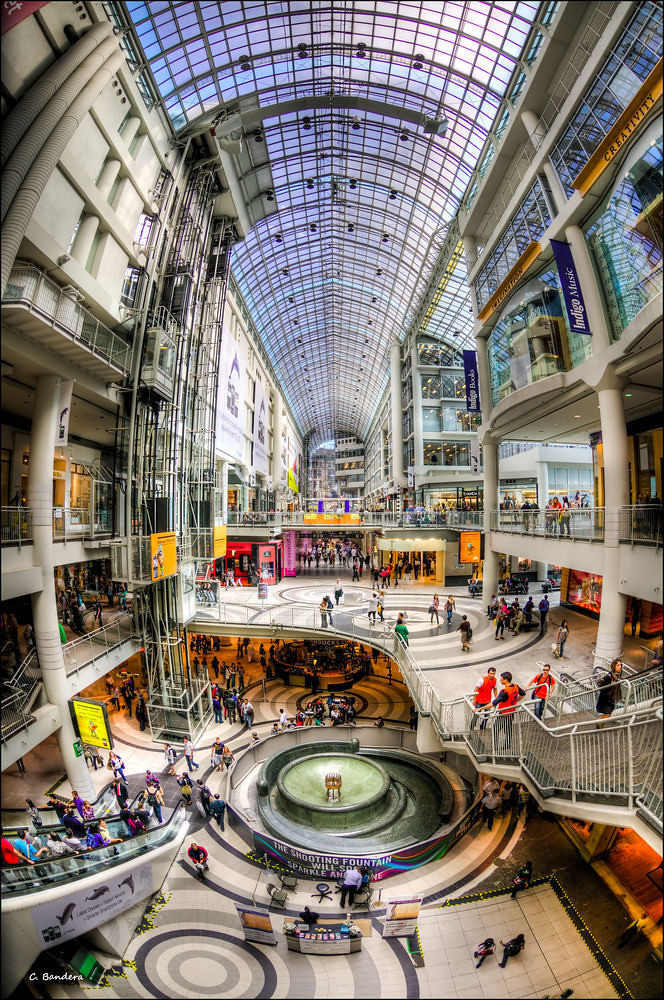
An oft-photographed view of the Eaton Centre shopping mall.
I need your vote! Choose this shot as winner of Photo of the Week.