View allAll Photos Tagged designing!!
I used the NOVA PBS intereactive fractal generator to create this image of the Mandelbrot set.
Hair: Dichotomy // creeper hair @ Sanarae
Mesh head: .offbeat. Tokyo girl head blood face (for hunt) at Panic of Pumpkins
Bat headband: ?
Eyes: {Demicon} pumpkin eyes gift
Binidi: [La Baguette] satanic sign bini gift for Halloween @ Sanarae
Choker: Kustom9 3rd Anniversary gift - [Pumpkin]
Dress: Bell Epoque {Dark Grace}
Shoes: Gift at Sanarae by Garbaggio
James Watt, inventor of the steam engine.
Sculpture by Francis Chantrey
National Museum of Scotland, Edinburgh.
So this is the way I went with my latest engines (P2, Atlantic, Gladstone) to get the dimensions about right.
Tried to get a bit further away with the camera and zoom in so the outer parts of the picture aren't distorted by the angle (compared to the paper)
The grid is from brickguns
www.brickgun.com/Dimensions/images/BrickGun_LEGO_Dimensio...
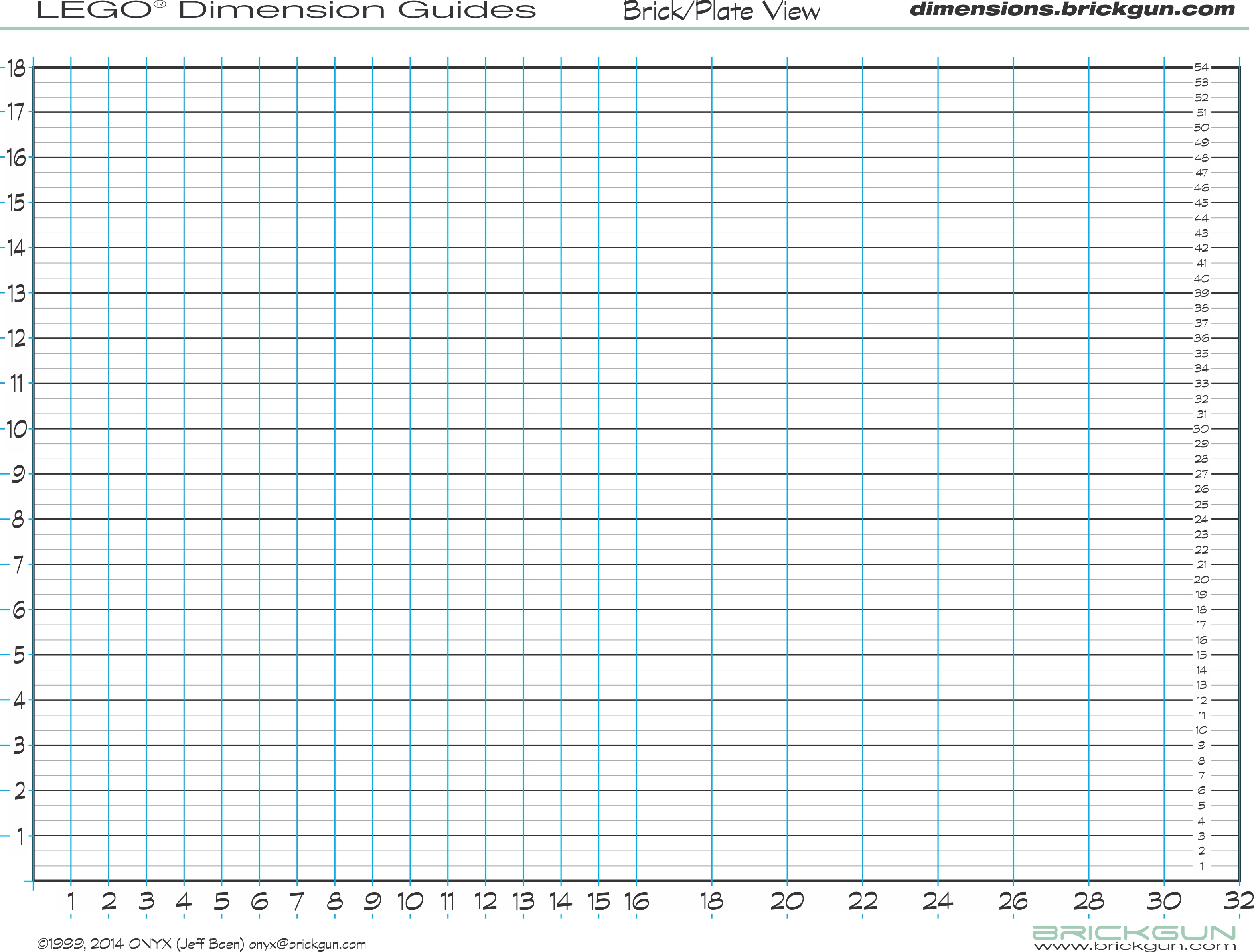
from this page
www.brickgun.com/Dimensions/BrickGun_Dimension_Guides.html
I used photoshop to enlarge the grid and lay it over the engine's drawing. Really helpful to get the proportions right!
Photographed December 2017 / Ricoh 500 rangefinder & RIKEN RIKOMAT 4.5cm/2.8. Rollei RPX 400 rated ASA 320 developed in Pyrocat-HD (5mlA & 25ml B > 600ml, 7min @ 20*C). Negative 'scanned' in a JUMBL scanner box unit. Image processed & finished in Flickr.
One of the wonderful people I saw at the KC Renfest Sunday. I love Renaissance festival! For one thing, it's one of the few places where, when people see you pointing a camera at them, instead of frowning suspiciously and turning away, they're most likely to stop, smile, and pose! They didn't get all prettied up like that for nothing! Way too much fun!
Her eyes were so pretty and I loved the effect with the face painting, just had to do this crop to just the eyes!
web design, web designers, ecommerce web development, professional website design, professional website designers, web design firms, website design companies, website design company, website design firms, asp hosting net web, cheap web hosting service, design hosting, ecommerce website design hosting, free html code, free html tags, free website design, how to a website, how to webdesign, professional web design, professional web designers, professional website designs, small business web design, small business web hosting services, tags in html, top website design, web design companies, web design firm, web design hosting, web design jobs, web designer, web designer hosting, web designing companies, web designs, web hosting and design, web hosting business, web hosting provider, web hosting server, web hosting service, web hosting services, webdesign company, website design prices, website designing, website hosting services, website ptimization, website webdesign, creating a web page, create domain free, cheap websites, cheap website design and hosting, cheap website design, cheap web hosting services, cheap web development, cheap web design and hosting, cheap hosting service
Time to start a new sweater! This time, I am designing it. I had some ideas, and eventually found a lace panel I really liked. The swatch you see are some ideas I was playing around with to see how the lace could be framed.
I need the color - this winter doesn't seem to want to end!
Nimbus w. ACAP.
LEGO version of the Danish Nimbus motorbike with ACAP sidecar, a Technic and System combination model.
About this creation:
This is my third Lego Nimbus motorbike. The first one, (blue Nimbus), was sold to the Danish Nimbus motorcycle museum in Horsens DK. The second, (black Nimbus), was commissioned by a member of Aarhuus Nimbus Club, and therefore no longer in my possession. This one, with a sidecar, I`m planning to keep for my own collection.
A sidecar for a Nimbus motorbike is built on a standard sidecar frame, which holds the third wheel and suspension, and the sidecar frame is then attached and braced to the motorbike frame. In the early days, the Nimbus motorbike was more a workhorse, than built for pleasure, and many of these were equipped with sidecars for various purposes. The good thing was, that the frame was universal for almost any type of sidecar.
My latest Nimbus model is equipped with the well known ACAP sidecar for an extra passenger or maybe extra luggage. After designing the new sidecar, it came to selecting the color. Lego Dark Red suits nicely for an original Nimbus color, but because there are some limitations regarding the brick palette, I had to paint quite a lot of bricks, mainly hinge plates for the fenders, and frame, but also slopes (1x2 45` with cutout). Bricks in Dark Red varies quite a lot in color intensity, so hopefully my painted bricks aren`t too conspicuous. Building the bike wasn`t too hard, neither was it to build the sidecar, but attaching the sidecar to the bike frame, proved to be a little problematic. Mounting the sidecar frame to the bike (without the sidecar-”boat”) was easy, but with the “boat” in place, it was so heavy, that the entire construction threatened to fall apart. Also the space between the bike and the “boat” is very limited, making things even more complicated. In the end I had to use some extra supports, made in transparent bricks, to support the weight of the sidecar. With the supports in place, the sidecar can stand alone making the attachment of the bike much easier.
I finished building the bike just after Christmas 2017, but due to bad light conditions I haven`t been able to take decent pictures of the bike before now. The picture on my “2017 LEGO review” are taken in artificial light.
Sol Sender and Scott Thomas stopped by in San Francisco to discuss the Obama campaign logo and website and how graphic design and new media has revolutionized politics.
I appreciate your feedback. And thanks to Dr. Purrington for the valuable advice he has posted on his web site.
Sinéad Burke, Founder, Sinéad Burke, Ireland; Cultural Leader.Caroline Baumann, Director, Cooper Hewitt, Smithsonian Design Museum, USA; Cultural Leader.Susannah Rodgers, Paralympian and Director, Spirit of 2012, United Kingdom; Young Global Leader, Cultural Leader,.speaking during the Session "Designing for Everyone" at the Annual Meeting 2019 of the World Economic Forum in Davos, January 22, 2019. Congress Centre - Betazone
Copyright by World Economic Forum / Mattias Nutt
Suffolk, VA - 25 APR 2022
Brian and Teresa Mullins, owners of M&M Hospitality, acquired the property formerly known as Bennett’s Creek Marina to build their newest ventures: Decoys Seafood Restaurant, featuring the Blind Duck Tiki Bar, Bennett’s Creek Marina, and the Landings. The property holds sentimental value to Brian, as he used to launch from the very same riverbanks to duck hunt for over 20 years. The Decoys restaurant name pays homage to this duck hunting history. The outdoor tiki bar, adjacent to the restaurant, is named Blind Duck as a play on duck blinds, to show respect for the area’s history. During construction, much of the timber used to trim the restaurant and tiki bar was harvested from the current land. Trees were cut to rough lumber and then air or kiln-dried on the Mullins’ farm for 18 months. Highlights of the wood varieties used in Decoys Seafood Restaurant and the Blind Duck Tiki Bar include pine for the detailed trim, pecan for the hardwood floors and staircase, black walnut for the bar tops, red cedar for the tiki bar ceiling and osage orange for the tiki bar seats and bar top.
The area in which the restaurant and marina now sit was first a ferry site and lead to the naming of the main road. The creek is named after the Bennett family, the original owners of the land. The current site is where the old swing bridge/country store sat from the early 1900s through the 1940s when the Route 17 bridge was built. The store remained and became a restaurant known as “Creekside Restaurant” until the Mullins acquired the property and began demolition in 2015.
When beginning construction on the old Ferry Bulkhead, the team noticed a part of the concrete retaining wall that had a dog’s unique set of paw prints from the 1800s. This imprint has been carefully preserved and is displayed in the restaurant to show three paw prints and a fourth imprint that looks like a peg leg. The Mullins created this 3-legged black lab persona named “Mate” to represent the marina and serve as the Blind Duck’s best friend.
The entire portion of Bennett’s Creek where the marina now sits was dredged to accommodate larger boats up to 80 feet in length and 60 new slips with 1,800 square feet of floating deck were installed.
ABOUT M&M HOSPITALITY
Brian and Teresa Mullins along with Ken Dodd, Operations Partner, have been working together since 2008 with plans to continue to grow the M&M Hospitality team of restaurant and entertainment venues.
Brian and Teresa Mullins have been in the residential building and development business for over 30 years. In 2001 the Mullins’ began developing Governor’s Pointe, a community of 141 home sites located a few minutes from the rapidly growing Harbour View corridor at I-664 and Route 17 in Suffolk, Virginia. Brian dedicated many years to planning and implementing his concept of a neighborhood of fine custom homes in a picturesque setting, bordered by the Nansemond River and Route 17.
As the development came to life, the thought of a community restaurant and retail shopping area would complement the development and provide local residents a new fine-dining option. Vintage Tavern opened in 2006 and quickly established itself as one of the top 10 restaurants in Hampton Roads, featuring Seasonally Southern Cuisine.
Two years later, in 2008, Brian was back at it developing, designing and constructing River Stone Chophouse in Harbour View – the first world-class American steakhouse in Hampton Roads. It didn’t take long for River Stone to join Vintage Tavern as one of Hampton Roads’ top 10 restaurants, as both restaurants received dining awards from Virginian Pilot, Virginia Living, Coastal Virginia Magazine and Wine Spectator. With the creation of the two restaurants, M&M Hospitality was born.
Brian and Teresa acquired the property along Bennett’s Creek Marina to build their newest ventures, Decoys Seafood Restaurant featuring the Blind Duck Tiki Bar, Bennett’s Creek Marina, and the Landings.
Caroline Baumann, Director, Cooper Hewitt, Smithsonian Design Museum, USA; Cultural Leader,.speaking during the Session "Designing for Everyone" at the Annual Meeting 2019 of the World Economic Forum in Davos, January 22, 2019. Congress Centre - Betazone
Copyright by World Economic Forum / Mattias Nutt
the process of costume designing for dramafeste
straight-onto-paper inking with black pilot pen and a potent cup of green tea
The Cuypershuis Museum in Roermond is a museum dedicated to the life and work of Pierre Cuypers, a Dutch architect and designer who was born and raised in Roermond. He is best known for designing the Rijksmuseum and Amsterdam Central Station. He also restored many historic buildings in the Netherlands. The museum is located in his former home and workshop, where visitors can learn about his architectural style, his influence on Dutch culture and his personal history. The museum also hosts temporary exhibitions on contemporary themes related to architecture and design.
Edvard Munch (Norwegian 1863-1944)
Munch Museum, Oslo, Norway.
Edvard Munch is best known as being a Norwegian born, expressionist painter, and printer. In the late 20th century, he played a great role in German expressionism, and the art form that later followed; namely because of the strong mental anguish that was displayed in many of the pieces that he created.
Edvard Munch was born in Norway in 1863, and was raised in Christiania (known as Oslo today). He was related to famous painters and artists in their own right, Jacob Munch (painter), and Peter Munch (historian).
Only a few years after he was born, Edvard Munch's mother died of tuberculosis in 1868, and he was raised by his father.
Edvard's father suffered of mental illness, and this played a role in the way he and his siblings were raised. Their father raised them with the fears of deep seated issues, which is part of the reason why the work of Edvard Munch took a deeper tone, and why the artist was known to have so many repressed emotions as he grew up.
In 1885, Edvard Munch traveled to Paris, and was extremely influenced by Impressionists such as Claude Monet, Edouard Manet, and followed by the post-impressionism artists Vincent van Gogh, Paul Cezanne, and Paul Gauguin. In fact, the main style of Munch's work is post-impressionism, and focused on this style.
From about 1892, to 1908, Munch split most of his time between Paris and Berlin; it was in 1909 that he decided to return to his hometown, and go back to Norway.
During this period, much of the work that was created by Edvard Munch depicted his interest in nature, and it was also noted that the tones and colors that he used in these pieces, did add more color, and seemed a bit more cheerful, than most of the previous works he had created in years past.
The pessimistic under toning which was quite prominent in much of his earlier works, had faded quite a bit, and it seems he took more of a colorful, playful, and fun tone with the pieces that he was creating, as opposed to the dark and somber style which he tended to work with earlier on during the course of his career.
From this period, up to his death, Edvard Munch remained in Norway, and much of his work that was created from this period on, seemed to take on the similar, colorful approach which he had adopted, since returning home in 1909.
A majority of the works which Edvard Munch created, were referred to as the style known as symbolism. This is mainly because of the fact that the the paintings he made focused on the internal view of the objects, as opposed to the exterior, and what the eye could see.
Symbolist painters believed that art should reflect an emotion or idea rather than represent the natural world in the objective, quasi-scientific manner embodied by Realism and Impressionism. In painting, Symbolism represents a synthesis of form and feeling, of reality and the artist's inner subjectivity.
Many of Munch's works depict life and death scenes, love and terror, and the feeling of loneliness was often a feeling which viewers would note that his work patterns focused on.
These emotions were depicted by the contrasting lines, the darker colors, blocks of color, somber tones, and a concise and exaggerated form, which depicted the darker side of the art which he was designing.
Munch is often and rightly compared with Van Gogh, who was one of the first artists to paint what the French artist called "the mysterious centers of the mind."
But perhaps a more overreaching influence was Sigmund Freud, a very close contemporary. Freud explained much human behavior by relating it to childhood experiences.
Munch saw his mother die of tuberculosis when he was 5, and his sister Sophie die of the same disease when he was 14. Munch gives the By the Death Bed and Death in the Sickroom a universal cast by not specifically depicting what he had witnessed. Several versions of The Sick Child are surely his sister.
Nature is not only all that is visible to the eye... it also includes the inner pictures of the soul.”- Edvard Munch
Edvard Munch passed away in 1944, in a small town which was just outside of his home town in Oslo.
Upon his death, the works which he had created, were not given to family, but they were instead donated to the Norwegian government, and were placed in museums, in shows, and in various local public buildings in Norway.
In fact, after his death, more than 1000 paintings which Edvard Munch had created were donated to the government. In addition to the paintings that he had created during the course of his career, all other art forms he created were also donated to the government.
A total of 15,400 prints were donated, 4500 drawings and water color art was donated, and six sculptures which Edvard Munch had created, were all turned over to the Oslo government, and were used as display pieces in many locations.
Due to the fact that all of this work which Edvard Munch had created, was donated to the Norwegian government, the country decided to build the Munch Museum of Art.
This was done to commemorate his work, his life, and the generosity which he showed, in passing his art work over to the government, so that it could be enjoyed by the general public, rather than be kept locked up by the family.
Although the art which he did donate, was spread throughout a number of museums and art exhibits, a majority of them were kept in Oslo.
And, most of the works which were donated by Munch, were placed in the Munch Museum of Art, to commemorate the work he did, as well as the unique style, and the distinct movements which he introduced to the world, through the creations which he had crafted.
Sinéad Burke, Founder, Sinéad Burke, Ireland; Cultural Leader.Caroline Baumann, Director, Cooper Hewitt, Smithsonian Design Museum, USA; Cultural Leader.Susannah Rodgers, Paralympian and Director, Spirit of 2012, United Kingdom; Young Global Leader, Cultural Leader,.speaking during the Session "Designing for Everyone" at the Annual Meeting 2019 of the World Economic Forum in Davos, January 22, 2019. Congress Centre - Betazone
Copyright by World Economic Forum / Mattias Nutt
2013 Fortune Global Forum
EDUCATION TO EMPLOYMENT: DESIGNING A SYSTEM THAT WORKS Hosted by McKinsey & Company Ellen Kullman, Chair and CEO, DuPont Lu Mai, Secretary General, Li Ka Chian, Director, Global Education Practice, McKinsey & Company, Xu Xiaoping, Founder and Managing Partner, Moderator: 1.Rik Kirkland, Partner, Global Publishing, McKinsey & Company