View allAll Photos Tagged certainty
A 16x24 C-Print from "Certainty Principle" an exhibition of photography, video, and installation by Michael David Murphy. Sept. 23rd, 2010 through Oct. 30th, 2010 at Spruill Gallery in Atlanta.
the certainty that something makes sense, regardless of how it turns out :-)
― Václav Havel
HPPT!!
prunus mume, pink Japanese flowering apricot, 'Peggy Clarke', j c raulston arboretum, ncsu, Raleigh, north carolina
Dicyrtomina ornata is a springtail species from the Dicyrtomidae family. The scientific name of the species was first validly published in 1842 by Nicolet
It is very similar to Dicyrtomina saundersi but differs from this in that the beams on the fifth abdomen segment merge into a spot. Because the mark on the back is variable, it is difficult to distinguish this species with certainty from photo.
This is a shot of the Vlacherna Monastery of Panayia (aka Theotokos, Virgin Mary, Our Lady), located to the East of Chalikiopoulos lagoon, Corfu Island, Greece. The construction year is not known with certainty, yet the monastery was mentioned in documents as early as in 1685. The name originates from the homonym monastery in Constantinople. The monastery celebrates on July 2 (deposition of the Theotokos's Sacred Belt).
🇬🇷
Μονὴ Παναγίας Βλαχερνῶν
Λήψη τῆς Ἱερᾶς Μονῆς τῆς Παναγίας Βλαχέραινας (ἄλλως Παναγίας τῶν Βλαχερνῶν) ἀνατολικὰ τῆς λιμνοθάλασσας Χαλικιόπουλου (νῆσος Κέρκυρα). Δὲν εἶναι μὲ βεβαιότητα γνωστὸ τὸ ἔτος κτίσεως, ὡστόσο ἀναφέρεται σὲ γραπτὲς πηγὲς ἤδη ἀπὸ τὸ 1685. Τὸ ὄνομα Βλαχέραινα ἢ Βλαχέρνα προέρχεται ἀπὸ τὴν ὁμώνυμη Μονὴ στὴν Κωνσταντινούπολη.
Ἡ Μονὴ ἑορτάζει στὶς 2 Ἰουλίου (Κατάθεσις τῆς Τιμίας Ἐσθῆτος τῆς Ὑπεραγίας Θεοτόκου).
I must have fallen asleep, for I was awakened when the half-expected , rather timid knock, was made at my door.
It was 2:35 in the bloody morning!
I rolled out of bed and opened my door.
She was standing there ,rubbing her eyes and yawning. I could see her opened door across the hall, light spilling out.
She was also still clad in her elegant gown, looking like a half awakened princess .
And there it was, her twinkling brooch. It still dangled from its position on the sash at her waist. Its’ frenzied sparkles appeared to be mocking my failure at taking it along with the rest of its’ mates!
She hadn’t even made it past the bed in her room before falling unconscious upon it fully clothed !!
What’s up I asked, a bit grumpily, for I had all but forgotten what mischief I had been at.
“My jewels ?” she said miserably, “Their missing!”
“Are you sure?” I asked
That made her think a few seconds before answering, her still gloved hand aimlessly feeling for evidence of the diamond necklace and matching earrings that definitely were no longer sparkling there like they had been earlier!
“Yes I am sure they are gone !” she said rather miserably.
“You took them off twit, probably still on your dresser. Now go to back to bed ! “ I answered, just wanting to do the same myself.
“No,” she said, forlornly shaking her head, “I went right to bed without taking anything off atoll, didn’t I, and she spread out her luxurious gown.
“ I’ve looked everywhere!” She pleaded.
“Was your window opened?” I asked, finally awake enough to from a response.
“Yes, its always open when I sleep, why?” she questioned.
“You say you fell asleep steal wearing your jewels, didn’t you!” I pointed out…
“It is obvious! A thief broke in and took them off you as you slept?” I stated, as I reached over and pointed at the place her necklace had been dangling upon.” Looks like he picked you over clean now !”
“No” she said, again shaking her head, “there was no burglar, and besides no thief could do something like that, I would’ve been woken up !”
“I don’t know” I answered thoughtful, “Someone obviously got the whole lot off you, without you noticing !”
She shivered, “No there was no thief!” she still insisted…
“Lets go and see” I said, and had her turn, followed her swishy gown clad figure as she swayed back to her room.
I asked if she had checked around the bed, she nodded yes. “Check again” I commanded and she obediently began looking.
As she did I went over to her opened window, and swiftly slipped her purse, still holding her jewels, from my jacket pocket and placed it out on the ledge. Rather forgetting my old plans, as a deviously new one developed, to make her believe a burglar had been in her room.
Sounds rather mean I know, but I was not fully awake enough to really reason out that aspect!
“You ninny I said, here is your purse ! “ She swished over to my side, and I pointed down.
She reached down and retrieved it, feeling its new heft, she opened it, revealing her waylaid sparkling jewels.
She than just stared up at me, disbelief in her sad puppy like eyes.
“Here now ,” I said, “let me show you, Go lay back on your bed” I instructed !
She submissively did so, easily slipping back up along the green satin comforter covering her bed. Then she looked at me blinking from her pillow.
She looked all the world like a sad forlorn young princess , like she did when I played my game with her that resulted in her losing her jewelry to me. Except that she had not realized that I was stealing them from right under her nose!
I turned out the room’s lights, laid the purse down beside her, then went to the opened window.
A stream of light from the moon lit up her bed, I could see her clearly as she lay there.
“This is what probably happened I carefully explained…”
“The burglar came in through this window” I mimicked it..
“ He saw you there asleep , and of course came over for a closer peek.”
I moved in, and saw her shiver as I approached, her whole begowned figure moving as she inched up away from my menacing dark shadowy figure…..
“He saw you were wearing jewels, and decided that he certainly must have them for himself.” ,
She had shrunk back as far as she could with my approach.
“He reached along, and began to..”
My fingers had glided up along her quivering figure till I had reached her waist, where I then lifted up her brooch.
“He than steals your…”
She cut me off… “There was no thief! “she insisted her eyes wide, but I could see the beginning of doubt creeping in her voice.”
“That cannot happen, burglars cannot take jewels like that , not with out waking a person up!” she tried to argue, herself half believing it may have happened like that!.. For indeed, she knew something had happened to her jewels!
Ignoring her protests, I picked up the purse from where I dropped it, went back to the window.
“You must have startled him and he dropped the goods as he was leaving, and an ran off!”
She had turned white as a ghost, trying to disbelieve in my words.
“No, it didn’t happen, couldn’t !” she vainly still trying on insisting my scenarios away.
“Tell you what lets try an experiment “ . I suggested as I turned back on the lights.
I laid the opened purse down beside her, jewels inside dimly glimmering .
“Put your jewels back on then, go to back bed, and in a couple of hours once you are back asleep I will come in and ….Li”
“No” she said, cutting me off… “I still don’t….” then she stopped talking as she saw the look on my face
“Your right!” I said assuring her qualms ,”There was probably was no thief.
She could see I was grinning
“You did it, you turd “she scolded, WHEN..HOW?” she directly appealed in a rather fetchingly imploring way…as she raised her arms up to me to help her up.
“Every thief has their secrets luv” I said, as she slipped off from the bed and stood looking up at me, then let out a rather wide Yawn..
I was looking her still begowned figure over, her brooch the only jewel left, still putting on a rather dazzling show as she finished her relaxing yawn, I realized just how long a day it’d been, and just how tired we both were.
It had, actually been a quite long event filled day!
Realizing that an answer was not forthcoming. She stated rather coyly “Well , I hope you are a reformed thief then.” She was looking over at her jewel filled purse, still unclasped, just sitting there regally on the green satin comforter of her bed ..
“Rest assured, I most Certainty am !” I grinned winningly, as I also stole a glance at the small gold lamee purse. “Scouts Honoure !”
She looked back, and caught my eyes on her bed.
“You are right lass, bed for us it is!” I said looking back at her.
“See you in the morning, then luv, its late, lets get some sleep !” I said, and she leaned happily up against me, to give me a hug.
I also wrapped my arms around her, relishing her gowns’ touch , as it covered her warm, slippery figure.
“Good night my sweet lady“ I said mimicking an actor from a movie and kissed her on the forehead, then started to leave, walking backwards.
“Good night thief” , she said smirking, as she reached back behind her with gloved hands, fumbling to undo the tied bow of her gowns’ sash…
“Here,” I said, “turn and please allow me.”
I went up behind her, as she obligingly turned her shiny gown covered back towards me, to allow easy access to the satin bow conveniently tied at the back of her svelte waiste.
She giggled, pulling her long hair away, as I tugged at her bow, making her move back closer to me, as I worked on loosening the satin bows knot.
So I can feel safe wearing my jewels around you than !” she said with another giggle, as I pulled the bow apart, letting the loose ends dangle freely down.
“Indeed, so you can my fine lass, “ I said reassuringly, as my hands had slipped along around her warm waist to envelope her in a friendly hug. As she giggled, I could feel her unseen brooch being pressed into my hand.
She leaned against me, clasping her hands behind my back saying as she faced away..… “I am so glad you have reformed Mr. thief…..”
“And I owe it all to you, being placed on the straight and narrow!” I answered, whispering to her as I looked back at the fat little purse on her bed to make sure it had not disappeared by slipping off of the green satin cover!
I released her from my grasp, and she unclasped her hands, slipping them back around, and tossing her long hair back, hitting me in the face.
It was my turn to laugh, and as I did, with a gentle prod, moved her towards the dresser. I said happily “to bed with you”
“Good night sir” she said still facing away, going over and bending down to open a drawer.
I back up past her bed, my hand gliding along the sleek shiny surface of her comforter, then turned to open her door, looking back upon her one last time.
“Good night “ I echoed, watched as she turned to face me with a swish. Holding her long silk, sapphire blue nightdress in a gloved hand.
She just smiled at me as I left, closing her door behind me.
^^
I stood with my back to her closed door, grinning…
I opened my left hand, looking down with satisfaction at the sparkling brooch I had easily lifted from her pretty gown as I had hugged her after untying her bow, which had effectively loosened the hanging jewel enough to get my fingers underneath!
So much for reformation!
I then pulled her unclasped purse , boldly reclaimed from its perch on her green satin comforter, from my jacket pocket, and slipped the newly acquired brooch inside to join the rest of her purloined jewels…
I congratulated myself, my mind already traveling to tomorrow, Sunday, and the stealing prospects it promised to bring.
I began to walk away from her door, stopping suddenly I turned and looked back.
I whispered out to the closed door.
Addressing the unseen miss on the other side, who would have finally removed by now, have removed her quite pretty lavender gown and exchanged it with her sapphire blue sleeping attire, and have climbed into her soft bed, pulling the green satin comforter up for warmth, soon to fall again into innocent sleep..
“ Lessons Learned Luv,” I whispered with devious intent, taking on my character for tomorrow …
“Never trust a thief, and certainly when wearing the good jewels, don’t ever turn your slick gowned back to one !”
^^^^^^^^^^^^^^^^^^^^^^^^^^^^^^^^^^
To read the shenanigans from which this Thread Led please visit…
I must have fallen asleep, for I was awakened when the half-expected , rather timid knock, was made at my door.
It was 2:35 in the bloody morning!
I rolled out of bed and opened my door.
She was standing there ,rubbing her eyes and yawning. I could see her opened door across the hall, light spilling out.
She was also still clad in her elegant gown, looking like a half awakened princess .
And there it was, her twinkling brooch. It still dangled from its position on the sash at her waist. Its’ frenzied sparkles appeared to be mocking my failure at taking it along with the rest of its’ mates!
She hadn’t even made it past the bed in her room before falling unconscious upon it fully clothed !!
What’s up I asked, a bit grumpily, for I had all but forgotten what mischief I had been at.
“My jewels ?” she said miserably, “Their missing!”
“Are you sure?” I asked
That made her think a few seconds before answering, her still gloved hand aimlessly feeling for evidence of the diamond necklace and matching earrings that definitely were no longer sparkling there like they had been earlier!
“Yes I am sure they are gone !” she said rather miserably.
“You took them off twit, probably still on your dresser. Now go to back to bed ! “ I answered, just wanting to do the same myself.
“No,” she said, forlornly shaking her head, “I went right to bed without taking anything off atoll, didn’t I, and she spread out her luxurious gown.
“ I’ve looked everywhere!” She pleaded.
“Was your window opened?” I asked, finally awake enough to from a response.
“Yes, its always open when I sleep, why?” she questioned.
“You say you fell asleep steal wearing your jewels, didn’t you!” I pointed out…
“It is obvious! A thief broke in and took them off you as you slept?” I stated, as I reached over and pointed at the place her necklace had been dangling upon.” Looks like he picked you over clean now !”
“No” she said, again shaking her head, “there was no burglar, and besides no thief could do something like that, I would’ve been woken up !”
“I don’t know” I answered thoughtful, “Someone obviously got the whole lot off you, without you noticing !”
She shivered, “No there was no thief!” she still insisted…
“Lets go and see” I said, and had her turn, followed her swishy gown clad figure as she swayed back to her room.
I asked if she had checked around the bed, she nodded yes. “Check again” I commanded and she obediently began looking.
As she did I went over to her opened window, and swiftly slipped her purse, still holding her jewels, from my jacket pocket and placed it out on the ledge. Rather forgetting my old plans, as a deviously new one developed, to make her believe a burglar had been in her room.
Sounds rather mean I know, but I was not fully awake enough to really reason out that aspect!
“You ninny I said, here is your purse ! “ She swished over to my side, and I pointed down.
She reached down and retrieved it, feeling its new heft, she opened it, revealing her waylaid sparkling jewels.
She than just stared up at me, disbelief in her sad puppy like eyes.
“Here now ,” I said, “let me show you, Go lay back on your bed” I instructed !
She submissively did so, easily slipping back up along the green satin comforter covering her bed. Then she looked at me blinking from her pillow.
She looked all the world like a sad forlorn young princess , like she did when I played my game with her that resulted in her losing her jewelry to me. Except that she had not realized that I was stealing them from right under her nose!
I turned out the room’s lights, laid the purse down beside her, then went to the opened window.
A stream of light from the moon lit up her bed, I could see her clearly as she lay there.
“This is what probably happened I carefully explained…”
“The burglar came in through this window” I mimicked it..
“ He saw you there asleep , and of course came over for a closer peek.”
I moved in, and saw her shiver as I approached, her whole begowned figure moving as she inched up away from my menacing dark shadowy figure…..
“He saw you were wearing jewels, and decided that he certainly must have them for himself.” ,
She had shrunk back as far as she could with my approach.
“He reached along, and began to..”
My fingers had glided up along her quivering figure till I had reached her waist, where I then lifted up her brooch.
“He than steals your…”
She cut me off… “There was no thief! “she insisted her eyes wide, but I could see the beginning of doubt creeping in her voice.”
“That cannot happen, burglars cannot take jewels like that , not with out waking a person up!” she tried to argue, herself half believing it may have happened like that!.. For indeed, she knew something had happened to her jewels!
Ignoring her protests, I picked up the purse from where I dropped it, went back to the window.
“You must have startled him and he dropped the goods as he was leaving, and an ran off!”
She had turned white as a ghost, trying to disbelieve in my words.
“No, it didn’t happen, couldn’t !” she vainly still trying on insisting my scenarios away.
“Tell you what lets try an experiment “ . I suggested as I turned back on the lights.
I laid the opened purse down beside her, jewels inside dimly glimmering .
“Put your jewels back on then, go to back bed, and in a couple of hours once you are back asleep I will come in and ….Li”
“No” she said, cutting me off… “I still don’t….” then she stopped talking as she saw the look on my face
“Your right!” I said assuring her qualms ,”There was probably was no thief.
She could see I was grinning
“You did it, you turd “she scolded, WHEN..HOW?” she directly appealed in a rather fetchingly imploring way…as she raised her arms up to me to help her up.
“Every thief has their secrets luv” I said, as she slipped off from the bed and stood looking up at me, then let out a rather wide Yawn..
I was looking her still begowned figure over, her brooch the only jewel left, still putting on a rather dazzling show as she finished her relaxing yawn, I realized just how long a day it’d been, and just how tired we both were.
It had, actually been a quite long event filled day!
Realizing that an answer was not forthcoming. She stated rather coyly “Well , I hope you are a reformed thief then.” She was looking over at her jewel filled purse, still unclasped, just sitting there regally on the green satin comforter of her bed ..
“Rest assured, I most Certainty am !” I grinned winningly, as I also stole a glance at the small gold lamee purse. “Scouts Honoure !”
She looked back, and caught my eyes on her bed.
“You are right lass, bed for us it is!” I said looking back at her.
“See you in the morning, then luv, its late, lets get some sleep !” I said, and she leaned happily up against me, to give me a hug.
I also wrapped my arms around her, relishing her gowns’ touch , as it covered her warm, slippery figure.
“Good night my sweet lady“ I said mimicking an actor from a movie and kissed her on the forehead, then started to leave, walking backwards.
“Good night thief” , she said smirking, as she reached back behind her with gloved hands, fumbling to undo the tied bow of her gowns’ sash…
“Here,” I said, “turn and please allow me.”
I went up behind her, as she obligingly turned her shiny gown covered back towards me, to allow easy access to the satin bow conveniently tied at the back of her svelte waiste.
She giggled, pulling her long hair away, as I tugged at her bow, making her move back closer to me, as I worked on loosening the satin bows knot.
So I can feel safe wearing my jewels around you than !” she said with another giggle, as I pulled the bow apart, letting the loose ends dangle freely down.
“Indeed, so you can my fine lass, “ I said reassuringly, as my hands had slipped along around her warm waist to envelope her in a friendly hug. As she giggled, I could feel her unseen brooch being pressed into my hand.
She leaned against me, clasping her hands behind my back saying as she faced away..… “I am so glad you have reformed Mr. thief…..”
“And I owe it all to you, being placed on the straight and narrow!” I answered, whispering to her as I looked back at the fat little purse on her bed to make sure it had not disappeared by slipping off of the green satin cover!
I released her from my grasp, and she unclasped her hands, slipping them back around, and tossing her long hair back, hitting me in the face.
It was my turn to laugh, and as I did, with a gentle prod, moved her towards the dresser. I said happily “to bed with you”
“Good night sir” she said still facing away, going over and bending down to open a drawer.
I back up past her bed, my hand gliding along the sleek shiny surface of her comforter, then turned to open her door, looking back upon her one last time.
“Good night “ I echoed, watched as she turned to face me with a swish. Holding her long silk, sapphire blue nightdress in a gloved hand.
She just smiled at me as I left, closing her door behind me.
^^
I stood with my back to her closed door, grinning…
I opened my left hand, looking down with satisfaction at the sparkling brooch I had easily lifted from her pretty gown as I had hugged her after untying her bow, which had effectively loosened the hanging jewel enough to get my fingers underneath!
So much for reformation!
I then pulled her unclasped purse , boldly reclaimed from its perch on her green satin comforter, from my jacket pocket, and slipped the newly acquired brooch inside to join the rest of her purloined jewels…
I congratulated myself, my mind already traveling to tomorrow, Sunday, and the stealing prospects it promised to bring.
I began to walk away from her door, stopping suddenly I turned and looked back.
I whispered out to the closed door.
Addressing the unseen miss on the other side, who would have finally removed by now, have removed her quite pretty lavender gown and exchanged it with her sapphire blue sleeping attire, and have climbed into her soft bed, pulling the green satin comforter up for warmth, soon to fall again into innocent sleep..
“ Lessons Learned Luv,” I whispered with devious intent, taking on my character for tomorrow …
“Never trust a thief, and certainly when wearing the good jewels, don’t ever turn your slick gowned back to one !”
^^^^^^^^^^^^^^^^^^^^^^^^^^^^^^^^^^
To read the shenanigans from which this Thread Led please visit…
"Truly Madly Deeply"
I'll be your dream
I'll be your wish I'll be your fantasy
I'll be your hope I'll be your love
Be everything that you need
I'll love you more with every breath
Truly, madly, deeply do
I will be strong I will be faithful
'cause I'm counting on
A new beginning
A reason for living
A deeper meaning, yeah
[chorus:]
I want to stand with you on
a mountain
I want to bathe with you in the sea
I want to lay like this forever
Until the sky falls down on me
And when the stars are shining
brightly in the velvet sky,
I'll make a wish send it to heaven
Then make you want to cry
The tears of joy for all the
pleasure and the certainty
That we're surrounded by the
comfort and protection of
The highest powers
In lonely hours
The tears devour you
[chorus]
Oh can you see it baby?
You don't have to close your eyes
'Cause it's standing right
before you
All that you need will surely come
I'll be your dream I'll be your wish
I'll be your fantasy
I'll be your hope I'll be your love
Be everything that you need
I'll love you more with every breath
Truly, madly, deeply do
[chorus]
I want to stand with you on a
mountain
I want to bathe with you in the sea
I want to live like this forever
Until the sky falls down on me
A reminder of just how fragile life is and that all things decay with time.
Taken in the small graveyard associated with the Church Of St Kentigerna on Loch Lomond's Inchcailloch Island. The 13th century church is dedicated to Kentigerna.
Inchcailloch in Gaelic means the island of the cowled woman.
Around the middle
ages a new church was built on this site to commemorate the name of St Kentigerna.
For 400 years parishioners rowed across to the island every Sunday to worship here. Services were moved to a new church at Milton of Buchanan on the mainland in 1621, but the burial ground was used for many more years.
The last funeral took place here in 1947, but there’s no headstone.
The name you will see most in the graveyard is Macfarlane, a clan which lived on the west side of the loch, but who chose to bury their dead on the island.
This is a shot of the Vlacherna Monastery of Panayia (aka Theotokos, Virgin Mary, Our Lady), located to the East of Chalikiopoulos lagoon, Corfu Island, Greece. The construction year is not known with certainty, yet the monastery was mentioned in documents as early as in 1685. The name originates from the homonym monastery in Constantinople. The monastery celebrates on July 2 (deposition of the Theotokos's Sacred Belt).
🇬🇷
Μονὴ Παναγίας Βλαχερνῶν ἀπὸ B:
Λήψη τῆς Ἱερᾶς Μονῆς τῆς Παναγίας Βλαχέραινας (ἄλλως Παναγίας τῶν Βλαχερνῶν) ἀνατολικὰ τῆς λιμνοθάλασσας Χαλικιόπουλου (νῆσος Κέρκυρα). Δὲν εἶναι μὲ βεβαιότητα γνωστὸ τὸ ἔτος κτίσεως, ὡστόσο ἀναφέρεται σὲ γραπτὲς πηγὲς ἤδη ἀπὸ τὸ 1685. Τὸ ὄνομα Βλαχέραινα ἢ Βλαχέρνα προέρχεται ἀπὸ τὴν ὁμώνυμη Μονὴ στὴν Κωνσταντινούπολη.
Ἡ Μονὴ ἑορτάζει στὶς 2 Ἰουλίου (Κατάθεσις τῆς Τιμίας Ἐσθῆτος τῆς Ὑπεραγίας Θεοτόκου).
First Kiss Remembered.
Could it have been May,
Before the first cut hay?
Down a lane, a hedge with
Murmur of bees in hawthorn,
And the sweet tobacco smell
Of new crushed grass.
Maybe it was May,
As we lay
Hidden from the lane?
Soft touching of
Our teenage lips,
Amazing me with the
Sweetness of your breath.
We embraced;
My anxious fingers daring
That first touch,
Yet fearing rejection
Of a caress that lingered
Upon your maiden breast,
Warm, through your cotton bra.
But I remember most
The beating of your heart within,
As if bursting from your chest
To be racing with my own.
All way, way enough
For the first time.
A kiss, a touch, as we lay,
It was with almost certainty,
That glorious month of May.
“To have great pain is to have certainty; to hear that another person has pain is to have doubt.”
― Elaine Scarry, The Body in Pain: The Making and Unmaking of the World
I have my father to thank for my ability to talk. And my mother to thank for my ability to listen. Both come in handy with this photographic passion of mine. One of the great joys for me are the spontaneous conversations held on street corners, in farmer's markets and barber shops, at flea markets and inner city parks to name a few of my myriad open air "studios." Yes, I can start a conversation with anyone and 99.7% of the time, that leads to an impromptu portrait session. What I can tell you with joyous certainty: the conversations are as delightful to me as the resulting pictures. But it gets better. Then I get to go home and process as my heart guides me: replaying the conversations and range of emotions that emerged while seeing how they braid and intertwine with the events of the day, my mood...the weather. I can't ever predict the results. Nor would I want to. For me, the goal is to share more than a moment; but rather to use these intertwined words and pictures to make you think or feel or dream or (best of all) do...something.
Is it working?
"I'll be your dream, I'll be your wish, I'll be your fantasy
I'll be your hope, I'll be your love, be everything that you need
I love you more with every breath truly, madly, deeply do
I will be strong, I will be faithful 'cause I'm counting on
A new beginnin'
A reason for livin'
A deeper meaning, yeah
Well, I wanna stand with you on a mountain
I wanna bathe with you in the sea
I wanna lay like this forever
Until the sky falls down on me
And when the stars are shining brightly in the velvet sky
I'll make a wish, send it to heaven, then make you want to cry
The tears of joy for all the pleasure and the certainty
That we're surrounded by the comfort and protection
Of the highest powers
In lonely hours (lonely hours, girl)
The tears devour you
Well, I wanna stand with you on a mountain
I wanna bathe with you in the sea
I wanna lay like this forever
Until the sky falls down on me"
- Darren Hayes and Daniel Jones
Inspired by Kassi and created in DALL-E
This shows up here as well: www.filemagazine.com/thecollection/archives/2006/03/eleph...
A 16x20 C-Print from "Certainty Principle" an exhibition of photography, video, and installation by Michael David Murphy. Sept. 23rd, 2010 through Oct. 30th, 2010 at Spruill Gallery in Atlanta.
Explore #161
One song can spark a moment
One flower can wake the dream
One tree can start a forest
One bird can herald spring
One smile begins a friendship
One handclasp lifts a soul
One star can guide a ship at sea
One word can frame the goal
One vote can change a nation
One sunbeam lights a room
One candle wipes out darkness
One laugh will conquer gloom
One step must start each journey
One word must start each prayer
One hope will raise our spirits
One touch can show you care
One voice can speak with wisdom
One heart can know what's true
One life can make the difference
You see, it's up to you!!
Take care and let us be as one ;) Car xx
Today's Carsounds- Bob Marley - One Love
In addition to keeping the extensive gardens immaculate, there must also be a major job keeping these climbers away from the windows. There are three different ones here, but I couldn't identify any of them with certainty.
The troubles of the world just melted away. Just like that. All the stress from work, friends, family... life in general. Emily was swept away and whisked off to another country all together. One of the most romantic places in the world...
Alex kept her mind occupied. He was spoiling her and for once she allowed it. Too tired to argue. The ice rink at the base of La Dame de Fer, the Iron Lady... that kept her on her toes! Figuratively. Not literally... as once or twice the blonde landed on her posterior after being pried from the wall. Alex made her laugh more than she had in weeks...
Champagne and dinner. The day was more than she could have dreamed of. The view was breathtaking and with the Eiffel Tower in the background it just made everything picturesque. As his hands moved to her face she melted into him. If there was only one certainty in the world at that moment, it was that her heart was truly and utterly his.
Kampong Pluck. The smile on their faces do brighten up other people's day. But as we visiting from a 1st world country some of us do have some questions or rather worries in mind, do they know their legal rights in the land they are staying in? Do they know the child rights? Are they able to call this their home without the fear of demolition activities? Do they have a certainty of their future?
I think it's hard to understand them with the short amount of time there. By understanding the history of their culture and events, the influx of tourism, and folkway in the village and city, that we are able to understand them better. I wish I am given the opportunity in the future to work or stay there long enough to see what they are going through...
This particular tree, in the process of disintegration, lies at the eastern end of the Kootenai Creek hiking trail, just north of Stevensville, Montana. I have photographed it many times over the years, in many kinds of light, in various compositions. We are practically friends.
On this occasion, I found the old tree with a dangling limb and some bit of gorgeous spot-lighting and paused on my way back to the car to grab a few shots.
Yes, there will be less and less tree to photograph in future visits, that is a certainty. But, as friends, and fellow seniors, it would be rude and inconsiderate not to stop by and pay some degree of tribute to a stoic, long-time survivor, hanging on.
I made several stops and starts while attempting to write up this description, which is perhaps appropriate given the shot bore fruition in a similar manner. I generally make a quick test edit or two just to give me an idea how an image is likely to respond to whatever 'feel' I have in mind (as I did with this one), and when doing so I collapse layers prematurely and don't pay too much heed to the subtler nuances that help refine any actual finished file.
Normally this approach works well for me. I've dismissed many images pretty much from the outset when viewing the RAW back home, only to find if I tweak this, nurture that and coax the other during a cursory test edit then suddeny I can get pretty close to what I envisaged in the first instant. Of course, it doesn't always work in my favour - there are plenty of RAW's jostling pixelated shoulders with one another on my hard drive which started life as imagined dead certainties. That is, at least until I started processing them and it all went horribly wrong... If we're honest I think few, if any of us can say our processed photographs turn out exactly how we imagined them at point of capture. This is certainly true for digital LE work where I feel a certain level of processing skill and dedication is absolutely necessary in order to realise the photographer's full vision - this is a niche where SOOC or anything approaching should be beaten into the corners with a big pointy stick! Some of you will agree and some of you will disagree, but whatever you believe a camera is just a soulless box. The person adjusting it's dials and pressing it's buttons ignores real opportunities if they turn their back on the digital darkroom - it's an artform to remain true to the original essence of an image while imprinting something of yourself on it and this simply can't be achieved any other way.
However, this shot took an unusual turn of events in that when doing the test edit (in a room that was far too bright whilst my daughter was leaning on me and my wife was chatting on the phone), I found when I viewed it later it looked pretty damn good... Of course, when I then tried to replicate what I'd done as part of my proper editing process, the file stubbornly refused to cooperate and decided to take a alternate course all together. So it is then that I have around five versions of this image (all of which might look lovely framed together if I could produce a sixth!) that all present differently.
Technically, this is certainly not the strongest of them. But it's the one that most closely resembles what I had in mind when I pointed that soulless box at this scene and it's the one I'm going with. My camera didn't make this and nor did my computer.
I did.
Explore Aug 21, 2016 #137
I headed out to show my roofer where the leak was and we were repelled by the smell of rotting flesh... or so it seemed until I noticed the strange geometric red forms of Stinkhorn fungi. Although their strong rotting smell is bad, these fungi aren't bad for your landscape and can actually be beneficial. Stinkhorns break down organic matter which is especially helpful in Florida’s naturally sandy, nutrient-poor soils. Stinkhorns break down mulch to make nutrients available for plants.
Clathrus ruber is a species of fungus in the stinkhorn family, and the type species of the genus Clathrus. It is commonly known as the latticed stinkhorn, the basket stinkhorn, or the red cage, alluding to the striking fruit bodies that are shaped somewhat like a round or oval hollow sphere with interlaced or latticed branches. The fungus is saprobic, feeding off decaying woody plant material, and is often found alone or in groups in leaf litter on garden soil, grassy places, or on woodchip garden mulches. Although considered primarily a European species, C. ruber has been introduced to other areas, and now has a wide distribution that includes northern and southern Africa, Asia, Australia, and North and South America. The species was illustrated in the scientific literature during the 16th century, but was not officially described until 1729.
The fruit body initially appears like a whitish "egg" attached to the ground at the base by cords called rhizomorphs. The egg has a delicate, leathery outer membrane enclosing the compressed lattice that surrounds a layer of olive-green spore-bearing slime called the gleba, which contains high levels of calcium that help protect the fruit body during development. As the egg ruptures and the fruit body expands, the gleba is carried upward on the inner surfaces of the spongy lattice, and the egg membrane remains as a volva around the base of the structure. The fruit body can reach heights of up to 20 cm (7.9 in). The color of the fruit body, which can range from pink to orange to red, results primarily from the carotenoid pigments lycopene and beta-carotene. The gleba has a fetid odor, somewhat like rotting meat, which attracts flies and other insects to help disperse its spores. Although the edibility of the fungus is not known with certainty, its odor would deter most from consuming it. C. ruber was not regarded highly in tales in southern European folklore, which suggested that those who handled the mushroom risked contracting various ailments.
Stinkhorns are in the same order of fungi as puffballs and earthstars. They start out as white egg-like structures in mulch or other damp decomposing material. Most of the fungal structure is underground. When enough water is available, the egg-sac structure ruptures and the mature mushroom (the “stinkhorn”) emerges. The smell attracts ants and flies that carry Stinkhorn spores to other places.
Depending on the type of stinkhorn, this mushroom is stalk-like, globular, or latticed. Stinkhorns vary in color but are usually red to orange in Florida.
"Fontana Pretoria"
La monumentale fontana in "stile manieristico" è stata progettata nel 1554 dallo scultore fiorentino Camillo Camilliani per la villa di Don Luigi di Toledo a Firenze.
A causa di difficoltà economiche e per il suo trasferimento a Napoli, Don Luigi riuscì a vendere la grandiosa fontana al comune di Palermo.
Il senato di Palermo decise di ubicare la fontana nella centrale Piazza Pretoria di fronte al Palazzo Comunale.
La fontana arrivò a Palermo il 26 maggio 1574, smontata in 644 pezzi.
Per far posto alla monumentale realizzazione vennero demolite diverse abitazioni presenti nell'area della piazza Pretoria.
La fontana tuttavia non arrivò completa, alcune sculture furono danneggiate durante il trasporto, mentre altre furono trattenute dal proprietario e poi donate.
Due statue di divinità opera del Camilliani e oggi presenti al museo del Bargello a Firenze con buona certezza appartenevano alla Fontana Pretoria.
Nell'opera di ricomposizione a Palermo si fecero quindi diversi adattamenti e vennero aggiunti altri pezzi.
Per tutto il XVIII secolo e parte del XIX secolo la fontana fu considerata una sorta di rappresentazione della corrotta amministrazione della città, alle statue mitologiche vennero associati i nomi dei personaggi pubblici di quel tempo.
La popolazione di Palermo soprannominò la fontana, anche per la nudità delle statue, "fontana della vergogna".
________________________________________________
"Stupendous fountain without equal in Florence"
(Giorgio Vasari)
"Pretoria Fountain"
The monumental fountain "mannerist style" was designed in 1554 by the florentine sculptor Camillo Camilliani for the villa of don Luigi di Toledo in Florence.
Because of economic difficulties and for his move to Naples, don Luigi was able to sell the magnificent fountain to municipality of Palermo.
The senate of Palermo decided to locate the fountain in the central Piazza Pretoria in front of the City Hall.
The fountain came to Palermo the 26/5/1574, dismantled into 644 pieces.
To make space for the monumental achievement were demolished several homes in the area of Piazza Pretoria.
The fountain however did not arrive complete, some sculptures were damaged during shipping, while others were retained by the owner and then donated.
Two divinity statues by the Camilliani and now present in the Bargello museum in Florence with good certainty belonged from “Fontana Pretoria”.
In the work of reconstruction in Palermo became so different adaptations and other pieces were added.
Throughout the eighteenth century and the nineteenth century the fountain was considered a kind of representation of the corrupt city administration, the mythological statues were associated with the names of public figures at that time.
Palermo's people nicknamed the fountain, even for the nakedness of the statues… "fountain of shame".
Do you ever have an odd memory that feels strangely prominent from your childhood?
I'll tell a little story, just for the fun of it. Now, I didn't grow up in what one would consider anything close to a nice area, so much of the play area of myself and nearby kids in the apartment buildings were pretty limited. Mine especially so, since my mother was ill and housebound most of the time. Luckily, we had an our apartment on the top floor right smack dab in the middle of this, which at the time felt huge, hill filled with trees and lots of hiding places.
Now, somewhere on this incline, there was a sewer grate that served as a flood drain, which, of course, when you're a kid, a place you can never go, making it skyrocket in terms of "awesome places." Naturally, I felt like I had to stare in to see if I could find anything cool. Normally, it'd be pretty bleak and hardly noteworthy...but what I saw in there didn't feel to be so. At the bottom, there was a tattered but recognizable Ouija board beneath a handgun. It was really only missing drugs to be a holy trinity of "crap your parents really don't want you to touch."
Thinking this was so weird and just the coolest thing ever, I ran and told my mom, who, oddly scolded me far more about never, ever touching an Ouija board. Maybe she knew I was a pussy, or just had enough common sense not to mess with guns, hard to say. As expected, I was painfully curious about why, and it was then that I learned that my mother had worked as a medium and psychic for a fair part of her life, and had a whole slew of negative experiences and bad memories of the weight of various predictions and encounters. Making it clear it was not a habit, she shared with me her various tools, tarot decks and rich fabrics for beautiful settings, and told me a few stories about how she made the decision to stop.
Kids tend to do one of two things when they're told not to do something. They become ceaselessly obsessed with doing it, or they avoid it like the plague. Considering that on a scale of 1 to 10, my fear response ranks a solid "Chicken Little," I tend to default to the latter. I dropped it, but I never did forget about the odd stuff in the sewer, and every so often, I went and checked on it. It was always there.
Logically, one wouldn't even notice that stuff, or just accept it for being a bunch of random things that happen to be sitting together. We'll never -really- know if it was anything more dark or sinister, and how much was just a child's speculation. There is one certainty, though.
It sure did a number on my imagination.
You can still write your own spooky stories to be festive now, too. You can grab this neat planchette table from Violetility over at Season of the Witch or snag those fabulous Salem Boots from Azoury over at Salem before it's too late!
Don't mess with Ouija boards, man.
Song: www.youtube.com/watch?v=9b-i0XknSnM
Credits: Check out my blog!
The air was heavy with the quiet tension that follows a successful hunt.
A young lion stood over the remains of a wildebeest, breath rising slow and steady, eyes sharp with the certainty of survival.
Around him, the savanna held its silence —
as if acknowledging the ancient rhythm unfolding in the grass.
In moments like this, the wild reminds us that life and loss
are threads of the same story.
Although our intellect always longs for clarity and certainty, our nature often finds uncertainty fascinating. - Karl Von Clausewitz
……………………………….
Poster (Locandina):
www.acectoscana.it/wp-content/uploads/2012/11/Hereafter.jpg

www.thecinemashow.it/wp-content/uploads/2023/12/hereafter...

www.warnerbros.it/sites/default/files/WB2014_HAD-01837_7f...
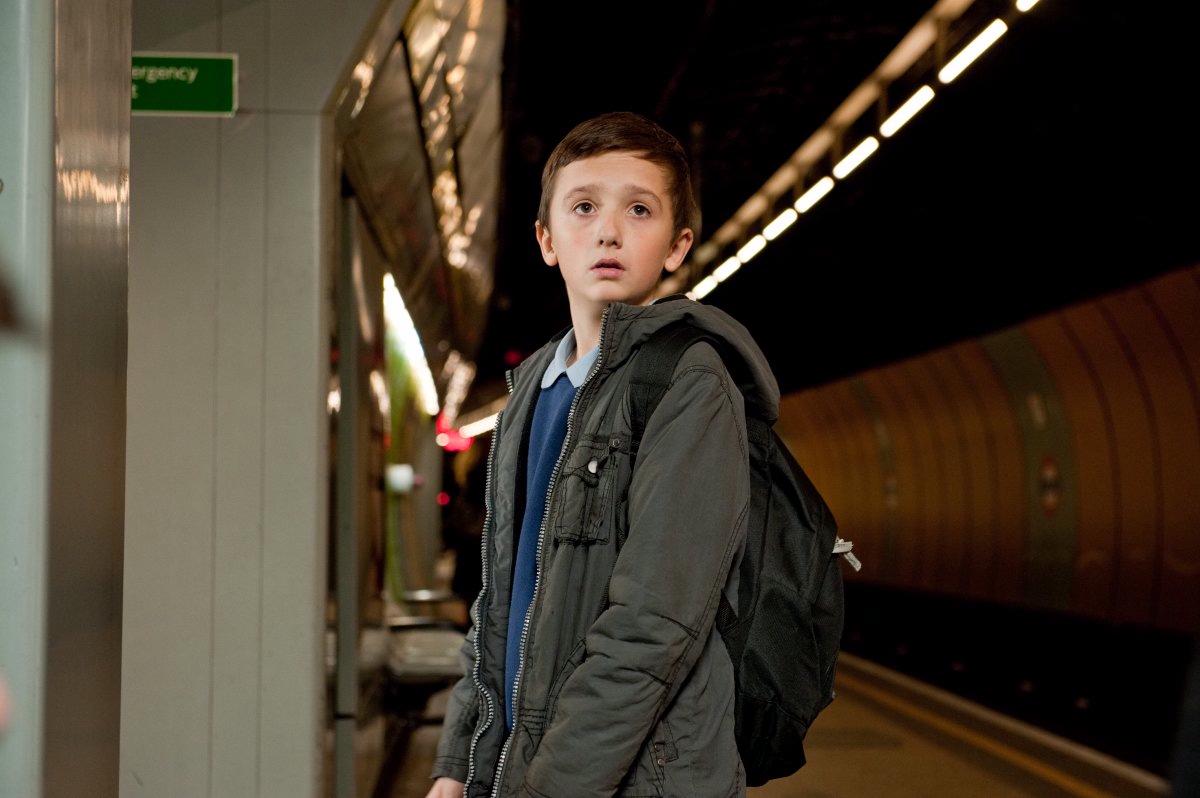
netflixmania.it/wp-content/uploads/2024/11/hereafter-film...
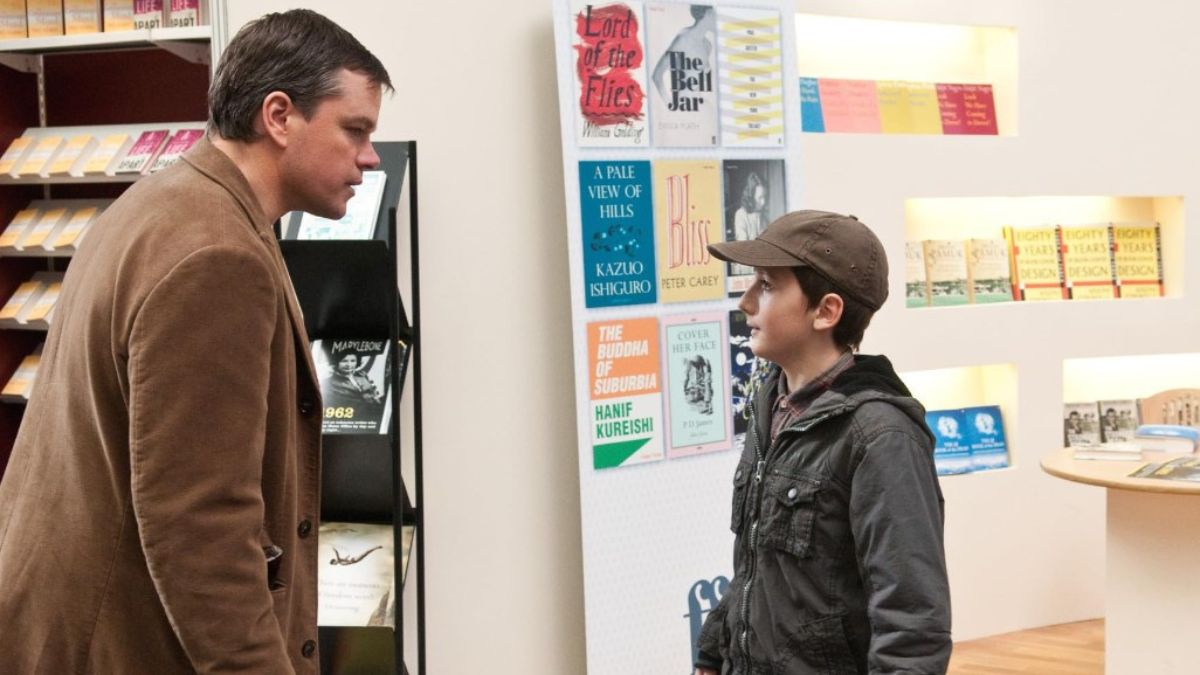
----------------------------------------------------------
click to activate the small icon of slideshow: the small triangle inscribed in the small rectangle, at the top right, in the photostream (it means the monitor);
or…. Press the “L” button to zoom in the image;
clicca sulla piccola icona per attivare lo slideshow: sulla facciata principale del photostream, in alto a destra c'è un piccolo rettangolo (rappresenta il monitor) con dentro un piccolo triangolo nero;
oppure…. premi il tasto “L” per ingrandire l'immagine;
www.worldphoto.org/sony-world-photography-awards/winners-...
www.fotografidigitali.it/gallery/2726/opere-italiane-segn...
………………………………………………………………………
Does the afterlife exist? Mystics like Padre Pio, Natuzza Evolo spoke with the souls of the deceased, not knowing that they were “deceased”, they did not distinguish them from normal people (they understood it later). The Marian apparitions to Bernadette, to the three shepherds of Fatima, those of Medjugorje, were they real? And how much have they influenced the history of humanity? My profession has led me to meet people who have told me about their “uncommon experiences”. A few years ago, a young man of about 30 years old, reported his “near death” experience, hospitalized in very serious conditions in our intensive care unit, he told of when he saw doctors and paramedics from above, busy around his body, he then found himself inside a tunnel, at the end there was a light. Now “Francesco” is fine. A couple of months ago, still in intensive care, I talked with a patient of about 50 years old, who survived three almost consecutive cardiac arrests, after that event, he told me, he had unexpectedly discovered a deep faith; discharged, he is now in good health. A few days ago, again for professional reasons, I met a lady in her 60s, accompanied by her 26-year-old son, she told me that, in her troubled life, in addition to having undergone numerous surgical operations, she had been subjected to numerous cycles of chemotherapy, during one of these sessions, she had a cardiocirculatory arrest (probably caused by anaphylactic shock), at that moment she could clearly see the whole scene from above, everyone was doing their best to revive her, she saw a nurse pushing a trolley in the corridor, unable to enter the room where her body was, because half of the door was blocked by a latch, preventing the passage of the trolley, she kicked the door violently which opened thus managing to pass; she saw a doctor who, in the grip of excitement, was unable to put on her coat (these events, the lady told me, had a positive response); the story continued, she rose higher, light, as if floating on the waves of the sea, she saw a cone of light that fell on her like confetti, she felt a sensation of well-being, she saw her grandfather, who held her head and caressed her hair, she looked up and saw some figures, they seemed to have wings, she thought that perhaps they were angels, suddenly she felt herself being “sucked and banged” inside her body. Now the lady, after that experience, no longer fears death. She put her hand on mine, without touching it, just a few seconds, she began to talk about some of my personal facts, at that moment, they seemed to me to be a bit banal and obvious observations, but then, looking me in the eyes, she stated with certainty that in my family, there was a person called Angelo (in reality her name is Angela), she was not wrong. She told me that, months before Eros Ramazzotti's song "Un angelo disteso al sole" came out, she was singing that tune, including the lyrics. She showed me on her smartphone, a selfie of her taken in the car, on the windshield you could clearly see a “luminous face”, she said that her Guardian Angel, Saint Michael the Archangel, had appeared to her. (The lady was also hospitalized in the “La Maddalena” clinic in Palermo, she met the mafia boss Matteo Messina Denaro, she told me an anecdote of hers, but that’s another story). This story, like the one told by Francesco, are part of those numerous cases defined as “pre-death” or “NDE” acronym derived from the English, Near Death Experience. A scientific hypothesis interprets these phenomena as the result of chemical reactions that are triggered in the brain in moments of deep psycho-physical stress, in oxygen deficiency, with the release of endorphins (they generate sensations of euphoria and well-being) and other neurotransmitters, which can determine overall a hyperfunctioning and strengthening of the senses in the cerebral cortex. I am fascinated by the story of when the physicist Albert Einstein, while discussing with Gustavo Adolfo Rol (a famous Italian psychic), placed his hand between the lamp and the table, saying "you see, when matter manifests itself, it casts a dark shadow, because it is matter, whereas God, being pure spirit, when he materializes cannot manifest himself if not through light: light is nothing other than the shadow of God". I have posted a series of photographs taken in November and December of this year, the first part are shots taken according to the dictates of street / beach photography, some examples of earthly reality, to then enter into the "hypothesis of that otherworldly and parallel reality, not perceptible by our senses" accompanied by the presence of Angels, Beings of Light, who "should" always be close to us throughout our existence, after all the mystic Natuzza Evolo recognized the "plainclothes priests" by the presence of their Guardian Angel, because he was placed on their right.
……………………….
Esiste l’Aldilà? Mistici come Padre Pio, Natuzza Evolo parlavano con le anime dei defunti, non sapendo che erano dei “trapassati”, non li distinguevano dalle normali persone (lo capirono successivamente). Le apparizioni mariane a Bernadette, ai tre pastorelli di Fatima, quelle di Medugorje, erano reali ? E quanto hanno inciso nella storia dell’umanità? La mia professione mi ha portato a confrontarmi con persone che mi hanno raccontato di loro “esperienze non comuni”. Qualche anno fa, un giovane di circa 30 anni, riferì una sua esperienza di “premorte”, ricoverato in gravissime condizioni nella nostra terapia intensiva, raccontò di quando lui vide dall’alto medici e parasanitari, indaffarati attorno al suo corpo, si trovò poi dentro un tunnel, in fondo vi era una luce. Adesso “Francesco” sta bene. Un paio di mesi fa, sempre in terapia intensiva, ho conversato con un paziente di circa 50 anni, sopravvissuto a tre arresti cardiaci quasi consecutivi, dopo quell’evento, mi riferiva, aveva scoperto inaspettatamente, una profonda fede; dimesso, adesso è in buona salute. Pochi giorni fa, sempre per motivi professionali, ho conosciuto una signora sui 60 anni, accompagnata dal figlio di anni 26 anni, mi raccontò che, nella sua travagliata vita, oltre ad aver subito numerosi interventi chirurgici, è stata sottoposta a numerosi cicli di chemioterapia, durante una di questa sedute, è incorsa in un arresto cardiocircolatorio (probabilmente causato da uno shock anafilattico), in quel momento vedeva distintamente tutta la scena dall’alto, tutti si prodigavano per rianimarla, vide una infermiera spingere un carrello nel corridoio, non riuscendo ad entrare nella sala dove si trovava il suo corpo, poiché mezza anta della porta era bloccata da un chiavistello, impedendo il passaggio del carrello, lei diede un calcio violento all’anta che si aprì riuscendo così a passare; vide una dottoressa che in preda alla concitazione non riusciva a mettersi il camice (questi eventi, mi riferì la signora, ebbero un riscontro positivo); il racconto continuò, lei salì più in alto, leggera, come galleggiando sulle onde del mare, vide un cono di luce che scendeva su di lei come fossero coriandoli, lei percepiva una sensazione di benessere, vide suo nonno, che le teneva il capo e le accarezzava i capelli, guardò in alto e vide delle figure, sembrava avessero delle ali, pensò che forse erano gli angeli, improvvisamente si sentì “risucchiare e sbattere” dentro il suo corpo. Adesso la signora, dopo quella esperienza, non teme più la morte. Mise la sua mano sopra la mia, senza toccarla, solo qualche secondo, incominciò a parlare su alcuni miei fatti personali, in quel momento, mi sembrarono osservazioni un po’ banali e scontate, però poi, guardandomi negli occhi, affermò con certezza che nella mia famiglia, c’era una persona che si chiama Angelo (in realtà si chiama Angela), non si era sbagliata. Mi riferì che, mesi prima che uscisse la canzone di Eros Ramazzotti “Un angelo disteso al sole”, lei cantava quel motivo, incluse le parole. Mi mostrò sul suo smartphone, un suo selfie fatto in auto, sul parabrezza si vedeva distintamente un “volto luminoso”, lei disse che le era apparso il suo Angelo Custode, San Michele Arcangelo. (La signora fu ricoverata anche nella clinica “La Maddalena” di Palermo, fece la conoscenza del boss mafioso Matteo Messina Denaro, mi raccontò un suo aneddoto, ma questa è un’altra storia). Questa storia, come quella raccontata da Francesco, rientrano in quei numerosi casi definiti di “premorte” o “NDE” acronimo derivato dall’inglese, Near Death Experience. Una ipotesi scientifica interpreta tali fenomeni come il risultato di reazioni chimiche che si scatenano nel cervello in momenti di profondo stress psico-fisico, in carenza di ossigeno, con rilascio di endorfine (esse generano sensazioni di euforia e di benessere) ed altri neurotrasmettitori, potendo determinare nell’insieme un iperfunzionamento e potenziamento dei sensi nella corteccia cerebrale. Sono affascinato dalla vicenda, di quando il fisico Albert Einstein discutendo con Gustavo Adolfo Rol (famoso sensitivo italiano) frappose la sua mano tra lampada e tavolo, dicendo “vedi, quando la materia si manifesta, proietta una ombra scura, perché è materia, invece Dio essendo puro spirito, quando si materializza non può manifestarsi se non attraverso la luce: la luce non è altro, se non, l’ombra di Dio”. Posto una serie di fotografie eseguite nel novembre e dicembre di quest’anno, una prima parte sono scatti realizzati secondo i dettami della street /beach photography, qualche esempio di realtà terrena, per entrare poi nella “ipotesi di quella realtà ultraterrena e parallela, non percepibile dai nostri sensi” accompagnata dalla presenza degli Angeli, Esseri di Luce, che “dovrebbero” starci sempre accanto durante tutta la nostra esistenza, d'altronde la mistica Natuzza Evolo riconosceva i “sacerdoti in borghese” dalla presenza del loro Angelo Custode, perché messo alla loro destra.
…………………………………….
See, see, see...
so much has told us so
so much to have fought for
and still so much to save
a thought for your pennies
spent sheepishly over yore
now relax and swing
amazingly,
time is still on our side
a gift that lives
so please don't disinherit
what can be claimed
rightfully
before sunset
like birds heading home
a heartbeat away
a season in which comfort roosts
standing to sidereal applause
dizzying daydreams
held in thenar warmth
the quiet life comes alive
before nightfall.
by anglia24
10h35: 08/06/2007
my outline
without any impart
and yet, judgement is made
truth untold
we go without certainty
yet a dream is extold
where are we now
and what do we see?
the image is unclear
yet the heart is true by decree.
by anglia24
10h35: 07/06/2007
●●●●●●●●●●●●
© 2007anglia24
Cathedral's northern longside.
This realistic bronze sculpture is said to disguise a poor homeless, the artist herself has left it to the viewer to sort out. Inaugurated in 2009, by Bishop Martin Lind, the artist is Charlotte Gyllenhammar. To the installation there is a second important part, the little illuminated ladder that can be seen above the homeless, made of silver and 628 facet cut deep red garnets. Here, too, the artist has chosen to let the viewer interpret the context itself. She gives a vague reference about Jacob's ladder, from the story of Genesis.
My and others' interpretation is probably that the time has come for the poor homeless and is thus welcome to step up to heaven ...........
-
The Cathedral of Linköping is the second biggest church in Sweden, and is 110 m long and 107m in height.
-
Year 1153 was the stone church with certainty completed, which emerges from the documents of the Church Council in the same year, it was then a Romanesque basilica and about half as large as today.
Sea level drop refers to the phenomenon in which melting glaciers cause the surrounding land to rise.. Between 1901 and 2018, the average global sea level rose by 15–25 cm (6–10 in), or an average of 1–2 mm per year. This rate accelerated to 4.62 mm/yr for the decade 2013–2022.[3] Climate change due to human activities is the main cause. Between 1993 and 2018, thermal expansion of water accounted for 42% of sea level rise. Melting temperate glaciers accounted for 21%, with Greenland accounting for 15% and Antarctica 8%.: 1576 Sea level rise lags changes in the Earth's temperature. So sea level rise will continue to accelerate between now and 2050 in response to warming that is already happening. What happens after that will depend on what happens with human greenhouse gas emissions. Sea level rise may slow down between 2050 and 2100 if there are deep cuts in emissions. It could then reach a little over 30 cm (1 ft) from now by 2100. With high emissions it may accelerate. It could rise by 1 m (3+1⁄2 ft) or even 2 m (6+1⁄2 ft) by then.[6][7] In the long run, sea level rise would amount to 2–3 m (7–10 ft) over the next 2000 years if warming amounts to 1.5 °C (2.7 °F). It would be 19–22 metres (62–72 ft) if warming peaks at 5 °C (9.0 °F): 21 meters. Rising seas ultimately impact every coastal and island population on Earth. This can be through flooding, higher storm surges, king tides, and tsunamis. These have many knock-on effects. They lead to loss of coastal ecosystems like mangroves. Crop production falls because of salinization of irrigation water and damage to ports disrupts sea trade. The sea level rise projected by 2050 will expose places currently inhabited by tens of millions of people to annual flooding. Without a sharp reduction in greenhouse gas emissions, this may increase to hundreds of millions in the latter decades of the century. Areas not directly exposed to rising sea levels could be affected by large scale migrations and economic disruption. At the same time, local factors like tidal range or land subsidence, as well as the varying resilience and adaptive capacity of individual ecosystems, sectors, and countries will greatly affect the severity of impacts. For instance, sea level rise along the United States (particularly along the US East Coast) is already higher than the global average, and it is expected to be 2 to 3 times greater than the global average by the end of the century. Yet, out of the 20 countries with the greatest exposure to sea level rise, 12 are in Asia. Bangladesh, China, India, Indonesia, Japan, the Philippines, Thailand and Vietnam collectively account for 70% of the global population exposed to sea level rise and land subsidence. Finally, the greatest near-term impact on human populations will occur in the low-lying Caribbean and Pacific islands—many of those would be rendered uninhabitable by sea level rise later this century.
Societies can adapt to sea level rise in three ways: by managed retreat, by accommodating coastal change, or by protecting against sea level rise through hard-construction practices like seawalls or soft approaches such as dune rehabilitation and beach nourishment. Sometimes these adaptation strategies go hand in hand; at other times choices must be made among different strategies. A managed retreat strategy is difficult if an area's population is quickly increasing: this is a particularly acute problem for Africa, where the population of low-lying coastal areas is projected to increase by around 100 million people within the next 40 years. Poorer nations may also struggle to implement the same approaches to adapt to sea level rise as richer states, and sea level rise at some locations may be compounded by other environmental issues, such as subsidence in so-called sinking cities. Coastal ecosystems typically adapt to rising sea levels by moving inland; but may not always be able to do so, due to natural or artificial barriers. Between 1901 and 2018, the global mean sea level rose by about 20 cm (or 8 inches). More precise data gathered from satellite radar measurements found a rise of 7.5 cm (3 in) from 1993 to 2017 (average of 2.9 mm/yr), accelerating to 4.62 mm/yr for the decade 2013–2022.
Regional variations: Sea level rise is not uniform around the globe. Some land masses are moving up or down as a consequence of subsidence (land sinking or settling) or post-glacial rebound (land rising due to the loss of weight from ice melt). Therefore, local relative sea level rise may be higher or lower than the global average. Gravitational effects of changing ice masses also add to differences in the distribution of sea water around the globe. When a glacier or an ice sheet melts, the loss of mass reduces its gravitational pull. In some places near current and former glaciers and ice sheets, this has caused local water levels to drop, even as the water levels will increase more than average further away from the ice sheet. Consequently, ice loss in Greenland has a different fingerprint on regional sea level than the equivalent loss in Antarctica. On the other hand, the Atlantic is warming at a faster pace than the Pacific. This has consequences for Europe and the U.S. East Coast, which receives a sea level rise 3–4 times the global average. The downturn of the Atlantic meridional overturning circulation (AMOC) has been also tied to extreme regional sea level rise on the US Northeast Coast. Many ports, urban conglomerations, and agricultural regions are built on river deltas, where subsidence of land contributes to a substantially increased relative sea level rise. This is caused by both unsustainable extraction of groundwater and oil and gas, as well as by levees and other flood management practices preventing the accumulation of sediments which otherwise compensates for the natural settling of deltaic soils, over 3 m (10 ft) in urban areas of the Mississippi River Delta (New Orleans), and over 9 m (30 ft) in the Sacramento–San Joaquin River Delta. On the other hand, post-glacial isostatic rebound causes relative sea level fall around the Hudson Bay in Canada and the northern Baltic.
Projections: A comparison of SLR in six parts of the US. The Gulf Coast and East Coast see the most SLR, whereas the West Coast the least NOAA predicts different levels of sea level rise through 2050 for several US coastlines. There are two complementary ways of modeling sea level rise and making future projections. In the first approach, scientists use process-based modeling, where all relevant and well-understood physical processes are included in a global physical model. An ice-sheet model is used to calculate the contributions of ice sheets and a general circulation model is used to compute the rising sea temperature and its expansion. While some of the relevant processes may be insufficiently understood, this approach can predict non-linearities and long delays in the response, which studies of the recent past will miss. In the other approach, scientists employ semi-empirical techniques using historical geological data to determine likely sea level responses to a warming world, in addition to some basic physical modeling. These semi-empirical sea level models rely on statistical techniques, using relationships between observed past contributions to global mean sea level and global mean temperature. This type of modeling was partially motivated by most physical models in previous Intergovernmental Panel on Climate Change (IPCC) literature assessments having underestimated the amount of sea level rise compared to observations of the 20th century.
Projections for the 21st century: Historical sea level reconstruction and projections up to 2100 published in 2017 by the U.S. Global Change Research Program.[35] RCPs are different scenarios for future concentrations of greenhouse gases. The Intergovernmental Panel on Climate Change provides multiple plausible scenarios of 21st century sea level rise in each report, starting from the IPCC First Assessment Report in 1990. The differences between scenarios are primarily due to the uncertainty about future greenhouse gas emissions, which are subject to hard to predict political action, as well as economic developments. The scenarios used in the 2013-2014 Fifth Assessment Report (AR5) were called Representative Concentration Pathways, or RCPs. An estimate for sea level rise is given with each RCP, presented as a range with a lower and upper limit, to reflect the unknowns. The RCP2.6 pathway would see GHG emissions kept low enough to meet the Paris climate agreement goal of limiting warming by 2100 to 2 °C. Estimated SLR by 2100 for RCP2.6 was about 44 cm (the range given was as 28–61 cm). For RCP8.5 the sea level would rise between 52 and 98 cm (20+1⁄2 and 38+1⁄2 in). A set of older estimates of sea level rise. Sources showed a wide range of estimates
Sea level rise projections for the years 2030, 2050 and 2100
The report did not estimate the possibility of global SLR being accelerated by the outright collapse of the marine-based parts of the Antarctic ice sheet, due to the lack of reliable information, only stating with medium confidence that if such a collapse occurred, it would not add more than several tens of centimeters to 21st century sea level rise. Since its publication, multiple papers have questioned this decision and presented higher estimates of SLR after attempting to better incorporate ice sheet processes in Antarctica and Greenland and to compare the current events with the paleoclimate data. For instance, a 2017 study from the University of Melbourne researchers estimated that ice sheet processes would increase AR5 sea level rise estimate for the low emission scenario by about one quarter, but they would add nearly half under the moderate scenario and practically double estimated sea level rise under the high emission scenario. The 2017 Fourth United States National Climate Assessment presented estimates comparable to the IPCC for the low emission scenarios, yet found that the SLR of up to 2.4 m (10 ft) by 2100 relative to 2000 is physically possible if the high emission scenario triggers Antarctic ice sheet instability, greatly increasing the 130 cm (5 ft) estimate for the same scenario but without instability. A 2016 study led by Jim Hansen presented a hypothesis of vulnerable ice sheet collapse leading to near-term exponential sea level rise acceleration, with a doubling time of 10, 20 or 40 years, thus leading to multi-meter sea level rise in 50, 100 or 200 years, respectively. However, it remains a minority view amongst the scientific community. For comparison, two expert elicitation papers were published in 2019 and 2020, both looking at low and high emission scenarios. The former combined the projections of 22 ice sheet experts to estimate the median SLR of 30 cm (12 in) by 2050 and 70 cm (27+1⁄2 in) by 2100 in the low emission scenario and the median of 34 cm (13+1⁄2 in) by 2050 and 110 cm (43+1⁄2 in) by 2100 in a high emission scenario. They also estimated a small chance of sea levels exceeding 1 meter by 2100 even in the low emission scenario and of going beyond 2 meters in the high emission scenario, with the latter causing the displacement of 187 million people. The other paper surveyed 106 experts, who had estimated a median of 45 cm (17+1⁄2 in) by 2100 for RCP2.6, with a 5%-95% range of 21–82 cm (8+1⁄2–32+1⁄2 in). For RCP8.5, the experts estimated a median of 93 cm (36+1⁄2 in) by 2100, with a 5%-95% range of 45–165 cm (17+1⁄2–65 in). By 2020, the observed ice-sheet losses in Greenland and Antarctica were found to track the upper-end range of the AR5 projections. Consequently, the updated SLR projections in the 2019 IPCC Special Report on the Ocean and Cryosphere in a Changing Climate were somewhat larger than in AR5, and they were far more plausible when compared to an extrapolation of observed sea level rise trends. The main set of sea level rise projections used in IPCC Sixth Assessment Report (AR6) was ultimately only slightly larger than the one in SROCC, with SSP1-2.6 resulting in a 17-83% range of 32–62 cm (12+1⁄2–24+1⁄2 in) by 2100, SSP2-4.5 resulting in a 44–76 cm (17+1⁄2–30 in) range by 2100 and SSP5-8.5 leading to 65–101 cm (25+1⁄2–40 in). The report also provided extended projections on both the lower and the upper end, adding SSP1-1.9 scenario which represents meeting the 1.5 °C (2.7 °F) goal and has the likely range of 28–55 cm (11–21+1⁄2 in), as well as "low-confidence" narrative involving processes like marine ice sheet and marine ice cliff instability under SSP5-8.5. For that scenario, it cautioned that the sea level rise of over 2 m (6+1⁄2 ft) by 2100 "cannot be ruled out".[7] And as of 2022, NOAA suggests 50% probability of 0.5 m (19+1⁄2 in) sea level rise by 2100 under 2 °C (3.6 °F), increasing to >80% to >99% under 3–5 °C (5.4–9.0 °F)." If countries cut greenhouse gas emissions significantly (lowest trace), the IPCC expects sea level rise by 2100 to be limited to 0.3 to 0.6 meters (1–2 feet).However, in a worst case scenario (top trace), sea levels could rise 5 meters (16 feet) by the year 2300. A map showing major SLR impact in south-east Asia, Northern Europe and the East Coast of the US
Map of the Earth with a long-term 6-metre (20 ft) sea level rise represented in red (uniform distribution, actual sea level rise will vary regionally and local adaptation measures will also have an effect on local sea levels). Models consistent with paleo records of sea level rise: 1189 indicate that substantial long-term SLR will continue for centuries even if the temperature stabilizes. After 500 years, sea level rise from thermal expansion alone may have reached only half of its eventual level, which models suggest may lie within ranges of 0.5–2 m (1+1⁄2–6+1⁄2 ft).[51] Additionally, tipping points of Greenland and Antarctica ice sheets are expected to play a larger role over such timescales, with very long-term SLR likely to be dominated by ice loss from Antarctica, especially if the warming exceeds 2 °C (3.6 °F). Continued carbon dioxide emissions from fossil fuel sources could cause additional tens of metres of sea level rise, over the next millennia. The available fossil fuel on Earth is enough to ultimately melt the entire Antarctic ice sheet, causing about 58 m (190 ft) of sea level rise. In the next 2,000 years the sea level is predicted to rise by 2–3 m (6+1⁄2–10 ft) if the temperature rise peaks at its current 1.5 °C (2.7 °F), by 2–6 m (6+1⁄2–19+1⁄2 ft) if it peaks at 2 °C (3.6 °F) and by 19–22 m (62+1⁄2–72 ft) if it peaks at 5 °C (9.0 °F).[6]: SPM-28 If temperature rise stops at 2 °C (3.6 °F) or at 5 °C (9.0 °F), the sea level would still continue to rise for about 10,000 years. In the first case it will reach 8–13 m (26–42+1⁄2 ft) above pre-industrial level, and in the second 28–37 m (92–121+1⁄2 ft). As both the models and observational records have improved, a range of studies has attempted to project SLR for the centuries immediately after 2100, which remains largely speculative. For instance, when the April 2019 expert elicitation asked its 22 experts about total sea level rise projections for the years 2200 and 2300 under its high, 5 °C warming scenario, it ended up with 90% confidence intervals of −10 cm (4 in) to 740 cm (24+1⁄2 ft) and −9 cm (3+1⁄2 in) to 970 cm (32 ft), respectively (negative values represent the extremely low probability of very large increases in the ice sheet surface mass balance due to climate change-induced increase in precipitation ). The elicitation of 106 experts led by Stefan Rahmstorf had also included 2300 for RCP2.6 and RCP 8.5: the former had the median of 118 cm (46+1⁄2 in), a 17%-83% range of 54–215 cm (21+1⁄2–84+1⁄2 in) and a 5%-95% range of 24–311 cm (9+1⁄2–122+1⁄2 in), while the latter had the median of 329 cm (129+1⁄2 in), a 17%-83% range of 167–561 cm (65+1⁄2–221 in) and a 5%-95% range of 88–783 cm (34+1⁄2–308+1⁄2 in). By 2021, AR6 was also able to provide estimates for year 2150 SLR alongside the 2100 estimates for the first time. According to it, keeping warming at 1.5 °C under the SSP1-1.9 scenario would result in sea level rise in the 17-83% range of 37–86 cm (14+1⁄2–34 in), SSP1-2.6 a range of 46–99 cm (18–39 in), SSP2-4.5 of 66–133 cm (26–52+1⁄2 in) range by 2100 and SSP5-8.5 leading to 98–188 cm (38+1⁄2–74 in). Moreover, it stated that if the "low-confidence" could result in over 2 m (6+1⁄2 ft) by 2100, it would then accelerate further to potentially approach 5 m (16+1⁄2 ft) by 2150. The report provided lower-confidence estimates for year 2300 sea level rise under SSP1-2.6 and SSP5-8.5 as well: the former had a range between 0.5 m (1+1⁄2 ft) and 3.2 m (10+1⁄2 ft), while the latter ranged from just under 2 m (6+1⁄2 ft) to just under 7 m (23 ft). Finally, the version of SSP5-8.5 involving low-confidence processes has a chance of exceeding 15 m (49 ft) by then. In 2018, it was estimated that for every 5 years CO2 emissions are allowed to increase before finally peaking, the median 2300 SLR increases by the median of 20 cm (8 in), with a 5% likelihood of 1 m (3+1⁄2 ft) increase due to the same. The same estimate found that if the temperature stabilized below 2 °C (3.6 °F), 2300 sea level rise would still exceed 1.5 m (5 ft), while the early net zero and slowly falling temperatures could limit it to 70–120 cm (27+1⁄2–47 in). Measurements: Sea level changes can be driven by variations in the amount of water in the oceans, by changes in the volume of that water, or by varying land elevation compared to the sea surface. Over a consistent time period, assessments can source contributions to sea level rise and provide early indications of change in trajectory, which helps to inform adaptation plans. The different techniques used to measure changes in sea level do not measure exactly the same level. Tide gauges can only measure relative sea level, whilst satellites can also measure absolute sea level changes. To get precise measurements for sea level, researchers studying the ice and the oceans on our planet factor in ongoing deformations of the solid Earth, in particular due to landmasses still rising from past ice masses retreating, and also the Earth's gravity and rotation. Satellites: Jason-1 continued the sea surface measurements started by TOPEX/Poseidon. It was followed by the Ocean Surface Topography Mission on Jason-2, and by Jason-3. Since the launch of TOPEX/Poseidon in 1992, an overlapping series of altimetric satellites has been continuously recording the sea level and its changes. Those satellites can measure the hills and valleys in the sea caused by currents and detect trends in their height. To measure the distance to the sea surface, the satellites send a microwave pulse towards Earth and record the time it takes to return after reflecting off the ocean's surface. Microwave radiometers measure and correct the additional delay caused by water vapor in the atmosphere. Combining these data with the precisely known location of the spacecraft determines the sea-surface height to within a few centimetres (about one inch).[59] Rates of sea level rise for the period 1993–2017 have been estimated from satellite altimetry to be 3.0 ± 0.4 millimetres (1⁄8 ± 1⁄64 in) per year. Satellites are useful for measuring regional variations in sea level, such as the substantial rise between 1993 and 2012 in the western tropical Pacific. This sharp rise has been linked to increasing trade winds, which occur when the Pacific Decadal Oscillation (PDO) and the El Niño–Southern Oscillation (ENSO) change from one state to the other.[61] The PDO is a basin-wide climate pattern consisting of two phases, each commonly lasting 10 to 30 years, while the ENSO has a shorter period of 2 to 7 years.Tide gauges: Between 1993 and 2018, the mean sea level has risen across most of the world ocean (blue colors). The global network of tide gauges is another important source of sea-level observations. Compared to the satellite record, this record has major spatial gaps but covers a much longer period of time. Coverage of tide gauges started primarily in the Northern Hemisphere, with data for the Southern Hemisphere remaining scarce up to the 1970s. The longest running sea-level measurements, NAP or Amsterdam Ordnance Datum established in 1675, are recorded in Amsterdam, Netherlands. In Australia, record collection is also quite extensive, including measurements by an amateur meteorologist beginning in 1837 and measurements taken from a sea-level benchmark struck on a small cliff on the Isle of the Dead near the Port Arthur convict settlement in 1841. This network was used, in combination with satellite altimeter data, to establish that global mean sea-level rose 19.5 cm (7.7 in) between 1870 and 2004 at an average rate of about 1.44 mm/yr (1.7 mm/yr during the 20th century). By 2018, data collected by Australia's Commonwealth Scientific and Industrial Research Organisation (CSIRO) had shown that the global mean sea level was rising by 3.2 mm (1⁄8 in) per year, at double the average 20th century rate,[68][69] while the 2023 World Meteorological Organization report found further acceleration to 4.62 mm/yr over the 2013–2022 period.[3] Thus, these observations help to check and verify predictions from climate change simulations. Regional differences are also visible in the tide gauge data. Some are caused by the local sea level differences, while others are due to vertical land movements. In Europe for instance, only some land areas are rising while the others are sinking. Since 1970, most tidal stations have measured higher seas, but sea levels along the northern Baltic Sea have dropped due to post-glacial rebound. Past sea level rise: Changes in sea levels since the end of the last glacial episode. An understanding of past sea level is an important guide to where current changes in sea level will end up once these processes conclude. In the recent geological past, thermal expansion from increased temperatures and changes in land ice are the dominant reasons of sea level rise. The last time that the Earth was 2 °C (3.6 °F) warmer than pre-industrial temperatures was 120,000 years ago, when warming due to Milankovitch cycles (changes in the amount of sunlight due to slow changes in the Earth's orbit) caused the Eemian interglacial; sea levels during that warmer interglacial were at least 5 m (16 ft) higher than now. The Eemian warming was sustained over a period of thousands of years, and the magnitude of the rise in sea level implies a large contribution from the Antarctic and Greenland ice sheets: 1139 According to Royal Netherlands Institute for Sea Research, levels of atmospheric carbon dioxide similar to today's ultimately increased temperature by over 2–3 °C (3.6–5.4 °F) around three million years ago. This temperature increase eventually melted one third of Antarctica's ice sheet, causing sea levels to rise 20 meters above the present values. Since the Last Glacial Maximum, about 20,000 years ago, sea level has risen by more than 125 metres (410 ft), with rates varying from less than 1 mm/year during the pre-industrial era to 40+ mm/year when major ice sheets over Canada and Eurasia melted. meltwater pulses are periods of fast sea level rise caused by the rapid disintegration of these ice sheets. The rate of sea level rise started to slow down about 8,200 years before present; sea level was almost constant for the last 2,500 years. The recent trend of rising sea level started at the end of the 19th century or at the beginning of the 20th.
Causes: A graph showing ice loss sea ice, ice shelves and land ice. Land ice loss contributetes to SLR. Earth lost 28 trillion tonnes of ice between 1994 and 2017: ice sheets and glaciers raised the global sea level by 34.6 ± 3.1 mm. The rate of ice loss has risen by 57% since the 1990s−from 0.8 to 1.2 trillion tonnes per year. The three main reasons warming causes global sea level to rise are the expansion of oceans due to heating, along with water inflow from melting ice sheets and glaciers. Sea level rise since the start of the 20th century has been dominated by retreat of glaciers and expansion of the ocean, but the contributions of the two large ice sheets (Greenland and Antarctica) are expected to increase in the 21st century. The ice sheets store most of the land ice (~99.5%), with a sea-level equivalent (SLE) of 7.4 m (24 ft 3 in) for Greenland and 58.3 m (191 ft 3 in) for Antarctica. Each year about 8 mm (5⁄16 in) of precipitation (liquid equivalent) falls on the ice sheets in Antarctica and Greenland, mostly as snow, which accumulates and over time forms glacial ice. Much of this precipitation began as water vapor evaporated from the ocean surface. Some of the snow is blown away by wind or disappears from the ice sheet by melt or by sublimation (directly changing into water vapor). The rest of the snow slowly changes into ice. This ice can flow to the edges of the ice sheet and return to the ocean by melting at the edge or in the form of icebergs. If precipitation, surface processes and ice loss at the edge balance each other, sea level remains the same. However scientists have found that ice is being lost, and at an accelerating rate. Ocean heating: There has been an increase in ocean heat content during recent decades as the oceans absorb most of the excess heat created by human-induced global warming. The oceans store more than 90% of the extra heat added to Earth's climate system by climate change and act as a buffer against its effects. The amount of heat needed to increase average temperature of the entire world ocean by 0.01 °C (0.018 °F) would increase atmospheric temperature by approximately 10 °C (18 °F): a small change in the mean temperature of the ocean represents a very large change in the total heat content of the climate system. When the ocean gains heat, the water expands and sea level rises. The amount of expansion varies with both water temperature and pressure. For each degree, warmer water and water under great pressure (due to depth) expand more than cooler water and water under less pressure : 1161 Consequently cold Arctic Ocean water will expand less than warm tropical water. Because different climate models present slightly different patterns of ocean heating, their predictions do not agree fully on the contribution of ocean heating to SLR. Heat gets transported into deeper parts of the ocean by winds and currents, and some of it reaches depths of more than 2,000 m (6,600 ft). Antarctic ice loss: The large volume of ice on the Antarctic continent stores around 70% of the world's fresh water. There is constant ice discharge along the periphery, yet also constant accumulation of snow atop the ice sheet: together, these processes form Antarctic ice sheet mass balance. Warming increases melting at the base of the ice sheet, but it is likely to increase snowfall, helping offset the periphery melt even if greater weight on the surface also accelerates ice flow into the ocean. While snowfall increased over the last two centuries, no increase was found in the interior of Antarctica over the last four decades. Further, sea ice, particularly in the form of ice shelves, blocks warmer waters around the continent from coming into direct contact with the ice sheet, so any loss of ice shelves substantially increases melt raises and instability. The Ross Ice Shelf, Antarctica's largest, is about the size of France and up to several hundred metres thick. Different satellite methods for measuring ice mass and change are in good agreement, and combining methods leads to more certainty about how the East Antarctic Ice Sheet, the West Antarctic Ice Sheet, and the Antarctic Peninsula evolve. A 2018 systematic review study estimated that the average annual ice loss across the entire continent was 43 gigatons (Gt) during the period from 1992 to 2002, acceletating to an annual average of 220 Gt from 2012 to 2017.[85] The sea level rise due to Antarctica has been estimated to be 0.25 mm per year from 1993 to 2005, and 0.42 mm per year from 2005 to 2015, although there are significant year-to-year variations. In 2021, limiting global warming to 1.5 °C (2.7 °F) was projected to reduce all land ice contribution to sea level rise by 2100 from 25 cm to 13 cm (from 10 to 6 in.) compared to current mitigation pledges, with mountain glaciers responsible for half the sea level rise contribution,[86] and the fate of Antarctica the source of the largest uncertainty.[86] By 2019, several studies have attempted to estimate 2300 sea level rise caused by ice loss in Antarctica alone: they suggest 16 cm (6+1⁄2 in) median and 37 cm (14+1⁄2 in) maximum values under the low-emission scenario but a median of 1.46 m (5 ft) metres (with a minimum of 60 cm (2 ft) and a maximum of 2.89 m (9+1⁄2 ft)) under the highest-emission scenario. East Antarctica: The world's largest potential source of sea level rise is the East Antarctic Ice Sheet (EAIS). It holds enough ice to raise global sea levels by 53.3 m (174 ft 10 in)[87] Historically, it was less studied than the West Antarctica as it had been considered relatively stable, an impression that was backed up by satellite observations and modelling of its surface mass balance. However, a 2019 study employed different methodology and concluded that East Antarctica is already losing ice mass overall. All methods agree that the Totten Glacier has lost ice in recent decades in response to ocean warming and possibly a reduction in local sea ice cover. Totten Glacier is the primary outlet of the Aurora Subglacial Basin, a major ice reservoir in East Antarctica that could rapidly retreat due to hydrological processes. The global sea level potential of 3.5 m (11 ft 6 in) flowing through Totten Glacier alone is of similar magnitude to the entire probable contribution of the West Antarctic Ice Sheet. The other major ice reservoir on East Antarctica that might rapidly retreat is the Wilkes Basin which is subject to marine ice sheet instability. Ice loss from these outlet glaciers is possibly compensated by accumulation gains in other parts of Antarctica. In 2022, it was estimated that the Wilkes Basin, Aurora Basin and other nearby subglacial basins are likely to have a collective tipping point around 3 °C (5.4 °F) of global warming, although it may be as high as 6 °C (11 °F), or as low as 2 °C (3.6 °F). Once this tipping point is crossed, the collapse of these subglacial basins could take place as little as 500 or as much as 10,000 years: the median timeline is 2000 years. On the other hand, the entirety of the EAIS would not be committed to collapse until global warming reaches 7.5 °C (13.5 °F) (range between 5 °C (9.0 °F) and 10 °C (18 °F)), and would take at least 10,000 years to disappear.[92][93] It is also suggested that the loss of two-thirds of its volume may require at least 6 °C (11 °F) of warming. West Antarctica: Even though East Antarctica contains the largest potential source of sea level rise, West Antarctica ice sheet (WAIS) is substantially more vulnerable. In contrast to East Antarctica and the Antarctic Peninsula, temperatures on West Antarctica have increased significantly with a trend between 0.08 °C (0.14 °F) per decade and 0.96 °C (1.73 °F) per decade between 1976 and 2012. Consequently, satellite observations recorded a substantial increase in WAIS melting from 1992 to 2017, resulting in 7.6 ± 3.9 mm (19⁄64 ± 5⁄32 in) of Antarctica sea level rise, with a disproportionate role played by outflow glaciers in the Amundsen Sea Embayment. In 2021, AR6 estimated that while the median increase in sea level rise from the West Antarctic ice sheet melt by 2100 is ~11 cm (5 in) under all emission scenarios (since the increased warming would intensify the water cycle and increase snowfall accumulation over the ice sheet at about the same rate as it would increase ice loss), it can conceivably contribute as much as 41 cm (16 in) by 2100 under the low-emission scenario and 57 cm (22 in) under the highest-emission one. This is because WAIS is vulnerable to several types of instability whose role remains difficult to model. These include hydrofracturing (meltwater collecting atop the ice sheet pools into fractures and forces them open), increased contact of warm ocean water with ice shelves due to climate-change induced ocean circulation changes, marine ice sheet instability (warm water entering between the seafloor and the base of the ice sheet once it is no longer heavy enough to displace the flow, causing accelerated melting and collapse) and even marine ice cliff instability (ice cliffs with heights greater than 100 m (330 ft) collapsing under their own weight once they are no longer buttressed by ice shelves). These processes do not have equal influence and are not all equally likely to happen: for instance, marine ice cliff instability has never been observed and was ruled out by some of the more detailed modelling. Thwaites Glacier, with its vulnerable bedrock topography visible.
The Thwaites and Pine Island glaciers are considered the most prone to ice sheet instability processes. Both glaciers' bedrock topography gets deeper farther inland, exposing them to more warm water intrusion into the grounding zone. Their contribution to global sea levels has already accelerated since the beginning of the 21st century, with the Thwaites Glacier now amounting to 4% of the global sea level rise. At the end of 2021, it was estimated that the Thwaites Ice Shelf can collapse in three to five years, which would then make the destabilization of the entire Thwaites glacier inevitable. The Thwaites glacier itself will cause a rise of sea level by 65 cm (25+1⁄2 in) if it will completely collapse,[107][102] although this process is estimated to unfold over several centuries. Since most of the bedrock underlying the West Antarctic Ice Sheet lies well below sea level, it is currently buttressed by Thwaites and Pine Island Glaciers, meaning that their loss would likely destabilize the entire ice sheet.[38][108] This possibility was first proposed back in the 1970s,[37] when a 1978 study predicted that anthropogenic CO2 emissions doubling by 2050 would cause 5 m (15 ft) of SLR from the rapid WAIS loss alone. Since then, improved modelling concluded that the ice within WAIS would raise the sea level by 3.3 m (10 ft 10 in). In 2022, the collapse of the entire West Antarctica was estimated to unfold over a period of about 2000 years, with the absolute minimum of 500 years (and a potential maximum of 13,000 years). At the same time, this collapse was considered likely to be triggered at around 1.5 °C (2.7 °F) of global warming and would become unavoidable at 3 °C (5.4 °F). At worst, it may have even been triggered already: subsequent (2023) research had made that possibility more likely, suggesting that the temperatures in the Amundsen Sea are likely to increase at triple the historical rate even with low or "medium" atmospheric warming and even faster with high warming. Without unexpected strong negative feedbacks emerging, the collapse of the ice sheet would become inevitable. While it would take a very long time from start to end for the ice sheet to disappear, it has been suggested that the only way to stop it once triggered is by lowering the global temperature to 1 °C (1.8 °F) below the preindustrial level; i.e. 2 °C (3.6 °F) below the temperature of 2020. Other researchers suggested that a climate engineering intervention aiming to stabilize the ice sheet's glaciers may delay its loss by centuries and give more time to adapt, although it's an uncertain proposal, and would necessarily end up as one of the most expensive projects ever attempted by humanity. Greenland ice sheet loss: Greenland 2007 melt, measured as the difference between the number of days on which melting occurred in 2007 compared to the average annual melting days from 1988 to 2006. Most ice on Greenland is part of the Greenland ice sheet which is 3 km (10,000 ft) at its thickest. Other Greenland ice forms isolated glaciers and ice caps. The sources contributing to sea level rise from Greenland are from ice sheet melting (70%) and from glacier calving (30%). Average annual ice loss in Greenland more than doubled in the early 21st century compared to the 20th century,[117] and there was a corresponding increase in SLR contribution from 0.07 mm per year between 1992 and 1997 to 0.68 mm per year between 2012 and 2017. Total ice loss from the Greenland Ice Sheet between 1992 and 2018 amounted to 3,902 gigatons (Gt) of ice, which is equivalent to the SLR of 10.8 mm.[118] The contribution for the 2012–2016 period was equivalent to 37% of sea level rise from land ice sources (excluding thermal expansion).[119] This rate of ice sheet melting is also associated with the higher end of predictions from the past IPCC assessment reports. In 2021, AR6 estimated that under the SSP1-2.6 emission scenario which largely fulfils the Paris Agreement goals, Greenland ice sheet melt adds around 6 cm (2+1⁄2 in) to global sea level rise by the end of the century, with a plausible maximum of 15 cm (6 in) (and even a very small chance of the ice sheet reducing the sea levels by around 2 cm (1 in) due to gaining mass through surface mass balance feedback). The scenario associated with the highest global warming, SSP5-8.5, would see Greenland add a minimum of 5 cm (2 in) to sea level rise, a likely median of 13 cm (5 in) cm and a plausible maximum of 23 cm (9 in). Certain parts of the Greenland ice sheet are already known to be committed to unstoppable sea level rise. Greenland's peripheral glaciers and ice caps crossed an irreversible tipping point around 1997, and will continue to melt. A subsequent study had found that the climate of the past 20 years (2000–2019) would already result of the loss of ~3.3% volume in this manner in the future, committing the ice sheet to an eventual 27 cm (10+1⁄2 in) of SLR, independent of any future temperature change.[126] There is also a global warming threshold beyond which a near-complete melting of the Greenland ice sheet occurs. Earlier research has put this threshold value as low as 1 °C (1.8 °F), and definitely no higher than 4 °C (7.2 °F) above pre-industrial temperatures.[128][26]: 1170 A 2021 analysis of sub-glacial sediment at the bottom of a 1.4 km Greenland ice core finds that the Greenland ice sheet melted away at least once during the last million years, even though the temperatures have never been higher than 2.5 °C (4.5 °F) greater than today over that period.[129][130] In 2022, it was estimated that the tipping point of the Greenland Ice Sheet may have been as low as 0.8 °C (1.4 °F) and is certainly no higher than 3 °C (5.4 °F) : there is a high chance that it will be crossed around 1.5 °C (2.7 °F). Once crossed, it would take between 1000 and 15,000 years for the ice sheet to disintegrate entirely, with the most likely estimate of 10,000 years. Mountain glacier loss: Based on national pledges to reduce greenhouse gas emissions, global mean temperature is projected to increase by 2.7 °C (4.9 °F), which would cause loss of about half of Earth's glaciers by 2100—causing a sea level rise of 115±40 millimeters. There are roughly 200,000 glaciers on Earth, which are spread out across all continents. Less than 1% of glacier ice is in mountain glaciers, compared to 99% in Greenland and Antarctica. However, this small size also makes mountain glaciers more vulnerable to melting than the larger ice sheets. This means they have had a disproportionate contribution to historical sea level rise and are set to contribute a smaller, but still significant fraction of sea level rise in the 21st century. Observational and modelling studies of mass loss from glaciers and ice caps indicate a contribution to sea level rise of 0.2-0.4 mm per year, averaged over the 20th century. The contribution for the 2012–2016 period was nearly as large as that of Greenland: 0.63 mm of sea level rise per year, equivalent to 34% of sea level rise from land ice sources. Glaciers contributed around 40% to sea level rise during the 20th century, with estimates for the 21st century of around 30%.[4] The IPCC Fifth Assessment Report estimated that glaciers contributing 7–24 cm (3–9+1⁄2 in) to global sea levels: 1165 . In 2023, a Science paper estimated that at 1.5 °C (2.7 °F), one quarter of mountain glacier mass would be lost by 2100 and nearly half would be lost at 4 °C (7.2 °F), contributing ~9 cm (3+1⁄2 in) and ~15 cm (6 in) to sea level rise, respectively. Because glacier mass is disproportionately concentrated in the most resilient glaciers, this would in practice remove between 49% and 83% of glacier formations. It had further estimated that the current likely trajectory of 2.7 °C (4.9 °F) would result in the SLR contribution of ~11 cm (4+1⁄2 in) by 2100. Mountain glaciers are even more vulnerable over the longer term. In 2022, another Science paper estimated that almost no mountain glaciers can be expected to survive once the warming crosses 2 °C (3.6 °F), and their complete loss largely inevitable around 3 °C (5.4 °F): there is even a possibility of complete loss after 2100 at just 1.5 °C (2.7 °F). This could happen as early as 50 years after the tipping point is crossed, although 200 years is the most likely value, and the maximum is around 1000 years. Sea ice loss: Sea ice loss contributes very slightly to global sea level rise. If the melt water from ice floating in the sea was exactly the same as sea water then, according to Archimedes' principle, no rise would occur. However melted sea ice contains less dissolved salt than sea water and is therefore less dense, with a slightly greater volume per unit of mass. If all floating ice shelves and icebergs were to melt sea level would only rise by about 4 cm (1+1⁄2 in). Changes to land water storage: Human activity impacts how much water is stored on land. Dams retain large quantities of water, which is stored on land rather than flowing into the sea (even though the total quantity stored will vary somewhat from time to time). On the other hand, humans extract water from lakes, wetlands and underground reservoirs for food production, which often causes subsidence. Furthermore, the hydrological cycle is influenced by climate change and deforestation, which can lead to further positive and negative contributions to sea level rise. In the 20th century, these processes roughly balanced, but dam building has slowed down and is expected to stay low for the 21st century: 1155 . Water redistribution caused by irrigation from 1993 to 2010 caused a drift of Earth's rotational pole by 78.48 centimetres (30.90 in), causing an amount of groundwater depletion equivalent to a global sea level rise of 6.24 millimetres (0.246 in). Impacts: High tide flooding, also called tidal flooding, has become much more common in the past seven decades.[ The impacts of sea level rise include higher and more frequent high-tide and storm-surge flooding, increased coastal erosion, inhibition of primary production processes, more extensive coastal inundation, along with changes in surface water quality and groundwater. These can lead to a greater loss of property and coastal habitats, loss of life during floods and loss of cultural resources. Agriculture and aquaculture can also be impacted. There can also be loss of tourism, recreation, and transport related functions.[10]: 356 Coastal flooding impacts are exacerbated by land use changes such as urbanisation or deforestation of low-lying coastal zones. Regions that are already vulnerable to the rising sea level also struggle with coastal flooding washing away land and altering the landscape.
Because the projected extent of sea level rise by 2050 will be only slightly affected by any changes in emissions,[5] there is confidence that 2050 levels of SLR combined with the 2010 population distribution (i.e. absent the effects of population growth and human migration) would result in ~150 million people under the water line during high tide and ~300 million in places which are flooded every year—an increase of 40 and 50 million people relative to 2010 values for the same.[13][141] By 2100, there would be another 40 million people under the water line during high tide if sea level rise remains low, and 80 million for a high estimate of the median sea level rise.[13] If ice sheet processes under the highest emission scenario result in sea level rise of well over one metre (3+1⁄4 ft) by 2100, with a chance of levels over two metres (6+1⁄2 ft),[16][6]: TS-45 then as many as 520 million additional people would end up under the water line during high tide and 640 million in places which are flooded every year, when compared to the 2010 population distribution.
Major cities threatened by sea level rise. The cities indicated are under threat of even a small sea level rise (of 1.6 feet/49 cm) compared to the level in 2010. Even moderate projections indicate that such a rise will have occurred by 2060.[142][143]
Over the longer term, coastal areas are particularly vulnerable to rising sea levels, changes in the frequency and intensity of storms, increased precipitation, and rising ocean temperatures. Ten percent of the world's population live in coastal areas that are less than 10 metres (33 ft) above sea level. Furthermore, two-thirds of the world's cities with over five million people are located in these low-lying coastal areas.[144] In total, approximately 600 million people live directly on the coast around the world.[145] Cities such as Miami, Rio de Janeiro, Osaka and Shanghai will be especially vulnerable later in the century under the warming of 3 °C (5.4 °F), which is close to the current trajectory.[12][36] Altogether, LiDAR-based research had established in 2021 that 267 million people worldwide lived on land less than 2 m (6+1⁄2 ft) above sea level and that with a 1 m (3+1⁄2 ft) sea level rise and zero population growth, that number could increase to 410 million people. Even populations who live further inland may be impacted by a potential disruption of sea trade, and by migrations. In 2023, United Nations secretary general António Guterres warned that sea level rises risk causing human migrations on a "biblical scale". Sea level rise will inevitably affect ports, but the current research into this subject is limited. Not enough is known about the investments required to protect the ports currently in use, and for how they may be protected before it becomes more reasonable to build new port facilities elsewhere. Moreover, some coastal regions are rich agricultural lands, whose loss to the sea can result in food shortages elsewhere. This is a particularly acute issue for river deltas such as Nile Delta in Egypt and Red River and Mekong Deltas in Vietnam, which are disproportionately affected by saltwater intrusion into the soil and irrigation water. Ecosystems:
When seawater reaches inland, coastal plants, birds, and freshwater/estuarine fish are threatened with habitat loss due to flooding and soil/water salinization.[153] So-called ghost forests emerge when coastal forest areas become inundated with saltwater to the point no trees can survive. Starting around 2050, some nesting sites in Florida, Cuba, Ecuador and the island of Sint Eustatius for leatherback, loggerhead, hawksbill, green and olive ridley turtles are expected to be flooded, and the proportion would only increase over time. And in 2016, Bramble Cay islet in the Great Barrier Reef was inundated, flooding the habitat of a rodent named Bramble Cay melomys.[157] In 2019, it was officially declared extinct. While some ecosystems can move land inward with the high-water mark, many are prevented from migrating due to natural or artificial barriers. This coastal narrowing, sometimes called 'coastal squeeze' when considering human-made barriers, could result in the loss of habitats such as mudflats and tidal marshes. Mangrove ecosystems on the mudflats of tropical coasts nurture high biodiversity, yet they are particularly vulnerable due to mangrove plants' reliance on breathing roots or pneumatophores, which might grow to be half a metre tall.[ While mangroves can adjust to rising sea levels by migrating inland and building vertically using accumulated sediment and organic matter, they will be submerged if the rate is too rapid, resulting in the loss of an ecosystem. Both mangroves and tidal marshes protect against storm surges, waves and tsunamis, so their loss makes the effects of sea level rise worse. Human activities, such as dam building, may restrict sediment supplies to wetlands, and thereby prevent natural adaptation processes. The loss of some tidal marshes is unavoidable as a consequence. Likewise, corals, important for bird and fish life, need to grow vertically to remain close to the sea surface in order to get enough energy from sunlight. The corals have so far been able to keep up the vertical growth with the rising seas, but might not be able to do so in the future.
en.wikipedia.org/wiki/Sea_level_rise
en.wikipedia.org/wiki/Sea_level_drop
Tidal range is the difference in height between high tide and low tide. Tides are the rise and fall of sea levels caused by gravitational forces exerted by the Moon and Sun, by Earth's rotation and by centrifugal force caused by Earth's progression around the Earth-Moon barycenter. Tidal range depends on time and location. Larger tidal range occur during spring tides (spring range), when the gravitational forces of both the Moon and Sun are aligned (at syzygy), reinforcing each other in the same direction (new moon) or in opposite directions (full moon). The largest annual tidal range can be expected around the time of the equinox if it coincides with a spring tide. Spring tides occur at the second and fourth (last) quarters of the lunar phases. By contrast, during neap tides, when the Moon and Sun's gravitational force vectors act in quadrature (making a right angle to the Earth's orbit), the difference between high and low tides (neap range) is smallest. Neap tides occur at the first and third quarters of the lunar phases. Tidal data for coastal areas is published by national hydrographic offices. The data is based on astronomical phenomena and is predictable. Sustained storm-force winds blowing from one direction combined with low barometric pressure can increase the tidal range, particularly in narrow bays. Such weather-related effects on the tide can cause ranges in excess of predicted values and can cause localized flooding. These weather-related effects are not calculable in advance. en.wikipedia.org/wiki/Tidal_range
www.youtube.com/watch?v=pnU0K5HlR2s
love this song, wish the video was something different.
i hope you will have time to view large,(especially the third shot). today some of my storefront friends graduate!!! I am going to see five of my treasured students start their next life. I will miss these ones, as always, the miracles of everyday are the ones that leave me in awe and with certainty that the world is a wonderous place. acts of everyday faith, miracles in motion, Dan, Jerrica, Michelle, Jamie, Elle. Dream big dreams, live big lives.
A 16x20 C-Print from "Certainty Principle" an exhibition of photography, video, and installation by Michael David Murphy. Sept. 23rd, 2010 through Oct. 30th, 2010 at Spruill Gallery in Atlanta.
everyone naps :-)
Tom Hodgkinson
HFF!!
iris, sarah p duke gardens, duke university, durham, north carolina
White dazzles my inner divide,
Black thrown in with my unruly side,
My parents wave me a lingering goodbye,
They have always nurtured my childlike soul,
As I try to fly from my warm nest,
To accomplish and try to be the best,
In a world full of colour so bold,
I'm painted black and white,
Standing out for all the wrong reasons,
I dare to fight,
I always daydream in multicolour scenes of joy,
Living is a struggle with silent screams of turmoil,
Stirring the concoction to the boil,
As i listen to remarks that stick permanently,
I try and climb to a great height,
To discover a view, that I can never see,
I bounce back into a fantasy of nature holding my hand,
Accepting my limitations,
Tasting the sweet prospect of finding words a sensation,
Black and white finds the curious light,
That shimmers with substance and dances across the page in ink,
I cross a a wide bridge that is my link,
To dissolving the empty divide,
Like the certainty of the incoming tide.
Hazel Durham
This morning I find myself in an introspective mood and as I so often do, thinking about my transvestism. I think it is fair to say in my own case I find my transgender side moves in circles. By that I mean my thoughts and desires in regard to my cross-dressing as a woman can feel very certain and I believe in them yet they fade and move onto other certainties. These can at times conflict with each other and add to my confusion.
That paragraph itself may lead to confusion after reading it so let me try and explain what occurs. My situation is I am transgender however, I live full time as a man as my birth certificate and my body state very clearly I am male. A lot of the time I am okay with being male and I have typical male traits and male desires and I’m not uncomfortable with it. Despite knowing that and recognising that is how I feel most of the time I have an aspect that causes inner conflict yet has the potential to bring me such inner joy and emotional reward it causes me to doubt my male life. That aspect is a strong desire to be female.
This desire to be female is at odds with my male self but it exists very powerfully within me. I will freely admit there are times I yearn for breasts and female genitals; this is not a man’s normal reaction to his body! Seeing my flat chest, male genitalia and hairy body can cause me upset.
The obvious conclusion if one were to believe that life is simply black and white is I want to be female so I must be a transsexual. Am I transsexual? I believe I am but not completely. I’ve just moved from a black and white world into an area of grey!
The grey exists, nothing is black and white, the feelings manifest themselves in too many and at times paradoxical ways. I am aware a times I desire to be a woman one hundred percent, to be male is distressing. At times I also am very content to be male and so the paradox is exposed. How can I want to be both woman and man? All I know is that’s exactly what I want.
My narratives that accompany my Flickr photo posts are my outlet for self expression as I am a secret transvestite and I rarely get an opportunity to communicate with other transgender people so I open up in my stream of consciousness thoughts in my narratives. I am aware these narratives are an indulgence and I’m frequently told how dull and turgid they are but I continue as I really do need that outlet for my own sake; nobody has to read them. I’m always surprised my pictures even get looked at as I have to yet to take one I feel captures the woman I like to try and become.
Should anyone have read my previous photo narratives or listened to my video musings they will maybe notice I do contradict myself rather a lot. I wanted to expose this as I think it surely must be a scenario others who cross-dress may encounter?
Besides the big one I regularly encounter, that of I’m okay as a man yet at times I’m not and desire to be a woman forever, I acknowledge sometimes the cross-dressing has different motivations. I do call myself a transvestite as I am only dressing up as a woman, I am not transitioning full time. I do at times want to but I have far more I enjoy in my current life to embark on such a journey. Also, certain things bring me down to earth. There are other factors at play that influence my choices on my transsexual aspects. I do think one has to really be as realistic as possible in their decision making and endeavour to take a long term view and weigh things up. I am fairly certain left to my own devices I would be consumed by my desire to be a female and embrace it. However, I know that is fantasy as I simply do not have what it takes to be that woman. I lack the physicality to pass as a woman in the real world. I am fortunate I am not very tall (1.7 meters in height) but I have large hands for my size and large feet as well, both impact on my confidence to look realistic as a woman. My voice, despite trying to work on it is a failure, it’s not that masculine but it’s definitely not female sounding. My movements, again despite my best efforts, are male, it’s all very distressing to me to fail in these attributes that create the perception one is female. I am still far too obviously a man in a dress, I will never be perceived as a woman, that is crushing to realise.
Perhaps one of the biggest reasons I would never transition is I am a bald headed male and I require a wig when I cross-dress. The prospect of having to wear a wig for everyday of my life is so utterly dreadful it keeps the lid on my desire to be a full time woman.
Another factor in not wanting to transition is I enjoy the transvestism. I love knowing I’m a man dressing up and trying to create the illusion of being a woman. I also like performance and acting and it appeals me to engage in female impersonation, it is a huge and exciting thrill. At times this is stronger than my transsexual feelings! I love the idea of one day actually passing convincingly as a woman and men believe I am female. It would be a true thrill and adventure to carry off this portrayal and they never realise I am a man. It may involve having to respond as a woman towards a man but that’s all part of the fun and the acting challenge. Imagine a man wants to kiss you because he desires you as a woman, to go through with the kiss is at odds with my own sexuality but to be the woman I am presenting as could I respond convincingly as a female? I do often mull this scenario over and the adventure and daring in succeeding in the role overrides the sexuality of it, so maybe I would, I don’t really know. As a man the idea makes me feel a bit queasy but to know my female alter-ego is working is a powerful and exciting scenario to dare engage with.
The paradoxes continue with that one, how can you be a straight male yet dress up as a woman and act as if you are one? Reality is I do dress up as a woman but I’m not very experienced as a transvestite or an actor so I’ve yet to test myself out by remaining in character as Helene. As I mentioned I am not confident in my female portrayal so I doubt I’ll ever get out of the house.
I do love me-up and enjoy wearing it, it makes me feel amazing. I also love shaving my legs, chest and arms and being hairless and I genuinely adore plucking and shaping my eyebrows. Again, this is al a collision with my male self yet I feel a deep contentment after these physical alterations. I also love seeing dresses and high heel shoes and knowing I could actually wear them, not many men think that, cross-dressers though can maybe relate to that one.
I know for sure I love to be in full make-up, wig, painted nails, smooth hairless body, shaped eyebrows, perfumed, genitals tucked, breasts added and to wear a dress and the heels…it is such a magnificent, amazing and gorgeous feeling to attempt t pass oneself off as a woman. On a deep level I feel the real me is free but I won’t deny the male I am is thrilled by doing this and I can become sexually aroused by the experience. I am daring myself to throw away the man and become the woman. Unfortunately, despite a motivation to do this I fail to get there, the man still exerts control over me yet I’m desperate to get rid of him and let my female self take over for a few hours.
I would love, absolutely love to be a woman…but, do I really want to be a woman? I do get a real buzz from the illusion, pretending to be a woman and knowing I can return to being a man. I think for me transvestism is the best choice as I get to engage in my desires and it is an opportunity for self expression and freeing aspects of my persona I suppress. The truth is I am quite excited to call myself a transvestite, as a man it it feels really daring to be one yet it is driven at a deeper level by transsexualism that exists within me but tempered by the reality of knowing I can never truly be what I desire. I ant to enjoy myself as Helene and I want to push my abilities to free this aspect of myself and I want the freedom to exist as both man and woman, I want it all!
I will never have it all, my life is not just about me. I have responsibilities to others whom I cherish, I need to remain grounded and not let my own wishes dominate and consume me. It will be 2016 tomorrow, a new year that offers me very little prospect of spending time as Helene as other factors affecting my family, health and work take priority. If all goes well I have a emote possibility of becoming Helene once more in November. Just thinking about that brings a smile to my face and already the anticipation is quietly generating excitement within me.
Happy New Year!
-----------------------------------------------------------------
click to activate the icon of slideshow: the small triangle inscribed in the small rectangle, at the top right, in the photostream;
or…. press L to enlarge;
clicca sulla piccola icona per attivare lo slideshow: sulla facciata principale del photostream, in alto a destra c'è un piccolo rettangolo (rappresenta il monitor) con dentro un piccolo triangolo nero;
oppure…. premi L per ingrandire l'immagine;
www.worldphoto.org/sony-world-photography-awards/winners-...
www.fotografidigitali.it/gallery/2726/opere-italiane-segn...
……………………………………………………………………….
My health company, every three months, for three days, sends me to cover a shortage of staff, in the Lipari hospital, (and so do my colleagues), in the little free time I have available, I dedicate myself to my photographic passion.
Lipari is the largest island of the Aeolian Islands (they are located north of Sicily, one hour by hydrofoil from Milazzo); Lipari, under the fascist dictatorship, was the seat of forced confinement for political opponents, it was considered "a Sicilian Alcatraz", among all the islands of confinement, Lipari was most likely the most liveable, both for its considerable size that favored the relations of the confined with the inhabitants, both because, to a greater extent than elsewhere, in Lipari, confined persons were allowed to live in private residences, together with their families or other companions. I found written: "Being on an island that belongs to another island means feeling doubly foreign, tied to the will of the gods and nature, where every certainty can be swept away by the waves of that sea that laps it in every intimate part, but it is a sensation that lasts for a few minutes, the Liparoti (the inhabitants of Lipari, ed) know it well (as all Sicilians know), the Greek concept of Xenia, hospitality, is inherent in them, a written rule, is a duty that provides sanctity and protection for the guest ".
Lipari has a long history as a place of detention. It is the island where the common criminals were initially confined, then with the law of November 6, 1926 (the twenty-year fascist period begins with the seizure of power by fascism and Mussolini, officially occurred on October 31, 1922), Lipari thus became the a place to isolate and confine opponents; the life of the confined began immediately after disembarkation, with lodging in the dormitories of the Castle, under the strict surveillance of the police and the fascist militia, every morning, the confined were subjected to the appeal and they received a daily pay of 10 lire; they could move freely in the town, without however exceeding the demarcation line that surrounded the inhabited center; walking was the main activity, the saddest and most melancholy ones pushed to the limit allowed, to see the ferries arrive from Milazzo, aware that the sea was guarded by motorboats armed with machine guns. A situation that will not prevent Nitti, Rosselli and Lussu from fleeing the island, on a moonless night, between 27 and 28 July 1929.
I made some photo-portraits of people I didn't know, I thank them very much for their sympathy and their availability; I tried to capture the essence of minimal photographic stories, collected walking along the streets of Lipari ... in search of fleeting moments ...I used a particular photographic technique for some photographs at the time of shooting, which in addition to capturing the surrounding space, also "inserted" a temporal dimension, with photos characterized by being moved because the exposure times were deliberately lengthened, they are confused -focused-imprecise-undecided ... the Anglo-Saxon term that encloses this photographic genre with a single word is "blur", these images were thus created during the shooting phase, and not as an effect created subsequently, in retrospect, in the post-production
La mia azienda sanitaria, ogni tre mesi, per tre giorni, mi manda a ricoprire una carenza di organico, nell’ospedale di Lipari, (e così anche i miei colleghi), nel poco tempo libero che mi resta a disposizione, mi dedico alla mia passione fotografica.
Lipari è l’isola più grande delle isole Eolie (si trovano a nord della Sicilia, ad un’ora di aliscafo da Milazzo); Lipari , sotto la dittatura fascista, fu sede di confino coatto per gli oppositori politici, essa era considerata “un’Alcatraz siciliana”, fra tutte le isole di confino, Lipari fu molto probabilmente quella più vivibile, sia per le sue notevoli dimensioni che favorivano i rapporti dei confinati con gli abitanti, sia perché, in misura maggiore che altrove, a Lipari veniva consentito ai confinati di abitare in residenze private, insieme ai propri familiari o ad altri compagni. Ho trovato scritto: “Trovarsi su un Isola che appartiene a un’altra Isola, vuol dire sentirsi doppiamente straniero, legato al volere degli dei e della natura, dove ogni certezza può essere spazzata via dalle onde di quel mare che la lambisce in ogni intima parte, ma è una sensazione che dura solo per qualche minuto, i Liparoti (gli abitanti di lipari, n.d.r.)lo sanno bene (come lo sanno tutti i siciliani), è connaturato in loro il concetto greco della Xenia, l'ospitalità, non è una norma scritta, è un atto dovuto che prevede sacralità e protezione per l’ospite”.
Lipari ha una lunga storia come luogo di detenzione. È l’isola dove all’inizio erano confinati i delinquenti comuni, poi con la legge del 6 novembre 1926 (il ventennio fascista inizia con la presa del potere del fascismo e di Mussolini, ufficialmente avvenuta il 31 ottobre 1922), Lipari divenne così il luogo dove isolare e confinare gli oppositori; la vita del confinato iniziava subito dopo lo sbarco, con l’alloggio nelle camerate del Castello, sotto la rigida sorveglianza della polizia e della milizia fascista, ogni mattina, i confinati erano sottoposti all’appello e alla consegna della "mazzetta", ossia la paga giornaliera di 10 lire; potevano circolare liberamente nel paese, senza però superare la linea di demarcazione che circondava il centro abitato; passeggiare era la principale attività, i più tristi e malinconici si spingevano fino al limite consentito per vedere arrivare i traghetti da Milazzo, consapevoli che il mare era sorvegliato da motoscafi armati di mitragliatrici. Situazione che non impedirà a Nitti, Rosselli e Lussu di fuggire dall’isola, in una notte senza luna, tra il 27 e il 28 luglio del 1929.
Ho realizzato dei foto-ritratti di persone che non conoscevo, le ringrazio veramente tanto per la loro simpatia e la loro disponibilità; ho cercato di cogliere al volo l’essenza di storie fotografiche minime, raccolte camminando per le strade di Lipari... alla ricerca di attimi fugaci s-fuggenti ...
Ho utilizzato per alcune fotografie una tecnica fotografica particolare al momento dello scatto, che oltre a catturare lo spazio circostante, ha "inserito" anche una dimensione temporale, con foto caratterizzate dall’essere mosse poiché volutamente sono stati allungati i tempi di esposizione, sono confuse-sfocate-imprecise-indecise...il termine anglosassone che racchiude con una sola parola questo genere fotografico è "blur", queste immagini sono state così realizzate in fase di scatto, e non come un effetto creato successivamente, a posteriori, in fase di post-produzione.
Monastery and Cave of Saint Andrew the Apostle
Few things are known about the cave of Saint Andrew the Apostle. One of those things that can be said with certainty is that it was discovered in 1918 by Jean Dinu, a lawyer. After dreaming one night, he came in this area to find the cave in an advanced state of degradation. After cleaning it of the vegetation inside, he built a couple of cells and the first monks came in a short time.
It was sanctified in 1943 by the bishop Chesarie Paunescu but during the communist period it was destroyed and turned into a shelter for animals.
Only in 1990, with the blessing of IPS Lucian, father Nicodim Dinca, the monarch of Sihastria Monastery, along with the hieromonarch father Victorin Ghindaoanu, started to restore the cave and to build the monastery.
The cave shelters the icon of Saint Andrew, known as the apostle who christianized the lands at the North of the Danube. There is a bed carved in stone in a niche of the pronaos. It is said that that was used as a resting place by Andrew the Apostle. In the course of time this has been a place to light candles, and now it is used by those in need of comfort from disease. Here, the priests also read prayers for sick people and the Mass of Saint Basil the Great.
Today the monastery has a smaller church built during the years of 1994 – 1995, sanctified with the Holy Virgin’s Protection as its dedication day and the third bigger church was built during the years of 1998 – 2002.
In the small church are kept the relics of Saint Andrew. A cross in the shape of “X” can be found, on the left, in front of the altar of the smaller church. In the center of this cross is placed a part of the finger belonging to Saint Andrew. The finger was brought from the Trifiliei Metropolitan Church of Greece. On the four extremities of the cross there are the relics of the martyr saints of Niculitel from Dobrogea: Zoticos, Attalos, Kamasis and Filippos, Epictet the priest and Astion the monk.
Near the cave there is a spring about which the legend tells that it appeared after Saint Andrew struck the rock with his staff in search of water.
Tens of thousands of pilgrims come each year to the Cave of Saint Andrew and this made this place to be rightfully named the Bethlehem of Romanian people.
To get here, the pilgrims must first reach Cernavoda, afterwards head south to Ostrov. In the locality Ion Corvin, an indicator points them to a side road that takes them to the monastery in a forest, after 3 – 4 km.
Short biography
The Saint Apostle Andrew was the brother of Saint Apostle Petre. At first he and Saint Apostle and Evangelist John were apprentices of Saint John the Baptist. After the Resurrection and the Ascension of Jesus Christ and the Descent of the Holly Spirit, the apostles drew the chances on where to go to preach this faith, and Saint Apostle Andrew reached the area of the Black Sea, including Scythia Minor of the time or today’s Dobrogea. He secluded in that cave with two apprentices and he started to preach. He then went to the region of Kiev, and returned to Dobrogea. Because all went well, he headed to Patras in Greece where he was crucified on a cross in the shape of “X”.
Did you want to see me broken?
Bowed head and lowered eyes?
Shoulders falling down like teardrops.
Weakened by my soulful cries.
Just like moons and like suns,
With the certainty of tides,
Just like hopes springing high,
Still I'll rise.
-- Excerpt from Maya Angelou
When the maelstrom of life swirls around us and the very foundations and certainties which we have been our guide seem shaken to the core many people find solace and calm in their spiritual faith.
Whoops. Sorry - I must have been in a poetic mood when I penned that paragraph. This image wasn’t taken to say that, but it seems an appropriate caption for it.
It’s a picture of Uley, the village where I live. Pronounced yewly, the name is thought to come from yew woods in the area, long since gone.
There is a Uley in Australia too, near Adelaide, and that was named by emigrants from here when the woollen industry collapsed I guess (or they may have been dastardly criminals of course!).
The flat hill you see behind the village is Uley Bury, an iron age fort dating from 300BC. There is a place called Uleybury near Adelaide too… spot the connection ;)
There is also a Uley in Russia too, but I think they just stole the name and have yet to pay royalties.
The church was built in Victorian times replacing an earlier, less grand church on the same site - a rocky outcrop at the wealthier, upper end of the village (that’s because the water was cleaner higher up!).
Needless to say I don’t live that end :)
This is another wobbly camera shot for my 100x Motion project this year (I'm currently 2.49 images behind according to Andrew's spreadsheet). It uses the advanced swirlywobbles technique which I seem to have made my own.
I haven’t seen anyone else try it which puzzles me as it’s quite easy (just point the camera at something and spin around its lens axis - or go from portrait to landscape if that makes more sense). Perhaps it’s simply that no one else likes the effect…
It does need a lot of attempts to get a good shot. The main problem is making the rotation smooth (hold out your arms) and getting the sweet spot pointed at the right place. Just takes lots and you’ll get something.
As with most ICMs you need to bump the saturation and contrast in processing (don't be shy), and probably sharpen it too, to counter the camera’s natural inclination to expose everything to mid-grey. But you can use Flickr’s inbuilt editor to do that easily enough.
Thank you for taking the time to look. I hope you enjoy the image. Happy 100x
Hello to my flickr friends, it's been a long time since my last post and one hell of a year so far.
As some of you will know my mum had Alzheimers and vascular dementia. By the end of last year she was in the late stages of the disease, unfortunately, she caught Covid-19 a couple of weeks before Christmas, and that, together with Alzheimers, was more than her poor frail body could take and she died on Christmas Eve morning.
Fortunately, my sister and I were able to be with her at the end, bearing witness as she took her very last breath. For two hours prior to that we sat with her, holding her hand and stroking her hair, and even though she wasn't conscious we spoke to her, telling her how much we loved her, how thankful we were for everything she'd done for us and all the sacrifices she'd made to ensure we'd had a healthy, happy upbringing and a loving home... we said so much, trying to cram in as much as we could before Death's clock wound down on mum's life but, eventually, we just sat in silence and then, with her last, gentle breath, we watched as she passed on peacefully, pain free and in her sleep.
To say being with my mum was a momentous, earth-shaking moment in my life as she died right in front of me, her face inches from mine as I watched and heard her take her very last breath in this world, would be a massive, massive understatement. It was without doubt the most profoundly sad and yet most profoundly sacred experience I've ever had. I consider it an honour and a privilege to have been with her at that moment, I feel blessed and deeply grateful for being with her at the end.
To watch someone die, and not just someone you love deeply but your own mum, radically alters you, it forever changes your perspective on yourself and life in general. Grief is a strange thing, it breaks you, tears you apart and then remakes you. I've heard some people say that eventually you get over the grief but you don't, instead you learn to live with it, it becomes a part of you. My grief resides in an unlocked box deep inside of my soul, occasionally making appearances when I smell a scent, hear some music or see something that reminds me of the person I've loved and lost. And it can happen so suddenly and with such unstoppable power that I will drop to my knees, trying to catch my breath as a vast tsunami of tears and sadness overwhelms me. Other times it will rise up like a gentle spring allowing me the chance to find a private space outside and inside to experience the full weight of sadness and the pain of loss.
Since that Christmas Eve morning my outside life is pretty much as it always was, there have been changes, nothing dramatic just small important things that are making a difference to the bigger picture of my life but it's inside that the real changes have taken place. Our lives are consumed, overwhelmed, by the trivial, the petty and the irrelevant, we fill our lives with things to distract us, more input and yet more input to fill the emptiness we feel within when in reality we, and the world around us, are filled with mystery, wonder and astonishing beauty which we could see and feel if we would just stop and be silent. Our lives are too precious, too short to waste, any day could be your last day, any breath your last breath. To think we will have the time in the future to do the things we'd like to do but don't because we have other more 'important' things or reasons not to do it now is pure folly. There are only two certainties, you are alive and you will die, so in the words of the poet Mary Oliver from her poem 'The Summer Day';
'Tell me, what else should I have done?
Doesn't everything die at last, and too soon?
Tell me, what is it you plan to do
With your one wild and precious life?'
Divers artistes.
Paris, 1931 – après une évolution de la tendance générale vers l’art figuratif dans les années 1920 finissantes, Theo van Doesburg, Auguste Herbin, Jean Hélion et Georges Vantongerloo fondent le groupe Abstraction-Création, comptant ainsi contrer l’influence des surréalistes menés par André Breton.
La situation est similaire aujourd’hui. L’abstraction dans la peinture peut-elle révéler une nouvelle manière d’aborder l’art ? Constitue-t-elle une réponse plus adaptée aux questions émergentes, loin des sujets, récits et autres thèmes de l’art figuratif ?
L’histoire du Consortium Museum est profondément enracinée dans l’abstraction et le minimalisme, qui ont enrichi notre jeunesse et alimenté nos rêves utopiques d’un monde meilleur imaginé par des artistes et architectes progressistes – principalement des hommes...
Heureusement, dans les années 1980, les modernismes non-occidentaux, les récits non binaires et le pouvoir des femmes ont remis en question nos certitudes, ouvrant la voie à un monde plus équilibré dans lequel passion et avidité, opportunisme et engagement authentique, talent et compétence coexistaient, et coexistent toujours pour l’instant. Mais rien n’est encore complètement figé.
L’exposition que nous organisons met en lumière ces stratégies formelles, suscitant un lyrisme renouvelé à travers un sentiment de distance et de confort.
Le titre 20 under 40 peut sonner comme un énième slogan, mais l’âge de 40 ans marque une frontière intangible et subjective entre le statut de jeune artiste et celui d’artiste au mi-temps de sa carrière. Nous avons porté notre regard sur les plus jeunes car ils-elles ont généralement leur propre logique et une approche non conventionnelle de l’art abstrait, surtout quand il s’agit de peinture. Gestuelle vs narration, expressivité vs construction, non-représentation vs personnages et paysages, ornemental vs descriptif, et ainsi de suite – une génération éclectique qui relève le défi moderne de se mesurer à la longue histoire de la peinture abstraite – son avenir se trouve entre leurs jeunes mains. Ce qui ne veut pas dire qu’ils-elles se voient non-figuratif pour toujours !
— Franck Gautherot & Seungduk Kim
Various artists.
Paris, 1931 – after a shift in the general trend towards figurative art in the late 1920s, Theo van Doesburg, Auguste Herbin, Jean Hélion and Georges Vantongerloo founded the Abstraction-Création group, hoping to counter the influence of the surrealists led by André Breton.
The situation is similar today. Can abstraction in painting reveal a new way of approaching art? Is it a more appropriate response to emerging questions, far from the subjects, narratives and other themes of figurative art?
The Consortium Museum’s history is deeply rooted in abstraction and minimalism, which enriched our youth and fueled our utopian dreams of a better world imagined by progressive artists and architects – mostly men…
Fortunately, in the 1980s, non-Western modernisms, non-binary narratives, and the power of women challenged our certainties, paving the way for a more balanced world in which passion and greed, opportunism and genuine commitment, talent and skill coexisted, and still do for now. But nothing is completely fixed yet.
The exhibition we are organizing highlights these formal strategies, eliciting a renewed lyricism through a sense of distance and comfort.
The title 20 under 40 may sound like yet another slogan, but the age of 40 marks an intangible and subjective boundary between being a young artist and being a mid-career artist. We focused on the younger generation because they usually have their own logic and an unconventional approach to abstract art, especially when it comes to painting. Gesture vs. narrative, expressiveness vs. construction, non-representation vs. figures and landscapes, ornamental vs. descriptive, and so on—an eclectic generation that is taking on the modern challenge of measuring itself against the long history of abstract painting—its future lies in their young hands. Which is not to say that they see themselves as non-figurative forever! — Franck Gautherot & Seungduk Kim
Vandrar till lusthuset
___________________________________
I love the times when I stumble across a secret part of a garden. A hidden gem in the center of Stockholm. This is a place I normally go to each year and I have with absolut certainty walked pass this several times in my life. But never take a longer look than "aa its just a little house" and walked past it. This time I took the time to really investigate it and this is how it turned out. Hope you'll like it ♥
Sunset Crater Volcano
National Monument
The Sunset Crater eruption produced a blanket of ash and lapilli covering an area of more than 2,100 square kilometers (810 sq mi) and forced the temporary abandonment of settlements of the local Sinagua people.[3] The volcano has partially revegetated, with pines and wildflowers. The crater is the namesake for the Sunset Crater Beardtongue (Penstemon clutei). While the volcano is considered extinct, despite its young geologic age, due to the short-lived nature of cinder cones, the San Francisco volcanic field is still considered active, and a future eruption elsewhere in the area is a statistical certainty. (Wikipedia)
Happy celebrating the fourth anniversary together, on a day like today I was amazed by the Nikon d850, a reflex that allows you to see reality directly, a solid and professional body for off-road and weather adversities. Its image quality allows me since then to capture my art with the certainty that everything will go well and look spectacular just as my eyes see it ... I am passionate and enjoy photography because I can portray in a very good way the reality and beauty of nature that surprises me and gives me energy to go further and further... Beauty must go viral again, beauty must be the purpose of art, and beauty must fill every space on the planet.