View allAll Photos Tagged calcium
Pamukkale, meaning "cotton castle" in Turkish, is a natural site in Denizli Province in southwestern Turkey. The city contains hot springs and travertines, terraces of carbonate minerals left by the flowing water. It is located in Turkey's Inner Aegean region, in the River Menderes valley, which has a temperate climate for most of the year. The ancient Greco-Roman and Byzantine city of Hierapolis was built on top of the white "castle" which is in total about 2,700 metres (8,860 ft) long, 600 m (1,970 ft) wide and 160 m (525 ft) high. It can be seen from the hills on the opposite side of the valley in the town of Denizli, 20 km away. Tourism is and has been a major industry. People have bathed in its pools for thousands of years. As recently as the mid-20th century, hotels were built over the ruins of Hierapolis, causing considerable damage. An approach road was built from the valley over the terraces, and motor bikes were allowed to go up and down the slopes. When the area was declared a World Heritage Site, the hotels were demolished and the road removed and replaced with artificial pools. Wearing shoes in the water is prohibited to protect the deposits.
Pamukkale's terraces are made of travertine, a sedimentary rock deposited by water from the hot springs. In this area, there are 17 hot water springs in which the temperature ranges from 35 °C (95 °F) to 100 °C (212 °F).[citation needed] The water that emerges from the spring is transported 320 metres (1,050 ft)[citation needed] to the head of the travertine terraces and deposits calcium carbonate on a section 60 to 70 metres (200 to 230 ft) long covering an expanse of 24 metres (79 ft) to 30 metres (98 ft). When the water, supersaturated with calcium carbonate, reaches the surface, carbon dioxide de-gasses from it, and calcium carbonate is deposited. The depositing continues until the carbon dioxide in the water balances the carbon dioxide in the air.[citation needed] Calcium carbonate is deposited by the water as a soft jelly,[citation needed] but this eventually hardens into travertine.
Wonderful complex Sunspots and magnetic froth.
White light: Takahashi 120 mm Lunt Wedge Televue 2X Powermate IR block filter polarizer filter Nikon Z7II
Calcium light: Lunt 80 mm Lunt calcium module 2X Televue Powermate ZWO 1294 camera
Astrophysics 110 mm refractor, first solar use for me, with either Lunt wedge or Calcium filter, ZWO camera.
Another image taken during my session on the 8th using the Lunt CaK module. Recorded two SER files,one for the prominence's and the second for the surface detail,using layers in Photoshop I combined the two adding false colour to the surface only.
North in this image is to the right.
Calcium imaging- Lunt 80 mm and Calcium module, 2X Televue Powermate, ZWO AS1294.
White Light Questar telescope, Baader Solar Filter, Nikon Z8
This image shows the distribution of calcium in the supernova remnant SNR 0509-67.5. The data were captured with the Multi-Unit Spectroscopic Explorer (MUSE) instrument at ESO’s Very Large Telescope (VLT). The overlaid curves outline two concentric shells of calcium that were ejected in two separate detonations when the star died several hundred years ago.
Credit: ESO/P. Das et al.
A small but rather unique Waterfall...
I first explored Gidney Creek about a year ago after hearing about it from one of my customers, a very avid outdoorsman, explorer and hunter. I had passed by the creek on other expeditions into the woods and was curious about what was up this overgrown stream, but I had no idea what a magical and unique place was just less than a mile up the creek. Over a year ago I finally made the trek and was amazed beyond my imagination at the beauty of this place. At that time I only had a point & shoot and it was not up to the job of recording what I saw...especially without a tripod. On this trip, photographing what I saw was my primary mission. I hope you have some idea through these shots of what a magical place this is.
In this shot you can see the wonderful Calcium Carbonate patina on the walls. You can also see just one small spot of Algae where enough sunlight penetrates for growth. This little cavern is formed by house size boulders wedged together. There are only a few larger openings, all other smaller openings are plastered shut by debris and Calcium Carbonate formed over the years. There were a few other small waterfalls, but this was the best, being inside this room.
I'll wrap up this series tomorrow with a few outside shots and overviews.
Its been a long time since I've done any Calcium K solar imaging. The Calcium K wavelengths are into the near UV and represent excitation wavelengths of highly ionised calcium in the hot solar atmosphere.
Atmospheric seeing on Earth was poor to fair this morning but I thought I should see if my Calcium K set-up still works.
This is an image of Sunspot group AR2824 at the level of the Sun's chromosphere which is above the photosphere. The main features of the sunspot can be seen - umbra and penumbra but in addition, a paler network can be seen around the sunspot with a second concentration a little bit more distantly to the left.
These two zones represent the 2 poles of the magnetic field associated with the sunspot group. The lighter the pixel, the stronger the magnetic field. These light zones are called "Plages".
NASA can examine images like this with polarised light and determine which are N and S poles. See here for their equivalent of my image:
sdo.gsfc.nasa.gov/assets/img/latest/latest_1024_HMIB.jpg
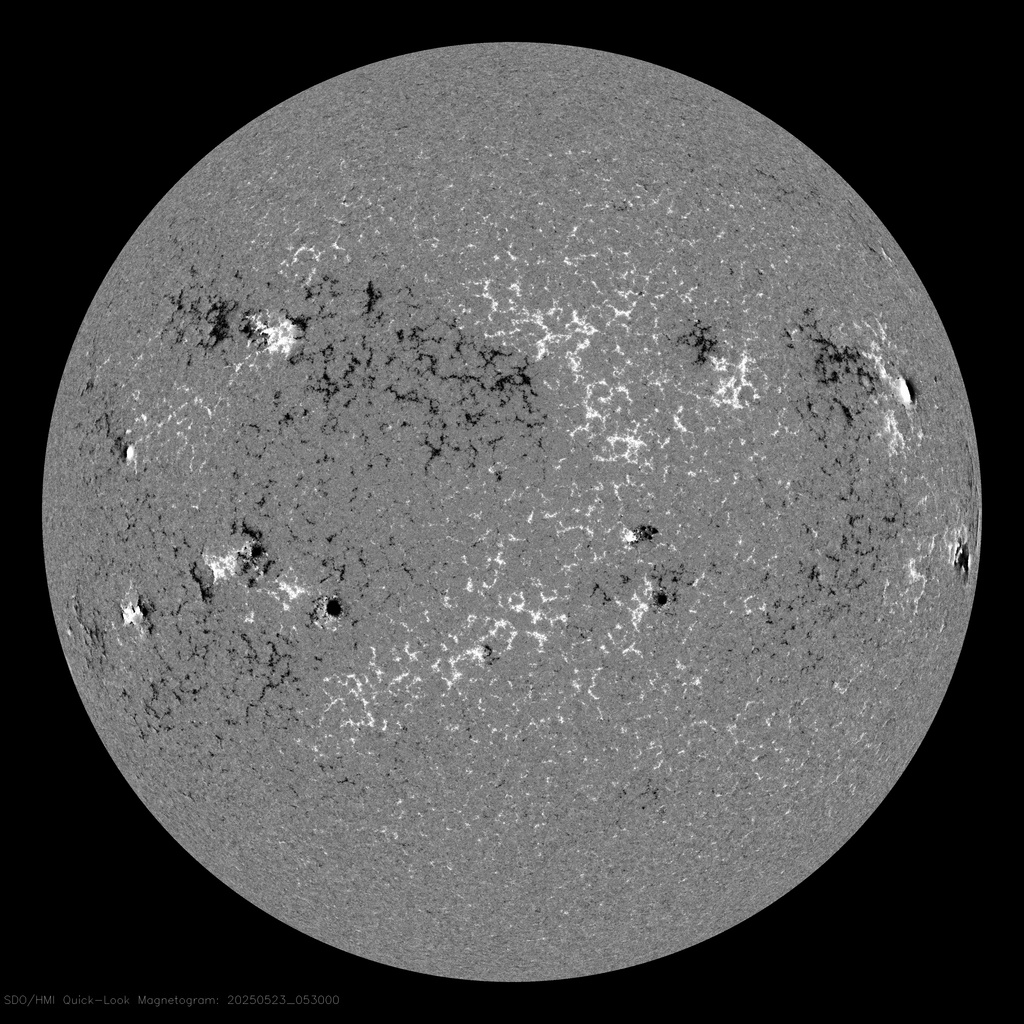
Intense white spots represent very strong areas of electromagnetic flux where solar flares or Coronal Mass Ejections may originate.
Celestron 1000mm f/10 Omni XLT refractor
Lunt B1200 CaK module
ZWO ASI 290 MM CMOS camera
Calcium K 1.25 inch filter (Double stacked)
Hinode solar finder/guider
Acquired with FireCapture v2.6
Stacked in Autostakkert!3
Wavelet sharpening in RegiStax6
FireCapture v2.6 Settings
------------------------------------
Camera=ZWO ASI290MM
Filter=Calcium K
Profile=Sun
Frames captured=5000
ROI=1936x1096
FPS (avg.)=166
Shutter=1.011ms
Gain=37 (6%)
Gamma=off
Histogram=91%
Limit=5000 Frames
Sensor temperature=28.6°C
Focuser position=0
Beautiful gorges of Kosciuszko National Park with vivid blue waters from creeks high in calcium carbonate and other minerals
original art work by: Bill Rogers
inspired by Charles Ives' Calcium Light Night
Calcium Light Night compsed by Charles Ives
Carbide Willson ruins
“Carbide” ruins, Gatineau Park, Chelsea, QC.
“Thomas Leopold Willson (1860–1915) was an inquisitive, adaptable, Canadian inventor. He experimented with a range of industrial and chemical processes, including a lighting system that failed to find a market and electro-thermal reductions of metallic oxides, which did result in marketing success. Willson is best known for his commercial process of making calcium carbide and using it to generate acetylene fuel. Although another inventor in France also made calcium carbide in the same year (1892), Willson’s technique was cheaper. Willson’s technique led to the formation of what became Union Carbide, which is now owned by Dow Chemical.
In 1895, Willson developed a carbide industry on the Welland Canal in southern Ontario, expanding with plants in Ottawa, and in Shawinigan, Quebec. Acetylene lighting became the standard for lighting on streets, in buildings, and in car headlamps and marine signals, making “Carbide” Willson a successful industrialist. His Ottawa-located International Marine Signal Building—the manufacturing site of acetylene-fired marine buoys and lighthouse beacons—was reputed to be the longest building in the British Empire.
Willson fulfilled his industrialist role socially, as well. He settled in Ottawa in 1901 with a home on Metcalfe Street and a summer house on Meech Lake in Gatineau. Willson was a member of several social clubs and hosted many political and social events. He also loved new and grand schemes. He was the first automobile owner in Ottawa and included laboratories in his home and his summer house. Willson’s wide-ranging experiments resulted in over 70 patents and earned Willson a University of Toronto prize for his discoveries. Willson also applied his innovative ideas in a number of industries: carbide, pulp and paper, railways, dams, and fertilizers.
One of Willson’s innovations involved the production of a nitrogen-based solid that could be ground up and used as fertilizer. Willson believed that the process could revolutionize agriculture and in 1912, set out to establish a small fertilizer plant at Meech Lake. His project was financially backed by Interstate Chemical, an American fertilizer company, and James Buchanan Duke, the American tobacco and textile millionaire known for his financial support of what became Duke University.
Willson’s factory surpassed expectations, but Willson’s inventiveness was not matched with financial acumen. With so many projects, Willson was financially stretched. He missed a payment to Duke, who then seized Willson’s Meech Lake factory. Duke wasn’t interested in maintaining the factory and let it fall into ruin. Willson died a short time later, suffering a heart attack in 1915 while in New York attempting to raise money for industrial plans in Newfoundland and Labrador.”
Source: Dawn Oosterhoff (2016). Carbide Willson Ruins, Gatineau Park. Available at: ddoosterhoff.exposure.co/carbide-willson-ruins
Explored December 1, 2010 - #484
The Main Terrace feature is characterized by eerily-stunted trees, countless travertine cascades, and clouds of steamy vapors filtering the view of Mount Everts in the background. The deposition of calcium carbonate from the spring water flowing down creates these beautiful travertine terraces but also kills the trees it surrounds. The tree trunks become calcified and harden into almost rock-like structures. The dead trunks will last for decades due to this.
Strange phenomena to witness in person....this time around it was so dried up, unlike in years past, that it seemed so eerie and reminded me of some of those scenes you see in the movies after a nuclear fall out. I have included a shot from a previous trip to show the difference, and rest assured, we will be returning to this same spot again in exactly four weeks from today.
Have a fantastic Thursday....and thanks for stopping by to visit; I really enjoy your comments & critiques :-)
Calcium and Iron on aluminium. The nail came from the Tower of London. My brother-in-law gave it to me when he was working there.
Yellowstone National Park
A unique kind of spring exists at Mammoth Hot Springs, located in the northwest section of the park. Hot water ascends through ancient limestone deposits. The result is a landscape of terraces sculpted by travertine limestone.
At Mammoth Hot Springs, Yellowstone visitors will enjoy views of travertine limestone terraces. Flowing waters spill over the colorfully streaked Minerva Terraces, resulting in a gentle waterfall appearance.
Hot gases are stored underneath the surface. Water seeps down into the ground and meets with these gases. Some of the gases are readily dissolved in the hot water to form an acid solution. This hot and acidic solution dissolves great quantities of limestone as it works up through the rock to the surface. Once exposed to the air, some of the carbon dioxide escapes from the solution. As this happens, limestone no longer remains in solution and it is deposited, resulting in the terraces.
Mammoth Hot Springs deposits about two tons of travertine limestone (calcium carbonate) per day.
Source: Yellowstone National Park
Worth a look on black if you have the time View On Black
A view of the natural steps on the lower terraces of the Mammoth Hot springs
The Mammoth Hot Spring is a large complex of hot springs on a hill of travertine in Park. Over thousands of years as hot water from the spring cooled and deposited calcium carbonate (over two tons flow into Mammoth each day in a solution). Although these springs lie outside the caldera boundary, their energy has been attributed to the same magmatic system that fuels other Yellowstone geothermal areas. The hot water that feeds Mammoth comes from Norris Geyser Basin after travelling underground via a fault line that runs through limestone. The limestone from rock formations along the fault is the source of the calcium carbonate. Shallow circulation along this corridor allows Norris' superheated water to slightly cool before surfacing at Mammoth, generally at about 170 °F (80 °C).
THANKS FOR YOUR VISIT HAVE A GREAT DAY
"All those vitamins aren't to keep death at bay, they're to keep deterioration at bay."
Had a little fun in the kitchen today which included garlic,milk and off camera flash.
The background was some white paper which was lit by my Nikon sb600 at full power and a red gel.
I lit the garlic with 2x jessops 360 afd flashguns set 1/16 power placed level with the garlic and either side of my camera.
I set my camera on manual mode and at the fastest flash sync speed of 1/250 sec to try and freeze the action..
I experimented with the aperture for different results but stopped down to f/14 to help darken the red of the background.
My camera was on my manfrotto tripod and fired via cable release.
All three flashguns where fired off camera via my Yongnuo RF-602 trigger + recievers.
I was using a funnel to direct the milk onto the garlic but it wasn't working out how I imagined so I got rid of the funnel and kept tipping milk straight from the carton and firing the camera randomly.
Got loads of usable pictures some with more splashes and some with less but I liked the simplicity of this one with the milk in a vertical line.
Cleaned up the picture with spot removal then added a slight 's' curve for contrast.
Also the whites of the milk where a little dark and muddy so I selected just milk and garlic with the magic wand and brigthened it up with levels.
I finished off with some unsharp mask for detail.
The title is a combination of the vitamins contained in these photographic ingredients.
In garlic you get B6 and obviously calcium in milk.
The red lines on the underneath of the garlic is the red reflecting off the milk from the background.
Thanks for your wonderful views and comments.
For your ultimate vitamins experience please press 'L' on your keyboard.
Telescopio: Tecnosky 110 mm f 7
Filter: LUNT Calcium-K module B 600 Barlow Tecnosky 3 X Lunghezza focale 2.310 mm Camera CMOS: ZWO ASI 174 mono Cool Mount: iOptron CEM60
Data: 02 Aprile 2022 Ore: 12:22 Local Time
Pose: 400 sommate su 2.000 riprese a 130 fotogrammi al secondo
Seeing 2 Antoniadi, transparency of the sky 4, many clouds.
The Main Terrace at Yellowstone National Park's Mammoth Hot Springs area. The area contains approximately 50 hot springs. It is subject to continual change as hot water flows to the earth's surface.
Calcium carbonate is also crucial to the terraces' growth. Thick layers of sedimentary limestone lie beneath the Mammoth area. As ground water seeps slowly downward and laterally, it comes in contact with hot gases charged with carbon dioxide rising from the magma chamber. Some carbon dioxide is readily dissolved in the hot water to form a weak carbonic acid solution. This hot, acidic solution dissolves great quantities of limestone as it works up through the rock layers to the surface hot springs. Once exposed to the open air, some of the carbon dioxide escapes from solution. As this happens, limestone can no longer remain in solution. A solid mineral reforms and is deposited as the travertine that forms the terraces--September 4, 2009
Explored June 1, 2009 # 63
After photographing every interesting object on planet earth i decided to take a lil trip to outer space. The cheapest available ticket for a space walk was 40+ million dollars, so i just sneak into one of NASA's ship and here i am sitting on Mars. lots of things to photograph here. This strange looking landscape caught my attention so i decided to transmit this to my flickr account.
Enough with Planet Mars and back to Planet earth these this strange looking landscape did catch my attention and was real fun to check them out. This is Mono Lake in California.
Mono Lake is believed to have formed at least 760,000 years ago, dating back to the Long Valley eruption. Sediments located below the ash layer hint that Mono Lake could be a remnant of a larger and older lake that once covered a large part of Nevada and Utah, making it among the oldest lakes in North America.
And these strange looking towers are Tufas. Tufa is a soft, friable and porous calcite rock. It is a calcium carbonate deposit that forms by chemical/biological precipitation from bodies of water with a high dissolved calcium content. When the water level in the lake dropped these Tufa showed up.
Great Carolus Linnaues (1707-1778) was born in Stenbrohult, Småland, Sweden. In his early publication, the Flora Lapponica (1737), on Lapp Plants, he discusses what he still calls Anthericum - later (1762) it was renamed Narthecium by William Hudson (1734-1793).
Linnaeus in the description of our plant growing in his native land of Stenbrohult waxes prolixly eloquent. He praises its great beauty, and - I translate freely from the Latin - writes that he can't take his eyes off of it. He goes on to say that it's called 'Ilagraes' in the local Swedish, and that it's believed to do great harm to sheep. They gorge themselves on it and get fat; but the next year they die of a nasty worm infection. Linnaeus is sceptical although he says there must be some other explanation than eating Anthericum. He doesn't solve the riddle.
The Latin specific - 'ossifragum' - means 'bone-breaking'. There are several theories about the origin of that designation. One is that sheep in bogs easily break their legs; another that their legs are weakened by a lack of calcium in the fens in which Narthecium grows... I've tried to find the first use of 'ossifragum' in this context in the hope there might be a further explication. Haven't found one. That would have been 'too good to be true'...
Picture taken by Curiosity rover with its MastCam-100 camera (100mm focal length) on sol 4202 (June 1st, 2024) at 11:42 am Martian local time.
It shows possible calcium sulphate rich rocks, like gypsum, crushed by one of Curiosity's wheels.
Refractor: Tecnosky APO 72 mm f 6
Filter: Lunt Calcium-K module B 600
Camera CMOS: QHY 178 mono cool
Equivalent focal lenght: 432 mm
Mount: iOptron CEM60
Data: July 14, 2022 Ore: 10:02 Local Time
Pose: 160 sommate su 1.000 riprese a 19 fotogrammi al secondo
Seeing 3 Antoniadi, transparency of the sky 8
In the north-west corner of Yellowstone National Park, which itself sits in north-western Wyoming, there is a large hot spring complex called Mammoth Hot Springs. It is a large hill of travertine that has been created over thousands of years as hot water from the spring cooled and deposited calcium carbonate (over two tonnes flows into Mammoth each day in a solution).
Although these springs lie outside the Yellowstone caldera boundary, their energy has been attributed to the same magmatic system that fuels the other geothermal areas nearby. The hot water that feeds Mammoth comes from Norris Geyser Basin after travelling underground via a fault line that runs through limestone and roughly parallel to the Norris-to-Mammoth road (the limestone is the source of the calcium carbonate). Shallow circulation along this corridor allows Norris' superheated water to slightly cool before surfacing at Mammoth, generally at about 80°C.
Algae living in the warm pools have tinted the travertine shades of brown, orange, red and green. Thermal activity here is extensive both over time and distance. Terrace Mountain at Mammoth Hot Springs is the largest known carbonate-depositing spring in the world. The most famous feature at the springs is the Minerva Terrace, a cascade series of travertine terraces, an element of which is seen above.
Scanned from a negative, this is a larger and sharper version of an image I posted a number of years ago.
...in a long abandoned Calcium Carbonate processing plant in the middle of nowhere in Beaver County, Utah. This is one of the most mysterious and baffling places I have explored. There are hundreds of unidentifiable concrete and fiberglass structures covering what looks to be at least a hundred acres or so. To see more check out the album here: www.flickr.com/photos/19779889@N00/albums/72157670785299593
This place gives me a dystopian feeling and I can't help thinking about an older Science Fiction story by British Author J. G. Ballard. The story is "Good-by Eniwetok." The place certainly has the feeling evoked by Ballard in that story.