The Golden Age of the Carousel
View allAll Photos Tagged cabinetmaker
All that remains of the town. Between 1870- 1880 the population was 100 with 2 stores, a hotel/tavern, a tailor, wagonmaker, 2 carpenters, a cabinetmaker, shoemaker, 2 blacksmiths, a school, 2 churches, 2 sawmills, a quarry, a lime kiln and a brick maker. By 1890 the population stagnated and did not grow.
The post office lasted until 1914 when rural route delivery came to the village. The Methodist church was demolished in 2005, the school is now a home, and Christ Church, built lovingly by the residents in 1874, still has services in the summer. Most of the pioneers are buried here.
Most of the area has reverted back to farmland.
The idea comes from the Japanese lucky dolls. Since 1890, matryoshka dolls have been available in Russia. A cabinetmaker and painter made the first matryoshkas on behalf of Savva Mamontov. During an exhibition in Paris in 1900, the dolls were introduced and won a prize. This was the beginning of the popularity of matryoshkas. www.poppenmuseum.nl/poppen/Matroesjka-poppen.html#:~:text....
Excerpt from the brochure:
Reconstructed from a Burlington cabinetmaker's shop, the building highlights tools of the trade. Making coffins, as well as furniture, was a big part of the cabinetmaker's job.
Director Janicza Bravo staged the Rococo Revival Room for the Met Museum's "In America: An Anthology of Fashion" exhibit.
From the Met's website:
"The Rococo Revival Parlor features furniture by one of the most innovative and virtuosic American cabinetmakers of the period in a room whose architectural elements–columnar screen, windows, doorway, doors, cornice, and rosette–are from the double parlor of a Classical Revival style villa built around 1850 in Astoria, Queens, for a prosperous businessman named Horace Whittemore (1813–1871)
State Artistic High School of Porta Romana and Sesto Fiorentino.
The Institute, born in 1869 in the Santa Croce district as a "School of wood carvers, cabinetmakers and Legnajuoli", which later became the "Professional School of Decorative and Industrial Arts" in 1880, was transformed in 1919 into a school that could respond to requests from the territory and the labor market in the field of cultural, artistic and technical training.
Since 1923, with the transfer of the Institute to its current location in Porta Romana, a monumental building within the Parco della Pace, built to house the Royal Stables of the Pitti Palace, and with the reorganization, following the Gentile reform, 'inaugurates a phase of great vivacity on the cultural and didactic level.
The Institute, born in 1869 in the Santa Croce district as a "School of wood carvers, cabinetmakers and Legnajuoli", which later became the "Professional School of Decorative and Industrial Arts" in 1880, was transformed in 1919 into a school that could respond to requests from the territory and the labor market in the field of cultural, artistic and technical training.
Since 1923, with the transfer of the Institute to its current location in Porta Romana, a monumental building within the Parco della Pace, built to house the Royal Stables of the Pitti Palace, and with the reorganization, following the Gentile reform, 'inaugurates a phase of great vivacity on the cultural and didactic level.
Stropkov is an economical, social and cultural centre of north Zemplín. It was established on left bank of river Ondava in beautiful scenery of central part in Ondava uplands. For its origins as an ancient Slovak settlement we have to look back (and many archaeologists and historians agree in this case) before the 13th century. The character of the main square is a proof that Stropkov used to belong to the royal lands and there are also some similarities with the development of another town, called Bardejov.
The first authentic written data about the town is from 1404 (Stropko), when Stropkov was already labeled as oppidum—townlet. German guests and soltys too were obtained with the same privileges as their fellows in Bardejov and other towns. The first owner of the town after the king was Ladislav Svatojursky. The other landlords in order were Balickovci, Perinskovci, Peteovci. In 1408 town's toll and castle—castellum—were mentioned for the first time. The development of the town and its whole economic expansion was supported by the law of thirty and market in 1698 which was strengthened by Leopold I with six annual fairs. Stropkov's manor owned about 51 villages in that time. The existence of a big department, which articles dated back in 1575 was an extraordinary event in the history of Slovakia. In this department many different people were united, for example: jewelers, tailors, butchers, cabinetmakers, saddlers, swordfishes, surgeons (shavers) and shopkeepers. Craftsmen from Stropkov were known not only in their hometown, they were selling their products in markets of towns in regions like Zemplin and Šariš as well.
The Octagon (1322-1349) of Ely Cathedral is one of the most spectacular works of the English Decorated style. The structure was built after the collapse of the Anglo-Norman tower of the transept (1322). A large octagonal space was created with the structure of the stone pillars and the vaults and the lantern in wood (23 m wide by 52 m high). It was an original technical solution, as the walls were pierced with an immense arcade on the first level and with an opening of equal dimensions on the second, arranged diagonally. The lantern was an outstanding solution that allowed the wide transept to be covered and illuminated. It seems that Alan de Walsingham himself was involved in the complex project, who, in addition to being a skilled goldsmith, was the monk who commissioned it. To unify the space, a wooden carpentry work was made, initially painted to imitate stone, for which William Hurley, a cabinetmaker of the court, was responsible.
A selections of shells (Clam, Mussel & Whelk) HSS! I hope these are OK for Snail Saturday group even though they are empty? If not feel free to take this out of the group Kez. Dollar Bay where I found these was literally covered in shells, I could hear them crunching underfoot as I walked.
The origins of the tongue twister might interest you. Mary Anning was born in 1799 in Lyme Regis in Dorset, England. She was the eldest daughter of a cabinetmaker, and the family supplemented their income by digging up fossils to sell to tourists on the shore www.littlethings.com/she-sells-seashells-meaning/
The Octagon (1322-1349) of Ely Cathedral is one of the most spectacular works of the English Decorated style. The structure was built after the collapse of the Anglo-Norman tower of the transept (1322). A large octagonal space was created with the structure of the stone pillars and the vaults and the lantern in wood (23 m wide by 52 m high). It was an original technical solution, as the walls were pierced with an immense arcade on the first level and with an opening of equal dimensions on the second, arranged diagonally. The lantern was an outstanding solution that allowed the wide transept to be covered and illuminated. It seems that Alan de Walsingham himself was involved in the complex project, who, in addition to being a skilled goldsmith, was the monk who commissioned it. To unify the space, a wooden carpentry work was made, initially painted to imitate stone, for which William Hurley, a cabinetmaker of the court, was responsible.
El Zoco
Por sus pasillos caminan latoneros, ebanistas, sastres, herreros, perfumistas y todo tipo de personajes con aspecto biblico y vendedores que pululan por un "gran desorden" en un enorme laberinto de tiendas, animales y vehiculos a motor. Un lugar con enorme encanto donde antes de enseñarte la mercancia te ofrecen una taza de tea y una sonrisa.
The Souk
Along its corridors are walkers, cabinetmakers, tailors, blacksmiths, perfumers and all sorts of biblically-minded characters and sellers who swarm for a "big mess" in a huge maze of animal shops and motor vehicles. A place with enormous charm where before they you show the goods offer you a cup of tea.
1904
Emile Gallé : artiste verrier, ébéniste, céramiste
Matériaux : palissandre, ébène, nacre et verre
Gallé a recours au symbole :
- à la tête du lit : un sphinx symbolisant la nuit tombant sur la campagne crée une
ambiance inquiétante.
- au pied : évocation de l’aube par deux papillons imbriqués symbolisant le bonheur.
- au centre : œuf en cristal gravé d’éphémères représentant la naissance et la fragilité de la vie.
Emile Gallé: glass artist, cabinetmaker, ceramist
Materials: rosewood, ebony, mother of pearl and glass
Gallé uses the symbol:
- at the head of the bed: a sphinx symbolizing the night falling on the countryside creates a
disturbing atmosphere.
- at the foot: evocation of dawn by two overlapping butterflies symbolizing happiness.
- in the center: crystal egg engraved with ephemera representing birth and fragility of life.
Zuckerberg Island Heritage Park in Castlegar. Influenced by Russian Orthodox country chapel architecture, this house is built in its style and setting as a reflection of the painting ‘Beyond Eternal Peace’ by the Russian mystic and painter Isaac Leviton. The owner, Alexander Zuckerberg was an Estonian, educated in Czarist Russia as a civil engineer, a self-taught cabinetmaker and sculptor.
George E Zink, a cabinetmaker, built this house in 1878. The Victorian Italianate style reflects the popular design of the era. The twin adjoining structure was a rental property.
1878 was the same year the first Pennsylvania Railroad Train arrived in Wheeling from Steubenville and the Sunday News began publication. At the time Wheeling had a poulation of slightly less than 30,000.
Krug Furniture Manufacturing Company Limited
Krug is one of the oldest furniture manufacturers. The company was founded in 1880 by Hartman Krug, a German cabinetmaker.
Krug Furniture Manufacturing Company Limited
Krug is one of the oldest furniture manufacturers. The company was founded in 1880 by Hartman Krug, a German cabinetmaker.
LA housing devolution: A residential cabinetmaker closes and a homeless man moves into the empty parking lot.
Joachim for fathers, grandfathers, grand parents, married couples, cabinetmakers, linen traders; and in Brazil: Alterosa, Montezuma, Porteirinha, São Joaquim de Bicas; Adjuntas, Puerto Rico
Anne for mothers, parents, grandmothers, grandparents, broommakers, married couples, childless couples, couples who have grown old, couples trying to conceive, dress makers, infertile couples, homemakers, housewives, cabinetmakers, carpenters, equestrians, horse riders, lace makers, lace workers, linen traders, miners, mothers, old clothes dealers, poor people, pregnancy, expectant mothers, pregnant women, roommakers, seamstresses, stablemen, turners, weavers, women in labor, women unable to conceive, women looking for a husband; France; Brittany, France; Canada; Quebec; Micmaqs; Santa Anna, California; San Joaquin, Philippines; archdiocese of Detroit, Michigan; diocese of Caxito, Angola; diocese of Sainte-Anne-de-la-Pocatiere, Quebec, Canada; diocese of Norwich, Connecticut; Santa Ana Indian Pueblo; Taos, New Mexico; against poverty and barrenness or sterility; invoked to find lost articles; and in Brazil
Abre Campo
Água Boa
Antônio Carlos
Bambuí
Barroso
Belmiro Braga
Boscotrecase
Brasília de Minas
Carandaí
Congonhas do Norte
Coroaci
Coromandel
Ferros
Guaraciaba
Guidoval
Imbé de Minas
Indianápolis
Itaúna
Jequeri
João Pinheiro
Lavras
Montezuma
Olhos d’Água
Onça do Pitangui
Padre Carvalho
Patis
Pirapetinga
Ponto Chic
Resplendor
Santana da Vargem
Santana de Cataguases
Santana de Pirapama
Santana do Deserto
Santana do Garambéu
Santana do Jacaré
Santana do Manhuaçu
Santana do Paraíso
Santana do Riacho
Santana dos Montes
São Joaquim de Bicas
Sapucaí-Mirim
Silvianópolis
Verdelândia
Wenceslau Brás
in Italy
Antrodoco
Boschi Sant’Anna
Caserta
Castagnole Monferrato
Castelbuono
Castelletto d’Erro
Castiglione Falletto
Cave del Predil
Corinaldo
Corneliano d’Alba
Jelsi
Matinella, Albanella
Venice
LARGE view www.flickr.com/photos/jaciii/53073033557/sizes/h/
Krug Furniture Manufacturing Company Limited
Krug is one of the oldest furniture manufacturers. The company was founded in 1880 by Hartman Krug, a German cabinetmaker.
Charles Moran, an accomplished cabinetmaker, built this house in the 1820s. In his shop, which was on the premises, he made furniture for the finest houses in the Franklin, Tennessee area. Dr. Thomas A. Pope bought the house in 1896 and practiced dentistry in the office next door until his death in 1947. Miss Mary Pope taught piano here for over 60 years. This house has received a preservation award for the sensitivity with which it was converted to a private residence and is included in the Franklin Historic District listed on the National Register of Historic Places on October 5, 1972.
Three bracketed photos were taken with a handheld Nikon D5200 and combined with Photomatix Pro to create this HDR image. Additional adjustments were made in Photoshop CS6.
"For I know the plans I have for you", declares the LORD, "plans to prosper you and not to harm you, plans to give you hope and a future." ~Jeremiah 29:11
The best way to view my photostream is through Flickriver with the link below:
The Souk
Along its corridors are walkers, cabinetmakers, tailors, blacksmiths, perfumers and all sorts of biblically-minded characters and sellers who swarm for a "big mess" in a huge maze of animal shops and motor vehicles. A place with enormous charm where before they you show the goods offer you a cup of tea.
El Zoco
Por sus pasillos caminan latoneros, ebanistas, sastres, herreros, perfumistas y todo tipo de personajes con aspecto biblico y vendedores que pululan por un "gran desorden" en un enorme laberinto de tiendas, animales y vehiculos a motor. Un lugar con enorme encanto donde antes de enseñarte la mercancia te ofrecen una taza de tea y una sonrisa.
Krug Furniture Manufacturing Company Limited
Krug is one of the oldest furniture manufacturers. The company was founded in 1880 by Hartman Krug, a German cabinetmaker.
This large timber store was erected in 1909 for Lionel Ainger Wiss of Wiss Bros, a prominent Engelsburg (Kalbar) general store and trading firm. It replaced a smaller store built in 1890.
LA Wiss had arrived in Queensland from Germany with his brothers Campbell and Alfred, c.1887. They were German-born sons of English parents. After a short time in northern Queensland, Alfred returned to England and Lionel and Campbell moved to Ipswich, where they worked for grocer W Siemon & Sons for about three years.
In mid-1890 the brothers acquired an acre of land at Engelsburg, in the heart of the Fassifern Scrub district, south of Ipswich, which had been settled in the 1870s by immigrant German farmers. At this time, the township of Engelsburg comprised a general store, two saddlers, a cabinetmaker and glazier, a hotel and store, a butcher's shop, timber yard and blacksmith. The Engelsburg State School had been established in 1885. There were two Lutheran churches in the district, a Baptist church, a Primitive Methodist church, a Catholic church, and a small Salvation Army meeting hall. Much of the brigalow scrub had been cleared, and the surrounding district was dotted with small farm selections of 60, 80 or 120 acres.
On their Engelsburg property, adjacent to Heinrich Welge's Fassifern Hotel on the principal road from Ipswich to the Fassifern head station, the Wiss brothers erected a small store and dwelling. In August 1890, Ipswich architect Henry Edmund Wyman called tenders for a store and dwelling to be erected at Engelsburg, and by September 1890, a store for Lionel Wiss was being constructed there.
Lionel married Danish immigrant Maria Elise Wiuff at Ipswich in late 1890, and in the same year joined Campbell in partnership as Wiss Bros, storekeepers, at Engelsburg. They established one of the most important businesses in the town, which was emerging as a district centre following the closer settlement of the Fassifern Scrub for dairying and agriculture. They provided a general store which not only sold a great variety of goods, but also traded farm produce, acted as agent for major farm equipment suppliers, and offered substantial credit, doing much to assist local farmers. As early as 1892, Wiss Bros were the local agents for the United, Fire and Marine Insurance Co., and from 1894 to 1897 held the Engelsburg postal receiving office, until construction of an official post office in 1897. Until the railway came to Kalbar in 1916, Wiss Bros transported local produce to the nearest railhead at Munbilla on behalf of the local farmers. The firm was a principal employer in the town, with 8 to 10 employees by the 1920s.
In 1903, their premises consisted of the small store and a separate dwelling fronting George Street, and bulk store and large stables at the rear. Lionel Wiss's property had been extended with the acquisition of an adjacent acre to the south in 1898, and a further adjoining 2 roods in 1901. Campbell Wiss had left the partnership by c.1904, but the name Wiss Bros was retained.
When the new store was erected in 1909, the original store was moved a little to the north in George Street, and operated for many years as Surawski's Fassifern Cafe. In the 1980s this building was shifted to the Cunningham Highway.
Lionel ('Daddy') Wiss was a highly respected local identity, who took a prominent role in the community and the local Methodist church. In 1910, he acquired 56 acres in the centre of Engelsburg. About half of this he subdivided in 1916 into residential allotments, thereby creating most of the western half of the town of Engelsburg (renamed Kalbar in 1916 when the railway reached the town).
Following Lionel Wiss's death in 1932, the business was managed by his family under the supervision of his daughter Adeline Wiss. In 1947 the business was sold to Holmes Bros, and remained a general store until 1966, when transferred to Chemical & Air Services Pty Ltd, who occupied the buildings for over twenty years.
Source: Queensland Heritage Register.
Zuckerberg Island Heritage Park in Castlegar. Influenced by Russian Orthodox country chapel architecture, this house is built in its style and setting as a reflection of the painting ‘Beyond Eternal Peace’ by the Russian mystic and painter Isaac Leviton. The owner, Alexander Zuckerberg was an Estonian, educated in Czarist Russia as a civil engineer, a self-taught cabinetmaker and sculptor.
In 1854 Antonio Arighi left Italy on foot and arrived in the silk town of Macclesfield in north west England. He set up a shop selling clocks and barometers to local farmers. In 1869 his nephew Antonio Bianchi, a skilled cabinetmaker, joined him. Together they started a furniture shop. In 1892 they commissioned a new store inspired by the Crystal Palace built in 1851 for the Great Exhibition in London. In 1970 the store had to be demolished to make a way to a new ring road. It was saved by a popular petition and received the official recognition as a listed building. It is still there today and the business is still run by the fourth generation of the Arighi Bianchi family.
From the exhibition "The art of advertising".
Weston Library, Oxford.
Hélas fermée le jour de notre passage.
Elle est un joyau de l’architecture gothique flamboyante. Au cœur du quartier des Antiquaires de Rouen, l’église Saint-Maclou allie éclat et élégance. Elle est célèbre pour ses façades de dentelles de pierre qui témoignent d’un travail minutieux alliant finesse et tempérament. Son porche à cinq pans disposés en arc de cercle est une autre particularité. Les trois arcades centrales abritent trois portails ornés de portes en bois sculptées, œuvres des huchiers, les ébénistes de la Renaissance. Le tympan du portail principal présente de manière somptueuse la résurrection des morts et le Jugement dernier.
C’est sur les marais du Robec, ancien ruisseau du quartier de Martainville, que cette paroisse de drapiers et teinturiers, dédiée au saint breton, est édifiée entre 1436 et 1517. Sa construction témoigne du style « flamboyant », expression tardive du gothique avec ses décors et ornementations détaillés, jusqu’à ce qu’il soit remplacé par l’architecture de la Renaissance.
Comme le veut la tradition normande, l’église Saint-Maclou possède une tour lanterne, mais celle-ci a la particularité de servir de clocher. Sa flèche de 83m de haut est l’œuvre de Jacques-Eugène Barthélémy et est édifiée de 1868 à 1872.
Unfortunately closed on the day of our visit.
It is a jewel of flamboyant Gothic architecture. In the heart of the Antiques district of Rouen, the Saint-Maclou church combines brilliance and elegance. It is famous for its stone lace facades that bear witness to meticulous work combining finesse and temperament. Its five-sided porch arranged in an arc is another particularity. The three central arcades shelter three portals decorated with carved wooden doors, the work of the huchiers, the cabinetmakers of the Renaissance. The tympanum of the main portal sumptuously presents the resurrection of the dead and the Last Judgement.
It is on the marshes of Robec, a former stream in the Martainville district, that this parish of drapers and dyers, dedicated to the Breton saint, was built between 1436 and 1517. Its construction bears witness to the "flamboyant" style, a late expression of Gothic with its detailed decorations and ornamentation, until it was replaced by Renaissance architecture. As is the Norman tradition, the Saint-Maclou church has a lantern tower, but this one has the particularity of serving as a bell tower. Its 83m high spire is the work of Jacques-Eugène Barthélémy and was built from 1868 to 1872.
Upper Canada Village is a heritage park near Morrisburg, Ontario, depicting a 19th-century village in Upper Canada. The park, owned and operated by the St. Lawrence Parks Commission, was opened to the public in 1961.
Creation of the St Lawrence Seaway in 1958 required the flooding of ten communities - The Lost Villages. Upper Canada Village was part of the project's heritage preservation plan, and many of the buildings that were to be flooded were moved from the Lost Villages to the Upper Canada Village site. There are over 40 historical buildings including working mills and trade building such as blacksmith, cabinetmaker, bakery, cooper).
Aspects of late 19th-century domestic life, such as crafts, music, religion, and politics are also discussed, interpreted and demonstrated by staff dressed in clothing of the period. Local gardens in the village feature the flora and fauna commonly grown in the summer.
Stropkov is an economical, social and cultural centre of north Zemplín. It was established on left bank of river Ondava in beautiful scenery of central part in Ondava uplands. For its origins as an ancient Slovak settlement we have to look back (and many archaeologists and historians agree in this case) before the 13th century. The character of the main square is a proof that Stropkov used to belong to the royal lands and there are also some similarities with the development of another town, called Bardejov.
The first authentic written data about the town is from 1404 (Stropko), when Stropkov was already labeled as oppidum—townlet. German guests and soltys too were obtained with the same privileges as their fellows in Bardejov and other towns. The first owner of the town after the king was Ladislav Svatojursky. The other landlords in order were Balickovci, Perinskovci, Peteovci. In 1408 town's toll and castle—castellum—were mentioned for the first time. The development of the town and its whole economic expansion was supported by the law of thirty and market in 1698 which was strengthened by Leopold I with six annual fairs. Stropkov's manor owned about 51 villages in that time. The existence of a big department, which articles dated back in 1575 was an extraordinary event in the history of Slovakia. In this department many different people were united, for example: jewelers, tailors, butchers, cabinetmakers, saddlers, swordfishes, surgeons (shavers) and shopkeepers. Craftsmen from Stropkov were known not only in their hometown, they were selling their products in markets of towns in regions like Zemplin and Šariš as well.
Upper Canada Village is a heritage park near Morrisburg, Ontario, depicting a 19th-century village in Upper Canada. The park, owned and operated by the St. Lawrence Parks Commission, was opened to the public in 1961.
Creation of the St Lawrence Seaway in 1958 required the flooding of ten communities - The Lost Villages. Upper Canada Village was part of the project's heritage preservation plan, and many of the buildings that were to be flooded were moved from the Lost Villages to the Upper Canada Village site. There are over 40 historical buildings including working mills and trade building such as blacksmith, cabinetmaker, bakery, cooper).
Aspects of late 19th-century domestic life, such as crafts, music, religion, and politics are also discussed, interpreted and demonstrated by staff dressed in clothing of the period. Local gardens in the village feature the flora and fauna commonly grown in the summer.
Dinwiddie County was formed May 1, 1752 from Prince George County. The county is named for Robert Dinwiddie, Lieutenant Governor of Virginia, 1751-58. However the first inhabitants of the area were in fact Paleo Indians, prior to 8000 BC. They are believed to have been nomadic hunter-gatherers following animal migrations. Early stone tools have been discovered in various fields within the county. The county raised several militia units that would fight in the American Revolution. Dinwiddie County was the birthplace of Elizbeth (Burwell) Hobbs Keckly who worked for Mrs. Jefferson Davis and later Mrs. Lincoln as a free black dressmaker; of Thomas Day, later at Milton, NC, well noted there as a free black cabinetmaker within the state of NC and southern VA; and of Dr. Thomas Stewart, perhaps America's first free black 18th century rural physican.
Following some heavy overnight rainfall in the area of Westby, Wisconsin - An Amish cabinetmaker and his three small boys are delivering a wagon full of sawdust to a neighboring farm to help with barnyard mud control. – August 2023 ~~ A Jeff Hampton Photograph ©
Reggia di Venaria Reale.
Arredi degli interni - Gabinetto di Toeletta del Re.
Scrivania alla "mazzarina" (1730-1740 circa) in legno di pioppo.
Il legno è intagliato, lastronato e intarsiato in ebano, palissandro e avorio inciso.
L' autore è Luigi Prinotto su disegno di Pietro Domenico Olivero.
Luigi Prinotto (Cissone, 1685 circa – Torino, 22 aprile 1780) é stato un ebanista italiano, esponente dello stile Luigi XV piemontese
Royal Palace of Venaria Reale.
Interior furnishings - Toilet of the King.
"Mazzarina" style desk (c.1730-1740) in poplar wood.
The wood is carved, veneered and inlaid with ebony, rosewood and engraved ivory.
The author is Luigi Prinotto based on a design by Pietro Domenico Olivero.
Luigi Prinotto (Cissone, about 1685 - Turin, April 22, 1780) was an Italian cabinetmaker, exponent of the Piedmontese Louis XV style
IMG_2194m
Palazzo Spadaro Sec. XVII - XVIII
Particolare di un balcone.
Insegna e ingresso dell'Antica Farmacia Cartia: gioiellino liberty.
Aperta da Guglielmo Cartia nel 1902, dal 2014 è un museo gestito dall’Associazione Culturale Tanit Scicli.
All’interno si possono ammirare i mobili originali di inizio novecento realizzati dal falegname ed ebanista sciclitano Emanuele Russino, impreziositi dallo splendido dipinto liberty di Giovanni Gentile che rappresenta la dea greco-romana della salute, Igea.
All’interno delle vetrine i contenitori che contengono i composti, solidi e liquidi, usati in laboratorio galenico per realizzare i medicamenti, arnesi da laboratorio, alambicchi, mortai in bronzo e pietra, provette e medicine che accarezzano un arco temporale che va da inizio novecento fino agli anni ottanta.
Molto bella e particolare è la vetrina dei veleni.
L’Antica Farmacia Cartia è location cinematografica nella fiction "Il Commissario Montalbano".
Palazzo Spadaro 17th - 18th century
Detail of a balcony.
Sign and entrance of the Antica Farmacia Cartia: liberty jewel.
Opened by Guglielmo Cartia in 1902, since 2014 it has been a museum managed by the Tanit Scicli Cultural Association.
Inside you can admire the original early twentieth century furniture made by the Sciclitano carpenter and cabinetmaker Emanuele Russino, embellished with the splendid Art Nouveau painting by Giovanni Gentile representing the Greek-Roman goddess of health, Hygieia.
Inside the display cases the containers that contain the compounds, solid and liquid, used in the galenic laboratory to make medicines, laboratory tools, stills, bronze and stone mortars, test tubes and medicines that caress a time span from the early twentieth century until the 1980s.
Very beautiful and particular is the showcase of poisons.
The Antica Farmacia Cartia is a film location in the fiction "Il Commissario Montalbano".
Upper Canada Village is a heritage park near Morrisburg, Ontario, depicting a 19th-century village in Upper Canada. The park, owned and operated by the St. Lawrence Parks Commission, was opened to the public in 1961.
Creation of the St Lawrence Seaway in 1958 required the flooding of ten communities - The Lost Villages. Upper Canada Village was part of the project's heritage preservation plan, and many of the buildings that were to be flooded were moved from the Lost Villages to the Upper Canada Village site. There are over 40 historical buildings including working mills and trade building such as blacksmith, cabinetmaker, bakery, cooper).
Aspects of late 19th-century domestic life, such as crafts, music, religion, and politics are also discussed, interpreted and demonstrated by staff dressed in clothing of the period. Local gardens in the village feature the flora and fauna commonly grown in the summer.
Two Kennet Towns - Hungerford, Berkshire.
The Clockmaker,
Wessex Place 127 High Street Hungerford Berkshire RG17 0DL
Telephone: 01488 682277 Freefone: 0800 5870921
theclockmaker@btconnect.com
In a Victorian brick building on Hungerford's High Street, The Clockmaker is dedicated to the creation and care of handcrafted clocks to the highest standards of workmanship.
Founder and owner Chris Bessent started making and repairing clocks as an apprentice in a Rolex agency jewellers in Wiltshire, and he ran workshops in various parts of the country before starting his own business producing handmade clocks of the highest quality, each one an individual work of art.
The Clockmaker also restores a range of clocks, from simple mantle clocks to complex multi-functioning mechanisms. Chris and his staff work with master cabinetmakers, conservators of fine art and decorative art specialists, ensuring that every aspect of the work receives the closest attention.
www.travelpublishing.co.uk/CountryLivingSouth/Berkshire/C...
This archway was very probably built for coaches and horses to access the area behind a public house.
The Greek Revival Parlor recreates a fashionable New York City front parlor of about 1835.The Ionic screen with sliding doors,acquired in 1974,came from a 34th St house to which it had been removed from its original location farther downtown.An outstanding example of a popular type,it closely resembles a design published in Minard LaFever's Modem Builder's Guide.Other designs published by LaFever,who was one of America's most influential Greek Revival-style architects,were used in constructing the room's plaster cornice and central rosette.The doorway and window casements were copied from those in a parlor of a house on West 11th Street,built in the 1830s and still standing today.The dimensions of its parlor,which contains an almost identical Ionic columnar screen,dictated the overall proportions of this room.The black marble fireplace is a type common to New York City interiors of the period.It was founded at Halsted,a Greek Revival house built in Rye,New York in 1825.The drapery arrangement with an unusual bullion fringe valance,follows a design in J C. Louden's encyclopedia,a household manual favored in both England and America.In 1827,watercolor patterns found in the archives of an English carpet mill was used in a production of the loop pile,or Brussels weave,rug.
Also reflecting the neoclassical inspiration of the architecture is the suite of furniture-couches,pier table,stools,windows seats and side chairs-made from the prominent lawyer Samuel A. Foote in about 1837 by Duncan Phyfe,then New York's leading cabinetmaker.The suite is accompanied by a desk almost certainly made by Phyfe,and by a pair is armchairs that descended in his family.All are masterpieces of restrained design that rely not on carving or applied metal ornaments but on beautifully figured mahogany and excellence of form to achieve an effect.
This gentleman actually is a cabinetmaker, and a fine one at that. His shop is situated in Colonial Williamsburg in a building originally used as a cabinetmakers shop. No electricity, all work is accomplished with period wood crafting tools of the period. The light from the windows is what lights the shop.
El Retiro se encuentra a 32 kms. de Medellín y a 15 minutos en auto desde La Ceja. Conserva una linda arquitectura colonial. Es famoso por sus ebanistas y carpinteros y en el casco municipal se pueden encontrar muchos lugares donde comprar muebles de madera de excelente calidad.
________________________________________
El Retiro is located 32 kms. from Medellín and 15 minutes by car from La Ceja. It preserves a nice colonial architecture. It is famous for its cabinetmakers and carpenters and in the town center you can find many places to buy excellent quality wooden furniture.
Stropkov is an economical, social and cultural centre of north Zemplín. It was established on left bank of river Ondava in beautiful scenery of central part in Ondava uplands. For its origins as an ancient Slovak settlement we have to look back (and many archaeologists and historians agree in this case) before the 13th century. The character of the main square is a proof that Stropkov used to belong to the royal lands and there are also some similarities with the development of another town, called Bardejov.
The first authentic written data about the town is from 1404 (Stropko), when Stropkov was already labeled as oppidum—townlet. German guests and soltys too were obtained with the same privileges as their fellows in Bardejov and other towns. The first owner of the town after the king was Ladislav Svatojursky. The other landlords in order were Balickovci, Perinskovci, Peteovci. In 1408 town's toll and castle—castellum—were mentioned for the first time. The development of the town and its whole economic expansion was supported by the law of thirty and market in 1698 which was strengthened by Leopold I with six annual fairs. Stropkov's manor owned about 51 villages in that time. The existence of a big department, which articles dated back in 1575 was an extraordinary event in the history of Slovakia. In this department many different people were united, for example: jewelers, tailors, butchers, cabinetmakers, saddlers, swordfishes, surgeons (shavers) and shopkeepers. Craftsmen from Stropkov were known not only in their hometown, they were selling their products in markets of towns in regions like Zemplin and Šariš as well.
Available now on the Marketplace
This collection is not just some mere items, but remarkable creations that embodies the grandeur and opulence of a bygone era, its elegance and sophistication.
Commode by Stockël and redesigned by Guillaume Benneman. Oak frame; mahogany, rosewood and amaranth veneer; gilt bronze; white marble. Made for the bedroom of Louis XVI in Compiègne.
STÔCKEL (Joseph), cabinetmaker of German origin, born in 1743, died in Paris on May 23, 1802. He came to France before the age of twenty-six, won his master's degree on August 2, 1775, practiced on rue de Charenton until the Revolution, then moved his workshop to rue des Fossés-du-Temple, n°59.
This craftsman, who signed I. STOCKEL, distinguished himself in the manufacture of luxury furniture. Towards the end of the reign of Louis XVI, he collaborated with Beneman in works for the Crown.
Come with white marble and beige marble top.
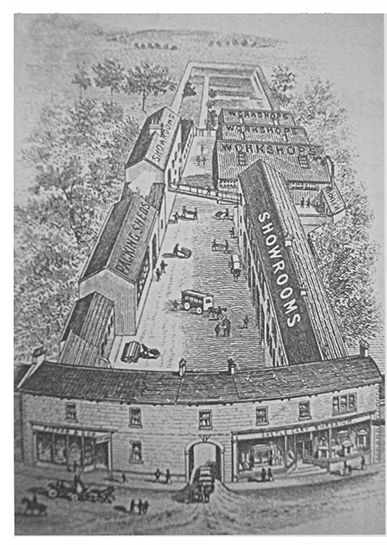
cabinet-making firm was Charles Pither and Son which began at Bailey Hill in 1877 with a workshop, and later a glass and china shop. John Pither invented a method of locking sets of drawers simultaneously. By 1907 the business had moved to a large site opposite the market place including shops and workshops for cabinet making and upholstery. They offered a complete home furnishing and removals business with their own covered waggons. By 1914 they had two shops and a showroom and by 1947 employed c. 40 people. There were branches at Crewkerne, Wells, and Yeovil. In 1951 the premises were put up for sale including the Emporium with two floors of showrooms, upholstery workshop, mattress repair shop, and storerooms. Thereafter the business was based at Crewkerne.
The cathedral dates from the mid-13th century (the bishopric was transferred from Antibes to Grasse in 1244). The architecture is influenced by both Liguria and Lombardy (layout, decorative elements, vaulting). The main facade is simple and unassuming, reflecting the interior layout : a raised central nave and two side aisles.
In the 18th century, a crypt was dug beneath the cathedral and the interior tiling and steps were redone. The central doorway became the sole entrance through the façade, reached by a double staircase, with a statue of the Virgin above it.
The walnut doors were carved by two Grasse cabinetmakers, Deschamps and Raybaud.
The Grasse cathedral houses many artifacts, some of which are listed as historic monuments :
- St. Honorat, St. Clement, and St. Lambert, altarpiece attributed to the Louis Brea school.
- Christ Crowned with Thorns, St. Helena, and The Crucifixion are works attributed to Peter Paul Rubens and his school.
- Washing of the Feet painted by Jean-Honoré Fragonard in 1754 is one of the few religious works from this Grasse artist.
- The nave’s monumental cross is an 1830 mission cross.
- The organ dates from 1855 and was made by Toulouse organ-builder Jungk
- The Death of Saint Paul the Hermit by Charles Nègre (Grasse artist)
The cathedral has six stained-glass windows and four Baillet statues representing the four Evangelists : St. Matthew, St. Mark, St. Luke, and St. John.
Excerpt from www.oakville.ca/assets/general%20-%20business/Feb22Sectio...:
145 Lakeshore Road East: Built by James Reid, a local leader in the grain trade. It was sold in 1868 to W. H. Young, a cabinetmaker and undertaker, who held many civic positions including Mayor.
It is a 3 storey Italianate style commercial structure with sloped roof, dormers, and raked parapet. Other notable features include the bracketed cornice, corbelled banding, detailed pilasters, and broad frieze.
149 Lakeshore Road East: It is a formerly Italianate style 4-storey stucco building with contemporary alterations.
Explored Friday, August 12, 2011.
My dear friend Tom is a master cabinetmaker and refinisher and loves working in Tobago. The relentless tropical rain and sun will make sure that his magic touch is needed again soon.
Please view LARGE.
EF-S60mm f/2.8 Macro USM
0.01 sec (1/100) @ f/11.0, ISO 2000
© All rights reserved