View allAll Photos Tagged burnette
Part 3/3
Taken by me
Taken at Pool XXX
Posted also on my blog!
- Asuna's body details:
Custom Shape - Asuna
- Asuna's outfit details:
#Schoen - Clori nipple rings
David Burnette at the Leica Store DC, please check out my blog about this event, thanks!
johnnymartyr.wordpress.com/2019/10/31/we-choose-to-go-to-...
Finally made it up the iron range, something I’ve wanted to do for a while.. and so far it’s going great
Sarah poses with the Waits Brothers designed rat rod "Cornbred" at the strip pits in Columbia Missouri by Notley Hawkins Photography. Taken with a Sony ILCE-7RM2 camera with a Sony FE 24-240mm F3.5-6.3 OSS lens at ƒ/8.0 with a 1/125 second exposure at ISO 2500. Processed with Adobe Lightroom CC.
Follow me on Twitter, Google+, Facebook
©Notley Hawkins
MOST VIEWS - Funny Lady www.flickr.com/photos/farrahf/39845225875/in/dateposted-p...
Carol is repainted and restyled by Noel Cruz of ncruz.com for myfarrah.com. Shot in the Regent Miniatures Mansion by Ken Haseltine
MOST FAVORITES - Nichelle After and Before www.flickr.com/photos/farrahf/39873597474/in/dateposted-p...
Nichelle is repainted and restyled by Noel Cruz shot in the Regent Miniatures Mansion by Ken Haseltine of Regent Miniatures with the factory styled and painted Uhura Barbie..
MOST COMMENTS - I Love Lucy www.flickr.com/photos/farrahf/38906727605/in/dateposted-p...
There are three women I think of when I recall who I grew up thinking was hilarious. Madeline Kahn, Carol Burnette and the absolute Queen of Comedy Lucille Ball. Lucy was beautiful, funny, very smart and very driven. Here is a repainted Mattel Lucy restyled and repainted by the extremely talented Noel Cruz.
PERSONAL FAV - Easter Rabbits www.flickr.com/photos/farrahf/39195155270/in/dateposted-p...
Fan BingBing or respectfully BingBing Fan as restyled and repainted by Noel Cruz for www.myfarrah.com in a diorama by Ken Haseltine of regentminiatures.com. 1/6 WorldBox Lakor Baby 1/6 Kendo Action Figure is from jason04080702 on ebay.
Visit: www.myfarrah.com. Farrah is on facebook www.facebook.com/FLFawcett. On Tumblr at; farrahlenifawcett.tumblr.com. On pinterest at www.pinterest.com/myfarrah/
Photo/Graphic Layout & web sites ncruz.com & myfarrah.com by www.stevemckinnis.com
This image was taken by Lake Michigan! We found this shaded spot. The sand and the rocks are a cool background but we were there only for a bit. The city was more attractive because of the lighting. Light is beautiful between many of the buildings. Even though the sun went down to early (5 pm) We still had a super awesome day!!
Inspired by the movie "White Out" sometimes I like to create my own versions of movie cover images :) I hope you like it. I'm enjoying my iphone's camera still!
Thank you SO much for checking out this project!! :)
With Smiley Burnette and George “Gabby” Hayes,
Bob Nolan and the Sons of the Pioneers,
Ruth Terry, Walter Catlett, Paul Harvey, Edmund McDonald,
Leigh Whipper, William Haade and The Hall Johnson Choir
Choral Arrangements by Hall Johnson, Director Joseph Kane
Original Screenplay by Earl Felton.
Ross Lambert (Edmund McDonald) owns the trucking line that ships cattle to market. When he doubles the rates Roy decides to ship the cattle on the River Boat. When Lambert and his men are unable to stop the boat, they rustle the cattle.
Full movie: www.youtube.com/watch?v=4pG6ilC_b10
Elvis Aaron Presley[a] (January 8, 1935 – August 16, 1977), often referred to mononymously as Elvis, was an American singer and actor. Dubbed the "King of Rock and Roll", he is regarded as one of the most significant cultural figures of the 20th century. His energized interpretations of songs and sexually provocative performance style, combined with a singularly potent mix of influences across color lines during a transformative era in race relations, led him to both great success and initial controversy.
Presley was born in Tupelo, Mississippi, and relocated to Memphis, Tennessee, with his family when he was 13 years old. His music career began there in 1954, recording at Sun Records with producer Sam Phillips, who wanted to bring the sound of African-American music to a wider audience. Presley, on rhythm acoustic guitar, and accompanied by lead guitarist Scotty Moore and bassist Bill Black, was a pioneer of rockabilly, an uptempo, backbeat-driven fusion of country music and rhythm and blues. In 1955, drummer D. J. Fontana joined to complete the lineup of Presley's classic quartet and RCA Victor acquired his contract in a deal arranged by Colonel Tom Parker, who would manage him for more than two decades. Presley's first RCA Victor single, "Heartbreak Hotel", was released in January 1956 and became a number-one hit in the United States. Within a year, RCA would sell ten million Presley singles. With a series of successful network television appearances and chart-topping records, Presley became the leading figure of the newly popular sound of rock and roll; though his performative style and promotion of the then-marginalized sound of African Americans[6] led to him being widely considered a threat to the moral well-being of the White American youth.
In November 1956, Presley made his film debut in Love Me Tender. Drafted into military service in 1958, Presley relaunched his recording career two years later with some of his most commercially successful work. He held few concerts, however, and guided by Parker, proceeded to devote much of the 1960s to making Hollywood films and soundtrack albums, most of them critically derided. Some of his most famous films included Jailhouse Rock (1957), Blue Hawaii (1961), and Viva Las Vegas (1964). In 1968, following a seven-year break from live performances, he returned to the stage in the acclaimed television comeback special Elvis, which led to an extended Las Vegas concert residency and a string of highly profitable tours. In 1973, Presley gave the first concert by a solo artist to be broadcast around the world, Aloha from Hawaii. Years of prescription drug abuse and unhealthy eating habits severely compromised his health, and he died suddenly in 1977 at his Graceland estate at the age of 42.
Having sold over 400 million records worldwide, Presley is recognized as the best-selling solo music artist of all time by Guinness World Records. He was commercially successful in many genres, including pop, country, rhythm & blues, adult contemporary, and gospel. Presley won three Grammy Awards, received the Grammy Lifetime Achievement Award at age 36, and has been inducted into multiple music halls of fame. He holds several records, including the most RIAA-certified gold and platinum albums, the most albums charted on the Billboard 200, the most number-one albums by a solo artist on the UK Albums Chart, and the most number-one singles by any act on the UK Singles Chart. In 2018, Presley was posthumously awarded the Presidential Medal of Freedom.
Elvis Aaron Presley was born on January 8, 1935, in Tupelo, Mississippi, to Vernon Elvis (April 10, 1916 – June 26, 1979) and Gladys Love (née Smith; April 25, 1912 – August 14, 1958) Presley in a two-room shotgun house that his father built for the occasion. Elvis's identical twin brother, Jesse Garon Presley, was delivered 35 minutes before him, stillborn. Presley became close to both parents and formed an especially close bond with his mother. The family attended an Assembly of God church, where he found his initial musical inspiration.
A photo of Elvis's parents at the Historic Blue Moon Museum in Verona, Mississippi
Presley's father Vernon was of German, Scottish and English origins. He was a descendant of the Harrison family of Virginia through his ancestor Tunis Hood. Presley's mother Gladys was Scots-Irish with some French Norman ancestry. His mother and the rest of the family believed that her great-great-grandmother, Morning Dove White, was Cherokee. This belief was restated by Elvis's granddaughter Riley Keough in 2017. Elaine Dundy, in her biography, supports the belief.
Vernon moved from one odd job to the next, showing little ambition. The family often relied on help from neighbors and government food assistance. In 1938, they lost their home after Vernon was found guilty of altering a check written by his landowner and sometime-employer. He was jailed for eight months, while Gladys and Elvis moved in with relatives.
In September 1941, Presley entered first grade at East Tupelo Consolidated, where his teachers regarded him as "average". He was encouraged to enter a singing contest after impressing his schoolteacher with a rendition of Red Foley's country song "Old Shep" during morning prayers. The contest, held at the Mississippi–Alabama Fair and Dairy Show on October 3, 1945, was his first public performance. The ten-year-old Presley stood on a chair to reach the microphone and sang "Old Shep". He recalled placing fifth. A few months later, Presley received his first guitar for his birthday; he had hoped for something else—by different accounts, either a bicycle or a rifle. Over the following year, he received basic guitar lessons from two of his uncles and the new pastor at the family's church. Presley recalled, "I took the guitar, and I watched people, and I learned to play a little bit. But I would never sing in public. I was very shy about it."
In September 1946, Presley entered a new school, Milam, for sixth grade; he was regarded as a loner. The following year, he began bringing his guitar to school on a daily basis. He played and sang during lunchtime and was often teased as a "trashy" kid who played hillbilly music. By then, the family was living in a largely black neighborhood. Presley was a devotee of Mississippi Slim's show on the Tupelo radio station WELO. He was described as "crazy about music" by Slim's younger brother, who was one of Presley's classmates and often took him into the station. Slim supplemented Presley's guitar instruction by demonstrating chord techniques. When his protégé was 12 years old, Slim scheduled him for two on-air performances. Presley was overcome by stage fright the first time, but succeeded in performing the following week.
In November 1948, the family moved to Memphis, Tennessee. After residing for nearly a year in rooming houses, they were granted a two-bedroom apartment in the public housing complex known as the Lauderdale Courts. Enrolled at L. C. Humes High School, Presley received only a C in music in eighth grade. When his music teacher told him that he had no aptitude for singing, he brought in his guitar the next day and sang a recent hit, "Keep Them Cold Icy Fingers Off Me", to prove otherwise. A classmate later recalled that the teacher "agreed that Elvis was right when he said that she didn't appreciate his kind of singing". He was usually too shy to perform openly and was occasionally bullied by classmates who viewed him as a "mama's boy".
In 1950, he began practicing guitar regularly under the tutelage of Lee Denson, a neighbor two and a half years his senior. They and three other boys—including two future rockabilly pioneers, brothers Dorsey and Johnny Burnette—formed a loose musical collective that played frequently around the Courts. That September, he began working as an usher at Loew's State Theater. Other jobs followed at Precision Tool, Loew's again, and MARL Metal Products. Presley also helped Jewish neighbors, the Fruchters, by being their shabbos goy.
During his junior year, Presley began to stand out more among his classmates, largely because of his appearance: he grew his sideburns and styled his hair with rose oil and Vaseline. In his free time, he would head down to Beale Street, the heart of Memphis's thriving blues scene, and gaze longingly at the wild, flashy clothes in the windows of Lansky Brothers. By his senior year, he was wearing those clothes. Overcoming his reticence about performing outside the Lauderdale Courts, he competed in Humes' Annual "Minstrel" show in April 1953. Singing and playing guitar, he opened with "Till I Waltz Again with You", a recent hit for Teresa Brewer. Presley recalled that the performance did much for his reputation: "I wasn't popular in school ... I failed music—only thing I ever failed. And then they entered me in this talent show ... when I came onstage I heard people kind of rumbling and whispering and so forth, 'cause nobody knew I even sang. It was amazing how popular I became in school after that."
Presley, who received no formal music training and could not read music, studied and played by ear. He also frequented record stores that provided jukeboxes and listening booths to customers. He knew all of Hank Snow's songs, and he loved records by other country singers such as Roy Acuff, Ernest Tubb, Ted Daffan, Jimmie Rodgers, Jimmie Davis, and Bob Wills. The Southern gospel singer Jake Hess, one of his favorite performers, was a significant influence on his ballad-singing style. He was a regular audience member at the monthly All-Night Singings downtown, where many of the white gospel groups that performed reflected the influence of African-American spiritual music. He adored the music of black gospel singer Sister Rosetta Tharpe.
Like some of his peers, he may have attended blues venues—of necessity, in the segregated South—only on nights designated for exclusively white audiences. He certainly listened to the regional radio stations, such as WDIA-AM, that played "race records": spirituals, blues, and the modern, backbeat-heavy sound of rhythm and blues. Many of his future recordings were inspired by local African-American musicians such as Arthur Crudup and Rufus Thomas. B.B. King recalled that he had known Presley before he was popular when they both used to frequent Beale Street. By the time he graduated from high school in June 1953, Presley had already singled out music as his future.
Graceland is a mansion on a 13.8-acre (5.6-hectare) estate in Memphis, Tennessee, United States, which was once owned by the rock and roll singer Elvis Presley. His daughter, Lisa Marie Presley, inherited Graceland after his death in 1977. Following Lisa Marie Presley's death in 2023, the mansion is to be inherited by her daughters. In addition to being the final resting place of Elvis Presley himself, the property contains the graves of his parents, paternal grandmother and grandson, and contains a memorial to Presley's stillborn twin brother. In addition, Lisa Marie Presley will be buried there.
Graceland is located at 3764 Elvis Presley Boulevard in the Whitehaven neighborhood, about nine miles (14 kilometers) south of central Memphis and fewer than four miles (6.4 km) north of the Mississippi border.[5] It was opened to the public as a house museum on June 7, 1982. The site was listed in the National Register of Historic Places on November 7, 1991, becoming the first site recognized for significance related to rock music. Graceland was declared a National Historic Landmark on March 27, 2006, also a first for such a site. Graceland attracts more than 650,000 visitors annually.
Graceland Farms was originally owned by Stephen C. Toof, founder of S.C. Toof & Co., the oldest commercial printing firm in Memphis. He worked previously as the pressroom foreman of the Memphis newspaper, the Memphis Daily Appeal. The "grounds" (before the mansion was built in 1939) were named after Toof's daughter, Grace. She inherited the farm/property from her father in 1894. After her death, the property was passed to her niece Ruth Moore, a Memphis socialite. Together with her husband, Thomas Moore, Ruth Moore commissioned construction of a 10,266-square-foot (953.7 m2) Colonial Revival style mansion in 1939. The house was designed by architects Furbringer and Ehrman.
After Elvis Presley began his musical career, he purchased a $40,000 home for himself and his family at 1034 Audubon Drive in Memphis. As his success and fame grew, especially after his appearances on television, the number of fans who would congregate outside the house multiplied. Presley's neighbors, although happy to have a celebrity living nearby, soon concluded that the constant gathering of fans and journalists was a nuisance.
In early 1957, Presley gave his parents, Vernon and Gladys Presley, a budget of $100,000 and asked them to find a "farmhouse"-like property to purchase, with buffer space around it. At the time, Graceland was located in southern Shelby County, several miles south of Memphis' main urban area. In later years, Memphis would expand with residential developments, resulting in Graceland being surrounded by other properties. Presley purchased Graceland on March 19, 1957, for the amount of $102,500.
Later that year, Presley invited Richard Williams and singer Buzz Cason to the house. Cason said: "We proceeded to clown around on the front porch, striking our best rock 'n' roll poses and snapping pictures with the little camera. We peeked in the not-yet-curtained windows and got a kick out of the pastel colored walls in the front rooms with shades of bright reds and purples that Elvis most certainly had picked out." Presley was fond of claiming that the US government had mooted a visit to Graceland by Nikita Khrushchev of the Soviet Union, "to see how in America a fellow can start out with nothing and, you know, make good."
After Gladys died in 1958 aged 46, Presley's father Vernon remarried to Dee Stanley in 1960, and the couple lived at Graceland for a time. There was some discord between Presley and his stepmother Dee at Graceland, however. Elaine Dundy, who wrote about Presley and his mother, said that
"Vernon had settled down with Dee where Gladys had once reigned, while Dee herself – when Elvis was away – had taken over the role of mistress of Graceland so thoroughly as to rearrange the furniture and replace the very curtains that Gladys had approved of." This was too much for the singer, who still loved his late mother deeply. One afternoon, "a van arrived ... and all Dee's household's goods, clothes, 'improvements,' and her own menagerie of pets, were loaded on ... while Vernon, Dee and her three children went by car to a nearby house on Hermitage until they finally settled into a house on Dolan Drive which ran alongside Elvis' estate."
According to Mark Crispin Miller, Graceland became for Presley "the home of the organization that was himself, was tended by a large vague clan of Presleys and deputy Presleys, each squandering the vast gratuities which Elvis used to keep his whole world smiling." The author adds that Presley's father Vernon "had a swimming pool in his bedroom", that there "was a jukebox next to the swimming pool, containing Elvis' favorite records", and that the singer himself "would spend hours in his bedroom, watching his property on a closed-circuit television." According to the singer's cousin, Billy Smith, Presley spent the night at Graceland with Smith and his wife Jo many times: "we were all three there talking for hours about everything in the world! Sometimes he would have a bad dream and come looking for me to talk to, and he would actually fall asleep in our bed with us."
Priscilla Beaulieu lived at Graceland for five years before she and Presley wed in Las Vegas, Nevada, on May 1, 1967. Their daughter Lisa Marie Presley was born on February 1, 1968, and spent the first years of her life on the estate. After her parents divorced in 1972, her mother moved with the girl to California. Every year around Christmas, Lisa Marie Presley and all her family would go to Graceland to celebrate Christmas together. Lisa Marie often returned to Graceland for visits.
When Elvis would tour, staying in hotels, "the rooms would be remodeled in advance of his arrival, so as to make the same configurations of space as he had at home – the Graceland mansion. His furniture would arrive, and he could unwind after his performances in surroundings which were completely familiar and comforting." 'The Jungle Room' was described as being "an example of particularly lurid kitsch."[
On August 16, 1977, Presley died aged 42 at Graceland. The official cause of death was cardiac arrhythmia, although later toxicology reports strongly suggested that polypharmacy was the primary cause of death; "fourteen drugs were found in Elvis' system, with several drugs such as codeine in significant quantities. Presley lay in repose in a 900-pound (410 kg), copper-lined coffin just inside the foyer; more than 3,500 of his mourning fans passed by to pay their respects. A private funeral with 200 mourners was held on August 18, 1977, in the house, with the casket placed in front of the stained glass doorway of the music room. Graceland continued to be occupied by members of the family until the death of Presley's aunt Delta in 1993, who had moved in at Elvis's invitation after her husband's death. Elvis's daughter, Lisa Marie Presley, inherited the estate in 1993 when she turned 25.
Presley's tombstone, along with those of his parents Gladys and Vernon Presley, and his grandmother Minnie Mae Presley, are installed in the Meditation Garden next to the mansion. They can be visited during the mansion tours or for free before the mansion tours begin. A memorial gravestone for Presley's stillborn twin brother, Jesse Garon, is also at the site.
In 2019, the owners of Graceland threatened to leave Memphis unless the city provided tax incentives. The Memphis City Council subsequently voted on a deal to help fund a $100 million expansion of Graceland.
Constructed at the top of a hill and surrounded by rolling pastures and a grove of oak trees, Graceland is designed by the Memphis architectural firm, Furbringer and Erhmanis. It's a two-story, five-bay residence in the Colonial Revival style, with a side-facing gabled roof covered in asphalt shingles, a central two-story projecting pedimented portico, and two one-story wings on the north and south sides. Attached to the wing is an additional one-story stuccoed wing, which was originally a garage that houses up to four cars. The mansion has two chimneys; one on the north side's exterior wall, the second rising through the south side's roof ridge. The central block's front and side facades are veneered with tan Tishomingo limestone from Mississippi and its rear wall is stuccoed, as are the one-story wings. The front facade fenestration on the first floor includes 9x9 double-hung windows set in arched openings with wooden panels above, and 6x6 double-hung windows on the second floor.
Flanked by two marble lions, four stone steps ascend from the driveway to the two-story central projecting pedimented portico. The pediment has dentils and a small, leaded oval window in the center while the portico contains four Corinthian columns with capitals modeled after architect James Stuart's conjectural porticos for the "Tower of the Winds" in Athens, Greece. The portico's cornered columns are matched by pilasters on the front facade. The doorway has a broken arched pediment, full entablature, and engaged columns while its transom and sidelights contain elaborate and colorful stained glass. And above the main entrance is another rectangular window, completed with a shallow iron balcony.
Graceland is 17,552 square feet (1,630.6 m2) and has a total of 23 rooms, including eight bedrooms and bathrooms. To the right of the Entrance Hall, through an elliptical-arched opening with classical details, is the Living Room. The Living Room contains a 15-foot-long (4.6 m) white couch against the wall overlooking the front yard. To the left are two white sofas, a china cabinet and a fireplace with a mirrored wall. The painting that hangs in the room was Elvis' last Christmas present from his father, Vernon, and also displayed are photographs of Elvis' parents Vernon and Gladys, Elvis and Lisa Marie. Behind an adjoined doorway is the Music Room, framed by vivid large peacocks set in stained glass and contains a black baby grand piano and a 1950s style TV. And the third adjacent room is a bedroom that was occupied by Elvis' parents. The walls, carpet, dresser, and queen size bed are bright white with the bed draped in a velvet-looking dark purple bedspread along with an en-suite full bathroom done in pink.
To the left of the Entrance Hall, mirroring the Living Room, is the Dining Room, headlined by a massive crystal chandelier. It features six plush chairs in golden metal frames set around a marble table, all of which are placed on black marble flooring in the center with carpet around the perimeter. Connected to the Dining Room is the Kitchen, which was used by Elvis' aunt Delta until her death in 1993 before it was opened to the public two years later.
The original one-story wing on the north end of the residence includes a mechanical room, bedroom, and bath. In the mid-1960s, Presley enlarged the house to create a den known as the Jungle Room which features an indoor waterfall of cut field stone on the north wall. The room also contains items both related to and imported from the state of Hawaii because, after starring in the tropical film "Blue Hawaii" (1961), the musician wanted to bring some memorabilia from The Aloha State to his mansion, which gives visitors the same feeling. In 1976, the Jungle Room was converted into a recording studio, where he recorded the bulk of his final two albums, From Elvis Presley Boulevard, Memphis, Tennessee (1976) and Moody Blue (1977); these were his final known recordings in a studio setting.[27] During the mid-1960s expansion of the house, Presley constructed a large wing on the south side of the main house that was a sidewalk, between the music room in the original one-story wing and the swimming pool area, that connected to the house by a small enclosed gallery. The new wing initially housed a slot car track and to store his many items of appreciation, but was later remodeled to what is now known as the Trophy Building, which now features an exhibit about the Presley family, and includes Priscilla's wedding dress, Elvis' wedding tuxedo, Lisa Marie's toy chest and baby clothes and more.
The Entrance Hall contains a white staircase leading to the house's second floor with a wall of mirrors. However, the second floor is not open to visitors, out of respect for the Presley family, and partially to avoid any improper focus on the bathroom which was the site of his death. Still, it features Elvis' bedroom at the southwest corner that connects to his dressing room and bathroom in the northwest. His daughter Lisa Marie's bedroom is in the northeast corner, and in the southeast is a bedroom that served as a private personal office for the musician. The floor has been untouched since the day Elvis died and is rarely seen by non-family members.
Downstairs in the basement is the TV room, where Elvis often watched three television sets at once, and was within close reach of a wet bar. The three TV sets are built into the room's south wall and there's a stereo, and cabinets for Elvis' record collection. And painted on the west wall is The King's 1970s logo of a lightning bolt and cloud with the initials TCB, both of which represent 'taking care of business in a flash'. And the last room in the mansion opposite of the TV room is the billiard room; an avid billiards player, Elvis bought the pool table in 1960 and had the walls and ceiling covered with 350–400 yards of pleated cotton fabric after the two basement rooms were remodeled in 1974. The pool balls are arranged just the way they were in the musician's final days along with a strict warning sign to visitors that says "Please Do Not Touch! Thank You!" in capital letters. And in one corner of the pool table, there's a rip in the green felt, which was caused by one of Elvis' friends in a failed attempt of a trick shot.
Critics such as Albert Goldman write: "Though it cost a lot of money to fill up Graceland with the things that appealed to Elvis Presley, nothing in the house is worth a dime." In chapter 1 of his book, Elvis (1981), the author describes Graceland as looking like a brothel: "it appears to have been lifted from some turn-of-the-century bordello down in the French Quarter of New Orleans. Lulu White or the Countess Willie Piazza might have contrived this plushy parlor for the entertainment of Gyp the Blood. The room is a gaudy mélange of red velour and gilded tassels, Louis XV furniture and porcelain bric-a-brac..." And he dismisses the interior as "bizarre," "garish" and "phony," adding that "King Elvis's obsession with royal red reaches an intensity that makes you gag."
In similar terms, Greil Marcus writes that people who visited the inside of Graceland—"people who to a real degree shared Elvis Presley’s class background, and whose lives were formed by his music—have returned with one word to describe what they saw: ‘Tacky.’ Tacky, garish, tasteless—words others translated as white trash."
According to Karal Ann Marling, Graceland is "a Technicolor illusion. The façade is Gone With the Wind all the way. The den in the back is Mogambo with a hint of Blue Hawaii. Living in Graceland was like living on a Hollywood backlot, where patches of tropical scenery alternated with the blackened ruins of antebellum Atlanta. It was like living in a Memphis movie theater... Diehard fans are sometimes disappointed by the formal rooms along the highway side of Graceland. They’re beautiful, in a chilly blue-and-white way, but remote and overarranged." The Jungle Room's "overt bad taste" lets nonbelievers "recoil in horror and imagine themselves a notch or two higher than Elvis on the class scale."
After purchasing the property Presley spent in excess of $500,000 carrying out extensive modifications to suit his needs including a pink Alabama fieldstone wall surrounding the grounds that has several years' worth of graffiti (signatures and messages) from visitors, who simply refer to it as "the wall". Designed and built by Abe Sauer is the wrought-iron front gate shaped like a book of sheet music, along with green colored musical notes and two mirrored silhouettes of Elvis playing his guitar. Sauer also installed a kidney shaped swimming pool and a racquetball court, which is reminiscent of an old country club, furnished in dark leather and a functional bar. There is a sunken sitting area with the ever-present stereo system found throughout Graceland, as well as the dark brown upright piano upon which Elvis played for what were to be his last songs, Willie Nelson's "Blue Eyes Crying in the Rain" and "Unchained Melody".
However, reports conflict about which one was the last song. The sitting area has a floor-to-ceiling shatterproof window designed to watch the many racquetball games that took place there when Elvis was alive. In the early hours of the morning on which Elvis died, he played a game of racquetball with his girlfriend Ginger Alden, his first cousin Billy Smith and Billy's wife Jo before ending the game with the song on the piano before walking into the main house to wash his hair and go to bed. Today the two story court has been restored to the way it was when Elvis used the building.
Elsewhere on the estate is a small white building that served as an office for Vernon, along with an old smokehouse that housed a shooting range and a fully functional stable of horses.
One of Presley's better known modifications was the addition of the Meditation Garden, designed and built by architect Bernard Grenadier. It was used by the musician to reflect on any problems or situations that arose during his life. It is also where his entire family is buried: himself (1935–1977), his parents Gladys (1912–1958) and Vernon (1916–1979), and grandmother Minnie Mae Hood (1890–1980) while a small stone memorializes his twin brother Jesse Garon, who died at birth thirty minutes before Elvis was born on January 8, 1935. In late 2020, Lisa Marie's son Benjamin Keough was laid to rest on the opposite end of the Meditation Garden after his death from suicide in July of that year. Lisa Marie Presley died from sudden cardiac arrest in January 2023 and is buried next to her son.
After Elvis Presley's death in 1977, Vernon Presley served as executor of his estate. Upon his death in 1979, he chose Priscilla to serve as the estate executor for Elvis's only child, Lisa Marie, who was only 11. Graceland itself cost $500,000 a year in upkeep, and expenses had dwindled Elvis's and Priscilla's daughter Lisa Marie's inheritance to only $1 million. Taxes were due on the property; those and other expenses due came to over $500,000. Faced with having to sell Graceland, Priscilla examined other famous houses/museums, and hired a CEO, Jack Soden, to turn Graceland into a moneymaker. Graceland was opened to the public on June 7, 1982. Priscilla's gamble paid off; after only a month of opening Graceland's doors the estate made back all the money it had invested. Priscilla Presley became the chairwoman and president of Elvis Presley Enterprises, or EPE, stating at that time she would do so until Lisa Marie reached 21 years of age. The enterprise's fortunes soared and eventually the trust grew to be worth over $100 million.
An annual procession through the estate and past Elvis's grave is held on the anniversary of his death. Known as Elvis Week, it includes a full schedule of speakers and events, including the only Elvis Mass at St. Paul's Church, the highlight for many Elvis fans of all faiths. The 20th Anniversary in 1997 had several hundred media groups from around the world that were present resulting in the event gaining its greatest media publicity.
One of the largest gatherings assembled on the 25th anniversary in 2002 with one estimate of 40,000 people in attendance, despite the heavy rain. On the 38th anniversary of Elvis's death, an estimated 30,000 people attended the Candlelight Vigil during the night of August 15–16, 2015. On the 40th anniversary of Elvis's death, on August 15–16, 2017, at least 50,000 fans were expected to attend the Candlelight Vigil. No official figure seems to have been released, maybe because, for the first time, attendees had to pay at least the lowest tour fare, $28.75, to cover the extra security costs due to a larger than usual crowd.
For many of the hundreds of thousands of people who visit Graceland each year, the visit takes on a quasi-religious perspective. They may plan for years to journey to the home of the 'King' of rock and roll. On site, headphones narrate the salient events of Elvis's life and introduce the relics that adorn the rooms and corridors. The rhetorical mode is hagiographic, celebrating the life of an extraordinary man, emphasizing his generosity, his kindness and good fellowship, how he was at once a poor boy who made good, an extraordinary musical talent, a sinner and substance abuser, and a religious man devoted to the Gospel and its music. At the meditation garden, containing Elvis's grave, some visitors pray, kneel, or quietly sing one of Elvis's favorite hymns. The brick wall that encloses the mansion's grounds is covered with graffiti that express an admiration for Presley as well as petitions for help and thanks for favors granted.
The Graceland grounds include a new exhibit complex, Elvis Presley's Memphis, which includes a new car museum, Presley Motors, which houses Elvis's Pink Cadillac. The complex features new exhibits and museums, as well as a studio for Sirius Satellite Radio's all-Elvis Presley channel. The service's subscribers all over North America can hear Presley's music from Graceland around the clock. Not far away on display are his two aircraft including Lisa Marie (a Convair 880 jetliner) and Hound Dog II (a Lockheed JetStar business jet). The jets are owned by Graceland and are on permanent static display.
In early August 2005, Lisa Marie Presley sold 85% of the business side of her father's estate. She kept the Graceland property itself, as well as the bulk of the possessions found therein, and she turned over the management of Graceland to CKX, Inc., an entertainment company (on whose board of directors Priscilla Presley sat) that also owns 19 Entertainment, creator of the American Idol TV show.
Graceland Holdings LLC, led by managing partner Joel Weinshanker, is the majority owner of EPE. Lisa Marie Presley's estate retains a 15% ownership in the company.
In August 2018, Gladys Presley's headstone, which contained the Jewish star of David on one side and a cross on the other and was designed by Elvis himself, which become publicly displayed when it placed in Graceland's Mediation Garden after being stored for many years in the Graceland Archive.
Lisa Marie Presley's estate, which is being held in trust for her daughters Riley Keough and Harper and Finley Lockwood, retain 100% sole personal ownership of Graceland Mansion itself and its over 13-acre original grounds as well as Elvis Presley's personal effects – including costumes, wardrobe, awards, furniture, cars, etc. Prior to her death in 2023, Lisa Marie Presley had made the mansion property and her father's personal effects permanently available for tours of Graceland and for use in all of EPE's operations.
According to Elvis Presley's Enterprises, staff at Graceland informally kept a list of celebrities who had visited in the first years following Elvis's death. This practice was not formalized for a decade. Muhammad Ali was an early celebrity visitor in 1978, as was singer Paul Simon. He toured Graceland in the early 80s and afterward wrote a song of the same name; it was the title track of his Grammy-winning album Graceland.
During the Joshua Tree Tour in 1987, U2 toured Graceland. The footage was filmed for the film Rattle & Hum. During the visit, drummer, Larry Mullen Jr., sat on Elvis Presley's motorcycle -- against the rules for Graceland visitors.
On June 30, 2006, then US President George W. Bush hosted Japanese Prime Minister Junichiro Koizumi for a tour of the mansion. It was one of the few private residences on United States soil to have been the site of an official joint-visit by a sitting US president and a serving head of a foreign government. On August 6, 2010, Prince Albert II, Head of State of the Principality of Monaco, and his fiancée (now Princess of Monaco) Charlene Wittstock, toured Graceland while vacationing in the US. On May 26, 2013, Paul McCartney of The Beatles visited Graceland. Prince William and Prince Harry, while in Memphis for a friend's wedding, visited Graceland on May 2, 2014.
The home has also been visited by former US President Jimmy Carter; the late Duchess of Devonshire, the sitting ambassadors of India, France, China, Korea and Israel to the United States; as well as several US governors, members of the US Congress, and at least two Nobel Prize winners, namely singer-songwriter Bob Dylan, a Literature Prize laureate, and the former President of Costa Rica, Oscar Arias, a Peace Prize honoree, who visited it on October 10, 2001.
In May 2016, Graceland welcomed a newlywed couple as its 20 millionth visitor.
In June 2022, actors Austin Butler and Tom Hanks visited the mansion and were interviewed virtually by the Good Morning America news program from the Jungle Room to talk about their biographical film Elvis.
In popular culture
Paul Simon named an album Graceland, as well as its title track. The song won the Grammy Award for Record of the Year in 1987.
The song "Walking in Memphis" by Marc Cohn mentions Graceland; in the second verse, he refers to the mansion and the Jungle Room. This song was later covered by Cher and Lonestar, among others.
The film 3000 Miles to Graceland is about a group of criminals who plan to rob a casino during an international Elvis week, disguised as Elvis impersonators. No scenes take place at or near the estate.
The film Finding Graceland stars Harvey Keitel with Johnathon Schaech. Keitel is an impersonator who claims to be the real Elvis after Schaech picks him up as a hitch-hiker.
In the rock music "mockumentary" This Is Spinal Tap, band members gather around Presley's grave at Graceland and attempt to sing a verse of "Heartbreak Hotel".
Pop punk group Groovie Ghoulies have a song called "Graceland" on their 1997 album Re-Animation Festival.
In the movie Zombieland: Double Tap, the protagonists venture to Graceland in hopes of shelter during a zombie apocalypse, but are distressed to find it in a ruined state.
During the credits of Lilo & Stitch, there's a photograph of Lilo, Nani, David and Stitch visiting the front gates of Graceland. Almost 20 years later, the original painting of that shot was put on display as part of the traveling Walt Disney Archives exhibition at Graceland.
In the season three episode of American Dad “The Vacation Goo”, Steve Smith asks Stan Smith if they can go to Graceland for their next vacation and Stan says “Steve, if you want to pay your respects to a fat man who died on the toilet, we can visit your Aunt Mary’s grave.”
Phoebe Bridgers has a song "Graceland Too" on her second studio album Punisher.
In the third episode of National Treasure: Edge of History, "Graceland Gambit," the main protagonist, Jess (portrayed by Lisette Olivera) is on a treasure hunt that leads her and her friends to Graceland.
Florence + The Machine reference Graceland and Elvis in their song "Morning Elvis" on their 2022 album Dance Fever.
Sarah poses with the Waits Brothers designed rat rod "Cornbred" at the strip pits in Columbia Missouri by Notley Hawkins Photography. Taken with a Sony ILCE-7RM2 camera with a Sony FE 24-240mm F3.5-6.3 OSS lens at ƒ/4.5 with a 1/125 second exposure at ISO 400. Processed with Adobe Lightroom CC.
Follow me on Twitter, Google+, Facebook
©Notley Hawkins
Sarah poses with the Waits Brothers designed rat rod "Cornbred" at the strip pits in Columbia Missouri by Notley Hawkins Photography. Taken with a Sony ILCE-7RM2 camera with a Sony FE 24-240mm F3.5-6.3 OSS lens at ƒ/8.0 with a 1/125 second exposure at ISO 1000. Processed with Adobe Lightroom CC.
Follow me on Twitter, Google+, Facebook
©Notley Hawkins
American postcard by the Gene Autrey Hotel, Palm Springs, California. Caption: America's first singing cowboy, Gene Autry, and his horse, Champion.
Gene Autry (1907-1998) was an American singer, and actor who gained fame as a singing cowboy in a crooning style on radio, in films, and on television for more than three decades beginning in the early 1930s. From 1934 to 1953, Autry appeared in 93 films, and between 1950 and 1956 hosted The Gene Autry Show television series.
Orvon Grover "Gene" Autry was born near Tioga in Grayson County in north Texas, in 1907. His parents were Delbert Autry and Elnora Ozment. He worked on his father's ranch while at school. After leaving high school in 1925, Autry worked as a telegrapher for the St. Louis–San Francisco Railway. His talent at singing and playing guitar led to performing at local dances. While working as a telegraph operator in Chelsea, Oklahoma, Autry would sing and accompany himself on the guitar to pass the lonely hours. One night, he was encouraged to sing professionally by a customer, the famous humorist Will Rogers. As soon as he could save money to travel, he went to New York. In the autumn of 1928 he auditioned for Victor Records, but was turned down. He got the advice to sing on radio to gain experience and to come back in a year or two. In 1928, Autry was singing on Tulsa radio station KVOO (now KFAQ) as 'Oklahoma's Yodeling Cowboy'. Autry signed a recording deal with Columbia Records in 1929. He worked in Chicago on the WLS-AM radio show National Barn Dance for four years, and with his own show, where he met singer-songwriter Smiley Burnette. Autry and Burnette were discovered by film producer Nat Levine in 1934. Together, Autry and Burnette made their film debut for Mascot Pictures Corp. in In Old Santa Fe (David Howard, Joseph Kane, 1934) starring Key Maynard, as part of a singing cowboy quartet. He was then given the starring role by Levine in the 12-part serial The Phantom Empire (Otto Brower, B. Reeves Eason, 1935) with Frankie Darro. Shortly thereafter, Mascot was absorbed by the newly formed Republic Pictures Corp. and Autry went along to make a further 44 films up to 1940, all B-Westerns in which he played under his own name, rode his horse, Champion, had Burnette as his regular sidekick, and had many opportunities to sing in each film.
During the 1930s and 1940s, Gene Autry personified the straight-shooting hero—honest, brave, and true—and profoundly touched the lives of millions of Americans. In the Motion Picture Herald Top Ten Money-Making Western Stars poll, Autry was listed every year from the first poll in 1936 to 1942 and 1946 to 1954 (he was serving in the AAF 1943–45), holding first place 1937 to 1942, and second place (after Roy Rogers) 1947 to 1954, when the poll ceased. He also appeared in the Top Ten Money Making Stars Poll of all films from 1940 to 1942. His films often grossed ten times their average $50,000 production costs. Gene Autry was the first of the singing cowboys in films, but was succeeded as the top star by Roy Rogers while Autry served s a flight officer with the Air Transport Command during World War II. Part of his military service included his broadcast of a radio show for one year; it involved music and true stories. Gene briefly returned to Republic after the war to finish out his contract. The contract had been suspended for the duration of his military service, and he had tried to have it declared void after his discharge. Republic did then publicize him as King of the Singing Cowboys. He appeared in the film Texans Never Cry (Frank McDonald, 1951), with a role for newcomer Mary Castle. After 1951, Autry formed his own production company, Flying A Productions, to make Westerns under his own control, which continued the 1947 distribution agreement with Columbia Pictures. During the 1950s, Flying A produced his TV series The Gene Autry Show (1950), The Adventures of Champion (1955), and Annie Oakley (1954).
Gene Autry was also one of the most important pioneering figures in the history of country music, considered the second major influential artist of the genre's development after Jimmie Rodgers. His singing cowboy films were the first vehicle to carry country music to a national audience. In addition to his signature song, 'Back in the Saddle Again', and his hit 'At Mail Call Today', Autry is still remembered for his Christmas holiday songs, most especially his biggest hit 'Rudolph, the Red-Nosed Reindeer' as well as 'Frosty the Snowman', 'Here Comes Santa Claus', and 'Up on the House Top'. From 1940 to 1956, Autry had a huge hit with a weekly show on CBS Radio, Gene Autry's Melody Ranch. His horse, Champion, also had a CBS-TV and Mutual radio series, The Adventures of Champion. In response to his many young radio listeners aspiring to emulate him, Autry created the Cowboy Code, or Ten Cowboy Commandments. These tenets promoting an ethical, moral, and patriotic lifestyle that appealed to youth organizations such as the Boy Scouts, which developed similar doctrines. Autry retired from show business in 1964, having made almost 100 films up to 1955 and over 600 records. Autry was the owner of a television station, several radio stations in Southern California, and the Los Angeles / California / Anaheim Angels Major League Baseball team from 1961 to 1997. At the age of 91, Gene Autry diedin 1998 in Studio City, California, U.S. In 1932, Autry had married Ina May Spivey, the niece of Jimmy Long. After she died in 1980, he married Jacqueline Ellam, who had been his banker, in 1981. He had no children by either marriage. He is a member of both the Country Music Hall of Fame and Nashville Songwriters Hall of Fame, and is the only person to be awarded stars in all five categories on the Hollywood Walk of Fame, for film, television, music, radio, and live performance. The town of Gene Autry, Oklahoma was named in his honor, as was the Gene Autry precinct in Mesa, Arizona.
Sources: Wikipedia and IMDb.
And, please check out our blog European Film Star Postcards.
Eyes of a drunken floozie. Coloured Pencil.
Submitted for a flickr contest when the system was down 07-19-06
It's the first "photo" I've got 20 comments on. Maybe I've not been on flickr long enough ... maybe I'm not a very good photographer. Oh well.
This and other entries included at blogs.zdnet.com/Burnette/?page_id=148
"Best friends stand by you" Quote Unknown
I had so much fun photographing these gorgeous teenagers! They were so much fun! I love their outfits! I have many favorites from the shoot. This is one of them
This postcard was sent from - / BRANDON, MAN. / JUL 16 / 1 - AM / 1909 / - machine cancel.
-------------------------------------------------------------------------------------
The municipality of Burnaby received its charter of incorporation on September 22, 1892. The land that Burnaby is on has always been home to diverse communities of indigenous peoples. It was named after Burnaby Lake, which had been named in honour of Robert Burnaby who had explored the region around the lake in 1859. Robert Burnaby, a merchant and businessman, was active in a variety of community affairs and helped develop much of the west coast.
- from 1908 "Lovell's Gazetteer of the Dominion of Canada" - BURNABY (LAKE), a post village and municipality in New Westminster District, B.C., between Burrard Inlet and the north arm of the Fraser River. It is a fertile farming region, noted for its strawberry culture. The Burnette River runs through the district, and near by are Barnaby and Deer Lakes. The N. W. & Y. road connects by the Great Northern RR. with New Westminster, 4 miles distant, and 8 miles from Vancouver. It has 2 stores, 1 hotel, several shingle and saw mills (the Barnet saw mill is the largest on the coast), and 1 canning factory. The population in 1908 was about 200.
(from - Wrigley's 1918 British Columbia directory) - BURNABY LAKE - a post office and suburban residential district on the B. C. Electric Ry., bordering on Burnaby Lake, 4 miles north-west of New Westminster, and 4 miles north-east of Central Park, in Burnaby Municipality, South Vancouver Provincial Electoral District. A flag station also on the G. N. R., 7 miles east of Vancouver.
"Locally the idea has long prevailed that the namesake was that of Colonel Fred Burnaby, whose "Ride to Khiva" made him famous. But he was not known to fame until long after the name had been given to the lake, which later gave the name to the municipality. Robert Burnaby, commission merchant, Victoria, one of the leading men of the city for many years, the firm being known under the name of Henderson & Burnaby, established 1858. Mr. Burnaby, through ill health retired to England in 1875 and died in Lincolnshire 1878. Robert Burnaby....son of Rev. Thomas Burnaby, Galby Rectory, Leicestershire, England. Came to British Columbia with letters of introduction from Edward Bulwer Lytton. The letter stated that he had been for 17 years in Comptrollers office of the Customs House; brother-in-law of Colonel Dickson, Adjutant General in Ireland. C.B.V.C. of Inkerman - that he was a nephew of Colonel Burnaby, RA - that he was going to Fraser River in partnership with a capitalist whose business he was to manage - that he was educated at St. Paul's - a good scholar, a literary man and a perfect gentleman.
The Burnaby Lake Post Office was run out of the Woodward cottage, owned by Harriet and Maude Woodward. The cottage was a prefabricated cottage erected in 1904. Harriet also began a small private school in the cottage, the first in Burnaby Lake. The cottage was enlarged with several additions until 1912 when the Woodwards built a new house. LINK to a photo of the postal scale used by Harriet Woodward at the Burnaby Lake Post Office - search.heritageburnaby.ca/media/hpo/_Data/_BVM_Artifacts/...
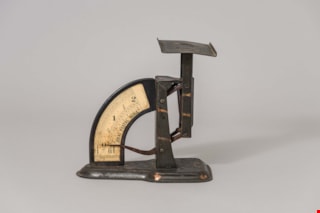
The Burnaby Post Office was established - 1 September 1904 - it became the Burnaby Lake Post Office - 1 October 1906 - then became New Westminster Sub Office No. 24 - 15 November 1949 - then Vancouver Sub No. 94 - 1 February 1951 and closed - 27 March 1956.
Arrived at - / BURNABY LAKE / JUL 19 / 09 / B.C. / - split ring arrival - this split ring hammer is not listed in the Proof Book - it was most likely proofed c. 1906 when the Post Office opened - (RF D).
---------------------------------------------------------------------------------------
Message on postcard reads: July 15th (1909 / at Brandon, Manitoba) - Dear Mother - We get to Winnipeg at 1:30 to-morrow morning. We have to get up at 2 or 3 o'clock in the morning - got off the train at 4 o'clock yesterday. From Kingsley Hart
Postcard was addressed to: Mrs. F (Frederick) J. (John) Hart / Burnaby Lake / B.C.
His mother - Alice Chapman Hart
Birth - 30 Mar 1867 in Birmingham, West Midlands, England
Death - 24 May 1935 (aged 68) in Burnaby, British Columbia
His father - Frederick John Hart
Birth - 13 Aug 1868 in Trinity, Newfoundland
Death - 20 Aug 1945 (aged 77) in Burnaby, British Columbia
Frederick John “Fred” Hart married Alice Chapman in Yale BC on August 13, 1895. They had four children together; Kingsley Chapman born May 27, 1897, Florence Elizabeth born October 23, 1898, and ten years later, Edwyna and Jack. They followed their family nurse, Miss Maude Woodward (Postmistresses at Burnaby / Burnaby Lake from 1904 to 1949) to Burnaby and purchased thirteen acres of land at Deer Lake to build a summer cottage. Mrs Hill and the children spent the summer months there while Frederick continued working in New Westminster, joining his family on the weekends. Florence Hart attended Douglas Road School before boarding at Crofton House in Vancouver. Kingsley Hart had enlisted in the army on March 23, 1915 when he was only seventeen years old. He was killed in action on September 26, 1916. The Hart family then moved to Kerrisdale, Vancouver. Florence worked at the Carnegie Library.
Link to - Personnel Records of the First World War for KINGSLEY CHAPMAN HART - www.bac-lac.gc.ca/eng/discover/military-heritage/first-wo...
Link to - Biography – From the Memorial of the Great War, 1914-1918 published by the Bank of Montreal 1921 - for Kinglsy Chapman Hart - www.veterans.gc.ca/cvwmuploads/published/1568967_4.jpg Link to his photo - www.veterans.gc.ca/cvwmuploads/published/1568967_3.jpg


Near mint condition LP Found at an estate sale for $1.00
BUDDY KNOX with the RHYTHM ORCHIDS /Self-Titled (aka Party Doll) ROULETTE R-25003 – Released June 1957 / Black Label with Track B4: "I'm In Love With You" on back jacket and "'Cause I'm In Love" on label.
Photo Credit Chuck Stewart.
Liner Notes - F. Scott Gross.
Recording Supervision- Hugo & Luigi.
Buddy Knox (From Wikipedia – see Wikipedia for more, including track & albums listings)
Buddy Wayne Knox (July 20, 1933 – February 14, 1999) was an American singer and songwriter, best known for his 1957 rock hit song, "Party Doll".
Biography
Knox was born in the tiny farming community of Happy, Texas, United States, and learned to play the guitar in his youth. In his teens, he and some high-school friends formed a band called the "Rhythm Orchids". After they performed on the same 1956 radio show as fellow Texan Roy Orbison and his "Teen Kings" band, Orbison suggested that Knox go to record producer Norman Petty, who had a recording studio in Clovis, New Mexico, the same studio where Buddy Holly recorded several of his early hits, including "That'll Be the Day".
Knox's song "Party Doll" was released on the Roulette record label, and went to number one on the Cash Box record chart in 1957 (after being picked from the tiny Triple-D label). It sold over one million copies, and was awarded a gold disc by the RIAA. This success was followed by "Rock Your Little Baby To Sleep", a number-17 hit, and "Hula Love", a number-9 hit.
While he never achieved the same level of artistic success as Holly or Orbison, Knox outlived both and enjoyed a long career in music. For his pioneering contribution, Knox was elected to the Rockabilly Hall of Fame. "Party Doll" was voted one of the Rock and Roll Hall of Fame's 500 Songs that Shaped Rock and Roll.
In the early 1960s, Knox signed with Liberty Records and released several more mainstream pop records, featuring string arrangements and backing vocalists. "Lovey Dovey" and "Ling-Ting-Tong" were the most notable recordings from this era.
The sound captured on these recordings was a distinct departure from his earlier rockabilly work for Roulette.
Liberty and principal record producer Snuff Garrett successfully employed the same production techniques for their other mainstream pop artists of the time, which included Johnny Burnette and Bobby Vee.
In 1968, Knox, who had been living in semiretirement in Macon, Georgia, while running his publishing company, moved to Nashville, Tennessee, and signed a new recording contract with United Artists Records. Working with producer Bob Montgomery (songwriter), Knox honed his traditional rockabilly style more toward the modern country sound of the day.
His first album on United Artists earned him the nickname by which he would be known for the remainder of his life. The title song of the album, Gypsy Man, written by Sonny Curtis and featuring Curtis' acoustic guitar work, received airplay on country music radio stations.
Several singles recorded by Knox between 1968 and 1974 were notable for his experimenting with a variety of sounds and styles, and from a creative and critical standpoint, may have been his most productive era.
His version of Delaney Bramlett's "God Knows I Love You", along with his self-penned "Salt Lake City", placed Knox firmly in the midst of the new pop-music genre, being populated by artists such as Delaney & Bonnie, Eric Clapton, and others who were on the leading edge of the developing Southern rock style such as Black Oak Arkansas and the Allman Brothers Band.
His cover version of James Hendricks' "Glory Train" was another stylistic stretch and featured a gospel-like chorus of backing vocalists. His cover of the Fleetwoods' "Come Softly to Me" demonstrated a vocal range not heard on his older recordings. He also reached out to the new generation of songwriters who would become prominent during Nashville's "Outlaw era" of the 1970s, as he was one of the first artists to record Mickey Newbury's "I'm Only Rockin'".
Several other major country music artists later recorded this song, but under the alternate title of "T. Total Tommy". Knox also recorded songs by Alex Harvey, John D. Loudermilk, and Gary Paxton. On several of these recordings, Knox experimented with multitracking, something few artists had done up to that time.
For many decades from the 1970s to the 1990s, Knox was based in the small town of Dominion City, Manitoba, Canada and toured primarily in Western Canada and upper Midwest U.S. with occasional European appearances. In 1981, he starred in an independent Canadian movie Sweet Country Road.
He said the fame took a toll on his family life. Traveling 250 days a year for 35 years, he was voted "the most traveling entertainer in the world" by Billboard magazine, but he said it cost three marriages for him.
In 1992, he divorced and moved to British Columbia, where he was involved in several business ventures including a partnership in a local British Columbia nightclub.
His son, Michael Knox, is a record producer.
Death
Moving to Port Orchard, Washington, in 1997 to be with his fiancée, he experienced a fall and injured his hip. The doctor informed him at that time that he had terminal lung cancer. Knox scheduled a farewell show, but died just a few weeks later on February 14, 1999, in Bremerton, Washington. He is interred in Dreamland Cemetery, in Canyon, Texas.
Sarah poses with the Waits Brothers designed rat rod "Cornbred" at the strip pits in Columbia Missouri by Notley Hawkins Photography. Taken with a Sony ILCE-7RM2 camera with a Sony FE 24-240mm F3.5-6.3 OSS lens at ƒ/4.5 with a 1/125 second exposure at ISO 640. Processed with Adobe Lightroom CC.
Follow me on Twitter, Google+, Facebook
©Notley Hawkins
Yonge–Dundas Square, or Dundas Square, is a public square at the southeast corner of the intersection of Yonge Street and Dundas Street East in the city's downtown core of Toronto, Ontario, Canada. Designed by Brown and Storey Architects, the square was conceived in 1997 as part of revitalizing the intersection.
Since its completion in 2002, the square has hosted many public events, performances and art displays, establishing itself as a prominent landmark in Toronto and one of the city's prime tourist attractions. Central to the Downtown Yonge entertainment and shopping district, the square is owned by the city and is the first public square in Canada to be maintained through a public-private partnership. The intersection is one of the busiest in Canada, with over 100,000 people crossing the city's first pedestrian scramble daily.
Hwy. 67 - Arkadelphia, Arkansas
Hwy. 64-65 N. - Conway, Arkansas
Open 6am - 10pm - Serving Buffet Style Meals 11am-8pm Daily. Excellent Food.
Harold Burnette - Exec. Chef - Mgr. at Conway
Hilton Wisley - Chef at Arkadelphia
Aurora Postcard Company - Aurora, Missouri
12402A
CAPA-000182
From a seaweed glass sculpture for a Japanese restaurant. A few have asked if it is Chihuly, and it is not--actually it is by a glass sculptor named Jeff Burnette (from Vancourver?).
Elvis Aaron Presley[a] (January 8, 1935 – August 16, 1977), often referred to mononymously as Elvis, was an American singer and actor. Dubbed the "King of Rock and Roll", he is regarded as one of the most significant cultural figures of the 20th century. His energized interpretations of songs and sexually provocative performance style, combined with a singularly potent mix of influences across color lines during a transformative era in race relations, led him to both great success and initial controversy.
Presley was born in Tupelo, Mississippi, and relocated to Memphis, Tennessee, with his family when he was 13 years old. His music career began there in 1954, recording at Sun Records with producer Sam Phillips, who wanted to bring the sound of African-American music to a wider audience. Presley, on rhythm acoustic guitar, and accompanied by lead guitarist Scotty Moore and bassist Bill Black, was a pioneer of rockabilly, an uptempo, backbeat-driven fusion of country music and rhythm and blues. In 1955, drummer D. J. Fontana joined to complete the lineup of Presley's classic quartet and RCA Victor acquired his contract in a deal arranged by Colonel Tom Parker, who would manage him for more than two decades. Presley's first RCA Victor single, "Heartbreak Hotel", was released in January 1956 and became a number-one hit in the United States. Within a year, RCA would sell ten million Presley singles. With a series of successful network television appearances and chart-topping records, Presley became the leading figure of the newly popular sound of rock and roll; though his performative style and promotion of the then-marginalized sound of African Americans[6] led to him being widely considered a threat to the moral well-being of the White American youth.
In November 1956, Presley made his film debut in Love Me Tender. Drafted into military service in 1958, Presley relaunched his recording career two years later with some of his most commercially successful work. He held few concerts, however, and guided by Parker, proceeded to devote much of the 1960s to making Hollywood films and soundtrack albums, most of them critically derided. Some of his most famous films included Jailhouse Rock (1957), Blue Hawaii (1961), and Viva Las Vegas (1964). In 1968, following a seven-year break from live performances, he returned to the stage in the acclaimed television comeback special Elvis, which led to an extended Las Vegas concert residency and a string of highly profitable tours. In 1973, Presley gave the first concert by a solo artist to be broadcast around the world, Aloha from Hawaii. Years of prescription drug abuse and unhealthy eating habits severely compromised his health, and he died suddenly in 1977 at his Graceland estate at the age of 42.
Having sold over 400 million records worldwide, Presley is recognized as the best-selling solo music artist of all time by Guinness World Records. He was commercially successful in many genres, including pop, country, rhythm & blues, adult contemporary, and gospel. Presley won three Grammy Awards, received the Grammy Lifetime Achievement Award at age 36, and has been inducted into multiple music halls of fame. He holds several records, including the most RIAA-certified gold and platinum albums, the most albums charted on the Billboard 200, the most number-one albums by a solo artist on the UK Albums Chart, and the most number-one singles by any act on the UK Singles Chart. In 2018, Presley was posthumously awarded the Presidential Medal of Freedom.
Elvis Aaron Presley was born on January 8, 1935, in Tupelo, Mississippi, to Vernon Elvis (April 10, 1916 – June 26, 1979) and Gladys Love (née Smith; April 25, 1912 – August 14, 1958) Presley in a two-room shotgun house that his father built for the occasion. Elvis's identical twin brother, Jesse Garon Presley, was delivered 35 minutes before him, stillborn. Presley became close to both parents and formed an especially close bond with his mother. The family attended an Assembly of God church, where he found his initial musical inspiration.
A photo of Elvis's parents at the Historic Blue Moon Museum in Verona, Mississippi
Presley's father Vernon was of German, Scottish and English origins. He was a descendant of the Harrison family of Virginia through his ancestor Tunis Hood. Presley's mother Gladys was Scots-Irish with some French Norman ancestry. His mother and the rest of the family believed that her great-great-grandmother, Morning Dove White, was Cherokee. This belief was restated by Elvis's granddaughter Riley Keough in 2017. Elaine Dundy, in her biography, supports the belief.
Vernon moved from one odd job to the next, showing little ambition. The family often relied on help from neighbors and government food assistance. In 1938, they lost their home after Vernon was found guilty of altering a check written by his landowner and sometime-employer. He was jailed for eight months, while Gladys and Elvis moved in with relatives.
In September 1941, Presley entered first grade at East Tupelo Consolidated, where his teachers regarded him as "average". He was encouraged to enter a singing contest after impressing his schoolteacher with a rendition of Red Foley's country song "Old Shep" during morning prayers. The contest, held at the Mississippi–Alabama Fair and Dairy Show on October 3, 1945, was his first public performance. The ten-year-old Presley stood on a chair to reach the microphone and sang "Old Shep". He recalled placing fifth. A few months later, Presley received his first guitar for his birthday; he had hoped for something else—by different accounts, either a bicycle or a rifle. Over the following year, he received basic guitar lessons from two of his uncles and the new pastor at the family's church. Presley recalled, "I took the guitar, and I watched people, and I learned to play a little bit. But I would never sing in public. I was very shy about it."
In September 1946, Presley entered a new school, Milam, for sixth grade; he was regarded as a loner. The following year, he began bringing his guitar to school on a daily basis. He played and sang during lunchtime and was often teased as a "trashy" kid who played hillbilly music. By then, the family was living in a largely black neighborhood. Presley was a devotee of Mississippi Slim's show on the Tupelo radio station WELO. He was described as "crazy about music" by Slim's younger brother, who was one of Presley's classmates and often took him into the station. Slim supplemented Presley's guitar instruction by demonstrating chord techniques. When his protégé was 12 years old, Slim scheduled him for two on-air performances. Presley was overcome by stage fright the first time, but succeeded in performing the following week.
In November 1948, the family moved to Memphis, Tennessee. After residing for nearly a year in rooming houses, they were granted a two-bedroom apartment in the public housing complex known as the Lauderdale Courts. Enrolled at L. C. Humes High School, Presley received only a C in music in eighth grade. When his music teacher told him that he had no aptitude for singing, he brought in his guitar the next day and sang a recent hit, "Keep Them Cold Icy Fingers Off Me", to prove otherwise. A classmate later recalled that the teacher "agreed that Elvis was right when he said that she didn't appreciate his kind of singing". He was usually too shy to perform openly and was occasionally bullied by classmates who viewed him as a "mama's boy".
In 1950, he began practicing guitar regularly under the tutelage of Lee Denson, a neighbor two and a half years his senior. They and three other boys—including two future rockabilly pioneers, brothers Dorsey and Johnny Burnette—formed a loose musical collective that played frequently around the Courts. That September, he began working as an usher at Loew's State Theater. Other jobs followed at Precision Tool, Loew's again, and MARL Metal Products. Presley also helped Jewish neighbors, the Fruchters, by being their shabbos goy.
During his junior year, Presley began to stand out more among his classmates, largely because of his appearance: he grew his sideburns and styled his hair with rose oil and Vaseline. In his free time, he would head down to Beale Street, the heart of Memphis's thriving blues scene, and gaze longingly at the wild, flashy clothes in the windows of Lansky Brothers. By his senior year, he was wearing those clothes. Overcoming his reticence about performing outside the Lauderdale Courts, he competed in Humes' Annual "Minstrel" show in April 1953. Singing and playing guitar, he opened with "Till I Waltz Again with You", a recent hit for Teresa Brewer. Presley recalled that the performance did much for his reputation: "I wasn't popular in school ... I failed music—only thing I ever failed. And then they entered me in this talent show ... when I came onstage I heard people kind of rumbling and whispering and so forth, 'cause nobody knew I even sang. It was amazing how popular I became in school after that."
Presley, who received no formal music training and could not read music, studied and played by ear. He also frequented record stores that provided jukeboxes and listening booths to customers. He knew all of Hank Snow's songs, and he loved records by other country singers such as Roy Acuff, Ernest Tubb, Ted Daffan, Jimmie Rodgers, Jimmie Davis, and Bob Wills. The Southern gospel singer Jake Hess, one of his favorite performers, was a significant influence on his ballad-singing style. He was a regular audience member at the monthly All-Night Singings downtown, where many of the white gospel groups that performed reflected the influence of African-American spiritual music. He adored the music of black gospel singer Sister Rosetta Tharpe.
Like some of his peers, he may have attended blues venues—of necessity, in the segregated South—only on nights designated for exclusively white audiences. He certainly listened to the regional radio stations, such as WDIA-AM, that played "race records": spirituals, blues, and the modern, backbeat-heavy sound of rhythm and blues. Many of his future recordings were inspired by local African-American musicians such as Arthur Crudup and Rufus Thomas. B.B. King recalled that he had known Presley before he was popular when they both used to frequent Beale Street. By the time he graduated from high school in June 1953, Presley had already singled out music as his future.
Graceland is a mansion on a 13.8-acre (5.6-hectare) estate in Memphis, Tennessee, United States, which was once owned by the rock and roll singer Elvis Presley. His daughter, Lisa Marie Presley, inherited Graceland after his death in 1977. Following Lisa Marie Presley's death in 2023, the mansion is to be inherited by her daughters. In addition to being the final resting place of Elvis Presley himself, the property contains the graves of his parents, paternal grandmother and grandson, and contains a memorial to Presley's stillborn twin brother. In addition, Lisa Marie Presley will be buried there.
Graceland is located at 3764 Elvis Presley Boulevard in the Whitehaven neighborhood, about nine miles (14 kilometers) south of central Memphis and fewer than four miles (6.4 km) north of the Mississippi border.[5] It was opened to the public as a house museum on June 7, 1982. The site was listed in the National Register of Historic Places on November 7, 1991, becoming the first site recognized for significance related to rock music. Graceland was declared a National Historic Landmark on March 27, 2006, also a first for such a site. Graceland attracts more than 650,000 visitors annually.
Graceland Farms was originally owned by Stephen C. Toof, founder of S.C. Toof & Co., the oldest commercial printing firm in Memphis. He worked previously as the pressroom foreman of the Memphis newspaper, the Memphis Daily Appeal. The "grounds" (before the mansion was built in 1939) were named after Toof's daughter, Grace. She inherited the farm/property from her father in 1894. After her death, the property was passed to her niece Ruth Moore, a Memphis socialite. Together with her husband, Thomas Moore, Ruth Moore commissioned construction of a 10,266-square-foot (953.7 m2) Colonial Revival style mansion in 1939. The house was designed by architects Furbringer and Ehrman.
After Elvis Presley began his musical career, he purchased a $40,000 home for himself and his family at 1034 Audubon Drive in Memphis. As his success and fame grew, especially after his appearances on television, the number of fans who would congregate outside the house multiplied. Presley's neighbors, although happy to have a celebrity living nearby, soon concluded that the constant gathering of fans and journalists was a nuisance.
In early 1957, Presley gave his parents, Vernon and Gladys Presley, a budget of $100,000 and asked them to find a "farmhouse"-like property to purchase, with buffer space around it. At the time, Graceland was located in southern Shelby County, several miles south of Memphis' main urban area. In later years, Memphis would expand with residential developments, resulting in Graceland being surrounded by other properties. Presley purchased Graceland on March 19, 1957, for the amount of $102,500.
Later that year, Presley invited Richard Williams and singer Buzz Cason to the house. Cason said: "We proceeded to clown around on the front porch, striking our best rock 'n' roll poses and snapping pictures with the little camera. We peeked in the not-yet-curtained windows and got a kick out of the pastel colored walls in the front rooms with shades of bright reds and purples that Elvis most certainly had picked out." Presley was fond of claiming that the US government had mooted a visit to Graceland by Nikita Khrushchev of the Soviet Union, "to see how in America a fellow can start out with nothing and, you know, make good."
After Gladys died in 1958 aged 46, Presley's father Vernon remarried to Dee Stanley in 1960, and the couple lived at Graceland for a time. There was some discord between Presley and his stepmother Dee at Graceland, however. Elaine Dundy, who wrote about Presley and his mother, said that
"Vernon had settled down with Dee where Gladys had once reigned, while Dee herself – when Elvis was away – had taken over the role of mistress of Graceland so thoroughly as to rearrange the furniture and replace the very curtains that Gladys had approved of." This was too much for the singer, who still loved his late mother deeply. One afternoon, "a van arrived ... and all Dee's household's goods, clothes, 'improvements,' and her own menagerie of pets, were loaded on ... while Vernon, Dee and her three children went by car to a nearby house on Hermitage until they finally settled into a house on Dolan Drive which ran alongside Elvis' estate."
According to Mark Crispin Miller, Graceland became for Presley "the home of the organization that was himself, was tended by a large vague clan of Presleys and deputy Presleys, each squandering the vast gratuities which Elvis used to keep his whole world smiling." The author adds that Presley's father Vernon "had a swimming pool in his bedroom", that there "was a jukebox next to the swimming pool, containing Elvis' favorite records", and that the singer himself "would spend hours in his bedroom, watching his property on a closed-circuit television." According to the singer's cousin, Billy Smith, Presley spent the night at Graceland with Smith and his wife Jo many times: "we were all three there talking for hours about everything in the world! Sometimes he would have a bad dream and come looking for me to talk to, and he would actually fall asleep in our bed with us."
Priscilla Beaulieu lived at Graceland for five years before she and Presley wed in Las Vegas, Nevada, on May 1, 1967. Their daughter Lisa Marie Presley was born on February 1, 1968, and spent the first years of her life on the estate. After her parents divorced in 1972, her mother moved with the girl to California. Every year around Christmas, Lisa Marie Presley and all her family would go to Graceland to celebrate Christmas together. Lisa Marie often returned to Graceland for visits.
When Elvis would tour, staying in hotels, "the rooms would be remodeled in advance of his arrival, so as to make the same configurations of space as he had at home – the Graceland mansion. His furniture would arrive, and he could unwind after his performances in surroundings which were completely familiar and comforting." 'The Jungle Room' was described as being "an example of particularly lurid kitsch."[
On August 16, 1977, Presley died aged 42 at Graceland. The official cause of death was cardiac arrhythmia, although later toxicology reports strongly suggested that polypharmacy was the primary cause of death; "fourteen drugs were found in Elvis' system, with several drugs such as codeine in significant quantities. Presley lay in repose in a 900-pound (410 kg), copper-lined coffin just inside the foyer; more than 3,500 of his mourning fans passed by to pay their respects. A private funeral with 200 mourners was held on August 18, 1977, in the house, with the casket placed in front of the stained glass doorway of the music room. Graceland continued to be occupied by members of the family until the death of Presley's aunt Delta in 1993, who had moved in at Elvis's invitation after her husband's death. Elvis's daughter, Lisa Marie Presley, inherited the estate in 1993 when she turned 25.
Presley's tombstone, along with those of his parents Gladys and Vernon Presley, and his grandmother Minnie Mae Presley, are installed in the Meditation Garden next to the mansion. They can be visited during the mansion tours or for free before the mansion tours begin. A memorial gravestone for Presley's stillborn twin brother, Jesse Garon, is also at the site.
In 2019, the owners of Graceland threatened to leave Memphis unless the city provided tax incentives. The Memphis City Council subsequently voted on a deal to help fund a $100 million expansion of Graceland.
Constructed at the top of a hill and surrounded by rolling pastures and a grove of oak trees, Graceland is designed by the Memphis architectural firm, Furbringer and Erhmanis. It's a two-story, five-bay residence in the Colonial Revival style, with a side-facing gabled roof covered in asphalt shingles, a central two-story projecting pedimented portico, and two one-story wings on the north and south sides. Attached to the wing is an additional one-story stuccoed wing, which was originally a garage that houses up to four cars. The mansion has two chimneys; one on the north side's exterior wall, the second rising through the south side's roof ridge. The central block's front and side facades are veneered with tan Tishomingo limestone from Mississippi and its rear wall is stuccoed, as are the one-story wings. The front facade fenestration on the first floor includes 9x9 double-hung windows set in arched openings with wooden panels above, and 6x6 double-hung windows on the second floor.
Flanked by two marble lions, four stone steps ascend from the driveway to the two-story central projecting pedimented portico. The pediment has dentils and a small, leaded oval window in the center while the portico contains four Corinthian columns with capitals modeled after architect James Stuart's conjectural porticos for the "Tower of the Winds" in Athens, Greece. The portico's cornered columns are matched by pilasters on the front facade. The doorway has a broken arched pediment, full entablature, and engaged columns while its transom and sidelights contain elaborate and colorful stained glass. And above the main entrance is another rectangular window, completed with a shallow iron balcony.
Graceland is 17,552 square feet (1,630.6 m2) and has a total of 23 rooms, including eight bedrooms and bathrooms. To the right of the Entrance Hall, through an elliptical-arched opening with classical details, is the Living Room. The Living Room contains a 15-foot-long (4.6 m) white couch against the wall overlooking the front yard. To the left are two white sofas, a china cabinet and a fireplace with a mirrored wall. The painting that hangs in the room was Elvis' last Christmas present from his father, Vernon, and also displayed are photographs of Elvis' parents Vernon and Gladys, Elvis and Lisa Marie. Behind an adjoined doorway is the Music Room, framed by vivid large peacocks set in stained glass and contains a black baby grand piano and a 1950s style TV. And the third adjacent room is a bedroom that was occupied by Elvis' parents. The walls, carpet, dresser, and queen size bed are bright white with the bed draped in a velvet-looking dark purple bedspread along with an en-suite full bathroom done in pink.
To the left of the Entrance Hall, mirroring the Living Room, is the Dining Room, headlined by a massive crystal chandelier. It features six plush chairs in golden metal frames set around a marble table, all of which are placed on black marble flooring in the center with carpet around the perimeter. Connected to the Dining Room is the Kitchen, which was used by Elvis' aunt Delta until her death in 1993 before it was opened to the public two years later.
The original one-story wing on the north end of the residence includes a mechanical room, bedroom, and bath. In the mid-1960s, Presley enlarged the house to create a den known as the Jungle Room which features an indoor waterfall of cut field stone on the north wall. The room also contains items both related to and imported from the state of Hawaii because, after starring in the tropical film "Blue Hawaii" (1961), the musician wanted to bring some memorabilia from The Aloha State to his mansion, which gives visitors the same feeling. In 1976, the Jungle Room was converted into a recording studio, where he recorded the bulk of his final two albums, From Elvis Presley Boulevard, Memphis, Tennessee (1976) and Moody Blue (1977); these were his final known recordings in a studio setting.[27] During the mid-1960s expansion of the house, Presley constructed a large wing on the south side of the main house that was a sidewalk, between the music room in the original one-story wing and the swimming pool area, that connected to the house by a small enclosed gallery. The new wing initially housed a slot car track and to store his many items of appreciation, but was later remodeled to what is now known as the Trophy Building, which now features an exhibit about the Presley family, and includes Priscilla's wedding dress, Elvis' wedding tuxedo, Lisa Marie's toy chest and baby clothes and more.
The Entrance Hall contains a white staircase leading to the house's second floor with a wall of mirrors. However, the second floor is not open to visitors, out of respect for the Presley family, and partially to avoid any improper focus on the bathroom which was the site of his death. Still, it features Elvis' bedroom at the southwest corner that connects to his dressing room and bathroom in the northwest. His daughter Lisa Marie's bedroom is in the northeast corner, and in the southeast is a bedroom that served as a private personal office for the musician. The floor has been untouched since the day Elvis died and is rarely seen by non-family members.
Downstairs in the basement is the TV room, where Elvis often watched three television sets at once, and was within close reach of a wet bar. The three TV sets are built into the room's south wall and there's a stereo, and cabinets for Elvis' record collection. And painted on the west wall is The King's 1970s logo of a lightning bolt and cloud with the initials TCB, both of which represent 'taking care of business in a flash'. And the last room in the mansion opposite of the TV room is the billiard room; an avid billiards player, Elvis bought the pool table in 1960 and had the walls and ceiling covered with 350–400 yards of pleated cotton fabric after the two basement rooms were remodeled in 1974. The pool balls are arranged just the way they were in the musician's final days along with a strict warning sign to visitors that says "Please Do Not Touch! Thank You!" in capital letters. And in one corner of the pool table, there's a rip in the green felt, which was caused by one of Elvis' friends in a failed attempt of a trick shot.
Critics such as Albert Goldman write: "Though it cost a lot of money to fill up Graceland with the things that appealed to Elvis Presley, nothing in the house is worth a dime." In chapter 1 of his book, Elvis (1981), the author describes Graceland as looking like a brothel: "it appears to have been lifted from some turn-of-the-century bordello down in the French Quarter of New Orleans. Lulu White or the Countess Willie Piazza might have contrived this plushy parlor for the entertainment of Gyp the Blood. The room is a gaudy mélange of red velour and gilded tassels, Louis XV furniture and porcelain bric-a-brac..." And he dismisses the interior as "bizarre," "garish" and "phony," adding that "King Elvis's obsession with royal red reaches an intensity that makes you gag."
In similar terms, Greil Marcus writes that people who visited the inside of Graceland—"people who to a real degree shared Elvis Presley’s class background, and whose lives were formed by his music—have returned with one word to describe what they saw: ‘Tacky.’ Tacky, garish, tasteless—words others translated as white trash."
According to Karal Ann Marling, Graceland is "a Technicolor illusion. The façade is Gone With the Wind all the way. The den in the back is Mogambo with a hint of Blue Hawaii. Living in Graceland was like living on a Hollywood backlot, where patches of tropical scenery alternated with the blackened ruins of antebellum Atlanta. It was like living in a Memphis movie theater... Diehard fans are sometimes disappointed by the formal rooms along the highway side of Graceland. They’re beautiful, in a chilly blue-and-white way, but remote and overarranged." The Jungle Room's "overt bad taste" lets nonbelievers "recoil in horror and imagine themselves a notch or two higher than Elvis on the class scale."
After purchasing the property Presley spent in excess of $500,000 carrying out extensive modifications to suit his needs including a pink Alabama fieldstone wall surrounding the grounds that has several years' worth of graffiti (signatures and messages) from visitors, who simply refer to it as "the wall". Designed and built by Abe Sauer is the wrought-iron front gate shaped like a book of sheet music, along with green colored musical notes and two mirrored silhouettes of Elvis playing his guitar. Sauer also installed a kidney shaped swimming pool and a racquetball court, which is reminiscent of an old country club, furnished in dark leather and a functional bar. There is a sunken sitting area with the ever-present stereo system found throughout Graceland, as well as the dark brown upright piano upon which Elvis played for what were to be his last songs, Willie Nelson's "Blue Eyes Crying in the Rain" and "Unchained Melody".
However, reports conflict about which one was the last song. The sitting area has a floor-to-ceiling shatterproof window designed to watch the many racquetball games that took place there when Elvis was alive. In the early hours of the morning on which Elvis died, he played a game of racquetball with his girlfriend Ginger Alden, his first cousin Billy Smith and Billy's wife Jo before ending the game with the song on the piano before walking into the main house to wash his hair and go to bed. Today the two story court has been restored to the way it was when Elvis used the building.
Elsewhere on the estate is a small white building that served as an office for Vernon, along with an old smokehouse that housed a shooting range and a fully functional stable of horses.
One of Presley's better known modifications was the addition of the Meditation Garden, designed and built by architect Bernard Grenadier. It was used by the musician to reflect on any problems or situations that arose during his life. It is also where his entire family is buried: himself (1935–1977), his parents Gladys (1912–1958) and Vernon (1916–1979), and grandmother Minnie Mae Hood (1890–1980) while a small stone memorializes his twin brother Jesse Garon, who died at birth thirty minutes before Elvis was born on January 8, 1935. In late 2020, Lisa Marie's son Benjamin Keough was laid to rest on the opposite end of the Meditation Garden after his death from suicide in July of that year. Lisa Marie Presley died from sudden cardiac arrest in January 2023 and is buried next to her son.
After Elvis Presley's death in 1977, Vernon Presley served as executor of his estate. Upon his death in 1979, he chose Priscilla to serve as the estate executor for Elvis's only child, Lisa Marie, who was only 11. Graceland itself cost $500,000 a year in upkeep, and expenses had dwindled Elvis's and Priscilla's daughter Lisa Marie's inheritance to only $1 million. Taxes were due on the property; those and other expenses due came to over $500,000. Faced with having to sell Graceland, Priscilla examined other famous houses/museums, and hired a CEO, Jack Soden, to turn Graceland into a moneymaker. Graceland was opened to the public on June 7, 1982. Priscilla's gamble paid off; after only a month of opening Graceland's doors the estate made back all the money it had invested. Priscilla Presley became the chairwoman and president of Elvis Presley Enterprises, or EPE, stating at that time she would do so until Lisa Marie reached 21 years of age. The enterprise's fortunes soared and eventually the trust grew to be worth over $100 million.
An annual procession through the estate and past Elvis's grave is held on the anniversary of his death. Known as Elvis Week, it includes a full schedule of speakers and events, including the only Elvis Mass at St. Paul's Church, the highlight for many Elvis fans of all faiths. The 20th Anniversary in 1997 had several hundred media groups from around the world that were present resulting in the event gaining its greatest media publicity.
One of the largest gatherings assembled on the 25th anniversary in 2002 with one estimate of 40,000 people in attendance, despite the heavy rain. On the 38th anniversary of Elvis's death, an estimated 30,000 people attended the Candlelight Vigil during the night of August 15–16, 2015. On the 40th anniversary of Elvis's death, on August 15–16, 2017, at least 50,000 fans were expected to attend the Candlelight Vigil. No official figure seems to have been released, maybe because, for the first time, attendees had to pay at least the lowest tour fare, $28.75, to cover the extra security costs due to a larger than usual crowd.
For many of the hundreds of thousands of people who visit Graceland each year, the visit takes on a quasi-religious perspective. They may plan for years to journey to the home of the 'King' of rock and roll. On site, headphones narrate the salient events of Elvis's life and introduce the relics that adorn the rooms and corridors. The rhetorical mode is hagiographic, celebrating the life of an extraordinary man, emphasizing his generosity, his kindness and good fellowship, how he was at once a poor boy who made good, an extraordinary musical talent, a sinner and substance abuser, and a religious man devoted to the Gospel and its music. At the meditation garden, containing Elvis's grave, some visitors pray, kneel, or quietly sing one of Elvis's favorite hymns. The brick wall that encloses the mansion's grounds is covered with graffiti that express an admiration for Presley as well as petitions for help and thanks for favors granted.
The Graceland grounds include a new exhibit complex, Elvis Presley's Memphis, which includes a new car museum, Presley Motors, which houses Elvis's Pink Cadillac. The complex features new exhibits and museums, as well as a studio for Sirius Satellite Radio's all-Elvis Presley channel. The service's subscribers all over North America can hear Presley's music from Graceland around the clock. Not far away on display are his two aircraft including Lisa Marie (a Convair 880 jetliner) and Hound Dog II (a Lockheed JetStar business jet). The jets are owned by Graceland and are on permanent static display.
In early August 2005, Lisa Marie Presley sold 85% of the business side of her father's estate. She kept the Graceland property itself, as well as the bulk of the possessions found therein, and she turned over the management of Graceland to CKX, Inc., an entertainment company (on whose board of directors Priscilla Presley sat) that also owns 19 Entertainment, creator of the American Idol TV show.
Graceland Holdings LLC, led by managing partner Joel Weinshanker, is the majority owner of EPE. Lisa Marie Presley's estate retains a 15% ownership in the company.
In August 2018, Gladys Presley's headstone, which contained the Jewish star of David on one side and a cross on the other and was designed by Elvis himself, which become publicly displayed when it placed in Graceland's Mediation Garden after being stored for many years in the Graceland Archive.
Lisa Marie Presley's estate, which is being held in trust for her daughters Riley Keough and Harper and Finley Lockwood, retain 100% sole personal ownership of Graceland Mansion itself and its over 13-acre original grounds as well as Elvis Presley's personal effects – including costumes, wardrobe, awards, furniture, cars, etc. Prior to her death in 2023, Lisa Marie Presley had made the mansion property and her father's personal effects permanently available for tours of Graceland and for use in all of EPE's operations.
According to Elvis Presley's Enterprises, staff at Graceland informally kept a list of celebrities who had visited in the first years following Elvis's death. This practice was not formalized for a decade. Muhammad Ali was an early celebrity visitor in 1978, as was singer Paul Simon. He toured Graceland in the early 80s and afterward wrote a song of the same name; it was the title track of his Grammy-winning album Graceland.
During the Joshua Tree Tour in 1987, U2 toured Graceland. The footage was filmed for the film Rattle & Hum. During the visit, drummer, Larry Mullen Jr., sat on Elvis Presley's motorcycle -- against the rules for Graceland visitors.
On June 30, 2006, then US President George W. Bush hosted Japanese Prime Minister Junichiro Koizumi for a tour of the mansion. It was one of the few private residences on United States soil to have been the site of an official joint-visit by a sitting US president and a serving head of a foreign government. On August 6, 2010, Prince Albert II, Head of State of the Principality of Monaco, and his fiancée (now Princess of Monaco) Charlene Wittstock, toured Graceland while vacationing in the US. On May 26, 2013, Paul McCartney of The Beatles visited Graceland. Prince William and Prince Harry, while in Memphis for a friend's wedding, visited Graceland on May 2, 2014.
The home has also been visited by former US President Jimmy Carter; the late Duchess of Devonshire, the sitting ambassadors of India, France, China, Korea and Israel to the United States; as well as several US governors, members of the US Congress, and at least two Nobel Prize winners, namely singer-songwriter Bob Dylan, a Literature Prize laureate, and the former President of Costa Rica, Oscar Arias, a Peace Prize honoree, who visited it on October 10, 2001.
In May 2016, Graceland welcomed a newlywed couple as its 20 millionth visitor.
In June 2022, actors Austin Butler and Tom Hanks visited the mansion and were interviewed virtually by the Good Morning America news program from the Jungle Room to talk about their biographical film Elvis.
In popular culture
Paul Simon named an album Graceland, as well as its title track. The song won the Grammy Award for Record of the Year in 1987.
The song "Walking in Memphis" by Marc Cohn mentions Graceland; in the second verse, he refers to the mansion and the Jungle Room. This song was later covered by Cher and Lonestar, among others.
The film 3000 Miles to Graceland is about a group of criminals who plan to rob a casino during an international Elvis week, disguised as Elvis impersonators. No scenes take place at or near the estate.
The film Finding Graceland stars Harvey Keitel with Johnathon Schaech. Keitel is an impersonator who claims to be the real Elvis after Schaech picks him up as a hitch-hiker.
In the rock music "mockumentary" This Is Spinal Tap, band members gather around Presley's grave at Graceland and attempt to sing a verse of "Heartbreak Hotel".
Pop punk group Groovie Ghoulies have a song called "Graceland" on their 1997 album Re-Animation Festival.
In the movie Zombieland: Double Tap, the protagonists venture to Graceland in hopes of shelter during a zombie apocalypse, but are distressed to find it in a ruined state.
During the credits of Lilo & Stitch, there's a photograph of Lilo, Nani, David and Stitch visiting the front gates of Graceland. Almost 20 years later, the original painting of that shot was put on display as part of the traveling Walt Disney Archives exhibition at Graceland.
In the season three episode of American Dad “The Vacation Goo”, Steve Smith asks Stan Smith if they can go to Graceland for their next vacation and Stan says “Steve, if you want to pay your respects to a fat man who died on the toilet, we can visit your Aunt Mary’s grave.”
Phoebe Bridgers has a song "Graceland Too" on her second studio album Punisher.
In the third episode of National Treasure: Edge of History, "Graceland Gambit," the main protagonist, Jess (portrayed by Lisette Olivera) is on a treasure hunt that leads her and her friends to Graceland.
Florence + The Machine reference Graceland and Elvis in their song "Morning Elvis" on their 2022 album Dance Fever.