View allAll Photos Tagged augmentation
U.S. Marine watch standers with Marine Security Augmentation Unit, Marine Corps Embassy Security Group grapple during a unit-wide squad competition aboard Marine Corps Base Quantico, Virginia, August 8, 2019. During the competition, each squad of MSAU Marines completed grueling tasks, which challenged them both physically and mentally. There were a total of 11 stations laid out on an 11-mile-long course. The challenges tested a variety of skills, including tactical combat casualty care, room clearing, defensive tactics, intruder apprehension, weapons handling, and live-fire training. (U.S. Marine Corps photo by Sgt. Mackenzie Gibson) www.dvidshub.net
U.S. Marine Sgt. Travis Riggs with the Marine Security Augmentation Unit (MSAU), engages his target during a weapons field test of the M27 Infantry Automatic Rifle at Marine Corps Base Quantico, Va., Feb. 21, 2014. The MSAU Marines conducted the live-fire range in order to familiarize themselves with the new weapons system. (DoD photo by Staff Sgt. Ezekiel R. Kitandwe/Released)
"Regularly Luxurious"
Genesis Transport 818670
Company/Owner: Genesis Transport Services, Inc.
Route: Mariveles/Balanga-Cubao
(QC Augmentation Route: Quezon City Hall-Gilmore)
Area of Service: Bataan, Central Luzon (R3)
Type of Service: PUB Provincial Operation Bus
Classification: Regular Airconditioned Bus
Coachbuilder: (Xiamen) Golden Dragon Bus Automotive Ind.
Model: XML6122J38Y
Chassis: LL3AH
Engine: YC6L330-42
Transmission: M/T
Speed: 6 Forward, 1 Reverse
Suspension Type: Airsuspension
Seat Configuration: 2x2
Maximum Capacity: 49+2
Shot Location: Quezon Memorial Circle, Quezon City
Date Taken: February 15, 2021
Kanchipuram a otherwise known as Kanchi (previously romanized as Kāñci-pura, Conjevaram) is a city in the Indian state of Tamil Nadu, 72 km from Chennai – the capital of Tamil Nadu. The city covers an area of 11.605 km2 and had a population of 164,265 in 2001. It is the administrative headquarters of Kanchipuram District. Kanchipuram is well-connected by road and rail. Chennai International Airport is the nearest domestic and international airport to the city, which is located at Tirusulam in Kanchipuram district.
Located on the banks of the Vegavathy River, Kanchipuram has been ruled by the Pallavas, the Medieval Cholas, the Later Cholas, the Later Pandyas, the Vijayanagar Empire, the Carnatic kingdom, and the British. The city's historical monuments include the Kailasanathar Temple and the Vaikunta Perumal Temple. Historically, Kanchipuram was a centre of education and was known as the ghatikasthanam, or "place of learning". The city was also a religious centre of advanced education for Jainism and Buddhism between the 1st and 5th centuries.
In Hindu theology, Kanchipuram is one of the seven Indian cities to reach final attainment. The city houses Varadharaja Perumal Temple, Ekambareswarar Temple, Kamakshi Amman Temple, and Kumarakottam Temple, which are some of major Hindu temples in the state. The city is a holy pilgrimage site for both Saivites and Vaishnavites. Of the 108 holy temples of the Hindu god Vishnu, 14 are located in Kanchipuram. The city is well known for its hand woven silk sarees and most of the city's workforce is involved in the weaving industry.
Kanchipuram is administered by a Special grade municipality constituted in 1947. It is the headquarters of the Kanchi matha, a Hindu monastic institution believed to have been founded by the Hindu saint and commentator Adi Sankaracharya, and was the capital city of the Pallava Kingdom between the 4th and 9th centuries.
Kanchipuram has been chosen as one of the heritage cities for HRIDAY - Heritage City Development and Augmentation Yojana scheme of Government of India.
ETYMOLOGY
Kanchipuram was known in early Tamil literature as Kachi or Kachipedu but was later Sanskritized to Kanchi or Kanchipuram. According to legend, the name Kanchi is derived from Ka referring to the Hindu god Brahma and anchi, referring to his worship of Hindu god Vishnu at this place. The earliest inscription from the Maurya period (325–185 BCE) denote the city as Kanchipuram, where King Visnugopa was defeated by Samudragupta Maurya (320–298 BCE). Patanjali (150 BCE or 2nd century BCE) refers to the city in his Mahabhasya as Kanchipuraka. The city was referred to by various Tamil names like Kanchi, Kanchipedu and Sanskrit names like Kanchipuram. The Pallava inscriptions from (250–355) and the inscriptions of the Chalukya dynasty refers the city as Kanchipura. Jaina Kanchi refers to the area around Tiruparutti Kundram. During the British rule, the city was known as Conjeevaram and later as Kanchipuram. The municipal administration was renamed Kancheepuram, while the district retains the name Kanchipuram.
HISTORY
While it is widely accepted that Kanchipuram had served as an Early Chola capital, the claim has been contested by Indian historian P. T. Srinivasa Iyengar who wrote that the Tamil culture of the Sangam period did not spread through the Kanchipuram district, and cites the Sanskritic origins of its name in support of his claim. The earliest references to Kanchipuram are found in the books of the Sanskrit grammarian Patanjali, who lived between the 3rd and 2nd centuries BCE. The city is believed to have been part of the mythical Dravida Kingdom of the Mahabharatha, and was described as "the best among cities" (Sanskrit: Nagareshu Kanchi) by the 4th-century Sanskrit poet, Kalidasa. The city was regarded as the "Banaras of the South". Kanchipuram grew in importance when the Pallavas of southern Andhra Pradesh, wary of constant invasions from the north, moved their capital south to the city in the 6th century. The Pallavas fortified the city with ramparts, wide moats, well-laid-out roads, and artistic temples. During the reign of the Pallava King Mahendravarman I, the Chalukya King Pulakesin II (610–642) invaded the Pallava kingdom as far as the Kaveri River. The Pallavas successfully defended Kanchipuram and foiled repeated attempts to capture the city. A second invasion ended disastrously for Pulakesin II, who was forced to retreat to his capital Vatapi which was besieged and Pulakesin II was killed by Narasimhavarman I (630–668), son of Mahendravarman I (600–630), at the Battle of Vatapi. Under the Pallavas, Kanchipuram flourished as a centre of Hindu and Buddhist learning. King Narasimhavarman II built the city's important Hindu temples, the Kanchi Kailasanathar Temple, the Varadharaja Perumal Temple and the Iravatanesvara Temple. Xuanzang, a Chinese traveller who visited Kanchipuram in 640, recorded that the city was 9.7 km in circumference and that its people were renowned for their bravery, piety, love of justice, and veneration for learning. The Medieval Chola king Aditya I conquered the Pallava kingdom, including Kanchipuram, after defeating the Pallava ruler Aparajitavarman (880–897) in about 890. Under the Cholas, the city was the headquarters of the northern viceroyalty. The province was renamed "Jayamkonda Cholamandalam" during the reign of King Raja Raja Chola I (985–1014), who constructed the Karchapeswarar Temple and renovated the Kamakshi Amman Temple. His son, Rajendra Chola I (1012–44) constructed the Yathothkari Perumal Temple. According to the Siddhantasaravali of Trilocana Sivacharya, Rajendra Chola I brought a band of Saivas with him on his return from the Chola expedition to North India and settled them in Kanchipuram. In about 1218, the Pandya king Maravarman Sundara Pandyan (1216–1238) invaded the Chola country, making deep inroads into the kingdom which was saved by the intervention of the Hoysala king Vira Narasimha II (1220–1235), who fought on the side of the Chola king Kulothunga Chola III. Inscriptions indicate the presence of a powerful Hoysala garrison in Kanchipuram, which remained in the city until about 1230. Shortly afterwards, Kanchipuram was conquered by the Telugu Cholas, from whom Jatavarman Sundara Pandyan I took the city in 1258. The city remained with the Pandyas until 1311 when the Sambuvarayars declared independence, taking advantage of the anarchy caused by Malik Kafur's invasion. After short spells of occupation by Ravivarman Kulasekhara of Venad (Quilon, Kerala) in 1313–1314 and the Kakatiya ruler Prataparudra II, Kanchipuram was conquered by the Vijayanagar general Kumara Kampana, who defeated the Madurai Sultanate in 1361.
The Vijayanagar Empire ruled Kanchipuram from 1361 to 1645. The earliest inscriptions attesting to Vijayanagar rule are those of Kumara Kampanna from 1364 and 1367, which were found in the precincts of the Kailasanathar Temple and Varadaraja Perumal Temple respectively. His inscriptions record the re-institution of Hindu rituals in the Kailasanathar Temple that had been abandoned during the Muslim invasions. Inscriptions of the Vijayanagar kings Harihara II, Deva Raya II, Krishna Deva Raya, Achyuta Deva Raya, Sriranga I, and Venkata II are found within the city. Harihara II endowed grants in favour of the Varadaraja Perumal Temple. In the 15th century, Kanchipuram was invaded by the Velama Nayaks in 1437, the Gajapati kingdom in 1463–1465 and 1474–75 and the Bahmani Sultanate in about 1480. A 1467 inscription of Virupaksha Raya II mentions a cantonment in the vicinity of Kanchipuram. In 1486, Saluva Narasimha Deva Raya, the governor of the Kanchipuram region, overthrew the Sangama Dynasty of Vijayanagar and founded the Saluva Dynasty. Like most of his predecessors, Narasimha donated generously to the Varadaraja Perumal Temple. Kanchipuram was visited twice by the Vijayanagar king Krishna Deva Raya, considered to be the greatest of the Vijayanagar rulers, and 16 inscriptions of his time are found in the Varadaraja Perumal Temple. The inscriptions in four languages – Tamil, Telugu, Kannada, and Sanskrit – record the genealogy of the Tuluva kings and their contributions, along with those of their nobles, towards the upkeep of the shrine. His successor, Achyuta Deva Raya, reportedly had himself weighed against pearls in Kanchipuram and distributed the pearls amongst the poor. Throughout the second half of the 16th and first half of the 17th centuries, the Aravidu Dynasty tried to maintain a semblance of authority in the southern parts after losing their northern territories in the Battle of Talikota. Venkata II (1586–1614) tried to revive the Vijayanagar Empire, but the kingdom relapsed into confusion after his death and rapidly fell apart after the Vijayanagar king Sriranga III's defeat by the Golconda and Bijapur sultanates in 1646.
After the fall of the Vijayanagar Empire, Kanchipuram endured over two decades of political turmoil. The Golconda Sultanate gained control of the city in 1672, but lost it to Bijapur three years later. In 1676, Shivaji arrived in Kanchipuram at the invitation of the Golconda Sultanate in order to drive out the Bijapur forces. His campaign was successful and Kanchipuram was held by the Golconda Sultanate until its conquest by the Mughal Empire led by Aurangazeb in October 1687. In the course of their southern campaign, the Mughals defeated the Marathas under Sambhaji, the elder son of Shivaji, in a battle near Kanchipuram in 1688 which caused considerable damage to the city but cemented Mughal rule. Soon after, the priests at the Varadaraja Perumal, Ekambareshwarar and Kamakshi Amman temples, mindful of Aurangazeb's reputation for iconoclasm, transported the idols to southern Tamil Nadu and did not restore them until after Aurangazeb's death in 1707. Under the Mughals, Kanchipuram was part of the viceroyalty of the Carnatic which, in the early 1700s, began to function independently, retaining only a nominal acknowledgement of Mughal rule. The Marathas invaded Kanchipuram during the Carnatic period in 1724 and 1740, and the Nizam of Hyderabad in 1742.
Kanchipuram was a battlefront for the British East India Company in the Carnatic Wars against the French East India Company and in the Anglo-Mysore Wars with the Sultanate of Mysore. The popular 1780 Battle of Pollilur of the Second Anglo-Mysore War, known for the use of rockets by Hyder Ali of Mysore, was fought in the village of Pullalur near Kanchipuram. In 1763, the British East India Company assumed indirect control from the Nawab of the Carnatic over the erstwhile Chingleput District, comprising the present-day Kanchipuram and Tiruvallur districts, in order to defray the expenses of the Carnatic wars. The Company brought the territory under their direct control during the Second Anglo-Mysore War, and the Collectorate of Chingleput was created in 1794. The district was split into two in 1997 and Kanchipuram made the capital of the newly created Kanchipuram district.
GEOGRAPHY
Kanchipuram is located at 12.98°N 79.71°E, 72 km south-west of Chennai on the banks of the Vegavathi River, a tributary of the Palar River. The city covers an area of 11.6 km2 and has an elevation of 83.2 m above sea level. The land around Kanchipuram is flat and slopes towards the south and east. The soil in the region is mostly clay, with some loam, clay, and sand, which are suitable for use in construction. The Chingleput District Manual (1879) describes the region's soils as "highly inferior" and "highly stony or mixed with lime, gravel, soda and laterite". It has been postulated that the granite required for the Varadaraja Perumal Temple might have been obtained from the Sivaram Hills located 10 miles east of Kanchipuram. The area is classified as a Seismic Zone II region, and earthquakes of up to magnitude 6 on the Richter Scale may be expected. Kanchipuram is subdivided into two divisions – Big Kanchi, also called Shiva Kanchi occupies the western portion of the city and is the larger of the two divisions. Little Kanchi, also called Vishnu Kanchi, is located on the eastern fringes of the city. Most of the Shiva temples lie in Big Kanchi while most of the Vishnu temples lie in Little Kanchi.
Ground water is the major source of water supplies used for irrigation – the block of Kanchipuram has 24 canals, 2809 tanks, 1878 tube wells and 3206 ordinary wells. The area is rich in medicinal plants, and historic inscriptions mention the medicinal value. Dimeria acutipes and cyondon barberi are plants found only in Kanchipuram and Chennai.
CLIMATE
Kanchipuram generally experiences hot and humid climatic conditions throughout the year. Temperatures reache an average maximum of 37.5 °C between April and July, and an average minimum of 20.5 °C between December and February. The daytime heat during summer can be oppressive; temperatures can reach 43 °C. Relative humidities of between 58% and 84% prevail throughout the year. The humidity reaches its peak during the morning and is lowest in the evening. Relative humidity is higher between November and January and is lowest throughout June.
The city receives an average of 1064 mm of rainfall annually, 68% of which falls during the northeast monsoon. Most of the precipitation occurs in the form of cyclonic storms caused by depressions in the Bay of Bengal during the northeast monsoon. The prevailing wind direction is south-westerly in the morning and south-easterly in the evening.
GOVERNMENT AND POLITICS
The Kanchipuram municipality was officially constituted in 1866, covering 7.68 km2, and its affairs were administered by a municipal committee. It was upgraded to a grade I municipality in 1947, selection grade municipality in 1983 and special grade municipality in 2008. As of 2011 the municipality occupies 11.6 km2, has 51 wards and is the biggest municipality in Kanchipuram district. The functions of the municipality are devolved into six departments: General, Engineering, Revenue, Public Health, Town Planning and the Computer Wing, all of which are under the control of a Municipal Commissioner, who is the supreme executive head. The legislative powers are vested in a body of 51 members, each representing one ward. The legislative body is headed by an elected Chairperson who is assisted by a Deputy Chairperson.
Kanchipuram comes under the Kanchipuram state assembly constituency. From the state delimitation after 1967, seven of the ten elections held between 1971 and 2011 were won by the Anna Dravida Muneetra Kazhagam (ADMK). Dravida Munnetra Kazhagam (DMK) won the seat during the 1971 and 1989 elections and its ally Pattali Makkal Katchi won the seat during the 2006 elections. The current member of the legislative assembly is V. Somasundaram from the ADMK party.
Kanchipuram Lok Sabha constituency is a newly formed constituency of the Parliament of India after the 2008 delimitation. The constituency originally existed for the 1951 election, and was formed in 2008 after merging the assembly segments of Chengalpattu, Thiruporur, Madurantakam (SC), Uthiramerur and Kanchipuram, which were part of the now defunct Chengalpattu constituency, and Alandur, which was part of the Chennai South constituency. This constituency is reserved for Scheduled Castes (SC) candidates. K. Maragatham from the All India Anna Dravida Munnetra Kazhagam is the current Member of Parliament for the constituency. Indian writer, politician and founder of the DMK, C. N. Annadurai, was born and raised in Kanchipuram. He was the first member of a Dravidian party to hold that post and was the first non-Congress leader to form a majority government in post-colonial India.
Policing in the city is provided by the Kanchipuram sub-division of the Tamil Nadu Police headed by a Deputy Superintendent of Police. The force's special units include prohibition enforcement, district crime, social justice and human rights, district crime records and special branch that operate at the district level police division, which is headed by a Superintendent of Police.
DEMOGRAPHICS
During the rule of King Narasimha Varma in the 7th century, the city covered about 10 square kilometres and had a population of 10,000. The population increased to 13,000 in subsequent years and the city developed cross patterned links with rectangular streets. The settlements in the city were mostly caste based. During the period of Nandivarma Pallavan II, houses were built on raised platforms and burnt bricks. The concepts of the verandah in the front yard, garden in the backyard, ventilation facilities and drainage of rainwater were all introduced for the first time. The centre of the city was occupied by Brahmins, while the Tiruvekka temple and houses of agricultural labourers were situated outside the city. There were provisions in the city's outskirts for training the cavalry and infantry.
During the Chola era, Kanchipuram was not the capital, but the kings had a palace in the city and lot of development was extended eastwards. During the Vijayanagara period, the population rose to 25,000. There were no notable additions to the city's infrastructure during British rule. The British census of 1901 recorded that Kanchipuram had a population of 46,164, consisting of 44,684 Hindus, 1,313 Muslims, 49 Christians and 118 Jains.
According to 2011 census, Kanchipuram had a population of 164,384 with a sex-ratio of 1,005 females for every 1,000 males, much above the national average of 929. A total of 15,955 were under the age of six, constituting 8,158 males and 7,797 females. Scheduled Castes and Scheduled Tribes accounted for 3.55% and .09% of the population respectively. The average literacy of the city was 79.51%, compared to the national average of 72.99%. The city had a total of 41807 households. There were a total of 61,567 workers, comprising 320 cultivators, 317 main agricultural labourers, 8,865 in house hold industries, 47,608 other workers, 4,457 marginal workers, 61 marginal cultivators, 79 marginal agricultural labourers, 700 marginal workers in household industries and 3,617 other marginal workers. About 800,000 (800,000) pilgrims visit the city every year as of 2001. As per the religious census of 2011, Kancheepuram had 93.38% Hindus, 5.24% Muslims, 0.83% Christians, 0.01% Sikhs, 0.01% Buddhists, 0.4% Jains, 0.11% following other religions and 0.01% following no religion or did not indicate any religious preference.Kanchipuram has 416 hectares of residential properties, mostly around the temples. The commercial area covers 62 hectares, constituting 6.58% of the city. Industrial developments occupy around 65 hectares), where most of the handloom spinning, silk weaving, dyeing and rice production units are located. 89.06 hectares are used for transport and communications infrastructure, including bus stands, roads, streets and railways lines
ECONOMY
The major occupations of Kanchipuram are silk sari weaving and agriculture. As of 2008, an estimated 5,000 families were involved in sari production. The main industries are cotton production, light machinery and electrical goods manufacturing, and food processing. There are 25 silk and cotton yarn industries, 60 dyeing units, 50 rice mills and 42 other industries in the Kanchipuram. Another important occupation is tourism and service related segments like hotels, restaurants and local transportation.
Kanchipuram is a traditional centre of silk weaving and handloom industries for producing Kanchipuram Saris. The industry is worth ₹ 100 cr (US$18.18 million), but the weaving community suffers from poor marketing techniques and duplicate market players. In 2005, "Kanchipuram Silk Sarees" received the Geographical Indication tag, the first product in India to carry this label. The silk trade in Kanchipuram began when King Raja Raja Chola I (985–1014) invited weavers to migrate to Kanchi. The craft increased with the mass migration from Andhra Pradesh in the 15th century during the Vijayanagara rule. The city was razed during the French siege of 1757, but weaving re-emerged in the late 18th century.
All major nationalized banks such as Vijaya Bank, State Bank of India, Indian Bank, Canara Bank, Punjab National Bank, Dena Bank and private banks like ICICI Bank have branches in Kanchipuram. All these banks have their Automated teller machines located in various parts of the city.
HUMAN RIGHTS
Kanchipuram has more than the national average rate of child labour and bonded labour. The local administration is accused of aiding child labour by opening night schools in Kanchipuram from 1999. There is an estimated 40,000 to 50,000 child workers in Kanchipuram compared to 85,000 in the same industry in Varanasi. Children are commonly traded for sums of between ₹ 10,000 and 15,000 (200 – $300) and there are cases where whole families are held in bondage. Child labour is prohibited in India by the Children (Pledging of Labour) Act and Child Labour (Prohibition and Regulation) Act, but these laws are not strictly enforced.
TRANSPORT, COMMUNICATION AND UTILITY SERVICES
Kanchipuram is most easily accessible by road. The Chennai – Bangalore National Highway, NH 4 passes the outskirts of the city. Daily bus services are provided by the Tamil Nadu State Transport Corporation to and from Chennai, Bangalore, Villupuram, Tirupathi, Thiruthani, Tiruvannamalai, Vellore, Salem, Coimbatore and Pondicherry. There are two major bus routes to Chennai, one connecting via Guindy and the other via Tambaram. Local bus services are provided by The Villupuram division of Tamil Nadu State Transport Corporation. As of 2006, there were a total of 403 buses for 191 routes operated out of the city.
The city is also connected to the railway network through the Kanchipuram railway station. The Chengalpet – Arakkonam railway line passes through Kanchipuram and travellers can access services to those destinations. Daily trains are provided to Pondicherry and Tirupati, and there is a weekly express train to Madurai and a bi-weekly express train to Nagercoil. Two passenger trains from both sides of Chengalpattu and Arakkonam pass via Kanchipuram.
The nearest domestic as well as international airport is Chennai International Airport, located at a distance of 72 km from the city.
Telephone and broadband internet services are provided by Bharat Sanchar Nigam Limited (BSNL), India's state-owned telecom and internet services provider. Electricity supply is regulated and distributed by the Tamil Nadu Electricity Board (TNEB). Water supply is provided by the Kanchipuram municipality; supplies are drawn from subterranean springs of Vegavati river. The head works is located at Orikkai, Thiruparkadal and St. Vegavathy, and distributed through overhead tanks with a total capacity of 9.8 litres. About 55 tonnes of solid waste are collected from the city daily at five collection points covering the whole of the city. The sewage system in the city was implemented in 1975; Kanchipuram was identified as one of the hyper endemic cities in 1970. Underground drainage covers 82% of roads in the city, and is divided into east and west zones for internal administration.
EDUCATION
Kanchipuram is traditionally a centre of religious education for the Hindu, Jainism and Buddhism faiths. The Buddhist monasteries acted as nucleus of the Buddhist educational system. With the gradual resurrection of Hinduism during the reign of Mahendra Varman I, the Hindu educational system gained prominence with Sanskrit emerging as the official language.
As of 2011 Kanchipuram has 49 registered schools, 16 of which are run by the city municipality. The district administration opened night schools for educating children employed in the silk weaving industry – as of December 2001, these schools together were educating 127 people and 260 registered students from September 1999. Larsen & Toubro inaugurated the first rail construction training centre in India at Kanchipuram on 24 May 2012, that can train 300 technicians and 180 middle level managers and engineers each year. Sri Chandrasekharendra Saraswathi Viswa Mahavidyalaya and Chettinad Academy of Research and Education (CARE) are the two Deemed universities present in Kanchipuram.
Kanchipuram is home to one of the four Indian Institute of Information of Technology, a public private partnered institute, offering under graduate and post graduate programs in information technology. The city has two medical colleges – Arignar Anna Memorial Cancer Institute and Hospital, established in 1969 is operated by the Department of Health, Government of Tamil Nadu and the privately owned Meenakshi Medical College. The city has 6 engineering colleges, 3 polytechnic institutes and 6 arts and science colleges.
RELIGION
BUDDHISM
Buddhism is believed to have flourished in Kanchipuram between the 1st and 5th centuries. Some notable Buddhists associated with Kanchipuram are Āryadeva (2nd–3rd centuries) – a successor of Nāgārjuna of Nalanda University, Dignaga and the Pali commentators Buddhaghosa and Dhammapala. According to a popular tradition, Bodhidharma, a 5th/6th-century Buddhist monk and founder of Shaolin Kung Fu was the third son of a Pallava king from Kanchipuram. However, other traditions ascribe his origins to other places in Asia. Buddhists institutions from Kanchipuram were instrumental in spreading Theravada Buddhism to the Mon people of Myanmar and Thailand who in return spread the religion to the incoming Burmese and Thai people.
JAINISM
It is thought that Jainism was introduced into Kanchipuram by Kunda Kundacharya (1st century). Jainism spread to the city by Akalanka (3rd century). Kalbhras, the rulers of Kanchipuram before the Pallavas, followed Jainism which gained popularity from royal patronage. The Pallava kings, Simhavishnu, Mahendra Varman and Simhavarman (550–560) followed Jainism, until the advent of Nayanmars and Azhwars during the 6th and 7th centuries. Mahendravarman I converted from Jainism to Hinduism under the influence of the Naynamar, Appar, was the turning point in the religious geography. The two sects of Hinduism, Saivism and Vaishnavism were revived under the influence of Adi Sankara and Ramanuja respectively. Later Cholas and Vijayanagara kings tolerated Jainism, and the religion was still practiced in Kanchi.
Trilokyanatha/Chandraprabha temple is a twin Jain temple that has inscriptions from Pallava king, Narasimhavarman II and the Chola kings Rajendra Chola I, Kulothunga Chola I and Vikrama Chola, and the Kanarese inscriptions of Krishnadevaraya. The temple is maintained by Tamil Nadu archaeological department.
HINDUISM
Hindus regard Kanchipuram to be one of the seven holiest cities in India, the Sapta Puri. According to Hinduism, a kṣetra is a sacred ground, a field of active power, and a place where final attainment, or moksha, can be obtained. The Garuda Purana says that seven cities, including Kanchipuram are providers of moksha. The city is a pilgrimage site for both Saivites and Vaishnavites.
Ekambareswarar Temple in northern Kanchipuram, dedicated to Shiva, is the largest temple in the city. Its gateway tower, or gopuram, is 59 metres tall, making it one the tallest temple towers in India. The temple is one of five called Pancha Bhoota Stalams, which represent the manifestation of the five prime elements of nature; land, water, air, sky, and fire. Ekambareswarar temple temple represents earth.
Kailasanathar Temple, dedicated to Shiva and built by the Pallavas, is the oldest Hindu temple in existence and is declared an archaeological monument by the Archaeological Survey of India. It has a series of cells with sculptures inside. In the Kamakshi Amman Temple, goddess Parvati is depicted in the form of a yantra, Chakra or peetam (basement). In this temple, the yantra is placed in front of the deity. Adi Sankara is closely associated with this temple and is believed to have established the Kanchi matha after this temple.
Muktheeswarar Temple, built by Nandivarman Pallava II (720–796) and Iravatanesvara Temple built by Narasimhavarman Pallava II (720–728) are the other Shiva temples from the Pallava period. Kachi Metrali – Karchapeswarar Temple, Onakanthan Tali, Kachi Anekatangapadam, Kuranganilmuttam, and Karaithirunathar Temple in Tirukalimedu are the Shiva temples in the city reverred in Tevaram, the Tamil Saiva canonical work of the 7th–8th centuries.
Kumarakottam Temple, dedicated to Muruga, is located between the Ekambareswarar temple and Kamakshi Amman temple, leading to the cult of Somaskanda (Skanda, the child between Shiva and Parvati). Kandapuranam, the Tamil religious work on Muruga, translated from Sanskrit Skandapurana, was composed in 1625 by Kachiappa Shivacharya in the temple.
Varadharaja Perumal Temple, dedicated to Vishnu and covering 93,000 m2, is the largest Vishnu temple in Kanchipuram. It was built by the Cholas in 1053 and was expanded during the reigns of Kulottunga Chola I (1079–1120) and Vikrama Chola (1118–1135). It is one of the divyadesams, the 108 holy abodes of Vishnu. The temple features carved lizards, one platted with gold and another with silver, over the sanctum. Clive of India is said to have presented an emerald necklace to the temple. It is called the Clive Makarakandi and is still used to decorate the deity on ceremonial occasions.
Tiru Parameswara Vinnagaram is the birthplace of the azhwar saint, Poigai Alvar. The central shrine has a three-tier shrine, one over the other, with Vishnu depicted in each of them. The corridor around the sanctum has a series of sculptures depicting the Pallava rule and conquest. It is the oldest Vishnu temple in the city and was built by the Pallava king Paramesvaravarman II (728–731).
Ashtabujakaram, Tiruvekkaa, Tiruththanka, Tiruvelukkai, Ulagalantha Perumal Temple, Tiru pavla vannam, Pandava Thoothar Perumal Temple are among the divyadesam, the 108 famous temples of Vishnu in the city. There are a five other divyadesams, three inside the Ulagalantha Perumal temple, one each in Kamakshi Amman Temple and Ekambareswarar Temple.
The Kanchi Matha is a Hindu monastic institution, whose official history states that it was founded by Adi Sankara of Kaladi, tracing its history back to the 5th century BCE. A related claim is that Adi Sankara came to Kanchipuram, and that he established the Kanchi mutt named "Dakshina Moolamnaya Sarvagnya Sri Kanchi Kamakoti Peetam" in a position of supremacy, namely Sarvagnya Peetha, over the other mathas (religious institutions) of the subcontinent, before his death there. Other historical accounts state that the mutt was established probably in the 18th century in Kumbakonam, as a branch of the Sringeri Matha, and that it declared itself independent.
Another mutt which was famous in ancient times was the Upanishad Bramham Mutt, located near Kailasanathar temple, Kanchipuram. It has the Mahasamadhi of Upanishad Bramham, a saint who wrote commentaries on all the major upanishads in Hinduism. It is said that the great Sage, Sadasiva Brahmendra took to sanyasa at this mutt.
OTHER RELIGIONS
The city has two mosques; one near the Ekambareswarar temple was built during the rule of Nawab of Arcot in the 17th century, and another near the Vaikunta Perumal temple shares a common tank with the Hindu temple. Muslims take part in the festivals of the Varadarajaswamy temple. Christ Church is the oldest Christian church in the city. It was built by a British man named Mclean in 1921. The church is built in Scottish style brick structure with arches and pillars.
WIKIPEDIA
To many people, breasts represent beauty and femininity. Breast augmentation is a surgical procedure that can be used to enhance the size, shape, or fullness of the breasts. We look forward to assisting you in achieving the very best possible results for your breast augmentation. Contact us today to schedule a consultation at (972) 543-2477. thetranscenter.com/transwomen/breast-augmentation/
When it comes to procedures like breast augmentation and pregnancy it is not often a wise combination to make. As per reports, the kids born to any woman with breast augmentation surgeries like silicon breast implants can have some adverse impact on their upbringing. As silicones are present in...
blogigot.com/is-breast-augmentation-surgery-safe-during-p...
Serving QC's bus augmentation program, this was taken last May 28, 2021. This unit was one of the last Hino RM2P acquired by Pangasinan Five Star Bus Company.
Technical specifications & Details
Operator: Pangasinan Five Star Bus Co., Inc.
Fleet no.: 3333
Classification: Coach-type air-conditioned bus
Type of operation: Provincial Operation (before 2020) / City Operation under Quezon City QCity Bus service (2021)
Manufacturer: Hino Motors Philippines Corporation
Model: Grand Echo II
Chassis manufacturer: Hino Motors, Ltd. (Japan)
Chassis model.: RM2PSS
Layout: Rear-Longitudinally-Mounted Engine Rear-Wheel Drive
Suspension type: Air-Suspension (Wide)
Engine manufacturer: Hino Motors, Ltd. (Japan)
Engine model/Engine no.: P11C-TH
Displacement: 10.5L
Cylinders: Straight/Inline, straight-six cylinder piston engine (I6)
Aspiration: Turbocharged
Power Output (kW/RPM): 220.65 kW at 2,100 rpm
Torque Output (Nm/RPM): 1,078 Nm at 1,500 rpm
Transmission: Manual Transmission (6-Speed Forward, 1-Speed Reverse)
Airconditioning type: Dependent overhead air-conditioning unit
Seating Configuration: 2x2
Seating Capacity: N/A
Country of Origin: Philippines
"Route 30 to QC Hall Augmentation"
Saulog Transit 717182
Company/Owner: Saulog Transit, Inc.
Route: Cavite City-Plaza Lawton
(QC Augmentation Route: Quezon City Hall-Gilmore)
Area of Service: Cavite, CALABARZON (R4A)
Type of Service: PUB Provincial Operation Bus
Classification: Regular Airconditioned Bus
Coachbuilder: (Xiamen) Golden Dragon Bus Automotive Ind.
Model: XML6102
Chassis: LFZ6102
Engine: YC6L270-30
Transmission: M/T
Speed: 6 Forward, 1 Reverse
Suspension Type: Airsuspension
Seat Configuration: 2x2
Maximum Capacity: 45+2
Shot Location: Quezon Memorial Circle, Quezon City
Date Taken: February 15, 2021
Cfr. notes¹ over the above image.
NOTES
1. J. Hudson 2008: Gabriola 5.92 typeface.
M.F. Benton 1918: Century schoolbook typeface.
REFERENCES
C. Reid 2015: Roads were not built for cars.
G. Spriano & al. 2008: La bicicletta.
P. Zheutlin 2007: Around the world on 2 wheels.
F. Bulsara & al. 1978: Bicycle race.
I. Illich 1974: Energy and equity.
T.M. Klapötke 2017: Chemistry of HE materials, pp. 191-200.

KE · G · M · N₈ · EMBT · MSTC · PLR · 5PO · CBRNE · DRA · IHPVAS · ETMPHG · CWCS1B · ATGM · Pike HVRRPG · NGDS XM1147AMP MBTPGM 120 · AEP55 STANAG 4569L6 · VPAM-PM14 · Сотник ИЗ · NSC
░░░░░███████]▄▄▄▄▄▄▄▄▄
▂▃▄▅███████▅▄▃▂
Il█████████████████].
◥⊙▲⊙▲⊙▲⊙▲⊙▲⊙▲⊙◤
Surveillance society: freedom going down the toilet.
Let’s use aerosolized nano-particulate matter (Where have I heard this before?) to make controllable nano-swarms of nanobots. Once these bio-penetrable microbots enter the body they will be taken into the vascular system where they can create clots (Where have I heard this before?). These nano-parasites will also cross the blood-brain barrier. And just think: these nanites are pretty much impossible to detect.
If you are interested in learning about these kinds of technologies, then watch this lecture by Dr. James Giordano:
www.youtube.com/watch?v=SxQXMPJcDUs
We will also use inhalables, ingestibles, and injectables (I wonder what could be done with this?) to get these nano-smartbots into your bodies. We will use advanced neuropsychopharmacologics along with nano-particles that are designed to pass into the brain. We will use these nanoid robotics with their various sensors and transmitters to remotely monitor the brain in real-time. We will use these neuro-sensory augmentation nano-devices (programmed closed-loop brain devices) for cognitive augmentation. We will employ nanoparticles, nanowires, carbon nanotubes, and interfaces to augment brain functions and brain circuitry. We will use a multimodal artificial sensory-memory system comprised of sensors that will generate biomimetic visual, auditory, tactile inputs, and flexible carbon nanotube synaptic transistors that will possess synapse-like signals for the processing and modifying of behaviours. We will hack the nervous system, brain and mechanical-electrical communication systems. We will use computational brain-machine interfaces—neuro-net systems/hybrid cyborg systems/biological drone systems—for human-computer interaction. With artificial intelligence, cognitive modelling and neural networks, we will merge DNA systems with quantum computing.
Take the 666 biochip tattoo with its sensitive, soft, and flexible application. Take the Beast cellchip for its fast and biocompatible operation. This 3D printed cybernetic tattoo brain-computer interface only requires a minimally invasive procedure. An automated machine will quickly stitch it into your hand or forehead, thus grafting it into your skin. This procedure will only take a few minutes. This parasitic micro/nanotechnology will run off the energy of its biological host, using enzyme-based biofuel cells to power it. With this Beast-technology we will modify humanity, connecting it to a collective transhuman hivemind system (666). When you hear the command you must collectively bow down and worship the Beast. Then you, along with all transhumanity, will be one with the Beast.
Don’t lose your love for the truth or you will forsake what’s right. Don’t lose your ability to think independently or you will forsake discernment. If you do, you will fall into the trap of a totalitarian system. Then you will be ruled by a tyrant who will impose strict uniformity. In such a system there will be no free-flow of ideas. Instead, you’ll have to follow the collective: be woke and conform! Indeed, a New World Order authoritarian system is in the making. This system will control you via a techno-commerce data system, which will be linked to you in real time. Its motto will be: go woke or go broke! Like the pagan ritual of Burning Man (Wicker Man), we will burn down man; then out of the ashes he will rise up like a transhuman phoenix—born again in the new age—a new global citizen. Burning Man…Building Back Better…666…merging Man and Machine…Transhumanism. Join the Aquarian Decade…the Great Reset…Agenda 2030…the age of new birth! Follow the rising of the false sun: the false christ, the Beast. Walk in the false light. Follow Lucifer the false light-bringer and his false christ.
John 3:19-21 “This is the verdict: Light has come into the world, but people loved darkness instead of light because their deeds were evil. Everyone who does evil hates the light, and will not come into the light for fear that their deeds will be exposed. But whoever lives by the truth comes into the light, so that it may be seen plainly that what they have done has been done in the sight of God.”
Cassandra Stanfill, an Associate Research Engineer with the Intelligence, Surveillance Augmentation and Reconnaissance Branch at the Air Force Research Laboratory at Wright Patterson Air Force Base in Dayton, Ohio, uses eye tracking technology, and other methods, on test subject Lt. Michael Emard to examine the response of ISR analysts to displays, tools and interfaces used in their jobs, Jul 21, 2016. The research strives to relieve user fatigue and stress due to data overload and increase the efficiency of data assessment and transference by analysts. Stanfill was exposed to AFRL because she lived in Dayton, Ohio, her father was an active-duty Airman and her mother was active-duty Army. (U.S. Air Force photo by J.M. Eddins Jr.)
A medical support team augmentation class trains on Joint Base San Antonio-Fort Sam Houston, Texas, Nov. 18, 2014. U.S. military members learned how to use Personal Protective Equipment and proper procedures when working in areas contaminated with the Ebola virus. The class was part of a week-long training hosted by U.S. Army North (Fifth Army), to enhance the skills of first responders. (U.S. Air Force photo by Senior Airman Westin Warburton/Released)
Ray Pitts, co-principal investigator for NASA’s Orbital Syngas Commodity Augmentation Reactor (OSCAR), prepares OSCAR for vibration tests inside the Vibration Test Lab at the agency’s Kennedy Space Center in Florida on Jan. 14, 2021. The tests are part of ongoing preparation for a scheduled suborbital flight test later this year. Beginning as an Early Career Initiative project, OSCAR studies technology to convert trash and human waste into useful gasses such as methane, hydrogen, and carbon dioxide. By processing small pieces of trash in a high-temperature reactor, OSCAR would reduce the amount of space needed for waste storage within a spacecraft, turn some waste into gasses that have energy storage and life support applications, and ensure waste is no longer biologically active. Photo credit: Isaac Watson
Kanchipuram a otherwise known as Kanchi (previously romanized as Kāñci-pura, Conjevaram) is a city in the Indian state of Tamil Nadu, 72 km from Chennai – the capital of Tamil Nadu. The city covers an area of 11.605 km2 and had a population of 164,265 in 2001. It is the administrative headquarters of Kanchipuram District. Kanchipuram is well-connected by road and rail. Chennai International Airport is the nearest domestic and international airport to the city, which is located at Tirusulam in Kanchipuram district.
Located on the banks of the Vegavathy River, Kanchipuram has been ruled by the Pallavas, the Medieval Cholas, the Later Cholas, the Later Pandyas, the Vijayanagar Empire, the Carnatic kingdom, and the British. The city's historical monuments include the Kailasanathar Temple and the Vaikunta Perumal Temple. Historically, Kanchipuram was a centre of education and was known as the ghatikasthanam, or "place of learning". The city was also a religious centre of advanced education for Jainism and Buddhism between the 1st and 5th centuries.
In Hindu theology, Kanchipuram is one of the seven Indian cities to reach final attainment. The city houses Varadharaja Perumal Temple, Ekambareswarar Temple, Kamakshi Amman Temple, and Kumarakottam Temple, which are some of major Hindu temples in the state. The city is a holy pilgrimage site for both Saivites and Vaishnavites. Of the 108 holy temples of the Hindu god Vishnu, 14 are located in Kanchipuram. The city is well known for its hand woven silk sarees and most of the city's workforce is involved in the weaving industry.
Kanchipuram is administered by a Special grade municipality constituted in 1947. It is the headquarters of the Kanchi matha, a Hindu monastic institution believed to have been founded by the Hindu saint and commentator Adi Sankaracharya, and was the capital city of the Pallava Kingdom between the 4th and 9th centuries.
Kanchipuram has been chosen as one of the heritage cities for HRIDAY - Heritage City Development and Augmentation Yojana scheme of Government of India.
ETYMOLOGY
Kanchipuram was known in early Tamil literature as Kachi or Kachipedu but was later Sanskritized to Kanchi or Kanchipuram. According to legend, the name Kanchi is derived from Ka referring to the Hindu god Brahma and anchi, referring to his worship of Hindu god Vishnu at this place. The earliest inscription from the Maurya period (325–185 BCE) denote the city as Kanchipuram, where King Visnugopa was defeated by Samudragupta Maurya (320–298 BCE). Patanjali (150 BCE or 2nd century BCE) refers to the city in his Mahabhasya as Kanchipuraka. The city was referred to by various Tamil names like Kanchi, Kanchipedu and Sanskrit names like Kanchipuram. The Pallava inscriptions from (250–355) and the inscriptions of the Chalukya dynasty refers the city as Kanchipura. Jaina Kanchi refers to the area around Tiruparutti Kundram. During the British rule, the city was known as Conjeevaram and later as Kanchipuram. The municipal administration was renamed Kancheepuram, while the district retains the name Kanchipuram.
HISTORY
While it is widely accepted that Kanchipuram had served as an Early Chola capital, the claim has been contested by Indian historian P. T. Srinivasa Iyengar who wrote that the Tamil culture of the Sangam period did not spread through the Kanchipuram district, and cites the Sanskritic origins of its name in support of his claim. The earliest references to Kanchipuram are found in the books of the Sanskrit grammarian Patanjali, who lived between the 3rd and 2nd centuries BCE. The city is believed to have been part of the mythical Dravida Kingdom of the Mahabharatha, and was described as "the best among cities" (Sanskrit: Nagareshu Kanchi) by the 4th-century Sanskrit poet, Kalidasa. The city was regarded as the "Banaras of the South". Kanchipuram grew in importance when the Pallavas of southern Andhra Pradesh, wary of constant invasions from the north, moved their capital south to the city in the 6th century. The Pallavas fortified the city with ramparts, wide moats, well-laid-out roads, and artistic temples. During the reign of the Pallava King Mahendravarman I, the Chalukya King Pulakesin II (610–642) invaded the Pallava kingdom as far as the Kaveri River. The Pallavas successfully defended Kanchipuram and foiled repeated attempts to capture the city. A second invasion ended disastrously for Pulakesin II, who was forced to retreat to his capital Vatapi which was besieged and Pulakesin II was killed by Narasimhavarman I (630–668), son of Mahendravarman I (600–630), at the Battle of Vatapi. Under the Pallavas, Kanchipuram flourished as a centre of Hindu and Buddhist learning. King Narasimhavarman II built the city's important Hindu temples, the Kanchi Kailasanathar Temple, the Varadharaja Perumal Temple and the Iravatanesvara Temple. Xuanzang, a Chinese traveller who visited Kanchipuram in 640, recorded that the city was 9.7 km in circumference and that its people were renowned for their bravery, piety, love of justice, and veneration for learning. The Medieval Chola king Aditya I conquered the Pallava kingdom, including Kanchipuram, after defeating the Pallava ruler Aparajitavarman (880–897) in about 890. Under the Cholas, the city was the headquarters of the northern viceroyalty. The province was renamed "Jayamkonda Cholamandalam" during the reign of King Raja Raja Chola I (985–1014), who constructed the Karchapeswarar Temple and renovated the Kamakshi Amman Temple. His son, Rajendra Chola I (1012–44) constructed the Yathothkari Perumal Temple. According to the Siddhantasaravali of Trilocana Sivacharya, Rajendra Chola I brought a band of Saivas with him on his return from the Chola expedition to North India and settled them in Kanchipuram. In about 1218, the Pandya king Maravarman Sundara Pandyan (1216–1238) invaded the Chola country, making deep inroads into the kingdom which was saved by the intervention of the Hoysala king Vira Narasimha II (1220–1235), who fought on the side of the Chola king Kulothunga Chola III. Inscriptions indicate the presence of a powerful Hoysala garrison in Kanchipuram, which remained in the city until about 1230. Shortly afterwards, Kanchipuram was conquered by the Telugu Cholas, from whom Jatavarman Sundara Pandyan I took the city in 1258. The city remained with the Pandyas until 1311 when the Sambuvarayars declared independence, taking advantage of the anarchy caused by Malik Kafur's invasion. After short spells of occupation by Ravivarman Kulasekhara of Venad (Quilon, Kerala) in 1313–1314 and the Kakatiya ruler Prataparudra II, Kanchipuram was conquered by the Vijayanagar general Kumara Kampana, who defeated the Madurai Sultanate in 1361.
The Vijayanagar Empire ruled Kanchipuram from 1361 to 1645. The earliest inscriptions attesting to Vijayanagar rule are those of Kumara Kampanna from 1364 and 1367, which were found in the precincts of the Kailasanathar Temple and Varadaraja Perumal Temple respectively. His inscriptions record the re-institution of Hindu rituals in the Kailasanathar Temple that had been abandoned during the Muslim invasions. Inscriptions of the Vijayanagar kings Harihara II, Deva Raya II, Krishna Deva Raya, Achyuta Deva Raya, Sriranga I, and Venkata II are found within the city. Harihara II endowed grants in favour of the Varadaraja Perumal Temple. In the 15th century, Kanchipuram was invaded by the Velama Nayaks in 1437, the Gajapati kingdom in 1463–1465 and 1474–75 and the Bahmani Sultanate in about 1480. A 1467 inscription of Virupaksha Raya II mentions a cantonment in the vicinity of Kanchipuram. In 1486, Saluva Narasimha Deva Raya, the governor of the Kanchipuram region, overthrew the Sangama Dynasty of Vijayanagar and founded the Saluva Dynasty. Like most of his predecessors, Narasimha donated generously to the Varadaraja Perumal Temple. Kanchipuram was visited twice by the Vijayanagar king Krishna Deva Raya, considered to be the greatest of the Vijayanagar rulers, and 16 inscriptions of his time are found in the Varadaraja Perumal Temple. The inscriptions in four languages – Tamil, Telugu, Kannada, and Sanskrit – record the genealogy of the Tuluva kings and their contributions, along with those of their nobles, towards the upkeep of the shrine. His successor, Achyuta Deva Raya, reportedly had himself weighed against pearls in Kanchipuram and distributed the pearls amongst the poor. Throughout the second half of the 16th and first half of the 17th centuries, the Aravidu Dynasty tried to maintain a semblance of authority in the southern parts after losing their northern territories in the Battle of Talikota. Venkata II (1586–1614) tried to revive the Vijayanagar Empire, but the kingdom relapsed into confusion after his death and rapidly fell apart after the Vijayanagar king Sriranga III's defeat by the Golconda and Bijapur sultanates in 1646.
After the fall of the Vijayanagar Empire, Kanchipuram endured over two decades of political turmoil. The Golconda Sultanate gained control of the city in 1672, but lost it to Bijapur three years later. In 1676, Shivaji arrived in Kanchipuram at the invitation of the Golconda Sultanate in order to drive out the Bijapur forces. His campaign was successful and Kanchipuram was held by the Golconda Sultanate until its conquest by the Mughal Empire led by Aurangazeb in October 1687. In the course of their southern campaign, the Mughals defeated the Marathas under Sambhaji, the elder son of Shivaji, in a battle near Kanchipuram in 1688 which caused considerable damage to the city but cemented Mughal rule. Soon after, the priests at the Varadaraja Perumal, Ekambareshwarar and Kamakshi Amman temples, mindful of Aurangazeb's reputation for iconoclasm, transported the idols to southern Tamil Nadu and did not restore them until after Aurangazeb's death in 1707. Under the Mughals, Kanchipuram was part of the viceroyalty of the Carnatic which, in the early 1700s, began to function independently, retaining only a nominal acknowledgement of Mughal rule. The Marathas invaded Kanchipuram during the Carnatic period in 1724 and 1740, and the Nizam of Hyderabad in 1742.
Kanchipuram was a battlefront for the British East India Company in the Carnatic Wars against the French East India Company and in the Anglo-Mysore Wars with the Sultanate of Mysore. The popular 1780 Battle of Pollilur of the Second Anglo-Mysore War, known for the use of rockets by Hyder Ali of Mysore, was fought in the village of Pullalur near Kanchipuram. In 1763, the British East India Company assumed indirect control from the Nawab of the Carnatic over the erstwhile Chingleput District, comprising the present-day Kanchipuram and Tiruvallur districts, in order to defray the expenses of the Carnatic wars. The Company brought the territory under their direct control during the Second Anglo-Mysore War, and the Collectorate of Chingleput was created in 1794. The district was split into two in 1997 and Kanchipuram made the capital of the newly created Kanchipuram district.
GEOGRAPHY
Kanchipuram is located at 12.98°N 79.71°E, 72 km south-west of Chennai on the banks of the Vegavathi River, a tributary of the Palar River. The city covers an area of 11.6 km2 and has an elevation of 83.2 m above sea level. The land around Kanchipuram is flat and slopes towards the south and east. The soil in the region is mostly clay, with some loam, clay, and sand, which are suitable for use in construction. The Chingleput District Manual (1879) describes the region's soils as "highly inferior" and "highly stony or mixed with lime, gravel, soda and laterite". It has been postulated that the granite required for the Varadaraja Perumal Temple might have been obtained from the Sivaram Hills located 10 miles east of Kanchipuram. The area is classified as a Seismic Zone II region, and earthquakes of up to magnitude 6 on the Richter Scale may be expected. Kanchipuram is subdivided into two divisions – Big Kanchi, also called Shiva Kanchi occupies the western portion of the city and is the larger of the two divisions. Little Kanchi, also called Vishnu Kanchi, is located on the eastern fringes of the city. Most of the Shiva temples lie in Big Kanchi while most of the Vishnu temples lie in Little Kanchi.
Ground water is the major source of water supplies used for irrigation – the block of Kanchipuram has 24 canals, 2809 tanks, 1878 tube wells and 3206 ordinary wells. The area is rich in medicinal plants, and historic inscriptions mention the medicinal value. Dimeria acutipes and cyondon barberi are plants found only in Kanchipuram and Chennai.
CLIMATE
Kanchipuram generally experiences hot and humid climatic conditions throughout the year. Temperatures reache an average maximum of 37.5 °C between April and July, and an average minimum of 20.5 °C between December and February. The daytime heat during summer can be oppressive; temperatures can reach 43 °C. Relative humidities of between 58% and 84% prevail throughout the year. The humidity reaches its peak during the morning and is lowest in the evening. Relative humidity is higher between November and January and is lowest throughout June.
The city receives an average of 1064 mm of rainfall annually, 68% of which falls during the northeast monsoon. Most of the precipitation occurs in the form of cyclonic storms caused by depressions in the Bay of Bengal during the northeast monsoon. The prevailing wind direction is south-westerly in the morning and south-easterly in the evening.
GOVERNMENT AND POLITICS
The Kanchipuram municipality was officially constituted in 1866, covering 7.68 km2, and its affairs were administered by a municipal committee. It was upgraded to a grade I municipality in 1947, selection grade municipality in 1983 and special grade municipality in 2008. As of 2011 the municipality occupies 11.6 km2, has 51 wards and is the biggest municipality in Kanchipuram district. The functions of the municipality are devolved into six departments: General, Engineering, Revenue, Public Health, Town Planning and the Computer Wing, all of which are under the control of a Municipal Commissioner, who is the supreme executive head. The legislative powers are vested in a body of 51 members, each representing one ward. The legislative body is headed by an elected Chairperson who is assisted by a Deputy Chairperson.
Kanchipuram comes under the Kanchipuram state assembly constituency. From the state delimitation after 1967, seven of the ten elections held between 1971 and 2011 were won by the Anna Dravida Muneetra Kazhagam (ADMK). Dravida Munnetra Kazhagam (DMK) won the seat during the 1971 and 1989 elections and its ally Pattali Makkal Katchi won the seat during the 2006 elections. The current member of the legislative assembly is V. Somasundaram from the ADMK party.
Kanchipuram Lok Sabha constituency is a newly formed constituency of the Parliament of India after the 2008 delimitation. The constituency originally existed for the 1951 election, and was formed in 2008 after merging the assembly segments of Chengalpattu, Thiruporur, Madurantakam (SC), Uthiramerur and Kanchipuram, which were part of the now defunct Chengalpattu constituency, and Alandur, which was part of the Chennai South constituency. This constituency is reserved for Scheduled Castes (SC) candidates. K. Maragatham from the All India Anna Dravida Munnetra Kazhagam is the current Member of Parliament for the constituency. Indian writer, politician and founder of the DMK, C. N. Annadurai, was born and raised in Kanchipuram. He was the first member of a Dravidian party to hold that post and was the first non-Congress leader to form a majority government in post-colonial India.
Policing in the city is provided by the Kanchipuram sub-division of the Tamil Nadu Police headed by a Deputy Superintendent of Police. The force's special units include prohibition enforcement, district crime, social justice and human rights, district crime records and special branch that operate at the district level police division, which is headed by a Superintendent of Police.
DEMOGRAPHICS
During the rule of King Narasimha Varma in the 7th century, the city covered about 10 square kilometres and had a population of 10,000. The population increased to 13,000 in subsequent years and the city developed cross patterned links with rectangular streets. The settlements in the city were mostly caste based. During the period of Nandivarma Pallavan II, houses were built on raised platforms and burnt bricks. The concepts of the verandah in the front yard, garden in the backyard, ventilation facilities and drainage of rainwater were all introduced for the first time. The centre of the city was occupied by Brahmins, while the Tiruvekka temple and houses of agricultural labourers were situated outside the city. There were provisions in the city's outskirts for training the cavalry and infantry.
During the Chola era, Kanchipuram was not the capital, but the kings had a palace in the city and lot of development was extended eastwards. During the Vijayanagara period, the population rose to 25,000. There were no notable additions to the city's infrastructure during British rule. The British census of 1901 recorded that Kanchipuram had a population of 46,164, consisting of 44,684 Hindus, 1,313 Muslims, 49 Christians and 118 Jains.
According to 2011 census, Kanchipuram had a population of 164,384 with a sex-ratio of 1,005 females for every 1,000 males, much above the national average of 929. A total of 15,955 were under the age of six, constituting 8,158 males and 7,797 females. Scheduled Castes and Scheduled Tribes accounted for 3.55% and .09% of the population respectively. The average literacy of the city was 79.51%, compared to the national average of 72.99%. The city had a total of 41807 households. There were a total of 61,567 workers, comprising 320 cultivators, 317 main agricultural labourers, 8,865 in house hold industries, 47,608 other workers, 4,457 marginal workers, 61 marginal cultivators, 79 marginal agricultural labourers, 700 marginal workers in household industries and 3,617 other marginal workers. About 800,000 (800,000) pilgrims visit the city every year as of 2001. As per the religious census of 2011, Kancheepuram had 93.38% Hindus, 5.24% Muslims, 0.83% Christians, 0.01% Sikhs, 0.01% Buddhists, 0.4% Jains, 0.11% following other religions and 0.01% following no religion or did not indicate any religious preference.Kanchipuram has 416 hectares of residential properties, mostly around the temples. The commercial area covers 62 hectares, constituting 6.58% of the city. Industrial developments occupy around 65 hectares), where most of the handloom spinning, silk weaving, dyeing and rice production units are located. 89.06 hectares are used for transport and communications infrastructure, including bus stands, roads, streets and railways lines
ECONOMY
The major occupations of Kanchipuram are silk sari weaving and agriculture. As of 2008, an estimated 5,000 families were involved in sari production. The main industries are cotton production, light machinery and electrical goods manufacturing, and food processing. There are 25 silk and cotton yarn industries, 60 dyeing units, 50 rice mills and 42 other industries in the Kanchipuram. Another important occupation is tourism and service related segments like hotels, restaurants and local transportation.
Kanchipuram is a traditional centre of silk weaving and handloom industries for producing Kanchipuram Saris. The industry is worth ₹ 100 cr (US$18.18 million), but the weaving community suffers from poor marketing techniques and duplicate market players. In 2005, "Kanchipuram Silk Sarees" received the Geographical Indication tag, the first product in India to carry this label. The silk trade in Kanchipuram began when King Raja Raja Chola I (985–1014) invited weavers to migrate to Kanchi. The craft increased with the mass migration from Andhra Pradesh in the 15th century during the Vijayanagara rule. The city was razed during the French siege of 1757, but weaving re-emerged in the late 18th century.
All major nationalized banks such as Vijaya Bank, State Bank of India, Indian Bank, Canara Bank, Punjab National Bank, Dena Bank and private banks like ICICI Bank have branches in Kanchipuram. All these banks have their Automated teller machines located in various parts of the city.
HUMAN RIGHTS
Kanchipuram has more than the national average rate of child labour and bonded labour. The local administration is accused of aiding child labour by opening night schools in Kanchipuram from 1999. There is an estimated 40,000 to 50,000 child workers in Kanchipuram compared to 85,000 in the same industry in Varanasi. Children are commonly traded for sums of between ₹ 10,000 and 15,000 (200 – $300) and there are cases where whole families are held in bondage. Child labour is prohibited in India by the Children (Pledging of Labour) Act and Child Labour (Prohibition and Regulation) Act, but these laws are not strictly enforced.
TRANSPORT, COMMUNICATION AND UTILITY SERVICES
Kanchipuram is most easily accessible by road. The Chennai – Bangalore National Highway, NH 4 passes the outskirts of the city. Daily bus services are provided by the Tamil Nadu State Transport Corporation to and from Chennai, Bangalore, Villupuram, Tirupathi, Thiruthani, Tiruvannamalai, Vellore, Salem, Coimbatore and Pondicherry. There are two major bus routes to Chennai, one connecting via Guindy and the other via Tambaram. Local bus services are provided by The Villupuram division of Tamil Nadu State Transport Corporation. As of 2006, there were a total of 403 buses for 191 routes operated out of the city.
The city is also connected to the railway network through the Kanchipuram railway station. The Chengalpet – Arakkonam railway line passes through Kanchipuram and travellers can access services to those destinations. Daily trains are provided to Pondicherry and Tirupati, and there is a weekly express train to Madurai and a bi-weekly express train to Nagercoil. Two passenger trains from both sides of Chengalpattu and Arakkonam pass via Kanchipuram.
The nearest domestic as well as international airport is Chennai International Airport, located at a distance of 72 km from the city.
Telephone and broadband internet services are provided by Bharat Sanchar Nigam Limited (BSNL), India's state-owned telecom and internet services provider. Electricity supply is regulated and distributed by the Tamil Nadu Electricity Board (TNEB). Water supply is provided by the Kanchipuram municipality; supplies are drawn from subterranean springs of Vegavati river. The head works is located at Orikkai, Thiruparkadal and St. Vegavathy, and distributed through overhead tanks with a total capacity of 9.8 litres. About 55 tonnes of solid waste are collected from the city daily at five collection points covering the whole of the city. The sewage system in the city was implemented in 1975; Kanchipuram was identified as one of the hyper endemic cities in 1970. Underground drainage covers 82% of roads in the city, and is divided into east and west zones for internal administration.
EDUCATION
Kanchipuram is traditionally a centre of religious education for the Hindu, Jainism and Buddhism faiths. The Buddhist monasteries acted as nucleus of the Buddhist educational system. With the gradual resurrection of Hinduism during the reign of Mahendra Varman I, the Hindu educational system gained prominence with Sanskrit emerging as the official language.
As of 2011 Kanchipuram has 49 registered schools, 16 of which are run by the city municipality. The district administration opened night schools for educating children employed in the silk weaving industry – as of December 2001, these schools together were educating 127 people and 260 registered students from September 1999. Larsen & Toubro inaugurated the first rail construction training centre in India at Kanchipuram on 24 May 2012, that can train 300 technicians and 180 middle level managers and engineers each year. Sri Chandrasekharendra Saraswathi Viswa Mahavidyalaya and Chettinad Academy of Research and Education (CARE) are the two Deemed universities present in Kanchipuram.
Kanchipuram is home to one of the four Indian Institute of Information of Technology, a public private partnered institute, offering under graduate and post graduate programs in information technology. The city has two medical colleges – Arignar Anna Memorial Cancer Institute and Hospital, established in 1969 is operated by the Department of Health, Government of Tamil Nadu and the privately owned Meenakshi Medical College. The city has 6 engineering colleges, 3 polytechnic institutes and 6 arts and science colleges.
RELIGION
BUDDHISM
Buddhism is believed to have flourished in Kanchipuram between the 1st and 5th centuries. Some notable Buddhists associated with Kanchipuram are Āryadeva (2nd–3rd centuries) – a successor of Nāgārjuna of Nalanda University, Dignaga and the Pali commentators Buddhaghosa and Dhammapala. According to a popular tradition, Bodhidharma, a 5th/6th-century Buddhist monk and founder of Shaolin Kung Fu was the third son of a Pallava king from Kanchipuram. However, other traditions ascribe his origins to other places in Asia. Buddhists institutions from Kanchipuram were instrumental in spreading Theravada Buddhism to the Mon people of Myanmar and Thailand who in return spread the religion to the incoming Burmese and Thai people.
JAINISM
It is thought that Jainism was introduced into Kanchipuram by Kunda Kundacharya (1st century). Jainism spread to the city by Akalanka (3rd century). Kalbhras, the rulers of Kanchipuram before the Pallavas, followed Jainism which gained popularity from royal patronage. The Pallava kings, Simhavishnu, Mahendra Varman and Simhavarman (550–560) followed Jainism, until the advent of Nayanmars and Azhwars during the 6th and 7th centuries. Mahendravarman I converted from Jainism to Hinduism under the influence of the Naynamar, Appar, was the turning point in the religious geography. The two sects of Hinduism, Saivism and Vaishnavism were revived under the influence of Adi Sankara and Ramanuja respectively. Later Cholas and Vijayanagara kings tolerated Jainism, and the religion was still practiced in Kanchi.
Trilokyanatha/Chandraprabha temple is a twin Jain temple that has inscriptions from Pallava king, Narasimhavarman II and the Chola kings Rajendra Chola I, Kulothunga Chola I and Vikrama Chola, and the Kanarese inscriptions of Krishnadevaraya. The temple is maintained by Tamil Nadu archaeological department.
HINDUISM
Hindus regard Kanchipuram to be one of the seven holiest cities in India, the Sapta Puri. According to Hinduism, a kṣetra is a sacred ground, a field of active power, and a place where final attainment, or moksha, can be obtained. The Garuda Purana says that seven cities, including Kanchipuram are providers of moksha. The city is a pilgrimage site for both Saivites and Vaishnavites.
Ekambareswarar Temple in northern Kanchipuram, dedicated to Shiva, is the largest temple in the city. Its gateway tower, or gopuram, is 59 metres tall, making it one the tallest temple towers in India. The temple is one of five called Pancha Bhoota Stalams, which represent the manifestation of the five prime elements of nature; land, water, air, sky, and fire. Ekambareswarar temple temple represents earth.
Kailasanathar Temple, dedicated to Shiva and built by the Pallavas, is the oldest Hindu temple in existence and is declared an archaeological monument by the Archaeological Survey of India. It has a series of cells with sculptures inside. In the Kamakshi Amman Temple, goddess Parvati is depicted in the form of a yantra, Chakra or peetam (basement). In this temple, the yantra is placed in front of the deity. Adi Sankara is closely associated with this temple and is believed to have established the Kanchi matha after this temple.
Muktheeswarar Temple, built by Nandivarman Pallava II (720–796) and Iravatanesvara Temple built by Narasimhavarman Pallava II (720–728) are the other Shiva temples from the Pallava period. Kachi Metrali – Karchapeswarar Temple, Onakanthan Tali, Kachi Anekatangapadam, Kuranganilmuttam, and Karaithirunathar Temple in Tirukalimedu are the Shiva temples in the city reverred in Tevaram, the Tamil Saiva canonical work of the 7th–8th centuries.
Kumarakottam Temple, dedicated to Muruga, is located between the Ekambareswarar temple and Kamakshi Amman temple, leading to the cult of Somaskanda (Skanda, the child between Shiva and Parvati). Kandapuranam, the Tamil religious work on Muruga, translated from Sanskrit Skandapurana, was composed in 1625 by Kachiappa Shivacharya in the temple.
Varadharaja Perumal Temple, dedicated to Vishnu and covering 93,000 m2, is the largest Vishnu temple in Kanchipuram. It was built by the Cholas in 1053 and was expanded during the reigns of Kulottunga Chola I (1079–1120) and Vikrama Chola (1118–1135). It is one of the divyadesams, the 108 holy abodes of Vishnu. The temple features carved lizards, one platted with gold and another with silver, over the sanctum. Clive of India is said to have presented an emerald necklace to the temple. It is called the Clive Makarakandi and is still used to decorate the deity on ceremonial occasions.
Tiru Parameswara Vinnagaram is the birthplace of the azhwar saint, Poigai Alvar. The central shrine has a three-tier shrine, one over the other, with Vishnu depicted in each of them. The corridor around the sanctum has a series of sculptures depicting the Pallava rule and conquest. It is the oldest Vishnu temple in the city and was built by the Pallava king Paramesvaravarman II (728–731).
Ashtabujakaram, Tiruvekkaa, Tiruththanka, Tiruvelukkai, Ulagalantha Perumal Temple, Tiru pavla vannam, Pandava Thoothar Perumal Temple are among the divyadesam, the 108 famous temples of Vishnu in the city. There are a five other divyadesams, three inside the Ulagalantha Perumal temple, one each in Kamakshi Amman Temple and Ekambareswarar Temple.
The Kanchi Matha is a Hindu monastic institution, whose official history states that it was founded by Adi Sankara of Kaladi, tracing its history back to the 5th century BCE. A related claim is that Adi Sankara came to Kanchipuram, and that he established the Kanchi mutt named "Dakshina Moolamnaya Sarvagnya Sri Kanchi Kamakoti Peetam" in a position of supremacy, namely Sarvagnya Peetha, over the other mathas (religious institutions) of the subcontinent, before his death there. Other historical accounts state that the mutt was established probably in the 18th century in Kumbakonam, as a branch of the Sringeri Matha, and that it declared itself independent.
Another mutt which was famous in ancient times was the Upanishad Bramham Mutt, located near Kailasanathar temple, Kanchipuram. It has the Mahasamadhi of Upanishad Bramham, a saint who wrote commentaries on all the major upanishads in Hinduism. It is said that the great Sage, Sadasiva Brahmendra took to sanyasa at this mutt.
OTHER RELIGIONS
The city has two mosques; one near the Ekambareswarar temple was built during the rule of Nawab of Arcot in the 17th century, and another near the Vaikunta Perumal temple shares a common tank with the Hindu temple. Muslims take part in the festivals of the Varadarajaswamy temple. Christ Church is the oldest Christian church in the city. It was built by a British man named Mclean in 1921. The church is built in Scottish style brick structure with arches and pillars.
WIKIPEDIA
The human body has natural limits but that doesn't mean we are just limited to what we were born with. Instead we develop technology as an aid to surpass our natural limitations, using tools to do things we couldn't otherwise do. However, technology is extrinsic to the human body, not part of it. But what if it literally became part of us and allowed us to inherently exceed the human body's natural limitations? If that makes us stronger, faster, smarter than ever was biologically possible are we more human?
Deus Ex: Human Revolution had me thinking about how entwined we are with technology and the role it plays in society and being human. This was visually apparent to me most in the brilliant design of Jaron Namir. Most all of his body is completely artificial as products of advanced technology, but it was modeled after the human muscular system which it replaced. He looked like he came straight out of an anatomy textbook, yet he surpassed the natural limits and capability of the human body. He represented the extreme change from human biology to human technology.
The triangle has a double meaning here:
First, it's the letter Delta, used in math and science to denote change.
Second, *spoiler alert*, it alludes to the Illuminati, whom Namir works for as commander of the Tyrants.
Which will come first? Green vs. Grey, as they say.
Thanks to Ariel Poler for hosting a SF Salon on the subject with Erik Torenberg of Village Global and Silicon Foundry.
I think we will build a superhuman AGI before we understand our own brain well enough to radically improve it or upload it to a silicon substrate. The complex creations of iterative algorithms (like evolution and deep learning) are inherently inscrutable. It is easier to push evolution forward than to reverse engineer the products of evolution.
We are in the middle of a sea change in how the vanguard of engineering will be done. Building complex systems that exceed human understanding is more like parenting than programming. The locus of learning shifts from end products to the process of their creation. An ever-growing percentage of software will be grown and an ever-growing percentage of compute will run on infrastructure that resembles the brain (massively parallel, fine grained architectures with in-memory compute and a growing focus on the memory and interconnect elements). This is the path to AGI, IMHO.
I’ve been working with a neural plasticity company for 14 years now (Posit Science). One of my concerns with uploading is the extreme plasticity of the sensory cortex and the recruitment of neighboring regions in the face of external changes (like phantom limb pain in amputees). Cut and paste of brain state to a foreign substrate may require a deep understanding of the analog domain, where structural topology and functional spike train variation is immense (there are over 300 types of neurons in neocortex that are structurally and electrically different. And each neuron has ~200 ion channels from a pool of 20-40 variations). Furthermore, our mostly 2D silicon substrates lack the interconnect density for a direct map of the synaptic fan-out of the brain. Without a deep understanding of what elements can be ignored or abstracted, a simulation of brain function explodes in combinatorial complexity.
Going back a decade, in talks about AI futures, I was fond of advising to “augment early and often.” I worry that people want to believe in extreme augmentation and uploading, not because it is likely, but because it offers a mental model for “humanity” maintaining the mantle of supremacy, perpetually perched at the pinnacle of evolution. The idea that evolution will eventually progress way beyond us is hard to internalize. We seek transcendence, as the antidote for obsolescence.
I’ll be brainstorming more about storming the brain this evening at a follow up salon.
My 2006 musings on these topics.
The Do 28 was developed from the single-engine Do 27 at the end of the 1950s. The design shared the high-wing cantilever layout and the lift augmentation devices of the Do 27, together with the rear fuselage which seated six passengers.
Most of the women think how to have larger and firmer breasts and haunting by this concern, women choice variety of breast enhancement methods nowadays. Usually, women who are not satisfied with size and shape of their boobs, they take breast enlargement pills or undergo Harley street breast augmentation process after consulting with cosmetic and plastic breast doctor.
Contrary to it’s name the Three Armed Sloth is a marvel in speed, balance and neural augmentation. The battle armor suit protects the wearer from weapons damage but it also amplifies strength and keeps balance even in high speed and tricky terrain.
Neural connectors gets feed directly from the brain and the suit can therefore react in real time to the wearers moves. It can also feed data and stimulus back to the brain.
Mounted on the back of the suit is the real reason for it’s efficiency in combat. A robotic arm that can wield a multitude of weapons and mimics every move of the suit's right arm. This suit is armed with an Anti-Armor-Vibro-Sword that can cut through steel, stone and armed concrete like it’s made of paper.
On the other end of the robotic arm is the counter weight and the balancing machinery that keeps the suit in the right position and keeps the wearer from feeling any of the additional weight and momentum from the arm. Some arms have mounting points for additional weaponry, like the one seen here. A double barrel Auto-Target-Anti-Personnel-Rail-Gun tracks targets and feeds the results directly into the visual cortex of the wearer.
The wearer carries a "control pad". Shaped like a sword and weighted properly to make the feeling of swinging a sword feel more like the real thing. The controller is equipped with triggers for the various weaponry the suit carries.
-----------------------------------------------------------------
Ever since I saw this great moc by polywen I've been somewhat fascinated by the Galidor heads. Allegra's head in particular. I think it's one of the best minifig heads LEGO ever did.
So I bought one. Since then I've wanted to build something fitting this great LEGO piece. Not long thereafter I stumbled onto this sketch by Trevor Claxton. I knew I had to try to build something like that. I think I have been trying to build this for at least a year. Trying to find the right parts. The right proportions. Now, I really need to be finished with this MOC, or I think I might go insane :)
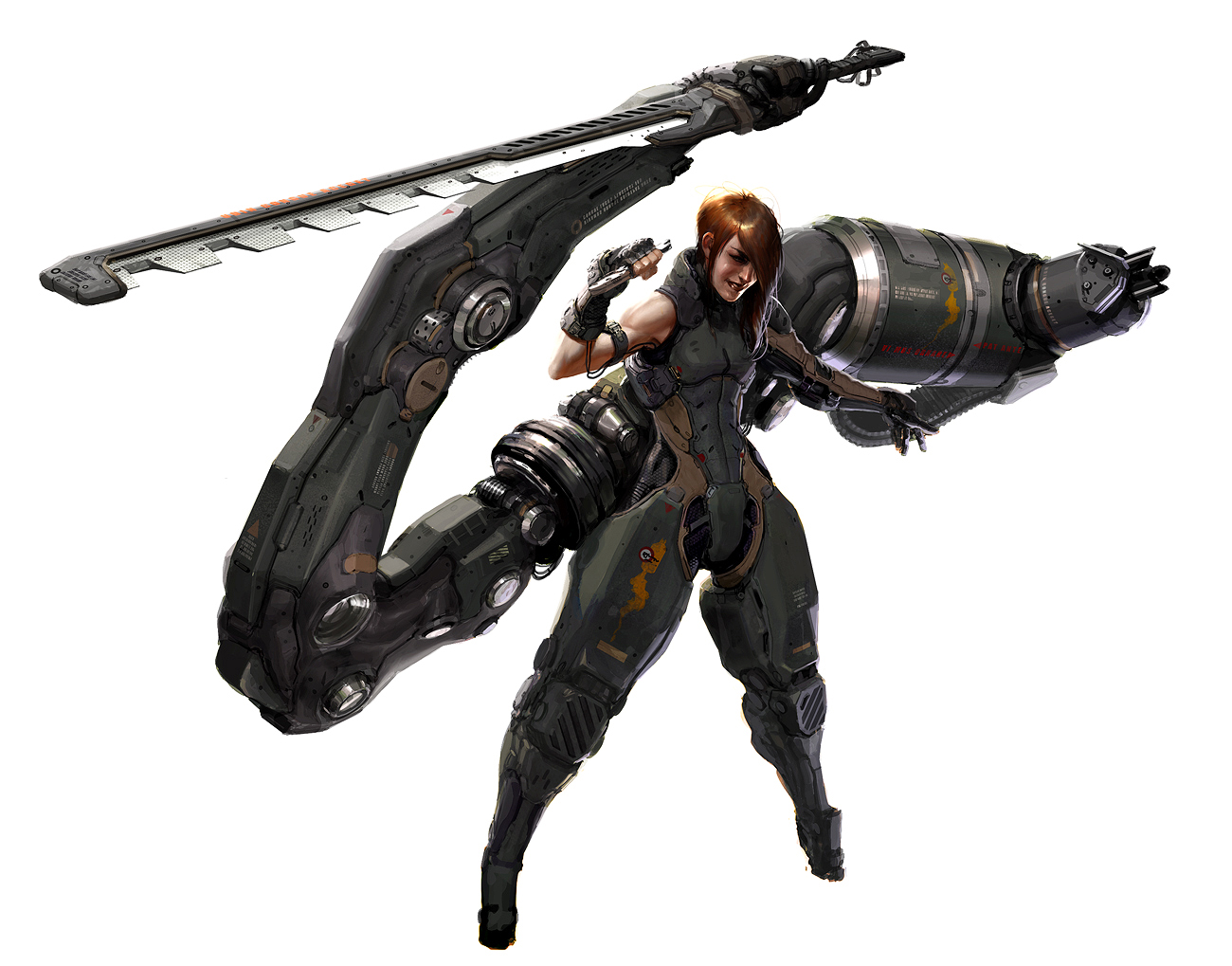
Somehow I had missed Boxley from previous crawls in the area. I guess, once upon a time, Boxley was a quiet village halfway up the downs, relying on sheepfarming for its income. In the 21st century, its just a suburb of Maidstone, though a mile or so outside the county town.
All Saints popped up on the churchcrawling group on Facebook, and thought it looked interesting, which is something of an understatement.
We arrived at just after eleven, in the lych gate there was a sign saying the church was open, so, result!
Approaching the church aloong a stone path it feels very un-Kent-like, especially as entrance to the church is in the very west end.
You enter, and are in a large space, in fact this was the Norman chancel of the original church, then into the space below the west tower, and there is the door into the church as it is now.
But I could hear voices from within, probably wardens cleaning, or so I thought...
But turned out to be a lecture on wildflowers; maybe i should crash it? But don't.
We find a leaflet and find that it had been going on nearly an hour, so we go to sit outside to see if it was going to end on the hour mark....
We give up after 20 minutes, but decide to visit a third church, then come back. Maybe it would be free then......
-------------------------------------------------
The church lies at the far end of the village green. Visitors who do not first walk around the outside of the church wonder if they are ever going to get in - for they have to walk through two rooms first! From the outside it is not so puzzling; the first room is in fact the nave of the Norman church. Then comes the base of the fifteenth-century tower, built on the site of the Norman chancel. Only after we have gone through this do we come to the church proper - a complete fourteenth-century structure. It is wide, with two aisles, and relatively short. The chancel is well proportioned and has a definite lean to the south indicating medieval building error.
www.kentchurches.info/church.asp?p=Boxley
-------------------------------------------------
BOXLEY.
ADJOINING to Maidstone north-eastward lies the parish of Boxley, written in Domesday, Boseleu, and in the Textus Roffensis, Boxele and Boxle, a parish noted, as well for the famous assembly of the whole county, held at Pinenden heath, within the boundaries of it, in the reign of the Conqueror, as for the abbey not long afterwards founded in it.
THE VILLAGE of Boxley situated at the foot of the chalk hills, above which this parish extends among the coppice woods, over a barren dreary country covered with flints, to Dun-street, at the northern boundaries of it. Southward it extends to the rivulet in the valley, at a very small distance from the town of Maidstone, a length of near four miles, the width of it is not more than three at its greatest extent, and in most parts much less; the soil from its extent is of course various, to the northward it is chalk; in the middle, and towards the west a deep sand; to the eastward a wet cludgy earth, and to the south and south-east for the most part a not unfertile loamy soil bounding upon the rock. It is a situation much more healthy than it is pleasant, owing to its chalky and sandy soils, and its bleak situation. The village is watered by a clear spring, which rises just below the church, and directs its course through the street; this spring, as well as another, which rises likewise at the foot of the chalk hill, just above Boxley abbey, are both very inviting to the sight, but the water is very hard and unfit for culinary uses, especially the latter, which in two months will petrify wood, the incrustation resembling brown and unpolished marble. These join just below the abbey, and flow together into the Medway, almost opposite to Allington castle.
The village lies on a descent from the hills, there are several genteel houses in it; at the upper or northern part of it is Boxley house, lord Romney's, inhabited by his three sisters and Mr. Coker; somewhat lower down is a house, which for many years was the property and residence of the family of Charlton, who bore for their arms, Or, a lion rampant gules, the last of them, John Charlton, esq. dying in 1770 unmarried, it came by his will, together with the chief of his other estates, to his eldest nephew, the Rev. George Burville, (son of the Rev. Henry Burville, by Anne his sister). The Burvilles bear for their arms, Argent, a chevron between three oak leaves erect, vert. Mr. Burville married Juliana, daughter of William Bowyer, esq. of Denham, in Buckinghamshire, by whom he has a son John, and daughter Frances, married to the Rev. Philip Rashleigh. He is the present possessor of this house, in which he resides; below this is the parsonage and vicarage, the latter a handsome genteel house, and just above it at a small distance from the east side of the street, the church; almost adjoining to Mr. Burville's house, is another more antient one, called Park-house, once part of the estate of Boxley abbey, and afterwards in like manner, the estate of Sir Thomas Wyatt, whose son forfeited it for treason in the 1st year of queen Mary How it passed afterwards I have not found, though it seems never to have been restored to his descendants; in the beginning of the present century it was in the possession of the family of St. John, in which it remained till Mrs. St. John joining with her son, Paulet St. John, sold it in 1720 to Maudistley Best, esq. (son of Mr. Thomas Best, of Chatham) who resided and kept his shrievalty here in 1730, bearing for his arms, sable, two cross croslets in chief, and a cinquefoil in base, or. He died in 1740, leaving two sons, Thomas, late of Chilston, esq. and James, of Chatham, and a daughter, married to the hon. Robert, afterwards lord Fairfax, of Leeds castle, who died s. p. He gave by will this seat to his youngest son James, who served the office of sheriff in 1751, and resided here at times, and died in 1782, leaving by Frances his wife, one of the daughters of Richard Shelley, esq. four sons and four daughters, to the eldest of the former, Thomas Best, esq. he by will gave this house and his estate in this parish, and he now resides in it. There has been from time immemorial a warren for rabbits here, the lands of which lay close at the foot of the chalk hills, it formerly belonged to Boxley abbey, and was afterwards in the possession of the Wyatts, and is now from them the estate of lord Romney, and there was likewise another part of it used likewise as a warren, lying near Pinenden-heath, which was part of the Park-house estate, and as such, is now the property of Mr. Best, but the name only remains, the rabbits having been for some time destroyed, and the land made arable. About a mile. eastward from the village in a low flat situation, at no great distance from the high road from Rochester to Maidstone, is Boxley abbey, with a small hamlet of houses near it, and nearer to the hills the abbey farm. The plantations of the estate called the Park-house, likewise, the old seat of which was situated in Maidstone parish, near the high road to Rochester, as has been already described, extend into the western part of this parish. The late Sir Henry Calder, whose property it was, pulled down the old house, and on a beautiful spot near adjoining, though within this parish, began a handsome stone mansion, which after his death was finished by his widow, who with her son Sir Henry, for some time resided in it; it is now inhabited by Mr. Osborne. At a small distance eastward from hence, in nearly the centre of this parish, excepting that Maidstone stretches itself with a point or nook over a part of it, is that noted plain Pinnenden, now usually called Pickenden heath, a place made famous in early times; the western part is in Maidstone parish, the remainder in this of Boxley. From its situation almost in the middle of the county or shire of Kent, this heath has been time out of mind used for all county meetings, and for the general business of it, the county house for this purpose, a poor low shed, is situated on the north side of it, where the sheriff continues to hold his county court monthly, and where he takes the poll for the members of the county, and for the coroners, the former of which, after a few suffrages is usually adjourned to Maidstone; on a conspicuous hill on the opposite side of the heath, though in Maidstone parish, is the gallows, for the public execution of criminals condemned at the assizes.
At the time of the conquest it was the noted place for the public meetings of the county; for in the book of Domesday there is mention made, that when the inhabitants of Kent were summoned to meet ad sciram, that is, in public assembly at the shyregemot or Sheriff'stourn, for the trial of certain customs therein mentioned, they should go for that purpose as far as Pinnedenna, but no further.
In the year 1076, being the 11th of the Conqueror's reign, a famous assembly was held at this place on the following occasion.
Odo, bishop of Baieux and earl of Kent, had by means of his great power, defrauded the church of Canterbury of many manors and lands, and of several liberties, and had kept possession of them; but upon Lanfranc's being made archbishop in the year 1070, he represented the whole of the injury done to his church to the king, who forthwith commanded that it should be enquired into and determined by the nobles, and other competent men, not only of this county, but of the other counties of England, assembled for this purpose at this heath.
There were present at this meeting Goisfrid, bishop of Constance, who sat as the king's representative on this occasion; archbishop Lanfranc, who pleaded his church's cause; Odo, earl of Kent, who defended himself against his accusers in what he had done; Ernest, bishop of Rochester; Agelric, bishop of Chester, an antient man, and well versed in the laws of the realm; who on account of his great age was, by the king's order, brought hither in a waggon, in una quadriga; Richard de Tunebrige, Hugh de Montfort, William de Arsic, Hamo Vicecomes or Sheriff, and many others, barons of the king and of the archbishop, many tenants of those bishops, and many others of good and great account, as well of this as of other counties, both French and English.
This trial lasted three days, at the end of which the archbishop recovered several of the antient possessions of his church, as well from Odo as from Hugh Montfort and Ralph de Curva Spina or Crookthorne, and established the liberties of it, in matters between the king and himself. (fn. 1)
On the south side of the heath the turnpike road from Maidstone through Detling to Key-street aud Sittingbourn crosses this parish, and another branches off from hence to Bersted and Ashford; in the southern part of it are the hamlets of Grove green and Wavering-street, Newnham court, and the beautiful seat of Vinters, most pleasantly situated; below which in the vale is the stream which turns the paper mills, and separates this parish from Maidstone. At Grove, as has been already noticed, is a remarkable fine vein of fuller's earth, by the working of which Mr. John Watts, the owner of it, at the beginning of this century, became famous. But this earth was in working in 1630, at which time John Ray, merchant, of London, was sentenced to a severe fine and punishment in the Star Chamber, for transporting of it clandestinely to Holland. (fn. 2) This vein lies about thirty feet deep, and is about seven feet thick. There are two sorts of it, the blue and the dark grey, the latter of which lying under the former is most valuable; a great quantity of this earth is sent from hence by sea for the use of the clothiers in distant countries. For the manufacture carried on in this parish for the making of paper there are four sets of mills, two of which are situated at the south-east extremity of it, on the stream called the Little River, which rises near Lenham, and runs by Leeds castle hither; the upper ones, belonging to lord Aylesford, and the lower ones to Messrs. Hollingworth's; the other two are situated on the western side of the parish, near Aylesford, on the rivulet which rises under the chalk hills, and are made use of for making an inferior kind of merchandize, one of these belongs to lord Romney. The lower mills above-mentioned belonging to Messrs. Hollingworth, stand at a small distance on the north side of the road leading from Maidstone to the Mote, and are called the Old Turkey Mills, they deserve a more particular notice in this place for their superiority, as well in the many extensive buildings, machines and conveniences erected for carrying on this large and curious manufacture, and the number of people continually employed in the different branches of it, as the easy and regular method, and the neatness with which the whole is conducted. They were formerly used as fulling mills, but on the decay of the cloathing trade in these parts, were, by Mr. Gill, the proprietor, converted into paper mills, and used by him as such for a few years; he sold them to Mr. James Whatman, who in 1739 pulled the whole of them down, and erected them on a much more curious and extensive plan, which was afterwards much more improved by his son James Whatman, esq. who with infinite pains and expence, brought his manufactory of writing paper, for no other sort is made here, to a degree of perfection, superior to most in the kingdom. In 1794 he sold these mills to Messrs. Hollingworth, and retired to Vintners, where he now resides, and they now carry on this manufacture here; under the buildings is a strong chalybeat spring, which however does not produce any great quantity of water. In 1711 a Roman urn was dug up at Grove, by the workmen, near the vein of Fuller's earth there, as several others have been since, with other relics of antiquity and coins, both there and at Vintners, most of the coins having the inscription of the emperor Adrian, and the like have been from time to time discovered at Goddard's hill, in this parish, where there are several stones set up similar to those about Horsted.
OUR BOTANISTS have observed the following scarce plants in this parish:
Borago minor silvestris, small white bugloss, or German madwort.
Scopyllum angustifolium glabrum, smooth narrowleased thyme.
Buxus, the box tree, which grows plentifully in the woods here. (fn. 3)
Stellaria sanicula major, ladies mantle.
BOXLEY, at the time of taking the general survey of Domesday, was part of the vast estate of Odo, the great bishop of Baieux and earl of Kent, the Conqueror's half-brother; in which record it is thus described:
Robert Latin holds to ferm Boseleu. It was taxed at seven sulings in the time of king Edward the Confessor, and now at five sulings. The arable land is twenty carucates. In demesne there are three carucates, and fortyseven villeins, with eleven borderers having sixteen carucates. There are three mills of thirty-six shillings and eight-pence, and sixteen servants, and twenty acres of meadow. Wood for the pannage of thirty hogs. In the time of king Edward the Confessor, and afterwards, it was worth twenty-five pounds, now thirty pounds, and Robert yet pay fifty-five pounds. Alnod Cilt held it.
Four years after the taking of the above survey, about the year 1084, this estate, on the bishop of Baieux's disgrace, became forfeited to the crown, among the rest of his possessions.
In the year 1146, (fn. 4) William d'Ipre, earl of Kent, who afterwards became a monk himself at Laon, in Flanders, (fn. 5) founded an ABBEY at this place for monks of the Cistertian order, some of whom he brought from Claravalle, in Burgundy, for this purpose, and dedicated it to the Virgin Mary, as all the houses of this order were. The first monastery of this order in England was at Waverly, which was built in 1129, by Walter Gifford, bishop of Winchester. They were a branch of the Benedictines, called by the English, from their habit, White monks, and likewise Cif tertians; which last name they had from the town of Cistertium or Cisteaux, in the bishopric of Chalons, in Burgundy, where this order was first instituted by Robert, abbot of Molesme, in the year 1098. There were eighty-five houses of this order, at the time of the dissolution, in England.
King Richard I. in his 1st year, anno 1189, gave the MANOR of BOXELE (fn. 6) to this abbey, which king Henry III. in his 37th year, confirmed by his letters of inspeximus. (fn. 7)
King Henry III. in his 37th year, granted to the abbot and convent to hold a market weekly within their manor of Boxley. (fn. 8) The place where it was held appears to have been called Farthings.
In the 7th year of Edward I. the abbot claimed, before the justices itinerant, certain liberties, by the charters of king Henry and king Richard, and the confirmation of them by the charter of king Henry, the then king's father. And he claimed to have warren in all his demesne lands in Kent and Surry, which he had in the time of king Henry, the king's father; and that he and his predecessors had fully used those liberties, &c. and it was then found, that the abbot had in his manor of Boxley a free court, &c. and that the tenants of the manor ought to plead in the hundred of Maidstone, pleas of Withernam, &c. and that the abbot ought to allow pannage, &c, and that the tenants of the manor owed pontage, and paid it to Rochester bridge. (fn. 9)
The abbot of Boxley was summoned to parliament twice in the 23d year of king Edward I. once in the 24th, and twice in the 28th years of that reign, but never afterwards, that I can find. (fn. 10)
In the reign of king Henry III. there were sixtyfour abbots and thirty-six priors summoned to parliament; but this number being thought too great, king Edward III. reduced them to twenty-five abbots and two priors, to which were afterwards added two more abbots, so that there were no more than twentynine in all, who statedly and constantly enjoyed this privilege, of which only St. Austen's, near Canterbury, was in this county. (fn. 11)
King Edward II. in his 15th year, honoured this abbey with his presence, where, on Oct. 25, he granted to the aldermen and citizens of London to nominate a mayor out of their own body, at his will. (fn. 12) King Edward III. in his 33d year, granted to the abbot, &c. free warren in their manor of Boxele, &c. (fn. 13)
In the reign of king Richard II. the revenues of this abbey were valued at 218l. 19s. 10d. of which 98l. 19s. 7d. was in the diocese of Canterbury, (fn. 14)
John Dobbes, the last abbot, and the convent of Boxley, surrendered it into the hands of Henry VIII. on January 29, in the 29th year of his reign, (fn. 15) and it was, together with all the lands and possessions belonging to it, confirmed to the king and his heirs, by the general words of the act, passed in the 31st year of that reign for this purpose; after which there were pensions allowed to the abbot, 50l. and to eight of the canons, from 2l. 13s. 4d. to 4l. yearly, for their lives, or until the person was promoted to a benefice of equal or superior value; the five last of which pensions remained in charge in 1553. (fn. 16)
It was endowed, at its dissolution, with 204l. 4s. 11d. per annum, clear revenue, according to Dug dale; or, according to Speed, with 218l. 9s. 10d. per annum, yearly income. (fn. 17)
The coat of arms belonging to it was, Argent, a dexter bend lozenge, gules; on a canton of the second, a crozier or pastoral staff of the field. (fn. 18) This coat, without the crozier, as also another, being a pastoral staff, surmounted of a bend, are still remaining carved in stone on the capitals of two pillars, from which springs a small circular arch in the garden, at the back of this abbey.
There was a chapel, dedicated to St. Andrew the apostle, founded hard by the outer gate of this monastery, which was served by a curate appointed for that purpose.
The lands of the abbey of Boxley, of the order of Cistertians, were as such, in particular circumstances, exempted from the payment of tithes. Pope Pascal II. exempted all the religious in general from the payment of tithes for lands in their own occupation, and this continued till the reign of Henry II. when pope Hadrian IV. restrained this exemption to the three religious orders of Cistertians, Templars, and Hospitallers, to which pope Innocent III. added a fourth, viz. the Præmonstratenses, from whence these were generally called the four privileged orders. After which the general council of Lateran, in 1215, further restrained this exemption to lands in their own occupation, and to those which they possessed before that time. After this the Cistertians procured bulls to exempt all their lands likewise which were letten to farm. To restrain which, the statute of the second of king Henry IV. cap. 4. was made, which enacted, that whoever, religious as well as secular, should put these bulls in execution, and purchase any others, and by colour of them should take any advantage in any shape, should be guilty of a præmunire. This restrained their privilege again to such lands only as they had before the Lateran council above mentioned; so that the lands they afterwards acquired are in no wise exempted, and this statute left them subject to the payment of such composition for tithes of their demesne lands as they had made with any particular rectors, &c. who contesting their privileges, even under that head, brought them to compound. This monastery of Boxley was one of those dissolved by the act of the 31st of king Henry VIII. the only ones which continued these privileges to their possessors afterwards; by which act, as well the king, his heirs and successors, as all others who should have any of those monasteries, their lands or possessions, were to hold and enjoy them, according to their estates and titles, discharged and acquitted of payment of tithes, as freely, and in as large and ample a manner as the late abbots, priors, &c. of the same before held them. (fn. 19)
In the Registrum Roffense, (fn. 20) are the names of the fields, woods, and other premises in the parish of Boxley, of which the abbot and convent here should in future be free and exempt from the payment of all tithes whilst they were in their own hands.
In the church of this abbey was the statue of St. Rumbald, usually called by the common people, St. Grumbald, which was held in great reverence for his fancity by them, for the miracles it was said to perform.
¶King Henry VIII. in his 32d year, exchanged with Sir Thomas Wyatt, of Allynton, for other premises, the house and scite of this monastery, lately dissolved, and the church, steeple, and church yard of it, with the buildings, lands, &c. as well nigh and adjoining to the scite and precinct of it, his lordship of Boxley, Hoo, and Newenham court, with their appurtenances and the farm and lands, called Upper Grange, and all lands, tenements, and other premises late belonging to it, in the parishes, townships, or hamlets of Boxley, Boxley-street, Burley, Burthin, Sandelyng, Wilston, Wavering, Havurland, Oxefiyth, Dunstreet upon the Hill, and elsewhere, in Kent, excepting to the king the parsonage of Boxley and the advowson of the parish church; (fn. 21) all which were soon afterwards again vested in the crown, as appears by the Escheat rolls of the 38th year of that reign, (fn. 22) when the king regranted the whole of them to Sir Thomas Wyatt, son of Sir Thomas before mentioned, to hold in capite by knight's service, who having, in the 1st year of queen Mary, with other gentlemen of note in this county, raised a rebellion, was found guilty of high treason, and executed that year, and his estate was consiscated to the crown; but the queen, through her bounty, the next year, granted the manor of Boxly, with the Upper Grange, and some other lands adjoining, to his widow, the lady Jane Wyatt, (daughter and coheir of Sir William Haut, of Bourne) and her heirs male, to hold in like manner. On her death, her son, George Wyatt, succeeded to them; but the abbey seems to have continued in the crown, for queen Elizabeth, in her 11th year, granted the scite and mansion of it to John Astley for a term of years. In the 13th year of that reign, George Wyatt, esq. was restored in blood by act of parliament, after which he became possessed of this seat, and resided here, having the fee of it granted to him by the crown. He died in 1624, and was buried in the chancel of this church, as were his several descendants, who bore for their arms, Per fess azure and gules, a barnacle argent, the ring or; he left several sons and daughters, of whom the second son, Haute Wyatt, was vicar of this parish; and Francis, the eldest, succeeded him in the manor of Boxley, the mansion of the abbey, the Grange, and his other estates in this parish. He was afterwards knighted, and was twice governor of Virginia. He died in 1644, leaving two sons, Henry, his eldest son and heir, and Edwin, who afterwards became possessed of this manor, seat, and estates, above mentioned, and a daughter, Elizabeth, who married Thomas Bosvile, esq. of Littlemote in Eynsford, esq. whose daughter Margaret became the wife of Sir Robert Marsham, bart. great grandfather of the present lord Romney.
Henry Wyatt, esq. was of Boxley abbey, and left an only daughter and heir, Francis, who carried this manor, seat, with the Grange and other estates above mentioned, in marriage to Sir Thomas Selyard, bart. but Edwin Wiat, the younger brother of Henry above mentioned, disputing at law the lady Selyard's title to them, recovered the manor of Boxley, with other estates last mentioned, in this parish and elsewhere; but the abbey, with the lands belonging to it, remained in the possession of Sir Thomas Selyard, as will be mentioned hereafter.
BOXLEY is within the ECCLESIASTICAL JURISDICTION of the diocese of Canterbury, and deanry of Sutton.
The church, which is dedicated to All Saints, stands on the east side of the village; it is not large, but neat, and contains three isles and a chancel, with a handsome square tower at the west end, in which hang four small bells, which were cast in 1652, by M. Darby.
In this church, before the Reformation, was a famous rood, called the Rood of Grace, which was held in great esteem for the miracles it was supposed to work. It was broken to pieces by the king's command at St. Paul's cross, in London, on Sunday, February 24, 1538, in the presence of John Hilsey, bishop of Rochester, and a vast concourse of the populace. (fn. 35)
The church of Boxley was given by king Henry I. in 1130, to the church of Rochester, with all its liberties and rights, in like manner as his chaplain, Jeffry or Ansfrid, the clerk, had ever held it; but that church and monastery, having been destroyed by fire, and the monks dispersed abroad, king Stephen, in 1137, dispossessed them of this church, which, howeever, on their return to their monastery, was on their remonstrance to the court of Rome, by the pope's bull, restored and confirmed to them; and Walter, bishop of Rochester, not only confirmed to them the appropriation of it, but granted to them the free disposal and presentation of the vicarage, saving the right of the bishop of the diocese; which grant was confirmed likewise by the several archbishops of Canterbury afterwards.
In the year 1180, there was an agreement made between the monks of Boxley and those of Rochester, concerning the parochial tithes of this church; by which the latter granted to the former a certain field belonging to the parish church of Boxley, above the hills, but by the consent of the former they retained out of it for ever half an acre of wood for fencing; and the monks of Rochester granted to those of Boxley all the tithes above the hills of all lands, as well of those free lands, which the latter had of the king's gift, as of those which they had acquired, to be held finally in villenage, or might acquire in future, at any time for their own use; and likewise certain land belonging to this parish church, under the hill, with the meadow adjoining, between the abbey and village of Boxley; on the other hand, the monks of Boxley granted to those of Rochester all their tithes under the hills, without the bounds of the abbey and grange; that is to say, of all corn only and pulse, of all their lands under the hills, as well of those antiently as newly cultivated, and which they had from the foundation of the abbey, or might bring into culture at any time in future; and that the monks of Rochester should have all the tithes on the sides of the hills of all lands which at that time, or before were reduced to culture, excepting the field which the monks of Boxley bought of John de Horespole; which composition was confirmed by Richard, archbishop of Canterbury.
The confirmations of this church to the priory seem afterwards to have been but little regarded, and they were again dispossessed of it, with a reservation of 60s. annual pension only from it; and it appears, that the bishop of Rochester, together with the prior and convent, used to present to it on a vacancy, till the time of archbishop Islip, who at the petition of the monks, with the consent of the bishop, in 1363, restored this church to them, in as ample a manner as they had before held it; and he granted them full liberty to reenter into the corporal possession of it, with all its rights and appurtenances, on the vacancy of the rector then incumbent on it; reserving, nevertheless, in the first place, a proper portion out of the fruits and profits, for the maintenance of a perpetual vicar, at the presentation of the bishop, to be instituted by him and his successors, and for the due support of the episcopal and archidiaconal burthens, and others belonging to it; and a vicarage was afterwards accordingly endowed in it by archbishop Sudbury, in the year 1377. (fn. 36)
In 1403, a definitive sentence was passed concerning the tithes of this vicarage; (fn. 37) at which time, and so late as the year 1485, this church and advowson belonged to the priory of Rochester, for in the latter year, archbishop Bouchier, cardinal and apostolic legate, confirmed the appropriation of it to them; and a composition was entered into, anno 20 Richard II. between the prior and convent, and Adam Motrum, archdeacon of Canterbury; that as the archdeacon and his archdeaconry was detrimented in the yearly sum of 6s. 8d. the like sum should be yearly paid to the latter, out of the profits of it so long as they possessed it.
The appropriation, as well as the advowson of the vicarage, seems very soon afterwards to have passed into the hands of the prior and convent of Boxley, tho' by what means I do not find, before its dissolution, which happened in the 29th year of king Henry VIII. for that king, by his dotation charter, in his 32d year, settled his rectory and church of Boxley, late belonging to the dissolved monastery of Boxley, and the vicarage of it, on his new erected dean and chapter of Rochester, part of whose possessions they now remain.
In the 15th year of king Edward I. this church was valued at 32l. the vicarage is valued in the king's books at 12l. 19s. 2d. and the yearly tenths at 1l. 5s. 11d.
King Henry VIII. in his 29th year, let to Thomas Vicary, one of his surgeons, the tithes of corn and the glebe lands of this rectory, and the capital messuage, houses, and buildings belonging to it, and ten pieces of land, late belonging to the monastery of Boxley and the advowson of the vicarage, for twenty-one years, at the yearly rent of forty pounds.
In the exchange of lands, made between Henry VIII. and Sir Thomas Wyatt, in the 32d year of his reign, the parsonage of Boxley, and the advowson of the vicarage, with their appurtenances, were particularly excepted, to remain to the king's use.
By a survey of this parsonage, on the abolition of deans and chapters, after the death of king Charles I. in 1649, by order of the state, is appears, that the par sonage-house, a fair and goodly house, with its appurtenances, tithes, &c. late belonging to the late monastery there, and forty-eight acres, three roods, and two perches of land, in the improved rents, were the whole of them worth 140l. 3s. 6d. per annum; and were let by the dean and chapter, anno 15 Charles I. to Robert Parker for twenty-one years, at the yearly rent of 26l. 13s. 4d. and twelve couple of conies, or 16s. in money; that the lessee was bound to repair the chancel, and that the vicarage, which was excepted out of the lease, was worth sixty pounds per annum.
The present lessee of the parsonage is Mr. William Fowle; the vicarage is reserved out of the lease of it, and is in the disposal of the dean and chapter.
The vicar of Boxley has belonging to him all tithes of wood, hops, hay, clover, cinquefoil, flax, wold, wool, lambs, milk, eggs, apples, cherries, and other fruit, and of pasture; his dues are, for burials, 2s. for marriages, 5s. for christenings in houses, 2s. 6d. and for churchings at church, 6d. at home, 1s. for Easter offerings he can demand of every person, above sixteen years old, 6d. so of a man and his wife, 1s.
He has a pension of 8l. per annum, payable out of the exchequer, as an augmentation; the fees for receiving of which are, if he receives it himself, 12s. if by another, 20s. (fn. 38)
¶The land the vicarage house, with its appurtenances, stands on, with the garden and court yard, is not above the third part of an acre; which, with the herbage of the church yard, is all the glebe the vicar has. The house, which is built of brick, and sashed, is handsome and commodious, and has proper offices adjoining to it. It was erected by Mr. archdeacon Spratt, whilst vicar of this parish; since which it has been considerably improved by Dr. Markham, vicar likewise, now arch bishop of York, who sometimes resided in it, as did his successor, Dr. North, now bishop of Winchester.
In 1733, the vicarage was valued at 200l. it is now 300l. per annum.
Bishop Henry de Sandford, by his decree temp. Henry III. at the petition of the vicar and parishioners, changed the feast of the dedication of this church, from the 10th of February to the Monday next after the feast of St. Peter and St. Paul.
Get fuller and attractive breast with the help of Breast Augmentation Treatment in Lahore and regain your self-esteem through breast augmentation. No matter why are you unsatisfied with the appearance of your breast, our cosmetic surgeons are capable enough to meet your expectation with the promising results.
Badami formerly known as Vatapi, is a town and headquarters of a taluk by the same name, in the Bagalkot district of Karnataka, India. It was the regal capital of the Badami Chalukyas from 540 to 757 AD. It is famous for its rock cut structural temples. It is located in a ravine at the foot of a rugged, red sandstone outcrop that surrounds Agastya lake. Badami has been selected as one of the heritage cities for HRIDAY - Heritage City Development and Augmentation Yojana scheme of Government of India.
HISTORY
- Dravidian architecture - Badami Chalukyas
- Hindu temple architecture - Badami Chalukya architecture
- Political history of medieval Karnataka - Badami Chalukyas
- Architecture of Karnataka - Badami Chalukya architecture
- Chalukyas of Badami
PRE-HISTORIC
Badami is surrounded by many pre-historic places including Khyad area of Badami, Hiregudda, Sidlaphadi and Kutkankeri (Junjunpadi, Shigipadi and Anipadi), there we can see the rock shelters megalithic burial sites and paintings.
BADAMI CHALUKYAS AND OTHER DYNASTIES
MYTHOLOGY
The Puranic story says the wicked asura Vatapi was killed by sage Agastya (as per Agastya-Vatapi story), the area in which the incident happened so named as Vatapi. At Aihole there was a merchant guild known as Ayyavole Ainuravaru lived in the area have reformed. As per scholar Dr. D. P. Dikshit, the first Chalukya king was Jayasimha (a feudatory lord in the Kadamba dynasty), who in 500 AD established the Chalukya kingdom. His grandson Pulakeshin Ibuilt a fort at Vatapi.
BADAMI CHALUKYAS
It was founded in 540 AD by Pulakeshin I (535-566 AD), an early ruler of the Chalukyas. His sons Kirtivarma I (567-598 AD) and his brother Mangalesha (598-610 AD) constructed the cave temples.Kirtivarma I strengthened Vatapi and had three sons Pulakeshin II, Vishnuvardhana and Buddhavarasa, who at his death were minors, thus making them ineligible to rule, so Kirtivarma I's brother Mangalesha took the throne and tried to establish rule, only to be killed by Pulakeshin II who ruled between 610 A.D to 642 A.D. Vatapi was the capital of the Early Chalukyas, who ruled much of Karnataka, Maharashtra, Few parts of Tamil Nadu and Andhra Pradesh between the 6th and 8th centuries. The greatest among them was Pulakeshin II (610-642 AD) who defeated many kings including the Pallavas of Kanchipuram.
The rock-cut Badami Cave Temples were sculpted mostly between the 6th and 8th centuries. The four cave temples represent the secular nature of the rulers then, with tolerance and a religious following that inclines towards Hinduism, Buddhism and Jainism. cave 1 is devoted to Shiva, and Caves 2 and 3 are dedicated to Vishnu, whereas cave 4 displays reliefs of Jain Tirthankaras. Deep caverns with carved images of the various incarnations of Hindu gods are strewn across the area, under boulders and in the red sandstone. From an architectural and archaeological perspective, they provide critical evidence of the early styles and stages of the southern Indian architecture.
The Pallavas under the king Narasimhavarma I seized it in 642 AD & destroyed the vatapi. Pulakeshin II's son Vikramaditya I of Chalukyas drove back Pallavas in 654 AD and led a successful attack on Kanchipuram, the capital of Pallavas. Then Rashtrakutas came to power in Karnataka including Badami around 757 AD and the town lost its importance. Later it was ruled by the Hoysalas.
Then it passed on to Vijayanagara empire, The Adil Shahis, Mughal Empire, The Savanur Nawabs (They were vassals of Nizams and Marathas), The Maratha, Hyder Ali. The Britishers made it part of the Bombay Presidency.
INSCRIPTIONS
Badami has eighteen inscriptions, among them some inscriptions are important. The first Sanskrit inscription in old Kannada script, on a hillock dates back to 543 CE, from the period of Pulakeshin I (Vallabheswara), the second is the 578 CE cave inscription of Mangalesha in Kannada language and script and the third is the Kappe Arabhatta records, the earliest available Kannada poetry in tripadi (three line) metre. one inscription near the Bhuthanatha temple also has inscriptions dating back to the 12th century in Jain rock-cut temple dedicated to the Tirtankara Adinatha.
VATAPI GANAPATI
In the Carnatic music and Hamsadhwani raga the Vatapi Ganapatim Bhaje by the composer Muthuswami Dikshitar. The idol of Vatapi Ganapati brought from Badami by Pallavas, is now in the Uthrapathiswaraswamy Temple, near Thanjavur of Tamil Nadu.
In 7th century, Vatapi Ganapati idol was brought from Badami (Vatapi - Chalukya capital) by Pallava who defeated Chalukyas.
TOURISM
Landmarks in Badami include cave temples, gateways, forts, inscriptions and sculptures.
- A Buddhist cave in a natural setting that can be entered only by crawling on knees.
- The Bhuhtanatha temple, a small shrine, facing the lake, constructed in 5th century.
- Badami Fort situated on top of the hill.
- Many Shivalayas including the Malegatti Shivalaya with 7th century origins.
- The Dattatreya temple.
- The Mallikarjuna temple dating back to the 11th century, built on a star shaped plan.
- a Dargah, a dome of an Islamic place of worship on the south fort side.
- Vista points on top of the North Fort for the view of the ancient town below.
- Temple of Banashankari, a Kuladevata (family deity) for many families, is located near Badami.
- Archaeological museum, that has collection of sculptures from Badami, Aihole and Pattadakal.
BADAMI CAVE TEMPLES
The Badami cave temples are a complex of four cave temples located at Badami, a town in the Bagalkot district in the north part of Karnataka, India. They are considered an example of Indian rock-cut architecture, especially Badami Chalukya architecture initiated during the 6th century. Badami was previously known as Vataapi Badami, the capital of the early Chalukya dynasty, who ruled much of Karnataka from middle of the sixth until the middle of the eighth centuries. Badami is situated on the west bank of an artificial lake filled with greenish water dammed by an earthen wall faced with stone steps. Badami is surrounded in the north and south by forts built in later times from the ramparts that crown their summits.
The Badami cave temples represent some of the earliest known experimentation of Hindu temple prototypes for later temples in the Indian peninsula. Along with Aihole, states UNESCO, their pioneering designs transformed the Malaprabha river valley into a cradle of Temple Architecture, whose ideas defined the components of later Hindu Temples elsewhere. Caves 1 to 3 feature Hindu themes of Shiva and Vishnu, while Cave 4 features Jain icons. There is also a Buddhist Cave 5 which has been converted into a Hindu temple of Vishnu. Another cave identified in 2013 has a number of carvings of Vishnu and other Hindu deities, and water is seen gushing out through the cave all the time.
GEOGRAPHY
The Badami cave temples are located in the Badami town in the north central part of Karnataka, India. The temples are about 110 km northeast from Hubli-Dharwad, the second largest metropolitan area of the state. Malaprabha river is 4.8 km away. Badami, also referred to as Vatapi, Vatapipuri and Vatapinagari in historical texts, and the 6th-century capital of Chalukya dynasty, is at the exit point of the ravine between two steep mountain cliffs. Four cave temples have been excavated in the escarpment of the hill to the south-east of the town above the artificial lake called Agastya Lake created by an earthen dam faced with stone steps. To the west end of this cliff, at its lowest point, is the first cave temple dedicated to Shiva, followed by a cave north east to it dedicated to Vishnu but is at a much higher level. The largest is Cave 3, mostly a Vaishnava cave, is further to the east on the northern face of the hill. The first three caves are dedicated to Hindu gods and goddesses including Brahma, Vishnu and Shiva. The fourth cave, dedicated to Jainism, is a short distance away.
HISTORY OF CAVE TEMPLES
The cave temples, numbered 1 to 4 in the order of their creation, identified in the town of Badami, the capital city of the Chalukya kingdom (also known as Early Chalukyas) are dated from the late 6th century onwards. The exact dating is known only for cave 3 which is a Brahmanical temple dedicated to Vishnu. An inscription found here records the creation of the shrine by Mangalesha in Saka 500 (lunar calendar, spanning 578 to 579 CE). These inscriptions are in Kannada language, and have been the source for dating these rock cave temples to the 6th-century. The Badami caves complex are part of the UNESCO inscribed World Heritage Site under the title "Evolution of Temple Architecture – Aihole-Badami-Pattadakal" in the Malaprabha river valley which is considered a cradle of Temple Architecture, which formed the template for later Hindu temples in the region. The art work in Cave 1 and Cave 2 exhibit the northern Deccan style of 6th- and 7th-century, while those in Cave 3 show a simultaneous co-exhibition of two different ancient Indian artistic traditions – the northern Nagara and the southern Dravida styles. The Cave 3 also shows icons and reliefs in the Vesara style – a creative fusion of ideas from the two styles, as well as some of the earliest surviving historical examples of yantra-chakra motifs and colored fresco paintings in Karnataka. The first three caves feature sculpture of Hindu icons and legends focusing on Shiva and Vishnu, while Cave 4 features Jain icons and themes.
TEMPLE CAVES
The Badami cave temples are composed of mainly four caves, all carved out of the soft Badami sandstone on a hill cliff, dated to the late 6th to 7th centuries. The planning of four caves (1 to 4) is simple. The entrance is a verandah (mukha mandapa) with stone columns and brackets, a distinctive feature of these caves, leading to a columned mandapa – main hall (also maha mandapa) and then to the small square shrine (sanctum sanctorum, garbhaghrha) cut deep into the cave. The cave temples are linked by stepped path with intermediate terraces looking over the town and lake. Cave temples are labelled 1–4 in their ascending series even though this numbering does not necessarily reflect the sequence of excavation.
The cave temples are dated to 6th to 8th century, with an inscription dated to 579 CE. The inscriptions are in old Kannada script. The architecture includes structures built in Nagara style and Dravidian style which is the first and most persistent architectural idiom to be adopted by the early chalukyas There is also the fifth natural cave temple in Badami – a Buddhist temple, a natural cave, which can be entered kneeling on all fours.
CAVE 1
The cave is just about 18 m above the street level on the northwest part of the hill. Access is through series of steps which depict carvings of dwarfish ganas (with "bovine and equine heads") in different postures. The verandah with 21 m length with a width of 20 m in the interior, has four columns all sculpted with reliefs of the god Shiva in different dancing positions and different incarnations. The guardian dwarapalas at the entrance to the cave stand to a height of 1.879 m.
The cave portrays the Tandava-dancing Shiva, as Nataraja. The image, (1.5 m tall, has 18 arms, in a form that express the dance positions arranged in a geometric pattern, which Alice Boner states, is a time division symbolizing the cosmic wheel. Some of the arms hold objects while most express mudras (symbolic hand postures). The objects include drums, trident and axe. Some arms also have serpents coiled around them. Shiva has his son Ganesha and the bull Nandi by his side. Adjoining to the Nataraja, a wall depicts the goddess Durga, depicted slaying the buffalo-demon Mahishasura. Elsewhere, the two sons of Shiva, Ganesha and Kartikkeya, the god of war and family deity of the Chalukya dynasty are seen in one of the carved sculptures on the walls of the cave with Kartikkeya riding a peacock.
The cave also has carved sculptures of the goddesses Lakshmi and Parvati flanking Harihara, a 2.36 m high sculpture of a fused image that is half Shiva and half Vishnu. To the right, Ardhanarishvara, a composite androgynous form of Shiva and his consort Parvati, is sculpted towards the end of the walls. All the carved sculptures show ornaments worn by them, as well as borders with reliefs of various animals and birds. Lotus design is a common theme. On the ceiling are images of the Vidyadhara couples. Through a cleavage in the back side of the cave is a square sanctuary with more images carved.
Other prominent images in the cave are Nandi, the bull, in the sculptural form of Dharmadeva, the god of justice, Bhringi, a devotee of Shiva, a female decorated goddess holding a flat object in her left hand, which are all part of Ardhanarishvara described earlier. The roof in the cave has five carved panels with the central panel depicting the serpent Shesha. The head and bust are well formed and project boldly from the centre of the coil. In another compartment a bass-relief of 0.76 m diameter has carvings of a male and female; the male is Yaksha carrying a sword and the female is Apsara with a flying veil. The succeeding panel has carvings of two small figures; and the panel at the end is carved with lotuses.
CAVE 2
Cave 2, facing north, to the west of Cave 3, created in late 6th century AD, is almost same as cave 1 in terms of its layout and dimensions but it is dedicated primarily to Vishnu. Cave is reached by climbing 64 steps from the first cave. The cave entrance is the verandah, divided by four square pillars, which has carvings from its middle section to the top where there are yali brackets with sculptures within them. The cave is adorned with reliefs of guardians. Like the Cave 1, the cave art carved is a pantheon of Hindu divinities.
The largest relief in Cave 2 shows Vishnu as Trivikrama – with one foot on Earth and another – directed to the north. Other representations of Vishnu in this cave include Varaha (boar) where he is shown rescuing Bhudevi (symbolism for earth) from the depths of ocean, and Krishna avatars – legends found in Hindu Puranas text such as the Bhagavata Purana. Like other major murti (forms) in this and other Badami caves, the Varaha sculpture is set in a circle, the panel is an upright rectangle, states Alice Boner, whose "height is equal to the octopartite directing circle and sides are aligned to essential geometric ratios, in this case to the second vertical chord of the circle". The doorway is framed by pilasters carrying an entablature with three blocks embellished with gavaksha ornament. The entrance of the cave also has two armed guardians holding flowers rather than weapons. The end walls of the outer verandah is occupied by sculpted panels, to the right, Trivikrama; to the left, Varaha rescuing Bhudevi, with a penitent multi-headed snake (Nag) below. The adjacent side walls and ceiling have traces of colored paintwork, suggesting that the cave used to have fresco paintings. The columns show gods and battle scenes, the churning of cosmic ocean (Samudra Manthan), Gajalakshmi and figures, Brahma, Vishnu asleep on Shesha, illustrations of the birth of Krishna, Krishna's youth, Krishna with gopis and cows.
The ceiling of Cave 2 shows a wheel with sixteen fish spokes in a square frame along with swastikas and flying couples. The end bays have a flying couple and Vishnu on Garuda.[8] The main hall in the cave is 10.16 m in width, 7.188 m deep and 3.45 m high and is supported by eight square pillars in two rows. The roof of this hall has panels which have carvings. At the upper end of the wall a frieze runs all along the wall with engravings of episodes from the Krishna or Vishnu legends.
The sculptures of Cave 2, like Cave 1, are of the northern Deccan style of 6th-and 7th-century similar to that found in Ellora caves.
CAVE 3
The Cave 3 is dedicated to Vishnu, and is the most intricately carved and the biggest. It has well carved giant figures of Trivikrama, Anantasayana, Paravasudeva, Bhuvaraha, Harihara and Narasimha. The theme on which the Cave 3 is carved is primarily Vaishnavite, however the cave also shows Harihara on its southern wall – half Vishnu and half Shiva shown fused as one, making the cave important to Shaivism studies as well. Cave 3, facing north, is 60 steps away from the Cave 2. This cave temple's veranda, 21 m in length with an interior width of 20 m, has been sculpted 15 m deep into the mountain, and an added square shrine at the end extends the cave some 3.7 m further inside. The verandah itself is 2.1 m wide and has four free standing carved pillars separating it from the hall. The cave is 4.6 m high, supported by six pillars each measuring 0.76 m square. Each column and pilaster is carved with wide and deep bases crowned by capitals which are camouflaged by brackets on three sides. Each bracket, except for one bracket, has carvings of standing human figures, under foliage in different postures, of a male and female mythological characters, along with attendant figure of a dwarf. A moulded cornice in the facia, with a dado of blocks below it (generally in 2.1 m lengths), have about thirty compartments carved with series of two fat dwarfs called ganas. The cave shows a Kama scene on one pillar, where a woman and man are in maithuna (erotic) embrace beneath a tree.
Cave 3 also shows fresco paintings on the ceiling, but some of these are faded, broken and unclear. These are among the earliest known and surviving evidence of fresco painting in Indian art.[14] The Hindu god Brahma is seen in one of the murals, while the wedding of Shiva and Parvati, attended by various Hindu deities, is the theme of another. There is a lotus medallion on the floor underneath the mural of four armed Brahma. The sculpture is well preserved, and a large number of Vishnu's reliefs including standing Vishnu with 8 arms, Vishnu seated on a hooded serpent called Sesha or Ananta on the eastern side of the verandha, Vishnu as Narasimha (half human – half lion), Varaha fully armed, a boar incarnation of Vishnu in the back wall of the cave, Harihara (a syncretic sculpture of Vishnu and Shiva), and Trivikrama avatars. The back wall also has carvings of Vidhyadaras holding offerings to Varaha, and adjoining this is an inscription dated 579 AD with the name Mangalis inscribed on it. At one end of the pilaster there is a sculpture of the fourth incarnation of Vishnu as Vamana shown with eight arms called Ashtabhuja decorated with various types of weapons. A crescent moon is crafted above his face, crown of Vishnu decorates his head and is flanked by Varaha and two other figures and below on his right is his attendant Garuda. The images in front of Vamana are three figures of Bali and his wife with Shukra, his councilor. Reliefs stand 4 metres tall. The culture and clothing embedded in the sixth century is visible in the art sculpted in this cave. The roof in the verandha has seven panels created by cross beams, each is painted in circular compartments with images of Shiva, Vishnu, Indra, Brahma, Kama and so forth with smaller images of Dikpalas (cardinal guardians) with geometric mosaics filling the gaps at the corners.
The front aisle's roof has panels with murals in the center of male and female figurines flying in the clouds; the male figure is yaksha holding a sword and a shield. Decoration of lotus blooms are also seen on the panels. The roof in the hall is divided into nine panels slightly above the level of the ceiling. The central panel here depicts a deva mounted on a ram – conjectured as Agni. Images of Brahma and Varuna are also painted in the central panels while the floating figures are seen in the balance panels.
CAVE 4
The Cave 4, to the east of Cave 3, excavated around 650 AD, is located higher than other caves. It is dedicated to revered figures of Jainism and was constructed last among all the caves. It also features detailed carvings and diverse range of motifs. The cave has five bayed entrance with four square columns with brackets and capitals, and to the back of this verandah is a hall with two standalone and two joined pillars. The first aisle is a verandah 9.4 m in length, 2.0 m wide and extends to 4.9 m deep. From the hall, steps lead to the sanctum sanctorum, which is 7.8 m wide extending to a depth of 1.8 m. On the back part of this, Mahavira is represented, sitting on lion throne, flanked by bas-reliefs of attendants with chauri (fans), sardulas and makara's heads. The end walls have Parshvanath (about 2.3 m tall) with his head decorated to represent protection and reverence by a multi-headed cobra, Indrabhuti Gautama covered by four snakes and Bahubali are seen; Bahubali is present to the left of Gautama shown with his lower legs surrounded by snakes along with his daughters Brahmi and Sundari. The sanctum, which is adorned by the image of Mahavira, has pedestal which contains an old Kannada inscription of the 12th century A.D. which registers the death of one Jakkave. Many Jaina Tirthankara images have been engraved in the inner pillars and walls. In addition, there are some idols of Yakshas, Yakshis, Padmavati and other Tirthankaras. Some scholars also assign the cave to the 8th century.
CAVE 5
It is a natural cave of small dimensions, undated, is approached by crawling as it has a narrow opening. Inside, there is a carved statue seated over a sculpted throne with reliefs showing people holding chauris (fans), tree, elephants and lions in an attacking mode. The face of this statue was reasonably intact till about 1995, and is now damaged and missing. There are several theories as to who the statue represents.
The first theory states that it is a Buddha relief, in a sitting posture. Those holding the chauris are Bodhisattvas flanking the Buddha, states this theory, and that the cave has been converted to a Hindu shrine of Vishnu, in later years, as seen from the white religious markings painted on the face of the Buddha as the 9th incarnation of Vishnu. Shetti suggests that the cave was not converted, but from the start represented a tribute to Mayamoha of the Hindu Puranas, or Buddhavatara Vishnu, its style suggesting it was likely carved in or before 8th century CE.
The second theory, found in colonial era texts such as one by John Murray, suggested that the main image carved in the smallest fifth cave is that of Jaina figure.
The third theory, by Henry Cousens as well as A. Sundara, and based by local legends, states that the statue is of an ancient king because the statue's photo, when its face was not damaged, lacked Ushnisha lump that typically goes with Buddha's image. Further, the statue has unusual non-Buddha ornaments such as rings for fingers, necklace and chest-band, it wears a Hindu Yajnopavita thread, and its head is stylistically closer to a Jina head than a Buddha head. These features suggest that the statue may be of a king represented with features of various traditions. The date and identity of the main statue in Cave 5, states Bolon, remains enigmatic.
OTHER CAVES
In 2013, Manjunath Sullolli reported the discovery of another cave with 27 rock carvings, about 500 metres from the four caves, from which water gushes year round. It depicts Vishnu and other Hindu deities, and features inscription in Devanagari script. The dating of these carvings is unknown.
OTHER TEMPLES AT BADAMI
On the north hill, there are three temples, of which Malegitti-Shivalaya is perhaps the oldest temple and also the finest in Badami, and has a Dravidian tower. Out of the two inscriptions found here, one states that Aryaminchi upadhyaya, as the sculptor who got this temple constructed and the other dated 1543 speaks of the erection of a bastion during the Vijayanagara rule. The lower Shivalaya has a Dravidian tower, and only the sanctum remains now.
Jambhulinga temple, situated in the town, is presumably the oldest known trikutachala temple in Karnataka. An inscription dated 699 ascribes construction of this temple to Vinayavathi mother of Emperor Vijayaditya.
The place also has Agasthya Tirtha, temples of Goddess Yellamma, Mallikarjuna, Datttreya and Virupaksha. Bhuthanatha group of temples are most important in Badami.
BADAMI FORT
Badami fort lies east of the Bhuthnatha temple, atop a cliff right opposite the Badami cave temples. The entrance to this temple is right through the Badami museum. It is a steep climb with many view points and dotted with little shrines. The path is laid with neatly cut stone, the same that adores all the architecture around.
ETYMOLOGY
The name Vatapi has origin in the Vatapi legend of Ramayana relating to Sage Agastya.There were two demon siblings Vatapi and Ilvala. They used to kill all mendicants by tricking them in a peculiar way. The elder Ilvala would turn Vatapi into a ram and would offer its meat to the guest. As soon as the person ate the meat, Ilvala would call out the name of Vatapi. As he had a boon that whomsoever Ilvala calls would return from even the netherland, Vatapi would emerge ripping through the body of the person, thus killing him. Their trick worked until Sage Agastya countered them by digesting Vatapi before Ilvala could call for him, thus ending the life of Vatapi at the hands of Ilvala. Two of the hills in Badami represent the demons Vatapi and Ilvala.
It is also believed that name Badami has come from colour of its stone (badam - Almond).
CULTURE
The main language is Kannada. The local population wears traditional Indian cotton wear.
GEOGRAPHY
Badami is located at 15.92°N 75.68°E. It has an average elevation of 586 metres. It is located at the mouth of a ravine between two rocky hills and surrounds Agastya tirtha water reservoir on the three other sides. The total area of the town is 10.3 square kilometers.
It is located 30 kilometers from Bagalkot, 128 kilometers from Bijapur, 132 kilometers from Hubli, 46 kilometers from Aihole, another ancient town, and 589 kilometers from Bangalore, the state capital.
WIKIPEDIA
Kanchipuram a otherwise known as Kanchi (previously romanized as Kāñci-pura, Conjevaram) is a city in the Indian state of Tamil Nadu, 72 km from Chennai – the capital of Tamil Nadu. The city covers an area of 11.605 km2 and had a population of 164,265 in 2001. It is the administrative headquarters of Kanchipuram District. Kanchipuram is well-connected by road and rail. Chennai International Airport is the nearest domestic and international airport to the city, which is located at Tirusulam in Kanchipuram district.
Located on the banks of the Vegavathy River, Kanchipuram has been ruled by the Pallavas, the Medieval Cholas, the Later Cholas, the Later Pandyas, the Vijayanagar Empire, the Carnatic kingdom, and the British. The city's historical monuments include the Kailasanathar Temple and the Vaikunta Perumal Temple. Historically, Kanchipuram was a centre of education and was known as the ghatikasthanam, or "place of learning". The city was also a religious centre of advanced education for Jainism and Buddhism between the 1st and 5th centuries.
In Hindu theology, Kanchipuram is one of the seven Indian cities to reach final attainment. The city houses Varadharaja Perumal Temple, Ekambareswarar Temple, Kamakshi Amman Temple, and Kumarakottam Temple, which are some of major Hindu temples in the state. The city is a holy pilgrimage site for both Saivites and Vaishnavites. Of the 108 holy temples of the Hindu god Vishnu, 14 are located in Kanchipuram. The city is well known for its hand woven silk sarees and most of the city's workforce is involved in the weaving industry.
Kanchipuram is administered by a Special grade municipality constituted in 1947. It is the headquarters of the Kanchi matha, a Hindu monastic institution believed to have been founded by the Hindu saint and commentator Adi Sankaracharya, and was the capital city of the Pallava Kingdom between the 4th and 9th centuries.
Kanchipuram has been chosen as one of the heritage cities for HRIDAY - Heritage City Development and Augmentation Yojana scheme of Government of India.
ETYMOLOGY
Kanchipuram was known in early Tamil literature as Kachi or Kachipedu but was later Sanskritized to Kanchi or Kanchipuram. According to legend, the name Kanchi is derived from Ka referring to the Hindu god Brahma and anchi, referring to his worship of Hindu god Vishnu at this place. The earliest inscription from the Maurya period (325–185 BCE) denote the city as Kanchipuram, where King Visnugopa was defeated by Samudragupta Maurya (320–298 BCE). Patanjali (150 BCE or 2nd century BCE) refers to the city in his Mahabhasya as Kanchipuraka. The city was referred to by various Tamil names like Kanchi, Kanchipedu and Sanskrit names like Kanchipuram. The Pallava inscriptions from (250–355) and the inscriptions of the Chalukya dynasty refers the city as Kanchipura. Jaina Kanchi refers to the area around Tiruparutti Kundram. During the British rule, the city was known as Conjeevaram and later as Kanchipuram. The municipal administration was renamed Kancheepuram, while the district retains the name Kanchipuram.
HISTORY
While it is widely accepted that Kanchipuram had served as an Early Chola capital, the claim has been contested by Indian historian P. T. Srinivasa Iyengar who wrote that the Tamil culture of the Sangam period did not spread through the Kanchipuram district, and cites the Sanskritic origins of its name in support of his claim. The earliest references to Kanchipuram are found in the books of the Sanskrit grammarian Patanjali, who lived between the 3rd and 2nd centuries BCE. The city is believed to have been part of the mythical Dravida Kingdom of the Mahabharatha, and was described as "the best among cities" (Sanskrit: Nagareshu Kanchi) by the 4th-century Sanskrit poet, Kalidasa. The city was regarded as the "Banaras of the South". Kanchipuram grew in importance when the Pallavas of southern Andhra Pradesh, wary of constant invasions from the north, moved their capital south to the city in the 6th century. The Pallavas fortified the city with ramparts, wide moats, well-laid-out roads, and artistic temples. During the reign of the Pallava King Mahendravarman I, the Chalukya King Pulakesin II (610–642) invaded the Pallava kingdom as far as the Kaveri River. The Pallavas successfully defended Kanchipuram and foiled repeated attempts to capture the city. A second invasion ended disastrously for Pulakesin II, who was forced to retreat to his capital Vatapi which was besieged and Pulakesin II was killed by Narasimhavarman I (630–668), son of Mahendravarman I (600–630), at the Battle of Vatapi. Under the Pallavas, Kanchipuram flourished as a centre of Hindu and Buddhist learning. King Narasimhavarman II built the city's important Hindu temples, the Kanchi Kailasanathar Temple, the Varadharaja Perumal Temple and the Iravatanesvara Temple. Xuanzang, a Chinese traveller who visited Kanchipuram in 640, recorded that the city was 9.7 km in circumference and that its people were renowned for their bravery, piety, love of justice, and veneration for learning. The Medieval Chola king Aditya I conquered the Pallava kingdom, including Kanchipuram, after defeating the Pallava ruler Aparajitavarman (880–897) in about 890. Under the Cholas, the city was the headquarters of the northern viceroyalty. The province was renamed "Jayamkonda Cholamandalam" during the reign of King Raja Raja Chola I (985–1014), who constructed the Karchapeswarar Temple and renovated the Kamakshi Amman Temple. His son, Rajendra Chola I (1012–44) constructed the Yathothkari Perumal Temple. According to the Siddhantasaravali of Trilocana Sivacharya, Rajendra Chola I brought a band of Saivas with him on his return from the Chola expedition to North India and settled them in Kanchipuram. In about 1218, the Pandya king Maravarman Sundara Pandyan (1216–1238) invaded the Chola country, making deep inroads into the kingdom which was saved by the intervention of the Hoysala king Vira Narasimha II (1220–1235), who fought on the side of the Chola king Kulothunga Chola III. Inscriptions indicate the presence of a powerful Hoysala garrison in Kanchipuram, which remained in the city until about 1230. Shortly afterwards, Kanchipuram was conquered by the Telugu Cholas, from whom Jatavarman Sundara Pandyan I took the city in 1258. The city remained with the Pandyas until 1311 when the Sambuvarayars declared independence, taking advantage of the anarchy caused by Malik Kafur's invasion. After short spells of occupation by Ravivarman Kulasekhara of Venad (Quilon, Kerala) in 1313–1314 and the Kakatiya ruler Prataparudra II, Kanchipuram was conquered by the Vijayanagar general Kumara Kampana, who defeated the Madurai Sultanate in 1361.
The Vijayanagar Empire ruled Kanchipuram from 1361 to 1645. The earliest inscriptions attesting to Vijayanagar rule are those of Kumara Kampanna from 1364 and 1367, which were found in the precincts of the Kailasanathar Temple and Varadaraja Perumal Temple respectively. His inscriptions record the re-institution of Hindu rituals in the Kailasanathar Temple that had been abandoned during the Muslim invasions. Inscriptions of the Vijayanagar kings Harihara II, Deva Raya II, Krishna Deva Raya, Achyuta Deva Raya, Sriranga I, and Venkata II are found within the city. Harihara II endowed grants in favour of the Varadaraja Perumal Temple. In the 15th century, Kanchipuram was invaded by the Velama Nayaks in 1437, the Gajapati kingdom in 1463–1465 and 1474–75 and the Bahmani Sultanate in about 1480. A 1467 inscription of Virupaksha Raya II mentions a cantonment in the vicinity of Kanchipuram. In 1486, Saluva Narasimha Deva Raya, the governor of the Kanchipuram region, overthrew the Sangama Dynasty of Vijayanagar and founded the Saluva Dynasty. Like most of his predecessors, Narasimha donated generously to the Varadaraja Perumal Temple. Kanchipuram was visited twice by the Vijayanagar king Krishna Deva Raya, considered to be the greatest of the Vijayanagar rulers, and 16 inscriptions of his time are found in the Varadaraja Perumal Temple. The inscriptions in four languages – Tamil, Telugu, Kannada, and Sanskrit – record the genealogy of the Tuluva kings and their contributions, along with those of their nobles, towards the upkeep of the shrine. His successor, Achyuta Deva Raya, reportedly had himself weighed against pearls in Kanchipuram and distributed the pearls amongst the poor. Throughout the second half of the 16th and first half of the 17th centuries, the Aravidu Dynasty tried to maintain a semblance of authority in the southern parts after losing their northern territories in the Battle of Talikota. Venkata II (1586–1614) tried to revive the Vijayanagar Empire, but the kingdom relapsed into confusion after his death and rapidly fell apart after the Vijayanagar king Sriranga III's defeat by the Golconda and Bijapur sultanates in 1646.
After the fall of the Vijayanagar Empire, Kanchipuram endured over two decades of political turmoil. The Golconda Sultanate gained control of the city in 1672, but lost it to Bijapur three years later. In 1676, Shivaji arrived in Kanchipuram at the invitation of the Golconda Sultanate in order to drive out the Bijapur forces. His campaign was successful and Kanchipuram was held by the Golconda Sultanate until its conquest by the Mughal Empire led by Aurangazeb in October 1687. In the course of their southern campaign, the Mughals defeated the Marathas under Sambhaji, the elder son of Shivaji, in a battle near Kanchipuram in 1688 which caused considerable damage to the city but cemented Mughal rule. Soon after, the priests at the Varadaraja Perumal, Ekambareshwarar and Kamakshi Amman temples, mindful of Aurangazeb's reputation for iconoclasm, transported the idols to southern Tamil Nadu and did not restore them until after Aurangazeb's death in 1707. Under the Mughals, Kanchipuram was part of the viceroyalty of the Carnatic which, in the early 1700s, began to function independently, retaining only a nominal acknowledgement of Mughal rule. The Marathas invaded Kanchipuram during the Carnatic period in 1724 and 1740, and the Nizam of Hyderabad in 1742.
Kanchipuram was a battlefront for the British East India Company in the Carnatic Wars against the French East India Company and in the Anglo-Mysore Wars with the Sultanate of Mysore. The popular 1780 Battle of Pollilur of the Second Anglo-Mysore War, known for the use of rockets by Hyder Ali of Mysore, was fought in the village of Pullalur near Kanchipuram. In 1763, the British East India Company assumed indirect control from the Nawab of the Carnatic over the erstwhile Chingleput District, comprising the present-day Kanchipuram and Tiruvallur districts, in order to defray the expenses of the Carnatic wars. The Company brought the territory under their direct control during the Second Anglo-Mysore War, and the Collectorate of Chingleput was created in 1794. The district was split into two in 1997 and Kanchipuram made the capital of the newly created Kanchipuram district.
GEOGRAPHY
Kanchipuram is located at 12.98°N 79.71°E, 72 km south-west of Chennai on the banks of the Vegavathi River, a tributary of the Palar River. The city covers an area of 11.6 km2 and has an elevation of 83.2 m above sea level. The land around Kanchipuram is flat and slopes towards the south and east. The soil in the region is mostly clay, with some loam, clay, and sand, which are suitable for use in construction. The Chingleput District Manual (1879) describes the region's soils as "highly inferior" and "highly stony or mixed with lime, gravel, soda and laterite". It has been postulated that the granite required for the Varadaraja Perumal Temple might have been obtained from the Sivaram Hills located 10 miles east of Kanchipuram. The area is classified as a Seismic Zone II region, and earthquakes of up to magnitude 6 on the Richter Scale may be expected. Kanchipuram is subdivided into two divisions – Big Kanchi, also called Shiva Kanchi occupies the western portion of the city and is the larger of the two divisions. Little Kanchi, also called Vishnu Kanchi, is located on the eastern fringes of the city. Most of the Shiva temples lie in Big Kanchi while most of the Vishnu temples lie in Little Kanchi.
Ground water is the major source of water supplies used for irrigation – the block of Kanchipuram has 24 canals, 2809 tanks, 1878 tube wells and 3206 ordinary wells. The area is rich in medicinal plants, and historic inscriptions mention the medicinal value. Dimeria acutipes and cyondon barberi are plants found only in Kanchipuram and Chennai.
CLIMATE
Kanchipuram generally experiences hot and humid climatic conditions throughout the year. Temperatures reache an average maximum of 37.5 °C between April and July, and an average minimum of 20.5 °C between December and February. The daytime heat during summer can be oppressive; temperatures can reach 43 °C. Relative humidities of between 58% and 84% prevail throughout the year. The humidity reaches its peak during the morning and is lowest in the evening. Relative humidity is higher between November and January and is lowest throughout June.
The city receives an average of 1064 mm of rainfall annually, 68% of which falls during the northeast monsoon. Most of the precipitation occurs in the form of cyclonic storms caused by depressions in the Bay of Bengal during the northeast monsoon. The prevailing wind direction is south-westerly in the morning and south-easterly in the evening.
GOVERNMENT AND POLITICS
The Kanchipuram municipality was officially constituted in 1866, covering 7.68 km2, and its affairs were administered by a municipal committee. It was upgraded to a grade I municipality in 1947, selection grade municipality in 1983 and special grade municipality in 2008. As of 2011 the municipality occupies 11.6 km2, has 51 wards and is the biggest municipality in Kanchipuram district. The functions of the municipality are devolved into six departments: General, Engineering, Revenue, Public Health, Town Planning and the Computer Wing, all of which are under the control of a Municipal Commissioner, who is the supreme executive head. The legislative powers are vested in a body of 51 members, each representing one ward. The legislative body is headed by an elected Chairperson who is assisted by a Deputy Chairperson.
Kanchipuram comes under the Kanchipuram state assembly constituency. From the state delimitation after 1967, seven of the ten elections held between 1971 and 2011 were won by the Anna Dravida Muneetra Kazhagam (ADMK). Dravida Munnetra Kazhagam (DMK) won the seat during the 1971 and 1989 elections and its ally Pattali Makkal Katchi won the seat during the 2006 elections. The current member of the legislative assembly is V. Somasundaram from the ADMK party.
Kanchipuram Lok Sabha constituency is a newly formed constituency of the Parliament of India after the 2008 delimitation. The constituency originally existed for the 1951 election, and was formed in 2008 after merging the assembly segments of Chengalpattu, Thiruporur, Madurantakam (SC), Uthiramerur and Kanchipuram, which were part of the now defunct Chengalpattu constituency, and Alandur, which was part of the Chennai South constituency. This constituency is reserved for Scheduled Castes (SC) candidates. K. Maragatham from the All India Anna Dravida Munnetra Kazhagam is the current Member of Parliament for the constituency. Indian writer, politician and founder of the DMK, C. N. Annadurai, was born and raised in Kanchipuram. He was the first member of a Dravidian party to hold that post and was the first non-Congress leader to form a majority government in post-colonial India.
Policing in the city is provided by the Kanchipuram sub-division of the Tamil Nadu Police headed by a Deputy Superintendent of Police. The force's special units include prohibition enforcement, district crime, social justice and human rights, district crime records and special branch that operate at the district level police division, which is headed by a Superintendent of Police.
DEMOGRAPHICS
During the rule of King Narasimha Varma in the 7th century, the city covered about 10 square kilometres and had a population of 10,000. The population increased to 13,000 in subsequent years and the city developed cross patterned links with rectangular streets. The settlements in the city were mostly caste based. During the period of Nandivarma Pallavan II, houses were built on raised platforms and burnt bricks. The concepts of the verandah in the front yard, garden in the backyard, ventilation facilities and drainage of rainwater were all introduced for the first time. The centre of the city was occupied by Brahmins, while the Tiruvekka temple and houses of agricultural labourers were situated outside the city. There were provisions in the city's outskirts for training the cavalry and infantry.
During the Chola era, Kanchipuram was not the capital, but the kings had a palace in the city and lot of development was extended eastwards. During the Vijayanagara period, the population rose to 25,000. There were no notable additions to the city's infrastructure during British rule. The British census of 1901 recorded that Kanchipuram had a population of 46,164, consisting of 44,684 Hindus, 1,313 Muslims, 49 Christians and 118 Jains.
According to 2011 census, Kanchipuram had a population of 164,384 with a sex-ratio of 1,005 females for every 1,000 males, much above the national average of 929. A total of 15,955 were under the age of six, constituting 8,158 males and 7,797 females. Scheduled Castes and Scheduled Tribes accounted for 3.55% and .09% of the population respectively. The average literacy of the city was 79.51%, compared to the national average of 72.99%. The city had a total of 41807 households. There were a total of 61,567 workers, comprising 320 cultivators, 317 main agricultural labourers, 8,865 in house hold industries, 47,608 other workers, 4,457 marginal workers, 61 marginal cultivators, 79 marginal agricultural labourers, 700 marginal workers in household industries and 3,617 other marginal workers. About 800,000 (800,000) pilgrims visit the city every year as of 2001. As per the religious census of 2011, Kancheepuram had 93.38% Hindus, 5.24% Muslims, 0.83% Christians, 0.01% Sikhs, 0.01% Buddhists, 0.4% Jains, 0.11% following other religions and 0.01% following no religion or did not indicate any religious preference.Kanchipuram has 416 hectares of residential properties, mostly around the temples. The commercial area covers 62 hectares, constituting 6.58% of the city. Industrial developments occupy around 65 hectares), where most of the handloom spinning, silk weaving, dyeing and rice production units are located. 89.06 hectares are used for transport and communications infrastructure, including bus stands, roads, streets and railways lines
ECONOMY
The major occupations of Kanchipuram are silk sari weaving and agriculture. As of 2008, an estimated 5,000 families were involved in sari production. The main industries are cotton production, light machinery and electrical goods manufacturing, and food processing. There are 25 silk and cotton yarn industries, 60 dyeing units, 50 rice mills and 42 other industries in the Kanchipuram. Another important occupation is tourism and service related segments like hotels, restaurants and local transportation.
Kanchipuram is a traditional centre of silk weaving and handloom industries for producing Kanchipuram Saris. The industry is worth ₹ 100 cr (US$18.18 million), but the weaving community suffers from poor marketing techniques and duplicate market players. In 2005, "Kanchipuram Silk Sarees" received the Geographical Indication tag, the first product in India to carry this label. The silk trade in Kanchipuram began when King Raja Raja Chola I (985–1014) invited weavers to migrate to Kanchi. The craft increased with the mass migration from Andhra Pradesh in the 15th century during the Vijayanagara rule. The city was razed during the French siege of 1757, but weaving re-emerged in the late 18th century.
All major nationalized banks such as Vijaya Bank, State Bank of India, Indian Bank, Canara Bank, Punjab National Bank, Dena Bank and private banks like ICICI Bank have branches in Kanchipuram. All these banks have their Automated teller machines located in various parts of the city.
HUMAN RIGHTS
Kanchipuram has more than the national average rate of child labour and bonded labour. The local administration is accused of aiding child labour by opening night schools in Kanchipuram from 1999. There is an estimated 40,000 to 50,000 child workers in Kanchipuram compared to 85,000 in the same industry in Varanasi. Children are commonly traded for sums of between ₹ 10,000 and 15,000 (200 – $300) and there are cases where whole families are held in bondage. Child labour is prohibited in India by the Children (Pledging of Labour) Act and Child Labour (Prohibition and Regulation) Act, but these laws are not strictly enforced.
TRANSPORT, COMMUNICATION AND UTILITY SERVICES
Kanchipuram is most easily accessible by road. The Chennai – Bangalore National Highway, NH 4 passes the outskirts of the city. Daily bus services are provided by the Tamil Nadu State Transport Corporation to and from Chennai, Bangalore, Villupuram, Tirupathi, Thiruthani, Tiruvannamalai, Vellore, Salem, Coimbatore and Pondicherry. There are two major bus routes to Chennai, one connecting via Guindy and the other via Tambaram. Local bus services are provided by The Villupuram division of Tamil Nadu State Transport Corporation. As of 2006, there were a total of 403 buses for 191 routes operated out of the city.
The city is also connected to the railway network through the Kanchipuram railway station. The Chengalpet – Arakkonam railway line passes through Kanchipuram and travellers can access services to those destinations. Daily trains are provided to Pondicherry and Tirupati, and there is a weekly express train to Madurai and a bi-weekly express train to Nagercoil. Two passenger trains from both sides of Chengalpattu and Arakkonam pass via Kanchipuram.
The nearest domestic as well as international airport is Chennai International Airport, located at a distance of 72 km from the city.
Telephone and broadband internet services are provided by Bharat Sanchar Nigam Limited (BSNL), India's state-owned telecom and internet services provider. Electricity supply is regulated and distributed by the Tamil Nadu Electricity Board (TNEB). Water supply is provided by the Kanchipuram municipality; supplies are drawn from subterranean springs of Vegavati river. The head works is located at Orikkai, Thiruparkadal and St. Vegavathy, and distributed through overhead tanks with a total capacity of 9.8 litres. About 55 tonnes of solid waste are collected from the city daily at five collection points covering the whole of the city. The sewage system in the city was implemented in 1975; Kanchipuram was identified as one of the hyper endemic cities in 1970. Underground drainage covers 82% of roads in the city, and is divided into east and west zones for internal administration.
EDUCATION
Kanchipuram is traditionally a centre of religious education for the Hindu, Jainism and Buddhism faiths. The Buddhist monasteries acted as nucleus of the Buddhist educational system. With the gradual resurrection of Hinduism during the reign of Mahendra Varman I, the Hindu educational system gained prominence with Sanskrit emerging as the official language.
As of 2011 Kanchipuram has 49 registered schools, 16 of which are run by the city municipality. The district administration opened night schools for educating children employed in the silk weaving industry – as of December 2001, these schools together were educating 127 people and 260 registered students from September 1999. Larsen & Toubro inaugurated the first rail construction training centre in India at Kanchipuram on 24 May 2012, that can train 300 technicians and 180 middle level managers and engineers each year. Sri Chandrasekharendra Saraswathi Viswa Mahavidyalaya and Chettinad Academy of Research and Education (CARE) are the two Deemed universities present in Kanchipuram.
Kanchipuram is home to one of the four Indian Institute of Information of Technology, a public private partnered institute, offering under graduate and post graduate programs in information technology. The city has two medical colleges – Arignar Anna Memorial Cancer Institute and Hospital, established in 1969 is operated by the Department of Health, Government of Tamil Nadu and the privately owned Meenakshi Medical College. The city has 6 engineering colleges, 3 polytechnic institutes and 6 arts and science colleges.
RELIGION
BUDDHISM
Buddhism is believed to have flourished in Kanchipuram between the 1st and 5th centuries. Some notable Buddhists associated with Kanchipuram are Āryadeva (2nd–3rd centuries) – a successor of Nāgārjuna of Nalanda University, Dignaga and the Pali commentators Buddhaghosa and Dhammapala. According to a popular tradition, Bodhidharma, a 5th/6th-century Buddhist monk and founder of Shaolin Kung Fu was the third son of a Pallava king from Kanchipuram. However, other traditions ascribe his origins to other places in Asia. Buddhists institutions from Kanchipuram were instrumental in spreading Theravada Buddhism to the Mon people of Myanmar and Thailand who in return spread the religion to the incoming Burmese and Thai people.
JAINISM
It is thought that Jainism was introduced into Kanchipuram by Kunda Kundacharya (1st century). Jainism spread to the city by Akalanka (3rd century). Kalbhras, the rulers of Kanchipuram before the Pallavas, followed Jainism which gained popularity from royal patronage. The Pallava kings, Simhavishnu, Mahendra Varman and Simhavarman (550–560) followed Jainism, until the advent of Nayanmars and Azhwars during the 6th and 7th centuries. Mahendravarman I converted from Jainism to Hinduism under the influence of the Naynamar, Appar, was the turning point in the religious geography. The two sects of Hinduism, Saivism and Vaishnavism were revived under the influence of Adi Sankara and Ramanuja respectively. Later Cholas and Vijayanagara kings tolerated Jainism, and the religion was still practiced in Kanchi.
Trilokyanatha/Chandraprabha temple is a twin Jain temple that has inscriptions from Pallava king, Narasimhavarman II and the Chola kings Rajendra Chola I, Kulothunga Chola I and Vikrama Chola, and the Kanarese inscriptions of Krishnadevaraya. The temple is maintained by Tamil Nadu archaeological department.
HINDUISM
Hindus regard Kanchipuram to be one of the seven holiest cities in India, the Sapta Puri. According to Hinduism, a kṣetra is a sacred ground, a field of active power, and a place where final attainment, or moksha, can be obtained. The Garuda Purana says that seven cities, including Kanchipuram are providers of moksha. The city is a pilgrimage site for both Saivites and Vaishnavites.
Ekambareswarar Temple in northern Kanchipuram, dedicated to Shiva, is the largest temple in the city. Its gateway tower, or gopuram, is 59 metres tall, making it one the tallest temple towers in India. The temple is one of five called Pancha Bhoota Stalams, which represent the manifestation of the five prime elements of nature; land, water, air, sky, and fire. Ekambareswarar temple temple represents earth.
Kailasanathar Temple, dedicated to Shiva and built by the Pallavas, is the oldest Hindu temple in existence and is declared an archaeological monument by the Archaeological Survey of India. It has a series of cells with sculptures inside. In the Kamakshi Amman Temple, goddess Parvati is depicted in the form of a yantra, Chakra or peetam (basement). In this temple, the yantra is placed in front of the deity. Adi Sankara is closely associated with this temple and is believed to have established the Kanchi matha after this temple.
Muktheeswarar Temple, built by Nandivarman Pallava II (720–796) and Iravatanesvara Temple built by Narasimhavarman Pallava II (720–728) are the other Shiva temples from the Pallava period. Kachi Metrali – Karchapeswarar Temple, Onakanthan Tali, Kachi Anekatangapadam, Kuranganilmuttam, and Karaithirunathar Temple in Tirukalimedu are the Shiva temples in the city reverred in Tevaram, the Tamil Saiva canonical work of the 7th–8th centuries.
Kumarakottam Temple, dedicated to Muruga, is located between the Ekambareswarar temple and Kamakshi Amman temple, leading to the cult of Somaskanda (Skanda, the child between Shiva and Parvati). Kandapuranam, the Tamil religious work on Muruga, translated from Sanskrit Skandapurana, was composed in 1625 by Kachiappa Shivacharya in the temple.
Varadharaja Perumal Temple, dedicated to Vishnu and covering 93,000 m2, is the largest Vishnu temple in Kanchipuram. It was built by the Cholas in 1053 and was expanded during the reigns of Kulottunga Chola I (1079–1120) and Vikrama Chola (1118–1135). It is one of the divyadesams, the 108 holy abodes of Vishnu. The temple features carved lizards, one platted with gold and another with silver, over the sanctum. Clive of India is said to have presented an emerald necklace to the temple. It is called the Clive Makarakandi and is still used to decorate the deity on ceremonial occasions.
Tiru Parameswara Vinnagaram is the birthplace of the azhwar saint, Poigai Alvar. The central shrine has a three-tier shrine, one over the other, with Vishnu depicted in each of them. The corridor around the sanctum has a series of sculptures depicting the Pallava rule and conquest. It is the oldest Vishnu temple in the city and was built by the Pallava king Paramesvaravarman II (728–731).
Ashtabujakaram, Tiruvekkaa, Tiruththanka, Tiruvelukkai, Ulagalantha Perumal Temple, Tiru pavla vannam, Pandava Thoothar Perumal Temple are among the divyadesam, the 108 famous temples of Vishnu in the city. There are a five other divyadesams, three inside the Ulagalantha Perumal temple, one each in Kamakshi Amman Temple and Ekambareswarar Temple.
The Kanchi Matha is a Hindu monastic institution, whose official history states that it was founded by Adi Sankara of Kaladi, tracing its history back to the 5th century BCE. A related claim is that Adi Sankara came to Kanchipuram, and that he established the Kanchi mutt named "Dakshina Moolamnaya Sarvagnya Sri Kanchi Kamakoti Peetam" in a position of supremacy, namely Sarvagnya Peetha, over the other mathas (religious institutions) of the subcontinent, before his death there. Other historical accounts state that the mutt was established probably in the 18th century in Kumbakonam, as a branch of the Sringeri Matha, and that it declared itself independent.
Another mutt which was famous in ancient times was the Upanishad Bramham Mutt, located near Kailasanathar temple, Kanchipuram. It has the Mahasamadhi of Upanishad Bramham, a saint who wrote commentaries on all the major upanishads in Hinduism. It is said that the great Sage, Sadasiva Brahmendra took to sanyasa at this mutt.
OTHER RELIGIONS
The city has two mosques; one near the Ekambareswarar temple was built during the rule of Nawab of Arcot in the 17th century, and another near the Vaikunta Perumal temple shares a common tank with the Hindu temple. Muslims take part in the festivals of the Varadarajaswamy temple. Christ Church is the oldest Christian church in the city. It was built by a British man named Mclean in 1921. The church is built in Scottish style brick structure with arches and pillars.
WIKIPEDIA
Breast augmentation (http://docturs.com/dd/pg/groups/11226/breast-augmentation/) denotes surgical and non-surgical mammoplasty procedures to alter and correct the size, form, and feel of a woman’s breasts. Find out about Breast augmentation and other medical services from our (http://docturs.com/dd/) website.