View allAll Photos Tagged arttext
When you do a a self-drive 'safari' (i.e. without trackers and guides who are in radio contact) in one of South Africa's national parks, finding a leopard is the ultimate sighting. The Kgalagadi Transfrontier Park - where this leopard lives free and wild - is one of the world's largest national park systems, covering a total of 37 256 square kilometers (14 384.6 sq miles). The South African side has four tourist roads, two that cut across the dunes and two that follow the ancient riverbeds of the Nossob and the Auob.
Leopards in the Kgalagadi have the largest recorded ranges in the world - 2 104.4 square kilometers (812.5 sq miles) for males and 1 258.5 square kilometers (485.9 sq miles) for females.
(Source: www.scielo.org.za/scielo.php?script=sci_arttext&pid=S...)
© Gerda van Schalkwyk - All Rights Reserved
First live photo of this extraordinary new subspecies of Haetera piera from the eastern slope of the Andes of Colombia. Serrania de la Macarena, Meta, Colombia.
www.butterfliesofamerica.com/L/haetera_piera_sanguinolent...
Brasilia, DF, Brazil.
The species was historically misclassified, but in 2010 was determined to belong to the subfamily Agaristinae.
More information here: www.scielo.br/scielo.php?script=sci_arttext&pid=S1984...
Kingdom: Animalia
Phylum: Arthropoda
Class: Insecta
Order: Lepidoptera
Superfamily: Noctuoidea
Family: Noctuidae
Subfamily: Agaristinae
Genus: Acyclania Dognin, 1911
Species: A. tenebrosa Dognin, 1911
Binomial name: Acyclania tenebrosa
Synonyms:
- Chlanidophora mariae Köhler, 1924
- Caridarctia tenebrosa (Dognin)
Archives Catalonia Library
Barcelona
Arte y la subversióin del archivo
www.scielo.cl/scielo.php?script=sci_arttext&pid=S0718...
Read about Art and Archives:
Mpho striding purposefully towards Leeuwdril water hole.
Leopards in the Kgalgadi have the largest recorded ranges in the world - 2104.4 km2 for males and 1258.5 km2 for females.
(Source: www.scielo.org.za/scielo.php?script=sci_arttext&pid=S...)
© Gerda van Schalkwyk. All rights reserved.
Uno de los volcanes perfectos de los Andes. En invierno, desde el mismo aparato que pretende ser avión. Lo que está bajo la niebla, es el lago Laja. Al fondo, justo detrás del Antuco, se alcanza a ver el Copahue.
Región del Biobío, Chile central.
Vicious Romance
Description: The genus Stiretrus consists mainly of predatory stink bugs in the order Hemiptera, suborder Heteroptera, infraorder Pentatomomorpha, superfamily Pentatomoidea, family Pentatomidae and subfamily Asopinae. Stiretrus feeds mainly on the larvae of Coleoptera, such as those of Microtheca ochloroma, and Lepidoptera, acting as precious populational controllers of their prey. In the picture we can see two Stiretrus of different colors, but both belong to the same species as they were mating. The red one was feeding on a larva at the same time as it was mating with the black one. This difference in color is a spectacular display of sexual dimorphism. They vary a lot in coloring and patterns.
www.scielo.br/scielo.php?script=sci_arttext&pid=S0085...
eol.org/pages/2644899/overview
sv.wikipedia.org/wiki/Stiretrus_decemguttatus
PROJECT NOAH (Português): www.projectnoah.org/spottings/1228606245
Agave potatorum o nuusaviorum. Ejemplar de cultivo comercial proveniente de Oaxaca. Actualmente se cultiva para producir uno de los mejores destilados de México, el mezcal tobalá. El término "tobalá" incluye varias especies similares.
Es un agave cada vez más cultivado, sin embargo en algunas comunidades todavía se recolecta de forma silvestre lo que ejerce presión en la especie. Se cultiva en Los estados de Oaxaca y Puebla.
www.scielo.org.mx/scielo.php?script=sci_arttext&pid=S...
www.naturalista.mx/taxa/274147-Agave-nuusaviorum
Agave potatorum or nuusaviorum. Commercially grown specimen from Oaxaca. It is currently cultivated to produce one of the best distillates in Mexico, the tobalá mezcal. It is an increasingly cultivated agave, however in some communities it is still harvested in the wild, which menaces the wild agaves. It is cultivated in the states of Oaxaca and Puebla. The term "tobalá" includes several similar species.
from Finca Palmonte, Baños, Ecuador: fincapalmonte.com/welcome.html
ID by Kevin Holcomb & Mark Wilson
Literature: www.scielo.sa.cr/scielo.php?script=sci_arttext&pid=S1...
Desde la meseta de Las Vizcachas (Cordón de Provile), durante una cabalgata que hicimos hace muchos años entre el valle del Queuco y esta laguna. Región del Biobío, Chile central.
El Volcán Copahue, compartido por Chile y Argentina, es un volcán bastante activo en los Andes, y ha tenido varios procesos eruptivos en los últimos años, aunque de no gran magnitud, por el cráter que se encuentra ubicado al lado oriental (años 1992 - 1995 y 2000).
En sus alrededores hay varias termas, siendo las principales las de Copahue, ubicadas en Argentina al noreste del volcán. Por el lado chileno se encuentran también las llamadas Copahue, sin instalaciones, al final del valle de Trapa Trapa y, también, las de Pucón Mahuida, al sur del volcán y sin instalaciones.
Acá hay un artículo para el que le interese conocer más de este volcán.
Geomorfología de la región del volcán Copahue y sus adyacencias
Bluebottle, their underwater tentacles cause painful stings.
It’s a marine invertebrate (not really an animal), that drifts in the sea and sometimes strands on a beach.
Also called “portuguese man-of-war” or “caravela portuguesa”
Scientific name: Physalia physalis.
Location: Bahia / Brazil
Details:
1) sites.google.com/site/venomousdangerous/jellyfish/bluebottle
2) en.wikipedia.org/wiki/Portuguese_man_o%27_war
3) rfbolland.com/oki_inve/physutr1.html
4) pt.wikipedia.org/wiki/Caravela-portuguesa
5) research Brazilian coasts: www.scielo.br/scielo.php?script=sci_arttext&pid=S0073...
Maternitat a San Cristòbal de Las Casas, Chiapas, Mèxic
Maternidad en San Cristóbal de Las Casas, Chiapas, México
Motherhood in Chiapas has a high death risk, but there are people that work to improve matters.
See:
www.scielosp.org/scielo.php?script=sci_arttext&pid=S1...
maternidadsinriesgos.org.mx/reuniones/1raReunionTecnica/M...
Maternitat a San Cristòbal de Las Casas, Chiapas, Mèxic
Maternidad en San Cristóbal de Las Casas, Chiapas, México
Motherhood in Chiapas has a high death risk, but there are people that work to improve matters.
See:
www.scielosp.org/scielo.php?script=sci_arttext&pid=S1...
maternidadsinriesgos.org.mx/reuniones/1raReunionTecnica/M...
Over Black Lies the Soul Against the Mirror
Description: Mocis latipes is a moth in the order Lepidoptera, subdivision Bombycina, superfamily Noctuoidea, family Erebidae, subfamily Erebinae and tribe Euclidiini. I can't be sure this is of the species latipes, but I'm very inclined towards it.
Females deposit their eggs on the leaves of their host plants in clusters of variable numbers. The eggs are semi-oval and vary in coloration, darkening as they age. The offspring will feed on the remains of the egg after eclosing. The larvae will start out with around 2cm or less in length. Check the list of host plants below. As such, their natural habitats are often fields, forests, and crop fields, also being present in urban and (especially) suburban habitats. The eggs take between 7 and 12 days to incubate, perhaps less, being laid on top of the leaves. The beginning of the larva's cycle starts as leaf chewers, choosing the epidermis of the leaf from the borders to the center. Larval development takes from 20 days to 23 days. The larvae will then weave the cocoon on the same leaf it ate and turn into a pupa after expelling a green liquid; the pupa takes around 10 days to complete the cycle, and the moth emerges. Larvae are dark-green with longitudinal dark-brown stripes, limited by yellow stripes. The caterpillars walk in the intriguing way of looping their bodies in the form of an upside down "U", proceeding to stretch their bodies straight, and then looping again, with this constantly repeating as it walks. They do not attack the central rib of the leaves of the host plants.
The forewings of Mocis latipes possess a dark spot halfway through the lateral margin. Below this spot there is a darkened base which englobes the remaining lower part of the forewings, including the angles, with the presence of lighter parts and darker parts in various shades of brown and black. The hindwings are relatively transluscent and white with clearly visible venations and are reminiscent of mirrors or veils. The basal margin of the hindwings and forewings possess brown (yellow?) patterns from the beginning to the end that are reminiscent of mountains or sea waves. On the hindwings there are medially transversal black spots that reach the extremities of the medial and lateral side. Two faint, light lines can be seen on the forewings near the thorax. The forewings also present many subtle brownish / darkish marks all around. The venations of the wings seemed to be mostly straight with a few veins branching. I could note 6 abdominal segments, but this information needs confirmation. The eyes are large and compound. The antennae are long and curved.
They are parasitized by Patelloa similis (Diptera: Tachinidae: Exoristinae: Goniini, syn: Patelloa rusti), Euphorocera floridensis and Euphorocera claripennis (Diptera: Tachinidae: Exoristinae: Exoristini). The subfamily and tribe of both these Dipterans require confirmation. Hyperparasitism was observed in which specimens of Brachymeria ovata and Brachymeria orseis (Hymenoptera: Chalcididae: Chalcidinae: Brachymerini) emerged from the pupae of these Tachinids. Parasitism against Mocis latipes could also be noted with Netelia sp. (Hymenoptera: Ichneumonidae: Tryphoninae: Phytodietini). Sarcophaga sp. and Sarcophaga aurea (Diptera: Sarcophagidae: Sarcophaginae, syn. of S. aurea: Hypopygia aurea, according to Lopes) were also seen parasitizing the caterpillars, while Amblyteles sp. (Hymenoptera: Ichneumonidae: Ichneumoninae: Ichneomonini) was seen parasitizing the chrysalis. The tribe of Amblyteles needs confirmation. Cyrtophloeba sp. (Diptera: Tachinidae), Myiosturmia mixta (Diptera: Tachinidae: Exoristinae: Eryciini), Winthemia quadripustulata and perhaps other Winthemia sp. (Diptera: Tachinidae: Exoristinae: Winthemiini), Lytopilus melanocephalus (Hymenoptera: Brachonidae), Atacta brasiliensis (Diptera: Tachinidae: Exoristinae: Goniini), Lespesia sp. (Diptera: Tachinidae: Exoristinae: Eryciini), Eiphosoma sp. (Hymenoptera: Ichneumonidae: Cremastinae), Austrophorocera sp. (Diptera: Tachinidae: Exoristinae: Exoristini, syn: Palperoxista, precisely Palperoxista rusti is the parasite in question) were all seen parasitizing Mocis latipes and, probably, there are more.
The caterpillars of Mocis latipes are also predated by Polistes canadensis, and possibly other species of Polistes. Another enemy of the Mocis latipes are the bacteria Bacillus thuringiensis (Bacilli: Bacillales: Bacillaceae).
Adults can fly very high, as this one was encountered on the 16th floor of a flat in an urban habitat.
These are the host plants known for Mocis latipes: Oryza sativa, Avena sativa, Saccharum officinarum, Zea mays, Triticum aestivum, Cenchrus ciliaris, Urochloa mutica, Pennisetum glaucum, Sorghum bicolor, Sorghum halepense, Setaria viridis, Paspalum dilatatum, Pennisetum purpureum, Chloris gayana, Lolium multiflorum, Hyparrhenia rufa, Digitaria sanguinalis, Digitaria decumbens, Urochloa decumbens, Cenchrus echinatus, Paspalum notatum, Poaceae sp., Cynodon plectostachyus, Stenotaphrum secundatum, Panicum maximum, Panicum purpurascens, Chorchorus capsularis and possibly many more.
^ Please correct any outdated names mentioned above if you find any errors.
The moth itself is greyish-brown. The chrysalis starts in a light red coloring and then turns into a light brown coloring as it ages. Generally, the chrysalis measures around 1,6cm in length. When well-developed, the larvae can reach 4cm in length.
I do not know when Mocis latipes are in flight in the state of Ceará in Brazil. Generally, they occur in Brazil in the beginning of December until February, but this requires confirmation as the source does not provide me with any comfortable reliability.
Sexual dimorphism is present; males are darker in color, while the females are lighter in color. The hindwings of both sexes are transluscent and white. The adult's lifespan was recorded as around 10 days under captivity.
In South America they are distributed as follows: English Guyana, Colombia, Venezuela, Peru, Argentina and Brazil (Rio Grande do Sul, Santa Catarina, São Paulo, Rio de Janeiro, Distrito Federal, Minas Gerais, Pernambuco and Paraíba). As you can see, there are no records of this species in Ceará according to this source, but the possibility of this moth being found here is incredibly high given the lackluster knowledge on the general distribution of moths worldwide. This is precisely why I'm giving this specimen the benefit of the doubt and leaving the exact species as a very possible guess.
In North America they are distributed as follows: United States, Canada and Mexico.
In Central America they are distributed as follows: Cuba, Salvador, Porto Rico, English Ocidental Indias, Jamaica, Barbados, Trinidad, Small Islets.
Please, do note that the distribution status is most likely inaccurate or, most unlikely, 100% correct. Moths are still widely unknown as to their identity, let alone distribution.
Synonyms: Mocis latipes; Mocis megas; Mocis punctularis; Mocis remanens; , Mocis repanda; Mocis unipunctata; Pelamia latipes; Pelamia punctularis; Pelamia repanda; Remigia latipes; Remigia punctularis; Remigia repanda.
My accounts on Flickr, Project Noah, Biofaces, Instagram, Facebook and JungleDragon do not support any claims calling an Insect a pest and the sources listed are just websites where I obtained the information from and, hopefully, this information won't be used against the bioform in question, but for its benefit.
Their wingspan is of approximately 40mm-42mm.
Thank you to Victor Olavo Diniz Correia for the genus ID (www.facebook.com/victor.olavodinizcorreia) and James Adams (www.facebook.com/profile.php?id=100000288532343) for the genus confirmation and the species suggestion.
Sources:
Overall information: www.defesavegetal.net/mocire
Distribution, Synonyms and more: www.alice.cnptia.embrapa.br/alice/bitstream/doc/376330/1/...
Wikipedia article (EN): en.wikipedia.org/wiki/Mocis_latipes
The study of Mocis latipes as a host to a few parasites: www.scielo.br/scielo.php?script=sci_arttext&pid=S0006...
The study of Mocis latipes as a host to a few parasites (2): www.scielo.br/scielo.php?pid=S0006-87051982000100028&...
More in-depth knowledge on Mocis latipes as a host to a vast amount of parasites: www.scielo.br/pdf/brag/v41n1/28.pdf
PROJECT NOAH (Português): www.projectnoah.org/spottings/501984609
Stained in Blood
Description: Cycloneda sanguinea is a beetle in the order Coleoptera, suborder Polyphaga, infraorder Cucujiformia, superfamily Cucujoidea, family Coccinellidae, subfamily Coccinellinae and tribe Coccinellini. Its synonym binominal nomenclature is Coccinella sanguinea (Linnaeus, 1763).
The dorso is convex and the elytra measure around 5mm according to Gravena (1983) e Gallo et al. (1988), and are orangeish-red with many punctuations mostly focused near the elytral suture. They are remarkable in that they are unspotted; a different characteristic from most Coccinellids. The pronotum has two white patches, one on each side that goes from the beggining of its posterior area going all the way towards the posterolateral angle, to the anterolateral angle to the beggining of the anterior area. Close to these white patches, between them and the median area of the pronotum there is a pear-like shaped, small white patch. The pronotum is black, contrasting with the white patches. The head is black and small with two large compound eyes; next to the eyes there are two white markings and a white line above the maxillary palpi. The scutellum is small, black and triangular. Sexual dimorphism is present and evident: Males possess a white patch going from the medial area of the anterior part of the pronotum upwards but ending shortly. In simpler terms, they have a white line just behind the head going up and ending shortly. Females (which is the case of the subject portrayed) has no such characteristic, the anteromedial area of the pronotum lacking the white patch and being entirely black.
Legs made of a coxa, femur, tibia, tibial spur, tarsus and tarsal claw. On the underside, as evidently seen in another picture I took (flic.kr/p/29Ak3nQ), we can see a postcoxal line just posterior to the coxa. 6 abdominal segments are evident; the first forms an upside-down "U", the second is the longest and the subsequent segments proceed to shorten in length. Underside is also made of an epimeron, elytral epipleuron, metasternum, mesosternum, prosternal carina and prosternum. It is evident in the lower view of the head the presence of maxillary palpi. I should not give an analysis on the antennae as I don't know their morphological characteristics; the number of segments might fail me, but I believe around 11 segments are present. Wings are located under the elytra and are membranous, veiny and transparent.
The larvae are slender with 11 segments, which might vary between growth instars. The first and second segments display a large, yellowish-orange patch with black markings on the laterals as well as yellowish-orange patches. Third segment made of a yellowish-orange patch on each lateral and a tiny patch dorsally. Fourth and seventh segments with a small yellowish-orange patch dorsally and 6th segment with a longer, yet still small dorsal yellowish-orange patch. 8th segment with a tiny yellowish-orange patch dorsally. 9th, 10th and 11th segments are black. 5th segment almost entirely yellowish-orange. The pronotum is yellowish-orange with two, large black patches near the posterior part. The head is black. Legs are black with a coxa, femur, tibia and, seemingly, tarsus, but my knowledge on their legs end here.
Pupae are rounded/curved and overall orange with black dorsal, lateral and ventral parts. Appendages are free and evident, with no movement and fixed on the substrate. However, they can curve their body if threatened.
The larvae and the adults are predators, feeding on the liquid of their prey and leaving only the exuvia as residual mass when larvae, and eating the prey completely when adults. They are insectivorous and will mostly feed on members of Aphididae (such as Dactynotus sp.) and Coccoidea. The pupae of Cycloneda sanguinea possess the remarkable characteristic of being able to "bite" potentially threatening individuals. The incubation of the eggs takes around 3-5 days and the larval stage takes around 9 days, with an average of each instar being around 2,43, 1,57, 1,86 and 3,57 days, respectively for the first, second, third and fourth instars. The pre-pupa and pupa stages last around 0,86 to 4,14 days, respectively. Larvae generally feed on an average of 14-17 prey per day and around 137-320 (depending on the temperature; higher temperatures mean less consumption, while colder temperatures mean more consumption) prey during the whole larval period, with an elevating consumption after each instar. The larvae can depend on cannibalism if needed. Recently emerged adults present light-yellow elytra. Sometimes, the pre-pupa stage is skipped, with the mature larva directly turning into the pupa. Adults can live around 50 days and eat around 20 prey a day.
They occur in many countries of Latin America, North America and Europe, with a wide distribution range.
Habitats include weedy areas with plenty of plants that draw in Aphididae and Coccoidea. This includes many habitats within their area of distribution. Found on the 16th floor of a flat in an urban habitat.
Sources:
www.revistas.ufg.br/pat/article/view/2915/2962
en.wikipedia.org/wiki/Cycloneda_sanguinea
www.scielo.br/scielo.php?script=sci_arttext&pid=S0101...
...And myself.
PROJECT NOAH (Português): www.projectnoah.org/spottings/287337815
Green Tomato
Description: Arvelius albupunctatus, also known as the "tomato stink bug" are polyphagous in nature and are members or the order Hemiptera, suborder Heteroptera, infraorder Pentatomomorpha, superfamily Pentatomoidea, family Pentatomidae, subfamily Pentatominae and tribe Chlorocorini.
Their host plants include Solanum lycopersicum ("tomato"), Solanum tuberosum ("potato"), Glycine max ("soybean"), Ipomoea batatas ("sweet potato"), Phaseolus vulgaris ("green bean"), Helianthus anuus ("sunflower"), Solanum melongena ("eggplant"), Capsicum sp. ("pepper"), Abelmoschus esculentus ("okra"), Solanum palinacanthum ("joá" - PTBR), Solanum asperolanatum ("jurubeba" - PTBR), Solanum erianthum ("nightshade") and possibly many more. As such, it can be noted that they are widely associated with Solanaceae, possibly many others that are wild-growing.
They are distributed as follows: Antigua, Argentina (Buenos Aires, Entre Rios, Misiones), Bahamas, Barbados, Bolivia, Brazil (Ceará, Minas Gerais, Rio Grande do Sul, Rio de Janeiro, São Paulo, Santa Catarina), Colombia, Cuba, Dominican Republic, Grenada, Guatemala, Ecuador, El Salvador, Guyana, Haiti, Honduras, Jamaica, Mexico (Baja California, Baja California Sur, Chiapas, Chihuahua, Colima, Guerrero, Jalisco, Michoacán, Morelos, Nayarit, Nuevo León, Oaxaca, Puebla, San Luis Potosí, Sinaloa, Sonora, Tamaulipas, Veracruz, Yucatán), Montserrat, Nicaragua, Panama, Paraguay, Peru, Puerto Rico, St. Vincent, Surinam, Trinidad, United States (AZ, FL, TX), Uruguay, U.S. Virgin Islands (St. Croix, St. Thomas), Venezuela.
They ara parasitized by Trichopoda pennipes (invalid: Trichopodopsis pennipes) (F.) (Fabricius, 1781: 450) (Silva et al., 1968) (Tachinidae: Phasiinae: Trichopodini). Adults possess a length between 11 and 12mm. The eggs are light yellow, barrel-shaped and deposited in clusters between 7 and 65. The first instars are oval, between 1,8 and 2,0mm in length and light yellow with two gray stripes on the thorax. The second instars disperse and feed on fruits, leaves and stems. They are oval, between 2 and 2,9mm in length. The third, fourth and fifth instars are oval, between 3,4 and 5,0mm, 5,2 and 7,2mm, and 8,3 and 10,6mm in length, respectively.
The spermatic class of Arvelius albopunctatus possesses nuclear volumes of 200, 400 and 1600 μ³ (Schrader and Leuchtenberger, 1950). The differences are due to nuclear proteins and RNA. (many genera of neotropical Pentatomids possess apyrene sperms formed on the "harlequin" lobe of the testes (Schrader, 1960). (books.google.com.br/books?id=FhvmHW972mAC&pg=PA428&am...)
It was discovered that they can present polymorphism in their immature stages: www.scielo.br/scielo.php?script=sci_arttext&pid=S1519...
Consult the article above for more information, as the information provided below is quoted from it with a few differences to better fit it in both the Portuguese and English description of this post's range:
"Besides the normal color variations in nymphs, three new forms were discovered and nominated; "red form" (4th and 5th instars), "green form" (4th and 5th instars) and "orange form" (5th instar). The normal nymphal description presented in their 4th and 5th instars standard dorsal patterns colored an orangeish-brown, brown head with black borders, dark brown thorax with black punctuations and a dark, orange abdomen, with brown markings in the median and lateral plates (Grazia et al., 1984). The normal nymphal description was nominated the "dark form". Furthermore, the authors described a "light form" that presents a brown thorax with dark brown or black punctuations and a light brown abdomen that tended to green in the dorsal surface.
The red form's (4th and 5th instars) head had red spots and darkish-brown spots with few, non-contrasting punctuations and black-lined juga. The presence of a dark thorax with a dorsal disk, light subtriangular translucid area next to the antero-lateral denticles of the pronotrum and the lateral spikes of the mesonotum with red umeral angles were noted. The pronotrum and mesonotum were delineated black, with moderated, dark punctuations. The scars were devoid of punctuations. The red abdomen had non-contrasting punctuations; the five median plates were black, with the three first possessing white spots on the openings of the odoriferous glands. The lateral plates had a central area and the intersegmental limits were light and translucid. Two black bands forming an arc delimited the central area, the anterior one being two to three times larger than the posterior one. (www.scielo.br/img/revistas/ne/v36n6/html/22f1.htm#fig3 - Fig. 3 & 5)
The green form (4th and 5th instars) had a yellowish-green head with few non-contrasting punctuations; juga delineated black. The thorax was green on the dorsal disk, with a light and translucid subtriangular area next to the antero-lateral denticles of the pronotrum and to the lateral spike on the mesonotum. Orangeish umeral angles. The pronotrum and mesonotum were moderately punctuated black with scars devoid of punctuations. Pronotrum and the mesonotum spikes were delineated black. Four pairs of dark suboval spots were present on the thorax; a pair on the pronotrum next to the lateral internal margin of the scars and three pairs on the mesonotum, with one of the median pairs almost straightened with the pair present on the pronotrum and the other two pairs, smaller, on the pteroteca, and an anterior and posterior pair being marginal. The 4th instar and the anterior pair of spots of the pterotacae were minute, with the 5th instar presenting it as enlarged and laterally displaced. The spots on the pronotrum and medians of the mesonotum were followed, laterally, by small whitish areas. The presence of elongate 1+1 black spots next to the internal limit posteriorly to the spike could be noted. The posterior limit of the mesonotum and metanotum were delinated black on the third median with a central interruption. Light-green abdomen with non-contrasting punctuation; Suture lines and limits between the orangeish segments. The presence of 1+1 whitish spots on the 3rd and 7th urotergites, between the longitudinal median line and the lateral margin of each segment could be noted. Of all the five median plates, the first three are green, with white spots on and around the openings of the odoriferous glands, which were delineated black. The lateral plates had a central, translucid, light area and the intersegmental limits were greenish; the black bands that delimited the central area were straight, with the anterior one slightly larger than the posterior one. (www.scielo.br/img/revistas/ne/v36n6/html/22f1.htm#fig3 - Fig. 4 & 6)
The orange form (5th instar) had an orangeish head with few non-contrasting punctuations and lighter juga delineated black. The thorax was orangeish, with a clear and translucid subtriangular area next to the antero-lateral denticles of the pronotrum and of the lateral spikes on the mesonotum. Umeral angles of the pronotrum were orangeish. Pronotrum and mesonotum moderately delinated black. Four pairs of black, suboval spots and the elongate 1+1 spot were present over the thorax, following the same pattern described for the 5th instar of the green form. The spots on the pronotrum were followed by small yellowish areas that followed the similar standard of the whitish areas mentioned on the green form. Posterior limit of the mesonotum and metanotum with 1+1 straight black spots on the third median. Abdomen orangeish, lighter on the central disk with dark-orange punctuations. Suture lines and limits between the dark-orange segments were present. 1+1 whitish spots present on the 3rd and 7th urotergites, as described for the green form. Of all five median plates, the first three are orangeish, with white spots on the openings of the odoriferous glands, which are delineated black. Lateral plates with a light, translucid central area and the intersegmental limits were orangeish; black bands delimiting the central area followed the standards described to the green form. External lateral limit of the plates slenderly delineated black. (www.scielo.br/img/revistas/ne/v36n6/html/22f1.htm#fig5 - Fig. 7)
Adults of all these forms didn't present corresponding variation and all presented pale greenish-yellow coloration, typical of the species, with no distinction between males and females."
I could note 5 antennal segments, the first tuberculate and short, the second slender and longer than the first and shorter than the third, fourth and fifth, which are longer than the first and second and thinner than the first. The second, third, fourth and fifth segments seemed to be of equal or semi-equal width, while the first is noticeably thicker than all other segments. There is a possibility of a sixth segment before the first segment I mentioned; this one, if it exists, is the shortest of them all, sort of tuberculate and more or less or equally wider than the following segment. All pictures are of the same individual.
Synonyms include:
Cimex albo-punctatus (De Geer, 1773: 331-332, pl. 34 fig. 6.)
Cimex gladiator (Fabricius, 1775: 705. (syn. by Lepeletier & Serville, 1825)
Cimex leucostictos (Gmelin, 1790: 2148). (unnecessary new name for Cimex albopunctatus (De Geer, 1773))
Pentatoma gladiator (Palisot de Beauvois, 1811: 127, pl. 9 fig. 1)
Acanthosoma gladiator (Burmeister, 1835: 359)
Arvelius gladiator (Spinola, 1837: 346)
Acanthosoma luteicornis (Westwood, 1837: 7, 30) (syn. by Stål, 1872)
Arvelius albopunctatus (Amyot & Serville, 1843: 150-151)
Arvelius luteicornis (Herrich-Schäffer, 1853: 4, 18)
Pentatoma albopunctata (Guérin-Méneville, 1857: 374-375)
Distribution and synonyms source here: www.ndsu.edu/pubweb/~rider/Pentatomoidea/Species_Chloroco...
Feeding habits here: bugguide.net/node/view/119316
Other source: books.google.com.br/books?id=00jRBQAAQBAJ&pg=PA426&am...
Catalogue of Life: www.catalogueoflife.org/col/details/species/id/e8cda792da...
GBIF: www.gbif.org/species/2078944
ITIS: www.itis.gov/servlet/SingleRpt/SingleRpt?search_topic=TSN...
More sources in the text.
Identified by my dear friend Santiago Corrêa (www.facebook.com/santiago.dossantoscorrea)
PROJECT NOAH (Português): www.projectnoah.org/spottings/1589420661
from Finca Palmonte, Baños, Ecuador: fincapalmonte.com/welcome.html
ID by Kevin Holcomb & Mark Wilson
Literature: www.scielo.sa.cr/scielo.php?script=sci_arttext&pid=S1...
Maternitat a San Cristòbal de Las Casas, Chiapas, Mèxic
Maternidad en San Cristóbal de Las Casas, Chiapas, México
Motherhood in Chiapas has a high death risk, but there are people that work to improve matters.
See:
www.scielosp.org/scielo.php?script=sci_arttext&pid=S1...
maternidadsinriesgos.org.mx/reuniones/1raReunionTecnica/M...
la fiebre amarilla no llegó a Chile hasta 1902. El doctor Enrique Laval rebatíendo a autores franceses como Leblond y Dutroulau, quienes nos acusaban de tener esta peste en el siglo XIX, importada desde Perú y Bolivia, y terminaba preguntándose si llegaría alguna vez a Chile, favorecida por alguna falla sanitaria o algún cambio climático. Y, hablando del clima, Lombard, otro francés (o quizás suizo) más informado, en un extenso y erudito texto de climatología médica, dice que la fiebre jaune apareció en la región occidental de América del Sur por primera vez en Guayaquil en 1740, para reaparecer un siglo después en 1842, causando numerosas muertes, propagándose a Lima en 1852, persistiendo allí en forma sostenida entre 1854 y 1857, para continuar con casos esporádicos hasta 1868, cuando causó una gran epidemia en dicha capital y en Callao. Y termina diciendo, en forma tajante, que no llegó a Chile: Le Chili a été jusqu' à present complètement préservé.
El vapor Oropesa
La nave de nuestra historia debía su nombre al cabo Oropesa, en Valencia, donde hay una villa Oropesa del Mar, también conocida como Orpesa la vella, que algunos ignorantes, seguramente los mismos que subtitulan las películas extranjeras, suelen traducir como "la bella" y no "la vieja", su verdadero pero menos agraciado significado.
El Oropesa fue botado al mar junto al Orissa en el astillero de Belfast el año 1895, y era un gran vapor de 5.300 toneladas y dos hélices. Fue el primero con este nombre, existiendo después en la Compañía un Oropesa II, así como un par de vaporcitos de menor tonelaje "Cabo Oropesa" que pertenecían a empresas españolas.
En el viaje que comentamos, el Oropesa siguió la ruta del Estrecho y fue en Río de Janeiro donde embarcó a los pasajeros con fiebre amarilla. Un año después haría otro viaje memorable, al traer un grupo de boers que venían huyendo de la guerra que azotara Sudáfrica, como se podía leer en El Mercurio del 5 de Mayo de 1903: En Talcahuano esperan al vapor Oropesa, que trae 120 adultos y 83 niños, todos de familias boers, para colonizar una región cercana a la localidad de Gorbea.
A través de las actas de las sesiones del Consejo Superior de Hijiene Pública podemos seguir la travesía del Oropesa, que había partido desde Liverpool hacia Río de Janeiro, donde embarcara tres pasajeros con fiebre amarilla, que luego intentara sin éxito dejar en Montevideo, para arribar a Punta Arenas en la mañana del 3 de mayo de 1902 provocando la natural alarma del cuerpo médico.
El Oropesa en Punta Arenas
Por una comunicación que el Dr. Lautaro Navarro Avaria, "médico de ciudad y bahía", dirigiera el 15 de mayo al Consejo Superior de Hijiene, conocemos lo ocurrido en Punta Arenas:
En la noche del 2 de mayo de 1902 llegó a este puerto, procedente del Atlántico, el vapor inglés Oropesa. A las ocho de la mañana siguiente, acompañado de la autoridad marítima, me fui a recibirlo. Llegados a la escala del vapor, el capitán Hayes y el cirujano entregaron los papeles, entre los que aparecía una declaración escrita i firmada por ambos de haber a bordo tres enfermos de fiebre amarilla.
Igual diagnóstico aparecía en el libro de Hospital del vapor. Estos tres pasajeros habían sido embarcados en Río de Janeiro el día 23 de abril. Uno de ellos se enfermó el día 27, los otros dos el día 29 del mismo mes. I entre tanto el certificado dado por el cónsul de Chile en Río de Janeiro —un señor Romaguera— declaraba que en ese puerto no había enfermedad epidémica alguna.
Sin subir yo a bordo, vista la declaración del capitán i cirujano, dijimos al primero de éstos que el vapor quedaba incomunicado i que volvíamos a tierra para determinar lo que se haría. Se avisó en seguida al Gobernador del Territorio i éste, de conformidad a lo dispuesto en el Reglamento de Sanidad Marítima, convocó a la Junta de Sanidad del puerto. Esta resolvió comunicar por escrito al capitán que se le imponía una cuarentena de rigor de veinte días. Al dar este plazo fue para esperar el fallecimiento o mejoría de los enfermos i en seguida un plazo para esperar si aparecían nuevos casos en el buque. A su vez se le designó la bahía de Agua Fresca para cumplir la cuarentena i se le ofrecieron las medicinas, víveres u otros ausilios que necesitara. Al llevar al capitán Hayes esta resolución, contestó que no aceptaba esa cuarentena, prefiriendo seguir viaje al Pacífico.
El Oropesa en Coronel
En su 11a sesión, del 9 de mayo, el Consejo tomó conocimiento de la llegada del Oropesa a Coronel por comunicación del Ministro del Interior consultando las medidas a tomar.
Ya era tarde: según informe del Intendente de Concepción al Ministro, el capitán de la nave, en rebelde actitud, había rehusado la cuarentena y seguía viaje a Valparaíso. No obstante, el Consejo aprovechó la ocasión para discutir la profilaxia de la fiebre amarilla y las medidas a tomar en Valparaíso.
El señor Del Río propuso aislar los enfermos en un hospital flotante hasta siete días después de pasada la enfermedad, dejando los sanos a bordo del Oropesa por el mismo lapso, permitiendo sólo el desembarco de la correspondencia, desinfectada exteriormente con vapores de formalina.
El Oropesa en Valparaíso
El desobediente capitán, con total desprecio por los hispánicos, siguió su viaje por las costas chilenas, arribando a Valparaíso al mediodía del 9 de mayo del mismo año. Para saber lo sucedido en este puerto, tenemos el informe que el Dr. Manuel Gundelach, "médico de bahía", enviara al presidente del Consejo Superior de Hijiene Pública, Dr. César Martínez, donde habla de la epidemia de fiebre amarilla en el Oropesa y de las medidas de profilaxia acordadas por la Junta de sanidad de Valparaíso. Relata Gundelach que el 25 de abril el Oropesa había tocado en Rio de Janeiro i embarcado varios pasajeros de primera, segunda y tercera clase, i que el 27 del pasado mes se había presentado un caso de fiebre amarilla en el individuo Juan Salomón, y el 29 habían igualmente enfermado M. Dehiga y JM. Canales, todos en tercera clase. Sin embargo, según el Dr. Dixon, cirujano del vapor, ya se encontraban convalecientes desde el 3 de mayo, sin que se presentasen otros casos, pero exponiendo que el primer enfermo estaba grave i que el estado sanitario a bordo del Oropesa era satisfactorio.
Comisionado por la Junta de Sanidad de Valparaíso el Dr. Gundelach subió a bordo el mismo día, a las 6 P.M., constituyéndose en "visita permanente", tanto para auxiliar al Dr. Dixon como para cerciorarse de la efectividad de las medidas tomadas por éste. En el vapor venía el Ministro de Brasil en Perú, señor Alcaforado, quien fue su mejor informante de las medidas tomadas, las cuales Gundelach aprobó y aplaudió. Los dos convalecientes estaban bien, se habían bañado i ya comían la ración común que se suministra a la jente de 3a", no así el enfermo Juan Salomón, de unos 26 a 27 años, de nacionalidad árabe, que sólo hablaba dicha lengua y de quien, tanto por esto como por su profunda adinamia, no pudo Gundelach obtener dato alguno.
¿Pánico en Valparaíso?
La Junta temió que se desatara el pánico en Valparaíso ante la llegada de la fiebre amarilla, pero tal cosa no ocurrió y a la prensa le importó un cuesco, como se desprende de la forma harto secundaria en que la llegada del Oropesa se informó en la prensa:
Otro cinematógrafo para el Nacional.- En el vapor "Oropesa" llegó ayer a Valparaíso procedente de Montevideo, el Biógrafo Internacional, aparato que ha funcionado con bastante éxito en el teatro San Martín de Buenos Aires. Según las revistas que sobre él hemos encontrado en los diarios del Plata, este biógrafo es uno de los mejores que allí se han exhibido. Trae una interesante colección de vistas tomadas en el Vaticano y que demuestran algunas escenas de la vida íntima de Su Santidad el Papa León XIII. No se sabe aún que día podrá estrenarse en esta ciudad, por estar todavía incomunicado el vapor en que vienen, puesto que a su bordo fueron detectadas algunas personas con fiebre amarilla.
Fuente Walter Ledermann
Hospital Luis Calvo Mackenna
La historia completa en scielo.conicyt.cl/scielo.php?script=sci_arttext&pid=S...
Maker: Henri-Victor Regnault (1810-1878)
Born: France
Active: France
Medium: gelatin silver print from a paper negative
Size: 5 7/8 in x 7 3/4 in
Location: France
Object No. 2020.055
Shelf: D-22
Publication: Georges Potonniee, Histoire de la Decouverte de la Photographie, Paul Montel, Paris, 1925, pg 247
Laurie Dahlberg, Victor Regnault and the Advance of Photography, Princeton University Press, Princeton, 2005, fig 35
L’autoportrait, Musee Cantonal des Beaux-Arts Lausanne, 1985, pg 151
Other Collections: SFP
Provenance: Andre Jammes collection
Notes: Printed by Andre Jammes in 1966 from the original paper negative. Henri Victor Regnault began experimenting with the new daguerreotype process in 1841 and after studying Louis Désiré Blanquart-Evrard's modifications to William Henry Fox Talbot's positive/negative calotype paper process began to work with photography on paper around 1846. He photographed landscapes, architecture, portraits, and genre scenes. A founding member of the Société héliographique in 1851, he also served as the founding president of the Société Française de Photographie in 1854. A chemist and professor of physics, he directed the Sèvres Manufactory from 1852 until 1871 and established a photographic department there. He eventually gave up photography to support and promote the promising painting career of his son, Alex-Georges-Henri. His son was killed in the Franco-Prussian War, which also destroyed Regnault's laboratory at Sèvres. (source: Getty Museum).
For more about Regnault's work as a chemist, visit: HENRI VICTOR REGNAULT
To view our archive organized by themes and subjects, visit: OUR COLLECTIONS
For information about reproducing this image, visit: THE HISTORY OF PHOTOGRAPHY ARCHIVE
The boat crew had some downtime on the beach while they were waiting for us to put our shoes on after a wet landing, and they amused themselves by digging in the sand for these.
www.scielo.br/scielo.php?script=sci_arttext&pid=S0104... says:
Two species of Hippa
occur in the eastern Pacific: Hippa marmorata
(Hombron & Jacquinot, 1846) (a senior
synonym of Remipes pacificus Dana, 1852)
(Boyko, 2002, Boyko and McLaughlin,
2010) and H. strigillata (Stimpson, 1860)
(Hendrickx, 1995; Hendrickx and Harvey,
1999). Hippa marmorata occurs from the
central Gulf of California to Colombia,
including several oceanic islands of the eastern
Pacific (Revillagigedo, del Coco, Galapagos,
and Clipperton) (Hendrickx, 2005). Hippa
strigillata was described from specimens
collected in Cabo San Lucas, and additional
material has been reported since by only a
few authors.
The Masked Flower Thief
Description: These beetles are found from northern Panama to central Chile and southern Argentina; this includes Brazil, where the subject portrayed was found. They are members of the order Coleoptera, suborder Polyphaga, infraorder Scarabeiformia, superfamily Scarabaeoidea, family Scarabaeidae, subfamily Rutelinae and tribe Geniatini.
The feeding habits of immature Geniates barbatus are unknown, but it is speculated that they feed on the roots of grasses (Poaceae) and other plants - as they are always found underground when in the larval phase - until entering the pupa stage and emerging from the ground as an adult, proceeding to mate and to lay the eggs underground.
The adult's hosts include Eucalyptus robustus (Sm.), E. tereticornis (Sm.) (Myrtaceae), and Cammellia sinensis (Kuntze) (Ternstroemiaceae, otherwise known popularly as "tea"). The adult was also seen defoliating other plants, like: Anacardium occidentale (L.) (Anacardiaceae) (cashew, "cajueiro"), Cocos nucifera (L.) (Arecaceae) (coconut palm, "coqueiro"), Eugenia pitanga ((O. Berg) Nied.) (Myrtaceae) (Surinam cherry, "pitangueira"), Mangifera indica (L.) (Anacardiaceae) (mango tree, "mangueira"), Rosa spp. (Rosaceae), Psidium guajava (L.) (Myrtaceae) (guava tree, "goiabeira") and Terminalia sp. (Combretaceae) (Anjos & Majer, 2003; Costa Lima, 1953; Silva et al., 1968).
The larvae of Geniatini seem to be more similar to Anoplognathini than to Rutelini or Anomalini.
Their habitats are gardens, pastures, forests, fields, weedy places and woods; they are mostly found buried underground where there are Poaceae growing.
Source:
www.scielo.br/scielo.php?script=sci_arttext&pid=S0085...
PROJECT NOAH (Português): www.projectnoah.org/spottings/1199112633
A text In English:
The Swallow-tailed Hummingbird, so called from its forked tail, is one of the largest hummingbirds in cities and gardens, but it also occurs in gallery forests, bushy pastures and edges of woods or coppices. It is green, except for the blue head and upper breast, turning to iridescent purple according to the direction of light; it has dark wings and a heavy black bill. The tail is dark blue with the external feathers longer than central ones. It is very aggressive and attacks other hummingbirds that dare to visit flowers in certain trees. Where the flowers are available for many months, the individual is fiercely territorial, but generally needs to search soon for other flowering plants. It flies to catch small insets on or under leaves in the gallery forests or woodlands. The female builds a small cup-shaped nest saddled on a branch, not far from the main trunk in the shade of leaves. Perched on favorite branches, the male can utter long but low chirps. Once in a while, it interrupts these singing sessions to feed, and flies back for more song or to clean the plumage. They occur from the Guianas and Amazon River to Paraguay and southeastern Peru. They can get along with partially deforested zones, but may disappear with intensive agriculture and with the development of treeless cities.
Um texto em Português:
Beija-flor Tesoura (Eupetomena macroura), fotografado em Brasília-DF, Brasil.
Eupetomena macroura (Gmelin, 1788): tesoura; swallow-tailed hummingbird c.
Destaca-se das espécies estudadas pelo maior porte e pela cauda comprida e bifurcada, o que lhe valeu o nome popular. Como é comum entre os beija-flores, é uma espécie agressiva que disputa com outras o seu território e fontes de alimento.
Nidificação: o ninho, em forma de tigela, é assentado numa forquilha de arbusto ou árvores, a cerca de 2 a 3 m do solo. O material utilizado na construção é composto por fibras vegetais incluindo painas, musgos e liquens, aderidos externamente com teias de aranhas.
Hábitat: capoeiras, cerrados, borda de matas e jardins.
Tamanho: 17,0 cm
A SEGUIR UM TEXTO ENCONTRADO E REPRODUZIDO DO ENDEREÇO nationalgeographic.abril.uol.com.br/ng/edicoes/83/reporta... DA NATIONAL GEOGRAFIC:
Prodígios da micro-engenharia, os beija-flores são os campeões dos pesos-leves entre as aves
Uma faísca safira, um frêmito de asas, e o minúsculo pássaro - ou seria um inseto? - some como miragem fugaz. Reaparece instantes depois, agora num ângulo melhor. É pássaro mesmo, um dervixe do tamanho do meu polegar com asas que batem 80 vertiginosas vezes por segundo, produzindo um zumbido quase inaudível. As penas da cauda, à guisa de leme, delicadamente direcionam o vôo em três direções. Ele fita a trombeta de uma vistosa flor alaranjada e do bico fino como agulha projeta uma língua delgada feito linha. Um raio de Sol ricocheteia de suas penas iridescentes. A cor refletida deslumbra como uma pedra preciosa contra uma janela ensolarada. Não admira que os beija-flores sejam tão queridos e que tanta gente já tenha tropeçado ao tentar descrevê-los. Nem mesmo circunspectos cientistas resistem a termos como "belo", "magnífico", "exótico".
Surpresa maior é o fato de o aparentemente frágil beija-flor ser uma das mais resistentes criaturas do reino animal. Cerca de 330 espécies prosperam em ambientes diversos, muitos deles brutais: do Alasca à Argentina, do deserto do Arizona à costa de Nova Scotia, da Amazônia à linha nevada acima dos 4,5 mil metros nos Andes (misteriosamente, essas aves só são encontradas no Novo Mundo).
"Eles vivem no limite do que é possível aos vertebrados, e com maestria", diz Karl Schuchmann, ornitólogo do Instituto Zoológico Alexander Koenig e do Fundo Brehm, na Alemanha. Schuchmann ouviu falar de um beija-flor que viveu 17 anos em cativeiro. "Imagine a resistência de um organismo de 5 ou 6 gramas para viver tanto tempo!", diz ele espantado. Em média, o minúsculo coração de um beija-flor bate cerca de 500 vezes por minuto (em repouso!). Assim, o desse pequeno cativo teria batido meio bilhão de vezes, quase o dobro do total de uma pessoa de 70 anos.
Mas esses passarinhos são duráveis apenas em vida. Quando morrem, seus ossos delicados e ocos quase nunca se fossilizam. Daí o assombro causado pela recente descoberta de um amontoado de fósseis de aves que talvez inclua um beija-flor ancestral de 30 milhões de anos. Como os beija-flores modernos, os espécimes fósseis tinham o bico longo e fino e os ossos superiores das asas mais curtos, terminando em uma saliência arredondada que talvez lhes permitisse fazer a rotação na articulação do ombro e parar no ar.
A outra surpresa foi o local do achado: no sul da Alemanha, longe do território dos beija-flores atuais. Para alguns cientistas, essa descoberta mostra que já existiram beija-flores fora das Américas, mas se extinguiram. Ou quem sabe os fósseis não fossem de beija-flor. Os céticos, entre eles Schuchmann, afirmam que muitas vezes, ao longo da evolução, outros grupos de aves adquiriram características semelhantes às do beija-flor. Os verdadeiros beija-flores, diz Schuchmann, evoluíram nas florestas do leste do Brasil, onde competiam com insetos pelo néctar das flores.
"O Brasil foi o laboratório do protótipo", diz o ornitólogo. "E o modelo funcionou." O beija-flor tornou-se a obra-prima da microengenharia da natureza. Aperfeiçoou sua habilidade de parar no ar há dezenas de milhões de anos para competir por parte das flores do Novo Mundo.
"Eles são uma ponte entre o mundo das aves e o dos insetos", diz Doug Altshuler, da Universidade da Califórnia em Riverside. Altshuler, que estuda o vôo dos beija-flores, examinou os movimentos das asas do pássaro. Observou que, nele, os impulsos elétricos propulsores dos músculos das asas lembram mais os dos insetos que os das aves. Talvez por isso o beija-flor produza tanta energia por batida de asas: mais, por unidade de massa, que qualquer outro vertebrado. Altshuler também analisou os trajetos neurais do beija-flor, que funcionam com a mesma vertiginosa velocidade encontrada nas aves mais ágeis, como seu primo mais próximo, o andorinhão. "São incríveis; uns pequenos Frankesteins", compara.
Certamente eles sabem intimidar: grama por grama, talvez sejam os maiores confrontadores da natureza. "O vocabulário do beija-flor deve ser 100% composto de palavrões", graceja Sheri Williamson, naturalista do Southeastern Arizona Bird Observatory. A agressão do beija-flor nasce de ferozes instintos territoriais moldados à necessidade de sugar néctar a cada poucos minutos. Os beija-flores competem desafiando e ameaçando uns aos outros. Postam-se face a face no ar, rodopiam, mergulham na direção da grama e voam de ré, em danças de dominância que terminam tão subitamente quanto começam.
O melhor lugar para vermos tais batalhas é nas montanhas, especialmente no Equador, em que ricos ecossistemas se apresentam em suas várias altitudes. Sheri supõe que o sentido norte-sul das cordilheiras americanas também crie rotas favoráveis à migração para onde haja constante suprimento de flores. O que contrasta, diz ela, com as barreiras naturais que se estendem de leste a oeste na África, como o Saara e o Mediterrâneo.
Algumas espécies de beija-flor, porém, adaptaram-se a atravessar vastidões planas, onde o alimento é escasso. Antes de sua intrépida migração da primavera para os Estados Unidos e o Canadá, os beija-flores-de-garganta-vermelha reúnem-se no México e empanturram-se de insetos e néctar. Armazenam gordura e duplicam de peso em uma semana. Em seguida, atravessam o golfo do México, voando 800 quilômetros sem escalas por 20 horas, até a costa distante.
A região próxima à linha do equador é um reino de beija-flores. Quem sai do aeroporto de Quito, no Equador, pode ser logo saudado por um cintilante beija-flor-violeta, com pintura de guerra de manchas púrpura iridescentes nos lados da face. A leste da cidade, nas cabeceiras da bacia Amazônica, o beija-flor-bico-de-espada esvoaça na mata portando o bico mais longo de todas as aves em proporção a seu tamanho: mais de metade do comprimento total do animal. Nas encostas do Cotopaxi, um vulcão ao sul de Quito, o beija-flor-do-chimborazo foi avistado acima dos 4,5 mil metros. Ali ele passa a noite entorpecido em cavernas, pois desacelera seu ritmo metabólico o suficiente para não morrer de fome antes de amanhecer. Mais tarde, aquecido pelo Sol, ele recomeça a se alimentar.
"Quem estuda beija-flores fica irremediavelmente enfeitiçado", diz Sheri Williamson. "São criaturinhas sedutoras. Tentei resistir, mas agora tenho sangue de beija-flor correndo nas veias.
Um texto do Wikipedia sobre a Pata-de-vaca:
A pata-de-vaca (Bauhinia), é um gênero com vários representantes, da família das leguminosas (Caesalpinioideae), no total são mais de 200 espécies. Também são conhecidas popularmente por Unha-de-vaca e Casco-de-vaca, devido ao formato de suas folhas. São árvores muito ornamentais, devido a suas flores vistosas e por isso são muito utilizadas no paisagismo e na arborização urbana. A maioria são de origem do continente Asiático mas existem espécies nativas do Brasil como a B. longifolia e a B. forficata. Podem atingir até 10m de altura, algumas espécies tem acúleos, seu fruto é tipicamente um legume, também chamado de vagem.
"
Nomes Populares:
pata-de-vaca, candida, candina, falsa-pata-de-vaca
Nome Científico:
Bauhinia variegata L. var. candida (Aiton) Bush.-Ham.
Outro texto em português do endereço Catálogo Rural (Enciclopédia) www.agrov.com/vegetais/frutas/pata_vaca.htm :
As bauínias pertencem a família das leguminosas casalpináceas, mesma do pau-brasil. Espalham-se pela zona tropical do mundo inteiro. As espécies arbóreas são consideradas pioneiras tardias na escala de sucessão vegetal, pois têm crescimento moderadamente rápido. Elas atingem cerca de 3 metros em dois anos, e são adaptadas a áreas abertas, sob sol constante. A altura máxima em raros casos ultrapassa os 10 metros. Quase todas as espécies brasileiras são cheias de espinho e têm flores brancas. Entre elas, as mais comuns são a Bauhinia candicans, a mais florida e uma das mais espinhentas, é a Bauhinia forficata, com flores imaculadamente brancas e grande produção de sementes.
Entre as exóticas, a que mais se cultiva no Brasil é a Bauhinia variegata, que apresenta flores brancas e rosas, dependendo da variedade. No inverno, ela perde as folhas, voltando a florescer na primavera, com grande beleza. Em geral, é maior que as espécies nativas, podendo passar dos dez metros. A altura exata que alcança raramente pode ser observada, pois nas cidades é constantemente podada. Uma das espécies mais bonitas e raras da pata-de-vaca é a Bauhinia blakeana, originária do Vietnã, cujas flores são de cor lilás. No Brasil, porém, não produz sementes e se reproduz por método de enraizamento.
Outra espécie bastante ornamental e incomum é a Bauhinia galpinii, originária da África do Sul, um arbusto, com flores de cor rosa, que se espalha pelo campo. É muito difícil de cultivá-la no Brasil, embora seja encontrada em alguns jardins no Rio Grande do Sul. Provavelmente a bauínia mais curiosa é a escada-de-macaco ou cipó-florão (Bauhinia splendens e mais três espécies), trepadeira nativa cujo tronco lembra a forma de uma escada.
Utilidade: A utilização mais evidente da pata-de-vaca é no paisagismo, principalmente para arborização de ruas. Cresce rapidamente, tem flores exuberantes e em grande quantidade, copa arredondada e estatura baixa, sendo ideal para ser plantada sob os fios elétricos. A mais usada para esse fim é a espécie introduzida Bauhinia variegata, apesar das nativas também possuírem grande potencial paisagístico e apresentarem espinhos, uma proteção natural.
As folhas da pata-de-vaca são utilizadas tradicionalmente no Brasil com fins curativos. A literatura especializada do começo do século relatava que os curandeiros do interior usavam o cozimento dessas folhas em formas de chá e banhos para curar lepra, furúnculos e picadas de cobra.
Na medicina popular, são largamente utilizadas em casos de diabete. Pesquisas farmacológicas comprovaram que a Bauhinia forficata possuía a propriedade de diminuir a taxa de glicose no sangue. As folhas são colhidas antes da floração e secas ao sol. As farmácias de produtos naturais vendem as folhas prontas para fazer o chá e em forma de essência. A pata-de-vaca brasileira também pode ser utilizada em cerca vivas por ser espinhenta. Com folhas riquíssimas em proteínas e hidratos de carbono, pode ser usada como forrageira. Também é recomendada para reflorestamento de áreas degradas, pois é uma pioneira de crescimento rápido. Como produz muito pólen, é recomendada para áreas onde se criam abelhas. A escada-de-macaco, variedade trepadeira de bauínia, é usada como madeira decorativa. Apesar do pequeno diâmetro, o tronco das plantas velhas tem grande durabilidade e os cortes transversais revelam bonitos desenhos. No começo do século, mesas, bandejas, caixas e outros utensílios decorados com cipó-florão eram considerados artigos de luxo.
Plantio: As espécies arbóreas nativas da pata-de-vaca florescem durante a primavera e o verão (a B. forficata no final do verão). Os frutos, em forma de vagens, ficam maduros entre julho e agosto, quando começam a abrir de forma explosiva, espalhando sementes para todos os lados. As sementes devem ser colhidas neste momento e plantadas logo em seguida em saquinhos individuais ou em canteiros semi-sombreados contendo substrato organo-arenoso (material orgânico e areia). Rega-se duas vezes ao dia. Em cerca de 15 dias, as sementes começaram a germinar. A taxa de germinação é alta, de 30 a 50%. Caso se quebre a dureza da semente antes de plantá-la, com um banho de ácido sulfúrico concentrado ou imersão em água quente a 80 graus celsius, a germinação ode alcançar 80%. O desenvolvimento das mudas é rápido: estão prontas para o plantio definitivo em 5 meses. Aos 2 anos, as árvores florescem e frutificam pela primeira vez. No caso de espécies exóticas que não produzem sementes no Brasil, a reprodução ocorre por alporquia, método semelhante ao da estaquia, no qual o enraizamento dos ramos é feito sem tirá-los da planta.
A text in english from Revista Árvore
Print ISSN 0100-6762
Rev. Árvore vol.30 no.5 Viçosa Sept./Oct. 2006
www.scielo.br/scielo.php?script=sci_arttext&pid=S0100... :
Bauhinia trees are considered late pioneers in plant succession, since they grow moderately fast. They can be used as grazing plants, ornamental, paper and cellulose, round log or sawn wood and also for recovery of degraded areas. Seeking alternatives for a faster and more uniform germination by means of scarification methods, Bauhinia variegata seeds were subjected to the following pre-germination treatments: mechanical scarification (sandpaper 220); immersion in hot water at 80ºC; immersion in cold water (10ºC) for 2 hours; scissors cuttings (area opposed to the micropyle); immersion in concentrated sulfuric acid for five minutes followed by washing in running water; immersion in concentrated sulfuric acid for 20 minutes followed by washing in running water. Seeds were then placed in plastic gerbox boxes with vermiculite substratum to germinate at 30ºC, evaluations were carried out on the 7th and 14th days. Seeds were also sown in trays containing sand in the greenhouse. The parameters index of emergence speed and percent final emergence at 32 days after sowing were evaluated in greenhouse. Seed sanity was evaluated with 400 seeds using the Blotter test. Five sub-samples of 30 seeds from each treatment were used for the germination test and emergence speed index; the experiment was arranged in a complete randomized design and means were compared by the Tukey's Test (P>0.05). Seed germination with mechanical scarification (with sandpaper and scissors cuttings) and immersion in cold water was no significantly different from the control; the germination speed in laboratory was higher when seeds were scarified with sandpaper or immerged in cold water for two hours; the treatment with sulfuric acid (20 minutes) impaired seedling emergence speed; Trichothecium sp, Aspergillus sp, Cladosporium sp, Colletotrichum sp, Fusarium sp., Penicillium sp and Rhizopus sp were the fungus species found in the seeds, however without affecting germination and vigor.
Purple orchid tree is closely related to peacock flower (Caesalpinia pulcherrima) and to the tree many consider the world's most beautiful, the royal poinciana (Delonix regia) - and it shows! Purple orchid tree (usually just called orchid tree) is staggeringly beautiful when in bloom - and it blooms for several months! Orchid tree grows 20-40 ft (6-12 m) tall and 10-20 ft (3-6 m) wide with a spreading crown of briefly deciduous leaves which are 4-6 in (10-15 cm) across and rounded with lobed ends and heart shaped bases. The leaves are shaped a little like a cow's hoof. Some cultivars have leaves with white variegations. The flowers are reminiscent of showy orchids, with five irregular, usually slightly overlapping petals in shades of magenta, lavender or purplish blue. The flowers often make their first appearance in late winter while the tree is bare of leaves. The blooming period then lasts until early summer. The flowers are 3-5 in (7.6-12.7 cm) across and carried in clusters at the branch tips. A member of the bean family, orchid tree produces flattened brown woody legumes (pods) up to 12 in (30.5 cm) long. The cultivar 'Candida' (white orchid tree) has snow white flowers with greenish veins.
Hong Kong orchid tree (Bauhinia X blakeana is a sterile hybrid between (probably) B. variegata and B. purpurea, and is usually considered to be the most beautiful of all the orchid trees. It is a somewhat larger tree, evergreen with large thick leaves and striking purplish red flowers.
Canon EOS Digital Rebel XT
Can You Tell Blue Skies From Pain?
Description: Acanthagrion lancea is a damselfly in the order Odonata, suborder Zygoptera, superfamily Coenagrionoidea, family Coenagrionidae and subfamily Ischnurinae. The subject portrayed is a male.
www.pugetsound.edu/academics/academic-resources/slater-mu...
Acanthagrion lancea are distributed, according to the following source, in Ecuador, Peru, Paraguay, Argentina, and Brazil (Rio Grande do Sul, São Paulo and Santa Catarina). The distribution status is most likely lacking, or most unlikely not lacking.
Source: books.google.com.br/books/content?id=PG_td3hm7XoC&hl=...
Genitalia source: books.google.com.br/books/content?id=PG_td3hm7XoC&hl=... - Females possess mesepisternal fossae while males possess a penis, quite distinctive from the female's genitalia. "The superior appendages slant toward the inferior ones from the base of the apex; their apices are rounded, truncate, or spatulate, never acutely pointed. The distal penis segment is incised apically. - The superior appendages are directed posteriorly and do not obviously slant toward the inferior ones. The tips of these appendages are acutely pointed or each bears a small, angular, apical tubercle."
The thorax expresses dorsal stripes, the one in the middle being black, followed by a blue stripe on both sides, followed by a black stripe on both sides and then a wider blue stripe on both sides. The eyes are very large, compound with a blue marking on top. The proximal part of the abdomen with the thorax starts out with a large blue patch underneath with a smaller black patch on the top, followed by another abdominal segment following the same patterns as the prior, except that it is more slender and darkens as the abdomen goes on, reaching a tiny blue marking, with the following segments being dark and the distal end of the abdomen mainly blue.
Their habitats are lagoons, ponds, riverstreams, wetlands or clear rivers, being often found next to the marginal vegetations and can also occur in gardens quite often. Most of the time, they seem to end up in gardens that occur next to a river or water source.
Eggs are usually laid among living or dead submerged vegetation in waters with average temperatures. The nymphs often stay near the root of aquatic plants such as Eichhornia azurea ((Swartz) Kunth) (Pontederiaceae) ("anchored water hyacinth"), submerged debris or dead submerged plant material. The nymphs are aquatic predators and will feed on insects such as Chironomids (Diptera) which are associated with the Eichhornia azurea.
Waters with a temperature of 28ºC are ideal for the nymphs to survive. This means that global warming and effects on the global temperature greatly affects Acanthagrion and possibly many more Odonata. Some Odonata species exhibit temperature adaptations and are able to maintain their temperature constant, in comparison to the environment, showing certain endothermic regulation (May, 1976). The temperature limits their distribution and also changes their behavior (Corbet, 1999). Low water temperatures may increase stress during the development of Odonata nymphs (Chang et al. 2007, Thompson & Hassall, 2008). A species of Acanthagrion, A. taxaense is critically endangered and could already have undergone extinction as it has not been seen since 1965 (www.iucnredlist.org/details/full/158924/0).
The adults are predators and will feed on insects. They have hyaline wings, are small in size and tend to rest with their wings folded above the abdomen, in contrast with dragonflies, which rest with the wings wide open and are much larger. All the Acanthagrion lancea I found were calm and could be approached without scaring them away, a trait I found to be common among other damselflies I found in Santa Catarina, and uncommon among dragonflies, which tend to be very wary and will fly at the slightest sight of danger; with this said, they possess one of the best eyesights in the Insecta. Acanthagrion is a very large genus and its members are dominant in the Neotropics. Acanthagrion quadratum can be found in North America. The family Coenagrionidae itself enjoys a worldwide distribution, but the Acanthagrion genus seems to be restricted to the Neotropics, except for A. quadratum. A characteristic trait to this family is that it possesses the smallest species of Zygopterans. The family is characterised with two antenodal cross veins present, with vein M3 arising nearer to the nodus than arculus. The ground color may be blue, yellow, green, orange or purple. They usually have a black pattern, are narrow, stalked and usually colorless with clear wings.
The family Coenagrionidae itself contains individuals that can crawl about underwater to deposit the eggs. The family name may be derived from the Greek, with "coen" meaning "shared" or "common" and "agrio" meaning "fields" or "wild.
There is much confusion between A. gracile and A. lancea given the coloration of the abdomen. A. lancea displays a small triangular blue spot on the latero-inferior part of the abdominal segment S7 while A. gracile displays a blue mark on top of the abdominal segment S7, in continuity with abdominal segment S8. The legs of A. gracile are much darker than those of A. lancea.
Comparison between them: meslibellules.fr/voyages/bresil/acanthagrion-comparison/a... - As you can see, my individual possesses the small triangular blue spot on the latero-inferior part of the abdominal segment S7. A. lancea's wings seem to extend a tad bit more than the wings of A. gracile, although this can't be seem in my picture with accuracy due to the angle. Both measure around 30mm.
Identification by my dear friend Jay. You can find him on Instagram at @jayswildlife.
Sources:
en.wikipedia.org/wiki/Coenagrionidae
A view at what are antenodal cross veins and nodus: odonates.pbworks.com/w/page/5193605/Dragonfly%20Groups
A shallow view at what is an arculus: www.sfu.ca/biology/courses/bisc317/odonataimages/coenagri...
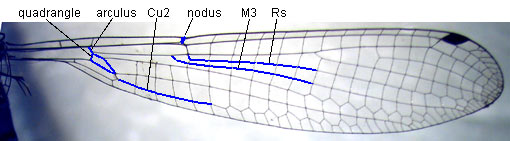
en.wikipedia.org/wiki/Acanthagrion
www.scielo.br/scielo.php?script=sci_arttext&pid=S1676...
PROJECT NOAH (Português): www.projectnoah.org/spottings/1910266345
Maker: Henri-Victor Regnault (1810-1878)
Born: France
Active: France
Medium: gelatin silver print from a paper negative
Size: 5 7/8 in x 7 3/4 in
Location: France
Object No. 2020.054
Shelf: D-22
Publication: Laurie Dahlberg, Victor Regnault and the Advance of Photography, Princeton University Press, Princeton, 2005, fig 35
Other Collections: SFP
Provenance: Andre Jammes collection
Notes: Printed by Andre Jammes in 1966 from the original paper negative. Henri Victor Regnault began experimenting with the new daguerreotype process in 1841 and after studying Louis Désiré Blanquart-Evrard's modifications to William Henry Fox Talbot's positive/negative calotype paper process began to work with photography on paper around 1846. He photographed landscapes, architecture, portraits, and genre scenes. A founding member of the Société héliographique in 1851, he also served as the founding president of the Société Française de Photographie in 1854. A chemist and professor of physics, he directed the Sèvres Manufactory from 1852 until 1871 and established a photographic department there. He eventually gave up photography to support and promote the promising painting career of his son, Alex-Georges-Henri. His son was killed in the Franco-Prussian War, which also destroyed Regnault's laboratory at Sèvres. (source: Getty Museum).
For more about Regnault's work as a chemist, visit: HENRI VICTOR REGNAULT
To view our archive organized by themes and subjects, visit: OUR COLLECTIONS
For information about reproducing this image, visit: THE HISTORY OF PHOTOGRAPHY ARCHIVE
How Giants Became Giant Dwarves
Description: Hemidactylus mabouia belongs in the class Reptilia, order Squamata, suborder Sauria, infraorder Gekkota, family Gekkonidae and subfamily Gekkoninae. I do not know which tribe they belong to or even if they do belong to one. From what I saw, it's a domain that constantly suffers change, and I'm not sure if the Hemidactylus has been established into a fixed tribe for now.
The etymology of the genus name is based on the split lamella of the fingers and toes, where "Hemi" means "half", and "dactylos" (Greek) refers to the lamella under the fingers.
They can measure up to 12,7cm and generally weight around 4,6g-5g. The eyes of Hemidactylus mabouia are adapted to the nocturnal hours. The large eyes provide them with a means to detect prey in places with low lighting. Further adaptations include a camouflage mechanism where the Hemidactylus mabouia can slowly change its coloring from grey (almost white) to a light brown, to a darker brown. They prey many crawling and flying insects that come out at night and have learned to wait near light sources to catch prey drawn by the light. They can feed on a large amount of creatures, including Arachnids (which includes scorpions), Blattodeans, Lepidopterans, Isopods, Coleopterans, Myriapods, Orthopterans, other geckos and so on; special mention goes to Blattodeans and Orthopterans. They are natural to Africa but were accidentally introduced to almost all of America.
They are greatly adaptable, and established themselves in many places, including Brazil, predominantly being found in urban and suburban habitats. They can also be found in the Amazon forest, Atlantic forest, savannah-like vegetation areas of central Brazil (Cerrado), semi-arid habitats (such as Caatinga), coastal sand-dune habitats (such as Restingas) and in some islands away from the Brazilian coast. Their great adaptation allowed them to move from the anthropic environments, where they were mostly restricted to, to a greater amount of areas.
They are slender with a flat head which is wider than the neck. Their body are mostly covered in black or brown bands but they can change their coloring based on the temperature and light. They possess dorsal scales. The surfaces of the toes possess lamellae, tiny spike-like scales that help the species grip onto surfaces.
The eggs are small, white and calcified, preventing the loss of water. The eggs are soft and sticky which allows them to be placed on surfaces that are hard for predators to reach. Juveniles usually stay close together to shelter on low ground and crevices. Gamble (2010) states that the Hemidactylus mabouia are thought to have temperature-dependent sex determination due to the lack of sex chromosomes that are heteromorphic. Females can sperm-storage.
They can vocalize. The males use chirping signals and pheromones to attract the females. When approached by females, the males will arch their backs and flick their tongues. Females will show receptiveness to the calling of the males if interested. Two eggs are usually produced and the incubation period lasts from 22-68 days with an average of 56 days. The males provide no parental care. Females wave their tails more often than the males.
They are arboreal and fairly sedentary. The males communicate by using chirps with varying frequencies, some of which are specific during fights between males. Other methods of communication include chemosignals or pheromones, which can be used as territory marking, signaling dominance or to attract females.
They are preyed by many animals including birds, snakes, dogs, cats and spiders. Anti-predation techniques include vibrating their tails to distract the predator by drawing attention to the tail. They can also drop their tails to escape from danger; the tail will eventually regenerate.
Many Cestodes, Protozoans, Acanthocephalans, Nematodes and Pentastomids are parasites of Hemidactylus mabouia. The mite Geckobia tasmani is also known to parasitize the Hemidactylus mabouia.
In Brazil they are erroneously thought to be venomous, being attributed the name "viper" by some - they are neither venomous nor poisonous.
Sources:
animaldiversity.org/accounts/Hemidactylus_mabouia/
reptile-database.reptarium.cz/species?genus=Hemidactylus&...
pt.wikipedia.org/wiki/Lagartixa-dom%C3%A9stica-tropical
repositorio.unb.br/bitstream/10482/24294/1/2017_F%C3%AAni...
en.wikipedia.org/wiki/Tropical_house_gecko
zoologia2013.blogspot.com/2013/12/lagartixa-domestica-tro...
www.locus.ufv.br/handle/123456789/2335
www.scielo.br/scielo.php?script=sci_arttext&pid=S1984...
PROJECT NOAH (Português): www.projectnoah.org/spottings/892339540
Maternitat a San Cristòbal de Las Casas, Chiapas, Mèxic
Maternidad en San Cristóbal de Las Casas, Chiapas, México
Motherhood in Chiapas has a high death risk, but there are people that work to improve matters.
See:
www.scielosp.org/scielo.php?script=sci_arttext&pid=S1...
maternidadsinriesgos.org.mx/reuniones/1raReunionTecnica/M...
la locomotora RIO LOA fue la primera de tres que llegaron para la trocha angosta de un metro, para servir las oficinas salitreras inglesas en 1923.-
‘RÍO LOA’ con el número 2211
‘RÍO SALVADOR’ con el número 2212
‘RÍO SALADO’ con el número 2213
Pero la presencia británica en la región de Antofagasta entre los años 1880-1930 se verificó en varios ámbitos. Sus inversiones fueron influyentes en la construcción de la conectividad ferroviaria, desde la década de 1870 en adelante. Llegaron a dominar otras iniciativas de empresas privadas ferroviarias tanto de Taltal como de Tocopilla. El núcleo fundamental, lo constituyó el ferrocarril de Antofagasta a Bolivia (FCAB). También se manifestó la gravitación británica en las actividades comerciales y financieras que orientaron el control de la producción salitrera hacia los mercados mundiales. Todo esto exigió una presencia demográfica que fue impulsada por los negocios asentados en la región de Antofagasta donde la mayoría de los miembros de la colonia se vinculó en las actividades ligadas al FCAB y a los sectores técnicos y administrativos de sus empresas salitreras. En tal sentido, la importancia de estos negocios generó redes sociales que de modo significativo incidieron en el rumbo de la sociedad regional.
Antofagasta, los británicos (llegaron a ser 9000 personas) se interesaron en la expansión de sus inversiones en las restantes oficinas salitreras. Lo llevado a cabo por Daniel Oliva en el departamento de Taltal con sus cinco oficinas salitreras, derivó en la adquisición de una parte de ellas por la empresa británica The Lautaro Nitrate Company.
Los capitales británicos irrumpieron en la propiedad salitrera con fuerza entre 1910 y 1926 con dominios en los cuatro cantones salitreros: el Central o Bolivia, el de Aguas Blancas, el de Taltal y El Toco. Hacia 1910, las empresas salitreras británicas poseían las siguientes oficinas:
The Lautaro Nitrate Co.: Oficinas Santa Luisa, Ballena, Lautaro y Santa Catalina. The Amelia Nitrate Co. Ltd.: Oficinas Cecilia, Amelia y Aurora. Ghysela Nitrate Co.: Oficina Ghysela. Pacific Nitrate Co.: Oficinas Celia y Aurelia, que llevaban cuatro años de funcionamiento .
Para el año 1911, se agregaron The Tarapacá and Tocopilla Nitrate Co., con la oficina Santa Fe. A su vez, The Fortuna Nitrate Co., explotaba la oficina Carmela y The Lilita Nitrate Co. Ltd., la oficina Lilita. A mediados de la década, la empresa The Britannia Nitrate Co. Ltd., explotaba la oficina Britannia, en el cantón de Taltal; The Esperanza Nitrate Co. Ltd., lo hacía con la oficina Esperanza, en el mismo territorio cantonal. The Florencia Nitrate Co. Ltd., comenzaba a operar la oficina Florencia, en el cantón Central, al igual que The Leonor Nitrate Company Ltd., con la oficina Leonor .
Hacia fines del decenio, en 1919, The Fortuna Nitrate Co. tomó el control de las oficinas Aurelia y Celia, además de proseguir con el dominio de la Oficina Carmela; The Aguas Blancas Nitrate Co. administraba la oficina Eugenia, y The Tarapacá & Tocopilla Nitrate Co., seguía funcionando con la oficina Santa Fé. The Lautaro Nitrate Co. continuaba con el funcionamiento de sus oficinas establecidas en el cantón de Taltal . para mayor profundidad en el tema es recomendable leer scielo.conicyt.cl/scielo.php?script=sci_arttext&pid=S...
Heavenbound
Description: The subject portrayed is post-mortem and was already found in such a state.
Tingids are very tiny Hemipterans, this one measured around 2mm or less. The pronotrum and forewings of the adults possess a labyrinth of paths and windows strung together, giving them their common name. Although they can bite, the pain is a minimal nuisance and they do not transmit any diseases. Generally, they are host specific, piercing the epidermis of the plant tissue and sucking the sap out of it; this usually empties the cell and leaves a bronzed or silvery wound. Usually, they never leave their host plants which means that encountering this one on a lamp, possibly attracted by the lights in which I had no intention of happening, suggests it never found its host plant, died of age or hunger. It seemed to be dead for quite a while after I found it.
They usually have two generations per year, but some species are able to have many. Some Tingids undergo incomplete metamorphosis in which the immature stages resemble the adults, but are smaller and wingless. After the second and third instars the wing pads appear and they increase in size. They may undergo from four to five instars, depending on the species.
Tingoidea's phylogeny is not very well established and many authors treat the families, subfamilies and tribes differently. Bug Guide, for instance, treats the superfamily as Miroidea (bugguide.net/node/view/2723/tree).
As for the genus Gargaphia, I'll quote a source I'll provide below:
"This genus may be distinguished from all others of the family by the sinuous transverse carina interrupting the rostral groove between the meso- and metasternum. In general it may be characterized as follows: Head small, black, more or less shiny, with five prominent spines, three of which are on the front between the eyes and two at the base of head, one on either side. These basal spines may be erect or decumbent and reduced to mere threads. The frontal spines may be reduced to mere stubs. Antennae long, first and second segments stout, the first at least three times the length of the second, and about equal to the fourth in length, segments more or less hairy. Pronotum with a hood, varying in size with the species but never entirely covering the head, three longitudinal membranous carinae, and a wide membranous lateral margin which is more or less flaring and angular in some species. A transverse sinuous carina interrupts the rostral groove between the meso- and metasternum. Elytra lacy, with hyaline areoles at least in the costal area. Various areas of elytra well defined. Elytra narrowed at the base, never.
The following list of food plants is given merely as an aid to
identification. It is as complete as possible with the data at
hand, which was taken from various publications and insect labels. All use subject to about.jstor.org/terms
EDMUND H. GIBSON
Amphiachyris species
solani (Heidemann)
Basswood (Tilia pubescens)
tiliae (Walsh)
Beans
angulata (Heidemann)
Coffee Weed (Cassia species)
solani (Heidemann)
Cotton (Gossypium species)
solani (Heidemann)
Dahlia parryi
condensa (Gibson)
Dahlia spinosa
opacula (Uhler)
Egg plant (Solanum melongena)
opacula (Uhler)
solani (Heidemann)
False Indigo (Amorpha fruticosa)
amorphae (Walsh)
Horse Nettle (Solanum carolinense)
solani (Heidemann)
Mallow (Malva species)
iridescens (Champion)
New Jersey Tea (Ceanothus americanus)
angulata (Heidemann)
Night Shade (Solanum species)
iridescens (Champion)
solani (Heidemann)
Potato (Solanum tuberosum)
solani (Heidemann)
Ragweed (Ambrosia species)
iridescens (Champion)
Sage (Salvia pitcheri)
solani (Heidemann)
Sand Nettle
iridescens (Champion)
White Horse Nettle (Solanum elaeagnifolium)
solani Heidemann
Wild Cherry (Prunus serotina)
tiliae (Walsh)
Willow (Salix species)
opacula (Uhler)"
Source: www.jstor.org/stable/25077010?seq=2#page_scan_tab_contents
The previously quoted morphology is for the genus in general, but the appearance of Gargaphia changes between species, and due to this I can't be 100% certain of the genus, but there is more certainty than doubt.
Maternal care has been observed in a few species of Gargaphia as well as a few species of Tingids in general. Gargaphia's behaviour often include the aggressive protection of the eggs.
Special thanks to Tyler Katz (www.facebook.com/tak11123?fref=search) for suggesting the genus Gargaphia and going even further as to risk the species Gargaphia tiliens, although there is no 100% certainty of anything here.
Other sources include the Wikipedia article for Tingidae which I'll mention below. Other sources can be found in the text itself.
Wikipedia: en.wikipedia.org/wiki/Tingidae
Scielo: www.scielo.br/scielo.php?script=sci_arttext&pid=S0085...
PROJECT NOAH (Português): www.projectnoah.org/spottings/1992305757
One More Angel
Description: The subject portrayed is post-mortem and was already found in such a state.
Tingids are very tiny Hemipterans, this one measured around 2mm or less. The pronotrum and forewings of the adults possess a labyrinth of paths and windows strung together, giving them their common name. Although they can bite, the pain is a minimal nuisance and they do not transmit any diseases. Generally, they are host specific, piercing the epidermis of the plant tissue and sucking the sap out of it; this usually empties the cell and leaves a bronzed or silvery wound. Usually, they never leave their host plants which means that encountering this one on a lamp, possibly attracted by the lights in which I had no intention of happening, suggests it never found its host plant, died of age or hunger. It seemed to be dead for quite a while after I found it.
They usually have two generations per year, but some species are able to have many. Some Tingids undergo incomplete metamorphosis in which the immature stages resemble the adults, but are smaller and wingless. After the second and third instars the wing pads appear and they increase in size. They may undergo from four to five instars, depending on the species.
Tingoidea's phylogeny is not very well established and many authors treat the families, subfamilies and tribes differently. Bug Guide, for instance, treats the superfamily as Miroidea (bugguide.net/node/view/2723/tree).
As for the genus Gargaphia, I'll quote a source I'll provide below:
"This genus may be distinguished from all others of the family by the sinuous transverse carina interrupting the rostral groove between the meso- and metasternum. In general it may be characterized as follows: Head small, black, more or less shiny, with five prominent spines, three of which are on the front between the eyes and two at the base of head, one on either side. These basal spines may be erect or decumbent and reduced to mere threads. The frontal spines may be reduced to mere stubs. Antennae long, first and second segments stout, the first at least three times the length of the second, and about equal to the fourth in length, segments more or less hairy. Pronotum with a hood, varying in size with the species but never entirely covering the head, three longitudinal membranous carinae, and a wide membranous lateral margin which is more or less flaring and angular in some species. A transverse sinuous carina interrupts the rostral groove between the meso- and metasternum. Elytra lacy, with hyaline areoles at least in the costal area. Various areas of elytra well defined. Elytra narrowed at the base, never.
The following list of food plants is given merely as an aid to
identification. It is as complete as possible with the data at
hand, which was taken from various publications and insect labels. All use subject to about.jstor.org/terms
EDMUND H. GIBSON
Amphiachyris species
solani (Heidemann)
Basswood (Tilia pubescens)
tiliae (Walsh)
Beans
angulata (Heidemann)
Coffee Weed (Cassia species)
solani (Heidemann)
Cotton (Gossypium species)
solani (Heidemann)
Dahlia parryi
condensa (Gibson)
Dahlia spinosa
opacula (Uhler)
Egg plant (Solanum melongena)
opacula (Uhler)
solani (Heidemann)
False Indigo (Amorpha fruticosa)
amorphae (Walsh)
Horse Nettle (Solanum carolinense)
solani (Heidemann)
Mallow (Malva species)
iridescens (Champion)
New Jersey Tea (Ceanothus americanus)
angulata (Heidemann)
Night Shade (Solanum species)
iridescens (Champion)
solani (Heidemann)
Potato (Solanum tuberosum)
solani (Heidemann)
Ragweed (Ambrosia species)
iridescens (Champion)
Sage (Salvia pitcheri)
solani (Heidemann)
Sand Nettle
iridescens (Champion)
White Horse Nettle (Solanum elaeagnifolium)
solani Heidemann
Wild Cherry (Prunus serotina)
tiliae (Walsh)
Willow (Salix species)
opacula (Uhler)"
Source: www.jstor.org/stable/25077010?seq=2#page_scan_tab_contents
The previously quoted morphology is for the genus in general, but the appearance of Gargaphia changes between species, and due to this I can't be 100% certain of the genus, but there is more certainty than doubt.
Maternal care has been observed in a few species of Gargaphia as well as a few species of Tingids in general. Gargaphia's behaviour often include the aggressive protection of the eggs.
Special thanks to Tyler Katz (www.facebook.com/tak11123?fref=search) for suggesting the genus Gargaphia and going even further as to risk the species Gargaphia tiliens, although there is no 100% certainty of anything here.
Other sources include the Wikipedia article for Tingidae which I'll mention below. Other sources can be found in the text itself.
Wikipedia: en.wikipedia.org/wiki/Tingidae
Scielo: www.scielo.br/scielo.php?script=sci_arttext&pid=S0085...
PROJECT NOAH (Português): www.projectnoah.org/spottings/1992305757
Micro Prime Hunters
Description: The subject portrayed measured more or less around 2mm in length.
Elaphropeza is a genus of predatory flies in the order Diptera, suborder Brachycera, infraorder Muscomorpha, superfamily Empidoidea, family Hybotidae, subfamily Tachydromiinae and tribe Drapetini.
MORPHOLOGY: rmbr.nus.edu.sg/news/pdf/20070621-Shamshev_Grootaert-Zoot...
Thank you to Geoff Williams (www.facebook.com/profile.php?id=100008754940277&fref=...) for the genus suggestion and for redirecting me to Dan Bickel, who recommended an expert, José Rafael of the INPA (Instituto Nacional de Preservação Ambiental) who I thank you for the genus confirmation and species suggestion.
The subject portrayed has a visible terminalia which suggests it is a male. Pheromone glands vary morphologically between species.
Elaphropeza are most commonly found in the wild on the leaves, herbs, shrubs and trees of forests in all tropical regions of the world. Aggregation is achieved through chemical communications between members of the same species; since the genus has wider distribution they need to communicate through longer distances to find partners. Adults are predators of small arthropods. I'm unaware on the behaviour of the larvae or about the egg-adult process.
Elaphropeza possess a convex occiput, undeveloped gena, two pairs of ocellar setae, eyes with microtrichia, conical to lanceolate postpedical bearing a distal arista-like stylus, bare anepisternum, shortened basal radial cell (br) on the wings and intersegmental abdominal modification between tergites 3-5 or 4-5. These traits generically distinguish them from other Tachydromiines (Shamshev and Grootaert, 2007; Cumming and Sinclair, 2009).
Huber et al. (2007) suggests that the mating position in Hybotids based on photographs of pairs during copulation comprises of a false-male-above, "where the male sits above the female but bends his abdomen sideways around her so that his genitalia contact the female from below".
A few entities consider Elaphropeza (Macquart, 1827) a subgenus of Drapetis (Meigen, 1822).
Informations on the egg-adult process are unknown to me and will be appreciated and credited if given.
MORE SOURCES:
books.google.com.br/books?id=SQPvCAAAQBAJ&pg=PA186&am...
www.scielo.br/scielo.php?script=sci_arttext&pid=S0044...
PROJECT NOAH (Português): www.projectnoah.org/spottings/1727944482
In the Sky
Description: The subject portrayed is post-mortem and was already found in such a state.
Tingids are very tiny Hemipterans, this one measured around 2mm or less. The pronotrum and forewings of the adults possess a labyrinth of paths and windows strung together, giving them their common name. Although they can bite, the pain is a minimal nuisance and they do not transmit any diseases. Generally, they are host specific, piercing the epidermis of the plant tissue and sucking the sap out of it; this usually empties the cell and leaves a bronzed or silvery wound. Usually, they never leave their host plants which means that encountering this one on a lamp, possibly attracted by the lights in which I had no intention of happening, suggests it never found its host plant, died of age or hunger. It seemed to be dead for quite a while after I found it.
They usually have two generations per year, but some species are able to have many. Some Tingids undergo incomplete metamorphosis in which the immature stages resemble the adults, but are smaller and wingless. After the second and third instars the wing pads appear and they increase in size. They may undergo from four to five instars, depending on the species.
Tingoidea's phylogeny is not very well established and many authors treat the families, subfamilies and tribes differently. Bug Guide, for instance, treats the superfamily as Miroidea (bugguide.net/node/view/2723/tree).
As for the genus Gargaphia, I'll quote a source I'll provide below:
"This genus may be distinguished from all others of the family by the sinuous transverse carina interrupting the rostral groove between the meso- and metasternum. In general it may be characterized as follows: Head small, black, more or less shiny, with five prominent spines, three of which are on the front between the eyes and two at the base of head, one on either side. These basal spines may be erect or decumbent and reduced to mere threads. The frontal spines may be reduced to mere stubs. Antennae long, first and second segments stout, the first at least three times the length of the second, and about equal to the fourth in length, segments more or less hairy. Pronotum with a hood, varying in size with the species but never entirely covering the head, three longitudinal membranous carinae, and a wide membranous lateral margin which is more or less flaring and angular in some species. A transverse sinuous carina interrupts the rostral groove between the meso- and metasternum. Elytra lacy, with hyaline areoles at least in the costal area. Various areas of elytra well defined. Elytra narrowed at the base, never.
The following list of food plants is given merely as an aid to
identification. It is as complete as possible with the data at
hand, which was taken from various publications and insect labels. All use subject to about.jstor.org/terms
EDMUND H. GIBSON
Amphiachyris species
solani (Heidemann)
Basswood (Tilia pubescens)
tiliae (Walsh)
Beans
angulata (Heidemann)
Coffee Weed (Cassia species)
solani (Heidemann)
Cotton (Gossypium species)
solani (Heidemann)
Dahlia parryi
condensa (Gibson)
Dahlia spinosa
opacula (Uhler)
Egg plant (Solanum melongena)
opacula (Uhler)
solani (Heidemann)
False Indigo (Amorpha fruticosa)
amorphae (Walsh)
Horse Nettle (Solanum carolinense)
solani (Heidemann)
Mallow (Malva species)
iridescens (Champion)
New Jersey Tea (Ceanothus americanus)
angulata (Heidemann)
Night Shade (Solanum species)
iridescens (Champion)
solani (Heidemann)
Potato (Solanum tuberosum)
solani (Heidemann)
Ragweed (Ambrosia species)
iridescens (Champion)
Sage (Salvia pitcheri)
solani (Heidemann)
Sand Nettle
iridescens (Champion)
White Horse Nettle (Solanum elaeagnifolium)
solani Heidemann
Wild Cherry (Prunus serotina)
tiliae (Walsh)
Willow (Salix species)
opacula (Uhler)"
Source: www.jstor.org/stable/25077010?seq=2#page_scan_tab_contents
The previously quoted morphology is for the genus in general, but the appearance of Gargaphia changes between species, and due to this I can't be 100% certain of the genus, but there is more certainty than doubt.
Maternal care has been observed in a few species of Gargaphia as well as a few species of Tingids in general. Gargaphia's behaviour often include the aggressive protection of the eggs.
Special thanks to Tyler Katz (www.facebook.com/tak11123?fref=search) for suggesting the genus Gargaphia and going even further as to risk the species Gargaphia tiliens, although there is no 100% certainty of anything here.
Other sources include the Wikipedia article for Tingidae which I'll mention below. Other sources can be found in the text itself.
Wikipedia: en.wikipedia.org/wiki/Tingidae
Scielo: www.scielo.br/scielo.php?script=sci_arttext&pid=S0085...
PROJECT NOAH (Português): www.projectnoah.org/spottings/1992305757
...three little indians........
Children of the Guarani indian village, Krukutu.
Today their social needs are many as their living conditions differ little from those faced by many of our children from the favelas in the urban outskirts of the big cities.
Malnutrition and pulmonary and bronchial illnesses are responsible for a high mortality rate among the Guarani children.
The Guarani population structure is indicative of high birth and death rates, low median age and low life expectancy at birth. The crude mortality rate (MR = 5.0/1,000) was similar to the Brazilian national rate, but the under-five (MR = 44.5/1,000) and the infant mortality rate (MR = 29.6/1,000) were twice the corresponding mortality rate in the South and Southeast of Brazil. The proportion of post-neonatal infant deaths was 83.3%, 2.4 times higher than general population. The proportions of ill-defined (15.8%) and preventable causes (51.6%) were high. The principal causes of death were respiratory (40.6%) and infectious and parasitic diseases (18.8%), suggesting precarious living conditions and deficient health services. There is a need for greater investment in primary care and interventions in social determinants of health in order to reduce the health inequalities.
Read the entire report here or download the PDF file
In Portuguese:
A estrutura populacional Guarani expressa elevada natalidade, mortalidade precoce e baixa idade mediana e esperança de vida ao nascer. A taxa de mortalidade bruta (TM bruta = 5,0/1.000) se assemelha à nacional, mas a TM < 5 anos (44,5/1.000) e a taxa de mortalidade infantil (29,6/1.000) são duas vezes maiores que as TM correspondentes nas regiões Sul e Sudeste. A proporção de óbitos infantis pós-neonatais foi de 83,3%, 2,4 vezes maior que a população geral. As proporções de causas mal definidas (15,8%) e de evitáveis pelos serviços de saúde (51,6%) foram elevadas. As principais causas de morte foram as respiratórias (40,6%) e as infecciosas e parasitárias (18,8%), sugerindo precárias condições de vida e de organização dos serviços de saúde. Há necessidade de maiores investimentos na atenção primária e em intervenções sobre os determinantes sociais da saúde, a fim de reduzir as iniquidades reveladas.
Leia o relatório completo aqui
.
Maker: Amaury Duval (1808-1885)
Born: France
Active: France
Medium: Dujardin process heliogravure
Size: 11" x 7"
Location:
Object No. 2016.686
Shelf: B-60
Publication:
Other Collections:
Notes: from a painting by Duval. Eugène Emmanuel Amaury Pineux Duval (16 April 1808 – 25 December 1885), better known by the pseudonym Amaury Duval, was a French painter. He was one of two sons of Amaury Duval (1760–1838) and thus a nephew of the playwright Alexandre Pineux and a cousin of Regnault's. Henri Victor Regnault began experimenting with the new daguerreotype process in 1841 and after studying Louis Désiré Blanquart-Evrard's modifications to William Henry Fox Talbot's positive/negative calotype paper process began to work with photography on paper around 1846. He photographed landscapes, architecture, portraits, and genre scenes. A founding member of the Société héliographique in 1851, he also served as the founding president of the Société Française de Photographie in 1854. A chemist and professor of physics, he directed the Sèvres Manufactory from 1852 until 1871 and established a photographic department there. He eventually gave up photography to support and promote the promising painting career of his son, Alex-Georges-Henri. His son was killed in the Franco-Prussian War, which also destroyed Regnault's laboratory at Sèvres. (source: Getty Museum)
For more about Regnault's work as a chemist, visit: HENRI VICTOR REGNAULT
To view our archive organized by themes and subjects, visit: OUR COLLECTIONS
For information about reproducing this image, visit: THE HISTORY OF PHOTOGRAPHY ARCHIVE
Sanctuary Fortress
Description: Dione juno juno is a butterfly in the order Lepidoptera, subdivision Bombycina, superfamily Papilionoidea, family Nymphalidae, subfamily Heliconiinae and tribe Heliconiini.
Gregarious in nature, probably as a defensive mechanism, the larvae of Dione juno juno feed on:
Medicago sativa (L.) (Fabaceae: Faboideae) ("alfalfa" / "lucerve");
Gossypium sp. (L.) (Malvaceae: Malvoideae: Gossypieae) ("cotton");
Arachis hypogaea (L.) (Fabaceae: Faboideae: Dalbergieae) ("peanut");
Oryza sp. (L.) (Poaceae: Oryzoideae: Oryzeae: Oryzinae) ("rice");
Solanum tuberosum (L.) (Solanaceae) ("potato");
Brassica oleracea var. Italica (L.) (Brassicaceae) ("broccoli");
Saccharum sp. (L.) (Poaceae: Panicoideae: Andropogoneae: Andropogoninae) ("sugar cane");
Cocos nucifera (L.) (Arecaceae) ("coconut tree");
Brassica oleracea var. Acephala (L.) (Brassicaceae) ("cabbage");
Brassica oleracea var. Botrytis (L.) ("cauliflower");
Nicotiana sp. (L.) (Solanaceae: Nicotianoideae: Nicotianeae) ("tobacco");
Manihot esculenta (Crantz) (Euphorbiaceae) ("cassava" / "Brazilian arrowroot" / "mandioca" / "yuca" / "manioc");
Passiflora sp. (L.) (Passifloraceae) ("passion fruit tree");
Zea mays (L.) (Poaceae: Panicoideae: Maydeae) ("corn");
Brassica oleracea var. Capitata (Brassicaceae) ("savoy cabbage");
Hevea brasiliensis (Müll.Arg.) (Euphorbiaceae) ("Pará rubber tree" / "sharinga tree" / "rubber tree" / "rubber plant" / "seringueira");
Glycine max ((L.) Merr.) (Fabaceae: Faboideae) ("soybean")
Triticum sp. (L.) (Poaceae: Pooideae: Triticeae) ("wheat")
...and pastures.
www.agrolink.com.br/problemas/lagarta-do-maracujazeiro_44...
The larvae seem to prefer Passiflora edulis (Sims, 1818), P. edulis f. flavicarpa (in Southern Brazil), P. edulis f. flavicarpa (other areas) and P. edulis f. flavicarpa genotype Maguary FB-100.
The larvae do not seem to be able to survive with P. alata (Curtis (1788)), P. serrato-digitata (L.) and P. foetida (L.).
The pupa stage lasts from 8,15 days to 9,93 days, depending on the conditions; larvae who fed on P. edulis f. flavicarpa and genotype Maguary FB-100 displayed a pupal duration of 9,54 and 9,93 days, respectively, while those who fed on P. edulis displayed a pupal duration of 8,15 days. This means that the healthiest food plant for Dione juno juno is P. edulis.
The adult's lifespan also changes from 1,48 days to 1,83 days depending on the conditions.
www.scielo.br/scielo.php?script=sci_arttext&pid=S0100...
The wings are relatively long and straight, curving at the apex and, more or less, orange-colored. The forewings possess a dark line on the costal margin that is interrupted midway through it by a down-curving line, however still proceeding through the costal margin and interrupted again shortly after the first interruption. The second interruption displays a line going from the costal margin of the forewings to their outer margin. The line continues through the costal margin, circles around the apex following down the outer margin until the inner angle. The forewings' discoidal cell circles the first interruption mentioned above. The thorax is orange (more inclined towards dark-orange). The abdomen is also orange. The hindwings are completely orange except for the outer margin which are dark-colored. The eyes are medium-sized and compound. The antennae are erect and more robust at the tip.
The chrysalis is greyish-brown - borboletasbr.blogspot.com/2011/02/
The larvae are black, with non-urticarious setae and multiple orange spots scattered all around. The head is black - joias-da-natureza.blogspot.com/2017/10/dione-juno-cramer-...
The eggs are deposited in clusters - borboletasbr.blogspot.com/2011/02/dione-juno-juno.html
The adults of Dione juno juno (and probably the other subspecies as well) feed on mineralized substances of the soil (this one, for instance, was feeding on the substract of the bycicle) and are also nectarivorous, feeding on the nectar of some flowers such as Lantana camara (L.) (Verbenaceae). Dione juno juno seems to present color variations between specimens.
pt.wikipedia.org/wiki/Dione_juno
In their natural habitat, they are often seen flying around passion fruit trees; otherwise, they are seen flying around or landed on the floor of trails to feed on the mineralized substances of the soil.
EOL: "Juno was a Roman goddess, the equivalent of the Greek Hera, queen of the gods. Juno was a majestical figure, wearing a diadem on her head. The peacock is her symbolic animal. Juno is also the guardian of the Empire's finances and considered the Matron Goddess of all Rome. The month of June was named after her (JUNO)."
These are the known subspecies of D. juno:
D. j. andicola (Bates, 1864)
D. j. huascuma (Reakirt, 1866)
D. j. juno (Cramer, [1779])
D. j. miraculosa (Hering, 1926)
D. j. suffumata (Brown & Mielke, 1972)
en.wikipedia.org/wiki/Dione_juno
Needs confirmation if it should be (Cramer, 1779) or if the date should be within brackets.
PROJECT NOAH (Português): www.projectnoah.org/spottings/937879339
Una de las imagenes mas conocidas de Santiago es el Paso Bajo Nivel de Santa Lucía.
Diseño del Taller de Diseño Integrado (DI) que fue un colectivo artístico que trabajó entre los años 1968 y 1973. Su formación multidisciplinaria les permitió adquirir una mirada más amplia sobre los fenómenos a los que se avocaron, entre ellos, el diseño y la implementación del emblemático "Paso Bajo Nivel de Santa Lucía" en Santiago.
La práctica del DI implicó una nueva mirada conceptual y material sobre el arte y el diseño, en la que se priorizó la experimentación y lo multidisciplinar y el trabajo colaborativo sobre el individual.
Para mejor información tienes que ver www.scielo.cl/scielo.php?pid=S0718-71812014000200009&...
A text In English:
The Swallow-tailed Hummingbird, so called from its forked tail, is one of the largest hummingbirds in cities and gardens, but it also occurs in gallery forests, bushy pastures and edges of woods or coppices. It is green, except for the blue head and upper breast, turning to iridescent purple according to the direction of light; it has dark wings and a heavy black bill. The tail is dark blue with the external feathers longer than central ones. It is very aggressive and attacks other hummingbirds that dare to visit flowers in certain trees. Where the flowers are available for many months, the individual is fiercely territorial, but generally needs to search soon for other flowering plants. It flies to catch small insets on or under leaves in the gallery forests or woodlands. The female builds a small cup-shaped nest saddled on a branch, not far from the main trunk in the shade of leaves. Perched on favorite branches, the male can utter long but low chirps. Once in a while, it interrupts these singing sessions to feed, and flies back for more song or to clean the plumage. They occur from the Guianas and Amazon River to Paraguay and southeastern Peru. They can get along with partially deforested zones, but may disappear with intensive agriculture and with the development of treeless cities.
Um texto em Português:
Beija-flor Tesoura (Eupetomena macroura), fotografado em Brasília-DF, Brasil.
Eupetomena macroura (Gmelin, 1788): tesoura; swallow-tailed hummingbird c.
Destaca-se das espécies estudadas pelo maior porte e pela cauda comprida e bifurcada, o que lhe valeu o nome popular. Como é comum entre os beija-flores, é uma espécie agressiva que disputa com outras o seu território e fontes de alimento.
Nidificação: o ninho, em forma de tigela, é assentado numa forquilha de arbusto ou árvores, a cerca de 2 a 3 m do solo. O material utilizado na construção é composto por fibras vegetais incluindo painas, musgos e liquens, aderidos externamente com teias de aranhas.
Hábitat: capoeiras, cerrados, borda de matas e jardins.
Tamanho: 17,0 cm
A SEGUIR UM TEXTO ENCONTRADO E REPRODUZIDO DO ENDEREÇO nationalgeographic.abril.uol.com.br/ng/edicoes/83/reporta... DA NATIONAL GEOGRAFIC:
Prodígios da micro-engenharia, os beija-flores são os campeões dos pesos-leves entre as aves
Uma faísca safira, um frêmito de asas, e o minúsculo pássaro - ou seria um inseto? - some como miragem fugaz. Reaparece instantes depois, agora num ângulo melhor. É pássaro mesmo, um dervixe do tamanho do meu polegar com asas que batem 80 vertiginosas vezes por segundo, produzindo um zumbido quase inaudível. As penas da cauda, à guisa de leme, delicadamente direcionam o vôo em três direções. Ele fita a trombeta de uma vistosa flor alaranjada e do bico fino como agulha projeta uma língua delgada feito linha. Um raio de Sol ricocheteia de suas penas iridescentes. A cor refletida deslumbra como uma pedra preciosa contra uma janela ensolarada. Não admira que os beija-flores sejam tão queridos e que tanta gente já tenha tropeçado ao tentar descrevê-los. Nem mesmo circunspectos cientistas resistem a termos como "belo", "magnífico", "exótico".
Surpresa maior é o fato de o aparentemente frágil beija-flor ser uma das mais resistentes criaturas do reino animal. Cerca de 330 espécies prosperam em ambientes diversos, muitos deles brutais: do Alasca à Argentina, do deserto do Arizona à costa de Nova Scotia, da Amazônia à linha nevada acima dos 4,5 mil metros nos Andes (misteriosamente, essas aves só são encontradas no Novo Mundo).
"Eles vivem no limite do que é possível aos vertebrados, e com maestria", diz Karl Schuchmann, ornitólogo do Instituto Zoológico Alexander Koenig e do Fundo Brehm, na Alemanha. Schuchmann ouviu falar de um beija-flor que viveu 17 anos em cativeiro. "Imagine a resistência de um organismo de 5 ou 6 gramas para viver tanto tempo!", diz ele espantado. Em média, o minúsculo coração de um beija-flor bate cerca de 500 vezes por minuto (em repouso!). Assim, o desse pequeno cativo teria batido meio bilhão de vezes, quase o dobro do total de uma pessoa de 70 anos.
Mas esses passarinhos são duráveis apenas em vida. Quando morrem, seus ossos delicados e ocos quase nunca se fossilizam. Daí o assombro causado pela recente descoberta de um amontoado de fósseis de aves que talvez inclua um beija-flor ancestral de 30 milhões de anos. Como os beija-flores modernos, os espécimes fósseis tinham o bico longo e fino e os ossos superiores das asas mais curtos, terminando em uma saliência arredondada que talvez lhes permitisse fazer a rotação na articulação do ombro e parar no ar.
A outra surpresa foi o local do achado: no sul da Alemanha, longe do território dos beija-flores atuais. Para alguns cientistas, essa descoberta mostra que já existiram beija-flores fora das Américas, mas se extinguiram. Ou quem sabe os fósseis não fossem de beija-flor. Os céticos, entre eles Schuchmann, afirmam que muitas vezes, ao longo da evolução, outros grupos de aves adquiriram características semelhantes às do beija-flor. Os verdadeiros beija-flores, diz Schuchmann, evoluíram nas florestas do leste do Brasil, onde competiam com insetos pelo néctar das flores.
"O Brasil foi o laboratório do protótipo", diz o ornitólogo. "E o modelo funcionou." O beija-flor tornou-se a obra-prima da microengenharia da natureza. Aperfeiçoou sua habilidade de parar no ar há dezenas de milhões de anos para competir por parte das flores do Novo Mundo.
"Eles são uma ponte entre o mundo das aves e o dos insetos", diz Doug Altshuler, da Universidade da Califórnia em Riverside. Altshuler, que estuda o vôo dos beija-flores, examinou os movimentos das asas do pássaro. Observou que, nele, os impulsos elétricos propulsores dos músculos das asas lembram mais os dos insetos que os das aves. Talvez por isso o beija-flor produza tanta energia por batida de asas: mais, por unidade de massa, que qualquer outro vertebrado. Altshuler também analisou os trajetos neurais do beija-flor, que funcionam com a mesma vertiginosa velocidade encontrada nas aves mais ágeis, como seu primo mais próximo, o andorinhão. "São incríveis; uns pequenos Frankesteins", compara.
Certamente eles sabem intimidar: grama por grama, talvez sejam os maiores confrontadores da natureza. "O vocabulário do beija-flor deve ser 100% composto de palavrões", graceja Sheri Williamson, naturalista do Southeastern Arizona Bird Observatory. A agressão do beija-flor nasce de ferozes instintos territoriais moldados à necessidade de sugar néctar a cada poucos minutos. Os beija-flores competem desafiando e ameaçando uns aos outros. Postam-se face a face no ar, rodopiam, mergulham na direção da grama e voam de ré, em danças de dominância que terminam tão subitamente quanto começam.
O melhor lugar para vermos tais batalhas é nas montanhas, especialmente no Equador, em que ricos ecossistemas se apresentam em suas várias altitudes. Sheri supõe que o sentido norte-sul das cordilheiras americanas também crie rotas favoráveis à migração para onde haja constante suprimento de flores. O que contrasta, diz ela, com as barreiras naturais que se estendem de leste a oeste na África, como o Saara e o Mediterrâneo.
Algumas espécies de beija-flor, porém, adaptaram-se a atravessar vastidões planas, onde o alimento é escasso. Antes de sua intrépida migração da primavera para os Estados Unidos e o Canadá, os beija-flores-de-garganta-vermelha reúnem-se no México e empanturram-se de insetos e néctar. Armazenam gordura e duplicam de peso em uma semana. Em seguida, atravessam o golfo do México, voando 800 quilômetros sem escalas por 20 horas, até a costa distante.
A região próxima à linha do equador é um reino de beija-flores. Quem sai do aeroporto de Quito, no Equador, pode ser logo saudado por um cintilante beija-flor-violeta, com pintura de guerra de manchas púrpura iridescentes nos lados da face. A leste da cidade, nas cabeceiras da bacia Amazônica, o beija-flor-bico-de-espada esvoaça na mata portando o bico mais longo de todas as aves em proporção a seu tamanho: mais de metade do comprimento total do animal. Nas encostas do Cotopaxi, um vulcão ao sul de Quito, o beija-flor-do-chimborazo foi avistado acima dos 4,5 mil metros. Ali ele passa a noite entorpecido em cavernas, pois desacelera seu ritmo metabólico o suficiente para não morrer de fome antes de amanhecer. Mais tarde, aquecido pelo Sol, ele recomeça a se alimentar.
"Quem estuda beija-flores fica irremediavelmente enfeitiçado", diz Sheri Williamson. "São criaturinhas sedutoras. Tentei resistir, mas agora tenho sangue de beija-flor correndo nas veias.
Um texto do Wikipedia sobre a Pata-de-vaca:
A pata-de-vaca (Bauhinia), é um gênero com vários representantes, da família das leguminosas (Caesalpinioideae), no total são mais de 200 espécies. Também são conhecidas popularmente por Unha-de-vaca e Casco-de-vaca, devido ao formato de suas folhas. São árvores muito ornamentais, devido a suas flores vistosas e por isso são muito utilizadas no paisagismo e na arborização urbana. A maioria são de origem do continente Asiático mas existem espécies nativas do Brasil como a B. longifolia e a B. forficata. Podem atingir até 10m de altura, algumas espécies tem acúleos, seu fruto é tipicamente um legume, também chamado de vagem.
"
Nomes Populares:
pata-de-vaca, candida, candina, falsa-pata-de-vaca
Nome Científico:
Bauhinia variegata L. var. candida (Aiton) Bush.-Ham.
Outro texto em português do endereço Catálogo Rural (Enciclopédia) www.agrov.com/vegetais/frutas/pata_vaca.htm :
As bauínias pertencem a família das leguminosas casalpináceas, mesma do pau-brasil. Espalham-se pela zona tropical do mundo inteiro. As espécies arbóreas são consideradas pioneiras tardias na escala de sucessão vegetal, pois têm crescimento moderadamente rápido. Elas atingem cerca de 3 metros em dois anos, e são adaptadas a áreas abertas, sob sol constante. A altura máxima em raros casos ultrapassa os 10 metros. Quase todas as espécies brasileiras são cheias de espinho e têm flores brancas. Entre elas, as mais comuns são a Bauhinia candicans, a mais florida e uma das mais espinhentas, é a Bauhinia forficata, com flores imaculadamente brancas e grande produção de sementes.
Entre as exóticas, a que mais se cultiva no Brasil é a Bauhinia variegata, que apresenta flores brancas e rosas, dependendo da variedade. No inverno, ela perde as folhas, voltando a florescer na primavera, com grande beleza. Em geral, é maior que as espécies nativas, podendo passar dos dez metros. A altura exata que alcança raramente pode ser observada, pois nas cidades é constantemente podada. Uma das espécies mais bonitas e raras da pata-de-vaca é a Bauhinia blakeana, originária do Vietnã, cujas flores são de cor lilás. No Brasil, porém, não produz sementes e se reproduz por método de enraizamento.
Outra espécie bastante ornamental e incomum é a Bauhinia galpinii, originária da África do Sul, um arbusto, com flores de cor rosa, que se espalha pelo campo. É muito difícil de cultivá-la no Brasil, embora seja encontrada em alguns jardins no Rio Grande do Sul. Provavelmente a bauínia mais curiosa é a escada-de-macaco ou cipó-florão (Bauhinia splendens e mais três espécies), trepadeira nativa cujo tronco lembra a forma de uma escada.
Utilidade: A utilização mais evidente da pata-de-vaca é no paisagismo, principalmente para arborização de ruas. Cresce rapidamente, tem flores exuberantes e em grande quantidade, copa arredondada e estatura baixa, sendo ideal para ser plantada sob os fios elétricos. A mais usada para esse fim é a espécie introduzida Bauhinia variegata, apesar das nativas também possuírem grande potencial paisagístico e apresentarem espinhos, uma proteção natural.
As folhas da pata-de-vaca são utilizadas tradicionalmente no Brasil com fins curativos. A literatura especializada do começo do século relatava que os curandeiros do interior usavam o cozimento dessas folhas em formas de chá e banhos para curar lepra, furúnculos e picadas de cobra.
Na medicina popular, são largamente utilizadas em casos de diabete. Pesquisas farmacológicas comprovaram que a Bauhinia forficata possuía a propriedade de diminuir a taxa de glicose no sangue. As folhas são colhidas antes da floração e secas ao sol. As farmácias de produtos naturais vendem as folhas prontas para fazer o chá e em forma de essência. A pata-de-vaca brasileira também pode ser utilizada em cerca vivas por ser espinhenta. Com folhas riquíssimas em proteínas e hidratos de carbono, pode ser usada como forrageira. Também é recomendada para reflorestamento de áreas degradas, pois é uma pioneira de crescimento rápido. Como produz muito pólen, é recomendada para áreas onde se criam abelhas. A escada-de-macaco, variedade trepadeira de bauínia, é usada como madeira decorativa. Apesar do pequeno diâmetro, o tronco das plantas velhas tem grande durabilidade e os cortes transversais revelam bonitos desenhos. No começo do século, mesas, bandejas, caixas e outros utensílios decorados com cipó-florão eram considerados artigos de luxo.
Plantio: As espécies arbóreas nativas da pata-de-vaca florescem durante a primavera e o verão (a B. forficata no final do verão). Os frutos, em forma de vagens, ficam maduros entre julho e agosto, quando começam a abrir de forma explosiva, espalhando sementes para todos os lados. As sementes devem ser colhidas neste momento e plantadas logo em seguida em saquinhos individuais ou em canteiros semi-sombreados contendo substrato organo-arenoso (material orgânico e areia). Rega-se duas vezes ao dia. Em cerca de 15 dias, as sementes começaram a germinar. A taxa de germinação é alta, de 30 a 50%. Caso se quebre a dureza da semente antes de plantá-la, com um banho de ácido sulfúrico concentrado ou imersão em água quente a 80 graus celsius, a germinação ode alcançar 80%. O desenvolvimento das mudas é rápido: estão prontas para o plantio definitivo em 5 meses. Aos 2 anos, as árvores florescem e frutificam pela primeira vez. No caso de espécies exóticas que não produzem sementes no Brasil, a reprodução ocorre por alporquia, método semelhante ao da estaquia, no qual o enraizamento dos ramos é feito sem tirá-los da planta.
A text in english from Revista Árvore
Print ISSN 0100-6762
Rev. Árvore vol.30 no.5 Viçosa Sept./Oct. 2006
www.scielo.br/scielo.php?script=sci_arttext&pid=S0100... :
Bauhinia trees are considered late pioneers in plant succession, since they grow moderately fast. They can be used as grazing plants, ornamental, paper and cellulose, round log or sawn wood and also for recovery of degraded areas. Seeking alternatives for a faster and more uniform germination by means of scarification methods, Bauhinia variegata seeds were subjected to the following pre-germination treatments: mechanical scarification (sandpaper 220); immersion in hot water at 80ºC; immersion in cold water (10ºC) for 2 hours; scissors cuttings (area opposed to the micropyle); immersion in concentrated sulfuric acid for five minutes followed by washing in running water; immersion in concentrated sulfuric acid for 20 minutes followed by washing in running water. Seeds were then placed in plastic gerbox boxes with vermiculite substratum to germinate at 30ºC, evaluations were carried out on the 7th and 14th days. Seeds were also sown in trays containing sand in the greenhouse. The parameters index of emergence speed and percent final emergence at 32 days after sowing were evaluated in greenhouse. Seed sanity was evaluated with 400 seeds using the Blotter test. Five sub-samples of 30 seeds from each treatment were used for the germination test and emergence speed index; the experiment was arranged in a complete randomized design and means were compared by the Tukey's Test (P>0.05). Seed germination with mechanical scarification (with sandpaper and scissors cuttings) and immersion in cold water was no significantly different from the control; the germination speed in laboratory was higher when seeds were scarified with sandpaper or immerged in cold water for two hours; the treatment with sulfuric acid (20 minutes) impaired seedling emergence speed; Trichothecium sp, Aspergillus sp, Cladosporium sp, Colletotrichum sp, Fusarium sp., Penicillium sp and Rhizopus sp were the fungus species found in the seeds, however without affecting germination and vigor.
Purple orchid tree is closely related to peacock flower (Caesalpinia pulcherrima) and to the tree many consider the world's most beautiful, the royal poinciana (Delonix regia) - and it shows! Purple orchid tree (usually just called orchid tree) is staggeringly beautiful when in bloom - and it blooms for several months! Orchid tree grows 20-40 ft (6-12 m) tall and 10-20 ft (3-6 m) wide with a spreading crown of briefly deciduous leaves which are 4-6 in (10-15 cm) across and rounded with lobed ends and heart shaped bases. The leaves are shaped a little like a cow's hoof. Some cultivars have leaves with white variegations. The flowers are reminiscent of showy orchids, with five irregular, usually slightly overlapping petals in shades of magenta, lavender or purplish blue. The flowers often make their first appearance in late winter while the tree is bare of leaves. The blooming period then lasts until early summer. The flowers are 3-5 in (7.6-12.7 cm) across and carried in clusters at the branch tips. A member of the bean family, orchid tree produces flattened brown woody legumes (pods) up to 12 in (30.5 cm) long. The cultivar 'Candida' (white orchid tree) has snow white flowers with greenish veins.
Hong Kong orchid tree (Bauhinia X blakeana is a sterile hybrid between (probably) B. variegata and B. purpurea, and is usually considered to be the most beautiful of all the orchid trees. It is a somewhat larger tree, evergreen with large thick leaves and striking purplish red flowers.
Canon EOS Digital Rebel XT
There was no space to take this photo with a DSLR. Still complicated to find a right position with a mobile phone.
Podalia orsilochus / caterpillar
In Brazil called “Taturana-gatinho” or “Taturana-cachorrinho”. The name Taturana comes from the indigenous vocabulary "tata-rana", which means "similar to fire" (tata = fire; rana = similar).
We have a lot them in the garden, but this one has the most interesting hairstyle. A wonderful creature, but I avoid to touch it. The venom can cause prominent necrosis, inflammatory, infiltration and hemorrhage.
Temos muitos em nosso jardim, mas este tem o penteado mais interessante. Uma lagarta maravilhosa, mas venenosa. Trata-se de uma taturana (lagarta urticante) da espécie Podalia orsilochus (Lepidoptera, Megalopygidae). É também conhecida por taturana-ursinho, gatinho ou cachorrinho. O adulto da espécie é uma mariposa de coloração pouco vistosa, dotada de cerdas (pelos) urticantes usadas para defesa contra predadores ou agressores. Em contato com a pele humana, os pelos causam sensação dolorosa semelhante à provocada em queimaduras por substâncias químicas cáusticas ou fogo. Recomenda-se colocar gelo, o mais rápido possível, na área afetada por 20 minutos ou mais. A aplicação de água em abundância também é alternativa que dá bons resultados. Evite pomadas para queimaduras, pasta de dente, álcool ou amoníaco. Se houver sintomas mais graves, recorra a um médico imediatamente.
More details:
www.projectnoah.org/spottings/1304778780 and
www.scielo.br/scielo.php?script=sci_arttext&pid=S0365...
topbiologia.com/perigosa-lagarta-cachorrinho/
repositorio.ufsc.br/bitstream/handle/123456789/174568/sli...
This is the first image in my Andes Set. It relates to the first part of a journey following the Transandine Railway (Ferrocarril Trasandino) from Los Andes in Chile to Mendoza in Argentina through Paso los Libertadores. The description in the set is reproduced here to make it easier to read.
On 1 October 2011my wife Pauline and I travelled by coach from Santiago de Chile to Mendoza with a Travelsphere group. The stretch between Los Andes in Chile and Uspallata in Argentina afforded spectacular views of the Andes. The road from Los Andes was continuous although, in Chile, it was Ruta CH-60 whereas, in Argentina, it became Ruta Nacional 7. Throughout that part of the journey we saw evidence of the track and stations of the old Transandine Railway (in English) or Ferrocarril Trasandino (en español y completa más). The route from Los Andes to the frontier is shown on Wikimapia and you can see the photos I took along the way in this set. Many were taken from our coach while it was on the move so please don't expect high-quality shots.
One of the most unforgettable sights was a series of 17 steeply ascending bends in the road called Los Caracoles de Cuesta Juncal. You can see them from above here and you can read about them and other spectacular roads here (the link has gone – I'm trying to restore it). The photos on that site are really worth looking at. The 17 bends of Caracoles are number 15 and actually looks pretty tame in comparison with some of the others. Number 6, the Road of Death in Bolivia, looks absolutely terrifying. The Caracoles bends take the road up about 400 m within a distance of 850 m as the crow (or, more likely, condor) flies. Our coach stopped at the top of the bends for a while and many photos were taken – not only by me! We were at an altitude of about 2800 m (9350 feet) and there were several mountains of about 5000 m in altitude around us. At about 6000 m, the highest is Nevado Juncal an enormous mountain with four peaks. Two are wholly in Chile and two are shared with Argentina.
Using a bit of imagination, 'Los Caracoles de Cuesta Juncal' could be translated as 'The Slope from the the Bed of Reeds to the Snails’. Even that doesn't make a lot of sense, so I did some research. 'Cuesta' is certainly Spanish for slope and is inspired by the road's steep incline. And ‘juncal’ does mean 'bed of reeds' but, in this case, the reference is to El Juncal, the hamlet at the bottom of the slope after which Nevado Juncal was presumably named. Likewise, although there may well be an abundance of snails there, 'Los Caracoles' actually refers to a place. But, rather misleadingly, it isn’t at the top of the 17 bends but rather some 6 km to the northeast. So, with that proviso, 'Los Caracoles de Cuesta Juncal' really means 'The slope from El Juncal to Los Caracoles'.
Both El Juncal and Los Caracoles once had stations on the Transandine Line. Although it was originally Estación El Juncal, it was renamed Estación de los Hermanos Clark (Station of the Brothers Clark) in honour of the brothers, Juan and Mateo Clark. They were Chileans, born in Valparaiso, but of a Scottish father and an Argentian mother. They did much of the preliminary work on the railway in the late 19th century but ran out of money before their plans could be fully realised. In 1898 Clark & Co was liquidated and in 1901 a London-based company acquired the incomplete railway for £90,000. The same company went on to win the contract to complete the project and, in 1910, the first train passed through the tunnel straddling the border. Sadly Juan Clark died three years before his dream came true. His brother Mateo lived in retirement in Santiago and died aged 86 in 1929.

The station named after the brothers Clark is south of the 17 bends on this map (hover the mouse over the outline to read the label). You can see how it looks now here. Two stops up the line are the devastated remains of Estación Caracoles. Their location can be seen on the map just to the west of the area marked 'Cuesta Caracoles' – the true Caracoles Slope!
The Transandine Railway once linked Los Andes with Mendoza but, in 1984, after 74 years of fairly successful operation, a storm destroyed part of the line. For another 10 years the section between Los Andes and Rio Blanco continued in operation but, since then, the whole line has steadily fallen into decay. Apparently the locos still languish in a shed in Los Andes. There was evidence of the railway at many points on the journey and what was possibly once a station can be seen in one of my photos. It may have been Estación Las Cuevas – literally 'the Station of the Caves'. There's an illustrated history of the railway here and a superb set of photos here. The good news is that there are well-advanced plans to reconstruct it and apparently some work has begun on the project. The will have to build a new tunnel under Cristo Redenter because the road tunnel by the road was the one that was once used by the railway.
Close to where our coach parked there was an octagonal wooden building. At first I thought that this was Octagon Lodge, part of the famous Ski Portillo that's further up the road. The actual Octagon Lodge is on the right of this Wikimedia photo of the Portillo Ski Centre and, as you can see, it's a carbon copy of the building we saw. 'Portillo', by the way, translates as 'little pass' and refers to the valley that takes the road and the rail track through the mountains to Caracoles and Túnel del Cristo Redentor.

Organised skiing was started at Portillo by the Chilean Government in 1949. But progress was slow due to lack of financial support and, in 1962, two North Americans, Bob Purcell and Dick Aldrich bought the centre and developed it so well that it was chosen as the venue for the Alpine World Ski Championships in 1966. Soon after that, they were joined by Bob's nephew, Henry Purcell. Now there's a name for musicians to savour! Like his illustrious namesake, Henry has turned to composing. But, rather than music, his composition has been an excellent account of the history of skiing at Portillo. While the trains were running they were the best way to get to the ski centre. They stopped at Estación Portillo close to the hotel. This photo of the station and the hotel was taken in 1965 a year before the Alpine World Ski Championships were held at Portillo.
Soon after we departed from 'the bends' we saw the ski centre on our left. Then we drove along a valley that began with a gentle climb but, after sweeping round to the left, became much steeper. This was the pass which gave Portillo its name. Some way up the steep part we saw in front of us the entrance to El Túnel do Cristo Redentor, the tunnel that was to take us from Chile to Argentina. It took its name from that of the statue of Cristo Redenter de los Andes which, unbeknown to us at the time, stands high above the tunnel. It was just before the entrance to the tunnel that we caught a glimpse of Estación Caracoles. The statue itself stands exactly on the border between Chile and Argentina. It was inaugurated in 1904 to celebrate the settlement in 1902 of a border dispute. The mediator had been King Edward VII of Great Britain. Etched on a plaque below the statue are the words Se desplomarán primero estas montañas, antes que argentinos y chilenos rompan la paz jurada a los pies del Cristo Redentor' or 'Sooner shall these mountain crags crumble to dust than Chile and Argentina shall break this peace which at the feet of Christ the Redeemer they have sworn to maintain'. Of course, we would have loved to have visited the statue. It can be reached by using the old road that was used before the tunnel was opened. And that steep, winding ascent is the real Caracoles Cuesta. But it's little more than a track and is totally impassable for a coach. The locations of the bends, the ski centre, the stations, the tunnel and the statue can all be seen on the map.
About 15 km after emerging from the tunnel we came to the border control. It's called Complejo Fronterizo Los Horcones and is a hanger-like building that contains many little 'huts'. Each hut can accommodate one Chilean and one Argentinean customs officer but, when we were there, many of them were not in operation. Thus we joined a queue of hundreds of people that were waiting to be cleared. Quite a few were parties of schoolchildren. Many of the boys wore shirts with 'Rugby' on the back whereas the girls' shirts had 'Hockey' on the back. We had to wait 3½ hours on our feet before we were cleared – and it wasn't warm! But if you're thinking of doing the tour don't let that put you off. It was our only bad experience and, set against the many highlights, it was a mere trifle.
The route from the frontier to Mendoza is shown on this map. For an account of some of the places we passed through in that leg see the photos themselves.
Robert Cutts, January 2011
1000th viewing: June 2013
This photograph has caught the attention of the International Barcode of Life Project as an outstanding and inspiring work of art.
The International Barcode of life project is a non-for-profit multimillion dollar world-wide collaboration which centralizes its efforts on barcoding species through DNA around the world.
The photograph will become a part of a pool of images that appear upon refreshing the front page. These images are graphically collaged to elegantly represent the various animals that are iconic to each respective nation collaborating in this project.
A text In English:
The Swallow-tailed Hummingbird, so called from its forked tail, is one of the largest hummingbirds in cities and gardens, but it also occurs in gallery forests, bushy pastures and edges of woods or coppices. It is green, except for the blue head and upper breast, turning to iridescent purple according to the direction of light; it has dark wings and a heavy black bill. The tail is dark blue with the external feathers longer than central ones. It is very aggressive and attacks other hummingbirds that dare to visit flowers in certain trees. Where the flowers are available for many months, the individual is fiercely territorial, but generally needs to search soon for other flowering plants. It flies to catch small insets on or under leaves in the gallery forests or woodlands. The female builds a small cup-shaped nest saddled on a branch, not far from the main trunk in the shade of leaves. Perched on favorite branches, the male can utter long but low chirps. Once in a while, it interrupts these singing sessions to feed, and flies back for more song or to clean the plumage. They occur from the Guianas and Amazon River to Paraguay and southeastern Peru. They can get along with partially deforested zones, but may disappear with intensive agriculture and with the development of treeless cities.
Um texto em Português:
Beija-flor Tesoura (Eupetomena macroura), fotografado em Brasília-DF, Brasil.
Eupetomena macroura (Gmelin, 1788): tesoura; swallow-tailed hummingbird c.
Destaca-se das espécies estudadas pelo maior porte e pela cauda comprida e bifurcada, o que lhe valeu o nome popular. Como é comum entre os beija-flores, é uma espécie agressiva que disputa com outras o seu território e fontes de alimento.
Nidificação: o ninho, em forma de tigela, é assentado numa forquilha de arbusto ou árvores, a cerca de 2 a 3 m do solo. O material utilizado na construção é composto por fibras vegetais incluindo painas, musgos e liquens, aderidos externamente com teias de aranhas.
Hábitat: capoeiras, cerrados, borda de matas e jardins.
Tamanho: 17,0 cm
A SEGUIR UM TEXTO ENCONTRADO E REPRODUZIDO DO ENDEREÇO nationalgeographic.abril.uol.com.br/ng/edicoes/83/reporta... DA NATIONAL GEOGRAFIC:
Prodígios da micro-engenharia, os beija-flores são os campeões dos pesos-leves entre as aves
Uma faísca safira, um frêmito de asas, e o minúsculo pássaro - ou seria um inseto? - some como miragem fugaz. Reaparece instantes depois, agora num ângulo melhor. É pássaro mesmo, um dervixe do tamanho do meu polegar com asas que batem 80 vertiginosas vezes por segundo, produzindo um zumbido quase inaudível. As penas da cauda, à guisa de leme, delicadamente direcionam o vôo em três direções. Ele fita a trombeta de uma vistosa flor alaranjada e do bico fino como agulha projeta uma língua delgada feito linha. Um raio de Sol ricocheteia de suas penas iridescentes. A cor refletida deslumbra como uma pedra preciosa contra uma janela ensolarada. Não admira que os beija-flores sejam tão queridos e que tanta gente já tenha tropeçado ao tentar descrevê-los. Nem mesmo circunspectos cientistas resistem a termos como "belo", "magnífico", "exótico".
Surpresa maior é o fato de o aparentemente frágil beija-flor ser uma das mais resistentes criaturas do reino animal. Cerca de 330 espécies prosperam em ambientes diversos, muitos deles brutais: do Alasca à Argentina, do deserto do Arizona à costa de Nova Scotia, da Amazônia à linha nevada acima dos 4,5 mil metros nos Andes (misteriosamente, essas aves só são encontradas no Novo Mundo).
"Eles vivem no limite do que é possível aos vertebrados, e com maestria", diz Karl Schuchmann, ornitólogo do Instituto Zoológico Alexander Koenig e do Fundo Brehm, na Alemanha. Schuchmann ouviu falar de um beija-flor que viveu 17 anos em cativeiro. "Imagine a resistência de um organismo de 5 ou 6 gramas para viver tanto tempo!", diz ele espantado. Em média, o minúsculo coração de um beija-flor bate cerca de 500 vezes por minuto (em repouso!). Assim, o desse pequeno cativo teria batido meio bilhão de vezes, quase o dobro do total de uma pessoa de 70 anos.
Mas esses passarinhos são duráveis apenas em vida. Quando morrem, seus ossos delicados e ocos quase nunca se fossilizam. Daí o assombro causado pela recente descoberta de um amontoado de fósseis de aves que talvez inclua um beija-flor ancestral de 30 milhões de anos. Como os beija-flores modernos, os espécimes fósseis tinham o bico longo e fino e os ossos superiores das asas mais curtos, terminando em uma saliência arredondada que talvez lhes permitisse fazer a rotação na articulação do ombro e parar no ar.
A outra surpresa foi o local do achado: no sul da Alemanha, longe do território dos beija-flores atuais. Para alguns cientistas, essa descoberta mostra que já existiram beija-flores fora das Américas, mas se extinguiram. Ou quem sabe os fósseis não fossem de beija-flor. Os céticos, entre eles Schuchmann, afirmam que muitas vezes, ao longo da evolução, outros grupos de aves adquiriram características semelhantes às do beija-flor. Os verdadeiros beija-flores, diz Schuchmann, evoluíram nas florestas do leste do Brasil, onde competiam com insetos pelo néctar das flores.
"O Brasil foi o laboratório do protótipo", diz o ornitólogo. "E o modelo funcionou." O beija-flor tornou-se a obra-prima da microengenharia da natureza. Aperfeiçoou sua habilidade de parar no ar há dezenas de milhões de anos para competir por parte das flores do Novo Mundo.
"Eles são uma ponte entre o mundo das aves e o dos insetos", diz Doug Altshuler, da Universidade da Califórnia em Riverside. Altshuler, que estuda o vôo dos beija-flores, examinou os movimentos das asas do pássaro. Observou que, nele, os impulsos elétricos propulsores dos músculos das asas lembram mais os dos insetos que os das aves. Talvez por isso o beija-flor produza tanta energia por batida de asas: mais, por unidade de massa, que qualquer outro vertebrado. Altshuler também analisou os trajetos neurais do beija-flor, que funcionam com a mesma vertiginosa velocidade encontrada nas aves mais ágeis, como seu primo mais próximo, o andorinhão. "São incríveis; uns pequenos Frankesteins", compara.
Certamente eles sabem intimidar: grama por grama, talvez sejam os maiores confrontadores da natureza. "O vocabulário do beija-flor deve ser 100% composto de palavrões", graceja Sheri Williamson, naturalista do Southeastern Arizona Bird Observatory. A agressão do beija-flor nasce de ferozes instintos territoriais moldados à necessidade de sugar néctar a cada poucos minutos. Os beija-flores competem desafiando e ameaçando uns aos outros. Postam-se face a face no ar, rodopiam, mergulham na direção da grama e voam de ré, em danças de dominância que terminam tão subitamente quanto começam.
O melhor lugar para vermos tais batalhas é nas montanhas, especialmente no Equador, em que ricos ecossistemas se apresentam em suas várias altitudes. Sheri supõe que o sentido norte-sul das cordilheiras americanas também crie rotas favoráveis à migração para onde haja constante suprimento de flores. O que contrasta, diz ela, com as barreiras naturais que se estendem de leste a oeste na África, como o Saara e o Mediterrâneo.
Algumas espécies de beija-flor, porém, adaptaram-se a atravessar vastidões planas, onde o alimento é escasso. Antes de sua intrépida migração da primavera para os Estados Unidos e o Canadá, os beija-flores-de-garganta-vermelha reúnem-se no México e empanturram-se de insetos e néctar. Armazenam gordura e duplicam de peso em uma semana. Em seguida, atravessam o golfo do México, voando 800 quilômetros sem escalas por 20 horas, até a costa distante.
A região próxima à linha do equador é um reino de beija-flores. Quem sai do aeroporto de Quito, no Equador, pode ser logo saudado por um cintilante beija-flor-violeta, com pintura de guerra de manchas púrpura iridescentes nos lados da face. A leste da cidade, nas cabeceiras da bacia Amazônica, o beija-flor-bico-de-espada esvoaça na mata portando o bico mais longo de todas as aves em proporção a seu tamanho: mais de metade do comprimento total do animal. Nas encostas do Cotopaxi, um vulcão ao sul de Quito, o beija-flor-do-chimborazo foi avistado acima dos 4,5 mil metros. Ali ele passa a noite entorpecido em cavernas, pois desacelera seu ritmo metabólico o suficiente para não morrer de fome antes de amanhecer. Mais tarde, aquecido pelo Sol, ele recomeça a se alimentar.
"Quem estuda beija-flores fica irremediavelmente enfeitiçado", diz Sheri Williamson. "São criaturinhas sedutoras. Tentei resistir, mas agora tenho sangue de beija-flor correndo nas veias.
Um texto do Wikipedia sobre a Pata-de-vaca:
A pata-de-vaca (Bauhinia), é um gênero com vários representantes, da família das leguminosas (Caesalpinioideae), no total são mais de 200 espécies. Também são conhecidas popularmente por Unha-de-vaca e Casco-de-vaca, devido ao formato de suas folhas. São árvores muito ornamentais, devido a suas flores vistosas e por isso são muito utilizadas no paisagismo e na arborização urbana. A maioria são de origem do continente Asiático mas existem espécies nativas do Brasil como a B. longifolia e a B. forficata. Podem atingir até 10m de altura, algumas espécies tem acúleos, seu fruto é tipicamente um legume, também chamado de vagem.
"
Nomes Populares:
pata-de-vaca, candida, candina, falsa-pata-de-vaca
Nome Científico:
Bauhinia variegata L. var. candida (Aiton) Bush.-Ham.
Outro texto em português do endereço Catálogo Rural (Enciclopédia) www.agrov.com/vegetais/frutas/pata_vaca.htm :
As bauínias pertencem a família das leguminosas casalpináceas, mesma do pau-brasil. Espalham-se pela zona tropical do mundo inteiro. As espécies arbóreas são consideradas pioneiras tardias na escala de sucessão vegetal, pois têm crescimento moderadamente rápido. Elas atingem cerca de 3 metros em dois anos, e são adaptadas a áreas abertas, sob sol constante. A altura máxima em raros casos ultrapassa os 10 metros. Quase todas as espécies brasileiras são cheias de espinho e têm flores brancas. Entre elas, as mais comuns são a Bauhinia candicans, a mais florida e uma das mais espinhentas, é a Bauhinia forficata, com flores imaculadamente brancas e grande produção de sementes.
Entre as exóticas, a que mais se cultiva no Brasil é a Bauhinia variegata, que apresenta flores brancas e rosas, dependendo da variedade. No inverno, ela perde as folhas, voltando a florescer na primavera, com grande beleza. Em geral, é maior que as espécies nativas, podendo passar dos dez metros. A altura exata que alcança raramente pode ser observada, pois nas cidades é constantemente podada. Uma das espécies mais bonitas e raras da pata-de-vaca é a Bauhinia blakeana, originária do Vietnã, cujas flores são de cor lilás. No Brasil, porém, não produz sementes e se reproduz por método de enraizamento.
Outra espécie bastante ornamental e incomum é a Bauhinia galpinii, originária da África do Sul, um arbusto, com flores de cor rosa, que se espalha pelo campo. É muito difícil de cultivá-la no Brasil, embora seja encontrada em alguns jardins no Rio Grande do Sul. Provavelmente a bauínia mais curiosa é a escada-de-macaco ou cipó-florão (Bauhinia splendens e mais três espécies), trepadeira nativa cujo tronco lembra a forma de uma escada.
Utilidade: A utilização mais evidente da pata-de-vaca é no paisagismo, principalmente para arborização de ruas. Cresce rapidamente, tem flores exuberantes e em grande quantidade, copa arredondada e estatura baixa, sendo ideal para ser plantada sob os fios elétricos. A mais usada para esse fim é a espécie introduzida Bauhinia variegata, apesar das nativas também possuírem grande potencial paisagístico e apresentarem espinhos, uma proteção natural.
As folhas da pata-de-vaca são utilizadas tradicionalmente no Brasil com fins curativos. A literatura especializada do começo do século relatava que os curandeiros do interior usavam o cozimento dessas folhas em formas de chá e banhos para curar lepra, furúnculos e picadas de cobra.
Na medicina popular, são largamente utilizadas em casos de diabete. Pesquisas farmacológicas comprovaram que a Bauhinia forficata possuía a propriedade de diminuir a taxa de glicose no sangue. As folhas são colhidas antes da floração e secas ao sol. As farmácias de produtos naturais vendem as folhas prontas para fazer o chá e em forma de essência. A pata-de-vaca brasileira também pode ser utilizada em cerca vivas por ser espinhenta. Com folhas riquíssimas em proteínas e hidratos de carbono, pode ser usada como forrageira. Também é recomendada para reflorestamento de áreas degradas, pois é uma pioneira de crescimento rápido. Como produz muito pólen, é recomendada para áreas onde se criam abelhas. A escada-de-macaco, variedade trepadeira de bauínia, é usada como madeira decorativa. Apesar do pequeno diâmetro, o tronco das plantas velhas tem grande durabilidade e os cortes transversais revelam bonitos desenhos. No começo do século, mesas, bandejas, caixas e outros utensílios decorados com cipó-florão eram considerados artigos de luxo.
Plantio: As espécies arbóreas nativas da pata-de-vaca florescem durante a primavera e o verão (a B. forficata no final do verão). Os frutos, em forma de vagens, ficam maduros entre julho e agosto, quando começam a abrir de forma explosiva, espalhando sementes para todos os lados. As sementes devem ser colhidas neste momento e plantadas logo em seguida em saquinhos individuais ou em canteiros semi-sombreados contendo substrato organo-arenoso (material orgânico e areia). Rega-se duas vezes ao dia. Em cerca de 15 dias, as sementes começaram a germinar. A taxa de germinação é alta, de 30 a 50%. Caso se quebre a dureza da semente antes de plantá-la, com um banho de ácido sulfúrico concentrado ou imersão em água quente a 80 graus celsius, a germinação ode alcançar 80%. O desenvolvimento das mudas é rápido: estão prontas para o plantio definitivo em 5 meses. Aos 2 anos, as árvores florescem e frutificam pela primeira vez. No caso de espécies exóticas que não produzem sementes no Brasil, a reprodução ocorre por alporquia, método semelhante ao da estaquia, no qual o enraizamento dos ramos é feito sem tirá-los da planta.
A text in english from Revista Árvore
Print ISSN 0100-6762
Rev. Árvore vol.30 no.5 Viçosa Sept./Oct. 2006
www.scielo.br/scielo.php?script=sci_arttext&pid=S0100... :
Bauhinia trees are considered late pioneers in plant succession, since they grow moderately fast. They can be used as grazing plants, ornamental, paper and cellulose, round log or sawn wood and also for recovery of degraded areas. Seeking alternatives for a faster and more uniform germination by means of scarification methods, Bauhinia variegata seeds were subjected to the following pre-germination treatments: mechanical scarification (sandpaper 220); immersion in hot water at 80ºC; immersion in cold water (10ºC) for 2 hours; scissors cuttings (area opposed to the micropyle); immersion in concentrated sulfuric acid for five minutes followed by washing in running water; immersion in concentrated sulfuric acid for 20 minutes followed by washing in running water. Seeds were then placed in plastic gerbox boxes with vermiculite substratum to germinate at 30ºC, evaluations were carried out on the 7th and 14th days. Seeds were also sown in trays containing sand in the greenhouse. The parameters index of emergence speed and percent final emergence at 32 days after sowing were evaluated in greenhouse. Seed sanity was evaluated with 400 seeds using the Blotter test. Five sub-samples of 30 seeds from each treatment were used for the germination test and emergence speed index; the experiment was arranged in a complete randomized design and means were compared by the Tukey's Test (P>0.05). Seed germination with mechanical scarification (with sandpaper and scissors cuttings) and immersion in cold water was no significantly different from the control; the germination speed in laboratory was higher when seeds were scarified with sandpaper or immerged in cold water for two hours; the treatment with sulfuric acid (20 minutes) impaired seedling emergence speed; Trichothecium sp, Aspergillus sp, Cladosporium sp, Colletotrichum sp, Fusarium sp., Penicillium sp and Rhizopus sp were the fungus species found in the seeds, however without affecting germination and vigor.
Purple orchid tree is closely related to peacock flower (Caesalpinia pulcherrima) and to the tree many consider the world's most beautiful, the royal poinciana (Delonix regia) - and it shows! Purple orchid tree (usually just called orchid tree) is staggeringly beautiful when in bloom - and it blooms for several months! Orchid tree grows 20-40 ft (6-12 m) tall and 10-20 ft (3-6 m) wide with a spreading crown of briefly deciduous leaves which are 4-6 in (10-15 cm) across and rounded with lobed ends and heart shaped bases. The leaves are shaped a little like a cow's hoof. Some cultivars have leaves with white variegations. The flowers are reminiscent of showy orchids, with five irregular, usually slightly overlapping petals in shades of magenta, lavender or purplish blue. The flowers often make their first appearance in late winter while the tree is bare of leaves. The blooming period then lasts until early summer. The flowers are 3-5 in (7.6-12.7 cm) across and carried in clusters at the branch tips. A member of the bean family, orchid tree produces flattened brown woody legumes (pods) up to 12 in (30.5 cm) long. The cultivar 'Candida' (white orchid tree) has snow white flowers with greenish veins.
Hong Kong orchid tree (Bauhinia X blakeana is a sterile hybrid between (probably) B. variegata and B. purpurea, and is usually considered to be the most beautiful of all the orchid trees. It is a somewhat larger tree, evergreen with large thick leaves and striking purplish red flowers.
Canon EOS Digital Rebel XT
Maker: Léon Crémière (1831-1913) and Erwin Hanfstaengl (1838-1904)
Born: France
Active: France
Medium: albumen print
Size: 4 in x 2.25 in
Location: France
Object No. 2018.481
Shelf: E-18-C
Publication:
Other Collections: MET
Provenance: Vintage Works
Rank: 630
Notes: Henri Victor Regnault began experimenting with the new daguerreotype process in 1841 and after studying Louis Désiré Blanquart-Evrard's modifications to William Henry Fox Talbot's positive/negative calotype paper process began to work with photography on paper around 1846. He photographed landscapes, architecture, portraits, and genre scenes. A founding member of the Société héliographique in 1851, he also served as the founding president of the Société Française de Photographie in 1854. A chemist and professor of physics, he directed the Sèvres Manufactory from 1852 until 1871 and established a photographic department there. He eventually gave up photography to support and promote the promising painting career of his son, Alex-Georges-Henri. His son was killed in the Franco-Prussian War, which also destroyed Regnault's laboratory at Sèvres. (source: Getty Museum).
For more about Regnault's work as a chemist, visit: HENRI VICTOR REGNAULT
Léon Crémière was born in Paris in 1831. He apparently entered the photographic profession in the late 1850’s as an assitant to Disderi, then formed Crémière & Cie before opening a studio in 1860 or 1861 at 28, rue Laval with Erwin Hanfstaengl, a son of the noted Munich photographer, Franz Hanfstaengl. Portraits produced in 1861 signed Crémière et Hanfstaengl are consistent with the style of the German master in their use of elaborate fabrics, carved accessories, and deep brown tonality. During the 1860’s, Crémière was best known for his portraits of animals, which won him a honourable mention in London in 1862. He covered various canine contests in 1863, 1865 and 1867, and was commissioned to photograph the Emperor’s hunts. He also continued to produce both carte-de-visite and large format portraits until the Franco-Prussian War. In the late 1870’s, his name reappears in directories at a new address: 111, rue de Saussure.
To view our archive organized by themes and subjects, visit: OUR COLLECTIONS
For information about reproducing this image, visit: THE HISTORY OF PHOTOGRAPHY ARCHIVE