View allAll Photos Tagged Telephony
Nikola Tesla (1856 – 1943) was a Serbian American inventor, electrical engineer, mechanical engineer, physicist, and futurist best known for his contributions to the design of the modern alternating current (AC) electricity supply system.
Tesla gained experience in telephony and electrical engineering before immigrating to the United States in 1884 to work for Thomas Edison in New York City. He soon struck out on his own with financial backers, setting up laboratories and companies to develop a range of electrical devices. His patented AC induction motor and transformer were licensed by George Westinghouse, who also hired Tesla for a short time as a consultant. His work in the formative years of electric power development was involved in a corporate alternating current/direct current "War of Currents" as well as various patent battles.
Tesla went on to pursue his ideas of wireless lighting and electricity distribution in his high-voltage, high-frequency power experiments in New York and Colorado Springs, and made early (1893) pronouncements on the possibility of wireless communication with his devices. He tried to put these ideas to practical use in his ill-fated attempt at intercontinental wireless transmission, which was his unfinished Wardenclyffe Tower project. In his lab he also conducted a range of experiments with mechanical oscillators/generators, electrical discharge tubes, and early X-ray imaging. He also built a wireless controlled boat, one of the first ever exhibited.
Tesla was renowned for his achievements and showmanship, eventually earning him a reputation in popular culture as an archetypal "mad scientist". His patents earned him a considerable amount of money, much of which was used to finance his own projects with varying degrees of success. He lived most of his life in a series of New York hotels, through his retirement. He died on 7 January 1943. His work fell into relative obscurity after his death, but in 1960 the General Conference on Weights and Measures named the SI unit of magnetic flux density the tesla in his honor. Tesla has experienced a resurgence in interest in popular culture since the 1990s. [Source: Wikipedia]
That the real innovation in mobile telephony lies not in the eagerly anticipated latest iPhone models but rather in mini-factories in the Chinese hi-tech hub, Shenzhen (where iPhones too are produced), is amply demonstrated by the group DISNOVATION.ORG.
In collaboration with researcher Clément Renaud and Hongyuan Qu, the artists Nicolas Maigret and Maria Roszkowska collected strikingly designed mobile phones in Shenzhen, which took such fantastic forms as strawberries or cars, or had impressive technological features. The Powerbank phone, for instance, runs up to three SIM cards in parallel and has an integrated battery that can charge other devices. Others have an in-built lighter or electric razor. This market is geared not so much to the Western middle-classes as to the rural populations of Africa or inland China. Set up as a typical sales stand, 'Shanzhai Archeology' presents the product range of these mini-companies, which fuse creativity, copy/piracy/remix-ventures and self-taught skills to develop new products in a matter of weeks. However, Shanzhai (Chinese: pirate) culture is under threat - not so much from miserable working conditions as from the Chinese government's endeavours to clean up the country's counterfeiter reputation. Yet, although often dissed for poor quality, the devices on show here, given their extraordinary qualities and style, pose a serious challenge to the West's hyper-standardised approach to technology and to the built-in obsolescence paraded under the guise of innovation.
Conception: DISNOVATION.ORG (With Clément Renaud & Yuan Qu)
Communication breakdown
Line went dead a couple of days ago. What caused it? Is it the switch? the router? the cat5 cable? the modem? the line filter? phone connection switches? the line connecting to the telephone line?
So the phone company, a fault logged and the line technician comes. Firstly the problem is checked at the exchange.
next >>>
No 4 Meenglass with '11' on is seen on 3rd August 1959 storming up the Barnesmore Gap with her return excursion. The remoteness here is well illustrated, with the train clinging to the side of the Blue Stack Mountains.
Note also the telegraph poles, vital in transporting all the tele-communications services that the railway required to keep it running. This would not only allow voice telephony between stations and signal cabins, but also operated the various block sections.
ES Russell/ColourRail
(Photo from "The Wee Donegal" revisited)
Shaherose is passionate about open innovation in mobile and telephony startups. She is currently a founding team member and VP at Opinno, an open innovation network of entrepreneurs, incubation spaces and investors. Recently she lead new consumer products at Ribbit (acquired by British Telecom). Previously, she was Director of Product Management at Talenthouse and before that at JAJAH (acquired by Telefonica/O2) as the Director of Product Management and Marketing. She began her career in Silicon Valley at TiE Global overseeing governance and operations of 40+ entrepreneurship centers.
In parallel, Shaherose is perhaps best known as the CoFounder and CEO of Women 2.0, an organization for women-led startups in Silicon Valley. She has led its growth to include tens of thousands of participants, hosting monthly educational and networking workshops engaging entrepreneurs and investors from top Venture Capital firms and Angel circles. She has seen over 300 early stage startups through Women 2.0 and is experienced in building solutions to support the entrepreneurial ecosystem.
Shaherose holds a B.A. in Business Admin from The University of Western Ontario’s Richard Ivey School of Business and completed an international exchange program at ESADE in Barcelona, Spain.
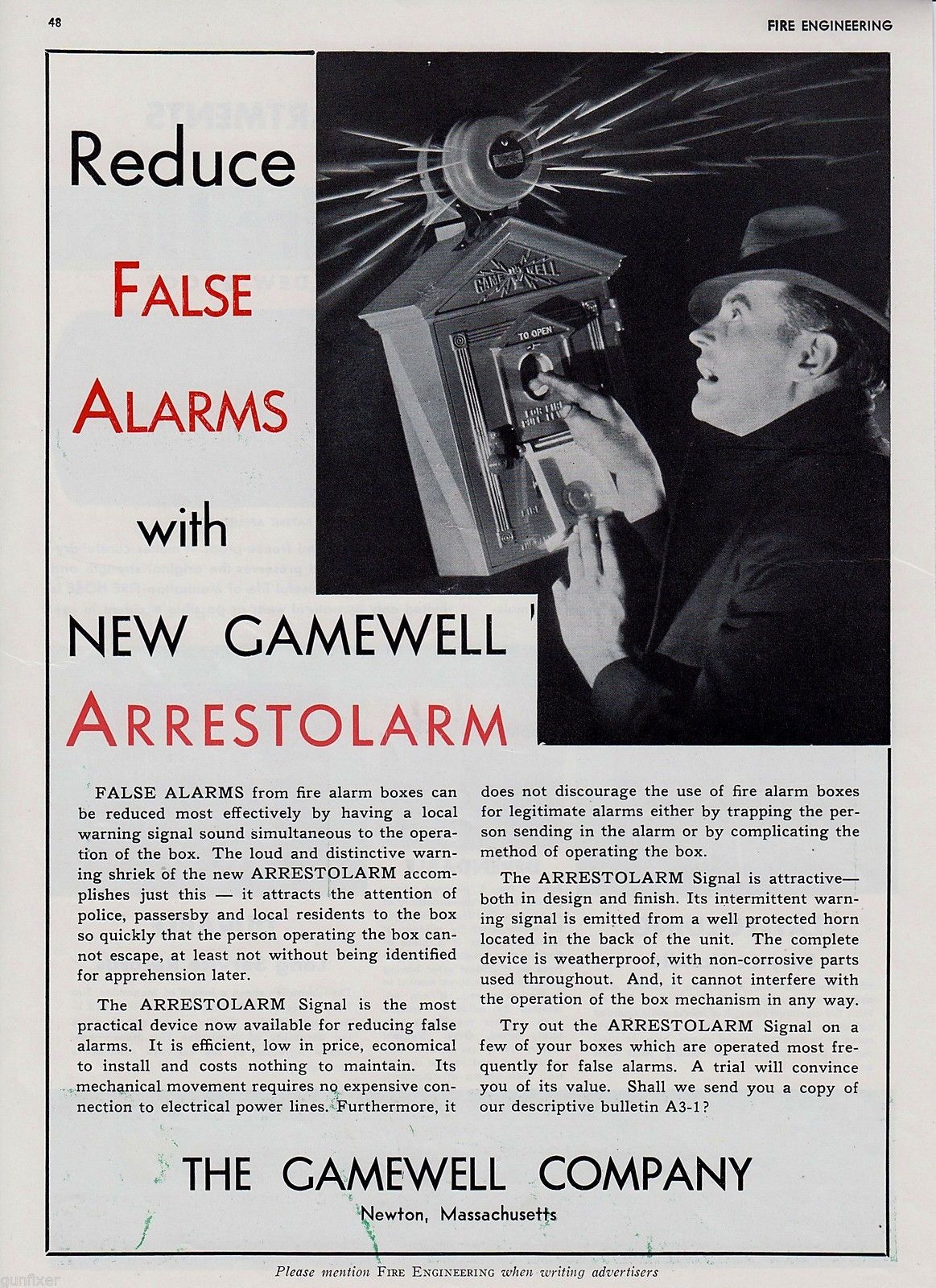
As we've seen, New York's emergency call boxes come in many different forms. This is the shell of an old Gamewell (check out the awesome logo) telegraphic fire alarm box with a modern telephonic fire/police button unit installed inside it. Gamewell was the dominant manufacturer of fire call boxes in the US, but this is the first Gamewell box I've noticed in NYC — within the city, they're apparently only found in a few neighborhoods in Queens.
The cylindrical thing mounted on top of the box is a mechanical Arrestolarm, which would have blasted a "loud and distinctive warning shriek" whenever the box was triggered. This was intended to discourage pranksters from setting off false alarms by drawing immediate attention to anyone reporting a fire.
After decades of growth landline revenues continue to fall and some are ready to pronounce the telecoms as a “boring utility”, if not scribe the industry’s tombstone. But innovations in mobile telephony, the advent of cloud computing, media convergence, as well as emerging market growth hold promise for some.
1) How are telecom companies adjusting their strategies to meet new areas of demand? Is there enough new growth in mobile and other areas to make up for shortfalls in landline usage?
2) Who are best positioned to capitalize from new growth strategies? How will cloud computing and other innovations impact the industry?
3) How are non-telecom businesses able to capitalize on the changes in the telephony environment?
Moderator
* Alexei Pushkov, Director of the Institute of Contemporary International Studies, Diplomatic Academy of the Ministry of Foreign Affairs of the Russian Federation
Panelists
* Jon Fredrik Baksaas, President and CEO, Telenor Group
* Carlo d`Asaro Biondo, Vice President for Southern and Eastern Europe, Middle East and Africa, Google
* Warren Finegold, CEO, Vodafone
* Alexander Izosimov, President and CEO, VimpelCom Ltd.
* Matthew Key, Chairman and CEO, Telefónica Europe, Telefonica
* Mikhail Shamolin, President, Mobile TeleSystems OJSC
* Pal Erik Sjatil, Managing Partner, McKinsey (Eastern Europe and CIS)
Discussants
* Jim Balsilie, CEO, Research In Motion (teleconference from Canada)
* Bernard Liautaud, Founder, Chairman and Chief Strategy Officer, Business Objects (teleconference from United Kingdom)
* Vlad Shmunis, Chairman of the Board and CEO, RingCentral (teleconference from USA)
Copyright St.Petersburg International Economic Forum (http://forumspb.com/en/)
"As a small businesses owner, you find yourself sifting through a number of unorganized spreadsheets that hold valuable data that is critical to your business.
Kapture CRM for small businesses helps you organize this data into easily accessible information available on a single dashboard at just a click away.
With Kapture CRM for startups you can;
1 – Organize your work
2 – Collaborate
3 – Retain and engage customers
4 – Monitor your ROI
Kapture CRM for small businesses helps you manage existing leads, support tickets and gives you real-time reporting.
You can also pin up your most important tasks on your dashboard for ease of access.
Kapture’s contact centre management helps you sort through large call volume in a short amount of time through easy third-party telephony integration and auto ticket allocation.
The Sales CRM for startups helps you get more leads, make more sales and streamline your prospecting system.
The Mobile CRM helps your sales team qualify leads based on interest levels using a lead thermometer.
As a Small business – you need to stay as organized as possible to achieve rapid growth. Kapture CRM for small businesses helps you achieve this goal with minimal effort helping you maximize your results from the few key activities that make your business profitable.
For More Info: www.kapturecrm.com/
For More Videos Please Visit Us @ www.youtube.com/channel/UCRX8fG7G_4izEofoqVF0smg/videos
"
Building Radio Kootwijk, Veluwe NL - 1922 - architect Julius Maria Luthmann.
The housing accommodations of Radio Kootwijk arose as a result of the building of a shortwave transmitter site with the same name, starting in 1918. The transmitters played an important role in the 20th century as a communication facility between the Netherlands and its colony of Dutch East Indies. In 1923 Dutch PTT (Post, Telegraph and Telephone Company) started trans-oceanic telegraphy using a longwave transmitter, a 400 KW high frequency alternator, from the German Telefunken company under the call sign PCG, in the 24 kHz and 48 kHz. By 1925 the longwave transmitter was changed by a shortwave tube based, electronic transmitter which had a much better performance due to the better propagation of short waves. With this new technology, in 1928 a radio-telephonic connection was established. At the end of World War II, the German occupying forces blew up the transmitter. Afterward some of the radio towers were rebuilt. Due to the development of new technologies like satellite communication, Radio Kootwijk lost its position as main overseas wireless connection point of the Netherlands. In 1980, the last transmission mast was blown up. In 2004 the park lost its last transmitter functions, and was transferred from the telephone company to the State Forestry Commission, which started attracting new buyers. The main building of the former transmitter park and named 'Building A', 'The Cathedral' or sometimes 'The Sphinx', was officially appointed as a monument. It is used as venue and scenery for several cultural events and productions, including the American film Mind Hunters in 2004.
However, many services you take out with Utility Warehouse, you'll always only get debited on figure from your bank account, once a month.
Photos from the SIP Network Operators Conference (SIPNOC) held in June 2012 in Reston, VA, USA.
For more information, please visit www.sipnoc.org/
Permission is granted to use the photo in other content provided that a link is made back to the photo here.
If you are in the photo and wish a copy of the original image file, please contact Dan York
On the first day of his visit, Congress General Secretary Rahul Gandhi put Sarvan village near Fursatganj in the annals of history by launching a broadband service named as “Fibre to panchayat” technically known as GPON technology. With having state-of-the-art facility, Sarvan village became the first village in India. One optic fibre enables users to make use of this facility to enjoy services like broadband, internet, telephonic service and cable-tv as well. The distribution of optic fibre in village panchayat will be done by India unit of US-based Alphion Corporation Ltd in collaboration with ITI Rae Bareli and BSNL. On this inauguration occasion, he shared the stage with Sam Pitroda, the pioneer behind the information technology revolution.
Xorcom VP Innovation, Izzy Gal, and Xorcom US representative, Robert Hammond, explain the merits of Xorcom products to a booth visitor at Astricon.
Xorcom Asterisk® PBX
Asterisk® PBX appliances implementing VoIP telephony with Asterisk® Elastix, Druid GUI and Tribox CE distributions. Open source IP PBX hardware solutions include FXS, FXO, BRI, PRI & R2 cards) and USB Channel Banks.
Nikola Tesla (1856 – 1943) was a Serbian American inventor, electrical engineer, mechanical engineer, physicist, and futurist best known for his contributions to the design of the modern alternating current (AC) electricity supply system.
Tesla gained experience in telephony and electrical engineering before immigrating to the United States in 1884 to work for Thomas Edison in New York City. He soon struck out on his own with financial backers, setting up laboratories and companies to develop a range of electrical devices. His patented AC induction motor and transformer were licensed by George Westinghouse, who also hired Tesla for a short time as a consultant. His work in the formative years of electric power development was involved in a corporate alternating current/direct current "War of Currents" as well as various patent battles.
Tesla went on to pursue his ideas of wireless lighting and electricity distribution in his high-voltage, high-frequency power experiments in New York and Colorado Springs, and made early (1893) pronouncements on the possibility of wireless communication with his devices. He tried to put these ideas to practical use in his ill-fated attempt at intercontinental wireless transmission, which was his unfinished Wardenclyffe Tower project. In his lab he also conducted a range of experiments with mechanical oscillators/generators, electrical discharge tubes, and early X-ray imaging. He also built a wireless controlled boat, one of the first ever exhibited.
Tesla was renowned for his achievements and showmanship, eventually earning him a reputation in popular culture as an archetypal "mad scientist". His patents earned him a considerable amount of money, much of which was used to finance his own projects with varying degrees of success. He lived most of his life in a series of New York hotels, through his retirement. He died on 7 January 1943. His work fell into relative obscurity after his death, but in 1960 the General Conference on Weights and Measures named the SI unit of magnetic flux density the tesla in his honor. Tesla has experienced a resurgence in interest in popular culture since the 1990s. [Source: Wikipedia]
Video watch online today latest new full episode 9 aired on 13th December 2013 of Star Plus drama serial Yeh Hai Mohabbatein complete serial episodes by starplus.
In episode 9 Ye Hai Mohabbatein, Mihika informs Ishita that Mihir wants to marry her Soumya suggests Madhavi to leave Raman’s office. Mihika informs Ishita that Mihir wants to marry her. Later, the employees of a child care center enquire Santosh about the Iyer family. They inform Vishwa that Ishita is willing to adopt a child. Ishita informs Madhavi about the same. Raman overhears Madhavi’s telephonic conversation and learns that she had followed him to his office. Santosh informs Raman that the family of a prospective groom is coming to meet him. Will Raman agree to meet them?
Video Source: Dailymotion
Video Owner: Star India – Star Plus Official Website HotStar All Rights Reserved.
YHM is an Indian Soap Opera Hindi Drama Serial. All videos, live news, written updates and episodes are available on http://www.yehhaimohabbatein.net
Asterisk is one of the advances technology for telephonic services that offers additionally created and business driven office phone system to endeavors. It grants to join telephones and to make calls to one another. Another reason behind Asterisk Solution prevalence is untouchable comparability with various working systems, for instance, NetBSD, OpenBSD, FreeBSD, Mac OS X, Solaris, etc. Asterisks give a broad assortment of business solutions and services.
The X_MSG project is about sex work activism, social telephony and rewired technology. The project is a collaboration between two amateur technological tinkerers and a group of sex work activists. Together they have put forward their energy to create DIY SMS based software system for women involved with the sex industry. Ultimately, the X_MSG software system is the outcome of an ongoing experiment between amateur coding and the pedagogy of sex work activism that allows for a new exploration of media systems.
credit: X_MSG
tessa2.lapl.org/digital/collection/photos/id/33303/rec/826
Title:And now the Radio-Telephone
Collection ID:Herald Examiner Collection
Location/Accession:HE box 102
Date:1946
Physical Description:1 photographic print :b&w ;26 x 21 cm.
Notes:Photograph was edited for publication purposes.; Title supplied by cataloger.
Description:Photograph caption dated April 30, 1946 reads, "Another marvel of modern science, the radio-telephone, is shown when it was demonstrated on the roof of the Southern California Telephone Co.'s main office. The new device will augment the telephonic facilities between Los Angeles and Catalina Island. Seen at demonstration, are, left to right, L. R. Montfort, C. T. Koerner and N. Lund."
Subject:Southern California Telephone Co.
Southern California Telephone Co.--Employees.
Technological innovations--United States.
Telephone companies--United States.
Men--California--Los Angeles.
Radiotelephone--United States.
Telephones.
Silhouettes.
Office buildings--California--Los Angeles.
Roofs--California--Los Angeles.
Downtown Los Angeles (Los Angeles, Calif.).
Los Angeles Evening Herald and Express photographs.
Herald-Examiner Collection photographs.
After decades of growth landline revenues continue to fall and some are ready to pronounce the telecoms as a “boring utility”, if not scribe the industry’s tombstone. But innovations in mobile telephony, the advent of cloud computing, media convergence, as well as emerging market growth hold promise for some.
1) How are telecom companies adjusting their strategies to meet new areas of demand? Is there enough new growth in mobile and other areas to make up for shortfalls in landline usage?
2) Who are best positioned to capitalize from new growth strategies? How will cloud computing and other innovations impact the industry?
3) How are non-telecom businesses able to capitalize on the changes in the telephony environment?
Moderator
* Alexei Pushkov, Director of the Institute of Contemporary International Studies, Diplomatic Academy of the Ministry of Foreign Affairs of the Russian Federation
Panelists
* Jon Fredrik Baksaas, President and CEO, Telenor Group
* Carlo d`Asaro Biondo, Vice President for Southern and Eastern Europe, Middle East and Africa, Google
* Warren Finegold, CEO, Vodafone
* Alexander Izosimov, President and CEO, VimpelCom Ltd.
* Matthew Key, Chairman and CEO, Telefónica Europe, Telefonica
* Mikhail Shamolin, President, Mobile TeleSystems OJSC
* Pal Erik Sjatil, Managing Partner, McKinsey (Eastern Europe and CIS)
Discussants
* Jim Balsilie, CEO, Research In Motion (teleconference from Canada)
* Bernard Liautaud, Founder, Chairman and Chief Strategy Officer, Business Objects (teleconference from United Kingdom)
* Vlad Shmunis, Chairman of the Board and CEO, RingCentral (teleconference from USA)
Copyright St.Petersburg International Economic Forum (http://forumspb.com/en/)
Building Radio Kootwijk, Veluwe NL - 1922 - architect Julius Maria Luthmann.
The housing accommodations of Radio Kootwijk arose as a result of the building of a shortwave transmitter site with the same name, starting in 1918. The transmitters played an important role in the 20th century as a communication facility between the Netherlands and its colony of Dutch East Indies. In 1923 Dutch PTT (Post, Telegraph and Telephone Company) started trans-oceanic telegraphy using a longwave transmitter, a 400 KW high frequency alternator, from the German Telefunken company under the call sign PCG, in the 24 kHz and 48 kHz. By 1925 the longwave transmitter was changed by a shortwave tube based, electronic transmitter which had a much better performance due to the better propagation of short waves. With this new technology, in 1928 a radio-telephonic connection was established. At the end of World War II, the German occupying forces blew up the transmitter. Afterward some of the radio towers were rebuilt. Due to the development of new technologies like satellite communication, Radio Kootwijk lost its position as main overseas wireless connection point of the Netherlands. In 1980, the last transmission mast was blown up. In 2004 the park lost its last transmitter functions, and was transferred from the telephone company to the State Forestry Commission, which started attracting new buyers. The main building of the former transmitter park and named 'Building A', 'The Cathedral' or sometimes 'The Sphinx', was officially appointed as a monument. It is used as venue and scenery for several cultural events and productions, including the American film Mind Hunters in 2004.
Commerce Uniting the Hemispheres with Electricity (1928)
Artist: Victor White
International Telephone & Telegraph Co. Building (1928)
Architect: Buchman & Kahn
67–75 Broad St.
Lower Manhattan
The mosaic depicts Commerce (Mercury or Hermes) using electricity to unite the hemispheres through telegraphy and telephony.
© Matthew X. Kiernan
NYBAI14-0785
A Cat utility cover in Centro Montecristi - Corporación Nacional de Telecomunicaciones CNT E.P.
Cnt provides Ecuadorians with converged telecommunications and ICT services.
The National Telecommunications Corporation CNT S.A. was established as a public limited company by means of a public deed of merger of the extinct Andinatel S.A. and Pacifictel S.A., signed on October 30, 2008,1 with the aim of unifying services and expanding coverage in fixed telephony and broadband internet throughout Ecuador.
The Blue Post in the city of Chur is something of a landmark. Completed in 1983 as a telecommunications center for telephony, broadcasting and television. By architect Richard Brosi. As a symbol of the dawn of a new era of communication that began with the introduction of the automobile telephone network B in the same year. Now, for the second time, a planning application for a conversion has been submitted. The first was withdrawn after loud criticism. Because the architectural style would be destroyed, there is resistance again. The Blue Post is described as an architectural jewel and is to be placed under protection. Switzerland, September 29, 2024. (1/2)
The border at Monte Aymond in southern Chile.
Monte Aymond is a village located in the Güer Aike Department of Santa Cruz Province of Argentina. It is located on National Route 3 about 67 km (42 miles) from Río Gallegos and 8 km (5 miles) from the border crossing with Chile, dubbed Paso Integración Austral.
The area has services such as telephony and shops, in addition to police assistance (Argentine National Gendarmerie and Carabineros de Chile) on both sides of the border.
Products of animal or vegetable origin were not permitted to be carried across the border, for protection of crops and animals on the other side. That included pets.
LAST MAGNETO SWITCHBOARD OPERATED IN KANSAS
ROXBURY - JAN. 1977
The stand to the left of the switchoard contained ashes. The cables often became too hot to handle with the heavy gloves and had to be dropped into the ashes until they cooled. There was also a large bucket of sand to throw on the switchboard when it caught fire.
Compliments of the Wayne Baldwin Family
Home Telephone Company, Galva, KS
Museum of Independent Telephony,
Abilene, KS
Product Overview:
Nokia Bicycle Charger Kit captures free and eco-friendly energy from bicycling.
The kit consists of Nokia Bicycle Charger DC-14, Nokia Phone Holder for Bicycle CR-124,
and Bottle Dynamo for Bicycle.
Key Features
Free and Efficient Charging from Bicycling
Starts and stops charging when bicycle speed is 6 km/h and 50 km/h, respectively
Reaches efficiency of a normal charger, e.g. corresponds to Nokia Compact Charger AC-3 when speed is 12 km/h
Total charging time varies between devices
Easy to Install and Fun to Use
Install and detach easily with cable ties, nuts and bolts in the sales box.
Blaster music from the mobile phone while bicycling and charging
Check charging status from the screen of the mobile phone
Designed for Durability and Reliability
Nokia Bicycle Charger DC-14 resists humidity and dust with double insulation
A bag protects mobile phone from humidity and dust
Bottle dynamo has a robust structure
Sales Package Content
Nokia Bicycle Charger DC-14and four reusable cable ties (to attach cables to the bicycle)
Nokia Phone Holder for Bicycle CR-124 (rubber phone holder and protective bag for the device)
Bottle Dynamo for Bicycle with L-shaped bracket and three 6 mm bolts, three 6 mm nuts to attachbottle dynamo to the bicycle
Foldable user guide with line drawings and depiction of key use cases and warnings
Photos from the SIP Network Operators Conference (SIPNOC) held in June 2012 in Reston, VA, USA.
For more information, please visit www.sipnoc.org/
Permission is granted to use the photo in other content provided that a link is made back to the photo here.
If you are in the photo and wish a copy of the original image file, please contact Dan York
A lil LO for a challenge at "Le labo de Scrap" : we had to use mainly red and white ! I also used the envelope of my telephonic invoice !! ;)
And there is little photos on the paper lace from KI Memories, which are hidden (in the envelope), as the photo on the LO.. sorry, but it had to be !
Hope you had a great week-end !
TFP !
Leonardo Luna and Daniel Alibardi of CommLogik step into the Xorcom booth to explain the ZigBee/PBX integration demonstrated by Xorcom.
Enterprise Connect always attracts technology innovators and creative disruptors in cloud solutions (UCaaS, IaaS, CCaaS, etc.), Unified Communications, the Internet of Things and more. This year’s event was again abuzz with powerful keynote presentations, lively panel discussions, and distinctive product demonstrations and exhibits. As a proud platinum sponsor, NEC helped attendees “Discover the Power of SMART Enterprise”, attracting an impressive crowd to our booth and winning a prestigious award for the second year in a row.
Learn more at nectoday.com/nec-at-enterprise-connect-2016/.
Product Overview:
Nokia Bicycle Charger Kit captures free and eco-friendly energy from bicycling.
The kit consists of Nokia Bicycle Charger DC-14, Nokia Phone Holder for Bicycle CR-124,
and Bottle Dynamo for Bicycle.
Key Features
Free and Efficient Charging from Bicycling
Starts and stops charging when bicycle speed is 6 km/h and 50 km/h, respectively
Reaches efficiency of a normal charger, e.g. corresponds to Nokia Compact Charger AC-3 when speed is 12 km/h
Total charging time varies between devices
Easy to Install and Fun to Use
Install and detach easily with cable ties, nuts and bolts in the sales box.
Blaster music from the mobile phone while bicycling and charging
Check charging status from the screen of the mobile phone
Designed for Durability and Reliability
Nokia Bicycle Charger DC-14 resists humidity and dust with double insulation
A bag protects mobile phone from humidity and dust
Bottle dynamo has a robust structure
Sales Package Content
Nokia Bicycle Charger DC-14and four reusable cable ties (to attach cables to the bicycle)
Nokia Phone Holder for Bicycle CR-124 (rubber phone holder and protective bag for the device)
Bottle Dynamo for Bicycle with L-shaped bracket and three 6 mm bolts, three 6 mm nuts to attachbottle dynamo to the bicycle
Foldable user guide with line drawings and depiction of key use cases and warnings