View allAll Photos Tagged Sympathetic
Probably a day or so too late to get the sun in the ideal spot for sunrise, so that it crests the horizon centred between the tower, but still a very pleasant morning.
Since I was last here there have been some additional repairs undertaken to the wooden decking of the bridge, but these haven’t been done sympathetically. Large wooden planks have just been overlaid over the existing planks. It looks awful, and I can only hope a more worthwhile restoration will be undertaken on this historically important bridge in the future.
For this shoot I decided to break out my old 24mm tilt shift lens, which I haven’t used for a while. Two shots taken, using the shift mechanism, and stitched together in Lightroom to get the square shot.
Canon R
Canon 24 TSE
Kase 3 stop reverse grad
*** Featured in Explore 22 March 2021, many thanks to all 🙏 ***
The robin (Erithacus rubecula) is a species of bird in the flycatcher family (Muscicapidae). It inhabits North Africa, Europe and Asia Minor as well as the Mediterranean islands. Its diet consists mainly of insects, small spiders, worms and snails. Its song begins about an hour before sunrise and can be heard until dusk almost all year round. The species is currently considered to be endangered.
The robin was once again "Bird of the Year" in Germany in 2021 (after 1992).
Because of its often short flight distance, its appearance and its frequency, the robin is a special sympathetic bird. In the legends of Christ, it comforts Jesus at special moments and when he is dying. It is also associated with Christmas as the unofficial national bird of Britain. It played an important role in the discovery and scientific recognition of magnetic sense.
Das Rotkehlchen (Erithacus rubecula) ist eine Vogelart aus der Familie der Fliegenschnäpper (Muscicapidae). Es besiedelt Nordafrika, Europa und Kleinasien sowie die Mittelmeerinseln. Seine Nahrung besteht vor allem aus Insekten, kleinen Spinnen, Würmern und Schnecken. Sein Gesang beginnt etwa eine Stunde vor Sonnenaufgang und ist bis in die Dämmerung fast das ganze Jahr über zu hören. Die Art gilt derzeit als ungefährdet.
Das Rotkehlchen war in Deutschland (nach 1992) 2021 erneut „Vogel des Jahres“.
Wegen seiner oft geringen Fluchtdistanz, seines Erscheinungsbilds und seiner Häufigkeit ist das Rotkehlchen ein besonderer Sympathieträger. In Christuslegenden steht es Jesus in besonderen Momenten und im Sterben tröstend bei. Zudem wird es als inoffizieller Nationalvogel Großbritanniens mit Weihnachten in Verbindung gebracht. Es hat bei der Entdeckung und wissenschaftlichen Anerkennung des Magnetsinns eine wichtige Rolle gespielt.
Wiki
ScotRail Class 334 No. 334016 on an Edinburgh – Helensburgh service disappears into Bellgrove Tunnel and beneath the former abattoir and meat market which closed many years ago and has since been used as a Car Market and Taxi Office. The structures remain as listed buildings but there are plans to sympathetically redevelop the site. 22nd September 2022.
GBRf 'Shed' unit 66734 'Platinum Jubilee' rolls slowly into Carlisle station for the scheduled crew change on the 7.11am Mossend - Clitheroe Castle (4M01) discharged cement tanks.
The exceptionally fine roof here was the subject of a £14.5m renovation 5-6 years ago where the traditional glass panes (which would occasionally fall to the platform due to distortion in the roof trusses) were replaced by polymer material, and the roofing structure generally strengthened.
The result is remarkable to say the least with a much brighter and more pleasant environment than the one I remember from previous visits. Formerly known as Carlisle Citadel station, it was built between 1846 and 1848 at a cost of £53,000 and, externally at least, was designed by William Tite to be sympathetic to the Citadel located close by.
Comments off for this one, thanks.
11.57am, 24th March 2023
Seagull and views from Portmeirion looking to Talsarnau and Ynys.
In 1925, Welsh architect Clough Williams-Ellis acquired the site which was to become Portmeirion. He had been searching for a suitable site for his proposed ideal village for several years and when he heard that the Aber Iâ estate near Penrhyndeudraeth was for sale, he did not hesitate to make an offer.
He wanted to show how a naturally beautiful location could be developed without spoiling it, and that one could actually enhance the natural background through sympathetic development. The Aber Iâ estate had everything he had hoped for as a site for his architectural experiment: steep cliffs overlooking a wide sandy estuary, woods, streams and a nucleus of old buildings.
But the history of Portmeirion started long before 1925. The construction of Castell Deudraeth was recorded in 1188 by Gerald of Wales, who wrote: "We crossed the Traeth mawr and the Traeth Bychan. These are two arms of the sea, one large and one small. Two stone castles have been built there recently. The one called Castell Deudraeth belongs to the sons of Cynan and is situated in the Eifionydd area, facing the northern Mountains."
Castell Deudraeth was referenced again by the 17th century philologist, geologist, natural historian and keeper of the Ashmolean Museum in Oxford, Edward Lhuyd in 1700. Lhuyd recorded the name as Aber Iâ, stating " The Castle of Aber Iâ yet stood in ruined form overlooking the south western extremity of the peninsula".
In 1861, Richard Richards wrote a description: "Neither man nor woman was there, only a number of foreign water-fowl on a tiny pond, and two monkeys, which by their cries evidently regarded me as an unwelcome intruder. The garden itself was a very fine one, the walls of which were netted all over with fruit trees...Aber Iâ, then, gentle reader, is a beautiful mansion on the shore of Traeth Bach, in Merionethshire."
When Williams-Ellis acquired the land in 1925 he wrote, "a neglected wilderness - long abandoned by those romantics who had realised the unique appeal and possibilities of this favoured promontory but who had been carried away by their grandiose landscaping...into sorrowful bankruptcy." Clough immediately changed the name from Aber Iâ (Glacial Estuary) to Portmeirion; Port because of the coastal location and Meirion as this is Welsh for Merioneth, the county in which it lay.
His first job was to extend and convert the old house on the shore into a grand hotel. The concept of a tightly grouped coastal village had already formed in Clough's mind some years before he found the perfect site and he had quite a well-defined vision for the village from the outset.
Portmeirion was built in two stages: from 1925 to 1939 the site was 'pegged-out' and its most distinctive buildings were erected. From 1954-76 he filled in the details. The second period was typically classical or Palladian in style in contrast to the Arts and Crafts style of his earlier work. Several buildings were salvaged from demolition sites, giving rise to Clough's description of the place as "a home for fallen buildings".
"An architect has strange pleasures," Clough wrote in 1924. "He will lie awake listening to the storm in the night and think how the rain is beating on his roofs, he will see the sun return and will think that it was for just such sunshine that his shadow-throwing mouldings were made."
The first article about Portmeirion appeared in The Architects' Journal (January 6 1926) with photographs of scale models and preliminary designs prepared by Clough to impress potential investors. In this article, John Rothenstein writes: "On the sea-coast of North Wales, quite near his own old home, Plas Brondanw, he has acquired what he believes to be an ideal site, and he is engaged upon plans and models for the laying out of an entire small township. The results of his scheme will be significant and should do much to shake the current notion that although houses must be designed with due care, towns may grow up by chance."
The Hotel Portmeirion officially opened for the Easter Weekend, on 2nd April 1926. The last building, the Tollgate, was built in Clough's 93rd year.
A characterful old farm building out the back of Hunterville that is slowly decaying with the passage of time. The red door seemed to invite the attention.
I've purposely kept the colours fairly muted in this so the image is more sympathetic to its subject and environs.
(c) Dominic Scott 2020
“What good is the warm of summer, without the cold of winter to give it sweetness.”
– John Steinbeck (American writer who won the 1962 Nobel Prize in Literature "for his realistic and imaginative writings, combining as they do sympathetic humor and keen social perception")
Three bracketed photos were taken with a handheld Nikon D7200 and combined with Photomatix Pro to create this HDR image. Additional adjustments were made in Photoshop CS6.
"For I know the plans I have for you", declares the LORD, "plans to prosper you and not to harm you, plans to give you hope and a future." ~Jeremiah 29:11
The best way to view my photostream is through Flickriver with the following link: www.flickriver.com/photos/photojourney57/
Saltwell Towers, built in 1862 by renowned stained glass manufacturer William Wailes, lies in the heart of Saltwell Park in Gateshead in the North of England.
The Gothic mansion is surrounded by ornamental gardens and has been sympathetically restored to its former Victorian glory to provide a well-equipped visitor centre and tea room.
During a photo walk in Cologne I met these sympathetic friends Selina & Teresa. That produced this cool photo. Thanks!
Taken during the Vintage by the Sea festival (Morecambe, September 2023)
www.flickr.com/photos/ianbetley/albums/72177720311252630
~~
Launched in 1989 as a domestic-market only model, the smooth, glassy body sported dihedral doors that inspired the McLaren F1 layout, owing a lot to the Alfa Romeo 33 Stradale. Exotic looks clothe a mundane Starlet and Corolla derived drivetrain, with an eager 1.5 16v engine and choice of remarkably efficient automatic, or close ratio five-speed manual gearbox. Previewed as the AVX-II, the few changes made placed the Sera as a more advanced vehicle than the concept. For a boutique car the Sera accomplished impressive sales, with 15,941 produced between February 1990 and December 1995.
As the JDM personal import boom caught the imagination of UK buyers, by the mid 2000s there were at least 300 Seras in Britain. Some cars continue to be available through importers, though the best survivors are now cherished classics in Japan where values are rising. Now the majority of UK imports now have been on these shores for over a decade, they represent an affordable route to supercar styling with low running costs and plenty of scope for sympathetic tuning.
Spring is finally here in my little corner of the world & the sun was shining for this one :)
A colour, form & textures study, processed sympathetically to preserve Exmoor's natural character.
View Large On Black.
So fricken cold when I took this.
Summer 1 starts up tomorrow which means class starts back up again too! Oh and work, good old work. :/ blehhhh
Anyways I will be uploading a print giveaway photo tomorrow since I felt there was some confusion before. The giveaway will be official and anyone can enter! I'll put the details up tomorrow.
In the Boathouse at Winkworth Arboretum, Godalming, Surrey, UK (National Trust)
Not as sharp as I normally like, so recommend you don't look too close :-) (ok, i get that a comment like that would normally prompt me to do exactly that but, really, don't... Trying to focus manually was tricky, coupled with dark conditions and lots of people wandering around...not a good combination. One day I'll actually take a tripod with me when I go somewhere :-( )
Fairly sympathetic edits - a little CEFex, a smidgen of SEfex, but mainly just tightening in affinity.
Views of the lighthouse and over the estuary.
In 1925, Welsh architect Clough Williams-Ellis acquired the site which was to become Portmeirion. He had been searching for a suitable site for his proposed ideal village for several years and when he heard that the Aber Iâ estate near Penrhyndeudraeth was for sale, he did not hesitate to make an offer.
He wanted to show how a naturally beautiful location could be developed without spoiling it, and that one could actually enhance the natural background through sympathetic development. The Aber Iâ estate had everything he had hoped for as a site for his architectural experiment: steep cliffs overlooking a wide sandy estuary, woods, streams and a nucleus of old buildings.
But the history of Portmeirion started long before 1925. The construction of Castell Deudraeth was recorded in 1188 by Gerald of Wales, who wrote: "We crossed the Traeth mawr and the Traeth Bychan. These are two arms of the sea, one large and one small. Two stone castles have been built there recently. The one called Castell Deudraeth belongs to the sons of Cynan and is situated in the Eifionydd area, facing the northern Mountains."
Castell Deudraeth was referenced again by the 17th century philologist, geologist, natural historian and keeper of the Ashmolean Museum in Oxford, Edward Lhuyd in 1700. Lhuyd recorded the name as Aber Iâ, stating " The Castle of Aber Iâ yet stood in ruined form overlooking the south western extremity of the peninsula".
In 1861, Richard Richards wrote a description: "Neither man nor woman was there, only a number of foreign water-fowl on a tiny pond, and two monkeys, which by their cries evidently regarded me as an unwelcome intruder. The garden itself was a very fine one, the walls of which were netted all over with fruit trees...Aber Iâ, then, gentle reader, is a beautiful mansion on the shore of Traeth Bach, in Merionethshire."
When Williams-Ellis acquired the land in 1925 he wrote, "a neglected wilderness - long abandoned by those romantics who had realised the unique appeal and possibilities of this favoured promontory but who had been carried away by their grandiose landscaping...into sorrowful bankruptcy." Clough immediately changed the name from Aber Iâ (Glacial Estuary) to Portmeirion; Port because of the coastal location and Meirion as this is Welsh for Merioneth, the county in which it lay.
His first job was to extend and convert the old house on the shore into a grand hotel. The concept of a tightly grouped coastal village had already formed in Clough's mind some years before he found the perfect site and he had quite a well-defined vision for the village from the outset.
Portmeirion was built in two stages: from 1925 to 1939 the site was 'pegged-out' and its most distinctive buildings were erected. From 1954-76 he filled in the details. The second period was typically classical or Palladian in style in contrast to the Arts and Crafts style of his earlier work. Several buildings were salvaged from demolition sites, giving rise to Clough's description of the place as "a home for fallen buildings".
"An architect has strange pleasures," Clough wrote in 1924. "He will lie awake listening to the storm in the night and think how the rain is beating on his roofs, he will see the sun return and will think that it was for just such sunshine that his shadow-throwing mouldings were made."
The first article about Portmeirion appeared in The Architects' Journal (January 6 1926) with photographs of scale models and preliminary designs prepared by Clough to impress potential investors. In this article, John Rothenstein writes: "On the sea-coast of North Wales, quite near his own old home, Plas Brondanw, he has acquired what he believes to be an ideal site, and he is engaged upon plans and models for the laying out of an entire small township. The results of his scheme will be significant and should do much to shake the current notion that although houses must be designed with due care, towns may grow up by chance."
The Hotel Portmeirion officially opened for the Easter Weekend, on 2nd April 1926. The last building, the Tollgate, was built in Clough's 93rd year.
Il simbolo dell'Isola di Mikonos.
Petros gira liberamente per l'isola e si fa avvicinare dai turisti, si concede alle foto con i turisti.
Naturalmente oggi nessuno sa se questo pellicano è il primo PETROS, perchè la sua è una lunga storia che si può leggere facilmente in internet.
Comunque è e resta il simpatico simbolo di Mikonos
The symbol of the island of Mykonos.
Petros roams freely around the island and lets himself be approached by tourists, he allows himself to take photos with tourists.
Naturally today no one knows if this pelican is the first PETROS, because his is a long story that can be easily read on the internet.
However it is and remains the sympathetic symbol of Mykonos
On a cycling jaunt we find this wonderfully characterful bay window in a lay-by.
Its condition suggests it's already had quite a full life. I wish it many more years of adventure with sympathetic owners!
Red Rebel Brigade symbolises the common blood we share with all species,
That unifies us and makes us one.
As such we move as one, act as one and more importantly feel as one.
We are unity and we empathise with our surroundings, we are forgiving
We are sympathetic and humble, compassionate and understanding,
We divert, distract, delight and inspire the people who watch us,
We illuminate the magic realm beneath the surface of all things and we invite people to enter in, we make a bubble and calm the storm, we are peace in the midst of war.
We are who the people have forgotten to be!
Red Rebel Brigade was devised by Doug Francisco and Justine Squire from Bristol’s Invisible Circus for the Extinction Rebellion Spring uprising April 2019 in London
Vasily Kandinsky
b.1866 Moscow
d.1944 Nueilly-sur-Seine,France
Several Circles
1926
oil on canvas
Abstract Expressionism
In 1922 Kandinsky began teaching at the Bauhaus,a school of art and applied science founded in 1919 in Weimar, Germany.There he discovered an environment sympathetic to his belief in arts ability to transform self and society.Several Circles epitomizes his movement toward a universal abstraction and his even greater interest the psychological effects of form and color.Kandinsky moved with the Bauhaus in 1925 to Dessau Germany where he and Paul Klee lived in conjoined houses and often exchanged ideas on technique.In 1930 Solomon R.Guggenheim and his art advisor Hilla Rebay,visited Kandinsky and Klee at the Bauhaus.
On request of Nitro, his friend and former RL neighbour Tutsy agreed to exhibit at Nitroglobus and made the works for Série Noire.
Série noire is a French publishing imprint founded in 1945 by Marcel Duhamel. It has released a collection of crime fiction of the hardboiled detective thrillers variety.
The name became a generic term for works of detective, and is considered having inspired the French critic Nino Frank to create in 1946 the phrase Film Noir, which describes Hollywood crime dramas.
Typical elements are: corrupt police, sympathetic detectives, anxiety, violence, bestial love and inordinate passion. All sentiments which in a civilized society, are supposed to have courses quite exceptionally. But always expressed in an compact academic language which still dominates, in pink or black, humor.
Enjoy the exhibition and wish you a NOIR experiment!
Dido Haas, curator Nitroglobus gallery
Taxi to Nitroglobus: maps.secondlife.com/secondlife/Costa%20Blanco/198/117/771
The photo shows one of the artworks of the exhibition, made by Tutsy
Desperate Dan is a wild west character in the now-defunct Scottish comic magazine The Dandy. He made his appearance in the first issue which was dated 4 December 1937 and became the magazine's mascot. He is apparently the world's strongest man, able to lift a cow with one hand. The pillow of his (reinforced) bed is filled with building rubble and his beard is so tough he shaves with a blowtorch.
The character was created by Dudley D. Watkins, originally as an outlaw or ‘desperado’ (hence his name), but evolved into a more sympathetic type, using his strength to help the underdog. After Watkins’ death in 1969, the cartoons were drawn by many other artists, principally Ken H. Harrison, though the Watkins canon was often recycled. When the Dandy became digital-only in 2012, the Desperate Dan strips were drawn by David Parkins.
There is a statue of Dan in Dundee, Scotland, where his publishers, D. C. Thomson & Co. are based.
You Are Not Alone - Michael Jackson
Everything Is AWESOME!!! - The LEGO® Movie - Tegan and Sara
LEGO has dropped Shell Oil under pressure from environmental activists Greenpeace who released a video titled "LEGO: Everything is NOT awesome." Greenpeace pointed out that Shell is set to spend billions drilling in the Arctic over the next decade and are using toys as a way to normalize their brand and make children more sympathetic to them.
LEGO: Everything is NOT awesome.
BiG THANKS to EVERYONE for your personal comments and also your support from selected groups.
Awards are always encouraging and especially appreciated from those add my work to their collection of 'faves'.
Cheerz
The Alabama Hills are a range of hills & rock formations near the eastern slope of the Sierra Nevada in the Owens Valley, west of Lone Pine in Inyo County, California.
Dozens of natural arches are among the features of the Alabama Hills, such as: Mobius Arch, Lathe Arch, the Eye of Alabama and Whitney Portal Arch.
The Alabama Hills were named for the CSS Alabama, a Confederate warship deployed during the American Civil War. When news of the ship's exploits reached prospectors in California sympathetic to the Confederates, they named many mining claims after the ship, and the name came to be applied to the entire range.
When the Alabama was finally sunk off the coast of Normandy by the USS Kearsarge in 1864, prospectors sympathetic to the Union named a mining district, a mountain pass, a mountain peak, and a town after the Kearsarge.
en.wikipedia.org/wiki/Alabama_Hills
Fujifilm X-T20. Fujinon XF 10-24mm f/4 R OIS. 10mm, f/6.4, 1/100 sec, ISO 400.
To view more images of Lower Slaughter, please click
"here" !
I would be most grateful if you would refrain from inserting images, and/or group invites; thank you!
Lower Slaughter is a village in the English county of Gloucestershire, located in the Cotswold district, 4 miles (6.4 km) south west of the town of Stow-on-the-Wold. The village is built on both banks of the River Eye, which also flows through Upper Slaughter. At the west end of the village there is a 19th-century water mill with an undershot waterwheel and a chimney for additional steam power. There is a ford where the river widens in the village and several small stone footbridges join the two sides of the community. While the mill is built of red brick most of the 16th and 17th century homes in the village use Cotswold sandstone and are adorned with mullioned windows and often with other embellishments such as projecting gables. Records exist showing that Lower Slaughter has been inhabited for over 1000 years. The Domesday Book entry has the village name as “Sclostre”. It further notes that in 1066 and 1086 that the manor was in the sheriff's hands. Lower Slaughter Manor, a Grade-II listed 17th-century house, was granted to Sir George Whitmore in 1611 and remained in his family until 1964. The 13th century Anglican parish church is dedicated to St. Mary the Virgin. Much of the current structure was built in 1866; however, the spire and peal of six bells was recently restored. In May 2013 it was reported in the national news that the Parish Council were fiercely opposed to the presence of an icebox tricycle selling ice creams for seven days a week, six months of the year, citing that the trading times were excessive, increased footfall would prevent the grass from growing and that children could climb on the trike and fall into the nearby river.
From Wikipedia, the free encyclopedia
The Slaughters Country Inn is privately owned and offers a relaxed ambience, a style that is sympathetically balanced between the original features of a 17th Century building and contemporary design. The blend of old and new creates the perfect retreat in a beautiful country location
Excerpt from www.woolwich.ca/media/2ncms3ln/elmira-walking-tour-route-...:
17 and 19 Wyat Street East
These twin houses were built by the well-known local mason, Charles Wilken, who also did the masonry on the Great West Felt Co. at the north end of Elmira. He built No. 19 for himself about 1907 and then built No. 17 shortly thereafter for his wife’s sister who wanted an identical house. One difference between the original buildings were in the foundation blocks; Charles’ son Walter relates that the sister- in-law and her husband spent evenings through the winter making the blocks for No. 17 by hand.
During the winter of 1977-78, an addition was added to the south and east sides of the 1912 building which doubled the area of the library. The new addition was sympathetically designed to reinforce the original architectural features. The addition was set back from the front façade, leaving the focus on the original building, and the rounded windows echo the semi-circular arch over the original main entrance.
The geometric latticework or treillage (a Regency feature) over the verandas is a special feature of these houses. The turned posts are also original, and the bottom railing of the upper veranda on No. 17 is probably original while that of No. 19 has been replaced. Notice also the delicate scrollwork at the top of the Italianate round-headed windows.
Linton Falls, Grassington
The old turbine house on the upper weir at Linton Falls was restored in 2011 to enable the site to produce hydroelectricity for Grassington and the surrounding area for the first time in over 50 years.
By feeding power into the local distribution network, the two Archimedean screw bring the station in to the modern era, just as its original owners did over a century ago when it first became a hydroelectricity generating station.
The new generators are capable of producing 500,000 kWh of electricity every year, the equivalent to the average annual energy use of 90 family homes. This renewable energy source also saves the environment 216 tonnes of CO2 emissions per year when compared with equivalent fossil fuel power generation.
The turbine house was originally built in 1909 by the Grassington Electricity Supply Company and took advantage of the Upper Linton Falls weir, which had been constructed around a century earlier.
1921 saw the site taken over by the Linton Mill Electricity Supply Company who extended the original turbine house with two new hydro-electricity generators. These were installed in the turbine bays you can still see today. The station continued generating until 1948 when the arrival of the national grid to the Yorkshire Dales for the first time meant that local power generation was no longer financially viable. The structure was abandoned and left open to the elements.
In 2000, due to its significance as an early example of a local electricity generating site, Linton Falls was designed as a Scheduled Monument by the Department of Culture, Media and Sport. After receiving the necessary consents and licenses, in 2011 the turbine house was carefully restored in a sympathetic manner (using materials to match the original building), and two new Archimedean screw turbines weir installed to enable the site to begin producing hydroelectricity once again.
Now operational and supplying electricity not only has the heritage of the Linton Falls Hydroelectric Power Station been saved but the site is making a valuable contribution to tomorrow as a source of renewable energy.
I realized that I am a sympathetic person and that I cling on to the emotions of others. I'm all sorts of mixed up right now.
Nervous.
Worried.
Anxious.
Sad.
Lonely.
I wish I could help everyone with what they are going through, but I just don't think I can anymore.
When your impossible to reach neurologist's office calls the morning after your EEG and says the doctor wants to see you immediately and won't give you a clue!!! I'm guessing it showed my seizures have returned. I thought as much when I first made the appointment with her.
IN 2001, I was broadsided by another car and began experiencing temporal lobe seizures shortly thereafter.
I was on seizure meds for many years. Then, about 4 years ago, my doctor had me slowly wean off the meds. She subsequently retired and it didn't seem to matter as I didn't appear to be experiencing any more seizures.
I did retain another neurologist recently when I began to experience what I believe to be auras and my limbic system seems to be out of control.
I saw the new neurologist, she ordered at CT scan and then an EEG. Her practice is part of a larger institution and forget about navigating the phone menu and actually reaching a person.
I was discussing this with the tech last night and when I received the call this morning from the doctor's office, the one thing she mentioned is that the tech reported to Dr. Ahmed that she needs to see me right away, before the holidays!
I can conclude two things:
1. The tech was sympathetic and didn't want me to wait and worry over the holidays or,
2. My seizures have returned and I need treatment asap
Sorry to bother you with this but I'm nervously killing time.
TTYL, thanks!
Stained glass window at St Michaels, a deconsecrated church sympathetically converted to commercial premises.
Say did I thank you for your kindness
It’s just the way you are
The sympathetic things you say and do
Made me love you from afar
Now I need to know you and bring myself a little closer, yeah
The chance to hold you in my arms and put our love in motion
Makes me say
Stay lady, stay baby stay
Cos I would rather smile than cry
Stay lady, stay baby stay
Just the way you are with me
You ask me ‘bout the dress you’re wearing
I just love the way you are
Now don’t you change a single thing for me
To me girl you’re the star
You supported me, with love, honour and devotion, yeah
Now you can believe in me and share in loves emotions
And make me say
Stay lady, stay baby stay
Cos I would rather smile than cry
Stay lady, stay baby stay
Just the way you are with me
Stay with me!
Just the way you are with me
Stay lady, stay baby stay
Just the way you are
With love and affection
Stay lady, stay baby stay
You supported me
With love, honour and devotion
Simply Red
Steeped
Emotion realized
Her mouth was parched and bruised
The same as the hibiscus petals
In a heap on the table
Awaiting sympathetic water
To revive pink affections
And refreshment to satiation
.
.
©Christine A. Evans 10.12.17
.
I really appreciate your comments and faves. I'm not a hoarder of contacts, but enjoy real-life, honest people. You are much more likely to get my comments and faves in return if you fit the latter description. Just sayin. :oD
.
If you like b/w photography and/or poetry check out my page at:
expressionsbychristine.blogspot.com/</a
One more image from the Alabama Hills, this a morning shot looking east toward the highest peaks of the Sierra Nevada.
The Alabama Hills were named for the CSS Alabama, a Confederate warship deployed during the American Civil War. When news of the ship's exploits reached prospectors in California sympathetic to the Confederates, they named many mining claims after the ship, and the name came to be applied to the entire range. When the Alabama was finally sunk off the coast of Normandy by the USS Kearsarge in 1864, prospectors sympathetic to the North named a mining district, a mountain pass, a mountain peak, and a town after the Kearsarge.
We are home, so I hope to catch up with everyone over the next couple of days.
Thanks for stopping by and for all of your kind comments, awards and faves -- I appreciate them all.
© Melissa Post 2019
Excerpt from www.historicplaces.ca/en/rep-reg/place-lieu.aspx?id=11752:
Description of Historic Place
The Mansfield Cottage is located at 200 Smith Street, on a triangular parcel of land, at the intersection of Smith Street and Victoria Crescent, in the former Village of Elora, now the Township of Centre Wellington. The two-storey brick building is reminiscent of the Queen Anne style and was constructed in 1895.
The property was designated, by the Township of Centre Wellington, under Part IV of the Ontario Heritage Act (Bylaw 2006-013).
Heritage Value
The Mansfield Cottage is significant for its association with Reverend Dr. James Middlemiss, the founder and first pastor of Chalmers Church. This small house was built for him, in 1895, after he retired from 30 years of service, as the pastor of the church (located at 26 Henderson Street). The house was built adjacent to the church and the manse (14 Henderson Street), which was Middlemiss' home during his incumbency. Middlemiss lived in Elora from 1855 until his death in 1907.
The Mansfield Cottage is unique in design and detailing. The original red-brick building is small, however the structure has been enlarged over the years by a number of additions. While somewhat inconsistent with the house, the additions are well finished and their interiors are quite sympathetic with that of the initial design. The original red-brick portion of the home features an unusual turret over the front entrance that is subtended by a large stained glass oculus. This feature is visible from the length of Moir Street, which runs to the northeast of the home. Also of note is the ruby red stained glass transom over the original front door inscribed with “Mansfield Cottage”, the cherry staircase with a curved string at the landing, and the pine floors and trim matched in the additions.
Character-Defining Elements
Character defining elements that contribute to the heritage value of the Mansfield Cottage include its:
- original red-brick construction with the tower and stained glass oculus
- decorative masonry work
- window openings
- cherry staircase with curved strings at the landing
- ruby stained glass transom over the front door
The Alabama Hills are a range of hills & rock formations near the eastern slope of the Sierra Nevada in the Owens Valley, west of Lone Pine in Inyo County, California. Dozens of natural arches are among the features of the Alabama Hills, such as: Mobius Arch, Lathe Arch, the Eye of Alabama and Whitney Portal Arch.
The Alabama Hills were named for the CSS Alabama, a Confederate warship deployed during the American Civil War. When news of the ship's exploits reached prospectors in California sympathetic to the Confederates, they named many mining claims after the ship, and the name came to be applied to the entire range.
When the Alabama was finally sunk off the coast of Normandy by the USS Kearsarge in 1864, prospectors sympathetic to the Union named a mining district, a mountain pass, a mountain peak, and a town after the Kearsarge.
en.wikipedia.org/wiki/Alabama_Hills
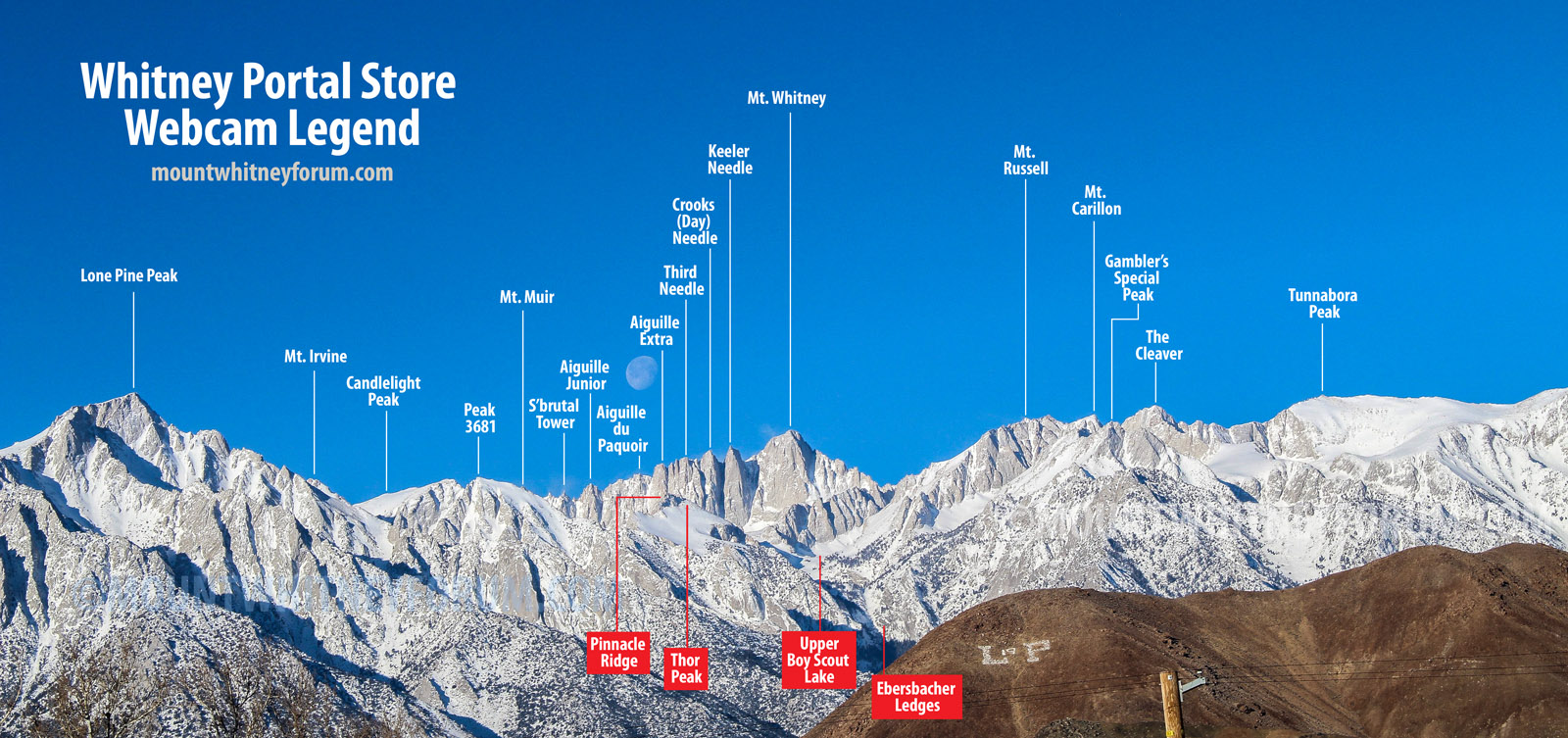
Through Mobius’ Arch are seen L to R: Lone Pine Peak, Peak, & then darker appearing incisor-shaped Crooks Needle & Keeler Needle followed by Mt. Whitney. Mt. Whitney is the highest mountain in the contiguous United States and the Sierra Nevada, with an elevation of 14,505 feet (4,421 m).
www.mountwhitneyforum.com/images/wpsmb-webcam1-legend.jpg
Fuji X-S10. Fuji XF 10-24mm f/4 R OIS. 10mm, f/4, 1/4000 sec, ISO 320.
Outside the crowded places of the capital, the streets of Tokyo are pretty quiet at night and offer many occasions to find a sympathetic restaurant...
* * *
En dehors des lieux très fréquentés de la capitale, les petites rues de Tokyo sont plutôt calmes la nuit et offrent l'occasion de trouver des petits restaurants très sympathiques…
Excerpt from www.pc.gc.ca/apps/dfhd/page_nhs_eng.aspx?id=1849:
Existing plaque: Point Abino Road, Crystal Beach, Ontario
This proud beacon overlooking Lake Erie is a rare example of a reinforced concrete lighthouse built in a late neoclassical style. It was constructed in 1917-1918, and was in use for almost eight decades. Its elegantly tapered tower, reminiscent in its proportions of a classical column, as well as the rectangular structure housing the foghorn, are embellished with pediments and pilasters, typical features of the style adopted for this lighthouse.
Description of Historic Place
Point Abino Light Tower National Historic Site of Canada is an elegantly proportioned, classically detailed concrete lighthouse situated at the eastern end of Lake Erie near Crystal Beach and the town of Fort Erie, Ontario. Designed in the late Classical Revival style, the lighthouse consists of a square, slightly tapered volume rising from one end of a rectangular, flat-roofed, single-storey base. It sits just offshore and is joined to the nearby beach by a slightly elevated concrete walkway, leading to the light keeper’s residence onshore. Official recognition refers to the legal property boundary at the time of designation.
Heritage Value
Point Abino Light Tower was designated a national historic site of Canada in 1998 to acknowledge: its exceptional architectural merit as one of the most aesthetically enriched reinforced concrete lighthouses in the Canadian system of navigational aids; and, that the tower, rendered in the late Classical Revival style and housing an integrated light and fog horn, has maintained a high degree of integrity with its site and light keeper’s dwelling since its construction in 1917-18.
The heritage value of Point Albino Light Tower lies in the architectural and functional qualities of the tower and in its setting with its former lightkeeper’s residence. Point Abino Light Tower was designed by William P. Anderson and constructed by the Canadian Department of Marine and Fisheries in 1917-18 to assist navigation at the eastern end of Lake Erie. The late Classical Revival design, intended to complement the American-owned summer homes nearby, was more elaborate than most Canadian lighthouses. The former light keeper’s residence is discretely sited and sympathetically rendered as an Arts-and-Crafts-style cottage. The light has operated continuously since it was built, although today it is automated and accessible for public viewing.
Key elements contributing to the heritage value of this site include: its location at the north-eastern end of Lake Erie; its offshore setting with the nearby onshore former lightkeeper’s residence; its functional design with a combined tower and fog horn house, and a lightkeeper’s room at its base; the Fresno lens and surviving light equipment; its late Classical Revival design with its five-storey tapered, square column rising from a single-storey podium elaborated with classically derived decorative features, including symmetrically organized openings, pedimented window surrounds, pronounced faux-keystones, bracketed cornice, relieving arches, classical cross-braced balustrades, and corner pilasters; the polygonal domed light casing and the formal approach up to the grand staircase leading to the pedimented entry portico; its reinforced concrete construction; its continued operation as a lighthouse; its unobstructed viewscape to and from the walkway leading to the shore and the former lightkeeper’s residence and the north-eastern end of Lake Erie.
Due to a purchase request I have reprocessed this from scratch and I think more sympathetically to the lovely and tranquil place on lake Biwa Japan hope you enjoy viewing and any feedback is always much appreciated.
Ricky
Blogged!
Winner of the Surreal Phare Design Competition ~ Sadly now forgotten..
Wiinner of 58th Art Libre free art contest!
Wow, thanks for your votes everybody!
It kind of makes up for this image not quite coming first in the Man Ray contest, so its the cherry on the cake for this creation!
Once again, thanks to all for your sympathetic votes!
image made for the Man Ray Group - contest # 10. You are all welcome there, here is the link : www.flickr.com/groups/man-ray/discuss/72157600304782409/
Again more views from Portmeirion across the estuary looking at Talsarnau in the distance.
In 1925, Welsh architect Clough Williams-Ellis acquired the site which was to become Portmeirion. He had been searching for a suitable site for his proposed ideal village for several years and when he heard that the Aber Iâ estate near Penrhyndeudraeth was for sale, he did not hesitate to make an offer.
He wanted to show how a naturally beautiful location could be developed without spoiling it, and that one could actually enhance the natural background through sympathetic development. The Aber Iâ estate had everything he had hoped for as a site for his architectural experiment: steep cliffs overlooking a wide sandy estuary, woods, streams and a nucleus of old buildings.
But the history of Portmeirion started long before 1925. The construction of Castell Deudraeth was recorded in 1188 by Gerald of Wales, who wrote: "We crossed the Traeth mawr and the Traeth Bychan. These are two arms of the sea, one large and one small. Two stone castles have been built there recently. The one called Castell Deudraeth belongs to the sons of Cynan and is situated in the Eifionydd area, facing the northern Mountains."
Castell Deudraeth was referenced again by the 17th century philologist, geologist, natural historian and keeper of the Ashmolean Museum in Oxford, Edward Lhuyd in 1700. Lhuyd recorded the name as Aber Iâ, stating " The Castle of Aber Iâ yet stood in ruined form overlooking the south western extremity of the peninsula".
In 1861, Richard Richards wrote a description: "Neither man nor woman was there, only a number of foreign water-fowl on a tiny pond, and two monkeys, which by their cries evidently regarded me as an unwelcome intruder. The garden itself was a very fine one, the walls of which were netted all over with fruit trees...Aber Iâ, then, gentle reader, is a beautiful mansion on the shore of Traeth Bach, in Merionethshire."
When Williams-Ellis acquired the land in 1925 he wrote, "a neglected wilderness - long abandoned by those romantics who had realised the unique appeal and possibilities of this favoured promontory but who had been carried away by their grandiose landscaping...into sorrowful bankruptcy." Clough immediately changed the name from Aber Iâ (Glacial Estuary) to Portmeirion; Port because of the coastal location and Meirion as this is Welsh for Merioneth, the county in which it lay.
His first job was to extend and convert the old house on the shore into a grand hotel. The concept of a tightly grouped coastal village had already formed in Clough's mind some years before he found the perfect site and he had quite a well-defined vision for the village from the outset.
Portmeirion was built in two stages: from 1925 to 1939 the site was 'pegged-out' and its most distinctive buildings were erected. From 1954-76 he filled in the details. The second period was typically classical or Palladian in style in contrast to the Arts and Crafts style of his earlier work. Several buildings were salvaged from demolition sites, giving rise to Clough's description of the place as "a home for fallen buildings".
"An architect has strange pleasures," Clough wrote in 1924. "He will lie awake listening to the storm in the night and think how the rain is beating on his roofs, he will see the sun return and will think that it was for just such sunshine that his shadow-throwing mouldings were made."
The first article about Portmeirion appeared in The Architects' Journal (January 6 1926) with photographs of scale models and preliminary designs prepared by Clough to impress potential investors. In this article, John Rothenstein writes: "On the sea-coast of North Wales, quite near his own old home, Plas Brondanw, he has acquired what he believes to be an ideal site, and he is engaged upon plans and models for the laying out of an entire small township. The results of his scheme will be significant and should do much to shake the current notion that although houses must be designed with due care, towns may grow up by chance."
The Hotel Portmeirion officially opened for the Easter Weekend, on 2nd April 1926. The last building, the Tollgate, was built in Clough's 93rd year.
Excerpt from www.pc.gc.ca/apps/dfhd/page_nhs_eng.aspx?id=1849:
Existing plaque: Point Abino Road, Crystal Beach, Ontario
This proud beacon overlooking Lake Erie is a rare example of a reinforced concrete lighthouse built in a late neoclassical style. It was constructed in 1917-1918, and was in use for almost eight decades. Its elegantly tapered tower, reminiscent in its proportions of a classical column, as well as the rectangular structure housing the foghorn, are embellished with pediments and pilasters, typical features of the style adopted for this lighthouse.
Description of Historic Place
Point Abino Light Tower National Historic Site of Canada is an elegantly proportioned, classically detailed concrete lighthouse situated at the eastern end of Lake Erie near Crystal Beach and the town of Fort Erie, Ontario. Designed in the late Classical Revival style, the lighthouse consists of a square, slightly tapered volume rising from one end of a rectangular, flat-roofed, single-storey base. It sits just offshore and is joined to the nearby beach by a slightly elevated concrete walkway, leading to the light keeper’s residence onshore. Official recognition refers to the legal property boundary at the time of designation.
Heritage Value
Point Abino Light Tower was designated a national historic site of Canada in 1998 to acknowledge: its exceptional architectural merit as one of the most aesthetically enriched reinforced concrete lighthouses in the Canadian system of navigational aids; and, that the tower, rendered in the late Classical Revival style and housing an integrated light and fog horn, has maintained a high degree of integrity with its site and light keeper’s dwelling since its construction in 1917-18.
The heritage value of Point Albino Light Tower lies in the architectural and functional qualities of the tower and in its setting with its former lightkeeper’s residence. Point Abino Light Tower was designed by William P. Anderson and constructed by the Canadian Department of Marine and Fisheries in 1917-18 to assist navigation at the eastern end of Lake Erie. The late Classical Revival design, intended to complement the American-owned summer homes nearby, was more elaborate than most Canadian lighthouses. The former light keeper’s residence is discretely sited and sympathetically rendered as an Arts-and-Crafts-style cottage. The light has operated continuously since it was built, although today it is automated and accessible for public viewing.
Key elements contributing to the heritage value of this site include: its location at the north-eastern end of Lake Erie; its offshore setting with the nearby onshore former lightkeeper’s residence; its functional design with a combined tower and fog horn house, and a lightkeeper’s room at its base; the Fresno lens and surviving light equipment; its late Classical Revival design with its five-storey tapered, square column rising from a single-storey podium elaborated with classically derived decorative features, including symmetrically organized openings, pedimented window surrounds, pronounced faux-keystones, bracketed cornice, relieving arches, classical cross-braced balustrades, and corner pilasters; the polygonal domed light casing and the formal approach up to the grand staircase leading to the pedimented entry portico; its reinforced concrete construction; its continued operation as a lighthouse; its unobstructed viewscape to and from the walkway leading to the shore and the former lightkeeper’s residence and the north-eastern end of Lake Erie.
Sign on the coloured door is to the Spa.
In 1925, Welsh architect Clough Williams-Ellis acquired the site which was to become Portmeirion. He had been searching for a suitable site for his proposed ideal village for several years and when he heard that the Aber Iâ estate near Penrhyndeudraeth was for sale, he did not hesitate to make an offer.
He wanted to show how a naturally beautiful location could be developed without spoiling it, and that one could actually enhance the natural background through sympathetic development. The Aber Iâ estate had everything he had hoped for as a site for his architectural experiment: steep cliffs overlooking a wide sandy estuary, woods, streams and a nucleus of old buildings.
But the history of Portmeirion started long before 1925. The construction of Castell Deudraeth was recorded in 1188 by Gerald of Wales, who wrote: "We crossed the Traeth mawr and the Traeth Bychan. These are two arms of the sea, one large and one small. Two stone castles have been built there recently. The one called Castell Deudraeth belongs to the sons of Cynan and is situated in the Eifionydd area, facing the northern Mountains."
Castell Deudraeth was referenced again by the 17th century philologist, geologist, natural historian and keeper of the Ashmolean Museum in Oxford, Edward Lhuyd in 1700. Lhuyd recorded the name as Aber Iâ, stating " The Castle of Aber Iâ yet stood in ruined form overlooking the south western extremity of the peninsula".
In 1861, Richard Richards wrote a description: "Neither man nor woman was there, only a number of foreign water-fowl on a tiny pond, and two monkeys, which by their cries evidently regarded me as an unwelcome intruder. The garden itself was a very fine one, the walls of which were netted all over with fruit trees...Aber Iâ, then, gentle reader, is a beautiful mansion on the shore of Traeth Bach, in Merionethshire."
When Williams-Ellis acquired the land in 1925 he wrote, "a neglected wilderness - long abandoned by those romantics who had realised the unique appeal and possibilities of this favoured promontory but who had been carried away by their grandiose landscaping...into sorrowful bankruptcy." Clough immediately changed the name from Aber Iâ (Glacial Estuary) to Portmeirion; Port because of the coastal location and Meirion as this is Welsh for Merioneth, the county in which it lay.
His first job was to extend and convert the old house on the shore into a grand hotel. The concept of a tightly grouped coastal village had already formed in Clough's mind some years before he found the perfect site and he had quite a well-defined vision for the village from the outset.
Portmeirion was built in two stages: from 1925 to 1939 the site was 'pegged-out' and its most distinctive buildings were erected. From 1954-76 he filled in the details. The second period was typically classical or Palladian in style in contrast to the Arts and Crafts style of his earlier work. Several buildings were salvaged from demolition sites, giving rise to Clough's description of the place as "a home for fallen buildings".
"An architect has strange pleasures," Clough wrote in 1924. "He will lie awake listening to the storm in the night and think how the rain is beating on his roofs, he will see the sun return and will think that it was for just such sunshine that his shadow-throwing mouldings were made."
The first article about Portmeirion appeared in The Architects' Journal (January 6 1926) with photographs of scale models and preliminary designs prepared by Clough to impress potential investors. In this article, John Rothenstein writes: "On the sea-coast of North Wales, quite near his own old home, Plas Brondanw, he has acquired what he believes to be an ideal site, and he is engaged upon plans and models for the laying out of an entire small township. The results of his scheme will be significant and should do much to shake the current notion that although houses must be designed with due care, towns may grow up by chance."
The Hotel Portmeirion officially opened for the Easter Weekend, on 2nd April 1926. The last building, the Tollgate, was built in Clough's 93rd year.
I was glad Lloyd had chosen Land’s End. He’d made himself an appointment with the Armed Knight, which some of you know is one of the pair of very appealing sea stacks just offshore at the most southwesterly tip of the mainland. It seemed like a good plan to me. Usually I get sucked into the classic view, the one that includes the arch, the knight and the lighthouse in the distance - I’ve shot that plenty of times, and why wouldn’t any of us do that? It’s a fantastic sight and tailor made for landscape togs. But shooting the Armed Knight in isolation is something I’ve done less often, and pretty much always from the same rocky outcrop. Today’s outing, the first meeting with Lloyd since he was here twelve months earlier, was an opportunity to try another angle. The intended subject has always been worthy of its own place in the spotlight. We’ll return to that story soon.
Lloyd was sitting in his car, waiting for my arrival at the agreed time. I suspect he’d been doing a little bit of scouting around already, at least as far as the pay station for the car park at any rate. A few expletives later I promised to show him where to park for free next time. Eight pounds fifty indeed - they do like to empty your wallet here, and that’s even before you’ve hefted a load more cash to visit Shaun the Sheep World. Don’t ask. I’ve ranted enough times before here on the subject of the monstrosity that somehow got planning permission here at the back end of the 1970’s, and I’ll say no more. Rip off merchants. There must be at least three billion more aesthetically pleasing and sympathetic ways in which the space at the edge of the world might have been developed. My favoured option would have been a cluster of granite crags covered in grass, with a colourful dressing of sea thrift in May. Shaun the Sheep World my…… oops, there I go again.
While I was more than happy to join Lloyd in the quest for the definitive shot of the Armed Knight, I had a second image in mind while I was here. One I’m always half hoping for when I come to the Edge of Eternity, and with the weather having been quite tasty in recent days, perhaps that lighthouse might be engulfed in one enormous wave at some point. I’ve managed to get that shot before, but not in good light. I’d try again today, and to that end I’d dismantled the inside of the bag and reassembled the inserts in a pathetic attempt to fit two cameras, one of them mounted with the big telephoto lens. I even remembered to dial in the settings before setting off, remembering something I’d seen recently on YouTube that had never occurred to me. I hope I’m not too presumptuous in saying that these days I generally watch Messrs Danson, Heaton and Peter-Iversen for entertainment purposes rather than educational ones, but every so often a stray pearl of wisdom falls and lands in between my ears. Why had I never thought of putting the camera into auto ISO mode to keep the aperture and more importantly the shutter speed where I wanted them to be, as Nigel had done in County Kerry recently? Obvious really, but sometimes it’s easy to overlook the simple solutions you’d never thought of - and that new noise reduction feature is such a lifesaver when you’ve got more grain in your image than a couple of farms in Norfolk combined.
My plan was simple. I’d put the first camera on the tripod and wait for interesting stuff to happen, and every so often I’d grab the other, and point it at the distant lighthouse in burst mode. With a fast shutter speed the handheld approach should work just fine. It meant I’d be sifting through a lot of shots later, and doing the thing I fear most, culling the unwanted ones. None of us enjoy that surely? But if I managed to grab just a handful of usable frames, then that would be the payoff.
There were no huge waves that engulfed Longships Lighthouse this time, well not unless you include the one that smashed its way over the roof as I opened up the bag on first arrival. But as the light came and went and I settled into a rhythm, something else occurred to me. Depth, added by the presence of some substantial rollers halfway between me and the lighthouse was something I might not have spotted if the camera had been mounted on the tripod. Somehow, looking through the viewfinder was bringing the scene much closer and making it easier to understand. Another burst of light through the clouds; another burst of rapid fire on a high shutter speed. Depth, light and aspect ratio. I liked it in portrait mode, but if anything I liked it even more in sixteen by nine.
Five hundred and five raw files were quickly reduced to sixty-seven, of which only two made it into the operating theatre. On the first, the foreground wave curled handsomely across the water before the lighthouse, but the golden light that filtered across the sea and onto the side of the lighthouse and the sea in the second was what I’d been hoping for. I’ve shot the lighthouse on a number of occasions before, but this is the first time it’s appeared here as a subject in its own right. A huge wave smashing over it would really ramp up the stakes, but the great thing about not having captured that means I still have a reason to sit behind that outcrop, now and again poking my head over the parapet and firing away with abandon. Maybe it’ll happen this winter some time, but meanwhile, this one, taken at ISO 1250 makes me very happy and inspires me to come back for more. Which is always a good thing.
To view more images of Lower Slaughter, please click
"here" !
I would be most grateful if you would refrain from inserting images, and/or group invites; thank you!
Lower Slaughter is a village in the English county of Gloucestershire, located in the Cotswold district, 4 miles (6.4 km) south west of the town of Stow-on-the-Wold. The village is built on both banks of the River Eye, which also flows through Upper Slaughter. At the west end of the village there is a 19th-century water mill with an undershot waterwheel and a chimney for additional steam power. There is a ford where the river widens in the village and several small stone footbridges join the two sides of the community. While the mill is built of red brick most of the 16th and 17th century homes in the village use Cotswold sandstone and are adorned with mullioned windows and often with other embellishments such as projecting gables. Records exist showing that Lower Slaughter has been inhabited for over 1000 years. The Domesday Book entry has the village name as “Sclostre”. It further notes that in 1066 and 1086 that the manor was in the sheriff's hands. Lower Slaughter Manor, a Grade-II listed 17th-century house, was granted to Sir George Whitmore in 1611 and remained in his family until 1964. The 13th century Anglican parish church is dedicated to St. Mary the Virgin. Much of the current structure was built in 1866; however, the spire and peal of six bells was recently restored. In May 2013 it was reported in the national news that the Parish Council were fiercely opposed to the presence of an icebox tricycle selling ice creams for seven days a week, six months of the year, citing that the trading times were excessive, increased footfall would prevent the grass from growing and that children could climb on the trike and fall into the nearby river.
From Wikipedia, the free encyclopedia
The Slaughters Country Inn is privately owned and offers a relaxed ambience, a style that is sympathetically balanced between the original features of a 17th Century building and contemporary design. The blend of old and new creates the perfect retreat in a beautiful country location
CSX's then-new Pride In Service units made a visit to Worcester on a warm May 2019 morning, departing on that night's Q017, which is what we see here. A sympathetic yard crew spotted the power under Union Station's lights for us while they built the outbound train. (Though this frame was shot using Speedlites.)
Evidently, CSX did not take much pride in these units, as they didn't last long in road service - reportedly one top executive didn't like them.
So as I mentioned in my last photo, I was thinking of bringing back my CPTSD theme, well, I also was considering writing Trigger Warning after the title, but then again you've already seen the photo, so, err, yea... however, that said, this shit needs to be spoken about, ***Trigger Warning*** below...
Please Note: This is all about education, awareness and support, it is not meant for sympathy or anything else on those lines.
The subject here is perhaps one of the most horrible symptoms concerning CPTSD (Complex Post Traumatic Stress Disorder), that is, Suicide Ideation, that is to become obsessed over the consideration of committing suicide, it works like intrusive thoughts but whilst they can be random, these versions are fixating upon the one subject matter. Many a time I was trapped into this form of thinking, my own personal methodology differed but on one particularly horrifying night, I ended up in intensive care after a failed OD, and other attempts through the years that landed me in psyche wards, often arriving in handcuffs in the back of an ambulance under the escort of less than sympathetic police officers.
One of the most hardest and cruellest aspects of Suicide Ideation, is when in the actual act, if the thoughts have driven one to it, is the locked in combination of suffering Depression and Anxiety at the same time, picture this; two tornadoes one clockwise, one anti clockwise and you are caught emotionally between the two, so thus the depression tells you to do it, that you're worthless, life is shit, etc, but the Anxiety tells you that you are too afraid, you don't know what's on the otherside, there's no turning back, on and on it spins around in your head. Ultimately the anxiety can be your best friend and pulls one back at the last moment, thank god!
I never succeeded, obviously, but fuck me I came close and I would strongly advise, if you are feeling this way, you speak to someone, you have every right to live. Remember, it's truly an emotional bluff (as big and convincing as it may seem), you are better than your thoughts and you are a hero for coming this far, having ever faced such a battle, never, ever give in to it my dear friend. It's actually because you just want the goddamn pain to stop, it can, and it will!
Think of it like this, so many people before you have been there, survived and thereafter life got beautiful for them, you are no exception from that miracle, I am living proof. Now I use my experience to guide others as I hope I am doing here. You live in a universe of infinite possibilities and life can still surprise you. Believe that!
I hope everyone is well and so as always, thank you! :)
PS: If however you are getting to that point, please consider going here...
Holy collie, what a dog's breakfast it's been for Dad over the past couple of months trying to regain access to my Flickr site after switching over to SmugMug, the new Flickr owner.
I won't bore you with the details but it took over a dozen Emails and plenty of frustration before finally finding a sympathetic soul at Flickr (probably a pet lover!) who spent a considerable amount of time with Dad doggedly sorting out the trouble.
We do hope everything is well with each and every one of you. We have missed interacting with all our friends-more than we thought possible-and if there is anything of importance we need to be updated on, please let us know, as there is far too much of a backlog for us to get through thoroughly.
As for us, we've been hot-dogging it through a sweltering summer here in eastern Ontario. I've stuck to my diet (as if I had a choice) and am averaging a one pound loss each month, with particulars listed below.
SO glad to be back!
My goal weight: 25 kilos
April 1: 30
May 15: 29.4
July 2: 28.5
________________________________________________
Abandoned (Kemp) road, Ottawa, Ontario
382. Clancy, 6yrs 35wks
Clancy's YEARBOOK 7: www.flickr.com/photos/130722340@N04/albums/72157703683494665
Happy Space Ship Saturday!
Howdy, Rich Border here, your local Really Special Agent for S.I.M.P.L.E., (Space Invaders Monitoring and Protective League Entente) back from months of laying low in order to shake the aliens and their sympathetic spies here on Earth that arm themselves with straight jackets and disguise themselves as milk men. I have captured further definitive proof that the invasion is real and here it is. These beings were discovered at an air show trying to disguise themselves as the USAF Thunderbirds but my eagle eyes and along with my sidekick Sunny the Sony sussed their scheme and, viola! I know that I'm placing my life in great danger coming forward with this and if I am abducted I ask that in lieu of flowers please send copious cash to Darling Tonia.
Yours,
Rich