View allAll Photos Tagged SlitScan
One of my hacks from Music Hack Day Helsinki, 2013.
"Hackscan - takes a video and summarizes it intelligently into a single image by extracting single columns [or rows] of pixels from each frame. The result is a crazy looking image that captures the essence of the video."
musicmachinery.com/2013/11/18/children-of-the-hack-angry-...
More info: www.hackerleague.org/hackathons/music-hack-day-helsinki-2...
Code here: github.com/hugovk/musichackdayhelsinki
Slitscan-modified Pentax PC330 at the Birmingham Flickr Meet, Cannon Hill Park, 14th June 2009.
Agfa APX400 in Ilfosol3 12 minutes. This turned out to be very heavily over-exposed, so was "rescued" by bleaching in Ferri and then re-fixing. It also suffers from some flares (on the slit?).
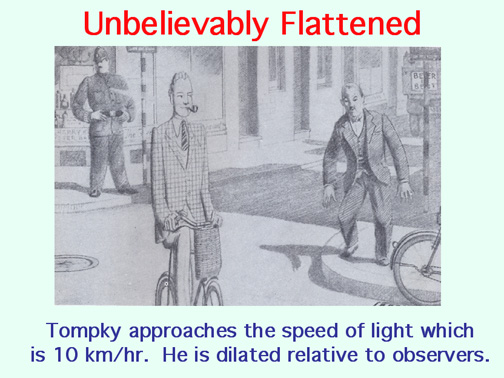
To me, this is a "classic" slitscan picture: a moving object going left to right (the cyclist) is squashed in the direction of motion, whereas one going right to left (the woman with the child in the buggy) is lengthened. It reminds me of an illustration in the book of this title by George Gamow: en.wikipedia.org/wiki/Mr_Tompkins. (The illustration I have in mind is here: boomeria.org/physicslectures/secondsemester/relativity/flattened.jpg.) Needless to say, the theory of special relativity (which, by definition of the word "relativity" treats left-to-right and right-to-left the same) is not needed to understand the workings of the slitscan camera.
Daily App Experiment #181: "Shabu" - Had lunch with my boss today. Before we started, I set up a tripod and set #SlitScan to it's slowest setting... which lasted half the meal. So I saved that image, then started another recording. Then I took both images and merged them with #interlacer, with final vignetting added in #vignettr. For those who don't know, SlitScan is an app that records an image from one side to another, like a copy machine. When set at it's lowest setting, it will slowly scan one line at a time from the bottom to the top. #appsperiment #daily_appseperiment
Drawing in Flowpaper, manipulated with Decim8. Cropped in Camera+ for mirroring and tweaked for color. Created mirror with collage feature of Photogene2, made round with TinyWorld. The background is SlitScan capture of a blinking tail light at an intersection, "dotted" in WordFoto, run through TinyWorld and then color manipulated in PhotoSplash. Combined the two with ImageBlender and then tweaked results for color and contrast in Snapseed. Finally played with the Drama filter in Snapseed.
Taken from a moving vehicle with my phone camera. The interesting effect observed is caused (i speculate) by the camera sensor sampling top-down in finite time... The relative speed of the foreground with respect to the lens causes noticable horizontal displacement per scan-line. The background is largely unaffected as it appears to "drift" slower due to distance.
UPDATE: Just discovered that this was popular in the 70's and known as slit-scan photography. Pretty troublesome to set up... And here I am, doing it by accident in the digital age.
Background is a Slit Scan capture of a crazy Japanese production on YouTube called Cathy's House. Ran that through WordFoto with slashes. Tweaked the colors in PhotoSplash. Flower captured with ProCamera and colors edited in PhotoSplash. Blended in Image Blender as exclusion and then as lightness for each flower in the result. I love the Spring and Japanese color scheme. Can't wait to go to the Matsuri Fesitval in a week or two.
Exposition galerie plein art, Le Vigan. Du 29 novembre au 14 décembre 2013.
+ d'infos sur l'événement :
fr.calameo.com/books/00117035042b4b1b65341
Œuvres présentées sur cette exposition :
Solaris et Enveloppe temporelle_Tron
Détail des œuvres :
SOLARIS
# Thierry Guibert et Emmanuel Hourquet
www.thierryguibert.fr/?page_id=506
Installation, impression Forex.
Dans la continuité du travail mené par Thierry Guibert, Solaris rassemble la question d’une temporalité en permanente évolution, linéraire certes, mais défragmentée. Solaris est un projet qui crée des disques graphiques, lesquels, lorsqu’ils sont mis en mouvement produisent des images mobiles interprétées également comme sons. À l’intersection de l’ombro-cinéma et de la performance sonore, ce projet questionne le disque comme support mais aussi comme objet évolutif et visuel. La restranscription sonore ne peut fonctionner que lorsque le mouvement est engagé, ce qui, d’une certaine manière confirme par l’inverse la mécanique opérée dans les “Enveloppes Temporelles”. Ainsi, le mouvement révèle, rend visible une part fugitive, immanente et propre à l’oeuvre.
Co-production Guibert, Hourquet, OUDEIS (www.oudeis.fr/)
Enveloppe Temporelle_Tron
www.thierryguibert.fr/?page_id=712
Si Thierry Guibert est un plasticien inscrit dans le champ des arts numériques, sa démarche s’appuie sur une analyse et une culture de l’image, plus particulièrement celle du cinéma. Ce nouveau travail : « Enveloppes temporelles » consiste en la captation globale d’un film et vise à retranscrire sa totalité en une seule et même image. Celle-ci prend la forme d’un panoramique et s’étale sur plusieurs mètres. Fondé sur la technique du slitscan - procédé consistant à analyser et assembler des tranches de pixels de façon récursive les unes à la suite des autres - Enveloppes temporelles retourne l’enveloppe du film pour en révéler, de façon fantomatique, sa part invisible. La temporalité est subitement altérée, déroutée, le mouvement n’est pas figé mais au contraire fait l’objet d’une révélation, une transformation permanente incapable de fixer l’instant.
Production Oudeis.
Weather Bracelet and Watching the Sky (4 May 2008) on show at the Beginning Middle End Festival, ANU School of Art Gallery. Image by Lucien Leon.
This is a slit photography from digital video; for more information on the technique used for this image, please read the front page of my "Digital slit photography" album:
[ Website | 500px | Photo Blog | Google+ ]
© Morris R. MacIver 2012
Slit-scan effect from left to right makes for the curious form of the moving cars.
AB Dow Museum of Science & Art
iPhoneography
––––––––––––––––––––––––
iPhone 4S-ScanCamera-IMG_4004 - v2
One of my hacks from Music Hack Day Helsinki, 2013.
"Hackscan - takes a video and summarizes it intelligently into a single image by extracting single columns [or rows] of pixels from each frame. The result is a crazy looking image that captures the essence of the video."
musicmachinery.com/2013/11/18/children-of-the-hack-angry-...
More info: www.hackerleague.org/hackathons/music-hack-day-helsinki-2...
Code here: github.com/hugovk/musichackdayhelsinki
Carborundum Print (ghost), 2006
image: 19.5 x 45.5 cm, support: 45.5 x 37 cm
edition 10 (part of box set)
Exposition galerie plein art, Le Vigan. Du 29 novembre au 14 décembre 2013.
+ d'infos sur l'événement :
fr.calameo.com/books/00117035042b4b1b65341
Œuvres présentées sur cette exposition :
Solaris et Enveloppe temporelle_Tron
Détail des œuvres :
SOLARIS
# Thierry Guibert et Emmanuel Hourquet
www.thierryguibert.fr/?page_id=506
Installation, impression Forex.
Dans la continuité du travail mené par Thierry Guibert, Solaris rassemble la question d’une temporalité en permanente évolution, linéraire certes, mais défragmentée. Solaris est un projet qui crée des disques graphiques, lesquels, lorsqu’ils sont mis en mouvement produisent des images mobiles interprétées également comme sons. À l’intersection de l’ombro-cinéma et de la performance sonore, ce projet questionne le disque comme support mais aussi comme objet évolutif et visuel. La restranscription sonore ne peut fonctionner que lorsque le mouvement est engagé, ce qui, d’une certaine manière confirme par l’inverse la mécanique opérée dans les “Enveloppes Temporelles”. Ainsi, le mouvement révèle, rend visible une part fugitive, immanente et propre à l’oeuvre.
Co-production Guibert, Hourquet, OUDEIS (www.oudeis.fr/)
Enveloppe Temporelle_Tron
www.thierryguibert.fr/?page_id=712
Si Thierry Guibert est un plasticien inscrit dans le champ des arts numériques, sa démarche s’appuie sur une analyse et une culture de l’image, plus particulièrement celle du cinéma. Ce nouveau travail : « Enveloppes temporelles » consiste en la captation globale d’un film et vise à retranscrire sa totalité en une seule et même image. Celle-ci prend la forme d’un panoramique et s’étale sur plusieurs mètres. Fondé sur la technique du slitscan - procédé consistant à analyser et assembler des tranches de pixels de façon récursive les unes à la suite des autres - Enveloppes temporelles retourne l’enveloppe du film pour en révéler, de façon fantomatique, sa part invisible. La temporalité est subitement altérée, déroutée, le mouvement n’est pas figé mais au contraire fait l’objet d’une révélation, une transformation permanente incapable de fixer l’instant.
Production Oudeis.
Exposition galerie plein art, Le Vigan. Du 29 novembre au 14 décembre 2013.
+ d'infos sur l'événement :
fr.calameo.com/books/00117035042b4b1b65341
Œuvres présentées sur cette exposition :
Solaris et Enveloppe temporelle_Tron
Détail des œuvres :
SOLARIS
# Thierry Guibert et Emmanuel Hourquet
www.thierryguibert.fr/?page_id=506
Installation, impression Forex.
Dans la continuité du travail mené par Thierry Guibert, Solaris rassemble la question d’une temporalité en permanente évolution, linéraire certes, mais défragmentée. Solaris est un projet qui crée des disques graphiques, lesquels, lorsqu’ils sont mis en mouvement produisent des images mobiles interprétées également comme sons. À l’intersection de l’ombro-cinéma et de la performance sonore, ce projet questionne le disque comme support mais aussi comme objet évolutif et visuel. La restranscription sonore ne peut fonctionner que lorsque le mouvement est engagé, ce qui, d’une certaine manière confirme par l’inverse la mécanique opérée dans les “Enveloppes Temporelles”. Ainsi, le mouvement révèle, rend visible une part fugitive, immanente et propre à l’oeuvre.
Co-production Guibert, Hourquet, OUDEIS (www.oudeis.fr/)
Enveloppe Temporelle_Tron
www.thierryguibert.fr/?page_id=712
Si Thierry Guibert est un plasticien inscrit dans le champ des arts numériques, sa démarche s’appuie sur une analyse et une culture de l’image, plus particulièrement celle du cinéma. Ce nouveau travail : « Enveloppes temporelles » consiste en la captation globale d’un film et vise à retranscrire sa totalité en une seule et même image. Celle-ci prend la forme d’un panoramique et s’étale sur plusieurs mètres. Fondé sur la technique du slitscan - procédé consistant à analyser et assembler des tranches de pixels de façon récursive les unes à la suite des autres - Enveloppes temporelles retourne l’enveloppe du film pour en révéler, de façon fantomatique, sa part invisible. La temporalité est subitement altérée, déroutée, le mouvement n’est pas figé mais au contraire fait l’objet d’une révélation, une transformation permanente incapable de fixer l’instant.
Production Oudeis.