View allAll Photos Tagged SMSS
A New Kind of Enemy Needs a New Response.
Hawks are hovering over my country!
My country has been slighted.
A slight it could have done little to protect itself from. For ten years, no country in the world has escaped the ignominy of seeing its hapless citizens being mowed down.
A slight it finds itself at a loss on how to deal with. No country in the world has found an appropriate response to such a slight in the last ten years.
_______________________________________________________
A mood of anger and retribution!
The people are seething with anger! Just about coming to terms with India's new power in the world order built on the two decades of economic growth and half a century of Democracy, they are demanding India flex that power.
We have seen the US in hot pursuit.
Peace has not returned to the world but its soldiers are dying in an almost Vietnam kind of situation.
Its president had to admit his unpreparedness to tackle the enemy of this scale and this invisibility.
And of course he has the distinction of being the most ridiculed Presidents of the USA ever.
In the meanwhile this hot pursuit has pushed some more gullible young men with dreams of martyrdom against the big bad enemy of their religion, into the waiting clutches of the Generals of this hidden enemy.
But the people demand a hot pursuit nevertheless. Even if we know that that only helps swell the ranks of the enemy!
To fight the Satan, we do his bidding!
_______________________________________________________
The Enemy Beckons us to Strike at him and Increase his Numbers!
The world today is like a rat infested home. A housewife knows that you do not get rid of the rats by spraying bullets. Rats will just wait in their lairs and then strike when the lights are off and everyone is asleep. In the meanwhile they would be swelling their ranks by procreating.
This rat like enemy today is using these strikes to evoke a righteous and forceful reaction from us.
This reaction alienates its kind from the world and swells its armies, but it does not kill him!
______________________________________________________
The Enemy is Taking from us Our Morale!
The fact that we are now worried that he can strike anywhere. In trains. In temples. In office buildings. In nightclubs. In parliaments. In markets. In five star hotels. Seems like it is by design. A sample of all kinds of locations that cover all strata of the society.
_________________________________________________________
The Enemy Makes us Headless and Directionless!
Till yesterday, the guerilla aimed at decapacitating its massively larger enemy by assassinating its leaders.
Ask Indian Peace Keeping Force that operated against the LTTE in Sri Lanka. The LTTE snipers would take out the leader of our troops and then run down the confused troops. This kept happenig till our troops learnt to protect their leaders by making them wear uniforms similar to theirs and by keeping them in the midst of the formation rather than at the head of it.
Today's enemy is far savvier! He kills our leadership not our leaders.
Can you see the pattern?
The democratically elected President of the most powerful nation in the world, today looking like a shadow of his former self. A country that elected him less than four years ago, laughing and jeering at him.
Aren't our leaders facing the same fate today?
This enemy's snipers are not its riflemen but its propagandists!
I wonder how many derogatory SMSs, blogs and emails floating around today, seen as public sentiment by our television, are generated by the propaganda modules of the enemy!
The pattern is clear. The motive is very clear. We know who gains when leaders get eliminated. Do we still doubt who the culprit is?
_______________________________________________________
May be the enemy won't succeed. May be we can get better leaders?
Most dangerously, SMS, blogs and emails are now asking for the Army to move in and take over the country. Such fine soldiers, who have this image of impeccable honesty, should be able to protect our country and govern it better.
The messages are not only inviting or wishing for military rule but also provoking the men in uniform.
Look, how the politicians insult the soldiers! Look they can't even treat the mothers, a powerful word in India, of the slain soldiers properly! The TV channels then promptly get mothers of martyrs on television and speak against the politician.
The news channels show with glee the shameful incident of the father of a slain army officer throwing out the chief minister of his state from his house. The chief minister had come to offer condolences. One can pardon the act of the aggrieved father, but one can not extol this as a virtue of behavior. His son was a role model, not this act of the father.
Our TV channels go on regardless. They represent people's mood. People want change? Or do they? Or does someone else stoke the flames and guides the fire in a direction of their choice? Are the TV channels unwittingly playing in the hands of the enemy's information machine?
___________________________________________________
The Enemy Brings us Down from the High Ground!
Physical higher ground in conventional warfare gives disproportionate advantage to its occupant. We have had that moral higher ground due to our resilient democracy and human rights.
How much would be enough for some power-hungry or emotional (or both) General to roll his tanks and take over the country?
Our neighbors envy our democracy. They lose faith of their biggest ally, the US, because we have it, they don't.
There is a concept of force-equaliser in warfare. Do their propaganda modules aim for that? Would any enemy not?
Citizens of my country; media of my country; leaders of my country; security forces of my country - beware of this new enemy. Beware of his new warfare. A warfare with same objecives - kill leaders, bring down morale, equalise numbers, equalise ground - the weapons are different - the way of 'Kautilya' - disinformation.
____________________________________________
So what do we do now?
First of all what we do not do.
Let us not counter this warfare with missiles and tanks.
Let us not fall for the timer bombs of disinformation, aimed at 'assassinating' our leaders.
Let us not divide ourselves. Politicians versus citizens. Army vs police. Agencies blaming each other for lapses. Communities of people suspecting each other. The enemy has struck all of us - but in a way that divides us.
Let us not do what the enemy wants us to do!
Let us not let the hawks take over our skies!
______________________________________
(Watch out for "What we Should Do Other than Pray")
Arriva South London ADL11 [V611LGC] Dennis Dart SLF/Alexander The East Surrey Water Co's pumping station (now the site of Tesco) had a disused fountain in its grounds in the '60s when I lived in these parts. I have no recollection of it ever having been in public, but if it was, I expect the one-way scheme made necessary to handle the Purley Way (Croydon A23 bypass) traffic did away with it sometime after Purley Way was opened in the '30s. However, this stage (where the old trams reversed in the road) was always called "Purley Fountain" so that is what I still call it.
When the 166 was converted to SMS operation there was a huge outcry amongst the genteel folk of Coulsdon and Purley to bring back RTs because the on-board ticket machines never worked (that is literally true, I never saw one bus fully operational) and there weren't enough seats. We called them "cattle trucks". We did get more seats, but the machines remained as the SMSs quickly gave way to DMSs. It took MUCH longer for LT to realize on-board ticket machines were NOT A GOOD IDEA.
Yet here we are in the 21st century back with single-deck standee buses. When will the experts learn we want to sit down on a bus, not dangle on straps?
This bus went to Arriva Scotland, a company since sold to McGill's.
My ref: 100_0010
A digital original,
This photo has been edited and uploaded with permission from Darren Sentence ´´ the Sweeney´´ who has the original slide shown on his photo stream.
Old PSV news sheets shows that 11 SMSs (all April 1977 initial sales to Wombwells) were identifiable at Meynells in May 1977 - 55,56,98,182,228,313,623,633,674,712,738 (and a 12th incorrectly identified as SMS748) + we have an April flickr photo showing SMS169 in front of and to the right of 633 + 738 which makes 13. Plus 3 more SMS217,287 and 344 which are listed as being in unknown neighbouring yard i.e. note 3 of which are over a 1 metre high metal fence.
There are 16 buses visible in this photo, the fact that SMS169 was unidentifiable when PSV circle reporter got inside means that as he didnt find and record chassis numbers. The 3rd bare bones Swift could be one of the March 1977 MCW bodied buses sold with SMS169 or either SMS623 or 712 which are both here in this photo!
UPDATE - the 16th bus would seem to be SMS248 incorrectly recorded as SMS748
A mistake by LT saw DMS1878 withdrawn from service late 1981 just a few months after Aldenham overhaul,sold to Ensigns and exported to HongKong This was November 1981 and SMS336 was sold for scrap 4 months later -note offside advert, a feature of UX SMSs not shared by other garages beyond 1974
Route 120 normally worked between Hounslow Heath Hussar and Greenford Red Lion, but terminating short at Southall Town Hall was not uncommon. What was uncommon though, was for the route to be worked by SMS single deckers - at this stage in its history, DMSs were the scheduled type, and it was rare for SMSs to appear.
The Squad Mission Support System (SMSS) Block 1 is the newest variant, featuring a lighter frame, upgraded sensors and better accessibility.
Probably one of the last trips I made to photograph buses was 2nd August 1978 where this line up of SMS's sat at dreary, wet Edgware. Sadly my interest waned for a few years post taking my O Levels! Here sit SMSs 262, 304, 289, and 201 with BLs 83 and 69 sandwiched in between. Previously SMS289 looked like it was out of service for good but here is very much back.
*** retouched version to remove blemishes - 13/01/2026
Copyright myself
This is the secondary mirror structure (SMSS) for the Pathfinder telescope structure. The flight one will be virtually identical. This image is from a 'walkout' of the structure from its stowed to its deployed condition. The scale is evident in the photo, comparing the people and the structure. This walkout involved careful offloading of weight in the 1g environment on Earth; this deployment will take place in space where there is the inertia of the mass but not the weight, and ground deployments require offloading. The flight SMSS is in strength testing, and it will be integrated with the backplane before it is sent to NASA Goddard for telescope assembly.
Before this, the Pathfinder telescope backplane and SMSS will come to Goddard for 'pathfinding' operations as practice for the integration we will do on the flight in 2015. Once at Goddard, two spare primary mirror segments and a spare secondary will be installed to make up the Pathfinder telescope.
This is the first time a deployable secondary mirror structure for a space telescope has ever been tested. The SMSS is over 8 meters tall.
Text and Photo Credit: Paul Geithner/Lee Feinberg
The RT was robbed but both SMSs were runners when they reached Wombwell Diesels,with SMS813 driving on full of spares a few months later to Citybus of Belfast
ONote M205 was final M built with AFC cabinet + barrier + rectangular foglamps for LT! October 1980 preparation for 10 week conversion involving over 50 new Ms replacing SMSs + DMSs
DMSs replaced the SMSs on my local route 103. Newly into service DMS 1885 shows a nearside advert that has been assembled in the wrong order - what is a 'red pass bus'?
Hornchurch RD bus garage was London Transport's first all OMO (one man operated) shed. DMSs joined the previously allocated SMSs, replacing RTs and RMLs.
1/76 scale diorama using the Kingsway Models card kit.
London Transport's T class spent their lives working from either Romford or Hornchurch garages having replaced DMSs which had replaced single deck SMSs some years previously. T1 carried special notices advertising it's signifiance as first of the breed. Seen here outside North Street garage in company with a DMS,
1/76 scale models.
Kingsway Models North Street garage card kit.
The AEC Swift SMSs were introduced in various parts of London during the seventies. I recall them replacing RTs on many of the local routes in Romford. Reliability could be a problem, and it wasn't that unusual to see an LT towing lorry in attendance. Here a Thames Trader is seen with a troubled SMS on the 66 route outside Romford North Street garage. Ford D series vehicles would replace the Traders in due course.
“This is the first photograph of two American spacecraft on an alien world. Surveyor III, foreground, was launched from Cape Kennedy on April 17, 1967, and made a soft landing in a gently-sloped crater on the Moon’s Ocean of Storms on April 19, 1967. In the background is the lunar module Intrepid which carried Apollo 12 astronauts Charles Conrad and Alan Bean down to the moon’s surface nearby on November 19, 1969. To the right of the lunar module may be seen the inverted “umbrella” of an erectable S-band antenna.”
And/or:
This unusual view shows two National Aeronautics and Space Administration (NASA) spacecraft on the surface of the moon. In the center foreground is the unmanned Surveyor 3 spacecraft, which soft landed on the lunar surface on April 19, 1967. Just 600 feet away from the Surveyor 3 spacecraft, pictured here in the background, is the Apollo 12 Lunar Module (LM), which landed on the lunar surface on Nov. 19, 1969. This photograph was taken the following day, during the second Apollo 12 extravehicular activity (EVA) in which astronauts Charles Conrad Jr., commander, and Alan L. Bean, lunar module pilot, participated. Pictured to the right of the LM are the deployed S-Band antenna and the United States flag, which was unfurled on Nov. 19, 1969. While Conrad and Bean descended from lunar orbit in their Apollo 12 LM, astronaut Richard F. Gordon Jr., command module pilot, remained with the Command and Service Modules (CSM).
spaceflight.nasa.gov/gallery/images/apollo/apollo12/html/...
The Squad Mission Support System (SMSS) can increase its intelligence, surveillance and reconnaissance capability with an integrated surveillance system, here with a Gyrocam 9M sensor on a retractable mast.
Route 226 which passed the Park Royal bus factory was operated by Park Royal bodied SMSs and DMSs 1970-80 with just 4 visiting MCW SMSs in 1978
When I first visted Uxbridge I assumed that the garage was the yard alongside the Underground station - it was much further out of town. Ten years later though someone else had the same idea and a new one was built here. In Uxbridge in 1973 RTs were still to the fore, although as in my home town of Romford, SMSs and DMSs were not too far into the future.
An Ounce of Prevention. (Read the tags! Read everything! This thing is chock full of entertainment! And information, too. :P)
This thing was Photoshopped to hell and back, and I did this for a variety of reasons: 1) to isolate me from the rest of the image, because 2) I wanted to saturate that shirt all to hell (I think I did a reasonably acceptable job of making it look totally obnoxious :P LOL — actually, I wanted the shirt and the background to be as vibrant as possible), and 3) I wanted to experiment with a different method of masking, using some instruction I'd found in Ben Willmore's fabulous book, Adobe Photoshop CS2 Studio Techniques. When viewed at full-resolution, the result wasn't perfect, but it also wasn't too bad considering that it was my first effort using the Extraction Filter. Good stuff! ^.^
I also learned a technique that will make the processing of any future images in which I apply a texture to my face much, much easier, and that's a good thing! :D
_____
Now, some travel advice for my U.S. contacts. There are several things you should do before traveling abroad. Much of what follows you can learn at www.usps.com/passport, so if you read nothing else, at least read items 4-10. However, I've included in items 1-3 a few tips that neither the State Department nor the U.S. Postal Service will tell you until it's too late, so you might want to consider perusing this list if you've any upcoming plans to travel abroad.
1. Make sure you have a valid passport. U.S. passports are valid for 10 years from the date of issue. If you need a new passport, it's best to apply a few months before you plan to travel. It generally takes 5-6 weeks for an application to be processed, but applying early ensures that your plans aren't ruined by any delays in processing your application.
2. If the date of your passport's expiration is less than 6 months away, apply for a new one. Some countries will not grant you a visa if your passport is that close to expiration.
3. If you need a new passport, you'll need the following when applying:
Passport Application:
* Passport Application Form DS-11 (unsigned; you will sign it when you present it to the postal clerk).
Proof of U.S. Citizenship (one of the following):
* Previous U.S. passport (this works best! and, surprisingly, even an expired passport will work better than a birth certificate—see below)
* Certified U.S. birth certificate (I learned when I applied that my birth certificate was not good enough to prove my citizenship, even though it had been signed by the Clerk of County in the State and County of my birth; I was even told that most birth certificates are not acceptable... supposedly because they're not certified, whatever the hell that's supposed to mean—personally, I think it's just a conspiracy to make the passport application process as difficult and as inconvenient as possible... typical government bullshit)
* Consular Report of Birth Abroad or Certification of Birth
* Certificate of Naturalization or Citizenship
Proof of Identity (provide one of the following):
* Certificate of Naturalization or Citizenship
* Current, valid driver's license
* Government ID
* Military ID
* For minors under 14 years of age, each child must appear in person and both parents or legal guardians must present evidence of identity
Two Identical Passport Photos (taken at a location other than the Post Office; you can get these easily and affordably at your nearest Kinko's):
* 2 x 2 inches in size
* Taken within the past 6 months
* Colour preferred
* Full-face, front view with a plain white or off-white background (Kinko's knows exactly what to do and has everything set up for these; just tell them what you want and they'll get it done)
* Normal street attire, no hats or headgear (I also suggest a clear complexion, and I'm very serious because my face was all aflame with my psoriasis when I got mine done; passport photos are as bad as those on a driver's license, and there's no need to make it any worse than it already is)
* Select Post Office locations offer passport photo services, but there is an additional $15 fee (this is no more expensive than the fee charged by Kinko's, so it makes no difference where you go to get this done)
Passport fees:
* U.S. Department of State Passport Fee: $55 age 16 and older/$40 age 15 or younger
* Security Surcharge Fee: $12 all ages
* USPS Acceptance Fee: $30 all ages
4. Once your passport arrives, photocopy the page with your signature and photo. This is just in case you lose your passport. It provides you with papers to show local authorities, if necessary. This is unlikely, but why tempt fate? It also gives the U.S. Embassy/Consulate vital information needed if they need to help you in replacing a lost passport. When traveling, keep this separate from your passport. If you lose this along with your passport, then what's the point, right? Duh!
5. Along with your passport, you'll receive a "Passport Services — Information Card." Fill it out with your passport number and expiration date. On the back of this card are several phone numbers, and the URL for the State Department, so that you can locate your nearest U.S. Embassy or Consulate, if need be. Keep this separate, too, along with that page you photocopied in item #4.
6. It's best to register certain personal items with Customs before departing the U.S., lest you be forced to pay Import Taxes when you re-enter the country. Register items such as cameras, lenses, any camera accessories that are high priced and have identifying serial numbers, iPods (or any MP3 player), laptop computers. Go to this page at the Customs and Border Patrol web site, and scroll down to find and download CBP Form 4457. Fill this form out, then take it to the Customs office at your local airport to have it stamped and signed by a Customs official. You can do this prior to your departure (which is what I plan to do for all my new camera gear), or you can leave extra early for the airport on the date of your departure and get it done before you board your plane.
7. Call your credit card companies so that they can put a travel alert on your accounts for the dates that you'll be out of the country. Credit cards and ATM cards have pretty much made traveler's cheques obsolete. Most banks charge only a 1% fee for currency conversion when making purchases or withdrawals abroad. Also, find the phone numbers on the backs of your credit cards, and write them down. Keep them along with that passport page you photocopied. This way, if your credit cards get lost or stolen, you have contact information so that you can have the cards cancelled and prevent any charges against your account. In fact, when you call to notify your credit card companies of your travel dates, they'll provide you with a toll-free number to call when out of country. Remember that you'll have to use the prefix for international dialing of the country you're visiting when calling the U.S. from abroad. This can vary, so check before you leave which prefix will be necessary in the countries you'll be visiting.
8. Because I love to travel, I made sure I bought a quad-band phone (mine's a Nokia) from my provider (T-Mobile). Quad-band phones work anywhere in the world. If you have one, call your provider and let them know of your travel plans, this way they can make sure your account is set up to allow for your phone to be used overseas. How much are calls overseas? With T-Mobile, my calls are 99¢ per minute, and SMSs (text messages) are 35¢ per message. Other carriers' charges are probably very similar.
9. Have fun and, for crying out loud, try the local cuisine! (And since my girlfriend mentioned it, I'll add that you should also try local drinks, too, alcoholic or otherwise. I'll also add that whenever I've gone to Portugal, I've never had as much Diet Coke as I do when I'm home. :P) There's nothing more ridiculous, in my opinion, than Americans who travel abroad and then spend all their time looking for a McDonald's. Sheesh! I've got a story on that subject alone, but I'll save that for another time. Yes, there are people who do this, believe it or not. When I travel abroad, I ABSOLUTELY REFUSE to eat anything American!
10. Respect the people and the culture of the place you are visiting. I have met untold numbers of Americans (military and civilian alike) who have the most arrogant attitudes, thinking things like America is the best and everyone should cater to their every whim and desire. (Believe it or not, there ARE things about other cultures that are better than things you'll find here in the U.S. We are NOT the centre of the fucking universe, but that's another personal rant I'll save for later.) Even if you do believe such things, try to swallow that shit for the duration of your trip, and I promise you it'll be a far more pleasant experience.
If you do all of the above, then you won't be pulling your hair out like me in my silly photo for today. :P :D LOL!
Hornchurch RD bus garage was London Transport's first all OMO (one man operated) shed. DMSs joined the previously allocated SMSs, replacing RTs and RMLs.
DMS and Ford Capri - a typical 1970s scene!
1/76 scale diorama using the Kingsway Models card kit.
"This unusual photograph, taken during the second Apollo 12 extravehicular activity (EVA), shows two U.S. spacecraft on the surface of the moon. The Apollo 12 Lunar Module (LM) is in the background. The unmanned Surveyor 3 spacecraft is in the foreground. The Apollo 12 LM, with astronauts Charles Conrad Jr. and Alan L. Bean aboard, landed about 600 feet from Surveyor 3 in the Ocean of Storms. The television camera and several other pieces were taken from Surveyor 3 and brought back to Earth for scientific examination. Here, Conrad examines the Surveyor's TV camera prior to detaching it. Astronaut Richard F. Gordon Jr. remained with the Apollo 12 Command and Service Modules (CSM) in lunar orbit while Conrad and Bean descended in the LM to explore the moon. Surveyor 3 soft-landed on the moon on April 19, 1967."
The apparent gradual darkening (progressing from left-to-right) of the inscription/signature is not actually the case, it’s uniform throughout. Despite being diffuse (or so I thought), the source of natural sunlight was from the left.
Odyssey Group CoA, 11/22/95, 29/125.
10.75” x 13.75”.
spaceflight.nasa.gov/gallery/images/apollo/apollo12/html/...
From the ALJS, surprisingly scant & a little disappointing...other than the "jiggling" reference:
"Pete is "jiggling" the spacecraft to see if it is firmly planted."

Most of these scans are from prints taken on my very old 120 square format camera. I've cropped the shots to better compose them. It was SO difficult to get buildings vertical peering down into the top of the camera!
This view shows the variety at Becontree Heath with RT, RM and DMS. Just round the corner were SMSs on my local 103 route.
Se denomina Not In My Back Yard - NIMBY (no en mi patio trasero) a una reacción de ciudadanos y/o sus representantes para oponerse a la instalación en su entorno inmediato de ciertas actividades o instalaciones que, pese a reconocer como necesarias, o imprescindibles, son percibidas como peligrosas o molestas.
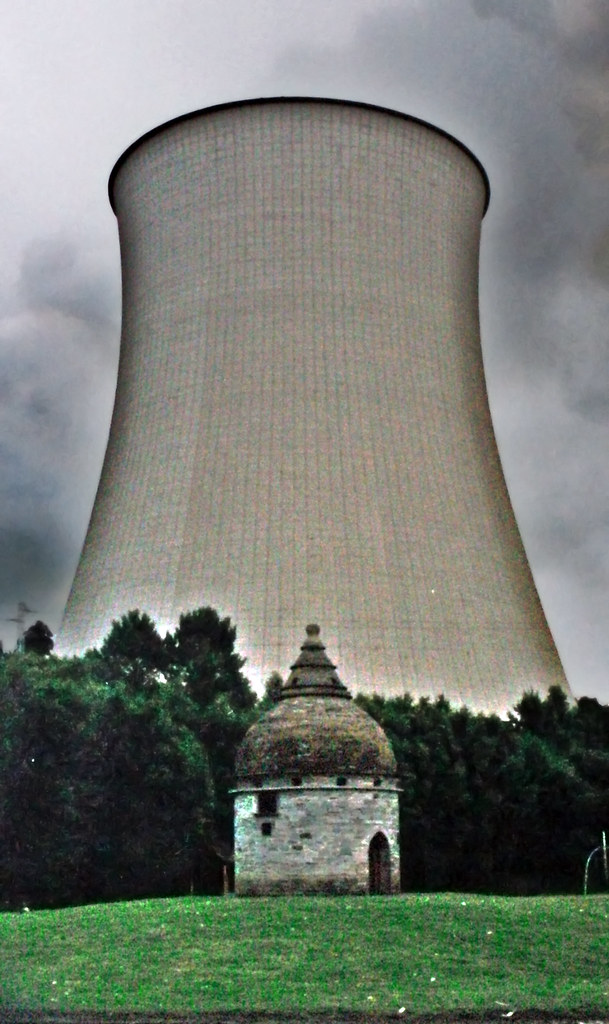
Considero absolutamente legítimo el derecho de cualquiera a oponerse a cualquier cosa que crea que pueda afectar a su salud bienestar o patrimonio económico. Y digo "que crea que pueda afectar", ni siquiera es necesario que sea cierto que le afecte para que tenga derecho a oponerse. Es ya un clásico el caso de la antena de telefonía sudafricana que seguía provocando efectos en la salud de los habitantes del condado seis meses después de haber sido desconectada.
Una vez asistí a una reunión de una plataforma contra la instalación de otra de estas antenas, a la que paradójicamente, no se le ocurrió cosa mejor que protestar contra ella enviando cientos de SMSs. :-)
También me parecen caricaturescos los políticos de toda clase que, buscando pescar peces sin mojarse el culo y contentar a todos, acaban siendo más NIMBY que los propios NIMBY. Se supone que se les paga para tomar decisiones que resuelvan problemas globales aunque a la larga cuesten votos ... ¿no?
Al final la imagen de esos proyectos cuya necesidad nadie cuestiona, navegando a la deriva buscando un lugar donde se le acoja a cambio de dinero resulta cuando menos esperpéntica, y puede que inevitable.
BSO: Drifting - A la Deriva - por la impresionante conjunción de John Lee Hooker y Canned Heat
I'm drifting and drifting,
Just like a ship out on the sea.
Well I ain't got nobody
In this world to care for me
(...)
I give you all of my money
tell me what more can i do
I give you all of my money
tell me what more can i do
Well you just a good little girl
but you just won't be true
Voy a la deriva, a la deriva
como un barco en el mar
No tengo a nadie
en este mundo que me quiera
(...)
Te doy todo mi dinero
dime que más puedo hacer
te doy todo mi dinero
dime que más puedo hacer
eres una chica buena
pero no serás sincera
BSO2: Drifting - A la deriva - en la versión acústica de Clapton
y como no hay dos sin tres:
BSO3: Drifting - A la deriva - en la versión electrica de Clapton
From: www.connectedaction.net
Link: www.flickr.com/photos/marc_smith/6844778415/sizes/l/
These are the connections among the Twitter users who recently tweeted the word SMSS when queried on February 7, 2012, scaled by numbers of followers (with outliers thresholded). Connections created when users reply, mention or follow one another. The data set starts on
2/1/2012 5:48 and ends on 2/7/2012 19:25 UTC. Green lines are "follows" relationships, blue lines are "reply" or "mentions" relationships.
Layout created with the "Group Layout" feature of NodeXL which tiles bounded regions for each cluster. Clusters calculated by the Clauset-Newman-Moore algorithm are also encoded by color.
A larger version of the image is here: www.flickr.com/photos/marc_smith/6844778415/sizes/l/
Betweenness Centrality is defined here: en.wikipedia.org/wiki/Centrality#Betweenness_centrality
Clauset-Newman-Moore algorithm is defined here: pre.aps.org/abstract/PRE/v70/i6/e066111
Top most between users:
@gsmionline
@meganfraboni
@themiragelv
@richlopresti
@summercrenshaw
@kurtkrejny
@clicktools
@cmorocks
@jeffreyhayzlett
@mschmulen
social, media, 58
las, vegas, 33
looking, forward, 30
strategies, summit, 21
media, strategies, 20
attending, #smss, 16
@gsmionline, #smss, 15
#smss, started, 14
great, kickoff, 14
great, workshops, 14
@realtimemg, @ajaxsocmed, 14
check, out, 14
twitter, analysis, 13
#smss, conference, 11
press, release, 9
#smss, las, 9
@kurtkrejny, workshop, 9
workshop, today, 9
extra, special, 8
out, fathom, 8
Graph Metric: Value
Graph Type: Directed
Vertices: 133
Unique Edges: 361
Edges With Duplicates: 459
Total Edges: 820
Self-Loops: 159
Connected Components: 23
Single-Vertex Connected Components: 14
Maximum Vertices in a Connected Component: 98
Maximum Edges in a Connected Component: 732
Maximum Geodesic Distance (Diameter): 6
Average Geodesic Distance: 2.483621
Graph Density: 0.02437913
Modularity: 0.24257
NodeXL Version: 1.0.1.200
More NodeXL network visualizations are here: www.flickr.com/photos/marc_smith/sets/72157622437066929/ and here:
www.nodexlgraphgallery.org/Pages/Default.aspx
A gallery of NodeXL network data sets is available here: nodexlgraphgallery.org/Pages/Default.aspx?search=twitter
NodeXL is free and open and available from www.codeplex.com/nodexl
NodeXL is developed by the Social Media Research Foundation (www.smrfoundation.org) - which is dedicated to open tools, open data, and open scholarship.
Donations to support NodeXL are welcome through PayPal: www.paypal.com/cgi-bin/webscr?cmd=_s-xclick&hosted_bu...
The book, Analyzing social media networks with NodeXL: Insights from a connected world, is available from Morgan Kaufmann and from Amazon.
Marc Smith on Twitter.
Another notable RML from Hornchurch was RML 2471 which had an RM nearside wing fitted. Behind are SMSs with different front designs.
Two U.S. spacecraft on the lunar surface - within EVA walking distance - Oceanus Procellarum, November 1969.
Signed by the crew of Apollo 12.
Nelson Rolihlahla Mandela IPA: [xolíɬaɬa mandéːla] (born 18 July 1918) is a former President of South Africa, the first to be elected in fully representative democratic elections. Before his presidency, Mandela was an anti-apartheid activist and leader of the African National Congress and its armed wing Umkhonto we Sizwe. He spent 27 years in prison, much of it in a cell on Robben Island, on convictions for crimes that included sabotage committed while he spearheaded the struggle against apartheid.
Among opponents of apartheid in South Africa and internationally, he became a symbol of freedom and equality, while the apartheid government and nations sympathetic to it condemned him and the ANC as communists and terrorists.
Following his release from prison in 1990, his switch to a policy of reconciliation and negotiation helped lead the transition to multi-racial democracy in South Africa. Since the end of apartheid, he has been widely praised, even by former opponents.
Mandela has received more than one hundred awards over four decades, most notably the Nobel Peace Prize in 1993. He is currently a celebrated elder statesman who continues to voice his opinion on topical issues. In South Africa he is often known as Madiba, an honorary title adopted by elders of Mandela's clan. The title has come to be synonymous with Nelson Mandela.
Early life
Mandela belongs to a cadet branch of the Thembu dynasty which (nominally) reigns in the Transkeian Territories of the Union of South Africa's Cape Province. He was born in the small village of Mvezo in the district of Umtata, the Transkei capital. His great-grandfather was Ngubengcuka (died 1832), the Inkosi Enkhulu or King of the Thembu people, who were eventually subjected to British colonial rule. One of the king's sons, named Mandela, became Nelson's grandfather and the source of his surname. However, being only the Inkosi's child by a wife of the Ixhiba clan (the so-called "Left-Hand House"), the descendants of his branch of the royal family were not eligible to succeed to the Thembu throne.[1] His father, Gadla Henry Mphakanyiswa (1880–1928), was nonetheless designated chief of the town of Mvezo. Upon alienating the colonial authorities, however, he was deprived of his position, and moved his family to Qunu.[1] Gadla remained, however, a member of the Inkosi's Privy Council, and was instrumental in the ascension to the Thembu throne of Jongintaba Dalindyebo, who would later return this favour by informally adopting Mandela upon Gadla's death. Mandela's father had four wives, with whom he fathered a total of thirteen children (four boys and nine girls). Mandela was born to Gadla's third wife ('third' by a complex royal ranking system), Nosekeni Fanny, daughter of Nkedama of the Mpemvu Xhosa clan, the dynastic Right Hand House, in whose umzi or homestead Mandela spent much of his childhood.[1] His given name Rolihlahla means "to pull a branch of a tree", or more colloquially, "troublemaker".[2]
Education
At seven years of age, Rolihlahla Mandela became the first member of his family to attend a school, where he was given the name "Nelson," after the British admiral Horatio Nelson, by a Methodist teacher who found his native name difficult to pronounce.[citation needed]
His father died of tuberculosis when Rolihlahla was nine, and the Regent, Jongintaba, became his guardian. Mandela attended a Wesleyan mission school next door to the palace of the Regent. Following Thembu custom, he was initiated at age sixteen, and attended Clarkebury Boarding Institute. He completed his Junior Certificate in two years, instead of the usual three. Destined to inherit his father's position as a privy councillor, in 1937 Mandela moved to Healdtown, the Wesleyan college in Fort Beaufort which most Thembu royalty attended. Aged nineteen, he took an interest in boxing and running.[1]
After matriculating, he started to study for a B.A. at the Fort Hare University, where he met Oliver Tambo, and the two became lifelong friends and colleagues. He also became close friends with his kinsman, Kaiser ("K.D.") Matanzima who, however, as royal scion of the Thembu Right Hand House, was destined for the throne of Transkei, a role that later led him to embrace Bantustan policies which made him and Mandela political enemies.[1] At the end of Nelson's first year, he became involved in a boycott by the Students' Representative Council against the university policies, and was asked to leave Fort Hare.
Later, while imprisoned, Mandela studied for a Bachelor of Laws from the University of London External Programme (see below).
Move to Johannesburg
Shortly after leaving Fort Hare, Jongintaba announced to Mandela and Justice (the Regent's own son and heir to the throne) that he had arranged marriages for both of them. Both young men were displeased by this and rather than marry, they elected to flee the comforts of the Regent's estate to go to Johannesburg. Upon his arrival, Mandela initially found employment as a guard at a mine. However, this was quickly terminated after the employer learned that Mandela was the Regent's runaway adopted son. He later started work as an articled clerk at a law firm thanks to connections with his friend, lawyer Walter Sisulu. While working there, he completed his B.A. degree at the University of South Africa via correspondence, after which he started with his law studies at the University of Witwatersrand. During this time Mandela lived in Alexandra township, north of Johannesburg.
Political activity
After the 1948 election victory of the Afrikaner-dominated National Party with its apartheid policy of racial segregation, Mandela was prominent in the ANC's 1952 Defiance Campaign and the 1955 Congress of the People, whose adoption of the Freedom Charter provided the fundamental program of the anti-apartheid cause. During this time, Mandela and fellow lawyer Oliver Tambo operated the law firm of Mandela and Tambo, providing free or low-cost legal counsel to many blacks who would otherwise have been without representation.
Mandela's approach was influenced by Mahatma Gandhi, who inspired him and succeeding generations of South African anti-apartheid activists.[3][4] Indeed, Mandela took part in the 29 January – 30 January 2007 conference in New Delhi which marked the 100th anniversary of Gandhi's introduction of satyagraha in South Africa.[5]
Initially committed to non-violent mass struggle, Mandela was arrested with 150 others on 5 December 1956 and charged with treason. The marathon Treason Trial of 1956–61 followed, and all were acquitted.[citation needed] From 1952–59 the ANC experienced disruption as a new class of Black activists (Africanists) emerged in the townships demanding more drastic steps against the National Party regime. The ANC leadership of Albert Luthuli, Oliver Tambo and Walter Sisulu felt not only that events were moving too fast, but also that their leadership was challenged. They consequently bolstered their position by alliances with small White, Coloured and Indian political parties in an attempt to appear to have a wider appeal than the Africanists. The 1955 Freedom Charter Kliptown Conference was ridiculed by the Africanists for allowing the 100,000-strong ANC to be relegated to a single vote in a Congress alliance, in which four secretaries-general of the five participating parties were members of the secretly reconstituted South African Communist Party (SACP), strongly adhering to the Moscow line.[citation needed]
In 1959 the ANC lost its most militant support when most of the Africanists, with financial support from Ghana and significant political support from the Transvaal-based Basotho, broke away to form the Pan Africanist Congress (PAC) under Robert Sobukwe and Potlako Leballo.[citation needed]
Guerrilla activities
In 1961, Mandela became the leader of the ANC's armed wing, Umkhonto we Sizwe (translated as Spear of the Nation, also abbreviated as MK), which he co-founded. He coordinated a sabotage campaign against military and government targets, and made plans for a possible guerrilla war if sabotage failed to end apartheid. A few decades later, MK did wage a guerrilla war against the regime, especially during the 1980s, in which many civilians were killed. Mandela also raised funds for MK abroad, and arranged for paramilitary training, visiting various African governments.
Mandela explains the move to embark on armed struggle as a last resort, when increasing repression and violence from the state convinced him that many years of non-violent protest against apartheid had achieved nothing and could not succeed.[6][2]
Mandela later admitted that the ANC, in its struggle against apartheid, also violated human rights, and has sharply criticised attempts by parts of his party to remove statements supporting this fact from the reports of the Truth and Reconciliation Commission.[7]
Arrest and Rivonia trial
Main article: Rivonia Trial
On 5 August 1962 Mandela was arrested after living on the run for seventeen months, and was imprisoned in the Johannesburg Fort. The arrest was made possible because the CIA tipped off the security police as to Mandela's whereabouts and disguise.[8][9][10] Three days later, the charges of leading workers to strike in 1961 and leaving the country illegally were read to him during a court appearance. On 25 October 1962, Mandela was sentenced to five years in prison. Two years later on 11 June 1964, a verdict had been reached concerning his previous engagement in the African National Congress (ANC).
While Mandela was imprisoned, police arrested prominent ANC leaders on 11 July 1963, at Liliesleaf Farm, Rivonia, north of Johannesburg. Mandela was brought in, and at the Rivonia Trial, Mandela, Ahmed Kathrada, Walter Sisulu, Govan Mbeki, Andrew Mlangeni, Raymond Mhlaba, Elias Motsoaledi, Walter Mkwayi (who escaped during trial), Arthur Goldreich (who escaped from prison before trial), Denis Goldberg and Lionel "Rusty" Bernstein were charged by the chief prosecutor Dr. Percy Yutar, the deputy attorney-general of the Transvaal, with the capital crimes of sabotage (which Mandela admitted) and crimes which were equivalent to treason, but easier for the government to prove. The second charge accused the defendants of plotting a foreign invasion of South Africa, which Mandela denied.
In his statement from the dock at the opening of the defence case in the trial on 20 April 1964 at Pretoria Supreme Court, Mandela laid out the clarity of reasoning in the ANC's choice to use violence as a tactic. His statement revealed how the ANC had used peaceful means to resist apartheid for years until the Sharpeville Massacre. That event coupled with the referendum establishing the Republic of South Africa and the declaration of a state of emergency along with the banning of the ANC made it clear that their only choice was to resist through acts of sabotage. Doing otherwise would have been tantamount to unconditional surrender. Mandela went on to explain how they developed the Manifesto of Umkhonto we Sizwe on 16 December 1961 intent on exposing the failure of the National Party's policies after the economy would be threatened by foreigners' unwillingness to risk investing in the country.[11] He closed his statement with these words:
“ During my lifetime I have dedicated myself to the struggle of the African people. I have fought against white domination, and I have fought against black domination. I have cherished the ideal of a democratic and free society in which all persons live together in harmony and with equal opportunities. It is an ideal which I hope to live for and to achieve. But if needs be, it is an ideal for which I am prepared to die.[6] ”
Bram Fischer, Vernon Berrange, Harry Schwarz, Joel Joffe, Arthur Chaskalson and George Bizos were part of the defence team that represented the accused. Harold Hanson was brought in at the end of the case to plead mitigation. All except Rusty Bernstein were found guilty, but they escaped the gallows and were sentenced to life imprisonment on 12 June 1964. Charges included involvement in planning armed action, in particular four charges of sabotage, which Mandela admitted to, and a conspiracy to help other countries invade South Africa, which Mandela denied.
Imprisonment
Nelson Mandela was imprisoned on Robben Island where he remained for the next eighteen of his twenty-seven years in prison. On the island, he and others performed hard labour in a lime quarry. Prison conditions were very basic. Prisoners were segregated by race, with black prisoners receiving the fewest rations. Political prisoners were kept separate from ordinary criminals and received fewer privileges. Mandela describes how, as a D-group prisoner (the lowest classification) he was allowed one visitor and one letter every six months. Letters, when they came, were often delayed for long periods and made unreadable by the prison censors.[2]
Whilst in prison Mandela undertook study with the University of London by correspondence through its External Programme and received the degree of Bachelor of Laws. He was subsequently nominated for the position of Chancellor of the University of London in the 1981 election, but lost to Princess Anne.
In his 1981 memoir Inside BOSS[12] secret agent Gordon Winter describes his involvement in a plot to rescue Mandela from prison in 1969: this plot was infiltrated by Winter on behalf of South African intelligence, who wanted Mandela to escape so as to be able to shoot him during recapture. The plot was foiled by British Intelligence[13].
In March 1982 Mandela was transferred from Robben Island to Pollsmoor Prison, along with other senior ANC leaders Walter Sisulu, Andrew Mlangeni, Ahmed Kathrada and Raymond Mhlaba. It was speculated that this was to remove the influence of these senior leaders on the new generation of young black activists imprisoned on Robben Island, the so-called "Mandela University". However, National Party minister Kobie Coetzee says that the move was to enable discreet contact between them and the South African government.[citation needed]
In February 1985 President P.W. Botha offered Mandela conditional release in return for renouncing armed struggle. Coetzee and other ministers had advised Botha against this, saying that Mandela would never commit his organisation to giving up the armed struggle in exchange for personal freedom. Mandela indeed spurned the offer, releasing a statement via his daughter Zindzi saying "What freedom am I being offered while the organisation of the people remains banned? Only free men can negotiate. A prisoner cannot enter into contracts."[14]
The first meeting between Mandela and the National Party government came in November 1985 when Kobie Coetzee met Mandela in Volks Hospital in Cape Town where Mandela was being treated for prostate surgery. Over the next four years, a series of tentative meetings took place, laying the groundwork for further contact and future negotiations, but little real progress was made.[14]
Throughout Mandela's imprisonment, local and international pressure mounted on the South African government to release him, under the resounding slogan Free Nelson Mandela! In 1989, South Africa reached a crossroads when Botha suffered a stroke and was replaced as president by Frederik Willem de Klerk. De Klerk announced Mandela's release in February 1990.
Release
On 2 February 1990, State President F.W. de Klerk reversed the ban on the ANC and other anti-apartheid organisations, and announced that Mandela would shortly be released from prison. Mandela was released from Victor Verster Prison in Paarl on 11 February 1990. The event was broadcast live all over the world.
On the day of his release, Mandela made a speech to the nation. He declared his commitment to peace and reconciliation with the country's white minority, but made it clear that the ANC's armed struggle was not yet over:
“ Our resort to the armed struggle in 1960 with the formation of the military wing of the ANC (Umkhonto we Sizwe) was a purely defensive action against the violence of apartheid. The factors which necessitated the armed struggle still exist today. We have no option but to continue. We express the hope that a climate conducive to a negotiated settlement would be created soon, so that there may no longer be the need for the armed struggle. ”
He also said his main focus was to bring peace to the black majority and give them the right to vote in both national and local elections.
Negotiations
Main article: Negotiations to end apartheid in South Africa
Following his release from prison, Mandela returned to the leadership of the ANC and, between 1990 and 1994, led the party in the multi-party negotiations that led to the country's first multi-racial elections.
In 1991, the ANC held its first national conference in South Africa after its unbanning, electing Mandela as President of the organisation. His old friend and colleague Oliver Tambo, who had led the organisation in exile during Mandela's imprisonment, became National Chairperson.[15]
Mandela's leadership through the negotiations, as well as his relationship with President F.W. de Klerk, was recognised when they were jointly awarded the Nobel Peace Prize in 1993. However, the relationship was sometimes strained, particularly so in a sharp exchange in 1991 when he furiously referred to De Klerk as the head of "an illegitimate, discredited, minority regime". The talks broke down following the Boipatong massacre in June 1992 when Mandela took the ANC out of the negotiations, accusing De Klerk's government of complicity in the killings.[16] However, talks resumed following the Bisho massacre in September 1992, when the spectre of violent confrontation made it clear that negotiations were the only way forward.[2]
Following the assassination of senior ANC leader Chris Hani in April 1993, there were renewed fears that the country would erupt in violence. Mandela addressed the nation appealing for calm, in a speech regarded as 'presidential' even though he was not yet president of the country at that time:
“ Tonight I am reaching out to every single South African, black and white, from the very depths of my being. A white man, full of prejudice and hate, came to our country and committed a deed so foul that our whole nation now teeters on the brink of disaster. A white woman, of Afrikaner origin, risked her life so that we may know, and bring to justice, this assassin. The cold-blooded murder of Chris Hani has sent shock waves throughout the country and the world. …Now is the time for all South Africans to stand together against those who, from any quarter, wish to destroy what Chris Hani gave his life for – the freedom of all of us. ”
While some riots did follow the assassination, the negotiators were galvanised into action, and soon agreed that democratic elections should take place on 27 April 1994, just over a year after Hani's assassination.[14]
Autobiography
Mandela's autobiography, Long Walk to Freedom, was published in 1994. Mandela had begun work on it secretly while in prison. In that book Mandela did not reveal anything about the alleged complicity of F.W. de Klerk in the violence of the eighties and nineties, or the role of his ex-wife Winnie Mandela in that bloodshed. However, he later co-operated with his friend the journalist Anthony Sampson who discussed those issues in Mandela: The Authorised Biography. Another detail that Mandela omitted was the allegedly fraudulent book, Goodbye Bafana. Its author, Robben Island warder James Gregory, claimed to have been Mandela's confidante in prison and published details of the prisoner's family affairs. Sampson maintained that Mandela had not known Gregory well, but that Gregory censored the letters sent to the future president and thus discovered the details of Mandela's personal life. Sampson also averred that other warders suspected Gregory of spying for the government and that Mandela considered suing Gregory.[17]
Presidency of South Africa
South Africa's first democratic elections in which full enfranchisement was granted were held on 27 April 1994. The ANC won 62% of the votes in the election, and Mandela, as leader of the ANC, was inaugurated on 10 May 1994 as the country's first black President, with the National Party's de Klerk as his first deputy and Thabo Mbeki as the second in the Government of National Unity.[18]
Policy of reconciliation
As President from May 1994 until June 1999, Mandela presided over the transition from minority rule and apartheid, winning international respect for his advocacy of national and international reconciliation.
Mandela encouraged black South Africans to get behind the previously hated Springboks (the South African national rugby team) as South Africa hosted the 1995 Rugby World Cup. After the Springboks won an epic final over New Zealand, Mandela, wearing a Springbok shirt, presented the trophy to captain Francois Pienaar, an Afrikaner. This was widely seen as a major step in the reconciliation of white and black South Africans.[citation needed]
After assuming the presidency, one of Mandela's trademarks was his use of Batik shirts, known as "Madiba shirts", even on formal occasions.
Invasion of Lesotho
In South Africa's first post-apartheid military operation, Mandela ordered troops into Lesotho in September 1998 to protect the government of Prime Minister Pakalitha Mosisili. This came after a disputed election prompted fierce opposition threatening the unstable government.[19]
Criticism of AIDS response
Commentators and critics including AIDS activists such as Edwin Cameron have criticised Mandela for his government's ineffectiveness in stemming the AIDS crisis.[20][21] After his retirement, Mandela admitted that he may have failed his country by not paying more attention to the HIV/AIDS epidemic.[22][23] He has since taken many opportunities to highlight this South African and international tragedy.
Lockerbie trial
President Mandela took a particular interest in helping to resolve the long-running dispute between Gaddafi's Libya, on the one hand, and the United States and Britain on the other, over bringing to trial the two Libyans who were indicted in November 1991 and accused of sabotaging Pan Am Flight 103, which crashed at the Scottish town of Lockerbie on 21 December 1988, with the loss of 270 lives. As early as 1992, Mandela informally approached President George Bush with a proposal to have the two indicted Libyans tried in a third country. Bush reacted favourably to the proposal, as did President Mitterrand of France and King Juan Carlos of Spain. In November 1994 – six months after his election as president – Mandela formally proposed that South Africa should be the venue for the Pan Am Flight 103 bombing trial.[24]
However, British Prime Minister, John Major, flatly rejected the idea saying the British government did not have confidence in foreign courts[25]. A further three years elapsed until Mandela's offer was repeated to Major's successor, Tony Blair, when the president visited London in July 1997. Later the same year, at the Commonwealth Heads of Government Meeting (CHOGM) at Edinburgh in October 1997, Mandela warned:
"No one nation should be complainant, prosecutor and judge."
President Mandela negotiated with Muammar Gaddafi the hand-over of two accused Libyans to stand trial
President Mandela negotiated with Muammar Gaddafi the hand-over of two accused Libyans to stand trial
A compromise solution was then agreed for a trial to be held at Camp Zeist in the Netherlands, governed by Scots law, and President Mandela began negotiations with Colonel Gaddafi for the handover of the two accused (Megrahi and Fhimah) in April 1999.[26] At the end of their nine-month trial, the verdict was announced on 31 January 2001. Fhimah was acquitted but Megrahi was convicted and sentenced to 27 years in a Scottish jail. Megrahi's initial appeal was turned down in March 2002, and former president Mandela went to visit him in Barlinnie prison on 10 June 2002.
"Megrahi is all alone", Mandela told a packed press conference in the prison's visitors room. "He has nobody he can talk to. It is psychological persecution that a man must stay for the length of his long sentence all alone. It would be fair if he were transferred to a Muslim country — and there are Muslim countries which are trusted by the West. It will make it easier for his family to visit him if he is in a place like the kingdom of Morocco, Tunisia or Egypt."[27]
Megrahi was subsequently moved to Greenock jail and is no longer in solitary confinement. On June 28, 2007, the Scottish Criminal Cases Review Commission concluded its three-year review of Megrahi's conviction and, believing that a miscarriage of justice may have occurred, referred the case to the Court of Criminal Appeal for a second appeal.[28]
Marriage and family
Mandela has been married three times, has fathered six children, has twenty grandchildren, and a growing number of great-grandchildren. His grandson is Chief Mandla Mandela.[29]
First marriage
Mandela's first marriage was to Evelyn Ntoko Mase who, like Mandela, was also from what later became the Transkei area of South Africa, although they actually met in Johannesburg. The couple had two sons, Madiba Thembekile (Thembi) (born 1946) and Makgatho (born 1950), and two daughters, both named Makaziwe (known as Maki; born 1947 and 1953). Their first daughter died aged nine months, and they named their second daughter in her honor. The couple broke up in 1957 after 13 years, divorcing under the multiple strains of his constant absences, devotion to revolutionary agitation, and the fact she was a Jehovah's Witness, a religion which requires political neutrality. Thembi was killed in a car crash in 1969 at the age of 25, while Mandela was imprisoned on Robben Island. All their children were educated at the Waterford Kamhlaba. Evelyn Mase died in 2004.
Second marriage
Mandela's second wife, Winnie Madikizela-Mandela, also came from the Transkei area, although they, too, met in Johannesburg, where she was the city's first black social worker. They had two daughters, Zenani (Zeni), born 4 February 1958, and Zindziswa (Zindzi), born 1960. Later, Winnie would be deeply torn by family discord which mirrored the country's political strife; while her husband was serving a life sentence on the Robben Island prison, her father became the agriculture minister in the Transkei. The marriage ended in separation (April 1992) and divorce (March 1996), fuelled by political estrangement.
Mandela still languished in prison when his daughter Zenani was married to Prince Thumbumuzi Dlamini in 1973, elder brother of King Mswati III of Swaziland. As a member by marriage of a reigning foreign dynasty, she was able to visit her father during his South African imprisonment while other family members were denied access. The Dlamini couple live and run a business in Boston. One of their sons, Prince Cedza Dlamini (born 1976), educated in the United States, has followed in his grandfather's footsteps as an international advocate for human rights and humanitarian aid. Thumbumuzi and Mswati's sister, Princess Mantfombi Dlamini, is the chief consort to King Goodwill Zwelithini of KwaZulu-Natal, who "reigns but does not rule" over South Africa's largest ethnic group under the auspices of South Africa's government. One of Queen Mantfombi's sons is expected to eventually succeed Goodwill as monarch of the Zulus, whose Inkatha Party leader, Mangosuthu Buthelezi, was the rival of Mandela during much of his presidency.
Third marriage
Mandela himself was re-married in 1998, on his 80th birthday, to Graça Machel née Simbine, widow of Samora Machel, the former Mozambican president and ANC ally killed in an air crash 12 years earlier. The wedding followed months of international negotiations to set the unprecedented bride-price remitted to her clan, which were conducted on Mandela's behalf by his traditional sovereign, King Buyelekhaya Zwelibanzi Dalindyebo, born 1964. Ironically, it was this paramount chief's grandfather, the Regent Jongintaba, whose selection of a bride for him prompted Mandela to flee to Johannesburg as a young man.
Mandela still maintains a home at Qunu in the realm of his royal nephew (second cousin thrice-removed in Western reckoning), whose university expenses he defrayed and whose privy councillor he remains.[30]
Retirement
Mandela became the oldest elected President of South Africa when he took office at the age of 77 in 1994. He decided not to stand for a second term as President, and instead retired in 1999, to be succeeded by Thabo Mbeki.
Health
In July 2001 Mandela was diagnosed and treated for prostate cancer. He was treated with a seven week course of radiation.[31] In June 2004, at age 85, Mandela announced that he would be retiring from public life. His health had been declining, and he wanted to enjoy more time with his family. Mandela said that he did not intend to hide away totally from the public, but wanted to be in a position "of calling you to ask whether I would be welcome, rather than being called upon to do things and participate in events. My appeal therefore is: Don't call me, I will call you"[32]. Since 2003, he has appeared in public less often and has been less vocal on topical issues.[33] In his late 80s, he is white haired and walks slowly with the support of a stick.
In 2003 Mandela's death was incorrectly announced by CNN when his pre-written obituary (along with those of several other famous figures) was inadvertently published on CNN's web site due to a fault in password protection.[34] In 2007 a fringe right-wing group distributed hoax emails and SMSs claiming that the authorities had covered up Mandela's death and that white South Africans would be massacred after his funeral. Mandela was on holiday in Mozambique at the time.[35]
The first SMSs at North Street had come second hand from Putney having worked on the 85 (and still carrying internal posters therefore) Later arrivals were MCW bodied versions with the more widely placed headlights. Here SMS 792 enters Pettits Lane during the time that the roundabout was being converted to traffic lights.
Chairman Hersman joined PASS FAA Safety Inspector, Susan Traugott, during inspections at Bombardier’s maintenance facility at Love Field in Dallas, TX. By shadowing Ms. Traugott, the Chairman got a better sense of how the FAA oversees aircraft maintenance and repair. While there, the Chairman discussed Safety Management Systems (SMSs) with employees, establishing SMSs is on the NTSB’s Most Wanted List.
A model of London Transport's NS garage built from the Kingsway Models card kit.
After the SMSs most routes were converted to DMS.

DMS93 was in the initial batch of scrappers sold in March 1979 while SMS613 and 620 were out of ticket buses from Southall selected to provide spares for the recertification program on MCW SMSs here.Taken in Cricklewood garage staff carpark August 1978
The long hot summer of 1976 was a time of significant changes in vehicle types at North Street garage. The RMAs on route 175 had commenced operation the previous October replacing RTs; DMSs continued to replace SMSs, and in April BLs arrived to remove RFs from the 250 and more RTs from the 247.
A 1/76 scale model of the garage from the Kingsway Models range and some photo processing 'jiggery pokery' has enabled me to take some of the pictures that I would have taken at the time, if photography had been much cheaper than it was!
Two U.S. spacecraft on the lunar surface - within EVA walking distance - Oceanus Procellarum, November 1969.
This wonderful site captures Surveyor III's mosaic (of which, 67-H-878 in my "Rangers & Surveyors to the Moon" album is a part), and the features visible in both!
alfirkblog.wordpress.com/2013/03/13/apolo-12-estar-donde-...
As if that wasn't enough, compare with this fantastic shot! The reverse view...taken from the far side of Block Crater, aka the encircled area "D" in 67-H-878...looking back at Surveyor III!!!

Ransomes, Sims & Jeffries battery tower wagon. Built 1922.
It was used until 1966 on maintaining the Ipswich trolleybus overheads. Two electric motors are fitted, one driving each front wheel.
Of course the cushion is not part of the original. But where was the moquette used? I know it from London, but cannot definitely say what on. SMSs, DMs, Victoria Line stock?
The long hot summer of 1976 was a time of significant changes in vehicle types at North Street garage. Some SMSs remained yet to be replaced by DMSs, and in April BLs arrived to remove RFs from the 250 and RTs from the 247.
A 1/76 scale model of the garage from the Kingsway Models range and some photo processing 'jiggery pokery' has enabled me to take some of the pictures that I would have taken at the time, if photography had been much cheaper than it was!