Putti
View allAll Photos Tagged Representations
Graphic representations of the Three Sisters are used by many of the businesses in and around Canmore. It seems like almost every street points towards them.
I see I used this title back in 2011, but then again, I've posted many photos of this special grouping
When I'm not admiring the mountains, you can find me on Twitter
than alarming representations of its approach :-)
William Benton Clulow, 1833
HPPT!! Protest Injustice! Resist! Vote!!
dahlia, j c raulston arboretum, ncsu, raleigh, north carolina
Scurdie Ness is a headland located on the South side of the River South Esk estuary, Montrose, Angus, Scotland. The River leads from the North Sea into Montrose Harbour and then into Montrose Basin. The headland has also been referred to as Scurdie Ness, Montrose point or Montroseness. The word Scurdie is a local word for the volcanic rock found there and Ness means a promontory, cape or headland. The coastline from Scurdie Ness to Rickle Craig has been designated a Site of Special Scientific Interest.
Scurdie Ness Lighthouse is located on the headland and has also been referred to as Montroseness Lighthouse. In 1867 the seafaring community of Ferryden made representations to the Commissioners of Northern Lighthouses to have a light established on Montrose Point due to the numerous shipwrecks and great loss of life along that coast. There are 11 wrecks recorded around the mouth of the estuary.
The lighthouse was built by David Stevenson and Thomas Stevenson and at 6 pm on Tuesday 1 March 1870 the tower was lit for the first time. During World War II the lighthouse was temporarily painted black so that it could not be used by the German bombers as a daytime reference point. The light was not illuminated except when requested by the Royal Navy.
The lighthouse is a category B listed building of architectural/historic interest, Historical Scotland Building ID: 4958. Royal Commission on the Ancient and Historical Monuments of Scotland - Canmore ID: 36262
Originally the light characteristic was fixed white but in 1907 was changed to isophase white 60 seconds (i.e., light 30 seconds, eclipse 30 seconds). Scurdie Ness lighthouse was converted to automatic operation in 1987 and now displays 3 white flashes separated by 2.5 seconds and repeated every 20 seconds. The light is 182,000 candlepower and on a clear night can be seen for approximately 42 km.
The buildings within the grounds of the lighthouse are now privately owned. Cars are not allowed along the road leading from Ferryden to the lighthouse but it is a popular walk and sightings of seals and dolphins are not unusual. Whales are sometimes seen in the area including rare sightings of humpback whales.
.
*
Wikipedia
*
Photo : La Nativité tel que représenté dans un touchant tableau (non-signé) existant dans l’église (romane) de ce village auvergnat.
Foto: La Natividad representada en un emotivo cuadro existente en la iglesia (románica) de este pueblo de montaña de Auvernia – cuadro no firmado y reproducido aquí en solo su parte central).
Better Seen Large!
The jaguar is a large cat species and the only living member of the genus Panthera native to the Americas. With a body length of up to 1.85 m and a weight of up to 158 kg, it is the largest cat species in the Americas and the third largest in the world.
Jaguars are the only big cat in the Americas and the third biggest in the world after tigers and lions. They look a lot like leopards, which live in Africa and Asia, but jaguars’ spots are more complex and often have a dot in the center.
These powerful cats were worshipped as gods in many ancient South American cultures, and representations of the jaguar show up in the art and archaeology of pre-Columbian cultures across the jaguar’s range.
Jaguars face a number of threats, including habitat fragmentation and illegal killing. South and Central America’s high rates of deforestation—for grazing land, agriculture, and other uses—have not only destroyed jaguars’ habitat but also broken it up. Fragmented forests mean that cats get boxed into patches of forest and can’t travel far to find new mates. That kind of isolation can lead to inbreeding and local extinctions.
Another threat jaguars face is retaliatory killings from ranchers. As grazing land replaces forests, jaguars are more likely to hunt cattle. In response—and sometimes in anticipation—cattle owners kill jaguars.
Poaching is another growing problem for jaguars. They’ve long been hunted for their pelts, and now there’s a growing illegal, international trade in jaguar teeth and jaguar bone products going to China.
Conservation Status: Near Threatened - in Brazil Threatened.
Picture taken at Pantanal - Brazil - For a Peaceful and Hopeful Travel Tuesday.
Thanks a lot for your visits, comments, faves, invites, etc. Very much appreciated!
© All my images are protected under international authors copyright laws and may not be downloaded, reproduced, copied, transmitted or manipulated without my written explicit permission. All rights reserved. Please contact me at thelma.gatuzzo@gmail.com if you intend to buy or use any of my images.
My instagram if you like: @thelmag and @thelma_and_cats
Hier soir, c'était les dernières représentations du spectacle gratuit "Duels" dans le parc Émilie-Gamelin, présenté dans le cadre du festival "Complètement Cirque" édition 2015.
Le filet que vous voyez ne fait pas partie du spectacle. C'est une sculpture (installation) de l'artiste Janet Echelman qui est suspendue dans le parc depuis le mois de mai.
Last night, it was the last performances of the free show " Duels " in Émilie- Gamelin park presented as part of the
festival " Complètement Cirque" 2015 edition .
The net that you can see is not part of the show. It is a sculpture by the artist Janet Echelman installed temporarily in the park during the whole summer.
The Cathedral of St Andrew (often referred to as St Andrews Cathedral) is a ruined cathedral in St Andrews, Fife, Scotland. It was built in 1158 and became the centre of the Medieval Catholic Church in Scotland as the seat of the Archdiocese of St Andrews and the Bishops and Archbishops of St Andrews. It fell into disuse and ruin after Catholic mass was outlawed during the 16th-century Scottish Reformation. It is currently a monument in the custody of Historic Environment Scotland. The ruins indicate that the building was approximately 119 m long, and is the largest church to have been built in Scotland.
The cathedral was founded to supply more accommodation than the older church of St. Regulus (St. Rule) afforded. This older church, located on what became the cathedral grounds, had been built in the Romanesque style. Today, there remains the square tower, 33 metres high, and the quire, of very diminutive proportions. On a plan of the town from about 1531, a chancel appears, and seals affixed to the city and college charters bear representations of other buildings attached. To the east is an even older religious site, the Church of St Mary on the Rock, the Culdee house that became a Collegiate Church.
Work began on the new cathedral in 1158 and continued for over a century. The west end was blown down in a storm and rebuilt between 1272 and 1279. The cathedral was finally completed in 1318 and featured a central tower and six turrets; of these remain two at the east and one of the two at the western extremity, rising to a height of 30 metres. On the 5th of July it was consecrated in the presence of King Robert the Bruce, who, according to legend, rode up the aisle on his horse.
A fire partly destroyed the building in 1378; restoration and further embellishment were completed in 1440.
The cathedral was served by a community of Augustinian Canons, the St Andrews Cathedral Priory, which were successors to the Culdees of the Celtic church.
Greyfriar (Franciscan) and Blackfriar (Dominican) friars had properties in the town by the late 15th century and possibly as late as 1518.
The St Andrews Sarcophagus.
In June 1559 during the Reformation, a Protestant mob incited by the preaching of John Knox ransacked the cathedral; the interior of the building was destroyed. The cathedral fell into decline following the attack and became a source of building material for the town. By 1561 it had been abandoned and left to fall into ruin.
At about the end of the sixteenth century the central tower apparently gave way, carrying with it the north wall. Afterwards large portions of the ruins were taken away for building purposes, and nothing was done to preserve them until 1826. Since then it has been tended with scrupulous care, an interesting feature being the cutting out of the ground-plan in the turf. The principal portions extant, partly Norman and partly Early Scottish, are the east and west gables, the greater part of the south wall of the nave and the west wall of the south transept.
At the end of the seventeenth century some of the priory buildings remained entire and considerable remains of others existed, but nearly all traces have now disappeared except portions of the priory wall and the archways, known as The Pends.
Multiple representations of the EMD SD70 series are seen here on display, making easy work of their short, 24-car LG2G2 16 local as the trio heads back toward home, sprinting east across the Fox River at Island Park in Geneva, IL along the former C&NW. This "new" transfer job, birthed from the on-going practice of PSR, peddles both intermodal and mixed freight tonnage between the yards at Global II/Proviso and Rochelle's Global III. Lifting the double-tracked rails of Union Pacific's Geneva Subdivision atop the calm waters below is this 102-year old, 486 foot deck plate girder bridge that also has a pedestrian walkway running beneath. A closer look reveals the old Chicago & NorthWestern herald still hanging on up top, serving as a subtle reminder to the now gone days of the old yellow and green.
Metropolitan Museum of Art.
By the 1890s sculptural representations of Native American and western themes have become extremely popular.While living in Chicago in the early 1890s,MacNeil had learned of a rite of passage that captured his imagination:before a boy at the threshold of manhood can become a warrior,he was required to shoot an arrow directly into the sun.If the chieftain judging the boy's prowess was so blinded by the sun's rays that he could not follow the flight of the arrow,it was said to have gone "out of sight"and the youth had passed the test.MacNeil portrayed the dramatic moment,following the arrows release,heightening both the visual impact of the composition and the sense of narrative suspense.
Located in the southwestern mountains on the banks of the Yangtze River, Chongqing is China's largest municipality by population. It's also the center for China's automotive industry. Like other Chinese cities it's brilliantly lit at night, both the skyline and at street level.
—from Wikipedia
Chongqing is a direct-administered municipality in Southwestern China. Chongqing is one of the four direct-administered municipalities under the Central People's Government, along with Beijing, Shanghai, and Tianjin. It is the only direct-administered municipality located deep inland. The municipality covers a large geographical area roughly the size of Austria, which includes several disjunct urban areas in addition to Chongqing proper. Due to its classification, the municipality of Chongqing is the largest city proper in the world by population, though it is not the most populous urban area.
The municipality of Chongqing is the only Chinese city with a resident population of over 30 million; however, this number includes its large rural population. In 2020, Chongqing surpassed Shanghai as China's largest municipality by urban population; as of 2023, it had an urban population of 22.87 million. The municipality contains 26 districts, 8 counties, and 4 autonomous counties. The city served as the wartime capital for the Republic of China (ROC) during the Second Sino-Japanese War (1937–1945). On 14 March 1997, the current municipality was separated from the surrounding province of Sichuan, with the goal of furthering development in the central and western parts of the country.
Chongqing is one of China's national central cities. It is a connection in the Yangtze River Economic Belt and a base for the country's Belt and Road Initiative. Chongqing Jiangbei International Airport is the second-busiest airport in China, and is one of the top 50 busiest airports in the world. The city's monorail system is the world's longest and busiest, with 70 stations—the most of any system. It is the headquarters of the Changan Automobile, one of the "Big Four" car manufacturers in China. As of 2023, the city hosts 12 foreign representations, the fifth-most in China behind Beijing, Shanghai, Guangzhou, and Chengdu. It is one of the top 35 cities globally by scientific research output; the municipality is home to several notable universities, including Chongqing University, Southwest University, and Chongqing University of Posts and Telecommunications.
The axe heads are not represented attached to a haft and seem to be outlined as essential form rather than actual function. Grouping each axe head with a second mirror example creates a new icon once further removed from practical use. This Gavrinis axe cluster display, from between 7 and 6000 years ago, is set within the animation that ripples from within the parallel and unbounded lines.
AJM
Said to be representations of architecture and ecology “arcology” this photo transcends the powerful and benevolent embodiment of compassion & peace that can be seen as a representation of the most sacred sounds in the Universe, including the sound of Om. Arcosanti, AZ
The Cathedral of St Andrew is a ruined cathedral in St Andrews, Fife, Scotland. It was built in 1158 and became the centre of the Medieval Catholic Church in Scotland as the seat of the Archdiocese of St Andrews and the Bishops and Archbishops of St Andrews. It fell into disuse and ruin after Catholic mass was outlawed during the 16th-century Scottish Reformation. It is currently a monument in the custody of Historic Environment Scotland. The ruins indicate that the building was approximately 119 m long, and is the largest church to have been built in Scotland.
The cathedral was founded to supply more accommodation than the older church of St. Regulus (St. Rule) afforded. This older church, located on what became the cathedral grounds, had been built in the Romanesque style. Today, there remains the square tower, 33 metres (108 feet) high, and the quire, of very diminutive proportions. On a plan of the town from about 1531, a chancel appears, and seals affixed to the city and college charters bear representations of other buildings attached. To the east is an even older religious site, the Church of St Mary on the Rock, the Culdee house that became a Collegiate Church.
Work began on the new cathedral in 1158 and continued for over a century. The west end was blown down in a storm and rebuilt between 1272 and 1279. The cathedral was finally completed in 1318 and featured a central tower and six turrets; of these remain two at the east and one of the two at the western extremity, rising to a height of 30 metres (100 feet). On the 5th of July it was consecrated in the presence of King Robert the Bruce, who, according to legend, rode up the aisle on his horse.
A fire partly destroyed the building in 1378; restoration and further embellishment were completed in 1440.
The cathedral was served by a community of Augustinian Canons, the St Andrews Cathedral Priory, which were successors to the Culdees of the Celtic church.
Greyfriar (Franciscan) and Blackfriar (Dominican) friars had properties in the town by the late 15th century and possibly as late as 1518.
……………………………….
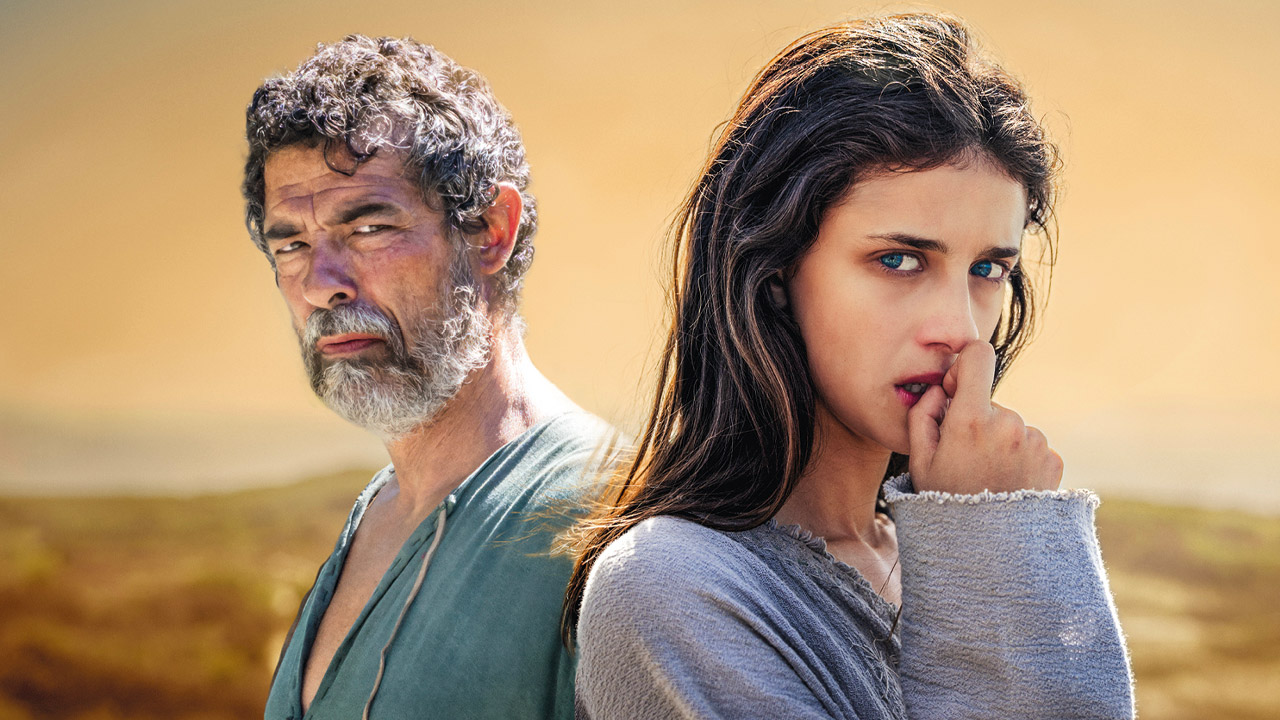
Poster:
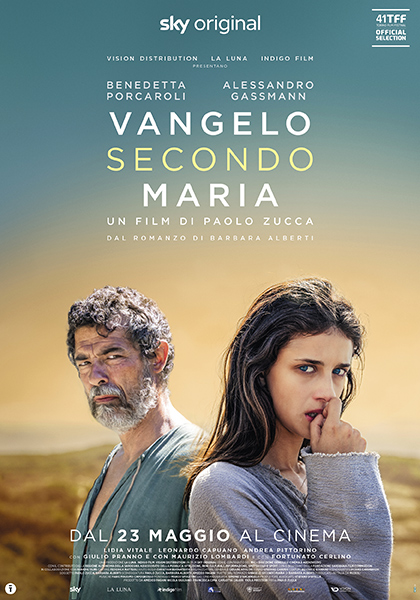
Locandina:
pad.mymovies.it/filmclub/2022/09/120/coverlg_home.jpg
pad.mymovies.it/filmclub/2022/09/120/locandina.jpg
www.cinematografo.it/image-service/version/c:M2QyY2FiZTct...
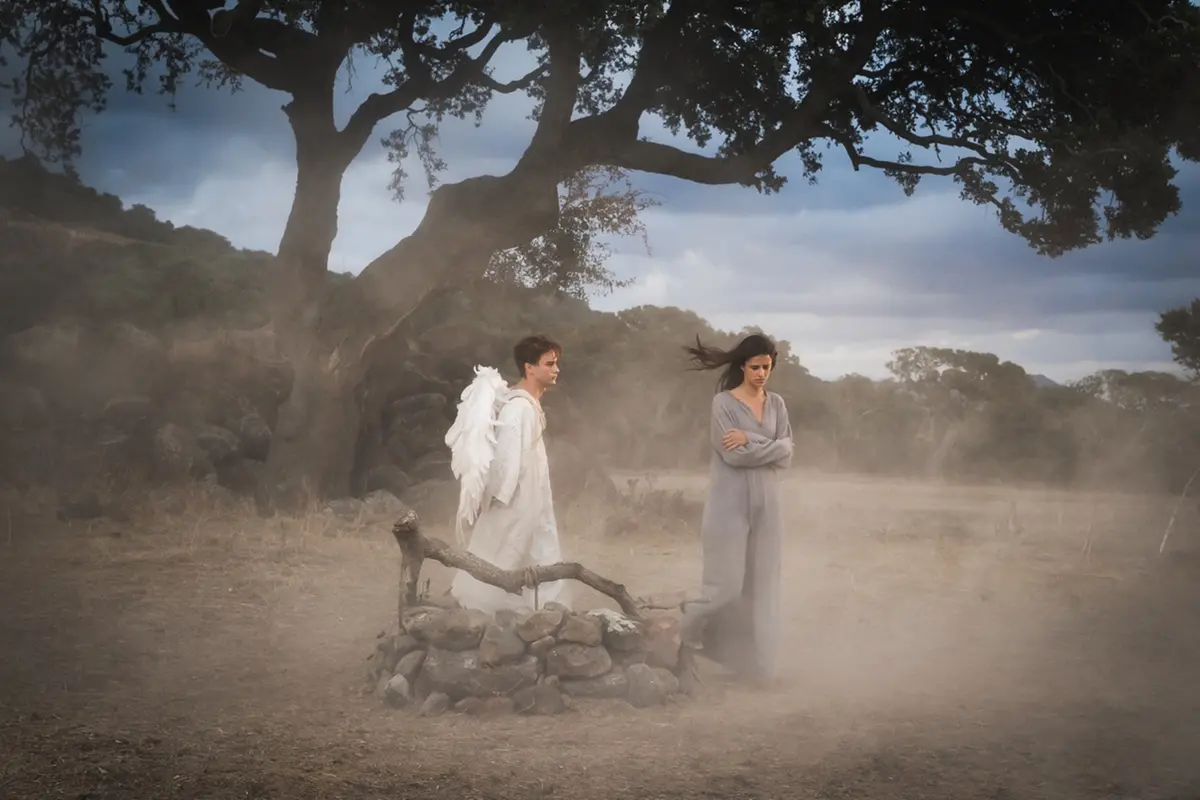
www.artribune.com/wp-content/uploads/2024/06/vangelo-seco...
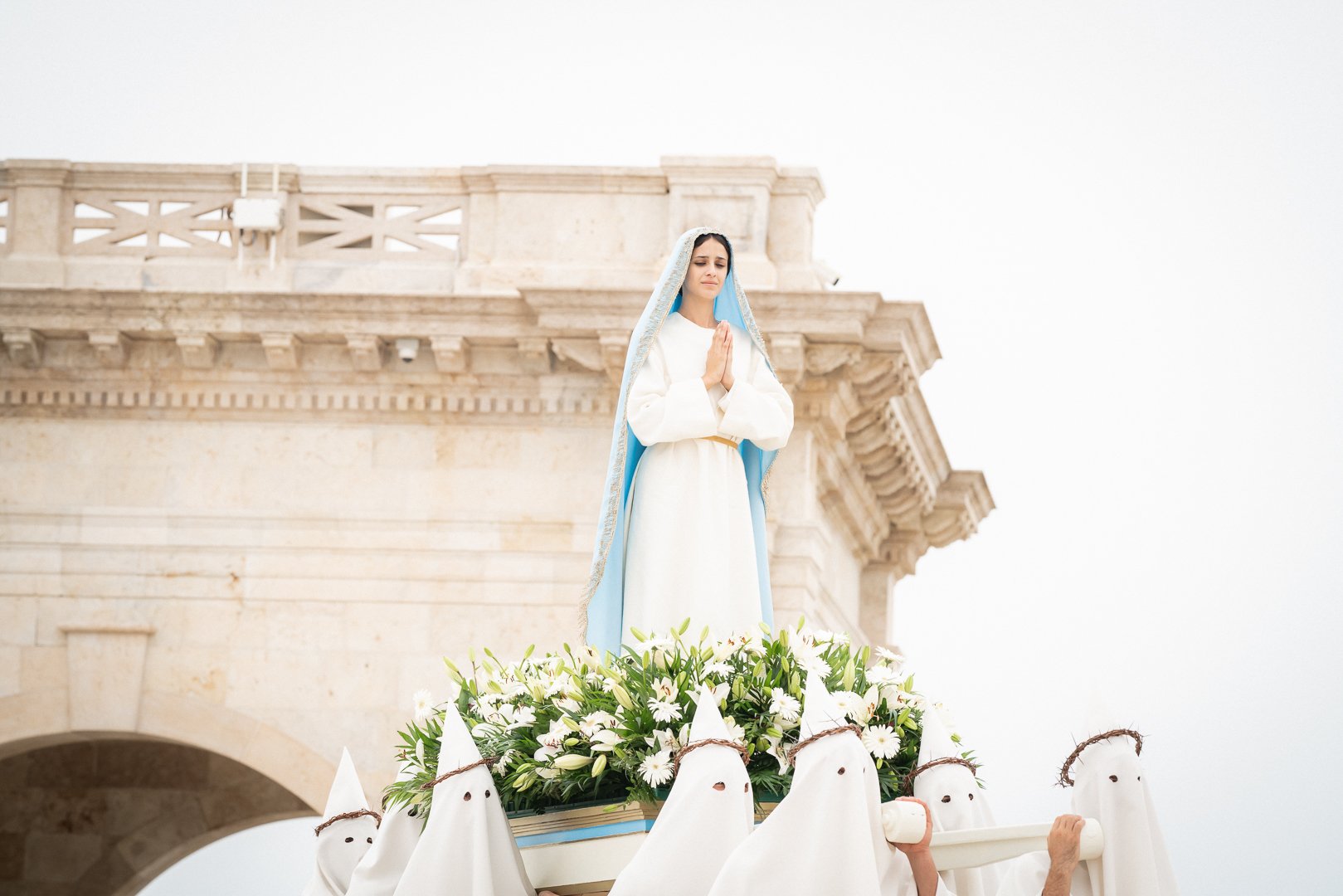
www.nuovodialogo.com/wp-content/uploads/2024/05/vangelo-s...
.............................................................................
click to activate the small icon of slideshow: the small triangle inscribed in the small rectangle, at the top right, in the photostream (it means the monitor);
or…. Press the “L” button to zoom in the image;
clicca sulla piccola icona per attivare lo slideshow: sulla facciata principale del photostream, in alto a destra c'è un piccolo rettangolo (rappresenta il monitor) con dentro un piccolo triangolo nero;
oppure…. premi il tasto “L” per ingrandire l'immagine;
www.fotografidigitali.it/gallery/2726/opere-italiane-segn...
………………………………………………………………………
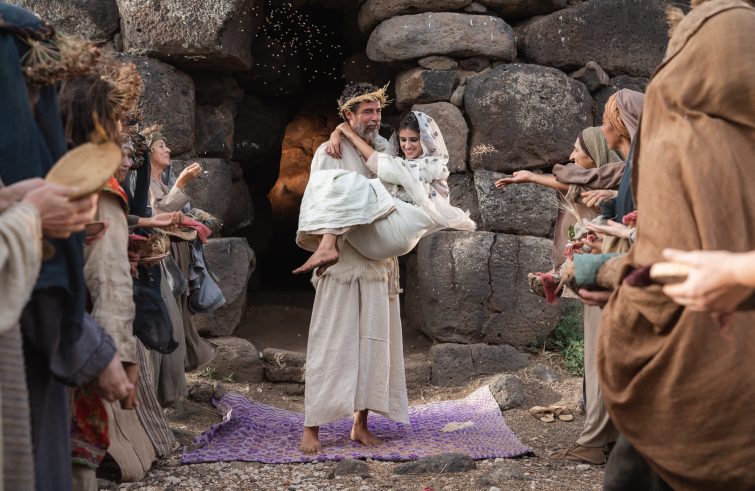
I propose here, on Flickr, a photographic story, with descriptive text, of a traditional Sicilian popular festival that is always highly anticipated, it takes place in the town of Fiumedinisi (Messina), in the last 18 years what is called the "Great Feast" has been celebrated only 3 times, always on the second Sunday of August, it was celebrated in 2007, in 2016, this year 2025, in all three editions I took photographs, those that I now present are almost all of the "Great Feast" of this year 2025. The town of Fiumedinisi is inextricably linked to her patron saint, Our Lady of the Annunciation, every year a traditional procession is held on March 24th and 25th, on the 24th the procession is made by the faithful on their knees, they carry a large lit candle with which they help themselves to support themselves, it takes place along a straight path in what is called "street of float" (it joins two churches), the next day there is another traditional procession, the two "Sacred Float," that of the Our Lady of the Annunciation and that of the Archangel Gabriel, are carried on the shoulders, followed by the faithful, through the narrow streets of the town. Then comes the "Great Feast" in August, also linked to the Annunciation, which occurs every year after many years. It is on Christmas Eve that it is announced whether that year will be the year of the Great Feast. At Christmas, "the Son of Man" is born, incarnated in Mary's womb. It is the Archangel Gabriel who announces to Mary the conception of the Son of the Most High. The iconography of the Sacred Representations depicts him kneeling before her, offering her a lily, a symbol of Mary's purity. The "Great Feast" in August has ancient origins dating back to the 16th century, the period of Spanish rule in Sicily. It was initially celebrated on March 25th, the religious feast of the Annunciation of the Lord. Later, towards the end of the 19th century, it was moved to August to allow the many emigrants from all over the world to attend. In short, the "Great Feast" includes a "morning procession" led by three young men who will impersonate the three main characters on the "living float"—the Mary, the Archangel Gabriel, and the Eternal Father. Around 11:00 a.m., the "Great Living Float," a very heavy object carried on shoulders, will make its first journey along the "street of float" (the one traveled on one's knees in March, but also on the eve of the Great Feast) with the barefoot bearers in ordinary clothing. In the afternoon, many boys and girls dressed as angels take their places on special seats on the "Great Living Float", the "three characters" (the Mary, the Archangel Gabriel, and the "Eternal Father" at the top) take their places. Now the Great Float will make the same journey in reverse, carried on the shoulders of devotee-bearers dressed entirely in white, barefoot, thus arriving in the square in front of the church-sanctuary dedicated to Maria SS Annunziata. Once the journey has finished and the Float has been placed on the ground, the ceremony includes, and ends, with an ancient dialect song sung by the children, with microphones, who dress up as Mary and the Archangel Gabriel. A curiosity, this "Great Float", an enormous metal and wood structure, extremely heavy, requires perfect coordination between the bearers. It is essential to raise and lower it in perfect synchrony, with all its "inhabitants" atop it. It is therefore crucial to avoid any oscillations that would be transmitted to the children seated at various heights, and to the Eternal Father, seated very high up. The moments preceding the float's departure, and those following its arrival, are of great concentration, silence is absolute, the launch occurs at the third blow of the hammer, all the devotee-bearers rise in perfect synchrony and "the magic comes to life"...! The Great Machine travels the "street of float" upon its arrival, there is maximum silence, and at the third blow of the hammer the devotee-bearers lower themselves, placing the incredible Living Float on the ground, renewing before our eyes an event of beauty and absolute wonder, the unique magic of an ancient Sicilian feast tradition.
…………………………………
Propongo qui, su Flickr, un racconto fotografico, con testo descrittivo, di una festa tradizionale popolare siciliana sempre molto attesa, si svolge nel paese di Fiumedinisi (Messina), negli ultimi 18 anni quella che è chiamata la “Festa Grande” si è celebrata solo 3 volte, sempre la seconda domenica di agosto, è stata celebrata nel 2007, nel 2016, quest’anno 2025, in tutte e tre le edizioni ho realizzato fotografie, quelle che ora presento sono quasi tutte della “Festa Grande” di quest’anno 2025. Il paese di Fiumedinisi è indissolubilmente legato alla sua santa patrona, Maria SS. Annunziata, ogni anno si tiene una tradizionale processione il 24 e 25 marzo, il 24 la processione viene fatta dai fedeli in ginocchio, essi recano una grossa candela accesa con la quale si aiutano nel sostenersi, si svolge lungo un percorso rettilineo in quella che è chiamata “strada vara” (unisce due chiese), il giorno dopo si ha un’altra processione, classica, le due “Sacre Vare”, quella di Maria SS. Annunziata e quella dell’Arcangelo Gabriele, vengono portate in spalla, seguite dai fedeli, nelle stradine del paese; poi la “Festa Grande” di agosto, legata anch’essa all’Annunciazione, che avviene ogni volta dopo molti anni: è la notte di Natale che si annuncia se quello sarà l’anno della Festa Grande, a Natale nasce “il Figlio dell’Uomo” incarnatosi nel ventre materno di Maria, è l’Arcangelo Gabriele che annuncia a Maria il concepimento del Figlio dell’Altissimo, l’iconografia delle Sacre Rappresentazioni lo raffigura inginocchiarsi al cospetto di Lei porgendole un giglio, simbolo della purezza di Maria. La “Festa Grande” di agosto ha origini antiche che risalgono al XVI secolo, periodo della dominazione spagnola in Sicilia, essa inizialmente veniva celebrata il 25 marzo, con la ricorrenza religiosa dell’Annunciazione del Signore, successivamente verso la fine del XIX secolo venne spostata ad agosto, per consentire ai molti emigrati, provenienti da ogni dove, di potervi assistere. In maniera sintetica, la “Festa Grande” prevede una “processione mattutina” con in testa i tre ragazzi che impersoneranno sulla “vara vivente” i tre principali personaggi, la Maria, l’Arcangelo Gabriele ed il Padre Eterno; verso le ore 11:00 la “Grande Vara Vivente”, pesantissima, portata in spalla farà un primo viaggio lungo la “strada vara” (quella che viene percorsa in ginocchio a marzo, ma anche la vigilia della Festa Grande) con i portatori scalzi, in abiti comuni; il pomeriggio sulla “Grande Vara Vivente” prendono posto su appositi seggiolini tanti bimbi e bimbe, vestiti da angeli, prendono posto i “tre personaggi” (Maria, l’Arcangelo Gabriele, in alto prende posto il “Padre Eterno”), adesso la Grande Vara farà lo stesso percorso inverso, portata sulle spalle dei devoti-portatori vestiti completamente di bianco, scalzi, così giungendo nella piazza davanti la chiesa-santuario dedicata a Maria SS Annunziata, terminato il percorso e deposta a terra la vara, la cerimonia prevede, e termina, con un antico canto dialettale intonato dai ragazzi, microfonati, che vestono i panni di Maria e dell’Arcangelo Gabriele. Una “curiosità”, questa “Vara Ranni” (dialettalmente, Vara Grande), enorme struttura in metallo e legno, pesantissima, necessita di una perfetta coordinazione tra i portatori, è fondamentale alzarla ed abbassarla in perfetto sincronismo, con sopra tutti i suoi “abitanti”, importantissimo quindi evitare qualsiasi oscillazione che si trasmetterebbe sui bimbi seduti a varie altezze, ed al Padre Eterno, seduto molto in alto: gli attimi che precedono la partenza della vara, e quelli che fanno seguito all’arrivo sono di grande concentrazione, il silenzio è massimo, la partenza avviene al terzo colpo di martello, tutti i devoti-portatori si alzano in perfetta sincronia e “la magia prende vita”…! La Grande Macchina percorre la “strada vara”, al suo arrivo, silenzio massimo, al terzo colpo di martello i devoti-portatori si abbassano deponendo a terra quella incredibile Vara Vivente che rinnova davanti ai nostri occhi un evento fatto di bellezza ed assoluta meraviglia, magia unica di una antica tradizione popolare Siciliana.
.....................
Excerpt from miyajima.or.jp/english/spot/spot_other.html:
Designated as a National Important Cultural Property on August 29, 1910
Hokoku Shrine is dedicated to the warlord Toyotomi Hideyoshi (one of the three unifiers of Japan in the 16th century) and his loyal aid Kato Kiyomasa. The reason for building this structure is clearly stated in a letter by Ankokuji Ekei, head monk of Ankokuji Temple. In 1587, Ekei asked Daiganji Temple, the temple in charge of construction and repair work in Miyajima including Itsukushima Shrine, to build a Buddhist library in which the chanting of Senbu-kyo sutras could be held every month. As there is no board ceiling or outer gate, it is believed that the construction of the building was not completed.
Originally, Amida Buddha and two subordinate Buddhist saints, Anan and Kasho-sonja, were enshrined in the Buddhist altar until the early Meiji era. Since that time, however, the altar has been used in Shinto rituals.
The building is called Senjokaku (Hall of One Thousand Tatami Mats), reflecting its standing as the largest structure on Miyajima Island. The shrine was a popular landmark in Miyajima where many people came to relax and cool themselves and to buy popular souvenirs such as tooth picks, and a variety of legends and traditions have been created here.
The fact that this structure, unique among the buildings belonging to Itsukushima Shrine, is unpainted and that its exact date of founding is recorded makes it a valuable gauge of the passage of time. The traces of weathering on its pillars and floor boards can be used to determine the approximate age of any other wooden structure on Miyajima.
A piece of wood used as a measuring device in the reconstruction work of the O-Torii in 1873 hangs on a pillar under the floor of the south part of the shrine. Countless votive picture tablets that had been hanging on the walls of Itsukushima Shrine buildings until the mid Meiji era decorate the walls inside the hall.
The shrine did not yet exist at the time of the Battle of Itsukushima in 1555 when the Mori clan defeated the Sue clan to unify the Chugoku region. The headquarters of the Sue clan was located on this hill, which was then called To-no-oka (Pagoda Hill). Starting in the Meiji era, the hill was developed through the establishment of stone steps, among other additions.
Excerpt from www.japan-experience.com/all-about-japan/miyajima/temples...:
Its bare appearance may not intrigue you at first. Only unfinished walls and a hundred pillars. Although the building is pretty, there is something missing. But once inside, look up: the gigantic ceiling is covered with a mosaic of paintings whose subjects are as varied as the styles and periods of implementation. Medieval battles, Buddhist representations, landscapes and animals in a modern style, the eye does not know where to turn.
🇫🇷 l ’intérieur de l’église est constitué d’une nef à vaisseau unique de trois travées, couverte d’une voûte en berceau à lunettes et comprend deux chapelles latérales en hémicycle en voûte
Les représentations présentes à l’intérieur de l’église sont de style baroque classique. Les peintures, trompe-l’œil, ont été réalisées par Nicolas Ivanoff entre 1928 et 1930. Ce dernier a ainsi réalisé la majeure partie de la décoration, ainsi que la voûte.En 1995, la décoration intérieure de l’église a été complétée par les artistes russes Anestesiya Sokolova et Valeri Tchernoritsky, à l’initiative de Monseigneur Florent Marchiano, curé des deux paroisses cargésiennes.
🇬🇧 The interior of the church consists of a single nave with three bays, covered by a barrel vault with lunettes, and includes two semicircular side chapels with vaulted ceilings.
The interior decorations are in the classical Baroque style. The trompe-l'oeil paintings were created by Nicolas Ivanoff between 1928 and 1930. He was responsible for most of the decoration, as well as the vault. In 1995, the interior decoration of the church was completed by Russian artists Anestesiya Sokolova and Valeri Tchernoritsky, on the initiative of Monsignor Florent Marchiano, parish priest of the two parishes in Cargès.
🇩🇪 Das Innere der Kirche besteht aus einem einschiffigen Langhaus mit drei Jochen, das von einem Tonnengewölbe mit Lünetten überspannt wird, und umfasst zwei halbkreisförmige Seitenkapellen mit Gewölben
Die Darstellungen im Inneren der Kirche sind im klassischen Barockstil gehalten. Die Trompe-l'œil-Malereien wurden zwischen 1928 und 1930 von Nicolas Ivanoff geschaffen. Dieser schuf den größten Teil der Dekoration sowie das Gewölbe. 1995 wurde die Innenausstattung der Kirche auf Initiative von Monsignore Florent Marchiano, Pfarrer der beiden Pfarreien von Cargés, von den russischen Künstlern Anestesiya Sokolova und Valeri Tchernoritsky vervollständigt.
🇮🇹 L'interno della chiesa è costituito da una navata unica a tre campate, coperta da una volta a botte con lunette e comprende due cappelle laterali semicircolari con volta a botte.
Le decorazioni all'interno della chiesa sono in stile barocco classico. I dipinti, trompe-l'œil, sono stati realizzati da Nicolas Ivanoff tra il 1928 e il 1930. Quest'ultimo ha realizzato la maggior parte delle decorazioni, compresa la volta. Nel 1995, la decorazione interna della chiesa è stata completata dagli artisti russi Anestesiya Sokolova e Valeri Tchernoritsky, su iniziativa di Monsignor Florent Marchiano, parroco delle due parrocchie di Caruges.
🇪🇸 El interior de la iglesia consta de una nave única de tres tramos, cubierta con una bóveda de cañón con lunetas, y comprende dos capillas laterales semicirculares con bóveda
Las representaciones presentes en el interior de la iglesia son de estilo barroco clásico. Las pinturas, en trampantojo, fueron realizadas por Nicolas Ivanoff entre 1928 y 1930. Este último realizó la mayor parte de la decoración, así como la bóveda. En 1995, la decoración interior de la iglesia fue completada por los artistas rusos Anestesiya Sokolova y Valeri Tchernoritsky, por iniciativa de Monseñor Florent Marchiano, párroco de las dos parroquias de Cargés.
The lotus (Sanskrit and Tibetan padma) is one of the Eight Auspicious Symbols and one of the most poignant representations of Buddhist teaching.
The roots of a lotus are in the mud, the stem grows up through the water, and the heavily scented flower lies pristinely above the water, basking in the sunlight. This pattern of growth signifies the progress of the soul from the primeval mud of materialism, through the waters of experience, and into the bright sunshine of enlightenment.
Though there are other water plants that bloom above the water, it is only the lotus which, owing to the strength of its stem, regularly rises eight to twelve inches above the surface.
According to the Lalitavistara, "the spirit of the best of men is spotless, like the lotus in the muddy water which does not adhere to it."
According to another scholar, "in esoteric Buddhism, the heart of the beings is like an unopened lotus: when the virtues of the Buddha develop therein, the lotus blossoms; that is why the Buddha sits on a lotus bloom."
The lotus is one of Buddhism's best recognized motifs and appears in all kinds of Buddhist art across all Buddhist cultures. Scrolling lotuses often embellish Buddhist textiles, ceramics and architecture.
Every important Buddhist deity is associated in some manner with the lotus, either being seated upon a lotus in full bloom or holding one in their hands. In some images of standing Buddhas, each foot rests on a separate lotus.
The lotus does not grow in Tibet and so Tibetan art has only stylized versions of it, yet it appears frequently with Tibetan deities and among the Eight Auspicious Symbols.
The color of the lotus has an important bearing on the symbology associated with it:
White Lotus (Skt. pundarika; Tib. pad ma dkar po): This represents the state of spiritual perfection and total mental purity (bodhi). It is associated with the White Tara and proclaims her perfect nature, a quality which is reinforced by the color of her body.
Pink Lotus (Skt. padma; Tib. pad ma dmar po): This the supreme lotus, generally reserved for the highest deity. Thus naturally it is associated with the Great Buddha himself.
Red Lotus (Skt. kamala; Tib: pad ma chu skyes): This signifies the original nature and purity of the heart (hrdya). It is the lotus of love, compassion, passion and all other qualities of the heart. It is the flower of Avalokiteshvara, the bodhisattva of compassion.
Blue Lotus (Skt. utpala; Tib. ut pa la): This is a symbol of the victory of the spirit over the senses, and signifies the wisdom of knowledge. Not surprisingly, it is the preferred flower of Manjushri, the bodhisattva of wisdom.
La statuaire moderne y offre notamment des représentations de Saint Materne et Saint Lambert, réalisées en 1741 par le sculpteur Simon Cognoulle et placées contre les premiers piliers de la nef. Elles proviennent de l'église Sainte-Catherine de Maaseik, dans le Limbourg, et ont été achetées en 1868.
Modern statuary includes representations of Saint Materne and Saint Lambert, created in 1741 by the sculptor Simon Cognoulle and placed against the first pillars of the nave. They come from the Saint Catherine's Church in Maaseik, Limburg, and were purchased in 1868.
The Green Man is an ancient symbol of rebirth - representations are found all round the world. Statues and carvings more usually have leaves or other vegetation growing out of the mouth or eyes.
This butterfly is very battered and worn and has seen better times but she was still happily flying around in the sunshine. Red Admirals are mainly migrants and fly here from Central Europe in May or June (so it is not surprising that they are a bit tatty by the time they get here). These breed and give rise to the next generation of adults with a peak of emergence between mid-August and early October. (There are a few which now breed in southern England but most seen in the summer are migrants)
Info from www.ukbutterflies.co.uk/species.php?species=atalanta
Thank you for your visit, comment or fave. All are much appreciated. Thank you also to all who invite my photos to their groups.
All photos and textures used are my own.
All rights reserved. This photo is not authorized for use on your blogs, pin boards, websites or use in any other way.
The Southern Cross is one of the most popular representations in the sky for observers in the southern hemisphere. Four stars give the constellation its characteristic configuration:
1. Acrux, at the foot of the cross, is the brightest of the four at magnitude 0.67 (and is the 13th brightest in the sky). Although a single star is visible in the image, Acrux is a sixfold system 321 light-years (average) from Earth.
2. Mimosa (below in the image), is second in order of brightness with a magnitude of 1.15. It is also known by the name of Becrux and is a spectroscopic binary system 278 light years from Earth.
3. Gacrux, the head of the cross, is third in order of brightness with a magnitude of 1.63. It is a red giant 88 light years from Earth.
4. Delta Crucis, also known as Imai, is the least bright of the quatern, with a magnitude of 2.70. Delta Crucis is in the process of evolving into a red giant.
An important group of star clusters enrich the view of this magnificent region of the sky, such as NGC 4755, known as The Jewel Box, under Mimosa. Caldwell 97 and Caldwell 100 can be seen above in the image on the Gacrux and Delta Crucis side. But surely what is most striking are the dark areas surrounding the foot of the cross. It is the most important of the dark nebulae in our sky, known as the "coal sack."
If you visit Argentina, don't miss the opportunity to go to a dark sky and look at the stars. After the astonishment, after feeling and assuming our enormous finiteness and contingency under that magnificent starry sky, look for the Southern Cross, the smallest, but the most notable of the 88 constellations in the sky. It is always visible, not hidden, and the sack of coal can be seen with the naked eye.
---------------------------------------------------------------------------------------
Details:
nova.astrometry.net/user_images/7940925#annotated
---------------------------------------------------------------------------------------
Nikon D5600.
Nikon 75-150 lens (in 100 mm).
23 minutes of integration.
Iso 1000.
f/3.5.
Processed with Siril and Gimp.
April 30, 2023 - 00:38 UT (average time).
Rural area, Concordia, Entre Ríos, Argentina.
Our ancestors weaving together thoughts including theories, characters and angelic and divine signatures used notions of above and below to picture a worlds of heavens and of earths. In these two pictures I can see several shapes forming into representations of animal heads. These images were taken each at 5 seconds duration.
© PHH Sykes 2024
phhsykes@gmail.com
Symbolic representations of what's being stripped away from me. The past six weeks has been a whirlwind of fighting, anger, disappointment, resentment and circular arguments, situations that go round and round...feelings of helplessness, hopelessness and failure...a stubborn inability to just let go because no matter what is going on, I can't escape the intense love for the other, even as dreams shatter and worlds crumble beneath my feet. Crying uncontrollably every chance I get to be by myself, wondering how we could fail so miserably and praying that this is all just a test and we'll come out stronger, closer and more in love...but today...today, I stopped praying, stopped wishing, stopped wanting, started accepting.
But you've seen me bare
You've seen me covered up
Maybe I'm not scared
Of what you're thinking of.
It’s VERY frustrating that some locations and representations of them, have become so fundamentally iconic to landscape photography, that even visiting them gives you a feeling of déjà vu. Now this over familiarity with certain locations, (even before one has even visited them) not only dampens the spirit of adventurous discovery, but poses even greater problems to the landscape photographer who is trying to develop and present new fresh approaches, especially when many of the dramatic places already have their own representations cemented in the popular consciousness.
On one level, even attempting to working in ‘these’ locations can feel akin to plagiarism, especially when a particular image has become so iconically tied to a location and photographer, it can feel futile to even point the camera in the same direction, in fear of diminishing one’s own creative integrity. Yes, yes, I’m aware of the popular urban myth perpetuated by photographic journalists, that encourages attempting new insights on the familiar, but frustratingly the room for creative manoeuvre is already pissing in the wind. Even then, assuming you have managed to find some creative shelter from the prevailing westerly’s, you then have to contend with flushing the said ‘icon’ out of your head, in order to explore fresh inspiration in the hope of unearthing something creatively unique. Ironically this approach can force the congruent photographer to ignore the obvious photogenic elements, leaving them to contend with lesser vaguer aesthetics.
Then, in an act of lasting degradation, when the photographer has dealt with the self induced shame, and struggled with the creative exploration and finally come up with something personally insightful, (however slight the movement forward is), they then have the final indignity of ‘comparison’ to deal with. How can something that is so loved, so widely published in the psyche of millions be distorted by new representations? How can David even contemplate approaching Goliath? Is there really any point?
Go on, I’ve asked for it... I ask for no mercy... I have no defence...Bring on the torrent... Open the flood gates...I deserve it........................
Allegorical representations of the Danube and Inn rivers as Greek gods, forming part of the Pallas Athene Fountain, outside das Parlament in Vienna, Austria,
Un ami ayant regretté 😃😃😃(que je cache des représentations de la vie de JC ), voici une autre fresque ,plus abimée que les précédentes, que j' ai contrastée légèrement dans sa partie basse).
On y constate qu'elle a subi ou bénéficié d'apports nouveaux au cours des siècles....en bas à droite on voit partiellement apparaitre la peinture précédente.
🇩🇪 Nachdem ein Freund bedauert hat (dass ich Darstellungen aus dem Leben Christi verberge 😔😉), hier ein weiteres Fresko ,das stärker beschädigt ist als die vorherigen, im unteren Teil leicht kontrastreich).
Man sieht, dass es im Laufe der Jahrhunderte neue Ergänzungen erfahren oder davon profitiert hat....unten rechts sieht man teilweise das vorherige Gemälde erscheinen.
:🇮🇹 Avendo un amico rimpianto (che nascondo le rappresentazioni della vita di JC 😔😉 ), ecco un altro affresco, più danneggiato dei precedenti, leggermente contrastato nella sua parte inferiore).
Si può notare che ha subito o beneficiato di nuove aggiunte nel corso dei secoli....in basso a destra, si può vedere parzialmente il dipinto precedente.
:🇬🇧 A friend having regretted (that I hide representations of JC's life 😔😉), here's another fresco ,more damaged than the previous ones, slightly contrasted in its lower part).
You can see that it has undergone or benefited from new additions over the centuries....at bottom right you can partially see the previous painting.
Habiéndose arrepentido un amigo (de que oculte representaciones de la vida de JC 😔😉), he aquí otro fresco, más deteriorado que los anteriores, ligeramente contrastado en su parte inferior).
Se ve que ha sufrido o se ha beneficiado de nuevos añadidos a lo largo de los siglos....en la parte inferior derecha, se ve parcialmente la pintura anterior.
A fachada plateresca da Universidade de Salamanca, datada do século XVI, destaca-se como um dos exemplares mais emblemáticos do estilo em Espanha. Edificada em pedra de Villamayor e dividida em três corpos ornamentados, a fachada exibe medalhões dos Reis Católicos, elementos heráldicos, incluindo o escudo de Carlos V, e representações mitológicas. A obra simboliza a ligação entre a universidade, fundada em 1218, e o poder régio da Coroa Hispânica. Um dos elementos mais procurados pelos visitantes é a pequena rã esculpida sobre uma caveira, cuja descoberta, segundo a tradição, traz boa sorte nos exames. A profusão de detalhes e simbolismos, característicos do plateresco, transformam a fachada num autêntico retábulo pétreo, narrando a história e a relevância da Universidade de Salamanca, classificada como Património Mundial da UNESCO, enquanto centro de educação e cultura europeia.
The Plateresque façade of the University of Salamanca, dating from the 16th century, stands out as one of the most emblematic examples of the style in Spain. Built in Villamayor stone and divided into three ornate bodies, the façade displays medallions of the Catholic Monarchs, heraldic elements, including the coat of arms of Charles V, and mythological representations. The work symbolizes the connection between the university, founded in 1218, and the royal power of the Hispanic Crown. One of the most sought-after elements by visitors is the small frog carved on a skull, whose discovery, according to tradition, brings good luck in exams. The profusion of details and symbolism, characteristic of the Plateresque style, transform the façade into an authentic stone altarpiece, narrating the history and relevance of the University of Salamanca, classified as a UNESCO World Heritage Site, as a center of European education and culture.
Representations that fall into the Uncanny Valley would not necessarily have to be mechanoid - or at least that is what I would imagine. Something which is humanoid yet clearly non-human, should also qualify. It would however have to have negative subconscious associations, such as a succubus surely must have. I am reading up on my Freud to see if I can find any substantiation for this claim in what he has to say upon the subject of the Uncanny.
So meanwhile, Flea Bussy's Smoke avatar comes with an entirely different shape and skin as well as hair. I kept the bald look and adjusted all the prims to Alpha's shape and size. And also made them semi transparent. The skin is Vry Offcourse's "Frail" skin.
This one is actually called the "Smoke Incubus" at Grendel's Children. However, since Alpha is female she cannot be an Incubus, only a Succubus.
Citrus medica var. sarcodactylis, or the fingered citron, is a citron variety whose fruit is segmented into finger-like sections, resembling those seen on representations of the Buddha. It is called Buddha's hand in many languages including English, Chinese, Japanese, Korean, Vietnamese, and French.
The different cultivars and variations of this citron variety form a gradient from "open-hand" types with outward-splayed segments to "closed-hand" types, in which the fingers are kept together. There are also half-fingered fruits, in which the basal side is united and the apical side fingered. The origin of this kind of citron is commonly traced back to South or East Asia, probably northeastern India or China, where most domesticated citrus fruits originate.[1]
Description
Citrus medica var. sarcodactylis[2] is, like any other citron variety, a shrub or small tree with long, irregular branches covered in thorns. Its large, oblong leaves are pale green and grow about four to six inches. Its white flowers are tinted purplish from the outside and grow in fragrant clusters. The fruit's fingers contain only the white part of the fruit and sometimes a small amount of acidic pulp, but many of them are completely juiceless and some are seedless.[3]
The plant is sensitive to frost, as well as intense heat and drought. It grows best in a temperate climate. Trees can be grown from cuttings taken from branches two to four years old. It is very commonly grafted onto sufficient rootstock.
Restoration House in Rochester, Kent in England, is a fine example of an Elizabethan mansion. It is so named after the visit of King Charles II on the eve of his restoration.
Charles had landed in Dover on 25 May 1660 and by the evening of the 28th arrived in Rochester. He was received by the Mayor and eventually retired for the night to the home of Colonel Gibbon. The following day Charles continued to London and was proclaimed King on 29 May, his 30th birthday. Although the home of Colonel Gibbon, the property was actually owned by Sir Francis Clerke (he was knighted during the visit), a fact which has led to confusion in the past.[1]
Although it is a private home, the house and garden are open to the public during the summer.[2] The house is protected as a Grade I listed building.[3]
History
Restoration House was originally two medieval buildings (1454 and 1502–22) with a space between.[1] They were joined in 1640–1660 (tree ring data from roof) by inserting a third building between the two, to create a larger house.[1][4] The first owner of the completed house was Henry Clerke, a lawyer and Rochester MP.[1] Clerke caused further works in 1670, the refacing of the entrance facade, the Great Staircase and other internal works.[1] The house was then bought by William Bockenham.[5] It was owned by Stephen T. Aveling in the late 19th century,[6] and he wrote a history of the house which was published in Vol. 15 of "Archaeologia Cantiana".[7]
The house was purchased for £270,000[8] by the English entertainer Rod Hull, in 1986, to save it from being turned into a car park;[9] and he then spent another £500,000 restoring it.[10] It was taken by the Receiver in 1994 to cover an unpaid tax bill.[9]
The current owners over the past decade have uncovered decoration schemes from the mid 17th century, which reveal the fashionable taste of the period, much influenced by the fashions on the continent.[4]
Charles Dickens
According to the biographer John Forster, the novelist Charles Dickens, who lived nearby, used Restoration House as a model for Miss Havisham's Satis House in Great Expectations.[11] The name "Satis House" belongs to the house where Rochester MP, Sir Richard Watts, entertained Queen Elizabeth I; it is now the administrative office of King's School, Rochester. Wikipedia
.
*
Wikipedia
*
Photo : La Nativité vue par un artiste local et exposée en continu à côté de l’église de Bagnasco, petit village du Piedmont italien. Il s’agit d’une sculpture d’environ 5 m de long et 1 m de haut dans un magnifique tronc d’arbre, taillée sommairement et représentant à la fois la crèche et un berger censé représenter la scène biblique appelée l’Adoration des bergers.
Foto: La Natividad según un artista local expuesta en continuo al lado de la iglesia parroquial de Bagnasco, una aldea de Piedemonte italiano. Se trata de una talla tosca de unos 5 m de largo por 1 m de alto (tal vez 1,20 m) en un tronco monumental. Esta escultura representa a la vez la escena del Nacimiento y la de la Adoración de los pastores.
Under the guise of environmentalism and conservation the powers that be want to tokenize everything, including nature. They want to “monitor, preserve, and enhance the natural world.” Just like they plan to enhance (control) humans through transhumanism, they plan to enhance (control) nature. They want to enslave both man and nature.
These elitists want to integrate blockchain technology into nature and market it as biodiversity conservation. They not only want to build the Internet of Bodies (people), but also the Internet of Forests (nature). They want everything to become part of the Internet of Things. They want to connect every living thing to artificial intelligence. This trans-human-ism and trans-nature-ism would commoditize every living thing. It would be the merging of man and machine; it would be the merging of nature and machine. It would be “a world where virtually everyone and everything is intelligently connected.” Dystopia anyone?
They are marketing this tokenization of nature as “an effort to minimize negative impacts on ecosystems and species.” Snake oil anyone? If they tokenize nature, they can use nature as a financial instrument. They can then sell green bonds and derivatives based on biodiversity data. This data would be gathered via sensors, drone fleets (“swarm intelligence drones”), and satellites. Thus all the species of the forest would be monitored and data mined. They want to build an “AI-driven neural network for our planet.” They want a global AI network that monitors everyone and everything in real-time.
This system will require datafication of biodiversity. This means that they will need to create digital representations of all species and all ecosystems on earth. They want to commoditize everything. “Almost every core function in financial services will be transformed.” It’s good for the planet and good for business…buhahaha!
The scam: Carbon Markets! “Carbon markets are critical in helping the world attain net-zero greenhouse-gas emissions.” Carbon markets revolve around the buying and selling of carbon credits. These credits allow the buyer to emit a certain amount of pollution. “Carbon justice for all!”
“Carbon markets can be a powerful tool to help advance carbon justice.” – United Nations
Carbon trading was first introduced as part of the 1997 Kyoto Protocol. The Kyoto Protocol’s carbon trading system was a major step towards establishing a global market for carbon emissions. The Kyoto Protocol was adopted as the first addition to the United Nations Framework Convention on Climate Change. The Kyoto Protocol has since been replaced by the Paris Agreement.
The globalists have also been talking about “carbon emissions trading schemes under which emissions credits would be allocated to adult individuals.” To bring about a personal carbon market scheme, they must introduce digital IDs and central bank digital currencies. Then they can introduce a Chinese-style social credit score system. They will tie your “carbon footprint” to your social credit score. Therefore, you’ll own nothing, and you’ll happily eat your bugs. You won’t have enough money to buy a carbon credit to leave your 15-minute city neighbourhood prison. But then again, climate lockdowns! By the way: you may want to breathe less, because they will carbon tax your every breath.
The carbon market is being introduced through public-private partnerships, which adhere to the Sustainable Development Goals of the United Nations. A low-carbon economy: degrowth. Degrowth is synonymous with poverty and depopulation.
Eventually, they will install a world leader over their new world order. Each individual will have to take this leader’s Mark (blockchain technology) in order to participate in his new world economic order. No one will be able to buy or sell unless they take his transhuman technology—the merging of man and Beast. If they receive his Mark, they will become one with the Beast’s AI-driven neural network. The public persona of this Skynet system will be the Image of the Beast. Those who refuse to take the Mark of the Beast and worship his Image will be enemies of the new world state. All such people will be hunted down and terminated—hasta la vista, baby. The new world surveillance state: you can run, but you can’t hide!
2 Timothy 3:1 “This know also, that in the last days perilous times will come.”
Now, for one of my favourite verses:
Psalm 42:1 “As the deer pants for streams of water, so my soul longs after You, O God.”
The church of St. Bartholomew was built in 1600, and then over the centuries it was altered and restored a number of times.
The log church is oriented towards the East, and comprises a post-and-frame tower, a post-and-beam vestibule as well as a brick sacristy, which was added later. The nave is covered with a double-pitched roof and the chancel with a slightly lower three-pitched roof. The roof over the nave features a neo-Baroque turret. The tower with tapered walls, comprises a top chamber, and is clad with wood boards, and topped with a bulbous cupola.
Inside there is a coved ceiling, and barrel vault in the sacristy. The gallery is supported by four pillars. The entrance from the chancel to the sacristy is framed with ogee arch. The doors to the side of the nave feature the reinstalled Gothic fittings and a hammered lock from ca. 1600.
The Baroque and late Baroque furnishings inside include the high altar from the 1700s, two side altars at the entrance to the chancel from the 1600s, a unique pomegranate-shaped pulpit from the 1700s, as well as a Baroque chalice-shaped baptismal font made from black marble from the 1700s. The benches from 1756 are embellished with painted representations of the Apostles, representatives of various social strata, and scenes from the New Testament. The late-Baroque confessional, dating from the same time, is also decorated with paintings.
In Rogi, there once was a fortified castle, and relics of the ramparts can still be seen here. A reference to the castle, dating from 1462, can be found in a document related to the division of the estate between Czarnocki brothers. According to the document, the stronghold had two towers.
sad.podkarpackie.travel/en/trail-points/krosno-brzozow-tr...
13603 Broken slab, probably from a sarcophagus with relief representations in two recessed rectangular panels: left, a female figure on a couch; right, within a pedimented frame, a male and female figure en face. Early Imperial period, 1st-2nd century AD.
The Archaeological Museum of Rhodes (Greek: Αρχαιολογικό Μουσείο Ρόδου) is located in the Medieval City of Rhodes. The museum is housed in the monumental edifice that was the hospital of the Knights of Saint John. Construction was begun in 1440 and brought to completion in the time of the Grand Master d'Aubusson (1476-1503). The Museum contains various collections of archaeological artifacts from various parts of Rhodes and the neighbouring islands, including the Statue of the Crouching Aphrodite (1st century BC), which was inspired by a famous prototype work created by the sculptor Doidalsas in the 3rd century BC, and the Pyxis of the Fikellura type (mid-6th century BC).
The museum also holds the Head of Helios, which was featured in 2011 on the album cover of Floral Shoppe by Macintosh Plus, and subsequently became famous for its association with the Vaporwave movement....Wikipedia
The original is carved in sandstone and located on the exterior of the apse of the church of St. Sebaldus, Nuremberg, Germany. It is dated ca. 1490-1492. This large relief was created by Adam Kraft, who was a leading sculptor of the final phase of the Late Gothic period in Germany.
The plaster cast is located in the the Victoria and Albert Cast Court in South Kensington,London, U.K. Having never seen the original, this representations of the Passions, entombment and Resurrection of Christ was one of my favorite copies to examine at the V&A.
The cast is dated 1872 and created by Jacob Rotermundt.
Dune Varela
« Always the sun »
The exhibition shows a collection of representations of sacred places, such as temples, which have become “vestiges, backdrops, tourist sites, spaces of representation and learning.” Varela’s presentation of these places, however, challenges their use. The image of a temple is more meaningful than the temple itself.
The viewers have before their eyes the photograph of a statue splattered with paint; next come fragments, scraps of pictures cut abruptly and photoshopped onto the pottery. The image of a colonnaded wall comes to a halt at a smashed stone. The form prevails, tells us Dune Varela. But this form is manipulated. The image has taken a blow. “I wanted to destroy, to deconstruct. Fixing is inherent in the photograph: it captures. I wanted to produce something more raw, take a leap into the unknown with the material by accepting its accidents, even provoke them.” (Toujours le soleil, interview with Manon Lutanie, Éditions Trocadero.)
It is precisely this system of representation that the photographer explores and plays with. A temple is being manipulated, photographed, rephotographed, captured from a screen display. The image multiplies, transforms. First carved in stone, the image of a temple is shattered. Antiquity withdraws into the distance. The myth is far away. There remains a correspondence between these ruins visited as a proof of the past, and the finite character of photography.
Dune Varela, winner of the BMW Residency at the Musée Nicéphore Niépce, works on landscapes and their representation. Spanning various timeframes, she ponders the fragility of the photographic support with pictures culled from museum collections and the Internet or her own photographs. Printed on plaster, glass or ceramic, her images beckon us to places steeped in mythological or mystical meanings that have become part of our collective consciousness. Traces of time and history at these endlessly photographed tourist sites are eroded until the artist’s interventions finally finish them off. Photography, which fulfills the need to remember but is also a metaphor for that which is no longer there, invents new temples as vulnerable as she is.
The Wiślicka Plate or the Plate of Orans /floor size 4.1 × 2.5 meters/ from around 1175-1177 with engraved figural representations, discovered in 1959 in the crypt of the demolished church from the 12th century, whose place is now a Gothic Collegiate Church in Wiślica.
A unique monument of Romanesque art in the world.
The floor is made of screed (gypsum mass, hardening after pouring). Carvings were made on it, then filled with gypsum mass, tinted black with tar or charcoal. As a result, a black drawing was obtained on a light background, reminiscent of the effect Niello.
Sant Joan de Boí és l’església que conserva més elements arquitectònics del primer moment constructiu que es produeix a la Vall de Boí al s.XI.
De planta basilical (com Sant Climent i Santa Maria), a Sant Joan de Boí destaca el conjunt de pintures murals que es van trobar decorant l’interior de les naus amb escenes com la Lapidació de Sant Esteve, els Joglars o el Bestiari.Tractat d'història natural sobre animals, reals o fantàstics, amb un sentit al·legòric. En el món medieval, es refereix a les representacions de tipus zoomòrfic, que sovint prenen un sentit simbòlic o moralitzant.
En la darrera restauració es va voler donar a l’església un aspecte el més similar possible a com seria al s.XII; per això, es va arrebossar l’interior i es va fer còpia de tots els fragments de pintura mural conservats actualment al MNAC.
Aquí és on millor podem entendre quina funció complien les pintures i quin era l’aspecte original d’aquestes esglésies.
Sant Joan de Boí es la iglesia que conserva el mayor número de elementos arquitectónicos del primer momento constructivo que se produce en la Vall de Boí, en el siglo XI.
En Sant Joan de Boí, de planta basilical (como Sant Climent y Santa Maria), destaca el conjunto de pinturas murales que se encontraron decorando el interior de las naves con escenas como La lapidación de San Esteban, Los Juglares o el Bestiario.Tratado de historia natural sobre animales, reales o fantásticos, con un sentido alegórico. En el mundo medieval, se refiere a las representaciones de tipo zoomórfico, que a menudo adquieren un sentido simbólico o moralizante.
En la última restauración se quiso dar a la iglesia un aspecto lo más similar posible al que debía tener en el siglo XII; con este objetivo, se enfoscó el interior y se hicieron cópias de todos los fragmentos de pintura mural conservados actualmente en el MNAC.
Es aquí donde mejor podemos entender qué función desempeñaban las pinturas y cuál era el aspecto original de estas iglesias
The church of Sant Joan in Boí has the largest number of architectural elements from the early building work that took place in the Vall de Boí in the 11th century.
Of particular note in the church of Sant Joan, with its basilical layout (like Sant Climent and Santa Maria) are the mural paintings decorating the interior of the naves with scenes such as The Stoning of Saint Stephen, The Minstrels and The Bestiary. Natural history of animals, real or imaginary, with an allegorical meaning. In medieval times, zoomorphic representations were used that often acquired a symbolic or moralistic meaning.
The last restoration aimed, as far as possible, to restore the church to what it must have looked like in the 12th century. With this aim in mind, the interior was darkened and copies were made of all the fragments of frescoes currently conserved at the MNAC.
This is where we can best understand the function of these paintings and the original appearance of the churches.
this image doesnt do justice the night I had. my good friend Jeroen and I went to see Clash of the Titans and Alice in Wonderland in the cinema tonight. both movies where as expected awesome!! loved them both for various reasons. Clash mostly for übercutie Sam Worthington, and I had to hear Liam Neeson say "Release the Kraken!"
Taken in the parking lot because I totally forgot to do a picture today and only had 20 minutes to shoot one. Tomorrow I'll do my Mad Hatter impression!
Ce 2 avril avait lieu à Magdeburg une représentation du ballet des Moonshine Dancers "Le Monde Magique du rêve".
Un spectacle onirique et enchanteur qui puise en partie son inspiration dans les légendes Celtiques.
Le Monde magique du rêve, emporte le public dans une variété de paysages oniriques, un tourbillon de mouvements imaginatifs et de costumes féériques. La musique d'inspiration celtique, de Bretagne, d'Ecosse, d'Irlande... fait vivre la magie de cette atmosphère.
Moonshine Dancers est un groupe de danseurs qui travaillent ensembles pour présenter des spectacles de danse dans Second Life. La compagnie est dirigée par Ciske Auster et le groupe se compose actuellement d'Aurora, Bea, Bevy, Bubu, Cassy, Ciske, Cricri, James, Melissandre et René.
D'autres représentations auront lieu, dont une le 30 avril à Paris 1900. Ne les ratez pas.
Pour plus d'information Merci de contacter Ciske Auster (ciskederat.auster) inworld.
This April 2 took place in Magdeburg a performance of the Moonshine Dancers ballet "The Magic World of Dreams".
A dreamlike and enchanting spectacle which draws in part its inspiration from Celtic legends.
The Magic World of Dreams takes the audience into a variety of dreamlike landscapes, a whirlwind of imaginative movements and magical costumes. Celtic-inspired music, from Brittany, Scotland, Ireland ... brings the magic of this atmosphere to life.
Moonshine Dancers are a group of dancers who work together to present dance performances in Second Life. The company is led by Ciske Auster and the group currently consists of Aurora, Bea, Bevy, Bubu, Cassy, Ciske, Cricri, James, Melissandre and René.
Other performances will take place, including one on April 30 in Paris 1900. Don't miss them.
For more information Please contact Ciske Auster (ciskederat.auster) inworld.
I didn't change my shape at all. I was always annoyed that live-action screen representations of Wonder Woman always ignore that as an ultra-fit Amazon, Wonder Woman should be muscular. In the comics and the Lynda Carter version, she's always depicted as tall as well.
Because of her height and skeletal proportions, even without a hyper-developed musculature, Lynda Carter's Wonder Woman is the best live-action visual-representation of Diana Prince.
Only the other Amazons in all the other live-action versions of the mythology actually look physically kick-ass. Hahaha... The producers/directors bend the Wonder Woman mythology to the will of men's perceptions of female-beauty. I guess "magically created" strength is the excuse. Oh well...
I had a hunch, this skin may work on my GenX body shape, as is. I didn't adjust my shape at all.
I tried it on my Lara Wonder Woman and it didn't look bad, but I had to thicken my over-all body, and slim my legs slightly. It still didn't look "quite right" with my Lara.
I had to yellow-tint this skin a little bit to attempt matching my regular skin and face. The creator of this skin doesn't give demos or a wide range of tones, so I took a chance with it.
I also took a chance that someone out there may have a Wonder Woman outfit for GenX and I got incredibly lucky.
I was willing to attempt wearing one of the versions of the costume, that I've previously used on my Lara body. Sometimes you get lucky in sizing and/or alpha-cut trickery.
The meaning of this ancient message in Saguaro National Park is lost. No modern man knows for sure what these petroglyph symbols of the Hohokam culture mean. According to the National Park website, "Current speculation has led some researchers to believe that some petroglyphs or pictographs may tell a story, mark a trail, or commemorate an event."
What story is this? Is this marking the legalities of a territory? A trail? A prayer? Advertisement? A festival? A reminder? Just doodles?
I saw many abstract wheels and spokes at this site. What strikes me is how easily man takes to symbolic representations and conceptual abstractions–or, is this a sign of a later stage of writing development? That is to say that somewhere there should be earlier, less conceptual writing? 🤔
-----
Signal Hill at Saguaro National Park, Arizona
Ceiling with representations of St. Peter Martyr - Church Sant'anastasia - Verona
La chiesa di Sant’Anastasia è uno splendido esempio di gotico italiano. Fu eretta a partire dal 1290 con il contributo della famiglia che governava la città, gli Scaligeri, e di altre famiglie veronesi. Prima dell’attuale edificio qui esistevano due chiese dedicate, una a Sant'Anastasia e l’altra a San Remigio.
Nel 1290 i domenicani chiamati a custodirle, decisero di costruire al loro posto un’unica chiesa dedicata a San Pietro da Verona detto anche San Pietro Martire, ma il popolo continuò a chiamarla Sant'Anastasia. Accanto alla chiesa i monaci domenicani avevano un grande convento.
L’opera di costruzione del sacro edificio continuò per tutto il 1300 e il 1400 e finalmente nel 1500 si ebbe l’ultima fase dei lavori per il suo completamento. La facciata è l'unico elemento mai portato a termine.
Sant’Anastasia è la chiesa più grande di Verona. La basilica si sviluppa in tre grandi navate sorrette da 12 imponenti colonne di marmo rosso di Verona. Sul transetto si aprono 5 cappelle. Sul lato sinistro si apre l’antico oratorio del convento, Cappella Giusti.
La chiesa, ricchissima di opere d’arte, custodisce anche il celebre affresco del Pisanello San Giorgio e la Principessa, tornato nella sua collocazione originaria sopra la Cappella Pellegrini.
All’esterno la facciata incompiuta con lo splendido portale gotico e la zona absidale, posta sulla riva del fiume Adige. All’interno: gli altari con le cappelle con opere di Pietro da Porlezza, Cattaneo, Michele da Firenze, Liberale da Verona, Girolamo Dai Libri, Giolfino, Brusasorzi, Altichiero, e Pisanello. All’ingresso i singolari gobbi che reggono l'acquasantiera.
The church of St. Anastasia is a fine example of Italian Gothic architecture. It was designed by two Dominican friars and work began on it as from 1290 AD. Work lasted throughout the 14th and 15th centuries and by the early years of the 16th century the final stages of building showed that the end was in sight. The only thing never to be completed was the façade. St. Anastasia is the largest church in Verona.
The Basilica extends over three large aisles supported by twelve impressive pillars in red Veronese marble. To the left of the transept a splendid marble entrance opens onto the Giusti chapel which was at one time the oratory of the Dominican monastery.
The church soars to a great height and the interior is impressive; it is virtually an art gallery which contains many of the works of art Masters often mentioned in art history books. The most important is Pisanello’s well known fresco (St. George and the Princess) above Pellegrini Chapel. Note outside he unfinished façade with the splendid Gothic portal. Inside, you can see altars and chapels with works by Pietro da Porlezza, Cattaneo, Michele da Firenze, LiIberale da Verona, Girolamo dai Libri, Giolfino, Brusasorzi, Altichiero and Pisanello; at the entrance the singular hunchbacks of the holy water stoup.
Antinoüs, Emperor Hadrian's lover. Artistic representations of Antinous have multiplied after his mysterious death by drowning in the Nile, 130. Most statues are identifiable by the specific features of the boy and his attitude : his head turned and bent, his eyes looking down.
I first heard of him when I read the "Mémoires d'Hadrien" by French Author Marguerite Yourcenar. Antinous also inspired various writings, poems and songs including the beautiful, melancholic song by HF Thiefaine : "Automne à Tanger (Antinous Nostalgia)"
.
.
.
I've always loved visual representations of things. When we say words like "forever" and "infinity"… how can we visually represent something like that? It's challenging. When I say I write a lot, I wanted to be able to visually capture that.
I have the pages of my journal yes to represent my writing, but there's much more writing I do than just in my journal. I wanted to collect the pens that I used for all of my writing and be able to showcase them. This trio of display boxes allows me to display what I have written, while giving room for the future.
Theme: Re-Creation
Year Thirteen Of My 365 Project
Étretat is best known for its chalk cliffs, including three natural arches and a pointed formation called L'Aiguille or the Needle, which rises 70 metres above the sea. The Etretat Chalk Complex consists of a complex stratigraphy of Turonian and Coniacian chalks. Some of the cliffs are as high as 90 metres. These cliffs and the associated resort beach attracted artists including Eugène Boudin, Gustave Courbetand Claude Monet. They were featured prominently in the 1909 Arsène Lupin novel The Hollow Needle by Maurice Leblanc. They also feature in the 2014 film Lucy, directed by Luc Besson. Two of the three famous arches are visible from the town, the Porte d'Aval, and the Porte d'Amont. The Manneporte is the third and the biggest one, and cannot be seen from the town. The GR 21 long-distance hiking path (Le Havre to Le Tréport) passes through the town. The coast is known as the Pays de Caux Alabaster Coast. Étretat is known for being the last place in France from which the 1927 biplane The White Bird (L'Oiseau Blanc) was seen. French World War I war heroes Charles Nungesser and François Coli were attempting to make the first non-stop flight from Paris to New York City, but after the plane's 8 May 1927 departure, it disappeared somewhere over the Atlantic. It is considered one of the great unexplained mysteries of aviation. A monument to the flight was established in Étretat, but destroyed during World War II, during German occupation. A new and taller monument was constructed in 1963, along with a nearby museum. en.wikipedia.org/wiki/Étretat The cliffs of Amont (Falaise d’Amont) north of the town hold the lovely church of La Chapelle Notre Dame de la Garde etretat-normandie.fr/que-visiter/chapelle-notre-dame-de-l... The Gardens of Etretat, Les Jardins d’Etretat are a must visit. The famous actress Madame Thébault created this garden in 1903, inspired by the Impressionist painter, Claude Monet, who himself was a keen gardener. He is the one to whom the garden owes its ambience and originality, faithfully preserved to the present day. At the heart of the natural wonder of Normandy, on the top of the cliff towering along the Alabaster Coast, hides a villa, built in this splendid garden that sprawls across the White Cliffs. Madame Thébault named it Roxelana, in commemoration of the role that had catapulted her to the heights of cinema stardom. Roxelana was the beloved wife of the Ottoman Sultan Suleiman the Magnificent. Les Jardins d’Étretat overhang the famous Amont Cliff, which attracts painters from all over the world. It was on the very terraces of Les Jardins d’Étretat that Claude Monet painted his Cliffs at Etretat series, regarded among the greatest works of art ever produced. Alexander Grivko is a landscape architect, a creative power behind Les Jardins d’Étretat. Originally from Russia, he is the art director of the garden design and landscaping company Il Nature with representations in Russia, France and the UK. In 2016, Les Jardins d’Étretat in Normandy was laid out in partnership with a new business associate, collector of contemporary art. It is now the first garden, existing within the planned international network of art gardens open to the public. etretatgarden.fr/en/ and www.france-travel-guide.net/etretat-gardens.html
Decaris was preparing large plates, mostly for his own pleasure, on a wide variety of subjects: careful (almost technical) representations of monuments and places of interest, scenes of history, real life or imaginary; scenes of mythology or imagination, verging on surrealism; mere caricatures, with a sense of humor. Some are collected in albums, such as The Apocalypse or The Zodiac.