View allAll Photos Tagged RadiationTherapy
PCC radiation therapy students wear special 3D glasses when working with the VERT system, which projects views of the human anatomy they could never experience in real-life. It allows them to see the tumor they are treating (in this case, the red mass in the center of the body) and the radiation beam passing through the patient to destroy it. The technology also gives students a better understanding of treatment setups and constraints prior to beginning their clinical education training.
Elaine Spencer, director of PCC’s Radiation Therapy and Medical Dosimetry programs, demonstrates the VERT system Pitt is utilizing to teach radiation therapy students how to deliver ionizing radiation used in the treament of cancer and other diseases.
Thomas Jefferson University Hospitals doctors Adam Dicker and Ulrich Rodeck discuss their use of zebrafish to develop medications that could protect people against radiation damage whether during radiation therapy for cancer patients or people exposed to high levels of radiation in disasters such the nuclear disaster in Japan following the March 11, 2011 earthquake and tsunami. For more information see The Daily Dose @Jefferson - www.jeffersonhospital.org/The-Daily-Dose/developing-new-w....
This is the hospital in Neyyoor, a tiny village in the southern tip of TamilNadu. This is the only cancer hospital for about 10 million people in the surrounding area. If you are doctor or in the health care profession and would like to volunteer at this location while vacationing in beautiful TamilNadu, contact us at LocalBizNetwork - located in California, USA. (408)359-2452
This is the entrance to the radiation therapy room. When the light is red you are not supposed to enter the room.
Thomas Jefferson University Hospitals doctors Adam Dicker and Ulrich Rodeck discuss their use of zebrafish to develop medications that could protect people against radiation damage whether during radiation therapy for cancer patients or people exposed to high levels of radiation in disasters such the nuclear disaster in Japan following the March 11, 2011 earthquake and tsunami. For more information see The Daily Dose @Jefferson - www.jeffersonhospital.org/The-Daily-Dose/developing-new-w....
Thomas Jefferson University Hospitals doctors Adam Dicker and Ulrich Rodeck discuss their use of zebrafish to develop medications that could protect people against radiation damage whether during radiation therapy for cancer patients or people exposed to high levels of radiation in disasters such the nuclear disaster in Japan following the March 11, 2011 earthquake and tsunami. For more information see The Daily Dose @Jefferson - www.jeffersonhospital.org/The-Daily-Dose/developing-new-w....
This is the hospital in Neyyoor, a tiny village in the southern tip of TamilNadu. This is the only cancer hospital for about 10 million people in the surrounding area. If you are doctor or in the health care profession and would like to volunteer at this location while vacationing in beautiful TamilNadu, contact us at LocalBizNetwork - located in California, USA. (408)359-2452
The patient's radiation oncologist prescribes the appropriate treatment volume and dosage. The medical radiation physicist and the dosimetrist determine how to deliver the prescribed dose and calculate the amount of time it will take the accelerator to deliver that dose. Radiation therapists operate the linear accelerator and give patients their daily radiation treatments.
Columbus CyberKnife was honored to meet the inventor of CyberKnife, Dr. John Adler (pictured in middle).
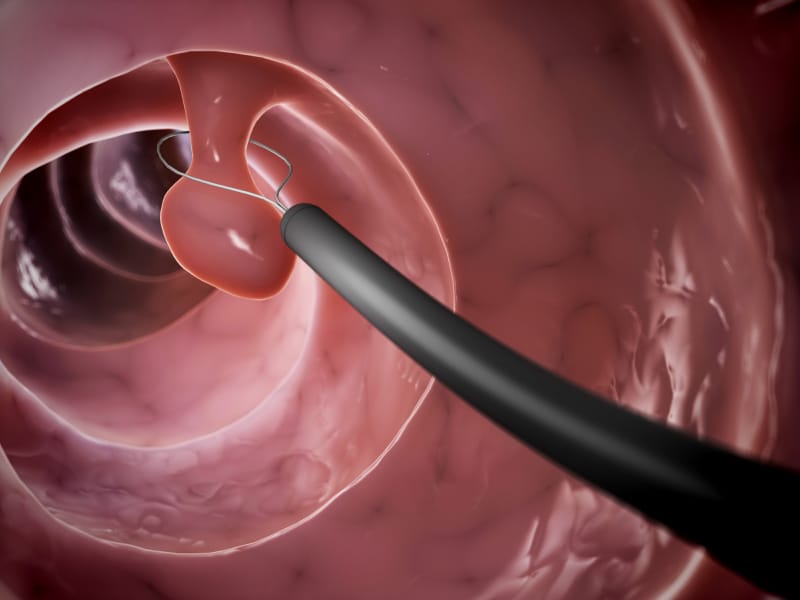
Colon cancer screening || Image Source: russellhavranekmd.com/wp-content/uploads/2013/08/colon-ca...
Thomas Jefferson University Hospitals doctors Adam Dicker and Ulrich Rodeck discuss their use of zebrafish to develop medications that could protect people against radiation damage whether during radiation therapy for cancer patients or people exposed to high levels of radiation in disasters such the nuclear disaster in Japan following the March 11, 2011 earthquake and tsunami. For more information see The Daily Dose @Jefferson - www.jeffersonhospital.org/The-Daily-Dose/developing-new-w....
Atomic Energy of Canada Limited (AECL) source trolley model.
Manufactured sometime between 1954 and 1959 by AECL for the Commercial
Products Division, Ottawa, Canada.
Artifact Number: 1966.0660,
Canada Science and Technology Museum
Atomic Nation Seminar, HIS 4135 D, winter 2011, University of Ottawa
Group members: Nikolai Adams, Laura Burrows, and Kyla Hinchey.
This is a close up photo of the part of the trolley that juts out from the main circular body. We can see that the seafoam green paint has faded and that the wood is now visible.
Illinois CyberKnife was honored to host inventor of the CyberKnife, Dr. John Adler, as the guest speaker at a Continuing Medical Education event for physicians in the area. Pictured left to right: Dr. Siavash Jabbari, Illinois CyberKnife Radiation Oncologist; Dr. John Adler, Stanford Neurosurgeon.
Here are a few members of our wonderful staff pictured with the TrueBeam STx.
Pictured left to right Marianne Krease, Administrator, Cristina Ayala, Patient Coordinator, Jim Hart, Radiation Therapist and Karen Trafton, Radiation Therapist
Pitt Community College students preparing for radiation therapy careers are using state-of-the-art virtual technology to practice the delivery of ionizing radiation used in the treatment of cancer and other diseases.
CyberKnife Center of Chicago had a blast co-sponsoring the American Lung Association's Fight for Air Climb event in Oak Brook Terrace!
Pictured in the photo: Anne Dunlap, center administrator, with colleague Debbie Posner
LINAC (linear accelerator) toy - basic version.
A medical linear accelerator ist used for radiation therapy treatment in oncology.
The model is isocentric.
Play features: Rotating gantry and swiveling table. A minifig may be placed on the table.
The center presented a live demonstration of how the CyberKnife works and allowed attendees to ask questions directly to staff on how this innovative technology treats tumors noninvasively.
The CyberKnife treats patients through a procedure called stereotactic radiosurgery, a noninvasive method of treating tumors with precisely targeted, high-dose radiation.
Photo by Bill Ackerman (Suburban News Publications)
One of our patients awaits his CyberKnife treatment.
Initial set up. The strap on my elbows is there to help me keep my arms out of the way, and even though it looks uncomfortable, it isn't too bad. The red cushion is for my knees so I'm not quite lying flat on my back. In this shot, they use the machine above (as well as laser lights above it) to line up where on the table I need to be, and where they need to position the machine.
Atomic Energy of Canada Limited (AECL) source trolley model.
Manufactured sometime between 1954 and 1959 by AECL for the Commercial
Products Division, Ottawa, Canada.
Artifact Number: 1966.0660,
Canada Science and Technology Museum
Atomic Nation Seminar, HIS 4135 D, winter 2011, University of Ottawa
Group members: Nikolai Adams, Laura Burrows, and Kyla Hinchey.
The Columbus CyberKnife physician team and staff hosted an open house for members of the Cancer Support Community of Central Ohio.
Jefferson Lab Associate Director for Experimental Nuclear Physics Cynthia “Thia” Keppel, left, speaks with members from the Hampton University Proton Therapy Institute (HUPTI) and the Leo Cancer Care after a press event held at Hampton University on Friday, Mar. 3, 2023. (Photo by Aileen Devlin | Jefferson Lab)
Today, Hampton University Proton Therapy Institute - HUPTI announced a partnership with Leo Cancer Care to develop an upright proton arc therapy treatment technique for cancer.
The technique will allow patients to stand or sit upright and, combined with an additional CT system, may better target tumors in patients.
Jefferson Lab is proud to contribute to these efforts by applying its nuclear physics and technology expertise to help pave the way for improvements in patient care.
Louisville businessman Steve Bass, Louisville CyberKnife medical director Dr. Shiao Woo and Congressman John Yarmuth (KY-3) cut the ribbon at the Louisville CyberKnife unveiling.
Atomic Energy of Canada Limited (AECL) source trolley model.
Manufactured sometime between 1954 and 1959 by AECL for the Commercial
Products Division, Ottawa, Canada.
Artifact Number: 1966.0660,
Canada Science and Technology Museum
Atomic Nation Seminar, HIS 4135 D, winter 2011, University of Ottawa
Group members: Nikolai Adams, Laura Burrows, and Kyla Hinchey.
View from above. The use of the hole in the top is unknown.
Atomic Energy of Canada Limited (AECL) source trolley model.
Manufactured sometime between 1954 and 1959 by AECL for the Commercial
Products Division, Ottawa, Canada.
Artifact Number: 1966.0660,
Canada Science and Technology Museum
Atomic Nation Seminar, HIS 4135 D, winter 2011, University of Ottawa
Group members: Nikolai Adams, Laura Burrows, and Kyla Hinchey.
This is an image of the trolley handle. It is clear that there has been some wear as the paint has faded away. Other signs of wear on the trolley include paint chips and small dents.
More than 100 cancer survivors and their families came out to Rush Cancer Center's Cancer Survivor day to participate in fun and educational activities.
Because of treatments for my colorectal cancer, I've lost close to 20 pounds (9 kg) in the four months since Christmas 2006. Not a recommended weight loss plan, I tell you, but it's better than what happened to me when I developed diabetes 16 years ago.
In both photos, I think the change is most noticeable in my neck. See here for instance.
There's also an explanatory blog post.