!Night Life
View allAll Photos Tagged Promoters
Promoters of Echinacea believe it boosts the immune system. Seeing these first thing on a dewy morning certainly boosted my mood even without ingesting any of it.
Ladies and gentlemen, let me introduce you to Mr. Maka Orion.
He is a very talented sl artist photographer and an active promoter of interesting social media initiatives related to SL photography.
Maka is also a special friend of mine, who helped me to develop this little idea about a talk show interview after he noticed my inclination to curiosity and to make a lot of questions ^^'.
So, after he teased me a little calling me nosey-rosey and asking what school of journalism did I attend :D
we have come to create this first (and probably last :D) episode of the "Cla Jones Not so Late Show".
Hope you'll enjoy!
Cla:Hi Maka, glad to have you here and thank you for letting me interview you
Maka:Hi Claudia, Thanks for having me!
C.:Could you tell us a little more about yourself? Like how did you find SL and when did you start going on SL?
M.:Well, I'm Maka and I'm a 30 year old guy from the Netherlands who loves making photographs and being artistic on SL.
I stumbled upon SL by accident really, i googled "Online open world games that are free" and after scrolling down a few boring options there was "Second Life". I checked it out and i found it interesting from the very beginning to create your own Avatar and basically do whatever you want to do.
And that was in 2014, somewhere in August so i believe i have my Rez day coming up soon!
The funny thing is after i created a avatar, somehow i teleported to this London sim and i literally thought that sim was all of SL! So i stayed there for a good week until people told me about this thing called teleporting and showed me different sims!
C.: Haha I guess we experience the funniest and weirdest things when we are newbies... How has your sl changed after 8 years? What's your vision of sl to day, do you think it's a game or something different?
M.: My vision of SL, hmm...I treat it mostly as a game but with real people behind the screens and real feelings and emotions while being aware and respect the fact that for some people it is literally a second life for them, and for some a escape from reality and all the drama that has happened there.
For me it was about meeting new people, doing fun things, explore new sims and hang out. But for the last few years i have been keeping myself busy in SL with other things, like photography and talking to friends.
C.: You certainly are a great SL photographer and you also are the manager of four Flickr groups: the three themed ones "A Black & White Second Life", "Cosplayers of Second Life", "A Sexy Second Life" and the very popular "Free Spirits of Second Life". How do you like this experience?
M.: Thank you for the compliment, i still see myself as a ordinary photographer who is still very much a student of the game. Yes, I do run them groups, I loved the idea of getting to see people's work and passion and i loved the idea of them sharing it in a group that i created as i felt i wanted to be a source of connection for these amazing artists. Where they could enjoy eachothers work and connect through that group with one another. I love that idea and i hope in some way i have achieved that, even if it's just a tiny bit.
C.: I believe you surely did, Maka! In addition to your groups, you also created the SundayFunday Photo Challenge. Every two weeks you invite all the sl photography's lovers to challenge themselves about a theme you propose.
Of all the themes you launched over these years, do you remember which ones have been particularly loved by the participants?
M.:Yes, and i recently expanded it to a 3 weeks event. The themes that seem most popular among the participants are the more serious ones like Black and white, Poems, quotes, portraits and stuff like that. They are also my favorite types of themes.
C.: Tell us about your SL photographs. What does inspire you and what type of photos do you like to take?
M.: Well, allot can inspire me actually. Sometimes i listen to a song and i get inspired, or read something, or see something on tv, quotes, poems, other people, you name it.
Mostly i like to take pictures with a deeper meaning, accompanied by a quote or poem. Something that puts my thoughts on camera and make a image out of them. Pictures that people might need to look at twice or more to get it or see the meaning behind it..That's what i love most, but i also love to challenge myself with other kinds of pictures.
C.:Which is the picture you took you love the most?
M.:It's hard to say what picture i love the most because they all have different meaning to me in different periods of my life and all in a different state of mind. I ahve taken pics when i was struggling with depression that are darker, and i have taken pictures when i was feeling really good that look really bright and happy.
But there is definetly one i cherish allot, and that is this one flickr.com/photos/141139571@N08/51713560748/in/dateposted/
C.:Thank you so much for being so open with us Maka and for taking the time to do this interview. I feel that the viewer has gotten to know you a bit better and got a glimpse of how the mind of an artist works. I thank you for your time and for wanting to answer my questions!
ᶜˡᵃ'ˢ ᵒᵘᵗᶠⁱᵗ ᵇʸ ᵛᵃˡᵉⁿᵗⁱⁿᵃ ᵉ.
ʰᵃⁱʳ ᵇʸ ᵈᵒᵘˣ
OBSERVE Collective
All images are © Copyrighted and All Rights Reserved
germanstreetphotography.com/michael-monty-may/
A female hygiene promoter delivering health & hygiene sessions to female community members.
Pakistan Floods 2010, Muzaffargarh, Punjab.....
© Images by Waqas-Z
Connect on Facebook! | Connect on Twitter! | Connect on Google+!
Last night I ventured up Loughrigg Fell in the Lake District with my good buddy Tony Higginson. We climbed up close to the 1,000ft summit that gave grand vistas of the surrounding scenery which were breath-taking as always.
In the distance are the dramatic lines of the iconic Langdale Pikes and above it the colours were building nicely before they dropped away. The sky was amazing, the clouds so purposeful and dominant. I knew that they would look fantastic on camera and I'm delighted to see that on this occasion I was correct.
I hope you all like the view of the Langdales. Have a great day guys and girls and feel free to SHARE this post if you wish :D
Canon 5D MK4
Canon 70-200mm f2.8 @ 123mm
f8
1/40 secs
ISO1000
Official Nisi Filter Promoter
Benro TMA48CXL Mach 3 Tripod
Benro GD3WH Geared Head
Mindshift Backlight 36L Bag
.
.
.
.
UK & Iceland Landscape Photography Workshops, 1-2-1 Private Tuition, print sales and camera club lectures available
UK & Iceland Landscape Photography Workshops, 1-2-1 Private Tuition, print sales and camera club lectures available
website: www.melvinnicholson.co.uk
email: info@melvinnicholson.co.uk
www.facebook.com/melvinnicholsonphotography
www.instagram.com/melvinnicholsonphotography/
www.twitter.com/MelvinNichPhoto
www.youtube.com/c/melvinnicholsonphotographycom
tripadvisor: Search for Melvin Nicholson Photography
Ali Afsad, a Bangladeshi immigrant who hails from the city of Chittagong. We found him in the streets of New York distributing flyers for a nearby restaurant. He was one of the more kind souls out in the busy streets who didn't mind having his picture taken.
New York, 2014.
I didn't get the composition that I wanted from the wresters, so instead I turned my attention to the promoter with his microphone. He had a real ‘tough guy’, ‘street-savvy’ look about him that I liked. When he saw that I was pointing my camera at him, he came very close with his finger pointing at me (that is the blurry bit under his chin). His game seemed a little too real, so I gave him the thumbs up after taking this photo to defuse any potential bad feelings :)
Supernova cosplay and comic con convention
Homebush, Olympic Park
June, 2019
WESTCO PROMOTER
Official Number:396176
Built: 1981, Alberni Engineering & Shipyard, Port Alberni
Gross Tonnage (t): 39.492
Net Tonnage (t): 21.43
Construction Material: Steel
Vessel Length: 50'
Vessel Breadth (m): 6.10
Vessel Depth: 10'
Speed (knots): 9.0
Propulsion Method: Twin screw
Propulsion Power: 2 x 940 Horsepower diesel, Cummins Engine Co., Columbus IL USA
The vessel Westco Promoter is a Tug and currently sailing under the flag of Canada.
West Coast Tug & Barge Ltd has a range of tugs with the power, equipment, and responsiveness to successfully manage all its customers towing needs. From the seasonal relocations of the coastal fishing resorts and coastal contractors, float and breakwater transport, ship and barge assists, barge rentals, helicopter support, and navigational aid rebuilds for Transport Canada. They are qualified and skilled seaman and have a versatile fleet and have the ability to take on any towing needs and project.
Online References: westcoasttug.ca/equipment/westco-monarch; vesselfinder.com/vessels
This image is best viewed in Large screen.
Thank-you for your visit, and please know that any faves or comments are always greatly appreciated!
Sonja
ENGLISH
The promoter Campo Volantín S.L. was the Company that extracted to contest the construction of a bridge that was saving the river Nervión not far from the emplacement where there is located today the prestigious Museum Guggenheim, in Bilbao, work of another recognized architect of international prestige, Frank O. Gehry.
The principal characteristic of the above mentioned project was consisting also of the fact that the bridge would have to be the sufficiently high thing as to stop to go on to the ships under his underpass. Santiago Calatrava, which gained the project, designed an impressive gangplank thanks to the great parabolic arch of steel that inclined and unfolded it crosses the gangplank across.
The arch of steel, with a circular section of 50 cm. Of thickness, it reaches a final height of 15 meters. The gangplank, with a total length of 75 meters, rises up to 8.5 meters of height with regard to his tide to open way to the ships under his underpass.
Two ramps of access in two sections of 2 meters of width each one and with a slope of 7 %, save the high difference that offers the gangplank her to cross of a side to other one. A few cables tightened of 30 mm. Of diameter they anchor to the arch of a white immaculate color for the sustenance of the surprising gangplank.
The architect endowed to this pedestrian gangplank of modern and innovative design by means of the employment a material of precious colorations, the translucent glass, and that together with the artificial lighting by means of a few areas lodged under the board, produce every night the visual only and authentic spectacular spectacle.
SPANISH
La promotora Campo Volantín S.L. fue la Empresa que sacó a concurso la construcción de un puente que salvase el río Nervión no lejos del emplazamiento donde se encuentra ubicado hoy día el prestigioso Museo Guggenheim, en Bilbao, obra de otro reconocido arquitecto de prestigio internacional, Frank O. Gehry.
La característica principal de dicho proyecto consistía también en que el puente tendría que ser lo suficientemente alto como para dejar pasar a los barcos bajo su paso inferior. Santiago Calatrava, que ganó el proyecto, diseñó una pasarela sobrecogedora gracias al gran arco parabólico de acero que inclinado y desdoblado cruza la pasarela de un lado a otro.
El arco de acero, con una sección circular de 50 cm. de espesor, alcanza una altura final de 15 metros. La pasarela, con una longitud total de 75 metros, se eleva a 8.5 metros de altura con respecto a su pleamar para dejar paso a los barcos bajo su paso inferior.
Dos rampas de acceso en dos tramos de 2 metros de ancho cada una y con una pendiente del 7%, salvan el alto desnivel que ofrece la pasarela para cruzarla de un lado al otro. Unos cables tensados de 30 mm. de diámetro se anclan al arco de un color blanco inmaculado para el sustento de la sorprendente pasarela.
El arquitecto dotó a esta pasarela peatonal de diseño moderno e innovador mediante el empleo un material de preciosas coloraciones, el vidrio translúcido, y que junto con la iluminación artificial mediante unos focos alojados bajo el tablero, producen cada noche un espectáculo visual único y auténticamente espectacular.
Copyright © José Miguel Hernández Hernández
……………………………….
Poster:
Locandina:
movieplayer.net-cdn.it/t/images/2010/11/04/la-locandina-d...

filmitalia.org/Files/2010/10/14/1287087882765.jpg?1287087...
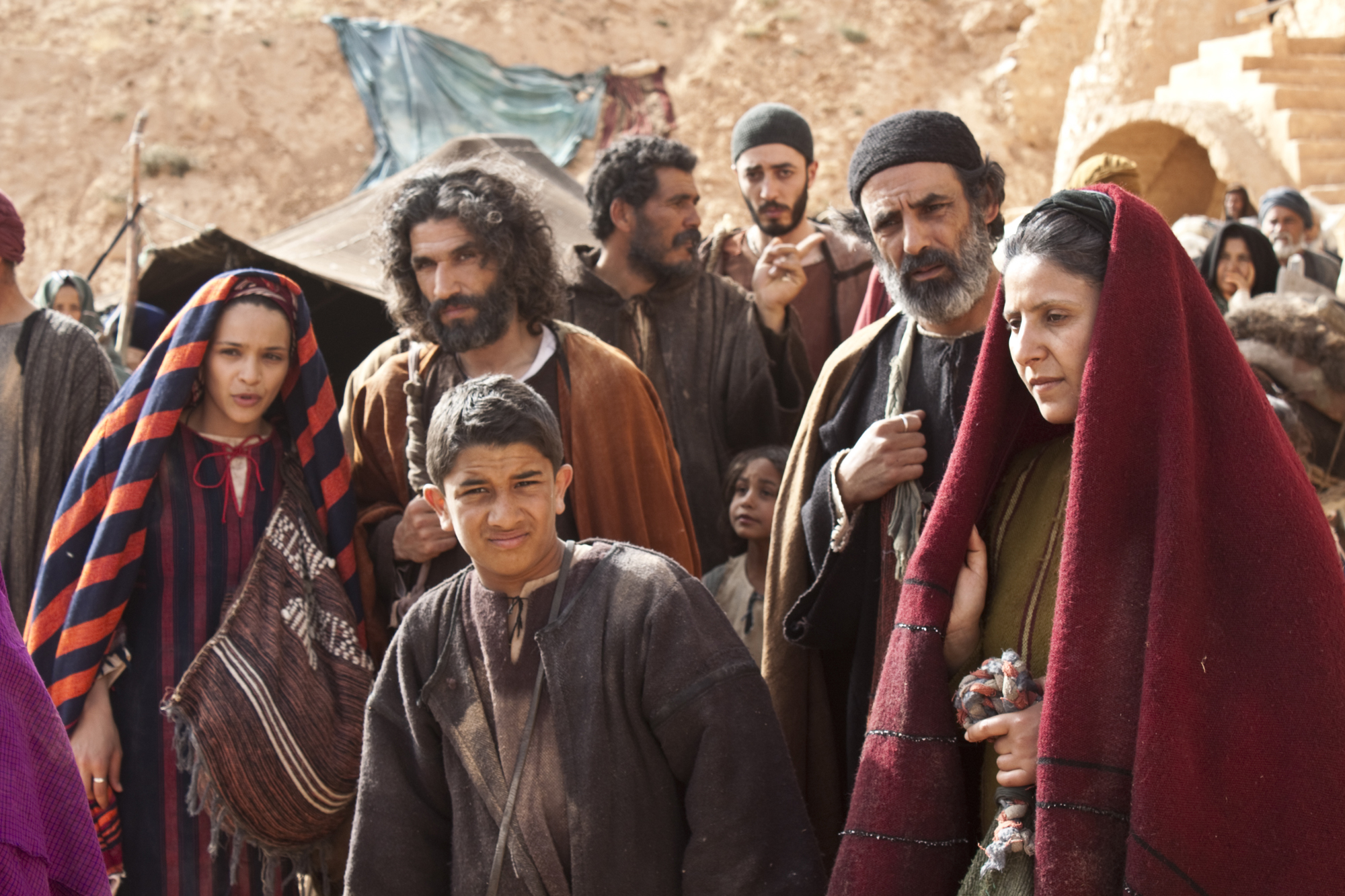
mr.comingsoon.it/rsz/foto/11612.jpg?preset=wide760

upload.wikimedia.org/wikipedia/it/a/a1/Io_sono_con_te_%28...
.JPG)
.............................................................................
click to activate the small icon of slideshow: the small triangle inscribed in the small rectangle, at the top right, in the photostream (it means the monitor);
or…. Press the “L” button to zoom in the image;
clicca sulla piccola icona per attivare lo slideshow: sulla facciata principale del photostream, in alto a destra c'è un piccolo rettangolo (rappresenta il monitor) con dentro un piccolo triangolo nero;
oppure…. premi il tasto “L” per ingrandire l'immagine;
www.fotografidigitali.it/gallery/2726/opere-italiane-segn...
………………………………………………………………………
This photographic story of mine, with descriptive text, was created in Novara di Sicilia (ME) on August 15th of this year, on the occasion of a suggestive traditional religious and popular celebration, that of the Apotheosis of the Assumption (in Heaven), which takes place every 5 years, however due to the bans issued during the Covid, it was not celebrated in 2020, so it had not been held for 10 years. I would like to tell the origins of this ancient tradition, it was born with the arrival of the Normans in Sicily around the year 1000, in that period in Southern Italy there was a coexistence of peoples, religions, languages, the most diverse, the majority were given by the Lombards, there were the Greeks, with the Greek population of Calabria, of Salento (that is the Byzantines) with the Greek Church which is based in Constantinople, it is not a foreign Byzantine domination, but they are the people of those lands for centuries, then there are the Arabs who conquered Sicily, but also under the Arabs in Sicily, Greeks, Latins, Jews coexist, the populations coexist, they are the leaders who make war among themselves, then in the south of Italy the Normans arrive, they are French from the north of France, they are the descendants of the Vikings coming from Scandinavia, the Norman Roger 1st of Sicily (called the Great Count Roger) together with his brother, conquered the Puglia, Calabria, and subsequently allying themselves with an Arab emir reigning in Sicily, who asked them for help because he was fighting with another Arab emir present in Sicily, Roger landed in February 1061 he landed in Messina and managed to occupy the eastern part of Sicily, and in 1091 Roger could say he was master of all of Sicily: ancient literature indicates the Great Count Roger as the promoter of the celebrations of the Assumption, on whose banner the image of Our Lady Ascending to Heaven stood out, under whose protection the process of "re-Christianization" of the island began, devotion to the Virgin which was strengthened in the territory of Novara di Novara di Sicilia in the 12th century with the arrival of the French abbot Hugh (also a Saint), sent to Sicily by Bernard of Clairvaux, of the Cistercian Order, which has the figure of Our Lady Ascending to Heaven as a cornerstone of its religious institution. This celebration-feast has seen mixed fortunes. Before the Second World War, the float with the Assumption was carried in procession along with about 15 floats representing various saints. After the war, the bishop prohibited carrying the statues of the saints alongside the Assumption. With the Great Jubilee of 2000, the ancient tradition was revived, with the saints preceding the Assumption's exit. They arrive in the town's main square, arranging themselves in a semicircle, awaiting the arrival of the Assumption, which in the meantime has been carried in procession through the town's streets. Upon her return to the square around midnight, the Assumption is reunited with all the saints, giving life to the highest expression of the Apotheosis of Mary Assumed into Heaven, amidst songs, litanies, and prayers. This, in short, is a great, heartfelt procession that begins in the afternoon and continues late into the night, with many floats of saints preceding the Assumption of Mary, with arms raised high, characterized by the presence of more than 150 lit candles. The official logo of the Solemn Apotheosis of the Assumption encapsulates the presence of the 15 saints as if they were 15 roses, arranged in a crown around the monogram "M - A" (Our Lady Ascending to Heaven). For Dante Alighieri in the Divine Comedy, the "Mystical Rose" is "the Love of God," a symbol of divine perfection, peace, and the beauty of Paradise, linked to the figure of Mary, the Mystical Rose par excellence. Thus, the Apotheosis is none other than the Embrace that God, through Mary and the Saints, extends to all mankind.
…………………………………………………..
Questo mio racconto fotografico, con testo descrittivo, è stato realizzato a Novara di Sicilia (ME) il 15 di agosto di quest’anno, in occasione di una suggestiva celebrazione tradizionale religiosa e popolare, quella della Apoteosi dell’Assunta (in Cielo), che prende vita ogni 5 anni, purtuttavia causa i divieti emanati durante il covid, nel 2020 non venne celebrata, sicchè era da 10 anni che non veniva svolta. Desidero raccontare le origini di questa antica tradizione, essa infatti nasce con l’arrivo dei Normanni in Sicilia attorno all’Anno Mille, in quel periodo nell’Italia Meridionale c’era una convivenza di popoli, religioni, lingue, le più diverse, la maggioranza era data dai Longobardi, c’erano i Greci, con la popolazione greca della Calabria, del Salento (ovvero i Bizantini) con la Chiesa Greca che fa capo a Costantinopoli, non è una dominazione bizantina straniera, ma sono i popoli di quelle terre da secoli, poi ci sono gli Arabi che hanno conquistato la Sicilia, ma anche sotto gli arabi in Sicilia, convivono Greci, Latini, Ebrei, le popolazioni convivono, sono i capi che si fanno la guerra tra di loro, poi nel meridione d’Italia giungono i Normanni, essi sono francesi del nord della Francia, essi sono i discendenti dei Vichinghi provenienti dalla Scandinavia, il Normanno Ruggero 1° di Sicilia (detto il Gran Conte Ruggero) insieme al fratello, conquistarono la Puglia, la Calabria, e successivamente alleandosi con un emiro arabo regnante in Sicilia, che chiedeva loro aiuto perché in lotta con un altro emiro arabo presente in Sicilia, Ruggero sbarcò nel febbraio del 1061 sbarcò a Messina riuscendo ad occupare la parte orientale della Sicilia, e nel 1091 Ruggero potè dirsi padrone di tutta la Sicilia: l’antica letteratura indica il Gran Conte Ruggero promotore dei festeggiamenti dell’Assunta, sul cui stendardo campeggiava l’immagine dell’Assunta, sotto la cui protezione ebbe inizio il processo di “ricristianizzazione” dell’isola, devozione verso la Vergine che si rafforza nel territorio di Novara di Novara di Sicilia nel XII secolo con l’arrivo dell’abate francese Ugo (anch’egli Santo), inviato in Sicilia da Bernardo di Chiaravalle, dell’Ordine Cistercense, che ha come pilastro portante la figura dell’Assunta nella sua istituzione religiosa. Questa celebrazione-festa ha visto alterne fortune, prima del secondo conflitto mondiale la vara con l’Assunta veniva portata in processione assieme a circa 15 vare di diversi santi, dopo tale conflitto ci fu il divieto vescovile di portare le statue dei santi insieme all’Assunta; col Grande Giubileo del 2000 l’antica tradizione ha ripreso vita coi Santi che precedono l’uscita dell’Assunta, giungendo nella piazza principale del paese, disponendosi a semicerchio, aspettando l’arrivo dell’Assunta che nel frattempo è stata condotta in processione nelle vie del paese, al suo rientro in piazza verso mezzanotte Maria Assunta si ricongiunge con tutti i Santi, dando vita alla massima espressione dell’Apoteosi di Maria Assunta in Cielo, tra canti, litanie e preghiere. Questa, in sintesi, è una grande, sentita, processione che inizia nel pomeriggio, e prosegue a notte fonda, con tante vare di santi che precedono quella di Maria Assunta, con le braccia rivolte in alto, caratterizzata dalla presenza di più di 150 candele accese. Il logo ufficiale della Solenne Apoteosi dell’Assunta racchiude la presenza dei 15 santi come fossero 15 rose, disposte a corona attorno al monogramma “M – A” (Madonna Assunta): per Dante Alighieri nella Divina Commedia la “Rosa Mistica” è “l’Amore di Dio”, simbolo della perfezione divina, pace, bellezza del Paradiso, collegata alla figura di Maria, Rosa Mistica per eccellenza, ecco che l’Apoteosi altro non è che l’Abbraccio che Dio, tramite Maria ed i Santi, rivolge a tutti gli uomini.
……………………………………………………………..
The Chesterfield Canal in Clayworth in Nottinghamshire.
Known locally as Cuckoo Dyke, the Chesterfield Canal was opened in 1777 and ran 46 miles (74 km) from the River Trent at West Stockwith, Nottinghamshire to Chesterfield, Derbyshire. It is currently only navigable as far as Kiveton Park near Rotherham, South Yorkshire, plus an isolated section near Chesterfield. The canal was built to export coal, limestone, and lead from Derbyshire, iron from Chesterfield, and corn, deals, timber, groceries, etc. into Derbyshire. The stone for the Palace of Westminster was quarried in North Anston, Rotherham, and transported via the canal.
The route of the canal was surveyed by James Brindley and John Varley, who estimated the cost at £94,908 17s. Brindley presented his proposals to a meeting in Worksop on 24 August 1769. The investors asked John Grundy to carry out a second survey. He proposed a rather shorter course, from Stockwith in a straight line to Bawtry and then by Scrooby, Blyth and Carlton, to join Brindley's line at Shire Oaks. Grundy's line was 5 1⁄2 miles (8.9 km) shorter, and the cost estimated at £71,479, 6s. 9½d. Although Grundy's line was considerably cheaper, it achieved this by missing Worksop and Retford, and the investors decided in favour of Brindley's route.
The promoters consisted of one hundred and seventy-four persons, amongst whom were the Duke of Devonshire, the Duke of Newcastle, Lord Scarsdale, the Dean of York, and Sir Cecil Wray. They were incorporated by the name of The Company of Proprietors of the Canal Navigation from Chesterfield to the River Trent, and empowered to raise among themselves the sum of £100,000, in one thousand shares of £100 each, to fund the construction.
Immediately on the passing of the act, construction began under the direction of Brindley. Upon his death in September 1772, John Varley moved from Clerk of Works to Resident Engineer with Hugh Henshall, Brindley's brother-in-law, appointed Chief Engineer in 1773. The canal was to be built as a narrow canal, but in 1775, nine shareholders offered to fund the extra cost of making it a broad canal from Retford to Stockwith. Retford Corporation joined them, and each contributed £500. The additional cost exceeded £6000. The canal was opened throughout in 1777, but the only record of wide-beamed boats using it at Retford is prior to 1799.
There were 65 locks in all, with two tunnels: a short 154 yards (141 m) tunnel near Gringley Beacon, and the major 2,880 yard long Norwood Tunnel. At the time of construction, Norwood Tunnel was the joint longest canal tunnel in Britain, and it was sixth longest by the time it collapsed. The canal was a typical Brindley contour canal, following the contours to avoid costly cuttings and embankments, which resulted in a less than direct route in places.
The canal was initially fairly successful, with dividends being returned to the investors. However, the building of the Manchester, Sheffield and Lincolnshire Railway line parallel to the canal (1849) left much of the navigation redundant, and the Worksop to Chesterfield stretch ceased to serve commercial traffic in 1908, when problems with mining subsidence necessitated the closure of Norwood Tunnel. The stretch between the tunnel and Worksop subsequently fell into ruin and became un-navigable, while parts of the isolated section from the tunnel to Chesterfield were infilled and redeveloped.
Ive seen this chap around several time and he has a totally different look each time - great sense of style. Kensington Gardens Brighton
Description: Stanley, a newspaper reporter and tireless self-promoter, was hired by the New York Herald to find the missing Livingstone in 1871, winning himself wealth and reputation.
Creator/Photographer: London Stereoscopic & Photographic Company
Medium: Carte-de-visite
Dimensions: 4 in x 2.5 in
Date: 1872
Persistent URL: www.sil.si.edu/imagegalaxy/imagegalaxy_imageDetail.cfm?id...
Repository: Smithsonian Institution Libraries
Collection: Russell E. Train Africana Collection - The Russell E. Train Africana Collection includes approximately 2,000 books and an extensive array of manuscripts, photographs, watercolors, sketches, maps, newspaper clippings, artifacts and other ephemera ranging from the late 18th to mid-20th centuries, with a concentration on items relating to early British and American explorers. The famous missionary David Livingstone and journalist Henry Stanley, as well as President Theodore Roosevelt, a renowned conservationist of his time, are well represented with numerous books by and about them, manuscript letters, privately printed materials, dozens of photographs and other ephemera. Some of the published books in the collection are presentation copies autographed by the author, while others have original artwork or engravings.
Gift line: Gift of Russell E. Train
Accession number: SIL28-277-01
View more collections from the Smithsonian Institution.
Related blog posts:
HDR image.
Club promoters selling tickets.
I always avoid these people but fine for a photo.
September 2015.
© All rights are reserved, please do not use my photos without my permission
NameMONJASA PROMOTER
FlagLiberia
IMO9341421
MMSI636018716
Call signD5KA8
home Port Monrovia
vessel typeOil Products Tanker
Gross tonnage 2143 tons
Deadweight 3600 tons
Length 83 m
Breadth 12 m
Year of build 2008
Builder HANGZHOU DONGFENG SHIPYARD
47786 "Roy Castle OBE" - 1Z60 (1552 SO STP Blaneau Ffestiniog - Derby, which was formed of c10 coaches & named the Snowdonian by promoter Rail UK) - Chester - 1759 - 24/06/95.
Maggie Papakura, 1908
Gifted with intelligence and charm, Margaret Pattison Thom gained international renown as a New Zealand tourist guide and promoter of Māori culture. Popularly known as Mākereti (or Maggie) Papakura, she was born in 1873 at Matatā in the North Island’s Bay of Plenty. In 1926 she enrolled at the University of Oxford to study for a Bachelor of Science in anthropology, but on 16 April 1930, just two weeks before her thesis was due, she died suddenly from a ruptured aortic artery. Mākereti’s thesis, published eight years later, is the first extensive ethnographic work by a Māori scholar. This autographed photo was taken in 1908 on one of her many trips to Australia.
by unknown photographer
transferred from P1/Papakura, 2010
P1/1294
On display at State Library of NSW free photographic exhibition www.sl.nsw.gov.au/exhibitions/shot
East Side Gallery, Kreuzberg, Berlin.
East Side Gallery es una galería de arte al aire libre situada sobre una sección de 1.316 metros en la cara este del muro de Berlín, que fueron salvados del derribo con dicha finalidad. Está situada cerca del centro de Berlín, en la calle Mühlenstraße del distrito Friedrichshain-Kreuzberg, a lo largo de la rivera del río Spree. Se considera que es la galería de arte al aire libre de mayor longitud y duración del mundo.
La galería consta de 103 murales pintados por artistas de todo el mundo rindiendo homenaje a la libertad y documentando la euforia y esperanza por un mundo mejor que se produjeron con el fin de la guerra fría. Fue fundada tras la unión de dos asociaciones de artistas alemanas, la "Federal Association of Artists - BBK" y la "GDR - Artists Association". Los principales promotores fueron Bodo Sperling, Barbara Greul Aschanta, Jörg Kubitzki y David Monti.
En julio de 2006, con el fin de facilitar el acceso a río Spree, se movió una sección de 40 metros alejándola hacia el oeste, en paralelo a su posición original.
Con motivo de la preparación del vigésimo aniversario de la caída del muro de Berlín, se realizó programa de renovación que consistió en tapar la mayoría de los murales, que se encontraban en un lamentable estado debido al vandalismo y la erosión propias de las obras expuestas al aire libre, y pedir a los autores que volviesen a pintar sus obras. Algunos artistas se negaron a tener que repetir sus obras, indicando que la galería debió haber realizado una restauración y prevenido la destrucción de las obras originales.
East Side Gallery is an outdoor art gallery located on a 1,316 meter section on the east face of the Berlin Wall, which were saved from demolition for that purpose. It is located near the center of Berlin, on the Mühlenstraße street of the Friedrichshain-Kreuzberg district, along the banks of the River Spree. It is considered to be the longest and longest outdoor art gallery in the world.
The gallery consists of 103 murals painted by artists from around the world paying homage to freedom and documenting the euphoria and hope for a better world that occurred with the end of the Cold War. It was founded after the union of two associations of German artists, the "Federal Association of Artists - BBK" and the "GDR - Artists Association". The main promoters were Bodo Sperling, Barbara Greul Aschanta, Jörg Kubitzki and David Monti.
In July 2006, in order to facilitate access to the river Spree, a section of 40 meters was moved away to the west, parallel to its original position.
On the occasion of the preparation of the twentieth anniversary of the fall of the Berlin Wall, a renovation program was carried out that consisted of covering most of the murals, which were in an unfortunate state due to the vandalism and erosion of the works exposed to the outdoors, and ask the authors to come back and paint their works. Some artists refused to have to repeat their works, indicating that the gallery should have made a restoration and prevented the destruction of the original works.
ENGLISH
The promoter Campo Volantín S.L. was the Company that extracted to contest the construction of a bridge that was saving the river Nervión not far from the emplacement where there is located today the prestigious Museum Guggenheim, in Bilbao, work of another recognized architect of international prestige, Frank O. Gehry.
The principal characteristic of the above mentioned project was consisting also of the fact that the bridge would have to be the sufficiently high thing as to stop to go on to the ships under his underpass. Santiago Calatrava, which gained the project, designed an impressive gangplank thanks to the great parabolic arch of steel that inclined and unfolded it crosses the gangplank across.
The arch of steel, with a circular section of 50 cm. Of thickness, it reaches a final height of 15 meters. The gangplank, with a total length of 75 meters, rises up to 8.5 meters of height with regard to his tide to open way to the ships under his underpass.
Two ramps of access in two sections of 2 meters of width each one and with a slope of 7 %, save the high difference that offers the gangplank her to cross of a side to other one. A few cables tightened of 30 mm. Of diameter they anchor to the arch of a white immaculate color for the sustenance of the surprising gangplank.
The architect endowed to this pedestrian gangplank of modern and innovative design by means of the employment a material of precious colorations, the translucent glass, and that together with the artificial lighting by means of a few areas lodged under the board, produce every night the visual only and authentic spectacular spectacle.
SPANISH
La promotora Campo Volantín S.L. fue la Empresa que sacó a concurso la construcción de un puente que salvase el río Nervión no lejos del emplazamiento donde se encuentra ubicado hoy día el prestigioso Museo Guggenheim, en Bilbao, obra de otro reconocido arquitecto de prestigio internacional, Frank O. Gehry.
La característica principal de dicho proyecto consistía también en que el puente tendría que ser lo suficientemente alto como para dejar pasar a los barcos bajo su paso inferior. Santiago Calatrava, que ganó el proyecto, diseñó una pasarela sobrecogedora gracias al gran arco parabólico de acero que inclinado y desdoblado cruza la pasarela de un lado a otro.
El arco de acero, con una sección circular de 50 cm. de espesor, alcanza una altura final de 15 metros. La pasarela, con una longitud total de 75 metros, se eleva a 8.5 metros de altura con respecto a su pleamar para dejar paso a los barcos bajo su paso inferior.
Dos rampas de acceso en dos tramos de 2 metros de ancho cada una y con una pendiente del 7%, salvan el alto desnivel que ofrece la pasarela para cruzarla de un lado al otro. Unos cables tensados de 30 mm. de diámetro se anclan al arco de un color blanco inmaculado para el sustento de la sorprendente pasarela.
El arquitecto dotó a esta pasarela peatonal de diseño moderno e innovador mediante el empleo un material de preciosas coloraciones, el vidrio translúcido, y que junto con la iluminación artificial mediante unos focos alojados bajo el tablero, producen cada noche un espectáculo visual único y auténticamente espectacular.
Copyright © José Miguel Hernández Hernández
For some, it is important to show everyone what they have to offer. And hence, such self-promoters often sprawl in their self-made limelight just to show that they are supposedly better.
Though such self-promoters often achieve their goal to stand out and gain attention, they quickly get forgotten if left unattended. But just because someone can show off, it doesn’t mean that it is also worthwhile for others to take a look!
Promoter: Vintage Trains
Location: Ulleskelf
Nearly 2 hours late leaving Birmingham due to signalling issues.
Original destination was Newcastle but the organisers decided to terminate at York instead. Not a bad decision as York is a fantastic city to visit.
Hostess, Promoter, Entertainer.. Thats Me! I love hosting my nights with a Passion! It is my life ambition to meet people and touch everyones lives in a positive way. I Love It and nothing makes me happier :) Thanks to all of you for making my life such a special one! Love, Jamie
Joe Knowles (American 1869 -1942)
Oil on Canvas
Columbia Pacific Historical Society, Ilwaco, Washington.
Joe Knowles painted at a time when the Native American inhabitants of this region and their lifeways were still in living memory.
Sometimes a painting of an Indian and his dog looking out over the landscape of the mighty Columbia River at day's end is just that.
------------------------------------------------------------------------------------------
We were at the Columbia Pacific Historical Society's current exhibit yesterday when I happened to glance upwards toward the room's high ceiling. I was astonished when my eyes made out a palace-sized painting in the gloom above the lights.
The style and subject matter told me the were the work of local artist Joe Knowles. My hunch was confirmed when I spotted his distinctive signature on the canvas.
How long had they been up there, and how many times had I been there without noticing them?
More importantly, where had they hung originally? I plan to ask the museum. Knowles was active here when the North Beach Peninsula was much more popular for its beach resorts than it is today. I am expecting the find out they were commissioned for public rooms in one of the old hotels.
It's fortunate the historical society could accommodate paintings of this size.
------------------------------------
Knowles, a skilled artist and relentless self-promoter moved to Seaview, Washington, after a notorious scandal on the East Coast.
He's been called one of the early reality performers. Before considering his art, it's worth exploring the chapter in his life that led him to pull up stakes back East and move to an isolated village on Washington's Long Beach Peninsula.
Here's the story.
=========================================================================================================================
[In 1913], Joe Knowles stripped down to his jockstrap, said goodbye to civilization, and marched off into the woods to prove his survival skills. He was the reality star of his day. For eight weeks, rapt readers followed his adventures in the Boston Post. He returned home to a hero’s welcome. That’s when things got interesting.
The expedition began on a drizzly August morning, in a sort of no-man’s land outside tiny Eustis, Maine. The spot was some 30 miles removed from the nearest rail line, just north of Rangeley Lake, and east of the Quebec border. Knowles showed up at his starting point, the head of the Spencer Trail, wearing a brown suit and a necktie. A gaggle of reporters and hunting guides circled him.
Knowles stripped to his jockstrap. Someone handed him a smoke, cracking, “Here’s your last cigarette.” Knowles savored a few meditative drags. Then he tossed the butt on the ground, cried, “See you later, boys!,” and set off over a small hill named Bear Mountain, moving toward Spencer Lake, 3 or 4 miles away. As soon as he lost sight of his public, he lofted the jockstrap into the brush—so that he could enjoy, as he would later put it in one of his birch-bark dispatches, “the full freedom of the life I was to lead.”
If Knowles made himself sound like Tarzan, it was perhaps intentional. One of the most popular stories in Knowles’s day was Tarzan of the Apes, an Edgar Rice Burroughs novella. Published in 1912 in the pulp magazine All-Story, it starred a wild boy who goes “swinging naked through primeval forests.” The story was such a hit that in 1914 it was bound into book form.
Pulp magazines (so named because they were published on cheap wood-pulp paper) represented a new literary form, born in 1896. They offered working-class Americans an escape into rousing tales of life in the wilderness. Bearing titles like Argosy, Cavalier, and the Thrill Book, they took cues from Jack London, whose bestselling novels, among them The Call of the Wild (1903) and White Fang (1906), saw burly men testing their mettle in the wild. They were also influenced by Teddy Roosevelt, who insisted that modern man needed to avoid “over-sentimentality” and “over-softness” while living in cities. “Unless we keep the barbarian virtue,” Roosevelt argued, “gaining the civilized ones will be of little avail.”
On the morning of October 5, the Post’s front page blared, “KNOWLES, CLAD IN SKINS, COMES OUT OF THE FOREST.” A subhead continued, “Boston Artist, Two Months a ‘Primitive Man,’ Steps into the Twentieth Century near Megantic, Province of Québec.” Subsequent copy read, “Tanned like an Indian, almost black from exposure to the sun…. Scratched and bruised from head to foot by briars and underbrush…. Upper garment sleeveless. Had no underwear.”
Picked up nationwide, the Post’s piece explained that Knowles had just traversed the most inhospitable portion of the Maine woods, after which, when he had emerged on the outskirts of Megantic, he had made his first human contact—a young girl he had found standing by the railroad track. “And the child of 14, wild-eyed, stared at him,” the story said, “and into her mind came the memory of a picture of a man of the Stone Age in a history book.”
Not everyone believed the story. In late October, after he had returned to civilization, an editorial in the Hartford Courant wondered whether “the biggest fake of the century has been palmed off on a credulous public.” Meanwhile, a reporter from the rival Boston American had begun working on a long story about Knowles. The paper specialized in blockbuster exposés, and its investigative bloodhound, Bert Ford, had spent seven weeks combing the woods around Spencer Lake, aided in his research by a man he would call “one of the ablest trappers in Maine or Canada,” Henry E. Redmond.
On December 2, in a front-page article, Ford went public with the explosive allegation that Knowles was a liar. He zeroed in on Knowles’s alleged bear killing, noting that the Nature Man’s bear pit was but 4 feet wide and 3 feet deep. In boldface, the story asserted, “It would have been physically impossible to trap a bear of any age or size in it.” Knowles’s club was likewise damning evidence. Found leaning against a tree, it was a rotting stub of moosewood that Ford easily chipped with his fingernails.
According to the Boston American, Knowles had a manager in the Maine woods, and also a guide who bought the bearskin from a trapper for 12 dollars. The bear had not been mauled, but rather shot. “I found four holes in the bear skin,” Ford averred after meeting Knowles and studying the very coat he was wearing. “Experts say these were bullet holes.”
Ford argued that Knowles’s Maine adventure was in fact an “aboriginal layoff.” He wasn’t gutting fish and weaving bark shoes, as the Post’s dispatches suggested. Rather, he was lounging about in a log cabin at the foot of Spencer Lake and also occasionally entertaining a lady friend at a nearby cabin.
No matter; Knowles had gained the notoriety he needed to launch a national tour of speaking engagements, publish a book, and sell his artwork.
Prior to his notoriety for adventure, Knowles was an illustrator whose work graced the cover of numerous periodicals. The “Golden Age” of illustration was in full swing and Knowles’ artwork fit right in. By the early 1920s Knowles had settled in Seaview, Washington where he made his living from his paintings, prints and commissioned works.