View allAll Photos Tagged PrimeVideo
……………………………….
Locandina:
bingeddata.s3.amazonaws.com/uploads/2021/01/romantic-guid...

www.imdb.com/it/title/tt12784484/mediaviewer/rm2907022337...
www.imdb.com/it/title/tt12784484/mediaviewer/rm2940576769...
www.primevideo.com/detail/Romantic-Guide-to-Lost-Places/0...
.............................................................................
click to activate the small icon of slideshow: the small triangle inscribed in the small rectangle, at the top right, in the photostream (it means the monitor);
or…. Press the “L” button to zoom in the image;
clicca sulla piccola icona per attivare lo slideshow: sulla facciata principale del photostream, in alto a destra c'è un piccolo rettangolo (rappresenta il monitor) con dentro un piccolo triangolo nero;
oppure…. premi il tasto “L” per ingrandire l'immagine;
www.worldphoto.org/sony-world-photography-awards/winners-...
www.fotografidigitali.it/gallery/2726/opere-italiane-segn...
………………………………………………………………………
I'm sharing here on Flickr a (long) series of photos, taken in early August this year, during a short vacation in Calabria, at a holiday village located near a beach I've been frequenting with my family for several years now, during our short summer vacations. The setting, however, is very different from the beaches I normally frequent near my home in Taormina, with very crowded beaches and a sea that is also very popular with yachtsmen of all kinds. In this part of Calabria, the beaches are rarely crowded (except on weekends, but not too much). In short, it's a sort of almost tropical paradise, with very little yachting. Adjacent to the holiday village is a kitesurfing club, very popular with enthusiasts of this wonderful sport, which thrives on the sea and the wind. I photographed an 84-year-old kitesurfer, whose mettle is steely, still giving athletes much younger than him a run for their money. A friendly and sweet horsewoman from the nearby stables arrived unexpectedly in the beach village, accompanied by her father, both astride two magnificent colts. This created a moment of joy and curiosity for both the parents and their little ones, who were likely seeing these magnificent and docile animals up close and personal for the first time. Unexpectedly, a very special party broke out on the beach. Seeing it made me feel like I was no longer in Calabria, but rather transported to the other side of the globe, to the Hindu festival called Holi, with its throwing of colored powders (in India, this festival marks the end of winter and the arrival of spring, as well as symbolizing the victory of good over evil). I know it thanks to the evocative photographs often published on various photography websites.
I'll end by briefly mentioning the photographic technique I've often used in my photographs. I've created "blur" photographs—blurry, slightly blurry, and unfocused—at the time of shooting, simply by lengthening the exposure time and then also using some panning. Finally, I'd like to thank the sweet and beautiful models who posed for me, allowing me to further enhance this (long-winded) photographic story.
………………………………………………………………………..
Propongo qui su Flickr, una (lunga) serie di foto, realizzate nei primi giorni di Agosto di quest’anno, durante una mia breve vacanza in Calabria, in un villaggio vacanze sito a ridosso di una spiaggia che oramai frequento insieme alla mia famiglia, durante le nostre brevi vacanze estive, da diversi anni, fotografie quindi aventi per tema la “beach photography”; purtuttavia l’ambientazione è molto diversa rispetto alle spiagge che frequento normalmente vicino casa mia a Taormina, con spiagge molto affollate, il mare anch’esso super frequentato da diportismo nautico di ogni tipo, in questa zona della Calabria le spiagge sono invece poco frequentate (tranne il fine settimana, ma neanche troppo), insomma, una specie di Paradiso quasi tropicale, con pochissime imbarcazioni. Adiacente al villaggio vacanze c’è un club di Kitesurf, molto frequentato da appassionati di questo meraviglioso sport, sport che si nutre di mare e di vento. Ho fotografato un kitesurfer di 84 anni, la cui tempra è di acciaio, che dà ancora molto filo da torcere ad atleti molto più giovani di lui. Nel villaggio a sorpresa è arrivata una simpatica e dolce cavallerizza proveniente dal vicino maneggio, con lei anche il suo papà, entrambi a cavallo di due magnifici puledri, creando un momento di allegria e curiosità, sia per i genitori, che per i loro piccoli, per i quali, molto probabilmente, era la prima volta che potevano vedere da vicino, e poterli anche toccare, questi magnifici e docili animali. A sorpresa, inaspettatamente, sulla spiaggia ha preso vita un party molto particolare, nel vederlo mi sembrava di non essere più in Calabria, ma di essere stato proiettato dall’altro lato del globo, in quella festa Indù chiamata Holi, con lancio di polveri colorate (in India questa festa segna la fine dell'inverno e l'arrivo della primavera, oltre a simboleggiare la vittoria del bene sul male), festa che conosco grazie a fotografie molto suggestive spesso pubblicate sui vari siti fotografici.
Termino accennando brevemente alla tecnica fotografica che ho spesso adottato nel realizzare le mie fotografie, ho realizzato al momento dello scatto fotografie del tipo “blur”, cioè mosse, un po’ confuse, non incise, ottenute allungando i tempi di esposizione. Infine ringrazio le dolcissime e belle modelle, che hanno voluto posare per me, consentendomi di rendere più grazioso questo mio (prolisso) racconto fotografico.
………………………………………………………………………………
……………………………….
Locandina:
bingeddata.s3.amazonaws.com/uploads/2021/01/romantic-guid...
www.imdb.com/it/title/tt12784484/mediaviewer/rm2907022337...
www.imdb.com/it/title/tt12784484/mediaviewer/rm2940576769...
www.primevideo.com/detail/Romantic-Guide-to-Lost-Places/0...
.............................................................................
click to activate the small icon of slideshow: the small triangle inscribed in the small rectangle, at the top right, in the photostream (it means the monitor);
or…. Press the “L” button to zoom in the image;
clicca sulla piccola icona per attivare lo slideshow: sulla facciata principale del photostream, in alto a destra c'è un piccolo rettangolo (rappresenta il monitor) con dentro un piccolo triangolo nero;
oppure…. premi il tasto “L” per ingrandire l'immagine;
www.worldphoto.org/sony-world-photography-awards/winners-...
www.fotografidigitali.it/gallery/2726/opere-italiane-segn...
………………………………………………………………………
I'm sharing here on Flickr a (long) series of photos, taken in early August this year, during a short vacation in Calabria, at a holiday village located near a beach I've been frequenting with my family for several years now, during our short summer vacations. The setting, however, is very different from the beaches I normally frequent near my home in Taormina, with very crowded beaches and a sea that is also very popular with yachtsmen of all kinds. In this part of Calabria, the beaches are rarely crowded (except on weekends, but not too much). In short, it's a sort of almost tropical paradise, with very little yachting. Adjacent to the holiday village is a kitesurfing club, very popular with enthusiasts of this wonderful sport, which thrives on the sea and the wind. I photographed an 84-year-old kitesurfer, whose mettle is steely, still giving athletes much younger than him a run for their money. A friendly and sweet horsewoman from the nearby stables arrived unexpectedly in the beach village, accompanied by her father, both astride two magnificent colts. This created a moment of joy and curiosity for both the parents and their little ones, who were likely seeing these magnificent and docile animals up close and personal for the first time. Unexpectedly, a very special party broke out on the beach. Seeing it made me feel like I was no longer in Calabria, but rather transported to the other side of the globe, to the Hindu festival called Holi, with its throwing of colored powders (in India, this festival marks the end of winter and the arrival of spring, as well as symbolizing the victory of good over evil). I know it thanks to the evocative photographs often published on various photography websites.
I'll end by briefly mentioning the photographic technique I've often used in my photographs. I've created "blur" photographs—blurry, slightly blurry, and unfocused—at the time of shooting, simply by lengthening the exposure time and then also using some panning. Finally, I'd like to thank the sweet and beautiful models who posed for me, allowing me to further enhance this (long-winded) photographic story.
………………………………………………………………………..
Propongo qui su Flickr, una (lunga) serie di foto, realizzate nei primi giorni di Agosto di quest’anno, durante una mia breve vacanza in Calabria, in un villaggio vacanze sito a ridosso di una spiaggia che oramai frequento insieme alla mia famiglia, durante le nostre brevi vacanze estive, da diversi anni, fotografie quindi aventi per tema la “beach photography”; purtuttavia l’ambientazione è molto diversa rispetto alle spiagge che frequento normalmente vicino casa mia a Taormina, con spiagge molto affollate, il mare anch’esso super frequentato da diportismo nautico di ogni tipo, in questa zona della Calabria le spiagge sono invece poco frequentate (tranne il fine settimana, ma neanche troppo), insomma, una specie di Paradiso quasi tropicale, con pochissime imbarcazioni. Adiacente al villaggio vacanze c’è un club di Kitesurf, molto frequentato da appassionati di questo meraviglioso sport, sport che si nutre di mare e di vento. Ho fotografato un kitesurfer di 84 anni, la cui tempra è di acciaio, che dà ancora molto filo da torcere ad atleti molto più giovani di lui. Nel villaggio a sorpresa è arrivata una simpatica e dolce cavallerizza proveniente dal vicino maneggio, con lei anche il suo papà, entrambi a cavallo di due magnifici puledri, creando un momento di allegria e curiosità, sia per i genitori, che per i loro piccoli, per i quali, molto probabilmente, era la prima volta che potevano vedere da vicino, e poterli anche toccare, questi magnifici e docili animali. A sorpresa, inaspettatamente, sulla spiaggia ha preso vita un party molto particolare, nel vederlo mi sembrava di non essere più in Calabria, ma di essere stato proiettato dall’altro lato del globo, in quella festa Indù chiamata Holi, con lancio di polveri colorate (in India questa festa segna la fine dell'inverno e l'arrivo della primavera, oltre a simboleggiare la vittoria del bene sul male), festa che conosco grazie a fotografie molto suggestive spesso pubblicate sui vari siti fotografici.
Termino accennando brevemente alla tecnica fotografica che ho spesso adottato nel realizzare le mie fotografie, ho realizzato al momento dello scatto fotografie del tipo “blur”, cioè mosse, un po’ confuse, non incise, ottenute allungando i tempi di esposizione. Infine ringrazio le dolcissime e belle modelle, che hanno voluto posare per me, consentendomi di rendere più grazioso questo mio (prolisso) racconto fotografico.
………………………………………………………………………………
Guida Romantica a Posti Perduti con Clive Owen e Jasmine Trinca | Trailer Ufficiale HD
Guida Romantica a Posti Perduti con Clive Owen e Jasmine Trinca | Clip dal film
Guida Romantica a Posti Perduti con Clive Owen e Jasmine Trinca | Clip Ballo
GUIDA ROMANTICA A POSTI PERDUTI | Jasmine Trinca e Andrea Carpenzano | HOT CORN
Guida romantica a posti perduti - Director's Intro
Jasmine Trinca e Clive Owen in “Guida romantica per posti perduti“ diretti da Giorgia Farina
Giorgia Farina | Donne E Audiovisivo
Incontro con l'autore: Giorgia Farina - “Guida romantica e posti perduti”
............................................................................
……………………………….
Locandina:
bingeddata.s3.amazonaws.com/uploads/2021/01/romantic-guid...
www.imdb.com/it/title/tt12784484/mediaviewer/rm2907022337...
www.imdb.com/it/title/tt12784484/mediaviewer/rm2940576769...
www.primevideo.com/detail/Romantic-Guide-to-Lost-Places/0...
.............................................................................
click to activate the small icon of slideshow: the small triangle inscribed in the small rectangle, at the top right, in the photostream (it means the monitor);
or…. Press the “L” button to zoom in the image;
clicca sulla piccola icona per attivare lo slideshow: sulla facciata principale del photostream, in alto a destra c'è un piccolo rettangolo (rappresenta il monitor) con dentro un piccolo triangolo nero;
oppure…. premi il tasto “L” per ingrandire l'immagine;
www.worldphoto.org/sony-world-photography-awards/winners-...
www.fotografidigitali.it/gallery/2726/opere-italiane-segn...
………………………………………………………………………
I'm sharing here on Flickr a (long) series of photos, taken in early August this year, during a short vacation in Calabria, at a holiday village located near a beach I've been frequenting with my family for several years now, during our short summer vacations. The setting, however, is very different from the beaches I normally frequent near my home in Taormina, with very crowded beaches and a sea that is also very popular with yachtsmen of all kinds. In this part of Calabria, the beaches are rarely crowded (except on weekends, but not too much). In short, it's a sort of almost tropical paradise, with very little yachting. Adjacent to the holiday village is a kitesurfing club, very popular with enthusiasts of this wonderful sport, which thrives on the sea and the wind. I photographed an 84-year-old kitesurfer, whose mettle is steely, still giving athletes much younger than him a run for their money. A friendly and sweet horsewoman from the nearby stables arrived unexpectedly in the beach village, accompanied by her father, both astride two magnificent colts. This created a moment of joy and curiosity for both the parents and their little ones, who were likely seeing these magnificent and docile animals up close and personal for the first time. Unexpectedly, a very special party broke out on the beach. Seeing it made me feel like I was no longer in Calabria, but rather transported to the other side of the globe, to the Hindu festival called Holi, with its throwing of colored powders (in India, this festival marks the end of winter and the arrival of spring, as well as symbolizing the victory of good over evil). I know it thanks to the evocative photographs often published on various photography websites.
I'll end by briefly mentioning the photographic technique I've often used in my photographs. I've created "blur" photographs—blurry, slightly blurry, and unfocused—at the time of shooting, simply by lengthening the exposure time and then also using some panning. Finally, I'd like to thank the sweet and beautiful models who posed for me, allowing me to further enhance this (long-winded) photographic story.
………………………………………………………………………..
Propongo qui su Flickr, una (lunga) serie di foto, realizzate nei primi giorni di Agosto di quest’anno, durante una mia breve vacanza in Calabria, in un villaggio vacanze sito a ridosso di una spiaggia che oramai frequento insieme alla mia famiglia, durante le nostre brevi vacanze estive, da diversi anni, fotografie quindi aventi per tema la “beach photography”; purtuttavia l’ambientazione è molto diversa rispetto alle spiagge che frequento normalmente vicino casa mia a Taormina, con spiagge molto affollate, il mare anch’esso super frequentato da diportismo nautico di ogni tipo, in questa zona della Calabria le spiagge sono invece poco frequentate (tranne il fine settimana, ma neanche troppo), insomma, una specie di Paradiso quasi tropicale, con pochissime imbarcazioni. Adiacente al villaggio vacanze c’è un club di Kitesurf, molto frequentato da appassionati di questo meraviglioso sport, sport che si nutre di mare e di vento. Ho fotografato un kitesurfer di 84 anni, la cui tempra è di acciaio, che dà ancora molto filo da torcere ad atleti molto più giovani di lui. Nel villaggio a sorpresa è arrivata una simpatica e dolce cavallerizza proveniente dal vicino maneggio, con lei anche il suo papà, entrambi a cavallo di due magnifici puledri, creando un momento di allegria e curiosità, sia per i genitori, che per i loro piccoli, per i quali, molto probabilmente, era la prima volta che potevano vedere da vicino, e poterli anche toccare, questi magnifici e docili animali. A sorpresa, inaspettatamente, sulla spiaggia ha preso vita un party molto particolare, nel vederlo mi sembrava di non essere più in Calabria, ma di essere stato proiettato dall’altro lato del globo, in quella festa Indù chiamata Holi, con lancio di polveri colorate (in India questa festa segna la fine dell'inverno e l'arrivo della primavera, oltre a simboleggiare la vittoria del bene sul male), festa che conosco grazie a fotografie molto suggestive spesso pubblicate sui vari siti fotografici.
Termino accennando brevemente alla tecnica fotografica che ho spesso adottato nel realizzare le mie fotografie, ho realizzato al momento dello scatto fotografie del tipo “blur”, cioè mosse, un po’ confuse, non incise, ottenute allungando i tempi di esposizione. Infine ringrazio le dolcissime e belle modelle, che hanno voluto posare per me, consentendomi di rendere più grazioso questo mio (prolisso) racconto fotografico.
………………………………………………………………………………
“things only exist if they are told/narrated”
(attributed to Alessandro Baricco);
“le cose esistono solo se vengono raccontate”
(attribuita ad Alessandro Baricco).
POSTER - LOCANDINA –
www.primevideo.com/detail/Oh-Mio-Dio/0FBFGSB0G1HMNXV56F5C...
pad.mymovies.it/filmclub/2018/02/181/locandina.jpg
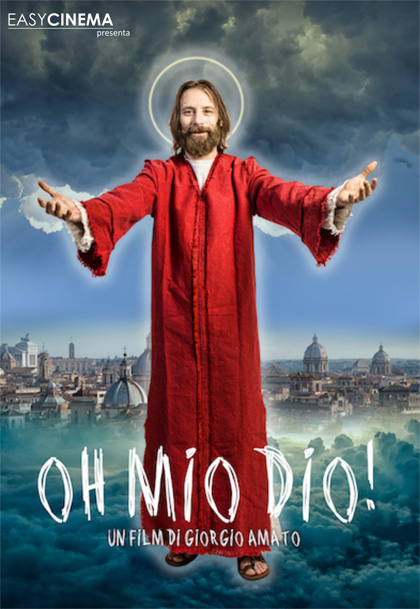
movieplayer.net-cdn.it/t/images/2018/03/08/oh_mio_dio_car...

..........................................................................
click to activate the small icon of slideshow: the small triangle inscribed in the small rectangle, at the top right, in the photostream (it means the monitor);
or…. Press the “L” button to zoom in the image;
clicca sulla piccola icona per attivare lo slideshow: sulla facciata principale del photostream, in alto a destra c'è un piccolo rettangolo (rappresenta il monitor) con dentro un piccolo triangolo nero;
oppure…. premi il tasto “L” per ingrandire l'immagine;
www.worldphoto.org/sony-world-photography-awards/winners-...
www.fotografidigitali.it/gallery/2726/opere-italiane-segn...
………………………………………………………
This "photographic story" ideally follows the previous one, for two reasons, first because in this case too, as in the previous story we talk about "angels", they are the "Golden Angels" of San Pier Niceto (in the province of Messina), and second, because this singular and beautiful religious festival, with its procession, also takes place during the Easter period, specifically during "Holy Tuesday". The photographs that I post (not a few, I wish in this way to pay homage to the inhabitants of San Pier Niceto, who can find themselves in these photos, especially for those fathers, mothers, grandfathers, grandmothers, aunts and uncles, in seeing their beloved and very sweet "angels - angiolette"); if you look closely at some of the photographed subjects, you will notice a "temporal disconnect", in fact in some cases, the same girls are present, with two different ages, they will be dressed differently, this is because the photos were taken during Holy Tuesday of 2024 and that of 2025. The temporal sequence of the photographs does not take into account either the year in which they were taken, nor the moments attributable to the phases of the ceremony and subsequent procession.
In San Pier Niceto, on the Peloritani Mountains in Sicily, during the Holy Tuesday takes place the SS. Crucifix procession, whose roots are ancient. The Church of St. James houses and cares for the precious Crucifix, Which is brought to the procession by the streets of the country preceded by very young children, of both sexes, who imitate little Angels, Angels and Grieving young Nuns, dressed in elaborate dresses covered with many gold jewelery, sewn by handy hands that with pins, necklaces , Bracelets and many other gold jewelry applied to their little clothes, they make real works of art whose designs are reminiscent of Easter symbols. Gold for dressing is collected home from home by people who have to melt a "vote", gold that will be returned at the end of the procession. Everything begins during Lent when parents decide to dress their baby by little Angels, Angels or Grieving Nuns .The Little Angels are usually 3 or 4 year olds, the Angels are a little bigger, the Nuns are little young girls. Thus the preparations for the elaboration of the elaborate clothes begin: Parents during Lent are knocking at every door of the country, among friends and relatives, to borrow bracelets, brooches, necklaces and all the gold necessary for the composition of embroidery . The Little Angel's dress is white, short down to the knee, made up of a gold-plated bodice and a skirt with some golden embroidery; Arms are adorned by bracelets, the head is adorned by a collier, small wings (white dove feathers) sprout from behind. The Angels have a white tunic, on which sacred icons are embroidered in gold, the head is covered by a collier, wings lie on their shoulders. The Nun's dress is black, on which are stitched the crowns of the S.S. Rosary, on the head is placed a white veil, held by a rose crown. At 16:30 on Holy Tuesday, a tapping of bells together with the band's fanfare in the village, set off at the "Crucifixion Procession" of San Pier Niceto: at the foot of the Crucifix there are red roses, behind it are located branches of cypress (at the end of the event the faithful will carry with them a piece of cypress as a relic), finally the red ribbons are tied to the arms of the Crucifix, they will mark the procession of the procession until the arrival at the Mother Church, a century church to St. Peter the Apostle, where the celebration of the Holy Mass will take place (the reverse path will bring the SS Crucifix to the Church of St. James): in perfect order the faithful in religious silence, with votive candles in their hands, walk the streets of the country never crossing the red ribbons as they delimit the path of the Golden Little Angels, Angels and the Grieving young Nuns .
Questo "racconto fotografico" segue idealmente il precedente, per due motivi, innanzitutto perchè anche in questo caso, come nel racconto precedente si parla di "angeli", sono "gli Angioletti d'oro" di San Pier Niceto (in provincia di Messina), e secondo, perchè questa singolare e bella festa religiosa, con la sua processione, si svolge anch'essa durante il periodo pasquale, nello specifico durante il "Martedì Santo". Le fotografie che posto (non poche, desidero in tal modo omaggiare gli abitanti di San Pier Niceto, che possano ritrovarsi in queste foto, soprattutto per quei papà, mamme, nonni, nonne, zie e zii, nel rivedere i loro adorati e dolcissimi "angioletti - angiolette"); a ben guardare in alcuni dei soggetti fotografati, si noterà uno "scollamento temportale", infatti in qualche caso, sono presenti le stessi bimbe, con due età diverse, saranno vestite diversamente, questo perchè le foto sono state realizzate durante il Martedì Santo del 2024 e quello del 2025. La sequenza temporale delle fotografie non tiene conto nè dell'anno nel quale sono state realizzate, nè dei momenti ascrivibili alle fasi della cerimonia e successiva processione.
A San Pier Niceto, sui monti Peloritani in Sicilia, durante il Martedì Santo prende vita la processione per le vie del paese del SS. Crocifisso, le cui radici sono antichissime. La Chiesa di San Giacomo ospita e custodisce il pregevole Crocifisso, che viene portato in processione per le vie del paese preceduto da bambini anche molto piccoli, di entrambi i sessi, che impersonano Angioletti ed Addoloratine vestiti con elaboratissimi abiti ricoperti con tantissimi monili d’oro, cuciti dalle mani abili di sarte che con spille, collane, bracciali e tanti altri monili in oro applicati sui loro piccoli vestiti, realizzano vere opere d’arte i cui disegni ricordano simboli pasquali. L’oro per la realizzazione dei vestitini viene raccolto di casa in casa da persone che hanno da sciogliere un “voto”, oro che verrà restituito alla fine della processione. Tutto ha inizio durante la Quaresima, quando dei genitori decidono per “voto” di vestire il proprio bambino da Angioletto, Angiolone o Monachella.
Gli Angioletti sono solitamente bimbi di 3 o 4 anni, gli Angioloni sono un po’ più grandi, le Monachelle sono delle bambine. Così iniziano i preparativi per la realizzazione degli elaboratissimi vestiti: i genitori durante la Quaresima bussano ad ogni porta del paese, tra la cerchia di amici e parenti, per prendere in prestito bracciali, spille, collane e tutto l’oro necessario alla composizione dei ricami. Il vestito degli Angioletti è bianco, corto fino al ginocchio, composto da un corpetto ricoperto d’oro ed una gonna segnata da alcuni ricami d’oro; le braccia sono adornate da bracciali, la testa è adornata da un collier, da dietro le spalle spuntano delle piccole ali (piume di colomba bianca). Gli Angioloni hanno una tunica bianca sulla quale vengono ricamate delle icone sacre in oro, la testa è cinta da un collier, sulle spalle trovano posto delle ali. Il vestito delle Monachelle invece è nero, sul quale vengono cucite delle coroncine del S.S. Rosario, sul capo viene posto un velo bianco, trattenuto da una corona di rose. Alle 16:30 del Martedì Santo un rintocco di campane insieme alla fanfare della banda del paese, danno il via alla “Processione del Crocifisso” di San Pier Niceto: ai piedi della Croce vi sono delle rose rosse, dietro di essa trovano posto dei rami di cipresso (alla fine dell’evento i fedeli porteranno con se un pezzetto di rametto come reliquia), infine dei nastri rossi vengono legati alle braccia del Crocifisso, essi segneranno il percorso della processione, fino all’arrivo al Duomo, una chiesa cinquecentesca dedicata a San Pietro apostolo, ove si terrà la celebrazione della Santa Messa ( il percorso inverso riporterà il S.S. Crocifisso nella Chiesa di San Giacomo): in perfetto ordine i fedeli in religioso silenzio, con ceri votivi in mano, percorrono le vie del paese, non oltrepassando i nastri rossi poiché essi delimitano il percorso degli Angioletti d’oro e delle Addoloratine.
................................................
…………………………………………………….
Il Martedì Santo a San Pier Niceto, con gli angioletti d'oro
A San Pier Niceto il martedì Santo bambini vestiti d’oro
processione di Gesù Crocifisso e degli angioletti vestiti d'oro il martedì santo a san pier niceto
Martedì Santo in Sicilia, la discesa del Crocifisso nel borgo di San Pier Niceto
La Discesa dall'Altare del SS Crocifisso della Chiesa di San Giacomo a San Pier Niceto ANNO 2018
OH MIO DIO | E se Gesù tornasse in Terra? | HOT CORN
Oh mio Dio 😎#film #filme #filmscene #fpy #movie #foryou #neiperte #clip #movieclip
Miracolo Gesù a Roma - guarda il video
LE TESTIMONIANZE DI CHI HA SENTITO PARLARE GESU'
LUI E' CON NOI - Canzone per Gesù
OH MIO DIO | Intervista al regista Giorgio Amato
......................................................
……………………………….
Locandina:
bingeddata.s3.amazonaws.com/uploads/2021/01/romantic-guid...
www.imdb.com/it/title/tt12784484/mediaviewer/rm2907022337...
www.imdb.com/it/title/tt12784484/mediaviewer/rm2940576769...
www.primevideo.com/detail/Romantic-Guide-to-Lost-Places/0...
.............................................................................
click to activate the small icon of slideshow: the small triangle inscribed in the small rectangle, at the top right, in the photostream (it means the monitor);
or…. Press the “L” button to zoom in the image;
clicca sulla piccola icona per attivare lo slideshow: sulla facciata principale del photostream, in alto a destra c'è un piccolo rettangolo (rappresenta il monitor) con dentro un piccolo triangolo nero;
oppure…. premi il tasto “L” per ingrandire l'immagine;
www.worldphoto.org/sony-world-photography-awards/winners-...
www.fotografidigitali.it/gallery/2726/opere-italiane-segn...
………………………………………………………………………
I'm sharing here on Flickr a (long) series of photos, taken in early August this year, during a short vacation in Calabria, at a holiday village located near a beach I've been frequenting with my family for several years now, during our short summer vacations. The setting, however, is very different from the beaches I normally frequent near my home in Taormina, with very crowded beaches and a sea that is also very popular with yachtsmen of all kinds. In this part of Calabria, the beaches are rarely crowded (except on weekends, but not too much). In short, it's a sort of almost tropical paradise, with very little yachting. Adjacent to the holiday village is a kitesurfing club, very popular with enthusiasts of this wonderful sport, which thrives on the sea and the wind. I photographed an 84-year-old kitesurfer, whose mettle is steely, still giving athletes much younger than him a run for their money. A friendly and sweet horsewoman from the nearby stables arrived unexpectedly in the beach village, accompanied by her father, both astride two magnificent colts. This created a moment of joy and curiosity for both the parents and their little ones, who were likely seeing these magnificent and docile animals up close and personal for the first time. Unexpectedly, a very special party broke out on the beach. Seeing it made me feel like I was no longer in Calabria, but rather transported to the other side of the globe, to the Hindu festival called Holi, with its throwing of colored powders (in India, this festival marks the end of winter and the arrival of spring, as well as symbolizing the victory of good over evil). I know it thanks to the evocative photographs often published on various photography websites.
I'll end by briefly mentioning the photographic technique I've often used in my photographs. I've created "blur" photographs—blurry, slightly blurry, and unfocused—at the time of shooting, simply by lengthening the exposure time and then also using some panning. Finally, I'd like to thank the sweet and beautiful models who posed for me, allowing me to further enhance this (long-winded) photographic story.
………………………………………………………………………..
Propongo qui su Flickr, una (lunga) serie di foto, realizzate nei primi giorni di Agosto di quest’anno, durante una mia breve vacanza in Calabria, in un villaggio vacanze sito a ridosso di una spiaggia che oramai frequento insieme alla mia famiglia, durante le nostre brevi vacanze estive, da diversi anni, fotografie quindi aventi per tema la “beach photography”; purtuttavia l’ambientazione è molto diversa rispetto alle spiagge che frequento normalmente vicino casa mia a Taormina, con spiagge molto affollate, il mare anch’esso super frequentato da diportismo nautico di ogni tipo, in questa zona della Calabria le spiagge sono invece poco frequentate (tranne il fine settimana, ma neanche troppo), insomma, una specie di Paradiso quasi tropicale, con pochissime imbarcazioni. Adiacente al villaggio vacanze c’è un club di Kitesurf, molto frequentato da appassionati di questo meraviglioso sport, sport che si nutre di mare e di vento. Ho fotografato un kitesurfer di 84 anni, la cui tempra è di acciaio, che dà ancora molto filo da torcere ad atleti molto più giovani di lui. Nel villaggio a sorpresa è arrivata una simpatica e dolce cavallerizza proveniente dal vicino maneggio, con lei anche il suo papà, entrambi a cavallo di due magnifici puledri, creando un momento di allegria e curiosità, sia per i genitori, che per i loro piccoli, per i quali, molto probabilmente, era la prima volta che potevano vedere da vicino, e poterli anche toccare, questi magnifici e docili animali. A sorpresa, inaspettatamente, sulla spiaggia ha preso vita un party molto particolare, nel vederlo mi sembrava di non essere più in Calabria, ma di essere stato proiettato dall’altro lato del globo, in quella festa Indù chiamata Holi, con lancio di polveri colorate (in India questa festa segna la fine dell'inverno e l'arrivo della primavera, oltre a simboleggiare la vittoria del bene sul male), festa che conosco grazie a fotografie molto suggestive spesso pubblicate sui vari siti fotografici.
Termino accennando brevemente alla tecnica fotografica che ho spesso adottato nel realizzare le mie fotografie, ho realizzato al momento dello scatto fotografie del tipo “blur”, cioè mosse, un po’ confuse, non incise, ottenute allungando i tempi di esposizione. Infine ringrazio le dolcissime e belle modelle, che hanno voluto posare per me, consentendomi di rendere più grazioso questo mio (prolisso) racconto fotografico.
………………………………………………………………………………
……………………………….
Locandina:
bingeddata.s3.amazonaws.com/uploads/2021/01/romantic-guid...
www.imdb.com/it/title/tt12784484/mediaviewer/rm2907022337...
www.imdb.com/it/title/tt12784484/mediaviewer/rm2940576769...
www.primevideo.com/detail/Romantic-Guide-to-Lost-Places/0...
.............................................................................
click to activate the small icon of slideshow: the small triangle inscribed in the small rectangle, at the top right, in the photostream (it means the monitor);
or…. Press the “L” button to zoom in the image;
clicca sulla piccola icona per attivare lo slideshow: sulla facciata principale del photostream, in alto a destra c'è un piccolo rettangolo (rappresenta il monitor) con dentro un piccolo triangolo nero;
oppure…. premi il tasto “L” per ingrandire l'immagine;
www.worldphoto.org/sony-world-photography-awards/winners-...
www.fotografidigitali.it/gallery/2726/opere-italiane-segn...
………………………………………………………………………
I'm sharing here on Flickr a (long) series of photos, taken in early August this year, during a short vacation in Calabria, at a holiday village located near a beach I've been frequenting with my family for several years now, during our short summer vacations. The setting, however, is very different from the beaches I normally frequent near my home in Taormina, with very crowded beaches and a sea that is also very popular with yachtsmen of all kinds. In this part of Calabria, the beaches are rarely crowded (except on weekends, but not too much). In short, it's a sort of almost tropical paradise, with very little yachting. Adjacent to the holiday village is a kitesurfing club, very popular with enthusiasts of this wonderful sport, which thrives on the sea and the wind. I photographed an 84-year-old kitesurfer, whose mettle is steely, still giving athletes much younger than him a run for their money. A friendly and sweet horsewoman from the nearby stables arrived unexpectedly in the beach village, accompanied by her father, both astride two magnificent colts. This created a moment of joy and curiosity for both the parents and their little ones, who were likely seeing these magnificent and docile animals up close and personal for the first time. Unexpectedly, a very special party broke out on the beach. Seeing it made me feel like I was no longer in Calabria, but rather transported to the other side of the globe, to the Hindu festival called Holi, with its throwing of colored powders (in India, this festival marks the end of winter and the arrival of spring, as well as symbolizing the victory of good over evil). I know it thanks to the evocative photographs often published on various photography websites.
I'll end by briefly mentioning the photographic technique I've often used in my photographs. I've created "blur" photographs—blurry, slightly blurry, and unfocused—at the time of shooting, simply by lengthening the exposure time and then also using some panning. Finally, I'd like to thank the sweet and beautiful models who posed for me, allowing me to further enhance this (long-winded) photographic story.
………………………………………………………………………..
Propongo qui su Flickr, una (lunga) serie di foto, realizzate nei primi giorni di Agosto di quest’anno, durante una mia breve vacanza in Calabria, in un villaggio vacanze sito a ridosso di una spiaggia che oramai frequento insieme alla mia famiglia, durante le nostre brevi vacanze estive, da diversi anni, fotografie quindi aventi per tema la “beach photography”; purtuttavia l’ambientazione è molto diversa rispetto alle spiagge che frequento normalmente vicino casa mia a Taormina, con spiagge molto affollate, il mare anch’esso super frequentato da diportismo nautico di ogni tipo, in questa zona della Calabria le spiagge sono invece poco frequentate (tranne il fine settimana, ma neanche troppo), insomma, una specie di Paradiso quasi tropicale, con pochissime imbarcazioni. Adiacente al villaggio vacanze c’è un club di Kitesurf, molto frequentato da appassionati di questo meraviglioso sport, sport che si nutre di mare e di vento. Ho fotografato un kitesurfer di 84 anni, la cui tempra è di acciaio, che dà ancora molto filo da torcere ad atleti molto più giovani di lui. Nel villaggio a sorpresa è arrivata una simpatica e dolce cavallerizza proveniente dal vicino maneggio, con lei anche il suo papà, entrambi a cavallo di due magnifici puledri, creando un momento di allegria e curiosità, sia per i genitori, che per i loro piccoli, per i quali, molto probabilmente, era la prima volta che potevano vedere da vicino, e poterli anche toccare, questi magnifici e docili animali. A sorpresa, inaspettatamente, sulla spiaggia ha preso vita un party molto particolare, nel vederlo mi sembrava di non essere più in Calabria, ma di essere stato proiettato dall’altro lato del globo, in quella festa Indù chiamata Holi, con lancio di polveri colorate (in India questa festa segna la fine dell'inverno e l'arrivo della primavera, oltre a simboleggiare la vittoria del bene sul male), festa che conosco grazie a fotografie molto suggestive spesso pubblicate sui vari siti fotografici.
Termino accennando brevemente alla tecnica fotografica che ho spesso adottato nel realizzare le mie fotografie, ho realizzato al momento dello scatto fotografie del tipo “blur”, cioè mosse, un po’ confuse, non incise, ottenute allungando i tempi di esposizione. Infine ringrazio le dolcissime e belle modelle, che hanno voluto posare per me, consentendomi di rendere più grazioso questo mio (prolisso) racconto fotografico.
………………………………………………………………………………
……………………………….
Locandina:
bingeddata.s3.amazonaws.com/uploads/2021/01/romantic-guid...
www.imdb.com/it/title/tt12784484/mediaviewer/rm2907022337...
www.imdb.com/it/title/tt12784484/mediaviewer/rm2940576769...
www.primevideo.com/detail/Romantic-Guide-to-Lost-Places/0...
.............................................................................
click to activate the small icon of slideshow: the small triangle inscribed in the small rectangle, at the top right, in the photostream (it means the monitor);
or…. Press the “L” button to zoom in the image;
clicca sulla piccola icona per attivare lo slideshow: sulla facciata principale del photostream, in alto a destra c'è un piccolo rettangolo (rappresenta il monitor) con dentro un piccolo triangolo nero;
oppure…. premi il tasto “L” per ingrandire l'immagine;
www.worldphoto.org/sony-world-photography-awards/winners-...
www.fotografidigitali.it/gallery/2726/opere-italiane-segn...
………………………………………………………………………
I'm sharing here on Flickr a (long) series of photos, taken in early August this year, during a short vacation in Calabria, at a holiday village located near a beach I've been frequenting with my family for several years now, during our short summer vacations. The setting, however, is very different from the beaches I normally frequent near my home in Taormina, with very crowded beaches and a sea that is also very popular with yachtsmen of all kinds. In this part of Calabria, the beaches are rarely crowded (except on weekends, but not too much). In short, it's a sort of almost tropical paradise, with very little yachting. Adjacent to the holiday village is a kitesurfing club, very popular with enthusiasts of this wonderful sport, which thrives on the sea and the wind. I photographed an 84-year-old kitesurfer, whose mettle is steely, still giving athletes much younger than him a run for their money. A friendly and sweet horsewoman from the nearby stables arrived unexpectedly in the beach village, accompanied by her father, both astride two magnificent colts. This created a moment of joy and curiosity for both the parents and their little ones, who were likely seeing these magnificent and docile animals up close and personal for the first time. Unexpectedly, a very special party broke out on the beach. Seeing it made me feel like I was no longer in Calabria, but rather transported to the other side of the globe, to the Hindu festival called Holi, with its throwing of colored powders (in India, this festival marks the end of winter and the arrival of spring, as well as symbolizing the victory of good over evil). I know it thanks to the evocative photographs often published on various photography websites.
I'll end by briefly mentioning the photographic technique I've often used in my photographs. I've created "blur" photographs—blurry, slightly blurry, and unfocused—at the time of shooting, simply by lengthening the exposure time and then also using some panning. Finally, I'd like to thank the sweet and beautiful models who posed for me, allowing me to further enhance this (long-winded) photographic story.
………………………………………………………………………..
Propongo qui su Flickr, una (lunga) serie di foto, realizzate nei primi giorni di Agosto di quest’anno, durante una mia breve vacanza in Calabria, in un villaggio vacanze sito a ridosso di una spiaggia che oramai frequento insieme alla mia famiglia, durante le nostre brevi vacanze estive, da diversi anni, fotografie quindi aventi per tema la “beach photography”; purtuttavia l’ambientazione è molto diversa rispetto alle spiagge che frequento normalmente vicino casa mia a Taormina, con spiagge molto affollate, il mare anch’esso super frequentato da diportismo nautico di ogni tipo, in questa zona della Calabria le spiagge sono invece poco frequentate (tranne il fine settimana, ma neanche troppo), insomma, una specie di Paradiso quasi tropicale, con pochissime imbarcazioni. Adiacente al villaggio vacanze c’è un club di Kitesurf, molto frequentato da appassionati di questo meraviglioso sport, sport che si nutre di mare e di vento. Ho fotografato un kitesurfer di 84 anni, la cui tempra è di acciaio, che dà ancora molto filo da torcere ad atleti molto più giovani di lui. Nel villaggio a sorpresa è arrivata una simpatica e dolce cavallerizza proveniente dal vicino maneggio, con lei anche il suo papà, entrambi a cavallo di due magnifici puledri, creando un momento di allegria e curiosità, sia per i genitori, che per i loro piccoli, per i quali, molto probabilmente, era la prima volta che potevano vedere da vicino, e poterli anche toccare, questi magnifici e docili animali. A sorpresa, inaspettatamente, sulla spiaggia ha preso vita un party molto particolare, nel vederlo mi sembrava di non essere più in Calabria, ma di essere stato proiettato dall’altro lato del globo, in quella festa Indù chiamata Holi, con lancio di polveri colorate (in India questa festa segna la fine dell'inverno e l'arrivo della primavera, oltre a simboleggiare la vittoria del bene sul male), festa che conosco grazie a fotografie molto suggestive spesso pubblicate sui vari siti fotografici.
Termino accennando brevemente alla tecnica fotografica che ho spesso adottato nel realizzare le mie fotografie, ho realizzato al momento dello scatto fotografie del tipo “blur”, cioè mosse, un po’ confuse, non incise, ottenute allungando i tempi di esposizione. Infine ringrazio le dolcissime e belle modelle, che hanno voluto posare per me, consentendomi di rendere più grazioso questo mio (prolisso) racconto fotografico.
………………………………………………………………………………
“things only exist if they are told/narrated”
(maybe of Alessandro Baricco);
“le cose esistono solo se vengono raccontate”
(probabile, di Alessandro Baricco).
POSTER - LOCANDINA –
www.primevideo.com/-/it/detail/Angel-A/0KVPRDXIFFVZY10Y02...
www.imdb.com/de/title/tt0473753/
www.moviemag.it/angel-a-la-recensione-del-film-di-luc-bes...
----------------------------------------------------------
click to activate the small icon of slideshow: the small triangle inscribed in the small rectangle, at the top right, in the photostream (it means the monitor);
or…. Press the “L” button to zoom in the image;
clicca sulla piccola icona per attivare lo slideshow: sulla facciata principale del photostream, in alto a destra c'è un piccolo rettangolo (rappresenta il monitor) con dentro un piccolo triangolo nero;
oppure…. premi il tasto “L” per ingrandire l'immagine;
www.worldphoto.org/sony-world-photography-awards/winners-...
www.fotografidigitali.it/gallery/2726/opere-italiane-segn...
………………………………………………………
I present here a “Sicilian Festival”, with images and words, which was held this year in what is a “scattered municipality”, since it is composed of the two hamlets of Mongiuffi and Melia, separated by a valley in which a river flows, close to the more famous Taormina; the festival is celebrated on Easter Monday, this year the festival, which began normally, was interrupted shortly after due to the arrival of the sad news of the Holy Father Francis, who passed away, so the festival was postponed and celebrated on Sunday 27 April. Historically, the news that I report here, briefly, are taken from the book written by the historian, researcher of popular traditions and photographer, Giovanni Curcuruto, title of the work "Monfelia" (ETNA printing house, OCTOBER 2006): this festival, initially called "Festa della Pace" (later indicated as "Festa degli Angeli"), was established by the Marquis Francesco Rao Corvaja in 1830, to try to bring harmony between the two villages, Mongiuffi and Melia, which had disagreed in the past years for trivial reasons. The festival was celebrated until 1843, the year in which the two villages argued again (the two communities argued as if they were stadium fans, one sided with the clergy, the other with the nobles), the festival was then suspended, and was only reinstated in 1929; the celebration when it was established required that forty days before Easter Monday, the two communities would gather in the church of San Sebastiano di Melia, to select eight children, four from Mongiuffi in honor of the Madonna, and four from Melia in honor of the Risen Christ, between ten and fifteen years old, on the day of the celebration they would then be dressed in white clothes and “wings”, embellished with ribbons and bows; the children were instructed to recite a text in Sicilian dialect mixed with Latin phrases, written in 1833 by the priest Giovanni Cuzari. On Easter Monday, the various brotherhoods had a lot to do preparing the ceremony; from the church of San Sebastiano di Melia, a procession of only men came out, the bearers carried the float with the Risen Christ on their shoulders, while from Mongiuffi a procession of only women set out, with their heads covered by a black veil, the float with the the Virgin of Sorrows was carried on their shoulders, a black veil covered her completely, leaving only her face uncovered, (underneath there was a white veil, which would have “appeared” at the moment of the encounter with the Risen Son): the two processions met in Melia (and still meet today), in an area called “’nto chianu di l’Angiuli” (the square of the Angels), in reality now it is little more than a narrow street: what happened in the past, still happens today (except that, the procession with the the Virgin of Sorrows no longer comes from Mongiuffi, but comes from Melia itself), the two processions coming from the two opposite directions, carrying the float with the the Virgin of Sorrows, and the one with the Risen Christ, stop one in front of the other. First there is a particular ceremony, two boys meet with their respective Crucifixes making three bows to each other, the same happens with two girls and then two men, with their banners, finally the highly emotional “Meeting” takes place between the Mother (the black cloak flies away, and the white one appears) with her Risen Son! Finally, hidden until then behind a curtain on a stage, there is the appearance of the children dressed as Angels, who undertake the traditional recitation. The historian, passionate about popular traditions, Giovanni Curcuruto, has always been close to the “little angels” having acted as director and choreographer, of this moving, very beautiful, “traditional Sicilian ceremony-festival”.
…………………………………………….
Presento qui una “Festa Siciliana”, con immagini e parole, che si è tenuta quest’anno in quello che è un “comune sparso”, poiché composto dalle due borgate di Mongiuffi e Melia, separate da una vallata nella quale scorre un fiume, vicine alla più conosciuta Taormina; la festa viene celebrata il giorno di Pasquetta (o Lunedì dell’Angelo), quest’anno la festa, iniziata normalmente, è stata poco dopo interrotta per l’arrivo della triste notizia del Santo Padre Francesco, venuto a mancare, quindi la festa è stata rinviata e celebrata domenica 27 aprile.
Storicamente le notizie che qui riporto, sinteticamente, sono tratte dal libro scritto dallo storico, ricercatore di tradizioni popolari e, fotografo, Giovanni Curcuruto, titolo dell’opera “Monfelia” (tipografia ETNA, OTTOBRE 2006): questa festa, chiamata inizialmente “Festa della Pace”, (poi indicata come “Festa degli Angeli”), fu istituita dal Marchese Francesco Rao Corvaja nel 1830, per tentare di portare armonia tra i due borghi, Mongiuffi e Melia, entrati in disaccordo negli anni passati per futili motivi, la festa fu celebrata fino al 1843, anno in cui i due borghi litigarono nuovamente, (le due comunità litigarono come se fossero tifoserie di stadio, una parteggiava per il clero, l’altra per i nobili), la festa venne quindi sospesa, e fu ripristinata solamente nel 1929; la festa quando venne istituita prevedeva che quaranta giorni prima del Lunedì di Pasqua, le due comunità si riunissero nella chiesa di San Sebastiano di Melia, per selezionare otto ragazzini, quattro di Mongiuffi in in onore della Madonna, e quattro di Melia in onore del Cristo Risorto, tra i dieci ed i quindici anni, il giorno della celebrazione sarebbero poi stati vestiti con abiti ed “ali” di colore bianco, impreziositi con nastri e fiocchetti; i ragazzini venivano istruiti a recitare un testo in dialetto siciliano misto a frasi in latino, scritto nel 1833 dal sacerdote Giovanni Cuzari. Il Lunedì dell’Angelo, le varie confraternite avevano un gran da fare per la preparazione della cerimonia; dalla chiesa di San Sebastiano di Melia, usciva una processione di soli uomini, i portatori recavano in spalla la vara col Cristo Risorto, mentre da Mongiuffi partiva una processione di sole donne, col capo coperto da un velo nero, veniva portata in spalla la vara con la Madonna Addolorata, un velo nero la copriva completamente, lasciandole scoperto solamente il volto, (sotto era presente un velo bianco, che sarebbe “apparso” nel momento dell’incontro col Figlio Risorto): le due processioni si incontravano a Melia (e si incontrano tutt’ora), in una zona chiamata “’nto chianu di l’Angiuli” (la piazza degli Angeli), in realtà adesso è poco più di una stretta stradina: quanto accadeva in passato, accade tutt’ora (tranne che, la processione con la Madonna Addolorata non proviene più da Mongiuffi, ma giunge dalla stessa Melia), le due processioni provenienti dalle due opposte direzioni, recanti la vara con la Madonna Addolorata, e quella col Cristo Risorto, si fermano una di fronta l’altra, dapprima
c’è una particolare cerimonia, due ragazzi si incontrano coi rispettivi Crocefissi facendosi l’un l’altro tre inchini, lo stesso accade con due ragazze e poi due uomini, con i loro stendardi, infine avviene “l’Incontro” altamente emozionante tra la Madre (vola via il mantello nero, ed appare quello bianco) col suo Figlio Risorto! Infine, nascosti fino ad allora dietro una tenda su di un palco, c’è l’apparizione dei ragazzini vestiti da Angeli, che intraprendono la recita tradizionale. Lo storico, appassionato di tradizioni popolari, Giovanni Curcuruto, è stato sempre accanto agli “angioletti” avendo fatto da regista e coreografo, di questa commovente, molto bella, “cerimonia – festa tradizionale Siciliana”.
…………………………………………………….
“things only exist if they are told/narrated”
(attributed to Alessandro Baricco);
“le cose esistono solo se vengono raccontate”
(attribuita ad Alessandro Baricco).
POSTER - LOCANDINA –
www.primevideo.com/detail/Oh-Mio-Dio/0FBFGSB0G1HMNXV56F5C...
pad.mymovies.it/filmclub/2018/02/181/locandina.jpg
movieplayer.net-cdn.it/t/images/2018/03/08/oh_mio_dio_car...
----------------------------------------------------------
click to activate the small icon of slideshow: the small triangle inscribed in the small rectangle, at the top right, in the photostream (it means the monitor);
or…. Press the “L” button to zoom in the image;
clicca sulla piccola icona per attivare lo slideshow: sulla facciata principale del photostream, in alto a destra c'è un piccolo rettangolo (rappresenta il monitor) con dentro un piccolo triangolo nero;
oppure…. premi il tasto “L” per ingrandire l'immagine;
www.worldphoto.org/sony-world-photography-awards/winners-...
www.fotografidigitali.it/gallery/2726/opere-italiane-segn...
………………………………………………………
This "photographic story" ideally follows the previous one, for two reasons, first because in this case too, as in the previous story we talk about "angels", they are the "Golden Angels" of San Pier Niceto (in the province of Messina), and second, because this singular and beautiful religious festival, with its procession, also takes place during the Easter period, specifically during "Holy Tuesday". The photographs that I post (not a few, I wish in this way to pay homage to the inhabitants of San Pier Niceto, who can find themselves in these photos, especially for those fathers, mothers, grandfathers, grandmothers, aunts and uncles, in seeing their beloved and very sweet "angels - angiolette"); if you look closely at some of the photographed subjects, you will notice a "temporal disconnect", in fact in some cases, the same girls are present, with two different ages, they will be dressed differently, this is because the photos were taken during Holy Tuesday of 2024 and that of 2025. The temporal sequence of the photographs does not take into account either the year in which they were taken, nor the moments attributable to the phases of the ceremony and subsequent procession.
In San Pier Niceto, on the Peloritani Mountains in Sicily, during the Holy Tuesday takes place the SS. Crucifix procession, whose roots are ancient. The Church of St. James houses and cares for the precious Crucifix, Which is brought to the procession by the streets of the country preceded by very young children, of both sexes, who imitate little Angels, Angels and Grieving young Nuns, dressed in elaborate dresses covered with many gold jewelery, sewn by handy hands that with pins, necklaces , Bracelets and many other gold jewelry applied to their little clothes, they make real works of art whose designs are reminiscent of Easter symbols. Gold for dressing is collected home from home by people who have to melt a "vote", gold that will be returned at the end of the procession. Everything begins during Lent when parents decide to dress their baby by little Angels, Angels or Grieving Nuns .The Little Angels are usually 3 or 4 year olds, the Angels are a little bigger, the Nuns are little young girls. Thus the preparations for the elaboration of the elaborate clothes begin: Parents during Lent are knocking at every door of the country, among friends and relatives, to borrow bracelets, brooches, necklaces and all the gold necessary for the composition of embroidery . The Little Angel's dress is white, short down to the knee, made up of a gold-plated bodice and a skirt with some golden embroidery; Arms are adorned by bracelets, the head is adorned by a collier, small wings (white dove feathers) sprout from behind. The Angels have a white tunic, on which sacred icons are embroidered in gold, the head is covered by a collier, wings lie on their shoulders. The Nun's dress is black, on which are stitched the crowns of the S.S. Rosary, on the head is placed a white veil, held by a rose crown. At 16:30 on Holy Tuesday, a tapping of bells together with the band's fanfare in the village, set off at the "Crucifixion Procession" of San Pier Niceto: at the foot of the Crucifix there are red roses, behind it are located branches of cypress (at the end of the event the faithful will carry with them a piece of cypress as a relic), finally the red ribbons are tied to the arms of the Crucifix, they will mark the procession of the procession until the arrival at the Mother Church, a century church to St. Peter the Apostle, where the celebration of the Holy Mass will take place (the reverse path will bring the SS Crucifix to the Church of St. James): in perfect order the faithful in religious silence, with votive candles in their hands, walk the streets of the country never crossing the red ribbons as they delimit the path of the Golden Little Angels, Angels and the Grieving young Nuns .
Questo "racconto fotografico" segue idealmente il precedente, per due motivi, innanzitutto perchè anche in questo caso, come nel racconto precedente si parla di "angeli", sono "gli Angioletti d'oro" di San Pier Niceto (in provincia di Messina), e secondo, perchè questa singolare e bella festa religiosa, con la sua processione, si svolge anch'essa durante il periodo pasquale, nello specifico durante il "Martedì Santo". Le fotografie che posto (non poche, desidero in tal modo omaggiare gli abitanti di San Pier Niceto, che possano ritrovarsi in queste foto, soprattutto per quei papà, mamme, nonni, nonne, zie e zii, nel rivedere i loro adorati e dolcissimi "angioletti - angiolette"); a ben guardare in alcuni dei soggetti fotografati, si noterà uno "scollamento temportale", infatti in qualche caso, sono presenti le stessi bimbe, con due età diverse, saranno vestite diversamente, questo perchè le foto sono state realizzate durante il Martedì Santo del 2024 e quello del 2025. La sequenza temporale delle fotografie non tiene conto nè dell'anno nel quale sono state realizzate, nè dei momenti ascrivibili alle fasi della cerimonia e successiva processione.
A San Pier Niceto, sui monti Peloritani in Sicilia, durante il Martedì Santo prende vita la processione per le vie del paese del SS. Crocifisso, le cui radici sono antichissime. La Chiesa di San Giacomo ospita e custodisce il pregevole Crocifisso, che viene portato in processione per le vie del paese preceduto da bambini anche molto piccoli, di entrambi i sessi, che impersonano Angioletti ed Addoloratine vestiti con elaboratissimi abiti ricoperti con tantissimi monili d’oro, cuciti dalle mani abili di sarte che con spille, collane, bracciali e tanti altri monili in oro applicati sui loro piccoli vestiti, realizzano vere opere d’arte i cui disegni ricordano simboli pasquali. L’oro per la realizzazione dei vestitini viene raccolto di casa in casa da persone che hanno da sciogliere un “voto”, oro che verrà restituito alla fine della processione. Tutto ha inizio durante la Quaresima, quando dei genitori decidono per “voto” di vestire il proprio bambino da Angioletto, Angiolone o Monachella.
Gli Angioletti sono solitamente bimbi di 3 o 4 anni, gli Angioloni sono un po’ più grandi, le Monachelle sono delle bambine. Così iniziano i preparativi per la realizzazione degli elaboratissimi vestiti: i genitori durante la Quaresima bussano ad ogni porta del paese, tra la cerchia di amici e parenti, per prendere in prestito bracciali, spille, collane e tutto l’oro necessario alla composizione dei ricami. Il vestito degli Angioletti è bianco, corto fino al ginocchio, composto da un corpetto ricoperto d’oro ed una gonna segnata da alcuni ricami d’oro; le braccia sono adornate da bracciali, la testa è adornata da un collier, da dietro le spalle spuntano delle piccole ali (piume di colomba bianca). Gli Angioloni hanno una tunica bianca sulla quale vengono ricamate delle icone sacre in oro, la testa è cinta da un collier, sulle spalle trovano posto delle ali. Il vestito delle Monachelle invece è nero, sul quale vengono cucite delle coroncine del S.S. Rosario, sul capo viene posto un velo bianco, trattenuto da una corona di rose. Alle 16:30 del Martedì Santo un rintocco di campane insieme alla fanfare della banda del paese, danno il via alla “Processione del Crocifisso” di San Pier Niceto: ai piedi della Croce vi sono delle rose rosse, dietro di essa trovano posto dei rami di cipresso (alla fine dell’evento i fedeli porteranno con se un pezzetto di rametto come reliquia), infine dei nastri rossi vengono legati alle braccia del Crocifisso, essi segneranno il percorso della processione, fino all’arrivo al Duomo, una chiesa cinquecentesca dedicata a San Pietro apostolo, ove si terrà la celebrazione della Santa Messa ( il percorso inverso riporterà il S.S. Crocifisso nella Chiesa di San Giacomo): in perfetto ordine i fedeli in religioso silenzio, con ceri votivi in mano, percorrono le vie del paese, non oltrepassando i nastri rossi poiché essi delimitano il percorso degli Angioletti d’oro e delle Addoloratine.
“things only exist if they are told/narrated”
(attributed to Alessandro Baricco);
“le cose esistono solo se vengono raccontate”
(attribuita ad Alessandro Baricco).
POSTER - LOCANDINA –
www.primevideo.com/detail/Oh-Mio-Dio/0FBFGSB0G1HMNXV56F5C...
pad.mymovies.it/filmclub/2018/02/181/locandina.jpg
movieplayer.net-cdn.it/t/images/2018/03/08/oh_mio_dio_car...
----------------------------------------------------------
click to activate the small icon of slideshow: the small triangle inscribed in the small rectangle, at the top right, in the photostream (it means the monitor);
or…. Press the “L” button to zoom in the image;
clicca sulla piccola icona per attivare lo slideshow: sulla facciata principale del photostream, in alto a destra c'è un piccolo rettangolo (rappresenta il monitor) con dentro un piccolo triangolo nero;
oppure…. premi il tasto “L” per ingrandire l'immagine;
www.worldphoto.org/sony-world-photography-awards/winners-...
www.fotografidigitali.it/gallery/2726/opere-italiane-segn...
………………………………………………………
This "photographic story" ideally follows the previous one, for two reasons, first because in this case too, as in the previous story we talk about "angels", they are the "Golden Angels" of San Pier Niceto (in the province of Messina), and second, because this singular and beautiful religious festival, with its procession, also takes place during the Easter period, specifically during "Holy Tuesday". The photographs that I post (not a few, I wish in this way to pay homage to the inhabitants of San Pier Niceto, who can find themselves in these photos, especially for those fathers, mothers, grandfathers, grandmothers, aunts and uncles, in seeing their beloved and very sweet "angels - angiolette"); if you look closely at some of the photographed subjects, you will notice a "temporal disconnect", in fact in some cases, the same girls are present, with two different ages, they will be dressed differently, this is because the photos were taken during Holy Tuesday of 2024 and that of 2025. The temporal sequence of the photographs does not take into account either the year in which they were taken, nor the moments attributable to the phases of the ceremony and subsequent procession.
In San Pier Niceto, on the Peloritani Mountains in Sicily, during the Holy Tuesday takes place the SS. Crucifix procession, whose roots are ancient. The Church of St. James houses and cares for the precious Crucifix, Which is brought to the procession by the streets of the country preceded by very young children, of both sexes, who imitate little Angels, Angels and Grieving young Nuns, dressed in elaborate dresses covered with many gold jewelery, sewn by handy hands that with pins, necklaces , Bracelets and many other gold jewelry applied to their little clothes, they make real works of art whose designs are reminiscent of Easter symbols. Gold for dressing is collected home from home by people who have to melt a "vote", gold that will be returned at the end of the procession. Everything begins during Lent when parents decide to dress their baby by little Angels, Angels or Grieving Nuns .The Little Angels are usually 3 or 4 year olds, the Angels are a little bigger, the Nuns are little young girls. Thus the preparations for the elaboration of the elaborate clothes begin: Parents during Lent are knocking at every door of the country, among friends and relatives, to borrow bracelets, brooches, necklaces and all the gold necessary for the composition of embroidery . The Little Angel's dress is white, short down to the knee, made up of a gold-plated bodice and a skirt with some golden embroidery; Arms are adorned by bracelets, the head is adorned by a collier, small wings (white dove feathers) sprout from behind. The Angels have a white tunic, on which sacred icons are embroidered in gold, the head is covered by a collier, wings lie on their shoulders. The Nun's dress is black, on which are stitched the crowns of the S.S. Rosary, on the head is placed a white veil, held by a rose crown. At 16:30 on Holy Tuesday, a tapping of bells together with the band's fanfare in the village, set off at the "Crucifixion Procession" of San Pier Niceto: at the foot of the Crucifix there are red roses, behind it are located branches of cypress (at the end of the event the faithful will carry with them a piece of cypress as a relic), finally the red ribbons are tied to the arms of the Crucifix, they will mark the procession of the procession until the arrival at the Mother Church, a century church to St. Peter the Apostle, where the celebration of the Holy Mass will take place (the reverse path will bring the SS Crucifix to the Church of St. James): in perfect order the faithful in religious silence, with votive candles in their hands, walk the streets of the country never crossing the red ribbons as they delimit the path of the Golden Little Angels, Angels and the Grieving young Nuns .
Questo "racconto fotografico" segue idealmente il precedente, per due motivi, innanzitutto perchè anche in questo caso, come nel racconto precedente si parla di "angeli", sono "gli Angioletti d'oro" di San Pier Niceto (in provincia di Messina), e secondo, perchè questa singolare e bella festa religiosa, con la sua processione, si svolge anch'essa durante il periodo pasquale, nello specifico durante il "Martedì Santo". Le fotografie che posto (non poche, desidero in tal modo omaggiare gli abitanti di San Pier Niceto, che possano ritrovarsi in queste foto, soprattutto per quei papà, mamme, nonni, nonne, zie e zii, nel rivedere i loro adorati e dolcissimi "angioletti - angiolette"); a ben guardare in alcuni dei soggetti fotografati, si noterà uno "scollamento temportale", infatti in qualche caso, sono presenti le stessi bimbe, con due età diverse, saranno vestite diversamente, questo perchè le foto sono state realizzate durante il Martedì Santo del 2024 e quello del 2025. La sequenza temporale delle fotografie non tiene conto nè dell'anno nel quale sono state realizzate, nè dei momenti ascrivibili alle fasi della cerimonia e successiva processione.
A San Pier Niceto, sui monti Peloritani in Sicilia, durante il Martedì Santo prende vita la processione per le vie del paese del SS. Crocifisso, le cui radici sono antichissime. La Chiesa di San Giacomo ospita e custodisce il pregevole Crocifisso, che viene portato in processione per le vie del paese preceduto da bambini anche molto piccoli, di entrambi i sessi, che impersonano Angioletti ed Addoloratine vestiti con elaboratissimi abiti ricoperti con tantissimi monili d’oro, cuciti dalle mani abili di sarte che con spille, collane, bracciali e tanti altri monili in oro applicati sui loro piccoli vestiti, realizzano vere opere d’arte i cui disegni ricordano simboli pasquali. L’oro per la realizzazione dei vestitini viene raccolto di casa in casa da persone che hanno da sciogliere un “voto”, oro che verrà restituito alla fine della processione. Tutto ha inizio durante la Quaresima, quando dei genitori decidono per “voto” di vestire il proprio bambino da Angioletto, Angiolone o Monachella.
Gli Angioletti sono solitamente bimbi di 3 o 4 anni, gli Angioloni sono un po’ più grandi, le Monachelle sono delle bambine. Così iniziano i preparativi per la realizzazione degli elaboratissimi vestiti: i genitori durante la Quaresima bussano ad ogni porta del paese, tra la cerchia di amici e parenti, per prendere in prestito bracciali, spille, collane e tutto l’oro necessario alla composizione dei ricami. Il vestito degli Angioletti è bianco, corto fino al ginocchio, composto da un corpetto ricoperto d’oro ed una gonna segnata da alcuni ricami d’oro; le braccia sono adornate da bracciali, la testa è adornata da un collier, da dietro le spalle spuntano delle piccole ali (piume di colomba bianca). Gli Angioloni hanno una tunica bianca sulla quale vengono ricamate delle icone sacre in oro, la testa è cinta da un collier, sulle spalle trovano posto delle ali. Il vestito delle Monachelle invece è nero, sul quale vengono cucite delle coroncine del S.S. Rosario, sul capo viene posto un velo bianco, trattenuto da una corona di rose. Alle 16:30 del Martedì Santo un rintocco di campane insieme alla fanfare della banda del paese, danno il via alla “Processione del Crocifisso” di San Pier Niceto: ai piedi della Croce vi sono delle rose rosse, dietro di essa trovano posto dei rami di cipresso (alla fine dell’evento i fedeli porteranno con se un pezzetto di rametto come reliquia), infine dei nastri rossi vengono legati alle braccia del Crocifisso, essi segneranno il percorso della processione, fino all’arrivo al Duomo, una chiesa cinquecentesca dedicata a San Pietro apostolo, ove si terrà la celebrazione della Santa Messa ( il percorso inverso riporterà il S.S. Crocifisso nella Chiesa di San Giacomo): in perfetto ordine i fedeli in religioso silenzio, con ceri votivi in mano, percorrono le vie del paese, non oltrepassando i nastri rossi poiché essi delimitano il percorso degli Angioletti d’oro e delle Addoloratine.
……………………………….
Locandina:
bingeddata.s3.amazonaws.com/uploads/2021/01/romantic-guid...
www.imdb.com/it/title/tt12784484/mediaviewer/rm2907022337...
www.imdb.com/it/title/tt12784484/mediaviewer/rm2940576769...
www.primevideo.com/detail/Romantic-Guide-to-Lost-Places/0...
.............................................................................
click to activate the small icon of slideshow: the small triangle inscribed in the small rectangle, at the top right, in the photostream (it means the monitor);
or…. Press the “L” button to zoom in the image;
clicca sulla piccola icona per attivare lo slideshow: sulla facciata principale del photostream, in alto a destra c'è un piccolo rettangolo (rappresenta il monitor) con dentro un piccolo triangolo nero;
oppure…. premi il tasto “L” per ingrandire l'immagine;
www.worldphoto.org/sony-world-photography-awards/winners-...
www.fotografidigitali.it/gallery/2726/opere-italiane-segn...
………………………………………………………………………
I'm sharing here on Flickr a (long) series of photos, taken in early August this year, during a short vacation in Calabria, at a holiday village located near a beach I've been frequenting with my family for several years now, during our short summer vacations. The setting, however, is very different from the beaches I normally frequent near my home in Taormina, with very crowded beaches and a sea that is also very popular with yachtsmen of all kinds. In this part of Calabria, the beaches are rarely crowded (except on weekends, but not too much). In short, it's a sort of almost tropical paradise, with very little yachting. Adjacent to the holiday village is a kitesurfing club, very popular with enthusiasts of this wonderful sport, which thrives on the sea and the wind. I photographed an 84-year-old kitesurfer, whose mettle is steely, still giving athletes much younger than him a run for their money. A friendly and sweet horsewoman from the nearby stables arrived unexpectedly in the beach village, accompanied by her father, both astride two magnificent colts. This created a moment of joy and curiosity for both the parents and their little ones, who were likely seeing these magnificent and docile animals up close and personal for the first time. Unexpectedly, a very special party broke out on the beach. Seeing it made me feel like I was no longer in Calabria, but rather transported to the other side of the globe, to the Hindu festival called Holi, with its throwing of colored powders (in India, this festival marks the end of winter and the arrival of spring, as well as symbolizing the victory of good over evil). I know it thanks to the evocative photographs often published on various photography websites.
I'll end by briefly mentioning the photographic technique I've often used in my photographs. I've created "blur" photographs—blurry, slightly blurry, and unfocused—at the time of shooting, simply by lengthening the exposure time and then also using some panning. Finally, I'd like to thank the sweet and beautiful models who posed for me, allowing me to further enhance this (long-winded) photographic story.
………………………………………………………………………..
Propongo qui su Flickr, una (lunga) serie di foto, realizzate nei primi giorni di Agosto di quest’anno, durante una mia breve vacanza in Calabria, in un villaggio vacanze sito a ridosso di una spiaggia che oramai frequento insieme alla mia famiglia, durante le nostre brevi vacanze estive, da diversi anni, fotografie quindi aventi per tema la “beach photography”; purtuttavia l’ambientazione è molto diversa rispetto alle spiagge che frequento normalmente vicino casa mia a Taormina, con spiagge molto affollate, il mare anch’esso super frequentato da diportismo nautico di ogni tipo, in questa zona della Calabria le spiagge sono invece poco frequentate (tranne il fine settimana, ma neanche troppo), insomma, una specie di Paradiso quasi tropicale, con pochissime imbarcazioni. Adiacente al villaggio vacanze c’è un club di Kitesurf, molto frequentato da appassionati di questo meraviglioso sport, sport che si nutre di mare e di vento. Ho fotografato un kitesurfer di 84 anni, la cui tempra è di acciaio, che dà ancora molto filo da torcere ad atleti molto più giovani di lui. Nel villaggio a sorpresa è arrivata una simpatica e dolce cavallerizza proveniente dal vicino maneggio, con lei anche il suo papà, entrambi a cavallo di due magnifici puledri, creando un momento di allegria e curiosità, sia per i genitori, che per i loro piccoli, per i quali, molto probabilmente, era la prima volta che potevano vedere da vicino, e poterli anche toccare, questi magnifici e docili animali. A sorpresa, inaspettatamente, sulla spiaggia ha preso vita un party molto particolare, nel vederlo mi sembrava di non essere più in Calabria, ma di essere stato proiettato dall’altro lato del globo, in quella festa Indù chiamata Holi, con lancio di polveri colorate (in India questa festa segna la fine dell'inverno e l'arrivo della primavera, oltre a simboleggiare la vittoria del bene sul male), festa che conosco grazie a fotografie molto suggestive spesso pubblicate sui vari siti fotografici.
Termino accennando brevemente alla tecnica fotografica che ho spesso adottato nel realizzare le mie fotografie, ho realizzato al momento dello scatto fotografie del tipo “blur”, cioè mosse, un po’ confuse, non incise, ottenute allungando i tempi di esposizione. Infine ringrazio le dolcissime e belle modelle, che hanno voluto posare per me, consentendomi di rendere più grazioso questo mio (prolisso) racconto fotografico.
………………………………………………………………………………
“things only exist if they are told/narrated”
(maybe of Alessandro Baricco);
“le cose esistono solo se vengono raccontate”
(probabile, di Alessandro Baricco).
POSTER - LOCANDINA –
www.primevideo.com/-/it/detail/Angel-A/0KVPRDXIFFVZY10Y02...
www.imdb.com/de/title/tt0473753/
www.moviemag.it/angel-a-la-recensione-del-film-di-luc-bes...
----------------------------------------------------------
click to activate the small icon of slideshow: the small triangle inscribed in the small rectangle, at the top right, in the photostream (it means the monitor);
or…. Press the “L” button to zoom in the image;
clicca sulla piccola icona per attivare lo slideshow: sulla facciata principale del photostream, in alto a destra c'è un piccolo rettangolo (rappresenta il monitor) con dentro un piccolo triangolo nero;
oppure…. premi il tasto “L” per ingrandire l'immagine;
www.worldphoto.org/sony-world-photography-awards/winners-...
www.fotografidigitali.it/gallery/2726/opere-italiane-segn...
………………………………………………………
I present here a “Sicilian Festival”, with images and words, which was held this year in what is a “scattered municipality”, since it is composed of the two hamlets of Mongiuffi and Melia, separated by a valley in which a river flows, close to the more famous Taormina; the festival is celebrated on Easter Monday, this year the festival, which began normally, was interrupted shortly after due to the arrival of the sad news of the Holy Father Francis, who passed away, so the festival was postponed and celebrated on Sunday 27 April. Historically, the news that I report here, briefly, are taken from the book written by the historian, researcher of popular traditions and photographer, Giovanni Curcuruto, title of the work "Monfelia" (ETNA printing house, OCTOBER 2006): this festival, initially called "Festa della Pace" (later indicated as "Festa degli Angeli"), was established by the Marquis Francesco Rao Corvaja in 1830, to try to bring harmony between the two villages, Mongiuffi and Melia, which had disagreed in the past years for trivial reasons. The festival was celebrated until 1843, the year in which the two villages argued again (the two communities argued as if they were stadium fans, one sided with the clergy, the other with the nobles), the festival was then suspended, and was only reinstated in 1929; the celebration when it was established required that forty days before Easter Monday, the two communities would gather in the church of San Sebastiano di Melia, to select eight children, four from Mongiuffi in honor of the Madonna, and four from Melia in honor of the Risen Christ, between ten and fifteen years old, on the day of the celebration they would then be dressed in white clothes and “wings”, embellished with ribbons and bows; the children were instructed to recite a text in Sicilian dialect mixed with Latin phrases, written in 1833 by the priest Giovanni Cuzari. On Easter Monday, the various brotherhoods had a lot to do preparing the ceremony; from the church of San Sebastiano di Melia, a procession of only men came out, the bearers carried the float with the Risen Christ on their shoulders, while from Mongiuffi a procession of only women set out, with their heads covered by a black veil, the float with the the Virgin of Sorrows was carried on their shoulders, a black veil covered her completely, leaving only her face uncovered, (underneath there was a white veil, which would have “appeared” at the moment of the encounter with the Risen Son): the two processions met in Melia (and still meet today), in an area called “’nto chianu di l’Angiuli” (the square of the Angels), in reality now it is little more than a narrow street: what happened in the past, still happens today (except that, the procession with the the Virgin of Sorrows no longer comes from Mongiuffi, but comes from Melia itself), the two processions coming from the two opposite directions, carrying the float with the the Virgin of Sorrows, and the one with the Risen Christ, stop one in front of the other. First there is a particular ceremony, two boys meet with their respective Crucifixes making three bows to each other, the same happens with two girls and then two men, with their banners, finally the highly emotional “Meeting” takes place between the Mother (the black cloak flies away, and the white one appears) with her Risen Son! Finally, hidden until then behind a curtain on a stage, there is the appearance of the children dressed as Angels, who undertake the traditional recitation. The historian, passionate about popular traditions, Giovanni Curcuruto, has always been close to the “little angels” having acted as director and choreographer, of this moving, very beautiful, “traditional Sicilian ceremony-festival”.
…………………………………………….
Presento qui una “Festa Siciliana”, con immagini e parole, che si è tenuta quest’anno in quello che è un “comune sparso”, poiché composto dalle due borgate di Mongiuffi e Melia, separate da una vallata nella quale scorre un fiume, vicine alla più conosciuta Taormina; la festa viene celebrata il giorno di Pasquetta (o Lunedì dell’Angelo), quest’anno la festa, iniziata normalmente, è stata poco dopo interrotta per l’arrivo della triste notizia del Santo Padre Francesco, venuto a mancare, quindi la festa è stata rinviata e celebrata domenica 27 aprile.
Storicamente le notizie che qui riporto, sinteticamente, sono tratte dal libro scritto dallo storico, ricercatore di tradizioni popolari e, fotografo, Giovanni Curcuruto, titolo dell’opera “Monfelia” (tipografia ETNA, OTTOBRE 2006): questa festa, chiamata inizialmente “Festa della Pace”, (poi indicata come “Festa degli Angeli”), fu istituita dal Marchese Francesco Rao Corvaja nel 1830, per tentare di portare armonia tra i due borghi, Mongiuffi e Melia, entrati in disaccordo negli anni passati per futili motivi, la festa fu celebrata fino al 1843, anno in cui i due borghi litigarono nuovamente, (le due comunità litigarono come se fossero tifoserie di stadio, una parteggiava per il clero, l’altra per i nobili), la festa venne quindi sospesa, e fu ripristinata solamente nel 1929; la festa quando venne istituita prevedeva che quaranta giorni prima del Lunedì di Pasqua, le due comunità si riunissero nella chiesa di San Sebastiano di Melia, per selezionare otto ragazzini, quattro di Mongiuffi in in onore della Madonna, e quattro di Melia in onore del Cristo Risorto, tra i dieci ed i quindici anni, il giorno della celebrazione sarebbero poi stati vestiti con abiti ed “ali” di colore bianco, impreziositi con nastri e fiocchetti; i ragazzini venivano istruiti a recitare un testo in dialetto siciliano misto a frasi in latino, scritto nel 1833 dal sacerdote Giovanni Cuzari. Il Lunedì dell’Angelo, le varie confraternite avevano un gran da fare per la preparazione della cerimonia; dalla chiesa di San Sebastiano di Melia, usciva una processione di soli uomini, i portatori recavano in spalla la vara col Cristo Risorto, mentre da Mongiuffi partiva una processione di sole donne, col capo coperto da un velo nero, veniva portata in spalla la vara con la Madonna Addolorata, un velo nero la copriva completamente, lasciandole scoperto solamente il volto, (sotto era presente un velo bianco, che sarebbe “apparso” nel momento dell’incontro col Figlio Risorto): le due processioni si incontravano a Melia (e si incontrano tutt’ora), in una zona chiamata “’nto chianu di l’Angiuli” (la piazza degli Angeli), in realtà adesso è poco più di una stretta stradina: quanto accadeva in passato, accade tutt’ora (tranne che, la processione con la Madonna Addolorata non proviene più da Mongiuffi, ma giunge dalla stessa Melia), le due processioni provenienti dalle due opposte direzioni, recanti la vara con la Madonna Addolorata, e quella col Cristo Risorto, si fermano una di fronta l’altra, dapprima
c’è una particolare cerimonia, due ragazzi si incontrano coi rispettivi Crocefissi facendosi l’un l’altro tre inchini, lo stesso accade con due ragazze e poi due uomini, con i loro stendardi, infine avviene “l’Incontro” altamente emozionante tra la Madre (vola via il mantello nero, ed appare quello bianco) col suo Figlio Risorto! Infine, nascosti fino ad allora dietro una tenda su di un palco, c’è l’apparizione dei ragazzini vestiti da Angeli, che intraprendono la recita tradizionale. Lo storico, appassionato di tradizioni popolari, Giovanni Curcuruto, è stato sempre accanto agli “angioletti” avendo fatto da regista e coreografo, di questa commovente, molto bella, “cerimonia – festa tradizionale Siciliana”.
…………………………………………………….
Mongiuffi Melia - lunedì dell'Angelo - Pasqua
Mongiuffi Melia - Valle del Ghiodaro (dji mavic mini) Travel Sicily
.............................................................................
Jamel Debbouze "Angel-a" | INA Arditube
Angel-a di Luc Besson "il suicidio e salvataggio"
"E' adesso che sei nella merda!" - Angel-a - Luc Besson
dagli ciò che merita .. (Angel-A)
Eat - Crossroads (Angel-A OST)
........................................................................
……………………………….
Locandina:
bingeddata.s3.amazonaws.com/uploads/2021/01/romantic-guid...
www.imdb.com/it/title/tt12784484/mediaviewer/rm2907022337...
www.imdb.com/it/title/tt12784484/mediaviewer/rm2940576769...
www.primevideo.com/detail/Romantic-Guide-to-Lost-Places/0...
.............................................................................
click to activate the small icon of slideshow: the small triangle inscribed in the small rectangle, at the top right, in the photostream (it means the monitor);
or…. Press the “L” button to zoom in the image;
clicca sulla piccola icona per attivare lo slideshow: sulla facciata principale del photostream, in alto a destra c'è un piccolo rettangolo (rappresenta il monitor) con dentro un piccolo triangolo nero;
oppure…. premi il tasto “L” per ingrandire l'immagine;
www.worldphoto.org/sony-world-photography-awards/winners-...
www.fotografidigitali.it/gallery/2726/opere-italiane-segn...
………………………………………………………………………
I'm sharing here on Flickr a (long) series of photos, taken in early August this year, during a short vacation in Calabria, at a holiday village located near a beach I've been frequenting with my family for several years now, during our short summer vacations. The setting, however, is very different from the beaches I normally frequent near my home in Taormina, with very crowded beaches and a sea that is also very popular with yachtsmen of all kinds. In this part of Calabria, the beaches are rarely crowded (except on weekends, but not too much). In short, it's a sort of almost tropical paradise, with very little yachting. Adjacent to the holiday village is a kitesurfing club, very popular with enthusiasts of this wonderful sport, which thrives on the sea and the wind. I photographed an 84-year-old kitesurfer, whose mettle is steely, still giving athletes much younger than him a run for their money. A friendly and sweet horsewoman from the nearby stables arrived unexpectedly in the beach village, accompanied by her father, both astride two magnificent colts. This created a moment of joy and curiosity for both the parents and their little ones, who were likely seeing these magnificent and docile animals up close and personal for the first time. Unexpectedly, a very special party broke out on the beach. Seeing it made me feel like I was no longer in Calabria, but rather transported to the other side of the globe, to the Hindu festival called Holi, with its throwing of colored powders (in India, this festival marks the end of winter and the arrival of spring, as well as symbolizing the victory of good over evil). I know it thanks to the evocative photographs often published on various photography websites.
I'll end by briefly mentioning the photographic technique I've often used in my photographs. I've created "blur" photographs—blurry, slightly blurry, and unfocused—at the time of shooting, simply by lengthening the exposure time and then also using some panning. Finally, I'd like to thank the sweet and beautiful models who posed for me, allowing me to further enhance this (long-winded) photographic story.
………………………………………………………………………..
Propongo qui su Flickr, una (lunga) serie di foto, realizzate nei primi giorni di Agosto di quest’anno, durante una mia breve vacanza in Calabria, in un villaggio vacanze sito a ridosso di una spiaggia che oramai frequento insieme alla mia famiglia, durante le nostre brevi vacanze estive, da diversi anni, fotografie quindi aventi per tema la “beach photography”; purtuttavia l’ambientazione è molto diversa rispetto alle spiagge che frequento normalmente vicino casa mia a Taormina, con spiagge molto affollate, il mare anch’esso super frequentato da diportismo nautico di ogni tipo, in questa zona della Calabria le spiagge sono invece poco frequentate (tranne il fine settimana, ma neanche troppo), insomma, una specie di Paradiso quasi tropicale, con pochissime imbarcazioni. Adiacente al villaggio vacanze c’è un club di Kitesurf, molto frequentato da appassionati di questo meraviglioso sport, sport che si nutre di mare e di vento. Ho fotografato un kitesurfer di 84 anni, la cui tempra è di acciaio, che dà ancora molto filo da torcere ad atleti molto più giovani di lui. Nel villaggio a sorpresa è arrivata una simpatica e dolce cavallerizza proveniente dal vicino maneggio, con lei anche il suo papà, entrambi a cavallo di due magnifici puledri, creando un momento di allegria e curiosità, sia per i genitori, che per i loro piccoli, per i quali, molto probabilmente, era la prima volta che potevano vedere da vicino, e poterli anche toccare, questi magnifici e docili animali. A sorpresa, inaspettatamente, sulla spiaggia ha preso vita un party molto particolare, nel vederlo mi sembrava di non essere più in Calabria, ma di essere stato proiettato dall’altro lato del globo, in quella festa Indù chiamata Holi, con lancio di polveri colorate (in India questa festa segna la fine dell'inverno e l'arrivo della primavera, oltre a simboleggiare la vittoria del bene sul male), festa che conosco grazie a fotografie molto suggestive spesso pubblicate sui vari siti fotografici.
Termino accennando brevemente alla tecnica fotografica che ho spesso adottato nel realizzare le mie fotografie, ho realizzato al momento dello scatto fotografie del tipo “blur”, cioè mosse, un po’ confuse, non incise, ottenute allungando i tempi di esposizione. Infine ringrazio le dolcissime e belle modelle, che hanno voluto posare per me, consentendomi di rendere più grazioso questo mio (prolisso) racconto fotografico.
………………………………………………………………………………
“things only exist if they are told/narrated”
(attributed to Alessandro Baricco);
“le cose esistono solo se vengono raccontate”
(attribuita ad Alessandro Baricco).
POSTER - LOCANDINA –
www.primevideo.com/detail/Oh-Mio-Dio/0FBFGSB0G1HMNXV56F5C...
pad.mymovies.it/filmclub/2018/02/181/locandina.jpg
movieplayer.net-cdn.it/t/images/2018/03/08/oh_mio_dio_car...
----------------------------------------------------------
click to activate the small icon of slideshow: the small triangle inscribed in the small rectangle, at the top right, in the photostream (it means the monitor);
or…. Press the “L” button to zoom in the image;
clicca sulla piccola icona per attivare lo slideshow: sulla facciata principale del photostream, in alto a destra c'è un piccolo rettangolo (rappresenta il monitor) con dentro un piccolo triangolo nero;
oppure…. premi il tasto “L” per ingrandire l'immagine;
www.worldphoto.org/sony-world-photography-awards/winners-...
www.fotografidigitali.it/gallery/2726/opere-italiane-segn...
………………………………………………………
This "photographic story" ideally follows the previous one, for two reasons, first because in this case too, as in the previous story we talk about "angels", they are the "Golden Angels" of San Pier Niceto (in the province of Messina), and second, because this singular and beautiful religious festival, with its procession, also takes place during the Easter period, specifically during "Holy Tuesday". The photographs that I post (not a few, I wish in this way to pay homage to the inhabitants of San Pier Niceto, who can find themselves in these photos, especially for those fathers, mothers, grandfathers, grandmothers, aunts and uncles, in seeing their beloved and very sweet "angels - angiolette"); if you look closely at some of the photographed subjects, you will notice a "temporal disconnect", in fact in some cases, the same girls are present, with two different ages, they will be dressed differently, this is because the photos were taken during Holy Tuesday of 2024 and that of 2025. The temporal sequence of the photographs does not take into account either the year in which they were taken, nor the moments attributable to the phases of the ceremony and subsequent procession.
In San Pier Niceto, on the Peloritani Mountains in Sicily, during the Holy Tuesday takes place the SS. Crucifix procession, whose roots are ancient. The Church of St. James houses and cares for the precious Crucifix, Which is brought to the procession by the streets of the country preceded by very young children, of both sexes, who imitate little Angels, Angels and Grieving young Nuns, dressed in elaborate dresses covered with many gold jewelery, sewn by handy hands that with pins, necklaces , Bracelets and many other gold jewelry applied to their little clothes, they make real works of art whose designs are reminiscent of Easter symbols. Gold for dressing is collected home from home by people who have to melt a "vote", gold that will be returned at the end of the procession. Everything begins during Lent when parents decide to dress their baby by little Angels, Angels or Grieving Nuns .The Little Angels are usually 3 or 4 year olds, the Angels are a little bigger, the Nuns are little young girls. Thus the preparations for the elaboration of the elaborate clothes begin: Parents during Lent are knocking at every door of the country, among friends and relatives, to borrow bracelets, brooches, necklaces and all the gold necessary for the composition of embroidery . The Little Angel's dress is white, short down to the knee, made up of a gold-plated bodice and a skirt with some golden embroidery; Arms are adorned by bracelets, the head is adorned by a collier, small wings (white dove feathers) sprout from behind. The Angels have a white tunic, on which sacred icons are embroidered in gold, the head is covered by a collier, wings lie on their shoulders. The Nun's dress is black, on which are stitched the crowns of the S.S. Rosary, on the head is placed a white veil, held by a rose crown. At 16:30 on Holy Tuesday, a tapping of bells together with the band's fanfare in the village, set off at the "Crucifixion Procession" of San Pier Niceto: at the foot of the Crucifix there are red roses, behind it are located branches of cypress (at the end of the event the faithful will carry with them a piece of cypress as a relic), finally the red ribbons are tied to the arms of the Crucifix, they will mark the procession of the procession until the arrival at the Mother Church, a century church to St. Peter the Apostle, where the celebration of the Holy Mass will take place (the reverse path will bring the SS Crucifix to the Church of St. James): in perfect order the faithful in religious silence, with votive candles in their hands, walk the streets of the country never crossing the red ribbons as they delimit the path of the Golden Little Angels, Angels and the Grieving young Nuns .
Questo "racconto fotografico" segue idealmente il precedente, per due motivi, innanzitutto perchè anche in questo caso, come nel racconto precedente si parla di "angeli", sono "gli Angioletti d'oro" di San Pier Niceto (in provincia di Messina), e secondo, perchè questa singolare e bella festa religiosa, con la sua processione, si svolge anch'essa durante il periodo pasquale, nello specifico durante il "Martedì Santo". Le fotografie che posto (non poche, desidero in tal modo omaggiare gli abitanti di San Pier Niceto, che possano ritrovarsi in queste foto, soprattutto per quei papà, mamme, nonni, nonne, zie e zii, nel rivedere i loro adorati e dolcissimi "angioletti - angiolette"); a ben guardare in alcuni dei soggetti fotografati, si noterà uno "scollamento temportale", infatti in qualche caso, sono presenti le stessi bimbe, con due età diverse, saranno vestite diversamente, questo perchè le foto sono state realizzate durante il Martedì Santo del 2024 e quello del 2025. La sequenza temporale delle fotografie non tiene conto nè dell'anno nel quale sono state realizzate, nè dei momenti ascrivibili alle fasi della cerimonia e successiva processione.
A San Pier Niceto, sui monti Peloritani in Sicilia, durante il Martedì Santo prende vita la processione per le vie del paese del SS. Crocifisso, le cui radici sono antichissime. La Chiesa di San Giacomo ospita e custodisce il pregevole Crocifisso, che viene portato in processione per le vie del paese preceduto da bambini anche molto piccoli, di entrambi i sessi, che impersonano Angioletti ed Addoloratine vestiti con elaboratissimi abiti ricoperti con tantissimi monili d’oro, cuciti dalle mani abili di sarte che con spille, collane, bracciali e tanti altri monili in oro applicati sui loro piccoli vestiti, realizzano vere opere d’arte i cui disegni ricordano simboli pasquali. L’oro per la realizzazione dei vestitini viene raccolto di casa in casa da persone che hanno da sciogliere un “voto”, oro che verrà restituito alla fine della processione. Tutto ha inizio durante la Quaresima, quando dei genitori decidono per “voto” di vestire il proprio bambino da Angioletto, Angiolone o Monachella.
Gli Angioletti sono solitamente bimbi di 3 o 4 anni, gli Angioloni sono un po’ più grandi, le Monachelle sono delle bambine. Così iniziano i preparativi per la realizzazione degli elaboratissimi vestiti: i genitori durante la Quaresima bussano ad ogni porta del paese, tra la cerchia di amici e parenti, per prendere in prestito bracciali, spille, collane e tutto l’oro necessario alla composizione dei ricami. Il vestito degli Angioletti è bianco, corto fino al ginocchio, composto da un corpetto ricoperto d’oro ed una gonna segnata da alcuni ricami d’oro; le braccia sono adornate da bracciali, la testa è adornata da un collier, da dietro le spalle spuntano delle piccole ali (piume di colomba bianca). Gli Angioloni hanno una tunica bianca sulla quale vengono ricamate delle icone sacre in oro, la testa è cinta da un collier, sulle spalle trovano posto delle ali. Il vestito delle Monachelle invece è nero, sul quale vengono cucite delle coroncine del S.S. Rosario, sul capo viene posto un velo bianco, trattenuto da una corona di rose. Alle 16:30 del Martedì Santo un rintocco di campane insieme alla fanfare della banda del paese, danno il via alla “Processione del Crocifisso” di San Pier Niceto: ai piedi della Croce vi sono delle rose rosse, dietro di essa trovano posto dei rami di cipresso (alla fine dell’evento i fedeli porteranno con se un pezzetto di rametto come reliquia), infine dei nastri rossi vengono legati alle braccia del Crocifisso, essi segneranno il percorso della processione, fino all’arrivo al Duomo, una chiesa cinquecentesca dedicata a San Pietro apostolo, ove si terrà la celebrazione della Santa Messa ( il percorso inverso riporterà il S.S. Crocifisso nella Chiesa di San Giacomo): in perfetto ordine i fedeli in religioso silenzio, con ceri votivi in mano, percorrono le vie del paese, non oltrepassando i nastri rossi poiché essi delimitano il percorso degli Angioletti d’oro e delle Addoloratine.
“things only exist if they are told/narrated”
(attributed to Alessandro Baricco);
“le cose esistono solo se vengono raccontate”
(attribuita ad Alessandro Baricco).
POSTER - LOCANDINA –
www.primevideo.com/detail/Oh-Mio-Dio/0FBFGSB0G1HMNXV56F5C...
pad.mymovies.it/filmclub/2018/02/181/locandina.jpg
movieplayer.net-cdn.it/t/images/2018/03/08/oh_mio_dio_car...
----------------------------------------------------------
click to activate the small icon of slideshow: the small triangle inscribed in the small rectangle, at the top right, in the photostream (it means the monitor);
or…. Press the “L” button to zoom in the image;
clicca sulla piccola icona per attivare lo slideshow: sulla facciata principale del photostream, in alto a destra c'è un piccolo rettangolo (rappresenta il monitor) con dentro un piccolo triangolo nero;
oppure…. premi il tasto “L” per ingrandire l'immagine;
www.worldphoto.org/sony-world-photography-awards/winners-...
www.fotografidigitali.it/gallery/2726/opere-italiane-segn...
………………………………………………………
This "photographic story" ideally follows the previous one, for two reasons, first because in this case too, as in the previous story we talk about "angels", they are the "Golden Angels" of San Pier Niceto (in the province of Messina), and second, because this singular and beautiful religious festival, with its procession, also takes place during the Easter period, specifically during "Holy Tuesday". The photographs that I post (not a few, I wish in this way to pay homage to the inhabitants of San Pier Niceto, who can find themselves in these photos, especially for those fathers, mothers, grandfathers, grandmothers, aunts and uncles, in seeing their beloved and very sweet "angels - angiolette"); if you look closely at some of the photographed subjects, you will notice a "temporal disconnect", in fact in some cases, the same girls are present, with two different ages, they will be dressed differently, this is because the photos were taken during Holy Tuesday of 2024 and that of 2025. The temporal sequence of the photographs does not take into account either the year in which they were taken, nor the moments attributable to the phases of the ceremony and subsequent procession.
In San Pier Niceto, on the Peloritani Mountains in Sicily, during the Holy Tuesday takes place the SS. Crucifix procession, whose roots are ancient. The Church of St. James houses and cares for the precious Crucifix, Which is brought to the procession by the streets of the country preceded by very young children, of both sexes, who imitate little Angels, Angels and Grieving young Nuns, dressed in elaborate dresses covered with many gold jewelery, sewn by handy hands that with pins, necklaces , Bracelets and many other gold jewelry applied to their little clothes, they make real works of art whose designs are reminiscent of Easter symbols. Gold for dressing is collected home from home by people who have to melt a "vote", gold that will be returned at the end of the procession. Everything begins during Lent when parents decide to dress their baby by little Angels, Angels or Grieving Nuns .The Little Angels are usually 3 or 4 year olds, the Angels are a little bigger, the Nuns are little young girls. Thus the preparations for the elaboration of the elaborate clothes begin: Parents during Lent are knocking at every door of the country, among friends and relatives, to borrow bracelets, brooches, necklaces and all the gold necessary for the composition of embroidery . The Little Angel's dress is white, short down to the knee, made up of a gold-plated bodice and a skirt with some golden embroidery; Arms are adorned by bracelets, the head is adorned by a collier, small wings (white dove feathers) sprout from behind. The Angels have a white tunic, on which sacred icons are embroidered in gold, the head is covered by a collier, wings lie on their shoulders. The Nun's dress is black, on which are stitched the crowns of the S.S. Rosary, on the head is placed a white veil, held by a rose crown. At 16:30 on Holy Tuesday, a tapping of bells together with the band's fanfare in the village, set off at the "Crucifixion Procession" of San Pier Niceto: at the foot of the Crucifix there are red roses, behind it are located branches of cypress (at the end of the event the faithful will carry with them a piece of cypress as a relic), finally the red ribbons are tied to the arms of the Crucifix, they will mark the procession of the procession until the arrival at the Mother Church, a century church to St. Peter the Apostle, where the celebration of the Holy Mass will take place (the reverse path will bring the SS Crucifix to the Church of St. James): in perfect order the faithful in religious silence, with votive candles in their hands, walk the streets of the country never crossing the red ribbons as they delimit the path of the Golden Little Angels, Angels and the Grieving young Nuns .
Questo "racconto fotografico" segue idealmente il precedente, per due motivi, innanzitutto perchè anche in questo caso, come nel racconto precedente si parla di "angeli", sono "gli Angioletti d'oro" di San Pier Niceto (in provincia di Messina), e secondo, perchè questa singolare e bella festa religiosa, con la sua processione, si svolge anch'essa durante il periodo pasquale, nello specifico durante il "Martedì Santo". Le fotografie che posto (non poche, desidero in tal modo omaggiare gli abitanti di San Pier Niceto, che possano ritrovarsi in queste foto, soprattutto per quei papà, mamme, nonni, nonne, zie e zii, nel rivedere i loro adorati e dolcissimi "angioletti - angiolette"); a ben guardare in alcuni dei soggetti fotografati, si noterà uno "scollamento temportale", infatti in qualche caso, sono presenti le stessi bimbe, con due età diverse, saranno vestite diversamente, questo perchè le foto sono state realizzate durante il Martedì Santo del 2024 e quello del 2025. La sequenza temporale delle fotografie non tiene conto nè dell'anno nel quale sono state realizzate, nè dei momenti ascrivibili alle fasi della cerimonia e successiva processione.
A San Pier Niceto, sui monti Peloritani in Sicilia, durante il Martedì Santo prende vita la processione per le vie del paese del SS. Crocifisso, le cui radici sono antichissime. La Chiesa di San Giacomo ospita e custodisce il pregevole Crocifisso, che viene portato in processione per le vie del paese preceduto da bambini anche molto piccoli, di entrambi i sessi, che impersonano Angioletti ed Addoloratine vestiti con elaboratissimi abiti ricoperti con tantissimi monili d’oro, cuciti dalle mani abili di sarte che con spille, collane, bracciali e tanti altri monili in oro applicati sui loro piccoli vestiti, realizzano vere opere d’arte i cui disegni ricordano simboli pasquali. L’oro per la realizzazione dei vestitini viene raccolto di casa in casa da persone che hanno da sciogliere un “voto”, oro che verrà restituito alla fine della processione. Tutto ha inizio durante la Quaresima, quando dei genitori decidono per “voto” di vestire il proprio bambino da Angioletto, Angiolone o Monachella.
Gli Angioletti sono solitamente bimbi di 3 o 4 anni, gli Angioloni sono un po’ più grandi, le Monachelle sono delle bambine. Così iniziano i preparativi per la realizzazione degli elaboratissimi vestiti: i genitori durante la Quaresima bussano ad ogni porta del paese, tra la cerchia di amici e parenti, per prendere in prestito bracciali, spille, collane e tutto l’oro necessario alla composizione dei ricami. Il vestito degli Angioletti è bianco, corto fino al ginocchio, composto da un corpetto ricoperto d’oro ed una gonna segnata da alcuni ricami d’oro; le braccia sono adornate da bracciali, la testa è adornata da un collier, da dietro le spalle spuntano delle piccole ali (piume di colomba bianca). Gli Angioloni hanno una tunica bianca sulla quale vengono ricamate delle icone sacre in oro, la testa è cinta da un collier, sulle spalle trovano posto delle ali. Il vestito delle Monachelle invece è nero, sul quale vengono cucite delle coroncine del S.S. Rosario, sul capo viene posto un velo bianco, trattenuto da una corona di rose. Alle 16:30 del Martedì Santo un rintocco di campane insieme alla fanfare della banda del paese, danno il via alla “Processione del Crocifisso” di San Pier Niceto: ai piedi della Croce vi sono delle rose rosse, dietro di essa trovano posto dei rami di cipresso (alla fine dell’evento i fedeli porteranno con se un pezzetto di rametto come reliquia), infine dei nastri rossi vengono legati alle braccia del Crocifisso, essi segneranno il percorso della processione, fino all’arrivo al Duomo, una chiesa cinquecentesca dedicata a San Pietro apostolo, ove si terrà la celebrazione della Santa Messa ( il percorso inverso riporterà il S.S. Crocifisso nella Chiesa di San Giacomo): in perfetto ordine i fedeli in religioso silenzio, con ceri votivi in mano, percorrono le vie del paese, non oltrepassando i nastri rossi poiché essi delimitano il percorso degli Angioletti d’oro e delle Addoloratine.
……………………………….
Locandina:
bingeddata.s3.amazonaws.com/uploads/2021/01/romantic-guid...
www.imdb.com/it/title/tt12784484/mediaviewer/rm2907022337...
www.imdb.com/it/title/tt12784484/mediaviewer/rm2940576769...
www.primevideo.com/detail/Romantic-Guide-to-Lost-Places/0...
.............................................................................
click to activate the small icon of slideshow: the small triangle inscribed in the small rectangle, at the top right, in the photostream (it means the monitor);
or…. Press the “L” button to zoom in the image;
clicca sulla piccola icona per attivare lo slideshow: sulla facciata principale del photostream, in alto a destra c'è un piccolo rettangolo (rappresenta il monitor) con dentro un piccolo triangolo nero;
oppure…. premi il tasto “L” per ingrandire l'immagine;
www.worldphoto.org/sony-world-photography-awards/winners-...
www.fotografidigitali.it/gallery/2726/opere-italiane-segn...
………………………………………………………………………
I'm sharing here on Flickr a (long) series of photos, taken in early August this year, during a short vacation in Calabria, at a holiday village located near a beach I've been frequenting with my family for several years now, during our short summer vacations. The setting, however, is very different from the beaches I normally frequent near my home in Taormina, with very crowded beaches and a sea that is also very popular with yachtsmen of all kinds. In this part of Calabria, the beaches are rarely crowded (except on weekends, but not too much). In short, it's a sort of almost tropical paradise, with very little yachting. Adjacent to the holiday village is a kitesurfing club, very popular with enthusiasts of this wonderful sport, which thrives on the sea and the wind. I photographed an 84-year-old kitesurfer, whose mettle is steely, still giving athletes much younger than him a run for their money. A friendly and sweet horsewoman from the nearby stables arrived unexpectedly in the beach village, accompanied by her father, both astride two magnificent colts. This created a moment of joy and curiosity for both the parents and their little ones, who were likely seeing these magnificent and docile animals up close and personal for the first time. Unexpectedly, a very special party broke out on the beach. Seeing it made me feel like I was no longer in Calabria, but rather transported to the other side of the globe, to the Hindu festival called Holi, with its throwing of colored powders (in India, this festival marks the end of winter and the arrival of spring, as well as symbolizing the victory of good over evil). I know it thanks to the evocative photographs often published on various photography websites.
I'll end by briefly mentioning the photographic technique I've often used in my photographs. I've created "blur" photographs—blurry, slightly blurry, and unfocused—at the time of shooting, simply by lengthening the exposure time and then also using some panning. Finally, I'd like to thank the sweet and beautiful models who posed for me, allowing me to further enhance this (long-winded) photographic story.
………………………………………………………………………..
Propongo qui su Flickr, una (lunga) serie di foto, realizzate nei primi giorni di Agosto di quest’anno, durante una mia breve vacanza in Calabria, in un villaggio vacanze sito a ridosso di una spiaggia che oramai frequento insieme alla mia famiglia, durante le nostre brevi vacanze estive, da diversi anni, fotografie quindi aventi per tema la “beach photography”; purtuttavia l’ambientazione è molto diversa rispetto alle spiagge che frequento normalmente vicino casa mia a Taormina, con spiagge molto affollate, il mare anch’esso super frequentato da diportismo nautico di ogni tipo, in questa zona della Calabria le spiagge sono invece poco frequentate (tranne il fine settimana, ma neanche troppo), insomma, una specie di Paradiso quasi tropicale, con pochissime imbarcazioni. Adiacente al villaggio vacanze c’è un club di Kitesurf, molto frequentato da appassionati di questo meraviglioso sport, sport che si nutre di mare e di vento. Ho fotografato un kitesurfer di 84 anni, la cui tempra è di acciaio, che dà ancora molto filo da torcere ad atleti molto più giovani di lui. Nel villaggio a sorpresa è arrivata una simpatica e dolce cavallerizza proveniente dal vicino maneggio, con lei anche il suo papà, entrambi a cavallo di due magnifici puledri, creando un momento di allegria e curiosità, sia per i genitori, che per i loro piccoli, per i quali, molto probabilmente, era la prima volta che potevano vedere da vicino, e poterli anche toccare, questi magnifici e docili animali. A sorpresa, inaspettatamente, sulla spiaggia ha preso vita un party molto particolare, nel vederlo mi sembrava di non essere più in Calabria, ma di essere stato proiettato dall’altro lato del globo, in quella festa Indù chiamata Holi, con lancio di polveri colorate (in India questa festa segna la fine dell'inverno e l'arrivo della primavera, oltre a simboleggiare la vittoria del bene sul male), festa che conosco grazie a fotografie molto suggestive spesso pubblicate sui vari siti fotografici.
Termino accennando brevemente alla tecnica fotografica che ho spesso adottato nel realizzare le mie fotografie, ho realizzato al momento dello scatto fotografie del tipo “blur”, cioè mosse, un po’ confuse, non incise, ottenute allungando i tempi di esposizione. Infine ringrazio le dolcissime e belle modelle, che hanno voluto posare per me, consentendomi di rendere più grazioso questo mio (prolisso) racconto fotografico.
………………………………………………………………………………
“things only exist if they are told/narrated”
(maybe of Alessandro Baricco);
“le cose esistono solo se vengono raccontate”
(probabile, di Alessandro Baricco).
POSTER - LOCANDINA –
www.primevideo.com/-/it/detail/Angel-A/0KVPRDXIFFVZY10Y02...
www.imdb.com/de/title/tt0473753/
www.moviemag.it/angel-a-la-recensione-del-film-di-luc-bes...
----------------------------------------------------------
click to activate the small icon of slideshow: the small triangle inscribed in the small rectangle, at the top right, in the photostream (it means the monitor);
or…. Press the “L” button to zoom in the image;
clicca sulla piccola icona per attivare lo slideshow: sulla facciata principale del photostream, in alto a destra c'è un piccolo rettangolo (rappresenta il monitor) con dentro un piccolo triangolo nero;
oppure…. premi il tasto “L” per ingrandire l'immagine;
www.worldphoto.org/sony-world-photography-awards/winners-...
www.fotografidigitali.it/gallery/2726/opere-italiane-segn...
………………………………………………………
I present here a “Sicilian Festival”, with images and words, which was held this year in what is a “scattered municipality”, since it is composed of the two hamlets of Mongiuffi and Melia, separated by a valley in which a river flows, close to the more famous Taormina; the festival is celebrated on Easter Monday, this year the festival, which began normally, was interrupted shortly after due to the arrival of the sad news of the Holy Father Francis, who passed away, so the festival was postponed and celebrated on Sunday 27 April. Historically, the news that I report here, briefly, are taken from the book written by the historian, researcher of popular traditions and photographer, Giovanni Curcuruto, title of the work "Monfelia" (ETNA printing house, OCTOBER 2006): this festival, initially called "Festa della Pace" (later indicated as "Festa degli Angeli"), was established by the Marquis Francesco Rao Corvaja in 1830, to try to bring harmony between the two villages, Mongiuffi and Melia, which had disagreed in the past years for trivial reasons. The festival was celebrated until 1843, the year in which the two villages argued again (the two communities argued as if they were stadium fans, one sided with the clergy, the other with the nobles), the festival was then suspended, and was only reinstated in 1929; the celebration when it was established required that forty days before Easter Monday, the two communities would gather in the church of San Sebastiano di Melia, to select eight children, four from Mongiuffi in honor of the Madonna, and four from Melia in honor of the Risen Christ, between ten and fifteen years old, on the day of the celebration they would then be dressed in white clothes and “wings”, embellished with ribbons and bows; the children were instructed to recite a text in Sicilian dialect mixed with Latin phrases, written in 1833 by the priest Giovanni Cuzari. On Easter Monday, the various brotherhoods had a lot to do preparing the ceremony; from the church of San Sebastiano di Melia, a procession of only men came out, the bearers carried the float with the Risen Christ on their shoulders, while from Mongiuffi a procession of only women set out, with their heads covered by a black veil, the float with the the Virgin of Sorrows was carried on their shoulders, a black veil covered her completely, leaving only her face uncovered, (underneath there was a white veil, which would have “appeared” at the moment of the encounter with the Risen Son): the two processions met in Melia (and still meet today), in an area called “’nto chianu di l’Angiuli” (the square of the Angels), in reality now it is little more than a narrow street: what happened in the past, still happens today (except that, the procession with the the Virgin of Sorrows no longer comes from Mongiuffi, but comes from Melia itself), the two processions coming from the two opposite directions, carrying the float with the the Virgin of Sorrows, and the one with the Risen Christ, stop one in front of the other. First there is a particular ceremony, two boys meet with their respective Crucifixes making three bows to each other, the same happens with two girls and then two men, with their banners, finally the highly emotional “Meeting” takes place between the Mother (the black cloak flies away, and the white one appears) with her Risen Son! Finally, hidden until then behind a curtain on a stage, there is the appearance of the children dressed as Angels, who undertake the traditional recitation. The historian, passionate about popular traditions, Giovanni Curcuruto, has always been close to the “little angels” having acted as director and choreographer, of this moving, very beautiful, “traditional Sicilian ceremony-festival”.
…………………………………………….
Presento qui una “Festa Siciliana”, con immagini e parole, che si è tenuta quest’anno in quello che è un “comune sparso”, poiché composto dalle due borgate di Mongiuffi e Melia, separate da una vallata nella quale scorre un fiume, vicine alla più conosciuta Taormina; la festa viene celebrata il giorno di Pasquetta (o Lunedì dell’Angelo), quest’anno la festa, iniziata normalmente, è stata poco dopo interrotta per l’arrivo della triste notizia del Santo Padre Francesco, venuto a mancare, quindi la festa è stata rinviata e celebrata domenica 27 aprile.
Storicamente le notizie che qui riporto, sinteticamente, sono tratte dal libro scritto dallo storico, ricercatore di tradizioni popolari e, fotografo, Giovanni Curcuruto, titolo dell’opera “Monfelia” (tipografia ETNA, OTTOBRE 2006): questa festa, chiamata inizialmente “Festa della Pace”, (poi indicata come “Festa degli Angeli”), fu istituita dal Marchese Francesco Rao Corvaja nel 1830, per tentare di portare armonia tra i due borghi, Mongiuffi e Melia, entrati in disaccordo negli anni passati per futili motivi, la festa fu celebrata fino al 1843, anno in cui i due borghi litigarono nuovamente, (le due comunità litigarono come se fossero tifoserie di stadio, una parteggiava per il clero, l’altra per i nobili), la festa venne quindi sospesa, e fu ripristinata solamente nel 1929; la festa quando venne istituita prevedeva che quaranta giorni prima del Lunedì di Pasqua, le due comunità si riunissero nella chiesa di San Sebastiano di Melia, per selezionare otto ragazzini, quattro di Mongiuffi in in onore della Madonna, e quattro di Melia in onore del Cristo Risorto, tra i dieci ed i quindici anni, il giorno della celebrazione sarebbero poi stati vestiti con abiti ed “ali” di colore bianco, impreziositi con nastri e fiocchetti; i ragazzini venivano istruiti a recitare un testo in dialetto siciliano misto a frasi in latino, scritto nel 1833 dal sacerdote Giovanni Cuzari. Il Lunedì dell’Angelo, le varie confraternite avevano un gran da fare per la preparazione della cerimonia; dalla chiesa di San Sebastiano di Melia, usciva una processione di soli uomini, i portatori recavano in spalla la vara col Cristo Risorto, mentre da Mongiuffi partiva una processione di sole donne, col capo coperto da un velo nero, veniva portata in spalla la vara con la Madonna Addolorata, un velo nero la copriva completamente, lasciandole scoperto solamente il volto, (sotto era presente un velo bianco, che sarebbe “apparso” nel momento dell’incontro col Figlio Risorto): le due processioni si incontravano a Melia (e si incontrano tutt’ora), in una zona chiamata “’nto chianu di l’Angiuli” (la piazza degli Angeli), in realtà adesso è poco più di una stretta stradina: quanto accadeva in passato, accade tutt’ora (tranne che, la processione con la Madonna Addolorata non proviene più da Mongiuffi, ma giunge dalla stessa Melia), le due processioni provenienti dalle due opposte direzioni, recanti la vara con la Madonna Addolorata, e quella col Cristo Risorto, si fermano una di fronta l’altra, dapprima
c’è una particolare cerimonia, due ragazzi si incontrano coi rispettivi Crocefissi facendosi l’un l’altro tre inchini, lo stesso accade con due ragazze e poi due uomini, con i loro stendardi, infine avviene “l’Incontro” altamente emozionante tra la Madre (vola via il mantello nero, ed appare quello bianco) col suo Figlio Risorto! Infine, nascosti fino ad allora dietro una tenda su di un palco, c’è l’apparizione dei ragazzini vestiti da Angeli, che intraprendono la recita tradizionale. Lo storico, appassionato di tradizioni popolari, Giovanni Curcuruto, è stato sempre accanto agli “angioletti” avendo fatto da regista e coreografo, di questa commovente, molto bella, “cerimonia – festa tradizionale Siciliana”.
…………………………………………………….
……………………………….
Locandina:
bingeddata.s3.amazonaws.com/uploads/2021/01/romantic-guid...
www.imdb.com/it/title/tt12784484/mediaviewer/rm2907022337...
www.imdb.com/it/title/tt12784484/mediaviewer/rm2940576769...
www.primevideo.com/detail/Romantic-Guide-to-Lost-Places/0...
.............................................................................
click to activate the small icon of slideshow: the small triangle inscribed in the small rectangle, at the top right, in the photostream (it means the monitor);
or…. Press the “L” button to zoom in the image;
clicca sulla piccola icona per attivare lo slideshow: sulla facciata principale del photostream, in alto a destra c'è un piccolo rettangolo (rappresenta il monitor) con dentro un piccolo triangolo nero;
oppure…. premi il tasto “L” per ingrandire l'immagine;
www.worldphoto.org/sony-world-photography-awards/winners-...
www.fotografidigitali.it/gallery/2726/opere-italiane-segn...
………………………………………………………………………
I'm sharing here on Flickr a (long) series of photos, taken in early August this year, during a short vacation in Calabria, at a holiday village located near a beach I've been frequenting with my family for several years now, during our short summer vacations. The setting, however, is very different from the beaches I normally frequent near my home in Taormina, with very crowded beaches and a sea that is also very popular with yachtsmen of all kinds. In this part of Calabria, the beaches are rarely crowded (except on weekends, but not too much). In short, it's a sort of almost tropical paradise, with very little yachting. Adjacent to the holiday village is a kitesurfing club, very popular with enthusiasts of this wonderful sport, which thrives on the sea and the wind. I photographed an 84-year-old kitesurfer, whose mettle is steely, still giving athletes much younger than him a run for their money. A friendly and sweet horsewoman from the nearby stables arrived unexpectedly in the beach village, accompanied by her father, both astride two magnificent colts. This created a moment of joy and curiosity for both the parents and their little ones, who were likely seeing these magnificent and docile animals up close and personal for the first time. Unexpectedly, a very special party broke out on the beach. Seeing it made me feel like I was no longer in Calabria, but rather transported to the other side of the globe, to the Hindu festival called Holi, with its throwing of colored powders (in India, this festival marks the end of winter and the arrival of spring, as well as symbolizing the victory of good over evil). I know it thanks to the evocative photographs often published on various photography websites.
I'll end by briefly mentioning the photographic technique I've often used in my photographs. I've created "blur" photographs—blurry, slightly blurry, and unfocused—at the time of shooting, simply by lengthening the exposure time and then also using some panning. Finally, I'd like to thank the sweet and beautiful models who posed for me, allowing me to further enhance this (long-winded) photographic story.
………………………………………………………………………..
Propongo qui su Flickr, una (lunga) serie di foto, realizzate nei primi giorni di Agosto di quest’anno, durante una mia breve vacanza in Calabria, in un villaggio vacanze sito a ridosso di una spiaggia che oramai frequento insieme alla mia famiglia, durante le nostre brevi vacanze estive, da diversi anni, fotografie quindi aventi per tema la “beach photography”; purtuttavia l’ambientazione è molto diversa rispetto alle spiagge che frequento normalmente vicino casa mia a Taormina, con spiagge molto affollate, il mare anch’esso super frequentato da diportismo nautico di ogni tipo, in questa zona della Calabria le spiagge sono invece poco frequentate (tranne il fine settimana, ma neanche troppo), insomma, una specie di Paradiso quasi tropicale, con pochissime imbarcazioni. Adiacente al villaggio vacanze c’è un club di Kitesurf, molto frequentato da appassionati di questo meraviglioso sport, sport che si nutre di mare e di vento. Ho fotografato un kitesurfer di 84 anni, la cui tempra è di acciaio, che dà ancora molto filo da torcere ad atleti molto più giovani di lui. Nel villaggio a sorpresa è arrivata una simpatica e dolce cavallerizza proveniente dal vicino maneggio, con lei anche il suo papà, entrambi a cavallo di due magnifici puledri, creando un momento di allegria e curiosità, sia per i genitori, che per i loro piccoli, per i quali, molto probabilmente, era la prima volta che potevano vedere da vicino, e poterli anche toccare, questi magnifici e docili animali. A sorpresa, inaspettatamente, sulla spiaggia ha preso vita un party molto particolare, nel vederlo mi sembrava di non essere più in Calabria, ma di essere stato proiettato dall’altro lato del globo, in quella festa Indù chiamata Holi, con lancio di polveri colorate (in India questa festa segna la fine dell'inverno e l'arrivo della primavera, oltre a simboleggiare la vittoria del bene sul male), festa che conosco grazie a fotografie molto suggestive spesso pubblicate sui vari siti fotografici.
Termino accennando brevemente alla tecnica fotografica che ho spesso adottato nel realizzare le mie fotografie, ho realizzato al momento dello scatto fotografie del tipo “blur”, cioè mosse, un po’ confuse, non incise, ottenute allungando i tempi di esposizione. Infine ringrazio le dolcissime e belle modelle, che hanno voluto posare per me, consentendomi di rendere più grazioso questo mio (prolisso) racconto fotografico.
………………………………………………………………………………
……………………………….
Locandina:
bingeddata.s3.amazonaws.com/uploads/2021/01/romantic-guid...
www.imdb.com/it/title/tt12784484/mediaviewer/rm2907022337...
www.imdb.com/it/title/tt12784484/mediaviewer/rm2940576769...
www.primevideo.com/detail/Romantic-Guide-to-Lost-Places/0...
.............................................................................
click to activate the small icon of slideshow: the small triangle inscribed in the small rectangle, at the top right, in the photostream (it means the monitor);
or…. Press the “L” button to zoom in the image;
clicca sulla piccola icona per attivare lo slideshow: sulla facciata principale del photostream, in alto a destra c'è un piccolo rettangolo (rappresenta il monitor) con dentro un piccolo triangolo nero;
oppure…. premi il tasto “L” per ingrandire l'immagine;
www.worldphoto.org/sony-world-photography-awards/winners-...
www.fotografidigitali.it/gallery/2726/opere-italiane-segn...
………………………………………………………………………
I'm sharing here on Flickr a (long) series of photos, taken in early August this year, during a short vacation in Calabria, at a holiday village located near a beach I've been frequenting with my family for several years now, during our short summer vacations. The setting, however, is very different from the beaches I normally frequent near my home in Taormina, with very crowded beaches and a sea that is also very popular with yachtsmen of all kinds. In this part of Calabria, the beaches are rarely crowded (except on weekends, but not too much). In short, it's a sort of almost tropical paradise, with very little yachting. Adjacent to the holiday village is a kitesurfing club, very popular with enthusiasts of this wonderful sport, which thrives on the sea and the wind. I photographed an 84-year-old kitesurfer, whose mettle is steely, still giving athletes much younger than him a run for their money. A friendly and sweet horsewoman from the nearby stables arrived unexpectedly in the beach village, accompanied by her father, both astride two magnificent colts. This created a moment of joy and curiosity for both the parents and their little ones, who were likely seeing these magnificent and docile animals up close and personal for the first time. Unexpectedly, a very special party broke out on the beach. Seeing it made me feel like I was no longer in Calabria, but rather transported to the other side of the globe, to the Hindu festival called Holi, with its throwing of colored powders (in India, this festival marks the end of winter and the arrival of spring, as well as symbolizing the victory of good over evil). I know it thanks to the evocative photographs often published on various photography websites.
I'll end by briefly mentioning the photographic technique I've often used in my photographs. I've created "blur" photographs—blurry, slightly blurry, and unfocused—at the time of shooting, simply by lengthening the exposure time and then also using some panning. Finally, I'd like to thank the sweet and beautiful models who posed for me, allowing me to further enhance this (long-winded) photographic story.
………………………………………………………………………..
Propongo qui su Flickr, una (lunga) serie di foto, realizzate nei primi giorni di Agosto di quest’anno, durante una mia breve vacanza in Calabria, in un villaggio vacanze sito a ridosso di una spiaggia che oramai frequento insieme alla mia famiglia, durante le nostre brevi vacanze estive, da diversi anni, fotografie quindi aventi per tema la “beach photography”; purtuttavia l’ambientazione è molto diversa rispetto alle spiagge che frequento normalmente vicino casa mia a Taormina, con spiagge molto affollate, il mare anch’esso super frequentato da diportismo nautico di ogni tipo, in questa zona della Calabria le spiagge sono invece poco frequentate (tranne il fine settimana, ma neanche troppo), insomma, una specie di Paradiso quasi tropicale, con pochissime imbarcazioni. Adiacente al villaggio vacanze c’è un club di Kitesurf, molto frequentato da appassionati di questo meraviglioso sport, sport che si nutre di mare e di vento. Ho fotografato un kitesurfer di 84 anni, la cui tempra è di acciaio, che dà ancora molto filo da torcere ad atleti molto più giovani di lui. Nel villaggio a sorpresa è arrivata una simpatica e dolce cavallerizza proveniente dal vicino maneggio, con lei anche il suo papà, entrambi a cavallo di due magnifici puledri, creando un momento di allegria e curiosità, sia per i genitori, che per i loro piccoli, per i quali, molto probabilmente, era la prima volta che potevano vedere da vicino, e poterli anche toccare, questi magnifici e docili animali. A sorpresa, inaspettatamente, sulla spiaggia ha preso vita un party molto particolare, nel vederlo mi sembrava di non essere più in Calabria, ma di essere stato proiettato dall’altro lato del globo, in quella festa Indù chiamata Holi, con lancio di polveri colorate (in India questa festa segna la fine dell'inverno e l'arrivo della primavera, oltre a simboleggiare la vittoria del bene sul male), festa che conosco grazie a fotografie molto suggestive spesso pubblicate sui vari siti fotografici.
Termino accennando brevemente alla tecnica fotografica che ho spesso adottato nel realizzare le mie fotografie, ho realizzato al momento dello scatto fotografie del tipo “blur”, cioè mosse, un po’ confuse, non incise, ottenute allungando i tempi di esposizione. Infine ringrazio le dolcissime e belle modelle, che hanno voluto posare per me, consentendomi di rendere più grazioso questo mio (prolisso) racconto fotografico.
………………………………………………………………………………
……………………………….
Locandina:
bingeddata.s3.amazonaws.com/uploads/2021/01/romantic-guid...
www.imdb.com/it/title/tt12784484/mediaviewer/rm2907022337...
www.imdb.com/it/title/tt12784484/mediaviewer/rm2940576769...
www.primevideo.com/detail/Romantic-Guide-to-Lost-Places/0...
.............................................................................
click to activate the small icon of slideshow: the small triangle inscribed in the small rectangle, at the top right, in the photostream (it means the monitor);
or…. Press the “L” button to zoom in the image;
clicca sulla piccola icona per attivare lo slideshow: sulla facciata principale del photostream, in alto a destra c'è un piccolo rettangolo (rappresenta il monitor) con dentro un piccolo triangolo nero;
oppure…. premi il tasto “L” per ingrandire l'immagine;
www.worldphoto.org/sony-world-photography-awards/winners-...
www.fotografidigitali.it/gallery/2726/opere-italiane-segn...
………………………………………………………………………
I'm sharing here on Flickr a (long) series of photos, taken in early August this year, during a short vacation in Calabria, at a holiday village located near a beach I've been frequenting with my family for several years now, during our short summer vacations. The setting, however, is very different from the beaches I normally frequent near my home in Taormina, with very crowded beaches and a sea that is also very popular with yachtsmen of all kinds. In this part of Calabria, the beaches are rarely crowded (except on weekends, but not too much). In short, it's a sort of almost tropical paradise, with very little yachting. Adjacent to the holiday village is a kitesurfing club, very popular with enthusiasts of this wonderful sport, which thrives on the sea and the wind. I photographed an 84-year-old kitesurfer, whose mettle is steely, still giving athletes much younger than him a run for their money. A friendly and sweet horsewoman from the nearby stables arrived unexpectedly in the beach village, accompanied by her father, both astride two magnificent colts. This created a moment of joy and curiosity for both the parents and their little ones, who were likely seeing these magnificent and docile animals up close and personal for the first time. Unexpectedly, a very special party broke out on the beach. Seeing it made me feel like I was no longer in Calabria, but rather transported to the other side of the globe, to the Hindu festival called Holi, with its throwing of colored powders (in India, this festival marks the end of winter and the arrival of spring, as well as symbolizing the victory of good over evil). I know it thanks to the evocative photographs often published on various photography websites.
I'll end by briefly mentioning the photographic technique I've often used in my photographs. I've created "blur" photographs—blurry, slightly blurry, and unfocused—at the time of shooting, simply by lengthening the exposure time and then also using some panning. Finally, I'd like to thank the sweet and beautiful models who posed for me, allowing me to further enhance this (long-winded) photographic story.
………………………………………………………………………..
Propongo qui su Flickr, una (lunga) serie di foto, realizzate nei primi giorni di Agosto di quest’anno, durante una mia breve vacanza in Calabria, in un villaggio vacanze sito a ridosso di una spiaggia che oramai frequento insieme alla mia famiglia, durante le nostre brevi vacanze estive, da diversi anni, fotografie quindi aventi per tema la “beach photography”; purtuttavia l’ambientazione è molto diversa rispetto alle spiagge che frequento normalmente vicino casa mia a Taormina, con spiagge molto affollate, il mare anch’esso super frequentato da diportismo nautico di ogni tipo, in questa zona della Calabria le spiagge sono invece poco frequentate (tranne il fine settimana, ma neanche troppo), insomma, una specie di Paradiso quasi tropicale, con pochissime imbarcazioni. Adiacente al villaggio vacanze c’è un club di Kitesurf, molto frequentato da appassionati di questo meraviglioso sport, sport che si nutre di mare e di vento. Ho fotografato un kitesurfer di 84 anni, la cui tempra è di acciaio, che dà ancora molto filo da torcere ad atleti molto più giovani di lui. Nel villaggio a sorpresa è arrivata una simpatica e dolce cavallerizza proveniente dal vicino maneggio, con lei anche il suo papà, entrambi a cavallo di due magnifici puledri, creando un momento di allegria e curiosità, sia per i genitori, che per i loro piccoli, per i quali, molto probabilmente, era la prima volta che potevano vedere da vicino, e poterli anche toccare, questi magnifici e docili animali. A sorpresa, inaspettatamente, sulla spiaggia ha preso vita un party molto particolare, nel vederlo mi sembrava di non essere più in Calabria, ma di essere stato proiettato dall’altro lato del globo, in quella festa Indù chiamata Holi, con lancio di polveri colorate (in India questa festa segna la fine dell'inverno e l'arrivo della primavera, oltre a simboleggiare la vittoria del bene sul male), festa che conosco grazie a fotografie molto suggestive spesso pubblicate sui vari siti fotografici.
Termino accennando brevemente alla tecnica fotografica che ho spesso adottato nel realizzare le mie fotografie, ho realizzato al momento dello scatto fotografie del tipo “blur”, cioè mosse, un po’ confuse, non incise, ottenute allungando i tempi di esposizione. Infine ringrazio le dolcissime e belle modelle, che hanno voluto posare per me, consentendomi di rendere più grazioso questo mio (prolisso) racconto fotografico.
………………………………………………………………………………
……………………………….
Locandina:
bingeddata.s3.amazonaws.com/uploads/2021/01/romantic-guid...
www.imdb.com/it/title/tt12784484/mediaviewer/rm2907022337...
www.imdb.com/it/title/tt12784484/mediaviewer/rm2940576769...
www.primevideo.com/detail/Romantic-Guide-to-Lost-Places/0...
.............................................................................
click to activate the small icon of slideshow: the small triangle inscribed in the small rectangle, at the top right, in the photostream (it means the monitor);
or…. Press the “L” button to zoom in the image;
clicca sulla piccola icona per attivare lo slideshow: sulla facciata principale del photostream, in alto a destra c'è un piccolo rettangolo (rappresenta il monitor) con dentro un piccolo triangolo nero;
oppure…. premi il tasto “L” per ingrandire l'immagine;
www.worldphoto.org/sony-world-photography-awards/winners-...
www.fotografidigitali.it/gallery/2726/opere-italiane-segn...
………………………………………………………………………
I'm sharing here on Flickr a (long) series of photos, taken in early August this year, during a short vacation in Calabria, at a holiday village located near a beach I've been frequenting with my family for several years now, during our short summer vacations. The setting, however, is very different from the beaches I normally frequent near my home in Taormina, with very crowded beaches and a sea that is also very popular with yachtsmen of all kinds. In this part of Calabria, the beaches are rarely crowded (except on weekends, but not too much). In short, it's a sort of almost tropical paradise, with very little yachting. Adjacent to the holiday village is a kitesurfing club, very popular with enthusiasts of this wonderful sport, which thrives on the sea and the wind. I photographed an 84-year-old kitesurfer, whose mettle is steely, still giving athletes much younger than him a run for their money. A friendly and sweet horsewoman from the nearby stables arrived unexpectedly in the beach village, accompanied by her father, both astride two magnificent colts. This created a moment of joy and curiosity for both the parents and their little ones, who were likely seeing these magnificent and docile animals up close and personal for the first time. Unexpectedly, a very special party broke out on the beach. Seeing it made me feel like I was no longer in Calabria, but rather transported to the other side of the globe, to the Hindu festival called Holi, with its throwing of colored powders (in India, this festival marks the end of winter and the arrival of spring, as well as symbolizing the victory of good over evil). I know it thanks to the evocative photographs often published on various photography websites.
I'll end by briefly mentioning the photographic technique I've often used in my photographs. I've created "blur" photographs—blurry, slightly blurry, and unfocused—at the time of shooting, simply by lengthening the exposure time and then also using some panning. Finally, I'd like to thank the sweet and beautiful models who posed for me, allowing me to further enhance this (long-winded) photographic story.
………………………………………………………………………..
Propongo qui su Flickr, una (lunga) serie di foto, realizzate nei primi giorni di Agosto di quest’anno, durante una mia breve vacanza in Calabria, in un villaggio vacanze sito a ridosso di una spiaggia che oramai frequento insieme alla mia famiglia, durante le nostre brevi vacanze estive, da diversi anni, fotografie quindi aventi per tema la “beach photography”; purtuttavia l’ambientazione è molto diversa rispetto alle spiagge che frequento normalmente vicino casa mia a Taormina, con spiagge molto affollate, il mare anch’esso super frequentato da diportismo nautico di ogni tipo, in questa zona della Calabria le spiagge sono invece poco frequentate (tranne il fine settimana, ma neanche troppo), insomma, una specie di Paradiso quasi tropicale, con pochissime imbarcazioni. Adiacente al villaggio vacanze c’è un club di Kitesurf, molto frequentato da appassionati di questo meraviglioso sport, sport che si nutre di mare e di vento. Ho fotografato un kitesurfer di 84 anni, la cui tempra è di acciaio, che dà ancora molto filo da torcere ad atleti molto più giovani di lui. Nel villaggio a sorpresa è arrivata una simpatica e dolce cavallerizza proveniente dal vicino maneggio, con lei anche il suo papà, entrambi a cavallo di due magnifici puledri, creando un momento di allegria e curiosità, sia per i genitori, che per i loro piccoli, per i quali, molto probabilmente, era la prima volta che potevano vedere da vicino, e poterli anche toccare, questi magnifici e docili animali. A sorpresa, inaspettatamente, sulla spiaggia ha preso vita un party molto particolare, nel vederlo mi sembrava di non essere più in Calabria, ma di essere stato proiettato dall’altro lato del globo, in quella festa Indù chiamata Holi, con lancio di polveri colorate (in India questa festa segna la fine dell'inverno e l'arrivo della primavera, oltre a simboleggiare la vittoria del bene sul male), festa che conosco grazie a fotografie molto suggestive spesso pubblicate sui vari siti fotografici.
Termino accennando brevemente alla tecnica fotografica che ho spesso adottato nel realizzare le mie fotografie, ho realizzato al momento dello scatto fotografie del tipo “blur”, cioè mosse, un po’ confuse, non incise, ottenute allungando i tempi di esposizione. Infine ringrazio le dolcissime e belle modelle, che hanno voluto posare per me, consentendomi di rendere più grazioso questo mio (prolisso) racconto fotografico.
………………………………………………………………………………
……………………………….
Locandina:
bingeddata.s3.amazonaws.com/uploads/2021/01/romantic-guid...
www.imdb.com/it/title/tt12784484/mediaviewer/rm2907022337...
www.imdb.com/it/title/tt12784484/mediaviewer/rm2940576769...
www.primevideo.com/detail/Romantic-Guide-to-Lost-Places/0...
.............................................................................
click to activate the small icon of slideshow: the small triangle inscribed in the small rectangle, at the top right, in the photostream (it means the monitor);
or…. Press the “L” button to zoom in the image;
clicca sulla piccola icona per attivare lo slideshow: sulla facciata principale del photostream, in alto a destra c'è un piccolo rettangolo (rappresenta il monitor) con dentro un piccolo triangolo nero;
oppure…. premi il tasto “L” per ingrandire l'immagine;
www.worldphoto.org/sony-world-photography-awards/winners-...
www.fotografidigitali.it/gallery/2726/opere-italiane-segn...
………………………………………………………………………
I'm sharing here on Flickr a (long) series of photos, taken in early August this year, during a short vacation in Calabria, at a holiday village located near a beach I've been frequenting with my family for several years now, during our short summer vacations. The setting, however, is very different from the beaches I normally frequent near my home in Taormina, with very crowded beaches and a sea that is also very popular with yachtsmen of all kinds. In this part of Calabria, the beaches are rarely crowded (except on weekends, but not too much). In short, it's a sort of almost tropical paradise, with very little yachting. Adjacent to the holiday village is a kitesurfing club, very popular with enthusiasts of this wonderful sport, which thrives on the sea and the wind. I photographed an 84-year-old kitesurfer, whose mettle is steely, still giving athletes much younger than him a run for their money. A friendly and sweet horsewoman from the nearby stables arrived unexpectedly in the beach village, accompanied by her father, both astride two magnificent colts. This created a moment of joy and curiosity for both the parents and their little ones, who were likely seeing these magnificent and docile animals up close and personal for the first time. Unexpectedly, a very special party broke out on the beach. Seeing it made me feel like I was no longer in Calabria, but rather transported to the other side of the globe, to the Hindu festival called Holi, with its throwing of colored powders (in India, this festival marks the end of winter and the arrival of spring, as well as symbolizing the victory of good over evil). I know it thanks to the evocative photographs often published on various photography websites.
I'll end by briefly mentioning the photographic technique I've often used in my photographs. I've created "blur" photographs—blurry, slightly blurry, and unfocused—at the time of shooting, simply by lengthening the exposure time and then also using some panning. Finally, I'd like to thank the sweet and beautiful models who posed for me, allowing me to further enhance this (long-winded) photographic story.
………………………………………………………………………..
Propongo qui su Flickr, una (lunga) serie di foto, realizzate nei primi giorni di Agosto di quest’anno, durante una mia breve vacanza in Calabria, in un villaggio vacanze sito a ridosso di una spiaggia che oramai frequento insieme alla mia famiglia, durante le nostre brevi vacanze estive, da diversi anni, fotografie quindi aventi per tema la “beach photography”; purtuttavia l’ambientazione è molto diversa rispetto alle spiagge che frequento normalmente vicino casa mia a Taormina, con spiagge molto affollate, il mare anch’esso super frequentato da diportismo nautico di ogni tipo, in questa zona della Calabria le spiagge sono invece poco frequentate (tranne il fine settimana, ma neanche troppo), insomma, una specie di Paradiso quasi tropicale, con pochissime imbarcazioni. Adiacente al villaggio vacanze c’è un club di Kitesurf, molto frequentato da appassionati di questo meraviglioso sport, sport che si nutre di mare e di vento. Ho fotografato un kitesurfer di 84 anni, la cui tempra è di acciaio, che dà ancora molto filo da torcere ad atleti molto più giovani di lui. Nel villaggio a sorpresa è arrivata una simpatica e dolce cavallerizza proveniente dal vicino maneggio, con lei anche il suo papà, entrambi a cavallo di due magnifici puledri, creando un momento di allegria e curiosità, sia per i genitori, che per i loro piccoli, per i quali, molto probabilmente, era la prima volta che potevano vedere da vicino, e poterli anche toccare, questi magnifici e docili animali. A sorpresa, inaspettatamente, sulla spiaggia ha preso vita un party molto particolare, nel vederlo mi sembrava di non essere più in Calabria, ma di essere stato proiettato dall’altro lato del globo, in quella festa Indù chiamata Holi, con lancio di polveri colorate (in India questa festa segna la fine dell'inverno e l'arrivo della primavera, oltre a simboleggiare la vittoria del bene sul male), festa che conosco grazie a fotografie molto suggestive spesso pubblicate sui vari siti fotografici.
Termino accennando brevemente alla tecnica fotografica che ho spesso adottato nel realizzare le mie fotografie, ho realizzato al momento dello scatto fotografie del tipo “blur”, cioè mosse, un po’ confuse, non incise, ottenute allungando i tempi di esposizione. Infine ringrazio le dolcissime e belle modelle, che hanno voluto posare per me, consentendomi di rendere più grazioso questo mio (prolisso) racconto fotografico.
………………………………………………………………………………
……………………………….
Locandina:
bingeddata.s3.amazonaws.com/uploads/2021/01/romantic-guid...
www.imdb.com/it/title/tt12784484/mediaviewer/rm2907022337...
www.imdb.com/it/title/tt12784484/mediaviewer/rm2940576769...
www.primevideo.com/detail/Romantic-Guide-to-Lost-Places/0...
.............................................................................
click to activate the small icon of slideshow: the small triangle inscribed in the small rectangle, at the top right, in the photostream (it means the monitor);
or…. Press the “L” button to zoom in the image;
clicca sulla piccola icona per attivare lo slideshow: sulla facciata principale del photostream, in alto a destra c'è un piccolo rettangolo (rappresenta il monitor) con dentro un piccolo triangolo nero;
oppure…. premi il tasto “L” per ingrandire l'immagine;
www.worldphoto.org/sony-world-photography-awards/winners-...
www.fotografidigitali.it/gallery/2726/opere-italiane-segn...
………………………………………………………………………
I'm sharing here on Flickr a (long) series of photos, taken in early August this year, during a short vacation in Calabria, at a holiday village located near a beach I've been frequenting with my family for several years now, during our short summer vacations. The setting, however, is very different from the beaches I normally frequent near my home in Taormina, with very crowded beaches and a sea that is also very popular with yachtsmen of all kinds. In this part of Calabria, the beaches are rarely crowded (except on weekends, but not too much). In short, it's a sort of almost tropical paradise, with very little yachting. Adjacent to the holiday village is a kitesurfing club, very popular with enthusiasts of this wonderful sport, which thrives on the sea and the wind. I photographed an 84-year-old kitesurfer, whose mettle is steely, still giving athletes much younger than him a run for their money. A friendly and sweet horsewoman from the nearby stables arrived unexpectedly in the beach village, accompanied by her father, both astride two magnificent colts. This created a moment of joy and curiosity for both the parents and their little ones, who were likely seeing these magnificent and docile animals up close and personal for the first time. Unexpectedly, a very special party broke out on the beach. Seeing it made me feel like I was no longer in Calabria, but rather transported to the other side of the globe, to the Hindu festival called Holi, with its throwing of colored powders (in India, this festival marks the end of winter and the arrival of spring, as well as symbolizing the victory of good over evil). I know it thanks to the evocative photographs often published on various photography websites.
I'll end by briefly mentioning the photographic technique I've often used in my photographs. I've created "blur" photographs—blurry, slightly blurry, and unfocused—at the time of shooting, simply by lengthening the exposure time and then also using some panning. Finally, I'd like to thank the sweet and beautiful models who posed for me, allowing me to further enhance this (long-winded) photographic story.
………………………………………………………………………..
Propongo qui su Flickr, una (lunga) serie di foto, realizzate nei primi giorni di Agosto di quest’anno, durante una mia breve vacanza in Calabria, in un villaggio vacanze sito a ridosso di una spiaggia che oramai frequento insieme alla mia famiglia, durante le nostre brevi vacanze estive, da diversi anni, fotografie quindi aventi per tema la “beach photography”; purtuttavia l’ambientazione è molto diversa rispetto alle spiagge che frequento normalmente vicino casa mia a Taormina, con spiagge molto affollate, il mare anch’esso super frequentato da diportismo nautico di ogni tipo, in questa zona della Calabria le spiagge sono invece poco frequentate (tranne il fine settimana, ma neanche troppo), insomma, una specie di Paradiso quasi tropicale, con pochissime imbarcazioni. Adiacente al villaggio vacanze c’è un club di Kitesurf, molto frequentato da appassionati di questo meraviglioso sport, sport che si nutre di mare e di vento. Ho fotografato un kitesurfer di 84 anni, la cui tempra è di acciaio, che dà ancora molto filo da torcere ad atleti molto più giovani di lui. Nel villaggio a sorpresa è arrivata una simpatica e dolce cavallerizza proveniente dal vicino maneggio, con lei anche il suo papà, entrambi a cavallo di due magnifici puledri, creando un momento di allegria e curiosità, sia per i genitori, che per i loro piccoli, per i quali, molto probabilmente, era la prima volta che potevano vedere da vicino, e poterli anche toccare, questi magnifici e docili animali. A sorpresa, inaspettatamente, sulla spiaggia ha preso vita un party molto particolare, nel vederlo mi sembrava di non essere più in Calabria, ma di essere stato proiettato dall’altro lato del globo, in quella festa Indù chiamata Holi, con lancio di polveri colorate (in India questa festa segna la fine dell'inverno e l'arrivo della primavera, oltre a simboleggiare la vittoria del bene sul male), festa che conosco grazie a fotografie molto suggestive spesso pubblicate sui vari siti fotografici.
Termino accennando brevemente alla tecnica fotografica che ho spesso adottato nel realizzare le mie fotografie, ho realizzato al momento dello scatto fotografie del tipo “blur”, cioè mosse, un po’ confuse, non incise, ottenute allungando i tempi di esposizione. Infine ringrazio le dolcissime e belle modelle, che hanno voluto posare per me, consentendomi di rendere più grazioso questo mio (prolisso) racconto fotografico.
………………………………………………………………………………
……………………………….
Locandina:
bingeddata.s3.amazonaws.com/uploads/2021/01/romantic-guid...
www.imdb.com/it/title/tt12784484/mediaviewer/rm2907022337...
www.imdb.com/it/title/tt12784484/mediaviewer/rm2940576769...
www.primevideo.com/detail/Romantic-Guide-to-Lost-Places/0...
.............................................................................
click to activate the small icon of slideshow: the small triangle inscribed in the small rectangle, at the top right, in the photostream (it means the monitor);
or…. Press the “L” button to zoom in the image;
clicca sulla piccola icona per attivare lo slideshow: sulla facciata principale del photostream, in alto a destra c'è un piccolo rettangolo (rappresenta il monitor) con dentro un piccolo triangolo nero;
oppure…. premi il tasto “L” per ingrandire l'immagine;
www.worldphoto.org/sony-world-photography-awards/winners-...
www.fotografidigitali.it/gallery/2726/opere-italiane-segn...
………………………………………………………………………
I'm sharing here on Flickr a (long) series of photos, taken in early August this year, during a short vacation in Calabria, at a holiday village located near a beach I've been frequenting with my family for several years now, during our short summer vacations. The setting, however, is very different from the beaches I normally frequent near my home in Taormina, with very crowded beaches and a sea that is also very popular with yachtsmen of all kinds. In this part of Calabria, the beaches are rarely crowded (except on weekends, but not too much). In short, it's a sort of almost tropical paradise, with very little yachting. Adjacent to the holiday village is a kitesurfing club, very popular with enthusiasts of this wonderful sport, which thrives on the sea and the wind. I photographed an 84-year-old kitesurfer, whose mettle is steely, still giving athletes much younger than him a run for their money. A friendly and sweet horsewoman from the nearby stables arrived unexpectedly in the beach village, accompanied by her father, both astride two magnificent colts. This created a moment of joy and curiosity for both the parents and their little ones, who were likely seeing these magnificent and docile animals up close and personal for the first time. Unexpectedly, a very special party broke out on the beach. Seeing it made me feel like I was no longer in Calabria, but rather transported to the other side of the globe, to the Hindu festival called Holi, with its throwing of colored powders (in India, this festival marks the end of winter and the arrival of spring, as well as symbolizing the victory of good over evil). I know it thanks to the evocative photographs often published on various photography websites.
I'll end by briefly mentioning the photographic technique I've often used in my photographs. I've created "blur" photographs—blurry, slightly blurry, and unfocused—at the time of shooting, simply by lengthening the exposure time and then also using some panning. Finally, I'd like to thank the sweet and beautiful models who posed for me, allowing me to further enhance this (long-winded) photographic story.
………………………………………………………………………..
Propongo qui su Flickr, una (lunga) serie di foto, realizzate nei primi giorni di Agosto di quest’anno, durante una mia breve vacanza in Calabria, in un villaggio vacanze sito a ridosso di una spiaggia che oramai frequento insieme alla mia famiglia, durante le nostre brevi vacanze estive, da diversi anni, fotografie quindi aventi per tema la “beach photography”; purtuttavia l’ambientazione è molto diversa rispetto alle spiagge che frequento normalmente vicino casa mia a Taormina, con spiagge molto affollate, il mare anch’esso super frequentato da diportismo nautico di ogni tipo, in questa zona della Calabria le spiagge sono invece poco frequentate (tranne il fine settimana, ma neanche troppo), insomma, una specie di Paradiso quasi tropicale, con pochissime imbarcazioni. Adiacente al villaggio vacanze c’è un club di Kitesurf, molto frequentato da appassionati di questo meraviglioso sport, sport che si nutre di mare e di vento. Ho fotografato un kitesurfer di 84 anni, la cui tempra è di acciaio, che dà ancora molto filo da torcere ad atleti molto più giovani di lui. Nel villaggio a sorpresa è arrivata una simpatica e dolce cavallerizza proveniente dal vicino maneggio, con lei anche il suo papà, entrambi a cavallo di due magnifici puledri, creando un momento di allegria e curiosità, sia per i genitori, che per i loro piccoli, per i quali, molto probabilmente, era la prima volta che potevano vedere da vicino, e poterli anche toccare, questi magnifici e docili animali. A sorpresa, inaspettatamente, sulla spiaggia ha preso vita un party molto particolare, nel vederlo mi sembrava di non essere più in Calabria, ma di essere stato proiettato dall’altro lato del globo, in quella festa Indù chiamata Holi, con lancio di polveri colorate (in India questa festa segna la fine dell'inverno e l'arrivo della primavera, oltre a simboleggiare la vittoria del bene sul male), festa che conosco grazie a fotografie molto suggestive spesso pubblicate sui vari siti fotografici.
Termino accennando brevemente alla tecnica fotografica che ho spesso adottato nel realizzare le mie fotografie, ho realizzato al momento dello scatto fotografie del tipo “blur”, cioè mosse, un po’ confuse, non incise, ottenute allungando i tempi di esposizione. Infine ringrazio le dolcissime e belle modelle, che hanno voluto posare per me, consentendomi di rendere più grazioso questo mio (prolisso) racconto fotografico.
………………………………………………………………………………
“things only exist if they are told/narrated”
(attributed to Alessandro Baricco);
“le cose esistono solo se vengono raccontate”
(attribuita ad Alessandro Baricco).
POSTER - LOCANDINA –
www.primevideo.com/detail/Oh-Mio-Dio/0FBFGSB0G1HMNXV56F5C...
pad.mymovies.it/filmclub/2018/02/181/locandina.jpg
movieplayer.net-cdn.it/t/images/2018/03/08/oh_mio_dio_car...
----------------------------------------------------------
click to activate the small icon of slideshow: the small triangle inscribed in the small rectangle, at the top right, in the photostream (it means the monitor);
or…. Press the “L” button to zoom in the image;
clicca sulla piccola icona per attivare lo slideshow: sulla facciata principale del photostream, in alto a destra c'è un piccolo rettangolo (rappresenta il monitor) con dentro un piccolo triangolo nero;
oppure…. premi il tasto “L” per ingrandire l'immagine;
www.worldphoto.org/sony-world-photography-awards/winners-...
www.fotografidigitali.it/gallery/2726/opere-italiane-segn...
………………………………………………………
This "photographic story" ideally follows the previous one, for two reasons, first because in this case too, as in the previous story we talk about "angels", they are the "Golden Angels" of San Pier Niceto (in the province of Messina), and second, because this singular and beautiful religious festival, with its procession, also takes place during the Easter period, specifically during "Holy Tuesday". The photographs that I post (not a few, I wish in this way to pay homage to the inhabitants of San Pier Niceto, who can find themselves in these photos, especially for those fathers, mothers, grandfathers, grandmothers, aunts and uncles, in seeing their beloved and very sweet "angels - angiolette"); if you look closely at some of the photographed subjects, you will notice a "temporal disconnect", in fact in some cases, the same girls are present, with two different ages, they will be dressed differently, this is because the photos were taken during Holy Tuesday of 2024 and that of 2025. The temporal sequence of the photographs does not take into account either the year in which they were taken, nor the moments attributable to the phases of the ceremony and subsequent procession.
In San Pier Niceto, on the Peloritani Mountains in Sicily, during the Holy Tuesday takes place the SS. Crucifix procession, whose roots are ancient. The Church of St. James houses and cares for the precious Crucifix, Which is brought to the procession by the streets of the country preceded by very young children, of both sexes, who imitate little Angels, Angels and Grieving young Nuns, dressed in elaborate dresses covered with many gold jewelery, sewn by handy hands that with pins, necklaces , Bracelets and many other gold jewelry applied to their little clothes, they make real works of art whose designs are reminiscent of Easter symbols. Gold for dressing is collected home from home by people who have to melt a "vote", gold that will be returned at the end of the procession. Everything begins during Lent when parents decide to dress their baby by little Angels, Angels or Grieving Nuns .The Little Angels are usually 3 or 4 year olds, the Angels are a little bigger, the Nuns are little young girls. Thus the preparations for the elaboration of the elaborate clothes begin: Parents during Lent are knocking at every door of the country, among friends and relatives, to borrow bracelets, brooches, necklaces and all the gold necessary for the composition of embroidery . The Little Angel's dress is white, short down to the knee, made up of a gold-plated bodice and a skirt with some golden embroidery; Arms are adorned by bracelets, the head is adorned by a collier, small wings (white dove feathers) sprout from behind. The Angels have a white tunic, on which sacred icons are embroidered in gold, the head is covered by a collier, wings lie on their shoulders. The Nun's dress is black, on which are stitched the crowns of the S.S. Rosary, on the head is placed a white veil, held by a rose crown. At 16:30 on Holy Tuesday, a tapping of bells together with the band's fanfare in the village, set off at the "Crucifixion Procession" of San Pier Niceto: at the foot of the Crucifix there are red roses, behind it are located branches of cypress (at the end of the event the faithful will carry with them a piece of cypress as a relic), finally the red ribbons are tied to the arms of the Crucifix, they will mark the procession of the procession until the arrival at the Mother Church, a century church to St. Peter the Apostle, where the celebration of the Holy Mass will take place (the reverse path will bring the SS Crucifix to the Church of St. James): in perfect order the faithful in religious silence, with votive candles in their hands, walk the streets of the country never crossing the red ribbons as they delimit the path of the Golden Little Angels, Angels and the Grieving young Nuns .
Questo "racconto fotografico" segue idealmente il precedente, per due motivi, innanzitutto perchè anche in questo caso, come nel racconto precedente si parla di "angeli", sono "gli Angioletti d'oro" di San Pier Niceto (in provincia di Messina), e secondo, perchè questa singolare e bella festa religiosa, con la sua processione, si svolge anch'essa durante il periodo pasquale, nello specifico durante il "Martedì Santo". Le fotografie che posto (non poche, desidero in tal modo omaggiare gli abitanti di San Pier Niceto, che possano ritrovarsi in queste foto, soprattutto per quei papà, mamme, nonni, nonne, zie e zii, nel rivedere i loro adorati e dolcissimi "angioletti - angiolette"); a ben guardare in alcuni dei soggetti fotografati, si noterà uno "scollamento temportale", infatti in qualche caso, sono presenti le stessi bimbe, con due età diverse, saranno vestite diversamente, questo perchè le foto sono state realizzate durante il Martedì Santo del 2024 e quello del 2025. La sequenza temporale delle fotografie non tiene conto nè dell'anno nel quale sono state realizzate, nè dei momenti ascrivibili alle fasi della cerimonia e successiva processione.
A San Pier Niceto, sui monti Peloritani in Sicilia, durante il Martedì Santo prende vita la processione per le vie del paese del SS. Crocifisso, le cui radici sono antichissime. La Chiesa di San Giacomo ospita e custodisce il pregevole Crocifisso, che viene portato in processione per le vie del paese preceduto da bambini anche molto piccoli, di entrambi i sessi, che impersonano Angioletti ed Addoloratine vestiti con elaboratissimi abiti ricoperti con tantissimi monili d’oro, cuciti dalle mani abili di sarte che con spille, collane, bracciali e tanti altri monili in oro applicati sui loro piccoli vestiti, realizzano vere opere d’arte i cui disegni ricordano simboli pasquali. L’oro per la realizzazione dei vestitini viene raccolto di casa in casa da persone che hanno da sciogliere un “voto”, oro che verrà restituito alla fine della processione. Tutto ha inizio durante la Quaresima, quando dei genitori decidono per “voto” di vestire il proprio bambino da Angioletto, Angiolone o Monachella.
Gli Angioletti sono solitamente bimbi di 3 o 4 anni, gli Angioloni sono un po’ più grandi, le Monachelle sono delle bambine. Così iniziano i preparativi per la realizzazione degli elaboratissimi vestiti: i genitori durante la Quaresima bussano ad ogni porta del paese, tra la cerchia di amici e parenti, per prendere in prestito bracciali, spille, collane e tutto l’oro necessario alla composizione dei ricami. Il vestito degli Angioletti è bianco, corto fino al ginocchio, composto da un corpetto ricoperto d’oro ed una gonna segnata da alcuni ricami d’oro; le braccia sono adornate da bracciali, la testa è adornata da un collier, da dietro le spalle spuntano delle piccole ali (piume di colomba bianca). Gli Angioloni hanno una tunica bianca sulla quale vengono ricamate delle icone sacre in oro, la testa è cinta da un collier, sulle spalle trovano posto delle ali. Il vestito delle Monachelle invece è nero, sul quale vengono cucite delle coroncine del S.S. Rosario, sul capo viene posto un velo bianco, trattenuto da una corona di rose. Alle 16:30 del Martedì Santo un rintocco di campane insieme alla fanfare della banda del paese, danno il via alla “Processione del Crocifisso” di San Pier Niceto: ai piedi della Croce vi sono delle rose rosse, dietro di essa trovano posto dei rami di cipresso (alla fine dell’evento i fedeli porteranno con se un pezzetto di rametto come reliquia), infine dei nastri rossi vengono legati alle braccia del Crocifisso, essi segneranno il percorso della processione, fino all’arrivo al Duomo, una chiesa cinquecentesca dedicata a San Pietro apostolo, ove si terrà la celebrazione della Santa Messa ( il percorso inverso riporterà il S.S. Crocifisso nella Chiesa di San Giacomo): in perfetto ordine i fedeli in religioso silenzio, con ceri votivi in mano, percorrono le vie del paese, non oltrepassando i nastri rossi poiché essi delimitano il percorso degli Angioletti d’oro e delle Addoloratine.
“things only exist if they are told/narrated”
(maybe of Alessandro Baricco);
“le cose esistono solo se vengono raccontate”
(probabile, di Alessandro Baricco).
POSTER - LOCANDINA –
www.primevideo.com/-/it/detail/Angel-A/0KVPRDXIFFVZY10Y02...
www.imdb.com/de/title/tt0473753/
www.moviemag.it/angel-a-la-recensione-del-film-di-luc-bes...
----------------------------------------------------------
click to activate the small icon of slideshow: the small triangle inscribed in the small rectangle, at the top right, in the photostream (it means the monitor);
or…. Press the “L” button to zoom in the image;
clicca sulla piccola icona per attivare lo slideshow: sulla facciata principale del photostream, in alto a destra c'è un piccolo rettangolo (rappresenta il monitor) con dentro un piccolo triangolo nero;
oppure…. premi il tasto “L” per ingrandire l'immagine;
www.worldphoto.org/sony-world-photography-awards/winners-...
www.fotografidigitali.it/gallery/2726/opere-italiane-segn...
………………………………………………………
I present here a “Sicilian Festival”, with images and words, which was held this year in what is a “scattered municipality”, since it is composed of the two hamlets of Mongiuffi and Melia, separated by a valley in which a river flows, close to the more famous Taormina; the festival is celebrated on Easter Monday, this year the festival, which began normally, was interrupted shortly after due to the arrival of the sad news of the Holy Father Francis, who passed away, so the festival was postponed and celebrated on Sunday 27 April. Historically, the news that I report here, briefly, are taken from the book written by the historian, researcher of popular traditions and photographer, Giovanni Curcuruto, title of the work "Monfelia" (ETNA printing house, OCTOBER 2006): this festival, initially called "Festa della Pace" (later indicated as "Festa degli Angeli"), was established by the Marquis Francesco Rao Corvaja in 1830, to try to bring harmony between the two villages, Mongiuffi and Melia, which had disagreed in the past years for trivial reasons. The festival was celebrated until 1843, the year in which the two villages argued again (the two communities argued as if they were stadium fans, one sided with the clergy, the other with the nobles), the festival was then suspended, and was only reinstated in 1929; the celebration when it was established required that forty days before Easter Monday, the two communities would gather in the church of San Sebastiano di Melia, to select eight children, four from Mongiuffi in honor of the Madonna, and four from Melia in honor of the Risen Christ, between ten and fifteen years old, on the day of the celebration they would then be dressed in white clothes and “wings”, embellished with ribbons and bows; the children were instructed to recite a text in Sicilian dialect mixed with Latin phrases, written in 1833 by the priest Giovanni Cuzari. On Easter Monday, the various brotherhoods had a lot to do preparing the ceremony; from the church of San Sebastiano di Melia, a procession of only men came out, the bearers carried the float with the Risen Christ on their shoulders, while from Mongiuffi a procession of only women set out, with their heads covered by a black veil, the float with the the Virgin of Sorrows was carried on their shoulders, a black veil covered her completely, leaving only her face uncovered, (underneath there was a white veil, which would have “appeared” at the moment of the encounter with the Risen Son): the two processions met in Melia (and still meet today), in an area called “’nto chianu di l’Angiuli” (the square of the Angels), in reality now it is little more than a narrow street: what happened in the past, still happens today (except that, the procession with the the Virgin of Sorrows no longer comes from Mongiuffi, but comes from Melia itself), the two processions coming from the two opposite directions, carrying the float with the the Virgin of Sorrows, and the one with the Risen Christ, stop one in front of the other. First there is a particular ceremony, two boys meet with their respective Crucifixes making three bows to each other, the same happens with two girls and then two men, with their banners, finally the highly emotional “Meeting” takes place between the Mother (the black cloak flies away, and the white one appears) with her Risen Son! Finally, hidden until then behind a curtain on a stage, there is the appearance of the children dressed as Angels, who undertake the traditional recitation. The historian, passionate about popular traditions, Giovanni Curcuruto, has always been close to the “little angels” having acted as director and choreographer, of this moving, very beautiful, “traditional Sicilian ceremony-festival”.
…………………………………………….
Presento qui una “Festa Siciliana”, con immagini e parole, che si è tenuta quest’anno in quello che è un “comune sparso”, poiché composto dalle due borgate di Mongiuffi e Melia, separate da una vallata nella quale scorre un fiume, vicine alla più conosciuta Taormina; la festa viene celebrata il giorno di Pasquetta (o Lunedì dell’Angelo), quest’anno la festa, iniziata normalmente, è stata poco dopo interrotta per l’arrivo della triste notizia del Santo Padre Francesco, venuto a mancare, quindi la festa è stata rinviata e celebrata domenica 27 aprile.
Storicamente le notizie che qui riporto, sinteticamente, sono tratte dal libro scritto dallo storico, ricercatore di tradizioni popolari e, fotografo, Giovanni Curcuruto, titolo dell’opera “Monfelia” (tipografia ETNA, OTTOBRE 2006): questa festa, chiamata inizialmente “Festa della Pace”, (poi indicata come “Festa degli Angeli”), fu istituita dal Marchese Francesco Rao Corvaja nel 1830, per tentare di portare armonia tra i due borghi, Mongiuffi e Melia, entrati in disaccordo negli anni passati per futili motivi, la festa fu celebrata fino al 1843, anno in cui i due borghi litigarono nuovamente, (le due comunità litigarono come se fossero tifoserie di stadio, una parteggiava per il clero, l’altra per i nobili), la festa venne quindi sospesa, e fu ripristinata solamente nel 1929; la festa quando venne istituita prevedeva che quaranta giorni prima del Lunedì di Pasqua, le due comunità si riunissero nella chiesa di San Sebastiano di Melia, per selezionare otto ragazzini, quattro di Mongiuffi in in onore della Madonna, e quattro di Melia in onore del Cristo Risorto, tra i dieci ed i quindici anni, il giorno della celebrazione sarebbero poi stati vestiti con abiti ed “ali” di colore bianco, impreziositi con nastri e fiocchetti; i ragazzini venivano istruiti a recitare un testo in dialetto siciliano misto a frasi in latino, scritto nel 1833 dal sacerdote Giovanni Cuzari. Il Lunedì dell’Angelo, le varie confraternite avevano un gran da fare per la preparazione della cerimonia; dalla chiesa di San Sebastiano di Melia, usciva una processione di soli uomini, i portatori recavano in spalla la vara col Cristo Risorto, mentre da Mongiuffi partiva una processione di sole donne, col capo coperto da un velo nero, veniva portata in spalla la vara con la Madonna Addolorata, un velo nero la copriva completamente, lasciandole scoperto solamente il volto, (sotto era presente un velo bianco, che sarebbe “apparso” nel momento dell’incontro col Figlio Risorto): le due processioni si incontravano a Melia (e si incontrano tutt’ora), in una zona chiamata “’nto chianu di l’Angiuli” (la piazza degli Angeli), in realtà adesso è poco più di una stretta stradina: quanto accadeva in passato, accade tutt’ora (tranne che, la processione con la Madonna Addolorata non proviene più da Mongiuffi, ma giunge dalla stessa Melia), le due processioni provenienti dalle due opposte direzioni, recanti la vara con la Madonna Addolorata, e quella col Cristo Risorto, si fermano una di fronta l’altra, dapprima
c’è una particolare cerimonia, due ragazzi si incontrano coi rispettivi Crocefissi facendosi l’un l’altro tre inchini, lo stesso accade con due ragazze e poi due uomini, con i loro stendardi, infine avviene “l’Incontro” altamente emozionante tra la Madre (vola via il mantello nero, ed appare quello bianco) col suo Figlio Risorto! Infine, nascosti fino ad allora dietro una tenda su di un palco, c’è l’apparizione dei ragazzini vestiti da Angeli, che intraprendono la recita tradizionale. Lo storico, appassionato di tradizioni popolari, Giovanni Curcuruto, è stato sempre accanto agli “angioletti” avendo fatto da regista e coreografo, di questa commovente, molto bella, “cerimonia – festa tradizionale Siciliana”.
…………………………………………………….
“things only exist if they are told/narrated”
(maybe of Alessandro Baricco);
“le cose esistono solo se vengono raccontate”
(probabile, di Alessandro Baricco).
POSTER - LOCANDINA –
www.primevideo.com/-/it/detail/Angel-A/0KVPRDXIFFVZY10Y02...
www.imdb.com/de/title/tt0473753/
www.moviemag.it/angel-a-la-recensione-del-film-di-luc-bes...
----------------------------------------------------------
click to activate the small icon of slideshow: the small triangle inscribed in the small rectangle, at the top right, in the photostream (it means the monitor);
or…. Press the “L” button to zoom in the image;
clicca sulla piccola icona per attivare lo slideshow: sulla facciata principale del photostream, in alto a destra c'è un piccolo rettangolo (rappresenta il monitor) con dentro un piccolo triangolo nero;
oppure…. premi il tasto “L” per ingrandire l'immagine;
www.worldphoto.org/sony-world-photography-awards/winners-...
www.fotografidigitali.it/gallery/2726/opere-italiane-segn...
………………………………………………………
I present here a “Sicilian Festival”, with images and words, which was held this year in what is a “scattered municipality”, since it is composed of the two hamlets of Mongiuffi and Melia, separated by a valley in which a river flows, close to the more famous Taormina; the festival is celebrated on Easter Monday, this year the festival, which began normally, was interrupted shortly after due to the arrival of the sad news of the Holy Father Francis, who passed away, so the festival was postponed and celebrated on Sunday 27 April. Historically, the news that I report here, briefly, are taken from the book written by the historian, researcher of popular traditions and photographer, Giovanni Curcuruto, title of the work "Monfelia" (ETNA printing house, OCTOBER 2006): this festival, initially called "Festa della Pace" (later indicated as "Festa degli Angeli"), was established by the Marquis Francesco Rao Corvaja in 1830, to try to bring harmony between the two villages, Mongiuffi and Melia, which had disagreed in the past years for trivial reasons. The festival was celebrated until 1843, the year in which the two villages argued again (the two communities argued as if they were stadium fans, one sided with the clergy, the other with the nobles), the festival was then suspended, and was only reinstated in 1929; the celebration when it was established required that forty days before Easter Monday, the two communities would gather in the church of San Sebastiano di Melia, to select eight children, four from Mongiuffi in honor of the Madonna, and four from Melia in honor of the Risen Christ, between ten and fifteen years old, on the day of the celebration they would then be dressed in white clothes and “wings”, embellished with ribbons and bows; the children were instructed to recite a text in Sicilian dialect mixed with Latin phrases, written in 1833 by the priest Giovanni Cuzari. On Easter Monday, the various brotherhoods had a lot to do preparing the ceremony; from the church of San Sebastiano di Melia, a procession of only men came out, the bearers carried the float with the Risen Christ on their shoulders, while from Mongiuffi a procession of only women set out, with their heads covered by a black veil, the float with the the Virgin of Sorrows was carried on their shoulders, a black veil covered her completely, leaving only her face uncovered, (underneath there was a white veil, which would have “appeared” at the moment of the encounter with the Risen Son): the two processions met in Melia (and still meet today), in an area called “’nto chianu di l’Angiuli” (the square of the Angels), in reality now it is little more than a narrow street: what happened in the past, still happens today (except that, the procession with the the Virgin of Sorrows no longer comes from Mongiuffi, but comes from Melia itself), the two processions coming from the two opposite directions, carrying the float with the the Virgin of Sorrows, and the one with the Risen Christ, stop one in front of the other. First there is a particular ceremony, two boys meet with their respective Crucifixes making three bows to each other, the same happens with two girls and then two men, with their banners, finally the highly emotional “Meeting” takes place between the Mother (the black cloak flies away, and the white one appears) with her Risen Son! Finally, hidden until then behind a curtain on a stage, there is the appearance of the children dressed as Angels, who undertake the traditional recitation. The historian, passionate about popular traditions, Giovanni Curcuruto, has always been close to the “little angels” having acted as director and choreographer, of this moving, very beautiful, “traditional Sicilian ceremony-festival”.
…………………………………………….
Presento qui una “Festa Siciliana”, con immagini e parole, che si è tenuta quest’anno in quello che è un “comune sparso”, poiché composto dalle due borgate di Mongiuffi e Melia, separate da una vallata nella quale scorre un fiume, vicine alla più conosciuta Taormina; la festa viene celebrata il giorno di Pasquetta (o Lunedì dell’Angelo), quest’anno la festa, iniziata normalmente, è stata poco dopo interrotta per l’arrivo della triste notizia del Santo Padre Francesco, venuto a mancare, quindi la festa è stata rinviata e celebrata domenica 27 aprile.
Storicamente le notizie che qui riporto, sinteticamente, sono tratte dal libro scritto dallo storico, ricercatore di tradizioni popolari e, fotografo, Giovanni Curcuruto, titolo dell’opera “Monfelia” (tipografia ETNA, OTTOBRE 2006): questa festa, chiamata inizialmente “Festa della Pace”, (poi indicata come “Festa degli Angeli”), fu istituita dal Marchese Francesco Rao Corvaja nel 1830, per tentare di portare armonia tra i due borghi, Mongiuffi e Melia, entrati in disaccordo negli anni passati per futili motivi, la festa fu celebrata fino al 1843, anno in cui i due borghi litigarono nuovamente, (le due comunità litigarono come se fossero tifoserie di stadio, una parteggiava per il clero, l’altra per i nobili), la festa venne quindi sospesa, e fu ripristinata solamente nel 1929; la festa quando venne istituita prevedeva che quaranta giorni prima del Lunedì di Pasqua, le due comunità si riunissero nella chiesa di San Sebastiano di Melia, per selezionare otto ragazzini, quattro di Mongiuffi in in onore della Madonna, e quattro di Melia in onore del Cristo Risorto, tra i dieci ed i quindici anni, il giorno della celebrazione sarebbero poi stati vestiti con abiti ed “ali” di colore bianco, impreziositi con nastri e fiocchetti; i ragazzini venivano istruiti a recitare un testo in dialetto siciliano misto a frasi in latino, scritto nel 1833 dal sacerdote Giovanni Cuzari. Il Lunedì dell’Angelo, le varie confraternite avevano un gran da fare per la preparazione della cerimonia; dalla chiesa di San Sebastiano di Melia, usciva una processione di soli uomini, i portatori recavano in spalla la vara col Cristo Risorto, mentre da Mongiuffi partiva una processione di sole donne, col capo coperto da un velo nero, veniva portata in spalla la vara con la Madonna Addolorata, un velo nero la copriva completamente, lasciandole scoperto solamente il volto, (sotto era presente un velo bianco, che sarebbe “apparso” nel momento dell’incontro col Figlio Risorto): le due processioni si incontravano a Melia (e si incontrano tutt’ora), in una zona chiamata “’nto chianu di l’Angiuli” (la piazza degli Angeli), in realtà adesso è poco più di una stretta stradina: quanto accadeva in passato, accade tutt’ora (tranne che, la processione con la Madonna Addolorata non proviene più da Mongiuffi, ma giunge dalla stessa Melia), le due processioni provenienti dalle due opposte direzioni, recanti la vara con la Madonna Addolorata, e quella col Cristo Risorto, si fermano una di fronta l’altra, dapprima
c’è una particolare cerimonia, due ragazzi si incontrano coi rispettivi Crocefissi facendosi l’un l’altro tre inchini, lo stesso accade con due ragazze e poi due uomini, con i loro stendardi, infine avviene “l’Incontro” altamente emozionante tra la Madre (vola via il mantello nero, ed appare quello bianco) col suo Figlio Risorto! Infine, nascosti fino ad allora dietro una tenda su di un palco, c’è l’apparizione dei ragazzini vestiti da Angeli, che intraprendono la recita tradizionale. Lo storico, appassionato di tradizioni popolari, Giovanni Curcuruto, è stato sempre accanto agli “angioletti” avendo fatto da regista e coreografo, di questa commovente, molto bella, “cerimonia – festa tradizionale Siciliana”.
…………………………………………………….
“things only exist if they are told/narrated”
(maybe of Alessandro Baricco);
“le cose esistono solo se vengono raccontate”
(probabile, di Alessandro Baricco).
POSTER - LOCANDINA –
www.primevideo.com/-/it/detail/Angel-A/0KVPRDXIFFVZY10Y02...
www.imdb.com/de/title/tt0473753/
www.moviemag.it/angel-a-la-recensione-del-film-di-luc-bes...
----------------------------------------------------------
click to activate the small icon of slideshow: the small triangle inscribed in the small rectangle, at the top right, in the photostream (it means the monitor);
or…. Press the “L” button to zoom in the image;
clicca sulla piccola icona per attivare lo slideshow: sulla facciata principale del photostream, in alto a destra c'è un piccolo rettangolo (rappresenta il monitor) con dentro un piccolo triangolo nero;
oppure…. premi il tasto “L” per ingrandire l'immagine;
www.worldphoto.org/sony-world-photography-awards/winners-...
www.fotografidigitali.it/gallery/2726/opere-italiane-segn...
………………………………………………………
I present here a “Sicilian Festival”, with images and words, which was held this year in what is a “scattered municipality”, since it is composed of the two hamlets of Mongiuffi and Melia, separated by a valley in which a river flows, close to the more famous Taormina; the festival is celebrated on Easter Monday, this year the festival, which began normally, was interrupted shortly after due to the arrival of the sad news of the Holy Father Francis, who passed away, so the festival was postponed and celebrated on Sunday 27 April. Historically, the news that I report here, briefly, are taken from the book written by the historian, researcher of popular traditions and photographer, Giovanni Curcuruto, title of the work "Monfelia" (ETNA printing house, OCTOBER 2006): this festival, initially called "Festa della Pace" (later indicated as "Festa degli Angeli"), was established by the Marquis Francesco Rao Corvaja in 1830, to try to bring harmony between the two villages, Mongiuffi and Melia, which had disagreed in the past years for trivial reasons. The festival was celebrated until 1843, the year in which the two villages argued again (the two communities argued as if they were stadium fans, one sided with the clergy, the other with the nobles), the festival was then suspended, and was only reinstated in 1929; the celebration when it was established required that forty days before Easter Monday, the two communities would gather in the church of San Sebastiano di Melia, to select eight children, four from Mongiuffi in honor of the Madonna, and four from Melia in honor of the Risen Christ, between ten and fifteen years old, on the day of the celebration they would then be dressed in white clothes and “wings”, embellished with ribbons and bows; the children were instructed to recite a text in Sicilian dialect mixed with Latin phrases, written in 1833 by the priest Giovanni Cuzari. On Easter Monday, the various brotherhoods had a lot to do preparing the ceremony; from the church of San Sebastiano di Melia, a procession of only men came out, the bearers carried the float with the Risen Christ on their shoulders, while from Mongiuffi a procession of only women set out, with their heads covered by a black veil, the float with the the Virgin of Sorrows was carried on their shoulders, a black veil covered her completely, leaving only her face uncovered, (underneath there was a white veil, which would have “appeared” at the moment of the encounter with the Risen Son): the two processions met in Melia (and still meet today), in an area called “’nto chianu di l’Angiuli” (the square of the Angels), in reality now it is little more than a narrow street: what happened in the past, still happens today (except that, the procession with the the Virgin of Sorrows no longer comes from Mongiuffi, but comes from Melia itself), the two processions coming from the two opposite directions, carrying the float with the the Virgin of Sorrows, and the one with the Risen Christ, stop one in front of the other. First there is a particular ceremony, two boys meet with their respective Crucifixes making three bows to each other, the same happens with two girls and then two men, with their banners, finally the highly emotional “Meeting” takes place between the Mother (the black cloak flies away, and the white one appears) with her Risen Son! Finally, hidden until then behind a curtain on a stage, there is the appearance of the children dressed as Angels, who undertake the traditional recitation. The historian, passionate about popular traditions, Giovanni Curcuruto, has always been close to the “little angels” having acted as director and choreographer, of this moving, very beautiful, “traditional Sicilian ceremony-festival”.
…………………………………………….
Presento qui una “Festa Siciliana”, con immagini e parole, che si è tenuta quest’anno in quello che è un “comune sparso”, poiché composto dalle due borgate di Mongiuffi e Melia, separate da una vallata nella quale scorre un fiume, vicine alla più conosciuta Taormina; la festa viene celebrata il giorno di Pasquetta (o Lunedì dell’Angelo), quest’anno la festa, iniziata normalmente, è stata poco dopo interrotta per l’arrivo della triste notizia del Santo Padre Francesco, venuto a mancare, quindi la festa è stata rinviata e celebrata domenica 27 aprile.
Storicamente le notizie che qui riporto, sinteticamente, sono tratte dal libro scritto dallo storico, ricercatore di tradizioni popolari e, fotografo, Giovanni Curcuruto, titolo dell’opera “Monfelia” (tipografia ETNA, OTTOBRE 2006): questa festa, chiamata inizialmente “Festa della Pace”, (poi indicata come “Festa degli Angeli”), fu istituita dal Marchese Francesco Rao Corvaja nel 1830, per tentare di portare armonia tra i due borghi, Mongiuffi e Melia, entrati in disaccordo negli anni passati per futili motivi, la festa fu celebrata fino al 1843, anno in cui i due borghi litigarono nuovamente, (le due comunità litigarono come se fossero tifoserie di stadio, una parteggiava per il clero, l’altra per i nobili), la festa venne quindi sospesa, e fu ripristinata solamente nel 1929; la festa quando venne istituita prevedeva che quaranta giorni prima del Lunedì di Pasqua, le due comunità si riunissero nella chiesa di San Sebastiano di Melia, per selezionare otto ragazzini, quattro di Mongiuffi in in onore della Madonna, e quattro di Melia in onore del Cristo Risorto, tra i dieci ed i quindici anni, il giorno della celebrazione sarebbero poi stati vestiti con abiti ed “ali” di colore bianco, impreziositi con nastri e fiocchetti; i ragazzini venivano istruiti a recitare un testo in dialetto siciliano misto a frasi in latino, scritto nel 1833 dal sacerdote Giovanni Cuzari. Il Lunedì dell’Angelo, le varie confraternite avevano un gran da fare per la preparazione della cerimonia; dalla chiesa di San Sebastiano di Melia, usciva una processione di soli uomini, i portatori recavano in spalla la vara col Cristo Risorto, mentre da Mongiuffi partiva una processione di sole donne, col capo coperto da un velo nero, veniva portata in spalla la vara con la Madonna Addolorata, un velo nero la copriva completamente, lasciandole scoperto solamente il volto, (sotto era presente un velo bianco, che sarebbe “apparso” nel momento dell’incontro col Figlio Risorto): le due processioni si incontravano a Melia (e si incontrano tutt’ora), in una zona chiamata “’nto chianu di l’Angiuli” (la piazza degli Angeli), in realtà adesso è poco più di una stretta stradina: quanto accadeva in passato, accade tutt’ora (tranne che, la processione con la Madonna Addolorata non proviene più da Mongiuffi, ma giunge dalla stessa Melia), le due processioni provenienti dalle due opposte direzioni, recanti la vara con la Madonna Addolorata, e quella col Cristo Risorto, si fermano una di fronta l’altra, dapprima
c’è una particolare cerimonia, due ragazzi si incontrano coi rispettivi Crocefissi facendosi l’un l’altro tre inchini, lo stesso accade con due ragazze e poi due uomini, con i loro stendardi, infine avviene “l’Incontro” altamente emozionante tra la Madre (vola via il mantello nero, ed appare quello bianco) col suo Figlio Risorto! Infine, nascosti fino ad allora dietro una tenda su di un palco, c’è l’apparizione dei ragazzini vestiti da Angeli, che intraprendono la recita tradizionale. Lo storico, appassionato di tradizioni popolari, Giovanni Curcuruto, è stato sempre accanto agli “angioletti” avendo fatto da regista e coreografo, di questa commovente, molto bella, “cerimonia – festa tradizionale Siciliana”.
…………………………………………………….
“things only exist if they are told/narrated”
(attributed to Alessandro Baricco);
“le cose esistono solo se vengono raccontate”
(attribuita ad Alessandro Baricco).
POSTER - LOCANDINA –
www.primevideo.com/detail/Oh-Mio-Dio/0FBFGSB0G1HMNXV56F5C...
pad.mymovies.it/filmclub/2018/02/181/locandina.jpg
movieplayer.net-cdn.it/t/images/2018/03/08/oh_mio_dio_car...
----------------------------------------------------------
click to activate the small icon of slideshow: the small triangle inscribed in the small rectangle, at the top right, in the photostream (it means the monitor);
or…. Press the “L” button to zoom in the image;
clicca sulla piccola icona per attivare lo slideshow: sulla facciata principale del photostream, in alto a destra c'è un piccolo rettangolo (rappresenta il monitor) con dentro un piccolo triangolo nero;
oppure…. premi il tasto “L” per ingrandire l'immagine;
www.worldphoto.org/sony-world-photography-awards/winners-...
www.fotografidigitali.it/gallery/2726/opere-italiane-segn...
………………………………………………………
This "photographic story" ideally follows the previous one, for two reasons, first because in this case too, as in the previous story we talk about "angels", they are the "Golden Angels" of San Pier Niceto (in the province of Messina), and second, because this singular and beautiful religious festival, with its procession, also takes place during the Easter period, specifically during "Holy Tuesday". The photographs that I post (not a few, I wish in this way to pay homage to the inhabitants of San Pier Niceto, who can find themselves in these photos, especially for those fathers, mothers, grandfathers, grandmothers, aunts and uncles, in seeing their beloved and very sweet "angels - angiolette"); if you look closely at some of the photographed subjects, you will notice a "temporal disconnect", in fact in some cases, the same girls are present, with two different ages, they will be dressed differently, this is because the photos were taken during Holy Tuesday of 2024 and that of 2025. The temporal sequence of the photographs does not take into account either the year in which they were taken, nor the moments attributable to the phases of the ceremony and subsequent procession.
In San Pier Niceto, on the Peloritani Mountains in Sicily, during the Holy Tuesday takes place the SS. Crucifix procession, whose roots are ancient. The Church of St. James houses and cares for the precious Crucifix, Which is brought to the procession by the streets of the country preceded by very young children, of both sexes, who imitate little Angels, Angels and Grieving young Nuns, dressed in elaborate dresses covered with many gold jewelery, sewn by handy hands that with pins, necklaces , Bracelets and many other gold jewelry applied to their little clothes, they make real works of art whose designs are reminiscent of Easter symbols. Gold for dressing is collected home from home by people who have to melt a "vote", gold that will be returned at the end of the procession. Everything begins during Lent when parents decide to dress their baby by little Angels, Angels or Grieving Nuns .The Little Angels are usually 3 or 4 year olds, the Angels are a little bigger, the Nuns are little young girls. Thus the preparations for the elaboration of the elaborate clothes begin: Parents during Lent are knocking at every door of the country, among friends and relatives, to borrow bracelets, brooches, necklaces and all the gold necessary for the composition of embroidery . The Little Angel's dress is white, short down to the knee, made up of a gold-plated bodice and a skirt with some golden embroidery; Arms are adorned by bracelets, the head is adorned by a collier, small wings (white dove feathers) sprout from behind. The Angels have a white tunic, on which sacred icons are embroidered in gold, the head is covered by a collier, wings lie on their shoulders. The Nun's dress is black, on which are stitched the crowns of the S.S. Rosary, on the head is placed a white veil, held by a rose crown. At 16:30 on Holy Tuesday, a tapping of bells together with the band's fanfare in the village, set off at the "Crucifixion Procession" of San Pier Niceto: at the foot of the Crucifix there are red roses, behind it are located branches of cypress (at the end of the event the faithful will carry with them a piece of cypress as a relic), finally the red ribbons are tied to the arms of the Crucifix, they will mark the procession of the procession until the arrival at the Mother Church, a century church to St. Peter the Apostle, where the celebration of the Holy Mass will take place (the reverse path will bring the SS Crucifix to the Church of St. James): in perfect order the faithful in religious silence, with votive candles in their hands, walk the streets of the country never crossing the red ribbons as they delimit the path of the Golden Little Angels, Angels and the Grieving young Nuns .
Questo "racconto fotografico" segue idealmente il precedente, per due motivi, innanzitutto perchè anche in questo caso, come nel racconto precedente si parla di "angeli", sono "gli Angioletti d'oro" di San Pier Niceto (in provincia di Messina), e secondo, perchè questa singolare e bella festa religiosa, con la sua processione, si svolge anch'essa durante il periodo pasquale, nello specifico durante il "Martedì Santo". Le fotografie che posto (non poche, desidero in tal modo omaggiare gli abitanti di San Pier Niceto, che possano ritrovarsi in queste foto, soprattutto per quei papà, mamme, nonni, nonne, zie e zii, nel rivedere i loro adorati e dolcissimi "angioletti - angiolette"); a ben guardare in alcuni dei soggetti fotografati, si noterà uno "scollamento temportale", infatti in qualche caso, sono presenti le stessi bimbe, con due età diverse, saranno vestite diversamente, questo perchè le foto sono state realizzate durante il Martedì Santo del 2024 e quello del 2025. La sequenza temporale delle fotografie non tiene conto nè dell'anno nel quale sono state realizzate, nè dei momenti ascrivibili alle fasi della cerimonia e successiva processione.
A San Pier Niceto, sui monti Peloritani in Sicilia, durante il Martedì Santo prende vita la processione per le vie del paese del SS. Crocifisso, le cui radici sono antichissime. La Chiesa di San Giacomo ospita e custodisce il pregevole Crocifisso, che viene portato in processione per le vie del paese preceduto da bambini anche molto piccoli, di entrambi i sessi, che impersonano Angioletti ed Addoloratine vestiti con elaboratissimi abiti ricoperti con tantissimi monili d’oro, cuciti dalle mani abili di sarte che con spille, collane, bracciali e tanti altri monili in oro applicati sui loro piccoli vestiti, realizzano vere opere d’arte i cui disegni ricordano simboli pasquali. L’oro per la realizzazione dei vestitini viene raccolto di casa in casa da persone che hanno da sciogliere un “voto”, oro che verrà restituito alla fine della processione. Tutto ha inizio durante la Quaresima, quando dei genitori decidono per “voto” di vestire il proprio bambino da Angioletto, Angiolone o Monachella.
Gli Angioletti sono solitamente bimbi di 3 o 4 anni, gli Angioloni sono un po’ più grandi, le Monachelle sono delle bambine. Così iniziano i preparativi per la realizzazione degli elaboratissimi vestiti: i genitori durante la Quaresima bussano ad ogni porta del paese, tra la cerchia di amici e parenti, per prendere in prestito bracciali, spille, collane e tutto l’oro necessario alla composizione dei ricami. Il vestito degli Angioletti è bianco, corto fino al ginocchio, composto da un corpetto ricoperto d’oro ed una gonna segnata da alcuni ricami d’oro; le braccia sono adornate da bracciali, la testa è adornata da un collier, da dietro le spalle spuntano delle piccole ali (piume di colomba bianca). Gli Angioloni hanno una tunica bianca sulla quale vengono ricamate delle icone sacre in oro, la testa è cinta da un collier, sulle spalle trovano posto delle ali. Il vestito delle Monachelle invece è nero, sul quale vengono cucite delle coroncine del S.S. Rosario, sul capo viene posto un velo bianco, trattenuto da una corona di rose. Alle 16:30 del Martedì Santo un rintocco di campane insieme alla fanfare della banda del paese, danno il via alla “Processione del Crocifisso” di San Pier Niceto: ai piedi della Croce vi sono delle rose rosse, dietro di essa trovano posto dei rami di cipresso (alla fine dell’evento i fedeli porteranno con se un pezzetto di rametto come reliquia), infine dei nastri rossi vengono legati alle braccia del Crocifisso, essi segneranno il percorso della processione, fino all’arrivo al Duomo, una chiesa cinquecentesca dedicata a San Pietro apostolo, ove si terrà la celebrazione della Santa Messa ( il percorso inverso riporterà il S.S. Crocifisso nella Chiesa di San Giacomo): in perfetto ordine i fedeli in religioso silenzio, con ceri votivi in mano, percorrono le vie del paese, non oltrepassando i nastri rossi poiché essi delimitano il percorso degli Angioletti d’oro e delle Addoloratine.
“things only exist if they are told/narrated”
(maybe of Alessandro Baricco);
“le cose esistono solo se vengono raccontate”
(probabile, di Alessandro Baricco).
POSTER - LOCANDINA –
www.primevideo.com/-/it/detail/Angel-A/0KVPRDXIFFVZY10Y02...
www.imdb.com/de/title/tt0473753/
www.moviemag.it/angel-a-la-recensione-del-film-di-luc-bes...
----------------------------------------------------------
click to activate the small icon of slideshow: the small triangle inscribed in the small rectangle, at the top right, in the photostream (it means the monitor);
or…. Press the “L” button to zoom in the image;
clicca sulla piccola icona per attivare lo slideshow: sulla facciata principale del photostream, in alto a destra c'è un piccolo rettangolo (rappresenta il monitor) con dentro un piccolo triangolo nero;
oppure…. premi il tasto “L” per ingrandire l'immagine;
www.worldphoto.org/sony-world-photography-awards/winners-...
www.fotografidigitali.it/gallery/2726/opere-italiane-segn...
………………………………………………………
I present here a “Sicilian Festival”, with images and words, which was held this year in what is a “scattered municipality”, since it is composed of the two hamlets of Mongiuffi and Melia, separated by a valley in which a river flows, close to the more famous Taormina; the festival is celebrated on Easter Monday, this year the festival, which began normally, was interrupted shortly after due to the arrival of the sad news of the Holy Father Francis, who passed away, so the festival was postponed and celebrated on Sunday 27 April. Historically, the news that I report here, briefly, are taken from the book written by the historian, researcher of popular traditions and photographer, Giovanni Curcuruto, title of the work "Monfelia" (ETNA printing house, OCTOBER 2006): this festival, initially called "Festa della Pace" (later indicated as "Festa degli Angeli"), was established by the Marquis Francesco Rao Corvaja in 1830, to try to bring harmony between the two villages, Mongiuffi and Melia, which had disagreed in the past years for trivial reasons. The festival was celebrated until 1843, the year in which the two villages argued again (the two communities argued as if they were stadium fans, one sided with the clergy, the other with the nobles), the festival was then suspended, and was only reinstated in 1929; the celebration when it was established required that forty days before Easter Monday, the two communities would gather in the church of San Sebastiano di Melia, to select eight children, four from Mongiuffi in honor of the Madonna, and four from Melia in honor of the Risen Christ, between ten and fifteen years old, on the day of the celebration they would then be dressed in white clothes and “wings”, embellished with ribbons and bows; the children were instructed to recite a text in Sicilian dialect mixed with Latin phrases, written in 1833 by the priest Giovanni Cuzari. On Easter Monday, the various brotherhoods had a lot to do preparing the ceremony; from the church of San Sebastiano di Melia, a procession of only men came out, the bearers carried the float with the Risen Christ on their shoulders, while from Mongiuffi a procession of only women set out, with their heads covered by a black veil, the float with the the Virgin of Sorrows was carried on their shoulders, a black veil covered her completely, leaving only her face uncovered, (underneath there was a white veil, which would have “appeared” at the moment of the encounter with the Risen Son): the two processions met in Melia (and still meet today), in an area called “’nto chianu di l’Angiuli” (the square of the Angels), in reality now it is little more than a narrow street: what happened in the past, still happens today (except that, the procession with the the Virgin of Sorrows no longer comes from Mongiuffi, but comes from Melia itself), the two processions coming from the two opposite directions, carrying the float with the the Virgin of Sorrows, and the one with the Risen Christ, stop one in front of the other. First there is a particular ceremony, two boys meet with their respective Crucifixes making three bows to each other, the same happens with two girls and then two men, with their banners, finally the highly emotional “Meeting” takes place between the Mother (the black cloak flies away, and the white one appears) with her Risen Son! Finally, hidden until then behind a curtain on a stage, there is the appearance of the children dressed as Angels, who undertake the traditional recitation. The historian, passionate about popular traditions, Giovanni Curcuruto, has always been close to the “little angels” having acted as director and choreographer, of this moving, very beautiful, “traditional Sicilian ceremony-festival”.
…………………………………………….
Presento qui una “Festa Siciliana”, con immagini e parole, che si è tenuta quest’anno in quello che è un “comune sparso”, poiché composto dalle due borgate di Mongiuffi e Melia, separate da una vallata nella quale scorre un fiume, vicine alla più conosciuta Taormina; la festa viene celebrata il giorno di Pasquetta (o Lunedì dell’Angelo), quest’anno la festa, iniziata normalmente, è stata poco dopo interrotta per l’arrivo della triste notizia del Santo Padre Francesco, venuto a mancare, quindi la festa è stata rinviata e celebrata domenica 27 aprile.
Storicamente le notizie che qui riporto, sinteticamente, sono tratte dal libro scritto dallo storico, ricercatore di tradizioni popolari e, fotografo, Giovanni Curcuruto, titolo dell’opera “Monfelia” (tipografia ETNA, OTTOBRE 2006): questa festa, chiamata inizialmente “Festa della Pace”, (poi indicata come “Festa degli Angeli”), fu istituita dal Marchese Francesco Rao Corvaja nel 1830, per tentare di portare armonia tra i due borghi, Mongiuffi e Melia, entrati in disaccordo negli anni passati per futili motivi, la festa fu celebrata fino al 1843, anno in cui i due borghi litigarono nuovamente, (le due comunità litigarono come se fossero tifoserie di stadio, una parteggiava per il clero, l’altra per i nobili), la festa venne quindi sospesa, e fu ripristinata solamente nel 1929; la festa quando venne istituita prevedeva che quaranta giorni prima del Lunedì di Pasqua, le due comunità si riunissero nella chiesa di San Sebastiano di Melia, per selezionare otto ragazzini, quattro di Mongiuffi in in onore della Madonna, e quattro di Melia in onore del Cristo Risorto, tra i dieci ed i quindici anni, il giorno della celebrazione sarebbero poi stati vestiti con abiti ed “ali” di colore bianco, impreziositi con nastri e fiocchetti; i ragazzini venivano istruiti a recitare un testo in dialetto siciliano misto a frasi in latino, scritto nel 1833 dal sacerdote Giovanni Cuzari. Il Lunedì dell’Angelo, le varie confraternite avevano un gran da fare per la preparazione della cerimonia; dalla chiesa di San Sebastiano di Melia, usciva una processione di soli uomini, i portatori recavano in spalla la vara col Cristo Risorto, mentre da Mongiuffi partiva una processione di sole donne, col capo coperto da un velo nero, veniva portata in spalla la vara con la Madonna Addolorata, un velo nero la copriva completamente, lasciandole scoperto solamente il volto, (sotto era presente un velo bianco, che sarebbe “apparso” nel momento dell’incontro col Figlio Risorto): le due processioni si incontravano a Melia (e si incontrano tutt’ora), in una zona chiamata “’nto chianu di l’Angiuli” (la piazza degli Angeli), in realtà adesso è poco più di una stretta stradina: quanto accadeva in passato, accade tutt’ora (tranne che, la processione con la Madonna Addolorata non proviene più da Mongiuffi, ma giunge dalla stessa Melia), le due processioni provenienti dalle due opposte direzioni, recanti la vara con la Madonna Addolorata, e quella col Cristo Risorto, si fermano una di fronta l’altra, dapprima
c’è una particolare cerimonia, due ragazzi si incontrano coi rispettivi Crocefissi facendosi l’un l’altro tre inchini, lo stesso accade con due ragazze e poi due uomini, con i loro stendardi, infine avviene “l’Incontro” altamente emozionante tra la Madre (vola via il mantello nero, ed appare quello bianco) col suo Figlio Risorto! Infine, nascosti fino ad allora dietro una tenda su di un palco, c’è l’apparizione dei ragazzini vestiti da Angeli, che intraprendono la recita tradizionale. Lo storico, appassionato di tradizioni popolari, Giovanni Curcuruto, è stato sempre accanto agli “angioletti” avendo fatto da regista e coreografo, di questa commovente, molto bella, “cerimonia – festa tradizionale Siciliana”.
…………………………………………………….
……………………………….
Locandina:
bingeddata.s3.amazonaws.com/uploads/2021/01/romantic-guid...
www.imdb.com/it/title/tt12784484/mediaviewer/rm2907022337...
www.imdb.com/it/title/tt12784484/mediaviewer/rm2940576769...
www.primevideo.com/detail/Romantic-Guide-to-Lost-Places/0...
.............................................................................
click to activate the small icon of slideshow: the small triangle inscribed in the small rectangle, at the top right, in the photostream (it means the monitor);
or…. Press the “L” button to zoom in the image;
clicca sulla piccola icona per attivare lo slideshow: sulla facciata principale del photostream, in alto a destra c'è un piccolo rettangolo (rappresenta il monitor) con dentro un piccolo triangolo nero;
oppure…. premi il tasto “L” per ingrandire l'immagine;
www.worldphoto.org/sony-world-photography-awards/winners-...
www.fotografidigitali.it/gallery/2726/opere-italiane-segn...
………………………………………………………………………
I'm sharing here on Flickr a (long) series of photos, taken in early August this year, during a short vacation in Calabria, at a holiday village located near a beach I've been frequenting with my family for several years now, during our short summer vacations. The setting, however, is very different from the beaches I normally frequent near my home in Taormina, with very crowded beaches and a sea that is also very popular with yachtsmen of all kinds. In this part of Calabria, the beaches are rarely crowded (except on weekends, but not too much). In short, it's a sort of almost tropical paradise, with very little yachting. Adjacent to the holiday village is a kitesurfing club, very popular with enthusiasts of this wonderful sport, which thrives on the sea and the wind. I photographed an 84-year-old kitesurfer, whose mettle is steely, still giving athletes much younger than him a run for their money. A friendly and sweet horsewoman from the nearby stables arrived unexpectedly in the beach village, accompanied by her father, both astride two magnificent colts. This created a moment of joy and curiosity for both the parents and their little ones, who were likely seeing these magnificent and docile animals up close and personal for the first time. Unexpectedly, a very special party broke out on the beach. Seeing it made me feel like I was no longer in Calabria, but rather transported to the other side of the globe, to the Hindu festival called Holi, with its throwing of colored powders (in India, this festival marks the end of winter and the arrival of spring, as well as symbolizing the victory of good over evil). I know it thanks to the evocative photographs often published on various photography websites.
I'll end by briefly mentioning the photographic technique I've often used in my photographs. I've created "blur" photographs—blurry, slightly blurry, and unfocused—at the time of shooting, simply by lengthening the exposure time and then also using some panning. Finally, I'd like to thank the sweet and beautiful models who posed for me, allowing me to further enhance this (long-winded) photographic story.
………………………………………………………………………..
Propongo qui su Flickr, una (lunga) serie di foto, realizzate nei primi giorni di Agosto di quest’anno, durante una mia breve vacanza in Calabria, in un villaggio vacanze sito a ridosso di una spiaggia che oramai frequento insieme alla mia famiglia, durante le nostre brevi vacanze estive, da diversi anni, fotografie quindi aventi per tema la “beach photography”; purtuttavia l’ambientazione è molto diversa rispetto alle spiagge che frequento normalmente vicino casa mia a Taormina, con spiagge molto affollate, il mare anch’esso super frequentato da diportismo nautico di ogni tipo, in questa zona della Calabria le spiagge sono invece poco frequentate (tranne il fine settimana, ma neanche troppo), insomma, una specie di Paradiso quasi tropicale, con pochissime imbarcazioni. Adiacente al villaggio vacanze c’è un club di Kitesurf, molto frequentato da appassionati di questo meraviglioso sport, sport che si nutre di mare e di vento. Ho fotografato un kitesurfer di 84 anni, la cui tempra è di acciaio, che dà ancora molto filo da torcere ad atleti molto più giovani di lui. Nel villaggio a sorpresa è arrivata una simpatica e dolce cavallerizza proveniente dal vicino maneggio, con lei anche il suo papà, entrambi a cavallo di due magnifici puledri, creando un momento di allegria e curiosità, sia per i genitori, che per i loro piccoli, per i quali, molto probabilmente, era la prima volta che potevano vedere da vicino, e poterli anche toccare, questi magnifici e docili animali. A sorpresa, inaspettatamente, sulla spiaggia ha preso vita un party molto particolare, nel vederlo mi sembrava di non essere più in Calabria, ma di essere stato proiettato dall’altro lato del globo, in quella festa Indù chiamata Holi, con lancio di polveri colorate (in India questa festa segna la fine dell'inverno e l'arrivo della primavera, oltre a simboleggiare la vittoria del bene sul male), festa che conosco grazie a fotografie molto suggestive spesso pubblicate sui vari siti fotografici.
Termino accennando brevemente alla tecnica fotografica che ho spesso adottato nel realizzare le mie fotografie, ho realizzato al momento dello scatto fotografie del tipo “blur”, cioè mosse, un po’ confuse, non incise, ottenute allungando i tempi di esposizione. Infine ringrazio le dolcissime e belle modelle, che hanno voluto posare per me, consentendomi di rendere più grazioso questo mio (prolisso) racconto fotografico.
………………………………………………………………………………
“things only exist if they are told/narrated”
(maybe of Alessandro Baricco);
“le cose esistono solo se vengono raccontate”
(probabile, di Alessandro Baricco).
POSTER - LOCANDINA –
www.primevideo.com/-/it/detail/Angel-A/0KVPRDXIFFVZY10Y02...
www.imdb.com/de/title/tt0473753/
www.moviemag.it/angel-a-la-recensione-del-film-di-luc-bes...
----------------------------------------------------------
click to activate the small icon of slideshow: the small triangle inscribed in the small rectangle, at the top right, in the photostream (it means the monitor);
or…. Press the “L” button to zoom in the image;
clicca sulla piccola icona per attivare lo slideshow: sulla facciata principale del photostream, in alto a destra c'è un piccolo rettangolo (rappresenta il monitor) con dentro un piccolo triangolo nero;
oppure…. premi il tasto “L” per ingrandire l'immagine;
www.worldphoto.org/sony-world-photography-awards/winners-...
www.fotografidigitali.it/gallery/2726/opere-italiane-segn...
………………………………………………………
I present here a “Sicilian Festival”, with images and words, which was held this year in what is a “scattered municipality”, since it is composed of the two hamlets of Mongiuffi and Melia, separated by a valley in which a river flows, close to the more famous Taormina; the festival is celebrated on Easter Monday, this year the festival, which began normally, was interrupted shortly after due to the arrival of the sad news of the Holy Father Francis, who passed away, so the festival was postponed and celebrated on Sunday 27 April. Historically, the news that I report here, briefly, are taken from the book written by the historian, researcher of popular traditions and photographer, Giovanni Curcuruto, title of the work "Monfelia" (ETNA printing house, OCTOBER 2006): this festival, initially called "Festa della Pace" (later indicated as "Festa degli Angeli"), was established by the Marquis Francesco Rao Corvaja in 1830, to try to bring harmony between the two villages, Mongiuffi and Melia, which had disagreed in the past years for trivial reasons. The festival was celebrated until 1843, the year in which the two villages argued again (the two communities argued as if they were stadium fans, one sided with the clergy, the other with the nobles), the festival was then suspended, and was only reinstated in 1929; the celebration when it was established required that forty days before Easter Monday, the two communities would gather in the church of San Sebastiano di Melia, to select eight children, four from Mongiuffi in honor of the Madonna, and four from Melia in honor of the Risen Christ, between ten and fifteen years old, on the day of the celebration they would then be dressed in white clothes and “wings”, embellished with ribbons and bows; the children were instructed to recite a text in Sicilian dialect mixed with Latin phrases, written in 1833 by the priest Giovanni Cuzari. On Easter Monday, the various brotherhoods had a lot to do preparing the ceremony; from the church of San Sebastiano di Melia, a procession of only men came out, the bearers carried the float with the Risen Christ on their shoulders, while from Mongiuffi a procession of only women set out, with their heads covered by a black veil, the float with the the Virgin of Sorrows was carried on their shoulders, a black veil covered her completely, leaving only her face uncovered, (underneath there was a white veil, which would have “appeared” at the moment of the encounter with the Risen Son): the two processions met in Melia (and still meet today), in an area called “’nto chianu di l’Angiuli” (the square of the Angels), in reality now it is little more than a narrow street: what happened in the past, still happens today (except that, the procession with the the Virgin of Sorrows no longer comes from Mongiuffi, but comes from Melia itself), the two processions coming from the two opposite directions, carrying the float with the the Virgin of Sorrows, and the one with the Risen Christ, stop one in front of the other. First there is a particular ceremony, two boys meet with their respective Crucifixes making three bows to each other, the same happens with two girls and then two men, with their banners, finally the highly emotional “Meeting” takes place between the Mother (the black cloak flies away, and the white one appears) with her Risen Son! Finally, hidden until then behind a curtain on a stage, there is the appearance of the children dressed as Angels, who undertake the traditional recitation. The historian, passionate about popular traditions, Giovanni Curcuruto, has always been close to the “little angels” having acted as director and choreographer, of this moving, very beautiful, “traditional Sicilian ceremony-festival”.
…………………………………………….
Presento qui una “Festa Siciliana”, con immagini e parole, che si è tenuta quest’anno in quello che è un “comune sparso”, poiché composto dalle due borgate di Mongiuffi e Melia, separate da una vallata nella quale scorre un fiume, vicine alla più conosciuta Taormina; la festa viene celebrata il giorno di Pasquetta (o Lunedì dell’Angelo), quest’anno la festa, iniziata normalmente, è stata poco dopo interrotta per l’arrivo della triste notizia del Santo Padre Francesco, venuto a mancare, quindi la festa è stata rinviata e celebrata domenica 27 aprile.
Storicamente le notizie che qui riporto, sinteticamente, sono tratte dal libro scritto dallo storico, ricercatore di tradizioni popolari e, fotografo, Giovanni Curcuruto, titolo dell’opera “Monfelia” (tipografia ETNA, OTTOBRE 2006): questa festa, chiamata inizialmente “Festa della Pace”, (poi indicata come “Festa degli Angeli”), fu istituita dal Marchese Francesco Rao Corvaja nel 1830, per tentare di portare armonia tra i due borghi, Mongiuffi e Melia, entrati in disaccordo negli anni passati per futili motivi, la festa fu celebrata fino al 1843, anno in cui i due borghi litigarono nuovamente, (le due comunità litigarono come se fossero tifoserie di stadio, una parteggiava per il clero, l’altra per i nobili), la festa venne quindi sospesa, e fu ripristinata solamente nel 1929; la festa quando venne istituita prevedeva che quaranta giorni prima del Lunedì di Pasqua, le due comunità si riunissero nella chiesa di San Sebastiano di Melia, per selezionare otto ragazzini, quattro di Mongiuffi in in onore della Madonna, e quattro di Melia in onore del Cristo Risorto, tra i dieci ed i quindici anni, il giorno della celebrazione sarebbero poi stati vestiti con abiti ed “ali” di colore bianco, impreziositi con nastri e fiocchetti; i ragazzini venivano istruiti a recitare un testo in dialetto siciliano misto a frasi in latino, scritto nel 1833 dal sacerdote Giovanni Cuzari. Il Lunedì dell’Angelo, le varie confraternite avevano un gran da fare per la preparazione della cerimonia; dalla chiesa di San Sebastiano di Melia, usciva una processione di soli uomini, i portatori recavano in spalla la vara col Cristo Risorto, mentre da Mongiuffi partiva una processione di sole donne, col capo coperto da un velo nero, veniva portata in spalla la vara con la Madonna Addolorata, un velo nero la copriva completamente, lasciandole scoperto solamente il volto, (sotto era presente un velo bianco, che sarebbe “apparso” nel momento dell’incontro col Figlio Risorto): le due processioni si incontravano a Melia (e si incontrano tutt’ora), in una zona chiamata “’nto chianu di l’Angiuli” (la piazza degli Angeli), in realtà adesso è poco più di una stretta stradina: quanto accadeva in passato, accade tutt’ora (tranne che, la processione con la Madonna Addolorata non proviene più da Mongiuffi, ma giunge dalla stessa Melia), le due processioni provenienti dalle due opposte direzioni, recanti la vara con la Madonna Addolorata, e quella col Cristo Risorto, si fermano una di fronta l’altra, dapprima
c’è una particolare cerimonia, due ragazzi si incontrano coi rispettivi Crocefissi facendosi l’un l’altro tre inchini, lo stesso accade con due ragazze e poi due uomini, con i loro stendardi, infine avviene “l’Incontro” altamente emozionante tra la Madre (vola via il mantello nero, ed appare quello bianco) col suo Figlio Risorto! Infine, nascosti fino ad allora dietro una tenda su di un palco, c’è l’apparizione dei ragazzini vestiti da Angeli, che intraprendono la recita tradizionale. Lo storico, appassionato di tradizioni popolari, Giovanni Curcuruto, è stato sempre accanto agli “angioletti” avendo fatto da regista e coreografo, di questa commovente, molto bella, “cerimonia – festa tradizionale Siciliana”.
…………………………………………………….
……………………………….
Locandina:
bingeddata.s3.amazonaws.com/uploads/2021/01/romantic-guid...
www.imdb.com/it/title/tt12784484/mediaviewer/rm2907022337...
www.imdb.com/it/title/tt12784484/mediaviewer/rm2940576769...
www.primevideo.com/detail/Romantic-Guide-to-Lost-Places/0...
.............................................................................
click to activate the small icon of slideshow: the small triangle inscribed in the small rectangle, at the top right, in the photostream (it means the monitor);
or…. Press the “L” button to zoom in the image;
clicca sulla piccola icona per attivare lo slideshow: sulla facciata principale del photostream, in alto a destra c'è un piccolo rettangolo (rappresenta il monitor) con dentro un piccolo triangolo nero;
oppure…. premi il tasto “L” per ingrandire l'immagine;
www.worldphoto.org/sony-world-photography-awards/winners-...
www.fotografidigitali.it/gallery/2726/opere-italiane-segn...
………………………………………………………………………
I'm sharing here on Flickr a (long) series of photos, taken in early August this year, during a short vacation in Calabria, at a holiday village located near a beach I've been frequenting with my family for several years now, during our short summer vacations. The setting, however, is very different from the beaches I normally frequent near my home in Taormina, with very crowded beaches and a sea that is also very popular with yachtsmen of all kinds. In this part of Calabria, the beaches are rarely crowded (except on weekends, but not too much). In short, it's a sort of almost tropical paradise, with very little yachting. Adjacent to the holiday village is a kitesurfing club, very popular with enthusiasts of this wonderful sport, which thrives on the sea and the wind. I photographed an 84-year-old kitesurfer, whose mettle is steely, still giving athletes much younger than him a run for their money. A friendly and sweet horsewoman from the nearby stables arrived unexpectedly in the beach village, accompanied by her father, both astride two magnificent colts. This created a moment of joy and curiosity for both the parents and their little ones, who were likely seeing these magnificent and docile animals up close and personal for the first time. Unexpectedly, a very special party broke out on the beach. Seeing it made me feel like I was no longer in Calabria, but rather transported to the other side of the globe, to the Hindu festival called Holi, with its throwing of colored powders (in India, this festival marks the end of winter and the arrival of spring, as well as symbolizing the victory of good over evil). I know it thanks to the evocative photographs often published on various photography websites.
I'll end by briefly mentioning the photographic technique I've often used in my photographs. I've created "blur" photographs—blurry, slightly blurry, and unfocused—at the time of shooting, simply by lengthening the exposure time and then also using some panning. Finally, I'd like to thank the sweet and beautiful models who posed for me, allowing me to further enhance this (long-winded) photographic story.
………………………………………………………………………..
Propongo qui su Flickr, una (lunga) serie di foto, realizzate nei primi giorni di Agosto di quest’anno, durante una mia breve vacanza in Calabria, in un villaggio vacanze sito a ridosso di una spiaggia che oramai frequento insieme alla mia famiglia, durante le nostre brevi vacanze estive, da diversi anni, fotografie quindi aventi per tema la “beach photography”; purtuttavia l’ambientazione è molto diversa rispetto alle spiagge che frequento normalmente vicino casa mia a Taormina, con spiagge molto affollate, il mare anch’esso super frequentato da diportismo nautico di ogni tipo, in questa zona della Calabria le spiagge sono invece poco frequentate (tranne il fine settimana, ma neanche troppo), insomma, una specie di Paradiso quasi tropicale, con pochissime imbarcazioni. Adiacente al villaggio vacanze c’è un club di Kitesurf, molto frequentato da appassionati di questo meraviglioso sport, sport che si nutre di mare e di vento. Ho fotografato un kitesurfer di 84 anni, la cui tempra è di acciaio, che dà ancora molto filo da torcere ad atleti molto più giovani di lui. Nel villaggio a sorpresa è arrivata una simpatica e dolce cavallerizza proveniente dal vicino maneggio, con lei anche il suo papà, entrambi a cavallo di due magnifici puledri, creando un momento di allegria e curiosità, sia per i genitori, che per i loro piccoli, per i quali, molto probabilmente, era la prima volta che potevano vedere da vicino, e poterli anche toccare, questi magnifici e docili animali. A sorpresa, inaspettatamente, sulla spiaggia ha preso vita un party molto particolare, nel vederlo mi sembrava di non essere più in Calabria, ma di essere stato proiettato dall’altro lato del globo, in quella festa Indù chiamata Holi, con lancio di polveri colorate (in India questa festa segna la fine dell'inverno e l'arrivo della primavera, oltre a simboleggiare la vittoria del bene sul male), festa che conosco grazie a fotografie molto suggestive spesso pubblicate sui vari siti fotografici.
Termino accennando brevemente alla tecnica fotografica che ho spesso adottato nel realizzare le mie fotografie, ho realizzato al momento dello scatto fotografie del tipo “blur”, cioè mosse, un po’ confuse, non incise, ottenute allungando i tempi di esposizione. Infine ringrazio le dolcissime e belle modelle, che hanno voluto posare per me, consentendomi di rendere più grazioso questo mio (prolisso) racconto fotografico.
………………………………………………………………………………
……………………………….
Locandina:
bingeddata.s3.amazonaws.com/uploads/2021/01/romantic-guid...
www.imdb.com/it/title/tt12784484/mediaviewer/rm2907022337...
www.imdb.com/it/title/tt12784484/mediaviewer/rm2940576769...
www.primevideo.com/detail/Romantic-Guide-to-Lost-Places/0...
.............................................................................
click to activate the small icon of slideshow: the small triangle inscribed in the small rectangle, at the top right, in the photostream (it means the monitor);
or…. Press the “L” button to zoom in the image;
clicca sulla piccola icona per attivare lo slideshow: sulla facciata principale del photostream, in alto a destra c'è un piccolo rettangolo (rappresenta il monitor) con dentro un piccolo triangolo nero;
oppure…. premi il tasto “L” per ingrandire l'immagine;
www.worldphoto.org/sony-world-photography-awards/winners-...
www.fotografidigitali.it/gallery/2726/opere-italiane-segn...
………………………………………………………………………
I'm sharing here on Flickr a (long) series of photos, taken in early August this year, during a short vacation in Calabria, at a holiday village located near a beach I've been frequenting with my family for several years now, during our short summer vacations. The setting, however, is very different from the beaches I normally frequent near my home in Taormina, with very crowded beaches and a sea that is also very popular with yachtsmen of all kinds. In this part of Calabria, the beaches are rarely crowded (except on weekends, but not too much). In short, it's a sort of almost tropical paradise, with very little yachting. Adjacent to the holiday village is a kitesurfing club, very popular with enthusiasts of this wonderful sport, which thrives on the sea and the wind. I photographed an 84-year-old kitesurfer, whose mettle is steely, still giving athletes much younger than him a run for their money. A friendly and sweet horsewoman from the nearby stables arrived unexpectedly in the beach village, accompanied by her father, both astride two magnificent colts. This created a moment of joy and curiosity for both the parents and their little ones, who were likely seeing these magnificent and docile animals up close and personal for the first time. Unexpectedly, a very special party broke out on the beach. Seeing it made me feel like I was no longer in Calabria, but rather transported to the other side of the globe, to the Hindu festival called Holi, with its throwing of colored powders (in India, this festival marks the end of winter and the arrival of spring, as well as symbolizing the victory of good over evil). I know it thanks to the evocative photographs often published on various photography websites.
I'll end by briefly mentioning the photographic technique I've often used in my photographs. I've created "blur" photographs—blurry, slightly blurry, and unfocused—at the time of shooting, simply by lengthening the exposure time and then also using some panning. Finally, I'd like to thank the sweet and beautiful models who posed for me, allowing me to further enhance this (long-winded) photographic story.
………………………………………………………………………..
Propongo qui su Flickr, una (lunga) serie di foto, realizzate nei primi giorni di Agosto di quest’anno, durante una mia breve vacanza in Calabria, in un villaggio vacanze sito a ridosso di una spiaggia che oramai frequento insieme alla mia famiglia, durante le nostre brevi vacanze estive, da diversi anni, fotografie quindi aventi per tema la “beach photography”; purtuttavia l’ambientazione è molto diversa rispetto alle spiagge che frequento normalmente vicino casa mia a Taormina, con spiagge molto affollate, il mare anch’esso super frequentato da diportismo nautico di ogni tipo, in questa zona della Calabria le spiagge sono invece poco frequentate (tranne il fine settimana, ma neanche troppo), insomma, una specie di Paradiso quasi tropicale, con pochissime imbarcazioni. Adiacente al villaggio vacanze c’è un club di Kitesurf, molto frequentato da appassionati di questo meraviglioso sport, sport che si nutre di mare e di vento. Ho fotografato un kitesurfer di 84 anni, la cui tempra è di acciaio, che dà ancora molto filo da torcere ad atleti molto più giovani di lui. Nel villaggio a sorpresa è arrivata una simpatica e dolce cavallerizza proveniente dal vicino maneggio, con lei anche il suo papà, entrambi a cavallo di due magnifici puledri, creando un momento di allegria e curiosità, sia per i genitori, che per i loro piccoli, per i quali, molto probabilmente, era la prima volta che potevano vedere da vicino, e poterli anche toccare, questi magnifici e docili animali. A sorpresa, inaspettatamente, sulla spiaggia ha preso vita un party molto particolare, nel vederlo mi sembrava di non essere più in Calabria, ma di essere stato proiettato dall’altro lato del globo, in quella festa Indù chiamata Holi, con lancio di polveri colorate (in India questa festa segna la fine dell'inverno e l'arrivo della primavera, oltre a simboleggiare la vittoria del bene sul male), festa che conosco grazie a fotografie molto suggestive spesso pubblicate sui vari siti fotografici.
Termino accennando brevemente alla tecnica fotografica che ho spesso adottato nel realizzare le mie fotografie, ho realizzato al momento dello scatto fotografie del tipo “blur”, cioè mosse, un po’ confuse, non incise, ottenute allungando i tempi di esposizione. Infine ringrazio le dolcissime e belle modelle, che hanno voluto posare per me, consentendomi di rendere più grazioso questo mio (prolisso) racconto fotografico.
………………………………………………………………………………
“things only exist if they are told/narrated”
(maybe of Alessandro Baricco);
“le cose esistono solo se vengono raccontate”
(probabile, di Alessandro Baricco).
POSTER - LOCANDINA –
www.primevideo.com/-/it/detail/Angel-A/0KVPRDXIFFVZY10Y02...
www.imdb.com/de/title/tt0473753/
www.moviemag.it/angel-a-la-recensione-del-film-di-luc-bes...
----------------------------------------------------------
click to activate the small icon of slideshow: the small triangle inscribed in the small rectangle, at the top right, in the photostream (it means the monitor);
or…. Press the “L” button to zoom in the image;
clicca sulla piccola icona per attivare lo slideshow: sulla facciata principale del photostream, in alto a destra c'è un piccolo rettangolo (rappresenta il monitor) con dentro un piccolo triangolo nero;
oppure…. premi il tasto “L” per ingrandire l'immagine;
www.worldphoto.org/sony-world-photography-awards/winners-...
www.fotografidigitali.it/gallery/2726/opere-italiane-segn...
………………………………………………………
I present here a “Sicilian Festival”, with images and words, which was held this year in what is a “scattered municipality”, since it is composed of the two hamlets of Mongiuffi and Melia, separated by a valley in which a river flows, close to the more famous Taormina; the festival is celebrated on Easter Monday, this year the festival, which began normally, was interrupted shortly after due to the arrival of the sad news of the Holy Father Francis, who passed away, so the festival was postponed and celebrated on Sunday 27 April. Historically, the news that I report here, briefly, are taken from the book written by the historian, researcher of popular traditions and photographer, Giovanni Curcuruto, title of the work "Monfelia" (ETNA printing house, OCTOBER 2006): this festival, initially called "Festa della Pace" (later indicated as "Festa degli Angeli"), was established by the Marquis Francesco Rao Corvaja in 1830, to try to bring harmony between the two villages, Mongiuffi and Melia, which had disagreed in the past years for trivial reasons. The festival was celebrated until 1843, the year in which the two villages argued again (the two communities argued as if they were stadium fans, one sided with the clergy, the other with the nobles), the festival was then suspended, and was only reinstated in 1929; the celebration when it was established required that forty days before Easter Monday, the two communities would gather in the church of San Sebastiano di Melia, to select eight children, four from Mongiuffi in honor of the Madonna, and four from Melia in honor of the Risen Christ, between ten and fifteen years old, on the day of the celebration they would then be dressed in white clothes and “wings”, embellished with ribbons and bows; the children were instructed to recite a text in Sicilian dialect mixed with Latin phrases, written in 1833 by the priest Giovanni Cuzari. On Easter Monday, the various brotherhoods had a lot to do preparing the ceremony; from the church of San Sebastiano di Melia, a procession of only men came out, the bearers carried the float with the Risen Christ on their shoulders, while from Mongiuffi a procession of only women set out, with their heads covered by a black veil, the float with the the Virgin of Sorrows was carried on their shoulders, a black veil covered her completely, leaving only her face uncovered, (underneath there was a white veil, which would have “appeared” at the moment of the encounter with the Risen Son): the two processions met in Melia (and still meet today), in an area called “’nto chianu di l’Angiuli” (the square of the Angels), in reality now it is little more than a narrow street: what happened in the past, still happens today (except that, the procession with the the Virgin of Sorrows no longer comes from Mongiuffi, but comes from Melia itself), the two processions coming from the two opposite directions, carrying the float with the the Virgin of Sorrows, and the one with the Risen Christ, stop one in front of the other. First there is a particular ceremony, two boys meet with their respective Crucifixes making three bows to each other, the same happens with two girls and then two men, with their banners, finally the highly emotional “Meeting” takes place between the Mother (the black cloak flies away, and the white one appears) with her Risen Son! Finally, hidden until then behind a curtain on a stage, there is the appearance of the children dressed as Angels, who undertake the traditional recitation. The historian, passionate about popular traditions, Giovanni Curcuruto, has always been close to the “little angels” having acted as director and choreographer, of this moving, very beautiful, “traditional Sicilian ceremony-festival”.
…………………………………………….
Presento qui una “Festa Siciliana”, con immagini e parole, che si è tenuta quest’anno in quello che è un “comune sparso”, poiché composto dalle due borgate di Mongiuffi e Melia, separate da una vallata nella quale scorre un fiume, vicine alla più conosciuta Taormina; la festa viene celebrata il giorno di Pasquetta (o Lunedì dell’Angelo), quest’anno la festa, iniziata normalmente, è stata poco dopo interrotta per l’arrivo della triste notizia del Santo Padre Francesco, venuto a mancare, quindi la festa è stata rinviata e celebrata domenica 27 aprile.
Storicamente le notizie che qui riporto, sinteticamente, sono tratte dal libro scritto dallo storico, ricercatore di tradizioni popolari e, fotografo, Giovanni Curcuruto, titolo dell’opera “Monfelia” (tipografia ETNA, OTTOBRE 2006): questa festa, chiamata inizialmente “Festa della Pace”, (poi indicata come “Festa degli Angeli”), fu istituita dal Marchese Francesco Rao Corvaja nel 1830, per tentare di portare armonia tra i due borghi, Mongiuffi e Melia, entrati in disaccordo negli anni passati per futili motivi, la festa fu celebrata fino al 1843, anno in cui i due borghi litigarono nuovamente, (le due comunità litigarono come se fossero tifoserie di stadio, una parteggiava per il clero, l’altra per i nobili), la festa venne quindi sospesa, e fu ripristinata solamente nel 1929; la festa quando venne istituita prevedeva che quaranta giorni prima del Lunedì di Pasqua, le due comunità si riunissero nella chiesa di San Sebastiano di Melia, per selezionare otto ragazzini, quattro di Mongiuffi in in onore della Madonna, e quattro di Melia in onore del Cristo Risorto, tra i dieci ed i quindici anni, il giorno della celebrazione sarebbero poi stati vestiti con abiti ed “ali” di colore bianco, impreziositi con nastri e fiocchetti; i ragazzini venivano istruiti a recitare un testo in dialetto siciliano misto a frasi in latino, scritto nel 1833 dal sacerdote Giovanni Cuzari. Il Lunedì dell’Angelo, le varie confraternite avevano un gran da fare per la preparazione della cerimonia; dalla chiesa di San Sebastiano di Melia, usciva una processione di soli uomini, i portatori recavano in spalla la vara col Cristo Risorto, mentre da Mongiuffi partiva una processione di sole donne, col capo coperto da un velo nero, veniva portata in spalla la vara con la Madonna Addolorata, un velo nero la copriva completamente, lasciandole scoperto solamente il volto, (sotto era presente un velo bianco, che sarebbe “apparso” nel momento dell’incontro col Figlio Risorto): le due processioni si incontravano a Melia (e si incontrano tutt’ora), in una zona chiamata “’nto chianu di l’Angiuli” (la piazza degli Angeli), in realtà adesso è poco più di una stretta stradina: quanto accadeva in passato, accade tutt’ora (tranne che, la processione con la Madonna Addolorata non proviene più da Mongiuffi, ma giunge dalla stessa Melia), le due processioni provenienti dalle due opposte direzioni, recanti la vara con la Madonna Addolorata, e quella col Cristo Risorto, si fermano una di fronta l’altra, dapprima
c’è una particolare cerimonia, due ragazzi si incontrano coi rispettivi Crocefissi facendosi l’un l’altro tre inchini, lo stesso accade con due ragazze e poi due uomini, con i loro stendardi, infine avviene “l’Incontro” altamente emozionante tra la Madre (vola via il mantello nero, ed appare quello bianco) col suo Figlio Risorto! Infine, nascosti fino ad allora dietro una tenda su di un palco, c’è l’apparizione dei ragazzini vestiti da Angeli, che intraprendono la recita tradizionale. Lo storico, appassionato di tradizioni popolari, Giovanni Curcuruto, è stato sempre accanto agli “angioletti” avendo fatto da regista e coreografo, di questa commovente, molto bella, “cerimonia – festa tradizionale Siciliana”.
…………………………………………………….
……………………………….
Locandina:
bingeddata.s3.amazonaws.com/uploads/2021/01/romantic-guid...
www.imdb.com/it/title/tt12784484/mediaviewer/rm2907022337...
www.imdb.com/it/title/tt12784484/mediaviewer/rm2940576769...
www.primevideo.com/detail/Romantic-Guide-to-Lost-Places/0...
.............................................................................
click to activate the small icon of slideshow: the small triangle inscribed in the small rectangle, at the top right, in the photostream (it means the monitor);
or…. Press the “L” button to zoom in the image;
clicca sulla piccola icona per attivare lo slideshow: sulla facciata principale del photostream, in alto a destra c'è un piccolo rettangolo (rappresenta il monitor) con dentro un piccolo triangolo nero;
oppure…. premi il tasto “L” per ingrandire l'immagine;
www.worldphoto.org/sony-world-photography-awards/winners-...
www.fotografidigitali.it/gallery/2726/opere-italiane-segn...
………………………………………………………………………
I'm sharing here on Flickr a (long) series of photos, taken in early August this year, during a short vacation in Calabria, at a holiday village located near a beach I've been frequenting with my family for several years now, during our short summer vacations. The setting, however, is very different from the beaches I normally frequent near my home in Taormina, with very crowded beaches and a sea that is also very popular with yachtsmen of all kinds. In this part of Calabria, the beaches are rarely crowded (except on weekends, but not too much). In short, it's a sort of almost tropical paradise, with very little yachting. Adjacent to the holiday village is a kitesurfing club, very popular with enthusiasts of this wonderful sport, which thrives on the sea and the wind. I photographed an 84-year-old kitesurfer, whose mettle is steely, still giving athletes much younger than him a run for their money. A friendly and sweet horsewoman from the nearby stables arrived unexpectedly in the beach village, accompanied by her father, both astride two magnificent colts. This created a moment of joy and curiosity for both the parents and their little ones, who were likely seeing these magnificent and docile animals up close and personal for the first time. Unexpectedly, a very special party broke out on the beach. Seeing it made me feel like I was no longer in Calabria, but rather transported to the other side of the globe, to the Hindu festival called Holi, with its throwing of colored powders (in India, this festival marks the end of winter and the arrival of spring, as well as symbolizing the victory of good over evil). I know it thanks to the evocative photographs often published on various photography websites.
I'll end by briefly mentioning the photographic technique I've often used in my photographs. I've created "blur" photographs—blurry, slightly blurry, and unfocused—at the time of shooting, simply by lengthening the exposure time and then also using some panning. Finally, I'd like to thank the sweet and beautiful models who posed for me, allowing me to further enhance this (long-winded) photographic story.
………………………………………………………………………..
Propongo qui su Flickr, una (lunga) serie di foto, realizzate nei primi giorni di Agosto di quest’anno, durante una mia breve vacanza in Calabria, in un villaggio vacanze sito a ridosso di una spiaggia che oramai frequento insieme alla mia famiglia, durante le nostre brevi vacanze estive, da diversi anni, fotografie quindi aventi per tema la “beach photography”; purtuttavia l’ambientazione è molto diversa rispetto alle spiagge che frequento normalmente vicino casa mia a Taormina, con spiagge molto affollate, il mare anch’esso super frequentato da diportismo nautico di ogni tipo, in questa zona della Calabria le spiagge sono invece poco frequentate (tranne il fine settimana, ma neanche troppo), insomma, una specie di Paradiso quasi tropicale, con pochissime imbarcazioni. Adiacente al villaggio vacanze c’è un club di Kitesurf, molto frequentato da appassionati di questo meraviglioso sport, sport che si nutre di mare e di vento. Ho fotografato un kitesurfer di 84 anni, la cui tempra è di acciaio, che dà ancora molto filo da torcere ad atleti molto più giovani di lui. Nel villaggio a sorpresa è arrivata una simpatica e dolce cavallerizza proveniente dal vicino maneggio, con lei anche il suo papà, entrambi a cavallo di due magnifici puledri, creando un momento di allegria e curiosità, sia per i genitori, che per i loro piccoli, per i quali, molto probabilmente, era la prima volta che potevano vedere da vicino, e poterli anche toccare, questi magnifici e docili animali. A sorpresa, inaspettatamente, sulla spiaggia ha preso vita un party molto particolare, nel vederlo mi sembrava di non essere più in Calabria, ma di essere stato proiettato dall’altro lato del globo, in quella festa Indù chiamata Holi, con lancio di polveri colorate (in India questa festa segna la fine dell'inverno e l'arrivo della primavera, oltre a simboleggiare la vittoria del bene sul male), festa che conosco grazie a fotografie molto suggestive spesso pubblicate sui vari siti fotografici.
Termino accennando brevemente alla tecnica fotografica che ho spesso adottato nel realizzare le mie fotografie, ho realizzato al momento dello scatto fotografie del tipo “blur”, cioè mosse, un po’ confuse, non incise, ottenute allungando i tempi di esposizione. Infine ringrazio le dolcissime e belle modelle, che hanno voluto posare per me, consentendomi di rendere più grazioso questo mio (prolisso) racconto fotografico.
………………………………………………………………………………
“things only exist if they are told/narrated”
(attributed to Alessandro Baricco);
“le cose esistono solo se vengono raccontate”
(attribuita ad Alessandro Baricco).
POSTER - LOCANDINA –
www.primevideo.com/detail/Oh-Mio-Dio/0FBFGSB0G1HMNXV56F5C...
pad.mymovies.it/filmclub/2018/02/181/locandina.jpg
movieplayer.net-cdn.it/t/images/2018/03/08/oh_mio_dio_car...
----------------------------------------------------------
click to activate the small icon of slideshow: the small triangle inscribed in the small rectangle, at the top right, in the photostream (it means the monitor);
or…. Press the “L” button to zoom in the image;
clicca sulla piccola icona per attivare lo slideshow: sulla facciata principale del photostream, in alto a destra c'è un piccolo rettangolo (rappresenta il monitor) con dentro un piccolo triangolo nero;
oppure…. premi il tasto “L” per ingrandire l'immagine;
www.worldphoto.org/sony-world-photography-awards/winners-...
www.fotografidigitali.it/gallery/2726/opere-italiane-segn...
………………………………………………………
This "photographic story" ideally follows the previous one, for two reasons, first because in this case too, as in the previous story we talk about "angels", they are the "Golden Angels" of San Pier Niceto (in the province of Messina), and second, because this singular and beautiful religious festival, with its procession, also takes place during the Easter period, specifically during "Holy Tuesday". The photographs that I post (not a few, I wish in this way to pay homage to the inhabitants of San Pier Niceto, who can find themselves in these photos, especially for those fathers, mothers, grandfathers, grandmothers, aunts and uncles, in seeing their beloved and very sweet "angels - angiolette"); if you look closely at some of the photographed subjects, you will notice a "temporal disconnect", in fact in some cases, the same girls are present, with two different ages, they will be dressed differently, this is because the photos were taken during Holy Tuesday of 2024 and that of 2025. The temporal sequence of the photographs does not take into account either the year in which they were taken, nor the moments attributable to the phases of the ceremony and subsequent procession.
In San Pier Niceto, on the Peloritani Mountains in Sicily, during the Holy Tuesday takes place the SS. Crucifix procession, whose roots are ancient. The Church of St. James houses and cares for the precious Crucifix, Which is brought to the procession by the streets of the country preceded by very young children, of both sexes, who imitate little Angels, Angels and Grieving young Nuns, dressed in elaborate dresses covered with many gold jewelery, sewn by handy hands that with pins, necklaces , Bracelets and many other gold jewelry applied to their little clothes, they make real works of art whose designs are reminiscent of Easter symbols. Gold for dressing is collected home from home by people who have to melt a "vote", gold that will be returned at the end of the procession. Everything begins during Lent when parents decide to dress their baby by little Angels, Angels or Grieving Nuns .The Little Angels are usually 3 or 4 year olds, the Angels are a little bigger, the Nuns are little young girls. Thus the preparations for the elaboration of the elaborate clothes begin: Parents during Lent are knocking at every door of the country, among friends and relatives, to borrow bracelets, brooches, necklaces and all the gold necessary for the composition of embroidery . The Little Angel's dress is white, short down to the knee, made up of a gold-plated bodice and a skirt with some golden embroidery; Arms are adorned by bracelets, the head is adorned by a collier, small wings (white dove feathers) sprout from behind. The Angels have a white tunic, on which sacred icons are embroidered in gold, the head is covered by a collier, wings lie on their shoulders. The Nun's dress is black, on which are stitched the crowns of the S.S. Rosary, on the head is placed a white veil, held by a rose crown. At 16:30 on Holy Tuesday, a tapping of bells together with the band's fanfare in the village, set off at the "Crucifixion Procession" of San Pier Niceto: at the foot of the Crucifix there are red roses, behind it are located branches of cypress (at the end of the event the faithful will carry with them a piece of cypress as a relic), finally the red ribbons are tied to the arms of the Crucifix, they will mark the procession of the procession until the arrival at the Mother Church, a century church to St. Peter the Apostle, where the celebration of the Holy Mass will take place (the reverse path will bring the SS Crucifix to the Church of St. James): in perfect order the faithful in religious silence, with votive candles in their hands, walk the streets of the country never crossing the red ribbons as they delimit the path of the Golden Little Angels, Angels and the Grieving young Nuns .
Questo "racconto fotografico" segue idealmente il precedente, per due motivi, innanzitutto perchè anche in questo caso, come nel racconto precedente si parla di "angeli", sono "gli Angioletti d'oro" di San Pier Niceto (in provincia di Messina), e secondo, perchè questa singolare e bella festa religiosa, con la sua processione, si svolge anch'essa durante il periodo pasquale, nello specifico durante il "Martedì Santo". Le fotografie che posto (non poche, desidero in tal modo omaggiare gli abitanti di San Pier Niceto, che possano ritrovarsi in queste foto, soprattutto per quei papà, mamme, nonni, nonne, zie e zii, nel rivedere i loro adorati e dolcissimi "angioletti - angiolette"); a ben guardare in alcuni dei soggetti fotografati, si noterà uno "scollamento temportale", infatti in qualche caso, sono presenti le stessi bimbe, con due età diverse, saranno vestite diversamente, questo perchè le foto sono state realizzate durante il Martedì Santo del 2024 e quello del 2025. La sequenza temporale delle fotografie non tiene conto nè dell'anno nel quale sono state realizzate, nè dei momenti ascrivibili alle fasi della cerimonia e successiva processione.
A San Pier Niceto, sui monti Peloritani in Sicilia, durante il Martedì Santo prende vita la processione per le vie del paese del SS. Crocifisso, le cui radici sono antichissime. La Chiesa di San Giacomo ospita e custodisce il pregevole Crocifisso, che viene portato in processione per le vie del paese preceduto da bambini anche molto piccoli, di entrambi i sessi, che impersonano Angioletti ed Addoloratine vestiti con elaboratissimi abiti ricoperti con tantissimi monili d’oro, cuciti dalle mani abili di sarte che con spille, collane, bracciali e tanti altri monili in oro applicati sui loro piccoli vestiti, realizzano vere opere d’arte i cui disegni ricordano simboli pasquali. L’oro per la realizzazione dei vestitini viene raccolto di casa in casa da persone che hanno da sciogliere un “voto”, oro che verrà restituito alla fine della processione. Tutto ha inizio durante la Quaresima, quando dei genitori decidono per “voto” di vestire il proprio bambino da Angioletto, Angiolone o Monachella.
Gli Angioletti sono solitamente bimbi di 3 o 4 anni, gli Angioloni sono un po’ più grandi, le Monachelle sono delle bambine. Così iniziano i preparativi per la realizzazione degli elaboratissimi vestiti: i genitori durante la Quaresima bussano ad ogni porta del paese, tra la cerchia di amici e parenti, per prendere in prestito bracciali, spille, collane e tutto l’oro necessario alla composizione dei ricami. Il vestito degli Angioletti è bianco, corto fino al ginocchio, composto da un corpetto ricoperto d’oro ed una gonna segnata da alcuni ricami d’oro; le braccia sono adornate da bracciali, la testa è adornata da un collier, da dietro le spalle spuntano delle piccole ali (piume di colomba bianca). Gli Angioloni hanno una tunica bianca sulla quale vengono ricamate delle icone sacre in oro, la testa è cinta da un collier, sulle spalle trovano posto delle ali. Il vestito delle Monachelle invece è nero, sul quale vengono cucite delle coroncine del S.S. Rosario, sul capo viene posto un velo bianco, trattenuto da una corona di rose. Alle 16:30 del Martedì Santo un rintocco di campane insieme alla fanfare della banda del paese, danno il via alla “Processione del Crocifisso” di San Pier Niceto: ai piedi della Croce vi sono delle rose rosse, dietro di essa trovano posto dei rami di cipresso (alla fine dell’evento i fedeli porteranno con se un pezzetto di rametto come reliquia), infine dei nastri rossi vengono legati alle braccia del Crocifisso, essi segneranno il percorso della processione, fino all’arrivo al Duomo, una chiesa cinquecentesca dedicata a San Pietro apostolo, ove si terrà la celebrazione della Santa Messa ( il percorso inverso riporterà il S.S. Crocifisso nella Chiesa di San Giacomo): in perfetto ordine i fedeli in religioso silenzio, con ceri votivi in mano, percorrono le vie del paese, non oltrepassando i nastri rossi poiché essi delimitano il percorso degli Angioletti d’oro e delle Addoloratine.
……………………………….
Locandina:
bingeddata.s3.amazonaws.com/uploads/2021/01/romantic-guid...
www.imdb.com/it/title/tt12784484/mediaviewer/rm2907022337...
www.imdb.com/it/title/tt12784484/mediaviewer/rm2940576769...
www.primevideo.com/detail/Romantic-Guide-to-Lost-Places/0...
.............................................................................
click to activate the small icon of slideshow: the small triangle inscribed in the small rectangle, at the top right, in the photostream (it means the monitor);
or…. Press the “L” button to zoom in the image;
clicca sulla piccola icona per attivare lo slideshow: sulla facciata principale del photostream, in alto a destra c'è un piccolo rettangolo (rappresenta il monitor) con dentro un piccolo triangolo nero;
oppure…. premi il tasto “L” per ingrandire l'immagine;
www.worldphoto.org/sony-world-photography-awards/winners-...
www.fotografidigitali.it/gallery/2726/opere-italiane-segn...
………………………………………………………………………
I'm sharing here on Flickr a (long) series of photos, taken in early August this year, during a short vacation in Calabria, at a holiday village located near a beach I've been frequenting with my family for several years now, during our short summer vacations. The setting, however, is very different from the beaches I normally frequent near my home in Taormina, with very crowded beaches and a sea that is also very popular with yachtsmen of all kinds. In this part of Calabria, the beaches are rarely crowded (except on weekends, but not too much). In short, it's a sort of almost tropical paradise, with very little yachting. Adjacent to the holiday village is a kitesurfing club, very popular with enthusiasts of this wonderful sport, which thrives on the sea and the wind. I photographed an 84-year-old kitesurfer, whose mettle is steely, still giving athletes much younger than him a run for their money. A friendly and sweet horsewoman from the nearby stables arrived unexpectedly in the beach village, accompanied by her father, both astride two magnificent colts. This created a moment of joy and curiosity for both the parents and their little ones, who were likely seeing these magnificent and docile animals up close and personal for the first time. Unexpectedly, a very special party broke out on the beach. Seeing it made me feel like I was no longer in Calabria, but rather transported to the other side of the globe, to the Hindu festival called Holi, with its throwing of colored powders (in India, this festival marks the end of winter and the arrival of spring, as well as symbolizing the victory of good over evil). I know it thanks to the evocative photographs often published on various photography websites.
I'll end by briefly mentioning the photographic technique I've often used in my photographs. I've created "blur" photographs—blurry, slightly blurry, and unfocused—at the time of shooting, simply by lengthening the exposure time and then also using some panning. Finally, I'd like to thank the sweet and beautiful models who posed for me, allowing me to further enhance this (long-winded) photographic story.
………………………………………………………………………..
Propongo qui su Flickr, una (lunga) serie di foto, realizzate nei primi giorni di Agosto di quest’anno, durante una mia breve vacanza in Calabria, in un villaggio vacanze sito a ridosso di una spiaggia che oramai frequento insieme alla mia famiglia, durante le nostre brevi vacanze estive, da diversi anni, fotografie quindi aventi per tema la “beach photography”; purtuttavia l’ambientazione è molto diversa rispetto alle spiagge che frequento normalmente vicino casa mia a Taormina, con spiagge molto affollate, il mare anch’esso super frequentato da diportismo nautico di ogni tipo, in questa zona della Calabria le spiagge sono invece poco frequentate (tranne il fine settimana, ma neanche troppo), insomma, una specie di Paradiso quasi tropicale, con pochissime imbarcazioni. Adiacente al villaggio vacanze c’è un club di Kitesurf, molto frequentato da appassionati di questo meraviglioso sport, sport che si nutre di mare e di vento. Ho fotografato un kitesurfer di 84 anni, la cui tempra è di acciaio, che dà ancora molto filo da torcere ad atleti molto più giovani di lui. Nel villaggio a sorpresa è arrivata una simpatica e dolce cavallerizza proveniente dal vicino maneggio, con lei anche il suo papà, entrambi a cavallo di due magnifici puledri, creando un momento di allegria e curiosità, sia per i genitori, che per i loro piccoli, per i quali, molto probabilmente, era la prima volta che potevano vedere da vicino, e poterli anche toccare, questi magnifici e docili animali. A sorpresa, inaspettatamente, sulla spiaggia ha preso vita un party molto particolare, nel vederlo mi sembrava di non essere più in Calabria, ma di essere stato proiettato dall’altro lato del globo, in quella festa Indù chiamata Holi, con lancio di polveri colorate (in India questa festa segna la fine dell'inverno e l'arrivo della primavera, oltre a simboleggiare la vittoria del bene sul male), festa che conosco grazie a fotografie molto suggestive spesso pubblicate sui vari siti fotografici.
Termino accennando brevemente alla tecnica fotografica che ho spesso adottato nel realizzare le mie fotografie, ho realizzato al momento dello scatto fotografie del tipo “blur”, cioè mosse, un po’ confuse, non incise, ottenute allungando i tempi di esposizione. Infine ringrazio le dolcissime e belle modelle, che hanno voluto posare per me, consentendomi di rendere più grazioso questo mio (prolisso) racconto fotografico.
………………………………………………………………………………
“things only exist if they are told/narrated”
(attributed to Alessandro Baricco);
“le cose esistono solo se vengono raccontate”
(attribuita ad Alessandro Baricco).
POSTER - LOCANDINA –
www.primevideo.com/detail/Oh-Mio-Dio/0FBFGSB0G1HMNXV56F5C...
pad.mymovies.it/filmclub/2018/02/181/locandina.jpg
movieplayer.net-cdn.it/t/images/2018/03/08/oh_mio_dio_car...
----------------------------------------------------------
click to activate the small icon of slideshow: the small triangle inscribed in the small rectangle, at the top right, in the photostream (it means the monitor);
or…. Press the “L” button to zoom in the image;
clicca sulla piccola icona per attivare lo slideshow: sulla facciata principale del photostream, in alto a destra c'è un piccolo rettangolo (rappresenta il monitor) con dentro un piccolo triangolo nero;
oppure…. premi il tasto “L” per ingrandire l'immagine;
www.worldphoto.org/sony-world-photography-awards/winners-...
www.fotografidigitali.it/gallery/2726/opere-italiane-segn...
………………………………………………………
This "photographic story" ideally follows the previous one, for two reasons, first because in this case too, as in the previous story we talk about "angels", they are the "Golden Angels" of San Pier Niceto (in the province of Messina), and second, because this singular and beautiful religious festival, with its procession, also takes place during the Easter period, specifically during "Holy Tuesday". The photographs that I post (not a few, I wish in this way to pay homage to the inhabitants of San Pier Niceto, who can find themselves in these photos, especially for those fathers, mothers, grandfathers, grandmothers, aunts and uncles, in seeing their beloved and very sweet "angels - angiolette"); if you look closely at some of the photographed subjects, you will notice a "temporal disconnect", in fact in some cases, the same girls are present, with two different ages, they will be dressed differently, this is because the photos were taken during Holy Tuesday of 2024 and that of 2025. The temporal sequence of the photographs does not take into account either the year in which they were taken, nor the moments attributable to the phases of the ceremony and subsequent procession.
In San Pier Niceto, on the Peloritani Mountains in Sicily, during the Holy Tuesday takes place the SS. Crucifix procession, whose roots are ancient. The Church of St. James houses and cares for the precious Crucifix, Which is brought to the procession by the streets of the country preceded by very young children, of both sexes, who imitate little Angels, Angels and Grieving young Nuns, dressed in elaborate dresses covered with many gold jewelery, sewn by handy hands that with pins, necklaces , Bracelets and many other gold jewelry applied to their little clothes, they make real works of art whose designs are reminiscent of Easter symbols. Gold for dressing is collected home from home by people who have to melt a "vote", gold that will be returned at the end of the procession. Everything begins during Lent when parents decide to dress their baby by little Angels, Angels or Grieving Nuns .The Little Angels are usually 3 or 4 year olds, the Angels are a little bigger, the Nuns are little young girls. Thus the preparations for the elaboration of the elaborate clothes begin: Parents during Lent are knocking at every door of the country, among friends and relatives, to borrow bracelets, brooches, necklaces and all the gold necessary for the composition of embroidery . The Little Angel's dress is white, short down to the knee, made up of a gold-plated bodice and a skirt with some golden embroidery; Arms are adorned by bracelets, the head is adorned by a collier, small wings (white dove feathers) sprout from behind. The Angels have a white tunic, on which sacred icons are embroidered in gold, the head is covered by a collier, wings lie on their shoulders. The Nun's dress is black, on which are stitched the crowns of the S.S. Rosary, on the head is placed a white veil, held by a rose crown. At 16:30 on Holy Tuesday, a tapping of bells together with the band's fanfare in the village, set off at the "Crucifixion Procession" of San Pier Niceto: at the foot of the Crucifix there are red roses, behind it are located branches of cypress (at the end of the event the faithful will carry with them a piece of cypress as a relic), finally the red ribbons are tied to the arms of the Crucifix, they will mark the procession of the procession until the arrival at the Mother Church, a century church to St. Peter the Apostle, where the celebration of the Holy Mass will take place (the reverse path will bring the SS Crucifix to the Church of St. James): in perfect order the faithful in religious silence, with votive candles in their hands, walk the streets of the country never crossing the red ribbons as they delimit the path of the Golden Little Angels, Angels and the Grieving young Nuns .
Questo "racconto fotografico" segue idealmente il precedente, per due motivi, innanzitutto perchè anche in questo caso, come nel racconto precedente si parla di "angeli", sono "gli Angioletti d'oro" di San Pier Niceto (in provincia di Messina), e secondo, perchè questa singolare e bella festa religiosa, con la sua processione, si svolge anch'essa durante il periodo pasquale, nello specifico durante il "Martedì Santo". Le fotografie che posto (non poche, desidero in tal modo omaggiare gli abitanti di San Pier Niceto, che possano ritrovarsi in queste foto, soprattutto per quei papà, mamme, nonni, nonne, zie e zii, nel rivedere i loro adorati e dolcissimi "angioletti - angiolette"); a ben guardare in alcuni dei soggetti fotografati, si noterà uno "scollamento temportale", infatti in qualche caso, sono presenti le stessi bimbe, con due età diverse, saranno vestite diversamente, questo perchè le foto sono state realizzate durante il Martedì Santo del 2024 e quello del 2025. La sequenza temporale delle fotografie non tiene conto nè dell'anno nel quale sono state realizzate, nè dei momenti ascrivibili alle fasi della cerimonia e successiva processione.
A San Pier Niceto, sui monti Peloritani in Sicilia, durante il Martedì Santo prende vita la processione per le vie del paese del SS. Crocifisso, le cui radici sono antichissime. La Chiesa di San Giacomo ospita e custodisce il pregevole Crocifisso, che viene portato in processione per le vie del paese preceduto da bambini anche molto piccoli, di entrambi i sessi, che impersonano Angioletti ed Addoloratine vestiti con elaboratissimi abiti ricoperti con tantissimi monili d’oro, cuciti dalle mani abili di sarte che con spille, collane, bracciali e tanti altri monili in oro applicati sui loro piccoli vestiti, realizzano vere opere d’arte i cui disegni ricordano simboli pasquali. L’oro per la realizzazione dei vestitini viene raccolto di casa in casa da persone che hanno da sciogliere un “voto”, oro che verrà restituito alla fine della processione. Tutto ha inizio durante la Quaresima, quando dei genitori decidono per “voto” di vestire il proprio bambino da Angioletto, Angiolone o Monachella.
Gli Angioletti sono solitamente bimbi di 3 o 4 anni, gli Angioloni sono un po’ più grandi, le Monachelle sono delle bambine. Così iniziano i preparativi per la realizzazione degli elaboratissimi vestiti: i genitori durante la Quaresima bussano ad ogni porta del paese, tra la cerchia di amici e parenti, per prendere in prestito bracciali, spille, collane e tutto l’oro necessario alla composizione dei ricami. Il vestito degli Angioletti è bianco, corto fino al ginocchio, composto da un corpetto ricoperto d’oro ed una gonna segnata da alcuni ricami d’oro; le braccia sono adornate da bracciali, la testa è adornata da un collier, da dietro le spalle spuntano delle piccole ali (piume di colomba bianca). Gli Angioloni hanno una tunica bianca sulla quale vengono ricamate delle icone sacre in oro, la testa è cinta da un collier, sulle spalle trovano posto delle ali. Il vestito delle Monachelle invece è nero, sul quale vengono cucite delle coroncine del S.S. Rosario, sul capo viene posto un velo bianco, trattenuto da una corona di rose. Alle 16:30 del Martedì Santo un rintocco di campane insieme alla fanfare della banda del paese, danno il via alla “Processione del Crocifisso” di San Pier Niceto: ai piedi della Croce vi sono delle rose rosse, dietro di essa trovano posto dei rami di cipresso (alla fine dell’evento i fedeli porteranno con se un pezzetto di rametto come reliquia), infine dei nastri rossi vengono legati alle braccia del Crocifisso, essi segneranno il percorso della processione, fino all’arrivo al Duomo, una chiesa cinquecentesca dedicata a San Pietro apostolo, ove si terrà la celebrazione della Santa Messa ( il percorso inverso riporterà il S.S. Crocifisso nella Chiesa di San Giacomo): in perfetto ordine i fedeli in religioso silenzio, con ceri votivi in mano, percorrono le vie del paese, non oltrepassando i nastri rossi poiché essi delimitano il percorso degli Angioletti d’oro e delle Addoloratine.
……………………………….
Locandina:
bingeddata.s3.amazonaws.com/uploads/2021/01/romantic-guid...
www.imdb.com/it/title/tt12784484/mediaviewer/rm2907022337...
www.imdb.com/it/title/tt12784484/mediaviewer/rm2940576769...
www.primevideo.com/detail/Romantic-Guide-to-Lost-Places/0...
.............................................................................
click to activate the small icon of slideshow: the small triangle inscribed in the small rectangle, at the top right, in the photostream (it means the monitor);
or…. Press the “L” button to zoom in the image;
clicca sulla piccola icona per attivare lo slideshow: sulla facciata principale del photostream, in alto a destra c'è un piccolo rettangolo (rappresenta il monitor) con dentro un piccolo triangolo nero;
oppure…. premi il tasto “L” per ingrandire l'immagine;
www.worldphoto.org/sony-world-photography-awards/winners-...
www.fotografidigitali.it/gallery/2726/opere-italiane-segn...
………………………………………………………………………
I'm sharing here on Flickr a (long) series of photos, taken in early August this year, during a short vacation in Calabria, at a holiday village located near a beach I've been frequenting with my family for several years now, during our short summer vacations. The setting, however, is very different from the beaches I normally frequent near my home in Taormina, with very crowded beaches and a sea that is also very popular with yachtsmen of all kinds. In this part of Calabria, the beaches are rarely crowded (except on weekends, but not too much). In short, it's a sort of almost tropical paradise, with very little yachting. Adjacent to the holiday village is a kitesurfing club, very popular with enthusiasts of this wonderful sport, which thrives on the sea and the wind. I photographed an 84-year-old kitesurfer, whose mettle is steely, still giving athletes much younger than him a run for their money. A friendly and sweet horsewoman from the nearby stables arrived unexpectedly in the beach village, accompanied by her father, both astride two magnificent colts. This created a moment of joy and curiosity for both the parents and their little ones, who were likely seeing these magnificent and docile animals up close and personal for the first time. Unexpectedly, a very special party broke out on the beach. Seeing it made me feel like I was no longer in Calabria, but rather transported to the other side of the globe, to the Hindu festival called Holi, with its throwing of colored powders (in India, this festival marks the end of winter and the arrival of spring, as well as symbolizing the victory of good over evil). I know it thanks to the evocative photographs often published on various photography websites.
I'll end by briefly mentioning the photographic technique I've often used in my photographs. I've created "blur" photographs—blurry, slightly blurry, and unfocused—at the time of shooting, simply by lengthening the exposure time and then also using some panning. Finally, I'd like to thank the sweet and beautiful models who posed for me, allowing me to further enhance this (long-winded) photographic story.
………………………………………………………………………..
Propongo qui su Flickr, una (lunga) serie di foto, realizzate nei primi giorni di Agosto di quest’anno, durante una mia breve vacanza in Calabria, in un villaggio vacanze sito a ridosso di una spiaggia che oramai frequento insieme alla mia famiglia, durante le nostre brevi vacanze estive, da diversi anni, fotografie quindi aventi per tema la “beach photography”; purtuttavia l’ambientazione è molto diversa rispetto alle spiagge che frequento normalmente vicino casa mia a Taormina, con spiagge molto affollate, il mare anch’esso super frequentato da diportismo nautico di ogni tipo, in questa zona della Calabria le spiagge sono invece poco frequentate (tranne il fine settimana, ma neanche troppo), insomma, una specie di Paradiso quasi tropicale, con pochissime imbarcazioni. Adiacente al villaggio vacanze c’è un club di Kitesurf, molto frequentato da appassionati di questo meraviglioso sport, sport che si nutre di mare e di vento. Ho fotografato un kitesurfer di 84 anni, la cui tempra è di acciaio, che dà ancora molto filo da torcere ad atleti molto più giovani di lui. Nel villaggio a sorpresa è arrivata una simpatica e dolce cavallerizza proveniente dal vicino maneggio, con lei anche il suo papà, entrambi a cavallo di due magnifici puledri, creando un momento di allegria e curiosità, sia per i genitori, che per i loro piccoli, per i quali, molto probabilmente, era la prima volta che potevano vedere da vicino, e poterli anche toccare, questi magnifici e docili animali. A sorpresa, inaspettatamente, sulla spiaggia ha preso vita un party molto particolare, nel vederlo mi sembrava di non essere più in Calabria, ma di essere stato proiettato dall’altro lato del globo, in quella festa Indù chiamata Holi, con lancio di polveri colorate (in India questa festa segna la fine dell'inverno e l'arrivo della primavera, oltre a simboleggiare la vittoria del bene sul male), festa che conosco grazie a fotografie molto suggestive spesso pubblicate sui vari siti fotografici.
Termino accennando brevemente alla tecnica fotografica che ho spesso adottato nel realizzare le mie fotografie, ho realizzato al momento dello scatto fotografie del tipo “blur”, cioè mosse, un po’ confuse, non incise, ottenute allungando i tempi di esposizione. Infine ringrazio le dolcissime e belle modelle, che hanno voluto posare per me, consentendomi di rendere più grazioso questo mio (prolisso) racconto fotografico.
………………………………………………………………………………
“things only exist if they are told/narrated”
(maybe of Alessandro Baricco);
“le cose esistono solo se vengono raccontate”
(probabile, di Alessandro Baricco).
POSTER - LOCANDINA –
www.primevideo.com/-/it/detail/Angel-A/0KVPRDXIFFVZY10Y02...
www.imdb.com/de/title/tt0473753/
www.moviemag.it/angel-a-la-recensione-del-film-di-luc-bes...
----------------------------------------------------------
click to activate the small icon of slideshow: the small triangle inscribed in the small rectangle, at the top right, in the photostream (it means the monitor);
or…. Press the “L” button to zoom in the image;
clicca sulla piccola icona per attivare lo slideshow: sulla facciata principale del photostream, in alto a destra c'è un piccolo rettangolo (rappresenta il monitor) con dentro un piccolo triangolo nero;
oppure…. premi il tasto “L” per ingrandire l'immagine;
www.worldphoto.org/sony-world-photography-awards/winners-...
www.fotografidigitali.it/gallery/2726/opere-italiane-segn...
………………………………………………………
I present here a “Sicilian Festival”, with images and words, which was held this year in what is a “scattered municipality”, since it is composed of the two hamlets of Mongiuffi and Melia, separated by a valley in which a river flows, close to the more famous Taormina; the festival is celebrated on Easter Monday, this year the festival, which began normally, was interrupted shortly after due to the arrival of the sad news of the Holy Father Francis, who passed away, so the festival was postponed and celebrated on Sunday 27 April. Historically, the news that I report here, briefly, are taken from the book written by the historian, researcher of popular traditions and photographer, Giovanni Curcuruto, title of the work "Monfelia" (ETNA printing house, OCTOBER 2006): this festival, initially called "Festa della Pace" (later indicated as "Festa degli Angeli"), was established by the Marquis Francesco Rao Corvaja in 1830, to try to bring harmony between the two villages, Mongiuffi and Melia, which had disagreed in the past years for trivial reasons. The festival was celebrated until 1843, the year in which the two villages argued again (the two communities argued as if they were stadium fans, one sided with the clergy, the other with the nobles), the festival was then suspended, and was only reinstated in 1929; the celebration when it was established required that forty days before Easter Monday, the two communities would gather in the church of San Sebastiano di Melia, to select eight children, four from Mongiuffi in honor of the Madonna, and four from Melia in honor of the Risen Christ, between ten and fifteen years old, on the day of the celebration they would then be dressed in white clothes and “wings”, embellished with ribbons and bows; the children were instructed to recite a text in Sicilian dialect mixed with Latin phrases, written in 1833 by the priest Giovanni Cuzari. On Easter Monday, the various brotherhoods had a lot to do preparing the ceremony; from the church of San Sebastiano di Melia, a procession of only men came out, the bearers carried the float with the Risen Christ on their shoulders, while from Mongiuffi a procession of only women set out, with their heads covered by a black veil, the float with the the Virgin of Sorrows was carried on their shoulders, a black veil covered her completely, leaving only her face uncovered, (underneath there was a white veil, which would have “appeared” at the moment of the encounter with the Risen Son): the two processions met in Melia (and still meet today), in an area called “’nto chianu di l’Angiuli” (the square of the Angels), in reality now it is little more than a narrow street: what happened in the past, still happens today (except that, the procession with the the Virgin of Sorrows no longer comes from Mongiuffi, but comes from Melia itself), the two processions coming from the two opposite directions, carrying the float with the the Virgin of Sorrows, and the one with the Risen Christ, stop one in front of the other. First there is a particular ceremony, two boys meet with their respective Crucifixes making three bows to each other, the same happens with two girls and then two men, with their banners, finally the highly emotional “Meeting” takes place between the Mother (the black cloak flies away, and the white one appears) with her Risen Son! Finally, hidden until then behind a curtain on a stage, there is the appearance of the children dressed as Angels, who undertake the traditional recitation. The historian, passionate about popular traditions, Giovanni Curcuruto, has always been close to the “little angels” having acted as director and choreographer, of this moving, very beautiful, “traditional Sicilian ceremony-festival”.
…………………………………………….
Presento qui una “Festa Siciliana”, con immagini e parole, che si è tenuta quest’anno in quello che è un “comune sparso”, poiché composto dalle due borgate di Mongiuffi e Melia, separate da una vallata nella quale scorre un fiume, vicine alla più conosciuta Taormina; la festa viene celebrata il giorno di Pasquetta (o Lunedì dell’Angelo), quest’anno la festa, iniziata normalmente, è stata poco dopo interrotta per l’arrivo della triste notizia del Santo Padre Francesco, venuto a mancare, quindi la festa è stata rinviata e celebrata domenica 27 aprile.
Storicamente le notizie che qui riporto, sinteticamente, sono tratte dal libro scritto dallo storico, ricercatore di tradizioni popolari e, fotografo, Giovanni Curcuruto, titolo dell’opera “Monfelia” (tipografia ETNA, OTTOBRE 2006): questa festa, chiamata inizialmente “Festa della Pace”, (poi indicata come “Festa degli Angeli”), fu istituita dal Marchese Francesco Rao Corvaja nel 1830, per tentare di portare armonia tra i due borghi, Mongiuffi e Melia, entrati in disaccordo negli anni passati per futili motivi, la festa fu celebrata fino al 1843, anno in cui i due borghi litigarono nuovamente, (le due comunità litigarono come se fossero tifoserie di stadio, una parteggiava per il clero, l’altra per i nobili), la festa venne quindi sospesa, e fu ripristinata solamente nel 1929; la festa quando venne istituita prevedeva che quaranta giorni prima del Lunedì di Pasqua, le due comunità si riunissero nella chiesa di San Sebastiano di Melia, per selezionare otto ragazzini, quattro di Mongiuffi in in onore della Madonna, e quattro di Melia in onore del Cristo Risorto, tra i dieci ed i quindici anni, il giorno della celebrazione sarebbero poi stati vestiti con abiti ed “ali” di colore bianco, impreziositi con nastri e fiocchetti; i ragazzini venivano istruiti a recitare un testo in dialetto siciliano misto a frasi in latino, scritto nel 1833 dal sacerdote Giovanni Cuzari. Il Lunedì dell’Angelo, le varie confraternite avevano un gran da fare per la preparazione della cerimonia; dalla chiesa di San Sebastiano di Melia, usciva una processione di soli uomini, i portatori recavano in spalla la vara col Cristo Risorto, mentre da Mongiuffi partiva una processione di sole donne, col capo coperto da un velo nero, veniva portata in spalla la vara con la Madonna Addolorata, un velo nero la copriva completamente, lasciandole scoperto solamente il volto, (sotto era presente un velo bianco, che sarebbe “apparso” nel momento dell’incontro col Figlio Risorto): le due processioni si incontravano a Melia (e si incontrano tutt’ora), in una zona chiamata “’nto chianu di l’Angiuli” (la piazza degli Angeli), in realtà adesso è poco più di una stretta stradina: quanto accadeva in passato, accade tutt’ora (tranne che, la processione con la Madonna Addolorata non proviene più da Mongiuffi, ma giunge dalla stessa Melia), le due processioni provenienti dalle due opposte direzioni, recanti la vara con la Madonna Addolorata, e quella col Cristo Risorto, si fermano una di fronta l’altra, dapprima
c’è una particolare cerimonia, due ragazzi si incontrano coi rispettivi Crocefissi facendosi l’un l’altro tre inchini, lo stesso accade con due ragazze e poi due uomini, con i loro stendardi, infine avviene “l’Incontro” altamente emozionante tra la Madre (vola via il mantello nero, ed appare quello bianco) col suo Figlio Risorto! Infine, nascosti fino ad allora dietro una tenda su di un palco, c’è l’apparizione dei ragazzini vestiti da Angeli, che intraprendono la recita tradizionale. Lo storico, appassionato di tradizioni popolari, Giovanni Curcuruto, è stato sempre accanto agli “angioletti” avendo fatto da regista e coreografo, di questa commovente, molto bella, “cerimonia – festa tradizionale Siciliana”.
…………………………………………………….
“things only exist if they are told/narrated”
(attributed to Alessandro Baricco);
“le cose esistono solo se vengono raccontate”
(attribuita ad Alessandro Baricco).
POSTER - LOCANDINA –
www.primevideo.com/detail/Oh-Mio-Dio/0FBFGSB0G1HMNXV56F5C...
pad.mymovies.it/filmclub/2018/02/181/locandina.jpg
movieplayer.net-cdn.it/t/images/2018/03/08/oh_mio_dio_car...
----------------------------------------------------------
click to activate the small icon of slideshow: the small triangle inscribed in the small rectangle, at the top right, in the photostream (it means the monitor);
or…. Press the “L” button to zoom in the image;
clicca sulla piccola icona per attivare lo slideshow: sulla facciata principale del photostream, in alto a destra c'è un piccolo rettangolo (rappresenta il monitor) con dentro un piccolo triangolo nero;
oppure…. premi il tasto “L” per ingrandire l'immagine;
www.worldphoto.org/sony-world-photography-awards/winners-...
www.fotografidigitali.it/gallery/2726/opere-italiane-segn...
………………………………………………………
This "photographic story" ideally follows the previous one, for two reasons, first because in this case too, as in the previous story we talk about "angels", they are the "Golden Angels" of San Pier Niceto (in the province of Messina), and second, because this singular and beautiful religious festival, with its procession, also takes place during the Easter period, specifically during "Holy Tuesday". The photographs that I post (not a few, I wish in this way to pay homage to the inhabitants of San Pier Niceto, who can find themselves in these photos, especially for those fathers, mothers, grandfathers, grandmothers, aunts and uncles, in seeing their beloved and very sweet "angels - angiolette"); if you look closely at some of the photographed subjects, you will notice a "temporal disconnect", in fact in some cases, the same girls are present, with two different ages, they will be dressed differently, this is because the photos were taken during Holy Tuesday of 2024 and that of 2025. The temporal sequence of the photographs does not take into account either the year in which they were taken, nor the moments attributable to the phases of the ceremony and subsequent procession.
In San Pier Niceto, on the Peloritani Mountains in Sicily, during the Holy Tuesday takes place the SS. Crucifix procession, whose roots are ancient. The Church of St. James houses and cares for the precious Crucifix, Which is brought to the procession by the streets of the country preceded by very young children, of both sexes, who imitate little Angels, Angels and Grieving young Nuns, dressed in elaborate dresses covered with many gold jewelery, sewn by handy hands that with pins, necklaces , Bracelets and many other gold jewelry applied to their little clothes, they make real works of art whose designs are reminiscent of Easter symbols. Gold for dressing is collected home from home by people who have to melt a "vote", gold that will be returned at the end of the procession. Everything begins during Lent when parents decide to dress their baby by little Angels, Angels or Grieving Nuns .The Little Angels are usually 3 or 4 year olds, the Angels are a little bigger, the Nuns are little young girls. Thus the preparations for the elaboration of the elaborate clothes begin: Parents during Lent are knocking at every door of the country, among friends and relatives, to borrow bracelets, brooches, necklaces and all the gold necessary for the composition of embroidery . The Little Angel's dress is white, short down to the knee, made up of a gold-plated bodice and a skirt with some golden embroidery; Arms are adorned by bracelets, the head is adorned by a collier, small wings (white dove feathers) sprout from behind. The Angels have a white tunic, on which sacred icons are embroidered in gold, the head is covered by a collier, wings lie on their shoulders. The Nun's dress is black, on which are stitched the crowns of the S.S. Rosary, on the head is placed a white veil, held by a rose crown. At 16:30 on Holy Tuesday, a tapping of bells together with the band's fanfare in the village, set off at the "Crucifixion Procession" of San Pier Niceto: at the foot of the Crucifix there are red roses, behind it are located branches of cypress (at the end of the event the faithful will carry with them a piece of cypress as a relic), finally the red ribbons are tied to the arms of the Crucifix, they will mark the procession of the procession until the arrival at the Mother Church, a century church to St. Peter the Apostle, where the celebration of the Holy Mass will take place (the reverse path will bring the SS Crucifix to the Church of St. James): in perfect order the faithful in religious silence, with votive candles in their hands, walk the streets of the country never crossing the red ribbons as they delimit the path of the Golden Little Angels, Angels and the Grieving young Nuns .
Questo "racconto fotografico" segue idealmente il precedente, per due motivi, innanzitutto perchè anche in questo caso, come nel racconto precedente si parla di "angeli", sono "gli Angioletti d'oro" di San Pier Niceto (in provincia di Messina), e secondo, perchè questa singolare e bella festa religiosa, con la sua processione, si svolge anch'essa durante il periodo pasquale, nello specifico durante il "Martedì Santo". Le fotografie che posto (non poche, desidero in tal modo omaggiare gli abitanti di San Pier Niceto, che possano ritrovarsi in queste foto, soprattutto per quei papà, mamme, nonni, nonne, zie e zii, nel rivedere i loro adorati e dolcissimi "angioletti - angiolette"); a ben guardare in alcuni dei soggetti fotografati, si noterà uno "scollamento temportale", infatti in qualche caso, sono presenti le stessi bimbe, con due età diverse, saranno vestite diversamente, questo perchè le foto sono state realizzate durante il Martedì Santo del 2024 e quello del 2025. La sequenza temporale delle fotografie non tiene conto nè dell'anno nel quale sono state realizzate, nè dei momenti ascrivibili alle fasi della cerimonia e successiva processione.
A San Pier Niceto, sui monti Peloritani in Sicilia, durante il Martedì Santo prende vita la processione per le vie del paese del SS. Crocifisso, le cui radici sono antichissime. La Chiesa di San Giacomo ospita e custodisce il pregevole Crocifisso, che viene portato in processione per le vie del paese preceduto da bambini anche molto piccoli, di entrambi i sessi, che impersonano Angioletti ed Addoloratine vestiti con elaboratissimi abiti ricoperti con tantissimi monili d’oro, cuciti dalle mani abili di sarte che con spille, collane, bracciali e tanti altri monili in oro applicati sui loro piccoli vestiti, realizzano vere opere d’arte i cui disegni ricordano simboli pasquali. L’oro per la realizzazione dei vestitini viene raccolto di casa in casa da persone che hanno da sciogliere un “voto”, oro che verrà restituito alla fine della processione. Tutto ha inizio durante la Quaresima, quando dei genitori decidono per “voto” di vestire il proprio bambino da Angioletto, Angiolone o Monachella.
Gli Angioletti sono solitamente bimbi di 3 o 4 anni, gli Angioloni sono un po’ più grandi, le Monachelle sono delle bambine. Così iniziano i preparativi per la realizzazione degli elaboratissimi vestiti: i genitori durante la Quaresima bussano ad ogni porta del paese, tra la cerchia di amici e parenti, per prendere in prestito bracciali, spille, collane e tutto l’oro necessario alla composizione dei ricami. Il vestito degli Angioletti è bianco, corto fino al ginocchio, composto da un corpetto ricoperto d’oro ed una gonna segnata da alcuni ricami d’oro; le braccia sono adornate da bracciali, la testa è adornata da un collier, da dietro le spalle spuntano delle piccole ali (piume di colomba bianca). Gli Angioloni hanno una tunica bianca sulla quale vengono ricamate delle icone sacre in oro, la testa è cinta da un collier, sulle spalle trovano posto delle ali. Il vestito delle Monachelle invece è nero, sul quale vengono cucite delle coroncine del S.S. Rosario, sul capo viene posto un velo bianco, trattenuto da una corona di rose. Alle 16:30 del Martedì Santo un rintocco di campane insieme alla fanfare della banda del paese, danno il via alla “Processione del Crocifisso” di San Pier Niceto: ai piedi della Croce vi sono delle rose rosse, dietro di essa trovano posto dei rami di cipresso (alla fine dell’evento i fedeli porteranno con se un pezzetto di rametto come reliquia), infine dei nastri rossi vengono legati alle braccia del Crocifisso, essi segneranno il percorso della processione, fino all’arrivo al Duomo, una chiesa cinquecentesca dedicata a San Pietro apostolo, ove si terrà la celebrazione della Santa Messa ( il percorso inverso riporterà il S.S. Crocifisso nella Chiesa di San Giacomo): in perfetto ordine i fedeli in religioso silenzio, con ceri votivi in mano, percorrono le vie del paese, non oltrepassando i nastri rossi poiché essi delimitano il percorso degli Angioletti d’oro e delle Addoloratine.
“things only exist if they are told/narrated”
(maybe of Alessandro Baricco);
“le cose esistono solo se vengono raccontate”
(probabile, di Alessandro Baricco).
POSTER - LOCANDINA –
www.primevideo.com/-/it/detail/Angel-A/0KVPRDXIFFVZY10Y02...
www.imdb.com/de/title/tt0473753/
www.moviemag.it/angel-a-la-recensione-del-film-di-luc-bes...
----------------------------------------------------------
click to activate the small icon of slideshow: the small triangle inscribed in the small rectangle, at the top right, in the photostream (it means the monitor);
or…. Press the “L” button to zoom in the image;
clicca sulla piccola icona per attivare lo slideshow: sulla facciata principale del photostream, in alto a destra c'è un piccolo rettangolo (rappresenta il monitor) con dentro un piccolo triangolo nero;
oppure…. premi il tasto “L” per ingrandire l'immagine;
www.worldphoto.org/sony-world-photography-awards/winners-...
www.fotografidigitali.it/gallery/2726/opere-italiane-segn...
………………………………………………………
I present here a “Sicilian Festival”, with images and words, which was held this year in what is a “scattered municipality”, since it is composed of the two hamlets of Mongiuffi and Melia, separated by a valley in which a river flows, close to the more famous Taormina; the festival is celebrated on Easter Monday, this year the festival, which began normally, was interrupted shortly after due to the arrival of the sad news of the Holy Father Francis, who passed away, so the festival was postponed and celebrated on Sunday 27 April. Historically, the news that I report here, briefly, are taken from the book written by the historian, researcher of popular traditions and photographer, Giovanni Curcuruto, title of the work "Monfelia" (ETNA printing house, OCTOBER 2006): this festival, initially called "Festa della Pace" (later indicated as "Festa degli Angeli"), was established by the Marquis Francesco Rao Corvaja in 1830, to try to bring harmony between the two villages, Mongiuffi and Melia, which had disagreed in the past years for trivial reasons. The festival was celebrated until 1843, the year in which the two villages argued again (the two communities argued as if they were stadium fans, one sided with the clergy, the other with the nobles), the festival was then suspended, and was only reinstated in 1929; the celebration when it was established required that forty days before Easter Monday, the two communities would gather in the church of San Sebastiano di Melia, to select eight children, four from Mongiuffi in honor of the Madonna, and four from Melia in honor of the Risen Christ, between ten and fifteen years old, on the day of the celebration they would then be dressed in white clothes and “wings”, embellished with ribbons and bows; the children were instructed to recite a text in Sicilian dialect mixed with Latin phrases, written in 1833 by the priest Giovanni Cuzari. On Easter Monday, the various brotherhoods had a lot to do preparing the ceremony; from the church of San Sebastiano di Melia, a procession of only men came out, the bearers carried the float with the Risen Christ on their shoulders, while from Mongiuffi a procession of only women set out, with their heads covered by a black veil, the float with the the Virgin of Sorrows was carried on their shoulders, a black veil covered her completely, leaving only her face uncovered, (underneath there was a white veil, which would have “appeared” at the moment of the encounter with the Risen Son): the two processions met in Melia (and still meet today), in an area called “’nto chianu di l’Angiuli” (the square of the Angels), in reality now it is little more than a narrow street: what happened in the past, still happens today (except that, the procession with the the Virgin of Sorrows no longer comes from Mongiuffi, but comes from Melia itself), the two processions coming from the two opposite directions, carrying the float with the the Virgin of Sorrows, and the one with the Risen Christ, stop one in front of the other. First there is a particular ceremony, two boys meet with their respective Crucifixes making three bows to each other, the same happens with two girls and then two men, with their banners, finally the highly emotional “Meeting” takes place between the Mother (the black cloak flies away, and the white one appears) with her Risen Son! Finally, hidden until then behind a curtain on a stage, there is the appearance of the children dressed as Angels, who undertake the traditional recitation. The historian, passionate about popular traditions, Giovanni Curcuruto, has always been close to the “little angels” having acted as director and choreographer, of this moving, very beautiful, “traditional Sicilian ceremony-festival”.
…………………………………………….
Presento qui una “Festa Siciliana”, con immagini e parole, che si è tenuta quest’anno in quello che è un “comune sparso”, poiché composto dalle due borgate di Mongiuffi e Melia, separate da una vallata nella quale scorre un fiume, vicine alla più conosciuta Taormina; la festa viene celebrata il giorno di Pasquetta (o Lunedì dell’Angelo), quest’anno la festa, iniziata normalmente, è stata poco dopo interrotta per l’arrivo della triste notizia del Santo Padre Francesco, venuto a mancare, quindi la festa è stata rinviata e celebrata domenica 27 aprile.
Storicamente le notizie che qui riporto, sinteticamente, sono tratte dal libro scritto dallo storico, ricercatore di tradizioni popolari e, fotografo, Giovanni Curcuruto, titolo dell’opera “Monfelia” (tipografia ETNA, OTTOBRE 2006): questa festa, chiamata inizialmente “Festa della Pace”, (poi indicata come “Festa degli Angeli”), fu istituita dal Marchese Francesco Rao Corvaja nel 1830, per tentare di portare armonia tra i due borghi, Mongiuffi e Melia, entrati in disaccordo negli anni passati per futili motivi, la festa fu celebrata fino al 1843, anno in cui i due borghi litigarono nuovamente, (le due comunità litigarono come se fossero tifoserie di stadio, una parteggiava per il clero, l’altra per i nobili), la festa venne quindi sospesa, e fu ripristinata solamente nel 1929; la festa quando venne istituita prevedeva che quaranta giorni prima del Lunedì di Pasqua, le due comunità si riunissero nella chiesa di San Sebastiano di Melia, per selezionare otto ragazzini, quattro di Mongiuffi in in onore della Madonna, e quattro di Melia in onore del Cristo Risorto, tra i dieci ed i quindici anni, il giorno della celebrazione sarebbero poi stati vestiti con abiti ed “ali” di colore bianco, impreziositi con nastri e fiocchetti; i ragazzini venivano istruiti a recitare un testo in dialetto siciliano misto a frasi in latino, scritto nel 1833 dal sacerdote Giovanni Cuzari. Il Lunedì dell’Angelo, le varie confraternite avevano un gran da fare per la preparazione della cerimonia; dalla chiesa di San Sebastiano di Melia, usciva una processione di soli uomini, i portatori recavano in spalla la vara col Cristo Risorto, mentre da Mongiuffi partiva una processione di sole donne, col capo coperto da un velo nero, veniva portata in spalla la vara con la Madonna Addolorata, un velo nero la copriva completamente, lasciandole scoperto solamente il volto, (sotto era presente un velo bianco, che sarebbe “apparso” nel momento dell’incontro col Figlio Risorto): le due processioni si incontravano a Melia (e si incontrano tutt’ora), in una zona chiamata “’nto chianu di l’Angiuli” (la piazza degli Angeli), in realtà adesso è poco più di una stretta stradina: quanto accadeva in passato, accade tutt’ora (tranne che, la processione con la Madonna Addolorata non proviene più da Mongiuffi, ma giunge dalla stessa Melia), le due processioni provenienti dalle due opposte direzioni, recanti la vara con la Madonna Addolorata, e quella col Cristo Risorto, si fermano una di fronta l’altra, dapprima
c’è una particolare cerimonia, due ragazzi si incontrano coi rispettivi Crocefissi facendosi l’un l’altro tre inchini, lo stesso accade con due ragazze e poi due uomini, con i loro stendardi, infine avviene “l’Incontro” altamente emozionante tra la Madre (vola via il mantello nero, ed appare quello bianco) col suo Figlio Risorto! Infine, nascosti fino ad allora dietro una tenda su di un palco, c’è l’apparizione dei ragazzini vestiti da Angeli, che intraprendono la recita tradizionale. Lo storico, appassionato di tradizioni popolari, Giovanni Curcuruto, è stato sempre accanto agli “angioletti” avendo fatto da regista e coreografo, di questa commovente, molto bella, “cerimonia – festa tradizionale Siciliana”.
…………………………………………………….
……………………………….
Locandina:
bingeddata.s3.amazonaws.com/uploads/2021/01/romantic-guid...
www.imdb.com/it/title/tt12784484/mediaviewer/rm2907022337...
www.imdb.com/it/title/tt12784484/mediaviewer/rm2940576769...
www.primevideo.com/detail/Romantic-Guide-to-Lost-Places/0...
.............................................................................
click to activate the small icon of slideshow: the small triangle inscribed in the small rectangle, at the top right, in the photostream (it means the monitor);
or…. Press the “L” button to zoom in the image;
clicca sulla piccola icona per attivare lo slideshow: sulla facciata principale del photostream, in alto a destra c'è un piccolo rettangolo (rappresenta il monitor) con dentro un piccolo triangolo nero;
oppure…. premi il tasto “L” per ingrandire l'immagine;
www.worldphoto.org/sony-world-photography-awards/winners-...
www.fotografidigitali.it/gallery/2726/opere-italiane-segn...
………………………………………………………………………
I'm sharing here on Flickr a (long) series of photos, taken in early August this year, during a short vacation in Calabria, at a holiday village located near a beach I've been frequenting with my family for several years now, during our short summer vacations. The setting, however, is very different from the beaches I normally frequent near my home in Taormina, with very crowded beaches and a sea that is also very popular with yachtsmen of all kinds. In this part of Calabria, the beaches are rarely crowded (except on weekends, but not too much). In short, it's a sort of almost tropical paradise, with very little yachting. Adjacent to the holiday village is a kitesurfing club, very popular with enthusiasts of this wonderful sport, which thrives on the sea and the wind. I photographed an 84-year-old kitesurfer, whose mettle is steely, still giving athletes much younger than him a run for their money. A friendly and sweet horsewoman from the nearby stables arrived unexpectedly in the beach village, accompanied by her father, both astride two magnificent colts. This created a moment of joy and curiosity for both the parents and their little ones, who were likely seeing these magnificent and docile animals up close and personal for the first time. Unexpectedly, a very special party broke out on the beach. Seeing it made me feel like I was no longer in Calabria, but rather transported to the other side of the globe, to the Hindu festival called Holi, with its throwing of colored powders (in India, this festival marks the end of winter and the arrival of spring, as well as symbolizing the victory of good over evil). I know it thanks to the evocative photographs often published on various photography websites.
I'll end by briefly mentioning the photographic technique I've often used in my photographs. I've created "blur" photographs—blurry, slightly blurry, and unfocused—at the time of shooting, simply by lengthening the exposure time and then also using some panning. Finally, I'd like to thank the sweet and beautiful models who posed for me, allowing me to further enhance this (long-winded) photographic story.
………………………………………………………………………..
Propongo qui su Flickr, una (lunga) serie di foto, realizzate nei primi giorni di Agosto di quest’anno, durante una mia breve vacanza in Calabria, in un villaggio vacanze sito a ridosso di una spiaggia che oramai frequento insieme alla mia famiglia, durante le nostre brevi vacanze estive, da diversi anni, fotografie quindi aventi per tema la “beach photography”; purtuttavia l’ambientazione è molto diversa rispetto alle spiagge che frequento normalmente vicino casa mia a Taormina, con spiagge molto affollate, il mare anch’esso super frequentato da diportismo nautico di ogni tipo, in questa zona della Calabria le spiagge sono invece poco frequentate (tranne il fine settimana, ma neanche troppo), insomma, una specie di Paradiso quasi tropicale, con pochissime imbarcazioni. Adiacente al villaggio vacanze c’è un club di Kitesurf, molto frequentato da appassionati di questo meraviglioso sport, sport che si nutre di mare e di vento. Ho fotografato un kitesurfer di 84 anni, la cui tempra è di acciaio, che dà ancora molto filo da torcere ad atleti molto più giovani di lui. Nel villaggio a sorpresa è arrivata una simpatica e dolce cavallerizza proveniente dal vicino maneggio, con lei anche il suo papà, entrambi a cavallo di due magnifici puledri, creando un momento di allegria e curiosità, sia per i genitori, che per i loro piccoli, per i quali, molto probabilmente, era la prima volta che potevano vedere da vicino, e poterli anche toccare, questi magnifici e docili animali. A sorpresa, inaspettatamente, sulla spiaggia ha preso vita un party molto particolare, nel vederlo mi sembrava di non essere più in Calabria, ma di essere stato proiettato dall’altro lato del globo, in quella festa Indù chiamata Holi, con lancio di polveri colorate (in India questa festa segna la fine dell'inverno e l'arrivo della primavera, oltre a simboleggiare la vittoria del bene sul male), festa che conosco grazie a fotografie molto suggestive spesso pubblicate sui vari siti fotografici.
Termino accennando brevemente alla tecnica fotografica che ho spesso adottato nel realizzare le mie fotografie, ho realizzato al momento dello scatto fotografie del tipo “blur”, cioè mosse, un po’ confuse, non incise, ottenute allungando i tempi di esposizione. Infine ringrazio le dolcissime e belle modelle, che hanno voluto posare per me, consentendomi di rendere più grazioso questo mio (prolisso) racconto fotografico.
………………………………………………………………………………
“things only exist if they are told/narrated”
(attributed to Alessandro Baricco);
“le cose esistono solo se vengono raccontate”
(attribuita ad Alessandro Baricco).
POSTER - LOCANDINA –
www.primevideo.com/detail/Oh-Mio-Dio/0FBFGSB0G1HMNXV56F5C...
pad.mymovies.it/filmclub/2018/02/181/locandina.jpg
movieplayer.net-cdn.it/t/images/2018/03/08/oh_mio_dio_car...
----------------------------------------------------------
click to activate the small icon of slideshow: the small triangle inscribed in the small rectangle, at the top right, in the photostream (it means the monitor);
or…. Press the “L” button to zoom in the image;
clicca sulla piccola icona per attivare lo slideshow: sulla facciata principale del photostream, in alto a destra c'è un piccolo rettangolo (rappresenta il monitor) con dentro un piccolo triangolo nero;
oppure…. premi il tasto “L” per ingrandire l'immagine;
www.worldphoto.org/sony-world-photography-awards/winners-...
www.fotografidigitali.it/gallery/2726/opere-italiane-segn...
………………………………………………………
This "photographic story" ideally follows the previous one, for two reasons, first because in this case too, as in the previous story we talk about "angels", they are the "Golden Angels" of San Pier Niceto (in the province of Messina), and second, because this singular and beautiful religious festival, with its procession, also takes place during the Easter period, specifically during "Holy Tuesday". The photographs that I post (not a few, I wish in this way to pay homage to the inhabitants of San Pier Niceto, who can find themselves in these photos, especially for those fathers, mothers, grandfathers, grandmothers, aunts and uncles, in seeing their beloved and very sweet "angels - angiolette"); if you look closely at some of the photographed subjects, you will notice a "temporal disconnect", in fact in some cases, the same girls are present, with two different ages, they will be dressed differently, this is because the photos were taken during Holy Tuesday of 2024 and that of 2025. The temporal sequence of the photographs does not take into account either the year in which they were taken, nor the moments attributable to the phases of the ceremony and subsequent procession.
In San Pier Niceto, on the Peloritani Mountains in Sicily, during the Holy Tuesday takes place the SS. Crucifix procession, whose roots are ancient. The Church of St. James houses and cares for the precious Crucifix, Which is brought to the procession by the streets of the country preceded by very young children, of both sexes, who imitate little Angels, Angels and Grieving young Nuns, dressed in elaborate dresses covered with many gold jewelery, sewn by handy hands that with pins, necklaces , Bracelets and many other gold jewelry applied to their little clothes, they make real works of art whose designs are reminiscent of Easter symbols. Gold for dressing is collected home from home by people who have to melt a "vote", gold that will be returned at the end of the procession. Everything begins during Lent when parents decide to dress their baby by little Angels, Angels or Grieving Nuns .The Little Angels are usually 3 or 4 year olds, the Angels are a little bigger, the Nuns are little young girls. Thus the preparations for the elaboration of the elaborate clothes begin: Parents during Lent are knocking at every door of the country, among friends and relatives, to borrow bracelets, brooches, necklaces and all the gold necessary for the composition of embroidery . The Little Angel's dress is white, short down to the knee, made up of a gold-plated bodice and a skirt with some golden embroidery; Arms are adorned by bracelets, the head is adorned by a collier, small wings (white dove feathers) sprout from behind. The Angels have a white tunic, on which sacred icons are embroidered in gold, the head is covered by a collier, wings lie on their shoulders. The Nun's dress is black, on which are stitched the crowns of the S.S. Rosary, on the head is placed a white veil, held by a rose crown. At 16:30 on Holy Tuesday, a tapping of bells together with the band's fanfare in the village, set off at the "Crucifixion Procession" of San Pier Niceto: at the foot of the Crucifix there are red roses, behind it are located branches of cypress (at the end of the event the faithful will carry with them a piece of cypress as a relic), finally the red ribbons are tied to the arms of the Crucifix, they will mark the procession of the procession until the arrival at the Mother Church, a century church to St. Peter the Apostle, where the celebration of the Holy Mass will take place (the reverse path will bring the SS Crucifix to the Church of St. James): in perfect order the faithful in religious silence, with votive candles in their hands, walk the streets of the country never crossing the red ribbons as they delimit the path of the Golden Little Angels, Angels and the Grieving young Nuns .
Questo "racconto fotografico" segue idealmente il precedente, per due motivi, innanzitutto perchè anche in questo caso, come nel racconto precedente si parla di "angeli", sono "gli Angioletti d'oro" di San Pier Niceto (in provincia di Messina), e secondo, perchè questa singolare e bella festa religiosa, con la sua processione, si svolge anch'essa durante il periodo pasquale, nello specifico durante il "Martedì Santo". Le fotografie che posto (non poche, desidero in tal modo omaggiare gli abitanti di San Pier Niceto, che possano ritrovarsi in queste foto, soprattutto per quei papà, mamme, nonni, nonne, zie e zii, nel rivedere i loro adorati e dolcissimi "angioletti - angiolette"); a ben guardare in alcuni dei soggetti fotografati, si noterà uno "scollamento temportale", infatti in qualche caso, sono presenti le stessi bimbe, con due età diverse, saranno vestite diversamente, questo perchè le foto sono state realizzate durante il Martedì Santo del 2024 e quello del 2025. La sequenza temporale delle fotografie non tiene conto nè dell'anno nel quale sono state realizzate, nè dei momenti ascrivibili alle fasi della cerimonia e successiva processione.
A San Pier Niceto, sui monti Peloritani in Sicilia, durante il Martedì Santo prende vita la processione per le vie del paese del SS. Crocifisso, le cui radici sono antichissime. La Chiesa di San Giacomo ospita e custodisce il pregevole Crocifisso, che viene portato in processione per le vie del paese preceduto da bambini anche molto piccoli, di entrambi i sessi, che impersonano Angioletti ed Addoloratine vestiti con elaboratissimi abiti ricoperti con tantissimi monili d’oro, cuciti dalle mani abili di sarte che con spille, collane, bracciali e tanti altri monili in oro applicati sui loro piccoli vestiti, realizzano vere opere d’arte i cui disegni ricordano simboli pasquali. L’oro per la realizzazione dei vestitini viene raccolto di casa in casa da persone che hanno da sciogliere un “voto”, oro che verrà restituito alla fine della processione. Tutto ha inizio durante la Quaresima, quando dei genitori decidono per “voto” di vestire il proprio bambino da Angioletto, Angiolone o Monachella.
Gli Angioletti sono solitamente bimbi di 3 o 4 anni, gli Angioloni sono un po’ più grandi, le Monachelle sono delle bambine. Così iniziano i preparativi per la realizzazione degli elaboratissimi vestiti: i genitori durante la Quaresima bussano ad ogni porta del paese, tra la cerchia di amici e parenti, per prendere in prestito bracciali, spille, collane e tutto l’oro necessario alla composizione dei ricami. Il vestito degli Angioletti è bianco, corto fino al ginocchio, composto da un corpetto ricoperto d’oro ed una gonna segnata da alcuni ricami d’oro; le braccia sono adornate da bracciali, la testa è adornata da un collier, da dietro le spalle spuntano delle piccole ali (piume di colomba bianca). Gli Angioloni hanno una tunica bianca sulla quale vengono ricamate delle icone sacre in oro, la testa è cinta da un collier, sulle spalle trovano posto delle ali. Il vestito delle Monachelle invece è nero, sul quale vengono cucite delle coroncine del S.S. Rosario, sul capo viene posto un velo bianco, trattenuto da una corona di rose. Alle 16:30 del Martedì Santo un rintocco di campane insieme alla fanfare della banda del paese, danno il via alla “Processione del Crocifisso” di San Pier Niceto: ai piedi della Croce vi sono delle rose rosse, dietro di essa trovano posto dei rami di cipresso (alla fine dell’evento i fedeli porteranno con se un pezzetto di rametto come reliquia), infine dei nastri rossi vengono legati alle braccia del Crocifisso, essi segneranno il percorso della processione, fino all’arrivo al Duomo, una chiesa cinquecentesca dedicata a San Pietro apostolo, ove si terrà la celebrazione della Santa Messa ( il percorso inverso riporterà il S.S. Crocifisso nella Chiesa di San Giacomo): in perfetto ordine i fedeli in religioso silenzio, con ceri votivi in mano, percorrono le vie del paese, non oltrepassando i nastri rossi poiché essi delimitano il percorso degli Angioletti d’oro e delle Addoloratine.
……………………………….
Locandina:
bingeddata.s3.amazonaws.com/uploads/2021/01/romantic-guid...
www.imdb.com/it/title/tt12784484/mediaviewer/rm2907022337...
www.imdb.com/it/title/tt12784484/mediaviewer/rm2940576769...
www.primevideo.com/detail/Romantic-Guide-to-Lost-Places/0...
.............................................................................
click to activate the small icon of slideshow: the small triangle inscribed in the small rectangle, at the top right, in the photostream (it means the monitor);
or…. Press the “L” button to zoom in the image;
clicca sulla piccola icona per attivare lo slideshow: sulla facciata principale del photostream, in alto a destra c'è un piccolo rettangolo (rappresenta il monitor) con dentro un piccolo triangolo nero;
oppure…. premi il tasto “L” per ingrandire l'immagine;
www.worldphoto.org/sony-world-photography-awards/winners-...
www.fotografidigitali.it/gallery/2726/opere-italiane-segn...
………………………………………………………………………
I'm sharing here on Flickr a (long) series of photos, taken in early August this year, during a short vacation in Calabria, at a holiday village located near a beach I've been frequenting with my family for several years now, during our short summer vacations. The setting, however, is very different from the beaches I normally frequent near my home in Taormina, with very crowded beaches and a sea that is also very popular with yachtsmen of all kinds. In this part of Calabria, the beaches are rarely crowded (except on weekends, but not too much). In short, it's a sort of almost tropical paradise, with very little yachting. Adjacent to the holiday village is a kitesurfing club, very popular with enthusiasts of this wonderful sport, which thrives on the sea and the wind. I photographed an 84-year-old kitesurfer, whose mettle is steely, still giving athletes much younger than him a run for their money. A friendly and sweet horsewoman from the nearby stables arrived unexpectedly in the beach village, accompanied by her father, both astride two magnificent colts. This created a moment of joy and curiosity for both the parents and their little ones, who were likely seeing these magnificent and docile animals up close and personal for the first time. Unexpectedly, a very special party broke out on the beach. Seeing it made me feel like I was no longer in Calabria, but rather transported to the other side of the globe, to the Hindu festival called Holi, with its throwing of colored powders (in India, this festival marks the end of winter and the arrival of spring, as well as symbolizing the victory of good over evil). I know it thanks to the evocative photographs often published on various photography websites.
I'll end by briefly mentioning the photographic technique I've often used in my photographs. I've created "blur" photographs—blurry, slightly blurry, and unfocused—at the time of shooting, simply by lengthening the exposure time and then also using some panning. Finally, I'd like to thank the sweet and beautiful models who posed for me, allowing me to further enhance this (long-winded) photographic story.
………………………………………………………………………..
Propongo qui su Flickr, una (lunga) serie di foto, realizzate nei primi giorni di Agosto di quest’anno, durante una mia breve vacanza in Calabria, in un villaggio vacanze sito a ridosso di una spiaggia che oramai frequento insieme alla mia famiglia, durante le nostre brevi vacanze estive, da diversi anni, fotografie quindi aventi per tema la “beach photography”; purtuttavia l’ambientazione è molto diversa rispetto alle spiagge che frequento normalmente vicino casa mia a Taormina, con spiagge molto affollate, il mare anch’esso super frequentato da diportismo nautico di ogni tipo, in questa zona della Calabria le spiagge sono invece poco frequentate (tranne il fine settimana, ma neanche troppo), insomma, una specie di Paradiso quasi tropicale, con pochissime imbarcazioni. Adiacente al villaggio vacanze c’è un club di Kitesurf, molto frequentato da appassionati di questo meraviglioso sport, sport che si nutre di mare e di vento. Ho fotografato un kitesurfer di 84 anni, la cui tempra è di acciaio, che dà ancora molto filo da torcere ad atleti molto più giovani di lui. Nel villaggio a sorpresa è arrivata una simpatica e dolce cavallerizza proveniente dal vicino maneggio, con lei anche il suo papà, entrambi a cavallo di due magnifici puledri, creando un momento di allegria e curiosità, sia per i genitori, che per i loro piccoli, per i quali, molto probabilmente, era la prima volta che potevano vedere da vicino, e poterli anche toccare, questi magnifici e docili animali. A sorpresa, inaspettatamente, sulla spiaggia ha preso vita un party molto particolare, nel vederlo mi sembrava di non essere più in Calabria, ma di essere stato proiettato dall’altro lato del globo, in quella festa Indù chiamata Holi, con lancio di polveri colorate (in India questa festa segna la fine dell'inverno e l'arrivo della primavera, oltre a simboleggiare la vittoria del bene sul male), festa che conosco grazie a fotografie molto suggestive spesso pubblicate sui vari siti fotografici.
Termino accennando brevemente alla tecnica fotografica che ho spesso adottato nel realizzare le mie fotografie, ho realizzato al momento dello scatto fotografie del tipo “blur”, cioè mosse, un po’ confuse, non incise, ottenute allungando i tempi di esposizione. Infine ringrazio le dolcissime e belle modelle, che hanno voluto posare per me, consentendomi di rendere più grazioso questo mio (prolisso) racconto fotografico.
………………………………………………………………………………
“things only exist if they are told/narrated”
(maybe of Alessandro Baricco);
“le cose esistono solo se vengono raccontate”
(probabile, di Alessandro Baricco).
POSTER - LOCANDINA –
www.primevideo.com/-/it/detail/Angel-A/0KVPRDXIFFVZY10Y02...
www.imdb.com/de/title/tt0473753/
www.moviemag.it/angel-a-la-recensione-del-film-di-luc-bes...
----------------------------------------------------------
click to activate the small icon of slideshow: the small triangle inscribed in the small rectangle, at the top right, in the photostream (it means the monitor);
or…. Press the “L” button to zoom in the image;
clicca sulla piccola icona per attivare lo slideshow: sulla facciata principale del photostream, in alto a destra c'è un piccolo rettangolo (rappresenta il monitor) con dentro un piccolo triangolo nero;
oppure…. premi il tasto “L” per ingrandire l'immagine;
www.worldphoto.org/sony-world-photography-awards/winners-...
www.fotografidigitali.it/gallery/2726/opere-italiane-segn...
………………………………………………………
I present here a “Sicilian Festival”, with images and words, which was held this year in what is a “scattered municipality”, since it is composed of the two hamlets of Mongiuffi and Melia, separated by a valley in which a river flows, close to the more famous Taormina; the festival is celebrated on Easter Monday, this year the festival, which began normally, was interrupted shortly after due to the arrival of the sad news of the Holy Father Francis, who passed away, so the festival was postponed and celebrated on Sunday 27 April. Historically, the news that I report here, briefly, are taken from the book written by the historian, researcher of popular traditions and photographer, Giovanni Curcuruto, title of the work "Monfelia" (ETNA printing house, OCTOBER 2006): this festival, initially called "Festa della Pace" (later indicated as "Festa degli Angeli"), was established by the Marquis Francesco Rao Corvaja in 1830, to try to bring harmony between the two villages, Mongiuffi and Melia, which had disagreed in the past years for trivial reasons. The festival was celebrated until 1843, the year in which the two villages argued again (the two communities argued as if they were stadium fans, one sided with the clergy, the other with the nobles), the festival was then suspended, and was only reinstated in 1929; the celebration when it was established required that forty days before Easter Monday, the two communities would gather in the church of San Sebastiano di Melia, to select eight children, four from Mongiuffi in honor of the Madonna, and four from Melia in honor of the Risen Christ, between ten and fifteen years old, on the day of the celebration they would then be dressed in white clothes and “wings”, embellished with ribbons and bows; the children were instructed to recite a text in Sicilian dialect mixed with Latin phrases, written in 1833 by the priest Giovanni Cuzari. On Easter Monday, the various brotherhoods had a lot to do preparing the ceremony; from the church of San Sebastiano di Melia, a procession of only men came out, the bearers carried the float with the Risen Christ on their shoulders, while from Mongiuffi a procession of only women set out, with their heads covered by a black veil, the float with the the Virgin of Sorrows was carried on their shoulders, a black veil covered her completely, leaving only her face uncovered, (underneath there was a white veil, which would have “appeared” at the moment of the encounter with the Risen Son): the two processions met in Melia (and still meet today), in an area called “’nto chianu di l’Angiuli” (the square of the Angels), in reality now it is little more than a narrow street: what happened in the past, still happens today (except that, the procession with the the Virgin of Sorrows no longer comes from Mongiuffi, but comes from Melia itself), the two processions coming from the two opposite directions, carrying the float with the the Virgin of Sorrows, and the one with the Risen Christ, stop one in front of the other. First there is a particular ceremony, two boys meet with their respective Crucifixes making three bows to each other, the same happens with two girls and then two men, with their banners, finally the highly emotional “Meeting” takes place between the Mother (the black cloak flies away, and the white one appears) with her Risen Son! Finally, hidden until then behind a curtain on a stage, there is the appearance of the children dressed as Angels, who undertake the traditional recitation. The historian, passionate about popular traditions, Giovanni Curcuruto, has always been close to the “little angels” having acted as director and choreographer, of this moving, very beautiful, “traditional Sicilian ceremony-festival”.
…………………………………………….
Presento qui una “Festa Siciliana”, con immagini e parole, che si è tenuta quest’anno in quello che è un “comune sparso”, poiché composto dalle due borgate di Mongiuffi e Melia, separate da una vallata nella quale scorre un fiume, vicine alla più conosciuta Taormina; la festa viene celebrata il giorno di Pasquetta (o Lunedì dell’Angelo), quest’anno la festa, iniziata normalmente, è stata poco dopo interrotta per l’arrivo della triste notizia del Santo Padre Francesco, venuto a mancare, quindi la festa è stata rinviata e celebrata domenica 27 aprile.
Storicamente le notizie che qui riporto, sinteticamente, sono tratte dal libro scritto dallo storico, ricercatore di tradizioni popolari e, fotografo, Giovanni Curcuruto, titolo dell’opera “Monfelia” (tipografia ETNA, OTTOBRE 2006): questa festa, chiamata inizialmente “Festa della Pace”, (poi indicata come “Festa degli Angeli”), fu istituita dal Marchese Francesco Rao Corvaja nel 1830, per tentare di portare armonia tra i due borghi, Mongiuffi e Melia, entrati in disaccordo negli anni passati per futili motivi, la festa fu celebrata fino al 1843, anno in cui i due borghi litigarono nuovamente, (le due comunità litigarono come se fossero tifoserie di stadio, una parteggiava per il clero, l’altra per i nobili), la festa venne quindi sospesa, e fu ripristinata solamente nel 1929; la festa quando venne istituita prevedeva che quaranta giorni prima del Lunedì di Pasqua, le due comunità si riunissero nella chiesa di San Sebastiano di Melia, per selezionare otto ragazzini, quattro di Mongiuffi in in onore della Madonna, e quattro di Melia in onore del Cristo Risorto, tra i dieci ed i quindici anni, il giorno della celebrazione sarebbero poi stati vestiti con abiti ed “ali” di colore bianco, impreziositi con nastri e fiocchetti; i ragazzini venivano istruiti a recitare un testo in dialetto siciliano misto a frasi in latino, scritto nel 1833 dal sacerdote Giovanni Cuzari. Il Lunedì dell’Angelo, le varie confraternite avevano un gran da fare per la preparazione della cerimonia; dalla chiesa di San Sebastiano di Melia, usciva una processione di soli uomini, i portatori recavano in spalla la vara col Cristo Risorto, mentre da Mongiuffi partiva una processione di sole donne, col capo coperto da un velo nero, veniva portata in spalla la vara con la Madonna Addolorata, un velo nero la copriva completamente, lasciandole scoperto solamente il volto, (sotto era presente un velo bianco, che sarebbe “apparso” nel momento dell’incontro col Figlio Risorto): le due processioni si incontravano a Melia (e si incontrano tutt’ora), in una zona chiamata “’nto chianu di l’Angiuli” (la piazza degli Angeli), in realtà adesso è poco più di una stretta stradina: quanto accadeva in passato, accade tutt’ora (tranne che, la processione con la Madonna Addolorata non proviene più da Mongiuffi, ma giunge dalla stessa Melia), le due processioni provenienti dalle due opposte direzioni, recanti la vara con la Madonna Addolorata, e quella col Cristo Risorto, si fermano una di fronta l’altra, dapprima
c’è una particolare cerimonia, due ragazzi si incontrano coi rispettivi Crocefissi facendosi l’un l’altro tre inchini, lo stesso accade con due ragazze e poi due uomini, con i loro stendardi, infine avviene “l’Incontro” altamente emozionante tra la Madre (vola via il mantello nero, ed appare quello bianco) col suo Figlio Risorto! Infine, nascosti fino ad allora dietro una tenda su di un palco, c’è l’apparizione dei ragazzini vestiti da Angeli, che intraprendono la recita tradizionale. Lo storico, appassionato di tradizioni popolari, Giovanni Curcuruto, è stato sempre accanto agli “angioletti” avendo fatto da regista e coreografo, di questa commovente, molto bella, “cerimonia – festa tradizionale Siciliana”.
…………………………………………………….
……………………………….
Locandina:
bingeddata.s3.amazonaws.com/uploads/2021/01/romantic-guid...
www.imdb.com/it/title/tt12784484/mediaviewer/rm2907022337...
www.imdb.com/it/title/tt12784484/mediaviewer/rm2940576769...
www.primevideo.com/detail/Romantic-Guide-to-Lost-Places/0...
.............................................................................
click to activate the small icon of slideshow: the small triangle inscribed in the small rectangle, at the top right, in the photostream (it means the monitor);
or…. Press the “L” button to zoom in the image;
clicca sulla piccola icona per attivare lo slideshow: sulla facciata principale del photostream, in alto a destra c'è un piccolo rettangolo (rappresenta il monitor) con dentro un piccolo triangolo nero;
oppure…. premi il tasto “L” per ingrandire l'immagine;
www.worldphoto.org/sony-world-photography-awards/winners-...
www.fotografidigitali.it/gallery/2726/opere-italiane-segn...
………………………………………………………………………
I'm sharing here on Flickr a (long) series of photos, taken in early August this year, during a short vacation in Calabria, at a holiday village located near a beach I've been frequenting with my family for several years now, during our short summer vacations. The setting, however, is very different from the beaches I normally frequent near my home in Taormina, with very crowded beaches and a sea that is also very popular with yachtsmen of all kinds. In this part of Calabria, the beaches are rarely crowded (except on weekends, but not too much). In short, it's a sort of almost tropical paradise, with very little yachting. Adjacent to the holiday village is a kitesurfing club, very popular with enthusiasts of this wonderful sport, which thrives on the sea and the wind. I photographed an 84-year-old kitesurfer, whose mettle is steely, still giving athletes much younger than him a run for their money. A friendly and sweet horsewoman from the nearby stables arrived unexpectedly in the beach village, accompanied by her father, both astride two magnificent colts. This created a moment of joy and curiosity for both the parents and their little ones, who were likely seeing these magnificent and docile animals up close and personal for the first time. Unexpectedly, a very special party broke out on the beach. Seeing it made me feel like I was no longer in Calabria, but rather transported to the other side of the globe, to the Hindu festival called Holi, with its throwing of colored powders (in India, this festival marks the end of winter and the arrival of spring, as well as symbolizing the victory of good over evil). I know it thanks to the evocative photographs often published on various photography websites.
I'll end by briefly mentioning the photographic technique I've often used in my photographs. I've created "blur" photographs—blurry, slightly blurry, and unfocused—at the time of shooting, simply by lengthening the exposure time and then also using some panning. Finally, I'd like to thank the sweet and beautiful models who posed for me, allowing me to further enhance this (long-winded) photographic story.
………………………………………………………………………..
Propongo qui su Flickr, una (lunga) serie di foto, realizzate nei primi giorni di Agosto di quest’anno, durante una mia breve vacanza in Calabria, in un villaggio vacanze sito a ridosso di una spiaggia che oramai frequento insieme alla mia famiglia, durante le nostre brevi vacanze estive, da diversi anni, fotografie quindi aventi per tema la “beach photography”; purtuttavia l’ambientazione è molto diversa rispetto alle spiagge che frequento normalmente vicino casa mia a Taormina, con spiagge molto affollate, il mare anch’esso super frequentato da diportismo nautico di ogni tipo, in questa zona della Calabria le spiagge sono invece poco frequentate (tranne il fine settimana, ma neanche troppo), insomma, una specie di Paradiso quasi tropicale, con pochissime imbarcazioni. Adiacente al villaggio vacanze c’è un club di Kitesurf, molto frequentato da appassionati di questo meraviglioso sport, sport che si nutre di mare e di vento. Ho fotografato un kitesurfer di 84 anni, la cui tempra è di acciaio, che dà ancora molto filo da torcere ad atleti molto più giovani di lui. Nel villaggio a sorpresa è arrivata una simpatica e dolce cavallerizza proveniente dal vicino maneggio, con lei anche il suo papà, entrambi a cavallo di due magnifici puledri, creando un momento di allegria e curiosità, sia per i genitori, che per i loro piccoli, per i quali, molto probabilmente, era la prima volta che potevano vedere da vicino, e poterli anche toccare, questi magnifici e docili animali. A sorpresa, inaspettatamente, sulla spiaggia ha preso vita un party molto particolare, nel vederlo mi sembrava di non essere più in Calabria, ma di essere stato proiettato dall’altro lato del globo, in quella festa Indù chiamata Holi, con lancio di polveri colorate (in India questa festa segna la fine dell'inverno e l'arrivo della primavera, oltre a simboleggiare la vittoria del bene sul male), festa che conosco grazie a fotografie molto suggestive spesso pubblicate sui vari siti fotografici.
Termino accennando brevemente alla tecnica fotografica che ho spesso adottato nel realizzare le mie fotografie, ho realizzato al momento dello scatto fotografie del tipo “blur”, cioè mosse, un po’ confuse, non incise, ottenute allungando i tempi di esposizione. Infine ringrazio le dolcissime e belle modelle, che hanno voluto posare per me, consentendomi di rendere più grazioso questo mio (prolisso) racconto fotografico.
………………………………………………………………………………
“things only exist if they are told/narrated”
(attributed to Alessandro Baricco);
“le cose esistono solo se vengono raccontate”
(attribuita ad Alessandro Baricco).
POSTER - LOCANDINA –
www.primevideo.com/detail/Oh-Mio-Dio/0FBFGSB0G1HMNXV56F5C...
pad.mymovies.it/filmclub/2018/02/181/locandina.jpg
movieplayer.net-cdn.it/t/images/2018/03/08/oh_mio_dio_car...
----------------------------------------------------------
click to activate the small icon of slideshow: the small triangle inscribed in the small rectangle, at the top right, in the photostream (it means the monitor);
or…. Press the “L” button to zoom in the image;
clicca sulla piccola icona per attivare lo slideshow: sulla facciata principale del photostream, in alto a destra c'è un piccolo rettangolo (rappresenta il monitor) con dentro un piccolo triangolo nero;
oppure…. premi il tasto “L” per ingrandire l'immagine;
www.worldphoto.org/sony-world-photography-awards/winners-...
www.fotografidigitali.it/gallery/2726/opere-italiane-segn...
………………………………………………………
This "photographic story" ideally follows the previous one, for two reasons, first because in this case too, as in the previous story we talk about "angels", they are the "Golden Angels" of San Pier Niceto (in the province of Messina), and second, because this singular and beautiful religious festival, with its procession, also takes place during the Easter period, specifically during "Holy Tuesday". The photographs that I post (not a few, I wish in this way to pay homage to the inhabitants of San Pier Niceto, who can find themselves in these photos, especially for those fathers, mothers, grandfathers, grandmothers, aunts and uncles, in seeing their beloved and very sweet "angels - angiolette"); if you look closely at some of the photographed subjects, you will notice a "temporal disconnect", in fact in some cases, the same girls are present, with two different ages, they will be dressed differently, this is because the photos were taken during Holy Tuesday of 2024 and that of 2025. The temporal sequence of the photographs does not take into account either the year in which they were taken, nor the moments attributable to the phases of the ceremony and subsequent procession.
In San Pier Niceto, on the Peloritani Mountains in Sicily, during the Holy Tuesday takes place the SS. Crucifix procession, whose roots are ancient. The Church of St. James houses and cares for the precious Crucifix, Which is brought to the procession by the streets of the country preceded by very young children, of both sexes, who imitate little Angels, Angels and Grieving young Nuns, dressed in elaborate dresses covered with many gold jewelery, sewn by handy hands that with pins, necklaces , Bracelets and many other gold jewelry applied to their little clothes, they make real works of art whose designs are reminiscent of Easter symbols. Gold for dressing is collected home from home by people who have to melt a "vote", gold that will be returned at the end of the procession. Everything begins during Lent when parents decide to dress their baby by little Angels, Angels or Grieving Nuns .The Little Angels are usually 3 or 4 year olds, the Angels are a little bigger, the Nuns are little young girls. Thus the preparations for the elaboration of the elaborate clothes begin: Parents during Lent are knocking at every door of the country, among friends and relatives, to borrow bracelets, brooches, necklaces and all the gold necessary for the composition of embroidery . The Little Angel's dress is white, short down to the knee, made up of a gold-plated bodice and a skirt with some golden embroidery; Arms are adorned by bracelets, the head is adorned by a collier, small wings (white dove feathers) sprout from behind. The Angels have a white tunic, on which sacred icons are embroidered in gold, the head is covered by a collier, wings lie on their shoulders. The Nun's dress is black, on which are stitched the crowns of the S.S. Rosary, on the head is placed a white veil, held by a rose crown. At 16:30 on Holy Tuesday, a tapping of bells together with the band's fanfare in the village, set off at the "Crucifixion Procession" of San Pier Niceto: at the foot of the Crucifix there are red roses, behind it are located branches of cypress (at the end of the event the faithful will carry with them a piece of cypress as a relic), finally the red ribbons are tied to the arms of the Crucifix, they will mark the procession of the procession until the arrival at the Mother Church, a century church to St. Peter the Apostle, where the celebration of the Holy Mass will take place (the reverse path will bring the SS Crucifix to the Church of St. James): in perfect order the faithful in religious silence, with votive candles in their hands, walk the streets of the country never crossing the red ribbons as they delimit the path of the Golden Little Angels, Angels and the Grieving young Nuns .
Questo "racconto fotografico" segue idealmente il precedente, per due motivi, innanzitutto perchè anche in questo caso, come nel racconto precedente si parla di "angeli", sono "gli Angioletti d'oro" di San Pier Niceto (in provincia di Messina), e secondo, perchè questa singolare e bella festa religiosa, con la sua processione, si svolge anch'essa durante il periodo pasquale, nello specifico durante il "Martedì Santo". Le fotografie che posto (non poche, desidero in tal modo omaggiare gli abitanti di San Pier Niceto, che possano ritrovarsi in queste foto, soprattutto per quei papà, mamme, nonni, nonne, zie e zii, nel rivedere i loro adorati e dolcissimi "angioletti - angiolette"); a ben guardare in alcuni dei soggetti fotografati, si noterà uno "scollamento temportale", infatti in qualche caso, sono presenti le stessi bimbe, con due età diverse, saranno vestite diversamente, questo perchè le foto sono state realizzate durante il Martedì Santo del 2024 e quello del 2025. La sequenza temporale delle fotografie non tiene conto nè dell'anno nel quale sono state realizzate, nè dei momenti ascrivibili alle fasi della cerimonia e successiva processione.
A San Pier Niceto, sui monti Peloritani in Sicilia, durante il Martedì Santo prende vita la processione per le vie del paese del SS. Crocifisso, le cui radici sono antichissime. La Chiesa di San Giacomo ospita e custodisce il pregevole Crocifisso, che viene portato in processione per le vie del paese preceduto da bambini anche molto piccoli, di entrambi i sessi, che impersonano Angioletti ed Addoloratine vestiti con elaboratissimi abiti ricoperti con tantissimi monili d’oro, cuciti dalle mani abili di sarte che con spille, collane, bracciali e tanti altri monili in oro applicati sui loro piccoli vestiti, realizzano vere opere d’arte i cui disegni ricordano simboli pasquali. L’oro per la realizzazione dei vestitini viene raccolto di casa in casa da persone che hanno da sciogliere un “voto”, oro che verrà restituito alla fine della processione. Tutto ha inizio durante la Quaresima, quando dei genitori decidono per “voto” di vestire il proprio bambino da Angioletto, Angiolone o Monachella.
Gli Angioletti sono solitamente bimbi di 3 o 4 anni, gli Angioloni sono un po’ più grandi, le Monachelle sono delle bambine. Così iniziano i preparativi per la realizzazione degli elaboratissimi vestiti: i genitori durante la Quaresima bussano ad ogni porta del paese, tra la cerchia di amici e parenti, per prendere in prestito bracciali, spille, collane e tutto l’oro necessario alla composizione dei ricami. Il vestito degli Angioletti è bianco, corto fino al ginocchio, composto da un corpetto ricoperto d’oro ed una gonna segnata da alcuni ricami d’oro; le braccia sono adornate da bracciali, la testa è adornata da un collier, da dietro le spalle spuntano delle piccole ali (piume di colomba bianca). Gli Angioloni hanno una tunica bianca sulla quale vengono ricamate delle icone sacre in oro, la testa è cinta da un collier, sulle spalle trovano posto delle ali. Il vestito delle Monachelle invece è nero, sul quale vengono cucite delle coroncine del S.S. Rosario, sul capo viene posto un velo bianco, trattenuto da una corona di rose. Alle 16:30 del Martedì Santo un rintocco di campane insieme alla fanfare della banda del paese, danno il via alla “Processione del Crocifisso” di San Pier Niceto: ai piedi della Croce vi sono delle rose rosse, dietro di essa trovano posto dei rami di cipresso (alla fine dell’evento i fedeli porteranno con se un pezzetto di rametto come reliquia), infine dei nastri rossi vengono legati alle braccia del Crocifisso, essi segneranno il percorso della processione, fino all’arrivo al Duomo, una chiesa cinquecentesca dedicata a San Pietro apostolo, ove si terrà la celebrazione della Santa Messa ( il percorso inverso riporterà il S.S. Crocifisso nella Chiesa di San Giacomo): in perfetto ordine i fedeli in religioso silenzio, con ceri votivi in mano, percorrono le vie del paese, non oltrepassando i nastri rossi poiché essi delimitano il percorso degli Angioletti d’oro e delle Addoloratine.
“things only exist if they are told/narrated”
(maybe of Alessandro Baricco);
“le cose esistono solo se vengono raccontate”
(probabile, di Alessandro Baricco).
POSTER - LOCANDINA –
www.primevideo.com/-/it/detail/Angel-A/0KVPRDXIFFVZY10Y02...
www.imdb.com/de/title/tt0473753/
www.moviemag.it/angel-a-la-recensione-del-film-di-luc-bes...
----------------------------------------------------------
click to activate the small icon of slideshow: the small triangle inscribed in the small rectangle, at the top right, in the photostream (it means the monitor);
or…. Press the “L” button to zoom in the image;
clicca sulla piccola icona per attivare lo slideshow: sulla facciata principale del photostream, in alto a destra c'è un piccolo rettangolo (rappresenta il monitor) con dentro un piccolo triangolo nero;
oppure…. premi il tasto “L” per ingrandire l'immagine;
www.worldphoto.org/sony-world-photography-awards/winners-...
www.fotografidigitali.it/gallery/2726/opere-italiane-segn...
………………………………………………………
I present here a “Sicilian Festival”, with images and words, which was held this year in what is a “scattered municipality”, since it is composed of the two hamlets of Mongiuffi and Melia, separated by a valley in which a river flows, close to the more famous Taormina; the festival is celebrated on Easter Monday, this year the festival, which began normally, was interrupted shortly after due to the arrival of the sad news of the Holy Father Francis, who passed away, so the festival was postponed and celebrated on Sunday 27 April. Historically, the news that I report here, briefly, are taken from the book written by the historian, researcher of popular traditions and photographer, Giovanni Curcuruto, title of the work "Monfelia" (ETNA printing house, OCTOBER 2006): this festival, initially called "Festa della Pace" (later indicated as "Festa degli Angeli"), was established by the Marquis Francesco Rao Corvaja in 1830, to try to bring harmony between the two villages, Mongiuffi and Melia, which had disagreed in the past years for trivial reasons. The festival was celebrated until 1843, the year in which the two villages argued again (the two communities argued as if they were stadium fans, one sided with the clergy, the other with the nobles), the festival was then suspended, and was only reinstated in 1929; the celebration when it was established required that forty days before Easter Monday, the two communities would gather in the church of San Sebastiano di Melia, to select eight children, four from Mongiuffi in honor of the Madonna, and four from Melia in honor of the Risen Christ, between ten and fifteen years old, on the day of the celebration they would then be dressed in white clothes and “wings”, embellished with ribbons and bows; the children were instructed to recite a text in Sicilian dialect mixed with Latin phrases, written in 1833 by the priest Giovanni Cuzari. On Easter Monday, the various brotherhoods had a lot to do preparing the ceremony; from the church of San Sebastiano di Melia, a procession of only men came out, the bearers carried the float with the Risen Christ on their shoulders, while from Mongiuffi a procession of only women set out, with their heads covered by a black veil, the float with the the Virgin of Sorrows was carried on their shoulders, a black veil covered her completely, leaving only her face uncovered, (underneath there was a white veil, which would have “appeared” at the moment of the encounter with the Risen Son): the two processions met in Melia (and still meet today), in an area called “’nto chianu di l’Angiuli” (the square of the Angels), in reality now it is little more than a narrow street: what happened in the past, still happens today (except that, the procession with the the Virgin of Sorrows no longer comes from Mongiuffi, but comes from Melia itself), the two processions coming from the two opposite directions, carrying the float with the the Virgin of Sorrows, and the one with the Risen Christ, stop one in front of the other. First there is a particular ceremony, two boys meet with their respective Crucifixes making three bows to each other, the same happens with two girls and then two men, with their banners, finally the highly emotional “Meeting” takes place between the Mother (the black cloak flies away, and the white one appears) with her Risen Son! Finally, hidden until then behind a curtain on a stage, there is the appearance of the children dressed as Angels, who undertake the traditional recitation. The historian, passionate about popular traditions, Giovanni Curcuruto, has always been close to the “little angels” having acted as director and choreographer, of this moving, very beautiful, “traditional Sicilian ceremony-festival”.
…………………………………………….
Presento qui una “Festa Siciliana”, con immagini e parole, che si è tenuta quest’anno in quello che è un “comune sparso”, poiché composto dalle due borgate di Mongiuffi e Melia, separate da una vallata nella quale scorre un fiume, vicine alla più conosciuta Taormina; la festa viene celebrata il giorno di Pasquetta (o Lunedì dell’Angelo), quest’anno la festa, iniziata normalmente, è stata poco dopo interrotta per l’arrivo della triste notizia del Santo Padre Francesco, venuto a mancare, quindi la festa è stata rinviata e celebrata domenica 27 aprile.
Storicamente le notizie che qui riporto, sinteticamente, sono tratte dal libro scritto dallo storico, ricercatore di tradizioni popolari e, fotografo, Giovanni Curcuruto, titolo dell’opera “Monfelia” (tipografia ETNA, OTTOBRE 2006): questa festa, chiamata inizialmente “Festa della Pace”, (poi indicata come “Festa degli Angeli”), fu istituita dal Marchese Francesco Rao Corvaja nel 1830, per tentare di portare armonia tra i due borghi, Mongiuffi e Melia, entrati in disaccordo negli anni passati per futili motivi, la festa fu celebrata fino al 1843, anno in cui i due borghi litigarono nuovamente, (le due comunità litigarono come se fossero tifoserie di stadio, una parteggiava per il clero, l’altra per i nobili), la festa venne quindi sospesa, e fu ripristinata solamente nel 1929; la festa quando venne istituita prevedeva che quaranta giorni prima del Lunedì di Pasqua, le due comunità si riunissero nella chiesa di San Sebastiano di Melia, per selezionare otto ragazzini, quattro di Mongiuffi in in onore della Madonna, e quattro di Melia in onore del Cristo Risorto, tra i dieci ed i quindici anni, il giorno della celebrazione sarebbero poi stati vestiti con abiti ed “ali” di colore bianco, impreziositi con nastri e fiocchetti; i ragazzini venivano istruiti a recitare un testo in dialetto siciliano misto a frasi in latino, scritto nel 1833 dal sacerdote Giovanni Cuzari. Il Lunedì dell’Angelo, le varie confraternite avevano un gran da fare per la preparazione della cerimonia; dalla chiesa di San Sebastiano di Melia, usciva una processione di soli uomini, i portatori recavano in spalla la vara col Cristo Risorto, mentre da Mongiuffi partiva una processione di sole donne, col capo coperto da un velo nero, veniva portata in spalla la vara con la Madonna Addolorata, un velo nero la copriva completamente, lasciandole scoperto solamente il volto, (sotto era presente un velo bianco, che sarebbe “apparso” nel momento dell’incontro col Figlio Risorto): le due processioni si incontravano a Melia (e si incontrano tutt’ora), in una zona chiamata “’nto chianu di l’Angiuli” (la piazza degli Angeli), in realtà adesso è poco più di una stretta stradina: quanto accadeva in passato, accade tutt’ora (tranne che, la processione con la Madonna Addolorata non proviene più da Mongiuffi, ma giunge dalla stessa Melia), le due processioni provenienti dalle due opposte direzioni, recanti la vara con la Madonna Addolorata, e quella col Cristo Risorto, si fermano una di fronta l’altra, dapprima
c’è una particolare cerimonia, due ragazzi si incontrano coi rispettivi Crocefissi facendosi l’un l’altro tre inchini, lo stesso accade con due ragazze e poi due uomini, con i loro stendardi, infine avviene “l’Incontro” altamente emozionante tra la Madre (vola via il mantello nero, ed appare quello bianco) col suo Figlio Risorto! Infine, nascosti fino ad allora dietro una tenda su di un palco, c’è l’apparizione dei ragazzini vestiti da Angeli, che intraprendono la recita tradizionale. Lo storico, appassionato di tradizioni popolari, Giovanni Curcuruto, è stato sempre accanto agli “angioletti” avendo fatto da regista e coreografo, di questa commovente, molto bella, “cerimonia – festa tradizionale Siciliana”.
…………………………………………………….