View allAll Photos Tagged Priestesses
Mystery Clocks Challenge - April/ May 2020
www.flickr.com/groups/challenges_community_group/discuss/...
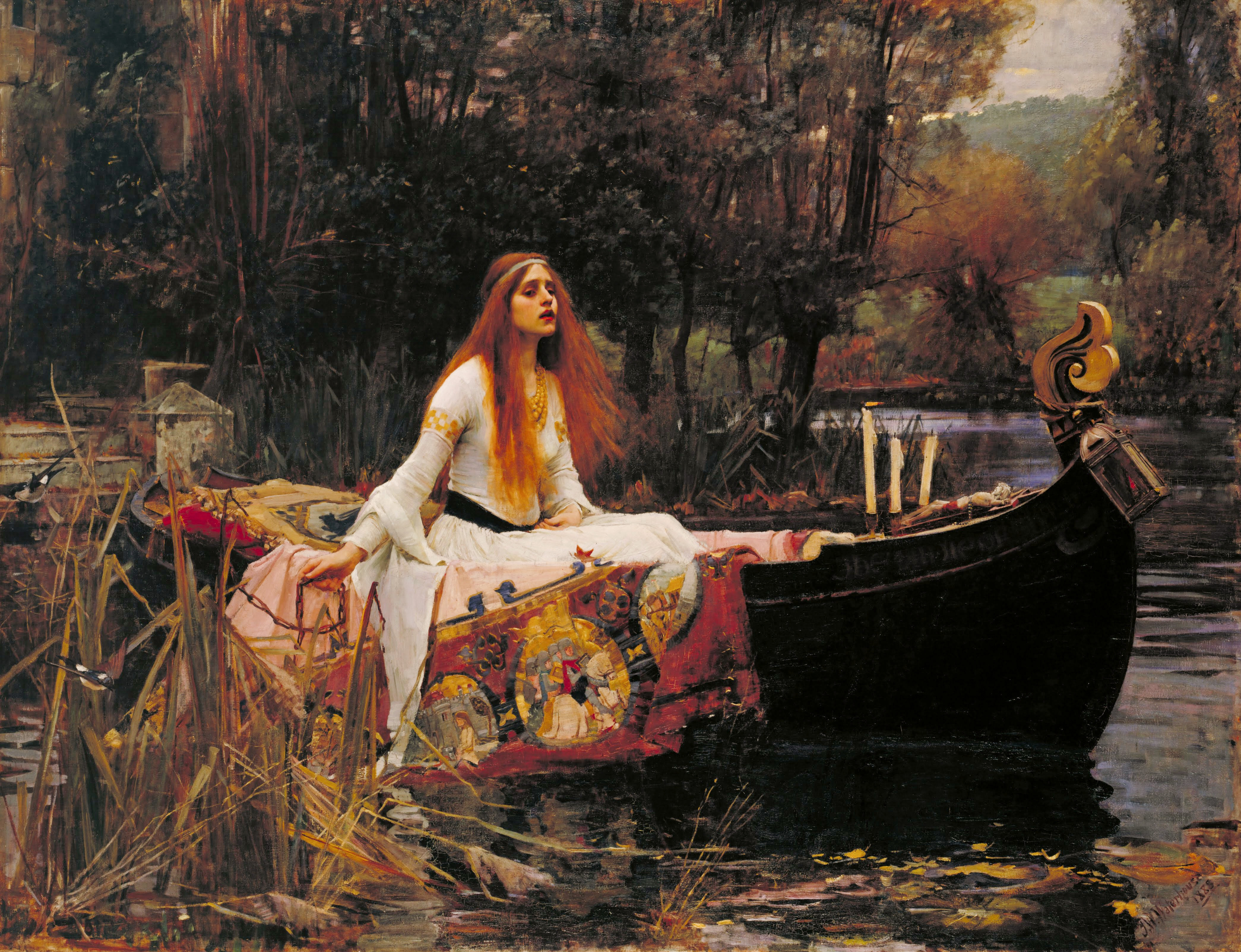
Week Theme - The Lady of Shalott by John William Waterhouse (1888) - May 10 to May 16 of 2020
www.flickr.com/groups/recreatingmasters/discuss/721577142...
Lady of Shalott from:
upload.wikimedia.org/wikipedia/commons/f/fd/John_William_...
Scrapbook textures from:
www.deviantart.com/masterjinn/art/original-scrapbook-text...
These cases take their name from the virgin Roman goddess of fire, home, hearth and family. Usually Vesta was depicted as the fire in her temple. Only Vestals (her priestesses) were allowed into her temple. Her association with fire made her name the natural choice for British companies who manufactured matches.
“Most women I know are priestesses and healers, although many don't know it yet, and some never will. We are all of us sisters of a mysterious order.”
~ Marianne Williamson, A Woman's Worth
Antaya Veil with pearls "Florence" with HUD colors
Available at We <3 Role-Play - A Shopping Event for Role-Players
Event Location ~ maps.secondlife.com/secondlife/Riverhunt/157/185/1502
Flickr: www.flickr.com/groups/weloveroleplay/
Antaya Gown Hilda @ main Store
Store Location:
maps.secondlife.com/secondlife/Kaleidoscope%20Island/170/...
:: ANTAYA :: Flickr: www.flickr.com/photos/antaya/
:: ANTAYA :: store Flickr: www.flickr.com/groups/antaya-store/
Chamomile by ChicChica
@ Main Store
Cars cannot be brought onto the island.
The Ile de Sein was mentioned by the Roman geographer Pomponius Mela.
"According to Breton legend, Île de Sein was once home to a group of virgin druid priestesses called the Gallizenae. They are said to have had the power to predict the future, to calm the winds, and to take the forms of different animals."
Crataegus monogyna, known as common hawthorn, oneseed hawthorn, or single-seeded hawthorn, is a species of flowering plant in the rose family Rosaceae. It is native to Europe, northwestern Africa and West Asia, but has been introduced in many other parts of the world.
Other common names include may, mayblossom, maythorn, quickthorn, whitethorn, motherdie, and haw.
This species is one of several that have been referred to as Crataegus oxyacantha, a name that has been rejected by the botanical community as too ambiguous. In 1793, Medikus published the name C. apiifolia for a European hawthorn now included in C. monogyna, but that name is illegitimate under the rules of botanical nomenclature
Mythology and folklore of hawthorn.
In Gaelic this thorny shrub is known as sgitheach. Thomas the Rhymer, the thirteenth century Scottish mystic and poet met the Faery Queen by a hawthorn from which a cuckoo was calling. She led him into the Faery Underworld for a brief sojourn. Upon reemerging into the world of mortals he found he had been absent for seven years. Similar themes are common in Celtic mythology.
The hawthorn was one of, if not the, most likely tree to be inhabited or protected by the Wee Folk. In Ireland most of the isolated trees, or ‘lone bushes’, in the landscape and said to be inhabited by faeries, were hawthorn trees. Such trees could not be cut damaged in any way without incurring the often fatal wrath of their supernatural guardians. The Faery Queen by her hawthorn can also be seen as a representation of a pre-Christian archetype. She reminds us of a Goddess-centred worship, practised by priestesses in sacred groves of hawthorn. The site of Westminster Abbey was once called Thorney Island after the sacred stand of thorn trees there.
Hawthorn is at its most prominent in the landscape when it blossoms during May. One of the most popular of its many vernacular names is the May-tree. As such, it is the only British plant which is named after the month in which it blooms. ‘Thorn’ it is also the most common tree found in English place names. It is the tree most frequently mentioned in Anglo-Saxon boundary charters. It has many associations with May Day festivities. Though the tree now flowers around the middle of the month, it flowered much nearer the beginning of the month. This was before the introduction of the Gregorian calendar in 1752.
People used the blossoms for garlands. They also cut leafy branches and set them in the ground outside houses. These so-called May bushes were decorated with local wildflowers. Using the blossoms for decorations outside was allowed. But there was a strong taboo against bringing hawthorn into the house. In the early 1980s the Folklore Society’s survey of ‘unlucky’ plants revealed that 23% of the items referred to hawthorn. This was more than twice as many instances as the second most unlucky plant. Across Britain there was the belief that bringing hawthorn blossom into the house would lead to illness and death. Adults would scold hapless children for innocently decorating the home with the flowers.
Medieval folk also asserted that the smell of hawthorn blossom was just like the smell of the Great Plague in London. Botanists later discovered the reason for this. The chemical trimethylamine present in hawthorn blossom is also formed in decaying animal tissue. In the past, when corpses were in the house for several days before burial, people would have been very familiar with the smell of death. So it is hardly surprising that hawthorn blossom was so unwelcome in the house.
It is possible that some hawthorn folklore may have originated for the related Midland hawthorn. The latter tree may well have been commoner during the early Middle Ages. Midland hawthorn blossom gives off much more of an unpleasant scent of death soon after it is cut. It also blooms slightly earlier than hawthorn. Its blossoms would therefore have been more reliably available for May Day celebrations.
In spite of the above taboo, the leaves were eaten and were commonly referred to as bread and cheese. People used the blossom and berries to make wines and jellies. Decoctions of the flowers and leaves were also used to stabilise blood pressure. The strong, close-grained wood is good for carving and people used it for making tool handles and other small household items. Probably its greatest practical use to people has been as hedging.
Britain’s most famous hawthorn is the Holy Thorn of Glastonbury. Legend tells of how Joseph of Arimathea, the uncle of the Virgin Mary, arrived at a hill overlooking Glastonbury Tor. With him were a few disciples and two sacred vessels containing the blood and sweat of Jesus. Where he thrust his staff into the ground it sprouted and grew into a thorn tree. Though the original is obviously not there any more, one of its supposed descendants does still stand on the hill. Other offspring grown from cuttings can be found around Glastonbury and further afield. This particular hawthorn blooms twice a year, once in May and again around Christmas. A sprig of one of these Glastonbury thorns from outside St Johns Church is traditionally sent to the Queen. She is said to decorate her breakfast table with it on Christmas morning.
Part 3 of 3 of my Ancient Egypt series.
The title is known to be given during the Old Kingdom of Egypt, and was at that point very powerful and prestigious. The mummies of the priestesses testify that they were decorated with a religious tattoo, covering the stomach around the area of the uterus. After the Middle Kingdom of Egypt, the title was often irregularly awarded the women of the royal family, typically princesses.
The rise, fall & extinction of the priestesses of Hathor are seen in ancient Egyptian culture. The women who wanted to become socially powerful usually took refuge in religion & took the charge of priesthood.
Ancient Egyptian society took women's empowerment much more loosely than ancient Greece & ancient Rome. There women were given the right to their own property. However, after becoming a priestess, a woman is seen not only as an important figure in ancient Egyptian society, but also a living symbol of divinity.
The priestesses of Hathor were called hm ntr hthr & they were one of the most respected people in Egypt. But After the Middle Kingdom of Egypt, the title was often irregularly awarded only to the women of the royal family, typically princesses. This includes the daughter of Ramesses II. At one time their names were completely erased from history.
Egyptologysts have shown that in early days only women of aristocratic lineage could be appointed to the priesthood of Hathor. They were called Badak-Purohit or God's Consort (Hmt nTr). They performed dances and songs during the sacred rites. Because of their menstruation and ability to give child-birth, they were considered unholy, which is why they could not perform sacred duties like dressing up the sacred image of deity.
Taken at the amazing Alexandria
Thankyou in advance for your support, faves, comments and awards!
I do appreciate you all ❤️
In the territory of the municipalities of Bacoli and Pozzuoli is the archaeological site that housed the ancient Greek colony of Cuma, founded around 740 BC, to which the mythical figure of the Cumaean Sibyl is intimately linked. The famous "Sibyl's Cave" is identified with an artificial gallery in the archaeological site, and is currently the destination of many tourists who are fascinated by the history linked to it.
It is said that kings, great heroes or simple villagers went to this place to obtain answers to large and small dilemmas or simply to know the will of the Gods. The prophecies of the Cumaean Sibyl were in fact considered absolute truth.
The length of the path is 101 meters, while the height of the tunnel reaches 5 meters.
Entering the narrow tunnel leading to the oracle room, you cannot see the end of the path, a sensation that manages to give a sort of sacredness to the mysterious structure.
The cave was discovered in 1932 by the archaeologist Amedeo Maiuri.
The legend
The Sibyl was one of the young virgin priestesses of the god Apollo. Legend has it that the latter fell in love with the beautiful Sibyl and promised her to fulfill any wish she had in exchange for her eternal loyalty. The Sibyl took a pile of sand with her hands and asked for as many years of life as the grains collected were. Apollo accepted granting her wish and she in exchange spent her life in the cave of Cumae, becoming the oracle that gives responses to the faithful of the God Apollo. The girl neglected, however, to ask the god also for her eternal youth and so she became older than her every day, until she disappeared. However, her voice remained eternal, that she continued to spread the oracles.
The first to speak of this magical and legendary place was the great Latin poet Virgil; in the sixth book of the Aeneid the author tells of the meeting of Aeneas and the Sibyl and the descent into hell that Virgil places in the nearby Lake of Avernus.
Thankyou so much Mo and Aphrissa for dancing under the moon with me. These two ladies are honestly so sweet and so funny, to give you an idea...We were discussing the differences between moderate and adult ratings and Mo starts listing all of the activities that could possibly be considered adult...ALL OF THEM!...hahahaha. Not quite so much priestesses as giggling girlies. Blessed are those who have such sisters under the moon.
Photo location is Reality Escape
A spectacular aboriginal granary of collective character. This site is located on a high escarpment of the Montaña del Gallego and was built by the ancient Canary Islanders more than 800 years ago, taking advantage of the geological conditions of the volcanic cone. In it, and with the help of stone picks, they opened more than 350 cavities, which are arranged in several levels and were used for the storage of cereals and other foodstuffs.
The strategic nature of this site makes it an authentic natural fortress, unnoticed from the outside and located on an almost vertical mountain wall.
The term "cenobio" obeys to a false idea that the silos or chambers of the site were the rooms of a sort of convent where the young women of the noble class were secluded until they got married, under the care of the harimaguadas or priestesses of great social and religious influence, now completely discarded.
Cuesta de Silva, Santa María de Guía, Gran Canaria, Islas Canarias
"Dawn intrudes the High Priestesses chambers casting long shadows, the peaceful awakening rocked by the screech of a hungry new arrival"
Dress: [The Forge] Minerva Dress, Black / Gold, Ebody Waifu
Addons:
Horns: [Cubic Cherry] {Moon Child} horns
Wings: -AxisMundi-Lucifer Wings -2020
Halo: AZARAN - ZARA'S HALO
Model: Stella Fiorani
Photographer: Stella Fiorani
Location: Sunny's Photo Studio
maps.secondlife.com/secondlife/Sunny%20Photo%20Studio/128...
Backdrop: "Merlin"
Pose Customized in Black Dragon
I don’t just wear the Gundula Necklace by AngelicUS — I summon it. This isn’t mere adornment. It’s an heirloom of shadowed sanctity, born from centuries of devotion and rebellion.
️ Design:
Each detail is deliberate: baroque filigree twisted like cathedral spires, forged in burnished antique gold with accents of oxidized silver, evoking the sacred treasures of medieval reliquaries. A central medallion, edged in symbolic thorns, rests like a guardian over your heart—adorned with teardrop garnets echoing sacred bloodstones once believed to hold protective powers. Fine draped chains fall like whispers of rosary beads, drawing the eye downward in reverence and awe.
⛪ Historic Inspiration:
Named "Gundula" — a Germanic name tied to early medieval saints and battle maidens—the piece reflects the duality of feminine grace and power. Its form is inspired by Christian medieval reliquaries, once used to hold sacred relics and worn as both spiritual armor and status symbol. These ornate pieces were handcrafted by monastic artisans, commissioned by nobility who saw jewelry not just as decoration, but as divine protection.
Gothic Subculture Appeal:
Fast-forward to the post-punk 1980s, when a new generation reclaimed religious iconography and gave it a darker beauty. The Gothic subculture embraced crosses, veils, and rosaries—not in mockery, but in tribute to a haunting aesthetic, a yearning for romantic sorrow, for beauty wrapped in melancholy. The Gundula Necklace is born from this lineage. It’s worn today by fashion’s priestesses: the Margiela-masked muse, the Berlin club goddess, the nocturnal artist cloaked in velvet.
💍 Why I Wear It;
The Gundula Necklace speaks of faith — not in dogma, but in the power of identity, history, and rebellion. It’s a relic for the modern mystic, a piece that honors the past while subverting it. I wear it with high-neck lace, bare shoulders, or structured coats that sweep like cassocks. It doesn’t whisper — it *chants*.
✨ The Gundula Necklace by AngelicUS is exclusively available at the SWANK Celebration of Color Event. Come witness its ritual of beauty.
🔗 [Taxi to SWANK](maps.secondlife.com/secondlife/Swank%20Events/128/124/38)
Ticket costs US$ 3.34
Ramses III’s magnificent memorial temple of Medinat Habu, fronted by sleepy Kom Lolah village and backed by the Theban mountains, is one of the west bank's most underrated sites. This was one of the first places in Thebes closely associated with the local god Amun. At its height, Medinat Habu contained temples, storage rooms, workshops, administrative buildings, a royal palace and accommodation for priests and officials. It was the centre of the economic life of Thebes for centuries.
Although the complex is most famous for the funerary temple built by Ramses III, Hatshepsut and Tuthmosis III also constructed buildings here. They were later added to and altered by a succession of rulers through to the Ptolemies. When the pagan cults were banned, it became an important Christian centre, and was still inhabited as late as the 9th century AD, when a plague was thought to have decimated the town. You can still see the mud-brick remains of the medieval town that gave the site its name (medina means ‘town’ or ‘city’) on top of the enclosure walls.
The original Temple of Amun, built by Hatshepsut and Tuthmosis III, was later completely overshadowed by the enormous Funerary Temple of Ramses III, the dominant feature of Medinat Habu. But a chapel from the Hatshepsut period still stands on the right after you have passed the outer gates.
Ramses III was inspired in the construction of his shrine by the Ramesseum of his illustrious forebear, Ramses II. His own temple and the smaller one dedicated to Amun are both enclosed within the massive outer walls of the complex.
Also just inside, to the left of the gate, are the Tomb Chapels of the Divine Adorers, which were built for the principal priestesses of Amun. Outside the eastern gate, one of only two entrances, was a landing quay for a canal that once connected Medinat Habu with the Nile.
You enter the site through the unique Syrian Gate, a large two-storey building modelled after a Syrian fortress: as with the images of the pharaoh smiting his enemies, this harks back to the famous battles between Egyptians and Hittites, particularly at the time of Ramses II. If you follow the wall to the left, you will find a staircase leading to the upper floors. There is not much to see in the rooms but you’ll get some great views out across the village in front of the temple and over the fields to the south.
The well-preserved first pylon marks the front of the temple proper. Ramses III is portrayed in its reliefs as the victor in several wars. Most famous are the fine reliefs of his victory over the Libyans (whom you can recognise by their long robes, sidelocks and beards). There is also a gruesome scene of scribes tallying the number of enemies killed by counting severed hands and genitals.
To the left of the first court are the remains of the Pharaoh’s Palace; the three rooms at the rear were for the royal harem. There is a window between the first court and the Pharaoh’s Palace known as the Window of Appearances, which allowed the pharaoh to show himself to his subjects.
The reliefs of the second pylon feature Ramses III presenting prisoners of war to Amun and his vulture-goddess wife, Mut. Colonnades and reliefs surround the second court, depicting various religious ceremonies.
If you have time to wander about the extensive ruins around the funerary temple, you will see the remains of an early Christian basilica as well as a small sacred lake and, on the south side of the temple, the outline of the palace and the window, looking into the temple courtyard, where Ramses would appear.
It is a wonderful place to visit, especially in the late afternoon when the light softens and the creamy stone glows.
Deep in the east Varlyrian countryside, far from the bustling canals and thriving cities, lies a wonder of Historica. This shining cathedral is one of several holy sites throughout Varlyrio maintained by an order of Priestesses dedicated to keeping these sacred sites in pristine condition.
A visit to Artemisio with a view to Asklepieion complex and the Sanctuary of Artemis Limnatis.
Museum of Ancient Messini in the Archaeological Site of Ancient Messene.The catalogue of the Museum includes more than 12,000 findings.Nontheless,given the building's restricted space,they are not all exhibited at the same time.
Artemis Limnatis is identified with Lafria,an ancient pre-Hellenic goddess of nature,life and death.Korai statues were votive offerings to deities,mainly goddesses such as Athena and Artemis,and showed off the economic and social status within a polis (city).
Summer 2018
- Archaeological Site & Museum of Ancient Messene - Ithomi - as a cultural and artistic center of the Ancient Hellenistic World -
[comments closed] ... ♥
This is inside the inner chamber of a reconstructed Parthenon. This one is in Nashville, the Athens of the South. Back in the day when the Parthenon was a functioning temple in Greece, scoundrels like me were not allowed into the temple's inner sanctum. Only sanctified priests and priestesses were allowed into the cella of the original Parthenon of the Acropolis of Athens.
Ore yeye o...
In honor of Oshun, and one of Her priestesses who today celebrates 40 years of having Her crowned. Maferefun Ochun. ♥ Oku Odun to my godsister, mentor and friend Elba M.
Credits.
______________
Catwa Catya Head
skin | Egozy . Iman (Brun)
@ MP
makeup | Zibska:
Sharona Catwa Applier - Feb Powder Pack
Woosh [no trans](gold cheek contour) - LTD gift
Nicky (eyeshadow)
hair | Analog Dog - vanessa
glitter | Izzie's - Body Glitter
________________
dress | Una's - Akame long dress red @ lootbox
accessories | Aisling - Mon Bel Amour Gacha pieces
[CX] 4 Sacrosanct Earcuff Gold - previous arcade
________________
particle pretties/lights |
E.V.E Poster Koi Glitter Wave
@ WLRP
**Cole's Corner** Mother Nature Aura
_________________
pose | an lar [poses] The Finnley Series - Four
Volven/Seeress (Germanic)
They are also referred to with many other names meaning "prophetess", "staff bearer", "wise woman" and "sorceress", and they are frequently called witches or priestesses both in early sources and in modern scholarship. (Wikipedia)
The Egyptian Priestess by Daniel Arrhakis (2021)
With the music : Musique mystique égyptienne - Ambiance by Derek and Brandon Fichter, Kevin MacLeod, Dead Can Dance and Diane Arkenstone.
She still remembers when they brought her, she was still a child. Soon she demonstrated that she could see and feel what others could not, and in time she became one of the most important Priestesses of Egypt despite the distrust and envy of the priests of Amun.
However, what she most desired, her freedom, was far from the powers that the Gods had given her ... but in her thinking wrapped in premonitions and visions of the future, she was free ... free to travel in time and in space!
I'm a history buff and sojourner, so Nashville's Parthenon checks off both boxes. It is one of my favorite places to visit and photograph.
Nashville is nicknamed the Athens of the South, and this replica of the Parthenon temple is a reminder of that. According to the dictionary, the Greek word Parthenon means virgin's chamber (as in young unmarried priestesses).
I have visited the original ruins of the Parthenon, which sits on the Acropolis above Athens. Acropolis is a Greek word, acro, meaning sky. This Parthenon imitation does not sit on a fortress mesa touching the sky, but rather it sits in the flat land of Nashville's Centennial Park, near Vanderbilt University. "Centennial" is derived from two Roman language (Latin) root words combined by English speakers in the 18th Century. "Centum," means "one hundred", and the English suffix "-ennial", which comes from the Latin word annus, meaning "year".
Park is from middle English, which in turn comes from Britain's former French-speaking government administrators, parc. The French word is originally Germanic–pferch.
The Parthenon at Centennial Park.
The Colonnade of Amenhotep III has seven pairs of 52 foot (16m) high open-flower papyrus columns, which still support their huge architrave blocks.
The reliefs on the walls of the hall bear the names of Tutankhamun, Horemheb, Seti I, Rameses II and Seti II. Tutankhamun decorated the eastern walls but Horemheb later erased the name of the boy king, and inscribed his own.
There would have been a great procession with musicians, dancers, priests, soldiers, and the chariots of the king. They would have been received at Luxor Temple by the priestesses with flowers and offering. Later in the evening the sacred boats would return home to Karnak.
Tullo Morgagni tomb (1930) by Enzo Bifoli.
The funerary work is dedicated to Tullo Morgagni, editor-in-chief of the "Gazzetta dello Sport" since 1904. He is credited with the invention of the Giro della Lombardia (1905), the Milano-Sanremo (1907) and especially the Giro d'Italia ( 1909). He died at the age of only thirty-eight, in 1919, in a plane crash in Verona.
The marble sculptures represent the vestals: the priestesses of ancient Rome with the task of always keeping alive the sacred fire of the gods inside the temples. In this allegorical depiction they perform the opposite action: the flame of life appears from the palm of their hands, but the six women blow on it, extinguishing it and decreeing death.
Cimitero Monumentale di Milano, Milan, Italy.
Well, it's said ancient Egyptian priestesses wore robes of Flax to testify to their purity. And indeed its pretty small flowers are of the purest light blue - in fact, I think, much purer than the bright, saturated blue ascribed to the Christian Virgin's cloak.
Here's Tree Bumblebee, Bombus hypnorum, about to stick its tongue into a deep throat; bypassing, it would seem, antherine pollen for the sweet stuff deeper still around the ovary. That nectar's got to be the purest of the pure!
Our Bumblebee is hardly as sleepy as its specific, Greek-derived 'hypnorum' sounds. In Older Times pillows were often stuffed with moss to vouchsafe a good sleep. Our Big Bee likes to use old birds' nests, often lined with moss. Hence, it is claimed, that name in Latin; and nests are often built in trees, thus in English...
Quand je mourrai, disperser mes cendres à cultiver un champ de tournesols. Permettez-moi de trouver la paix dans l'ouverture, pour le soleil et rien de plus.
No flower can lift spirits quite like sunflowers can. Bright and cheery, bold yet comfortable, the sunflower is a warm and caring gift. With brilliant yellow petals that surround the flower's center, sunflowers have an unmistakable sun-like appearance that has made them a passionate flower choice for many. Sunflowers come in a number of varieties, ranging from small to large and from daylight yellows to sunset reds.
Sunflowers originated in the Americas in 1000 B.C., where for centuries they were cultivated as a valuable source providing oil and food. And perhaps this unique combination of striking beauty and utility is, in part, why sunflowers have appeared as such revered symbols throughout the ages. The use of sunflower images as religious symbols has also been documented in some native societies.
It’s said that the natives of the Inca Empire worshipped a giant sunflower, and that Incan priestesses wore large sunflower disks made of gold on their garments. Images of sunflowers were found in the temples of the Andes mountains, and Native American Indians placed bowls of sunflower seeds on the graves of their dead.
With the European exploration of the New World, the sunflower was brought to new areas, and the flower's popularity eventually spread as the rest of the world began to appreciate its beauty and sustenance. Artists throughout history have appreciated the sunflower’s unique splendor, and those of the Impressionist era were especially fixated on the flower. Today, sunflowers continue to provide a resource for commonly used seeds and oil, but they have also become recognized as a floral symbol of great significance.
Much of the meaning of sunflowers stems from its namesake, the sun itself. Wild sunflowers are often photographed with their tall stalks and bright petals stretched towards the sun. This unique behavior, known as phototropism, is a motif that has appeared in many ancient myths and is viewed as a symbol of loyalty and constancy.
The physical resemblance of their open face to the sun has also influenced their meanings. The sunflower’s petals have been likened to bright yellow rays of sunshine, which evoke feelings of warmth and happiness. In addition, the sunflower is often associated with adoration and longevity.
For a flower which reflects so many of the sun's positive characteristics, it is little surprise that people enjoy basking in the sunflower’s warming glow. With the sense of brightness and warmth that sunflowers naturally impart, they have become an ideal choice for sending sentiments of cheerfulness and sunny thoughts.
Built under the Roman Republic, the House of the Vestals and Temple were forbidden to any person, except the King and priestesses.
It was rebuilt after the fire under Nero in 64 AD
Six priestesses, the Vestals, were in charge of the cult of Vesta, the goddess of earth, fire and hearth. They should maintain the sacred fire - on an altar in the cella of the temple - which should never be extinguished, because it symbolized the continuity of the city of Rome.
Court held inside the building, 61 m wide by 20 m, with three pools, whose statues surrounding the date of the third century AD
-
it.wikipedia.org/wiki/Casa_delle_Vestali
-
©2014 François de Nodrest / Pantchoa - All rights reserved.
© Please don't use this image on websites, blogs or other media without my explicit permission
A breach of copyright has legal consequences
Tell me a story
Of some place pink and stormy
Wildly unworldly
Note- this is actually an Ermine moth, Genus Yponomeuta (and a challenge to you to pronounce that word without looking it up). Apparently it is too difficult to definitively get to species "even with genital examination," according to Wikipedia, so I'll settle for genus.
These cases take their name from the virgin Roman goddess of fire, home, hearth and family. Usually Vesta was depicted as the fire in her temple. Only Vestals (her priestesses) were allowed into her temple. Her association with fire made her name the natural choice for British companies who manufactured matches.
He was a well loved and highly respected king when alive “in body”.
So, to honor him, his people buried his body without his head in a hidden sacred location, known only to the high priests and priestesses, where the high noon day sun would shine brightly on his buried remains.
They, with great reverence, had carefully removed his head prior to burial preparation and burial using a sacred and secret process to shrink it. Then, it was charred to prevent deterioration.
Before their king’s head was removed, a lock of his golden blond hair was cut off and preserved to mount on the shrunken head. The rest of his hair was buried with the body.
Removing a head, shrinking it, and charring it are part of a holy and delicate process and ceremony. Therefore, this all had to be done by the high priests and priestesses.
Once the head was ready, it was mounted and adorned. On the front of the head’s mount was placed a hand hammered gold breast plate and a gold ball to represent the sun.
You see, these people believe that when a King dies, his spirit reunites with the Sun and his energy and the energy of all the kings before and after him fuel the Sun’s heat and light and prevented it from burning out.
“Great Goddess, Mother of the Dark, grant me the blood of my enemies for drink and their living hearts for meat. Grant me the screams of their young for song, grant me the helplessness of their males for my satisfaction, grant me the wealth of their houses for my bed. By this unworthy sacrifice I honor you, Queen of Spiders, and beseech of you the strength to destroy my foes.”
— A secret sacrificial prayer in Abyssal known only to high priestesses
Taken for Tarinfell Renaissance Fair Contest
Shrines 19-24 photos from the Goshuin Project's list of shrines I collected on my January 8th livestream.
www.youtube.com/live/3OdaGbks8Vg
Goshuin Project is very cool. You visit the Japanese shrines in Second Life collecting free stamps to put in your free stampbook. And some of the artwork is awesome! It runs from December 31, 2024 to January 15, 2025
Since the event officially ended January 15th, some of the shrines no longer have the stamp out. A few do and if you want to grab them while you can: The list of currently participating shrines
goshuinproject.wixsite.com/home/25s1shrine?lang=en
The website about the Goshuin Project
goshuinproject.wixsite.com/home?lang=en
I'm not showing the stamps here because don't want to do a spoiler alert for those who are collecting the Goshuin shrine stamps. Although you can see them during the livestream.
I finished livestreaming visiting the shrines from the Goshuin Project. I'm not sure what I'll livestream in Second Life next. I don't have a set schedule but if you subscribe to my channel, YT will send you a notification when I livestream.
Maybe I'll see you there
Slurls for 19-24 shrines: (note I am including the tp from when I visited on the January 8th. Most are year-round and still exist but a few only existed during the event and may not be there any more)
Mr. Louis Shrine
maps.secondlife.com/secondlife/NANAKIlouisDB/208/167/4005
The landing point is in the store. Look for the cat, shrine and dragon. Sit there and it will tp you to the shrine. There's a free gift at the shrine. Sit on the rooftop dragon and a gift will appear.
IL Micio Shrine
maps.secondlife.com/secondlife/Saengseon/18/70/94
Shiki Shrine
maps.secondlife.com/secondlife/SHIKI%20VILLAGE/188/131/24
I got lucky when I visited. There were a couple of women rping Shinto priestesses and they chanted a blessing at me.
Katsudon Shrine
maps.secondlife.com/secondlife/Ciel/217/205/31
Honpou Inari Shrine
maps.secondlife.com/secondlife/Davros/112/80/30
Umigami Shrine
maps.secondlife.com/secondlife/Poison%20Apple/54/137/1484
My Outfit:
Kimono ChoU Purple by EXiA
Snowflake Earrings by RealEvil Industries
Diamond Snowflake Necklace by Xia's Boutique
Kimono AO Komachi by Kami-Hitoe
[HD]multi bento pose HUD beta v.1.41
FaceLight_1 by Cocoro Lemon
Sasha hair (two-tone) - Monotone by Doe
Margarita Flowers by TRUTH
Bonus Snow Sparkles (for Hair) by Raven Bell
Head Sparkles by Raven Bell
Sparkle Storm by Raven Bell
Grace Eyes by VelvetVue
Karol eyebrow shaper (LeLutka Noel) by amara beauty
Camia face Skin (LELUTKA EVOX) Sunkiss by Guapa
Mesh Body LaraX by Maitreya
Sunkiss skin by Velour
Camila 4.0 mesh head by Lel Evox
Tessa Shape by Wow Skins (heavily modified by me)
.
The 6th Duke of Devonshire visited the sculptor's studio in Milan, Italy, on 12 October 1846 on his way to Naples. He ordered the marble sculpture on 18 October, placing a £60 deposit on the following day. The sculpture was ready to be dispatched to England in April 1847, and the Duke appears to have displayed it in Chiswick House, west of London.
It first came to Chatsworth in 1999 and was shown in the Sculpture Gallery where it appeared in the 2005 film 'Pride and Prejudice', starring Keira Knightley and Matthew Macfadyen.
In Ancient Rome, the Vestals were virgin priestesses whose lives were dedicated to the goddess Vesta. They were tasked to look after the sacred fire burning on her altar in the temple of Vesta, and were regarded as fundamental to the safety of Rome. The discovery of a "House of the Vestals" in Pompeii in the 18th century made Vestals a popular subject matter in art over the following 50 years.
Description given in Chatsworth House brochure.
Sunflowers in October?
Yes, if the orchard owner planted them late- for a Scenic Drive in October!
Orchard Hill Farm, 40.34754501521992, -90.12687354524081
Because of the myth of Clytie and Apollo, the sunflower most commonly means adoration and loyalty. However, sunflower meanings can vary across cultures.
In China, people associate sunflowers with long life, good fortune, and vitality.
To Native American groups, sunflowers represented harvest, bounty, and provision because they provided seeds, pigment, and more.
The sunflower’s yellow color symbolizes vitality, intelligence, and happiness. The color yellow also traditionally symbolizes friendship.
Sunflowers also symbolize worship and faithfulness in various religions because of their resemblance to the sun, which is associated with spiritual knowledge and the desire to seek light and truth.
The Incas used sunflowers to symbolize the Sun God, and brought them to temples for worship. The priestesses also wore sunflowers on their garments and as crowns.
The Garden Courtyard at the House of the Vestal Virgins.
This palace, situated at the foot of Palatine Hill, was the residence of the Vestal Virgins. The 'Vestali' were the six (or perhaps seven) priestesses responsible for safeguarding the sacred flame and sacred objects at the nearby Temple of Vesta. Known in Latin as the Atrium Vestae, this palace was built around an elongated courtyard with two pools.
A number of statues of the Vestals have survived and have been placed in the courtyard.
Rome; July, 2019
(Panorama Stitched from 2 Images captured with a Sony A6500)
For Temple of Vesta, see:- flic.kr/p/2mXexN2
The Morrigan (also known as the Morrigu) was the shape-shifting Celtic Goddess of War, Fate and Death. She also presided over rivers, lakes and fresh water, in addition to being the patroness of revenge, night, magic, prophecy, priestesses and witches.
Bloodleaf shrine lies near the edges of the mighty forests of Avalonia, built in honour of a famous elf warrior who fell there centuries ago, fighting in the first drow wars. It is said that when his blood stained the heath, the undergrowth grew up and strangled his foes. The area is famed for the red heath that now grows around the shrine, which has been used by the priests and priestesses there to make their special incense, which they burn day and night in the shrine’s braziers. Researchers from Kaliphlin’s University of Petraea have long been interested in the healing properties of these and other herbs that grow around the shrine. Medical lecturer Dishan Rubati and her centaur research assistant were already deep in study there when the plague struck Avalonia. As refugees from the surrounding villages began to arrive, they used what they had learnt so far to start producing not only healing pastes and potions, but also disinfectant from the volatile plant oils.
Sonnenblumen***Sunflowers
If you have no garden, get you some in the vase :)
Bereits die Azteken verehrten die Sonnenblume. Als Zeichen dieser Verehrung wurden die Priesterinnen ihrer Sonnentempel mit Sonnenblumen gekrönt.
Already, the Aztecs worshipped the sunflower. As a sign of this devotion, the priestesses of their Temple of the Sun with sunflowers were crowned.
The frescoes in this beautiful hall on the first floor of the Palazzo dei Conservatori depict key events from the history of ancient Rome. They were painted by Cavalier d'Arpino (Giuseppe Cesari) at the end of the 16th and beginning of 17th Centuries.
The room is named for the fresco painting of 'The Battle between Horatii and Curiatii' which can be seen on the left here. A fresco of 'The Finding of the She-Wolf with Romolus and Remus', depicting the founding myth of Rome, is at the far end here. A bronze statue of Pope Innocent X by Alessandro Algardi is below.
The fresco on the right is 'Numa Pompilius Institutes the Cult of the Vestals'; the Vestal Virgins were priestesses who were responsible for maintaining Rome's sacred fire.
Musei Capitolini, Rome; July 2019
(This image is a panorama stitch of 2 Images
captured with a Sony RX100VA. *)
* There are flaws in the rendering of the ceiling and floor in this panorama stitch. I do like that it conveys a better sense of the room than the adjacent single capture image ( flic.kr/p/2neDeq7 ).
7 Days with Flickr - Friday: #Flora
This #Sunflower spent all its spring- and summer time in a Wild Garden in Wales to grow up high into the air but did not show a bud at all. Meanwhile it is approx. 2.5 meters high and developed a tiny bud which is slowly opening now – “Better Late Than Never”
For the Aztecs the sunflower was an object of worship, that’s why they crowned the priestesses of the sun temple with sunflowers.
Panasonic DMC-FZ200
ƒ/3.2
100.5 mm
1/125
ISO 100
Dedicated to C.F. (ILYWAMHASAM)
Hagia Triada Sarcophagus (1370-1300 BC.) - Archeological museum of Heraklion - Crete
Il sarcofago in pietra calcarea raffigura delle cerimonie rituali in onore del defunto e scene associate a credenze sull'aldilà.
Le scene sono dipinte su intonaco con la tecnica dell'affresco.
Sul lato lungo, a destra, l'uomo morto è rappresentato con una lunga tunica di fronte a un edificio, forse la sua tomba, mentre riceve l'offerta di una barca e di animali. Le sacerdotesse accompagnate da una lira, versano le libagioni in un vaso, tra le colonne sormontate da doppie asce, sulle quali sono posati uccelli che simboleggiano la presenza della divinità.
Nell'altro altro lato lungo è rappresentato il sacrificio di un toro L'animale sacrificato è steso su un tavolo, il sacrificio è accompagnato da un suonatore di doppio flauto e da una sacerdotessa che porta le offerte sull'altare.
Sui due lati stretti sono raffigurate dee in carri trainati da cavalli e grifoni (o capre selvatiche) e una processione di uomini.
Il sarcofago è stato rinvenuto in una tomba di forma rettangolare ed apparteneva ad un sovrano che dopo la sua morte, come le immagini raccontano, è stato splendidamente onorato con una cerimonia sontuosa da sacerdoti e dèi sulla terra e nell'aldilà.
Limestone sarcophagus depicting ritual cerimonies in honour of the dead and trascendental scenes associated with afterlife beliefs regarding the deceased.
the scenes are painted on plaster using the fresco technique.
On the long side, on the right, the dead man is depicted wearing a long tunic in front of a building, perhaps his tomb. He receiving offerings of a boat and animals. On the left priestesses accompanied by a lyre are pouring libations into a bucket between columns surmonted by double axes, on wich perch birds symbolising the presence of the deity.
On the other long side is a bull sacrifice. The animal trussed to a table, is being sacrificed to the accompaniment of a double flute and offerings by a priestess at an altar, in front of a sanctuary crowned with horns of consecration and enclosing a tree. Between the sanctuary and the tree is a pole with a double axe, on which sits a bird indicating the epiphany of the deity.
on the two narrow sides are depicted goddesses in chariots drawn by griffins and horses (or wild goats) and a procession of men.
The sarcophagus was found in a rectangular built tomb and belonged to a ruler who, as the images narrate, was splendidly honoured after his dead by the palatial priesthood and the gods on earth and in the hereafter.
I went to a Buddhist initiation ceremony in San Mateo, California, where five women where ordained to be priestesses. This is the part where the master hands over the gown to the disciple. The disciples studied at the Eimei University, which teaches the Shingon School of Mikkyo.
I processed a soft and a photographic HDR photo from a RAW exposure, merged them selectively, carefully adjusted the color balance and curves, added some sepia, and reduced the color saturation to give the scene a classic look. I welcome and appreciate constructive comments.
Thank you for visiting - ♡ with gratitude! Fave if you like it, add comments below, like the Facebook page, order beautiful HDR prints at qualityHDR.com.
-- ƒ/1.2, 50 mm, 1/250 sec, ISO 200, Sony A7 II, Canon 50mm f0.95, HDR, 1 RAW exposure, _DSC0241_hdr1sof2pho1d.jpg
-- CC BY-NC-SA 4.0, © Peter Thoeny, Quality HDR Photography
These are the remains of the round temple dedicated to Vesta, the Roman goddess of home and family,
Despite its relatively small size the Temple of Vesta was important because it contained Rome's most sacred objects and Vesta's sacred fire within a circular chamber. Only the Pontifex Maximus, the high priest of Rome, and the vestal virgins were allowed in the temple.
It was believed Vesta's holy fire had to be maintained to ensure Rome's safety and prosperity. There were between two to six Vestal Virgins at different historical periods. These priestesses were responsible for maintaining the sacred flame and lived in a house nearby*.
Vesta's sacred flame was maintained until 394 AD, by then Christianity had eclipsed the older Roman pagan beliefs.
In the Foro Romano, Rome; July 2019
* Link to House of the Vestal Virgins:- flic.kr/p/2mX988j
Bereits die Azteken verehrten die Sonnenblume. Als Zeichen dieser Verehrung wurden die Priesterinnen in ihren Sonnentempeln mit Sonnenblumen gekrönt.
Spanische Seefahrer brachten die Sonnenblume mit nach Europa.
Already the Aztecs worshiped the sunflower. As a sign of devotion the priestesses were crowned in their sun temple with sunflowers.
Spanish sailors brought the sunflower to Europe.
Sonnenblume
Sunflower
According to classical authors, the Gallizenae (or Gallisenae) were virgin priestesses of the Île de Sein off Pointe du Raz, Finistère, western Brittany.
A panoramic shot (4 images) taken from the Île de Sein. In the background you can see the small silhouette of the Pointe du Raz (another mythic place in French Brittany).
©️ Please do not use any images on your site without my permission.