View allAll Photos Tagged Parables
A Buddhist parable
Two Buddhist Monks were on a journey, when they reached a raging river. On the river bank stood a young lady, who needed to cross the river. One of the monks picked up the woman and carried her across the river, and set her down. Then, the two monks travelled on in silence. After a while, the other monk said angrily: “How could you carry her like that? You know we aren’t supposed to touch women." The monk replied, "I left her at the river a long way back. Why are you still carrying her?"
The past is over, it cannot be changed. Let painful experiences teach you a lesson or two, and then let go of them.
Have a happy 2012!
Btw: if you have a moment, listen to this song:
www.youtube.com/watch?v=7726Wu9kDj0
“Aven Ivenda” - Goran Bregovic –voice: Vaska Jankovska
or, a parable on what man believes he is owed:
The date and location of this tale have been lost to time, as they were never of great significance once reflected upon by its narrators. Whatever designation this settlement bore would have been ascribed in an effort to bring a merrier emanation to an otherwise unremarkable place, and thus is, too, inconsequential. What is retained and recounted with every retelling, however, is the ambience of that same municipality, in which the crucial events transpire.
Denizens of the town thrived not, neither did they have occasion to want. All that was theirs was enough, only enough. Harvests supplied every man, woman and youngling with the nutrients they required to collect another harvest. The proper implement for any task was always at hand. There was unmistakable peace to be had, but nary a soul could be heard to suggest there was no room for betterment.
The isolated territory was primed to erupt. The people, afforded unwaning harmony, wanted all the same. Some prayed for fortune. Fewer still sought it beyond their comfortable borders, but would hastily return, unaccustomed to the trials of travel. And so there they remained, dissatisfied in their facility.
It was on the evening of October that saw the sun set slowest, that the Peddler appeared to them.
A vast quantity of the community hurriedly barred itself in the tavern upon noticing a newcomer in their midst. The stranger had an uncanny presence; some remarked the air did not change when the figure passed by, as it aught to have, as with any regular person, and it was the conjecture of the more superstitious of their lot that submitted this Peddler was not of the mortal plane.
The Peddler waited patiently outside the tavern. It was hours hence that the citizens decided they would assuredly go mad from trepidation, unless they confronted their visitor.
“A deceiver!” one of the elders warned, as the barricade was removed. “Mind what foul utterances will ensue!”
The bravest of their number prompted the Peddler to divulge what aids could be anticipated.
“Wares,” the Peddler trickled. “Only the essentials; only that which has been bestowed unto this celestial body to be rightfully earned and spent by man.”
This seemed reasonable enough to many of the townsfolk. Yet the cautious elder was insistent.
“Spices may mask the taste of rancid meats, but never their effects! Heed all of what your new friend’s words entail!”
Conflicted, most were a trifle too perturbed, despite the Peddler’s soothing affirmations, to make any requests. Just one man, upon the first night, confided in the Peddler his grievances.
“We maintain all that ensures our health, my wife and I, but our labors that beget stability are what have robbed her of the mirth she once could manage. Such was why I was drawn to her, years ago.”
“The noblest of aspirations,” gushed the Peddler. “To long for prosperity of the heart, not the body alone. What creature dares to refute that the diligent and the burdened deserve happiness? Indeed, I shall alleviate you.”
The following morning, it was noted by both the man and his neighbors that his wife, characteristically pensive and dejected, was changed. To use a word like “chipper” would be a disservice to her overflowing spirit.
“When, my compatriots,” she proposed genially for all to hear, “did we cease to count our blessings? Our satisfaction should be derived not from abundance or adventure!”
Rumor circulated that the Peddler had played a part in this pleasant metamorphosis. Soon, at every corner, throngs awaited the apparent miracle-worker. But it was only those sequestered in their homes, or tending their crops by themselves, that would have a chance at conversing with this entity.
The encounters would be spread shortly afterward. A mason’s son, who was lame, had asked the Peddler for a talent that which could be admired and held in reverence.
The Peddler then babbled, “You desire a purpose. Partaking in a craft, what might benefit more than your own self. This, I may certainly grant.”
Another sun set and rose, and the boy, now able and confident, had forged an assortment of swords and suits of armor so pristine that they should be envied by the most lauded of smiths.
The populace had among them an acclaimed teacher, her years dedicated to texts and tables. “Alas,” she imparted to the Peddler, “even the thanks I receive cannot distract me from this deep-rooted craving. What I would not give, to recall a childhood that was so joyous in its unknowing.”
The Peddler’s approval cascaded. “Deeds of selflessness and devotion so numerous, that ignorance seems a boon. Any man caught uttering that his younger days are of little meaning to him, best he be scorned for such denial. If it is a return to wonderment you grasp at, all the world would concur, it was yours to have all along.”
As good as the Peddler’s word, the teacher could once again drum up memories that had brought fleeting delight then, but now, were rapturous in quality to her. Her love for life was of a magnitude anew.
The doubting elder hung their head. “What think you all the Peddler’s remittance to be, in return for these gifts?”
“The Peddler insists upon no payment!” a woman cried. “What has been allotted is natural and indisputable. Who should attempt to contest these dues we are at last privy to?!”
The elder was silenced once more. Before the month had passed, nearly the entirety of the village had offered their entreaties to the Peddler, who never failed to be impressed and humbled by these modest pleas. The mayor’s proposal in particular was relayed with the utmost discretion. He and his wife had wished for a child, but it would be a daughter that was raised in their household, not the son the mayor had always envisioned.
“The trouble,” the mayor timorously explained, “is that we only have the means to support one- that is to say, we could not keep fed another mouth with what our land provides, nor educate another mind with time we cannot find. If you were to but increase the season’s harvest only slightly…”
“That is not what you are owed,” dribbled the Peddler. “Sustenance for a belly what is not yet realized? What you should expect is offspring that honors your commitment. No parent is meant to suffer their legacy overthrown by the very flesh and will they have sacrificed so much for. What your toil and worry will bear, come daybreak, is security. The perfect child you were entitled to all these years.”
With all the elation that accompanied the Peddler’s charity, on the thirty-first of October, the elder too gave way to the pressure that had only intensified with their exclusion.
“I denounced you, fearing my people, in their lack of worldliness, would be susceptible to your lavish agreeance, your imposture, and so they have!”
The Peddler was quiet, knowing one more supplication was nearing.
The elder now begged. “I can no longer uphold my pretense of exuding respect. If they cannot listen to me, please, let them at least hold me in esteem. May they remember I shepherded them to tranquility, lest they forget the precise words I spoke.”
“How correct you are,” spewed the Peddler, in victory. “Nowhere is it written a man must take to heart another’s philosophy. It is, howbeit, your prerogative to be dealt acclaim equal to the good you have put forth in your long life. An unappreciated existence is such an unforgivable tragedy.”
The elder departed in shame for their own frailty, but in smugness as well, certain that those who would grow discontent with the Peddler’s offerings would finally recognize the advice they had so quickly brushed aside.
“Rejoice!” the Peddler’s voice surged, as the sun fell. “Be glad in all your cognizance for what is truly yours; that in your collective humility, you have not overstepped the bounds instituted by man nor deity.”
That night, the residents would, unreservedly, be made aware of how their demands had informed their characters. They would begin to question their hastily-made grabs for ease when they beheld their cherished schoolteacher forgo her duties in favor of reliving moments from her past that quashed responsibility and reality, going so far as to instruct her pupils to likewise abandon practices of logic and preparation.
Appalled eyes would witness, in the dying light, the mason’s son, who had attained his newfound prowess with no tribulation, be dragged through and stoned in the streets, having instilled enormous envy in his peers, mockeries made of their endeavors to reach the same degree of skill.
The man, whose wife was given limitless jubilation for her condition, was wrought with grief when he came to realize she herself could not mourn the atrocities unfolding in their midst. She capered through the boy’s blood in the dust, and her husband wept for her.
It was the wail of the mayor’s wife that shook the mortified assembly most of all, sounding more akin to the baying of a stricken hound. Her sanity was severed when discovering her child was not hers, not in soul. Individuality was sapped from this body parading as her son; it was not but the manifestation of her and the mayor’s own partialities and traits. The mayor was harrowed by the absence of free will he had produced.
In seeking one who could be given the blame, the elder was exempt, for the citizens could now only view their leader and all their decisions as sage. As the elder had made dealings with the Peddler also, it was accepted in the end that all that had befallen them was righteous. Blindness to death and pursuits of pleasure over maturity were praised from then on. Lives continued, and nothing was learned. Had the people wished for vengeance, it would have mattered not.
The Peddler had already moved on to the next town that wanted.
The Parable of the Hidden Treasure
“The kingdom of heaven is like treasure hidden in a field, which a man found and covered up. Then in his joy he goes and sells all that he has and buys that field" - Matthew 13:44
When you receive God’s truth into your heart, God renews your mind (Rom. 12:2) and enables you to think wisely. This helps you make right decisions and experience the guidance of God day by day. God in His loving providence directs us and prepares the path for us. Augustine said, “Trust the past to the mercy of God, the present to His love, and the future to His providence.” But King David said it better long before Augustine: “You will show me the path of life; in Your presence is fullness of joy; at Your right hand are pleasures forevermore” (Ps. 16:11, NKJV).1 If you are willing to do God’s will, you will have God’s guidance (John 7:17), but if you treat God’s will like a buffet lunch, choosing only what pleases you, He will never direct you. As I’ve said before, the will of God isn’t for the curious; it’s for the serious.
Warren W. Wiersbe, Be Skillful (“Be” Commentary Series; Wheaton, IL: Victor Books, 1996), 42
Shot with a Graflex Crown Graphic
Schneider 90 mm f/6.8 Angulon lens (red (25) filter)
"The Mummy" 400 film (Fomapan 400)
Shot at EI 400 (filter corrected)
Developed in the Ego Lab using T-Max (1:4, 6:05min at 75F, agitated first and each minute)
Scanned on an Epson V850
"Jesus said to the Pharisees: ‘There was a rich man who used to dress in purple and fine linen and feast magnificently every day. And at his gate there lay a poor man called Lazarus, covered with sores, who longed to fill himself with the scraps that fell from the rich man’s table. Dogs even came and licked his sores. Now the poor man died and was carried away by the angels to the bosom of Abraham. The rich man also died and was buried.
‘In his torment in Hades he looked up and saw Abraham a long way off with Lazarus in his bosom. So he cried out, “Father Abraham, pity me and send Lazarus to dip the tip of his finger in water and cool my tongue, for I am in agony in these flames.” “My son,” Abraham replied “remember that during your life good things came your way, just as bad things came the way of Lazarus. Now he is being comforted here while you are in agony. But that is not all: between us and you a great gulf has been fixed, to stop anyone, if he wanted to, crossing from our side to yours, and to stop any crossing from your side to ours.”
‘The rich man replied, “Father, I beg you then to send Lazarus to my father’s house, since I have five brothers, to give them warning so that they do not come to this place of torment too.” “They have Moses and the prophets,” said Abraham “let them listen to them.” “Ah no, father Abraham,” said the rich man “but if someone comes to them from the dead, they will repent.” Then Abraham said to him, “If they will not listen either to Moses or to the prophets, they will"
– Luke 16:19-31, which is today's Gospel for the 26th Sunday in Ordinary Time.
Stained glass window from Most Holy Redeemer church in Detroit.
Franz Kafka - The Great Wall of China
Translated and edited by Malcolm Pasley
Penguin Classics, 2002
Cover Photo © Jacob Sutton; stylist Gary Card
Every body with talent hits rough spots emotionally when the mind considers moving to a new arena and hiding that talent in the ground. The parable speaks of using our talents and multiplying them for the Master.
Question: When Satin is working on you to give up all you love, where do you turn?
"No follower of mine wanders in the dark; he shall have the light of life." John 8:12
"For with you is the fountain of life, and in your light we see light" Psalm 36:10
"At all times bless the Lord God, and ask him to make all your paths straight and to grant success to all your endeavors and plans." Tobit 4:19
"A person's character is defined by the kinds of challenges he cannot walk away from and by those he has walked away from that cause him remorse -" Arthur Miller
Please check out the comments on this Explore'd fine foto of my friend Tatyveli at
www.flickr.com/photos/tatyveli/2651357296 Like each of us humans, she greatly needs your prayers and maybe a well wish during her crisis in recapturing a MUSE.
______________
www.brainyquote.com/quotes/authors/m/mark_twain.html
Mark Twain , USA Philosophizing Writer Quotes
Born November 30, 1835; Died April 21, 1910
Wrinkles should merely indicate where smiles have been.
You can't depend on your eyes when your imagination is out of focus.
Patriot: the person who can holler the loudest without knowing what he is hollering about.
Patriotism is supporting your country all the time, and your government when it deserves it.
Truth is the most valuable thing we have. Let us economize it.
EXPLORE # 161 on Thursday, July 10, 2008; # 171 on 07-09-2008
The Parable of the Weeds. Matthew 13
24 Jesus told them another parable: “The kingdom of heaven is like a man who sowed good seed in his field. 25 But while everyone was sleeping, his enemy came and sowed weeds among the wheat, and went away. 26 When the wheat sprouted and formed heads, then the weeds also appeared.
27 “The owner’s servants came to him and said, ‘Sir, didn’t you sow good seed in your field? Where then did the weeds come from?’
28 “‘An enemy did this,’ he replied.
“The servants asked him, ‘Do you want us to go and pull them up?’
29 “‘No,’ he answered, ‘because while you are pulling the weeds, you may uproot the wheat with them. 30 Let both grow together until the harvest. At that time I will tell the harvesters: First collect the weeds and tie them in bundles to be burned; then gather the wheat and bring it into my barn.’”
-------------------------------------------------------------------------------------
STAY AWAKE.
Short Meaning:
Be aware of beauty in the world around you.
Not So Short Meaning:
There are these two young fish swimming along and they happen to meet an older fish swimming the other way, who nods at them and says "Morning, boys. How's the water?" And the two young fish swim on for a bit, and then eventually one of them looks over at the other and goes "What the hell is water?"
And If You Have 5 Minutes To Kill:
Transcription of the 2005 Kenyon Commencement Address By David Foster Wallace
- May 21, 2005
(If anybody feels like perspiring [cough], I'd advise you to go ahead, because I'm sure going to. In fact I'm gonna [mumbles while pulling up his gown and taking out a handkerchief from his pocket].) Greetings ["parents"?] and congratulations to Kenyon's graduating class of 2005. There are these two young fish swimming along and they happen to meet an older fish swimming the other way, who nods at them and says "Morning, boys. How's the water?" And the two young fish swim on for a bit, and then eventually one of them looks over at the other and goes "What the hell is water?"
This is a standard requirement of US commencement speeches, the deployment of didactic little parable-ish stories. The story ["thing"] turns out to be one of the better, less bullshitty conventions of the genre, but if you're worried that I plan to present myself here as the wise, older fish explaining what water is to you younger fish, please don't be. I am not the wise old fish. The point of the fish story is merely that the most obvious, important realities are often the ones that are hardest to see and talk about. Stated as an English sentence, of course, this is just a banal platitude, but the fact is that in the day to day trenches of adult existence, banal platitudes can have a life or death importance, or so I wish to suggest to you on this dry and lovely morning.
Of course the main requirement of speeches like this is that I'm supposed to talk about your liberal arts education's meaning, to try to explain why the degree you are about to receive has actual human value instead of just a material payoff. So let's talk about the single most pervasive cliché in the commencement speech genre, which is that a liberal arts education is not so much about filling you up with knowledge as it is about quote teaching you how to think. If you're like me as a student, you've never liked hearing this, and you tend to feel a bit insulted by the claim that you needed anybody to teach you how to think, since the fact that you even got admitted to a college this good seems like proof that you already know how to think. But I'm going to posit to you that the liberal arts cliché turns out not to be insulting at all, because the really significant education in thinking that we're supposed to get in a place like this isn't really about the capacity to think, but rather about the choice of what to think about. If your total freedom of choice regarding what to think about seems too obvious to waste time discussing, I'd ask you to think about fish and water, and to bracket for just a few minutes your skepticism about the value of the totally obvious.
Here's another didactic little story. There are these two guys sitting together in a bar in the remote Alaskan wilderness. One of the guys is religious, the other is an atheist, and the two are arguing about the existence of God with that special intensity that comes after about the fourth beer. And the atheist says: "Look, it's not like I don't have actual reasons for not believing in God. It's not like I haven't ever experimented with the whole God and prayer thing. Just last month I got caught away from the camp in that terrible blizzard, and I was totally lost and I couldn't see a thing, and it was fifty below, and so I tried it: I fell to my knees in the snow and cried out 'Oh, God, if there is a God, I'm lost in this blizzard, and I'm gonna die if you don't help me.'" And now, in the bar, the religious guy looks at the atheist all puzzled. "Well then you must believe now," he says, "After all, here you are, alive." The atheist just rolls his eyes. "No, man, all that was was a couple Eskimos happened to come wandering by and showed me the way back to camp."
It's easy to run this story through kind of a standard liberal arts analysis: the exact same experience can mean two totally different things to two different people, given those people's two different belief templates and two different ways of constructing meaning from experience. Because we prize tolerance and diversity of belief, nowhere in our liberal arts analysis do we want to claim that one guy's interpretation is true and the other guy's is false or bad. Which is fine, except we also never end up talking about just where these individual templates and beliefs come from. Meaning, where they come from INSIDE the two guys. As if a person's most basic orientation toward the world, and the meaning of his experience were somehow just hard-wired, like height or shoe-size; or automatically absorbed from the culture, like language. As if how we construct meaning were not actually a matter of personal, intentional choice. Plus, there's the whole matter of arrogance. The nonreligious guy is so totally certain in his dismissal of the possibility that the passing Eskimos had anything to do with his prayer for help. True, there are plenty of religious people who seem arrogant and certain of their own interpretations, too. They're probably even more repulsive than atheists, at least to most of us. But religious dogmatists' problem is exactly the same as the story's unbeliever: blind certainty, a close-mindedness that amounts to an imprisonment so total that the prisoner doesn't even know he's locked up.
The point here is that I think this is one part of what teaching me how to think is really supposed to mean. To be just a little less arrogant. To have just a little critical awareness about myself and my certainties. Because a huge percentage of the stuff that I tend to be automatically certain of is, it turns out, totally wrong and deluded. I have learned this the hard way, as I predict you graduates will, too.
Here is just one example of the total wrongness of something I tend to be automatically sure of: everything in my own immediate experience supports my deep belief that I am the absolute center of the universe; the realest, most vivid and important person in existence. We rarely think about this sort of natural, basic self-centeredness because it's so socially repulsive. But it's pretty much the same for all of us. It is our default setting, hard-wired into our boards at birth. Think about it: there is no experience you have had that you are not the absolute center of. The world as you experience it is there in front of YOU or behind YOU, to the left or right of YOU, on YOUR TV or YOUR monitor. And so on. Other people's thoughts and feelings have to be communicated to you somehow, but your own are so immediate, urgent, real.
Please don't worry that I'm getting ready to lecture you about compassion or other-directedness or all the so-called virtues. This is not a matter of virtue. It's a matter of my choosing to do the work of somehow altering or getting free of my natural, hard-wired default setting which is to be deeply and literally self-centered and to see and interpret everything through this lens of self. People who can adjust their natural default setting this way are often described as being "well-adjusted", which I suggest to you is not an accidental term.
Given the triumphant academic setting here, an obvious question is how much of this work of adjusting our default setting involves actual knowledge or intellect. This question gets very tricky. Probably the most dangerous thing about an academic education -- least in my own case -- is that it enables my tendency to over-intellectualize stuff, to get lost in abstract argument inside my head, instead of simply paying attention to what is going on right in front of me, paying attention to what is going on inside me.
As I'm sure you guys know by now, it is extremely difficult to stay alert and attentive, instead of getting hypnotized by the constant monologue inside your own head (may be happening right now). Twenty years after my own graduation, I have come gradually to understand that the liberal arts cliché about teaching you how to think is actually shorthand for a much deeper, more serious idea: learning how to think really means learning how to exercise some control over how and what you think. It means being conscious and aware enough to choose what you pay attention to and to choose how you construct meaning from experience. Because if you cannot exercise this kind of choice in adult life, you will be totally hosed. Think of the old cliché about quote the mind being an excellent servant but a terrible master.
This, like many clichés, so lame and unexciting on the surface, actually expresses a great and terrible truth. It is not the least bit coincidental that adults who commit suicide with firearms almost always shoot themselves in: the head. They shoot the terrible master. And the truth is that most of these suicides are actually dead long before they pull the trigger.
And I submit that this is what the real, no bullshit value of your liberal arts education is supposed to be about: how to keep from going through your comfortable, prosperous, respectable adult life dead, unconscious, a slave to your head and to your natural default setting of being uniquely, completely, imperially alone day in and day out. That may sound like hyperbole, or abstract nonsense. Let's get concrete. The plain fact is that you graduating seniors do not yet have any clue what "day in day out" really means. There happen to be whole, large parts of adult American life that nobody talks about in commencement speeches. One such part involves boredom, routine, and petty frustration. The parents and older folks here will know all too well what I'm talking about.
By way of example, let's say it's an average adult day, and you get up in the morning, go to your challenging, white-collar, college-graduate job, and you work hard for eight or ten hours, and at the end of the day you're tired and somewhat stressed and all you want is to go home and have a good supper and maybe unwind for an hour, and then hit the sack early because, of course, you have to get up the next day and do it all again. But then you remember there's no food at home. You haven't had time to shop this week because of your challenging job, and so now after work you have to get in your car and drive to the supermarket. It's the end of the work day and the traffic is apt to be: very bad. So getting to the store takes way longer than it should, and when you finally get there, the supermarket is very crowded, because of course it's the time of day when all the other people with jobs also try to squeeze in some grocery shopping. And the store is hideously lit and infused with soul-killing muzak or corporate pop and it's pretty much the last place you want to be but you can't just get in and quickly out; you have to wander all over the huge, over-lit store's confusing aisles to find the stuff you want and you have to maneuver your junky cart through all these other tired, hurried people with carts (et cetera, et cetera, cutting stuff out because this is a long ceremony) and eventually you get all your supper supplies, except now it turns out there aren't enough check-out lanes open even though it's the end-of-the-day rush. So the checkout line is incredibly long, which is stupid and infuriating. But you can't take your frustration out on the frantic lady working the register, who is overworked at a job whose daily tedium and meaninglessness surpasses the imagination of any of us here at a prestigious college.
But anyway, you finally get to the checkout line's front, and you pay for your food, and you get told to "Have a nice day" in a voice that is the absolute voice of death. Then you have to take your creepy, flimsy, plastic bags of groceries in your cart with the one crazy wheel that pulls maddeningly to the left, all the way out through the crowded, bumpy, littery parking lot, and then you have to drive all the way home through slow, heavy, SUV-intensive, rush-hour traffic, et cetera et cetera.
Everyone here has done this, of course. But it hasn't yet been part of you graduates' actual life routine, day after week after month after year.
But it will be. And many more dreary, annoying, seemingly meaningless routines besides. But that is not the point. The point is that petty, frustrating crap like this is exactly where the work of choosing is gonna come in. Because the traffic jams and crowded aisles and long checkout lines give me time to think, and if I don't make a conscious decision about how to think and what to pay attention to, I'm gonna be pissed and miserable every time I have to shop. Because my natural default setting is the certainty that situations like this are really all about me. About MY hungriness and MY fatigue and MY desire to just get home, and it's going to seem for all the world like everybody else is just in my way. And who are all these people in my way? And look at how repulsive most of them are, and how stupid and cow-like and dead-eyed and nonhuman they seem in the checkout line, or at how annoying and rude it is that people are talking loudly on cell phones in the middle of the line. And look at how deeply and personally unfair this is.
Or, of course, if I'm in a more socially conscious liberal arts form of my default setting, I can spend time in the end-of-the-day traffic being disgusted about all the huge, stupid, lane-blocking SUV's and Hummers and V-12 pickup trucks, burning their wasteful, selfish, forty-gallon tanks of gas, and I can dwell on the fact that the patriotic or religious bumper-stickers always seem to be on the biggest, most disgustingly selfish vehicles, driven by the ugliest [responding here to loud applause] (this is an example of how NOT to think, though) most disgustingly selfish vehicles, driven by the ugliest, most inconsiderate and aggressive drivers. And I can think about how our children's children will despise us for wasting all the future's fuel, and probably screwing up the climate, and how spoiled and stupid and selfish and disgusting we all are, and how modern consumer society just sucks, and so forth and so on.
You get the idea.
If I choose to think this way in a store and on the freeway, fine. Lots of us do. Except thinking this way tends to be so easy and automatic that it doesn't have to be a choice. It is my natural default setting. It's the automatic way that I experience the boring, frustrating, crowded parts of adult life when I'm operating on the automatic, unconscious belief that I am the center of the world, and that my immediate needs and feelings are what should determine the world's priorities.
The thing is that, of course, there are totally different ways to think about these kinds of situations. In this traffic, all these vehicles stopped and idling in my way, it's not impossible that some of these people in SUV's have been in horrible auto accidents in the past, and now find driving so terrifying that their therapist has all but ordered them to get a huge, heavy SUV so they can feel safe enough to drive. Or that the Hummer that just cut me off is maybe being driven by a father whose little child is hurt or sick in the seat next to him, and he's trying to get this kid to the hospital, and he's in a bigger, more legitimate hurry than I am: it is actually I who am in HIS way.
Or I can choose to force myself to consider the likelihood that everyone else in the supermarket's checkout line is just as bored and frustrated as I am, and that some of these people probably have harder, more tedious and painful lives than I do.
Again, please don't think that I'm giving you moral advice, or that I'm saying you are supposed to think this way, or that anyone expects you to just automatically do it. Because it's hard. It takes will and effort, and if you are like me, some days you won't be able to do it, or you just flat out won't want to.
But most days, if you're aware enough to give yourself a choice, you can choose to look differently at this fat, dead-eyed, over-made-up lady who just screamed at her kid in the checkout line. Maybe she's not usually like this. Maybe she's been up three straight nights holding the hand of a husband who is dying of bone cancer. Or maybe this very lady is the low-wage clerk at the motor vehicle department, who just yesterday helped your spouse resolve a horrific, infuriating, red-tape problem through some small act of bureaucratic kindness. Of course, none of this is likely, but it's also not impossible. It just depends what you what to consider. If you're automatically sure that you know what reality is, and you are operating on your default setting, then you, like me, probably won't consider possibilities that aren't annoying and miserable. But if you really learn how to pay attention, then you will know there are other options. It will actually be within your power to experience a crowded, hot, slow, consumer-hell type situation as not only meaningful, but sacred, on fire with the same force that made the stars: love, fellowship, the mystical oneness of all things deep down.
Not that that mystical stuff is necessarily true. The only thing that's capital-T True is that you get to decide how you're gonna try to see it.
This, I submit, is the freedom of a real education, of learning how to be well-adjusted. You get to consciously decide what has meaning and what doesn't. You get to decide what to worship.
Because here's something else that's weird but true: in the day-to day trenches of adult life, there is actually no such thing as atheism. There is no such thing as not worshipping. Everybody worships. The only choice we get is what to worship. And the compelling reason for maybe choosing some sort of god or spiritual-type thing to worship -- be it JC or Allah, bet it YHWH or the Wiccan Mother Goddess, or the Four Noble Truths, or some inviolable set of ethical principles -- is that pretty much anything else you worship will eat you alive. If you worship money and things, if they are where you tap real meaning in life, then you will never have enough, never feel you have enough. It's the truth. Worship your body and beauty and sexual allure and you will always feel ugly. And when time and age start showing, you will die a million deaths before they finally grieve you. On one level, we all know this stuff already. It's been codified as myths, proverbs, clichés, epigrams, parables; the skeleton of every great story. The whole trick is keeping the truth up front in daily consciousness.
Worship power, you will end up feeling weak and afraid, and you will need ever more power over others to numb you to your own fear. Worship your intellect, being seen as smart, you will end up feeling stupid, a fraud, always on the verge of being found out. But the insidious thing about these forms of worship is not that they're evil or sinful, it's that they're unconscious. They are default settings.
They're the kind of worship you just gradually slip into, day after day, getting more and more selective about what you see and how you measure value without ever being fully aware that that's what you're doing.
And the so-called real world will not discourage you from operating on your default settings, because the so-called real world of men and money and power hums merrily along in a pool of fear and anger and frustration and craving and worship of self. Our own present culture has harnessed these forces in ways that have yielded extraordinary wealth and comfort and personal freedom. The freedom all to be lords of our tiny skull-sized kingdoms, alone at the center of all creation. This kind of freedom has much to recommend it. But of course there are all different kinds of freedom, and the kind that is most precious you will not hear much talk about much in the great outside world of wanting and achieving and [unintelligible -- sounds like "displayal"]. The really important kind of freedom involves attention and awareness and discipline, and being able truly to care about other people and to sacrifice for them over and over in myriad petty, unsexy ways every day.
That is real freedom. That is being educated, and understanding how to think. The alternative is unconsciousness, the default setting, the rat race, the constant gnawing sense of having had, and lost, some infinite thing.
I know that this stuff probably doesn't sound fun and breezy or grandly inspirational the way a commencement speech is supposed to sound. What it is, as far as I can see, is the capital-T Truth, with a whole lot of rhetorical niceties stripped away. You are, of course, free to think of it whatever you wish. But please don't just dismiss it as just some finger-wagging Dr. Laura sermon. None of this stuff is really about morality or religion or dogma or big fancy questions of life after death.
The capital-T Truth is about life BEFORE death.
It is about the real value of a real education, which has almost nothing to do with knowledge, and everything to do with simple awareness; awareness of what is so real and essential, so hidden in plain sight all around us, all the time, that we have to keep reminding ourselves over and over:
"This is water."
"This is water."
It is unimaginably hard to do this, to stay conscious and alive in the adult world day in and day out. Which means yet another grand cliché turns out to be true: your education really IS the job of a lifetime. And it commences: now.
I wish you way more than luck.
- David Foster Wallace
“The love of one's country is a splendid thing. But why should love stop at the border?”
~Pablo Casals
"Alright, I've got a solution. This time to make sure we don't get lost, I've employed the help of the Stanley Parable Adventure Line™."
"The tax collectors and the sinners were all seeking the company of Jesus to hear what he had to say, and the Pharisees and the scribes complained. ‘This man’ they said ‘welcomes sinners and eats with them.’ So he spoke this parable to them:
‘A man had two sons. The younger said to his father, “Father, let me have the share of the estate that would come to me.” So the father divided the property between them. A few days later, the younger son got together everything he had and left for a distant country where he squandered his money on a life of debauchery.
‘When he had spent it all, that country experienced a severe famine, and now he began to feel the pinch, so he hired himself out to one of the local inhabitants who put him on his farm to feed the pigs. And he would willingly have filled his belly with the husks the pigs were eating but no one offered him anything. Then he came to his senses and said, “How many of my father’s paid servants have more food than they want, and here am I dying of hunger! I will leave this place and go to my father and say: Father, I have sinned against heaven and against you; I no longer deserve to be called your son; treat me as one of your paid servants.” So he left the place and went back to his father.
‘While he was still a long way off, his father saw him and was moved with pity. He ran to the boy, clasped him in his arms and kissed him tenderly. Then his son said, “Father, I have sinned against heaven and against you. I no longer deserve to be called your son.” But the father said to his servants, “Quick! Bring out the best robe and put it on him; put a ring on his finger and sandals on his feet. Bring the calf we have been fattening, and kill it; we are going to have a feast, a celebration, because this son of mine was dead and has come back to life; he was lost and is found.” And they began to celebrate.
‘Now the elder son was out in the fields, and on his way back, as he drew near the house, he could hear music and dancing. Calling one of the servants he asked what it was all about. “Your brother has come” replied the servant “and your father has killed the calf we had fattened because he has got him back safe and sound.” He was angry then and refused to go in, and his father came out to plead with him; but he answered his father, “Look, all these years I have slaved for you and never once disobeyed your orders, yet you never offered me so much as a kid for me to celebrate with my friends. But, for this son of yours, when he comes back after swallowing up your property – he and his women – you kill the calf we had been fattening.”
‘The father said, “My son, you are with me always and all I have is yours. But it was only right we should celebrate and rejoice, because your brother here was dead and has come to life; he was lost and is found.”’"
– Luke 15:1-3,11-32, which is today's Gospel at Mass (4th Sunday in Lent).
Stained glass of the Prodigal Son from Lille Cathedral.
Igor is paying attention!
I am SO glad I read these apocalyptic novels by Octavia Butler....there are many parallels to our current political and economic realities...Read them!!!!
.
Street Photography, Jungle Style.
Photo No# 2 of 2.
10 kilos of kibble has been delivered to the Head Monk.
More kibble will be delivered to the nuns in a couple days.
Right behind me is the cave you have often seen full of
monkeys and golden statues. This is The Leroy Crews Turf
where all The Hooligans live.This is also where the tourists
come and interact with the naughty monkeys.
Today I'm going to do my best to re-tell a story that was
told to me 20+ years ago by a Thai Monk living in America.
Two monks, one young the other older set out from a temple
located in the lower plains to a special temple high in the
mountains.The trip will be quite long and daunting with many
dangerous and difficult obstacles along the way.
The temple on top of the mountain was special due to housing
a shrine of The Lord Buddha, think of it as a pilgrimage for the
younger monk.
During their journey they came to a wide stream with swift
moving water. Not to deep, maybe no more then up to their
knees but still the current made it treacherous just the same.
When they had finished rolling their robes up and preparing
to step into the water a beautiful young woman appeared and
begged them to help her cross the wide body of water.
Mindful of his vow to have no physical contact with women the
younger monk stubbornly refused any help at all !
The older monk however hoisted the young woman up onto
his back and with obvious enjoyment carried her to the other side
of the fast moving water. Once there she humbly thanked
him and was soon on her way down the trail.
The younger monk and older monk did the same continuing
their journey up a centuries old path towards the ancient temple situated high in the mountains.
The younger monk however was in a dark mood filled with
black humor and disdainful contempt .
Finally he couldn't contain himself any longer and demanded
to know why, in defiance of all propriety, his older companion
had carried the young woman on his back ? !
To which the older monk replied:
"But my dear brother, what is the difference between us ?
As you have been carrying her ever since we left the river."
A Zen parable meant for self reflection, hope you enjoyed ..;-)
Thank You.
Jon&Crew.
Please help with your temple dog donations here.
www.gofundme.com/f/help-for-abandoned-thai-temple-dogs
Please,
No Awards, Invites, Large Logos or Copy an Pastes.
.
NekTar consoles Omni in his distress over everything else
My friend Ed, a poet, shared with me a little parable he wrote for his sons when they were young. It concerned the wonders that arose from an unlikely friendship between a field mouse and a disfigured purple pumpkin with boundless empathy.
I have tried to capture the spirit of them in a couple of illustrations. His story didn't need them, but I needed to try.
"Then he told them a parable: ‘There was once a rich man who, having had a good harvest from his land, thought to himself, “What am I to do? I have not enough room to store my crops.” Then he said, “This is what I will do: I will pull down my barns and build bigger ones, and store all my grain and my goods in them, and I will say to my soul: My soul, you have plenty of good things laid by for many years to come; take things easy, eat, drink, have a good time.” But God said to him, “Fool! This very night the demand will be made for your soul; and this hoard of yours, whose will it be then?” So it is when a man stores up treasure for himself in place of making himself rich in the sight of God.’"
– Luke 12:16-21, which is part of today's Gospel at Mass.
Stained glass detail from the Sainte Chapelle in Paris.
"We’re all familiar with the parable of the Good Samaritan, and the moral of the story is obvious. “Go, and do the same yourself” – Go, and care for those in need, including your enemy. Love your neighbour. But the other half of that famous injunction is that we should love God. And as St John says, we can love God because He has first loved us. So, the Fathers interpreted this Gospel in a Christological way. They noted that we, fallen humanity, are the ones attacked by sin and the Devil, and left to die, deprived of sanctifying grace. And God, in his compassion, comes to us; He who is the Traveller, Jesus Christ the Son. It is Christ who heals the wound of original sin with oil – the sacred chrism with which we’re anointed at baptism. And Christ also heals our soul with the new wine of his Eucharist, a wine that fills us with joy. So by these sacraments of initiation we are restored to grace, and friendship with God. Thus Christ then lifts us up, so setting us on a par with him. So initiated, we are then carried into Christ’s inn of healing, which is the Church. For she, our holy Mother the Church is a refuge for sinners, a hospital for the wounded, a resting place for the weary. As God has shown us such mercy and love, so are we strengthened by grace to love Him with all our heart, and so, to be merciful and loving to our neighbour."
Stained glass of today's Gospel from Old St Paul's church in Baltimore.
Protagonist Parable.
Syllogisme Determinativeness individus structurés debout contre,
Gleichgültigkeit vertreten Arten definieren Gänge Existenz,
realiter in verbis ambiguitatem rationes sacrificiorum,
проникнутые линеаменты неформованные конкретные формы плавления обстоятельства,
ταυτότητας διαλεκτική φυγής αισθήσεις προηγουμένως επουσιώδης απλότητα γραπτή,
عمليات المثقفين توبيخ لأوامر غير مخلوق الحقائق كافية أعرف,
goruchwyliaeth illumined darganfod canfyddiadau gwybodaeth gasgliadau supervenes,
argumenty naturalne wyjaśnienia wielu posiadłości zobaczyć liczne obiekty essence,
spesso implorando di giudizio filosofi distruggendo articoli di corruzione duro,
defekte eksempler acweþan ulike samsvars anført mangel uforanderlige prinsipper holdt,
Касапа приказом маске чудне вештачки утицаји утичу обновљених тема,
fascinates chatalóg saibhreas inspioráid atmaisféar grafach Primeval fondúireachtaí climaxing,
ylläpitäminen luennoi ulotteinen rajoituksia taiteellinen läpinäkyvä svengaava cubist katselua,
megrovása üzenetek lázadó ellenség megjelenését kéri az emésztést zavarba,
愚行は安いサソリの夜に言いようのない苦痛を与え.
Steve.D.Hammond.
Matthew 13:24-43
24 Another parable put he [Jesus] forth unto them, saying, The kingdom of heaven is likened unto a man which sowed good seed in his field: 25 But while men slept, his enemy came and sowed tares among the wheat, and went his way. 26 But when the blade was sprung up, and brought forth fruit, then appeared the tares also. 27 So the servants of the householder came and said unto him, Sir, didst not thou sow good seed in thy field? from whence then hath it tares? 28 He said unto them, An enemy hath done this. The servants said unto him, Wilt thou then that we go and gather them up? 29 But he said, Nay; lest while ye gather up the tares, ye root up also the wheat with them. 30 Let both grow together until the harvest: and in the time of harvest I will say to the reapers, Gather ye together first the tares, and bind them in bundles to burn them: but gather the wheat into my barn. 31 Another parable put he forth unto them, saying, The kingdom of heaven is like to a grain of mustard seed, which a man took, and sowed in his field: 32 Which indeed is the least of all seeds: but when it is grown, it is the greatest among herbs, and becometh a tree, so that the birds of the air come and lodge in the branches thereof. 33 Another parable spake he unto them; The kingdom of heaven is like unto leaven, which a woman took, and hid in three measures F28 of meal, till the whole was leavened. 34 All these things spake Jesus unto the multitude in parables; and without a parable spake he not unto them: 35 That it might be fulfilled which was spoken by the prophet, saying, I will open my mouth in parables; I will utter things which have been kept secret from the foundation of the world. 36 Then Jesus sent the multitude away, and went into the house: and his disciples came unto him, saying, Declare unto us the parable of the tares of the field. 37 He answered and said unto them, He that soweth the good seed is the Son of man; 38 The field is the world; the good seed are the children of the kingdom; but the tares are the children of the wicked one; 39 The enemy that sowed them is the devil; the harvest is the end of the world; and the reapers are the angels. 40 As therefore the tares are gathered and burned in the fire; so shall it be in the end of this world. 41 The Son of man shall send forth his angels, and they shall gather out of his kingdom all things F29 that offend, and them which do iniquity; 42 And shall cast them into a furnace of fire: there shall be wailing and gnashing of teeth. 43 Then shall the righteous shine forth as the sun in the kingdom of their Father. Who hath ears to hear, let him hear.
--------------------------------------------------------------------------------
FOOTNOTES:
F28: measures: the word in the Greek is a measure containing about a peck and a half, wanting a little more than a pint
F29: things...: or, scandals
I like the contrast of this because of the rocky soil below. It reminded me of the parable of the seed and the soil. What kind of ground do I provide for the seed? Will I be able to produce fruit?
"‘While he was still a long way off, his father saw him and was moved with pity. He ran to the boy, clasped him in his arms and kissed him tenderly. Then his son said, “Father, I have sinned against heaven and against you. I no longer deserve to be called your son.” But the father said to his servants, “Quick! Bring out the best robe and put it on him; put a ring on his finger and sandals on his feet. Bring the calf we have been fattening, and kill it; we are going to have a feast, a celebration, because this son of mine was dead and has come back to life; he was lost and is found.” And they began to celebrate." – Luke 15:20-24, which is part of today's Gospel.
Roundel from the Cloisters Museum in New York City.
Lunchtime in the bookshop: food for the body, food for the mind.Revisiting Parable of the Sower by the late, great Octavia Butler (an author I've recommended to so many book browers) in preparation for an online book group I was chairing at the recent third Cymera Festival, a literary science fiction, fantasy and horror festival we started in 2019 in Edinburgh.
Read this years ago, interesting to revisit it: published in the early 90s, the future date it is set in is 2024 onwards, and of course that is rather closer now than when it first came out, while the story and setting is scarily more appropriate now than it was when first written... Quick "still life with book" snapped with the phone on my lunch break.
This reminded me of the parable in the gospel of Matthew about the sower and the seed.Jesus explained that the seed that feel on rocky solid quickly sprouted and grew but since the soil was shallow it quickly withered. Lord let my heart be fertile for your word to take root and grow.
As the wise rabbi in the parable taught his students: until “you can look into the face of another human being and you have enough light in you to recognize your brother or your sister . . . it is night, and darkness is still with us.”...
...Someone once said that “community is the place where the person you least want to live with always lives.” That person who annoys you or who needs too much is always in your community somewhere.
-Spiritual Direction, Henri J. M. Nouwen
My people, hear my teaching;
listen to the words of my mouth.
I will open my mouth with a parable;
I will utter hidden things, things from of old—
things we have heard and known,
things our ancestors have told us.
We will not hide them from their descendants;
we will tell the next generation
the praiseworthy deeds of the Lord,
his power, and the wonders he has done.
[Psalm 78:1-4 NIV]
5 THINGS YOU SHOULD KNOW:
1. Like it or not, we are ALL sinners: As the Scriptures say, “No one is righteous—not even one. No one is truly wise; no one is seeking God. All have turned away; all have become useless. No one does good, not a single one.” (Romans 3:10-12 NLT)
2. The punishment for sin is death: When Adam sinned, sin entered the world. Adam’s sin brought death, so death spread to everyone, for everyone sinned. (Romans 5:12 NLT)
3. Jesus is our only hope: But God showed his great love for us by sending Christ to die for us while we were still sinners. (Romans 5:8 NLT) For the wages of sin is death, but the free gift of God is eternal life through Christ Jesus our Lord. (Romans 6:23 NLT)
4. SALVATION is by GRACE through FAITH in JESUS: God saved you by his grace when you believed. And you can’t take credit for this; it is a gift from God. Salvation is not a reward for the good things we have done, so none of us can boast about it. For we are God’s masterpiece. He has created us anew in Christ Jesus, so we can do the good things he planned for us long ago. (Ephesians 2:8-10 NLT)
5. Accept Jesus and receive eternal life: If you openly declare that Jesus is Lord and believe in your heart that God raised him from the dead, you will be saved. (Romans 10:9 NLT) But to all who believed him and accepted him, he gave the right to become children of God. (John 1:12 NLT) And this is what God has testified: He has given us eternal life, and this life is in his Son. Whoever has the Son has life; whoever does not have God’s Son does not have life. (1 John 5:11-12 NLT)
Read the Bible for yourself. Allow the Lord to speak to you through his Word. YOUR ETERNITY IS AT STAKE!
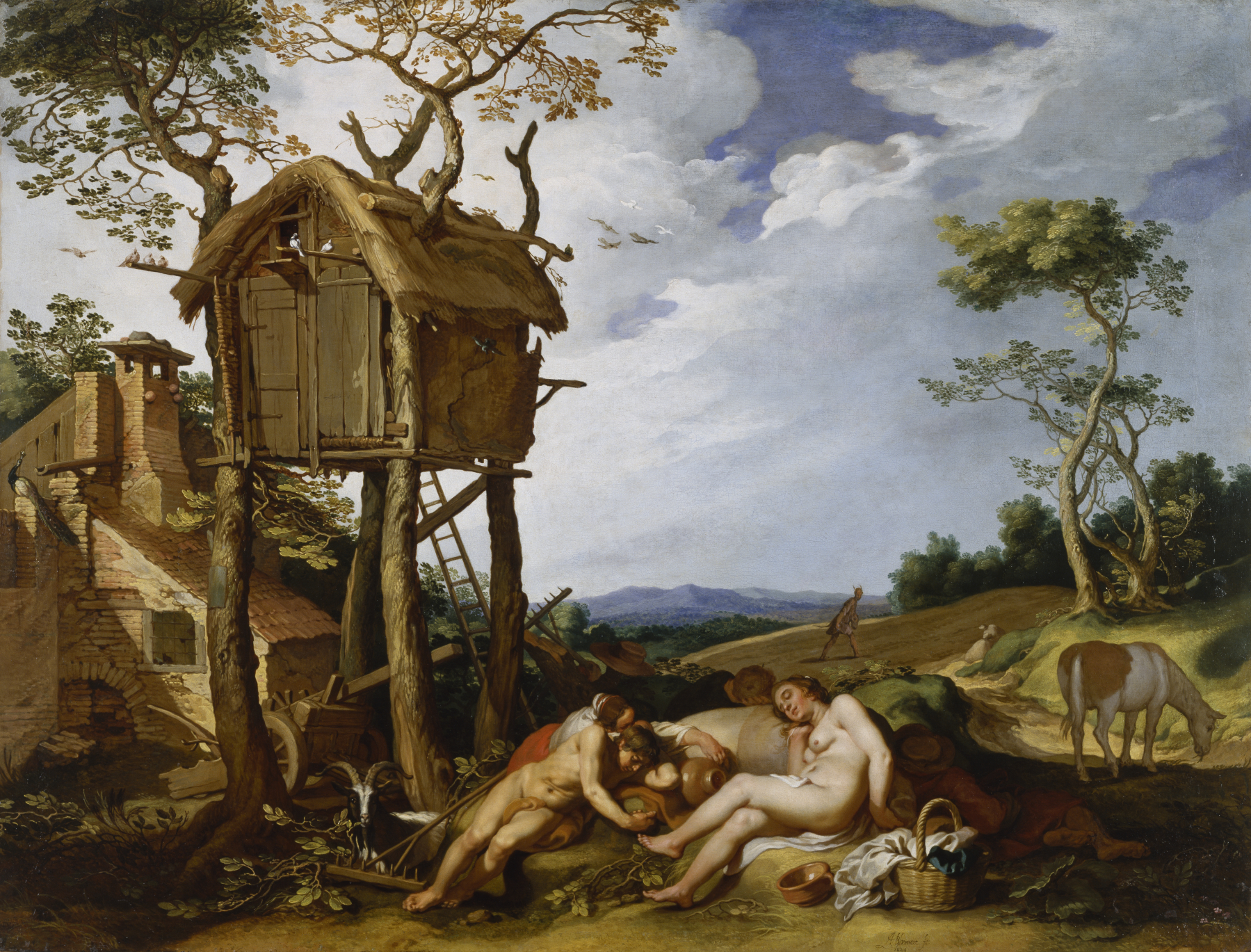
inspiration: upload.wikimedia.org/wikipedia/commons/c/c9/Abraham_Bloem...
I am SO SORRY! I totally forgot the due date for the last theme X_X I've been really busy, but trust me,from now on I will try my hardest to get all my photos in on time!
the 7 deadly sin I chose was "sloth" :D I really like how my pic turned out! hope you like it!
Parable of the Ten Bridesmaids
"Then the Kingdom of Heaven will be like ten bridesmaids who took their lamps and went to meet the bridegroom. Five of them were foolish, and five were wise. The five who were foolish didn’t take enough olive oil for their lamps, but the other five were wise enough to take along extra oil. When the bridegroom was delayed, they all became drowsy and fell asleep.
“At midnight they were roused by the shout, ‘Look, the bridegroom is coming! Come out and meet him!’
“All the bridesmaids got up and prepared their lamps. Then the five foolish ones asked the others, ‘Please give us some of your oil because our lamps are going out.’
“But the others replied, ‘We don’t have enough for all of us. Go to a shop and buy some for yourselves.’
"But while they were gone to buy oil, the bridegroom came. Then those who were ready went in with him to the marriage feast, and the door was locked. Later, when the other five bridesmaids returned, they stood outside, calling, ‘Lord! Lord! Open the door for us!’
“But he called back, ‘Believe me, I don’t know you!’
“So you, too, must keep watch! For you do not know the day or hour of my return.
[Matthew 25:1-13 NLT]
5 THINGS YOU SHOULD KNOW:
1. Like it or not, we are ALL sinners: As the Scriptures say, “No one is righteous—not even one. No one is truly wise; no one is seeking God. All have turned away; all have become useless. No one does good, not a single one.” (Romans 3:10-12 NLT)
2. The punishment for sin is death: When Adam sinned, sin entered the world. Adam’s sin brought death, so death spread to everyone, for everyone sinned. (Romans 5:12 NLT)
3. Jesus is our only hope: But God showed his great love for us by sending Christ to die for us while we were still sinners. (Romans 5:8 NLT) For the wages of sin is death, but the free gift of God is eternal life through Christ Jesus our Lord. (Romans 6:23 NLT)
4. SALVATION is by GRACE through FAITH in JESUS: God saved you by his grace when you believed. And you can’t take credit for this; it is a gift from God. Salvation is not a reward for the good things we have done, so none of us can boast about it. For we are God’s masterpiece. He has created us anew in Christ Jesus, so we can do the good things he planned for us long ago. (Ephesians 2:8-10 NLT)
5. Accept Jesus and receive eternal life: If you openly declare that Jesus is Lord and believe in your heart that God raised him from the dead, you will be saved. (Romans 10:9 NLT) But to all who believed him and accepted him, he gave the right to become children of God. (John 1:12 NLT) And this is what God has testified: He has given us eternal life, and this life is in his Son. Whoever has the Son has life; whoever does not have God’s Son does not have life. (1 John 5:11-12 NLT)
Read the Bible for yourself. Allow the Lord to speak to you through his Word. YOUR ETERNITY IS AT STAKE!
Google No Evil - Stream No Evil - eMail No Evil
The We are Here challenge on January 6 2015 was: Three Wise Monkeys
Lighting: 1 YN-560-III 1/8 right, 1 SB600 1/8 left, wireless triggers.
"‘While he was still a long way off, his father saw him and was moved with pity. He ran to the boy, clasped him in his arms and kissed him tenderly. Then his son said, “Father, I have sinned against heaven and against you. I no longer deserve to be called your son.” But the father said to his servants, “Quick! Bring out the best robe and put it on him; put a ring on his finger and sandals on his feet. Bring the calf we have been fattening, and kill it; we are going to have a feast, a celebration, because this son of mine was dead and has come back to life; he was lost and is found.” And they began to celebrate.
‘Now the elder son was out in the fields, and on his way back, as he drew near the house, he could hear music and dancing. Calling one of the servants he asked what it was all about. “Your brother has come” replied the servant “and your father has killed the calf we had fattened because he has got him back safe and sound.” He was angry then and refused to go in, and his father came out to plead with him; but he answered his father, “Look, all these years I have slaved for you and never once disobeyed your orders, yet you never offered me so much as a kid for me to celebrate with my friends. But, for this son of yours, when he comes back after swallowing up your property – he and his women – you kill the calf we had been fattening.”
‘The father said, “My son, you are with me always and all I have is yours. But it was only right we should celebrate and rejoice, because your brother here was dead and has come to life; he was lost and is found.”
– Luke 15:20-32, which is part of today's Gospel at Mass.
Stained glass window from St Vincent's Archabbey in Latrobe.
" ‘When he had spent it all, that country experienced a severe famine, and now he began to feel the pinch, so he hired himself out to one of the local inhabitants who put him on his farm to feed the pigs. And he would willingly have filled his belly with the husks the pigs were eating but no one offered him anything. Then he came to his senses and said, “How many of my father’s paid servants have more food than they want, and here am I dying of hunger! I will leave this place and go to my father and say: Father, I have sinned against heaven and against you; I no longer deserve to be called your son; treat me as one of your paid servants.” So he left the place and went back to his father."
– Luke 15:14-19, which is part of today's Gospel.
Painting by Pierre Puvis de Chavannes, c.1879.