View allAll Photos Tagged Most
most dogs don't seem to like having baths/showers, but dohlong loves it, he can drink from the tap and when he's clean, he gets more cuddles than usual!
Most of these photos are from an early Sunday morning stroll in the old part of Dresden. It felt like I had the city to myself. What a beautiful city to explore. I started off by checking out the Zwinger - which unfortunately is undergoing a massive garden renovation - bummer. The Nymph's Bath is fascinating but I don't think my wife would let me have a replica of it. The rain moved in so I headed back to the hotel. In the afternoon my wife joined me for wandering in the now crowded old city. Still, what a great day!
I took these photos in mid-October 2023.
While most of this kit is unnecessary (we could have just taken a plastic bag with our picnic in!) navigating through the fallen trees, holly bushes, mud, steep valleys and rivers with a pack on our backs with a few items to be prepared for the unexpected (even if that's the sticks we have to take home!) is all part of the fun for my son and I.
Carrying him back through the undergrowth after we've gone as far as his legs will take him is what makes it a "ruck", rather than simply a walk in the woods.
PDW SHADO Pack with:
Stick!
PDW AO2 Pouch with self assembled First Aid/Trauma kit and another Ru-Titley Marker!
EDCO Panel with:
ITS Tactical Patch (for morale!)
Thyrm Cell Vault with spare batteries
Homemade loop organiser panel with safety whistle, FOURSEVENS Torch, Petzl Headtorch and Oscar Delta Go Tube
PDW SP1 Pouch with my everyday first aid items (patches from Pack Config and Into The Wild)
Another SP1 with Leatherman Bit Kit, Gorilla Tape, homemade fire making kit
Klean Kanteen (beat-up adventuring edition)
Matador Camera Base Layer (currently being tested out)
iPhone 6 with Magpul Case
Snacks inside a metal lunch box compartment
Son's bear cup
Metal lunch box
Baby wipes – so many uses! We get them through Amazon Subscribe and Save which is worth looking into!
Cub Cubs – Cub Ruck (check out my review here) with:
PDW All Terrain, DRB and Lego patch
Cool Elephant zipper pull
Various Carabiners
Not shown, Stealth LT with Pack Config Risk Patch
Visit the original post on Pack Config for more photos and the full post.
The most recent purchase for Smith's was this Scania Irizar Tri Axle. She has been repainted into full fleet livery, and is the first coach to go into full livery. She was an ex Irish bus and as a result had Irish plates, but in her new home of Washington, Tyne and Wear, she wears the plate SM14 THS.
She will operate on corperate hire work, as well as a long haul service to Chesterfield, terminating at Robson's new Chesterfield depot, hence the blind. The service is most likely to run from Newcastle Coach Station, calling at Washington Galleries,and then direct to Chesterfield.
She is seen photographed in the yard today, just awaiting graphics.
JŽ class 661.1 Co-Co diesel-electric locomotive 661.163 (GM/1960) with a freight train passing Zidani Most and crossing the Savinja river on the line towards Zagreb.
This class of locomotive was General Motors model G16 which was exported to a number of countries around the world as well as being built under licence in Australia and Spain. JŽ purchased a total of 218 of them between 1960 and 1972.
28/05/1966 [YUG 127].
Most people never get to see the wonderful detail in the tower that tops the Los Angeles central library. The library has many art deco carvings of literary figures and the tower is topped with brilliantly colored tiles. The torch at the tower's pinnacle represents the light of learning.
The skyscraper in the background is the US Bank Building, which was also known as the Library Tower because the library sold the air rights to its building to provide the skyscraper with a zoning variance to exceed a city height restriction.
Even more awesome if you have handknit socks to wear with them.
Happy early birthday to me! I ordered the shoes weeks ago, and they arrived today! It almost made up for the fact taht I still don't have power after 11 days at my house. Thanks, Ike.
I discovered them thanks to an Austin knitter, Steph, who kindly sent me the link to order them online - you can get them at Journeys. (I ordered mine online.)
Photo taken by Jason with my iPhone.
Most photographers in Cambodia work in parks and local tourist sites.
They use well served old film cameras. During wedding season or festivals photographers can make good profit. Srey Phiep had quiet Sunday today, but she told that 10th of March is salary day for factory workers and the following Sunday business will be good again. She figured out that it is better to work as a photographer than as a factory worker since she can now enjoy the park every day ;-)
Last week, we headed out for our annual boat trip to the San Juan Islands. Just before leaving, I had followed the adventures of a very talented photographer and writer, David Cross, whose work I admire. He faced diversity on a vacation here: Turned out to be appropriate reading before our departure.
We left the docks in Tacoma, headed north, and suffered engine trouble just outside of Edmonds (north of Seattle, a little less than half-way). The good news was that our boat was twin engine design and the problem was with the port engine only, so we could still run. The bad news was that the loss of one engine meant that we could only travel at 1/4 of our normal speed (8 mi/hr instead of 32).
So instead of travelling all the way up to the San Juan Islands, we changed the itinerary to north Sound (Seattle, Bainbridge Island, Shilshole Bay, etc). We stayed in new places and had a great time, instead of lamenting over a minor challenge. We even found beauty in cruising slowly at Trawler speed.
This is Blake Island, after a late rain shower, after dinner and drinks. In the background is a State Parks boat, working late into the evening. The Ranger at Blake is fantastic, and with the budget cuts he deals with, he makes the most of it and runs the place so well.
most viewed today
25 - November 2014
so i put it on my first place of my stream
°°°°°°°°°°°°°°°°°°°°°°°°°°°°°°°°°°°°°°°°°°°°°°°°°^
miniature effect
Spielzeug-Effekt - toytown - tilt-shift -Miniatur
-
Massey Ferguson 362 "Massey Ferguson 362" bulldog
The most impressive of all the boat races of Kerala is the Snake Boat Race, which is commonly referred to as Chundanvallams. The brilliant performance of the rowers portrays the inherent sporting zeal and sportsman spirit of the local inhabitants of the southern state of India Kerala.
Snake boat has got a length of 100 – 120 feet and usually more than a hundred people are on board. Both the ends of the boats are raised from water level. The rear end has a height of about twenty feet from the surface of water. Nearly eighty six persons are rowers, ten to fifteen are to give the rhythm, four are to steer the vessel.
==============================
All my photographs are © Copyrighted and All Rights Reserved
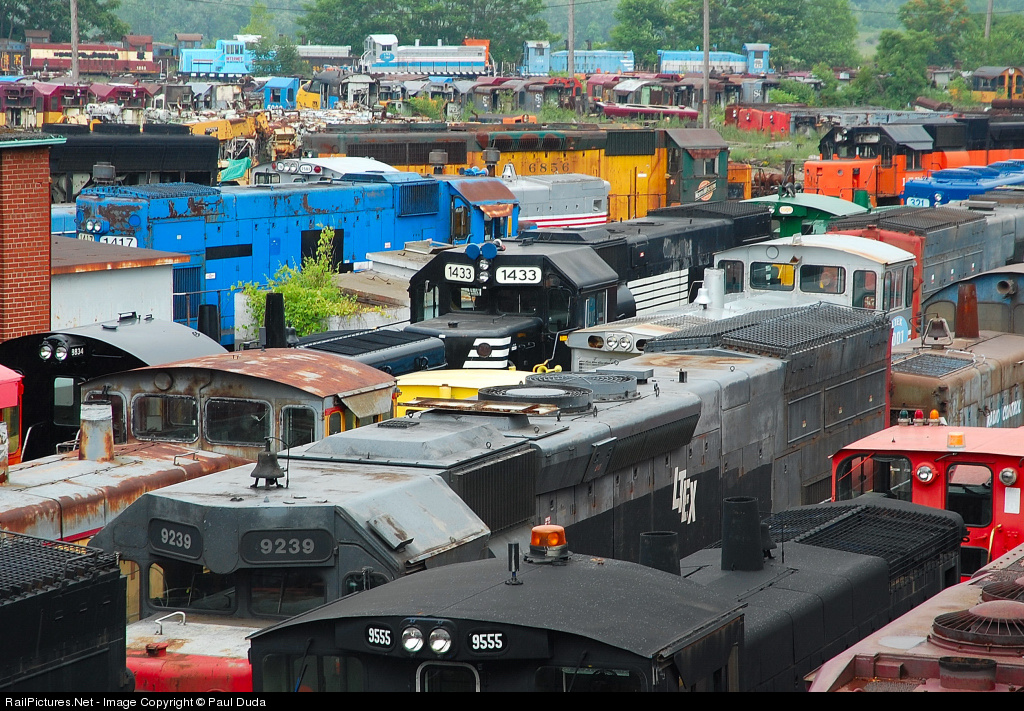
Most US railfans have heard of Larry's Truck and Electric because it is the end of the line for many units and you're guaranteed to see some unique equipment on the property if you go visit. (I've never been.) Larry also rebuilds units and has an extensive lease fleet as well as locos for sale so it's not just a scrap operation. This photo isn't really supposed to be Larry's Truck and Electric, but a tribute opportunity presented itself. I've been going through my collection and thinning the herd so to speak. All the units in this picture are scheduled for recycling. Some are in need of a full rebuild and others are just at their end. At some point, on some scale, we are all Larry's Truck and Electric.
Most of my G4 collection apart from Applejack who has her own shelf ;0), my Glimmer Wings and lots more Blind Bag ponies!
Fortune Most Powerful Women Evening With, April 16, 2014, New York City
Photo Credit: Rebecca Greenfield/Fortune Most Powerful Women
Blouse: Cold Logic ~ Leone
Glasses: Seburo ~ Stylin' Oval
Hair: Truth ~ Genesis
Skin: League ~ Jen (Fair)
Lips: Mirror's Enigma ~ Gula Lip Color
Smile Details:
Edited Shape and turned corners of mouth up slightly, then added a tattoo lipstick with teeth.
» Most views Autumn girl ♡
It was already January but it looked more like October since we still hadn't had any snow and that's quite unusual here. I don't really know how this got so many views as it isn't really more than just an ordinary upload, haha.
» Most faves "I will always remember you..."
Cassie has gotten so much attention this year! :0 I really like how this photo turned out and I'm glad to see that you liked it as well n__n ♥
» Most comments Candy cane world ♥
This photo was pretty hard to take as everything fell - first Melinda, then the candy canes... :D I finally got a good shot and it turned out pretty Christmassy!
» Personal favourite Float away ♡
This photo is pretty different from any other I've ever taken but it's also something I've always wanted to do. I'm scared of my dolls falling into water so I tend to not take photos right next to it... I gained a lot of confidence from doing this so I may actually do something alike this next summer... We'll see! ;)
- - -
Overall this year has been an amazing one! I've met so many wonderful people during 2014 :) I've learned a lot about photographing and gotten my dream camera. I hope 2015 will bring many new exciting things to everyone! n__n ♥
Have a happy new year!
Monte Cristo.
This beautiful restored 19th century mansion is known as Australia’s most haunted house and one of the most haunted houses in the world. Why? Because so many tragedies occurred in the house and some “ten distressed souls” are not yet a peace? Who were they? In 1961 a caretaker was murdered in the house; earlier a maid fell to her death from the balcony; a stable boy was killed in a fire; a boy died falling down the stairs; and the owner’s baby daughter was accidentally dropped down the stairs by a nanny and a pregnant woman died in childbirth in the house. Supposedly the long living mistress of the house, Elizabeth Crawley is another ghost? Is this enough to make a house haunted? There are two houses on the property which began as a pastoral estate by Christopher Crawley who took up his first 840 acres here in 1876. He built a homestead in 1876 which later became the servants’ quarters, kitchen and dairy. Then in 1878 the southern railway to Albury and Melbourne passed through here and the government resumed 80 acres of his lands for a town. At that time Crawley opened the Railway Hotel (now the Junee) by the railway siding. He sold some lands some around the new fledgling township of Jewnee (after an early pastoral estate using a Wiradjuri word) at high prices. The town name was soon changed to Junee. By 1884 Crawley had sold his successful hotel and with the proceeds he built a grand Victorian two storey residence with cast iron lace work on the verandas. He became a gentleman farmer. He had seven children and donated land for the Catholic Church. Christopher Crawley died in 1910 and his wife in 1933. The family lived in the house until 1948. The contents were sold in 1952 and the house left vacant which enticed vandals to almost destroy it. It was purchased with over two acres by the Ryan family in 1963 and they began the difficult task of a full restoration only finishing that in the 1980s.
most consistant surf in scotland
Do not use this image without my permission. © All rights reserved. Brian McStotts
The most winter Olympic gold medals ever by any country .. we had never won a gold medal on home soil before .. GO CANADA GO
AND THANKS TO ALL THE ATHLETES FROM ALL THE COUNTRIES WHO WORKED SO HARD
especially congratulations to the joint winners of the Terry Fox award the Two young women who endured personal tragedies at the Vancouver Olympics, only to press on against seemingly insurmountable odds to win medals, were singled out Saturday as examples of people who embody the best in the human spirit.
That those two medals were both bronze seemed insignificant in a moment of history in which Canadian figure skater Joannie Rochette and Slovenian cross-country skier Petra Majdic gave up nothing to pity and instead inspired others.
www.vancouversun.com/Rochette+Majdic+share+Terry+Award/26...
Most of the ground was covered in snow, but this white-throated sparrow found a clear spot to forage
Looking east.
"Saint Barbara's Church (Czech: Chrám svaté Barbory) is a Roman Catholic church in Kutná Hora (Bohemia) in the style of a cathedral, and is sometimes referred to as the Cathedral of St Barbara (Czech: Katedrála sv. panny Barbory). It is one of the most famous Gothic churches in central Europe and it is a UNESCO world heritage site. St Barbara is the patron saint of miners (among others), which was highly appropriate for a town whose wealth was based entirely upon its silver mines.
Construction began in 1388, but because work on the church was interrupted several times, it was not completed until 1905. The first architect was probably Johann Parler, son of Peter Parler. Work on the building was interrupted for more than 60 years during the Hussite Wars and when work resumed in 1481, Matěj Rejsek, Benedikt Rejt and Mikuláš Parler, assumed responsibility.
The original design was for a much larger church, perhaps twice the size of the present building. Construction, however, depended on the prosperity of the town's silver mines, which became much less productive. So, in 1588, the three-peaked roof had been completed, and a provisional wall was constructed. A little later it was occupied by Jesuits who gradually changed the structure into Baroque style, though parts still remain in Gothic style.
The final process of repair and completion took place at the end of the 19th century, under architects J. Mocker and L. Labler.
Originally there were eight radial chapels with trapezoidal interiors. Later on, the choir was constructed, supported by double-arched flying buttresses.
Internal points of note are the glass windows, altars, pulpits and choir stalls. Medieval frescoes depicting the secular life of the medieval mining town and religious themes have been partially preserved.
Kutná Hora (Czech pronunciation: [ˈkutnaː ˈɦora]; medieval Czech: Hory Kutné; German: Kuttenberg) is a town in the Central Bohemian Region of the Czech Republic. It has about 21,000 inhabitants. The centre of Kutná Hora, including the Sedlec Abbey and its ossuary, was designated a UNESCO World Heritage Site in 1995 because of its outstanding architecture and its influence on subsequent architectural developments in other Central European city centres. Since 1961, the town centre is also protected by law as an urban monument reservation, the fourth largest in the country.
Kutná Hora is located about 52 kilometres (32 mi) east of Prague. The eastern part of the municipal territory lies in a flat agricultural landscape of the Central Elbe Table lowland. The western part lies in the Upper Sázava Hills and includes the highest point of Kutná Hora, the hill Malý Kuklík at 359 m (1,178 ft) above sea level. The Vrchlice Stream flows through the town.
Bohemia (Latin Bohemia, German Böhmen, Polish Czechy) is a region in the west of the Czech Republic. Previously, as a kingdom, they were the center of the Czech Crown. The root of the word Czech probably corresponds to the meaning of man. The Latin equivalent of Bohemia, originally Boiohaemum (literally "land of Battles"), which over time also influenced the names in other languages, is derived from the Celtic tribe of the Boios, who lived in this area from the 4th to the 1st century BC Bohemia on it borders Germany in the west, Austria in the south, Moravia in the east and Poland in the north. Geographically, they are bounded from the north, west and south by a chain of mountains, the highest of which are the Krkonoše Mountains, in which the highest mountain of Bohemia, Sněžka, is also located. The most important rivers are the Elbe and the Vltava, with the fertile Polabean Plain extending around the Elbe. The capital and largest city of Bohemia is Prague, other important cities include, for example, Pilsen, Karlovy Vary, Kladno, Ústí nad Labem, Liberec, Hradec Králové, Pardubice and České Budějovice, Jihlava also lies partly on the historical territory of Bohemia." - info from Wikipedia.
Summer 2019 I did a solo cycling tour across Europe through 12 countries over the course of 3 months. I began my adventure in Edinburgh, Scotland and finished in Florence, Italy cycling 8,816 km. During my trip I took 47,000 photos.
Now on Instagram.
Boston, officially the City of Boston, is the capital and most populous city in the Commonwealth of Massachusetts in the United States. The city serves as the cultural and financial center of the New England region of the Northeastern United States. It has an area of 48.4 sq mi (125 km2) and a population of 675,647 as of the 2020 census, making it the third-largest city in the Northeast after New York City and Philadelphia. The Greater Boston metropolitan statistical area, including and surrounding the city, is the largest in New England and eleventh-largest in the country.
Boston was founded on the Shawmut Peninsula in 1630 by Puritan settlers. The city was named after Boston, Lincolnshire, England. During the American Revolution, Boston was home to several events that proved central to the revolution and subsequent Revolutionary War, including the Boston Massacre (1770), the Boston Tea Party (1773), Paul Revere's Midnight Ride (1775), the Battle of Bunker Hill (1775), and the Siege of Boston (1775–1776). Following American independence from Great Britain, the city continued to play an important role as a port, manufacturing hub, and center for education and culture.
The city expanded significantly beyond the original peninsula by filling in land and annexing neighboring towns. It now attracts many tourists, with Faneuil Hall alone drawing more than 20 million visitors per year. Boston's many firsts include the United States' first public park (Boston Common, 1634), the first public school (Boston Latin School, 1635), and the first subway system (Tremont Street subway, 1897).
Since the nation's founding, Boston has been a national leader in higher education and research. Boston University and Northeastern University are both located within the city, with Boston College located in nearby Chestnut Hill, Massachusetts. Two of the world's most prestigious and consistently highly ranked universities, Harvard University (the nation's oldest university) and the Massachusetts Institute of Technology, are both located in neighboring Cambridge, Massachusetts.
Boston has emerged as the largest biotechnology hub in the world. The city is also a national leader in scientific research, law, medicine, engineering, and business. With nearly 5,000 startup companies, the city is considered a global pioneer in innovation and entrepreneurship, and more recently in artificial intelligence. Boston's economy also includes finance, professional and business services, information technology, and government activities. Households in the city claim the highest average rate of philanthropy in the United States. Furthermore, Boston's businesses and institutions rank among the top in the country overall for environmental sustainability and new investment.
Credit for the data above is given to the following website:
© All Rights Reserved - you may not use this image in any form without my prior permission.
Most Likely Beach False Foxglove (Agalinis fasciculata (Elliott)Raf.) - Trail to the observation deck, Black Point Drive, Merritt Island National Wildlife Refuge, Titusville, Florida
But I could be wrong, so I'll be checkin' with the professionals to confirm the ID.
Plantae Tracheophyta Magnoliopsida Lamiales Orobanchaceae Agalinis
Most times we're unaware of the very beauty of life that exists right before our eyes. Yes the flower above is beautiful but overlooked by many because it is the flower of a Sweet Potato.
Playa de la Concha (in English: "Shell Beach"), the city’s most famous sandy shore with the Hotel Londres on the left, San Sebastián (Donostia), Basque region, Spain
Some background information:
San Sebastián is a coastal city and municipality located in the Basque Autonomous Community in northeastern Spain. The city’s Basque name is Donostia, but in spite of appearances, both the Basque form Donostia and the Spanish form San Sebastián have the same meaning of Saint Sebastian. The city lies on the Bay of Biscay, 20 km (12 miles) from the French border. It is the capital of the province of Gipuzkoa. The city’s population is about 190,000 while its metropolitan area has about 450,000 residents. Locals call themselves donostiarra (singular), both in Spanish and Basque.
The main economic activities are commerce and tourism. Despite the city's small size, events such as the San Sebastián International Film Festival have given it an international dimension. In 2016, San Sebastián was the European Capital of Culture, along with Wrocław, Poland. The city is surrounded by easily accessible hilly areas, sits at the mouth of the river Urumea and has three main beaches, which make it a popular seaside resort: Playa de la Concha, Playa de Ondarreta and Playa de la Zurriola.
In 2018, the first one, Playa de la Concha, which you can see on this picture, was even elected Europe’s best beach by customers of the popular travel portal tripadvisor.com. Well, the way I see it, it may be one of Europe’s most beautiful city beaches. But to be honest, I cannot fully understand the result of that election. In my opinion, electing it Europe’s best beach just shows that many travellers on tripadvisor.com have absolutely no idea, as they never leave the beaten tourist tracks. However, if you don’t leave them, you’ll never be able to find Europe’s real best beaches with regard to wideness, neatness, beauty of scenery, development, seclusion and parking spaces free of charge.
San Sebastián is thought to have been in the territory of the Varduli in Roman times, but its name appears first in the Middle Ages. In 1014, the monastery of St. Sebastián was donated to the Abbey of Leire by King Sancho III of Pamplona. In 1181, the town was chartered by King Sancho VI of Pamplona, having jurisdiction over all the territory between the rivers Oria and Bidasoa.
In 1200, the city was conquered by Castile, whose king Alfonso VIII, confirmed its charter. However, the Kingdom of Navarre was deprived of its main direct access out to the sea. Perhaps as soon as 1204, the city’s nucleus at the foot of Mount Urgull started to be populated with Gascon-speaking colonizers from the city of Bayonne and beyond, who left an important imprint in San Sebastián’s identity in the centuries to come.
In 1265, the use of the city as a seaport was granted to Navarre as part of a wedding pact. The large quantity of Gascons inhabiting the town favoured the development of trade with other European ports and Gascony. The city steered clear of the destructive War of the Bands in Gipuzkoa, the only town in doing so in that territory. In fact, the town only joined Gipuzkoa in 1459 after the war had come to an end.
Up to the 16th century, San Sebastián remained mostly out of wars, but by the beginning of the 15th century, a line of walls of simple construction is attested encircling the town. The last chapter of the town in the Middle Ages was brought about by a fire that devastated almost all buildings in 1489. After burning to the ground, the town began a new renaissance by being rebuilt mainly with stone instead of bare timber.
The early 16th century brought a period of instability and war for the city. New state boundaries were drawn that left San Sebastián located close to Spain's border with France. Thicker and more sophisticated walls were erected while the town became involved in the military campaigns between 1521 and 1524 that formed part of the Spanish conquest of Navarre. The town provided critical naval help to Emperor Charles V during the siege of Hondarribia and also aided the monarch by sending a party to the Battle of Noain. Meanwhile, the climate of war and disease left the town in a poor condition that drove many fishermen and traders to take to the sea as corsairs as a way of getting a living.
In 1656, the city was used as the royal headquarters during the marriage of the Infanta to Louis XIV (resp. the Sun King) at Saint-Jean-de-Luz nearby. After a relatively peaceful 17th century, the town was besieged and taken over by the troops of the French Duke of Berwick up to 1721. However, San Sebastián was not spared by shelling in the French assault and many urban structures had to be reconstructed.
In 1808, Napoleonic forces captured San Sebastián in the Peninsular War. In 1813, after a siege of various weeks, a landing party from a British Royal Navy squadron captured Santa Clara Island in the bay. Situated on a narrow promontory that jutted out into the sea between the waters of the Bay of Biscay and the broad estuary of the Urumea River, the town was hard to get at and well fortified. Three days later, British and Portuguese troops besieging San Sebastián assaulted the town. The relieving troops ransacked and burnt the city to the ground while only the street at the foot of the hill remained.
The liberal and bourgeois San Sebastián became the capital of Gipuzkoa until 1823. When absolutists assailed the town in 1854, it was again designated as the capital city. In 1863, the defensive walls of the town were demolished and an expansion of the town began in an attempt to escape the military function it had previously held. The new city was modeled according to an orthogonal shape much in a neoclassical Parisian style, and elegant buildings were designed, like the Miramar Palace or the Concha Promenade. The city was chosen by the Spanish monarchy as a summer retreat, following the French example of nearby Biarritz. Subsequently, also the Spanish nobility and the diplomatic corps opened residences.
In 1887, the Casino was erected, which eventually turned into the current city hall. After much debate within the city over its vocation, either tourism or manufacturing, San Sebastián developed into a fully-fledged seaside resort. Following the outbreak of World War I, the city became a focus for renowned international figures of culture and politics like Mata Hari, Leon Trotsky and Maurice Ravel.
In 1930, Spanish republican forces signed up the Pact of San Sebastián leading to the Second Spanish Republic. In the Spanish Civil War, the 1936 military coup was initially defeated by the Resistance led by the Basque Nationalists. But later in the same year, the province fell to Spanish Nationalist forces during the Northern Campaign. 485 people were executed as a result of pseudo-trials. In the aftermath of war, the city was stricken by poverty, famine and repression, coupled with thriving smuggling.
In the 1950s a massive immigration from various parts of Spain began, spurred by growing industrial production. Social, cultural and political contradictions and inequities followed, sowing the seeds of popular dissatisfaction. A general climate of protest and street demonstrations ensued, driven by Basque nationalists – in particular by the armed separatist organisation ETA. In the 1970s, some renowned politicians and police officers were murdered in San Sebastián by the ETA.
Today, the political situation is much more peaceable. There are still independence efforts and the wish for independence is deeply held in the Basque soul, but fortunately, violence doesn’t seem to be the means of choice for the Basque nationalists any longer.