View allAll Photos Tagged ModernDesign
This comical pair of nude ceramic shelf sitters (Adam and Eve?) are by Italian ceramic artist Federigo Fabbrini (1928-2007). Both are hand-signed "Fabbrini Italy" and were found in Pawtucket, Rhode Island.
Modern, Interior Design, Interior, Professional Interior Photography, Modern Design, Minimal, Bedroom, Cusions, D700, Double Bed, Bedside Light, Hotel Bedroom
This crusty lava-glaze vase is by Italian maker I.C.A.V. (L'Industria Ceramiche Artistiche Vietri) Giordano. The unusual design features a human figure with arched back against the side of the vase. It is hand-signed "I.C.A.V. Giordano Vietri Italy".
This vase is by Red Wing Pottery, from their Prismatique line, designed by Belle Kogan. About 8 inches tall, this example is in celadon with a mandarin interior. It features the raised mark Red Wing USA 798 and was found close to home in Red Wing, Minnesota.
This footed vase is by Stelvia (Societa Toscana Egereizio Lavorazione Veni Industriale & Artistici) Glass of Empoli, Italy, designed by Wayne Husted as part of the Antiqua line.
Modern architecture showcasing dynamic stepped panels in a fresh spring color palette.
(Lutterbach, Alsace)
This bud vase is by Haeger potteries, part of their Early American line first produced in the 1950's. This example is in a test glaze from 1961 produced in very limited quantities. Molded marks on the foot read Early American by Haeger USA 5H.
This small ceramic bank in the form of a Koala is by Italian maker Bitossi. It is hand-signed "A18 Italy".
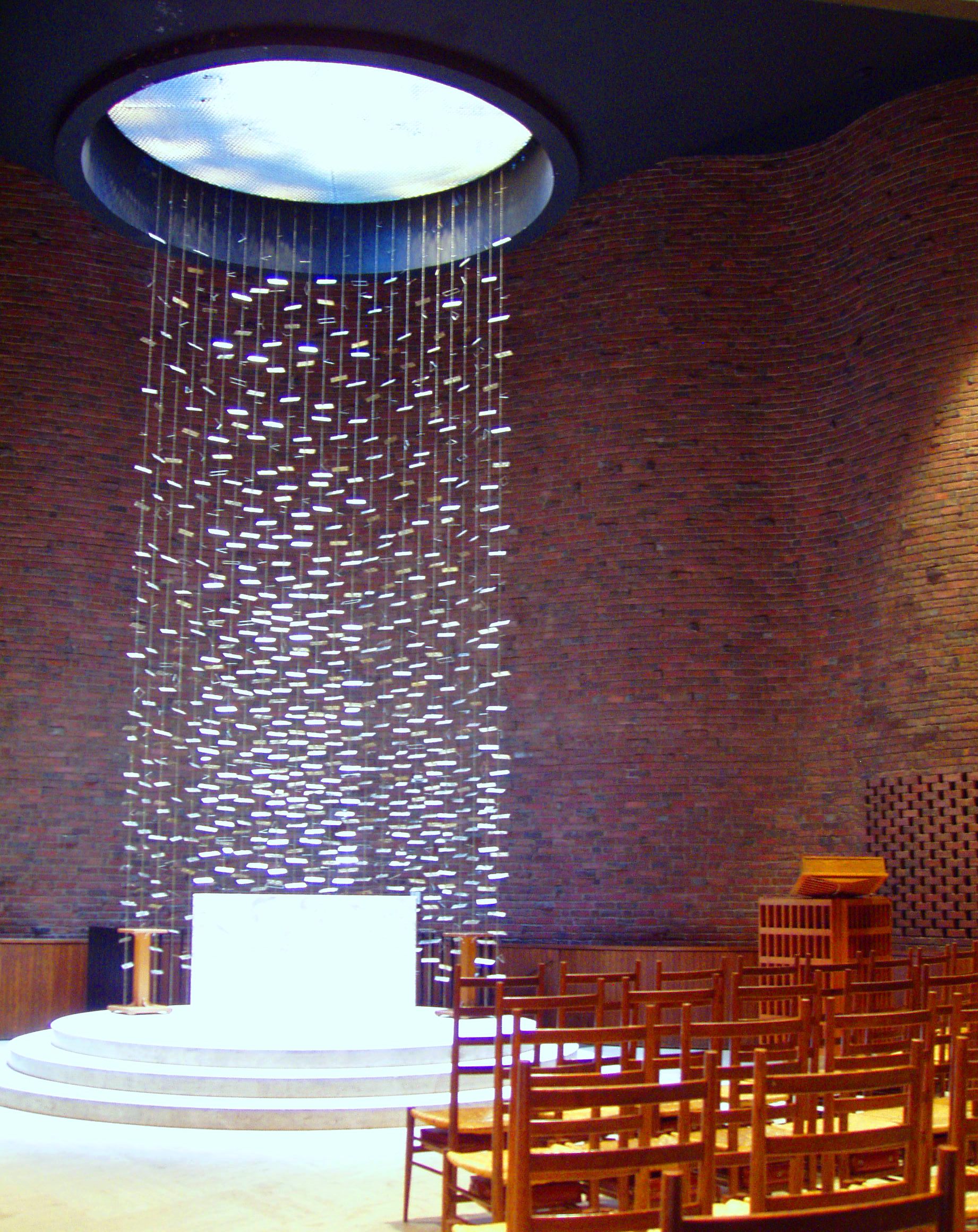
MIT, Cambridge, MA. Dedicated in 1955, it is a non-denominational chapel designed by noted architect Eero Saarinen. Interior
© Original 35mm Kodachrome Red Border
Bored out of my mind, lounging in our new Vitra Panton Junior chairs, kid-sized and colored versions of the legendary Panton Chair.
This vase is by Red Wing Pottery, from their Prismatique line, designed by Belle Kogan. About 8 inches tall, this example is in celadon with a mandarin interior. It features the raised mark Red Wing USA 798 and was found in Hixton, Wisconsin.
Diving into the mesmerizing details of Panama's architectural wonders, this collection offers a symphonic display of lines, grids, and patterns. The black and white palette accentuates the interplay of light and shadow, turning ordinary building facades into captivating abstract canvases. From the mirrored reflections on glass to the rhythmic patterns of windows and structural lines, these images unveil the intricate beauty hidden within the towering structures of Panama's urban jungle.
This pair of ceramic vases is by German maker Carstens. Both have the raised double house mark and read "W. Germany", while the larger is marked "7441-30" and the smaller "7443-15". The larger retains its original Raymor import sticker with the code "1117 TEN".
This small ceramic vase is by German maker Ruscha, in an uncommon decor. It has molded marks reading "811/2".
This small planter is an example of well-known mid-20th century tourist ware pottery which originated out of Hollister, Missouri. Unmarked, it was found in Roseville, Minnesota.
Kitchen, White, Interiors, Professional Interior Photography, Modern Interior Design, Modern Design, White Modern Interior, Real Estate Photography, Interior Photography, Country Life, D700
This fun salt and pepper shaker set are of Paul Bunyan and Babe the Blue Ox, legendary figures of the North Woods. We believe these to be by a mid-century Japanese manufacturer, but aren't sure. The set was found in Northern Minnesota.
This small ceramic cat is by the Roselane Pottery, which operated in Pasadena, Baldwin Park, and finally Long Beach, California from 1938 until 1977. It has impressed marks reading "Roselane USA" and was found in Woodbury, Minnesota.
This ceramic cat is by Bitossi of Montelupo, Italy. It feautures the company's trademark stamping decoration. While unsigned, it does have an original label reading "6629 Made in Italy".
A chevron pattern in turquoise and muted shades of green a mauve make for an unique statement in this art to wear necklace. I started with pale moss green linen and accented it with a grid of translucent metallic gold fabric paint. I then embroidered the geometric pattern onto the pendant using satin stitch with cotton embroidery thread. The pendant is backed with soft celery ultrasuede and there is a layer of fabric interfacing inside to add stiffness to the pendant.
I edged the entire pendant with brick stitch and added translucent aqua dangles on antique brass wire. Wire loops were also embedded into the pendant, and a delicate antique brass finish chain with lobster claw hook was added.
Dimensions: The pendants is 3 inches (7.62 cm) wide by 1.5 inches (3.8 cm) tall, and the dangles
hang down another quarter inch (.64 cm). Each length of chain is 8 inches (20.3 cm) long.
This mid-century pottery bull is by German maker Goebel. The paper label is missing, but the belly includes mold marks reading CW 64 and 1970. It was found in La Crosse, Wisconsin.
This glass vase was designed by Bo Borgström for Åseda Glasbruk of Sweden, which operated from 1947 until 1977. This is shape 5/691 in the 1971-1973 Åseda catalog. It was found in Duluth, Minnesota.
These two wall plates were produced around 1960 by West German maker Übelacker (Ü-Keramik), to the designs of Ursula Schönhaber. They are each marked with impressed 568/20 and retain the remains of the Ü-Keramik foil label. They were both found in Rochester, Minnesota.
This large glass plate with gold, white, and black accents is by Georges Briard. It was found in Woodbury, Minnesota.
RIVERVIEW GARDENS IS A SERIES OF 3 IDENTICAL HOUSES LOCATED IN AUSTIN, TEXAS, ONE BLOCK NORTH OF LAKE AUSTIN (NOW LADY BIRD LAKE). THE HOMES WERE INSPIRED BY HAMILTON POOL, A DEEP NATURAL ESCARPMENT WHICH FORMS A DRAMATIC WATERFALL NEAR AUSTIN. IN THE SPIRIT OF THAT WATERFALL, RAINWATER IS DIRECTED TO THE END OF EACH RIVERVIEW GARDEN HOUSE AND FALLS 3 STORIES IN A SHEET TO FORM A DRAMATIC WATERFALL, NOT UNLIKE THE RARIN SCREEN FOUND IN CLASSICAL CHINESE GARDENS. THE RAINWATER IS THEN COLLECTED IN AN 80’ LONG SHARED POND WHICH ON A BREEZY DAY PROVIDES SOME NATURAL COOLING TO THE HOUSES.
EACH UNIT CONTAINS 2000 SQUARE FEET OF CONDITIONED SPACE AND AN EQUIVALENT AMOUNT OF OUTDOOR LIVING SPACE. THE UNITS ARE RAISED OFF THE GROUND TO PROVIDE COVERED PARKING AND A RECREATION AREA BELOW WHILE CAPITALIZING ON VIEWS OF THE LAKE ABOVE THE TREE LINE.
EACH HOUSE’S PLAN IS STRETCHED ON AXIS TOWARD THE RIVER TO FRAME THE PRIMARY VIEW WHILE CREATING SEMI-PRIVATE YARDS BETWEEN THE HOUSES. SPATIAL ORGANIZATION IS DRIVEN BY THE VIEW OF THE LAKE. A SERIES OF GLASS AND VEGETATIVE SCREENS DIVIDE THE PRIMARY SPACES ON EACH FLOOR, EACH CREATING A FILTER BETWEEN THE PUBLIC SPACE FACING THE LAKE AND THE PRIVATE SPACE ON THE OPPOSITE SIDE. AS ONE MOVES FROM PUBLIC SPACE TO PRIVATE, THE VIEW OF THE LAKE IS GRADUALLY OBSTRUCTED, RETAINING THE PLAN'S ORGANIZATIONAL FOCUS WHILE ALLOWING INCREASING AMOUNTS OF PRIVACY.
THE HOUSES ARE MONOLITHIC ON THE EAST/WEST AXIS AND COMPLETELY OPEN WITH GLASS ON THE NORTH/SOUTH AXIS ALLOWING UNINTERRUPTED VIEWS TO THE LAKE. THE MINIMIZED FOOTPRINT ENSURES LARGE SHARED YARDS WITH DRAMATIC 40' TALL BRAZILLIAN HARDWOOD WALLS. A CACTUS WALL, LIKE PAINTER DIEGO RIVERA’S LEGENDARY MEXICO CITY STUDIO FENCE, WILL FRAME THE LOTS AT STREET LEVEL.
SPATIAL PARTITIONS ALONG EACH BUILDING'S AXIS ARE ENTIRELY GLASS TO ALLOW SHARED VIEWS. A CENTRAL COURTYARD SERVES AS PART OF THE CIRCULATION. THE COURTYARD IS FRAMED BY CLEAR GLASS WALLS ALLOWING UNINTERRUPTED VIEWS THROUGH THE INTERIOR ROOMS AND OUT TO THE LAKE. THE COURTYARD ALLOWS PRIVATE ACCESS TO THE OUTSIDE AND CREATES SEMI-PRIVATE EXTERIOR SPACES.
ALL ROOF SURFACES ARE OCCUPIABLE. THE MAIN ROOF IS DESIGNED AS A PARTIALLY ENCLOSED “ROOM” WITH TALL TRANSULENT PANELS ENSURING PRIVACY, FRAMING VIEWS, AND REFLECTING THE LIGHT OF THE SKY.
WORKING AS BOTH THE DESIGNER AND BUILDER GIVES THE BERCY CHEN STUDIO OPPORTUNITY TO ACTUALIZE INNOVATIVE SYSTEMS AND DETAILS. A DESIGN PARTNERSHIP WITH STRUCTURAL ENGINEERS ENABLED EVEN THESE RELATIVELY SMALL HOMES TO EXHIBIT SOME STRUCTURAL FETES. LIKE AN INVERTED TOWER OF PISA, THE TOP MOST VOLUME OF THE HOUSE CANTILEVERS OVER THE MIDDLE VOLUME, WHICH CANITLEVERS OVER THE BASE. THE RESULTING FORM REACHES OUT TOWARD THE LAKE AND PROVIDES AMPLE SHADING FOR EACH LEVEL.
EVER STRIVING FOR DRAMA, MINIMALISM, ECONOMY AND ENERGY EFFICIENCY, THE STUDIO TESTED VARIOUS STRATEGIES FOR MAKING THE TRANSLUCENT EXTERIOR WALL PANEL SYSTEM AS INSULATIVE AS POSSIBLE. ULTIMATELY A COMBINATION OF POLICARB PANELS, ENAMELED WOOD STUDS, AND ORDINARY HOUSEHOLD BUBBLE WRAP ACHIEVED A MINIMUM VALUE OF R-8 FOR ALL EXTERIOR WALLS.
THE IMPORTANCE OF TRANSPARENCY IN THE PROJECT DEMANDED CAREFUL CONSIDERATION OF GLAZING DESIGN. BERCY CHEN UTILIZED THE EXPERTISE OF FABRICATORS ON THEIR TEAM TO CUSTOM BUILD ALL WINDOWS AND DOORS, EVEN DOWN TO THE HANDLES AND LATCHES.
Riverview Garden Residence,
Bercy Chen Studio LP
My proposed interior design of an office lobby renovation. The entire space was transformed into a modern corporate look, retaining the existing flooring due to budget restriction.
Rendered in 3D Max Design 2010 using V-ray rendering engine.
This small ceramic vase is by Italian maker Bitossi, in their well-known Sevilla decor. It is hand-signed "4735 Italy" and was found in Waite Park, Minnesota.
A shoelace's prismatic shape refers to a fast movement of a runner – colorful lines bounce from one wall to another also merging into floor space.
This is a new modern duplex house on Chandler Avenue in Victoria, BC, Canada.
The home was designed by the owner, architect Andrew Beckerman. He lives in one side of the duplex, and rents out the other side.
This glass dish is by an unknown maker, featuring vivid blue and green colors. It is unmarked, and was found in Bloomington, MInnesota.
This vase is by 20th-century Italian ceramic artist Claudio Pulli (1929-2004). The glaze is outstanding, with vibrant iridescent colors juxtaposed against a golden black lava. He worked for years out of a studio in Selargius, adjacent to the Sardinian capital of Cagliari. It is hand-signed Claudio Pulli.