View allAll Photos Tagged Huffpost,
I have been invited by The Huffington Post to post my images regularly to their photography blog. This is my third post: Rust and Roll on Route 66
Active Assignment Weekly - Photographer Emulation: Robert Mapplethorpe
AAW - Jan. 10-17, 2022.
Apparently Robert Mapplethorpe took a lot of dog photographs, nearly 2,000 according to these articles.
www.huffpost.com/entry/robert-mapplethorpe-my-ol_b_9547158
www.mrssizzle.com/dog-blog/2014/6/20/robert-mapplethorpe
I took a picture of our dog Bennie, using another picture of Mapplethorpe's as influence. I used his 1986 photo of Amos the cat. Reference to Amos in this link.
unframed.lacma.org/2016/03/16/robert-mapplethorpe-my-grea...
WIT: I used a bench seat pushed against the wall, with a large window and natural light along with a floor lamp, all on photo right. I used the camera mounted flash. This shot was from the second day. He looked too nervous in the shots from the first day. Photo is cropped, a few spots cloned out, converted to B&W, and contrast increased.
My photo is also a tongue-in-cheek reference to the fact that a lot of Mapplethorpe's studio models were nude black males.
Most of you know that I love riding around Paris taking photos for my "hier et aujourd'hui" (yesterday and today) series. I also love seeing the same kinds of photos of other cities around the world. However, this "yesterday and today" makes me ill and is frightening. But, it is not really surprising, because this is what evil does.
Dr. Deborah Birx, U.S. White House coronavirus response coordinator... Info: The White House has appointed world-renowned global health official and physician Ambassador Deborah Birx to the Office of the Vice President to aid in the whole of government response to COVID-19 as the Coronavirus Response Coordinator. > www.state.gov/biographies/deborah-l-birx-md/
1. Coronavirus COVID-19 (SARS-CoV-2), Paul G. Auwaerter, M.D.
www.hopkinsguides.com/hopkins/view/Johns_Hopkins_ABX_Guid...
2. Dr. Nicole Saphier: Theory Is if You’re Infected with One Strain of Coronavirus, It’s Likely that You’re More Immune to Other Strains > www.thebipartisanpress.com/news/dr-nicole-saphier-theory-...
3. Cumulative cases (John Hopkins data) > coronavirus.jhu.edu/data/cumulative-cases
4. COVID-19 CORONAVIRUS PANDEMIC Cases: www.worldometers.info/coronavirus/
5. Dr. Fauci Warned In 2017 Of ‘Surprise Outbreak’ During Trump Administration > www.huffpost.com/entry/fauci-warned-of-trump-pandemic-201...
Source: Huffpost | July 27, 2016
"10 Donald Trump Quotes That Should Horrify His Evangelical Supporters: This is how far Trump and his supporters have departed from the Gospel."
Note the date of this meme: 2016!
Obviously with Trump continuing to garner around 81% of the White Evangelical vote, they aren't horrified by this DT quote. Why not? Whatever happened to their mantra during the Clinton presidency that "Character Matters"?
For one well-researched explanation, check out:
"Do ... Evangelicals Like Trump for His Hatefulness?":
nymag.com/intelligencer/2019/08/do-conservative-evangelic...
For another, see: "Jesus vs. Trump" | Politicon
Jill Wine-Banks with John Fugelsang:
www.youtube.com/watch?v=dItXeFSvXsI
_______________________________________________
Trump v. Jesus / the Bible
On Arrogance:
Live in harmony with one another;
do not be arrogant….
do not claim to be wiser than you are. - Romans 12:16
Understand that in the last days distressing times will come
because people will be lovers of themselves, lovers of money,
and lovers of pleasure rather than lovers of God, trying to look
all godly like, but denying the power of good.
They’ll be proud, ungrateful boasters, arrogant,
swollen with conceit, treacherous, reckless, ungodly
—inhuman even—implacable, abusive brutes
who slander others and hate what’s good.
AVOID THEM!
- 2 Timothy 3:1-7
The wicked freely strut about
when citizens exalt what is base.
- Psalm 12:5, 8
The rich may be clever in their own eyes,
but perceptive poor folk can see right through them.
- Proverbs 28:11
Whoever doesn’t agree with
the sound teachings of our Lord Jesus Christ
[like the Beatitudes] is conceited, understanding nothing,
and has a morbid craving for controversy and disputes….
From these come envy, dissension, slander, base suspicions,
and wrangling among those who are depraved in mind,
and denying the true reality of things,
and imagining that if they just act as if they were ‘godly,’
they’ll end up being ‘blessed’ with wealth.
- 1 Timothy 6:3-10 [paraphrase]
Psalm 10:
Yahweh, You seem so removed from the evil playing out.
Don’t You care, God?
Why play hide and seek when we need You most?
The proud persecute the poor and needy.
Pour out on them the evil they plot against others!
They brag about their endless greed,
And promote other greedy people.
They think they’re beyond justice’s reach, even from You!
They think nothing can bring them down, not even You!
They spout out curses, lies and threats.
Only chaos ensues from their schemes.
They pounce on the poor and plunder the disadvantaged.
Yahweh, break their power and strong armed tactics.
You understand the hopes of the humble.
Answer the cries of the oppressed; comfort them with justice.
May they no longer be troubled and terrified by the proud.
- Psalm 10 [paraphrase]
_______________________________________________
FAQ + RESOURCES: Resisting Christian Nationalism:
act.faithfulamerica.org/signup/christian-nationalism-reso...
WEBINARS on ways to challenge "Christian" "Nationalism":
The Rub' al Khali is the largest contiguous sand desert in the world, encompassing most of the southern third of the Arabian Peninsula. The desert covers some 650,000 square kilometres including parts of Saudi Arabia, Oman, the United Arab Emirates, and Yemen. It is part of the larger Arabian Desert. One very large pile of sand!!!
For more photos related to soils and landscapes visit:

Times Square traffic jam in New York City
This image is available for use under the Creative Commons Attribution License.
=============================
Web Sites Using this Photo:
www.projectcasting.com/how-to-land-your-audition/what-to-...
bobbrinkmann.blogspot.com/2014/03/zero-emission-cars.html
www.slideshare.net/kiLearning/how-to-communicate-successf...
www.youtube.com/watch?v=P9E28EXiPUU&index=13&list...
www.buyautoparts.com/web/post/2013/08/20/5-US-Cities-with...
travelmediagroup.com/photo-credits/
skift.com/2013/12/11/mayor-bloomberg-predicts-55-million-...
smashpipe.com/entertainment/videos/P9E28EXiPUU/TwoDaystoA...
www.businessinsider.com/wha-to-know-before-moving-to-new-...
www.smithsonianmag.com/innovation/helsinki-has-plan-to-ge...
www.vandelaydesign.com/design-blog-ultimate-guide/
www.businessinsider.com/ranked-the-50-us-state-economies-...
www.facebook.com/TraversingBlog
www.thrillist.com/entertainment/new-york/would-you-rather...
carshopping.biz/tag/search-online/
www.wunderground.com/cgi-bin/findweather/getForecast?quer...
mobilitaet2050.vcd.org/2050-das-projekt/klimatipp/
www.citylab.com/commute/2015/02/6-reasons-new-yorks-lates...
wot.motortrend.com/epa-proposes-stricter-fuel-emissions-s...
www.environmentalhealthnews.org/ehs/news/2015/apr/endocri...
www.businessinsider.com/the-secret-to-not-getting-frustra...
www.moneytalksnews.com/commute-costs-busting-your-budget-...
www.msn.com/en-us/weather/topstories/g7-carbon-goal-may-c...
www.countable.us/bills/s791-114
eyedge.com/need-more-visitors-six-of-the-least-expensive-...
www.businessinsider.com/new-york-citys-taxis-are-being-an...
www.infoworld.com/article/2982389/it-management/12-bad-ha...
www.villagevoice.com/news/while-double-teamed-by-pope-and...
www.news-star.com/article/ZZ/20150817/BUSINESS/308179975/...
www.businessinsider.com/taxis-are-getting-vaporized-by-ub...
www.ilquotidianodellapa.it/search_result.html?query=autis...
www.theculturetrip.com/north-america/usa/new-york/article...
blog.tstc.org/2015/12/03/every-day-is-gridlock-alert-day-...
www.ohiotiger.com/uber-crashes-law/
theculturetrip.com/north-america/usa/new-york/articles/17...
www.businessinsider.com/the-secret-to-not-getting-frustra...
titan.as/exclude-wp-admin-preview-google-analytics/
mobilitylab.org/2015/09/08/ubers-new-wave-of-urban-design...
titan.as/exclude-wp-admin-preview-google-analytics/
thewire.in/2016/04/24/the-visible-hand-of-uber-a-need-for...
titan.as/exclude-wp-admin-preview-google-analytics/
erik-taylor-mc9j.squarespace.com/blog/eriks-weekly-fitnes...
motherboard.vice.com/pt_br/read/ser-que-o-uber-e-to-suste...
blog.tstc.org/2015/12/03/every-day-is-gridlock-alert-day-...
titan.as/exclude-wp-admin-preview-google-analytics/
www.citylab.com/commute/2016/03/google-sidewalk-labs-flow...http://www.slate.com/blogs/moneybox/2016/09/12/how_cities_can_user_uber_bikeshare_and_carshare_to_supplement_trains_and.html
www.climatetrust.org/carbon-tax-perhaps-we-should-reconsi...
titan.as/exclude-wp-admin-preview-google-analytics/
theculturetrip.com/north-america/usa/new-york/articles/17...
www.ohiotiger.com/uber-crashes-law/
www.businessinsider.com/the-secret-to-not-getting-frustra...
www.doityourselfrv.com/places-to-not-rv/#
www.scientificamerican.com/article/trump-at-the-pump-car-...
es.wikihow.com/evitar-la-contaminaci%C3%B3n-del-aire
www.businessinsider.com/new-york-citys-taxis-are-being-an...
news.buzzbuzzhome.com/2017/04/living-noisy-new-york-city-...
www.fool.com/investing/general/2014/01/25/the-worlds-3-mo...
theculturetrip.com/north-america/usa/new-york/articles/13...
futurism.com/in-letter-at-least-12-states-will-sue-to-blo...
pestleanalysis.com/pestle-analysis-uber/
futurism.com/in-letter-at-least-12-states-will-sue-to-blo...
theculturetrip.com/north-america/usa/new-york/articles/17...
m.habrahabr.ru/company/itinvest/blog/333392/
pestleanalysis.com/pestle-analysis-uber/
prsuit.com/life-in-review/crazy-link-traffic-congestion-e...
bobbrinkmann.blogspot.nl/2014/03/zero-emission-cars.html
thewire.in/182973/immorality-improbable-even-impossible/
www.doityourselfrv.com/places-to-not-rv/amp/
motherboard.vice.com/en_us/article/78kkj9/is-uber-good-or...
www.businessinsider.com/ways-city-life-is-bad-for-you-201...
open.lib.umn.edu/socialproblems/chapter/14-3-problems-of-...
pestleanalysis.com/pestle-analysis-uber/
theculturetrip.com/north-america/usa/new-york/articles/13...
open.lib.umn.edu/socialproblems/chapter/14-3-problems-of-...
thrillist.com/entertainment/new-york/would-you-rather-gam...
streeteasy.com/blog/hacks-navigating-nyc-airports/
corrienteelectrica.renault.es/asi-resuelve-nueva-york-su-...
www-mobilegeeks-de.cdn.ampproject.org/v/s/www.mobilegeeks...
www-mobilegeeks-de.cdn.ampproject.org/v/s/www.mobilegeeks...
open.lib.umn.edu/socialproblems/chapter/14-3-problems-of-...
www.businessinsider.com/new-york-citys-taxis-are-being-an...
www.huffpost.com/entry/worst-cities-for-driving-us_n_55a6...
www.businessinsider.com/world-cities-with-worst-traffic-i...
thesource.metro.net/2015/09/08/how-we-roll-tuesday-septem...
www.oyster.co.uk/articles/64335-where-is-uber-banned-arou...
lifehacker.com/what-you-should-know-before-moving-from-a-...
blogs.lse.ac.uk/usappblog/2016/05/12/the-bigger-and-dense...
digital-photography-school.com/weekly-photography-challen...
titan.as/exclude-wp-admin-preview-google-analytics/
www.timeout.com/newyork/news/un-general-assembly-meeting-...
www.scientificamerican.com/article/trump-at-the-pump-car-...
e360.yale.edu/digest/transportation-replaces-power-in-u-s...
scitechconnect.elsevier.com/saving-lives-cars-talk-to-eac...
www.autoevolution.com/news/how-to-avoid-city-traffic-jams...
www.smartcitiesdive.com/news/taxi-companies-ride-hailing-...
e360.yale.edu/digest/transportation-replaces-power-in-u-s...
e360.yale.edu/digest/transportation-replaces-power-in-u-s...
blogs.ei.columbia.edu/2018/01/22/congestion-pricing-susta...
amp.review/2017/09/04/air-pollution-problem-in-automobile/
www.hsph.harvard.edu/c-change/news/childhood-asthma-acute...
www.archpaper.com/2020/02/trump-blocking-nyc-congestion-p...
open.lib.umn.edu/socialproblems/chapter/14-3-problems-of-...
blogs.ei.columbia.edu/2018/01/22/congestion-pricing-susta...
advrider.com/motorcycles-not-exempt-from-nyc-congestion-t...
www.bloomberg.com/news/articles/2016-03-17/google-s-sidew...
www.reliance-foundry.com/blog/traffic-calming-bollards
www.hsph.harvard.edu/c-change/news/childhood-asthma-acute...
blogs.ei.columbia.edu/2020/09/24/pandemic-fatal-blow-oil-...
blogs.ei.columbia.edu/2015/09/28/how-much-energy-does-nyc...
incompliancemag.com/new-ieee-standards-coordinating-commi...
e360.yale.edu/digest/transportation-replaces-power-in-u-s...
www.timeout.com/newyork/news/un-general-assembly-meeting-...
www.timeout.com/newyork/news/new-york-has-the-worst-labor...
www.timeout.com/newyork/blog/when-to-leave-nyc-for-thanks...
www.timeout.com/newyork/thanksgiving?package_page=36155
skift.com/2016/11/12/why-the-worlds-biggest-banks-dont-wa...
www.scientificamerican.com/article/trump-at-the-pump-car-...
www.hsph.harvard.edu/c-change/news/childhood-asthma-acute...
ecipe.org/blog/lessons-from-uber-for-the-taxi-industry/
www.hsph.harvard.edu/c-change/issues/transportation-and-h...
www.hackread.com/internet-connected-cars-hacked-gridlock-...
theworld.org/stories/2014-07-01/would-you-pay-more-money-...
www.way.com/blog/black-friday-shopping-driving-and-parkin...
www.6sqft.com/uber-will-include-nycs-yellow-taxis-on-its-...
Chopin’s Waterloo is not a painting but a sculpture by Arman and it is dated 1962. Can you see a relation to cubism in this panel?
Nouveau réalisme was a French contemporary of the American pop art movement. The members of the nouveaux réalistes group tended to see the world as an image from which they could take parts and incorporate them into their works, bringing life closer to art.
Chopin's Waterloo the so-called "angry work" and a break with the established perception of beauty was created at something called the "Musical Rage exhibition." There Arman destroys a grand piano in front of a live audience and fixed the debris onto a red panel.
Some of the Lessons dogs teach us
1. Live in the moment.
2. Overcome fear with love.
3. Don't hold grudges
4. Play every day.
5. Jump for joy when you're happy.
6. Accept yourself.
7. Enjoy the journey.
8. Drink lots of water.
9. Be loyal and dependable.
10. Love unconditionally.
11. Enjoy the Silence
12. Friendship Can Be Easy
13. Go After the Things That Are Important to You — and Stay Focused
14, Move Past Your Mistakes
15, Spend Lots of Time Outside
16. Be observant
17. The meaning of life
from
Repeated wave action, spray and floating ice all contribute to the creation of shelf ice. If you see anyone walking on the shelf ice, advise them of the potential danger of being on shelf ice.
See: The Winter Shore: Beautiful But Potentially Deadly
Soooo for this photo i really was inspired by a black and white type of color scheme seen alot in vogue cover photos. I really wanted to keep this shot simple with not alot of outside distractions (since it is a cover shot!) but still have an edge to it by using mirrors. I took my main insparation from 2 photos. the first one inspired me with the color use, and to create a tiny waist for her. The second inspired me to make platform shoes for Nevaeh, and i really love them in general (: It was challenging to do a full body shot and find photo insparations as well, but i think it didnt turn out to bad ., hope you like it.! (;
Photo insp: i.huffpost.com/gen/339774/VOGUE-ITALIA-COVER-PIERCINGS.jpg
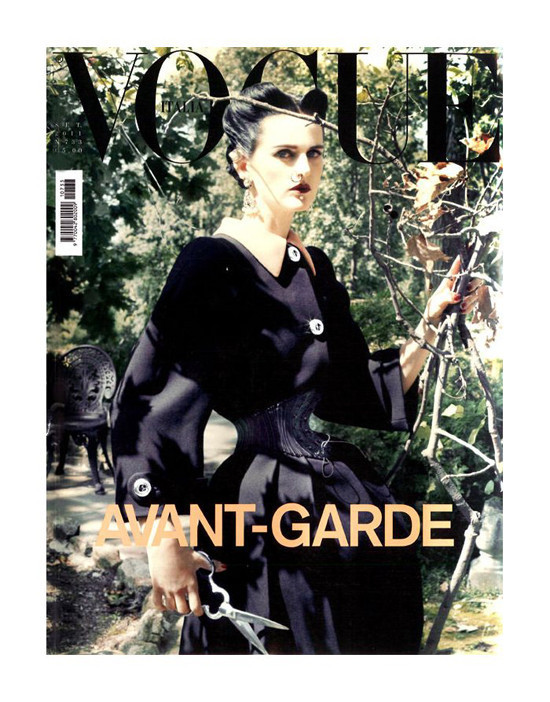
Photo insp: media4.onsugar.com/files/2010/12/50/5/166/1668379/3c0c955...

"People in the U.S. open 1,000 bottles of water every second and put 60 million plastic water bottles in the trash each year. Each day, people in the U.S. throw away more than 60 million plastic water bottles, most of which end up in landfills or as litter in America’s streets, parks and waterways."
(healthyhumanlife.com/blogs/news/plastic-water-bottle-poll...)
optimalwellnesssolutions.ph/water-dispensers-to-eliminate...
"If only one per cent of the world’s masks are disposed of incorrectly, 10 million masks per month weighing close to 90,000 pounds will end up in nature, according to the World Wildlife Fund. That’s on top of the 52 billion pounds of plastic carried by rivers into oceans each year, washing up on shorelines, entangling wildlife and contaminating drinking water with microplastics."
www.huffpost.com/entry/astonishing-amount-of-masks-thrown...
www.saveonenergy.com/material-decomposition/#:~:text=The%....
www.sidmartinbio.org/how-long-does-it-take-for-cans-to-de...
www.weforum.org/agenda/2020/06/ppe-masks-gloves-coronavir...
The Huffington Post has invited me to become a regular contributor to their photography blog. This is my ninth post:
"Panoramic Photography without Panoramas"
www.huffingtonpost.com/hans-proppe/panorama-photography_b...
Ok, well, I saw Mr. Border's Blown Streetrod and thought, ya cool! I should do something up for this new Happy Truck Thursday thingee that he's into. His excellent shot of that sooped-up, all-chrome-all-the-time street machine reminded me of one I took recently at Cayuga (Toronto Motorsport Park as it is now called... in my day it was just plain ol' Cayuga). Apparently, his photo reminded him of a certain Christie's photos but, as he didn't link to any particular Christie, I am assuming it is this Christie however, it might be this

Christie, or this Christie, if he was hungry at the time. Anyway, I got busy processing my blue truck sho... shh...umm, well... realized it wasn't a truck at all. Dang! Foiled again! So, then I thought, well it does have a fence in it and it is almost Friday (actually, it was Friday, as it was pretty well one in the morning... I had had a nap in the day). However, in this case, the fence is way too far back there to really justify that so... Happy Belated-It-Isn't-A-Truck-Thursday-And-The Fence-Is-Too-Far-Back Friday!


The Huffington Post has invited me to become a regular contributor to their photography blog. This is my tenth post: "Street Portraiture"
www.huffingtonpost.com/hans-proppe/street-portraiture_b_2...
UK’s Chief Dentist Describes Homeless Patients As ‘No Hopers’ In Message To MP.
Mick Armstrong, chair of the British Dental Association, faces calls from Stella Creasy MP, right, for an investigation into his comments about homeless patients.
The UK’s chief dentist faces calls for an investigation after describing homeless patients as “difficult… no hopers” whose treatment leads practices to miss strict NHS targets.
Mick Armstrong, the chair of the British Dental Association (BDA), made the remarks in an erroneous email reply to Labour MP Stella Creasy, who contacted him over issues in her constituency.
In the email, seen by HuffPost UK, Armstrong describes Creasy as being “wrong” about a legal requirement for dentists to accept patients regardless of their housing status.
He goes on to write of those without a fixed address: “These are difficult patients who rarely complete a course of treatment.”
“If we took in all the no hopers who ring us…I suspect we’d miss our targets by a country mile,” he added.
It appears from the exchange seen by HuffPost that Armstrong copied the Walthamstow MP into his reply by mistake.
www.huffingtonpost.co.uk/entry/uk-s-chief-dentist-describ...
-------------------
Makes you think that setting targets for some sectors is the wrong way to go. (Also makes you wonder what happened to the "milk of human kindness").
Imagine chronic tooth ache and no body was prepared to help.
Will budget cuts and targets eventually lead to you dialing 999 (111) and no one answering.
In my opinion its time to stop party politics; put up the tax rate and sort out the essential services this country was famous for. Essential services shouldn't depend on how rich you are or where you live.
OK on the other hand everyone needs to contribute to our society.
OK rant over.
Neil Moralee.
---------------------
Candid street shot, Wellington Somerset, UK.
July Is Cell Phone Courtesy Month
You may have a cellphone or ‘smartphone’ that you have used quite often since the day you bought it. But there was one thing missing: The Instructions or “Book of Manners” you need to have when using such a device.
Many articles and blogs have made suggestions for the proper use of these devices. Some businesses or establishments may have ‘rules’ governing the use of a cellphone while in the building or attending a function. Below are a few things to consider if you use a cellphone:
1. Don’t think your cellphone provides you with every molecule of oxygen you need in order to breathe. You don’t have to have it in your hand constantly! Turn it off or mute it while attending a meeting, a worship service, or other gathering where your full and undivided attention is required. Discipline yourself to put the phone on silence and vibrate to tell you a message has been received, then don’t respond to it until you are completed with your meeting.
2. Keep things private. It’s a “Personal Phone Device” and not something to broadcast to those around you about the phone call or text or tweet you may have received. Some people just aren’t interested in your personal affairs.
3. Control your emotions, especially anger. That can fuel other emotions and bring things into chaos.
4. Remember “Playground Voice” and “Library Voice” when in school? Use your library voice when necessary and avoid the shouting on the cellphone. If you are in an environment where hearing the other person is difficult, tell the caller that you will call him or her back once you are in a quieter location.
5. Observe the rules of the establishment where cellphones are prohibited. This may include court houses, hospitals, and airplanes. Remember that when you are driving, cellphone use while in control of a vehicle is prohibited in most states unless it is a hands-free or Bluetooth device. Let someone else use their phone, or simply let the call go to voice mail and return the call once you have parked the vehicle.
6. Remember that the expression, “Please excuse me while I must take this call,” is a proper way to allow you time and move to a space where you can privately take a phone call that cannot simply wait. Emergencies come, and people need to be contacted to receive immediate response.
7. Text messaging can also be an effective way to keep in communication while in attendance in a meeting, but do so discretely and only when necessary. Teenagers think that texting is cool, but others may become annoyed by the alert tone that continually goes off. Vibrate mode may help, but the distraction is noticeable.
8. Smartphones connected to Internet sources can be useful and entertaining, but only in a personal setting or with the consent of those near you. Watching video or listening to songs downloaded to such a device is for personal use, and headphones or earbuds may help keep things personal.
Some of this information was gleaned from a blog by is written and copyrighted by Karen Leland. As a courtesy to her, you may reference her original article at: www.huffpost.com/entry/july-is-cell-phone-courte_b_222816
20200707 189/366
Source: Huffpost | July 27, 2016
"10 Donald Trump Quotes That Should Horrify
His Evangelical Supporters: This is how far Trump
and his supporters have departed from the Gospel."
_______________________________________________
Trump v. Jesus / the Bible
In his Sermon on the Mountain, Jesus says:
“You have heard it said,
‘Love your neighbour’ [quoting Scripture]
& ‘Hate your enemy.” [quoting popular opinion]
BUT I tell you,
‘Love your enemy & pray for those who persecute you.’
That way, you’ll show yourselves
as true children of your heavenly Father
who makes the sun shine & the rain fall on good & bad alike.”
- Matthew 5:43-45
- See also Jesus' Sermon on the Plain, Luke 6:20-38
The Apostle Paul on the same subject:
Be-loved, let your love be genuine;
hate what is evil; hold fast to what is good…
Bless those who persecute you; bless & do not curse them.
Be-loved, never avenge yourselves… Instead,
“if your enemies are hungry, feed them;
if they are thirsty, give them something to drink….
Do not be overcome by evil, but overcome evil with good."
Do not repay anyone evil for evil.
Instead, reinforce what is noble in the sight of all.
If it is possible, so far as it depends on you,
live peaceably with all.
Let hope make you glad; be patient in affliction…
Rejoice with those who rejoice;
weep with those who weep …
extend hospitality to strangers.
Live in harmony with one another;
do not be arrogant….
do not claim to be wiser than you are.
Letter to the Gentile & Jewish Followers of Jesus in Rome
- Romans 12:9-21 [remixed]
How God does Vengeance:
When Jesus began his ministry, he opened the Sacred Scroll in his hometown synagogue & quoted a scripture that defined his mission.
“The Spirit of the Sovereign Lord is on me,
because the Lord has anointed me
to proclaim good news to the poor.
God has sent me to bind up the brokenhearted,
to proclaim freedom for the captives,
release from darkness for the prisoners,
to proclaim the Year of the Lord’s Favor….” *
- Isaiah 61:1-2 cf. Luke 4:16-20
The ….s that Jesus left out when quoting this prophecy is:
“…and the day of vengeance of our God.”
This passage was as well known to the Jews of the time as most Christians today know Psalm 23 & The Lord’s Prayer. So they knew exactly what Jesus left out. “And they were filled with rage….” and “wanted to hurl him off a cliff.” Why?
They were hoping for a messiah who would enact God’s vengeance on their Roman oppressors.** But that wasn’t Jesus’ mission.
It was to restore social justice among "We, the People"—to lift up the oppressed, not to violently overthrow the oppressor. To create grassroots change & influence change through Love & nonviolent resistance. Not through violent overthrows & insurrections! Through ‘sacrificial’ service to one another; not via the sword. To create a more equal & just society among themselves. *** Jesus didn’t fulfill their version of liberation, thus, in part, leading to his crucifixion.
________________________________________________
* The Year of the Lord’s Favor, BTW, refers to the Year of Jubilee when land in ancient Israel was to lay fallow, animals & humans were to rest, and any lots of land ‘lost’ due to hard times was to be restored to the descendants of the original owners--when all had equal shares, more or less. It was a Law to avoid a huge wealth gap from developing. Israel never fulfilled that Law. The rich unjustly exploited the poor. God’s vengeance on them was that they ended up as captives in Babylon for as many years as the 'year-long sabbaths' they hadn’t enacted, so the Land could recover. (See 2 Chronicles 36; note 36.21)
** (Much like Christian Nationalist hope Trump will do the same for them by taking vengeance on Democrats who they believe has 'led America away from God' through various ‘safety nets’ for the poor, the sick, women, POC minorities, immigrants, LGBTQ people, disabled veterans, etc.).
*** As Jesus' early followers sought to do. See Acts 2:44-47.
Eiffel Tower
From Wikipedia, the free encyclopedia
Jump to navigationJump to search
This article is about the landmark in Paris, France. For other uses, see Eiffel Tower (disambiguation).
"300-metre tower" and "Tour Eiffel" redirect here. For other tall towers, see List of tallest towers. For other uses, see Tour Eiffel (disambiguation).
The Eiffel Tower
La tour Eiffel
Tour Eiffel Wikimedia Commons.jpg
Seen from the Champ de Mars
Wikimedia | © OpenStreetMap
Record height
Tallest in the world from 1889 to 1930[I]
General information
TypeObservation tower
Broadcasting tower
Location7th arrondissement, Paris, France
Coordinates48°51′29.6″N 2°17′40.2″ECoordinates: 48°51′29.6″N 2°17′40.2″E
Construction started28 January 1887; 134 years ago
Completed15 March 1889; 132 years ago
Opening31 March 1889; 132 years ago
OwnerCity of Paris, France
ManagementSociété d'Exploitation de la Tour Eiffel (SETE)
Height
Architectural300 m (984 ft)[1]
Tip324 m (1,063 ft)[1]
Top floor276 m (906 ft)[1]
Technical details
Floor count3[2]
Lifts/elevators8[2]
Design and construction
ArchitectStephen Sauvestre
Structural engineerMaurice Koechlin
Émile Nouguier
Main contractorCompagnie des Etablissements Eiffel
Website
toureiffel.paris/en
References
I. ^ Eiffel Tower at Emporis
File:Eiffel Tower Drone 4k-Qx c1X3zfEc-313-251.webm
Eiffel Tower Drone
The Eiffel Tower (/ˈaɪfəl/ EYE-fəl; French: tour Eiffel [tuʁ‿ɛfɛl] (About this soundlisten)) is a wrought-iron lattice tower on the Champ de Mars in Paris, France. It is named after the engineer Gustave Eiffel, whose company designed and built the tower.
Locally nicknamed "La dame de fer" (French for "Iron Lady"), it was constructed from 1887 to 1889 as the entrance to the 1889 World's Fair and was initially criticised by some of France's leading artists and intellectuals for its design, but it has become a global cultural icon of France and one of the most recognisable structures in the world.[3] The Eiffel Tower is the most visited monument with an entrance fee in the world; 6.91 million people ascended it in 2015.
The tower is 324 metres (1,063 ft) tall, about the same height as an 81-storey building, and the tallest structure in Paris. Its base is square, measuring 125 metres (410 ft) on each side. During its construction, the Eiffel Tower surpassed the Washington Monument to become the tallest man-made structure in the world, a title it held for 41 years until the Chrysler Building in New York City was finished in 1930. It was the first structure in the world to surpass both the 200-metre and 300-metre mark in height. Due to the addition of a broadcasting aerial at the top of the tower in 1957, it is now taller than the Chrysler Building by 5.2 metres (17 ft). Excluding transmitters, the Eiffel Tower is the second tallest free-standing structure in France after the Millau Viaduct.
The tower has three levels for visitors, with restaurants on the first and second levels. The top level's upper platform is 276 m (906 ft) above the ground – the highest observation deck accessible to the public in the European Union. Tickets can be purchased to ascend by stairs or lift to the first and second levels. The climb from ground level to the first level is over 300 steps, as is the climb from the first level to the second. Although there is a staircase to the top level, it is usually accessible only by lift.
Contents
1History
1.1Origin
1.2Artists' protest
1.3Construction
1.3.1Lifts
1.4Inauguration and the 1889 exposition
1.5Subsequent events
2Design
2.1Material
2.2Wind considerations
2.3Accommodation
2.4Passenger lifts
2.5Engraved names
2.6Aesthetics
2.7Maintenance
3Tourism
3.1Transport
3.2Popularity
3.3Restaurants
4Replicas
5Communications
5.1FM radio
5.2Digital television
6Illumination copyright
7Height changes
8Taller structures
8.1Lattice towers taller than the Eiffel Tower
8.2Structures in France taller than the Eiffel Tower
9See also
10References
10.1Notes
10.2Bibliography
11External links
History
Origin
The design of the Eiffel Tower is attributed to Maurice Koechlin and Émile Nouguier, two senior engineers working for the Compagnie des Établissements Eiffel. It was envisioned after discussion about a suitable centrepiece for the proposed 1889 Exposition Universelle, a world's fair to celebrate the centennial of the French Revolution. Eiffel openly acknowledged that inspiration for a tower came from the Latting Observatory built in New York City in 1853.[4] In May 1884, working at home, Koechlin made a sketch of their idea, described by him as "a great pylon, consisting of four lattice girders standing apart at the base and coming together at the top, joined together by metal trusses at regular intervals".[5] Eiffel initially showed little enthusiasm, but he did approve further study, and the two engineers then asked Stephen Sauvestre, the head of the company's architectural department, to contribute to the design. Sauvestre added decorative arches to the base of the tower, a glass pavilion to the first level, and other embellishments.
First drawing of the Eiffel Tower by Maurice Koechlin including size comparison with other Parisian landmarks such as Notre Dame de Paris, the Statue of Liberty and the Vendôme Column
The new version gained Eiffel's support: he bought the rights to the patent on the design which Koechlin, Nougier, and Sauvestre had taken out, and the design was put on display at the Exhibition of Decorative Arts in the autumn of 1884 under the company name. On 30 March 1885, Eiffel presented his plans to the Société des Ingénieurs Civils; after discussing the technical problems and emphasising the practical uses of the tower, he finished his talk by saying the tower would symbolise
[n]ot only the art of the modern engineer, but also the century of Industry and Science in which we are living, and for which the way was prepared by the great scientific movement of the eighteenth century and by the Revolution of 1789, to which this monument will be built as an expression of France's gratitude.[6]
Little progress was made until 1886, when Jules Grévy was re-elected as president of France and Édouard Lockroy was appointed as minister for trade. A budget for the exposition was passed and, on 1 May, Lockroy announced an alteration to the terms of the open competition being held for a centrepiece to the exposition, which effectively made the selection of Eiffel's design a foregone conclusion, as entries had to include a study for a 300 m (980 ft) four-sided metal tower on the Champ de Mars.[6] (A 300-metre tower was then considered a herculean engineering effort). On 12 May, a commission was set up to examine Eiffel's scheme and its rivals, which, a month later, decided that all the proposals except Eiffel's were either impractical or lacking in details.
After some debate about the exact location of the tower, a contract was signed on 8 January 1887. Eiffel signed it acting in his own capacity rather than as the representative of his company, the contract granting him 1.5 million francs toward the construction costs: less than a quarter of the estimated 6.5 million francs. Eiffel was to receive all income from the commercial exploitation of the tower during the exhibition and for the next 20 years. He later established a separate company to manage the tower, putting up half the necessary capital himself.[7]
Artists' protest
Caricature of Gustave Eiffel comparing the Eiffel tower to the Pyramids, published in Le Temps, February 14, 1887.
The proposed tower had been a subject of controversy, drawing criticism from those who did not believe it was feasible and those who objected on artistic grounds. Prior to the Eiffel Tower's construction, no structure had ever been constructed to a height of 300 m, or even 200 m for that matter,[8] and many people believed it was impossible. These objections were an expression of a long-standing debate in France about the relationship between architecture and engineering. It came to a head as work began at the Champ de Mars: a "Committee of Three Hundred" (one member for each metre of the tower's height) was formed, led by the prominent architect Charles Garnier and including some of the most important figures of the arts, such as William-Adolphe Bouguereau, Guy de Maupassant, Charles Gounod and Jules Massenet. A petition called "Artists against the Eiffel Tower" was sent to the Minister of Works and Commissioner for the Exposition, Adolphe Alphand, and it was published by Le Temps on 14 February 1887:
We, writers, painters, sculptors, architects and passionate devotees of the hitherto untouched beauty of Paris, protest with all our strength, with all our indignation in the name of slighted French taste, against the erection … of this useless and monstrous Eiffel Tower … To bring our arguments home, imagine for a moment a giddy, ridiculous tower dominating Paris like a gigantic black smokestack, crushing under its barbaric bulk Notre Dame, the Tour Saint-Jacques, the Louvre, the Dome of les Invalides, the Arc de Triomphe, all of our humiliated monuments will disappear in this ghastly dream. And for twenty years … we shall see stretching like a blot of ink the hateful shadow of the hateful column of bolted sheet metal.[9]
A calligram by Guillaume Apollinaire
Gustave Eiffel responded to these criticisms by comparing his tower to the Egyptian pyramids: "My tower will be the tallest edifice ever erected by man. Will it not also be grandiose in its way? And why would something admirable in Egypt become hideous and ridiculous in Paris?"[10] These criticisms were also dealt with by Édouard Lockroy in a letter of support written to Alphand, sardonically saying,[11] "Judging by the stately swell of the rhythms, the beauty of the metaphors, the elegance of its delicate and precise style, one can tell this protest is the result of collaboration of the most famous writers and poets of our time", and he explained that the protest was irrelevant since the project had been decided upon months before, and construction on the tower was already under way.
Indeed, Garnier was a member of the Tower Commission that had examined the various proposals, and had raised no objection. Eiffel was similarly unworried, pointing out to a journalist that it was premature to judge the effect of the tower solely on the basis of the drawings, that the Champ de Mars was distant enough from the monuments mentioned in the protest for there to be little risk of the tower overwhelming them, and putting the aesthetic argument for the tower: "Do not the laws of natural forces always conform to the secret laws of harmony?"[12]
Some of the protesters changed their minds when the tower was built; others remained unconvinced.[13] Guy de Maupassant supposedly ate lunch in the tower's restaurant every day because it was the one place in Paris where the tower was not visible.[14]
By 1918, it had become a symbol of Paris and of France after Guillaume Apollinaire wrote a nationalist poem in the shape of the tower (a calligram) to express his feelings about the war against Germany.[15] Today, it is widely considered to be a remarkable piece of structural art, and is often featured in films and literature.
Construction
Foundations of the Eiffel Tower
Work on the foundations started on 28 January 1887.[16] Those for the east and south legs were straightforward, with each leg resting on four 2 m (6.6 ft) concrete slabs, one for each of the principal girders of each leg. The west and north legs, being closer to the river Seine, were more complicated: each slab needed two piles installed by using compressed-air caissons 15 m (49 ft) long and 6 m (20 ft) in diameter driven to a depth of 22 m (72 ft)[17] to support the concrete slabs, which were 6 m (20 ft) thick. Each of these slabs supported a block of limestone with an inclined top to bear a supporting shoe for the ironwork.
Each shoe was anchored to the stonework by a pair of bolts 10 cm (4 in) in diameter and 7.5 m (25 ft) long. The foundations were completed on 30 June, and the erection of the ironwork began. The visible work on-site was complemented by the enormous amount of exacting preparatory work that took place behind the scenes: the drawing office produced 1,700 general drawings and 3,629 detailed drawings of the 18,038 different parts needed.[18] The task of drawing the components was complicated by the complex angles involved in the design and the degree of precision required: the position of rivet holes was specified to within 1 mm (0.04 in) and angles worked out to one second of arc.[19] The finished components, some already riveted together into sub-assemblies, arrived on horse-drawn carts from a factory in the nearby Parisian suburb of Levallois-Perret and were first bolted together, with the bolts being replaced with rivets as construction progressed. No drilling or shaping was done on site: if any part did not fit, it was sent back to the factory for alteration. In all, 18,038 pieces were joined together using 2.5 million rivets.[16]
At first, the legs were constructed as cantilevers, but about halfway to the first level construction was paused to create a substantial timber scaffold. This renewed concerns about the structural integrity of the tower, and sensational headlines such as "Eiffel Suicide!" and "Gustave Eiffel Has Gone Mad: He Has Been Confined in an Asylum" appeared in the tabloid press.[20] At this stage, a small "creeper" crane designed to move up the tower was installed in each leg. They made use of the guides for the lifts which were to be fitted in the four legs. The critical stage of joining the legs at the first level was completed by the end of March 1888.[16] Although the metalwork had been prepared with the utmost attention to detail, provision had been made to carry out small adjustments to precisely align the legs; hydraulic jacks were fitted to the shoes at the base of each leg, capable of exerting a force of 800 tonnes, and the legs were intentionally constructed at a slightly steeper angle than necessary, being supported by sandboxes on the scaffold. Although construction involved 300 on-site employees,[16] due to Eiffel's safety precautions and the use of movable gangways, guardrails and screens, only one person died.[21]
18 July 1887:
The start of the erection of the metalwork
7 December 1887:
Construction of the legs with scaffolding
20 March 1888:
Completion of the first level
15 May 1888:
Start of construction on the second stage
21 August 1888:
Completion of the second level
26 December 1888:
Construction of the upper stage
15 March 1889:
Construction of the cupola
Lifts
The Roux, Combaluzier & Lepape lifts during construction. Note the drive sprockets and chain in the foreground.
Equipping the tower with adequate and safe passenger lifts was a major concern of the government commission overseeing the Exposition. Although some visitors could be expected to climb to the first level, or even the second, lifts clearly had to be the main means of ascent.[22]
Constructing lifts to reach the first level was relatively straightforward: the legs were wide enough at the bottom and so nearly straight that they could contain a straight track, and a contract was given to the French company Roux, Combaluzier & Lepape for two lifts to be fitted in the east and west legs.[23] Roux, Combaluzier & Lepape used a pair of endless chains with rigid, articulated links to which the car was attached. Lead weights on some links of the upper or return sections of the chains counterbalanced most of the car's weight. The car was pushed up from below, not pulled up from above: to prevent the chain buckling, it was enclosed in a conduit. At the bottom of the run, the chains passed around 3.9 m (12 ft 10 in) diameter sprockets. Smaller sprockets at the top guided the chains.[23]
The Otis lifts originally fitted in the north and south legs
Installing lifts to the second level was more of a challenge because a straight track was impossible. No French company wanted to undertake the work. The European branch of Otis Brothers & Company submitted a proposal but this was rejected: the fair's charter ruled out the use of any foreign material in the construction of the tower. The deadline for bids was extended but still no French companies put themselves forward, and eventually the contract was given to Otis in July 1887.[24] Otis were confident they would eventually be given the contract and had already started creating designs.[citation needed]
The car was divided into two superimposed compartments, each holding 25 passengers, with the lift operator occupying an exterior platform on the first level. Motive power was provided by an inclined hydraulic ram 12.67 m (41 ft 7 in) long and 96.5 cm (38.0 in) in diameter in the tower leg with a stroke of 10.83 m (35 ft 6 in): this moved a carriage carrying six sheaves. Five fixed sheaves were mounted higher up the leg, producing an arrangement similar to a block and tackle but acting in reverse, multiplying the stroke of the piston rather than the force generated. The hydraulic pressure in the driving cylinder was produced by a large open reservoir on the second level. After being exhausted from the cylinder, the water was pumped back up to the reservoir by two pumps in the machinery room at the base of the south leg. This reservoir also provided power to the lifts to the first level.[citation needed]
The original lifts for the journey between the second and third levels were supplied by Léon Edoux. A pair of 81 m (266 ft) hydraulic rams were mounted on the second level, reaching nearly halfway up to the third level. One lift car was mounted on top of these rams: cables ran from the top of this car up to sheaves on the third level and back down to a second car. Each car only travelled half the distance between the second and third levels and passengers were required to change lifts halfway by means of a short gangway. The 10-ton cars each held 65 passengers.[25]
Inauguration and the 1889 exposition
View of the 1889 World's Fair
The main structural work was completed at the end of March 1889 and, on 31 March, Eiffel celebrated by leading a group of government officials, accompanied by representatives of the press, to the top of the tower.[13] Because the lifts were not yet in operation, the ascent was made by foot, and took over an hour, with Eiffel stopping frequently to explain various features. Most of the party chose to stop at the lower levels, but a few, including the structural engineer, Émile Nouguier, the head of construction, Jean Compagnon, the President of the City Council, and reporters from Le Figaro and Le Monde Illustré, completed the ascent. At 2:35 pm, Eiffel hoisted a large Tricolour to the accompaniment of a 25-gun salute fired at the first level.[26]
There was still work to be done, particularly on the lifts and facilities, and the tower was not opened to the public until nine days after the opening of the exposition on 6 May; even then, the lifts had not been completed. The tower was an instant success with the public, and nearly 30,000 visitors made the 1,710-step climb to the top before the lifts entered service on 26 May.[27] Tickets cost 2 francs for the first level, 3 for the second, and 5 for the top, with half-price admission on Sundays,[28] and by the end of the exhibition there had been 1,896,987 visitors.[3]
After dark, the tower was lit by hundreds of gas lamps, and a beacon sent out three beams of red, white and blue light. Two searchlights mounted on a circular rail were used to illuminate various buildings of the exposition. The daily opening and closing of the exposition were announced by a cannon at the top.[citation needed]
Illumination of the tower at night during the exposition
On the second level, the French newspaper Le Figaro had an office and a printing press, where a special souvenir edition, Le Figaro de la Tour, was made. There was also a pâtisserie.[citation needed]
At the top, there was a post office where visitors could send letters and postcards as a memento of their visit. Graffitists were also catered for: sheets of paper were mounted on the walls each day for visitors to record their impressions of the tower. Gustave Eiffel described some of the responses as vraiment curieuse ("truly curious").[29]
Famous visitors to the tower included the Prince of Wales, Sarah Bernhardt, "Buffalo Bill" Cody (his Wild West show was an attraction at the exposition) and Thomas Edison.[27] Eiffel invited Edison to his private apartment at the top of the tower, where Edison presented him with one of his phonographs, a new invention and one of the many highlights of the exposition.[30] Edison signed the guestbook with this message:
To M Eiffel the Engineer the brave builder of so gigantic and original specimen of modern Engineering from one who has the greatest respect and admiration for all Engineers including the Great Engineer the Bon Dieu, Thomas Edison.
Eiffel had a permit for the tower to stand for 20 years. It was to be dismantled in 1909, when its ownership would revert to the City of Paris. The City had planned to tear it down (part of the original contest rules for designing a tower was that it should be easy to dismantle) but as the tower proved to be valuable for radio telegraphy, it was allowed to remain after the expiry of the permit, and from 1910 it also became part of the International Time Service.[31]
Eiffel made use of his apartment at the top of the tower to carry out meteorological observations, and also used the tower to perform experiments on the action of air resistance on falling bodies.[32]
Subsequent events
File:Vue Lumière No 992 - Panorama pendant l'ascension de la Tour Eiffel (1898).ogv
Panoramic view during ascent of the Eiffel Tower by the Lumière brothers, 1898
File:Reichelt.ogv
Franz Reichelt's preparations and fatal jump from the Eiffel Tower
For the 1900 Exposition Universelle, the lifts in the east and west legs were replaced by lifts running as far as the second level constructed by the French firm Fives-Lille. These had a compensating mechanism to keep the floor level as the angle of ascent changed at the first level, and were driven by a similar hydraulic mechanism to the Otis lifts, although this was situated at the base of the tower. Hydraulic pressure was provided by pressurised accumulators located near this mechanism.[24] At the same time the lift in the north pillar was removed and replaced by a staircase to the first level. The layout of both first and second levels was modified, with the space available for visitors on the second level. The original lift in the south pillar was removed 13 years later.[citation needed]
On 19 October 1901, Alberto Santos-Dumont, flying his No.6 airship, won a 100,000-franc prize offered by Henri Deutsch de la Meurthe for the first person to make a flight from St. Cloud to the Eiffel Tower and back in less than half an hour.[33]
Many innovations took place at the Eiffel Tower in the early 20th century. In 1910, Father Theodor Wulf measured radiant energy at the top and bottom of the tower. He found more at the top than expected, incidentally discovering what are known today as cosmic rays.[34] Just two years later, on 4 February 1912, Austrian tailor Franz Reichelt died after jumping from the first level of the tower (a height of 57 m) to demonstrate his parachute design.[35] In 1914, at the outbreak of World War I, a radio transmitter located in the tower jammed German radio communications, seriously hindering their advance on Paris and contributing to the Allied victory at the First Battle of the Marne.[36] From 1925 to 1934, illuminated signs for Citroën adorned three of the tower's sides, making it the tallest advertising space in the world at the time.[37] In April 1935, the tower was used to make experimental low-resolution television transmissions, using a shortwave transmitter of 200 watts power. On 17 November, an improved 180-line transmitter was installed.[38]
On two separate but related occasions in 1925, the con artist Victor Lustig "sold" the tower for scrap metal.[39] A year later, in February 1926, pilot Leon Collet was killed trying to fly under the tower. His aircraft became entangled in an aerial belonging to a wireless station.[40] A bust of Gustave Eiffel by Antoine Bourdelle was unveiled at the base of the north leg on 2 May 1929.[41] In 1930, the tower lost the title of the world's tallest structure when the Chrysler Building in New York City was completed.[42] In 1938, the decorative arcade around the first level was removed.[43]
American soldiers watch the French flag flying on the Eiffel Tower, c. 25 August 1944
Upon the German occupation of Paris in 1940, the lift cables were cut by the French. The tower was closed to the public during the occupation and the lifts were not repaired until 1946.[44] In 1940, German soldiers had to climb the tower to hoist a swastika-centered Reichskriegsflagge,[45] but the flag was so large it blew away just a few hours later, and was replaced by a smaller one.[46] When visiting Paris, Hitler chose to stay on the ground. When the Allies were nearing Paris in August 1944, Hitler ordered General Dietrich von Choltitz, the military governor of Paris, to demolish the tower along with the rest of the city. Von Choltitz disobeyed the order.[47] On 25 June, before the Germans had been driven out of Paris, the German flag was replaced with a Tricolour by two men from the French Naval Museum, who narrowly beat three men led by Lucien Sarniguet, who had lowered the Tricolour on 13 June 1940 when Paris fell to the Germans.[44]
A fire started in the television transmitter on 3 January 1956, damaging the top of the tower. Repairs took a year, and in 1957, the present radio aerial was added to the top.[48] In 1964, the Eiffel Tower was officially declared to be a historical monument by the Minister of Cultural Affairs, André Malraux.[49] A year later, an additional lift system was installed in the north pillar.[50]
According to interviews, in 1967, Montreal Mayor Jean Drapeau negotiated a secret agreement with Charles de Gaulle for the tower to be dismantled and temporarily relocated to Montreal to serve as a landmark and tourist attraction during Expo 67. The plan was allegedly vetoed by the company operating the tower out of fear that the French government could refuse permission for the tower to be restored in its original location.[51]
Base of the Eiffel Tower
In 1982, the original lifts between the second and third levels were replaced after 97 years in service. These had been closed to the public between November and March because the water in the hydraulic drive tended to freeze. The new cars operate in pairs, with one counterbalancing the other, and perform the journey in one stage, reducing the journey time from eight minutes to less than two minutes. At the same time, two new emergency staircases were installed, replacing the original spiral staircases. In 1983, the south pillar was fitted with an electrically driven Otis lift to serve the Jules Verne restaurant.[citation needed] The Fives-Lille lifts in the east and west legs, fitted in 1899, were extensively refurbished in 1986. The cars were replaced, and a computer system was installed to completely automate the lifts. The motive power was moved from the water hydraulic system to a new electrically driven oil-filled hydraulic system, and the original water hydraulics were retained solely as a counterbalance system.[50] A service lift was added to the south pillar for moving small loads and maintenance personnel three years later.[citation needed]
Robert Moriarty flew a Beechcraft Bonanza under the tower on 31 March 1984.[52] In 1987, A.J. Hackett made one of his first bungee jumps from the top of the Eiffel Tower, using a special cord he had helped develop. Hackett was arrested by the police.[53] On 27 October 1991, Thierry Devaux, along with mountain guide Hervé Calvayrac, performed a series of acrobatic figures while bungee jumping from the second floor of the tower. Facing the Champ de Mars, Devaux used an electric winch between figures to go back up to the second floor. When firemen arrived, he stopped after the sixth jump.[54]
The tower is the focal point of New Year's Eve and Bastille Day (14 July) celebrations in Paris.
For its "Countdown to the Year 2000" celebration on 31 December 1999, flashing lights and high-powered searchlights were installed on the tower. During the last three minutes of the year, the lights were turned on starting from the base of the tower and continuing to the top to welcome 2000 with a huge fireworks show. An exhibition above a cafeteria on the first floor commemorates this event. The searchlights on top of the tower made it a beacon in Paris's night sky, and 20,000 flashing bulbs gave the tower a sparkly appearance for five minutes every hour on the hour.[55]
The lights sparkled blue for several nights to herald the new millennium on 31 December 2000. The sparkly lighting continued for 18 months until July 2001. The sparkling lights were turned on again on 21 June 2003, and the display was planned to last for 10 years before they needed replacing.[56]
The tower received its 200,000,000th guest on 28 November 2002.[57] The tower has operated at its maximum capacity of about 7 million visitors per year since 2003.[58] In 2004, the Eiffel Tower began hosting a seasonal ice rink on the first level.[59] A glass floor was installed on the first level during the 2014 refurbishment.[60]
In 2016, during Valentine's Day, the performance UN BATTEMENT [61] by French artist Milène Guermont unfolds among the Eiffel Tower, the Montparnasse Tower and the contemporary artwork PHARES installed on the Place de la Concorde. This interactive pyramid-shaped sculpture allows the public to transmit the beating of their hearts thanks to a cardiac sensor. The Eiffel Tower and the Montparnasse Tower also light up to the rhythm of PHARES. This is the first time that the Eiffel Tower has interacted with a work of art.[citation needed]
Design
Material
The Eiffel Tower from below
The puddled iron (wrought iron) of the Eiffel Tower weighs 7,300 tonnes,[62] and the addition of lifts, shops and antennae have brought the total weight to approximately 10,100 tonnes.[63] As a demonstration of the economy of design, if the 7,300 tonnes of metal in the structure were melted down, it would fill the square base, 125 metres (410 ft) on each side, to a depth of only 6.25 cm (2.46 in) assuming the density of the metal to be 7.8 tonnes per cubic metre.[64] Additionally, a cubic box surrounding the tower (324 m × 125 m × 125 m) would contain 6,200 tonnes of air, weighing almost as much as the iron itself. Depending on the ambient temperature, the top of the tower may shift away from the sun by up to 18 cm (7 in) due to thermal expansion of the metal on the side facing the sun.[65]
Wind considerations
When it was built, many were shocked by the tower's daring form. Eiffel was accused of trying to create something artistic with no regard to the principles of engineering. However, Eiffel and his team – experienced bridge builders – understood the importance of wind forces, and knew that if they were going to build the tallest structure in the world, they had to be sure it could withstand them. In an interview with the newspaper Le Temps published on 14 February 1887, Eiffel said:
Is it not true that the very conditions which give strength also conform to the hidden rules of harmony? … Now to what phenomenon did I have to give primary concern in designing the Tower? It was wind resistance. Well then! I hold that the curvature of the monument's four outer edges, which is as mathematical calculation dictated it should be … will give a great impression of strength and beauty, for it will reveal to the eyes of the observer the boldness of the design as a whole.[66]
He used graphical methods to determine the strength of the tower and empirical evidence to account for the effects of wind, rather than a mathematical formula. Close examination of the tower reveals a basically exponential shape.[67] All parts of the tower were overdesigned to ensure maximum resistance to wind forces. The top half was even assumed to have no gaps in the latticework.[68] In the years since it was completed, engineers have put forward various mathematical hypotheses in an attempt to explain the success of the design. The most recent, devised in 2004 after letters sent by Eiffel to the French Society of Civil Engineers in 1885 were translated into English, is described as a non-linear integral equation based on counteracting the wind pressure on any point of the tower with the tension between the construction elements at that point.[67]
The Eiffel Tower sways by up to 9 cm (3.5 in) in the wind.[69]
Accommodation
Gustave Eiffel's apartment
When originally built, the first level contained three restaurants – one French, one Russian and one Flemish — and an "Anglo-American Bar". After the exposition closed, the Flemish restaurant was converted to a 250-seat theatre. A promenade 2.6-metre (8 ft 6 in) wide ran around the outside of the first level. At the top, there were laboratories for various experiments, and a small apartment reserved for Gustave Eiffel to entertain guests, which is now open to the public, complete with period decorations and lifelike mannequins of Eiffel and some of his notable guests.[70]
In May 2016, an apartment was created on the first level to accommodate four competition winners during the UEFA Euro 2016 football tournament in Paris in June. The apartment has a kitchen, two bedrooms, a lounge, and views of Paris landmarks including the Seine, Sacré-Cœur, and the Arc de Triomphe.[71]
Passenger lifts
The arrangement of the lifts has been changed several times during the tower's history. Given the elasticity of the cables and the time taken to align the cars with the landings, each lift, in normal service, takes an average of 8 minutes and 50 seconds to do the round trip, spending an average of 1 minute and 15 seconds at each level. The average journey time between levels is 1 minute. The original hydraulic mechanism is on public display in a small museum at the base of the east and west legs. Because the mechanism requires frequent lubrication and maintenance, public access is often restricted. The rope mechanism of the north tower can be seen as visitors exit the lift.[72]
Engraved names
Main article: List of the 72 names on the Eiffel Tower
Names engraved on the tower
Gustave Eiffel engraved on the tower the names of 72 French scientists, engineers and mathematicians in recognition of their contributions to the building of the tower. Eiffel chose this "invocation of science" because of his concern over the artists' protest. At the beginning of the 20th century, the engravings were painted over, but they were restored in 1986–87 by the Société Nouvelle d'exploitation de la Tour Eiffel, a company operating the tower.[73]
Aesthetics
The tower is painted in three shades: lighter at the top, getting progressively darker towards the bottom to complement the Parisian sky.[74] It was originally reddish brown; this changed in 1968 to a bronze colour known as "Eiffel Tower Brown".[75]
The only non-structural elements are the four decorative grill-work arches, added in Sauvestre's sketches, which served to make the tower look more substantial and to make a more impressive entrance to the exposition.[76]
A pop-culture movie cliché is that the view from a Parisian window always includes the tower.[77] In reality, since zoning restrictions limit the height of most buildings in Paris to seven storeys, only a small number of tall buildings have a clear view of the tower.[78]
Maintenance
Maintenance of the tower includes applying 60 tons of paint every seven years to prevent it from rusting. The tower has been completely repainted at least 19 times since it was built. Lead paint was still being used as recently as 2001 when the practice was stopped out of concern for the environment.[56][79]
Panorama of Paris from the Tour Eiffel
Panorama of Paris and its suburbs from the top of the Eiffel Tower
Tourism
Transport
The nearest Paris Métro station is Bir-Hakeim and the nearest RER station is Champ de Mars-Tour Eiffel.[80] The tower itself is located at the intersection of the quai Branly and the Pont d'Iéna.
Popularity
Number of visitors per year between 1889 and 2004
More than 250 million people have visited the tower since it was completed in 1889.[3] In 2015, there were 6.91 million visitors.[81] The tower is the most-visited paid monument in the world.[82] An average of 25,000 people ascend the tower every day which can result in long queues.[83]
Restaurants
The tower has two restaurants: Le 58 Tour Eiffel on the first level, and Le Jules Verne, a gourmet restaurant with its own lift on the second level. This restaurant has one star in the Michelin Red Guide. It was run by the multi-Michelin star chef Alain Ducasse from 2007 to 2017.[84] Starting May 2019, it will be managed by three star chef Frédéric Anton.[85] It owes its name to the famous science-fiction writer Jules Verne. Additionally, there is a champagne bar at the top of the Eiffel Tower.
From 1937 until 1981, there was a restaurant near the top of the tower. It was removed due to structural considerations; engineers had determined it was too heavy and was causing the tower to sag.[86] This restaurant was sold to an American restaurateur and transported to New York and then New Orleans. It was rebuilt on the edge of New Orleans' Garden District as a restaurant and later event hall.[87]
Replicas
Replica at the Paris Las Vegas Hotel, Nevada, United States.
Main article: List of Eiffel Tower replicas
As one of the most iconic landmarks in the world, the Eiffel Tower has been the inspiration for the creation of many replicas and similar towers. An early example is Blackpool Tower in England. The mayor of Blackpool, Sir John Bickerstaffe, was so impressed on seeing the Eiffel Tower at the 1889 exposition that he commissioned a similar tower to be built in his town. It opened in 1894 and is 158.1 m (518 ft) tall.[88] Tokyo Tower in Japan, built as a communications tower in 1958, was also inspired by the Eiffel Tower.[89]
There are various scale models of the tower in the United States, including a half-scale version at the Paris Las Vegas, Nevada, one in Paris, Texas built in 1993, and two 1:3 scale models at Kings Island, located in Mason, Ohio, and Kings Dominion, Virginia, amusement parks opened in 1972 and 1975 respectively. Two 1:3 scale models can be found in China, one in Durango, Mexico that was donated by the local French community, and several across Europe.[90]
In 2011, the TV show Pricing the Priceless on the National Geographic Channel speculated that a full-size replica of the tower would cost approximately US$480 million to build.[91] This would be more than ten times the cost of the original (nearly 8 million in 1890 Francs; ~US$40 million in 2018 dollars).
Communications
Top of the Eiffel Tower
The tower has been used for making radio transmissions since the beginning of the 20th century. Until the 1950s, sets of aerial wires ran from the cupola to anchors on the Avenue de Suffren and Champ de Mars. These were connected to longwave transmitters in small bunkers. In 1909, a permanent underground radio centre was built near the south pillar, which still exists today. On 20 November 1913, the Paris Observatory, using the Eiffel Tower as an aerial, exchanged wireless signals with the United States Naval Observatory, which used an aerial in Arlington, Virginia. The object of the transmissions was to measure the difference in longitude between Paris and Washington, D.C..[92] Today, radio and digital television signals are transmitted from the Eiffel Tower.
FM radio
FrequencykWService
87.8 MHz10France Inter
89.0 MHz10RFI Paris
89.9 MHz6TSF Jazz
90.4 MHz10Nostalgie
90.9 MHz4Chante France
Digital television
A television antenna was first installed on the tower in 1957, increasing its height by 18.7 m (61.4 ft). Work carried out in 2000 added a further 5.3 m (17.4 ft), giving the current height of 324 m (1,063 ft).[56] Analogue television signals from the Eiffel Tower ceased on 8 March 2011.
FrequencyVHFUHFkWService
182.25 MHz6—100Canal+
479.25 MHz—22500France 2
503.25 MHz—25500TF1
527.25 MHz—28500France 3
543.25 MHz—30100France 5
567.25 MHz—33100M6
Illumination copyright
Further information: Freedom of panorama § France
The Eiffel Tower illuminated in 2015
The tower and its image have been in the public domain since 1993, 70 years after Eiffel's death.[93] In June 1990 a French court ruled that a special lighting display on the tower in 1989 to mark the tower's 100th anniversary was an "original visual creation" protected by copyright. The Court of Cassation, France's judicial court of last resort, upheld the ruling in March 1992.[94] The Société d'Exploitation de la Tour Eiffel (SETE) now considers any illumination of the tower to be a separate work of art that falls under copyright.[95] As a result, the SNTE alleges that it is illegal to publish contemporary photographs of the lit tower at night without permission in France and some other countries for commercial use.[96][97] For this reason, it is often rare to find images or videos of the lit tower at night on stock image sites,[98] and media outlets rarely broadcast images or videos of it.[99]
The imposition of copyright has been controversial. The Director of Documentation for what was then called the Société Nouvelle d'exploitation de la Tour Eiffel (SNTE), Stéphane Dieu, commented in 2005: "It is really just a way to manage commercial use of the image, so that it isn't used in ways [of which] we don't approve".[100] SNTE made over €1 million from copyright fees in 2002.[101] However, it could also be used to restrict the publication of tourist photographs of the tower at night, as well as hindering non-profit and semi-commercial publication of images of the illuminated tower.[102]
The copyright claim itself has never been tested in courts to date according to the 2014 article of the Art Law Journal, and there has never been an attempt to track down millions of netizens who have posted and shared their images of the illuminated tower on the Internet worldwide. It added, however, that permissive situation may arise on commercial use of such images, like in a magazine, on a film poster, or on product packaging.[103]
French doctrine and jurisprudence allows pictures incorporating a copyrighted work as long as their presence is incidental or accessory to the subject being represented,[104] a reasoning akin to the de minimis rule. Therefore, SETE may be unable to claim copyright on photographs of Paris which happen to include the lit tower.
Height changes
The pinnacle height of the Eiffel Tower has changed multiple times over the years as described in the chart below.[105]
FromToHeight mHeight ftType of additionRemarks
18891957312.271,025FlagpoleArchitectural height of 300 m 984 ft. Tallest freestanding structure in the world until surpassed by the Chrysler building in 1930. Tallest tower in the world until surpassed by the KCTV Broadcast Tower in 1956.
19571991320.751,052AntennaBroadcast antenna added in 1957 which made it the tallest tower in the world until the Tokyo Tower was completed the following year in 1958.
19911994317.961,043Antenna change
19942000318.71,046Antenna change
2000Current3241,063Antenna change
Taller structures
The Eiffel Tower was the world's tallest structure when completed in 1889, a distinction it retained until 1929 when the Chrysler Building in New York City was topped out.[106] The tower also lost its standing as the world's tallest tower to the Tokyo Tower in 1958 but retains its status as the tallest freestanding (non-guyed) structure in France.
Lattice towers taller than the Eiffel Tower
Further information: List of tallest towers in the world, Lattice tower, and Observation deck
NamePinnacle heightYearCountryTownRemarks
Tokyo Skytree634 m (2,080 ft)2011JapanTokyo
Kyiv TV Tower385 m (1,263 ft)1973UkraineKyiv
Dragon Tower336 m (1,102 ft)2000ChinaHarbin
Tokyo Tower333 m (1,093 ft)1958JapanTokyo
WITI TV Tower329.4 m (1,081 ft)1962United StatesShorewood, Wisconsin
St. Petersburg TV Tower326 m (1,070 ft)1962RussiaSaint Petersburg
Structures in France taller than the Eiffel Tower
Further information: List of tallest structures in France
NamePinnacle heightYearStructure typeTownRemarks
Longwave transmitter Allouis350 m (1,150 ft)1974Guyed mastAllouis
HWU transmitter350 m (1,150 ft)1971Guyed mastRosnayMilitary VLF transmitter; multiple masts
Viaduc de Millau343 m (1,125 ft)2004Bridge pillarMillau
TV Mast Niort-Maisonnay330 m (1,080 ft)1978Guyed mastNiort
Transmitter Le Mans-Mayet342 m (1,122 ft)1993Guyed mastMayet
La Regine transmitter330 m (1,080 ft)1973Guyed mastSaissacMilitary VLF transmitter
Transmitter Roumoules330 m (1,080 ft)1974Guyed mastRoumoulesSpare transmission mast for longwave; insulated against ground
See also
flagFrance portal
Eiffel Tower in popular culture
List of tallest buildings and structures in the Paris region
List of tallest buildings and structures in the world
List of tallest towers in the world
List of tallest freestanding structures in the world
List of tallest freestanding steel structures
List of transmission sites
Lattice tower
Eiffel Tower, 1909–1928 painting series by Robert Delaunay
References
Notes
"Eiffel Tower". CTBUH Skyscraper Center.
Eiffel Tower at Emporis
SETE. "The Eiffel Tower at a glance". Official Eiffel Tower website. Archived from the original on 14 April 2016. Retrieved 15 April 2016.
Engineering News and American Railway Journal. 22. G. H. Frost. 1889. p. 482.
Harvie, p. 78.
Loyrette, p. 116.
Loyrette, p. 121.
"Diagrams - SkyscraperPage.com". skyscraperpage.com.
Loyrette, p. 174.
Paul Souriau; Manon Souriau (1983). The Aesthetics of Movement. University of Massachusetts Press. p. 100. ISBN 0-87023-412-9.
Harvie, p. 99.
Loyrette, p. 176.
"The Eiffel Tower". News. The Times (32661). London. 1 April 1889. col B, p. 5.
Jill Jonnes (2009). Eiffel's Tower: And the World's Fair where Buffalo Bill Beguiled Paris, the Artists Quarreled, and Thomas Edison Became a Count. Viking. pp. 163–64. ISBN 978-0-670-02060-7.
Guillaume Apollinaire (1980). Anne Hyde Greet (ed.). Calligrammes: Poems of Peace and War (1913–1916). University of California Press. pp. 411–414. ISBN 978-0-520-01968-3.
SETE. "Origins and construction of the Eiffel Tower". Official Eiffel Tower website. Archived from the original on 31 July 2015. Retrieved 1 January 2014.
Loyrette, p. 123.
Loyrette, p. 148.
Eiffel, G; The Eiffel TowerPlate X
Harvie, p. 110.
"Construction of the Eiffel Tower". wonders-of-the-world.net.
Vogel, pp. 20–21.
Vogel, p. 28.
Vogel, pp. 23–24.
Eiffel, Gustave (1900). La Tour de Trois Cents Mètres (in French). Paris: Société des imprimeries Lemercier. pp. 171–3.
Harvie, pp. 122–23.
SETE. "The Eiffel Tower during the 1889 Exposition Universelle". Official Eiffel Tower website. Archived from the original on 25 April 2016. Retrieved 16 April 2016.
Harvie, pp. 144–45.
Eiffel, Gustave (1900). La Tour de Trois Cents Mètres. Paris: Lemercier. p. 335.
Jill Jonnes (23 May 2009). "Thomas Edison at the Eiffel Tower". Wonders and Marvels. Retrieved 2 January 2014.
Michelin Paris: Tourist Guide (5 ed.). Michelin Tyre Public Limited. 1985. p. 52. ISBN 9782060135427.
Watson, p. 829.
"M. Santos Dumont's Balloon". News. The Times (36591). London. 21 October 1901. col A, p. 4.
Theodor Wulf. Physikalische Zeitschrift. Contains results of the four-day-long observation done by Theodor Wulf at the top of the Eiffel Tower in 1910.
"L'inventeur d'un parachute se lance de le tour Eiffel et s'écrase sur le sol". Le Petit Parisien (in French). 5 February 1912. p. 1. Retrieved 26 November 2009.
Barbara Wertheim Tuchman (1994). August 1914. Papermac. p. 236. ISBN 978-0-333-30516-4.
Smith, Oliver (31 March 2018). "40 fascinating facts about the Eiffel Tower". The Daily Telegraph. Retrieved 14 November 2019.
Stephen Herbert (2004). A History of Early Television. 2. Taylor & Francis. p. 40. ISBN 978-0-415-32667-4.
Piers Letcher (2003). Eccentric France: The Bradt Guide to Mad, Magical and Marvellous France. Bradt Travel Guides. p. 105. ISBN 978-1-84162-068-8.
"An air tragedy". The Sunday Times. Perth, WA. 28 February 1926. Retrieved 2 January 2012.
Harriss, p. 178.
Claudia Roth Pierpont (18 November 2002). "The Silver Spire: How two men's dreams changed the skyline of New York". The New Yorker. Archived from the original on 27 February 2012.
Harriss, p. 195.
Harriss, pp. 180–84.
"HD Stock Video Footage – The Germans unfurl Nazi flags at the captured Palace of Versailles and Eiffel Tower during the Battle of France". www.criticalpast.com.
Smith, Oliver (4 February 2016). "Eiffel Tower: 40 fascinating facts". The Telegraph – via www.telegraph.co.uk.
Carlo D'Este (2003). Eisenhower: A Soldier's Life. Henry Holt and Company. p. 574. ISBN 978-0-8050-5687-7.
SETE. "The major events". Official Eiffel Tower website. Archived from the original on 31 March 2015. Retrieved 13 March 2014.
Harriss, p. 215.
SETE. "The Eiffel Tower's lifts". Official Eiffel Tower website. Archived from the original on 7 April 2016. Retrieved 15 April 2016.
Nick Auf der Maur (15 September 1980). "How this city nearly got the Eiffel Tower". The Montreal Gazette. Retrieved 29 May 2013.
Robert J. Moriarty. "A Bonanza in Paris". Air & Space Magazine. Retrieved 4 April 2008.
Jano Gibson (27 February 2007). "Extreme bid to stretch bungy record". Sydney Morning Herald. Retrieved 24 May 2010.
"Tour Eiffel". Thierry Devaux (in French). Retrieved 19 March 2019.
SETE. "The Eiffel Tower's illuminations". Official Eiffel Tower website. Archived from the original on 22 August 2015. Retrieved 31 May 2014.
SETE. "All you need to know about the Eiffel Tower" (PDF). Official Eiffel Tower website. Retrieved 15 April 2016.
"The Eiffel Tower". France.com. 23 October 2003. Retrieved 16 April 2016.
Denis Cosnard (21 April 2014). "Eiffel Tower renovation work aims to take profits to new heights". The Guardian. Retrieved 14 April 2016.
Darwin Porter; Danforth Prince; G. McDonald; H. Mastrini; S. Marker; A. Princz; C. Bánfalvy; A. Kutor; N. Lakos; S. Rowan Kelleher (2006). Frommer's Europe (9th ed.). Wiley. p. 318. ISBN 978-0-471-92265-0.
"Eiffel Tower gets glass floor in refurbishment project". BBC News. 6 October 2014. Retrieved 6 October 2014.
User, Super. "PHARES (2015)". Milène GUERMONT.
David A. Hanser (2006). Architecture of France. Greenwood Publishing Group. p. 66. ISBN 978-0-313-31902-0.
DK Eyewitness Travel Guide: Europe. Dorling Kindersley. 2012. p. 163. ISBN 978-1-4093-8577-6.
Harriss, p. 60.
Harriss, p. 231.
SETE. "Debate and controversy surrounding the Eiffel Tower". Official Eiffel Tower website. Archived from the original on 8 September 2015. Retrieved 2 January 2013.
"Elegant shape of Eiffel Tower solved mathematically by University of Colorado professor". Science Daily. 7 January 2005. Retrieved 24 May 2010.
Watson, p. 807.
SETE. "FAQ: History/Technical". Official Eiffel Tower website. Archived from the original on 8 April 2016. Retrieved 16 April 2016.
Caitlin Morton (31 May 2015). "There is a secret apartment at the top of the Eiffel Tower". Architectural Digest. Conde Nast. Retrieved 30 June 2015.
Mary Papenfuss (20 May 2016). "Tourists have the chance to get an Eiffel of the view by staying in the Tower for a night". International Business Times. Retrieved 21 May 2016.
Eiffel Tower, Paris, France hisour.com. Retrieved 29 August 2021
SETE (2010). "The Eiffel Tower Laboratory". Official Eiffel Tower website. Archived from the original on 12 February 2017. Retrieved 25 January 2017.
SETE. "The Eiffel Tower gets beautified" (PDF). Official Eiffel Tower website. Archived from the original (PDF) on 21 November 2015. Retrieved 8 November 2015.
SETE. "Painting the Eiffel Tower". Official Eiffel Tower website. Archived from the original on 26 October 2016. Retrieved 25 January 2017.
"History: Development of clear span buildings – Exhibition buildings". Architectural Teaching Resource. Tata Steel Europe, Ltd. Archived from the original on 5 October 2013. Retrieved 4 January 2014.
"The Eiffel Tower". France.com. Retrieved 27 January 2018.
"Eiffel Tower (Paris ( 7 th ), 1889)". Structurae. Retrieved 27 February 2021.
Bavelier, Ariane (3 December 2013). "Coup de pinceau sur la tour Eiffel". Lefigaro. Retrieved 28 March 2009.
SETE. "Getting to the Eiffel Tower". Official Eiffel Tower website. Archived from the original on 14 April 2016. Retrieved 16 April 2016.
"Number of Eiffel Tower visitors falls in wake of Paris attacks". France 24. 20 January 2016. Retrieved 15 April 2016.
Jean-Michel Normand (23 July 2007). "Tour Eiffel et souvenirs de Paris". Le Monde. France. Retrieved 24 May 2010.
"Eiffel Tower reopens to tourists after rare closure for 2-day strike". Fox News. Associated Press. 27 June 2013. Retrieved 16 April 2016.
Dali Wiederhoft. "Eiffel Tower: Sightseeing, restaurants, links, transit". Bonjour Paris. Archived from the original on 6 January 2014.
"Eiffel Tower in Paris". Paris Digest. 2018. Retrieved 14 September 2018.
Marcus, Frances Frank (10 December 1986). "New Orleans's 'Eiffel Tower'". The New York Times. Retrieved 22 November 2018.
Thomas, Jabari (15 September 2015). "Where you can find pieces of the Eiffel Tower in New Orleans". WGNO. Retrieved 22 November 2018.
"The Blackpool Tower". History Extra. Retrieved 6 March 2014.
"The red and white Eiffel Tower of Tokyo". KLM. Retrieved 16 April 2016.
Todd van Luling (19 August 2013). "The most legit Eiffel Tower replicas you didn't know existed". Huffpost Travel. Retrieved 16 April 2016.
"Eiffel Tower". Pricing the Priceless. Season 1. Episode 3. 9 May 2011. National Geographic Channel (Australia).
"Paris time by wireless". The New York Times. 22 November 1913. p. 1.
"Why it's actually illegal to take pictures of Eiffel Tower at night". The Jakarta Post. 9 December 2017.
"Cour de cassation 3 mars 1992, Jus Luminum n°J523975" (in French). Jus Luminum. Archived from the original on 16 November 2009.
Jimmy Wales (3 July 2015). "If you want to keep sharing photos for free, read this". The Guardian. Retrieved 15 April 2016.
"The Eiffel Tower image rights". Société d'Exploitation de la Tour Eiffel.
Hugh Morris (24 June 2015). "Freedom of panorama: EU proposal could mean holiday snaps breach copyright". The Telegraph. Retrieved 15 April 2016.
Nicholls, Will (14 October 2017). "Why Photos of the Eiffel Tower at Night are Illegal". PetaPixel. Retrieved 24 February 2021.
Cuttle, Jade (1 July 2019). "Why Photos of the Eiffel Tower at Night are Illegal". The Culture Trip. Retrieved 24 February 2021.
"Eiffel Tower: Repossessed". Fast Company. 2 February 2005. Retrieved 15 April 2016.
James Arnold (16 May 2003). "Are things looking up for the Eiffel Tower?". BBC News. Retrieved 16 April 2016.
Steve Schlackman (16 November 2014). "Do night photos of the Eiffel Tower violate copyright?". Artrepreneur Art Law Journal. Retrieved 13 July 2020.
Larsen, Stephanie (13 March 2017). "Is it Illegal to Take Photographs of the Eiffel Tower at Night?". Snopes. Retrieved 24 February 2021.
Notions Fondamentales Du Droit D'auteur (in French). World Intellectual Property Organization. 2002. p. 277. ISBN 978-92-805-1013-3. La représentation d'une œuvre située dans un lieu public n'est licite que lorsqu'elle est accessoire par rapport au sujet principal représenté ou traité
"Eiffel Tower, Paris - SkyscraperPage.com". skyscraperpage.com.
Chrysler (14 June 2004). "Chrysler Building – Piercing the Sky". CBS Forum. CBS Team. Retrieved 21 May 2017.
Bibliography
Chanson, Hubert (2009). "Hydraulic engineering legends Listed on the Eiffel Tower". In Jerry R. Rogers (ed.). Great Rivers History: Proceedings and Invited Papers for the EWRI Congress and Great Rivers History Symposium. American Society of Civil Engineers. ISBN 978-0-7844-1032-5.
Frémy, Dominique (1989). Quid de la tour Eiffel. R. Laffont. ISBN 978-2-221-06488-7.
The Engineer: The Paris Exhibition. XLVII. London: Office for Advertisements and Publication. 3 May 1889.
Harriss, Joseph (1975). The Eiffel Tower: Symbol of an Age. London: Paul Elek. ISBN 0236400363.
Harvie, David I. (2006). Eiffel: The Genius Who Reinvented Himself. Stroud, Gloucestershire: Sutton. ISBN 0-7509-3309-7.
Jonnes, Jill (2009). Eiffel's Tower: The Thrilling Story Behind Paris's Beloved Monument …. Penguin. ISBN 978-1-101-05251-8.
Loyrette, Henri (1985). Eiffel, un Ingenieur et Son Oeuvre. Rizzoli. ISBN 978-0-8478-0631-7.
Musée d'Orsay (1989). 1889: la Tour Eiffel et l'Exposition Universelle. Editions de la Réunion des Musées Nationaux, Ministère de la Culture, de la Communication, des Grands Travaux et du Bicentenaire. ISBN 978-2-7118-2244-7.
Vogel, Robert M. (1961). "Elevator Systems of the Eiffel Tower, 1889". United States National Museum Bulletin. Washington, D.C.: Smithsonian Institution. 228: 20–21.
Watson, William (1892). Paris Universal Exposition: Civil Engineering, Public Works, and Architecture. Washington, D.C.: Government Publishing Office.
External links
Eiffel Tower
at Wikipedia's sister projects
Definitions from Wiktionary
Media from Wikimedia Commons
Texts from Wikisource
Travel guides from Wikivoyage
Data from Wikidata
Official website Edit this at Wikidata
Eiffel Tower at Structurae
Records
Preceded by
Washington MonumentWorld's tallest structure
1889–1931
312 m (1,024 ft)[1]Succeeded by
Chrysler Building
World's tallest tower
1889–1956Succeeded by
KCTV Broadcast Tower
Preceded by
KCTV Broadcast TowerWorld's tallest tower
1957–1958Succeeded by
Tokyo Tower
en.wikipedia.org/wiki/Eiffel_Tower
Tightrope walking
From Wikipedia, the free encyclopedia
Jump to navigationJump to search
"Tightrope" redirects here. For other uses, see Tightrope (disambiguation).
This article needs additional citations for verification. Please help improve this article by adding citations to reliable sources. Unsourced material may be challenged and removed.
Find sources: "Tightrope walking" – news · newspapers · books · scholar · JSTOR (November 2007) (Learn how and when to remove this template message)
The feet of a tightrope walker
Tightrope walking, also called funambulism, is the skill of walking along a thin wire or rope. It has a long tradition in various countries and is commonly associated with the circus. Other skills similar to tightrope walking include slack rope walking and slacklining.
Contents
1Types
2Ropes
3Biomechanics
4Famous tightrope artists
5Metaphorical use
6See also
7References
Types
Tightrope walking, Armenian manuscript, 1688
Tightwire is the skill of maintaining balance while walking along a tensioned wire between two points. It can be done either using a balancing tool (umbrella, fan, balance pole, etc.) or "freehand", using only one's body to maintain balance. Typically, tightwire performances either include dance or object manipulation. Object manipulation acts include a variety of props in their acts, such as clubs, rings, hats, or canes. Tightwire performers have even used wheelbarrows with passengers, ladders, and animals in their act. The technique to maintain balance is to keep the performer's centre of mass above their support point—usually their feet.
Highwire is a form of tightwire walking but performed at much greater height. Although there is no official height when tightwire becomes highwire, generally a wire over 20 feet (6 m) high are regarded as a highwire act.
Skywalk is a form of highwire which is performed at great heights and length. A skywalk is performed outdoors between tall building, gorges, across waterfalls or other natural and man-made structures.
Ropes
If the "lay" of the rope (the orientation of the constituent strands, the "twist" of a rope) is in one direction, the rope can twist on itself as it stretches and relaxes. Underfoot, this could be hazardous to disastrous in a tightrope. One solution is for the rope core to be made of steel cable, laid in the opposite direction to the outer layers, so that twisting forces balance each other out.
Biomechanics
Acrobats maintain their balance by positioning their centre of mass directly over their base of support, i.e. shifting most of their weight over their legs, arms, or whatever part of their body they are using to hold them up. When they are on the ground with their feet side by side, the base of support is wide in the lateral direction but narrow in the sagittal (back-to-front) direction. In the case of highwire-walkers, their feet are parallel with each other, one foot positioned in front of the other while on the wire. Therefore, a tightwire walker's sway is side to side, their lateral support having been drastically reduced. In both cases, whether side by side or parallel, the ankle is the pivot point.
A wire-walker may use a pole for balance or may stretch out his arms perpendicular to his trunk in the manner of a pole. This technique provides several advantages. It distributes mass away from the pivot point, thereby increasing the moment of inertia. This reduces angular acceleration, so a greater torque is required to rotate the performer over the wire. The result is less tipping. In addition, the performer can also correct sway by rotating the pole. This will create an equal and opposite torque on the body.
Tightwire-walkers typically perform in very thin and flexible, leather-soled slippers with a full-length suede or leather sole to protect the feet from abrasions and bruises, while still allowing the foot to curve around the wire. Though very infrequent in performance, amateur, hobbyist, or inexperienced funambulists will often walk barefoot so that the wire can be grasped between the big and second toe. This is more often done when using a rope, as the softer and silkier fibres are less taxing on the bare foot than the harder and more abrasive braided wire.
Famous tightrope artists
Maria Spelterini crossing Niagara Falls on July 4, 1876
Jultagi, the Korean tradition of tightrope walking
Charles Blondin, a.k.a. Jean-François Gravelet, crossed the Niagara Falls many times
Robert Cadman, early 18th-century British highwire walker and ropeslider
Jay Cochrane, Canadian, set multiple records for skywalking, including The Great China Skywalk[1] in Qutang Gorge, China, 639-metre-long (2,098 ft), 410-metre-high (1,340 ft) from one cliff wall to the opposite side above the Yangtze River; the longest blindfolded skywalk, 800-foot-long (240 m), 300-foot-high (91 m) in 1998, between the towers of the Flamingo Hilton in Las Vegas, Nevada, and broadcast on FOX Network's "Guinness World Records: Primetime" on Tuesday, February 23, 1999; In 2001, he became the first person to perform a skywalk in Niagara Falls, Canada, in more than a hundred years. His final performances took place during Skywalk 2012[2] with a world record submission[3] of 11.81 miles (19.01 km) in cumulative distance skywalking from the Skylon Tower at a height of 520 feet (160 m) traversing the 1,300 feet (400 m) highwire to the pinnacle of the Hilton Fallsview Hotel at 581 feet (177 m).
Con Colleano, Australian, "the Wizard of the Wire"
David Dimitri, Swiss highwire walker
Pablo Fanque, 19th-century British tightrope walker and "rope dancer", among other talents, although best known as the first black circus owner in Britain, and for his mention in the Beatles song, Being for the Benefit of Mr. Kite!
The Great Farini, a.k.a. Willie Hunt, crossed the Niagara Falls many times
Farrell Hettig, American highwire walker, started as a Wallenda team member, once held record for stee
C-321 - Ketchikan, Alaskan Fishing Port - Ketchikan, important port and fishing center, is the second largest town in Alaska and is one of the first communities usually visited by tourists.
C-321 COLOR CARD - KODACHROME REPRODUCTION BY MIKE ROBERTS STUDIOS - BERKELEY 4, CALIFORNIA
Mike Roberts would go on to become one of the most important pioneers of Kodachrome postcards in the US. As his son Bob writes in Wish You Were Here: “He was quietly proud of his role in the evolution of postcards, saying: ‘Post war autos, highways and airplanes have been the greatest stimulants to travel, but our cards have helped too.’ “He figured that sending a postcard not only announced your arrival, it was your opportunity to add a bit of humor or a hidden subtext. At the minimum, ‘wish you were here’ added a touch of affection. LINK to the complete article - Wish You Were Here...Mike Roberts: The Life & Times of America’s Postcard King - www.huffpost.com/entry/wish-you-were-heremike-ro_b_7875752
For larger versions of the photos, see Photobooth Girl in Forty Poses (Nos. 1-20) and Photobooth Girl in Forty Poses (Nos. 21-40).
For another anonymous fan of photobooth photos, see the following article in the Huffington Post: Exhibition Features 445 Vintage Photobooth Portraits From A Single Unknown Man.
Originally posted on Ipernity: Photobooth Girl in Forty Poses.
This photograph was featured online for an article by HuffPost - THE HUFFINGTON POST UK when they were pulled into the Verizon umbrella of ownership.
HuffPost is a New York City based American news aggregator and blog founded in 2005 with local and international editions.
.
.
©All photographs on this site are copyright: DESPITE STRAIGHT LINES (Paul Williams) 2011 – 2020 & GETTY IMAGES ®
No license is given nor granted in respect of the use of any copyrighted material on this site other than with the express written agreement of DESPITE STRAIGHT LINES (Paul Williams) ©
.
.
Photograph taken at low tide at an altitude of Eight metres, at 14:37pm on Thursday 7th September 2017 off Botany Road and Marine Drive, on the sandy shoreline of Botany Bay in Broadstairs, Kent, England.
The seven bays in Broadstairs consist of: (From south to north) Dumpton Gap, Louisa Bay, Viking Bay, Stone Bay, Joss Bay, Kingsgate Bay and Botany Bay.
.
.
Nikon D7200 10mm 1/100s f/9.0 iso100 RAW (14Bit) Size L (6000x4000)DX, Hand held. Auto focus AF-C with 3D-tracking enabled. Manual exposure. Matrix metering. Auto white balance.Auto Active D-lighting. Adobe sRGB. Auto distortion control enabled. Vignette control normal.
Nikkor AF-S 10-24mm f/3.5-4.5G ED. Phot-R 77mm UV filter.Nikon MB-D15 Battery grip pack. Nikon EN-EL battery (2). Hoodman H-EYEN22S soft rubber eyecup. Matin quick release neckstrap. My Memory 32GB Class 10 SDHC. Lowepro Flipside 400 AW camera bag. Nikon GP-1 GPS module.
.
.
LATITUDE: N 51d 23m 19.70s
LONGITUDE: E 1d 26m 12.40s
ALTITUDE: 8.0m
RAW (TIFF) FILE SIZE: 69.00MB
PROCESSED (JPeg) SIZE: 30.30MB
.
.
PROCESSING POWER:
Nikon D7200 Firmware versions A 1.10 C 1.02 (9/3/17) L 2.015 (Lens distortion control version 2)
HP 110-352na Desktop PC with AMD Quad-Core A6-5200 APU 64Bit processor. Radeon HD8400 graphics. 8 GB DDR3 Memory with 1TB SATA storage. 64-bit Windows 10. Verbatim USB 2.0 1TB desktop hard drive. WD My Passport Ultra 1tb USB3 Portable hard drive. Nikon ViewNX-1 64bit (Version 1.2.4 24/11/2016). Adobe photoshop Elements 8 Version 8.0 64bit.
U.S. drug-related deaths, from 1991 to 2010. Image souces Popsci Science.
According to the latest available data from the Centers for Disease Control, drug overdoses were responsible for 38,329 deaths in 2010, 30,006 of which were unintentional. That's a rate of 105 every day, and that number doesn't take into account the 6,748 people treated every day for the misuse or abuse of drugs. In comparison, traffic accidents were responsible for 33,687 deaths in 2010. Firearms killed 31,672 people, and 26,852 died as a result of falling.
The rate of reported overdoses the U.S. more than doubled between 1999 and 2010, about half of those additional deaths are in the pharmaceuticals category...
Read America, It's Time For An Intervention: Drug Overdoses Are Killing More People Than Cars, Guns
by Nick Wing, HuffPost , 30 Aug 2013.
This photograph was published online in an article in HUFFPOST the Greece edition, written by Stefanos Nikitas on February 4th 2022 titled:
'' Sweden: Company "recruits" crows to collect cigarette butts - The city is currently piloting this action before potentially expanding the business across the city ''
The Greece HQ for Huffpost is located at 90 Kifisias Avenue, Marousi - Postal Code 15125 under General Manager Manolis Ktistakis and Editorial Director Antonis Fourlis.
©All photographs on this site are copyright: ©DESPITE STRAIGHT LINES (Paul Williams) 2011 – 2021 & GETTY IMAGES ®
No license is given nor granted in respect of the use of any copyrighted material on this site other than with the express written agreement of ©DESPITE STRAIGHT LINES (Paul Williams). No image may be used as source material for paintings, drawings, sculptures, or any other art form without permission and/or compensation to ©DESPITE STRAIGHT LINES (Paul Williams)
.
.
This photograph became my 5,039th frame Selected for sale in the GETTY IMAGES COLLECTION on June 11th 2021 (of 6,000 in my collection with them)
CREATIVE RF gty.im/1322333012 MOMENT ROYALTY FREE COLLECTION**
AN IN DEPTH LOOK AT CORVUS CORONE & OBSERVATIONS ON MY RESIDENT THREE
LEGEND AND MYTHOLOGY
By Paul Williams
Crows appear in the Bible where Noah uses one to search for dry land and to check on the recession of the flood. Crows supposedly saved the prophet, Elijah, from famine and are an Inuit deity. Legend has it that England and its monarchy will end when there are no more crows in the Tower of London. And some believe that the crows went to the Tower attracted by the regular corpses following executions with written accounts of their presence at the executions of Anne Boleyn and Jane Gray.
In Welsh mythology, unfortunately Crows are seen as symbolic of evilness and black magic thanks to many references to witches transforming into crows or ravens and escaping. Indian legend tells of Kakabhusandi, a crow who sits on the branches of a wish-fulfilling tree called Kalpataru and a crow in Ramayana where Lord Rama blessed the crow with the power to foresee future events and communicate with the souls.
In Native American first nation legend the crow is sometimes considered to be something of a trickster, though they are also viewed positively by some tribes as messengers between this world and the next where they carry messages from the living to those deceased, and even carry healing medicines between both worlds.
There is a belief that crows can foresee the future. The Klamath tribe in Oregon believe that when we die, we fly up to heaven as a crow. The Crow can also signify wisdom to some tribes who believe crows had the power to talk and were therefore considered to be one of the wisest of birds. Tribes with Crow Clans include the Chippewa (whose Crow Clan and its totem are called Aandeg), the Hopi (whose Crow Clan is called Angwusngyam or Ungwish-wungwa), the Menominee, the Caddo, the Tlingit, and the Pueblo tribes of New Mexico.
The crow features in the Nanissáanah (Ghost dance), popularized by Jerome Crow Dog, a Brulé Lakota sub-chief and warrior born at Horse Stealing Creek in Montana Territory in 1833, the crow symbolizing wisdom and the past, when the crow had become a guide and acted as a pathfinder during hunting. The Ghost dance movement was originally created in 1870 by Wodziwob, or Gray Hair, a prophet and medicine man of the Paiute tribe in an area that became known as Nevada.
Ghost dancers wore crow and eagle feathers in their clothes and hair, and the fact that the Crow could talk placed it as one of the sages of the animal kingdom. The five-day dances seeking trance, prophecy and exhortations would eventually play a major part in the pathway towards the white man's broken treaties, the infamous battle at Wounded knee and the surrender of Matȟó Wanáȟtaka (Kicking Bear), after officials began to fear the ghost dancers and rituals which seemed to occur prior to battle.
Historically the Vikings are the group who made so many references to the crow, and Ragnarr Loðbrók and his sons used this species in his banner as well as appearances in many flags and coats of arms. Also, it had some kind of association with Odin, one of their main deities. Norse legend tells us that Odin is accompanied by two crows.
Hugin, who symbolizes thought, and Munin, who represents a memory. These two crows were sent out each dawn to fly the entire world, returning at breakfast where they informed the Lord of the Nordic gods of everything that went on in their kingdoms. Odin was also referred to as Rafnagud (raven-god).
The raven appears in almost every skaldic poem describing warfare. Coins dating back to 940's minted by Olaf Cuaran depict the Viking war standard, the Raven and Viking war banners (Gonfalon) depicted the bird also.
In Scandinavian legends, crows are a representative of the Goddess of Death, known as Valkyrie (from old Norse 'Valkyrja'), one of the group of maidens who served the Norse deity Odin, visiting battlefields and sending him the souls of the slain worthy of a place in Valhalla. Odin ( also called Wodan, Woden, or Wotan), preferred that heroes be killed in battle and that the most valiant of souls be taken to Valhöll, the hall of slain warriors.
It is the crow that provides the Valkyries with important information on who should go. In Hindu ceremonies that are associated to ancestors, the crow has an important place in Vedic rituals. They are seen as messengers of death in Indian culture too.
In Germanic legend, Crows are seen as psychonomes, meaning the act of guiding spirits to their final destination, and that the feathers of a crow could cure a victim who had been cursed. And yet, a lone black crow could symbolize impending death, whilst a group symbolizes a lucky omen! Vikings also saw good omens in the crow and would leave offerings of meat as a token.
The crow also has sacred and prophetic meaning within the Celtic civilization, where it stood for flesh ripped off due to combat and Morrighan, the warrior goddess, often appears in Celtic mythology as a raven or crow, or else is found to be in the company of the birds. Crow is sacred to Lugdnum, the Celtic god of creation who gave his name to the city of Lug
In Greek mythology according to Appolodorus, Apollo is supposedly responsible for the black feathers of the crow, turning them forever black from their pristine white original plumage as a punishment after they brought news that Κορωνις (Coronis) a princess of the Thessalian kingdom of Phlegyantis, Apollo's pregnant lover had left him to marry a mortal, Ischys.
In one legend, Apollo burned the crows feathers and then burned Coronis to death, in another Coronis herself was turned into a black crow, and another that she was slain by the arrows of Αρτεμις (Artemis - twin to Apollo). Koronis was later set amongst the stars as the constellation Corvus ("the Crow").
Her name means "Curved One" from the Greek word korônis or "Crow" from the word korônê.A similar Muslim legend allegedly tells of Muhammad, founder of Islam and the last prophet sent by God to Earth, who's secret location was given away by a white crow to his seekers, as he hid in caves. The crow shouted 'Ghar Ghar' (Cave, cave) and thus as punishment, Muhammad turned the crow black and cursed it for eternity to utter only one phrase, 'Ghar, ghar). Native Indian legend where the once rainbow-coloured crows became forever black after shedding their colourful plumage over the other animals of the world.
In China the Crow is represented in art as a three legged bird on a solar disk, being a creature that helps the sun in its journey. In Japan there are myths of Crow Tengu who were priests who became vain, and turned into this spirit to serve as messengers until they learn the lesson of humility as well as a great Crow who takes part in Shinto creation stories.
In animal spirit guides there are general perceptions of what sightings of numbers of crows actually mean:
1 Crow Meaning: To carry a message from your near one who died recently.
2 Crows Meaning: Two crows sitting near your home signifies some good news is on your way.
3 Crows Meaning: An upcoming wedding in your family.
4 Crows Meaning: Symbolizes wealth and prosperity.
5 Crows Meaning: Diseases or pain.
6 Crows Meaning: A theft in your house!
7 Crows Meaning: Denotes travel or moving from your house.
8 Crows Meaning: Sorrowful events
Crows are generally seen as the symbolism when alive for doom bringing, misfortune and bad omens, and yet a dead crow symbolizes potentially bringing good news and positive change to those who see it.
This wonderful bird certainly gets a mixed bag of contradictory mythology and legend over the centuries and in modern days is often seen as a bit of a nuisance, attacking and killing the babies of other birds such as Starlings, Pigeons and House Sparrows as well as plucking the eyes out of lambs in the field, being loud and noisy and violently attacking poor victims in a 'crow court'....
There is even a classic horror film called 'THE CROW' released in 1994 by Miramax Films, directed by Alex Proyas and starring Brandon Lee in his final film appearance as Eric Draven, who is revived by a Crow tapping on his gravestone a year after he and his fiancée are murdered in Detroit by a street gang. The crow becomes his guide as he sets out to avenge the murders.
The only son of martial arts expert Bruce Lee, Brandon lee suffered fatal injuries on the set of the film when the crew failed to remove the primer from a cartridge that hit Lee in the abdomen with the same force as a normal bullet. Lee died that day, March 31st 1993 aged 28.
The symbolism of the Crow resurrecting the dead star and accompanying him on his quest for revenge was powerful, and in some part based on the history of the carrion crow itself and the original film grossed more than $94 Million dollars with three subsequent sequels following.
TAKING A CLOSER LOOK
So, let's move away from legend, mythology and stories passed down from our parents and grandparents and look at these amazing birds in isolation.
Carrion crow are passerines in the family Corvidae a group of Oscine passerine birds including Crows, Ravens, Rooks, Jackdaws, Jays, Magpies, Treepies, Choughs and Nutcrackers. Technically they are classed as Corvids, and the largest of passerine birds. Carrion crows are medium to large in size with rictal bristles and a single moult per year (most passerines moult twice).
Carrion crow was one of the many species originally described by Swedish naturalist Carl Linnaeus (Carl Von Linne after his ennoblement) in his 1758 and 1759 editions of 'SYSTEMA NATURAE', and it still bears its original name of Corvus corone, derived from the Latin of Corvus, meaning Raven and the Greek κορώνη (korōnē), meaning crow.
Carrion crow are of the Animalia kingdom Phylum: Chordata Class: Aves Order: Passeriformes Family: Corvidae Genus: Corvus and Species: Corvus corone
Corvus corone can reach 45-47cm in length with a 93-104cm wingspan and weigh between 370-650g. They are protected under The Wildlife and Countryside Act 1981 in the United Kingdom with a Green UK conservation status which means they are of least concern with more than 1,000,000 territories.
Breeding occurs in April with fledging of the chicks taking around twenty nine days following an incubation period of around twenty days with 3 to 4 eggs being the average norm. They are abundant in the UK apart from Northwest Scotland and Ireland where the Hooded crow (Corvus cornix) was considered the same species until 2002. They have a lifespan of around four years, whilst Crow species can live to the age of Twenty years old, and the oldest known American crow in the wild was almost Thirty years old.
The oldest documented captive crow died at age Fifty nine. They are smaller and have a shorter lifespan than the Raven, which again is used as a symbol in history to live life to the full and not waste a moment!
They are often mistaken for the Rook (Corvus frugilegus), a similar bird, though in the UK, the Rook is actually technically smaller than the Carrion crow averaging 44-46cm in length, 81-99cm wingspan and weighing up to 340g. Rooks have white beaks compared to the black beaks of Carrion crow, a more steeply raked ratio from head to beak, and longer straighter beaks as well as a different plumage pattern.
There are documented cases in the UK of singular and grouped Rooks attacking and killing Carrion crows in their territory. Rooks nest in colonies unlike Carrion crows. Carrion crows have only a few natural enemies including powerful raptors such as the northern goshawk, the peregrine falcon, the Eurasian eagle-owl and the golden eagle which will all readily hunt them.
Regarded as one of the most intelligent birds, indeed creatures on the planet, studies suggest that Corvids cognitive abilities can rival that of primates such as chimpanzees and gorillas and even provide clues to understanding human intelligence.
Crows have relatively large brains for their body size, compared to other animals. Their encephalization quotient (EQ) a ratio of brain to body size, adjusted for size because there isn’t a linear relationship is 4.1.
That is remarkably close to chimps at 4.2 whilst humans are 8.1. Corvids also have a very high neuronal density, the number of neurons per gram of brain, factoring in the number of cortical neurons, neuron packing density, intraneuronal distance and axonal conduction velocity shows that Corvids score high on this measure as well, with humans scoring the highest.
A corvid's pallium is packed with more neurons than a great ape's. Corvids have demonstrated the ability to use a combination of mental tools such as imagination, and anticipation of future events.
They can craft tools from twigs and branches to hook grubs from deep recesses, they can solve puzzles and intricate methods of gaining access to food set by humans,and have even bent pieces of wire into hooks to obtain food. They have been proven to have a higher cognitive ability level than seven year old humans.
Communications wise, their repertoire of wraw-wraw's is not fully understood, but the intensity, rhythm, and duration of caws seems to form the basis of a possible language. They also remember the faces of humans who have hindered or hurt them and pass that information on to their offspring.
Aesop's fable of 'The Crow and the Pitcher, tells of a thirsty crow which drops stones into a water pitcher to raise the water level and enable it to take a drink. Scientists have conducted tests to see whether crows really are this intelligent. They placed floating treats in a deep tube and observed the crows indeed dropping dense objects carefully selected into the water until the treat floated within reach. They had the intelligence to pick up, weigh and discount objects that would float in the water, they also did not select ones that were too large for the container.
Pet crows develop a unique call for their owners, in effect actually naming them. They also know to sunbathe for a dose of vitamin D, regularly settling on wooden garden fences, opening their mouths and wings and raising their heads to the sun. In groups they warn of danger and communicate vocally.
They store a cache of food for later if in abundance and are clever enough to move it if they feel it has been discovered. They leave markers for their cache. They have even learned to place walnuts and similar hard food items under car tyres at traffic lights as a means of cracking them!
Crows regularly gather around a dead fellow corvid, almost like a funeral, and it is thought they somehow learn from each death. They can even remember human faces for decades. Crows group together to attack larger predators and even steal their food, and they have different dialects in different areas, with the ability to mimic the dialect of the alpha males when they enter their territory!
They have a twenty year life span, the oldest on record reaching the age of Fifty nine. Crows can leave gifts for those who feed them such as buttons or bright shiny objects as a thank you, and they even kiss and make up after an argument, having mated for life.
In mythology they are associated with good and bad luck, being the bringers of omens and even witchcraft and are generally reviled for their attacks on baby birds and small mammals. They have an attack method of stunning smaller birds before consuming them, tearing violently at smaller, less aggressive birds, which is simply down to the fact that they are so highly intelligent, and also the top of the food chain.
Their diet includes over a thousand different items: Dead animals (as their name suggests), invertebrates, grain, as well as stealing eggs and chicks from other birds' nests, worms, insects, fruit, seeds, kitchen scraps. They are highly adaptable when food sources grow scarce. I absolutely love them, they are magnificent, bold, beautiful and incredibly interesting to watch and though at times it is hard to witness attacks made by them, I cannot help but adore them for so many other and more important reasons.
OBSERVATIONS ON THE PAIR IN MY GARDEN
Known mostly for my landscape work, Covid-19 changed everything for me photographically speaking thanks to a series of lock downs which naturally impeded my ability to travel. I began to spend more time on my own land, photographing the wildlife, and suddenly those wildlife photographs began to sell worldwide in magazines and books.
Crows have been in the area for a while, but rarely had strayed into my garden, leaving the Magpies to own the territory. Things changed around mid May 2021 when a beautiful female Carrion crow appeared and began to take some of the food that I put down for the other birds. Within a few days she began to appear regularly, on occasions stocking up on food, whilst other times placing pieces in the birdbath to soften them. She would stand on the birdbath and eat and drink and come back over the course of the day to eat the softened food. Naturally I named her Sheryl (Crow).
Shortly afterwards she brought along her mate, a tall and handsome fella, much larger than her who was also very vocal if he felt she was getting a little too close to me. I named him Russell (Crow). By now I had moved from a seated position from the patio as an observer, to laying on a mat just five feet from the birdbath with my Nikon so that I could photograph the pair as they landed, scavenged and fed.
Sheryl was now confident enough to let me be very close, and she even tolerated and recognized the clicking of the camera. At first, I used silent mode to reduce the noise, but this only allowed two shooting frame rates of single frame or continuous low frame which meant I was missing shots. I reverted back to normal continuous high frames, and she soon got used to the whirring of the mechanisms as the mirror slapped back and forth.
Russell would bark orders at her from the safety of the fence or the rear of the garden, whilst she rarely made a sound. That was until one day when in the sweltering heat she kept opening her beak and sunning on the grass, panting slightly in the heat.
I placed the circular water sprayer nearby and had it rotating so that the birdbath and grass was bathed in gentle water droplets and she soon came back, landed and seemed to really like the cooling effect on offer. She then climbed onto the birdbath and opened her wings slightly and made some gentle purring, cooing noises....
I swear she was expressing happiness, joy even....
On another blisteringly hot day when the sprayer was on, she came down, walked towards it and opened her wings up running into the water spray. Not once, but many times.
A further revelation into the unseen sides to these beautiful birds came with the male and female on the rear garden fence. They sat together, locked beaks like a kiss and then the male took his time gently preening her head feathers and the back of her neck as she made tiny happy sounds.
They stayed together like that for several minutes, showing a gentle, softer side to their nature and demonstrating the deep bond between them. Into July and the pair started to bring their three youngsters to my garden, the nippers learning to use the birdbath for bathing and dipping food, the parents attentive as ever. Two of the youngsters headed off once large enough and strong enough.
I was privileged to be in close attendance as the last juvenile was brought down by the pair, taught to take food and then on a night in July, to soar and fly with its mother in the evening sky as the light faded. She would swoop and twirl, and at regular intervals just touch the juvenile in flight with her wing tip feathers, as if to reassure it that she was close in attendance.
What an amazing experience to view. A few days later, the juvenile, though now gaining independence and more than capable of tackling food scraps in the garden, was still on occasions demand feeding from its mother who was now teaching him to take chicken breast, hotdogs or digestive biscuits and bury them in the garden beds for later delectation.
The juvenile also liked to gather up peanuts (monkey nuts) and bury them in the grass. On one occasion I witnessed a pair of rumbunctious Pica Pica (Magpies), chasing the young crow on rooftops, leaping at him no matter how hard he tried to get away. He defended himself well and survived the attacks, much to my relief.
Into August and the last youngster remained with the adults, though now was very independent even though he still spent time with his parents on rooftops, and shared food gathering duties with his mum. Hotdog sausages were their favourite choice, followed by fish fingers and digestive biscuits which the adult male would gather up three at a time.
In October 2021, the three Crows were still kings of the area, but my time observing them was pretty much over as I will only put food out now for the birds in the winter months. The two adults are still here in December and now taking the food that I put out to help all birds survive in the winter months. They also have a pair of Magpies to compete with now.
Late February 2022 and Cheryl and Russell and their youngster are still with me, still dominant in the area and still taking raw chicken, hotdogs, biscuits and fat balls that I put out for them. Today I saw them mating for the first time this year in the tree and the cycle continues.
By October 2022 the pair had successfully reared a new baby who we nicknamed Baboo, and the other youngster flew the coup. The three now recognised our car returning from weekends away, and were enjoying sausages, hotdogs, raw chicken, fish and especially cheese, but life was hard as they aged with daily morning and evening tussles in the air with invaders and intruders hoping to take their land.
Russell picked up an injury during one fight and hobbled about for a few weeks before fully recovering, though a slight limp remained long-term, but Sheryl was visibly ageing and struggled at times to gain height from a vertical ground take off. I placed a garden chair near the house and she would often jump onto the top and then onto the fence and then the roof in stages.
Baboo became the dominant garden watcher, swooping in to take advantage of the food I put out, though he now faced competition from a gaggle eight resident Magpies, and gulls which seemed to have adopted the area, and brave enough to snatch food from under his nose and eat on the grass in his presence. The three crows still held on to our garden and the territory and loved cheese, hot dogs, raw chicken, fish fingers and digestive biscuits and also mixed nuts, crusty bread and cakes and fat from steak or gammon plus fish skin from salmon or haddock. But by December 13th 2022, feeding became almost impossible as Black headed gulls (Chroicocephalus ridibundus), Herring Gulls (Larus argentatus) and Common Gulls (Larus canus), seemed to take up residence, swooping from nowhere in dozens as soon as I tried to feed the crows and Magpies. I had to wait until any of my three crows were nestled in the Chestnut tree which seeps into my garden, before throwing food out to them, watching as they grabbed what they could, followed by the resident Magpies, before the gulls began to swoop once more!
The three crows could recognise my car and know if we were returning home, and call each other, and wait for me to feed them. They enjoyed Tesco finest mince pies, tinned Salmon steaks, fatballs and raw meatballs over the festive period, and Sheryl particularly loved her mature cheddar cheese in large chunks. Into February and the morning skirmishes with bands of four or more outsider crows grew in regularity and intensity. Russell and Sheryl are by now getting older, at least into their third year, probably fourth or more, and the battles must have been getting harder to win.
Corvus Corone.... magnificently misunderstood by some!
Paul Williams June 4th 2021 (Updated on February 13th 2023)
.
.
Photograph taken at an altitude of Fifty eight metres at 14:07pm on a summer afternoon on Monday 7th June 2021, off Hythe Avenue and Chessington Avenue in Bexleyheath, Kent.
Here we see an adult female Carrion crow (Corvus corone)'sunning' herself on a garden fence.'Sunning', is a behaviour adopted by several bird species which involves sitting down, fanning it's wings or tail feathers, fluffing out it's feathers, tilting it's head, or even staring at the sun with one eye in an effort to release vital preening oils into the feathers, to help rid themselves of unwanted parasites, and possibly even simply because they enjoy it! Other species that I've observed doing this include the Blackbird (Turdus merula) and juvenile Starlings (Sturnus vulgaris).
.
.
Nikon D850 Focal length 600mm Shutter speed: 1/2000s Aperture f/9.0 iso640 Hand held with Tamron VC Vibration control set to ON in position 1 14 Bit uncompressed RAW NEF file size L (8256 x 5504 pixels) FX (36 x 24) Focus mode: AF-C AF-Area mode: 3D-tracking AF-C Priority Selection: Release. Nikon Back button focusing enabled 3D Tracking watch area: Normal 55 Tracking points Exposure mode: Manual exposure mode Metering mode: Matrix metering White balance on: Auto1 (5390k) Colour space: RGB Picture control: Neutral (Sharpening +2)
Tamron SP 150-600mm F/5-6.3 Di VC USD G2. Nikon GP-1 GPS module. Lee SW150 MKII filter holder. Lee SW150 95mm screw in adapter ring. Lee SW150 circular polariser glass filter.Lee SW150 Filters field pouch. Hoodman HEYENRG round eyepiece oversized eyecup.Mcoplus professional MB-D850 multi function battery grip 6960.Two Nikon EN-EL15a batteries (Priority to battery in Battery grip). Black Rapid Curve Breathe strap. My Memory 128GB Class 10 SDXC 80MB/s card. Lowepro Flipside 400 AW camera bag.
.
.
LATITUDE: N 51d 28m 28.36s
LONGITUDE: E 0d 8m 10.61s
ALTITUDE: 58.0m
RAW (TIFF) FILE: 130.00MB NEF FILE: 90.90MB
PROCESSED (JPeg) FILE: 40.00MB
.
.
PROCESSING POWER:
Nikon D850 Firmware versions C 1.10 (9/05/2019) LD Distortion Data 2.018 (18/02/20) LF 1.00
HP 110-352na Desktop PC with AMD Quad-Core A6-5200 APU 64Bit processor. Radeon HD8400 graphics. 8 GB DDR3 Memory with 1TB Data storage. 64-bit Windows 10. Verbatim USB 2.0 1TB desktop hard drive. WD My Passport Ultra 1tb USB3 Portable hard drive. Nikon ViewNX-1 64bit Version 1.4.1 (18/02/2020). Nikon Capture NX-D 64bit Version 1.6.2 (18/02/2020). Nikon Picture Control Utility 2 (Version 2.4.5 (18/02/2020). Nikon Transfer 2 Version 2.13.5. Adobe photoshop Elements 8 Version 8.0 64bit.
Source: Huffpost | July 27, 2016
"10 Donald Trump Quotes That Should Horrify
His Evangelical Supporters: This is how far Trump
and his supporters have departed from the Gospel."
See also: "Jesus vs. Trump" | Politicon
Jill Wine-Banks with John Fugelsang:
www.youtube.com/watch?v=dItXeFSvXsI
________________________________________________
Trump v. Jesus / The Bible
"The Judgment of the Nations"
When the Son of Man comes in his glory, he will say
[to the nations, to those that cared for the disadvantaged]:
“I was a stranger (Gr.: xenos, i.e., foreigner, immigrant, refugee)
and you invited me in;
I needed clothes and you clothed me,
food and you fed me. ….
Whatever you did to the least of these
my brothers & sisters, You did for Me.”
Those who pleased God in this way,
will be granted eternal life with God.
To those who didn’t care for the xenos,*
[the hungry, the poor, the sick, the prisoners]
he will say, “Depart from me!”
- Jesus, Matthew 25:31-46 [paraphrased summary]
cf. Matthew 7:21-23:
“But Lord, we preached in your Name,
and cast out demons and performed miracles!”
But I will tell them, “Get out of my sight!
I have nothing to do with you evil people!
You did not do what God wanted you to do!”
- Jesus
_______________________________________________
* XENOS, is a Greek word. Matthew wrote his Good News about Jesus in Greek. The Greek word means stranger, alien, foreigner which includes immigrants and refugees.
Hence, the fear of foreigners--something which Trump plays on to get votes--is called XENO-phobia.
_______________________________________________
A thought:
It's interesting that this teaching by Jesus is only found in the Good News According to Matthew. But no surprise, really, for in telling Jesus' birth narrative, Matthew lists in his genealogy 4 women (an unusual thing to do in biblical genealogy lists) -- Tamar, Rahab, Ruth & Bathsheba -- at least 3 of whom were foreigners to ancient Israel, some with questionable moral reputations -- and he goes on to tell, unlike Luke, that because of the threat of political violence, the Holy Family fled to Egypt as refugees. Imagine if Israel had not accepted the above women in the first place, or if Egypt had shut its border to asylum seekers or deported them -- like Trump & his followers plan for many of the people having fled violence in their countries today, hoping to find refuge in America! God help America! What will "the Son of Man [say to America] when he returns in Glory?"
Source: Huffpost | July 27, 2016
"10 Donald Trump Quotes That Should Horrify His Evangelical Supporters: This is how far Trump and his supporters have departed from the Gospel."
Note the date of this meme: 2016!
Obviously with Trump continuing to garner around 81% of the White Evangelical vote, they aren't horrified by this DT quote. Why not? Whatever happened to their mantra during the Clinton presidency that "Character Matters"?
I suspect that just like Trump is using them, they are using him in order to gain power in the White House to enact their Agenda: Project 2025. To create a theocratic state where they call the shots and Trump enforces them.
While Trump denies knowing anything about Project 2025, many of the people who have cobbled the nearly 1000 page document together have worked for him, have close 'prayer' associations with him, and expect to be hired by him to replace current non-partisan civil servants in the government.
Some of the proponents of Project 2025 want to see women lose the vote. In this broad coalition of various groups, one man says that because of Trump, he's no longer ashamed of the violent bits or accommodation of slavery in the Bible (OT).
Plus, JD Vance has endorsed a book called Unhumans which views some people as lesser than the dominant (white) class, and therefore don't need to be treated with dignity or equality.
Scary times, y'all.
Get out and please vote for sanity, equality, and compassion.
Christians, please apply the teachings of Jesus if you really do follow him! E.g., read the Beatitudes again. Instead of trying to take control of the government, as the Dominionists among you want, try influencing culture by being a collective example of how Jesus called us to live, caring for our neighbour, loving even our enemies, welcoming the stranger/foreigner, helping the poor and those afflicted by illness. The Way of Jesus is non-violent resistance to all forms of oppression.
________________________________________________
"Jesus vs. Trump" | Politicon
Jill Wine-Banks with John Fugelsang:
www.youtube.com/watch?v=dItXeFSvXsI
FAQ + RESOURCES: Resisting Christian Nationalism:
act.faithfulamerica.org/signup/christian-nationalism-reso...
WEBINARS on ways to challenge "Christian" "Nationalism":
Tiger and Turtle – Magic Mountain is an art installation and landmark in Duisburg, Germany, built in 2011.[1][2] It was designed by Ulrich Genth and Heike Mutter. It resembles a roller coaster, but it is a walkway with stairs. Its vertical loop continues the walkway and stairs but is unwalkable and blocked off. In 2013, Tiger and Turtle – Magic Mountain was ranked as #6 on HuffPost's list of Most Extreme Staircases
The Huffington Post has invited me to become a regular contributor to their photography blog. This is my tenth post: "Street Portraiture"
www.huffingtonpost.com/hans-proppe/street-portraiture_b_2...
like the previous picture, I believe I saw this on the walk I did during my first(or 2nd) day in Amsterdam, on my 2016 Netherlands trip. I still have SO DARN MANY more pics to post from this trip, and down the road I hope to add more pics from this trip here.
===========
If you wish to use this photo on a website, or to reuse the pic and alter it(that requires approval from me first, and while I'll likely approve it, I still need to know what you plan to do first off when republishing it on a website), please contact me (Allan Marshall) in one of the following ways.
>Comment on the photo(s) you plan to use.
>Send a FlickrMail message
>Send an email to amarshall0617@gmail.com
I am more than happy to allow my photos to be reused on other websites, as long as I receive credit. Please let me know before using any of my photos, and include the url(s) of the pages they will be posted on. Don't worry, I'll probably be okay with whatever pics you want to reuse! Commercial for-profit use, or reposting on clickbait sites like HuffPost, Buzzfeed, etc. is STRICTLY prohibited, and enforced.
The Huffington Post has invited me to become a regular contributor to their photography blog. This is my ninth post "Panoramic Photography without Panoramas"
www.huffingtonpost.com/hans-proppe/panorama-photography_b...
The Huffington Post has invited me to become a regular contributor to their photography blog. This is my tenth post: "Street Portraiture"
www.huffingtonpost.com/hans-proppe/street-portraiture_b_2...
overlooking Sabino Canyon, from the top of Blackett's Ridge in the Santa Catalina Mountains on the edge of Tucson; 6 shots from iPhone4, stitched together with AutoStitch app...taken on a New Year's Day hike. www.wearejuxt.com/2013/09/29/1000-words-showcase-week-54/ m.huffpost.com/us/entry/6139580
Source: Huffpost | July 27, 2016
"10 Donald Trump Quotes That Should Horrify His Evangelical Supporters: This is how far Trump and his supporters have departed from the Gospel."
See also: "Jesus vs. Trump" | Politicon
Jill Wine-Banks with John Fugelsang:
www.youtube.com/watch?v=dItXeFSvXsI
________________________________________________
Trump v. Jesus / The Bible
Wealth / Mammon
“You cannot serve God and Wealth.
You can’t serve two masters.
You’ll…be devoted to one and despise the other.” - Jesus
-Matthew 6:24 / Luke 16:13
“What does it profit you to gain the whole world,
but to forfeit your soul in the process?” - Jesus
- Mark 8:36
“Sell your possessions, and give to the needy.
Those types of investments won’t diminish,
and will result in true wealth in the Unseen Realm …..” - Jesus
- Luke 12:33
When the religious leaders, who were lovers of money,
heard all these things, they ridiculed Jesus.
- Luke 16:14
Wealth acquired through lies
is like a vapour and leads to destruction.
- Proverbs 21:5-6
The love of money is a root for all kinds of evil.
- 1 Timothy 6:3-10
A greedy person stirs up strife,
but those who trust in God will be enriched.
- Proverbs 28:25
Whoever oppresses the poor
just to increase their profit margins,
while showering gifts on the rich,
will end up the poorer for it.
- Proverbs 22:16
Such are the wicked;
ever carefree, they amass great wealth.
- Psalm 73
So now we call the arrogant blessed.
These doers of evil not only prosper,
but in challenging God,
they seem to get away with it all.
- Malachi 3:15 cf. Job 21:6-31
Your gang of ‘prophets’ cover it all up,
divining deceitfully for them, saying,
“Thus says the Sovereign God,”
when God has not spoken!
- Ezekiel 22
“For among My people are found wicked ones...
Setting traps to catch other human beings.
Their houses are full of loot—
That is why they have grown so wealthy.
They’ve become fat and sleek;
They go to any lengths in their wickedness:
They have no respect for the rights of the fatherless,
Or defend the rights of the poor and needy—
And yet they succeed! ...
“Horrible, shocking things are happening in this nation:
‘Prophets’ [tele-evangelize] falsely,
‘religious’ judges rule accordingly,
and the people love it!
But what will you all do in The End?”
Should I fail to punish such a nation as this?”
demands Yahweh.
- Jeremiah 5:20–31
You condemn workers who lack the power to fight back.
You refuse to pay your workers (fairly—if at all),
and now their unpaid wages shout against you.
God Almighty has heard the workers’ cries.
- James 5:1-6
Return to your God!
Practice mercy and justice,
and wait upon your God always.
The entrepreneur who “cooks the books,”
who loves to defraud,…boasts:
“Ah, I have become rich; I have gained power!
With all my wealth they will not find me guilty of iniquity.”
- Hosea 12:7-8 [paraphrase]
The Magnificat
“GOD always shows mercy to all those who revere GOD.
The Lord uses GOD’s power to scatter the proud.
GOD drags mighty rulers from their thrones
While exalting and empowering the humble.
GOD gives the hungry good things to eat,
And sends the wealthy away empty-handed.”
- Mary, the Mother of Jesus, Luke 1:46-55
If we thought that after Joe Biden’s inauguration, Donald Trump would go gentle into that good night (thank you, Dylan Thomas), we’d be wrong. Oh, who are we kidding? No one thought Donald would disappear, never to be seen again. His speech at the Conservative Political Action Committee (CPAC) annual convention was his first post-presidency public appearance. But his words were a continuation of the diatribes we endured during his four years in office, full of narcissism (“Do you miss me yet? Do you miss me?”), lies, racism, and grievances. His golden statue was the biggest hit of the conference. And to those of us who watched the adoration from about as far away as we could get, it was made of fool’s gold and symbolic of the personality cult Trump as engendered for his acolytes.
But, even though he lost his re-election bid, the former president refuses to relinquish his power. To no one’s surprise, Trump’s lawyers recently sent cease-and-desist letters to the Republican National Committee, the National Republican Congressional Committee, and the National Republican Senate Committee demanding they stop using his name and likeness in their fundraising. Despite his talk of party unity at CPAC, he considers his brand more important than the GOP’s. And he will use them as part of his ongoing grift. He just sent out an email to his supporters telling them to send contributions to him rather than the Republican Party. The GOP let it happen during Donald’s presidency. They played co-authoritarian by enabling Trump’s reign. And now they find themselves directly behind the 8 ball of their own making. But they haven’t learned their lesson.
Losing the Senate and the presidency has been a hard pill for the GOP to swallow. If they can’t win on the issues, their only hope is to restrict millions of Americans’ voting rights, mostly Brown and Black. Supreme Court Justice Amy Coney Barrett asked Arizona GOP lawyer Michael Carvin why the state’s Republican party should be allowed to restrict voting rights. He responded, “[Without them] it puts us at a competitive disadvantage relative to Democrats.” Voting is one of our country’s most sacred rights. And yet, the GOP blatantly admits it wants to take away these rights from as many potential Democrat voters as possible. Other states are writing similar laws. Forty-three states have proposed over 250 laws which would limit mail, early in-person and Election Day voting. And Trump endorses these actions (besides continuing to call one of the most secure and participatory elections in America’s history a sham).
Moses left the Israelites for forty days and forty nights when he ascended Mt. Sinai to receive God’s Ten Commandments. Fearing he would never return, they created a golden calf to worship. When Moses returned, the prophet destroyed their false idol with the commandment tablets. The words of one of those commandments, “Thou shalt have no other gods before me,” reverberate with irony given Trump supporters’ insistence that he is a gift from God. Ignoring the words of our Constitution and Bill of Rights—ignoring the right for everyone to equal treatment under the law—will damage the country. It’s already splintering the Republican Party. We should toss Donald’s golden calf and all it stands for into history’s trash heap.
Donald Trump is not going gentle into that good night. And neither will we. To paraphrase Thomas, we will rage against the dying of the light.
Feel free to pass this poster on. It's free to download here (click on the down arrow just to the lower right of the image).
See the rest of the posters from the Chamomile Tea Party! Digital high res downloads are free here (click the down arrow on the lower right side of the image). Other options are available. And join our Facebook group.
Follow the history of our country's political intransigence from 2010-2020 through a seven-part exhibit of these posters on Google Arts & Culture.
I've been really into Black and white shots lately. This is one of my favorite the shots from a shoot last week.
The Huffington Post has invited me to become a regular contributor to their photography blog. This is my tenth post: "Street Portraiture"
www.huffingtonpost.com/hans-proppe/street-portraiture_b_2...
Folks refer to Pimento Cheese or Boiled Peanuts as the 'caviar of the South. Either way, I don't eat caviar.
Avondale Estates Farmers Market
Avondale Estates, Georgia, USA.
25 August 2019.
***************
▶ Photo by Yours For Good Fermentables.com.
▶ For a larger image, type 'L' (without the quotation marks).
— Follow on Facebook: YoursForGoodFermentables.
— Follow on Instagram: @tcizauskas.
▶ Camera: Olympus OM-D E-M10 II.
— Lens: Lumix G Vario 45-200/F4.0-5.6
— Focal length: 136 mm
— Aperture: ƒ/5.1
— Shutter speed: 1/500
— ISO: 200
— Edit: Photoshop Elements 15, Nik Collection.
▶ Commercial use requires explicit permission, as per Creative Commons.
3D red/cyan anaglyph from the glass plate negatives at the Library of Congress, with missing sections restored from the left side of a stereo card version posted online by the Getty Museum.
Link to the Library of Congress negatives, “James River, Va. Sailors relaxing on deck of U.S.S. Monitor,” at: www.loc.gov/pictures/collection/civwar/item/2018666819/
Link to the Getty Museum stereo card, “Crew of the Original "Monitor" on her Deck,” at: www.getty.edu/art/collection/object/1079B2
Stereograph Date: July 9, 1862
Photographer: James F. Gibson (1828 - )
Notes: A stereoscopic portrait of 24 sailors, out of a total crew (including officers) of about 65, posing on the deck of “The Monitor,” while at anchor at Harrison's Landing on the James River. The Monitor was providing protection for the Union army which had retreated to the James, after Lee drove McClellan away from Richmond. This is the original monitor, as improved versions continued to be built during the Civil War, and although these later boats had specific ship names, they were also referred to as “monitors.”
This historic stereograph, and a handful of others, were all taken on the same day, July 9, 1862, by photographer James F. Gibson, and are the only known photographs ever taken of this most famous and very first monitor vessel.
The ironclad Monitor was revolutionary in design, built in just a little over 3 months, and after battling the Merrimac to a standstill at Hampton Roads in March 1862, the ship and crew were hailed as the saviors of the Union. The crew was an all volunteer crew, and although they were fairly safe inside it during battle, environmental conditions while serving on board could be atrocious, and worst of all, the ship was not sea-worthy. Six months after this photo was taken, the Monitor sank in a gale off Cape Hatteras, taking sixteen crew members with it to the bottom.
Some of the lost crew are perhaps pictured here, and after finding the skeletal remains of two sailors within the turret in 2002, there was some research and informed speculation as to exactly which two seamen in this photograph they might be. The tall sailor with his arms crossed at the extreme right was one candidate (Robert Williams), and the other (William Bryan) was thought to possibly be the man facing the camera, in a crouch, with his right arm stretched forth towards the checker board nearest the center. This research to identify the two sailors was found to be inconclusive, although it was determined that they were not officers. The two recovered sailors were from the crew - two of "The Monitor Boys," the moniker the crew (non-officers) gave to themselves.
The excerpts and links below provide some additional background information on the recruitment of the crew, the environmental conditions the crew had to endure, the battle with the Merrimac, the Monitor's sinking, and the possible identity of the two sailors, whose remains were found in 2002.
----------------------
Below are excerpts from an article by Commander Samuel Dana Greene, which appeared in an 1885 edition of Century Magazine. The editor makes note of Greene’s recent death – Commander Greene had committed suicide the previous December, at age 44. There was speculation that it was either temporary insanity or that he was upset at some perceived criticisms of his role in the famous battle with the Merrimac. In fact, Greene was really one of the Union heroes in the battle, manning and firing the Monitor’s 11 inch guns (which fired 180-pound shot) and taking over for Captain Worden after he was blinded by a direct hit on the pilot house.
It's a wonder that the men in the Monitor’s turret were able to withstand the tremendous noise and force of these huge guns being fired while in that restricted space - and in Greene's case, perhaps he didn’t fare too well. The Defense Visual Information Distribution Service (DVIDS) suggests that long term mental health issues can stem from concussions caused by "chronic exposure to low-level blast waves," from the firing of "heavy caliber weapons." If interested, here’s the link: www.dvidshub.net/news/270814/chronic-exposure-low-level-b...
In a letter written shortly after the battle, Greene summed up his condition: "My men and myself were perfectly black with smoke and powder. All my underclothes were perfectly black, and my person was in the same condition.... I had been up so long, and been under such a state of excitement, that my nervous system was completely run down. . . . My nerves and muscles twitched as though electric shocks were continually passing through them.... I lay down and tried to sleep - I might as well have tried to fly.”
---------------------
Century Magazine 1885 Vol. 7
In the “Monitor” Turret
By Commander S. Dana Greene
"The keel of the most famous vessel of modern times, Captain Ericsson’s first iron-clad, was laid in the shipyard of Thomas F. Rowland, at Greenpoint, Brooklyn, in October, 1861, and on the 30th of January, 1862, the novel craft was launched. On the 25th of February she was commissioned and turned over to the Government, and nine days later left New York for Hampton Roads, where, on the 9th of March, occurred the memorable contest with the Merrimac. On her next venture on the open sea she foundered off Cape Hatteras in a gale of wind (December 29). During her career of less than a year, she had no fewer than five different commanders; but it was the fortune of the writer to serve as her only executive officer, standing upon her deck when she was launched, and leaving it but a few minutes before she sank.
So hurried was the preparation of the Monitor that the mechanics worked upon her night and day up to the hour of her departure, and little opportunity was offered to drill the crew at the guns, to work the turret, and to become familiar with the other unusual features of the vessel. The crew was, in fact, composed of volunteers. Lieutenant Worden, having been authorized by the Navy Department to select his men from any ship-of-war in New York harbor, addressed the crews of the North Carolina and Sabine., stating fully to them the probable dangers of the passage to Hampton Roads and the certainty of having important service to perform after arriving. The sailors responded enthusiastically, many more volunteering than were required. Of the crew selected, Captain Worden said, in his official report of the engagement, '' A better one no naval commander ever had the honor to command.”
We left New York in tow of the tug-boat Seth Low at 11 a. m. of Thursday, the 6th of March. On the following day a moderate breeze was encountered, and it was at once evident that the Monitor was unfit for a sea-going craft. Nothing but the subsidence of the wind prevented her from being shipwrecked before she reached Hampton Roads. The berth-deck hatch leaked in spite of all we could do, and the water came down under the turret like a waterfall. It would strike the pilot-house and go over the turret in beautiful curves, and it came through the narrow eye-holes in the pilot-house with such force as to knock the helmsman completely round from the wheel.
The waves also broke over the blower-pipes, and the water came down through them in such quantities that the belts of the blower-engines slipped, and the engines consequently stopped for lack of artificial draught, without which, in such a confined place, the fires could not get air for combustion. Newton and Stimers, followed by the engineer’s force, gallantly rushed into the engine-room and fire- room to remedy the evil, but they were unable to check the inflowing water, and were nearly suffocated with escaping gas. They were dragged out more dead than alive, and carried to the top of the turret, where the fresh air gradually revived them. The water continued to pour through the hawser-hole, and over and down the smoke-stacks and blower-pipes, in such quantities that there was imminent danger that the ship would founder. The steam-pumps could not be operated because the fires had been nearly extinguished, and the engine-room was uninhabitable on account of the suffocating gas with which it was filled.
The hand-pumps were then rigged and worked, but they had not enough force to throw the water out through the top of the turret,—the only opening,— and it was useless to bail, as we had to pass the buckets up through the turret, which made it a very long operation. Fortunately, towards evening the wind and sea subsided, and, being again in smooth water, the engine was put in operation. But at midnight, in passing over a shoal, rough water was again encountered, and our troubles were renewed, complicated this time with the jamming of the wheel-ropes, so that the safety of the ship depended entirely on the strength of the hawser which connected her with the tug-boat. The hawser, being new, held fast; but during the greater part of the night we were constantly engaged in fighting the leaks, until we reached smooth water again, just before daylight.
It was at the close of this dispiriting trial trip, in which all hands had been exhausted in their efforts to keep the novel craft afloat, that the Monitor' passed Cape Henry at 4 p. m. on Saturday, March 8th. At this point was heard the distant booming of heavy guns, which our captain rightly judged to be an engagement with the Merrimac twenty miles away. He at once ordered the vessel stripped of her sea-rig, the turret keyed up, and every preparation made for battle. As we approached Hampton Roads we could see the fine old Congress burning brightly, and soon a pilot came on board and told of the arrival of the Merrimac the disaster to the Cumberland and the Congress, and the dismay of the Union forces.
The Monitor was pushed with all haste, and reached the Roanoke (Captain Marston), anchored in the Roads, at 9 p. m. Worden immediately reported his arrival to Captain Marston, who suggested that he should go to the assistance of the Minnesota, then aground off Newport News. As no pilot was available, Captain Worden accepted the volunteer services of Acting Master Samuel Howard, who earnestly sought the duty. An atmosphere of gloom pervaded the fleet, and the pygmy aspect of the new-comer did not inspire confidence among those who had witnessed the destruction of the day before.
Skillfully piloted by Howard, we proceeded on our way, our path illumined by the blaze of the Congress. Reaching the Minnesota, hard and fast aground, near midnight, we anchored, and Worden reported to Captain Van Brunt. Between 1 and 2 a. m. the Congress blew up, not instantaneously, but successively; her powder-tanks seemed to explode, each shower of sparks rivaling the other in its height, until they appeared to reach the zenith — a grand but mournful sight. Near us, too, lay the Cumberland at the bottom of the river, with her silent crew of brave men, who died while fighting their guns to the water’s edge, and whose colors were still flying at the peak.
The dreary night dragged slowly on; the officers and crew were up and alert, to be ready for any emergency. At daylight on Sunday the Merrimac and her consorts were discovered at anchor near Sewall’s Point. At about half-past seven o’clock the enemy’s vessels got under way and steered in the direction of the Minnesota. At the same time the Monitor got under way, and her officers and crew took their stations for battle. Captain Van Brunt officially reports, “I made signal to the Monitor to attack the enemy,” but the signal was not seen by us; other work was in hand, and Worden required no signal.....
Worden took his station in the pilot-house, and by his side were Howard, the pilot, and Peter Williams, quartermaster, who steered the vessel throughout the engagement. My place was in the turret, to work and fight the guns; with me were Stodder and Stimers and sixteen brawny men, eight to each gun. John Stocking, boatswain’s mate, and Thomas Lochrane, seaman, were gun-captains. Newton and his assistants were in the engine and fire rooms, to manipulate the boilers and engines, and most admirably did they perform this important service from the beginning to the close of the action. Webber had charge of the powder division on the berth-deck, and Joseph Crown, gunner’s mate, rendered valuable service in connection with this duty.
The physical condition of the officers and men of the two ships at this time was in striking contrast. The Merrimac had passed the night quietly near Sewall’s Point, her people enjoying rest and sleep, elated by thoughts of the victory they had achieved that day, and cheered by the prospects of another easy victory on the morrow. The Monitor had barely escaped shipwreck twice within the last thirty-six hours, and since Friday morning, forty-eight hours before, few if any of those on board had closed their eyes in sleep or had anything to eat but hard bread, as cooking was impossible; she was surrounded by wrecks and disaster, and her efficiency in action had yet to be proved.
Worden lost no time in bringing it to test. Getting his ship under way, he steered direct for the enemy’s vessels, in order to meet and engage them as far as possible from the Minnesota. As he approached, the wooden vessels quickly turned and left. Our captain, to the ‘‘ astonishment” of Captain Van Brunt (as he states in his official report), made straight for the Merrimac which had already commenced firing; and when he came within short range, he changed his course so as to come alongside of her, stopped the engine, and gave the order, Commence firing! ” I triced up the port, ran out the gun, and, taking deliberate aim, pulled the lockstring. The Merrimac was quick to reply, returning a rattling broadside (for she had ten guns to our two), and the battle fairly began. The turret and other parts of the ship were heavily struck, but the shots did not penetrate; the tower was intact, and it continued to revolve. A look of confidence passed over the men’s faces, and we believed the Merrimac would not repeat the work she had accomplished the day before.
The fight continued with the exchange of broadsides as fast as the guns could be served and at very short range, the distance between the vessels frequently being not more than a few yards. Worden skillfully maneuvered his quick-turning vessel, trying to find some vulnerable point in his adversary. Once he made a dash at her stern, hoping to disable her screw, which he thinks he missed by not more than two feet. Our shots ripped the iron of the Merrimac, while the reverberation of her shots against the tower caused anything but a pleasant sensation. While Stodder, who was stationed at the machine which controlled the revolving motion of the turret, was incautiously leaning against the side of the tower, a large shot struck in the vicinity and disabled him. He left the turret and went below, and Stimers, who had assisted him, continued to do the work.
The drawbacks to the position of the pilot-house were soon realized. We could not fire ahead nor within several points of the bow, since the blast from our own guns would have injured the people in the pilot-house, only a few yards off. Keeler and Toffey passed the captain’s orders and messages to me, and my inquiries and answers to him, the speaking-tube from the pilot-house to the turret having been broken early in the action. They performed their work with zeal and alacrity, but, both being landsmen, our technical communications sometimes miscarried. The situation was novel: a vessel of war was engaged in desperate combat with a powerful foe; the captain, commanding and guiding all, was inclosed in one place, and the executive officer, working and fighting the guns, was shut up in another, and communication between them was difficult and uncertain.....
As the engagement continued, the working of the turret was not altogether satisfactory. It was difficult to start it revolving, or, when once started, to stop it, on account of the imperfections of the novel machinery, which was now undergoing its first trial. Stimers was an active, muscular man, and did his utmost to control the motion of the turret; but, in spite of his efforts, it was difficult if not impossible to secure accurate firing. The conditions were very different from those of an ordinary broadside gun, under which we had been trained on wooden ships. My only view of the world outside of the tower was over the muzzles of the guns, which cleared the ports by a few inches only.....
The effect upon one shut up in a revolving drum is perplexing, and it is not a simple matter to keep the bearings. White marks had been placed upon the stationary deck immediately below the turret to indicate the direction of the starboard and port sides, and the bow and stern; but these marks were obliterated early in the action. I would continually ask the captain, How does the Merrimac bear ? ” He replied, “ On the starboard-beam,” or on the port-quarter,” as the case might be. Then the difficulty was to determine the direction of the starboard-beam, or port-quarter, or any other bearing. It finally resulted, that when a gun was ready for firing, the turret would be started on its revolving journey in search of the target, and when found it was taken on the fly,” because the turret could not be accurately controlled.
Once the Merrimac tried to ram us; but Worden avoided the direct impact by the skillful use of the helm, and she struck a glancing blow, which did no damage. At the instant of collision I planted a solid one-hundred-and-eighty-pound shot fair and square upon the forward part of her casemate. Had the gun been loaded with thirty pounds of powder, which was the charge subsequently used with similar guns, it is probable that this shot would have penetrated her armor; but the charge being limited to fifteen pounds, in accordance with peremptory orders to that effect from the Navy Department, the shot rebounded without doing any more damage than possibly to start some of the beams of her armor-backing....
The battle continued at close quarters without apparent damage to either side......Soon after noon a shell from the enemy’s gun, the muzzle not ten yards distant, struck the forward side of the pilot-house directly in the sight-hole, or slit, and exploded,. cracking the second iron log and partly lifting the top, leaving an opening. Worden was standing immediately behind this spot, and received in his face the force of the blow, which partly stunned him, and, filling his eyes with powder, utterly blinded him. The injury was known only to those in the pilot-house and its immediate vicinity. The flood of light rushing through the top of the pilot-house, now partly open, caused Worden, blind as he was, to believe that the pilot-house was seriously injured, if not destroyed; he therefore gave orders to put the helm to starboard and “sheer off.” Thus the Monitor retired temporarily from the action, in order to ascertain the extent of the injuries she had received. At the same time Worden sent for me, and leaving Stimers the only officer in the turret, I went forward at once, and found him standing at the foot of the ladder leading to the pilot-house.
He was a ghastly sight, with his eyes closed and the blood apparently rushing from every pore in the upper part of his face. He told me that he was seriously wounded, and directed me to take command. I assisted in leading him to a sofa in his cabin, where he was tenderly cared for by Doctor Logue, and then I assumed command. Blind and suffering as he was, Worden’s fortitude never forsook him; he frequently asked from his bed of pain of the progress of affairs, and when told that the Minnesota was saved, he said, "Then I can die happy.”
......During this time the Merrimac, which was leaking badly, had started in the direction of the Elizabeth River; and, on taking my station in the pilot-house and turning the vessel’s head in the direction of the Merrimac, I saw that she was already in retreat. A few shots were fired at the retiring vessel and she continued on to Norfolk. I returned with the Monitor to the side of the Minnesota where preparations were being made to abandon the ship, which was still aground. Shortly afterward Worden was transferred to a tug, and that night he was carried to Washington.
The fight was over. We of the Monitor thought, and still think, that we had gained a great victory. This the Confederates have denied. But it has never been denied that the object of the Merrimac on the 9th of March was to complete the destruction of the Union fleet in Hampton Roads, and that in this she was completely foiled and driven off by the Monitor; nor has it been denied that at the close of the engagement the Merrimac retreated to Norfolk, leaving the Monitor in possession of the field.
.....For the next two months we lay at Hampton Roads. Twice the Merrimac came out of the Elizabeth River, but did not attack. We, on our side, had received positive orders not to attack in the comparatively shoal waters above Hampton Roads, where the Union fleet could not manoeuvre. The Merrimac protected the James River, and the Monitor protected the Chesapeake. Neither side had an iron-clad in reserve, and neither wished to bring on an engagement which might disable its only armored naval defense in those waters.
With the evacuation of Norfolk and the destruction of the Merrimac, the Monitor moved up the James River with the squadron under the command of Commander John Rodgers, in connection with McClellan’s advance upon Richmond by the Peninsula. We were engaged for four hours at Fort Darling, but were unable to silence the guns or destroy the earthworks.
Probably no ship was ever devised which was so uncomfortable for her crew, and certainly no sailor ever led a more disagreeable life than we did on the James River, suffocated with heat and bad air if we remained below, and a target for sharp-shooters if we came on deck.
With the withdrawal of McClellan’s army, we returned to Hampton Roads, and in the autumn were ordered to Washington, where the vessel was repaired. We returned to Hampton Roads in November, and sailed thence (December 29) in tow of the steamer Rhode Island, bound for Beaufort, N.C. Between 11 p. M. and midnight on the following night the Monitor went down in a gale, a few miles south of Cape Hatteras,. Four officers and twelve men were drowned, fortynine people being saved by the boats of the steamer. It was impossible to keep the vessel free of water, and we presumed that the upper and lower hulls thumped themselves apart.
No ship in the world’s history has a more imperishable place in naval annals than the Monitor. Not only by her providential arrival at the right moment did she secure the safety of Hampton Roads and all that depended on it, but the ideas which she embodied revolutionized the system of naval warfare which had existed from the earliest recorded history. The name of the Monitor became generic, representing a new type; and, crude and defective as was her construction in some of its details, she yet contained the idea of the turret, which is to-day the central idea of the most powerful armored vessels."
S. D. Greene,
Commander U. S. Navy
----------------------
Findagrave link for Samuel Dana Greene: www.findagrave.com/memorial/6017440/samuel-dana-greene
----------------------
Link to CNN article and video pertaining to the two sailors whose remains were found in the turret in 2002. Towards the end of the video possible names and faces are matched up. This received a lot of publicity at the time, but note that official sources connected to the recovery and effort to identify the two men seemed to have completely backed away from the possible ID's.
CNN Link: www.cnn.com/2013/03/08/us/monitor-sailors-buried/index.html
Link to a second article pointing to the two men: www.huffpost.com/entry/uss-monitor-anniversary_b_2372051
The two sailors were eventually buried with full military honors as "two unidentified crew members" at Arlington National Cemetery, see link: www.arlingtoncemetery.mil/Blog/Post/10995/The-Monitor-Is-...
************************
Red/Cyan (not red/blue) glasses of the proper density must be used to view 3D effect without ghosting. Anaglyph prepared using red cyan glasses from The Center For Civil War Photography / American Battlefield Trust. CCWP Link: www.civilwarphotography.org/