London dot gov
View allAll Photos Tagged GOV
Northern Shoveler (Spatula clypeata)
ORDER: Anseriformes
FAMILY: Anatidae
www.allaboutbirds.org/guide/Northern_Shoveler/overview
Bombay Hook NWR
Smyrna, DE
November 6, 2007 All Rights Reserved, DO NOT USE THIS PHOTO IN ANY WAY WITHOUT ASKING ME FOR PERMISSION.
An Excellent PDF scientific explanation of Lenticulars and Standing Wave Clouds and Rotor clouds.
You can see more information on lenticular clouds on Wikipedia en.wikipedia.org/wiki/Lenticular_cloud
Also, on the Cloud Appreciation website here is a gallery of images tagged lenticularis cloudappreciationsociety.org/?s=lenticularis&g=1
You Tube Video created of this series of Lenticular clouds on November 6, 2007
November 6, 2007 All Rights Reserved,
This image is part slide show of November 6th's miracle in the sky, SLIDESHOW of this album on Flickr
The event spans a 2 hour period where these cloud formations changed shape and colors over and over! ONe fascinating bit, the cloud is actually behind the mountain aways, not touching as it looks like. This lenticular cloud got its start early in the morning. Driving up the hill to go cut wood, I saw it begin to form in the same position it held all day!
Washington State, Southern Washington Cascade Mountain Range, United States, Mt. Adams. This is a volcano, dormant... and it often gets little cloud caps, but this was something amazing and different for sure!
Original Post: EXPLORE #1 THANKS TO ALL OF YOU!!!! wow, I just came home after all day away, and was stunned to see this made #1, and thank you for all the faves, comments, views, invites and awards!
INFO
thanks to glenelg48
Altocumulus lenticularis. These formations are caused by wave motions in the atmosphere and are frequently seen in mountainous or hilly areas. They are often called wave clouds. They may be triggered off by hills only a few hundred metres high and may extend downwind for over 100 km. The cloud elements form at the windward edge of the cloud and are carried to the downwind edge where they evaporate, as can be seen here. The cloud as a whole is usually stationary or slow moving.
----
en.wikipedia.org/wiki/Saguaro_National_Park
----
Saguaro cactus Carnegiea gigantea
en.wikipedia.org/wiki/Sonoran_Desert
----
Olympus PEN Lite E-PL5 + Olympus M.14-42mm F3.5-5.6 II R
en.wikipedia.org/wiki/Olympus_PEN_E-PL5
www.photographyblog.com/reviews/olympus_epl5_review
www.dpreview.com/products/olympus/lenses/olympus_m_14-42_...
www.mountaintripper.com/olympus-mzuiko-14-42mm-f35-56-iir...
PC140262 Anx2 Q90 1400h 1.5k f25 f50 f70
Early science results from NASA’s Juno mission to Jupiter portray the largest planet in our solar system as a complex, gigantic, turbulent world, with Earth-sized polar cyclones, plunging storm systems that travel deep into the heart of the gas giant, and a mammoth, lumpy magnetic field that may indicate it was generated closer to the planet’s surface than previously thought.
This image shows Jupiter’s south pole, as seen by NASA’s Juno spacecraft from an altitude of 32,000 miles (52,000 kilometers). The oval features are cyclones, up to 600 miles (1,000 kilometers) in diameter. Multiple images taken with the JunoCam instrument on three separate orbits were combined to show all areas in daylight, enhanced color, and stereographic projection.
Read more: go.nasa.gov/2rEgNhT
Credits: NASA/JPL-Caltech/SwRI/MSSS/Betsy Asher Hall/Gervasio Robles
NASA Goddard Space Flight Center enables NASA’s mission through four scientific endeavors: Earth Science, Heliophysics, Solar System Exploration, and Astrophysics. Goddard plays a leading role in NASA’s accomplishments by contributing compelling scientific knowledge to advance the Agency’s mission.
Follow us on Twitter
Like us on Facebook
Find us on Instagram
Silas Wright, Jr. (May 24, 1795 – August 27, 1847) was an American Democratic politician. Wright was born in Amherst, Massachusetts and moved with his father to Weybridge, Vermont in 1796. He graduated from Middlebury College in 1815 and moved to Sandy Hill, New York, the next year, where he studied law, being admitted to the bar in 1819. Wright commenced practice in Canton, New York. He served as surrogate of St. Lawrence County 1821-1824 and then as a member of the New York State senate from 1824 to 1827. Wright was appointed brigadier general of the state militia in 1827.
In 1826, he was elected to the Twentieth Congress and served from March 4, 1827, to February 16, 1829, when he resigned. He successfully contested the election of George Fisher to the Twenty-first Congress, but declined to qualify. Wright served as Comptroller of the State of New York from 1829 to 1833, in which post he became a prominent follower of Martin Van Buren and a member of the Albany Regency that ran the state for the Democratic Party in this period. Wright was elected to the United States Senate in 1833 as a Democrat to fill the vacancy caused by the resignation of William L. Marcy. He was reelected in 1837 and served from January 4, 1833, to November 26, 1844. In the Senate, he served as Chairman of the Finance Committee from 1836 to 1841.
Wright was offered the Democratic vice presidential nomination in 1844, as a sop to followers of Van Buren, who had been disappointed in his hopes for renomination, but declined instead running for the position of Governor of New York. He served as Governor from 1845 to 1846, and was an unsuccessful candidate for reelection, being defeated by the Whig candidate John Young.
Wright died soon after, aged 52, in Canton, on August 27, 1847 and is interred in Old Canton Cemetery.
Source: Scan of an original photograph.
Set: VAN01.
Photographer: ©1971 Mr C. Vance.
Repository: Copied from the collection of Mr C. Vance.
Used here by his very kind permission.
Local Studies at Swindon Central Library
The Orion Nebula is a picture book of star formation, from the massive, young stars shaping the nebula to the pillars of dense gas that may be the homes of budding stars. The Trapezium resides in the bright central region. Ultraviolet light unleashed by these stars carves a cavity in the emission nebula and disrupts the growth of hundreds of smaller stars.
Image credit: NASA,ESA, M. Robberto (STScI/ESA) and the Hubble Space Telescope Orion Treasury Project Team
#NASA #MarshallSpaceFlightCenter #MSFC #Marshall #HubbleSpaceTelescope #HST #astronomy #space #astrophysics #solarsystemandbeyond #gsfc #Goddard #GoddardSpaceFlightCenter #ESA #EuropeanSpaceAgency #nebula #nebula
Hurricanes are the most powerful weather event on Earth. The 2022 Atlantic hurricane season extends from June 1 to November 30.
Faster than a cheetah, the fastest animal on land, hurricanes produce winds of 74 miles an hour (119 kilometers per hour) or more.
In this image from 2021, the crew aboard the International Space Station snapped this image of Hurricane Sam as it churned in the Atlantic Ocean while the station orbited 259 miles above Trinidad and Tobago.
Image Credit: NASA
#NASA #MarshallSpaceFlightCenter #MSFC #space #earth #hurricane #HurricaneSam #iss #InternationalSpaceStation
More about the International Space Station
To follow NASA astronauts on twitter, click here.
Netherlands Government
Arriving on 22 at Stansted Airport with delegates attending the NATO summit in London.
03-12-2019
So many wonderful trees... think we'll definitely be heading back to Westonbirt in the autumn!
www.forestry.gov.uk/westonbirt
textures thanks to Kerstin Frank.
“New digital ID scheme to be rolled out across UK”
www.gov.uk/government/news/new-digital-id-scheme-to-be-ro...
“Building on the work already underway to roll out a GOV.UK digital wallet, the digital ID will sit on people’s phones, alongside the digital driving licence which the government has already announced plans to introduce.”
“In Australia, citizens can access a range of private services, from banking to buying alcohol, with their digital identification, reducing the need for multiple separate accounts and pieces of paper.”
“In Estonia, digital ID has revolutionised parents’ lives by enabling access to child benefits, health records and applications for nursery places seamlessly, never having to provide the same information twice.”
“In Denmark, students can use their national digital ID to log in and automatically retrieve education records and qualifications in job and university applications.”
“And in India, the government has saved around US $10 billion annually by reducing fraud and leakages in welfare schemes.”
Digital IDs, Central Bank Digital Currencies, Social Credit Scores, Universal Basic Income, and eventually a microchip—MARK of the Beast.
Proverbs 1:5 “The wise hears and increases learning; and understanding ones get wisdom.”
Stilt-legged Fly - Taeniaptera trivittata (~10 mm)
The markings on the legs and waving behavior are thought to mimic the antennae of wasps and/or ants. This species is said to be an ant mimic.
References
- BugGuide bugguide.net/node/view/35482
- Missouri Dept. Conservation mdc.mo.gov/discover-nature/field-guide/stilt-legged-flies
D1054 'Western Governor' stands by the turntable at Old Oak Common depot in 1974-75
Last day in traffic 24-11-76
Withdrawn on 25-11-76
Part of the Tom Derrington Collection with photographer unknown
The Library Congress Eighty-three year old settler
I claim no rights other than colorizing this image if you wish to use let me know and always give due credit to The Library of Congress I have no commercial gain in publishing this image.
Eighty-three year old settler to be resettled, near Chillicothe, Ohio
Contributor Names
Jung, Theodor, 1906-1996, photographer
United States. Resettlement Administration.
Created / Published
1936 Apr.
Subject Headings
- United States--Ohio--Chillicothe
- Farms, farmers--Ohio
Format Headings
Nitrate negatives.
Genre
Nitrate negatives
Notes
- Title and other information from caption card.
- Transfer; United States. Office of War Information. Overseas Picture Division. Washington Division; 1944.
- More information about the FSA/OWI Collection is available at hdl.loc.gov/loc.pnp/pp.fsaowi
Medium
1 negative : nitrate ; 35 mm.
Call Number/Physical Location
LC-USF33- 004139-M3 [P&P] LOT 1000 (corresponding photographic print)
Source Collection
Farm Security Administration - Office of War Information Photograph Collection (Library of Congress)
Repository
Library of Congress Prints and Photographs Division Washington, DC 20540 USA hdl.loc.gov/loc.pnp/pp.print
Digital Id
fsa 8a14355 //hdl.loc.gov/loc.pnp/fsa.8a14355
Library of Congress Control Number
2017728138
Reproduction Number
LC-USF33-004139-M3 (b&w film nitrate neg.) LC-DIG-fsa-8a14355 (digital file from original neg.)
Rights Advisory
No known restrictions. For information, see U.S. Farm Security Administration/Office of War Information Black & White Photographs www.loc.gov/rr/print/res/071_fsab.html
Language
English
Online Format
image
Description
1 negative : nitrate ; 35 mm.
LCCN Permalink
Additional Metadata Formats
MARCXML Record
MODS Record
Dublin Core Record
Frissell, Toni,, 1907-1988,, photographer.
Frederick Vanderbilt's House - "Hyde Park"
1964.
1 photograph : color transparency ; 35 mm (slide format)
Notes:
Please use digital image: original slide is kept in cold storage for preservation.
Title, date, and keywords based on information that came with or on collection items.
Client: Life.
Image shows Wendy Vanderbilt.
Container Notes: Wendy - Costume, Hyde Park Lawn, No F's.
Subjects:
United States--New York (State)--Long Island--New Hyde Park.
Rights Info: No known restrictions on publication. For information see "Toni Frissell Collection" hdl.loc.gov/loc.pnp/res.070.fris
Repository: Library of Congress, Prints and Photographs Division, Washington, D.C. 20540 USA, hdl.loc.gov/loc.pnp/pp.print
Part Of: Toni Frissell photograph collection (DLC) 2009632520
General information about the Toni Frissell photograph collection is available at: hdl.loc.gov/loc.pnp/coll.090
Higher resolution image is available (Persistent URL): hdl.loc.gov/loc.pnp/tofr.29221
Call Number: LC-F905-29221 [item]
Highsmith, Carol M.,, 1946-, photographer.
Sign for Motel and Cafe Hi-Lo in Northern California
2012.
1 photograph : digital, tiff file, color.
Notes:
Title, date, and keywords provided by the photographer.
Credit line: The Jon B. Lovelace Collection of California Photographs in Carol M. Highsmith's America Project, Library of Congress, Prints and Photographs Division.
Gift; The Capital Group Companies Charitable Foundation in memory of Jon B. Lovelace; 2012; (DLC/PP-2012:063).
Forms part of: Jon B. Lovelace Collection of California Photographs in Carol M. Highsmith's America Project in the Carol M. Highsmith Archive.
Subjects:
Motels.--America.--Signs.
United States--California.
Format: Digital photographs--Color--2010-2020.
Rights Info: No known restrictions on publication.
Repository: Library of Congress, Prints and Photographs Division, Washington, D.C. 20540 USA, hdl.loc.gov/loc.pnp/pp.print
Part Of: Highsmith, Carol M., 1946- Carol M. Highsmith Archive. (DLC) 00650024
Higher resolution image is available (Persistent URL): hdl.loc.gov/loc.pnp/highsm.23029
Call Number: LC-DIG-highsm- 23029
Per Plants.usda.gov site they can be found:
Phacelia ciliata is found only in California and Baja California in Mexico. Within California distribution includes the Northern
Coastal Ranges, the Sacramento Valley including Sutter Buttes, the San Joaquin Valley, the San Francisco Bay, the Southern
Coast Ranges and South West California, but excluding the Channel Islands. For current distribution, please consult the Plant
Profile page for this species on the PLANTS Web site.
Habitat: Great Valley phacelia is found associated with Coastal Sage Scrub, Northern Oak Woodland, Foothill Woodland
and Valley Grassland.
Adaptation
Great Valley phacelia is drought tolerant and grows well in areas given 7 to 18 inches of annual precipitation. It grows on a
range of soil types from clays to sandy loams to gravelly slopes and tolerates moderate salinity. It is found at elevations from
seal level up to 5,000 feet (Calflora, 1997; Walden et al. 2013).
A Desert Park
www.nps.gov/jotr/planyourvisit/desertpark.htm
Joshua Tree National Park is immense, nearly 800,000 acres, and infinitely variable. It can seem unwelcoming, even brutal during the heat of summer when, in fact, it is delicate and extremely fragile. This is a land shaped by strong winds, sudden torrents of rain, and climatic extremes. Rainfall is sparse and unpredictable. Streambeds are usually dry and waterholes are few. Viewed in summer, this land may appear defeated and dead, but within this parched environment are intricate living systems waiting for the opportune moment to reproduce. The individuals, both plant and animal, that inhabit the park are not individualists. They depend on their entire ecosystem for survival.
Two deserts, two large ecosystems primarily determined by elevation, come together in the park. Few areas more vividly illustrate the contrast between “high” and “low” desert. Below 3,000 feet (910 m), the Colorado Desert (part of the Sonoran Desert), occupying the eastern half of the park, is dominated by the abundant creosote bush. Adding interest to this arid land are small stands of spidery ocotillo and cholla cactus.
The higher, slightly cooler, and wetter Mojave Desert is the special habitat of the undisciplined Joshua tree, extensive stands of which occur throughout the western half of the park. According to legend, Mormon pioneers considered the limbs of the Joshua trees to resemble the upstretched arms of Joshua leading them to the promised land. Others were not as visionary. Early explorer John Fremont described them as “…the most repulsive tree in the vegetable Kingdom.”
Standing like islands in a desolate sea, oases provide dramatic contrast to their arid surroundings. Five fan palm oases dot the park, indicating those few areas where water occurs naturally at or near the surface, meeting the special life requirements of those stately trees. Oases once serving earlier desert visitors now abound in wildlife.
The park encompasses some of the most interesting geologic displays found in California’s deserts. Rugged mountains of twisted rock and exposed granite monoliths testify to the tremendous earth forces that shaped and formed this land. Arroyos, playas, alluvial fans, bajadas, pediments, desert varnish, granites, aplite, and gneiss interact to form a giant mosaic of immense beauty and complexity.
As old as the desert may look, it is but a temporary phenomenon in the incomprehensible time-scale of geology. In more verdant times, one of the Southwest’s earliest inhabitants, members of the Pinto Culture, lived in the now dry Pinto Basin. Later, Indians traveled through this area in tune with harvests of pinyon nuts, mesquite beans, acorns, and cactus fruit, leaving behind rock paintings and pottery ollas as reminders of their passing.
In the late 1800s cattlemen came to the desert. They built dams to create water tanks. They were followed by miners who tunneled the earth in search of gold. They are gone now, but they left behind the Lost Horse and Desert Queen mines and the Keys Ranch. In the 1930s homesteaders came seeking free land and the chance to start new lives. Today many people come to the park’s 794,000 acres of open space seeking clear skies and clean air, and the peace and tranquility, the quietude and beauty, only deserts offer.
The life force is patient here. Desert vegetation, often appearing to have succumbed to this hot sometimes unrelentedly dry environment, lies dormant, awaiting the rainfall and moderate weather that will trigger its growth, painting the park a profusion of colors. At the edges of daylight and under clear night skies lives a number of generally unfamiliar desert animals. Waiting out daytime heat, these creatures run, hop, crawl, and burrow in the slow rhythm of desert life. Under bright sun and blue sky, bighorn sheep and golden eagles add an air of unconcerned majesty to this land.
For all its harshness, the desert is a land of extreme fragility. Today’s moment of carelessness may leave lasting scars or disrupt an intricate system of life that has existed for eons. When viewed from the roadside, the desert only hints at its hidden life. To the close observer, a tiny flower bud or a lizard’s frantic dash reveals a place of beauty and vitality. Take your time as you travel through Joshua Tree National Park. The desert provides space for self-discovery, and can be a refuge for the human spirit.
Maps;
Format: Glass Paget plate phototransparency
Notes: Frank Hurley colour Paget plates of Ernest Shackleton's 'Endurance' expedition to Antartica, 1915
Frank Hurley visited the Antarctic six times between 1911 and 1932. For more information and pictures, visit Discover Collections: Hurley's Antarctica on the State Library of NSW's website: www.sl.nsw.gov.au/discover_collections/natural_world/anta...
Find more detailed information about this photographic collection:
acms.sl.nsw.gov.au/item/itemDetailPaged.aspx?itemID=411964
Information about photographic collections of the State Library of New South Wales: acms.sl.nsw.gov.au/search/SimpleSearch.aspx
From the collection of the State Library of New South Wales www.sl.nsw.gov.au
Public Domain. Suggested credit: NASA/ESA/ESO/Wolfram Freudling et al. (STECF). . For more information Visit NASA's Multimedia Gallery You may wish to consult NASA's
image use guidelines. If you plan to use an image and especially if you are considering any commercial usage, you should be aware that some restrictions may apply.
________________________
NOTE: In most cases, NASA does not assert copyright protection for its images, but proper attribution may be required. This may be to NASA or various agencies and individuals that may work on any number of projects with NASA. Please DO NOT ATTRIBUTE TO PINGNEWS. You may say found via pingnews but pingnews is neither the creator nor the owner of these materials.
_________________
Additional information from source:
What did the first quasars look like? The nearest quasars are now known to be supermassive black holes in the centers of galaxies. Gas and dust that falls toward a quasar glows brightly, sometimes outglowing the entire home galaxy. The quasars that formed in the first billion years of the universe are more mysterious, though, with even the nature of the surrounding gas still unknown.
Above, an artist's impression shows a primordial quasar as it might have been, surrounded by sheets of gas, dust, stars and early star clusters. Exacting observations of three distant quasars now indicate emission of very specific colors of the element iron. These Hubble Space Telescope observations, which bolster recent results from the WMAP mission, indicate that a whole complete cycle of stars was born, created this iron, and died within the first few hundred million years of the universe.
Image credit: NASA/ESA/ESO/Wolfram Freudling et al. (STECF)
Photos displaying on either side of this one in the Prints & Photographs Online Catalog may yield clues—view the neighboring photos: www.loc.gov/pictures/related/?&pk=hec2013006616&s...
Harris & Ewing,, photographer.
[Woman seated with a psychograph, a phrenology machine, on her head]
[1931]
1 negative : glass ; 4 x 5 in. or smaller
Notes:
Title information from Flickr Commons Project, 2015.
Date based on date of negatives in same range.
Gift; Harris & Ewing, Inc. 1955.
Subjects:
United States.
Format: Glass negatives.
Rights Info: No known restrictions on publication.
Repository: Library of Congress, Prints and Photographs Division, Washington, D.C. 20540 USA, hdl.loc.gov/loc.pnp/pp.print
Part Of: Harris & Ewing Collection (Library of Congress)
General information about the Harris & Ewing Collection is available at hdl.loc.gov/loc.pnp/pp.hec
Higher resolution image is available (Persistent URL): hdl.loc.gov/loc.pnp/hec.36580
Call Number: LC-H2- B-4880
Artist: Mette Geelmuyden
Date/place: ca. 1860, Bergen
Subject: Ole Bull
Medium: photographic positive, B&W
Notes: none
Persistent URL: www.bergen.folkebibl.no/arkiv/bull/fotografi/stor_ob_b_ob...
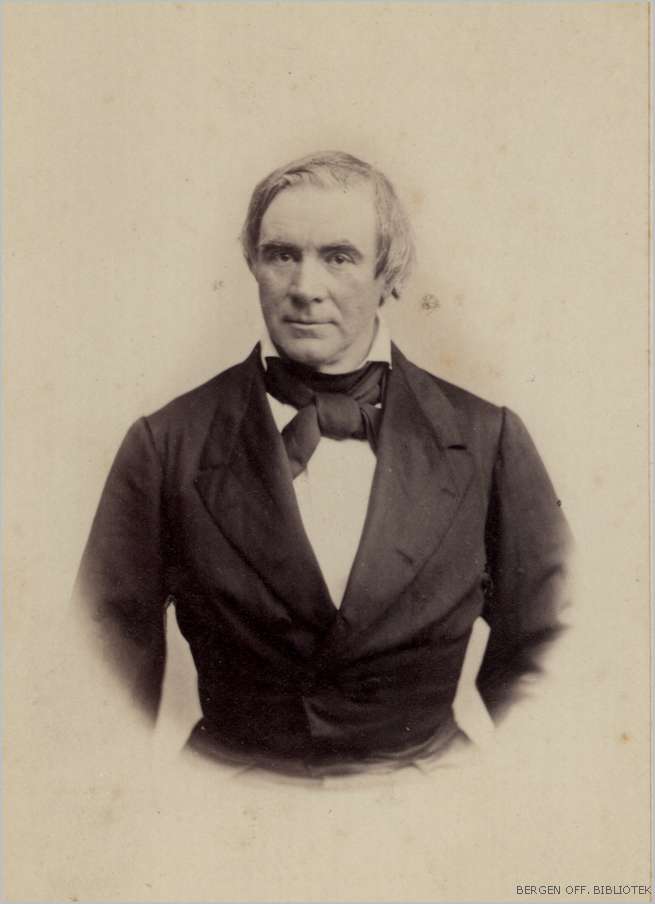
Original belongs to the Ole Bull Collection at Bergen Public Library
Jackson, William Henry,, 1843-1942,, photographer.
Houseboat
[1895]
1 slide : lantern, hand colored ; 3.25 x 4 in.
Notes:
Gift; William P. Meeker; 1971.
Forms part of: Jackson, William Henry, 1843-1942. World's Transportation Commission photograph collection (Library of Congress).
Subjects:
Houseboats.
Japan.
Format: Lantern slides--Hand colored.
Rights Info: No known restrictions on publication.
Repository: Library of Congress, Prints and Photographs Division, Washington, D.C. 20540 USA
Part Of: Jackson, William Henry, 1843-1942. World's Transportation Commission photograph collection (Library of Congress) (DLC) 93845502
Higher resolution image is available (Persistent URL): hdl.loc.gov/loc.pnp/cph.3f06389
Call Number: LC-W7- 1035
The brief was to abstract a Waratah. A WARATAH ...
To be honest, I didn't have the foggiest idea what I was meant to do. We were given a close-up shot of a Waratah (similar to this www.nationalparks.nsw.gov.au/plants-and-animals/waratah) and asked to abstract it using the forms and shapes of the flower.
So, eventually, after a couple of Panadol and Nurofen to ease my headaches thinking about it, I came up with this.
Overall, I think this turned out better than expected. I chose safe primary colours and black ink, and kept the colours solid.
I am happy with the background wash which felt really easy to apply on this mould-made paper.
I am not sure about heavier lines though. They didn't look too good on a scanned print. So, shall leave as is for the time being.
- Bockingford pad (used the back of a painting I didn't like)
- Schmincke watercolours (nice and bright)
- black drawing ink
- felt pen for the lines
'ello, my name is Ghost of Christmas Presents Dickens. You can call me Dickens. I came from Build-a-Domo parts from tofu_catgirl, the last one was my bum which was waiting in London when bad_juju and the toys arrived. I still need a left leg but I can get around OK with my crutch. Happy New Year!
NEW!!! Dickens is now complete thanks to the combined efforts of KDark and zedd2k1! Thank you!!
Delano, Jack,, photographer.
Side show at the Vermont state fair, Rutland
1941 Sept.
1 slide : color.
Notes:
Title from FSA or OWI agency caption.
Transfer from U.S. Office of War Information, 1944.
Subjects:
Vermont State Fair--(1941 :--Rutland, Vt.)
Fairs
United States--Vermont--Rutland
Format: Slides--Color
Rights Info: No known restrictions on publication.
Repository: Library of Congress, Prints and Photographs Division, Washington, D.C. 20540 USA, hdl.loc.gov/loc.pnp/pp.print
Part Of: Farm Security Administration - Office of War Information Collection 11671-3 (DLC) 93845501
General information about the FSA/OWI Color Photographs is available at hdl.loc.gov/loc.pnp/pp.fsac
Higher resolution image is available (Persistent URL): hdl.loc.gov/loc.pnp/fsac.1a33911
Call Number: LC-USF35-41
Bain News Service,, publisher.
[Heifetz]
[between ca. 1915 and ca. 1920]
1 negative : glass ; 5 x 7 in. or smaller.
Notes:
Title from data provided by the Bain News Service on the negative.
Photograph shows violinist Jascha Heifetz (1901-1987).
Forms part of: George Grantham Bain Collection (Library of Congress).
Subjects:
Heifetz, Jascha,--1901-1987.
Format: Glass negatives.
Rights Info: No known restrictions on publication.
Repository: Library of Congress, Prints and Photographs Division, Washington, D.C. 20540 USA, hdl.loc.gov/loc.pnp/pp.print
General information about the Bain Collection is available at hdl.loc.gov/loc.pnp/pp.ggbain
Higher resolution image is available (Persistent URL): hdl.loc.gov/loc.pnp/ggbain.28697
Call Number: LC-B2- 4900-8
Hood, S. J.
Part of the collection: J.C. Williamson collection of photographs.; Also available in an electronic version via the Internet at: nla.gov.au/nla.pic-vn3509141; Seasons in Australasia recorded in programs and ephemera held in J.C. Williamson collection, PROMPT Collection : 1928 commencing 28 April. Theatre Royal, Melbourne ; 1928 commencing 6 October. His Majesty's Theatre, Brisbane ; 1942 commencing 4 July. Theatre Royal, Sydney ; 1943 commencing 21 August. His Majesty's Theatre, Melbourne ; 1947 commencing 9 August. Theatre Royal.
Persistent URL
The Library of Congress Woman portrait 1899
I claim no rights other than colorizing this image if you wish to use let me know and always give due credit to The Library of Congress I have no commercial gain in publishing this image.
Title
[African American woman, three-quarter length portrait, seated with left arm over back of chair, facing front]
Contributor Names
Du Bois, W. E. B. (William Edward Burghardt), 1868-1963, collector
Created / Published
[1899 or 1900]
Subject Headings
- African Americans--Women--Georgia--1890-1900
- Clothing & dress--Georgia--1890-1900
Headings
Gelatin silver prints--1890-1900.
Portrait photographs--1890-1900.
Notes
- In album (disbound): Types of American Negroes, compiled and prepared by W.E.B. Du Bois, v. 1, no. 90.
- B&w copy prints for LOT 11930 are provided as surrogates of original photographs for reference use in P&P Reading Room. A microfilm surrogate is also available.
- Forms part of: Daniel Murray Collection (Library of Congress).
- Original albums filed in PR 12 under LOT 11930
Medium
1 photographic print : gelatin silver.
Call Number/Physical Location
LOT 11930, no. 90 [P&P]
Source Collection
Du Bois, W. E. B. (William Edward Burghardt), 1868-1963. Du Bois albums of photographs of African Americans in Georgia exhibited at the Paris Exposition Universelle in 1900
Repository
Library of Congress Prints and Photographs Division Washington, D.C. 20540 USA
Digital Id
cph 3c24687 //hdl.loc.gov/loc.pnp/cph.3c24687
Library of Congress Control Number
99472220
Reproduction Number
LC-USZ62-124687 (b&w film copy neg.)
Rights Advisory
No known restrictions on publication.
Access Advisory
Original albums; Restricted access; Served by appointment only.
Contributor(s):
Helene Fuld Health Foundation.
Publication:
[Trenton, N.J.? : Helene Fuld Health Foundation, between 1961 and 1963]
Language(s):
English
Format:
Still image
Subject(s):
Nurses
Clothing
Genre(s):
Photographs
Related Title(s):
Hidden treasure
Extent:
1 photographic print : 26 x 21 cm.
Technique:
hand-colored
NLM Unique ID:
101594810
NLM Image ID:
A033010
Permanent Link:
resource.nlm.nih.gov/101594810
NLM Hidden treasure p. 55
Margolies, John,, photographer.
Fountain of Youth billboard, Route A1A, Florida
1979.
1 photograph : color transparency ; 35 mm (slide format).
Notes:
Title, date and keywords based on information provided by the photographer.
Purchase; John Margolies 2010 (DLC/PP-2010:191).
Credit line: John Margolies Roadside America photograph archive (1972-2008), Library of Congress, Prints and Photographs Division.
Please use digital image: original slide is kept in cold storage for preservation.
Forms part of: John Margolies Roadside America photograph archive (1972-2008).
Subjects:
Billboards--1970-1980.
United States--Florida.
Format: Slides--1970-1980.--Color
Rights Info: No known restrictions on publication. For more information, see "John Margolies Roadside America Photograph Archive - Rights and Restrictions Information" www.loc.gov/rr/print/res/723_marg.html
Repository: Library of Congress, Prints and Photographs Division, Washington, D.C. 20540 USA, hdl.loc.gov/loc.pnp/pp.print
Part Of: Margolies, John John Margolies Roadside America photograph archive (DLC) 2010650110
General information about the John Margolies Roadside America photograph archive is available at hdl.loc.gov/loc.pnp/pp.mrg
Higher resolution image is available (Persistent URL): hdl.loc.gov/loc.pnp/mrg.03578
Call Number: LC-MA05- 3578