View allAll Photos Tagged Controlla
.……………………………….
- “Do not touch me…”
Gospel of John, chapter 20, verse 17 (John 20, 17)
+++++++++++++++++++++
I was with you, Father,
at the moment of creation.
I could not fail to know the elements and master them.
What would it be to
lift the stone of a tomb
compared to your will as Creator?
You taught me how the world is composed
and made me your son,
but I was a participant
in creation.
The followers who followed me
believed in You and in me,
Your son.
They will be happy to see me rise again,
but I will weep
for those still chained
in hell,
and my hands
will silence their strident cries.
Poor souls,
who migrate toward nothingness.
The fear,
God,
of these blind depths,
of these people who have not had
the splendor of your reins.
Because you do not know,
Father,
what it means
to sit at Your right hand
as a king.
A gentle but not cowardly king
who mediates
between your divine wrath
and the lust and unbelief of man.
I,
who am just,
love man
and ask your forgiveness
through this slow agony
that has lasted for centuries
for the world.
Behold, Lord, I give you back my spirit
in the form of a white dove
that will fly toward heaven.
And no other way
have you built peace
than with the groins of a bird
that brings the olive branch to your lips.
Father,
I will rise again,
and I will sit at your right hand.
POEM OF THE CROSS - Alda Merini
+++++++++++++++++++++++++++++++++++++
- “Noli me tangere …”
Vangelo di Giovanni, capitolo 20, versetto 17 (Giovanni 20, 17)
++++++++++++++++++
- Ero con te, Padre,
al momento della creazione.
Non potevo non conoscere gli elementi e dominarli.
Cosa vuoi che sia
sollevare la pietra di un sepolcro
in confronto alla tua volontà di Creatore.
Tu mi hai insegnato come è composto il mondo
e mi hai reso figlio,
ma ero partecipe
della creazione.
I seguaci che mi hanno seguito
hanno creduto in Te e in me,
Tuo figlio.
Saranno felici di vedermi risorgere,
ma io piangerò
per quelli che sono ancora incatenati
nell'inferno
e le mie mani
faranno tacere i loro stridori.
Povere anime,
che migrano verso il nulla.
Lo spavento,
Dio,
di queste profondità cieche,
di questa gente che non ha avuto
lo splendore delle tue redini.
Perché tu non sai,
Padre,
cosa vuol dire
sedere alla Tua destra
in veste di re.
Un re mite ma non codardo
che fa da intermediario
tra la tua collera divina
e la lussuria e la miscredenza dell'uomo.
Io,
che sono giusto,
amo l'uomo
e ti chiedo perdono
attraverso questa lenta agonia
che dura da secoli
per il mondo.
Ecco, Signore, io ti rendo il mio spirito
in forma di bianca colomba
che volerà verso il cielo.
E non altrimenti
Tu hai costruito la pace
se non con gli inguini di un uccello
che porta l'ulivo alle tue labbra.
Padre,
io risorgerò,
e siederò alla Tua destra.
POEMA DELLA CROCE - Alda Merini
-----------------------------------------------------------------
click to activate the icon of slideshow: the small triangle inscribed in the small rectangle, at the top right, in the photostream;
or…. Press the “L” button to zoom in the image;
clicca sulla piccola icona per attivare lo slideshow: sulla facciata principale del photostream, in alto a destra c'è un piccolo rettangolo (rappresenta il monitor) con dentro un piccolo triangolo nero;
oppure…. premi il tasto “L” per ingrandire l'immagine;
www.worldphoto.org/sony-world-photography-awards/winners-...
www.fotografidigitali.it/gallery/2726/opere-italiane-segn...
…………………………………………………………………
This photographic story, with text, which I propose as my last work for Flickr in 2025 (2026 is now just a few minutes away), tells of the procession of the Holy Crucifix of Aracoeli, which took place in March of this year 2025 in the town of San Marco d'Alunzio (in the province of Messina). The procession normally begins on the morning of the last Friday of March each year, but there is an exception to this rule: when it coincides with Good Friday, then the procession is brought forward to the previous Friday. The procession of the Holy Crucifix of Aracoeli is an ancient penitential rite. On the feast day of the Crucifix, Holy Mass is celebrated in the Church of Aracoeli in San Marco d'Alunzio. On this occasion, the Holy Crucifix is celebrated. Crucifix (which is located in the church at the end of the right nave, at its feet is the painting of the Virgin of Sorrows pierced by seven swords), Christ on the Cross is removed by the devotees from the hook on which it is hanging, is carried outside the church, here it is raised and fixed on the float, the sermon of the priest who has climbed onto the float next to the Crucifix takes over, under the Cross is fixed the painting of His Sorrowful Mother, then they are carried in procession by the men (and women) in blue hoods called "babbaluti", they proceed invoking the pity and mercy of the Lord with a constant and rhythmic lament, saying "Signuri, Misericordia, Pietà!"; this is the norm, but this year the bad weather has brought some changes, the float on which they hoisted the SS. The crucifix with the kneeling babbaluti was not located in the churchyard, but inside the church. Christ was covered with a large sheet of cellophane to protect it from the rain, while the painting of the Madonna with swords in her heart was placed at her Son's feet only after the procession returned to the church. San Marco d'Alunzio is a charming town in the Messina area, located in the Nebrodi Mountains of Sicily. The procession takes place in honor of the Holy Crucifix of Araceli. This religious-penitential event is also known as the "procession of the babbaluti." These are those who, by vow or grace received, have chosen to carry the fercolo containing the crucifix and the painting on their shoulders in procession. they head to the nearby Church of Santa Maria dei Poveri or to some private home nearby where, sheltered from the curiosity of the faithful, they wear a simple but characteristic indigo-colored cloth habit, consisting of a tunic and a conical hood that covers the entire body and leaves only the eyes and hands free. It is not uncommon, however, for the penitents, rendered anonymous by the habit they wear, to also include women, who, to avoid any possibility of recognition, wear a pair of gloves; The babbaluti are 33 in number to commemorate the 33 years of Christ. The number is odd, in fact the 33rd babbaluto does not carry the vara. He (should be the “capo vara”) proceeds backwards, looking towards Christ and his Mother, and at the same time checks that everything is in order among the babbaluti, guiding the vara along the path, even if it is moving backwards (this is a way of proceeding in carrying the vara or fercolo, present in various Sicilian religious processions). So, the 32 (+1) "babbaluti" carry on their shoulders the float that bears the Holy Crucifix of the Araceli church (the statue of Christ was created by Scipione Li Volsi, in the year 1652, he was a sculptor and plasterer of the Sicilian Baroque), at whose feet, on the float, is tied the painting of Our Lady of Sorrows, whose chest appears pierced by seven swords (it is an 18th century painting), however, as already described, this year the painting, to protect it from the rain, was placed on the float only upon the return of the procession to the church. Before the procession begins, the babbaluti advance barefoot, wearing only heavy, hand-knitted stockings of raw wool. Before entering the church, they must walk a path of purification. When they approach the ancient church of Araceli, they bow and kiss the ground, thus receiving permission to enter the church. This, however, occurs through a side door, called the "false door" (in Sicilian dialect, "porta fausa"). Having entered the church from the side, they now exit through the main entrance, allowing them to take their places, kneeling in front and behind the float. To enter the "porta fausa," the babbaluti proceed in pairs, with the last babbaluti, the eldest, proceeding alone. After the priest's long-awaited speech, the procession can begin, winding through the streets of the picturesque and welcoming village of San Marco d'Alunzio. Along the way, the Babbaluti pace their steps, accompanying the mournful and plaintive jugular vein that invokes the Lord. Devout men and women walk alongside the Babbaluti, walking alongside the float, touching it, sometimes caressing it... just to have physical (and spiritual) contact with it. Finally, after completing a specific route, the procession returns to the ancient church (of Norman origins) of Aracoeli. Every time I attend this touching event, I am completely overwhelmed by emotion (which, however, I cannot abandon, lest I lose concentration while taking photos). The highlight is when the crucified Christ is removed from the hook fixed to the wall by expert men, and then carried (it seems to float) above the heads of the devotees, supported aloft with their hands, and hoisted and secured to the float. In these moments of intense emotion, it is common to see in the eyes of the devotees, shining with tears, that profound emotion of their relationship with this Christ, which has lasted forever: it is as if they were in the presence of the true Christ, in flesh and blood. This is the atmosphere experienced in those moments, this is the magic of the procession of the Most Holy Crucifix and His Mother, represented by the painting of Our Lady of Sorrows pierced by seven swords (an iconography of Spanish origin).
+++++++++++++++++++++++++++++++++++++++++
Il presente racconto fotografico, con testo, che propongo come ultimo mio lavoro per Flickr dell’anno 2025 (oramai mancano pochi minuti al 2026) parla della processione del Santissimo Crocifisso di Aracoeli che si è tenuto nel marzo di quest’anno 2025 nel paese di San Marco d’Alunzio (in provincia di Messina). La processione normalmente inizia la mattina dell’ultimo venerdì del mese di marzo di ogni anno, c’è però una eccezione a questa regola, quando si realizza la coincidenza col Venerdì Santo, allora la processione viene anticipata al venerdì precedente. Quella del SS.Crocifisso di Aracoeli è un antico rito penitenziale, il giorno della festa del Crocifisso, a San Marco d'Alunzio si celebra la S. Messa nella Chiesa dell'Aracoeli, in questa occasione il SS. Crocifisso (che si trova nella chiesa in fondo alla navata di destra, ai suoi piedi è posto il quadro della Vergine Addolorata trafitta da sette spade), il Cristo sulla Croce viene tolto dai devoti dal gancio sul quale è appeso, viene portato all’esterno della chiesa, qui viene innalzato e fissato sulla vara, subentra il sermone del sacerdote salito sulla vara accanto al Crocifisso, sotto alla Croce viene fissato il quadro di sua Madre Addolorata, quindi vengono portati in processione dagli uomini (e donne) incappucciati di colore blu detti “babbaluti”, essi procedono invocando la pietà e la misericordia del Signore con un costante e ritmato lamento, dicendo “Signuri, Misericordia, Pietà!”; questa è la norma, ma quest’anno il cattivo tempo ha portato qualche cambiamento, la vara sulla quale hanno issato il SS. Crocifisso con i babbaluti messi in ginocchio, non si trovava sul sagrato davanti la chiesa, ma era dentro la chiesa, il Cristo veniva ricoperto con un ampio foglio di cellophane per proteggerlo dalla pioggia, mentre il quadro della Madonna con le spade nel cuore, è stato messo ai piedi di Suo Figlio solo al rientro della processione nella chiesa. San Marco d’Alunzio è un ameno paese del territorio Messinese, sito sui monti Nebrodi, in Sicilia; la processione si svolge proprio in onore del Santissimo Crocifisso di Araceli, è questa una ricorrenza religioso-penitenziale conosciuta anche come "processione dei babbaluti", essi sono coloro che per voto o per grazia ricevuta, hanno deciso di portare in processione sulle loro spalle il fercolo con il Crocifisso ed il quadro; essi si dirigono nella vicina Chiesa di Santa Maria dei Poveri o in qualche abitazione privata lì vicino dove, al riparo dalla curiosità dei fedeli, indossano un semplice ma caratteristico saio di tela di colore indaco, costituito da una tunica e un cappuccio di forma conica tale da coprire l'intero corpo e lasciare liberi solo gli occhi e le mani, non è raro purtuttavia che tra i penitenti, resi anonimi dal saio che indossano, vi siano anche delle donne, le quali per evitare qualsiasi possibilità di riconoscimento, indossano un paio di guanti; i babbaluti sono in numero di 33 per rievocare i 33 anni di Cristo, il numero è dispari, infatti il 33° babbaluto non porta la vara, egli (dovrebbe essere il “capo vara”) procede all’indietro, rivolgendo lo sguardo al Cristo ed a sua Madre, e nel contempo controlla che tutto sia in ordine tra i babbaluti, guidando la vara lungo il percorso, anche se il suo andamento è a ritroso, (questo è un modo di procedere nel portare la vara o fercolo, presente in diverse processioni religiose siciliane). Quindi, i 32 (+1) "babbaluti" portano sulle loro spalle la vara che reca il Santo Crocifisso della chiesa dell’Araceli (la statua del Cristo è stata creata da Scipione Li Volsi, nell'anno 1652, egli fu uno scultore e stuccatore del barocco SIciliano), ai cui piedi, sulla vara, viene legato il quadro della Madonna Addolorata, il cui petto appare trafitto da sette spade ( è un dipinto del XVIII secolo), purtuttavia come già descritto, quest’anno il quadro, per proteggerlo dalla pioggia, è stato messo sulla vara solo al rientro della processione in chiesa. I babbaluti prima dell'inizio della processione avanzano a piedi scalzi indossando solo delle pesanti calze di lana grezza realizzate a mano, devono percorrere, prima di entrare in chiesa, un cammino di purificazione: quando essi giungono in prossimità dell'antica chiesa dell'Araceli, essi si chinano e baciano in terra, ricevendo in tal modo il permesso per poter accedere dentro la chiesa, questo però avviene da una porta laterale, chiamata "falsa porta" (In dialetto siciliano “porta fausa”), una volta entrati in chiesa lateralmente, ora fuoriescono dall'ingresso principale, potendo così prendere posto, inginocchiandosi sul davanti ed alle spalle, della vara; i babbaluti per accedere alla “porta fausa” procedono in coppia, l’ultimo babbaluto procede da solo, lui è il più anziano tra i babbaluti; seguirà l'atteso discorso del sacerdote, terminato, potrà iniziare la processione che si svolge per le vie del pittoresco ed accogliente paese di San Marco d'Alunzio. Lungo il percorso i Babbaluti cadenzano la propria andatura accompagnandosi alla mesta e lamentosa giugulatoria che invoca il Signore . Ci sono uomini e donne devoti che procedono assieme ai babbaluti camminando a lato della vara, toccandola, ora accarezzandola...pur di avere un contatto fisico (e di rimando spirituale) con essa. Infine, dopo aver compiuto un preciso percorso, la processione fa rientro nell'antica chiesa (di origini Normanne) dell'Aracoeli. Ogniqualvolta sono presente a questa toccante ricorrenza sono completamente inondato da emozioni (alle quali però non posso abbandonarmi, perderei la concentrazione nel realizzare le foto), il momento clou è quando il Cristo Crocifisso viene tolto dal gancio fissato sul muro da uomini esperti, per poi essere portato (sembra galleggiare) sopra la testa dei devoti, sostenuto in alto con le mani, ed essere issato e fissato sulla vara; in questi momenti di intensa emozione è comune vedere negli occhi dei devoti, lucidi di lacrime, quella emozione profonda del loro rapporto con questo Cristo, che dura da sempre: è come se si trovassero al cospetto del Cristo vero, in carne ed ossa, questa è l’atmosfera che si vive in quei momenti, questa è la magia della processione del SS. Crocifisso e di Sua Madre, rappresentata dal quadro dell’Addolorata trafitta da sette spade (iconografia di origine spagnola).
++++++++++++++++++++++++++++++++++++++++
.……………………………….
- “Do not touch me…”
Gospel of John, chapter 20, verse 17 (John 20, 17)
+++++++++++++++++++++
I was with you, Father,
at the moment of creation.
I could not fail to know the elements and master them.
What would it be to
lift the stone of a tomb
compared to your will as Creator?
You taught me how the world is composed
and made me your son,
but I was a participant
in creation.
The followers who followed me
believed in You and in me,
Your son.
They will be happy to see me rise again,
but I will weep
for those still chained
in hell,
and my hands
will silence their strident cries.
Poor souls,
who migrate toward nothingness.
The fear,
God,
of these blind depths,
of these people who have not had
the splendor of your reins.
Because you do not know,
Father,
what it means
to sit at Your right hand
as a king.
A gentle but not cowardly king
who mediates
between your divine wrath
and the lust and unbelief of man.
I,
who am just,
love man
and ask your forgiveness
through this slow agony
that has lasted for centuries
for the world.
Behold, Lord, I give you back my spirit
in the form of a white dove
that will fly toward heaven.
And no other way
have you built peace
than with the groins of a bird
that brings the olive branch to your lips.
Father,
I will rise again,
and I will sit at your right hand.
POEM OF THE CROSS - Alda Merini
+++++++++++++++++++++++++++++++++++++
- “Noli me tangere …”
Vangelo di Giovanni, capitolo 20, versetto 17 (Giovanni 20, 17)
++++++++++++++++++
- Ero con te, Padre,
al momento della creazione.
Non potevo non conoscere gli elementi e dominarli.
Cosa vuoi che sia
sollevare la pietra di un sepolcro
in confronto alla tua volontà di Creatore.
Tu mi hai insegnato come è composto il mondo
e mi hai reso figlio,
ma ero partecipe
della creazione.
I seguaci che mi hanno seguito
hanno creduto in Te e in me,
Tuo figlio.
Saranno felici di vedermi risorgere,
ma io piangerò
per quelli che sono ancora incatenati
nell'inferno
e le mie mani
faranno tacere i loro stridori.
Povere anime,
che migrano verso il nulla.
Lo spavento,
Dio,
di queste profondità cieche,
di questa gente che non ha avuto
lo splendore delle tue redini.
Perché tu non sai,
Padre,
cosa vuol dire
sedere alla Tua destra
in veste di re.
Un re mite ma non codardo
che fa da intermediario
tra la tua collera divina
e la lussuria e la miscredenza dell'uomo.
Io,
che sono giusto,
amo l'uomo
e ti chiedo perdono
attraverso questa lenta agonia
che dura da secoli
per il mondo.
Ecco, Signore, io ti rendo il mio spirito
in forma di bianca colomba
che volerà verso il cielo.
E non altrimenti
Tu hai costruito la pace
se non con gli inguini di un uccello
che porta l'ulivo alle tue labbra.
Padre,
io risorgerò,
e siederò alla Tua destra.
POEMA DELLA CROCE - Alda Merini
-----------------------------------------------------------------
click to activate the icon of slideshow: the small triangle inscribed in the small rectangle, at the top right, in the photostream;
or…. Press the “L” button to zoom in the image;
clicca sulla piccola icona per attivare lo slideshow: sulla facciata principale del photostream, in alto a destra c'è un piccolo rettangolo (rappresenta il monitor) con dentro un piccolo triangolo nero;
oppure…. premi il tasto “L” per ingrandire l'immagine;
www.worldphoto.org/sony-world-photography-awards/winners-...
www.fotografidigitali.it/gallery/2726/opere-italiane-segn...
…………………………………………………………………
This photographic story, with text, which I propose as my last work for Flickr in 2025 (2026 is now just a few minutes away), tells of the procession of the Holy Crucifix of Aracoeli, which took place in March of this year 2025 in the town of San Marco d'Alunzio (in the province of Messina). The procession normally begins on the morning of the last Friday of March each year, but there is an exception to this rule: when it coincides with Good Friday, then the procession is brought forward to the previous Friday. The procession of the Holy Crucifix of Aracoeli is an ancient penitential rite. On the feast day of the Crucifix, Holy Mass is celebrated in the Church of Aracoeli in San Marco d'Alunzio. On this occasion, the Holy Crucifix is celebrated. Crucifix (which is located in the church at the end of the right nave, at its feet is the painting of the Virgin of Sorrows pierced by seven swords), Christ on the Cross is removed by the devotees from the hook on which it is hanging, is carried outside the church, here it is raised and fixed on the float, the sermon of the priest who has climbed onto the float next to the Crucifix takes over, under the Cross is fixed the painting of His Sorrowful Mother, then they are carried in procession by the men (and women) in blue hoods called "babbaluti", they proceed invoking the pity and mercy of the Lord with a constant and rhythmic lament, saying "Signuri, Misericordia, Pietà!"; this is the norm, but this year the bad weather has brought some changes, the float on which they hoisted the SS. The crucifix with the kneeling babbaluti was not located in the churchyard, but inside the church. Christ was covered with a large sheet of cellophane to protect it from the rain, while the painting of the Madonna with swords in her heart was placed at her Son's feet only after the procession returned to the church. San Marco d'Alunzio is a charming town in the Messina area, located in the Nebrodi Mountains of Sicily. The procession takes place in honor of the Holy Crucifix of Araceli. This religious-penitential event is also known as the "procession of the babbaluti." These are those who, by vow or grace received, have chosen to carry the fercolo containing the crucifix and the painting on their shoulders in procession. they head to the nearby Church of Santa Maria dei Poveri or to some private home nearby where, sheltered from the curiosity of the faithful, they wear a simple but characteristic indigo-colored cloth habit, consisting of a tunic and a conical hood that covers the entire body and leaves only the eyes and hands free. It is not uncommon, however, for the penitents, rendered anonymous by the habit they wear, to also include women, who, to avoid any possibility of recognition, wear a pair of gloves; The babbaluti are 33 in number to commemorate the 33 years of Christ. The number is odd, in fact the 33rd babbaluto does not carry the vara. He (should be the “capo vara”) proceeds backwards, looking towards Christ and his Mother, and at the same time checks that everything is in order among the babbaluti, guiding the vara along the path, even if it is moving backwards (this is a way of proceeding in carrying the vara or fercolo, present in various Sicilian religious processions). So, the 32 (+1) "babbaluti" carry on their shoulders the float that bears the Holy Crucifix of the Araceli church (the statue of Christ was created by Scipione Li Volsi, in the year 1652, he was a sculptor and plasterer of the Sicilian Baroque), at whose feet, on the float, is tied the painting of Our Lady of Sorrows, whose chest appears pierced by seven swords (it is an 18th century painting), however, as already described, this year the painting, to protect it from the rain, was placed on the float only upon the return of the procession to the church. Before the procession begins, the babbaluti advance barefoot, wearing only heavy, hand-knitted stockings of raw wool. Before entering the church, they must walk a path of purification. When they approach the ancient church of Araceli, they bow and kiss the ground, thus receiving permission to enter the church. This, however, occurs through a side door, called the "false door" (in Sicilian dialect, "porta fausa"). Having entered the church from the side, they now exit through the main entrance, allowing them to take their places, kneeling in front and behind the float. To enter the "porta fausa," the babbaluti proceed in pairs, with the last babbaluti, the eldest, proceeding alone. After the priest's long-awaited speech, the procession can begin, winding through the streets of the picturesque and welcoming village of San Marco d'Alunzio. Along the way, the Babbaluti pace their steps, accompanying the mournful and plaintive jugular vein that invokes the Lord. Devout men and women walk alongside the Babbaluti, walking alongside the float, touching it, sometimes caressing it... just to have physical (and spiritual) contact with it. Finally, after completing a specific route, the procession returns to the ancient church (of Norman origins) of Aracoeli. Every time I attend this touching event, I am completely overwhelmed by emotion (which, however, I cannot abandon, lest I lose concentration while taking photos). The highlight is when the crucified Christ is removed from the hook fixed to the wall by expert men, and then carried (it seems to float) above the heads of the devotees, supported aloft with their hands, and hoisted and secured to the float. In these moments of intense emotion, it is common to see in the eyes of the devotees, shining with tears, that profound emotion of their relationship with this Christ, which has lasted forever: it is as if they were in the presence of the true Christ, in flesh and blood. This is the atmosphere experienced in those moments, this is the magic of the procession of the Most Holy Crucifix and His Mother, represented by the painting of Our Lady of Sorrows pierced by seven swords (an iconography of Spanish origin).
+++++++++++++++++++++++++++++++++++++++++
Il presente racconto fotografico, con testo, che propongo come ultimo mio lavoro per Flickr dell’anno 2025 (oramai mancano pochi minuti al 2026) parla della processione del Santissimo Crocifisso di Aracoeli che si è tenuto nel marzo di quest’anno 2025 nel paese di San Marco d’Alunzio (in provincia di Messina). La processione normalmente inizia la mattina dell’ultimo venerdì del mese di marzo di ogni anno, c’è però una eccezione a questa regola, quando si realizza la coincidenza col Venerdì Santo, allora la processione viene anticipata al venerdì precedente. Quella del SS.Crocifisso di Aracoeli è un antico rito penitenziale, il giorno della festa del Crocifisso, a San Marco d'Alunzio si celebra la S. Messa nella Chiesa dell'Aracoeli, in questa occasione il SS. Crocifisso (che si trova nella chiesa in fondo alla navata di destra, ai suoi piedi è posto il quadro della Vergine Addolorata trafitta da sette spade), il Cristo sulla Croce viene tolto dai devoti dal gancio sul quale è appeso, viene portato all’esterno della chiesa, qui viene innalzato e fissato sulla vara, subentra il sermone del sacerdote salito sulla vara accanto al Crocifisso, sotto alla Croce viene fissato il quadro di sua Madre Addolorata, quindi vengono portati in processione dagli uomini (e donne) incappucciati di colore blu detti “babbaluti”, essi procedono invocando la pietà e la misericordia del Signore con un costante e ritmato lamento, dicendo “Signuri, Misericordia, Pietà!”; questa è la norma, ma quest’anno il cattivo tempo ha portato qualche cambiamento, la vara sulla quale hanno issato il SS. Crocifisso con i babbaluti messi in ginocchio, non si trovava sul sagrato davanti la chiesa, ma era dentro la chiesa, il Cristo veniva ricoperto con un ampio foglio di cellophane per proteggerlo dalla pioggia, mentre il quadro della Madonna con le spade nel cuore, è stato messo ai piedi di Suo Figlio solo al rientro della processione nella chiesa. San Marco d’Alunzio è un ameno paese del territorio Messinese, sito sui monti Nebrodi, in Sicilia; la processione si svolge proprio in onore del Santissimo Crocifisso di Araceli, è questa una ricorrenza religioso-penitenziale conosciuta anche come "processione dei babbaluti", essi sono coloro che per voto o per grazia ricevuta, hanno deciso di portare in processione sulle loro spalle il fercolo con il Crocifisso ed il quadro; essi si dirigono nella vicina Chiesa di Santa Maria dei Poveri o in qualche abitazione privata lì vicino dove, al riparo dalla curiosità dei fedeli, indossano un semplice ma caratteristico saio di tela di colore indaco, costituito da una tunica e un cappuccio di forma conica tale da coprire l'intero corpo e lasciare liberi solo gli occhi e le mani, non è raro purtuttavia che tra i penitenti, resi anonimi dal saio che indossano, vi siano anche delle donne, le quali per evitare qualsiasi possibilità di riconoscimento, indossano un paio di guanti; i babbaluti sono in numero di 33 per rievocare i 33 anni di Cristo, il numero è dispari, infatti il 33° babbaluto non porta la vara, egli (dovrebbe essere il “capo vara”) procede all’indietro, rivolgendo lo sguardo al Cristo ed a sua Madre, e nel contempo controlla che tutto sia in ordine tra i babbaluti, guidando la vara lungo il percorso, anche se il suo andamento è a ritroso, (questo è un modo di procedere nel portare la vara o fercolo, presente in diverse processioni religiose siciliane). Quindi, i 32 (+1) "babbaluti" portano sulle loro spalle la vara che reca il Santo Crocifisso della chiesa dell’Araceli (la statua del Cristo è stata creata da Scipione Li Volsi, nell'anno 1652, egli fu uno scultore e stuccatore del barocco SIciliano), ai cui piedi, sulla vara, viene legato il quadro della Madonna Addolorata, il cui petto appare trafitto da sette spade ( è un dipinto del XVIII secolo), purtuttavia come già descritto, quest’anno il quadro, per proteggerlo dalla pioggia, è stato messo sulla vara solo al rientro della processione in chiesa. I babbaluti prima dell'inizio della processione avanzano a piedi scalzi indossando solo delle pesanti calze di lana grezza realizzate a mano, devono percorrere, prima di entrare in chiesa, un cammino di purificazione: quando essi giungono in prossimità dell'antica chiesa dell'Araceli, essi si chinano e baciano in terra, ricevendo in tal modo il permesso per poter accedere dentro la chiesa, questo però avviene da una porta laterale, chiamata "falsa porta" (In dialetto siciliano “porta fausa”), una volta entrati in chiesa lateralmente, ora fuoriescono dall'ingresso principale, potendo così prendere posto, inginocchiandosi sul davanti ed alle spalle, della vara; i babbaluti per accedere alla “porta fausa” procedono in coppia, l’ultimo babbaluto procede da solo, lui è il più anziano tra i babbaluti; seguirà l'atteso discorso del sacerdote, terminato, potrà iniziare la processione che si svolge per le vie del pittoresco ed accogliente paese di San Marco d'Alunzio. Lungo il percorso i Babbaluti cadenzano la propria andatura accompagnandosi alla mesta e lamentosa giugulatoria che invoca il Signore . Ci sono uomini e donne devoti che procedono assieme ai babbaluti camminando a lato della vara, toccandola, ora accarezzandola...pur di avere un contatto fisico (e di rimando spirituale) con essa. Infine, dopo aver compiuto un preciso percorso, la processione fa rientro nell'antica chiesa (di origini Normanne) dell'Aracoeli. Ogniqualvolta sono presente a questa toccante ricorrenza sono completamente inondato da emozioni (alle quali però non posso abbandonarmi, perderei la concentrazione nel realizzare le foto), il momento clou è quando il Cristo Crocifisso viene tolto dal gancio fissato sul muro da uomini esperti, per poi essere portato (sembra galleggiare) sopra la testa dei devoti, sostenuto in alto con le mani, ed essere issato e fissato sulla vara; in questi momenti di intensa emozione è comune vedere negli occhi dei devoti, lucidi di lacrime, quella emozione profonda del loro rapporto con questo Cristo, che dura da sempre: è come se si trovassero al cospetto del Cristo vero, in carne ed ossa, questa è l’atmosfera che si vive in quei momenti, questa è la magia della processione del SS. Crocifisso e di Sua Madre, rappresentata dal quadro dell’Addolorata trafitta da sette spade (iconografia di origine spagnola).
++++++++++++++++++++++++++++++++++++++++
.……………………………….
- “Do not touch me…”
Gospel of John, chapter 20, verse 17 (John 20, 17)
+++++++++++++++++++++
I was with you, Father,
at the moment of creation.
I could not fail to know the elements and master them.
What would it be to
lift the stone of a tomb
compared to your will as Creator?
You taught me how the world is composed
and made me your son,
but I was a participant
in creation.
The followers who followed me
believed in You and in me,
Your son.
They will be happy to see me rise again,
but I will weep
for those still chained
in hell,
and my hands
will silence their strident cries.
Poor souls,
who migrate toward nothingness.
The fear,
God,
of these blind depths,
of these people who have not had
the splendor of your reins.
Because you do not know,
Father,
what it means
to sit at Your right hand
as a king.
A gentle but not cowardly king
who mediates
between your divine wrath
and the lust and unbelief of man.
I,
who am just,
love man
and ask your forgiveness
through this slow agony
that has lasted for centuries
for the world.
Behold, Lord, I give you back my spirit
in the form of a white dove
that will fly toward heaven.
And no other way
have you built peace
than with the groins of a bird
that brings the olive branch to your lips.
Father,
I will rise again,
and I will sit at your right hand.
POEM OF THE CROSS - Alda Merini
+++++++++++++++++++++++++++++++++++++
- “Noli me tangere …”
Vangelo di Giovanni, capitolo 20, versetto 17 (Giovanni 20, 17)
++++++++++++++++++
- Ero con te, Padre,
al momento della creazione.
Non potevo non conoscere gli elementi e dominarli.
Cosa vuoi che sia
sollevare la pietra di un sepolcro
in confronto alla tua volontà di Creatore.
Tu mi hai insegnato come è composto il mondo
e mi hai reso figlio,
ma ero partecipe
della creazione.
I seguaci che mi hanno seguito
hanno creduto in Te e in me,
Tuo figlio.
Saranno felici di vedermi risorgere,
ma io piangerò
per quelli che sono ancora incatenati
nell'inferno
e le mie mani
faranno tacere i loro stridori.
Povere anime,
che migrano verso il nulla.
Lo spavento,
Dio,
di queste profondità cieche,
di questa gente che non ha avuto
lo splendore delle tue redini.
Perché tu non sai,
Padre,
cosa vuol dire
sedere alla Tua destra
in veste di re.
Un re mite ma non codardo
che fa da intermediario
tra la tua collera divina
e la lussuria e la miscredenza dell'uomo.
Io,
che sono giusto,
amo l'uomo
e ti chiedo perdono
attraverso questa lenta agonia
che dura da secoli
per il mondo.
Ecco, Signore, io ti rendo il mio spirito
in forma di bianca colomba
che volerà verso il cielo.
E non altrimenti
Tu hai costruito la pace
se non con gli inguini di un uccello
che porta l'ulivo alle tue labbra.
Padre,
io risorgerò,
e siederò alla Tua destra.
POEMA DELLA CROCE - Alda Merini
-----------------------------------------------------------------
click to activate the icon of slideshow: the small triangle inscribed in the small rectangle, at the top right, in the photostream;
or…. Press the “L” button to zoom in the image;
clicca sulla piccola icona per attivare lo slideshow: sulla facciata principale del photostream, in alto a destra c'è un piccolo rettangolo (rappresenta il monitor) con dentro un piccolo triangolo nero;
oppure…. premi il tasto “L” per ingrandire l'immagine;
www.worldphoto.org/sony-world-photography-awards/winners-...
www.fotografidigitali.it/gallery/2726/opere-italiane-segn...
…………………………………………………………………
This photographic story, with text, which I propose as my last work for Flickr in 2025 (2026 is now just a few minutes away), tells of the procession of the Holy Crucifix of Aracoeli, which took place in March of this year 2025 in the town of San Marco d'Alunzio (in the province of Messina). The procession normally begins on the morning of the last Friday of March each year, but there is an exception to this rule: when it coincides with Good Friday, then the procession is brought forward to the previous Friday. The procession of the Holy Crucifix of Aracoeli is an ancient penitential rite. On the feast day of the Crucifix, Holy Mass is celebrated in the Church of Aracoeli in San Marco d'Alunzio. On this occasion, the Holy Crucifix is celebrated. Crucifix (which is located in the church at the end of the right nave, at its feet is the painting of the Virgin of Sorrows pierced by seven swords), Christ on the Cross is removed by the devotees from the hook on which it is hanging, is carried outside the church, here it is raised and fixed on the float, the sermon of the priest who has climbed onto the float next to the Crucifix takes over, under the Cross is fixed the painting of His Sorrowful Mother, then they are carried in procession by the men (and women) in blue hoods called "babbaluti", they proceed invoking the pity and mercy of the Lord with a constant and rhythmic lament, saying "Signuri, Misericordia, Pietà!"; this is the norm, but this year the bad weather has brought some changes, the float on which they hoisted the SS. The crucifix with the kneeling babbaluti was not located in the churchyard, but inside the church. Christ was covered with a large sheet of cellophane to protect it from the rain, while the painting of the Madonna with swords in her heart was placed at her Son's feet only after the procession returned to the church. San Marco d'Alunzio is a charming town in the Messina area, located in the Nebrodi Mountains of Sicily. The procession takes place in honor of the Holy Crucifix of Araceli. This religious-penitential event is also known as the "procession of the babbaluti." These are those who, by vow or grace received, have chosen to carry the fercolo containing the crucifix and the painting on their shoulders in procession. they head to the nearby Church of Santa Maria dei Poveri or to some private home nearby where, sheltered from the curiosity of the faithful, they wear a simple but characteristic indigo-colored cloth habit, consisting of a tunic and a conical hood that covers the entire body and leaves only the eyes and hands free. It is not uncommon, however, for the penitents, rendered anonymous by the habit they wear, to also include women, who, to avoid any possibility of recognition, wear a pair of gloves; The babbaluti are 33 in number to commemorate the 33 years of Christ. The number is odd, in fact the 33rd babbaluto does not carry the vara. He (should be the “capo vara”) proceeds backwards, looking towards Christ and his Mother, and at the same time checks that everything is in order among the babbaluti, guiding the vara along the path, even if it is moving backwards (this is a way of proceeding in carrying the vara or fercolo, present in various Sicilian religious processions). So, the 32 (+1) "babbaluti" carry on their shoulders the float that bears the Holy Crucifix of the Araceli church (the statue of Christ was created by Scipione Li Volsi, in the year 1652, he was a sculptor and plasterer of the Sicilian Baroque), at whose feet, on the float, is tied the painting of Our Lady of Sorrows, whose chest appears pierced by seven swords (it is an 18th century painting), however, as already described, this year the painting, to protect it from the rain, was placed on the float only upon the return of the procession to the church. Before the procession begins, the babbaluti advance barefoot, wearing only heavy, hand-knitted stockings of raw wool. Before entering the church, they must walk a path of purification. When they approach the ancient church of Araceli, they bow and kiss the ground, thus receiving permission to enter the church. This, however, occurs through a side door, called the "false door" (in Sicilian dialect, "porta fausa"). Having entered the church from the side, they now exit through the main entrance, allowing them to take their places, kneeling in front and behind the float. To enter the "porta fausa," the babbaluti proceed in pairs, with the last babbaluti, the eldest, proceeding alone. After the priest's long-awaited speech, the procession can begin, winding through the streets of the picturesque and welcoming village of San Marco d'Alunzio. Along the way, the Babbaluti pace their steps, accompanying the mournful and plaintive jugular vein that invokes the Lord. Devout men and women walk alongside the Babbaluti, walking alongside the float, touching it, sometimes caressing it... just to have physical (and spiritual) contact with it. Finally, after completing a specific route, the procession returns to the ancient church (of Norman origins) of Aracoeli. Every time I attend this touching event, I am completely overwhelmed by emotion (which, however, I cannot abandon, lest I lose concentration while taking photos). The highlight is when the crucified Christ is removed from the hook fixed to the wall by expert men, and then carried (it seems to float) above the heads of the devotees, supported aloft with their hands, and hoisted and secured to the float. In these moments of intense emotion, it is common to see in the eyes of the devotees, shining with tears, that profound emotion of their relationship with this Christ, which has lasted forever: it is as if they were in the presence of the true Christ, in flesh and blood. This is the atmosphere experienced in those moments, this is the magic of the procession of the Most Holy Crucifix and His Mother, represented by the painting of Our Lady of Sorrows pierced by seven swords (an iconography of Spanish origin).
+++++++++++++++++++++++++++++++++++++++++
Il presente racconto fotografico, con testo, che propongo come ultimo mio lavoro per Flickr dell’anno 2025 (oramai mancano pochi minuti al 2026) parla della processione del Santissimo Crocifisso di Aracoeli che si è tenuto nel marzo di quest’anno 2025 nel paese di San Marco d’Alunzio (in provincia di Messina). La processione normalmente inizia la mattina dell’ultimo venerdì del mese di marzo di ogni anno, c’è però una eccezione a questa regola, quando si realizza la coincidenza col Venerdì Santo, allora la processione viene anticipata al venerdì precedente. Quella del SS.Crocifisso di Aracoeli è un antico rito penitenziale, il giorno della festa del Crocifisso, a San Marco d'Alunzio si celebra la S. Messa nella Chiesa dell'Aracoeli, in questa occasione il SS. Crocifisso (che si trova nella chiesa in fondo alla navata di destra, ai suoi piedi è posto il quadro della Vergine Addolorata trafitta da sette spade), il Cristo sulla Croce viene tolto dai devoti dal gancio sul quale è appeso, viene portato all’esterno della chiesa, qui viene innalzato e fissato sulla vara, subentra il sermone del sacerdote salito sulla vara accanto al Crocifisso, sotto alla Croce viene fissato il quadro di sua Madre Addolorata, quindi vengono portati in processione dagli uomini (e donne) incappucciati di colore blu detti “babbaluti”, essi procedono invocando la pietà e la misericordia del Signore con un costante e ritmato lamento, dicendo “Signuri, Misericordia, Pietà!”; questa è la norma, ma quest’anno il cattivo tempo ha portato qualche cambiamento, la vara sulla quale hanno issato il SS. Crocifisso con i babbaluti messi in ginocchio, non si trovava sul sagrato davanti la chiesa, ma era dentro la chiesa, il Cristo veniva ricoperto con un ampio foglio di cellophane per proteggerlo dalla pioggia, mentre il quadro della Madonna con le spade nel cuore, è stato messo ai piedi di Suo Figlio solo al rientro della processione nella chiesa. San Marco d’Alunzio è un ameno paese del territorio Messinese, sito sui monti Nebrodi, in Sicilia; la processione si svolge proprio in onore del Santissimo Crocifisso di Araceli, è questa una ricorrenza religioso-penitenziale conosciuta anche come "processione dei babbaluti", essi sono coloro che per voto o per grazia ricevuta, hanno deciso di portare in processione sulle loro spalle il fercolo con il Crocifisso ed il quadro; essi si dirigono nella vicina Chiesa di Santa Maria dei Poveri o in qualche abitazione privata lì vicino dove, al riparo dalla curiosità dei fedeli, indossano un semplice ma caratteristico saio di tela di colore indaco, costituito da una tunica e un cappuccio di forma conica tale da coprire l'intero corpo e lasciare liberi solo gli occhi e le mani, non è raro purtuttavia che tra i penitenti, resi anonimi dal saio che indossano, vi siano anche delle donne, le quali per evitare qualsiasi possibilità di riconoscimento, indossano un paio di guanti; i babbaluti sono in numero di 33 per rievocare i 33 anni di Cristo, il numero è dispari, infatti il 33° babbaluto non porta la vara, egli (dovrebbe essere il “capo vara”) procede all’indietro, rivolgendo lo sguardo al Cristo ed a sua Madre, e nel contempo controlla che tutto sia in ordine tra i babbaluti, guidando la vara lungo il percorso, anche se il suo andamento è a ritroso, (questo è un modo di procedere nel portare la vara o fercolo, presente in diverse processioni religiose siciliane). Quindi, i 32 (+1) "babbaluti" portano sulle loro spalle la vara che reca il Santo Crocifisso della chiesa dell’Araceli (la statua del Cristo è stata creata da Scipione Li Volsi, nell'anno 1652, egli fu uno scultore e stuccatore del barocco SIciliano), ai cui piedi, sulla vara, viene legato il quadro della Madonna Addolorata, il cui petto appare trafitto da sette spade ( è un dipinto del XVIII secolo), purtuttavia come già descritto, quest’anno il quadro, per proteggerlo dalla pioggia, è stato messo sulla vara solo al rientro della processione in chiesa. I babbaluti prima dell'inizio della processione avanzano a piedi scalzi indossando solo delle pesanti calze di lana grezza realizzate a mano, devono percorrere, prima di entrare in chiesa, un cammino di purificazione: quando essi giungono in prossimità dell'antica chiesa dell'Araceli, essi si chinano e baciano in terra, ricevendo in tal modo il permesso per poter accedere dentro la chiesa, questo però avviene da una porta laterale, chiamata "falsa porta" (In dialetto siciliano “porta fausa”), una volta entrati in chiesa lateralmente, ora fuoriescono dall'ingresso principale, potendo così prendere posto, inginocchiandosi sul davanti ed alle spalle, della vara; i babbaluti per accedere alla “porta fausa” procedono in coppia, l’ultimo babbaluto procede da solo, lui è il più anziano tra i babbaluti; seguirà l'atteso discorso del sacerdote, terminato, potrà iniziare la processione che si svolge per le vie del pittoresco ed accogliente paese di San Marco d'Alunzio. Lungo il percorso i Babbaluti cadenzano la propria andatura accompagnandosi alla mesta e lamentosa giugulatoria che invoca il Signore . Ci sono uomini e donne devoti che procedono assieme ai babbaluti camminando a lato della vara, toccandola, ora accarezzandola...pur di avere un contatto fisico (e di rimando spirituale) con essa. Infine, dopo aver compiuto un preciso percorso, la processione fa rientro nell'antica chiesa (di origini Normanne) dell'Aracoeli. Ogniqualvolta sono presente a questa toccante ricorrenza sono completamente inondato da emozioni (alle quali però non posso abbandonarmi, perderei la concentrazione nel realizzare le foto), il momento clou è quando il Cristo Crocifisso viene tolto dal gancio fissato sul muro da uomini esperti, per poi essere portato (sembra galleggiare) sopra la testa dei devoti, sostenuto in alto con le mani, ed essere issato e fissato sulla vara; in questi momenti di intensa emozione è comune vedere negli occhi dei devoti, lucidi di lacrime, quella emozione profonda del loro rapporto con questo Cristo, che dura da sempre: è come se si trovassero al cospetto del Cristo vero, in carne ed ossa, questa è l’atmosfera che si vive in quei momenti, questa è la magia della processione del SS. Crocifisso e di Sua Madre, rappresentata dal quadro dell’Addolorata trafitta da sette spade (iconografia di origine spagnola).
++++++++++++++++++++++++++++++++++++++++
.……………………………….
- “Do not touch me…”
Gospel of John, chapter 20, verse 17 (John 20, 17)
+++++++++++++++++++++
I was with you, Father,
at the moment of creation.
I could not fail to know the elements and master them.
What would it be to
lift the stone of a tomb
compared to your will as Creator?
You taught me how the world is composed
and made me your son,
but I was a participant
in creation.
The followers who followed me
believed in You and in me,
Your son.
They will be happy to see me rise again,
but I will weep
for those still chained
in hell,
and my hands
will silence their strident cries.
Poor souls,
who migrate toward nothingness.
The fear,
God,
of these blind depths,
of these people who have not had
the splendor of your reins.
Because you do not know,
Father,
what it means
to sit at Your right hand
as a king.
A gentle but not cowardly king
who mediates
between your divine wrath
and the lust and unbelief of man.
I,
who am just,
love man
and ask your forgiveness
through this slow agony
that has lasted for centuries
for the world.
Behold, Lord, I give you back my spirit
in the form of a white dove
that will fly toward heaven.
And no other way
have you built peace
than with the groins of a bird
that brings the olive branch to your lips.
Father,
I will rise again,
and I will sit at your right hand.
POEM OF THE CROSS - Alda Merini
+++++++++++++++++++++++++++++++++++++
- “Noli me tangere …”
Vangelo di Giovanni, capitolo 20, versetto 17 (Giovanni 20, 17)
++++++++++++++++++
- Ero con te, Padre,
al momento della creazione.
Non potevo non conoscere gli elementi e dominarli.
Cosa vuoi che sia
sollevare la pietra di un sepolcro
in confronto alla tua volontà di Creatore.
Tu mi hai insegnato come è composto il mondo
e mi hai reso figlio,
ma ero partecipe
della creazione.
I seguaci che mi hanno seguito
hanno creduto in Te e in me,
Tuo figlio.
Saranno felici di vedermi risorgere,
ma io piangerò
per quelli che sono ancora incatenati
nell'inferno
e le mie mani
faranno tacere i loro stridori.
Povere anime,
che migrano verso il nulla.
Lo spavento,
Dio,
di queste profondità cieche,
di questa gente che non ha avuto
lo splendore delle tue redini.
Perché tu non sai,
Padre,
cosa vuol dire
sedere alla Tua destra
in veste di re.
Un re mite ma non codardo
che fa da intermediario
tra la tua collera divina
e la lussuria e la miscredenza dell'uomo.
Io,
che sono giusto,
amo l'uomo
e ti chiedo perdono
attraverso questa lenta agonia
che dura da secoli
per il mondo.
Ecco, Signore, io ti rendo il mio spirito
in forma di bianca colomba
che volerà verso il cielo.
E non altrimenti
Tu hai costruito la pace
se non con gli inguini di un uccello
che porta l'ulivo alle tue labbra.
Padre,
io risorgerò,
e siederò alla Tua destra.
POEMA DELLA CROCE - Alda Merini
-----------------------------------------------------------------
click to activate the icon of slideshow: the small triangle inscribed in the small rectangle, at the top right, in the photostream;
or…. Press the “L” button to zoom in the image;
clicca sulla piccola icona per attivare lo slideshow: sulla facciata principale del photostream, in alto a destra c'è un piccolo rettangolo (rappresenta il monitor) con dentro un piccolo triangolo nero;
oppure…. premi il tasto “L” per ingrandire l'immagine;
www.worldphoto.org/sony-world-photography-awards/winners-...
www.fotografidigitali.it/gallery/2726/opere-italiane-segn...
…………………………………………………………………
This photographic story, with text, which I propose as my last work for Flickr in 2025 (2026 is now just a few minutes away), tells of the procession of the Holy Crucifix of Aracoeli, which took place in March of this year 2025 in the town of San Marco d'Alunzio (in the province of Messina). The procession normally begins on the morning of the last Friday of March each year, but there is an exception to this rule: when it coincides with Good Friday, then the procession is brought forward to the previous Friday. The procession of the Holy Crucifix of Aracoeli is an ancient penitential rite. On the feast day of the Crucifix, Holy Mass is celebrated in the Church of Aracoeli in San Marco d'Alunzio. On this occasion, the Holy Crucifix is celebrated. Crucifix (which is located in the church at the end of the right nave, at its feet is the painting of the Virgin of Sorrows pierced by seven swords), Christ on the Cross is removed by the devotees from the hook on which it is hanging, is carried outside the church, here it is raised and fixed on the float, the sermon of the priest who has climbed onto the float next to the Crucifix takes over, under the Cross is fixed the painting of His Sorrowful Mother, then they are carried in procession by the men (and women) in blue hoods called "babbaluti", they proceed invoking the pity and mercy of the Lord with a constant and rhythmic lament, saying "Signuri, Misericordia, Pietà!"; this is the norm, but this year the bad weather has brought some changes, the float on which they hoisted the SS. The crucifix with the kneeling babbaluti was not located in the churchyard, but inside the church. Christ was covered with a large sheet of cellophane to protect it from the rain, while the painting of the Madonna with swords in her heart was placed at her Son's feet only after the procession returned to the church. San Marco d'Alunzio is a charming town in the Messina area, located in the Nebrodi Mountains of Sicily. The procession takes place in honor of the Holy Crucifix of Araceli. This religious-penitential event is also known as the "procession of the babbaluti." These are those who, by vow or grace received, have chosen to carry the fercolo containing the crucifix and the painting on their shoulders in procession. they head to the nearby Church of Santa Maria dei Poveri or to some private home nearby where, sheltered from the curiosity of the faithful, they wear a simple but characteristic indigo-colored cloth habit, consisting of a tunic and a conical hood that covers the entire body and leaves only the eyes and hands free. It is not uncommon, however, for the penitents, rendered anonymous by the habit they wear, to also include women, who, to avoid any possibility of recognition, wear a pair of gloves; The babbaluti are 33 in number to commemorate the 33 years of Christ. The number is odd, in fact the 33rd babbaluto does not carry the vara. He (should be the “capo vara”) proceeds backwards, looking towards Christ and his Mother, and at the same time checks that everything is in order among the babbaluti, guiding the vara along the path, even if it is moving backwards (this is a way of proceeding in carrying the vara or fercolo, present in various Sicilian religious processions). So, the 32 (+1) "babbaluti" carry on their shoulders the float that bears the Holy Crucifix of the Araceli church (the statue of Christ was created by Scipione Li Volsi, in the year 1652, he was a sculptor and plasterer of the Sicilian Baroque), at whose feet, on the float, is tied the painting of Our Lady of Sorrows, whose chest appears pierced by seven swords (it is an 18th century painting), however, as already described, this year the painting, to protect it from the rain, was placed on the float only upon the return of the procession to the church. Before the procession begins, the babbaluti advance barefoot, wearing only heavy, hand-knitted stockings of raw wool. Before entering the church, they must walk a path of purification. When they approach the ancient church of Araceli, they bow and kiss the ground, thus receiving permission to enter the church. This, however, occurs through a side door, called the "false door" (in Sicilian dialect, "porta fausa"). Having entered the church from the side, they now exit through the main entrance, allowing them to take their places, kneeling in front and behind the float. To enter the "porta fausa," the babbaluti proceed in pairs, with the last babbaluti, the eldest, proceeding alone. After the priest's long-awaited speech, the procession can begin, winding through the streets of the picturesque and welcoming village of San Marco d'Alunzio. Along the way, the Babbaluti pace their steps, accompanying the mournful and plaintive jugular vein that invokes the Lord. Devout men and women walk alongside the Babbaluti, walking alongside the float, touching it, sometimes caressing it... just to have physical (and spiritual) contact with it. Finally, after completing a specific route, the procession returns to the ancient church (of Norman origins) of Aracoeli. Every time I attend this touching event, I am completely overwhelmed by emotion (which, however, I cannot abandon, lest I lose concentration while taking photos). The highlight is when the crucified Christ is removed from the hook fixed to the wall by expert men, and then carried (it seems to float) above the heads of the devotees, supported aloft with their hands, and hoisted and secured to the float. In these moments of intense emotion, it is common to see in the eyes of the devotees, shining with tears, that profound emotion of their relationship with this Christ, which has lasted forever: it is as if they were in the presence of the true Christ, in flesh and blood. This is the atmosphere experienced in those moments, this is the magic of the procession of the Most Holy Crucifix and His Mother, represented by the painting of Our Lady of Sorrows pierced by seven swords (an iconography of Spanish origin).
+++++++++++++++++++++++++++++++++++++++++
Il presente racconto fotografico, con testo, che propongo come ultimo mio lavoro per Flickr dell’anno 2025 (oramai mancano pochi minuti al 2026) parla della processione del Santissimo Crocifisso di Aracoeli che si è tenuto nel marzo di quest’anno 2025 nel paese di San Marco d’Alunzio (in provincia di Messina). La processione normalmente inizia la mattina dell’ultimo venerdì del mese di marzo di ogni anno, c’è però una eccezione a questa regola, quando si realizza la coincidenza col Venerdì Santo, allora la processione viene anticipata al venerdì precedente. Quella del SS.Crocifisso di Aracoeli è un antico rito penitenziale, il giorno della festa del Crocifisso, a San Marco d'Alunzio si celebra la S. Messa nella Chiesa dell'Aracoeli, in questa occasione il SS. Crocifisso (che si trova nella chiesa in fondo alla navata di destra, ai suoi piedi è posto il quadro della Vergine Addolorata trafitta da sette spade), il Cristo sulla Croce viene tolto dai devoti dal gancio sul quale è appeso, viene portato all’esterno della chiesa, qui viene innalzato e fissato sulla vara, subentra il sermone del sacerdote salito sulla vara accanto al Crocifisso, sotto alla Croce viene fissato il quadro di sua Madre Addolorata, quindi vengono portati in processione dagli uomini (e donne) incappucciati di colore blu detti “babbaluti”, essi procedono invocando la pietà e la misericordia del Signore con un costante e ritmato lamento, dicendo “Signuri, Misericordia, Pietà!”; questa è la norma, ma quest’anno il cattivo tempo ha portato qualche cambiamento, la vara sulla quale hanno issato il SS. Crocifisso con i babbaluti messi in ginocchio, non si trovava sul sagrato davanti la chiesa, ma era dentro la chiesa, il Cristo veniva ricoperto con un ampio foglio di cellophane per proteggerlo dalla pioggia, mentre il quadro della Madonna con le spade nel cuore, è stato messo ai piedi di Suo Figlio solo al rientro della processione nella chiesa. San Marco d’Alunzio è un ameno paese del territorio Messinese, sito sui monti Nebrodi, in Sicilia; la processione si svolge proprio in onore del Santissimo Crocifisso di Araceli, è questa una ricorrenza religioso-penitenziale conosciuta anche come "processione dei babbaluti", essi sono coloro che per voto o per grazia ricevuta, hanno deciso di portare in processione sulle loro spalle il fercolo con il Crocifisso ed il quadro; essi si dirigono nella vicina Chiesa di Santa Maria dei Poveri o in qualche abitazione privata lì vicino dove, al riparo dalla curiosità dei fedeli, indossano un semplice ma caratteristico saio di tela di colore indaco, costituito da una tunica e un cappuccio di forma conica tale da coprire l'intero corpo e lasciare liberi solo gli occhi e le mani, non è raro purtuttavia che tra i penitenti, resi anonimi dal saio che indossano, vi siano anche delle donne, le quali per evitare qualsiasi possibilità di riconoscimento, indossano un paio di guanti; i babbaluti sono in numero di 33 per rievocare i 33 anni di Cristo, il numero è dispari, infatti il 33° babbaluto non porta la vara, egli (dovrebbe essere il “capo vara”) procede all’indietro, rivolgendo lo sguardo al Cristo ed a sua Madre, e nel contempo controlla che tutto sia in ordine tra i babbaluti, guidando la vara lungo il percorso, anche se il suo andamento è a ritroso, (questo è un modo di procedere nel portare la vara o fercolo, presente in diverse processioni religiose siciliane). Quindi, i 32 (+1) "babbaluti" portano sulle loro spalle la vara che reca il Santo Crocifisso della chiesa dell’Araceli (la statua del Cristo è stata creata da Scipione Li Volsi, nell'anno 1652, egli fu uno scultore e stuccatore del barocco SIciliano), ai cui piedi, sulla vara, viene legato il quadro della Madonna Addolorata, il cui petto appare trafitto da sette spade ( è un dipinto del XVIII secolo), purtuttavia come già descritto, quest’anno il quadro, per proteggerlo dalla pioggia, è stato messo sulla vara solo al rientro della processione in chiesa. I babbaluti prima dell'inizio della processione avanzano a piedi scalzi indossando solo delle pesanti calze di lana grezza realizzate a mano, devono percorrere, prima di entrare in chiesa, un cammino di purificazione: quando essi giungono in prossimità dell'antica chiesa dell'Araceli, essi si chinano e baciano in terra, ricevendo in tal modo il permesso per poter accedere dentro la chiesa, questo però avviene da una porta laterale, chiamata "falsa porta" (In dialetto siciliano “porta fausa”), una volta entrati in chiesa lateralmente, ora fuoriescono dall'ingresso principale, potendo così prendere posto, inginocchiandosi sul davanti ed alle spalle, della vara; i babbaluti per accedere alla “porta fausa” procedono in coppia, l’ultimo babbaluto procede da solo, lui è il più anziano tra i babbaluti; seguirà l'atteso discorso del sacerdote, terminato, potrà iniziare la processione che si svolge per le vie del pittoresco ed accogliente paese di San Marco d'Alunzio. Lungo il percorso i Babbaluti cadenzano la propria andatura accompagnandosi alla mesta e lamentosa giugulatoria che invoca il Signore . Ci sono uomini e donne devoti che procedono assieme ai babbaluti camminando a lato della vara, toccandola, ora accarezzandola...pur di avere un contatto fisico (e di rimando spirituale) con essa. Infine, dopo aver compiuto un preciso percorso, la processione fa rientro nell'antica chiesa (di origini Normanne) dell'Aracoeli. Ogniqualvolta sono presente a questa toccante ricorrenza sono completamente inondato da emozioni (alle quali però non posso abbandonarmi, perderei la concentrazione nel realizzare le foto), il momento clou è quando il Cristo Crocifisso viene tolto dal gancio fissato sul muro da uomini esperti, per poi essere portato (sembra galleggiare) sopra la testa dei devoti, sostenuto in alto con le mani, ed essere issato e fissato sulla vara; in questi momenti di intensa emozione è comune vedere negli occhi dei devoti, lucidi di lacrime, quella emozione profonda del loro rapporto con questo Cristo, che dura da sempre: è come se si trovassero al cospetto del Cristo vero, in carne ed ossa, questa è l’atmosfera che si vive in quei momenti, questa è la magia della processione del SS. Crocifisso e di Sua Madre, rappresentata dal quadro dell’Addolorata trafitta da sette spade (iconografia di origine spagnola).
++++++++++++++++++++++++++++++++++++++++
Un ristoratore controlla la cottura dei tajine prima di servirli ai propri clienti.
A restaurateur checks the cooking of the tajine before serving them to his customers.
_MG_7449m
.……………………………….
- “Do not touch me…”
Gospel of John, chapter 20, verse 17 (John 20, 17)
+++++++++++++++++++++
I was with you, Father,
at the moment of creation.
I could not fail to know the elements and master them.
What would it be to
lift the stone of a tomb
compared to your will as Creator?
You taught me how the world is composed
and made me your son,
but I was a participant
in creation.
The followers who followed me
believed in You and in me,
Your son.
They will be happy to see me rise again,
but I will weep
for those still chained
in hell,
and my hands
will silence their strident cries.
Poor souls,
who migrate toward nothingness.
The fear,
God,
of these blind depths,
of these people who have not had
the splendor of your reins.
Because you do not know,
Father,
what it means
to sit at Your right hand
as a king.
A gentle but not cowardly king
who mediates
between your divine wrath
and the lust and unbelief of man.
I,
who am just,
love man
and ask your forgiveness
through this slow agony
that has lasted for centuries
for the world.
Behold, Lord, I give you back my spirit
in the form of a white dove
that will fly toward heaven.
And no other way
have you built peace
than with the groins of a bird
that brings the olive branch to your lips.
Father,
I will rise again,
and I will sit at your right hand.
POEM OF THE CROSS - Alda Merini
+++++++++++++++++++++++++++++++++++++
- “Noli me tangere …”
Vangelo di Giovanni, capitolo 20, versetto 17 (Giovanni 20, 17)
++++++++++++++++++
- Ero con te, Padre,
al momento della creazione.
Non potevo non conoscere gli elementi e dominarli.
Cosa vuoi che sia
sollevare la pietra di un sepolcro
in confronto alla tua volontà di Creatore.
Tu mi hai insegnato come è composto il mondo
e mi hai reso figlio,
ma ero partecipe
della creazione.
I seguaci che mi hanno seguito
hanno creduto in Te e in me,
Tuo figlio.
Saranno felici di vedermi risorgere,
ma io piangerò
per quelli che sono ancora incatenati
nell'inferno
e le mie mani
faranno tacere i loro stridori.
Povere anime,
che migrano verso il nulla.
Lo spavento,
Dio,
di queste profondità cieche,
di questa gente che non ha avuto
lo splendore delle tue redini.
Perché tu non sai,
Padre,
cosa vuol dire
sedere alla Tua destra
in veste di re.
Un re mite ma non codardo
che fa da intermediario
tra la tua collera divina
e la lussuria e la miscredenza dell'uomo.
Io,
che sono giusto,
amo l'uomo
e ti chiedo perdono
attraverso questa lenta agonia
che dura da secoli
per il mondo.
Ecco, Signore, io ti rendo il mio spirito
in forma di bianca colomba
che volerà verso il cielo.
E non altrimenti
Tu hai costruito la pace
se non con gli inguini di un uccello
che porta l'ulivo alle tue labbra.
Padre,
io risorgerò,
e siederò alla Tua destra.
POEMA DELLA CROCE - Alda Merini
-----------------------------------------------------------------
click to activate the icon of slideshow: the small triangle inscribed in the small rectangle, at the top right, in the photostream;
or…. Press the “L” button to zoom in the image;
clicca sulla piccola icona per attivare lo slideshow: sulla facciata principale del photostream, in alto a destra c'è un piccolo rettangolo (rappresenta il monitor) con dentro un piccolo triangolo nero;
oppure…. premi il tasto “L” per ingrandire l'immagine;
www.worldphoto.org/sony-world-photography-awards/winners-...
www.fotografidigitali.it/gallery/2726/opere-italiane-segn...
…………………………………………………………………
This photographic story, with text, which I propose as my last work for Flickr in 2025 (2026 is now just a few minutes away), tells of the procession of the Holy Crucifix of Aracoeli, which took place in March of this year 2025 in the town of San Marco d'Alunzio (in the province of Messina). The procession normally begins on the morning of the last Friday of March each year, but there is an exception to this rule: when it coincides with Good Friday, then the procession is brought forward to the previous Friday. The procession of the Holy Crucifix of Aracoeli is an ancient penitential rite. On the feast day of the Crucifix, Holy Mass is celebrated in the Church of Aracoeli in San Marco d'Alunzio. On this occasion, the Holy Crucifix is celebrated. Crucifix (which is located in the church at the end of the right nave, at its feet is the painting of the Virgin of Sorrows pierced by seven swords), Christ on the Cross is removed by the devotees from the hook on which it is hanging, is carried outside the church, here it is raised and fixed on the float, the sermon of the priest who has climbed onto the float next to the Crucifix takes over, under the Cross is fixed the painting of His Sorrowful Mother, then they are carried in procession by the men (and women) in blue hoods called "babbaluti", they proceed invoking the pity and mercy of the Lord with a constant and rhythmic lament, saying "Signuri, Misericordia, Pietà!"; this is the norm, but this year the bad weather has brought some changes, the float on which they hoisted the SS. The crucifix with the kneeling babbaluti was not located in the churchyard, but inside the church. Christ was covered with a large sheet of cellophane to protect it from the rain, while the painting of the Madonna with swords in her heart was placed at her Son's feet only after the procession returned to the church. San Marco d'Alunzio is a charming town in the Messina area, located in the Nebrodi Mountains of Sicily. The procession takes place in honor of the Holy Crucifix of Araceli. This religious-penitential event is also known as the "procession of the babbaluti." These are those who, by vow or grace received, have chosen to carry the fercolo containing the crucifix and the painting on their shoulders in procession. they head to the nearby Church of Santa Maria dei Poveri or to some private home nearby where, sheltered from the curiosity of the faithful, they wear a simple but characteristic indigo-colored cloth habit, consisting of a tunic and a conical hood that covers the entire body and leaves only the eyes and hands free. It is not uncommon, however, for the penitents, rendered anonymous by the habit they wear, to also include women, who, to avoid any possibility of recognition, wear a pair of gloves; The babbaluti are 33 in number to commemorate the 33 years of Christ. The number is odd, in fact the 33rd babbaluto does not carry the vara. He (should be the “capo vara”) proceeds backwards, looking towards Christ and his Mother, and at the same time checks that everything is in order among the babbaluti, guiding the vara along the path, even if it is moving backwards (this is a way of proceeding in carrying the vara or fercolo, present in various Sicilian religious processions). So, the 32 (+1) "babbaluti" carry on their shoulders the float that bears the Holy Crucifix of the Araceli church (the statue of Christ was created by Scipione Li Volsi, in the year 1652, he was a sculptor and plasterer of the Sicilian Baroque), at whose feet, on the float, is tied the painting of Our Lady of Sorrows, whose chest appears pierced by seven swords (it is an 18th century painting), however, as already described, this year the painting, to protect it from the rain, was placed on the float only upon the return of the procession to the church. Before the procession begins, the babbaluti advance barefoot, wearing only heavy, hand-knitted stockings of raw wool. Before entering the church, they must walk a path of purification. When they approach the ancient church of Araceli, they bow and kiss the ground, thus receiving permission to enter the church. This, however, occurs through a side door, called the "false door" (in Sicilian dialect, "porta fausa"). Having entered the church from the side, they now exit through the main entrance, allowing them to take their places, kneeling in front and behind the float. To enter the "porta fausa," the babbaluti proceed in pairs, with the last babbaluti, the eldest, proceeding alone. After the priest's long-awaited speech, the procession can begin, winding through the streets of the picturesque and welcoming village of San Marco d'Alunzio. Along the way, the Babbaluti pace their steps, accompanying the mournful and plaintive jugular vein that invokes the Lord. Devout men and women walk alongside the Babbaluti, walking alongside the float, touching it, sometimes caressing it... just to have physical (and spiritual) contact with it. Finally, after completing a specific route, the procession returns to the ancient church (of Norman origins) of Aracoeli. Every time I attend this touching event, I am completely overwhelmed by emotion (which, however, I cannot abandon, lest I lose concentration while taking photos). The highlight is when the crucified Christ is removed from the hook fixed to the wall by expert men, and then carried (it seems to float) above the heads of the devotees, supported aloft with their hands, and hoisted and secured to the float. In these moments of intense emotion, it is common to see in the eyes of the devotees, shining with tears, that profound emotion of their relationship with this Christ, which has lasted forever: it is as if they were in the presence of the true Christ, in flesh and blood. This is the atmosphere experienced in those moments, this is the magic of the procession of the Most Holy Crucifix and His Mother, represented by the painting of Our Lady of Sorrows pierced by seven swords (an iconography of Spanish origin).
+++++++++++++++++++++++++++++++++++++++++
Il presente racconto fotografico, con testo, che propongo come ultimo mio lavoro per Flickr dell’anno 2025 (oramai mancano pochi minuti al 2026) parla della processione del Santissimo Crocifisso di Aracoeli che si è tenuto nel marzo di quest’anno 2025 nel paese di San Marco d’Alunzio (in provincia di Messina). La processione normalmente inizia la mattina dell’ultimo venerdì del mese di marzo di ogni anno, c’è però una eccezione a questa regola, quando si realizza la coincidenza col Venerdì Santo, allora la processione viene anticipata al venerdì precedente. Quella del SS.Crocifisso di Aracoeli è un antico rito penitenziale, il giorno della festa del Crocifisso, a San Marco d'Alunzio si celebra la S. Messa nella Chiesa dell'Aracoeli, in questa occasione il SS. Crocifisso (che si trova nella chiesa in fondo alla navata di destra, ai suoi piedi è posto il quadro della Vergine Addolorata trafitta da sette spade), il Cristo sulla Croce viene tolto dai devoti dal gancio sul quale è appeso, viene portato all’esterno della chiesa, qui viene innalzato e fissato sulla vara, subentra il sermone del sacerdote salito sulla vara accanto al Crocifisso, sotto alla Croce viene fissato il quadro di sua Madre Addolorata, quindi vengono portati in processione dagli uomini (e donne) incappucciati di colore blu detti “babbaluti”, essi procedono invocando la pietà e la misericordia del Signore con un costante e ritmato lamento, dicendo “Signuri, Misericordia, Pietà!”; questa è la norma, ma quest’anno il cattivo tempo ha portato qualche cambiamento, la vara sulla quale hanno issato il SS. Crocifisso con i babbaluti messi in ginocchio, non si trovava sul sagrato davanti la chiesa, ma era dentro la chiesa, il Cristo veniva ricoperto con un ampio foglio di cellophane per proteggerlo dalla pioggia, mentre il quadro della Madonna con le spade nel cuore, è stato messo ai piedi di Suo Figlio solo al rientro della processione nella chiesa. San Marco d’Alunzio è un ameno paese del territorio Messinese, sito sui monti Nebrodi, in Sicilia; la processione si svolge proprio in onore del Santissimo Crocifisso di Araceli, è questa una ricorrenza religioso-penitenziale conosciuta anche come "processione dei babbaluti", essi sono coloro che per voto o per grazia ricevuta, hanno deciso di portare in processione sulle loro spalle il fercolo con il Crocifisso ed il quadro; essi si dirigono nella vicina Chiesa di Santa Maria dei Poveri o in qualche abitazione privata lì vicino dove, al riparo dalla curiosità dei fedeli, indossano un semplice ma caratteristico saio di tela di colore indaco, costituito da una tunica e un cappuccio di forma conica tale da coprire l'intero corpo e lasciare liberi solo gli occhi e le mani, non è raro purtuttavia che tra i penitenti, resi anonimi dal saio che indossano, vi siano anche delle donne, le quali per evitare qualsiasi possibilità di riconoscimento, indossano un paio di guanti; i babbaluti sono in numero di 33 per rievocare i 33 anni di Cristo, il numero è dispari, infatti il 33° babbaluto non porta la vara, egli (dovrebbe essere il “capo vara”) procede all’indietro, rivolgendo lo sguardo al Cristo ed a sua Madre, e nel contempo controlla che tutto sia in ordine tra i babbaluti, guidando la vara lungo il percorso, anche se il suo andamento è a ritroso, (questo è un modo di procedere nel portare la vara o fercolo, presente in diverse processioni religiose siciliane). Quindi, i 32 (+1) "babbaluti" portano sulle loro spalle la vara che reca il Santo Crocifisso della chiesa dell’Araceli (la statua del Cristo è stata creata da Scipione Li Volsi, nell'anno 1652, egli fu uno scultore e stuccatore del barocco SIciliano), ai cui piedi, sulla vara, viene legato il quadro della Madonna Addolorata, il cui petto appare trafitto da sette spade ( è un dipinto del XVIII secolo), purtuttavia come già descritto, quest’anno il quadro, per proteggerlo dalla pioggia, è stato messo sulla vara solo al rientro della processione in chiesa. I babbaluti prima dell'inizio della processione avanzano a piedi scalzi indossando solo delle pesanti calze di lana grezza realizzate a mano, devono percorrere, prima di entrare in chiesa, un cammino di purificazione: quando essi giungono in prossimità dell'antica chiesa dell'Araceli, essi si chinano e baciano in terra, ricevendo in tal modo il permesso per poter accedere dentro la chiesa, questo però avviene da una porta laterale, chiamata "falsa porta" (In dialetto siciliano “porta fausa”), una volta entrati in chiesa lateralmente, ora fuoriescono dall'ingresso principale, potendo così prendere posto, inginocchiandosi sul davanti ed alle spalle, della vara; i babbaluti per accedere alla “porta fausa” procedono in coppia, l’ultimo babbaluto procede da solo, lui è il più anziano tra i babbaluti; seguirà l'atteso discorso del sacerdote, terminato, potrà iniziare la processione che si svolge per le vie del pittoresco ed accogliente paese di San Marco d'Alunzio. Lungo il percorso i Babbaluti cadenzano la propria andatura accompagnandosi alla mesta e lamentosa giugulatoria che invoca il Signore . Ci sono uomini e donne devoti che procedono assieme ai babbaluti camminando a lato della vara, toccandola, ora accarezzandola...pur di avere un contatto fisico (e di rimando spirituale) con essa. Infine, dopo aver compiuto un preciso percorso, la processione fa rientro nell'antica chiesa (di origini Normanne) dell'Aracoeli. Ogniqualvolta sono presente a questa toccante ricorrenza sono completamente inondato da emozioni (alle quali però non posso abbandonarmi, perderei la concentrazione nel realizzare le foto), il momento clou è quando il Cristo Crocifisso viene tolto dal gancio fissato sul muro da uomini esperti, per poi essere portato (sembra galleggiare) sopra la testa dei devoti, sostenuto in alto con le mani, ed essere issato e fissato sulla vara; in questi momenti di intensa emozione è comune vedere negli occhi dei devoti, lucidi di lacrime, quella emozione profonda del loro rapporto con questo Cristo, che dura da sempre: è come se si trovassero al cospetto del Cristo vero, in carne ed ossa, questa è l’atmosfera che si vive in quei momenti, questa è la magia della processione del SS. Crocifisso e di Sua Madre, rappresentata dal quadro dell’Addolorata trafitta da sette spade (iconografia di origine spagnola).
++++++++++++++++++++++++++++++++++++++++
.……………………………….
- “Do not touch me…”
Gospel of John, chapter 20, verse 17 (John 20, 17)
+++++++++++++++++++++
I was with you, Father,
at the moment of creation.
I could not fail to know the elements and master them.
What would it be to
lift the stone of a tomb
compared to your will as Creator?
You taught me how the world is composed
and made me your son,
but I was a participant
in creation.
The followers who followed me
believed in You and in me,
Your son.
They will be happy to see me rise again,
but I will weep
for those still chained
in hell,
and my hands
will silence their strident cries.
Poor souls,
who migrate toward nothingness.
The fear,
God,
of these blind depths,
of these people who have not had
the splendor of your reins.
Because you do not know,
Father,
what it means
to sit at Your right hand
as a king.
A gentle but not cowardly king
who mediates
between your divine wrath
and the lust and unbelief of man.
I,
who am just,
love man
and ask your forgiveness
through this slow agony
that has lasted for centuries
for the world.
Behold, Lord, I give you back my spirit
in the form of a white dove
that will fly toward heaven.
And no other way
have you built peace
than with the groins of a bird
that brings the olive branch to your lips.
Father,
I will rise again,
and I will sit at your right hand.
POEM OF THE CROSS - Alda Merini
+++++++++++++++++++++++++++++++++++++
- “Noli me tangere …”
Vangelo di Giovanni, capitolo 20, versetto 17 (Giovanni 20, 17)
++++++++++++++++++
- Ero con te, Padre,
al momento della creazione.
Non potevo non conoscere gli elementi e dominarli.
Cosa vuoi che sia
sollevare la pietra di un sepolcro
in confronto alla tua volontà di Creatore.
Tu mi hai insegnato come è composto il mondo
e mi hai reso figlio,
ma ero partecipe
della creazione.
I seguaci che mi hanno seguito
hanno creduto in Te e in me,
Tuo figlio.
Saranno felici di vedermi risorgere,
ma io piangerò
per quelli che sono ancora incatenati
nell'inferno
e le mie mani
faranno tacere i loro stridori.
Povere anime,
che migrano verso il nulla.
Lo spavento,
Dio,
di queste profondità cieche,
di questa gente che non ha avuto
lo splendore delle tue redini.
Perché tu non sai,
Padre,
cosa vuol dire
sedere alla Tua destra
in veste di re.
Un re mite ma non codardo
che fa da intermediario
tra la tua collera divina
e la lussuria e la miscredenza dell'uomo.
Io,
che sono giusto,
amo l'uomo
e ti chiedo perdono
attraverso questa lenta agonia
che dura da secoli
per il mondo.
Ecco, Signore, io ti rendo il mio spirito
in forma di bianca colomba
che volerà verso il cielo.
E non altrimenti
Tu hai costruito la pace
se non con gli inguini di un uccello
che porta l'ulivo alle tue labbra.
Padre,
io risorgerò,
e siederò alla Tua destra.
POEMA DELLA CROCE - Alda Merini
-----------------------------------------------------------------
click to activate the icon of slideshow: the small triangle inscribed in the small rectangle, at the top right, in the photostream;
or…. Press the “L” button to zoom in the image;
clicca sulla piccola icona per attivare lo slideshow: sulla facciata principale del photostream, in alto a destra c'è un piccolo rettangolo (rappresenta il monitor) con dentro un piccolo triangolo nero;
oppure…. premi il tasto “L” per ingrandire l'immagine;
www.worldphoto.org/sony-world-photography-awards/winners-...
www.fotografidigitali.it/gallery/2726/opere-italiane-segn...
…………………………………………………………………
This photographic story, with text, which I propose as my last work for Flickr in 2025 (2026 is now just a few minutes away), tells of the procession of the Holy Crucifix of Aracoeli, which took place in March of this year 2025 in the town of San Marco d'Alunzio (in the province of Messina). The procession normally begins on the morning of the last Friday of March each year, but there is an exception to this rule: when it coincides with Good Friday, then the procession is brought forward to the previous Friday. The procession of the Holy Crucifix of Aracoeli is an ancient penitential rite. On the feast day of the Crucifix, Holy Mass is celebrated in the Church of Aracoeli in San Marco d'Alunzio. On this occasion, the Holy Crucifix is celebrated. Crucifix (which is located in the church at the end of the right nave, at its feet is the painting of the Virgin of Sorrows pierced by seven swords), Christ on the Cross is removed by the devotees from the hook on which it is hanging, is carried outside the church, here it is raised and fixed on the float, the sermon of the priest who has climbed onto the float next to the Crucifix takes over, under the Cross is fixed the painting of His Sorrowful Mother, then they are carried in procession by the men (and women) in blue hoods called "babbaluti", they proceed invoking the pity and mercy of the Lord with a constant and rhythmic lament, saying "Signuri, Misericordia, Pietà!"; this is the norm, but this year the bad weather has brought some changes, the float on which they hoisted the SS. The crucifix with the kneeling babbaluti was not located in the churchyard, but inside the church. Christ was covered with a large sheet of cellophane to protect it from the rain, while the painting of the Madonna with swords in her heart was placed at her Son's feet only after the procession returned to the church. San Marco d'Alunzio is a charming town in the Messina area, located in the Nebrodi Mountains of Sicily. The procession takes place in honor of the Holy Crucifix of Araceli. This religious-penitential event is also known as the "procession of the babbaluti." These are those who, by vow or grace received, have chosen to carry the fercolo containing the crucifix and the painting on their shoulders in procession. they head to the nearby Church of Santa Maria dei Poveri or to some private home nearby where, sheltered from the curiosity of the faithful, they wear a simple but characteristic indigo-colored cloth habit, consisting of a tunic and a conical hood that covers the entire body and leaves only the eyes and hands free. It is not uncommon, however, for the penitents, rendered anonymous by the habit they wear, to also include women, who, to avoid any possibility of recognition, wear a pair of gloves; The babbaluti are 33 in number to commemorate the 33 years of Christ. The number is odd, in fact the 33rd babbaluto does not carry the vara. He (should be the “capo vara”) proceeds backwards, looking towards Christ and his Mother, and at the same time checks that everything is in order among the babbaluti, guiding the vara along the path, even if it is moving backwards (this is a way of proceeding in carrying the vara or fercolo, present in various Sicilian religious processions). So, the 32 (+1) "babbaluti" carry on their shoulders the float that bears the Holy Crucifix of the Araceli church (the statue of Christ was created by Scipione Li Volsi, in the year 1652, he was a sculptor and plasterer of the Sicilian Baroque), at whose feet, on the float, is tied the painting of Our Lady of Sorrows, whose chest appears pierced by seven swords (it is an 18th century painting), however, as already described, this year the painting, to protect it from the rain, was placed on the float only upon the return of the procession to the church. Before the procession begins, the babbaluti advance barefoot, wearing only heavy, hand-knitted stockings of raw wool. Before entering the church, they must walk a path of purification. When they approach the ancient church of Araceli, they bow and kiss the ground, thus receiving permission to enter the church. This, however, occurs through a side door, called the "false door" (in Sicilian dialect, "porta fausa"). Having entered the church from the side, they now exit through the main entrance, allowing them to take their places, kneeling in front and behind the float. To enter the "porta fausa," the babbaluti proceed in pairs, with the last babbaluti, the eldest, proceeding alone. After the priest's long-awaited speech, the procession can begin, winding through the streets of the picturesque and welcoming village of San Marco d'Alunzio. Along the way, the Babbaluti pace their steps, accompanying the mournful and plaintive jugular vein that invokes the Lord. Devout men and women walk alongside the Babbaluti, walking alongside the float, touching it, sometimes caressing it... just to have physical (and spiritual) contact with it. Finally, after completing a specific route, the procession returns to the ancient church (of Norman origins) of Aracoeli. Every time I attend this touching event, I am completely overwhelmed by emotion (which, however, I cannot abandon, lest I lose concentration while taking photos). The highlight is when the crucified Christ is removed from the hook fixed to the wall by expert men, and then carried (it seems to float) above the heads of the devotees, supported aloft with their hands, and hoisted and secured to the float. In these moments of intense emotion, it is common to see in the eyes of the devotees, shining with tears, that profound emotion of their relationship with this Christ, which has lasted forever: it is as if they were in the presence of the true Christ, in flesh and blood. This is the atmosphere experienced in those moments, this is the magic of the procession of the Most Holy Crucifix and His Mother, represented by the painting of Our Lady of Sorrows pierced by seven swords (an iconography of Spanish origin).
+++++++++++++++++++++++++++++++++++++++++
Il presente racconto fotografico, con testo, che propongo come ultimo mio lavoro per Flickr dell’anno 2025 (oramai mancano pochi minuti al 2026) parla della processione del Santissimo Crocifisso di Aracoeli che si è tenuto nel marzo di quest’anno 2025 nel paese di San Marco d’Alunzio (in provincia di Messina). La processione normalmente inizia la mattina dell’ultimo venerdì del mese di marzo di ogni anno, c’è però una eccezione a questa regola, quando si realizza la coincidenza col Venerdì Santo, allora la processione viene anticipata al venerdì precedente. Quella del SS.Crocifisso di Aracoeli è un antico rito penitenziale, il giorno della festa del Crocifisso, a San Marco d'Alunzio si celebra la S. Messa nella Chiesa dell'Aracoeli, in questa occasione il SS. Crocifisso (che si trova nella chiesa in fondo alla navata di destra, ai suoi piedi è posto il quadro della Vergine Addolorata trafitta da sette spade), il Cristo sulla Croce viene tolto dai devoti dal gancio sul quale è appeso, viene portato all’esterno della chiesa, qui viene innalzato e fissato sulla vara, subentra il sermone del sacerdote salito sulla vara accanto al Crocifisso, sotto alla Croce viene fissato il quadro di sua Madre Addolorata, quindi vengono portati in processione dagli uomini (e donne) incappucciati di colore blu detti “babbaluti”, essi procedono invocando la pietà e la misericordia del Signore con un costante e ritmato lamento, dicendo “Signuri, Misericordia, Pietà!”; questa è la norma, ma quest’anno il cattivo tempo ha portato qualche cambiamento, la vara sulla quale hanno issato il SS. Crocifisso con i babbaluti messi in ginocchio, non si trovava sul sagrato davanti la chiesa, ma era dentro la chiesa, il Cristo veniva ricoperto con un ampio foglio di cellophane per proteggerlo dalla pioggia, mentre il quadro della Madonna con le spade nel cuore, è stato messo ai piedi di Suo Figlio solo al rientro della processione nella chiesa. San Marco d’Alunzio è un ameno paese del territorio Messinese, sito sui monti Nebrodi, in Sicilia; la processione si svolge proprio in onore del Santissimo Crocifisso di Araceli, è questa una ricorrenza religioso-penitenziale conosciuta anche come "processione dei babbaluti", essi sono coloro che per voto o per grazia ricevuta, hanno deciso di portare in processione sulle loro spalle il fercolo con il Crocifisso ed il quadro; essi si dirigono nella vicina Chiesa di Santa Maria dei Poveri o in qualche abitazione privata lì vicino dove, al riparo dalla curiosità dei fedeli, indossano un semplice ma caratteristico saio di tela di colore indaco, costituito da una tunica e un cappuccio di forma conica tale da coprire l'intero corpo e lasciare liberi solo gli occhi e le mani, non è raro purtuttavia che tra i penitenti, resi anonimi dal saio che indossano, vi siano anche delle donne, le quali per evitare qualsiasi possibilità di riconoscimento, indossano un paio di guanti; i babbaluti sono in numero di 33 per rievocare i 33 anni di Cristo, il numero è dispari, infatti il 33° babbaluto non porta la vara, egli (dovrebbe essere il “capo vara”) procede all’indietro, rivolgendo lo sguardo al Cristo ed a sua Madre, e nel contempo controlla che tutto sia in ordine tra i babbaluti, guidando la vara lungo il percorso, anche se il suo andamento è a ritroso, (questo è un modo di procedere nel portare la vara o fercolo, presente in diverse processioni religiose siciliane). Quindi, i 32 (+1) "babbaluti" portano sulle loro spalle la vara che reca il Santo Crocifisso della chiesa dell’Araceli (la statua del Cristo è stata creata da Scipione Li Volsi, nell'anno 1652, egli fu uno scultore e stuccatore del barocco SIciliano), ai cui piedi, sulla vara, viene legato il quadro della Madonna Addolorata, il cui petto appare trafitto da sette spade ( è un dipinto del XVIII secolo), purtuttavia come già descritto, quest’anno il quadro, per proteggerlo dalla pioggia, è stato messo sulla vara solo al rientro della processione in chiesa. I babbaluti prima dell'inizio della processione avanzano a piedi scalzi indossando solo delle pesanti calze di lana grezza realizzate a mano, devono percorrere, prima di entrare in chiesa, un cammino di purificazione: quando essi giungono in prossimità dell'antica chiesa dell'Araceli, essi si chinano e baciano in terra, ricevendo in tal modo il permesso per poter accedere dentro la chiesa, questo però avviene da una porta laterale, chiamata "falsa porta" (In dialetto siciliano “porta fausa”), una volta entrati in chiesa lateralmente, ora fuoriescono dall'ingresso principale, potendo così prendere posto, inginocchiandosi sul davanti ed alle spalle, della vara; i babbaluti per accedere alla “porta fausa” procedono in coppia, l’ultimo babbaluto procede da solo, lui è il più anziano tra i babbaluti; seguirà l'atteso discorso del sacerdote, terminato, potrà iniziare la processione che si svolge per le vie del pittoresco ed accogliente paese di San Marco d'Alunzio. Lungo il percorso i Babbaluti cadenzano la propria andatura accompagnandosi alla mesta e lamentosa giugulatoria che invoca il Signore . Ci sono uomini e donne devoti che procedono assieme ai babbaluti camminando a lato della vara, toccandola, ora accarezzandola...pur di avere un contatto fisico (e di rimando spirituale) con essa. Infine, dopo aver compiuto un preciso percorso, la processione fa rientro nell'antica chiesa (di origini Normanne) dell'Aracoeli. Ogniqualvolta sono presente a questa toccante ricorrenza sono completamente inondato da emozioni (alle quali però non posso abbandonarmi, perderei la concentrazione nel realizzare le foto), il momento clou è quando il Cristo Crocifisso viene tolto dal gancio fissato sul muro da uomini esperti, per poi essere portato (sembra galleggiare) sopra la testa dei devoti, sostenuto in alto con le mani, ed essere issato e fissato sulla vara; in questi momenti di intensa emozione è comune vedere negli occhi dei devoti, lucidi di lacrime, quella emozione profonda del loro rapporto con questo Cristo, che dura da sempre: è come se si trovassero al cospetto del Cristo vero, in carne ed ossa, questa è l’atmosfera che si vive in quei momenti, questa è la magia della processione del SS. Crocifisso e di Sua Madre, rappresentata dal quadro dell’Addolorata trafitta da sette spade (iconografia di origine spagnola).
++++++++++++++++++++++++++++++++++++++++
l'Astronomia, rappresentata da una donna che controlla quello che sta scritto su un libro aperto sulle sue ginocchia indicando con la sinistra un astrolabio.
Gentile da Fabriano (Fabriano, 1370 around - Rome, September 1427) - Room of the liberal Arts and the Planets (1411-1412) - Palazzo Trinci, Foligno
Astronomy, represented by a woman who controls what is written on an open book on her knees, pointing with the left an astrolabe.
.……………………………….
- “Do not touch me…”
Gospel of John, chapter 20, verse 17 (John 20, 17)
+++++++++++++++++++++
I was with you, Father,
at the moment of creation.
I could not fail to know the elements and master them.
What would it be to
lift the stone of a tomb
compared to your will as Creator?
You taught me how the world is composed
and made me your son,
but I was a participant
in creation.
The followers who followed me
believed in You and in me,
Your son.
They will be happy to see me rise again,
but I will weep
for those still chained
in hell,
and my hands
will silence their strident cries.
Poor souls,
who migrate toward nothingness.
The fear,
God,
of these blind depths,
of these people who have not had
the splendor of your reins.
Because you do not know,
Father,
what it means
to sit at Your right hand
as a king.
A gentle but not cowardly king
who mediates
between your divine wrath
and the lust and unbelief of man.
I,
who am just,
love man
and ask your forgiveness
through this slow agony
that has lasted for centuries
for the world.
Behold, Lord, I give you back my spirit
in the form of a white dove
that will fly toward heaven.
And no other way
have you built peace
than with the groins of a bird
that brings the olive branch to your lips.
Father,
I will rise again,
and I will sit at your right hand.
POEM OF THE CROSS - Alda Merini
+++++++++++++++++++++++++++++++++++++
- “Noli me tangere …”
Vangelo di Giovanni, capitolo 20, versetto 17 (Giovanni 20, 17)
++++++++++++++++++
- Ero con te, Padre,
al momento della creazione.
Non potevo non conoscere gli elementi e dominarli.
Cosa vuoi che sia
sollevare la pietra di un sepolcro
in confronto alla tua volontà di Creatore.
Tu mi hai insegnato come è composto il mondo
e mi hai reso figlio,
ma ero partecipe
della creazione.
I seguaci che mi hanno seguito
hanno creduto in Te e in me,
Tuo figlio.
Saranno felici di vedermi risorgere,
ma io piangerò
per quelli che sono ancora incatenati
nell'inferno
e le mie mani
faranno tacere i loro stridori.
Povere anime,
che migrano verso il nulla.
Lo spavento,
Dio,
di queste profondità cieche,
di questa gente che non ha avuto
lo splendore delle tue redini.
Perché tu non sai,
Padre,
cosa vuol dire
sedere alla Tua destra
in veste di re.
Un re mite ma non codardo
che fa da intermediario
tra la tua collera divina
e la lussuria e la miscredenza dell'uomo.
Io,
che sono giusto,
amo l'uomo
e ti chiedo perdono
attraverso questa lenta agonia
che dura da secoli
per il mondo.
Ecco, Signore, io ti rendo il mio spirito
in forma di bianca colomba
che volerà verso il cielo.
E non altrimenti
Tu hai costruito la pace
se non con gli inguini di un uccello
che porta l'ulivo alle tue labbra.
Padre,
io risorgerò,
e siederò alla Tua destra.
POEMA DELLA CROCE - Alda Merini
-----------------------------------------------------------------
click to activate the icon of slideshow: the small triangle inscribed in the small rectangle, at the top right, in the photostream;
or…. Press the “L” button to zoom in the image;
clicca sulla piccola icona per attivare lo slideshow: sulla facciata principale del photostream, in alto a destra c'è un piccolo rettangolo (rappresenta il monitor) con dentro un piccolo triangolo nero;
oppure…. premi il tasto “L” per ingrandire l'immagine;
www.worldphoto.org/sony-world-photography-awards/winners-...
www.fotografidigitali.it/gallery/2726/opere-italiane-segn...
…………………………………………………………………
This photographic story, with text, which I propose as my last work for Flickr in 2025 (2026 is now just a few minutes away), tells of the procession of the Holy Crucifix of Aracoeli, which took place in March of this year 2025 in the town of San Marco d'Alunzio (in the province of Messina). The procession normally begins on the morning of the last Friday of March each year, but there is an exception to this rule: when it coincides with Good Friday, then the procession is brought forward to the previous Friday. The procession of the Holy Crucifix of Aracoeli is an ancient penitential rite. On the feast day of the Crucifix, Holy Mass is celebrated in the Church of Aracoeli in San Marco d'Alunzio. On this occasion, the Holy Crucifix is celebrated. Crucifix (which is located in the church at the end of the right nave, at its feet is the painting of the Virgin of Sorrows pierced by seven swords), Christ on the Cross is removed by the devotees from the hook on which it is hanging, is carried outside the church, here it is raised and fixed on the float, the sermon of the priest who has climbed onto the float next to the Crucifix takes over, under the Cross is fixed the painting of His Sorrowful Mother, then they are carried in procession by the men (and women) in blue hoods called "babbaluti", they proceed invoking the pity and mercy of the Lord with a constant and rhythmic lament, saying "Signuri, Misericordia, Pietà!"; this is the norm, but this year the bad weather has brought some changes, the float on which they hoisted the SS. The crucifix with the kneeling babbaluti was not located in the churchyard, but inside the church. Christ was covered with a large sheet of cellophane to protect it from the rain, while the painting of the Madonna with swords in her heart was placed at her Son's feet only after the procession returned to the church. San Marco d'Alunzio is a charming town in the Messina area, located in the Nebrodi Mountains of Sicily. The procession takes place in honor of the Holy Crucifix of Araceli. This religious-penitential event is also known as the "procession of the babbaluti." These are those who, by vow or grace received, have chosen to carry the fercolo containing the crucifix and the painting on their shoulders in procession. they head to the nearby Church of Santa Maria dei Poveri or to some private home nearby where, sheltered from the curiosity of the faithful, they wear a simple but characteristic indigo-colored cloth habit, consisting of a tunic and a conical hood that covers the entire body and leaves only the eyes and hands free. It is not uncommon, however, for the penitents, rendered anonymous by the habit they wear, to also include women, who, to avoid any possibility of recognition, wear a pair of gloves; The babbaluti are 33 in number to commemorate the 33 years of Christ. The number is odd, in fact the 33rd babbaluto does not carry the vara. He (should be the “capo vara”) proceeds backwards, looking towards Christ and his Mother, and at the same time checks that everything is in order among the babbaluti, guiding the vara along the path, even if it is moving backwards (this is a way of proceeding in carrying the vara or fercolo, present in various Sicilian religious processions). So, the 32 (+1) "babbaluti" carry on their shoulders the float that bears the Holy Crucifix of the Araceli church (the statue of Christ was created by Scipione Li Volsi, in the year 1652, he was a sculptor and plasterer of the Sicilian Baroque), at whose feet, on the float, is tied the painting of Our Lady of Sorrows, whose chest appears pierced by seven swords (it is an 18th century painting), however, as already described, this year the painting, to protect it from the rain, was placed on the float only upon the return of the procession to the church. Before the procession begins, the babbaluti advance barefoot, wearing only heavy, hand-knitted stockings of raw wool. Before entering the church, they must walk a path of purification. When they approach the ancient church of Araceli, they bow and kiss the ground, thus receiving permission to enter the church. This, however, occurs through a side door, called the "false door" (in Sicilian dialect, "porta fausa"). Having entered the church from the side, they now exit through the main entrance, allowing them to take their places, kneeling in front and behind the float. To enter the "porta fausa," the babbaluti proceed in pairs, with the last babbaluti, the eldest, proceeding alone. After the priest's long-awaited speech, the procession can begin, winding through the streets of the picturesque and welcoming village of San Marco d'Alunzio. Along the way, the Babbaluti pace their steps, accompanying the mournful and plaintive jugular vein that invokes the Lord. Devout men and women walk alongside the Babbaluti, walking alongside the float, touching it, sometimes caressing it... just to have physical (and spiritual) contact with it. Finally, after completing a specific route, the procession returns to the ancient church (of Norman origins) of Aracoeli. Every time I attend this touching event, I am completely overwhelmed by emotion (which, however, I cannot abandon, lest I lose concentration while taking photos). The highlight is when the crucified Christ is removed from the hook fixed to the wall by expert men, and then carried (it seems to float) above the heads of the devotees, supported aloft with their hands, and hoisted and secured to the float. In these moments of intense emotion, it is common to see in the eyes of the devotees, shining with tears, that profound emotion of their relationship with this Christ, which has lasted forever: it is as if they were in the presence of the true Christ, in flesh and blood. This is the atmosphere experienced in those moments, this is the magic of the procession of the Most Holy Crucifix and His Mother, represented by the painting of Our Lady of Sorrows pierced by seven swords (an iconography of Spanish origin).
+++++++++++++++++++++++++++++++++++++++++
Il presente racconto fotografico, con testo, che propongo come ultimo mio lavoro per Flickr dell’anno 2025 (oramai mancano pochi minuti al 2026) parla della processione del Santissimo Crocifisso di Aracoeli che si è tenuto nel marzo di quest’anno 2025 nel paese di San Marco d’Alunzio (in provincia di Messina). La processione normalmente inizia la mattina dell’ultimo venerdì del mese di marzo di ogni anno, c’è però una eccezione a questa regola, quando si realizza la coincidenza col Venerdì Santo, allora la processione viene anticipata al venerdì precedente. Quella del SS.Crocifisso di Aracoeli è un antico rito penitenziale, il giorno della festa del Crocifisso, a San Marco d'Alunzio si celebra la S. Messa nella Chiesa dell'Aracoeli, in questa occasione il SS. Crocifisso (che si trova nella chiesa in fondo alla navata di destra, ai suoi piedi è posto il quadro della Vergine Addolorata trafitta da sette spade), il Cristo sulla Croce viene tolto dai devoti dal gancio sul quale è appeso, viene portato all’esterno della chiesa, qui viene innalzato e fissato sulla vara, subentra il sermone del sacerdote salito sulla vara accanto al Crocifisso, sotto alla Croce viene fissato il quadro di sua Madre Addolorata, quindi vengono portati in processione dagli uomini (e donne) incappucciati di colore blu detti “babbaluti”, essi procedono invocando la pietà e la misericordia del Signore con un costante e ritmato lamento, dicendo “Signuri, Misericordia, Pietà!”; questa è la norma, ma quest’anno il cattivo tempo ha portato qualche cambiamento, la vara sulla quale hanno issato il SS. Crocifisso con i babbaluti messi in ginocchio, non si trovava sul sagrato davanti la chiesa, ma era dentro la chiesa, il Cristo veniva ricoperto con un ampio foglio di cellophane per proteggerlo dalla pioggia, mentre il quadro della Madonna con le spade nel cuore, è stato messo ai piedi di Suo Figlio solo al rientro della processione nella chiesa. San Marco d’Alunzio è un ameno paese del territorio Messinese, sito sui monti Nebrodi, in Sicilia; la processione si svolge proprio in onore del Santissimo Crocifisso di Araceli, è questa una ricorrenza religioso-penitenziale conosciuta anche come "processione dei babbaluti", essi sono coloro che per voto o per grazia ricevuta, hanno deciso di portare in processione sulle loro spalle il fercolo con il Crocifisso ed il quadro; essi si dirigono nella vicina Chiesa di Santa Maria dei Poveri o in qualche abitazione privata lì vicino dove, al riparo dalla curiosità dei fedeli, indossano un semplice ma caratteristico saio di tela di colore indaco, costituito da una tunica e un cappuccio di forma conica tale da coprire l'intero corpo e lasciare liberi solo gli occhi e le mani, non è raro purtuttavia che tra i penitenti, resi anonimi dal saio che indossano, vi siano anche delle donne, le quali per evitare qualsiasi possibilità di riconoscimento, indossano un paio di guanti; i babbaluti sono in numero di 33 per rievocare i 33 anni di Cristo, il numero è dispari, infatti il 33° babbaluto non porta la vara, egli (dovrebbe essere il “capo vara”) procede all’indietro, rivolgendo lo sguardo al Cristo ed a sua Madre, e nel contempo controlla che tutto sia in ordine tra i babbaluti, guidando la vara lungo il percorso, anche se il suo andamento è a ritroso, (questo è un modo di procedere nel portare la vara o fercolo, presente in diverse processioni religiose siciliane). Quindi, i 32 (+1) "babbaluti" portano sulle loro spalle la vara che reca il Santo Crocifisso della chiesa dell’Araceli (la statua del Cristo è stata creata da Scipione Li Volsi, nell'anno 1652, egli fu uno scultore e stuccatore del barocco SIciliano), ai cui piedi, sulla vara, viene legato il quadro della Madonna Addolorata, il cui petto appare trafitto da sette spade ( è un dipinto del XVIII secolo), purtuttavia come già descritto, quest’anno il quadro, per proteggerlo dalla pioggia, è stato messo sulla vara solo al rientro della processione in chiesa. I babbaluti prima dell'inizio della processione avanzano a piedi scalzi indossando solo delle pesanti calze di lana grezza realizzate a mano, devono percorrere, prima di entrare in chiesa, un cammino di purificazione: quando essi giungono in prossimità dell'antica chiesa dell'Araceli, essi si chinano e baciano in terra, ricevendo in tal modo il permesso per poter accedere dentro la chiesa, questo però avviene da una porta laterale, chiamata "falsa porta" (In dialetto siciliano “porta fausa”), una volta entrati in chiesa lateralmente, ora fuoriescono dall'ingresso principale, potendo così prendere posto, inginocchiandosi sul davanti ed alle spalle, della vara; i babbaluti per accedere alla “porta fausa” procedono in coppia, l’ultimo babbaluto procede da solo, lui è il più anziano tra i babbaluti; seguirà l'atteso discorso del sacerdote, terminato, potrà iniziare la processione che si svolge per le vie del pittoresco ed accogliente paese di San Marco d'Alunzio. Lungo il percorso i Babbaluti cadenzano la propria andatura accompagnandosi alla mesta e lamentosa giugulatoria che invoca il Signore . Ci sono uomini e donne devoti che procedono assieme ai babbaluti camminando a lato della vara, toccandola, ora accarezzandola...pur di avere un contatto fisico (e di rimando spirituale) con essa. Infine, dopo aver compiuto un preciso percorso, la processione fa rientro nell'antica chiesa (di origini Normanne) dell'Aracoeli. Ogniqualvolta sono presente a questa toccante ricorrenza sono completamente inondato da emozioni (alle quali però non posso abbandonarmi, perderei la concentrazione nel realizzare le foto), il momento clou è quando il Cristo Crocifisso viene tolto dal gancio fissato sul muro da uomini esperti, per poi essere portato (sembra galleggiare) sopra la testa dei devoti, sostenuto in alto con le mani, ed essere issato e fissato sulla vara; in questi momenti di intensa emozione è comune vedere negli occhi dei devoti, lucidi di lacrime, quella emozione profonda del loro rapporto con questo Cristo, che dura da sempre: è come se si trovassero al cospetto del Cristo vero, in carne ed ossa, questa è l’atmosfera che si vive in quei momenti, questa è la magia della processione del SS. Crocifisso e di Sua Madre, rappresentata dal quadro dell’Addolorata trafitta da sette spade (iconografia di origine spagnola).
++++++++++++++++++++++++++++++++++++++++
Mercato di San Pedro.
Il più grande e più caratteristico di Cusco.
Una splendida vecchia signora ci vende dei mandarini ma prima controlla bene il peso..
San Pedro market.
The largest and most characteristic of Cusco.
A beautiful old lady sells us mandarins but first checks the weight well ..
.……………………………….
- “Do not touch me…”
Gospel of John, chapter 20, verse 17 (John 20, 17)
+++++++++++++++++++++
I was with you, Father,
at the moment of creation.
I could not fail to know the elements and master them.
What would it be to
lift the stone of a tomb
compared to your will as Creator?
You taught me how the world is composed
and made me your son,
but I was a participant
in creation.
The followers who followed me
believed in You and in me,
Your son.
They will be happy to see me rise again,
but I will weep
for those still chained
in hell,
and my hands
will silence their strident cries.
Poor souls,
who migrate toward nothingness.
The fear,
God,
of these blind depths,
of these people who have not had
the splendor of your reins.
Because you do not know,
Father,
what it means
to sit at Your right hand
as a king.
A gentle but not cowardly king
who mediates
between your divine wrath
and the lust and unbelief of man.
I,
who am just,
love man
and ask your forgiveness
through this slow agony
that has lasted for centuries
for the world.
Behold, Lord, I give you back my spirit
in the form of a white dove
that will fly toward heaven.
And no other way
have you built peace
than with the groins of a bird
that brings the olive branch to your lips.
Father,
I will rise again,
and I will sit at your right hand.
POEM OF THE CROSS - Alda Merini
+++++++++++++++++++++++++++++++++++++
- “Noli me tangere …”
Vangelo di Giovanni, capitolo 20, versetto 17 (Giovanni 20, 17)
++++++++++++++++++
- Ero con te, Padre,
al momento della creazione.
Non potevo non conoscere gli elementi e dominarli.
Cosa vuoi che sia
sollevare la pietra di un sepolcro
in confronto alla tua volontà di Creatore.
Tu mi hai insegnato come è composto il mondo
e mi hai reso figlio,
ma ero partecipe
della creazione.
I seguaci che mi hanno seguito
hanno creduto in Te e in me,
Tuo figlio.
Saranno felici di vedermi risorgere,
ma io piangerò
per quelli che sono ancora incatenati
nell'inferno
e le mie mani
faranno tacere i loro stridori.
Povere anime,
che migrano verso il nulla.
Lo spavento,
Dio,
di queste profondità cieche,
di questa gente che non ha avuto
lo splendore delle tue redini.
Perché tu non sai,
Padre,
cosa vuol dire
sedere alla Tua destra
in veste di re.
Un re mite ma non codardo
che fa da intermediario
tra la tua collera divina
e la lussuria e la miscredenza dell'uomo.
Io,
che sono giusto,
amo l'uomo
e ti chiedo perdono
attraverso questa lenta agonia
che dura da secoli
per il mondo.
Ecco, Signore, io ti rendo il mio spirito
in forma di bianca colomba
che volerà verso il cielo.
E non altrimenti
Tu hai costruito la pace
se non con gli inguini di un uccello
che porta l'ulivo alle tue labbra.
Padre,
io risorgerò,
e siederò alla Tua destra.
POEMA DELLA CROCE - Alda Merini
-----------------------------------------------------------------
click to activate the icon of slideshow: the small triangle inscribed in the small rectangle, at the top right, in the photostream;
or…. Press the “L” button to zoom in the image;
clicca sulla piccola icona per attivare lo slideshow: sulla facciata principale del photostream, in alto a destra c'è un piccolo rettangolo (rappresenta il monitor) con dentro un piccolo triangolo nero;
oppure…. premi il tasto “L” per ingrandire l'immagine;
www.worldphoto.org/sony-world-photography-awards/winners-...
www.fotografidigitali.it/gallery/2726/opere-italiane-segn...
…………………………………………………………………
This photographic story, with text, which I propose as my last work for Flickr in 2025 (2026 is now just a few minutes away), tells of the procession of the Holy Crucifix of Aracoeli, which took place in March of this year 2025 in the town of San Marco d'Alunzio (in the province of Messina). The procession normally begins on the morning of the last Friday of March each year, but there is an exception to this rule: when it coincides with Good Friday, then the procession is brought forward to the previous Friday. The procession of the Holy Crucifix of Aracoeli is an ancient penitential rite. On the feast day of the Crucifix, Holy Mass is celebrated in the Church of Aracoeli in San Marco d'Alunzio. On this occasion, the Holy Crucifix is celebrated. Crucifix (which is located in the church at the end of the right nave, at its feet is the painting of the Virgin of Sorrows pierced by seven swords), Christ on the Cross is removed by the devotees from the hook on which it is hanging, is carried outside the church, here it is raised and fixed on the float, the sermon of the priest who has climbed onto the float next to the Crucifix takes over, under the Cross is fixed the painting of His Sorrowful Mother, then they are carried in procession by the men (and women) in blue hoods called "babbaluti", they proceed invoking the pity and mercy of the Lord with a constant and rhythmic lament, saying "Signuri, Misericordia, Pietà!"; this is the norm, but this year the bad weather has brought some changes, the float on which they hoisted the SS. The crucifix with the kneeling babbaluti was not located in the churchyard, but inside the church. Christ was covered with a large sheet of cellophane to protect it from the rain, while the painting of the Madonna with swords in her heart was placed at her Son's feet only after the procession returned to the church. San Marco d'Alunzio is a charming town in the Messina area, located in the Nebrodi Mountains of Sicily. The procession takes place in honor of the Holy Crucifix of Araceli. This religious-penitential event is also known as the "procession of the babbaluti." These are those who, by vow or grace received, have chosen to carry the fercolo containing the crucifix and the painting on their shoulders in procession. they head to the nearby Church of Santa Maria dei Poveri or to some private home nearby where, sheltered from the curiosity of the faithful, they wear a simple but characteristic indigo-colored cloth habit, consisting of a tunic and a conical hood that covers the entire body and leaves only the eyes and hands free. It is not uncommon, however, for the penitents, rendered anonymous by the habit they wear, to also include women, who, to avoid any possibility of recognition, wear a pair of gloves; The babbaluti are 33 in number to commemorate the 33 years of Christ. The number is odd, in fact the 33rd babbaluto does not carry the vara. He (should be the “capo vara”) proceeds backwards, looking towards Christ and his Mother, and at the same time checks that everything is in order among the babbaluti, guiding the vara along the path, even if it is moving backwards (this is a way of proceeding in carrying the vara or fercolo, present in various Sicilian religious processions). So, the 32 (+1) "babbaluti" carry on their shoulders the float that bears the Holy Crucifix of the Araceli church (the statue of Christ was created by Scipione Li Volsi, in the year 1652, he was a sculptor and plasterer of the Sicilian Baroque), at whose feet, on the float, is tied the painting of Our Lady of Sorrows, whose chest appears pierced by seven swords (it is an 18th century painting), however, as already described, this year the painting, to protect it from the rain, was placed on the float only upon the return of the procession to the church. Before the procession begins, the babbaluti advance barefoot, wearing only heavy, hand-knitted stockings of raw wool. Before entering the church, they must walk a path of purification. When they approach the ancient church of Araceli, they bow and kiss the ground, thus receiving permission to enter the church. This, however, occurs through a side door, called the "false door" (in Sicilian dialect, "porta fausa"). Having entered the church from the side, they now exit through the main entrance, allowing them to take their places, kneeling in front and behind the float. To enter the "porta fausa," the babbaluti proceed in pairs, with the last babbaluti, the eldest, proceeding alone. After the priest's long-awaited speech, the procession can begin, winding through the streets of the picturesque and welcoming village of San Marco d'Alunzio. Along the way, the Babbaluti pace their steps, accompanying the mournful and plaintive jugular vein that invokes the Lord. Devout men and women walk alongside the Babbaluti, walking alongside the float, touching it, sometimes caressing it... just to have physical (and spiritual) contact with it. Finally, after completing a specific route, the procession returns to the ancient church (of Norman origins) of Aracoeli. Every time I attend this touching event, I am completely overwhelmed by emotion (which, however, I cannot abandon, lest I lose concentration while taking photos). The highlight is when the crucified Christ is removed from the hook fixed to the wall by expert men, and then carried (it seems to float) above the heads of the devotees, supported aloft with their hands, and hoisted and secured to the float. In these moments of intense emotion, it is common to see in the eyes of the devotees, shining with tears, that profound emotion of their relationship with this Christ, which has lasted forever: it is as if they were in the presence of the true Christ, in flesh and blood. This is the atmosphere experienced in those moments, this is the magic of the procession of the Most Holy Crucifix and His Mother, represented by the painting of Our Lady of Sorrows pierced by seven swords (an iconography of Spanish origin).
+++++++++++++++++++++++++++++++++++++++++
Il presente racconto fotografico, con testo, che propongo come ultimo mio lavoro per Flickr dell’anno 2025 (oramai mancano pochi minuti al 2026) parla della processione del Santissimo Crocifisso di Aracoeli che si è tenuto nel marzo di quest’anno 2025 nel paese di San Marco d’Alunzio (in provincia di Messina). La processione normalmente inizia la mattina dell’ultimo venerdì del mese di marzo di ogni anno, c’è però una eccezione a questa regola, quando si realizza la coincidenza col Venerdì Santo, allora la processione viene anticipata al venerdì precedente. Quella del SS.Crocifisso di Aracoeli è un antico rito penitenziale, il giorno della festa del Crocifisso, a San Marco d'Alunzio si celebra la S. Messa nella Chiesa dell'Aracoeli, in questa occasione il SS. Crocifisso (che si trova nella chiesa in fondo alla navata di destra, ai suoi piedi è posto il quadro della Vergine Addolorata trafitta da sette spade), il Cristo sulla Croce viene tolto dai devoti dal gancio sul quale è appeso, viene portato all’esterno della chiesa, qui viene innalzato e fissato sulla vara, subentra il sermone del sacerdote salito sulla vara accanto al Crocifisso, sotto alla Croce viene fissato il quadro di sua Madre Addolorata, quindi vengono portati in processione dagli uomini (e donne) incappucciati di colore blu detti “babbaluti”, essi procedono invocando la pietà e la misericordia del Signore con un costante e ritmato lamento, dicendo “Signuri, Misericordia, Pietà!”; questa è la norma, ma quest’anno il cattivo tempo ha portato qualche cambiamento, la vara sulla quale hanno issato il SS. Crocifisso con i babbaluti messi in ginocchio, non si trovava sul sagrato davanti la chiesa, ma era dentro la chiesa, il Cristo veniva ricoperto con un ampio foglio di cellophane per proteggerlo dalla pioggia, mentre il quadro della Madonna con le spade nel cuore, è stato messo ai piedi di Suo Figlio solo al rientro della processione nella chiesa. San Marco d’Alunzio è un ameno paese del territorio Messinese, sito sui monti Nebrodi, in Sicilia; la processione si svolge proprio in onore del Santissimo Crocifisso di Araceli, è questa una ricorrenza religioso-penitenziale conosciuta anche come "processione dei babbaluti", essi sono coloro che per voto o per grazia ricevuta, hanno deciso di portare in processione sulle loro spalle il fercolo con il Crocifisso ed il quadro; essi si dirigono nella vicina Chiesa di Santa Maria dei Poveri o in qualche abitazione privata lì vicino dove, al riparo dalla curiosità dei fedeli, indossano un semplice ma caratteristico saio di tela di colore indaco, costituito da una tunica e un cappuccio di forma conica tale da coprire l'intero corpo e lasciare liberi solo gli occhi e le mani, non è raro purtuttavia che tra i penitenti, resi anonimi dal saio che indossano, vi siano anche delle donne, le quali per evitare qualsiasi possibilità di riconoscimento, indossano un paio di guanti; i babbaluti sono in numero di 33 per rievocare i 33 anni di Cristo, il numero è dispari, infatti il 33° babbaluto non porta la vara, egli (dovrebbe essere il “capo vara”) procede all’indietro, rivolgendo lo sguardo al Cristo ed a sua Madre, e nel contempo controlla che tutto sia in ordine tra i babbaluti, guidando la vara lungo il percorso, anche se il suo andamento è a ritroso, (questo è un modo di procedere nel portare la vara o fercolo, presente in diverse processioni religiose siciliane). Quindi, i 32 (+1) "babbaluti" portano sulle loro spalle la vara che reca il Santo Crocifisso della chiesa dell’Araceli (la statua del Cristo è stata creata da Scipione Li Volsi, nell'anno 1652, egli fu uno scultore e stuccatore del barocco SIciliano), ai cui piedi, sulla vara, viene legato il quadro della Madonna Addolorata, il cui petto appare trafitto da sette spade ( è un dipinto del XVIII secolo), purtuttavia come già descritto, quest’anno il quadro, per proteggerlo dalla pioggia, è stato messo sulla vara solo al rientro della processione in chiesa. I babbaluti prima dell'inizio della processione avanzano a piedi scalzi indossando solo delle pesanti calze di lana grezza realizzate a mano, devono percorrere, prima di entrare in chiesa, un cammino di purificazione: quando essi giungono in prossimità dell'antica chiesa dell'Araceli, essi si chinano e baciano in terra, ricevendo in tal modo il permesso per poter accedere dentro la chiesa, questo però avviene da una porta laterale, chiamata "falsa porta" (In dialetto siciliano “porta fausa”), una volta entrati in chiesa lateralmente, ora fuoriescono dall'ingresso principale, potendo così prendere posto, inginocchiandosi sul davanti ed alle spalle, della vara; i babbaluti per accedere alla “porta fausa” procedono in coppia, l’ultimo babbaluto procede da solo, lui è il più anziano tra i babbaluti; seguirà l'atteso discorso del sacerdote, terminato, potrà iniziare la processione che si svolge per le vie del pittoresco ed accogliente paese di San Marco d'Alunzio. Lungo il percorso i Babbaluti cadenzano la propria andatura accompagnandosi alla mesta e lamentosa giugulatoria che invoca il Signore . Ci sono uomini e donne devoti che procedono assieme ai babbaluti camminando a lato della vara, toccandola, ora accarezzandola...pur di avere un contatto fisico (e di rimando spirituale) con essa. Infine, dopo aver compiuto un preciso percorso, la processione fa rientro nell'antica chiesa (di origini Normanne) dell'Aracoeli. Ogniqualvolta sono presente a questa toccante ricorrenza sono completamente inondato da emozioni (alle quali però non posso abbandonarmi, perderei la concentrazione nel realizzare le foto), il momento clou è quando il Cristo Crocifisso viene tolto dal gancio fissato sul muro da uomini esperti, per poi essere portato (sembra galleggiare) sopra la testa dei devoti, sostenuto in alto con le mani, ed essere issato e fissato sulla vara; in questi momenti di intensa emozione è comune vedere negli occhi dei devoti, lucidi di lacrime, quella emozione profonda del loro rapporto con questo Cristo, che dura da sempre: è come se si trovassero al cospetto del Cristo vero, in carne ed ossa, questa è l’atmosfera che si vive in quei momenti, questa è la magia della processione del SS. Crocifisso e di Sua Madre, rappresentata dal quadro dell’Addolorata trafitta da sette spade (iconografia di origine spagnola).
++++++++++++++++++++++++++++++++++++++++
.……………………………….
- “Do not touch me…”
Gospel of John, chapter 20, verse 17 (John 20, 17)
+++++++++++++++++++++
I was with you, Father,
at the moment of creation.
I could not fail to know the elements and master them.
What would it be to
lift the stone of a tomb
compared to your will as Creator?
You taught me how the world is composed
and made me your son,
but I was a participant
in creation.
The followers who followed me
believed in You and in me,
Your son.
They will be happy to see me rise again,
but I will weep
for those still chained
in hell,
and my hands
will silence their strident cries.
Poor souls,
who migrate toward nothingness.
The fear,
God,
of these blind depths,
of these people who have not had
the splendor of your reins.
Because you do not know,
Father,
what it means
to sit at Your right hand
as a king.
A gentle but not cowardly king
who mediates
between your divine wrath
and the lust and unbelief of man.
I,
who am just,
love man
and ask your forgiveness
through this slow agony
that has lasted for centuries
for the world.
Behold, Lord, I give you back my spirit
in the form of a white dove
that will fly toward heaven.
And no other way
have you built peace
than with the groins of a bird
that brings the olive branch to your lips.
Father,
I will rise again,
and I will sit at your right hand.
POEM OF THE CROSS - Alda Merini
+++++++++++++++++++++++++++++++++++++
- “Noli me tangere …”
Vangelo di Giovanni, capitolo 20, versetto 17 (Giovanni 20, 17)
++++++++++++++++++
- Ero con te, Padre,
al momento della creazione.
Non potevo non conoscere gli elementi e dominarli.
Cosa vuoi che sia
sollevare la pietra di un sepolcro
in confronto alla tua volontà di Creatore.
Tu mi hai insegnato come è composto il mondo
e mi hai reso figlio,
ma ero partecipe
della creazione.
I seguaci che mi hanno seguito
hanno creduto in Te e in me,
Tuo figlio.
Saranno felici di vedermi risorgere,
ma io piangerò
per quelli che sono ancora incatenati
nell'inferno
e le mie mani
faranno tacere i loro stridori.
Povere anime,
che migrano verso il nulla.
Lo spavento,
Dio,
di queste profondità cieche,
di questa gente che non ha avuto
lo splendore delle tue redini.
Perché tu non sai,
Padre,
cosa vuol dire
sedere alla Tua destra
in veste di re.
Un re mite ma non codardo
che fa da intermediario
tra la tua collera divina
e la lussuria e la miscredenza dell'uomo.
Io,
che sono giusto,
amo l'uomo
e ti chiedo perdono
attraverso questa lenta agonia
che dura da secoli
per il mondo.
Ecco, Signore, io ti rendo il mio spirito
in forma di bianca colomba
che volerà verso il cielo.
E non altrimenti
Tu hai costruito la pace
se non con gli inguini di un uccello
che porta l'ulivo alle tue labbra.
Padre,
io risorgerò,
e siederò alla Tua destra.
POEMA DELLA CROCE - Alda Merini
-----------------------------------------------------------------
click to activate the icon of slideshow: the small triangle inscribed in the small rectangle, at the top right, in the photostream;
or…. Press the “L” button to zoom in the image;
clicca sulla piccola icona per attivare lo slideshow: sulla facciata principale del photostream, in alto a destra c'è un piccolo rettangolo (rappresenta il monitor) con dentro un piccolo triangolo nero;
oppure…. premi il tasto “L” per ingrandire l'immagine;
www.worldphoto.org/sony-world-photography-awards/winners-...
www.fotografidigitali.it/gallery/2726/opere-italiane-segn...
…………………………………………………………………
This photographic story, with text, which I propose as my last work for Flickr in 2025 (2026 is now just a few minutes away), tells of the procession of the Holy Crucifix of Aracoeli, which took place in March of this year 2025 in the town of San Marco d'Alunzio (in the province of Messina). The procession normally begins on the morning of the last Friday of March each year, but there is an exception to this rule: when it coincides with Good Friday, then the procession is brought forward to the previous Friday. The procession of the Holy Crucifix of Aracoeli is an ancient penitential rite. On the feast day of the Crucifix, Holy Mass is celebrated in the Church of Aracoeli in San Marco d'Alunzio. On this occasion, the Holy Crucifix is celebrated. Crucifix (which is located in the church at the end of the right nave, at its feet is the painting of the Virgin of Sorrows pierced by seven swords), Christ on the Cross is removed by the devotees from the hook on which it is hanging, is carried outside the church, here it is raised and fixed on the float, the sermon of the priest who has climbed onto the float next to the Crucifix takes over, under the Cross is fixed the painting of His Sorrowful Mother, then they are carried in procession by the men (and women) in blue hoods called "babbaluti", they proceed invoking the pity and mercy of the Lord with a constant and rhythmic lament, saying "Signuri, Misericordia, Pietà!"; this is the norm, but this year the bad weather has brought some changes, the float on which they hoisted the SS. The crucifix with the kneeling babbaluti was not located in the churchyard, but inside the church. Christ was covered with a large sheet of cellophane to protect it from the rain, while the painting of the Madonna with swords in her heart was placed at her Son's feet only after the procession returned to the church. San Marco d'Alunzio is a charming town in the Messina area, located in the Nebrodi Mountains of Sicily. The procession takes place in honor of the Holy Crucifix of Araceli. This religious-penitential event is also known as the "procession of the babbaluti." These are those who, by vow or grace received, have chosen to carry the fercolo containing the crucifix and the painting on their shoulders in procession. they head to the nearby Church of Santa Maria dei Poveri or to some private home nearby where, sheltered from the curiosity of the faithful, they wear a simple but characteristic indigo-colored cloth habit, consisting of a tunic and a conical hood that covers the entire body and leaves only the eyes and hands free. It is not uncommon, however, for the penitents, rendered anonymous by the habit they wear, to also include women, who, to avoid any possibility of recognition, wear a pair of gloves; The babbaluti are 33 in number to commemorate the 33 years of Christ. The number is odd, in fact the 33rd babbaluto does not carry the vara. He (should be the “capo vara”) proceeds backwards, looking towards Christ and his Mother, and at the same time checks that everything is in order among the babbaluti, guiding the vara along the path, even if it is moving backwards (this is a way of proceeding in carrying the vara or fercolo, present in various Sicilian religious processions). So, the 32 (+1) "babbaluti" carry on their shoulders the float that bears the Holy Crucifix of the Araceli church (the statue of Christ was created by Scipione Li Volsi, in the year 1652, he was a sculptor and plasterer of the Sicilian Baroque), at whose feet, on the float, is tied the painting of Our Lady of Sorrows, whose chest appears pierced by seven swords (it is an 18th century painting), however, as already described, this year the painting, to protect it from the rain, was placed on the float only upon the return of the procession to the church. Before the procession begins, the babbaluti advance barefoot, wearing only heavy, hand-knitted stockings of raw wool. Before entering the church, they must walk a path of purification. When they approach the ancient church of Araceli, they bow and kiss the ground, thus receiving permission to enter the church. This, however, occurs through a side door, called the "false door" (in Sicilian dialect, "porta fausa"). Having entered the church from the side, they now exit through the main entrance, allowing them to take their places, kneeling in front and behind the float. To enter the "porta fausa," the babbaluti proceed in pairs, with the last babbaluti, the eldest, proceeding alone. After the priest's long-awaited speech, the procession can begin, winding through the streets of the picturesque and welcoming village of San Marco d'Alunzio. Along the way, the Babbaluti pace their steps, accompanying the mournful and plaintive jugular vein that invokes the Lord. Devout men and women walk alongside the Babbaluti, walking alongside the float, touching it, sometimes caressing it... just to have physical (and spiritual) contact with it. Finally, after completing a specific route, the procession returns to the ancient church (of Norman origins) of Aracoeli. Every time I attend this touching event, I am completely overwhelmed by emotion (which, however, I cannot abandon, lest I lose concentration while taking photos). The highlight is when the crucified Christ is removed from the hook fixed to the wall by expert men, and then carried (it seems to float) above the heads of the devotees, supported aloft with their hands, and hoisted and secured to the float. In these moments of intense emotion, it is common to see in the eyes of the devotees, shining with tears, that profound emotion of their relationship with this Christ, which has lasted forever: it is as if they were in the presence of the true Christ, in flesh and blood. This is the atmosphere experienced in those moments, this is the magic of the procession of the Most Holy Crucifix and His Mother, represented by the painting of Our Lady of Sorrows pierced by seven swords (an iconography of Spanish origin).
+++++++++++++++++++++++++++++++++++++++++
Il presente racconto fotografico, con testo, che propongo come ultimo mio lavoro per Flickr dell’anno 2025 (oramai mancano pochi minuti al 2026) parla della processione del Santissimo Crocifisso di Aracoeli che si è tenuto nel marzo di quest’anno 2025 nel paese di San Marco d’Alunzio (in provincia di Messina). La processione normalmente inizia la mattina dell’ultimo venerdì del mese di marzo di ogni anno, c’è però una eccezione a questa regola, quando si realizza la coincidenza col Venerdì Santo, allora la processione viene anticipata al venerdì precedente. Quella del SS.Crocifisso di Aracoeli è un antico rito penitenziale, il giorno della festa del Crocifisso, a San Marco d'Alunzio si celebra la S. Messa nella Chiesa dell'Aracoeli, in questa occasione il SS. Crocifisso (che si trova nella chiesa in fondo alla navata di destra, ai suoi piedi è posto il quadro della Vergine Addolorata trafitta da sette spade), il Cristo sulla Croce viene tolto dai devoti dal gancio sul quale è appeso, viene portato all’esterno della chiesa, qui viene innalzato e fissato sulla vara, subentra il sermone del sacerdote salito sulla vara accanto al Crocifisso, sotto alla Croce viene fissato il quadro di sua Madre Addolorata, quindi vengono portati in processione dagli uomini (e donne) incappucciati di colore blu detti “babbaluti”, essi procedono invocando la pietà e la misericordia del Signore con un costante e ritmato lamento, dicendo “Signuri, Misericordia, Pietà!”; questa è la norma, ma quest’anno il cattivo tempo ha portato qualche cambiamento, la vara sulla quale hanno issato il SS. Crocifisso con i babbaluti messi in ginocchio, non si trovava sul sagrato davanti la chiesa, ma era dentro la chiesa, il Cristo veniva ricoperto con un ampio foglio di cellophane per proteggerlo dalla pioggia, mentre il quadro della Madonna con le spade nel cuore, è stato messo ai piedi di Suo Figlio solo al rientro della processione nella chiesa. San Marco d’Alunzio è un ameno paese del territorio Messinese, sito sui monti Nebrodi, in Sicilia; la processione si svolge proprio in onore del Santissimo Crocifisso di Araceli, è questa una ricorrenza religioso-penitenziale conosciuta anche come "processione dei babbaluti", essi sono coloro che per voto o per grazia ricevuta, hanno deciso di portare in processione sulle loro spalle il fercolo con il Crocifisso ed il quadro; essi si dirigono nella vicina Chiesa di Santa Maria dei Poveri o in qualche abitazione privata lì vicino dove, al riparo dalla curiosità dei fedeli, indossano un semplice ma caratteristico saio di tela di colore indaco, costituito da una tunica e un cappuccio di forma conica tale da coprire l'intero corpo e lasciare liberi solo gli occhi e le mani, non è raro purtuttavia che tra i penitenti, resi anonimi dal saio che indossano, vi siano anche delle donne, le quali per evitare qualsiasi possibilità di riconoscimento, indossano un paio di guanti; i babbaluti sono in numero di 33 per rievocare i 33 anni di Cristo, il numero è dispari, infatti il 33° babbaluto non porta la vara, egli (dovrebbe essere il “capo vara”) procede all’indietro, rivolgendo lo sguardo al Cristo ed a sua Madre, e nel contempo controlla che tutto sia in ordine tra i babbaluti, guidando la vara lungo il percorso, anche se il suo andamento è a ritroso, (questo è un modo di procedere nel portare la vara o fercolo, presente in diverse processioni religiose siciliane). Quindi, i 32 (+1) "babbaluti" portano sulle loro spalle la vara che reca il Santo Crocifisso della chiesa dell’Araceli (la statua del Cristo è stata creata da Scipione Li Volsi, nell'anno 1652, egli fu uno scultore e stuccatore del barocco SIciliano), ai cui piedi, sulla vara, viene legato il quadro della Madonna Addolorata, il cui petto appare trafitto da sette spade ( è un dipinto del XVIII secolo), purtuttavia come già descritto, quest’anno il quadro, per proteggerlo dalla pioggia, è stato messo sulla vara solo al rientro della processione in chiesa. I babbaluti prima dell'inizio della processione avanzano a piedi scalzi indossando solo delle pesanti calze di lana grezza realizzate a mano, devono percorrere, prima di entrare in chiesa, un cammino di purificazione: quando essi giungono in prossimità dell'antica chiesa dell'Araceli, essi si chinano e baciano in terra, ricevendo in tal modo il permesso per poter accedere dentro la chiesa, questo però avviene da una porta laterale, chiamata "falsa porta" (In dialetto siciliano “porta fausa”), una volta entrati in chiesa lateralmente, ora fuoriescono dall'ingresso principale, potendo così prendere posto, inginocchiandosi sul davanti ed alle spalle, della vara; i babbaluti per accedere alla “porta fausa” procedono in coppia, l’ultimo babbaluto procede da solo, lui è il più anziano tra i babbaluti; seguirà l'atteso discorso del sacerdote, terminato, potrà iniziare la processione che si svolge per le vie del pittoresco ed accogliente paese di San Marco d'Alunzio. Lungo il percorso i Babbaluti cadenzano la propria andatura accompagnandosi alla mesta e lamentosa giugulatoria che invoca il Signore . Ci sono uomini e donne devoti che procedono assieme ai babbaluti camminando a lato della vara, toccandola, ora accarezzandola...pur di avere un contatto fisico (e di rimando spirituale) con essa. Infine, dopo aver compiuto un preciso percorso, la processione fa rientro nell'antica chiesa (di origini Normanne) dell'Aracoeli. Ogniqualvolta sono presente a questa toccante ricorrenza sono completamente inondato da emozioni (alle quali però non posso abbandonarmi, perderei la concentrazione nel realizzare le foto), il momento clou è quando il Cristo Crocifisso viene tolto dal gancio fissato sul muro da uomini esperti, per poi essere portato (sembra galleggiare) sopra la testa dei devoti, sostenuto in alto con le mani, ed essere issato e fissato sulla vara; in questi momenti di intensa emozione è comune vedere negli occhi dei devoti, lucidi di lacrime, quella emozione profonda del loro rapporto con questo Cristo, che dura da sempre: è come se si trovassero al cospetto del Cristo vero, in carne ed ossa, questa è l’atmosfera che si vive in quei momenti, questa è la magia della processione del SS. Crocifisso e di Sua Madre, rappresentata dal quadro dell’Addolorata trafitta da sette spade (iconografia di origine spagnola).
++++++++++++++++++++++++++++++++++++++++
.……………………………….
- “Do not touch me…”
Gospel of John, chapter 20, verse 17 (John 20, 17)
+++++++++++++++++++++
I was with you, Father,
at the moment of creation.
I could not fail to know the elements and master them.
What would it be to
lift the stone of a tomb
compared to your will as Creator?
You taught me how the world is composed
and made me your son,
but I was a participant
in creation.
The followers who followed me
believed in You and in me,
Your son.
They will be happy to see me rise again,
but I will weep
for those still chained
in hell,
and my hands
will silence their strident cries.
Poor souls,
who migrate toward nothingness.
The fear,
God,
of these blind depths,
of these people who have not had
the splendor of your reins.
Because you do not know,
Father,
what it means
to sit at Your right hand
as a king.
A gentle but not cowardly king
who mediates
between your divine wrath
and the lust and unbelief of man.
I,
who am just,
love man
and ask your forgiveness
through this slow agony
that has lasted for centuries
for the world.
Behold, Lord, I give you back my spirit
in the form of a white dove
that will fly toward heaven.
And no other way
have you built peace
than with the groins of a bird
that brings the olive branch to your lips.
Father,
I will rise again,
and I will sit at your right hand.
POEM OF THE CROSS - Alda Merini
+++++++++++++++++++++++++++++++++++++
- “Noli me tangere …”
Vangelo di Giovanni, capitolo 20, versetto 17 (Giovanni 20, 17)
++++++++++++++++++
- Ero con te, Padre,
al momento della creazione.
Non potevo non conoscere gli elementi e dominarli.
Cosa vuoi che sia
sollevare la pietra di un sepolcro
in confronto alla tua volontà di Creatore.
Tu mi hai insegnato come è composto il mondo
e mi hai reso figlio,
ma ero partecipe
della creazione.
I seguaci che mi hanno seguito
hanno creduto in Te e in me,
Tuo figlio.
Saranno felici di vedermi risorgere,
ma io piangerò
per quelli che sono ancora incatenati
nell'inferno
e le mie mani
faranno tacere i loro stridori.
Povere anime,
che migrano verso il nulla.
Lo spavento,
Dio,
di queste profondità cieche,
di questa gente che non ha avuto
lo splendore delle tue redini.
Perché tu non sai,
Padre,
cosa vuol dire
sedere alla Tua destra
in veste di re.
Un re mite ma non codardo
che fa da intermediario
tra la tua collera divina
e la lussuria e la miscredenza dell'uomo.
Io,
che sono giusto,
amo l'uomo
e ti chiedo perdono
attraverso questa lenta agonia
che dura da secoli
per il mondo.
Ecco, Signore, io ti rendo il mio spirito
in forma di bianca colomba
che volerà verso il cielo.
E non altrimenti
Tu hai costruito la pace
se non con gli inguini di un uccello
che porta l'ulivo alle tue labbra.
Padre,
io risorgerò,
e siederò alla Tua destra.
POEMA DELLA CROCE - Alda Merini
-----------------------------------------------------------------
click to activate the icon of slideshow: the small triangle inscribed in the small rectangle, at the top right, in the photostream;
or…. Press the “L” button to zoom in the image;
clicca sulla piccola icona per attivare lo slideshow: sulla facciata principale del photostream, in alto a destra c'è un piccolo rettangolo (rappresenta il monitor) con dentro un piccolo triangolo nero;
oppure…. premi il tasto “L” per ingrandire l'immagine;
www.worldphoto.org/sony-world-photography-awards/winners-...
www.fotografidigitali.it/gallery/2726/opere-italiane-segn...
…………………………………………………………………
This photographic story, with text, which I propose as my last work for Flickr in 2025 (2026 is now just a few minutes away), tells of the procession of the Holy Crucifix of Aracoeli, which took place in March of this year 2025 in the town of San Marco d'Alunzio (in the province of Messina). The procession normally begins on the morning of the last Friday of March each year, but there is an exception to this rule: when it coincides with Good Friday, then the procession is brought forward to the previous Friday. The procession of the Holy Crucifix of Aracoeli is an ancient penitential rite. On the feast day of the Crucifix, Holy Mass is celebrated in the Church of Aracoeli in San Marco d'Alunzio. On this occasion, the Holy Crucifix is celebrated. Crucifix (which is located in the church at the end of the right nave, at its feet is the painting of the Virgin of Sorrows pierced by seven swords), Christ on the Cross is removed by the devotees from the hook on which it is hanging, is carried outside the church, here it is raised and fixed on the float, the sermon of the priest who has climbed onto the float next to the Crucifix takes over, under the Cross is fixed the painting of His Sorrowful Mother, then they are carried in procession by the men (and women) in blue hoods called "babbaluti", they proceed invoking the pity and mercy of the Lord with a constant and rhythmic lament, saying "Signuri, Misericordia, Pietà!"; this is the norm, but this year the bad weather has brought some changes, the float on which they hoisted the SS. The crucifix with the kneeling babbaluti was not located in the churchyard, but inside the church. Christ was covered with a large sheet of cellophane to protect it from the rain, while the painting of the Madonna with swords in her heart was placed at her Son's feet only after the procession returned to the church. San Marco d'Alunzio is a charming town in the Messina area, located in the Nebrodi Mountains of Sicily. The procession takes place in honor of the Holy Crucifix of Araceli. This religious-penitential event is also known as the "procession of the babbaluti." These are those who, by vow or grace received, have chosen to carry the fercolo containing the crucifix and the painting on their shoulders in procession. they head to the nearby Church of Santa Maria dei Poveri or to some private home nearby where, sheltered from the curiosity of the faithful, they wear a simple but characteristic indigo-colored cloth habit, consisting of a tunic and a conical hood that covers the entire body and leaves only the eyes and hands free. It is not uncommon, however, for the penitents, rendered anonymous by the habit they wear, to also include women, who, to avoid any possibility of recognition, wear a pair of gloves; The babbaluti are 33 in number to commemorate the 33 years of Christ. The number is odd, in fact the 33rd babbaluto does not carry the vara. He (should be the “capo vara”) proceeds backwards, looking towards Christ and his Mother, and at the same time checks that everything is in order among the babbaluti, guiding the vara along the path, even if it is moving backwards (this is a way of proceeding in carrying the vara or fercolo, present in various Sicilian religious processions). So, the 32 (+1) "babbaluti" carry on their shoulders the float that bears the Holy Crucifix of the Araceli church (the statue of Christ was created by Scipione Li Volsi, in the year 1652, he was a sculptor and plasterer of the Sicilian Baroque), at whose feet, on the float, is tied the painting of Our Lady of Sorrows, whose chest appears pierced by seven swords (it is an 18th century painting), however, as already described, this year the painting, to protect it from the rain, was placed on the float only upon the return of the procession to the church. Before the procession begins, the babbaluti advance barefoot, wearing only heavy, hand-knitted stockings of raw wool. Before entering the church, they must walk a path of purification. When they approach the ancient church of Araceli, they bow and kiss the ground, thus receiving permission to enter the church. This, however, occurs through a side door, called the "false door" (in Sicilian dialect, "porta fausa"). Having entered the church from the side, they now exit through the main entrance, allowing them to take their places, kneeling in front and behind the float. To enter the "porta fausa," the babbaluti proceed in pairs, with the last babbaluti, the eldest, proceeding alone. After the priest's long-awaited speech, the procession can begin, winding through the streets of the picturesque and welcoming village of San Marco d'Alunzio. Along the way, the Babbaluti pace their steps, accompanying the mournful and plaintive jugular vein that invokes the Lord. Devout men and women walk alongside the Babbaluti, walking alongside the float, touching it, sometimes caressing it... just to have physical (and spiritual) contact with it. Finally, after completing a specific route, the procession returns to the ancient church (of Norman origins) of Aracoeli. Every time I attend this touching event, I am completely overwhelmed by emotion (which, however, I cannot abandon, lest I lose concentration while taking photos). The highlight is when the crucified Christ is removed from the hook fixed to the wall by expert men, and then carried (it seems to float) above the heads of the devotees, supported aloft with their hands, and hoisted and secured to the float. In these moments of intense emotion, it is common to see in the eyes of the devotees, shining with tears, that profound emotion of their relationship with this Christ, which has lasted forever: it is as if they were in the presence of the true Christ, in flesh and blood. This is the atmosphere experienced in those moments, this is the magic of the procession of the Most Holy Crucifix and His Mother, represented by the painting of Our Lady of Sorrows pierced by seven swords (an iconography of Spanish origin).
+++++++++++++++++++++++++++++++++++++++++
Il presente racconto fotografico, con testo, che propongo come ultimo mio lavoro per Flickr dell’anno 2025 (oramai mancano pochi minuti al 2026) parla della processione del Santissimo Crocifisso di Aracoeli che si è tenuto nel marzo di quest’anno 2025 nel paese di San Marco d’Alunzio (in provincia di Messina). La processione normalmente inizia la mattina dell’ultimo venerdì del mese di marzo di ogni anno, c’è però una eccezione a questa regola, quando si realizza la coincidenza col Venerdì Santo, allora la processione viene anticipata al venerdì precedente. Quella del SS.Crocifisso di Aracoeli è un antico rito penitenziale, il giorno della festa del Crocifisso, a San Marco d'Alunzio si celebra la S. Messa nella Chiesa dell'Aracoeli, in questa occasione il SS. Crocifisso (che si trova nella chiesa in fondo alla navata di destra, ai suoi piedi è posto il quadro della Vergine Addolorata trafitta da sette spade), il Cristo sulla Croce viene tolto dai devoti dal gancio sul quale è appeso, viene portato all’esterno della chiesa, qui viene innalzato e fissato sulla vara, subentra il sermone del sacerdote salito sulla vara accanto al Crocifisso, sotto alla Croce viene fissato il quadro di sua Madre Addolorata, quindi vengono portati in processione dagli uomini (e donne) incappucciati di colore blu detti “babbaluti”, essi procedono invocando la pietà e la misericordia del Signore con un costante e ritmato lamento, dicendo “Signuri, Misericordia, Pietà!”; questa è la norma, ma quest’anno il cattivo tempo ha portato qualche cambiamento, la vara sulla quale hanno issato il SS. Crocifisso con i babbaluti messi in ginocchio, non si trovava sul sagrato davanti la chiesa, ma era dentro la chiesa, il Cristo veniva ricoperto con un ampio foglio di cellophane per proteggerlo dalla pioggia, mentre il quadro della Madonna con le spade nel cuore, è stato messo ai piedi di Suo Figlio solo al rientro della processione nella chiesa. San Marco d’Alunzio è un ameno paese del territorio Messinese, sito sui monti Nebrodi, in Sicilia; la processione si svolge proprio in onore del Santissimo Crocifisso di Araceli, è questa una ricorrenza religioso-penitenziale conosciuta anche come "processione dei babbaluti", essi sono coloro che per voto o per grazia ricevuta, hanno deciso di portare in processione sulle loro spalle il fercolo con il Crocifisso ed il quadro; essi si dirigono nella vicina Chiesa di Santa Maria dei Poveri o in qualche abitazione privata lì vicino dove, al riparo dalla curiosità dei fedeli, indossano un semplice ma caratteristico saio di tela di colore indaco, costituito da una tunica e un cappuccio di forma conica tale da coprire l'intero corpo e lasciare liberi solo gli occhi e le mani, non è raro purtuttavia che tra i penitenti, resi anonimi dal saio che indossano, vi siano anche delle donne, le quali per evitare qualsiasi possibilità di riconoscimento, indossano un paio di guanti; i babbaluti sono in numero di 33 per rievocare i 33 anni di Cristo, il numero è dispari, infatti il 33° babbaluto non porta la vara, egli (dovrebbe essere il “capo vara”) procede all’indietro, rivolgendo lo sguardo al Cristo ed a sua Madre, e nel contempo controlla che tutto sia in ordine tra i babbaluti, guidando la vara lungo il percorso, anche se il suo andamento è a ritroso, (questo è un modo di procedere nel portare la vara o fercolo, presente in diverse processioni religiose siciliane). Quindi, i 32 (+1) "babbaluti" portano sulle loro spalle la vara che reca il Santo Crocifisso della chiesa dell’Araceli (la statua del Cristo è stata creata da Scipione Li Volsi, nell'anno 1652, egli fu uno scultore e stuccatore del barocco SIciliano), ai cui piedi, sulla vara, viene legato il quadro della Madonna Addolorata, il cui petto appare trafitto da sette spade ( è un dipinto del XVIII secolo), purtuttavia come già descritto, quest’anno il quadro, per proteggerlo dalla pioggia, è stato messo sulla vara solo al rientro della processione in chiesa. I babbaluti prima dell'inizio della processione avanzano a piedi scalzi indossando solo delle pesanti calze di lana grezza realizzate a mano, devono percorrere, prima di entrare in chiesa, un cammino di purificazione: quando essi giungono in prossimità dell'antica chiesa dell'Araceli, essi si chinano e baciano in terra, ricevendo in tal modo il permesso per poter accedere dentro la chiesa, questo però avviene da una porta laterale, chiamata "falsa porta" (In dialetto siciliano “porta fausa”), una volta entrati in chiesa lateralmente, ora fuoriescono dall'ingresso principale, potendo così prendere posto, inginocchiandosi sul davanti ed alle spalle, della vara; i babbaluti per accedere alla “porta fausa” procedono in coppia, l’ultimo babbaluto procede da solo, lui è il più anziano tra i babbaluti; seguirà l'atteso discorso del sacerdote, terminato, potrà iniziare la processione che si svolge per le vie del pittoresco ed accogliente paese di San Marco d'Alunzio. Lungo il percorso i Babbaluti cadenzano la propria andatura accompagnandosi alla mesta e lamentosa giugulatoria che invoca il Signore . Ci sono uomini e donne devoti che procedono assieme ai babbaluti camminando a lato della vara, toccandola, ora accarezzandola...pur di avere un contatto fisico (e di rimando spirituale) con essa. Infine, dopo aver compiuto un preciso percorso, la processione fa rientro nell'antica chiesa (di origini Normanne) dell'Aracoeli. Ogniqualvolta sono presente a questa toccante ricorrenza sono completamente inondato da emozioni (alle quali però non posso abbandonarmi, perderei la concentrazione nel realizzare le foto), il momento clou è quando il Cristo Crocifisso viene tolto dal gancio fissato sul muro da uomini esperti, per poi essere portato (sembra galleggiare) sopra la testa dei devoti, sostenuto in alto con le mani, ed essere issato e fissato sulla vara; in questi momenti di intensa emozione è comune vedere negli occhi dei devoti, lucidi di lacrime, quella emozione profonda del loro rapporto con questo Cristo, che dura da sempre: è come se si trovassero al cospetto del Cristo vero, in carne ed ossa, questa è l’atmosfera che si vive in quei momenti, questa è la magia della processione del SS. Crocifisso e di Sua Madre, rappresentata dal quadro dell’Addolorata trafitta da sette spade (iconografia di origine spagnola).
++++++++++++++++++++++++++++++++++++++++
.……………………………….
upload.wikimedia.org/wikipedia/en/2/2b/Pasolini_Gospel_Po...

The Gospel According to Pasolini
The Gospel According to Pasolini
THE GOSPEL ACCORDING TO ST MATTHEW(Il Vangelo Secondo Matteo)
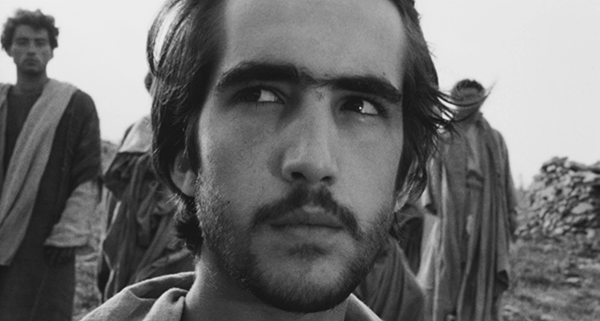
-----------------------------------------------------------------
click to activate the icon of slideshow: the small triangle inscribed in the small rectangle, at the top right, in the photostream;
or…. Press the “L” button to zoom in the image;
clicca sulla piccola icona per attivare lo slideshow: sulla facciata principale del photostream, in alto a destra c'è un piccolo rettangolo (rappresenta il monitor) con dentro un piccolo triangolo nero;
oppure…. premi il tasto “L” per ingrandire l'immagine;
www.worldphoto.org/sony-world-photography-awards/winners-...
www.fotografidigitali.it/gallery/2726/opere-italiane-segn...
…………………………………………………………………
Before talking about the procession of the Holy Crucifix of Aracoeli which is held in the town of San Marco d'Alunzio (in the province of Messina), I make a brief introduction, this "photographic story" was created with photographs taken both during the procession of this year 2024, and during the procession of last year 2023, this meant, in some cases, that in some key moments of the procession the shots were taken simultaneously from two different angles, as if I had been in "bilocation", this because this year I chose a different perspective than last year. The procession begins on the morning of the last Friday of March each year, however there is an exception to this rule, when it coincides with Good Friday, which happened this year, then the procession is brought forward to the previous Friday. That of the SS. Crucifix of Aracoeli is an ancient penitential rite, on the day of the feast of the Crucifix in San Marco d'Alunzio the Holy Mass is celebrated in the Church of Aracoeli, therefore the SS. Crucifix (which is found in the church at the end of the right nave, at its feet the picture of the Virgin of Sorrows pierced by seven swords) is removed from the hook on which it is hanging, is taken outside the church, then raised and fixed on the float , and so (after the sermon of the priest who climbed onto the float next to the Crucifix) the Crucifix with the picture of his Sorrowful Mother underneath, then both placed on the float, are carried in procession by the Babbaluti, who proceed invoking the pity and mercy of the Lord with a faint lament that continually repeats “Signuri, Misericordia, Pietà!”. San Marco d'Alunzio is a pleasant town in the Messina area, located in the Nebrodi mountains, in Sicily; the procession takes place in honor of the Holy Crucifix of Araceli, this is a religious-penitential occasion also known as the "procession of the babbaluti", they are those who, by vote or by grace received, have decided to carry during the procession on their shoulders the float with the Crucifix and the painting; they head to the nearby Church of Santa Maria dei Poveri or to some private home nearby where, sheltered from the curiosity of the faithful, they wear a simple but characteristic indigo-coloured cloth habit, consisting of a tunic and a conical-shaped hood such to cover the entire body and leave only the eyes and hands free, it is not uncommon, however, that among the penitents, made anonymous by the habit they wear, there are also women, who, to avoid any possibility of recognition, wear a pair of gloves; the babbaluti are 33 in number to commemorate the 33 years of Christ, the number is odd, in fact the 33rd babbaluto does not wear the float, he (should be the "chief of float") proceeds backwards, turning his gaze to Christ and to His Mother, and at the same time checks that everything is in order among the babbaluti (this is a way of proceeding in carrying the float, which is present in various Sicilian religious processions). Then, the 32 (+1) "babbaluti" carry on their shoulders the launch bearing the Holy Crucifix of the Araceli church (the statue of Christ was created by Scipione Li Volsi, in the year 1652, he was a sculptor and plasterer of the Sicilian Baroque), at whose feet, on the float, the painting of Our Lady of Sorrows is tied, which appears pierced by seven swords (an 18th century painting). Before the start of the procession, the babbaluti advance barefoot wearing only heavy handmade raw wool socks. Before entering the church they must walk a purification path: when they arrive near the ancient church of Araceli , they bend down and kiss the ground, thus receiving permission to enter the church, but this happens from a side door, called "false door" (in Sicilian dialect “porta fausa”), once they enter the church laterally, they now emerge from the main entrance, thus being able to take their places, kneeling at the front and behind, of the float; the priest's long-awaited speech will follow, once finished, the procession can begin which takes place through the streets of the picturesque and welcoming town of San Marco d'Alunzio. Along the route the Babbaluti pace their pace accompanied by the sad and plaintive jugulation that invokes the Lord. There are devout men and women who proceed together with the mugglers, walking alongside the float, touching it, now caressing it... just to have physical (and consequently spiritual) contact with it. Finally, after having completed a specific route, the procession returns to the ancient church (of Norman origins) of Aracoeli. Whenever I am present at this touching occasion I am completely flooded with emotions (which however I cannot abandon myself to, I would lose concentration in taking the photos), the highlight is when the Crucified Christ is removed from the hook fixed on the wall by expert men, and then be carried (seems to float) above the heads of the devotees, supported with their hands, right outside the church, and be hoisted and fixed on the float; in these moments of intense emotion it is common to see in the eyes of the devotees, shining with tears, that profound emotion of their relationship with this Christ, which has always lasted: it is as if they found themselves in the presence of the true Christ, in flesh and blood, this it is the atmosphere you experience in those moments, this is the magic of the procession of the SS. Crucifix and his Mother, represented by the painting of Our Lady of Sorrows pierced by seven swords (iconography of Spanish origin).
+++++++++++++++++++++++++++++++++++++++++
+++++++++++++++++++++++++++++++++++++++++
Prima di parlare della processione del Santissimo Crocifisso di Aracoeli che si tiene nel paese di San Marco d’Alunzio (in provincia di Messina), faccio una breve premessa, questo “racconto fotografico” è stato realizzato con fotografie scattate sia durante la processione di quest’anno 2024, sia durante la processione dello scorso anno 2023, questo ha comportato, in alcuni casi, che in alcuni momenti salienti della processione gli scatti siano stati realizzati contemporaneamente da due angolazioni diverse, come se io fossi stato in “bilocazione”, questo perché quest’anno ho scelto una prospettiva differente da quella dello scorso anno. La processione inizia la mattina dell’ultimo venerdì del mese di marzo di ogni anno, c’è però una eccezione a questa regola, quando avviene la coincidenza col Venerdì Santo, cosa accaduta quest’anno, allora la processione viene anticipata al venerdì precedente. Quella del SS.Crocifisso di Aracoeli è un antico rito penitenziale, il giorno della festa del Crocifisso a San Marco d'Alunzio viene celebrata la S. Messa nella Chiesa dell'Aracoeli, quindi il SS. Crocifisso (che si trova nella chiesa in fondo alla navata di destra, ai suoi piedi il quadro della Vergine Addolorata. trafitta da sette spade) viene tolto dal gancio sul quale è appeso, viene portato all’esterno della chiesa, quindi innalzato e fissato sulla vara, e così (dopo il sermone del sacerdote salito sulla vara accanto al Crocifisso) il Crocifisso con sotto il quadro di sua Madre Addolorata, quindi messi entrambi sulla vara, vengono portati in processione dai Babbaluti, che procedono invocando la pietà e la misericordia del Signore con un flebile lamento che ripete continuamente “Signuri, Misericordia, Pietà!”. San Marco d’Alunzio è un ameno paese del territorio Messinese, sito sui monti Nebrodi, in Sicilia; la processione si svolge proprio in onore del Santissimo Crocifisso di Araceli, è questa una ricorrenza religioso-penitenziale conosciuta anche come "processione dei babbaluti", essi sono coloro che per voto o per grazia ricevuta, hanno deciso di portare in processione sulle loro spalle il fercolo con il Crocifisso ed il quadro; essi si dirigono nella vicina Chiesa di Santa Maria dei Poveri o in qualche abitazione privata lì vicino dove, al riparo dalla curiosità dei fedeli, indossano un semplice ma caratteristico saio di tela di colore indaco, costituito da una tunica e un cappuccio di forma conica tale da coprire l'intero corpo e lasciare liberi solo gli occhi e le mani, non è raro purtuttavia che tra i penitenti, resi anonimi dal saio che indossano, vi siano anche delle donne, le quali per evitare qualsiasi possibilità di riconoscimento, indossano un paio di guanti; i babbaluti sono in numero di 33 per rievocare i 33 anni di Cristo, il numero è dispari, infatti il 33° babbaluto non porta la vara, egli (dovrebbe essere il “capo vara”) procede all’indietro, rivolgendo lo sguardo al Cristo ed a sua Madre, e nel contempo controlla che tutto sia in ordine tra i babbaluti (questo è un modo di procedere nel portare la vara o fercolo, che è presente in diverse processioni religiose siciliane). Quindi, i 32 (+1) "babbaluti" portano sulle loro spalle la vara che reca il Santo Crocifisso della chiesa dell’Araceli (la statua del Cristo è stata creata da Scipione Li Volsi, nell'anno 1652, egli fu uno scultore e stuccatore del barocco SIciliano), ai cui piedi, sulla vara, viene legato il quadro della Madonna Addolorata, che appare trafitta da sette spade ( un dipinto del XVIII secolo). I babbaluti prima dell'inizio della processione avanzano a piedi scalzi indossando solo delle pesanti calze di lana grezza realizzate a mano, devono percorrere, prima di entrare in chiesa, un cammino di purificazione: quando essi giungono in prossimità dell'antica chiesa dell'Araceli, essi si chinano e baciano in terra, ricevendo in tal modo il permesso per poter accedere dentro la chiesa, questo però avviene da una porta laterale, chiamata "falsa porta" (In dialetto siciliano “porta fausa”), una volta entrati in chiesa lateralmente, ora fuoriescono dall'ingresso principale, potendo così prendere posto, inginocchiandosi sul davanti ed alle spalle, della vara; seguirà l'atteso discorso del sacerdote, terminato, potrà iniziare la processione che si svolge per le vie del pittoresco ed accogliente paese di San Marco d'Alunzio. Lungo il percorso i Babbaluti cadenzano la propria andatura accompagnandosi alla mesta e lamentosa giugulatoria che invoca il Signore . Ci sono uomini e donne devoti che procedono assieme ai babbaluti camminando a lato della vara, toccandola, ora accarezzandola...pur di avere un contatto fisico (e di rimando spirituale) con essa. Infine, dopo aver compiuto un preciso percorso, la processione fa rientro nell'antica chiesa (di origini Normanne) dell'Aracoeli. Ogniqualvolta sono presente a questa toccante ricorrenza sono completamente inondato da emozioni (alle quali però non posso abbandonarmi, perderei la concentrazione nel realizzare le foto), il momento clou è quando il Cristo Crocifisso viene tolto dal gancio fissato sul muro da uomini esperti, per poi essere portato (sembra galleggiare) sopra la testa dei devoti, sostenuto con le mani, fin fuori la chiesa, ed essere issato e fissato sulla vara; in questi momenti di intensa emozione è comune vedere negli occhi dei devoti, lucidi di lacrime, quella emozione profonda del loro rapporto con questo Cristo, che dura da sempre: è come se si trovassero al cospetto del Cristo vero, in carne ed ossa, questa è l’atmosfera che si vive in quei momenti, questa è la magia della processione del SS. Crocifisso e di Sua Madre, rappresentata dal quadro dell’Addolorata trafitta da sette spade (iconografia di origine spagnola).
++++++++++++++++++++++++++++++++++++++++
SN/NC: Spathodea Campanulata e S. Nilotica, Bignoniaceae Family
This plant is originated in Madagascar, Africa and resembles a spade, a dagger in its form before blossoming (check the green part in the picture). It is catalogued as an invasive tree. It grows quickly and it reproduces like crazy having its seeds taken by the wind. Very nice color, like flames, reason why it is called flame tree in some areas. Spathodea campanulata, is commonly known as the fountain tree, African tulip tree, pichkari or Nandi flame. The tree grows between 7–25 m (23–82 ft) tall and is native to tropical dry forests of Africa. It has been nominated as among 100 of the "World's Worst" invaders. This tree is planted extensively as an ornamental tree throughout the tropics and is much appreciated for its very showy reddish-orange or crimson (rarely yellow), campanulate flowers. The generic name comes from the Ancient Greek words σπαθη (spathe) and οιδα (oida), referring to the spathe-like calyx. It was discovered in 1787 on the Gold Coast of Africa.
Esta planta é originária de Madagascar, na África e lembra uma pá, um punhal em seu formato antes de florescer (confira a parte verde na foto). É catalogada como uma árvore invasora. Ela cresce rápido e se reproduz loucamente tendo suas sementes levadas pelo vento. Cor muito bonita, como chamas, por isso é chamada de árvore das chamas em algumas áreas. Spathodea campanulata, é comumente conhecida como árvore-fonte, tulipa africana, pichkari ou chama Nandi. A árvore cresce entre 7–25 m (23–82 pés) de altura e é nativa das florestas tropicais secas da África. Foi nomeado um dos 100 dos "Piores" invasores do mundo. Esta árvore é amplamente plantada como árvore ornamental em todos os trópicos e é muito apreciada por suas flores campanuladas laranja-avermelhadas ou carmesim (raramente amarelas) muito vistosas. O nome genérico vem das palavras do grego antigo σπαθη (espata) e οιδα (oida), referindo-se ao cálice semelhante a uma espata. Foi descoberto em 1787 na Costa Dourada da África.
Diese Pflanze stammt aus Madagaskar, Afrika und ähnelt in ihrer Form vor der Blüte einem Spaten, einem Dolch (siehe den grünen Teil im Bild). Es ist als invasiver Baum katalogisiert. Es wächst schnell und vermehrt sich wie verrückt, da ihm der Wind die Samen wegnimmt. Sehr schöne Farbe, wie Flammen, weshalb er in manchen Gegenden auch Flammenbaum genannt wird. Spathodea campanulata ist allgemein als Brunnenbaum, Afrikanischer Tulpenbaum, Pichkari oder Nandi-Flamme bekannt. Der Baum wird zwischen 7 und 25 m hoch und ist in den tropischen Trockenwäldern Afrikas beheimatet. Es wurde als einer der 100 „schlimmsten“ Eindringlinge der Welt nominiert. Dieser Baum wird in den Tropen häufig als Zierbaum gepflanzt und wird wegen seiner auffälligen rötlich-orangenen oder purpurroten (selten gelben) glockenförmigen Blüten sehr geschätzt. Der Gattungsname leitet sich von den altgriechischen Wörtern σπαθη (Spathe) und οιδα (oida) ab und bezieht sich auf den spatelähnlichen Kelch. Es wurde 1787 an der Goldküste Afrikas entdeckt.
Cette plante est originaire de Madagascar, en Afrique et ressemble à une bêche, un poignard dans sa forme avant de fleurir (vérifiez la partie verte sur la photo). Il est catalogué comme un arbre envahissant. Il pousse vite et se reproduit comme un fou en se faisant emporter par le vent. Très belle couleur, comme des flammes, c'est pourquoi on l'appelle flamboyant dans certaines régions. Spathodea campanulata, est communément appelé arbre fontaine, tulipier africain, pichkari ou flamme Nandi. L'arbre pousse entre 7 et 25 m (23 et 82 pieds) de hauteur et est originaire des forêts tropicales sèches d'Afrique. Il a été nommé parmi les 100 « pires envahisseurs du monde ». Cet arbre est largement planté comme arbre ornemental sous les tropiques et est très apprécié pour ses fleurs campanulées très voyantes rouge-orange ou pourpres (rarement jaunes). Le nom générique vient des mots grecs anciens σπαθη (spathe) et οιδα (oida), faisant référence au calice en forme de spathe. Il a été découvert en 1787 sur la Gold Coast africaine.
Esta planta es originaria de Madagascar, África y se asemeja a una pala, una daga en su forma antes de florecer (ver la parte verde en la imagen). Está catalogado como árbol invasor. Crece rápidamente y se reproduce como loca dejándose llevar las semillas por el viento. Color muy bonito, como llamas, por lo que en algunas zonas se le llama árbol de llamas. Spathodea campanulata, se conoce comúnmente como árbol fuente, tulipán africano, pichkari o llama Nandi. El árbol crece entre 7 y 25 m (23 y 82 pies) de altura y es originario de los bosques secos tropicales de África. Ha sido nominado entre los 100 de los "peores invasores del mundo". Este árbol se planta ampliamente como árbol ornamental en los trópicos y es muy apreciado por sus llamativas flores campanuladas de color naranja rojizo o carmesí (rara vez amarillas). El nombre genérico proviene de las palabras griegas antiguas σπαθη (espata) y οιδα (oida), en referencia al cáliz en forma de espata. Fue descubierto en 1787 en la Costa Dorada de África.
Questa pianta è originaria del Madagascar, in Africa e ricorda una vanga, un pugnale nella sua forma prima della fioritura (controlla la parte verde nella foto). È catalogato come albero invasivo. Cresce velocemente e si riproduce all'impazzata facendo portare i semi dal vento. Colore molto bello, come le fiamme, motivo per cui in alcune zone viene chiamato albero delle fiamme. Spathodea campanulata, è comunemente conosciuta come l'albero della fontana, l'albero dei tulipani africani, pichkari o fiamma Nandi. L'albero cresce tra i 7 e i 25 m di altezza ed è originario delle foreste tropicali secche dell'Africa. È stato nominato tra i 100 invasori "peggiori del mondo". Questo albero è ampiamente piantato come albero ornamentale in tutti i tropici ed è molto apprezzato per i suoi fiori campanulati molto appariscenti, rosso-arancio o cremisi (raramente gialli). Il nome generico deriva dalle parole del greco antico σπαθη (spata) e οιδα (oida), con riferimento al calice simile a una spata. Fu scoperto nel 1787 sulla Costa d'Oro dell'Africa.
Deze plant komt oorspronkelijk uit Madagaskar, Afrika en lijkt in zijn vorm vóór de bloei op een schop, een dolk (zie het groene gedeelte op de foto). Het is gecatalogiseerd als een invasieve boom. Het groeit snel en plant zich als een gek voort, waarbij de zaden door de wind worden meegenomen. Zeer mooie kleur, zoals vlammen, reden waarom het in sommige gebieden vlamboom wordt genoemd. Spathodea campanulata, is algemeen bekend als de fonteinboom, Afrikaanse tulpenboom, pichkari of Nandi-vlam. De boom wordt tussen de 7 en 25 m hoog en komt oorspronkelijk uit tropische droge bossen van Afrika. Het is genomineerd als een van de 100 van de "ergste" indringers ter wereld. Deze boom wordt in de tropen op grote schaal als sierboom geplant en wordt zeer gewaardeerd om zijn zeer opzichtige roodoranje of karmozijnrode (zelden gele), klokvormige bloemen. De generieke naam komt van de Oudgriekse woorden σπαθη (schutblad) en οιδα (oida), verwijzend naar de schutbladachtige kelk. Het werd ontdekt in 1787 aan de Goudkust van Afrika.
この植物はアフリカのマダガスカルが原産で、開花前の姿はスペードや短剣に似ています(写真の緑色の部分を確認してください)。侵入樹木として登録されています。成長が早く、種を風に飛ばされて狂ったように繁殖します。炎のようなとても素敵な色なので、一部の地域では火炎樹と呼ばれています。 Spathodea campanulata は、噴水の木、アフリカのチューリップの木、ピシュカリ、またはナンディ フレームとして一般に知られています。この木は高さ 7 ~ 25 m (23 ~ 82 フィート) の間に成長し、アフリカの熱帯乾燥林に自生します。 「世界最悪の」侵略者100人にノミネートされている。この木は熱帯地方全域で観賞用の木として広く植えられており、非常に派手な赤みがかったオレンジ色または深紅色(まれに黄色)のカンパニュレートの花が高く評価されています。属名は古代ギリシャ語のσπαθη(仏炎炎炎炎炎炎炎炎苞)とοιδα(オイダ)という言葉に由来し、炎炎炎炎炎炎炎炎炎のような萼を指します。 1787年にアフリカのゴールドコーストで発見されました。
يعود أصل هذا النبات إلى مدغشقر وإفريقيا ويشبه المجرفة في شكله قبل أن يزهر (راجع الجزء الأخضر في الصورة). يتم تصنيفها على أنها شجرة الغازية. إنها تنمو بسرعة وتتكاثر بجنون بعد أن أخذت الريح بذورها. لون جميل جدًا، مثل النيران، ولهذا يطلق عليها اسم شجرة اللهب في بعض المناطق. تُعرف Spathodea Campanulata باسم شجرة النافورة أو شجرة التوليب الأفريقية أو شعلة البيشكاري أو ناندي. تنمو الشجرة ما بين 7-25 مترًا (23-82 قدمًا) وموطنها الأصلي الغابات الاستوائية الجافة في أفريقيا. وقد تم ترشيحه ضمن 100 من "أسوأ الغزاة في العالم". تُزرع هذه الشجرة على نطاق واسع كشجرة زينة في جميع أنحاء المناطق الاستوائية وتحظى بتقدير كبير بسبب أزهارها البرتقالية المحمرّة أو القرمزية (نادرًا ما تكون صفراء). الاسم العام يأتي من الكلمات اليونانية القديمة σπαθη (spathe) وοιδα (oida)، في إشارة إلى الكأس الشبيه بالكأس. تم اكتشافه عام 1787 على الساحل الذهبي بإفريقيا.
.……………………………….
- “Do not touch me…”
Gospel of John, chapter 20, verse 17 (John 20, 17)
+++++++++++++++++++++
I was with you, Father,
at the moment of creation.
I could not fail to know the elements and master them.
What would it be to
lift the stone of a tomb
compared to your will as Creator?
You taught me how the world is composed
and made me your son,
but I was a participant
in creation.
The followers who followed me
believed in You and in me,
Your son.
They will be happy to see me rise again,
but I will weep
for those still chained
in hell,
and my hands
will silence their strident cries.
Poor souls,
who migrate toward nothingness.
The fear,
God,
of these blind depths,
of these people who have not had
the splendor of your reins.
Because you do not know,
Father,
what it means
to sit at Your right hand
as a king.
A gentle but not cowardly king
who mediates
between your divine wrath
and the lust and unbelief of man.
I,
who am just,
love man
and ask your forgiveness
through this slow agony
that has lasted for centuries
for the world.
Behold, Lord, I give you back my spirit
in the form of a white dove
that will fly toward heaven.
And no other way
have you built peace
than with the groins of a bird
that brings the olive branch to your lips.
Father,
I will rise again,
and I will sit at your right hand.
POEM OF THE CROSS - Alda Merini
+++++++++++++++++++++++++++++++++++++
- “Noli me tangere …”
Vangelo di Giovanni, capitolo 20, versetto 17 (Giovanni 20, 17)
++++++++++++++++++
- Ero con te, Padre,
al momento della creazione.
Non potevo non conoscere gli elementi e dominarli.
Cosa vuoi che sia
sollevare la pietra di un sepolcro
in confronto alla tua volontà di Creatore.
Tu mi hai insegnato come è composto il mondo
e mi hai reso figlio,
ma ero partecipe
della creazione.
I seguaci che mi hanno seguito
hanno creduto in Te e in me,
Tuo figlio.
Saranno felici di vedermi risorgere,
ma io piangerò
per quelli che sono ancora incatenati
nell'inferno
e le mie mani
faranno tacere i loro stridori.
Povere anime,
che migrano verso il nulla.
Lo spavento,
Dio,
di queste profondità cieche,
di questa gente che non ha avuto
lo splendore delle tue redini.
Perché tu non sai,
Padre,
cosa vuol dire
sedere alla Tua destra
in veste di re.
Un re mite ma non codardo
che fa da intermediario
tra la tua collera divina
e la lussuria e la miscredenza dell'uomo.
Io,
che sono giusto,
amo l'uomo
e ti chiedo perdono
attraverso questa lenta agonia
che dura da secoli
per il mondo.
Ecco, Signore, io ti rendo il mio spirito
in forma di bianca colomba
che volerà verso il cielo.
E non altrimenti
Tu hai costruito la pace
se non con gli inguini di un uccello
che porta l'ulivo alle tue labbra.
Padre,
io risorgerò,
e siederò alla Tua destra.
POEMA DELLA CROCE - Alda Merini
-----------------------------------------------------------------
click to activate the icon of slideshow: the small triangle inscribed in the small rectangle, at the top right, in the photostream;
or…. Press the “L” button to zoom in the image;
clicca sulla piccola icona per attivare lo slideshow: sulla facciata principale del photostream, in alto a destra c'è un piccolo rettangolo (rappresenta il monitor) con dentro un piccolo triangolo nero;
oppure…. premi il tasto “L” per ingrandire l'immagine;
www.worldphoto.org/sony-world-photography-awards/winners-...
www.fotografidigitali.it/gallery/2726/opere-italiane-segn...
…………………………………………………………………
This photographic story, with text, which I propose as my last work for Flickr in 2025 (2026 is now just a few minutes away), tells of the procession of the Holy Crucifix of Aracoeli, which took place in March of this year 2025 in the town of San Marco d'Alunzio (in the province of Messina). The procession normally begins on the morning of the last Friday of March each year, but there is an exception to this rule: when it coincides with Good Friday, then the procession is brought forward to the previous Friday. The procession of the Holy Crucifix of Aracoeli is an ancient penitential rite. On the feast day of the Crucifix, Holy Mass is celebrated in the Church of Aracoeli in San Marco d'Alunzio. On this occasion, the Holy Crucifix is celebrated. Crucifix (which is located in the church at the end of the right nave, at its feet is the painting of the Virgin of Sorrows pierced by seven swords), Christ on the Cross is removed by the devotees from the hook on which it is hanging, is carried outside the church, here it is raised and fixed on the float, the sermon of the priest who has climbed onto the float next to the Crucifix takes over, under the Cross is fixed the painting of His Sorrowful Mother, then they are carried in procession by the men (and women) in blue hoods called "babbaluti", they proceed invoking the pity and mercy of the Lord with a constant and rhythmic lament, saying "Signuri, Misericordia, Pietà!"; this is the norm, but this year the bad weather has brought some changes, the float on which they hoisted the SS. The crucifix with the kneeling babbaluti was not located in the churchyard, but inside the church. Christ was covered with a large sheet of cellophane to protect it from the rain, while the painting of the Madonna with swords in her heart was placed at her Son's feet only after the procession returned to the church. San Marco d'Alunzio is a charming town in the Messina area, located in the Nebrodi Mountains of Sicily. The procession takes place in honor of the Holy Crucifix of Araceli. This religious-penitential event is also known as the "procession of the babbaluti." These are those who, by vow or grace received, have chosen to carry the fercolo containing the crucifix and the painting on their shoulders in procession. they head to the nearby Church of Santa Maria dei Poveri or to some private home nearby where, sheltered from the curiosity of the faithful, they wear a simple but characteristic indigo-colored cloth habit, consisting of a tunic and a conical hood that covers the entire body and leaves only the eyes and hands free. It is not uncommon, however, for the penitents, rendered anonymous by the habit they wear, to also include women, who, to avoid any possibility of recognition, wear a pair of gloves; The babbaluti are 33 in number to commemorate the 33 years of Christ. The number is odd, in fact the 33rd babbaluto does not carry the vara. He (should be the “capo vara”) proceeds backwards, looking towards Christ and his Mother, and at the same time checks that everything is in order among the babbaluti, guiding the vara along the path, even if it is moving backwards (this is a way of proceeding in carrying the vara or fercolo, present in various Sicilian religious processions). So, the 32 (+1) "babbaluti" carry on their shoulders the float that bears the Holy Crucifix of the Araceli church (the statue of Christ was created by Scipione Li Volsi, in the year 1652, he was a sculptor and plasterer of the Sicilian Baroque), at whose feet, on the float, is tied the painting of Our Lady of Sorrows, whose chest appears pierced by seven swords (it is an 18th century painting), however, as already described, this year the painting, to protect it from the rain, was placed on the float only upon the return of the procession to the church. Before the procession begins, the babbaluti advance barefoot, wearing only heavy, hand-knitted stockings of raw wool. Before entering the church, they must walk a path of purification. When they approach the ancient church of Araceli, they bow and kiss the ground, thus receiving permission to enter the church. This, however, occurs through a side door, called the "false door" (in Sicilian dialect, "porta fausa"). Having entered the church from the side, they now exit through the main entrance, allowing them to take their places, kneeling in front and behind the float. To enter the "porta fausa," the babbaluti proceed in pairs, with the last babbaluti, the eldest, proceeding alone. After the priest's long-awaited speech, the procession can begin, winding through the streets of the picturesque and welcoming village of San Marco d'Alunzio. Along the way, the Babbaluti pace their steps, accompanying the mournful and plaintive jugular vein that invokes the Lord. Devout men and women walk alongside the Babbaluti, walking alongside the float, touching it, sometimes caressing it... just to have physical (and spiritual) contact with it. Finally, after completing a specific route, the procession returns to the ancient church (of Norman origins) of Aracoeli. Every time I attend this touching event, I am completely overwhelmed by emotion (which, however, I cannot abandon, lest I lose concentration while taking photos). The highlight is when the crucified Christ is removed from the hook fixed to the wall by expert men, and then carried (it seems to float) above the heads of the devotees, supported aloft with their hands, and hoisted and secured to the float. In these moments of intense emotion, it is common to see in the eyes of the devotees, shining with tears, that profound emotion of their relationship with this Christ, which has lasted forever: it is as if they were in the presence of the true Christ, in flesh and blood. This is the atmosphere experienced in those moments, this is the magic of the procession of the Most Holy Crucifix and His Mother, represented by the painting of Our Lady of Sorrows pierced by seven swords (an iconography of Spanish origin).
+++++++++++++++++++++++++++++++++++++++++
Il presente racconto fotografico, con testo, che propongo come ultimo mio lavoro per Flickr dell’anno 2025 (oramai mancano pochi minuti al 2026) parla della processione del Santissimo Crocifisso di Aracoeli che si è tenuto nel marzo di quest’anno 2025 nel paese di San Marco d’Alunzio (in provincia di Messina). La processione normalmente inizia la mattina dell’ultimo venerdì del mese di marzo di ogni anno, c’è però una eccezione a questa regola, quando si realizza la coincidenza col Venerdì Santo, allora la processione viene anticipata al venerdì precedente. Quella del SS.Crocifisso di Aracoeli è un antico rito penitenziale, il giorno della festa del Crocifisso, a San Marco d'Alunzio si celebra la S. Messa nella Chiesa dell'Aracoeli, in questa occasione il SS. Crocifisso (che si trova nella chiesa in fondo alla navata di destra, ai suoi piedi è posto il quadro della Vergine Addolorata trafitta da sette spade), il Cristo sulla Croce viene tolto dai devoti dal gancio sul quale è appeso, viene portato all’esterno della chiesa, qui viene innalzato e fissato sulla vara, subentra il sermone del sacerdote salito sulla vara accanto al Crocifisso, sotto alla Croce viene fissato il quadro di sua Madre Addolorata, quindi vengono portati in processione dagli uomini (e donne) incappucciati di colore blu detti “babbaluti”, essi procedono invocando la pietà e la misericordia del Signore con un costante e ritmato lamento, dicendo “Signuri, Misericordia, Pietà!”; questa è la norma, ma quest’anno il cattivo tempo ha portato qualche cambiamento, la vara sulla quale hanno issato il SS. Crocifisso con i babbaluti messi in ginocchio, non si trovava sul sagrato davanti la chiesa, ma era dentro la chiesa, il Cristo veniva ricoperto con un ampio foglio di cellophane per proteggerlo dalla pioggia, mentre il quadro della Madonna con le spade nel cuore, è stato messo ai piedi di Suo Figlio solo al rientro della processione nella chiesa. San Marco d’Alunzio è un ameno paese del territorio Messinese, sito sui monti Nebrodi, in Sicilia; la processione si svolge proprio in onore del Santissimo Crocifisso di Araceli, è questa una ricorrenza religioso-penitenziale conosciuta anche come "processione dei babbaluti", essi sono coloro che per voto o per grazia ricevuta, hanno deciso di portare in processione sulle loro spalle il fercolo con il Crocifisso ed il quadro; essi si dirigono nella vicina Chiesa di Santa Maria dei Poveri o in qualche abitazione privata lì vicino dove, al riparo dalla curiosità dei fedeli, indossano un semplice ma caratteristico saio di tela di colore indaco, costituito da una tunica e un cappuccio di forma conica tale da coprire l'intero corpo e lasciare liberi solo gli occhi e le mani, non è raro purtuttavia che tra i penitenti, resi anonimi dal saio che indossano, vi siano anche delle donne, le quali per evitare qualsiasi possibilità di riconoscimento, indossano un paio di guanti; i babbaluti sono in numero di 33 per rievocare i 33 anni di Cristo, il numero è dispari, infatti il 33° babbaluto non porta la vara, egli (dovrebbe essere il “capo vara”) procede all’indietro, rivolgendo lo sguardo al Cristo ed a sua Madre, e nel contempo controlla che tutto sia in ordine tra i babbaluti, guidando la vara lungo il percorso, anche se il suo andamento è a ritroso, (questo è un modo di procedere nel portare la vara o fercolo, presente in diverse processioni religiose siciliane). Quindi, i 32 (+1) "babbaluti" portano sulle loro spalle la vara che reca il Santo Crocifisso della chiesa dell’Araceli (la statua del Cristo è stata creata da Scipione Li Volsi, nell'anno 1652, egli fu uno scultore e stuccatore del barocco SIciliano), ai cui piedi, sulla vara, viene legato il quadro della Madonna Addolorata, il cui petto appare trafitto da sette spade ( è un dipinto del XVIII secolo), purtuttavia come già descritto, quest’anno il quadro, per proteggerlo dalla pioggia, è stato messo sulla vara solo al rientro della processione in chiesa. I babbaluti prima dell'inizio della processione avanzano a piedi scalzi indossando solo delle pesanti calze di lana grezza realizzate a mano, devono percorrere, prima di entrare in chiesa, un cammino di purificazione: quando essi giungono in prossimità dell'antica chiesa dell'Araceli, essi si chinano e baciano in terra, ricevendo in tal modo il permesso per poter accedere dentro la chiesa, questo però avviene da una porta laterale, chiamata "falsa porta" (In dialetto siciliano “porta fausa”), una volta entrati in chiesa lateralmente, ora fuoriescono dall'ingresso principale, potendo così prendere posto, inginocchiandosi sul davanti ed alle spalle, della vara; i babbaluti per accedere alla “porta fausa” procedono in coppia, l’ultimo babbaluto procede da solo, lui è il più anziano tra i babbaluti; seguirà l'atteso discorso del sacerdote, terminato, potrà iniziare la processione che si svolge per le vie del pittoresco ed accogliente paese di San Marco d'Alunzio. Lungo il percorso i Babbaluti cadenzano la propria andatura accompagnandosi alla mesta e lamentosa giugulatoria che invoca il Signore . Ci sono uomini e donne devoti che procedono assieme ai babbaluti camminando a lato della vara, toccandola, ora accarezzandola...pur di avere un contatto fisico (e di rimando spirituale) con essa. Infine, dopo aver compiuto un preciso percorso, la processione fa rientro nell'antica chiesa (di origini Normanne) dell'Aracoeli. Ogniqualvolta sono presente a questa toccante ricorrenza sono completamente inondato da emozioni (alle quali però non posso abbandonarmi, perderei la concentrazione nel realizzare le foto), il momento clou è quando il Cristo Crocifisso viene tolto dal gancio fissato sul muro da uomini esperti, per poi essere portato (sembra galleggiare) sopra la testa dei devoti, sostenuto in alto con le mani, ed essere issato e fissato sulla vara; in questi momenti di intensa emozione è comune vedere negli occhi dei devoti, lucidi di lacrime, quella emozione profonda del loro rapporto con questo Cristo, che dura da sempre: è come se si trovassero al cospetto del Cristo vero, in carne ed ossa, questa è l’atmosfera che si vive in quei momenti, questa è la magia della processione del SS. Crocifisso e di Sua Madre, rappresentata dal quadro dell’Addolorata trafitta da sette spade (iconografia di origine spagnola).
++++++++++++++++++++++++++++++++++++++++
Guido Reni (Bologna, November 4, 1575 - Bologna, August 18, 1642) - Atalanta e Hyppomenes (1620-25) oil on canvas 192×264 cm - Museo e Real Bosco di Capodimonte
Guido Reni, pittore italiano, fra i maggiori del Seicento, nasce a Bologna il 14 Novembre del 1575. Suo padre, affermato maestro di cappella a S. Petronio, il Duomo di Bologna, avrebbe voluto che il figlio seguisse le sue orme, ma questi, ancora giovanissimo, espresse una naturale predisposizione al disegno.
Accolto come apprendista nello studio del pittore fiammingo manierista Calvaert, Reni, attorno ai vent’anni aderì all’Accademia degli Incamminati, che i Carracci avevano aperto dal 1582.
Dopo un periodo di lunghe esercitazioni riproducendo tra l’altro opere di Annibale Carracci, Guido Reni si distacca dall'influsso manierista e dal gruppo di artisti che ruotavano intorno ai Carracci.
Nel 1602, il giovane pittore, che già lavora a commesse proprie, si reca a Roma per studiare nuove tecniche pittoriche, la lezione caravaggesca e completare la propria preparazione artistica.
Il pittore nel tentativo, comune al Caravaggio, di superare la finzione e l'artificiosità Barocca , aderendo alla realtà e rendendola più credibile, controlla e disciplina la composizione attraverso rapporti e regole di derivazione classicista.
Guido Reni, Italian painter, among the greatest of the seventeenth century, was born in Bologna on November 14, 1575. His father, established chapel master in S. Petronio, the Cathedral of Bologna, would have wanted his son to follow in his footsteps, but he, still very young, expressed a natural predisposition to drawing.
Accepted as an apprentice in the studio of the Flemish Mannerist painter Calvaert, Reni, around the age of twenty years joined the Academy of the Incamminati, that the Carracci had opened since 1582.
After a period of long practice reproducing, among other things, works by Annibale Carracci, Guido Reni broke away from the Mannerist influence and from the group of artists who revolved around the Carracci.
In 1602, the young painter, who was already working on his own commissions, went to Rome to study new painting techniques, the lesson of Caravaggio and to complete his own artistic preparation.
The painter in an attempt, common to Caravaggio, to overcome the fiction and artifice Baroque, adhering to reality and making it more credible, controls and disciplines the composition through relationships and rules of derivation classicist.
Parco Nazionale Gran Paradiso-Gran Paradiso National Park .
Mamma camoscio controlla che non ci sia pericolo per il suo piccolo...sempre i soliti fotografi...........................................Mother chamois controls that us it is not danger for its little one, always the usual photographers.
Pinguini di Magellano.
Uno dei genitori controlla i pulcini vicino al nido.
Magellanic penguins.
One of the parents controls the chicks near the nest.
l'Astronomia, rappresentata da una donna che controlla quello che sta scritto su un libro aperto sulle sue ginocchia indicando con la sinistra un astrolabio.
Gentile da Fabriano (Fabriano, 1370 around - Rome, September 1427) - Room of the liberal Arts and the Planets (1411-1412) - Palazzo Trinci, Foligno
Astronomy, represented by a woman who controls what is written on an open book on her knees, pointing with the left an astrolabe.
.……………………………….
- “Do not touch me…”
Gospel of John, chapter 20, verse 17 (John 20, 17)
+++++++++++++++++++++
I was with you, Father,
at the moment of creation.
I could not fail to know the elements and master them.
What would it be to
lift the stone of a tomb
compared to your will as Creator?
You taught me how the world is composed
and made me your son,
but I was a participant
in creation.
The followers who followed me
believed in You and in me,
Your son.
They will be happy to see me rise again,
but I will weep
for those still chained
in hell,
and my hands
will silence their strident cries.
Poor souls,
who migrate toward nothingness.
The fear,
God,
of these blind depths,
of these people who have not had
the splendor of your reins.
Because you do not know,
Father,
what it means
to sit at Your right hand
as a king.
A gentle but not cowardly king
who mediates
between your divine wrath
and the lust and unbelief of man.
I,
who am just,
love man
and ask your forgiveness
through this slow agony
that has lasted for centuries
for the world.
Behold, Lord, I give you back my spirit
in the form of a white dove
that will fly toward heaven.
And no other way
have you built peace
than with the groins of a bird
that brings the olive branch to your lips.
Father,
I will rise again,
and I will sit at your right hand.
POEM OF THE CROSS - Alda Merini
+++++++++++++++++++++++++++++++++++++
- “Noli me tangere …”
Vangelo di Giovanni, capitolo 20, versetto 17 (Giovanni 20, 17)
++++++++++++++++++
- Ero con te, Padre,
al momento della creazione.
Non potevo non conoscere gli elementi e dominarli.
Cosa vuoi che sia
sollevare la pietra di un sepolcro
in confronto alla tua volontà di Creatore.
Tu mi hai insegnato come è composto il mondo
e mi hai reso figlio,
ma ero partecipe
della creazione.
I seguaci che mi hanno seguito
hanno creduto in Te e in me,
Tuo figlio.
Saranno felici di vedermi risorgere,
ma io piangerò
per quelli che sono ancora incatenati
nell'inferno
e le mie mani
faranno tacere i loro stridori.
Povere anime,
che migrano verso il nulla.
Lo spavento,
Dio,
di queste profondità cieche,
di questa gente che non ha avuto
lo splendore delle tue redini.
Perché tu non sai,
Padre,
cosa vuol dire
sedere alla Tua destra
in veste di re.
Un re mite ma non codardo
che fa da intermediario
tra la tua collera divina
e la lussuria e la miscredenza dell'uomo.
Io,
che sono giusto,
amo l'uomo
e ti chiedo perdono
attraverso questa lenta agonia
che dura da secoli
per il mondo.
Ecco, Signore, io ti rendo il mio spirito
in forma di bianca colomba
che volerà verso il cielo.
E non altrimenti
Tu hai costruito la pace
se non con gli inguini di un uccello
che porta l'ulivo alle tue labbra.
Padre,
io risorgerò,
e siederò alla Tua destra.
POEMA DELLA CROCE - Alda Merini
-----------------------------------------------------------------
click to activate the icon of slideshow: the small triangle inscribed in the small rectangle, at the top right, in the photostream;
or…. Press the “L” button to zoom in the image;
clicca sulla piccola icona per attivare lo slideshow: sulla facciata principale del photostream, in alto a destra c'è un piccolo rettangolo (rappresenta il monitor) con dentro un piccolo triangolo nero;
oppure…. premi il tasto “L” per ingrandire l'immagine;
www.worldphoto.org/sony-world-photography-awards/winners-...
www.fotografidigitali.it/gallery/2726/opere-italiane-segn...
…………………………………………………………………
This photographic story, with text, which I propose as my last work for Flickr in 2025 (2026 is now just a few minutes away), tells of the procession of the Holy Crucifix of Aracoeli, which took place in March of this year 2025 in the town of San Marco d'Alunzio (in the province of Messina). The procession normally begins on the morning of the last Friday of March each year, but there is an exception to this rule: when it coincides with Good Friday, then the procession is brought forward to the previous Friday. The procession of the Holy Crucifix of Aracoeli is an ancient penitential rite. On the feast day of the Crucifix, Holy Mass is celebrated in the Church of Aracoeli in San Marco d'Alunzio. On this occasion, the Holy Crucifix is celebrated. Crucifix (which is located in the church at the end of the right nave, at its feet is the painting of the Virgin of Sorrows pierced by seven swords), Christ on the Cross is removed by the devotees from the hook on which it is hanging, is carried outside the church, here it is raised and fixed on the float, the sermon of the priest who has climbed onto the float next to the Crucifix takes over, under the Cross is fixed the painting of His Sorrowful Mother, then they are carried in procession by the men (and women) in blue hoods called "babbaluti", they proceed invoking the pity and mercy of the Lord with a constant and rhythmic lament, saying "Signuri, Misericordia, Pietà!"; this is the norm, but this year the bad weather has brought some changes, the float on which they hoisted the SS. The crucifix with the kneeling babbaluti was not located in the churchyard, but inside the church. Christ was covered with a large sheet of cellophane to protect it from the rain, while the painting of the Madonna with swords in her heart was placed at her Son's feet only after the procession returned to the church. San Marco d'Alunzio is a charming town in the Messina area, located in the Nebrodi Mountains of Sicily. The procession takes place in honor of the Holy Crucifix of Araceli. This religious-penitential event is also known as the "procession of the babbaluti." These are those who, by vow or grace received, have chosen to carry the fercolo containing the crucifix and the painting on their shoulders in procession. they head to the nearby Church of Santa Maria dei Poveri or to some private home nearby where, sheltered from the curiosity of the faithful, they wear a simple but characteristic indigo-colored cloth habit, consisting of a tunic and a conical hood that covers the entire body and leaves only the eyes and hands free. It is not uncommon, however, for the penitents, rendered anonymous by the habit they wear, to also include women, who, to avoid any possibility of recognition, wear a pair of gloves; The babbaluti are 33 in number to commemorate the 33 years of Christ. The number is odd, in fact the 33rd babbaluto does not carry the vara. He (should be the “capo vara”) proceeds backwards, looking towards Christ and his Mother, and at the same time checks that everything is in order among the babbaluti, guiding the vara along the path, even if it is moving backwards (this is a way of proceeding in carrying the vara or fercolo, present in various Sicilian religious processions). So, the 32 (+1) "babbaluti" carry on their shoulders the float that bears the Holy Crucifix of the Araceli church (the statue of Christ was created by Scipione Li Volsi, in the year 1652, he was a sculptor and plasterer of the Sicilian Baroque), at whose feet, on the float, is tied the painting of Our Lady of Sorrows, whose chest appears pierced by seven swords (it is an 18th century painting), however, as already described, this year the painting, to protect it from the rain, was placed on the float only upon the return of the procession to the church. Before the procession begins, the babbaluti advance barefoot, wearing only heavy, hand-knitted stockings of raw wool. Before entering the church, they must walk a path of purification. When they approach the ancient church of Araceli, they bow and kiss the ground, thus receiving permission to enter the church. This, however, occurs through a side door, called the "false door" (in Sicilian dialect, "porta fausa"). Having entered the church from the side, they now exit through the main entrance, allowing them to take their places, kneeling in front and behind the float. To enter the "porta fausa," the babbaluti proceed in pairs, with the last babbaluti, the eldest, proceeding alone. After the priest's long-awaited speech, the procession can begin, winding through the streets of the picturesque and welcoming village of San Marco d'Alunzio. Along the way, the Babbaluti pace their steps, accompanying the mournful and plaintive jugular vein that invokes the Lord. Devout men and women walk alongside the Babbaluti, walking alongside the float, touching it, sometimes caressing it... just to have physical (and spiritual) contact with it. Finally, after completing a specific route, the procession returns to the ancient church (of Norman origins) of Aracoeli. Every time I attend this touching event, I am completely overwhelmed by emotion (which, however, I cannot abandon, lest I lose concentration while taking photos). The highlight is when the crucified Christ is removed from the hook fixed to the wall by expert men, and then carried (it seems to float) above the heads of the devotees, supported aloft with their hands, and hoisted and secured to the float. In these moments of intense emotion, it is common to see in the eyes of the devotees, shining with tears, that profound emotion of their relationship with this Christ, which has lasted forever: it is as if they were in the presence of the true Christ, in flesh and blood. This is the atmosphere experienced in those moments, this is the magic of the procession of the Most Holy Crucifix and His Mother, represented by the painting of Our Lady of Sorrows pierced by seven swords (an iconography of Spanish origin).
+++++++++++++++++++++++++++++++++++++++++
Il presente racconto fotografico, con testo, che propongo come ultimo mio lavoro per Flickr dell’anno 2025 (oramai mancano pochi minuti al 2026) parla della processione del Santissimo Crocifisso di Aracoeli che si è tenuto nel marzo di quest’anno 2025 nel paese di San Marco d’Alunzio (in provincia di Messina). La processione normalmente inizia la mattina dell’ultimo venerdì del mese di marzo di ogni anno, c’è però una eccezione a questa regola, quando si realizza la coincidenza col Venerdì Santo, allora la processione viene anticipata al venerdì precedente. Quella del SS.Crocifisso di Aracoeli è un antico rito penitenziale, il giorno della festa del Crocifisso, a San Marco d'Alunzio si celebra la S. Messa nella Chiesa dell'Aracoeli, in questa occasione il SS. Crocifisso (che si trova nella chiesa in fondo alla navata di destra, ai suoi piedi è posto il quadro della Vergine Addolorata trafitta da sette spade), il Cristo sulla Croce viene tolto dai devoti dal gancio sul quale è appeso, viene portato all’esterno della chiesa, qui viene innalzato e fissato sulla vara, subentra il sermone del sacerdote salito sulla vara accanto al Crocifisso, sotto alla Croce viene fissato il quadro di sua Madre Addolorata, quindi vengono portati in processione dagli uomini (e donne) incappucciati di colore blu detti “babbaluti”, essi procedono invocando la pietà e la misericordia del Signore con un costante e ritmato lamento, dicendo “Signuri, Misericordia, Pietà!”; questa è la norma, ma quest’anno il cattivo tempo ha portato qualche cambiamento, la vara sulla quale hanno issato il SS. Crocifisso con i babbaluti messi in ginocchio, non si trovava sul sagrato davanti la chiesa, ma era dentro la chiesa, il Cristo veniva ricoperto con un ampio foglio di cellophane per proteggerlo dalla pioggia, mentre il quadro della Madonna con le spade nel cuore, è stato messo ai piedi di Suo Figlio solo al rientro della processione nella chiesa. San Marco d’Alunzio è un ameno paese del territorio Messinese, sito sui monti Nebrodi, in Sicilia; la processione si svolge proprio in onore del Santissimo Crocifisso di Araceli, è questa una ricorrenza religioso-penitenziale conosciuta anche come "processione dei babbaluti", essi sono coloro che per voto o per grazia ricevuta, hanno deciso di portare in processione sulle loro spalle il fercolo con il Crocifisso ed il quadro; essi si dirigono nella vicina Chiesa di Santa Maria dei Poveri o in qualche abitazione privata lì vicino dove, al riparo dalla curiosità dei fedeli, indossano un semplice ma caratteristico saio di tela di colore indaco, costituito da una tunica e un cappuccio di forma conica tale da coprire l'intero corpo e lasciare liberi solo gli occhi e le mani, non è raro purtuttavia che tra i penitenti, resi anonimi dal saio che indossano, vi siano anche delle donne, le quali per evitare qualsiasi possibilità di riconoscimento, indossano un paio di guanti; i babbaluti sono in numero di 33 per rievocare i 33 anni di Cristo, il numero è dispari, infatti il 33° babbaluto non porta la vara, egli (dovrebbe essere il “capo vara”) procede all’indietro, rivolgendo lo sguardo al Cristo ed a sua Madre, e nel contempo controlla che tutto sia in ordine tra i babbaluti, guidando la vara lungo il percorso, anche se il suo andamento è a ritroso, (questo è un modo di procedere nel portare la vara o fercolo, presente in diverse processioni religiose siciliane). Quindi, i 32 (+1) "babbaluti" portano sulle loro spalle la vara che reca il Santo Crocifisso della chiesa dell’Araceli (la statua del Cristo è stata creata da Scipione Li Volsi, nell'anno 1652, egli fu uno scultore e stuccatore del barocco SIciliano), ai cui piedi, sulla vara, viene legato il quadro della Madonna Addolorata, il cui petto appare trafitto da sette spade ( è un dipinto del XVIII secolo), purtuttavia come già descritto, quest’anno il quadro, per proteggerlo dalla pioggia, è stato messo sulla vara solo al rientro della processione in chiesa. I babbaluti prima dell'inizio della processione avanzano a piedi scalzi indossando solo delle pesanti calze di lana grezza realizzate a mano, devono percorrere, prima di entrare in chiesa, un cammino di purificazione: quando essi giungono in prossimità dell'antica chiesa dell'Araceli, essi si chinano e baciano in terra, ricevendo in tal modo il permesso per poter accedere dentro la chiesa, questo però avviene da una porta laterale, chiamata "falsa porta" (In dialetto siciliano “porta fausa”), una volta entrati in chiesa lateralmente, ora fuoriescono dall'ingresso principale, potendo così prendere posto, inginocchiandosi sul davanti ed alle spalle, della vara; i babbaluti per accedere alla “porta fausa” procedono in coppia, l’ultimo babbaluto procede da solo, lui è il più anziano tra i babbaluti; seguirà l'atteso discorso del sacerdote, terminato, potrà iniziare la processione che si svolge per le vie del pittoresco ed accogliente paese di San Marco d'Alunzio. Lungo il percorso i Babbaluti cadenzano la propria andatura accompagnandosi alla mesta e lamentosa giugulatoria che invoca il Signore . Ci sono uomini e donne devoti che procedono assieme ai babbaluti camminando a lato della vara, toccandola, ora accarezzandola...pur di avere un contatto fisico (e di rimando spirituale) con essa. Infine, dopo aver compiuto un preciso percorso, la processione fa rientro nell'antica chiesa (di origini Normanne) dell'Aracoeli. Ogniqualvolta sono presente a questa toccante ricorrenza sono completamente inondato da emozioni (alle quali però non posso abbandonarmi, perderei la concentrazione nel realizzare le foto), il momento clou è quando il Cristo Crocifisso viene tolto dal gancio fissato sul muro da uomini esperti, per poi essere portato (sembra galleggiare) sopra la testa dei devoti, sostenuto in alto con le mani, ed essere issato e fissato sulla vara; in questi momenti di intensa emozione è comune vedere negli occhi dei devoti, lucidi di lacrime, quella emozione profonda del loro rapporto con questo Cristo, che dura da sempre: è come se si trovassero al cospetto del Cristo vero, in carne ed ossa, questa è l’atmosfera che si vive in quei momenti, questa è la magia della processione del SS. Crocifisso e di Sua Madre, rappresentata dal quadro dell’Addolorata trafitta da sette spade (iconografia di origine spagnola).
++++++++++++++++++++++++++++++++++++++++
Beautiful Japan
美しい日本の風景画
Digital Art Painting by nodasanta
Beautiful Amazing
以前にお絵描きした作品の中から、お気に入りを色編集加工して動画でアップしております。
#DigitalArt #painting #Illustration #Beautiful #Amazing #Cat #Art #youtu.be #Happy #Heartfull #Song #Dog #Healing #Love #BestFriend #TiAmo #ToiPoodle #Moonlight #College #Football #Soccer #Lovely #Star #BayemMunchen #ArjenRobben #Gool #Germany
旧日本代表サッカー選手 nodasanta [pixiv] www.pixiv.net/member_illust.php?mode=medium&illust_id...
トイプードル Ti Amo 滑り台
トイプードル Ti Amo 飛び石に ジャンプ木登り
Hobbie Stuart - Your Song (Cover)
Hobbie Stuart - Controlla X Work (Drake/Rihanna Remix)
デビット・ソウ Singer & Com edian
ウィ・ア.ザ・ワールド
明日に架ける橋♪サイモン&ガーファンクル
シャーリー・バッシー
My Digital Art Painting No1
from nodasanta3 カ月前もっと
設定
Vimeo の動画
この絵の動画は、以前にお絵描きした作品で、僕が好きだった古い作品をアップしてます。
My facebook
facebook.com/seizi.noda
My Instagram
instagram.com/nodasanta
My flickr
flickr.com/photos/nodasanta
tumblr
tumblr.com/dashboard
pinterest.com/source/nodas…
plus.google
plus.google.com/u/0/116771953…
blog
nodasanta.blogspot.jp/
patreon
patreon.com/nodasanta
@nodasanta #nodasanta
.……………………………….
upload.wikimedia.org/wikipedia/en/2/2b/Pasolini_Gospel_Po...
The Gospel According to Pasolini
The Gospel According to Pasolini
THE GOSPEL ACCORDING TO ST MATTHEW(Il Vangelo Secondo Matteo)
-----------------------------------------------------------------
click to activate the icon of slideshow: the small triangle inscribed in the small rectangle, at the top right, in the photostream;
or…. Press the “L” button to zoom in the image;
clicca sulla piccola icona per attivare lo slideshow: sulla facciata principale del photostream, in alto a destra c'è un piccolo rettangolo (rappresenta il monitor) con dentro un piccolo triangolo nero;
oppure…. premi il tasto “L” per ingrandire l'immagine;
www.worldphoto.org/sony-world-photography-awards/winners-...
www.fotografidigitali.it/gallery/2726/opere-italiane-segn...
…………………………………………………………………
Before talking about the procession of the Holy Crucifix of Aracoeli which is held in the town of San Marco d'Alunzio (in the province of Messina), I make a brief introduction, this "photographic story" was created with photographs taken both during the procession of this year 2024, and during the procession of last year 2023, this meant, in some cases, that in some key moments of the procession the shots were taken simultaneously from two different angles, as if I had been in "bilocation", this because this year I chose a different perspective than last year. The procession begins on the morning of the last Friday of March each year, however there is an exception to this rule, when it coincides with Good Friday, which happened this year, then the procession is brought forward to the previous Friday. That of the SS. Crucifix of Aracoeli is an ancient penitential rite, on the day of the feast of the Crucifix in San Marco d'Alunzio the Holy Mass is celebrated in the Church of Aracoeli, therefore the SS. Crucifix (which is found in the church at the end of the right nave, at its feet the picture of the Virgin of Sorrows pierced by seven swords) is removed from the hook on which it is hanging, is taken outside the church, then raised and fixed on the float , and so (after the sermon of the priest who climbed onto the float next to the Crucifix) the Crucifix with the picture of his Sorrowful Mother underneath, then both placed on the float, are carried in procession by the Babbaluti, who proceed invoking the pity and mercy of the Lord with a faint lament that continually repeats “Signuri, Misericordia, Pietà!”. San Marco d'Alunzio is a pleasant town in the Messina area, located in the Nebrodi mountains, in Sicily; the procession takes place in honor of the Holy Crucifix of Araceli, this is a religious-penitential occasion also known as the "procession of the babbaluti", they are those who, by vote or by grace received, have decided to carry during the procession on their shoulders the float with the Crucifix and the painting; they head to the nearby Church of Santa Maria dei Poveri or to some private home nearby where, sheltered from the curiosity of the faithful, they wear a simple but characteristic indigo-coloured cloth habit, consisting of a tunic and a conical-shaped hood such to cover the entire body and leave only the eyes and hands free, it is not uncommon, however, that among the penitents, made anonymous by the habit they wear, there are also women, who, to avoid any possibility of recognition, wear a pair of gloves; the babbaluti are 33 in number to commemorate the 33 years of Christ, the number is odd, in fact the 33rd babbaluto does not wear the float, he (should be the "chief of float") proceeds backwards, turning his gaze to Christ and to His Mother, and at the same time checks that everything is in order among the babbaluti (this is a way of proceeding in carrying the float, which is present in various Sicilian religious processions). Then, the 32 (+1) "babbaluti" carry on their shoulders the launch bearing the Holy Crucifix of the Araceli church (the statue of Christ was created by Scipione Li Volsi, in the year 1652, he was a sculptor and plasterer of the Sicilian Baroque), at whose feet, on the float, the painting of Our Lady of Sorrows is tied, which appears pierced by seven swords (an 18th century painting). Before the start of the procession, the babbaluti advance barefoot wearing only heavy handmade raw wool socks. Before entering the church they must walk a purification path: when they arrive near the ancient church of Araceli , they bend down and kiss the ground, thus receiving permission to enter the church, but this happens from a side door, called "false door" (in Sicilian dialect “porta fausa”), once they enter the church laterally, they now emerge from the main entrance, thus being able to take their places, kneeling at the front and behind, of the float; the priest's long-awaited speech will follow, once finished, the procession can begin which takes place through the streets of the picturesque and welcoming town of San Marco d'Alunzio. Along the route the Babbaluti pace their pace accompanied by the sad and plaintive jugulation that invokes the Lord. There are devout men and women who proceed together with the mugglers, walking alongside the float, touching it, now caressing it... just to have physical (and consequently spiritual) contact with it. Finally, after having completed a specific route, the procession returns to the ancient church (of Norman origins) of Aracoeli. Whenever I am present at this touching occasion I am completely flooded with emotions (which however I cannot abandon myself to, I would lose concentration in taking the photos), the highlight is when the Crucified Christ is removed from the hook fixed on the wall by expert men, and then be carried (seems to float) above the heads of the devotees, supported with their hands, right outside the church, and be hoisted and fixed on the float; in these moments of intense emotion it is common to see in the eyes of the devotees, shining with tears, that profound emotion of their relationship with this Christ, which has always lasted: it is as if they found themselves in the presence of the true Christ, in flesh and blood, this it is the atmosphere you experience in those moments, this is the magic of the procession of the SS. Crucifix and his Mother, represented by the painting of Our Lady of Sorrows pierced by seven swords (iconography of Spanish origin).
+++++++++++++++++++++++++++++++++++++++++
+++++++++++++++++++++++++++++++++++++++++
Prima di parlare della processione del Santissimo Crocifisso di Aracoeli che si tiene nel paese di San Marco d’Alunzio (in provincia di Messina), faccio una breve premessa, questo “racconto fotografico” è stato realizzato con fotografie scattate sia durante la processione di quest’anno 2024, sia durante la processione dello scorso anno 2023, questo ha comportato, in alcuni casi, che in alcuni momenti salienti della processione gli scatti siano stati realizzati contemporaneamente da due angolazioni diverse, come se io fossi stato in “bilocazione”, questo perché quest’anno ho scelto una prospettiva differente da quella dello scorso anno. La processione inizia la mattina dell’ultimo venerdì del mese di marzo di ogni anno, c’è però una eccezione a questa regola, quando avviene la coincidenza col Venerdì Santo, cosa accaduta quest’anno, allora la processione viene anticipata al venerdì precedente. Quella del SS.Crocifisso di Aracoeli è un antico rito penitenziale, il giorno della festa del Crocifisso a San Marco d'Alunzio viene celebrata la S. Messa nella Chiesa dell'Aracoeli, quindi il SS. Crocifisso (che si trova nella chiesa in fondo alla navata di destra, ai suoi piedi il quadro della Vergine Addolorata. trafitta da sette spade) viene tolto dal gancio sul quale è appeso, viene portato all’esterno della chiesa, quindi innalzato e fissato sulla vara, e così (dopo il sermone del sacerdote salito sulla vara accanto al Crocifisso) il Crocifisso con sotto il quadro di sua Madre Addolorata, quindi messi entrambi sulla vara, vengono portati in processione dai Babbaluti, che procedono invocando la pietà e la misericordia del Signore con un flebile lamento che ripete continuamente “Signuri, Misericordia, Pietà!”. San Marco d’Alunzio è un ameno paese del territorio Messinese, sito sui monti Nebrodi, in Sicilia; la processione si svolge proprio in onore del Santissimo Crocifisso di Araceli, è questa una ricorrenza religioso-penitenziale conosciuta anche come "processione dei babbaluti", essi sono coloro che per voto o per grazia ricevuta, hanno deciso di portare in processione sulle loro spalle il fercolo con il Crocifisso ed il quadro; essi si dirigono nella vicina Chiesa di Santa Maria dei Poveri o in qualche abitazione privata lì vicino dove, al riparo dalla curiosità dei fedeli, indossano un semplice ma caratteristico saio di tela di colore indaco, costituito da una tunica e un cappuccio di forma conica tale da coprire l'intero corpo e lasciare liberi solo gli occhi e le mani, non è raro purtuttavia che tra i penitenti, resi anonimi dal saio che indossano, vi siano anche delle donne, le quali per evitare qualsiasi possibilità di riconoscimento, indossano un paio di guanti; i babbaluti sono in numero di 33 per rievocare i 33 anni di Cristo, il numero è dispari, infatti il 33° babbaluto non porta la vara, egli (dovrebbe essere il “capo vara”) procede all’indietro, rivolgendo lo sguardo al Cristo ed a sua Madre, e nel contempo controlla che tutto sia in ordine tra i babbaluti (questo è un modo di procedere nel portare la vara o fercolo, che è presente in diverse processioni religiose siciliane). Quindi, i 32 (+1) "babbaluti" portano sulle loro spalle la vara che reca il Santo Crocifisso della chiesa dell’Araceli (la statua del Cristo è stata creata da Scipione Li Volsi, nell'anno 1652, egli fu uno scultore e stuccatore del barocco SIciliano), ai cui piedi, sulla vara, viene legato il quadro della Madonna Addolorata, che appare trafitta da sette spade ( un dipinto del XVIII secolo). I babbaluti prima dell'inizio della processione avanzano a piedi scalzi indossando solo delle pesanti calze di lana grezza realizzate a mano, devono percorrere, prima di entrare in chiesa, un cammino di purificazione: quando essi giungono in prossimità dell'antica chiesa dell'Araceli, essi si chinano e baciano in terra, ricevendo in tal modo il permesso per poter accedere dentro la chiesa, questo però avviene da una porta laterale, chiamata "falsa porta" (In dialetto siciliano “porta fausa”), una volta entrati in chiesa lateralmente, ora fuoriescono dall'ingresso principale, potendo così prendere posto, inginocchiandosi sul davanti ed alle spalle, della vara; seguirà l'atteso discorso del sacerdote, terminato, potrà iniziare la processione che si svolge per le vie del pittoresco ed accogliente paese di San Marco d'Alunzio. Lungo il percorso i Babbaluti cadenzano la propria andatura accompagnandosi alla mesta e lamentosa giugulatoria che invoca il Signore . Ci sono uomini e donne devoti che procedono assieme ai babbaluti camminando a lato della vara, toccandola, ora accarezzandola...pur di avere un contatto fisico (e di rimando spirituale) con essa. Infine, dopo aver compiuto un preciso percorso, la processione fa rientro nell'antica chiesa (di origini Normanne) dell'Aracoeli. Ogniqualvolta sono presente a questa toccante ricorrenza sono completamente inondato da emozioni (alle quali però non posso abbandonarmi, perderei la concentrazione nel realizzare le foto), il momento clou è quando il Cristo Crocifisso viene tolto dal gancio fissato sul muro da uomini esperti, per poi essere portato (sembra galleggiare) sopra la testa dei devoti, sostenuto con le mani, fin fuori la chiesa, ed essere issato e fissato sulla vara; in questi momenti di intensa emozione è comune vedere negli occhi dei devoti, lucidi di lacrime, quella emozione profonda del loro rapporto con questo Cristo, che dura da sempre: è come se si trovassero al cospetto del Cristo vero, in carne ed ossa, questa è l’atmosfera che si vive in quei momenti, questa è la magia della processione del SS. Crocifisso e di Sua Madre, rappresentata dal quadro dell’Addolorata trafitta da sette spade (iconografia di origine spagnola).
++++++++++++++++++++++++++++++++++++++++
Settimana Santa a San Marco d'Alunzio, la particolare festa del Crocifisso e dei Babbaluti
San Marco d'Alunzio: tradizione e devozione nella Festa del Crocifisso
Festa del Crocifisso 22 Marzo 2024 - Ennio Priola
+++++++++++++++++++++++++++++++++++++++++++
Il Vangelo secondo Matteo (discorso della montagna) - Pier Paolo Pasolini
The Gospel According to Matthew (1964) - trailer
The Gospel According to St Matthew (1964) - Pasolini
The Gospel According to St. Matthew 1965
"La Fuga in Egitto" secondo Pasolini
Il Vangelo secondo Matteo - Film Completo Full Movie by Film&Clips
++++++++++++++++++++++++++++++++++++++
.……………………………….
- “Do not touch me…”
Gospel of John, chapter 20, verse 17 (John 20, 17)
+++++++++++++++++++++
I was with you, Father,
at the moment of creation.
I could not fail to know the elements and master them.
What would it be to
lift the stone of a tomb
compared to your will as Creator?
You taught me how the world is composed
and made me your son,
but I was a participant
in creation.
The followers who followed me
believed in You and in me,
Your son.
They will be happy to see me rise again,
but I will weep
for those still chained
in hell,
and my hands
will silence their strident cries.
Poor souls,
who migrate toward nothingness.
The fear,
God,
of these blind depths,
of these people who have not had
the splendor of your reins.
Because you do not know,
Father,
what it means
to sit at Your right hand
as a king.
A gentle but not cowardly king
who mediates
between your divine wrath
and the lust and unbelief of man.
I,
who am just,
love man
and ask your forgiveness
through this slow agony
that has lasted for centuries
for the world.
Behold, Lord, I give you back my spirit
in the form of a white dove
that will fly toward heaven.
And no other way
have you built peace
than with the groins of a bird
that brings the olive branch to your lips.
Father,
I will rise again,
and I will sit at your right hand.
POEM OF THE CROSS - Alda Merini
+++++++++++++++++++++++++++++++++++++
- “Noli me tangere …”
Vangelo di Giovanni, capitolo 20, versetto 17 (Giovanni 20, 17)
++++++++++++++++++
- Ero con te, Padre,
al momento della creazione.
Non potevo non conoscere gli elementi e dominarli.
Cosa vuoi che sia
sollevare la pietra di un sepolcro
in confronto alla tua volontà di Creatore.
Tu mi hai insegnato come è composto il mondo
e mi hai reso figlio,
ma ero partecipe
della creazione.
I seguaci che mi hanno seguito
hanno creduto in Te e in me,
Tuo figlio.
Saranno felici di vedermi risorgere,
ma io piangerò
per quelli che sono ancora incatenati
nell'inferno
e le mie mani
faranno tacere i loro stridori.
Povere anime,
che migrano verso il nulla.
Lo spavento,
Dio,
di queste profondità cieche,
di questa gente che non ha avuto
lo splendore delle tue redini.
Perché tu non sai,
Padre,
cosa vuol dire
sedere alla Tua destra
in veste di re.
Un re mite ma non codardo
che fa da intermediario
tra la tua collera divina
e la lussuria e la miscredenza dell'uomo.
Io,
che sono giusto,
amo l'uomo
e ti chiedo perdono
attraverso questa lenta agonia
che dura da secoli
per il mondo.
Ecco, Signore, io ti rendo il mio spirito
in forma di bianca colomba
che volerà verso il cielo.
E non altrimenti
Tu hai costruito la pace
se non con gli inguini di un uccello
che porta l'ulivo alle tue labbra.
Padre,
io risorgerò,
e siederò alla Tua destra.
POEMA DELLA CROCE - Alda Merini
-----------------------------------------------------------------
click to activate the icon of slideshow: the small triangle inscribed in the small rectangle, at the top right, in the photostream;
or…. Press the “L” button to zoom in the image;
clicca sulla piccola icona per attivare lo slideshow: sulla facciata principale del photostream, in alto a destra c'è un piccolo rettangolo (rappresenta il monitor) con dentro un piccolo triangolo nero;
oppure…. premi il tasto “L” per ingrandire l'immagine;
www.worldphoto.org/sony-world-photography-awards/winners-...
www.fotografidigitali.it/gallery/2726/opere-italiane-segn...
…………………………………………………………………
This photographic story, with text, which I propose as my last work for Flickr in 2025 (2026 is now just a few minutes away), tells of the procession of the Holy Crucifix of Aracoeli, which took place in March of this year 2025 in the town of San Marco d'Alunzio (in the province of Messina). The procession normally begins on the morning of the last Friday of March each year, but there is an exception to this rule: when it coincides with Good Friday, then the procession is brought forward to the previous Friday. The procession of the Holy Crucifix of Aracoeli is an ancient penitential rite. On the feast day of the Crucifix, Holy Mass is celebrated in the Church of Aracoeli in San Marco d'Alunzio. On this occasion, the Holy Crucifix is celebrated. Crucifix (which is located in the church at the end of the right nave, at its feet is the painting of the Virgin of Sorrows pierced by seven swords), Christ on the Cross is removed by the devotees from the hook on which it is hanging, is carried outside the church, here it is raised and fixed on the float, the sermon of the priest who has climbed onto the float next to the Crucifix takes over, under the Cross is fixed the painting of His Sorrowful Mother, then they are carried in procession by the men (and women) in blue hoods called "babbaluti", they proceed invoking the pity and mercy of the Lord with a constant and rhythmic lament, saying "Signuri, Misericordia, Pietà!"; this is the norm, but this year the bad weather has brought some changes, the float on which they hoisted the SS. The crucifix with the kneeling babbaluti was not located in the churchyard, but inside the church. Christ was covered with a large sheet of cellophane to protect it from the rain, while the painting of the Madonna with swords in her heart was placed at her Son's feet only after the procession returned to the church. San Marco d'Alunzio is a charming town in the Messina area, located in the Nebrodi Mountains of Sicily. The procession takes place in honor of the Holy Crucifix of Araceli. This religious-penitential event is also known as the "procession of the babbaluti." These are those who, by vow or grace received, have chosen to carry the fercolo containing the crucifix and the painting on their shoulders in procession. they head to the nearby Church of Santa Maria dei Poveri or to some private home nearby where, sheltered from the curiosity of the faithful, they wear a simple but characteristic indigo-colored cloth habit, consisting of a tunic and a conical hood that covers the entire body and leaves only the eyes and hands free. It is not uncommon, however, for the penitents, rendered anonymous by the habit they wear, to also include women, who, to avoid any possibility of recognition, wear a pair of gloves; The babbaluti are 33 in number to commemorate the 33 years of Christ. The number is odd, in fact the 33rd babbaluto does not carry the vara. He (should be the “capo vara”) proceeds backwards, looking towards Christ and his Mother, and at the same time checks that everything is in order among the babbaluti, guiding the vara along the path, even if it is moving backwards (this is a way of proceeding in carrying the vara or fercolo, present in various Sicilian religious processions). So, the 32 (+1) "babbaluti" carry on their shoulders the float that bears the Holy Crucifix of the Araceli church (the statue of Christ was created by Scipione Li Volsi, in the year 1652, he was a sculptor and plasterer of the Sicilian Baroque), at whose feet, on the float, is tied the painting of Our Lady of Sorrows, whose chest appears pierced by seven swords (it is an 18th century painting), however, as already described, this year the painting, to protect it from the rain, was placed on the float only upon the return of the procession to the church. Before the procession begins, the babbaluti advance barefoot, wearing only heavy, hand-knitted stockings of raw wool. Before entering the church, they must walk a path of purification. When they approach the ancient church of Araceli, they bow and kiss the ground, thus receiving permission to enter the church. This, however, occurs through a side door, called the "false door" (in Sicilian dialect, "porta fausa"). Having entered the church from the side, they now exit through the main entrance, allowing them to take their places, kneeling in front and behind the float. To enter the "porta fausa," the babbaluti proceed in pairs, with the last babbaluti, the eldest, proceeding alone. After the priest's long-awaited speech, the procession can begin, winding through the streets of the picturesque and welcoming village of San Marco d'Alunzio. Along the way, the Babbaluti pace their steps, accompanying the mournful and plaintive jugular vein that invokes the Lord. Devout men and women walk alongside the Babbaluti, walking alongside the float, touching it, sometimes caressing it... just to have physical (and spiritual) contact with it. Finally, after completing a specific route, the procession returns to the ancient church (of Norman origins) of Aracoeli. Every time I attend this touching event, I am completely overwhelmed by emotion (which, however, I cannot abandon, lest I lose concentration while taking photos). The highlight is when the crucified Christ is removed from the hook fixed to the wall by expert men, and then carried (it seems to float) above the heads of the devotees, supported aloft with their hands, and hoisted and secured to the float. In these moments of intense emotion, it is common to see in the eyes of the devotees, shining with tears, that profound emotion of their relationship with this Christ, which has lasted forever: it is as if they were in the presence of the true Christ, in flesh and blood. This is the atmosphere experienced in those moments, this is the magic of the procession of the Most Holy Crucifix and His Mother, represented by the painting of Our Lady of Sorrows pierced by seven swords (an iconography of Spanish origin).
+++++++++++++++++++++++++++++++++++++++++
Il presente racconto fotografico, con testo, che propongo come ultimo mio lavoro per Flickr dell’anno 2025 (oramai mancano pochi minuti al 2026) parla della processione del Santissimo Crocifisso di Aracoeli che si è tenuto nel marzo di quest’anno 2025 nel paese di San Marco d’Alunzio (in provincia di Messina). La processione normalmente inizia la mattina dell’ultimo venerdì del mese di marzo di ogni anno, c’è però una eccezione a questa regola, quando si realizza la coincidenza col Venerdì Santo, allora la processione viene anticipata al venerdì precedente. Quella del SS.Crocifisso di Aracoeli è un antico rito penitenziale, il giorno della festa del Crocifisso, a San Marco d'Alunzio si celebra la S. Messa nella Chiesa dell'Aracoeli, in questa occasione il SS. Crocifisso (che si trova nella chiesa in fondo alla navata di destra, ai suoi piedi è posto il quadro della Vergine Addolorata trafitta da sette spade), il Cristo sulla Croce viene tolto dai devoti dal gancio sul quale è appeso, viene portato all’esterno della chiesa, qui viene innalzato e fissato sulla vara, subentra il sermone del sacerdote salito sulla vara accanto al Crocifisso, sotto alla Croce viene fissato il quadro di sua Madre Addolorata, quindi vengono portati in processione dagli uomini (e donne) incappucciati di colore blu detti “babbaluti”, essi procedono invocando la pietà e la misericordia del Signore con un costante e ritmato lamento, dicendo “Signuri, Misericordia, Pietà!”; questa è la norma, ma quest’anno il cattivo tempo ha portato qualche cambiamento, la vara sulla quale hanno issato il SS. Crocifisso con i babbaluti messi in ginocchio, non si trovava sul sagrato davanti la chiesa, ma era dentro la chiesa, il Cristo veniva ricoperto con un ampio foglio di cellophane per proteggerlo dalla pioggia, mentre il quadro della Madonna con le spade nel cuore, è stato messo ai piedi di Suo Figlio solo al rientro della processione nella chiesa. San Marco d’Alunzio è un ameno paese del territorio Messinese, sito sui monti Nebrodi, in Sicilia; la processione si svolge proprio in onore del Santissimo Crocifisso di Araceli, è questa una ricorrenza religioso-penitenziale conosciuta anche come "processione dei babbaluti", essi sono coloro che per voto o per grazia ricevuta, hanno deciso di portare in processione sulle loro spalle il fercolo con il Crocifisso ed il quadro; essi si dirigono nella vicina Chiesa di Santa Maria dei Poveri o in qualche abitazione privata lì vicino dove, al riparo dalla curiosità dei fedeli, indossano un semplice ma caratteristico saio di tela di colore indaco, costituito da una tunica e un cappuccio di forma conica tale da coprire l'intero corpo e lasciare liberi solo gli occhi e le mani, non è raro purtuttavia che tra i penitenti, resi anonimi dal saio che indossano, vi siano anche delle donne, le quali per evitare qualsiasi possibilità di riconoscimento, indossano un paio di guanti; i babbaluti sono in numero di 33 per rievocare i 33 anni di Cristo, il numero è dispari, infatti il 33° babbaluto non porta la vara, egli (dovrebbe essere il “capo vara”) procede all’indietro, rivolgendo lo sguardo al Cristo ed a sua Madre, e nel contempo controlla che tutto sia in ordine tra i babbaluti, guidando la vara lungo il percorso, anche se il suo andamento è a ritroso, (questo è un modo di procedere nel portare la vara o fercolo, presente in diverse processioni religiose siciliane). Quindi, i 32 (+1) "babbaluti" portano sulle loro spalle la vara che reca il Santo Crocifisso della chiesa dell’Araceli (la statua del Cristo è stata creata da Scipione Li Volsi, nell'anno 1652, egli fu uno scultore e stuccatore del barocco SIciliano), ai cui piedi, sulla vara, viene legato il quadro della Madonna Addolorata, il cui petto appare trafitto da sette spade ( è un dipinto del XVIII secolo), purtuttavia come già descritto, quest’anno il quadro, per proteggerlo dalla pioggia, è stato messo sulla vara solo al rientro della processione in chiesa. I babbaluti prima dell'inizio della processione avanzano a piedi scalzi indossando solo delle pesanti calze di lana grezza realizzate a mano, devono percorrere, prima di entrare in chiesa, un cammino di purificazione: quando essi giungono in prossimità dell'antica chiesa dell'Araceli, essi si chinano e baciano in terra, ricevendo in tal modo il permesso per poter accedere dentro la chiesa, questo però avviene da una porta laterale, chiamata "falsa porta" (In dialetto siciliano “porta fausa”), una volta entrati in chiesa lateralmente, ora fuoriescono dall'ingresso principale, potendo così prendere posto, inginocchiandosi sul davanti ed alle spalle, della vara; i babbaluti per accedere alla “porta fausa” procedono in coppia, l’ultimo babbaluto procede da solo, lui è il più anziano tra i babbaluti; seguirà l'atteso discorso del sacerdote, terminato, potrà iniziare la processione che si svolge per le vie del pittoresco ed accogliente paese di San Marco d'Alunzio. Lungo il percorso i Babbaluti cadenzano la propria andatura accompagnandosi alla mesta e lamentosa giugulatoria che invoca il Signore . Ci sono uomini e donne devoti che procedono assieme ai babbaluti camminando a lato della vara, toccandola, ora accarezzandola...pur di avere un contatto fisico (e di rimando spirituale) con essa. Infine, dopo aver compiuto un preciso percorso, la processione fa rientro nell'antica chiesa (di origini Normanne) dell'Aracoeli. Ogniqualvolta sono presente a questa toccante ricorrenza sono completamente inondato da emozioni (alle quali però non posso abbandonarmi, perderei la concentrazione nel realizzare le foto), il momento clou è quando il Cristo Crocifisso viene tolto dal gancio fissato sul muro da uomini esperti, per poi essere portato (sembra galleggiare) sopra la testa dei devoti, sostenuto in alto con le mani, ed essere issato e fissato sulla vara; in questi momenti di intensa emozione è comune vedere negli occhi dei devoti, lucidi di lacrime, quella emozione profonda del loro rapporto con questo Cristo, che dura da sempre: è come se si trovassero al cospetto del Cristo vero, in carne ed ossa, questa è l’atmosfera che si vive in quei momenti, questa è la magia della processione del SS. Crocifisso e di Sua Madre, rappresentata dal quadro dell’Addolorata trafitta da sette spade (iconografia di origine spagnola).
++++++++++++++++++++++++++++++++++++++++
.……………………………….
upload.wikimedia.org/wikipedia/en/2/2b/Pasolini_Gospel_Po...
The Gospel According to Pasolini
The Gospel According to Pasolini
THE GOSPEL ACCORDING TO ST MATTHEW(Il Vangelo Secondo Matteo)
-----------------------------------------------------------------
click to activate the icon of slideshow: the small triangle inscribed in the small rectangle, at the top right, in the photostream;
or…. Press the “L” button to zoom in the image;
clicca sulla piccola icona per attivare lo slideshow: sulla facciata principale del photostream, in alto a destra c'è un piccolo rettangolo (rappresenta il monitor) con dentro un piccolo triangolo nero;
oppure…. premi il tasto “L” per ingrandire l'immagine;
www.worldphoto.org/sony-world-photography-awards/winners-...
www.fotografidigitali.it/gallery/2726/opere-italiane-segn...
…………………………………………………………………
Before talking about the procession of the Holy Crucifix of Aracoeli which is held in the town of San Marco d'Alunzio (in the province of Messina), I make a brief introduction, this "photographic story" was created with photographs taken both during the procession of this year 2024, and during the procession of last year 2023, this meant, in some cases, that in some key moments of the procession the shots were taken simultaneously from two different angles, as if I had been in "bilocation", this because this year I chose a different perspective than last year. The procession begins on the morning of the last Friday of March each year, however there is an exception to this rule, when it coincides with Good Friday, which happened this year, then the procession is brought forward to the previous Friday. That of the SS. Crucifix of Aracoeli is an ancient penitential rite, on the day of the feast of the Crucifix in San Marco d'Alunzio the Holy Mass is celebrated in the Church of Aracoeli, therefore the SS. Crucifix (which is found in the church at the end of the right nave, at its feet the picture of the Virgin of Sorrows pierced by seven swords) is removed from the hook on which it is hanging, is taken outside the church, then raised and fixed on the float , and so (after the sermon of the priest who climbed onto the float next to the Crucifix) the Crucifix with the picture of his Sorrowful Mother underneath, then both placed on the float, are carried in procession by the Babbaluti, who proceed invoking the pity and mercy of the Lord with a faint lament that continually repeats “Signuri, Misericordia, Pietà!”. San Marco d'Alunzio is a pleasant town in the Messina area, located in the Nebrodi mountains, in Sicily; the procession takes place in honor of the Holy Crucifix of Araceli, this is a religious-penitential occasion also known as the "procession of the babbaluti", they are those who, by vote or by grace received, have decided to carry during the procession on their shoulders the float with the Crucifix and the painting; they head to the nearby Church of Santa Maria dei Poveri or to some private home nearby where, sheltered from the curiosity of the faithful, they wear a simple but characteristic indigo-coloured cloth habit, consisting of a tunic and a conical-shaped hood such to cover the entire body and leave only the eyes and hands free, it is not uncommon, however, that among the penitents, made anonymous by the habit they wear, there are also women, who, to avoid any possibility of recognition, wear a pair of gloves; the babbaluti are 33 in number to commemorate the 33 years of Christ, the number is odd, in fact the 33rd babbaluto does not wear the float, he (should be the "chief of float") proceeds backwards, turning his gaze to Christ and to His Mother, and at the same time checks that everything is in order among the babbaluti (this is a way of proceeding in carrying the float, which is present in various Sicilian religious processions). Then, the 32 (+1) "babbaluti" carry on their shoulders the launch bearing the Holy Crucifix of the Araceli church (the statue of Christ was created by Scipione Li Volsi, in the year 1652, he was a sculptor and plasterer of the Sicilian Baroque), at whose feet, on the float, the painting of Our Lady of Sorrows is tied, which appears pierced by seven swords (an 18th century painting). Before the start of the procession, the babbaluti advance barefoot wearing only heavy handmade raw wool socks. Before entering the church they must walk a purification path: when they arrive near the ancient church of Araceli , they bend down and kiss the ground, thus receiving permission to enter the church, but this happens from a side door, called "false door" (in Sicilian dialect “porta fausa”), once they enter the church laterally, they now emerge from the main entrance, thus being able to take their places, kneeling at the front and behind, of the float; the priest's long-awaited speech will follow, once finished, the procession can begin which takes place through the streets of the picturesque and welcoming town of San Marco d'Alunzio. Along the route the Babbaluti pace their pace accompanied by the sad and plaintive jugulation that invokes the Lord. There are devout men and women who proceed together with the mugglers, walking alongside the float, touching it, now caressing it... just to have physical (and consequently spiritual) contact with it. Finally, after having completed a specific route, the procession returns to the ancient church (of Norman origins) of Aracoeli. Whenever I am present at this touching occasion I am completely flooded with emotions (which however I cannot abandon myself to, I would lose concentration in taking the photos), the highlight is when the Crucified Christ is removed from the hook fixed on the wall by expert men, and then be carried (seems to float) above the heads of the devotees, supported with their hands, right outside the church, and be hoisted and fixed on the float; in these moments of intense emotion it is common to see in the eyes of the devotees, shining with tears, that profound emotion of their relationship with this Christ, which has always lasted: it is as if they found themselves in the presence of the true Christ, in flesh and blood, this it is the atmosphere you experience in those moments, this is the magic of the procession of the SS. Crucifix and his Mother, represented by the painting of Our Lady of Sorrows pierced by seven swords (iconography of Spanish origin).
+++++++++++++++++++++++++++++++++++++++++
+++++++++++++++++++++++++++++++++++++++++
Prima di parlare della processione del Santissimo Crocifisso di Aracoeli che si tiene nel paese di San Marco d’Alunzio (in provincia di Messina), faccio una breve premessa, questo “racconto fotografico” è stato realizzato con fotografie scattate sia durante la processione di quest’anno 2024, sia durante la processione dello scorso anno 2023, questo ha comportato, in alcuni casi, che in alcuni momenti salienti della processione gli scatti siano stati realizzati contemporaneamente da due angolazioni diverse, come se io fossi stato in “bilocazione”, questo perché quest’anno ho scelto una prospettiva differente da quella dello scorso anno. La processione inizia la mattina dell’ultimo venerdì del mese di marzo di ogni anno, c’è però una eccezione a questa regola, quando avviene la coincidenza col Venerdì Santo, cosa accaduta quest’anno, allora la processione viene anticipata al venerdì precedente. Quella del SS.Crocifisso di Aracoeli è un antico rito penitenziale, il giorno della festa del Crocifisso a San Marco d'Alunzio viene celebrata la S. Messa nella Chiesa dell'Aracoeli, quindi il SS. Crocifisso (che si trova nella chiesa in fondo alla navata di destra, ai suoi piedi il quadro della Vergine Addolorata. trafitta da sette spade) viene tolto dal gancio sul quale è appeso, viene portato all’esterno della chiesa, quindi innalzato e fissato sulla vara, e così (dopo il sermone del sacerdote salito sulla vara accanto al Crocifisso) il Crocifisso con sotto il quadro di sua Madre Addolorata, quindi messi entrambi sulla vara, vengono portati in processione dai Babbaluti, che procedono invocando la pietà e la misericordia del Signore con un flebile lamento che ripete continuamente “Signuri, Misericordia, Pietà!”. San Marco d’Alunzio è un ameno paese del territorio Messinese, sito sui monti Nebrodi, in Sicilia; la processione si svolge proprio in onore del Santissimo Crocifisso di Araceli, è questa una ricorrenza religioso-penitenziale conosciuta anche come "processione dei babbaluti", essi sono coloro che per voto o per grazia ricevuta, hanno deciso di portare in processione sulle loro spalle il fercolo con il Crocifisso ed il quadro; essi si dirigono nella vicina Chiesa di Santa Maria dei Poveri o in qualche abitazione privata lì vicino dove, al riparo dalla curiosità dei fedeli, indossano un semplice ma caratteristico saio di tela di colore indaco, costituito da una tunica e un cappuccio di forma conica tale da coprire l'intero corpo e lasciare liberi solo gli occhi e le mani, non è raro purtuttavia che tra i penitenti, resi anonimi dal saio che indossano, vi siano anche delle donne, le quali per evitare qualsiasi possibilità di riconoscimento, indossano un paio di guanti; i babbaluti sono in numero di 33 per rievocare i 33 anni di Cristo, il numero è dispari, infatti il 33° babbaluto non porta la vara, egli (dovrebbe essere il “capo vara”) procede all’indietro, rivolgendo lo sguardo al Cristo ed a sua Madre, e nel contempo controlla che tutto sia in ordine tra i babbaluti (questo è un modo di procedere nel portare la vara o fercolo, che è presente in diverse processioni religiose siciliane). Quindi, i 32 (+1) "babbaluti" portano sulle loro spalle la vara che reca il Santo Crocifisso della chiesa dell’Araceli (la statua del Cristo è stata creata da Scipione Li Volsi, nell'anno 1652, egli fu uno scultore e stuccatore del barocco SIciliano), ai cui piedi, sulla vara, viene legato il quadro della Madonna Addolorata, che appare trafitta da sette spade ( un dipinto del XVIII secolo). I babbaluti prima dell'inizio della processione avanzano a piedi scalzi indossando solo delle pesanti calze di lana grezza realizzate a mano, devono percorrere, prima di entrare in chiesa, un cammino di purificazione: quando essi giungono in prossimità dell'antica chiesa dell'Araceli, essi si chinano e baciano in terra, ricevendo in tal modo il permesso per poter accedere dentro la chiesa, questo però avviene da una porta laterale, chiamata "falsa porta" (In dialetto siciliano “porta fausa”), una volta entrati in chiesa lateralmente, ora fuoriescono dall'ingresso principale, potendo così prendere posto, inginocchiandosi sul davanti ed alle spalle, della vara; seguirà l'atteso discorso del sacerdote, terminato, potrà iniziare la processione che si svolge per le vie del pittoresco ed accogliente paese di San Marco d'Alunzio. Lungo il percorso i Babbaluti cadenzano la propria andatura accompagnandosi alla mesta e lamentosa giugulatoria che invoca il Signore . Ci sono uomini e donne devoti che procedono assieme ai babbaluti camminando a lato della vara, toccandola, ora accarezzandola...pur di avere un contatto fisico (e di rimando spirituale) con essa. Infine, dopo aver compiuto un preciso percorso, la processione fa rientro nell'antica chiesa (di origini Normanne) dell'Aracoeli. Ogniqualvolta sono presente a questa toccante ricorrenza sono completamente inondato da emozioni (alle quali però non posso abbandonarmi, perderei la concentrazione nel realizzare le foto), il momento clou è quando il Cristo Crocifisso viene tolto dal gancio fissato sul muro da uomini esperti, per poi essere portato (sembra galleggiare) sopra la testa dei devoti, sostenuto con le mani, fin fuori la chiesa, ed essere issato e fissato sulla vara; in questi momenti di intensa emozione è comune vedere negli occhi dei devoti, lucidi di lacrime, quella emozione profonda del loro rapporto con questo Cristo, che dura da sempre: è come se si trovassero al cospetto del Cristo vero, in carne ed ossa, questa è l’atmosfera che si vive in quei momenti, questa è la magia della processione del SS. Crocifisso e di Sua Madre, rappresentata dal quadro dell’Addolorata trafitta da sette spade (iconografia di origine spagnola).
++++++++++++++++++++++++++++++++++++++++
.……………………………….
- “Do not touch me…”
Gospel of John, chapter 20, verse 17 (John 20, 17)
+++++++++++++++++++++
I was with you, Father,
at the moment of creation.
I could not fail to know the elements and master them.
What would it be to
lift the stone of a tomb
compared to your will as Creator?
You taught me how the world is composed
and made me your son,
but I was a participant
in creation.
The followers who followed me
believed in You and in me,
Your son.
They will be happy to see me rise again,
but I will weep
for those still chained
in hell,
and my hands
will silence their strident cries.
Poor souls,
who migrate toward nothingness.
The fear,
God,
of these blind depths,
of these people who have not had
the splendor of your reins.
Because you do not know,
Father,
what it means
to sit at Your right hand
as a king.
A gentle but not cowardly king
who mediates
between your divine wrath
and the lust and unbelief of man.
I,
who am just,
love man
and ask your forgiveness
through this slow agony
that has lasted for centuries
for the world.
Behold, Lord, I give you back my spirit
in the form of a white dove
that will fly toward heaven.
And no other way
have you built peace
than with the groins of a bird
that brings the olive branch to your lips.
Father,
I will rise again,
and I will sit at your right hand.
POEM OF THE CROSS - Alda Merini
+++++++++++++++++++++++++++++++++++++
- “Noli me tangere …”
Vangelo di Giovanni, capitolo 20, versetto 17 (Giovanni 20, 17)
++++++++++++++++++
- Ero con te, Padre,
al momento della creazione.
Non potevo non conoscere gli elementi e dominarli.
Cosa vuoi che sia
sollevare la pietra di un sepolcro
in confronto alla tua volontà di Creatore.
Tu mi hai insegnato come è composto il mondo
e mi hai reso figlio,
ma ero partecipe
della creazione.
I seguaci che mi hanno seguito
hanno creduto in Te e in me,
Tuo figlio.
Saranno felici di vedermi risorgere,
ma io piangerò
per quelli che sono ancora incatenati
nell'inferno
e le mie mani
faranno tacere i loro stridori.
Povere anime,
che migrano verso il nulla.
Lo spavento,
Dio,
di queste profondità cieche,
di questa gente che non ha avuto
lo splendore delle tue redini.
Perché tu non sai,
Padre,
cosa vuol dire
sedere alla Tua destra
in veste di re.
Un re mite ma non codardo
che fa da intermediario
tra la tua collera divina
e la lussuria e la miscredenza dell'uomo.
Io,
che sono giusto,
amo l'uomo
e ti chiedo perdono
attraverso questa lenta agonia
che dura da secoli
per il mondo.
Ecco, Signore, io ti rendo il mio spirito
in forma di bianca colomba
che volerà verso il cielo.
E non altrimenti
Tu hai costruito la pace
se non con gli inguini di un uccello
che porta l'ulivo alle tue labbra.
Padre,
io risorgerò,
e siederò alla Tua destra.
POEMA DELLA CROCE - Alda Merini
-----------------------------------------------------------------
click to activate the icon of slideshow: the small triangle inscribed in the small rectangle, at the top right, in the photostream;
or…. Press the “L” button to zoom in the image;
clicca sulla piccola icona per attivare lo slideshow: sulla facciata principale del photostream, in alto a destra c'è un piccolo rettangolo (rappresenta il monitor) con dentro un piccolo triangolo nero;
oppure…. premi il tasto “L” per ingrandire l'immagine;
www.worldphoto.org/sony-world-photography-awards/winners-...
www.fotografidigitali.it/gallery/2726/opere-italiane-segn...
…………………………………………………………………
This photographic story, with text, which I propose as my last work for Flickr in 2025 (2026 is now just a few minutes away), tells of the procession of the Holy Crucifix of Aracoeli, which took place in March of this year 2025 in the town of San Marco d'Alunzio (in the province of Messina). The procession normally begins on the morning of the last Friday of March each year, but there is an exception to this rule: when it coincides with Good Friday, then the procession is brought forward to the previous Friday. The procession of the Holy Crucifix of Aracoeli is an ancient penitential rite. On the feast day of the Crucifix, Holy Mass is celebrated in the Church of Aracoeli in San Marco d'Alunzio. On this occasion, the Holy Crucifix is celebrated. Crucifix (which is located in the church at the end of the right nave, at its feet is the painting of the Virgin of Sorrows pierced by seven swords), Christ on the Cross is removed by the devotees from the hook on which it is hanging, is carried outside the church, here it is raised and fixed on the float, the sermon of the priest who has climbed onto the float next to the Crucifix takes over, under the Cross is fixed the painting of His Sorrowful Mother, then they are carried in procession by the men (and women) in blue hoods called "babbaluti", they proceed invoking the pity and mercy of the Lord with a constant and rhythmic lament, saying "Signuri, Misericordia, Pietà!"; this is the norm, but this year the bad weather has brought some changes, the float on which they hoisted the SS. The crucifix with the kneeling babbaluti was not located in the churchyard, but inside the church. Christ was covered with a large sheet of cellophane to protect it from the rain, while the painting of the Madonna with swords in her heart was placed at her Son's feet only after the procession returned to the church. San Marco d'Alunzio is a charming town in the Messina area, located in the Nebrodi Mountains of Sicily. The procession takes place in honor of the Holy Crucifix of Araceli. This religious-penitential event is also known as the "procession of the babbaluti." These are those who, by vow or grace received, have chosen to carry the fercolo containing the crucifix and the painting on their shoulders in procession. they head to the nearby Church of Santa Maria dei Poveri or to some private home nearby where, sheltered from the curiosity of the faithful, they wear a simple but characteristic indigo-colored cloth habit, consisting of a tunic and a conical hood that covers the entire body and leaves only the eyes and hands free. It is not uncommon, however, for the penitents, rendered anonymous by the habit they wear, to also include women, who, to avoid any possibility of recognition, wear a pair of gloves; The babbaluti are 33 in number to commemorate the 33 years of Christ. The number is odd, in fact the 33rd babbaluto does not carry the vara. He (should be the “capo vara”) proceeds backwards, looking towards Christ and his Mother, and at the same time checks that everything is in order among the babbaluti, guiding the vara along the path, even if it is moving backwards (this is a way of proceeding in carrying the vara or fercolo, present in various Sicilian religious processions). So, the 32 (+1) "babbaluti" carry on their shoulders the float that bears the Holy Crucifix of the Araceli church (the statue of Christ was created by Scipione Li Volsi, in the year 1652, he was a sculptor and plasterer of the Sicilian Baroque), at whose feet, on the float, is tied the painting of Our Lady of Sorrows, whose chest appears pierced by seven swords (it is an 18th century painting), however, as already described, this year the painting, to protect it from the rain, was placed on the float only upon the return of the procession to the church. Before the procession begins, the babbaluti advance barefoot, wearing only heavy, hand-knitted stockings of raw wool. Before entering the church, they must walk a path of purification. When they approach the ancient church of Araceli, they bow and kiss the ground, thus receiving permission to enter the church. This, however, occurs through a side door, called the "false door" (in Sicilian dialect, "porta fausa"). Having entered the church from the side, they now exit through the main entrance, allowing them to take their places, kneeling in front and behind the float. To enter the "porta fausa," the babbaluti proceed in pairs, with the last babbaluti, the eldest, proceeding alone. After the priest's long-awaited speech, the procession can begin, winding through the streets of the picturesque and welcoming village of San Marco d'Alunzio. Along the way, the Babbaluti pace their steps, accompanying the mournful and plaintive jugular vein that invokes the Lord. Devout men and women walk alongside the Babbaluti, walking alongside the float, touching it, sometimes caressing it... just to have physical (and spiritual) contact with it. Finally, after completing a specific route, the procession returns to the ancient church (of Norman origins) of Aracoeli. Every time I attend this touching event, I am completely overwhelmed by emotion (which, however, I cannot abandon, lest I lose concentration while taking photos). The highlight is when the crucified Christ is removed from the hook fixed to the wall by expert men, and then carried (it seems to float) above the heads of the devotees, supported aloft with their hands, and hoisted and secured to the float. In these moments of intense emotion, it is common to see in the eyes of the devotees, shining with tears, that profound emotion of their relationship with this Christ, which has lasted forever: it is as if they were in the presence of the true Christ, in flesh and blood. This is the atmosphere experienced in those moments, this is the magic of the procession of the Most Holy Crucifix and His Mother, represented by the painting of Our Lady of Sorrows pierced by seven swords (an iconography of Spanish origin).
+++++++++++++++++++++++++++++++++++++++++
Il presente racconto fotografico, con testo, che propongo come ultimo mio lavoro per Flickr dell’anno 2025 (oramai mancano pochi minuti al 2026) parla della processione del Santissimo Crocifisso di Aracoeli che si è tenuto nel marzo di quest’anno 2025 nel paese di San Marco d’Alunzio (in provincia di Messina). La processione normalmente inizia la mattina dell’ultimo venerdì del mese di marzo di ogni anno, c’è però una eccezione a questa regola, quando si realizza la coincidenza col Venerdì Santo, allora la processione viene anticipata al venerdì precedente. Quella del SS.Crocifisso di Aracoeli è un antico rito penitenziale, il giorno della festa del Crocifisso, a San Marco d'Alunzio si celebra la S. Messa nella Chiesa dell'Aracoeli, in questa occasione il SS. Crocifisso (che si trova nella chiesa in fondo alla navata di destra, ai suoi piedi è posto il quadro della Vergine Addolorata trafitta da sette spade), il Cristo sulla Croce viene tolto dai devoti dal gancio sul quale è appeso, viene portato all’esterno della chiesa, qui viene innalzato e fissato sulla vara, subentra il sermone del sacerdote salito sulla vara accanto al Crocifisso, sotto alla Croce viene fissato il quadro di sua Madre Addolorata, quindi vengono portati in processione dagli uomini (e donne) incappucciati di colore blu detti “babbaluti”, essi procedono invocando la pietà e la misericordia del Signore con un costante e ritmato lamento, dicendo “Signuri, Misericordia, Pietà!”; questa è la norma, ma quest’anno il cattivo tempo ha portato qualche cambiamento, la vara sulla quale hanno issato il SS. Crocifisso con i babbaluti messi in ginocchio, non si trovava sul sagrato davanti la chiesa, ma era dentro la chiesa, il Cristo veniva ricoperto con un ampio foglio di cellophane per proteggerlo dalla pioggia, mentre il quadro della Madonna con le spade nel cuore, è stato messo ai piedi di Suo Figlio solo al rientro della processione nella chiesa. San Marco d’Alunzio è un ameno paese del territorio Messinese, sito sui monti Nebrodi, in Sicilia; la processione si svolge proprio in onore del Santissimo Crocifisso di Araceli, è questa una ricorrenza religioso-penitenziale conosciuta anche come "processione dei babbaluti", essi sono coloro che per voto o per grazia ricevuta, hanno deciso di portare in processione sulle loro spalle il fercolo con il Crocifisso ed il quadro; essi si dirigono nella vicina Chiesa di Santa Maria dei Poveri o in qualche abitazione privata lì vicino dove, al riparo dalla curiosità dei fedeli, indossano un semplice ma caratteristico saio di tela di colore indaco, costituito da una tunica e un cappuccio di forma conica tale da coprire l'intero corpo e lasciare liberi solo gli occhi e le mani, non è raro purtuttavia che tra i penitenti, resi anonimi dal saio che indossano, vi siano anche delle donne, le quali per evitare qualsiasi possibilità di riconoscimento, indossano un paio di guanti; i babbaluti sono in numero di 33 per rievocare i 33 anni di Cristo, il numero è dispari, infatti il 33° babbaluto non porta la vara, egli (dovrebbe essere il “capo vara”) procede all’indietro, rivolgendo lo sguardo al Cristo ed a sua Madre, e nel contempo controlla che tutto sia in ordine tra i babbaluti, guidando la vara lungo il percorso, anche se il suo andamento è a ritroso, (questo è un modo di procedere nel portare la vara o fercolo, presente in diverse processioni religiose siciliane). Quindi, i 32 (+1) "babbaluti" portano sulle loro spalle la vara che reca il Santo Crocifisso della chiesa dell’Araceli (la statua del Cristo è stata creata da Scipione Li Volsi, nell'anno 1652, egli fu uno scultore e stuccatore del barocco SIciliano), ai cui piedi, sulla vara, viene legato il quadro della Madonna Addolorata, il cui petto appare trafitto da sette spade ( è un dipinto del XVIII secolo), purtuttavia come già descritto, quest’anno il quadro, per proteggerlo dalla pioggia, è stato messo sulla vara solo al rientro della processione in chiesa. I babbaluti prima dell'inizio della processione avanzano a piedi scalzi indossando solo delle pesanti calze di lana grezza realizzate a mano, devono percorrere, prima di entrare in chiesa, un cammino di purificazione: quando essi giungono in prossimità dell'antica chiesa dell'Araceli, essi si chinano e baciano in terra, ricevendo in tal modo il permesso per poter accedere dentro la chiesa, questo però avviene da una porta laterale, chiamata "falsa porta" (In dialetto siciliano “porta fausa”), una volta entrati in chiesa lateralmente, ora fuoriescono dall'ingresso principale, potendo così prendere posto, inginocchiandosi sul davanti ed alle spalle, della vara; i babbaluti per accedere alla “porta fausa” procedono in coppia, l’ultimo babbaluto procede da solo, lui è il più anziano tra i babbaluti; seguirà l'atteso discorso del sacerdote, terminato, potrà iniziare la processione che si svolge per le vie del pittoresco ed accogliente paese di San Marco d'Alunzio. Lungo il percorso i Babbaluti cadenzano la propria andatura accompagnandosi alla mesta e lamentosa giugulatoria che invoca il Signore . Ci sono uomini e donne devoti che procedono assieme ai babbaluti camminando a lato della vara, toccandola, ora accarezzandola...pur di avere un contatto fisico (e di rimando spirituale) con essa. Infine, dopo aver compiuto un preciso percorso, la processione fa rientro nell'antica chiesa (di origini Normanne) dell'Aracoeli. Ogniqualvolta sono presente a questa toccante ricorrenza sono completamente inondato da emozioni (alle quali però non posso abbandonarmi, perderei la concentrazione nel realizzare le foto), il momento clou è quando il Cristo Crocifisso viene tolto dal gancio fissato sul muro da uomini esperti, per poi essere portato (sembra galleggiare) sopra la testa dei devoti, sostenuto in alto con le mani, ed essere issato e fissato sulla vara; in questi momenti di intensa emozione è comune vedere negli occhi dei devoti, lucidi di lacrime, quella emozione profonda del loro rapporto con questo Cristo, che dura da sempre: è come se si trovassero al cospetto del Cristo vero, in carne ed ossa, questa è l’atmosfera che si vive in quei momenti, questa è la magia della processione del SS. Crocifisso e di Sua Madre, rappresentata dal quadro dell’Addolorata trafitta da sette spade (iconografia di origine spagnola).
++++++++++++++++++++++++++++++++++++++++
i have been feeling a strange sensation about analog camera since a long time ago, and i was always wishing to start an experience with ! analog camera is another world, it's not like digital where everything is simple and easy to make a great result ! i don't depreciate digital camera but analog have it's own glamor who can't found it in the new technology.
Have a nice day.
Snap 👻😍🙈 : karimachalhi
DJ TAJ : Controlla (Remix) 💃
For other pictures, backstage and updates ..., check out my account Instagram.
.……………………………….
- “Do not touch me…”
Gospel of John, chapter 20, verse 17 (John 20, 17)
+++++++++++++++++++++
I was with you, Father,
at the moment of creation.
I could not fail to know the elements and master them.
What would it be to
lift the stone of a tomb
compared to your will as Creator?
You taught me how the world is composed
and made me your son,
but I was a participant
in creation.
The followers who followed me
believed in You and in me,
Your son.
They will be happy to see me rise again,
but I will weep
for those still chained
in hell,
and my hands
will silence their strident cries.
Poor souls,
who migrate toward nothingness.
The fear,
God,
of these blind depths,
of these people who have not had
the splendor of your reins.
Because you do not know,
Father,
what it means
to sit at Your right hand
as a king.
A gentle but not cowardly king
who mediates
between your divine wrath
and the lust and unbelief of man.
I,
who am just,
love man
and ask your forgiveness
through this slow agony
that has lasted for centuries
for the world.
Behold, Lord, I give you back my spirit
in the form of a white dove
that will fly toward heaven.
And no other way
have you built peace
than with the groins of a bird
that brings the olive branch to your lips.
Father,
I will rise again,
and I will sit at your right hand.
POEM OF THE CROSS - Alda Merini
+++++++++++++++++++++++++++++++++++++
- “Noli me tangere …”
Vangelo di Giovanni, capitolo 20, versetto 17 (Giovanni 20, 17)
++++++++++++++++++
- Ero con te, Padre,
al momento della creazione.
Non potevo non conoscere gli elementi e dominarli.
Cosa vuoi che sia
sollevare la pietra di un sepolcro
in confronto alla tua volontà di Creatore.
Tu mi hai insegnato come è composto il mondo
e mi hai reso figlio,
ma ero partecipe
della creazione.
I seguaci che mi hanno seguito
hanno creduto in Te e in me,
Tuo figlio.
Saranno felici di vedermi risorgere,
ma io piangerò
per quelli che sono ancora incatenati
nell'inferno
e le mie mani
faranno tacere i loro stridori.
Povere anime,
che migrano verso il nulla.
Lo spavento,
Dio,
di queste profondità cieche,
di questa gente che non ha avuto
lo splendore delle tue redini.
Perché tu non sai,
Padre,
cosa vuol dire
sedere alla Tua destra
in veste di re.
Un re mite ma non codardo
che fa da intermediario
tra la tua collera divina
e la lussuria e la miscredenza dell'uomo.
Io,
che sono giusto,
amo l'uomo
e ti chiedo perdono
attraverso questa lenta agonia
che dura da secoli
per il mondo.
Ecco, Signore, io ti rendo il mio spirito
in forma di bianca colomba
che volerà verso il cielo.
E non altrimenti
Tu hai costruito la pace
se non con gli inguini di un uccello
che porta l'ulivo alle tue labbra.
Padre,
io risorgerò,
e siederò alla Tua destra.
POEMA DELLA CROCE - Alda Merini
-----------------------------------------------------------------
click to activate the icon of slideshow: the small triangle inscribed in the small rectangle, at the top right, in the photostream;
or…. Press the “L” button to zoom in the image;
clicca sulla piccola icona per attivare lo slideshow: sulla facciata principale del photostream, in alto a destra c'è un piccolo rettangolo (rappresenta il monitor) con dentro un piccolo triangolo nero;
oppure…. premi il tasto “L” per ingrandire l'immagine;
www.worldphoto.org/sony-world-photography-awards/winners-...
www.fotografidigitali.it/gallery/2726/opere-italiane-segn...
…………………………………………………………………
This photographic story, with text, which I propose as my last work for Flickr in 2025 (2026 is now just a few minutes away), tells of the procession of the Holy Crucifix of Aracoeli, which took place in March of this year 2025 in the town of San Marco d'Alunzio (in the province of Messina). The procession normally begins on the morning of the last Friday of March each year, but there is an exception to this rule: when it coincides with Good Friday, then the procession is brought forward to the previous Friday. The procession of the Holy Crucifix of Aracoeli is an ancient penitential rite. On the feast day of the Crucifix, Holy Mass is celebrated in the Church of Aracoeli in San Marco d'Alunzio. On this occasion, the Holy Crucifix is celebrated. Crucifix (which is located in the church at the end of the right nave, at its feet is the painting of the Virgin of Sorrows pierced by seven swords), Christ on the Cross is removed by the devotees from the hook on which it is hanging, is carried outside the church, here it is raised and fixed on the float, the sermon of the priest who has climbed onto the float next to the Crucifix takes over, under the Cross is fixed the painting of His Sorrowful Mother, then they are carried in procession by the men (and women) in blue hoods called "babbaluti", they proceed invoking the pity and mercy of the Lord with a constant and rhythmic lament, saying "Signuri, Misericordia, Pietà!"; this is the norm, but this year the bad weather has brought some changes, the float on which they hoisted the SS. The crucifix with the kneeling babbaluti was not located in the churchyard, but inside the church. Christ was covered with a large sheet of cellophane to protect it from the rain, while the painting of the Madonna with swords in her heart was placed at her Son's feet only after the procession returned to the church. San Marco d'Alunzio is a charming town in the Messina area, located in the Nebrodi Mountains of Sicily. The procession takes place in honor of the Holy Crucifix of Araceli. This religious-penitential event is also known as the "procession of the babbaluti." These are those who, by vow or grace received, have chosen to carry the fercolo containing the crucifix and the painting on their shoulders in procession. they head to the nearby Church of Santa Maria dei Poveri or to some private home nearby where, sheltered from the curiosity of the faithful, they wear a simple but characteristic indigo-colored cloth habit, consisting of a tunic and a conical hood that covers the entire body and leaves only the eyes and hands free. It is not uncommon, however, for the penitents, rendered anonymous by the habit they wear, to also include women, who, to avoid any possibility of recognition, wear a pair of gloves; The babbaluti are 33 in number to commemorate the 33 years of Christ. The number is odd, in fact the 33rd babbaluto does not carry the vara. He (should be the “capo vara”) proceeds backwards, looking towards Christ and his Mother, and at the same time checks that everything is in order among the babbaluti, guiding the vara along the path, even if it is moving backwards (this is a way of proceeding in carrying the vara or fercolo, present in various Sicilian religious processions). So, the 32 (+1) "babbaluti" carry on their shoulders the float that bears the Holy Crucifix of the Araceli church (the statue of Christ was created by Scipione Li Volsi, in the year 1652, he was a sculptor and plasterer of the Sicilian Baroque), at whose feet, on the float, is tied the painting of Our Lady of Sorrows, whose chest appears pierced by seven swords (it is an 18th century painting), however, as already described, this year the painting, to protect it from the rain, was placed on the float only upon the return of the procession to the church. Before the procession begins, the babbaluti advance barefoot, wearing only heavy, hand-knitted stockings of raw wool. Before entering the church, they must walk a path of purification. When they approach the ancient church of Araceli, they bow and kiss the ground, thus receiving permission to enter the church. This, however, occurs through a side door, called the "false door" (in Sicilian dialect, "porta fausa"). Having entered the church from the side, they now exit through the main entrance, allowing them to take their places, kneeling in front and behind the float. To enter the "porta fausa," the babbaluti proceed in pairs, with the last babbaluti, the eldest, proceeding alone. After the priest's long-awaited speech, the procession can begin, winding through the streets of the picturesque and welcoming village of San Marco d'Alunzio. Along the way, the Babbaluti pace their steps, accompanying the mournful and plaintive jugular vein that invokes the Lord. Devout men and women walk alongside the Babbaluti, walking alongside the float, touching it, sometimes caressing it... just to have physical (and spiritual) contact with it. Finally, after completing a specific route, the procession returns to the ancient church (of Norman origins) of Aracoeli. Every time I attend this touching event, I am completely overwhelmed by emotion (which, however, I cannot abandon, lest I lose concentration while taking photos). The highlight is when the crucified Christ is removed from the hook fixed to the wall by expert men, and then carried (it seems to float) above the heads of the devotees, supported aloft with their hands, and hoisted and secured to the float. In these moments of intense emotion, it is common to see in the eyes of the devotees, shining with tears, that profound emotion of their relationship with this Christ, which has lasted forever: it is as if they were in the presence of the true Christ, in flesh and blood. This is the atmosphere experienced in those moments, this is the magic of the procession of the Most Holy Crucifix and His Mother, represented by the painting of Our Lady of Sorrows pierced by seven swords (an iconography of Spanish origin).
+++++++++++++++++++++++++++++++++++++++++
Il presente racconto fotografico, con testo, che propongo come ultimo mio lavoro per Flickr dell’anno 2025 (oramai mancano pochi minuti al 2026) parla della processione del Santissimo Crocifisso di Aracoeli che si è tenuto nel marzo di quest’anno 2025 nel paese di San Marco d’Alunzio (in provincia di Messina). La processione normalmente inizia la mattina dell’ultimo venerdì del mese di marzo di ogni anno, c’è però una eccezione a questa regola, quando si realizza la coincidenza col Venerdì Santo, allora la processione viene anticipata al venerdì precedente. Quella del SS.Crocifisso di Aracoeli è un antico rito penitenziale, il giorno della festa del Crocifisso, a San Marco d'Alunzio si celebra la S. Messa nella Chiesa dell'Aracoeli, in questa occasione il SS. Crocifisso (che si trova nella chiesa in fondo alla navata di destra, ai suoi piedi è posto il quadro della Vergine Addolorata trafitta da sette spade), il Cristo sulla Croce viene tolto dai devoti dal gancio sul quale è appeso, viene portato all’esterno della chiesa, qui viene innalzato e fissato sulla vara, subentra il sermone del sacerdote salito sulla vara accanto al Crocifisso, sotto alla Croce viene fissato il quadro di sua Madre Addolorata, quindi vengono portati in processione dagli uomini (e donne) incappucciati di colore blu detti “babbaluti”, essi procedono invocando la pietà e la misericordia del Signore con un costante e ritmato lamento, dicendo “Signuri, Misericordia, Pietà!”; questa è la norma, ma quest’anno il cattivo tempo ha portato qualche cambiamento, la vara sulla quale hanno issato il SS. Crocifisso con i babbaluti messi in ginocchio, non si trovava sul sagrato davanti la chiesa, ma era dentro la chiesa, il Cristo veniva ricoperto con un ampio foglio di cellophane per proteggerlo dalla pioggia, mentre il quadro della Madonna con le spade nel cuore, è stato messo ai piedi di Suo Figlio solo al rientro della processione nella chiesa. San Marco d’Alunzio è un ameno paese del territorio Messinese, sito sui monti Nebrodi, in Sicilia; la processione si svolge proprio in onore del Santissimo Crocifisso di Araceli, è questa una ricorrenza religioso-penitenziale conosciuta anche come "processione dei babbaluti", essi sono coloro che per voto o per grazia ricevuta, hanno deciso di portare in processione sulle loro spalle il fercolo con il Crocifisso ed il quadro; essi si dirigono nella vicina Chiesa di Santa Maria dei Poveri o in qualche abitazione privata lì vicino dove, al riparo dalla curiosità dei fedeli, indossano un semplice ma caratteristico saio di tela di colore indaco, costituito da una tunica e un cappuccio di forma conica tale da coprire l'intero corpo e lasciare liberi solo gli occhi e le mani, non è raro purtuttavia che tra i penitenti, resi anonimi dal saio che indossano, vi siano anche delle donne, le quali per evitare qualsiasi possibilità di riconoscimento, indossano un paio di guanti; i babbaluti sono in numero di 33 per rievocare i 33 anni di Cristo, il numero è dispari, infatti il 33° babbaluto non porta la vara, egli (dovrebbe essere il “capo vara”) procede all’indietro, rivolgendo lo sguardo al Cristo ed a sua Madre, e nel contempo controlla che tutto sia in ordine tra i babbaluti, guidando la vara lungo il percorso, anche se il suo andamento è a ritroso, (questo è un modo di procedere nel portare la vara o fercolo, presente in diverse processioni religiose siciliane). Quindi, i 32 (+1) "babbaluti" portano sulle loro spalle la vara che reca il Santo Crocifisso della chiesa dell’Araceli (la statua del Cristo è stata creata da Scipione Li Volsi, nell'anno 1652, egli fu uno scultore e stuccatore del barocco SIciliano), ai cui piedi, sulla vara, viene legato il quadro della Madonna Addolorata, il cui petto appare trafitto da sette spade ( è un dipinto del XVIII secolo), purtuttavia come già descritto, quest’anno il quadro, per proteggerlo dalla pioggia, è stato messo sulla vara solo al rientro della processione in chiesa. I babbaluti prima dell'inizio della processione avanzano a piedi scalzi indossando solo delle pesanti calze di lana grezza realizzate a mano, devono percorrere, prima di entrare in chiesa, un cammino di purificazione: quando essi giungono in prossimità dell'antica chiesa dell'Araceli, essi si chinano e baciano in terra, ricevendo in tal modo il permesso per poter accedere dentro la chiesa, questo però avviene da una porta laterale, chiamata "falsa porta" (In dialetto siciliano “porta fausa”), una volta entrati in chiesa lateralmente, ora fuoriescono dall'ingresso principale, potendo così prendere posto, inginocchiandosi sul davanti ed alle spalle, della vara; i babbaluti per accedere alla “porta fausa” procedono in coppia, l’ultimo babbaluto procede da solo, lui è il più anziano tra i babbaluti; seguirà l'atteso discorso del sacerdote, terminato, potrà iniziare la processione che si svolge per le vie del pittoresco ed accogliente paese di San Marco d'Alunzio. Lungo il percorso i Babbaluti cadenzano la propria andatura accompagnandosi alla mesta e lamentosa giugulatoria che invoca il Signore . Ci sono uomini e donne devoti che procedono assieme ai babbaluti camminando a lato della vara, toccandola, ora accarezzandola...pur di avere un contatto fisico (e di rimando spirituale) con essa. Infine, dopo aver compiuto un preciso percorso, la processione fa rientro nell'antica chiesa (di origini Normanne) dell'Aracoeli. Ogniqualvolta sono presente a questa toccante ricorrenza sono completamente inondato da emozioni (alle quali però non posso abbandonarmi, perderei la concentrazione nel realizzare le foto), il momento clou è quando il Cristo Crocifisso viene tolto dal gancio fissato sul muro da uomini esperti, per poi essere portato (sembra galleggiare) sopra la testa dei devoti, sostenuto in alto con le mani, ed essere issato e fissato sulla vara; in questi momenti di intensa emozione è comune vedere negli occhi dei devoti, lucidi di lacrime, quella emozione profonda del loro rapporto con questo Cristo, che dura da sempre: è come se si trovassero al cospetto del Cristo vero, in carne ed ossa, questa è l’atmosfera che si vive in quei momenti, questa è la magia della processione del SS. Crocifisso e di Sua Madre, rappresentata dal quadro dell’Addolorata trafitta da sette spade (iconografia di origine spagnola).
++++++++++++++++++++++++++++++++++++++++
Camoscio appenninico (Rupricapra pyrenaica ornata)
Appennine chamois
Abruzzese Appennine
The dominant male superivises his territory, while flakes shine in the wind.
The photo has been taken in nature, after 2 hours walk and 600 difference meters in altitude.
Il maschio dominante controlla il suo territorio, mentre nel vento brillano fiocchi di neve.
No crop.
.……………………………….
- “Do not touch me…”
Gospel of John, chapter 20, verse 17 (John 20, 17)
+++++++++++++++++++++
I was with you, Father,
at the moment of creation.
I could not fail to know the elements and master them.
What would it be to
lift the stone of a tomb
compared to your will as Creator?
You taught me how the world is composed
and made me your son,
but I was a participant
in creation.
The followers who followed me
believed in You and in me,
Your son.
They will be happy to see me rise again,
but I will weep
for those still chained
in hell,
and my hands
will silence their strident cries.
Poor souls,
who migrate toward nothingness.
The fear,
God,
of these blind depths,
of these people who have not had
the splendor of your reins.
Because you do not know,
Father,
what it means
to sit at Your right hand
as a king.
A gentle but not cowardly king
who mediates
between your divine wrath
and the lust and unbelief of man.
I,
who am just,
love man
and ask your forgiveness
through this slow agony
that has lasted for centuries
for the world.
Behold, Lord, I give you back my spirit
in the form of a white dove
that will fly toward heaven.
And no other way
have you built peace
than with the groins of a bird
that brings the olive branch to your lips.
Father,
I will rise again,
and I will sit at your right hand.
POEM OF THE CROSS - Alda Merini
+++++++++++++++++++++++++++++++++++++
- “Noli me tangere …”
Vangelo di Giovanni, capitolo 20, versetto 17 (Giovanni 20, 17)
++++++++++++++++++
- Ero con te, Padre,
al momento della creazione.
Non potevo non conoscere gli elementi e dominarli.
Cosa vuoi che sia
sollevare la pietra di un sepolcro
in confronto alla tua volontà di Creatore.
Tu mi hai insegnato come è composto il mondo
e mi hai reso figlio,
ma ero partecipe
della creazione.
I seguaci che mi hanno seguito
hanno creduto in Te e in me,
Tuo figlio.
Saranno felici di vedermi risorgere,
ma io piangerò
per quelli che sono ancora incatenati
nell'inferno
e le mie mani
faranno tacere i loro stridori.
Povere anime,
che migrano verso il nulla.
Lo spavento,
Dio,
di queste profondità cieche,
di questa gente che non ha avuto
lo splendore delle tue redini.
Perché tu non sai,
Padre,
cosa vuol dire
sedere alla Tua destra
in veste di re.
Un re mite ma non codardo
che fa da intermediario
tra la tua collera divina
e la lussuria e la miscredenza dell'uomo.
Io,
che sono giusto,
amo l'uomo
e ti chiedo perdono
attraverso questa lenta agonia
che dura da secoli
per il mondo.
Ecco, Signore, io ti rendo il mio spirito
in forma di bianca colomba
che volerà verso il cielo.
E non altrimenti
Tu hai costruito la pace
se non con gli inguini di un uccello
che porta l'ulivo alle tue labbra.
Padre,
io risorgerò,
e siederò alla Tua destra.
POEMA DELLA CROCE - Alda Merini
-----------------------------------------------------------------
click to activate the icon of slideshow: the small triangle inscribed in the small rectangle, at the top right, in the photostream;
or…. Press the “L” button to zoom in the image;
clicca sulla piccola icona per attivare lo slideshow: sulla facciata principale del photostream, in alto a destra c'è un piccolo rettangolo (rappresenta il monitor) con dentro un piccolo triangolo nero;
oppure…. premi il tasto “L” per ingrandire l'immagine;
www.worldphoto.org/sony-world-photography-awards/winners-...
www.fotografidigitali.it/gallery/2726/opere-italiane-segn...
…………………………………………………………………
This photographic story, with text, which I propose as my last work for Flickr in 2025 (2026 is now just a few minutes away), tells of the procession of the Holy Crucifix of Aracoeli, which took place in March of this year 2025 in the town of San Marco d'Alunzio (in the province of Messina). The procession normally begins on the morning of the last Friday of March each year, but there is an exception to this rule: when it coincides with Good Friday, then the procession is brought forward to the previous Friday. The procession of the Holy Crucifix of Aracoeli is an ancient penitential rite. On the feast day of the Crucifix, Holy Mass is celebrated in the Church of Aracoeli in San Marco d'Alunzio. On this occasion, the Holy Crucifix is celebrated. Crucifix (which is located in the church at the end of the right nave, at its feet is the painting of the Virgin of Sorrows pierced by seven swords), Christ on the Cross is removed by the devotees from the hook on which it is hanging, is carried outside the church, here it is raised and fixed on the float, the sermon of the priest who has climbed onto the float next to the Crucifix takes over, under the Cross is fixed the painting of His Sorrowful Mother, then they are carried in procession by the men (and women) in blue hoods called "babbaluti", they proceed invoking the pity and mercy of the Lord with a constant and rhythmic lament, saying "Signuri, Misericordia, Pietà!"; this is the norm, but this year the bad weather has brought some changes, the float on which they hoisted the SS. The crucifix with the kneeling babbaluti was not located in the churchyard, but inside the church. Christ was covered with a large sheet of cellophane to protect it from the rain, while the painting of the Madonna with swords in her heart was placed at her Son's feet only after the procession returned to the church. San Marco d'Alunzio is a charming town in the Messina area, located in the Nebrodi Mountains of Sicily. The procession takes place in honor of the Holy Crucifix of Araceli. This religious-penitential event is also known as the "procession of the babbaluti." These are those who, by vow or grace received, have chosen to carry the fercolo containing the crucifix and the painting on their shoulders in procession. they head to the nearby Church of Santa Maria dei Poveri or to some private home nearby where, sheltered from the curiosity of the faithful, they wear a simple but characteristic indigo-colored cloth habit, consisting of a tunic and a conical hood that covers the entire body and leaves only the eyes and hands free. It is not uncommon, however, for the penitents, rendered anonymous by the habit they wear, to also include women, who, to avoid any possibility of recognition, wear a pair of gloves; The babbaluti are 33 in number to commemorate the 33 years of Christ. The number is odd, in fact the 33rd babbaluto does not carry the vara. He (should be the “capo vara”) proceeds backwards, looking towards Christ and his Mother, and at the same time checks that everything is in order among the babbaluti, guiding the vara along the path, even if it is moving backwards (this is a way of proceeding in carrying the vara or fercolo, present in various Sicilian religious processions). So, the 32 (+1) "babbaluti" carry on their shoulders the float that bears the Holy Crucifix of the Araceli church (the statue of Christ was created by Scipione Li Volsi, in the year 1652, he was a sculptor and plasterer of the Sicilian Baroque), at whose feet, on the float, is tied the painting of Our Lady of Sorrows, whose chest appears pierced by seven swords (it is an 18th century painting), however, as already described, this year the painting, to protect it from the rain, was placed on the float only upon the return of the procession to the church. Before the procession begins, the babbaluti advance barefoot, wearing only heavy, hand-knitted stockings of raw wool. Before entering the church, they must walk a path of purification. When they approach the ancient church of Araceli, they bow and kiss the ground, thus receiving permission to enter the church. This, however, occurs through a side door, called the "false door" (in Sicilian dialect, "porta fausa"). Having entered the church from the side, they now exit through the main entrance, allowing them to take their places, kneeling in front and behind the float. To enter the "porta fausa," the babbaluti proceed in pairs, with the last babbaluti, the eldest, proceeding alone. After the priest's long-awaited speech, the procession can begin, winding through the streets of the picturesque and welcoming village of San Marco d'Alunzio. Along the way, the Babbaluti pace their steps, accompanying the mournful and plaintive jugular vein that invokes the Lord. Devout men and women walk alongside the Babbaluti, walking alongside the float, touching it, sometimes caressing it... just to have physical (and spiritual) contact with it. Finally, after completing a specific route, the procession returns to the ancient church (of Norman origins) of Aracoeli. Every time I attend this touching event, I am completely overwhelmed by emotion (which, however, I cannot abandon, lest I lose concentration while taking photos). The highlight is when the crucified Christ is removed from the hook fixed to the wall by expert men, and then carried (it seems to float) above the heads of the devotees, supported aloft with their hands, and hoisted and secured to the float. In these moments of intense emotion, it is common to see in the eyes of the devotees, shining with tears, that profound emotion of their relationship with this Christ, which has lasted forever: it is as if they were in the presence of the true Christ, in flesh and blood. This is the atmosphere experienced in those moments, this is the magic of the procession of the Most Holy Crucifix and His Mother, represented by the painting of Our Lady of Sorrows pierced by seven swords (an iconography of Spanish origin).
+++++++++++++++++++++++++++++++++++++++++
Il presente racconto fotografico, con testo, che propongo come ultimo mio lavoro per Flickr dell’anno 2025 (oramai mancano pochi minuti al 2026) parla della processione del Santissimo Crocifisso di Aracoeli che si è tenuto nel marzo di quest’anno 2025 nel paese di San Marco d’Alunzio (in provincia di Messina). La processione normalmente inizia la mattina dell’ultimo venerdì del mese di marzo di ogni anno, c’è però una eccezione a questa regola, quando si realizza la coincidenza col Venerdì Santo, allora la processione viene anticipata al venerdì precedente. Quella del SS.Crocifisso di Aracoeli è un antico rito penitenziale, il giorno della festa del Crocifisso, a San Marco d'Alunzio si celebra la S. Messa nella Chiesa dell'Aracoeli, in questa occasione il SS. Crocifisso (che si trova nella chiesa in fondo alla navata di destra, ai suoi piedi è posto il quadro della Vergine Addolorata trafitta da sette spade), il Cristo sulla Croce viene tolto dai devoti dal gancio sul quale è appeso, viene portato all’esterno della chiesa, qui viene innalzato e fissato sulla vara, subentra il sermone del sacerdote salito sulla vara accanto al Crocifisso, sotto alla Croce viene fissato il quadro di sua Madre Addolorata, quindi vengono portati in processione dagli uomini (e donne) incappucciati di colore blu detti “babbaluti”, essi procedono invocando la pietà e la misericordia del Signore con un costante e ritmato lamento, dicendo “Signuri, Misericordia, Pietà!”; questa è la norma, ma quest’anno il cattivo tempo ha portato qualche cambiamento, la vara sulla quale hanno issato il SS. Crocifisso con i babbaluti messi in ginocchio, non si trovava sul sagrato davanti la chiesa, ma era dentro la chiesa, il Cristo veniva ricoperto con un ampio foglio di cellophane per proteggerlo dalla pioggia, mentre il quadro della Madonna con le spade nel cuore, è stato messo ai piedi di Suo Figlio solo al rientro della processione nella chiesa. San Marco d’Alunzio è un ameno paese del territorio Messinese, sito sui monti Nebrodi, in Sicilia; la processione si svolge proprio in onore del Santissimo Crocifisso di Araceli, è questa una ricorrenza religioso-penitenziale conosciuta anche come "processione dei babbaluti", essi sono coloro che per voto o per grazia ricevuta, hanno deciso di portare in processione sulle loro spalle il fercolo con il Crocifisso ed il quadro; essi si dirigono nella vicina Chiesa di Santa Maria dei Poveri o in qualche abitazione privata lì vicino dove, al riparo dalla curiosità dei fedeli, indossano un semplice ma caratteristico saio di tela di colore indaco, costituito da una tunica e un cappuccio di forma conica tale da coprire l'intero corpo e lasciare liberi solo gli occhi e le mani, non è raro purtuttavia che tra i penitenti, resi anonimi dal saio che indossano, vi siano anche delle donne, le quali per evitare qualsiasi possibilità di riconoscimento, indossano un paio di guanti; i babbaluti sono in numero di 33 per rievocare i 33 anni di Cristo, il numero è dispari, infatti il 33° babbaluto non porta la vara, egli (dovrebbe essere il “capo vara”) procede all’indietro, rivolgendo lo sguardo al Cristo ed a sua Madre, e nel contempo controlla che tutto sia in ordine tra i babbaluti, guidando la vara lungo il percorso, anche se il suo andamento è a ritroso, (questo è un modo di procedere nel portare la vara o fercolo, presente in diverse processioni religiose siciliane). Quindi, i 32 (+1) "babbaluti" portano sulle loro spalle la vara che reca il Santo Crocifisso della chiesa dell’Araceli (la statua del Cristo è stata creata da Scipione Li Volsi, nell'anno 1652, egli fu uno scultore e stuccatore del barocco SIciliano), ai cui piedi, sulla vara, viene legato il quadro della Madonna Addolorata, il cui petto appare trafitto da sette spade ( è un dipinto del XVIII secolo), purtuttavia come già descritto, quest’anno il quadro, per proteggerlo dalla pioggia, è stato messo sulla vara solo al rientro della processione in chiesa. I babbaluti prima dell'inizio della processione avanzano a piedi scalzi indossando solo delle pesanti calze di lana grezza realizzate a mano, devono percorrere, prima di entrare in chiesa, un cammino di purificazione: quando essi giungono in prossimità dell'antica chiesa dell'Araceli, essi si chinano e baciano in terra, ricevendo in tal modo il permesso per poter accedere dentro la chiesa, questo però avviene da una porta laterale, chiamata "falsa porta" (In dialetto siciliano “porta fausa”), una volta entrati in chiesa lateralmente, ora fuoriescono dall'ingresso principale, potendo così prendere posto, inginocchiandosi sul davanti ed alle spalle, della vara; i babbaluti per accedere alla “porta fausa” procedono in coppia, l’ultimo babbaluto procede da solo, lui è il più anziano tra i babbaluti; seguirà l'atteso discorso del sacerdote, terminato, potrà iniziare la processione che si svolge per le vie del pittoresco ed accogliente paese di San Marco d'Alunzio. Lungo il percorso i Babbaluti cadenzano la propria andatura accompagnandosi alla mesta e lamentosa giugulatoria che invoca il Signore . Ci sono uomini e donne devoti che procedono assieme ai babbaluti camminando a lato della vara, toccandola, ora accarezzandola...pur di avere un contatto fisico (e di rimando spirituale) con essa. Infine, dopo aver compiuto un preciso percorso, la processione fa rientro nell'antica chiesa (di origini Normanne) dell'Aracoeli. Ogniqualvolta sono presente a questa toccante ricorrenza sono completamente inondato da emozioni (alle quali però non posso abbandonarmi, perderei la concentrazione nel realizzare le foto), il momento clou è quando il Cristo Crocifisso viene tolto dal gancio fissato sul muro da uomini esperti, per poi essere portato (sembra galleggiare) sopra la testa dei devoti, sostenuto in alto con le mani, ed essere issato e fissato sulla vara; in questi momenti di intensa emozione è comune vedere negli occhi dei devoti, lucidi di lacrime, quella emozione profonda del loro rapporto con questo Cristo, che dura da sempre: è come se si trovassero al cospetto del Cristo vero, in carne ed ossa, questa è l’atmosfera che si vive in quei momenti, questa è la magia della processione del SS. Crocifisso e di Sua Madre, rappresentata dal quadro dell’Addolorata trafitta da sette spade (iconografia di origine spagnola).
++++++++++++++++++++++++++++++++++++++++
Una delle mogli del pastore con l'ultimo nato in mezzo ai bovini.
Sullo sfondo la seconda moglie, più anziana, controlla.
One of the shepherd's wives with her newborn among the cattle.
In the background, the second, older wife keeps watch.
IMG_3553m
.……………………………….
upload.wikimedia.org/wikipedia/en/2/2b/Pasolini_Gospel_Po...
The Gospel According to Pasolini
The Gospel According to Pasolini
THE GOSPEL ACCORDING TO ST MATTHEW(Il Vangelo Secondo Matteo)
-----------------------------------------------------------------
click to activate the icon of slideshow: the small triangle inscribed in the small rectangle, at the top right, in the photostream;
or…. Press the “L” button to zoom in the image;
clicca sulla piccola icona per attivare lo slideshow: sulla facciata principale del photostream, in alto a destra c'è un piccolo rettangolo (rappresenta il monitor) con dentro un piccolo triangolo nero;
oppure…. premi il tasto “L” per ingrandire l'immagine;
www.worldphoto.org/sony-world-photography-awards/winners-...
www.fotografidigitali.it/gallery/2726/opere-italiane-segn...
…………………………………………………………………
Before talking about the procession of the Holy Crucifix of Aracoeli which is held in the town of San Marco d'Alunzio (in the province of Messina), I make a brief introduction, this "photographic story" was created with photographs taken both during the procession of this year 2024, and during the procession of last year 2023, this meant, in some cases, that in some key moments of the procession the shots were taken simultaneously from two different angles, as if I had been in "bilocation", this because this year I chose a different perspective than last year. The procession begins on the morning of the last Friday of March each year, however there is an exception to this rule, when it coincides with Good Friday, which happened this year, then the procession is brought forward to the previous Friday. That of the SS. Crucifix of Aracoeli is an ancient penitential rite, on the day of the feast of the Crucifix in San Marco d'Alunzio the Holy Mass is celebrated in the Church of Aracoeli, therefore the SS. Crucifix (which is found in the church at the end of the right nave, at its feet the picture of the Virgin of Sorrows pierced by seven swords) is removed from the hook on which it is hanging, is taken outside the church, then raised and fixed on the float , and so (after the sermon of the priest who climbed onto the float next to the Crucifix) the Crucifix with the picture of his Sorrowful Mother underneath, then both placed on the float, are carried in procession by the Babbaluti, who proceed invoking the pity and mercy of the Lord with a faint lament that continually repeats “Signuri, Misericordia, Pietà!”. San Marco d'Alunzio is a pleasant town in the Messina area, located in the Nebrodi mountains, in Sicily; the procession takes place in honor of the Holy Crucifix of Araceli, this is a religious-penitential occasion also known as the "procession of the babbaluti", they are those who, by vote or by grace received, have decided to carry during the procession on their shoulders the float with the Crucifix and the painting; they head to the nearby Church of Santa Maria dei Poveri or to some private home nearby where, sheltered from the curiosity of the faithful, they wear a simple but characteristic indigo-coloured cloth habit, consisting of a tunic and a conical-shaped hood such to cover the entire body and leave only the eyes and hands free, it is not uncommon, however, that among the penitents, made anonymous by the habit they wear, there are also women, who, to avoid any possibility of recognition, wear a pair of gloves; the babbaluti are 33 in number to commemorate the 33 years of Christ, the number is odd, in fact the 33rd babbaluto does not wear the float, he (should be the "chief of float") proceeds backwards, turning his gaze to Christ and to His Mother, and at the same time checks that everything is in order among the babbaluti (this is a way of proceeding in carrying the float, which is present in various Sicilian religious processions). Then, the 32 (+1) "babbaluti" carry on their shoulders the launch bearing the Holy Crucifix of the Araceli church (the statue of Christ was created by Scipione Li Volsi, in the year 1652, he was a sculptor and plasterer of the Sicilian Baroque), at whose feet, on the float, the painting of Our Lady of Sorrows is tied, which appears pierced by seven swords (an 18th century painting). Before the start of the procession, the babbaluti advance barefoot wearing only heavy handmade raw wool socks. Before entering the church they must walk a purification path: when they arrive near the ancient church of Araceli , they bend down and kiss the ground, thus receiving permission to enter the church, but this happens from a side door, called "false door" (in Sicilian dialect “porta fausa”), once they enter the church laterally, they now emerge from the main entrance, thus being able to take their places, kneeling at the front and behind, of the float; the priest's long-awaited speech will follow, once finished, the procession can begin which takes place through the streets of the picturesque and welcoming town of San Marco d'Alunzio. Along the route the Babbaluti pace their pace accompanied by the sad and plaintive jugulation that invokes the Lord. There are devout men and women who proceed together with the mugglers, walking alongside the float, touching it, now caressing it... just to have physical (and consequently spiritual) contact with it. Finally, after having completed a specific route, the procession returns to the ancient church (of Norman origins) of Aracoeli. Whenever I am present at this touching occasion I am completely flooded with emotions (which however I cannot abandon myself to, I would lose concentration in taking the photos), the highlight is when the Crucified Christ is removed from the hook fixed on the wall by expert men, and then be carried (seems to float) above the heads of the devotees, supported with their hands, right outside the church, and be hoisted and fixed on the float; in these moments of intense emotion it is common to see in the eyes of the devotees, shining with tears, that profound emotion of their relationship with this Christ, which has always lasted: it is as if they found themselves in the presence of the true Christ, in flesh and blood, this it is the atmosphere you experience in those moments, this is the magic of the procession of the SS. Crucifix and his Mother, represented by the painting of Our Lady of Sorrows pierced by seven swords (iconography of Spanish origin).
+++++++++++++++++++++++++++++++++++++++++
+++++++++++++++++++++++++++++++++++++++++
Prima di parlare della processione del Santissimo Crocifisso di Aracoeli che si tiene nel paese di San Marco d’Alunzio (in provincia di Messina), faccio una breve premessa, questo “racconto fotografico” è stato realizzato con fotografie scattate sia durante la processione di quest’anno 2024, sia durante la processione dello scorso anno 2023, questo ha comportato, in alcuni casi, che in alcuni momenti salienti della processione gli scatti siano stati realizzati contemporaneamente da due angolazioni diverse, come se io fossi stato in “bilocazione”, questo perché quest’anno ho scelto una prospettiva differente da quella dello scorso anno. La processione inizia la mattina dell’ultimo venerdì del mese di marzo di ogni anno, c’è però una eccezione a questa regola, quando avviene la coincidenza col Venerdì Santo, cosa accaduta quest’anno, allora la processione viene anticipata al venerdì precedente. Quella del SS.Crocifisso di Aracoeli è un antico rito penitenziale, il giorno della festa del Crocifisso a San Marco d'Alunzio viene celebrata la S. Messa nella Chiesa dell'Aracoeli, quindi il SS. Crocifisso (che si trova nella chiesa in fondo alla navata di destra, ai suoi piedi il quadro della Vergine Addolorata. trafitta da sette spade) viene tolto dal gancio sul quale è appeso, viene portato all’esterno della chiesa, quindi innalzato e fissato sulla vara, e così (dopo il sermone del sacerdote salito sulla vara accanto al Crocifisso) il Crocifisso con sotto il quadro di sua Madre Addolorata, quindi messi entrambi sulla vara, vengono portati in processione dai Babbaluti, che procedono invocando la pietà e la misericordia del Signore con un flebile lamento che ripete continuamente “Signuri, Misericordia, Pietà!”. San Marco d’Alunzio è un ameno paese del territorio Messinese, sito sui monti Nebrodi, in Sicilia; la processione si svolge proprio in onore del Santissimo Crocifisso di Araceli, è questa una ricorrenza religioso-penitenziale conosciuta anche come "processione dei babbaluti", essi sono coloro che per voto o per grazia ricevuta, hanno deciso di portare in processione sulle loro spalle il fercolo con il Crocifisso ed il quadro; essi si dirigono nella vicina Chiesa di Santa Maria dei Poveri o in qualche abitazione privata lì vicino dove, al riparo dalla curiosità dei fedeli, indossano un semplice ma caratteristico saio di tela di colore indaco, costituito da una tunica e un cappuccio di forma conica tale da coprire l'intero corpo e lasciare liberi solo gli occhi e le mani, non è raro purtuttavia che tra i penitenti, resi anonimi dal saio che indossano, vi siano anche delle donne, le quali per evitare qualsiasi possibilità di riconoscimento, indossano un paio di guanti; i babbaluti sono in numero di 33 per rievocare i 33 anni di Cristo, il numero è dispari, infatti il 33° babbaluto non porta la vara, egli (dovrebbe essere il “capo vara”) procede all’indietro, rivolgendo lo sguardo al Cristo ed a sua Madre, e nel contempo controlla che tutto sia in ordine tra i babbaluti (questo è un modo di procedere nel portare la vara o fercolo, che è presente in diverse processioni religiose siciliane). Quindi, i 32 (+1) "babbaluti" portano sulle loro spalle la vara che reca il Santo Crocifisso della chiesa dell’Araceli (la statua del Cristo è stata creata da Scipione Li Volsi, nell'anno 1652, egli fu uno scultore e stuccatore del barocco SIciliano), ai cui piedi, sulla vara, viene legato il quadro della Madonna Addolorata, che appare trafitta da sette spade ( un dipinto del XVIII secolo). I babbaluti prima dell'inizio della processione avanzano a piedi scalzi indossando solo delle pesanti calze di lana grezza realizzate a mano, devono percorrere, prima di entrare in chiesa, un cammino di purificazione: quando essi giungono in prossimità dell'antica chiesa dell'Araceli, essi si chinano e baciano in terra, ricevendo in tal modo il permesso per poter accedere dentro la chiesa, questo però avviene da una porta laterale, chiamata "falsa porta" (In dialetto siciliano “porta fausa”), una volta entrati in chiesa lateralmente, ora fuoriescono dall'ingresso principale, potendo così prendere posto, inginocchiandosi sul davanti ed alle spalle, della vara; seguirà l'atteso discorso del sacerdote, terminato, potrà iniziare la processione che si svolge per le vie del pittoresco ed accogliente paese di San Marco d'Alunzio. Lungo il percorso i Babbaluti cadenzano la propria andatura accompagnandosi alla mesta e lamentosa giugulatoria che invoca il Signore . Ci sono uomini e donne devoti che procedono assieme ai babbaluti camminando a lato della vara, toccandola, ora accarezzandola...pur di avere un contatto fisico (e di rimando spirituale) con essa. Infine, dopo aver compiuto un preciso percorso, la processione fa rientro nell'antica chiesa (di origini Normanne) dell'Aracoeli. Ogniqualvolta sono presente a questa toccante ricorrenza sono completamente inondato da emozioni (alle quali però non posso abbandonarmi, perderei la concentrazione nel realizzare le foto), il momento clou è quando il Cristo Crocifisso viene tolto dal gancio fissato sul muro da uomini esperti, per poi essere portato (sembra galleggiare) sopra la testa dei devoti, sostenuto con le mani, fin fuori la chiesa, ed essere issato e fissato sulla vara; in questi momenti di intensa emozione è comune vedere negli occhi dei devoti, lucidi di lacrime, quella emozione profonda del loro rapporto con questo Cristo, che dura da sempre: è come se si trovassero al cospetto del Cristo vero, in carne ed ossa, questa è l’atmosfera che si vive in quei momenti, questa è la magia della processione del SS. Crocifisso e di Sua Madre, rappresentata dal quadro dell’Addolorata trafitta da sette spade (iconografia di origine spagnola).
++++++++++++++++++++++++++++++++++++++++
Liebe Freunde, ich hatte eigentlich schon Lust, wieder zu flickrn, habe aber festgestellt, daß "jemand", der gar keine Angaben oder Infos über mich haben darf, auf die Art und Weise doch einiges über mich erfährt, trotz der ganzen Monate, wo ich nicht da war. Ich fühle mich eingeengt und nicht frei, nicht mehr spontan. Ich weiß noch nicht, was ich tun soll, eventuell werde ich eine Weile Fotos nur für "Freunde und Familie" hochladen (abgesehen davon, daß ich wieder kaum Zeit habe). Es tut mir so leid :(
Orecchini.
Cari amici, avevo tanta voglia di tornare a "flickrare", ma ho scoperto che "qualcuno", che non voglio abbia informazioni su di me, controlla le mie foto. Speravo, in questi mesi, di aver fatto perdere le mie tracce. Mi sento condizionata e limitata, non libera né più spontanea. Ancora non so ben cosa fare, magari per un po' metterò su solo foto per "famiglia e amici" (a prescindere che ho di nuovo pochissimo tempo). Mi dispiace tanto :(
Wendy controlla cosa bolle in pentola!
questa foto è
2ND PLACE IN GGGCONTEST cats breakfast
Visita il set di Wendy.
with its marvellous cathedral and its numerous beerhouses...bamberg was a wonderful stop in my tour through europe!!
.……………………………….
- “Do not touch me…”
Gospel of John, chapter 20, verse 17 (John 20, 17)
+++++++++++++++++++++
I was with you, Father,
at the moment of creation.
I could not fail to know the elements and master them.
What would it be to
lift the stone of a tomb
compared to your will as Creator?
You taught me how the world is composed
and made me your son,
but I was a participant
in creation.
The followers who followed me
believed in You and in me,
Your son.
They will be happy to see me rise again,
but I will weep
for those still chained
in hell,
and my hands
will silence their strident cries.
Poor souls,
who migrate toward nothingness.
The fear,
God,
of these blind depths,
of these people who have not had
the splendor of your reins.
Because you do not know,
Father,
what it means
to sit at Your right hand
as a king.
A gentle but not cowardly king
who mediates
between your divine wrath
and the lust and unbelief of man.
I,
who am just,
love man
and ask your forgiveness
through this slow agony
that has lasted for centuries
for the world.
Behold, Lord, I give you back my spirit
in the form of a white dove
that will fly toward heaven.
And no other way
have you built peace
than with the groins of a bird
that brings the olive branch to your lips.
Father,
I will rise again,
and I will sit at your right hand.
POEM OF THE CROSS - Alda Merini
+++++++++++++++++++++++++++++++++++++
- “Noli me tangere …”
Vangelo di Giovanni, capitolo 20, versetto 17 (Giovanni 20, 17)
++++++++++++++++++
- Ero con te, Padre,
al momento della creazione.
Non potevo non conoscere gli elementi e dominarli.
Cosa vuoi che sia
sollevare la pietra di un sepolcro
in confronto alla tua volontà di Creatore.
Tu mi hai insegnato come è composto il mondo
e mi hai reso figlio,
ma ero partecipe
della creazione.
I seguaci che mi hanno seguito
hanno creduto in Te e in me,
Tuo figlio.
Saranno felici di vedermi risorgere,
ma io piangerò
per quelli che sono ancora incatenati
nell'inferno
e le mie mani
faranno tacere i loro stridori.
Povere anime,
che migrano verso il nulla.
Lo spavento,
Dio,
di queste profondità cieche,
di questa gente che non ha avuto
lo splendore delle tue redini.
Perché tu non sai,
Padre,
cosa vuol dire
sedere alla Tua destra
in veste di re.
Un re mite ma non codardo
che fa da intermediario
tra la tua collera divina
e la lussuria e la miscredenza dell'uomo.
Io,
che sono giusto,
amo l'uomo
e ti chiedo perdono
attraverso questa lenta agonia
che dura da secoli
per il mondo.
Ecco, Signore, io ti rendo il mio spirito
in forma di bianca colomba
che volerà verso il cielo.
E non altrimenti
Tu hai costruito la pace
se non con gli inguini di un uccello
che porta l'ulivo alle tue labbra.
Padre,
io risorgerò,
e siederò alla Tua destra.
POEMA DELLA CROCE - Alda Merini
-----------------------------------------------------------------
click to activate the icon of slideshow: the small triangle inscribed in the small rectangle, at the top right, in the photostream;
or…. Press the “L” button to zoom in the image;
clicca sulla piccola icona per attivare lo slideshow: sulla facciata principale del photostream, in alto a destra c'è un piccolo rettangolo (rappresenta il monitor) con dentro un piccolo triangolo nero;
oppure…. premi il tasto “L” per ingrandire l'immagine;
www.worldphoto.org/sony-world-photography-awards/winners-...
www.fotografidigitali.it/gallery/2726/opere-italiane-segn...
…………………………………………………………………
This photographic story, with text, which I propose as my last work for Flickr in 2025 (2026 is now just a few minutes away), tells of the procession of the Holy Crucifix of Aracoeli, which took place in March of this year 2025 in the town of San Marco d'Alunzio (in the province of Messina). The procession normally begins on the morning of the last Friday of March each year, but there is an exception to this rule: when it coincides with Good Friday, then the procession is brought forward to the previous Friday. The procession of the Holy Crucifix of Aracoeli is an ancient penitential rite. On the feast day of the Crucifix, Holy Mass is celebrated in the Church of Aracoeli in San Marco d'Alunzio. On this occasion, the Holy Crucifix is celebrated. Crucifix (which is located in the church at the end of the right nave, at its feet is the painting of the Virgin of Sorrows pierced by seven swords), Christ on the Cross is removed by the devotees from the hook on which it is hanging, is carried outside the church, here it is raised and fixed on the float, the sermon of the priest who has climbed onto the float next to the Crucifix takes over, under the Cross is fixed the painting of His Sorrowful Mother, then they are carried in procession by the men (and women) in blue hoods called "babbaluti", they proceed invoking the pity and mercy of the Lord with a constant and rhythmic lament, saying "Signuri, Misericordia, Pietà!"; this is the norm, but this year the bad weather has brought some changes, the float on which they hoisted the SS. The crucifix with the kneeling babbaluti was not located in the churchyard, but inside the church. Christ was covered with a large sheet of cellophane to protect it from the rain, while the painting of the Madonna with swords in her heart was placed at her Son's feet only after the procession returned to the church. San Marco d'Alunzio is a charming town in the Messina area, located in the Nebrodi Mountains of Sicily. The procession takes place in honor of the Holy Crucifix of Araceli. This religious-penitential event is also known as the "procession of the babbaluti." These are those who, by vow or grace received, have chosen to carry the fercolo containing the crucifix and the painting on their shoulders in procession. they head to the nearby Church of Santa Maria dei Poveri or to some private home nearby where, sheltered from the curiosity of the faithful, they wear a simple but characteristic indigo-colored cloth habit, consisting of a tunic and a conical hood that covers the entire body and leaves only the eyes and hands free. It is not uncommon, however, for the penitents, rendered anonymous by the habit they wear, to also include women, who, to avoid any possibility of recognition, wear a pair of gloves; The babbaluti are 33 in number to commemorate the 33 years of Christ. The number is odd, in fact the 33rd babbaluto does not carry the vara. He (should be the “capo vara”) proceeds backwards, looking towards Christ and his Mother, and at the same time checks that everything is in order among the babbaluti, guiding the vara along the path, even if it is moving backwards (this is a way of proceeding in carrying the vara or fercolo, present in various Sicilian religious processions). So, the 32 (+1) "babbaluti" carry on their shoulders the float that bears the Holy Crucifix of the Araceli church (the statue of Christ was created by Scipione Li Volsi, in the year 1652, he was a sculptor and plasterer of the Sicilian Baroque), at whose feet, on the float, is tied the painting of Our Lady of Sorrows, whose chest appears pierced by seven swords (it is an 18th century painting), however, as already described, this year the painting, to protect it from the rain, was placed on the float only upon the return of the procession to the church. Before the procession begins, the babbaluti advance barefoot, wearing only heavy, hand-knitted stockings of raw wool. Before entering the church, they must walk a path of purification. When they approach the ancient church of Araceli, they bow and kiss the ground, thus receiving permission to enter the church. This, however, occurs through a side door, called the "false door" (in Sicilian dialect, "porta fausa"). Having entered the church from the side, they now exit through the main entrance, allowing them to take their places, kneeling in front and behind the float. To enter the "porta fausa," the babbaluti proceed in pairs, with the last babbaluti, the eldest, proceeding alone. After the priest's long-awaited speech, the procession can begin, winding through the streets of the picturesque and welcoming village of San Marco d'Alunzio. Along the way, the Babbaluti pace their steps, accompanying the mournful and plaintive jugular vein that invokes the Lord. Devout men and women walk alongside the Babbaluti, walking alongside the float, touching it, sometimes caressing it... just to have physical (and spiritual) contact with it. Finally, after completing a specific route, the procession returns to the ancient church (of Norman origins) of Aracoeli. Every time I attend this touching event, I am completely overwhelmed by emotion (which, however, I cannot abandon, lest I lose concentration while taking photos). The highlight is when the crucified Christ is removed from the hook fixed to the wall by expert men, and then carried (it seems to float) above the heads of the devotees, supported aloft with their hands, and hoisted and secured to the float. In these moments of intense emotion, it is common to see in the eyes of the devotees, shining with tears, that profound emotion of their relationship with this Christ, which has lasted forever: it is as if they were in the presence of the true Christ, in flesh and blood. This is the atmosphere experienced in those moments, this is the magic of the procession of the Most Holy Crucifix and His Mother, represented by the painting of Our Lady of Sorrows pierced by seven swords (an iconography of Spanish origin).
+++++++++++++++++++++++++++++++++++++++++
Il presente racconto fotografico, con testo, che propongo come ultimo mio lavoro per Flickr dell’anno 2025 (oramai mancano pochi minuti al 2026) parla della processione del Santissimo Crocifisso di Aracoeli che si è tenuto nel marzo di quest’anno 2025 nel paese di San Marco d’Alunzio (in provincia di Messina). La processione normalmente inizia la mattina dell’ultimo venerdì del mese di marzo di ogni anno, c’è però una eccezione a questa regola, quando si realizza la coincidenza col Venerdì Santo, allora la processione viene anticipata al venerdì precedente. Quella del SS.Crocifisso di Aracoeli è un antico rito penitenziale, il giorno della festa del Crocifisso, a San Marco d'Alunzio si celebra la S. Messa nella Chiesa dell'Aracoeli, in questa occasione il SS. Crocifisso (che si trova nella chiesa in fondo alla navata di destra, ai suoi piedi è posto il quadro della Vergine Addolorata trafitta da sette spade), il Cristo sulla Croce viene tolto dai devoti dal gancio sul quale è appeso, viene portato all’esterno della chiesa, qui viene innalzato e fissato sulla vara, subentra il sermone del sacerdote salito sulla vara accanto al Crocifisso, sotto alla Croce viene fissato il quadro di sua Madre Addolorata, quindi vengono portati in processione dagli uomini (e donne) incappucciati di colore blu detti “babbaluti”, essi procedono invocando la pietà e la misericordia del Signore con un costante e ritmato lamento, dicendo “Signuri, Misericordia, Pietà!”; questa è la norma, ma quest’anno il cattivo tempo ha portato qualche cambiamento, la vara sulla quale hanno issato il SS. Crocifisso con i babbaluti messi in ginocchio, non si trovava sul sagrato davanti la chiesa, ma era dentro la chiesa, il Cristo veniva ricoperto con un ampio foglio di cellophane per proteggerlo dalla pioggia, mentre il quadro della Madonna con le spade nel cuore, è stato messo ai piedi di Suo Figlio solo al rientro della processione nella chiesa. San Marco d’Alunzio è un ameno paese del territorio Messinese, sito sui monti Nebrodi, in Sicilia; la processione si svolge proprio in onore del Santissimo Crocifisso di Araceli, è questa una ricorrenza religioso-penitenziale conosciuta anche come "processione dei babbaluti", essi sono coloro che per voto o per grazia ricevuta, hanno deciso di portare in processione sulle loro spalle il fercolo con il Crocifisso ed il quadro; essi si dirigono nella vicina Chiesa di Santa Maria dei Poveri o in qualche abitazione privata lì vicino dove, al riparo dalla curiosità dei fedeli, indossano un semplice ma caratteristico saio di tela di colore indaco, costituito da una tunica e un cappuccio di forma conica tale da coprire l'intero corpo e lasciare liberi solo gli occhi e le mani, non è raro purtuttavia che tra i penitenti, resi anonimi dal saio che indossano, vi siano anche delle donne, le quali per evitare qualsiasi possibilità di riconoscimento, indossano un paio di guanti; i babbaluti sono in numero di 33 per rievocare i 33 anni di Cristo, il numero è dispari, infatti il 33° babbaluto non porta la vara, egli (dovrebbe essere il “capo vara”) procede all’indietro, rivolgendo lo sguardo al Cristo ed a sua Madre, e nel contempo controlla che tutto sia in ordine tra i babbaluti, guidando la vara lungo il percorso, anche se il suo andamento è a ritroso, (questo è un modo di procedere nel portare la vara o fercolo, presente in diverse processioni religiose siciliane). Quindi, i 32 (+1) "babbaluti" portano sulle loro spalle la vara che reca il Santo Crocifisso della chiesa dell’Araceli (la statua del Cristo è stata creata da Scipione Li Volsi, nell'anno 1652, egli fu uno scultore e stuccatore del barocco SIciliano), ai cui piedi, sulla vara, viene legato il quadro della Madonna Addolorata, il cui petto appare trafitto da sette spade ( è un dipinto del XVIII secolo), purtuttavia come già descritto, quest’anno il quadro, per proteggerlo dalla pioggia, è stato messo sulla vara solo al rientro della processione in chiesa. I babbaluti prima dell'inizio della processione avanzano a piedi scalzi indossando solo delle pesanti calze di lana grezza realizzate a mano, devono percorrere, prima di entrare in chiesa, un cammino di purificazione: quando essi giungono in prossimità dell'antica chiesa dell'Araceli, essi si chinano e baciano in terra, ricevendo in tal modo il permesso per poter accedere dentro la chiesa, questo però avviene da una porta laterale, chiamata "falsa porta" (In dialetto siciliano “porta fausa”), una volta entrati in chiesa lateralmente, ora fuoriescono dall'ingresso principale, potendo così prendere posto, inginocchiandosi sul davanti ed alle spalle, della vara; i babbaluti per accedere alla “porta fausa” procedono in coppia, l’ultimo babbaluto procede da solo, lui è il più anziano tra i babbaluti; seguirà l'atteso discorso del sacerdote, terminato, potrà iniziare la processione che si svolge per le vie del pittoresco ed accogliente paese di San Marco d'Alunzio. Lungo il percorso i Babbaluti cadenzano la propria andatura accompagnandosi alla mesta e lamentosa giugulatoria che invoca il Signore . Ci sono uomini e donne devoti che procedono assieme ai babbaluti camminando a lato della vara, toccandola, ora accarezzandola...pur di avere un contatto fisico (e di rimando spirituale) con essa. Infine, dopo aver compiuto un preciso percorso, la processione fa rientro nell'antica chiesa (di origini Normanne) dell'Aracoeli. Ogniqualvolta sono presente a questa toccante ricorrenza sono completamente inondato da emozioni (alle quali però non posso abbandonarmi, perderei la concentrazione nel realizzare le foto), il momento clou è quando il Cristo Crocifisso viene tolto dal gancio fissato sul muro da uomini esperti, per poi essere portato (sembra galleggiare) sopra la testa dei devoti, sostenuto in alto con le mani, ed essere issato e fissato sulla vara; in questi momenti di intensa emozione è comune vedere negli occhi dei devoti, lucidi di lacrime, quella emozione profonda del loro rapporto con questo Cristo, che dura da sempre: è come se si trovassero al cospetto del Cristo vero, in carne ed ossa, questa è l’atmosfera che si vive in quei momenti, questa è la magia della processione del SS. Crocifisso e di Sua Madre, rappresentata dal quadro dell’Addolorata trafitta da sette spade (iconografia di origine spagnola).
++++++++++++++++++++++++++++++++++++++++
.……………………………….
- “Do not touch me…”
Gospel of John, chapter 20, verse 17 (John 20, 17)
+++++++++++++++++++++
I was with you, Father,
at the moment of creation.
I could not fail to know the elements and master them.
What would it be to
lift the stone of a tomb
compared to your will as Creator?
You taught me how the world is composed
and made me your son,
but I was a participant
in creation.
The followers who followed me
believed in You and in me,
Your son.
They will be happy to see me rise again,
but I will weep
for those still chained
in hell,
and my hands
will silence their strident cries.
Poor souls,
who migrate toward nothingness.
The fear,
God,
of these blind depths,
of these people who have not had
the splendor of your reins.
Because you do not know,
Father,
what it means
to sit at Your right hand
as a king.
A gentle but not cowardly king
who mediates
between your divine wrath
and the lust and unbelief of man.
I,
who am just,
love man
and ask your forgiveness
through this slow agony
that has lasted for centuries
for the world.
Behold, Lord, I give you back my spirit
in the form of a white dove
that will fly toward heaven.
And no other way
have you built peace
than with the groins of a bird
that brings the olive branch to your lips.
Father,
I will rise again,
and I will sit at your right hand.
POEM OF THE CROSS - Alda Merini
+++++++++++++++++++++++++++++++++++++
- “Noli me tangere …”
Vangelo di Giovanni, capitolo 20, versetto 17 (Giovanni 20, 17)
++++++++++++++++++
- Ero con te, Padre,
al momento della creazione.
Non potevo non conoscere gli elementi e dominarli.
Cosa vuoi che sia
sollevare la pietra di un sepolcro
in confronto alla tua volontà di Creatore.
Tu mi hai insegnato come è composto il mondo
e mi hai reso figlio,
ma ero partecipe
della creazione.
I seguaci che mi hanno seguito
hanno creduto in Te e in me,
Tuo figlio.
Saranno felici di vedermi risorgere,
ma io piangerò
per quelli che sono ancora incatenati
nell'inferno
e le mie mani
faranno tacere i loro stridori.
Povere anime,
che migrano verso il nulla.
Lo spavento,
Dio,
di queste profondità cieche,
di questa gente che non ha avuto
lo splendore delle tue redini.
Perché tu non sai,
Padre,
cosa vuol dire
sedere alla Tua destra
in veste di re.
Un re mite ma non codardo
che fa da intermediario
tra la tua collera divina
e la lussuria e la miscredenza dell'uomo.
Io,
che sono giusto,
amo l'uomo
e ti chiedo perdono
attraverso questa lenta agonia
che dura da secoli
per il mondo.
Ecco, Signore, io ti rendo il mio spirito
in forma di bianca colomba
che volerà verso il cielo.
E non altrimenti
Tu hai costruito la pace
se non con gli inguini di un uccello
che porta l'ulivo alle tue labbra.
Padre,
io risorgerò,
e siederò alla Tua destra.
POEMA DELLA CROCE - Alda Merini
-----------------------------------------------------------------
click to activate the icon of slideshow: the small triangle inscribed in the small rectangle, at the top right, in the photostream;
or…. Press the “L” button to zoom in the image;
clicca sulla piccola icona per attivare lo slideshow: sulla facciata principale del photostream, in alto a destra c'è un piccolo rettangolo (rappresenta il monitor) con dentro un piccolo triangolo nero;
oppure…. premi il tasto “L” per ingrandire l'immagine;
www.worldphoto.org/sony-world-photography-awards/winners-...
www.fotografidigitali.it/gallery/2726/opere-italiane-segn...
…………………………………………………………………
This photographic story, with text, which I propose as my last work for Flickr in 2025 (2026 is now just a few minutes away), tells of the procession of the Holy Crucifix of Aracoeli, which took place in March of this year 2025 in the town of San Marco d'Alunzio (in the province of Messina). The procession normally begins on the morning of the last Friday of March each year, but there is an exception to this rule: when it coincides with Good Friday, then the procession is brought forward to the previous Friday. The procession of the Holy Crucifix of Aracoeli is an ancient penitential rite. On the feast day of the Crucifix, Holy Mass is celebrated in the Church of Aracoeli in San Marco d'Alunzio. On this occasion, the Holy Crucifix is celebrated. Crucifix (which is located in the church at the end of the right nave, at its feet is the painting of the Virgin of Sorrows pierced by seven swords), Christ on the Cross is removed by the devotees from the hook on which it is hanging, is carried outside the church, here it is raised and fixed on the float, the sermon of the priest who has climbed onto the float next to the Crucifix takes over, under the Cross is fixed the painting of His Sorrowful Mother, then they are carried in procession by the men (and women) in blue hoods called "babbaluti", they proceed invoking the pity and mercy of the Lord with a constant and rhythmic lament, saying "Signuri, Misericordia, Pietà!"; this is the norm, but this year the bad weather has brought some changes, the float on which they hoisted the SS. The crucifix with the kneeling babbaluti was not located in the churchyard, but inside the church. Christ was covered with a large sheet of cellophane to protect it from the rain, while the painting of the Madonna with swords in her heart was placed at her Son's feet only after the procession returned to the church. San Marco d'Alunzio is a charming town in the Messina area, located in the Nebrodi Mountains of Sicily. The procession takes place in honor of the Holy Crucifix of Araceli. This religious-penitential event is also known as the "procession of the babbaluti." These are those who, by vow or grace received, have chosen to carry the fercolo containing the crucifix and the painting on their shoulders in procession. they head to the nearby Church of Santa Maria dei Poveri or to some private home nearby where, sheltered from the curiosity of the faithful, they wear a simple but characteristic indigo-colored cloth habit, consisting of a tunic and a conical hood that covers the entire body and leaves only the eyes and hands free. It is not uncommon, however, for the penitents, rendered anonymous by the habit they wear, to also include women, who, to avoid any possibility of recognition, wear a pair of gloves; The babbaluti are 33 in number to commemorate the 33 years of Christ. The number is odd, in fact the 33rd babbaluto does not carry the vara. He (should be the “capo vara”) proceeds backwards, looking towards Christ and his Mother, and at the same time checks that everything is in order among the babbaluti, guiding the vara along the path, even if it is moving backwards (this is a way of proceeding in carrying the vara or fercolo, present in various Sicilian religious processions). So, the 32 (+1) "babbaluti" carry on their shoulders the float that bears the Holy Crucifix of the Araceli church (the statue of Christ was created by Scipione Li Volsi, in the year 1652, he was a sculptor and plasterer of the Sicilian Baroque), at whose feet, on the float, is tied the painting of Our Lady of Sorrows, whose chest appears pierced by seven swords (it is an 18th century painting), however, as already described, this year the painting, to protect it from the rain, was placed on the float only upon the return of the procession to the church. Before the procession begins, the babbaluti advance barefoot, wearing only heavy, hand-knitted stockings of raw wool. Before entering the church, they must walk a path of purification. When they approach the ancient church of Araceli, they bow and kiss the ground, thus receiving permission to enter the church. This, however, occurs through a side door, called the "false door" (in Sicilian dialect, "porta fausa"). Having entered the church from the side, they now exit through the main entrance, allowing them to take their places, kneeling in front and behind the float. To enter the "porta fausa," the babbaluti proceed in pairs, with the last babbaluti, the eldest, proceeding alone. After the priest's long-awaited speech, the procession can begin, winding through the streets of the picturesque and welcoming village of San Marco d'Alunzio. Along the way, the Babbaluti pace their steps, accompanying the mournful and plaintive jugular vein that invokes the Lord. Devout men and women walk alongside the Babbaluti, walking alongside the float, touching it, sometimes caressing it... just to have physical (and spiritual) contact with it. Finally, after completing a specific route, the procession returns to the ancient church (of Norman origins) of Aracoeli. Every time I attend this touching event, I am completely overwhelmed by emotion (which, however, I cannot abandon, lest I lose concentration while taking photos). The highlight is when the crucified Christ is removed from the hook fixed to the wall by expert men, and then carried (it seems to float) above the heads of the devotees, supported aloft with their hands, and hoisted and secured to the float. In these moments of intense emotion, it is common to see in the eyes of the devotees, shining with tears, that profound emotion of their relationship with this Christ, which has lasted forever: it is as if they were in the presence of the true Christ, in flesh and blood. This is the atmosphere experienced in those moments, this is the magic of the procession of the Most Holy Crucifix and His Mother, represented by the painting of Our Lady of Sorrows pierced by seven swords (an iconography of Spanish origin).
+++++++++++++++++++++++++++++++++++++++++
Il presente racconto fotografico, con testo, che propongo come ultimo mio lavoro per Flickr dell’anno 2025 (oramai mancano pochi minuti al 2026) parla della processione del Santissimo Crocifisso di Aracoeli che si è tenuto nel marzo di quest’anno 2025 nel paese di San Marco d’Alunzio (in provincia di Messina). La processione normalmente inizia la mattina dell’ultimo venerdì del mese di marzo di ogni anno, c’è però una eccezione a questa regola, quando si realizza la coincidenza col Venerdì Santo, allora la processione viene anticipata al venerdì precedente. Quella del SS.Crocifisso di Aracoeli è un antico rito penitenziale, il giorno della festa del Crocifisso, a San Marco d'Alunzio si celebra la S. Messa nella Chiesa dell'Aracoeli, in questa occasione il SS. Crocifisso (che si trova nella chiesa in fondo alla navata di destra, ai suoi piedi è posto il quadro della Vergine Addolorata trafitta da sette spade), il Cristo sulla Croce viene tolto dai devoti dal gancio sul quale è appeso, viene portato all’esterno della chiesa, qui viene innalzato e fissato sulla vara, subentra il sermone del sacerdote salito sulla vara accanto al Crocifisso, sotto alla Croce viene fissato il quadro di sua Madre Addolorata, quindi vengono portati in processione dagli uomini (e donne) incappucciati di colore blu detti “babbaluti”, essi procedono invocando la pietà e la misericordia del Signore con un costante e ritmato lamento, dicendo “Signuri, Misericordia, Pietà!”; questa è la norma, ma quest’anno il cattivo tempo ha portato qualche cambiamento, la vara sulla quale hanno issato il SS. Crocifisso con i babbaluti messi in ginocchio, non si trovava sul sagrato davanti la chiesa, ma era dentro la chiesa, il Cristo veniva ricoperto con un ampio foglio di cellophane per proteggerlo dalla pioggia, mentre il quadro della Madonna con le spade nel cuore, è stato messo ai piedi di Suo Figlio solo al rientro della processione nella chiesa. San Marco d’Alunzio è un ameno paese del territorio Messinese, sito sui monti Nebrodi, in Sicilia; la processione si svolge proprio in onore del Santissimo Crocifisso di Araceli, è questa una ricorrenza religioso-penitenziale conosciuta anche come "processione dei babbaluti", essi sono coloro che per voto o per grazia ricevuta, hanno deciso di portare in processione sulle loro spalle il fercolo con il Crocifisso ed il quadro; essi si dirigono nella vicina Chiesa di Santa Maria dei Poveri o in qualche abitazione privata lì vicino dove, al riparo dalla curiosità dei fedeli, indossano un semplice ma caratteristico saio di tela di colore indaco, costituito da una tunica e un cappuccio di forma conica tale da coprire l'intero corpo e lasciare liberi solo gli occhi e le mani, non è raro purtuttavia che tra i penitenti, resi anonimi dal saio che indossano, vi siano anche delle donne, le quali per evitare qualsiasi possibilità di riconoscimento, indossano un paio di guanti; i babbaluti sono in numero di 33 per rievocare i 33 anni di Cristo, il numero è dispari, infatti il 33° babbaluto non porta la vara, egli (dovrebbe essere il “capo vara”) procede all’indietro, rivolgendo lo sguardo al Cristo ed a sua Madre, e nel contempo controlla che tutto sia in ordine tra i babbaluti, guidando la vara lungo il percorso, anche se il suo andamento è a ritroso, (questo è un modo di procedere nel portare la vara o fercolo, presente in diverse processioni religiose siciliane). Quindi, i 32 (+1) "babbaluti" portano sulle loro spalle la vara che reca il Santo Crocifisso della chiesa dell’Araceli (la statua del Cristo è stata creata da Scipione Li Volsi, nell'anno 1652, egli fu uno scultore e stuccatore del barocco SIciliano), ai cui piedi, sulla vara, viene legato il quadro della Madonna Addolorata, il cui petto appare trafitto da sette spade ( è un dipinto del XVIII secolo), purtuttavia come già descritto, quest’anno il quadro, per proteggerlo dalla pioggia, è stato messo sulla vara solo al rientro della processione in chiesa. I babbaluti prima dell'inizio della processione avanzano a piedi scalzi indossando solo delle pesanti calze di lana grezza realizzate a mano, devono percorrere, prima di entrare in chiesa, un cammino di purificazione: quando essi giungono in prossimità dell'antica chiesa dell'Araceli, essi si chinano e baciano in terra, ricevendo in tal modo il permesso per poter accedere dentro la chiesa, questo però avviene da una porta laterale, chiamata "falsa porta" (In dialetto siciliano “porta fausa”), una volta entrati in chiesa lateralmente, ora fuoriescono dall'ingresso principale, potendo così prendere posto, inginocchiandosi sul davanti ed alle spalle, della vara; i babbaluti per accedere alla “porta fausa” procedono in coppia, l’ultimo babbaluto procede da solo, lui è il più anziano tra i babbaluti; seguirà l'atteso discorso del sacerdote, terminato, potrà iniziare la processione che si svolge per le vie del pittoresco ed accogliente paese di San Marco d'Alunzio. Lungo il percorso i Babbaluti cadenzano la propria andatura accompagnandosi alla mesta e lamentosa giugulatoria che invoca il Signore . Ci sono uomini e donne devoti che procedono assieme ai babbaluti camminando a lato della vara, toccandola, ora accarezzandola...pur di avere un contatto fisico (e di rimando spirituale) con essa. Infine, dopo aver compiuto un preciso percorso, la processione fa rientro nell'antica chiesa (di origini Normanne) dell'Aracoeli. Ogniqualvolta sono presente a questa toccante ricorrenza sono completamente inondato da emozioni (alle quali però non posso abbandonarmi, perderei la concentrazione nel realizzare le foto), il momento clou è quando il Cristo Crocifisso viene tolto dal gancio fissato sul muro da uomini esperti, per poi essere portato (sembra galleggiare) sopra la testa dei devoti, sostenuto in alto con le mani, ed essere issato e fissato sulla vara; in questi momenti di intensa emozione è comune vedere negli occhi dei devoti, lucidi di lacrime, quella emozione profonda del loro rapporto con questo Cristo, che dura da sempre: è come se si trovassero al cospetto del Cristo vero, in carne ed ossa, questa è l’atmosfera che si vive in quei momenti, questa è la magia della processione del SS. Crocifisso e di Sua Madre, rappresentata dal quadro dell’Addolorata trafitta da sette spade (iconografia di origine spagnola).
++++++++++++++++++++++++++++++++++++++++
In un giorno in cui Roma ci regalava una delle sue ottobrate, poco distante, il mare salutava gli ultimi incorregibili bagnanti con uno speciale arrivederci alla prossima estate. La spiaggia era pressochè deserta, il tramonto con i suoi raggi illuminava il tutto con i suoi più bei colori, rendendo ancora più difficile l'addio.
Poi un trotto, un galoppo, con i capelli mossi nel vento per una senzazione incredibile, che ho provato solo a guardarla sfrecciare via.. quanto avrei dato per esser al suo posto...
Fotodedica:
Grazie Vittorio troppo buono, e grazie per l'incoraggiamento!!! :)!...ne ho già una in mente spero di realizzarla questo week-end. Intanto ti dedico questa che ha un orizzonte che più dritto non si può :)))! Vai all'originale, controlla, nessuna modifica, solo un insignificante crop. :)!Baci
Ne ho postata una anche della Scozia, tranquilli...Piaciuto il break? :)))!
Buon weekend!!
*Starlight*
-------------------------------------------* * * * * ---------------------------------------------------
In a day in which Rome make us live summer again with one of its famous "ottobrate" (october has some very warm day, called "ottobrate"), few miles away, the sea wave at the last incorregible swimmers with a special good bye to the next summer. The beach was almost desert and sunset with its golden ray lightened all with its best color, make the addio more difficult.
Then a trot, a gallop, with hair moved by the wind, for a incredible sensation, that I feeled only watching her dart away... Oh, I wanted badly to be at her place...
I post another photo of Scotland too today.
This was the break :))!
Buon weekend!!
*Starlight*
Post processing: I could say nothing because crop is really invisible... check
.……………………………….
upload.wikimedia.org/wikipedia/en/2/2b/Pasolini_Gospel_Po...
The Gospel According to Pasolini
The Gospel According to Pasolini
THE GOSPEL ACCORDING TO ST MATTHEW(Il Vangelo Secondo Matteo)
-----------------------------------------------------------------
click to activate the icon of slideshow: the small triangle inscribed in the small rectangle, at the top right, in the photostream;
or…. Press the “L” button to zoom in the image;
clicca sulla piccola icona per attivare lo slideshow: sulla facciata principale del photostream, in alto a destra c'è un piccolo rettangolo (rappresenta il monitor) con dentro un piccolo triangolo nero;
oppure…. premi il tasto “L” per ingrandire l'immagine;
www.worldphoto.org/sony-world-photography-awards/winners-...
www.fotografidigitali.it/gallery/2726/opere-italiane-segn...
…………………………………………………………………
Before talking about the procession of the Holy Crucifix of Aracoeli which is held in the town of San Marco d'Alunzio (in the province of Messina), I make a brief introduction, this "photographic story" was created with photographs taken both during the procession of this year 2024, and during the procession of last year 2023, this meant, in some cases, that in some key moments of the procession the shots were taken simultaneously from two different angles, as if I had been in "bilocation", this because this year I chose a different perspective than last year. The procession begins on the morning of the last Friday of March each year, however there is an exception to this rule, when it coincides with Good Friday, which happened this year, then the procession is brought forward to the previous Friday. That of the SS. Crucifix of Aracoeli is an ancient penitential rite, on the day of the feast of the Crucifix in San Marco d'Alunzio the Holy Mass is celebrated in the Church of Aracoeli, therefore the SS. Crucifix (which is found in the church at the end of the right nave, at its feet the picture of the Virgin of Sorrows pierced by seven swords) is removed from the hook on which it is hanging, is taken outside the church, then raised and fixed on the float , and so (after the sermon of the priest who climbed onto the float next to the Crucifix) the Crucifix with the picture of his Sorrowful Mother underneath, then both placed on the float, are carried in procession by the Babbaluti, who proceed invoking the pity and mercy of the Lord with a faint lament that continually repeats “Signuri, Misericordia, Pietà!”. San Marco d'Alunzio is a pleasant town in the Messina area, located in the Nebrodi mountains, in Sicily; the procession takes place in honor of the Holy Crucifix of Araceli, this is a religious-penitential occasion also known as the "procession of the babbaluti", they are those who, by vote or by grace received, have decided to carry during the procession on their shoulders the float with the Crucifix and the painting; they head to the nearby Church of Santa Maria dei Poveri or to some private home nearby where, sheltered from the curiosity of the faithful, they wear a simple but characteristic indigo-coloured cloth habit, consisting of a tunic and a conical-shaped hood such to cover the entire body and leave only the eyes and hands free, it is not uncommon, however, that among the penitents, made anonymous by the habit they wear, there are also women, who, to avoid any possibility of recognition, wear a pair of gloves; the babbaluti are 33 in number to commemorate the 33 years of Christ, the number is odd, in fact the 33rd babbaluto does not wear the float, he (should be the "chief of float") proceeds backwards, turning his gaze to Christ and to His Mother, and at the same time checks that everything is in order among the babbaluti (this is a way of proceeding in carrying the float, which is present in various Sicilian religious processions). Then, the 32 (+1) "babbaluti" carry on their shoulders the launch bearing the Holy Crucifix of the Araceli church (the statue of Christ was created by Scipione Li Volsi, in the year 1652, he was a sculptor and plasterer of the Sicilian Baroque), at whose feet, on the float, the painting of Our Lady of Sorrows is tied, which appears pierced by seven swords (an 18th century painting). Before the start of the procession, the babbaluti advance barefoot wearing only heavy handmade raw wool socks. Before entering the church they must walk a purification path: when they arrive near the ancient church of Araceli , they bend down and kiss the ground, thus receiving permission to enter the church, but this happens from a side door, called "false door" (in Sicilian dialect “porta fausa”), once they enter the church laterally, they now emerge from the main entrance, thus being able to take their places, kneeling at the front and behind, of the float; the priest's long-awaited speech will follow, once finished, the procession can begin which takes place through the streets of the picturesque and welcoming town of San Marco d'Alunzio. Along the route the Babbaluti pace their pace accompanied by the sad and plaintive jugulation that invokes the Lord. There are devout men and women who proceed together with the mugglers, walking alongside the float, touching it, now caressing it... just to have physical (and consequently spiritual) contact with it. Finally, after having completed a specific route, the procession returns to the ancient church (of Norman origins) of Aracoeli. Whenever I am present at this touching occasion I am completely flooded with emotions (which however I cannot abandon myself to, I would lose concentration in taking the photos), the highlight is when the Crucified Christ is removed from the hook fixed on the wall by expert men, and then be carried (seems to float) above the heads of the devotees, supported with their hands, right outside the church, and be hoisted and fixed on the float; in these moments of intense emotion it is common to see in the eyes of the devotees, shining with tears, that profound emotion of their relationship with this Christ, which has always lasted: it is as if they found themselves in the presence of the true Christ, in flesh and blood, this it is the atmosphere you experience in those moments, this is the magic of the procession of the SS. Crucifix and his Mother, represented by the painting of Our Lady of Sorrows pierced by seven swords (iconography of Spanish origin).
+++++++++++++++++++++++++++++++++++++++++
+++++++++++++++++++++++++++++++++++++++++
Prima di parlare della processione del Santissimo Crocifisso di Aracoeli che si tiene nel paese di San Marco d’Alunzio (in provincia di Messina), faccio una breve premessa, questo “racconto fotografico” è stato realizzato con fotografie scattate sia durante la processione di quest’anno 2024, sia durante la processione dello scorso anno 2023, questo ha comportato, in alcuni casi, che in alcuni momenti salienti della processione gli scatti siano stati realizzati contemporaneamente da due angolazioni diverse, come se io fossi stato in “bilocazione”, questo perché quest’anno ho scelto una prospettiva differente da quella dello scorso anno. La processione inizia la mattina dell’ultimo venerdì del mese di marzo di ogni anno, c’è però una eccezione a questa regola, quando avviene la coincidenza col Venerdì Santo, cosa accaduta quest’anno, allora la processione viene anticipata al venerdì precedente. Quella del SS.Crocifisso di Aracoeli è un antico rito penitenziale, il giorno della festa del Crocifisso a San Marco d'Alunzio viene celebrata la S. Messa nella Chiesa dell'Aracoeli, quindi il SS. Crocifisso (che si trova nella chiesa in fondo alla navata di destra, ai suoi piedi il quadro della Vergine Addolorata. trafitta da sette spade) viene tolto dal gancio sul quale è appeso, viene portato all’esterno della chiesa, quindi innalzato e fissato sulla vara, e così (dopo il sermone del sacerdote salito sulla vara accanto al Crocifisso) il Crocifisso con sotto il quadro di sua Madre Addolorata, quindi messi entrambi sulla vara, vengono portati in processione dai Babbaluti, che procedono invocando la pietà e la misericordia del Signore con un flebile lamento che ripete continuamente “Signuri, Misericordia, Pietà!”. San Marco d’Alunzio è un ameno paese del territorio Messinese, sito sui monti Nebrodi, in Sicilia; la processione si svolge proprio in onore del Santissimo Crocifisso di Araceli, è questa una ricorrenza religioso-penitenziale conosciuta anche come "processione dei babbaluti", essi sono coloro che per voto o per grazia ricevuta, hanno deciso di portare in processione sulle loro spalle il fercolo con il Crocifisso ed il quadro; essi si dirigono nella vicina Chiesa di Santa Maria dei Poveri o in qualche abitazione privata lì vicino dove, al riparo dalla curiosità dei fedeli, indossano un semplice ma caratteristico saio di tela di colore indaco, costituito da una tunica e un cappuccio di forma conica tale da coprire l'intero corpo e lasciare liberi solo gli occhi e le mani, non è raro purtuttavia che tra i penitenti, resi anonimi dal saio che indossano, vi siano anche delle donne, le quali per evitare qualsiasi possibilità di riconoscimento, indossano un paio di guanti; i babbaluti sono in numero di 33 per rievocare i 33 anni di Cristo, il numero è dispari, infatti il 33° babbaluto non porta la vara, egli (dovrebbe essere il “capo vara”) procede all’indietro, rivolgendo lo sguardo al Cristo ed a sua Madre, e nel contempo controlla che tutto sia in ordine tra i babbaluti (questo è un modo di procedere nel portare la vara o fercolo, che è presente in diverse processioni religiose siciliane). Quindi, i 32 (+1) "babbaluti" portano sulle loro spalle la vara che reca il Santo Crocifisso della chiesa dell’Araceli (la statua del Cristo è stata creata da Scipione Li Volsi, nell'anno 1652, egli fu uno scultore e stuccatore del barocco SIciliano), ai cui piedi, sulla vara, viene legato il quadro della Madonna Addolorata, che appare trafitta da sette spade ( un dipinto del XVIII secolo). I babbaluti prima dell'inizio della processione avanzano a piedi scalzi indossando solo delle pesanti calze di lana grezza realizzate a mano, devono percorrere, prima di entrare in chiesa, un cammino di purificazione: quando essi giungono in prossimità dell'antica chiesa dell'Araceli, essi si chinano e baciano in terra, ricevendo in tal modo il permesso per poter accedere dentro la chiesa, questo però avviene da una porta laterale, chiamata "falsa porta" (In dialetto siciliano “porta fausa”), una volta entrati in chiesa lateralmente, ora fuoriescono dall'ingresso principale, potendo così prendere posto, inginocchiandosi sul davanti ed alle spalle, della vara; seguirà l'atteso discorso del sacerdote, terminato, potrà iniziare la processione che si svolge per le vie del pittoresco ed accogliente paese di San Marco d'Alunzio. Lungo il percorso i Babbaluti cadenzano la propria andatura accompagnandosi alla mesta e lamentosa giugulatoria che invoca il Signore . Ci sono uomini e donne devoti che procedono assieme ai babbaluti camminando a lato della vara, toccandola, ora accarezzandola...pur di avere un contatto fisico (e di rimando spirituale) con essa. Infine, dopo aver compiuto un preciso percorso, la processione fa rientro nell'antica chiesa (di origini Normanne) dell'Aracoeli. Ogniqualvolta sono presente a questa toccante ricorrenza sono completamente inondato da emozioni (alle quali però non posso abbandonarmi, perderei la concentrazione nel realizzare le foto), il momento clou è quando il Cristo Crocifisso viene tolto dal gancio fissato sul muro da uomini esperti, per poi essere portato (sembra galleggiare) sopra la testa dei devoti, sostenuto con le mani, fin fuori la chiesa, ed essere issato e fissato sulla vara; in questi momenti di intensa emozione è comune vedere negli occhi dei devoti, lucidi di lacrime, quella emozione profonda del loro rapporto con questo Cristo, che dura da sempre: è come se si trovassero al cospetto del Cristo vero, in carne ed ossa, questa è l’atmosfera che si vive in quei momenti, questa è la magia della processione del SS. Crocifisso e di Sua Madre, rappresentata dal quadro dell’Addolorata trafitta da sette spade (iconografia di origine spagnola).
++++++++++++++++++++++++++++++++++++++++
On the Ullapool beach an old man is checking the hull of his fishing boat.
Un vecchio pescatore ad Ullapool controlla lo scafo del suo peschereccio!
モディリアーニ風にお絵描きしました。
Blue Eyes Lady
青い瞳の女新作で僕の大好きなモディリアーニの画風を取り入れて、現代によみがえったモディリアー ニの作品の様にお絵描きしました、僕が中学生の頃勉強の為有名画家の模写していて、セザンヌの青い花瓶の静物画やモディリアーニのネクタイの女を油絵で模 写しました、その頃を思い出しながらお絵描きしました、この絵は贋作とも模写ともパロディー風とも言えませんが、モディリアーニの現代によみがえった幻の 作品の様にお絵かきしました、ちなみに中学時代に模写したモディリアーニのネクタイをした女は、姉の家グランドピアノの上の壁に飾られていて、来客からこ の絵は本物ですかと聞かれているそうです。(笑)
アメデオ・クレメンテ・モディリアーニ/Amedeo Clemente Modigliani
Beautiful Amazing
以前にお絵描きした作品の中から、お気に入りを色編集加工してアップしております。
#DigitalArt #painting #Illustration #Beautiful #Amazing #Cat #Art #youtu.be #Happy #Heartfull #Song #Dog #Healing #Love #BestFriend #TiAmo #ToiPoodle #Moonlight #College #Football #Soccer #Lovely #Star #BayemMunchen #ArjenRobben #Gool #France #Amedeo Clemente Modigliani #模写 #贋作 #油絵 #印象派絵画
YouTube動画
Love Yourself Cover (Justin Bieber)- Joseph Vincent X Travis Atreo youtu.be/O41HEbo0bUI
Blue Eyes Full Video Song Yo Yo Honey Singh | Blockbuster Song Of 2013 youtu.be/NbyHNASFi6U
トイプードル Ti Amo 滑り台
トイプードル Ti Amo 飛び石に ジャンプ木登り
Hobbie Stuart - Your Song (Cover)
Hobbie Stuart - Controlla X Work (Drake/Rihanna Remix)
デビット・ソウ Singer & Com edian
ウィ・ア.ザ・ワールド
明日に架ける橋♪サイモン&ガーファンクル
シャーリー・バッシー
フランシス・レイ音楽♪写真フランス女優アヌーク・エーメ
@nodasanta #nodasanta
Blue Eyes Lady
青い瞳の女新作で僕の大好きなモディリアーニの画風を取り入れて、現代によみがえったモディリアーニの作品の様にお絵描きしました、僕が中学生の頃勉強の為有名画家の模写していて、セザンヌの青い花瓶の静物画やモディリアーニのネクタイの女を油絵で模写しました、その頃を思い出しながらお絵描きしました、この絵は贋作とも模写ともパロディー風とも言えませんが、モディリアーニの現代によみがえった幻の作品の様にお絵かきしました、ちなみに中学時代に模写したモディリアーニのネクタイをした女は、姉の家グランドピアノの上の壁に飾られていて、来客からこの絵は本物ですかと聞かれているそうです。(笑)
アメデオ・クレメンテ・モディリアーニ/Amedeo Clemente Modigliani
Beautiful Amazing
以前にお絵描きした作品の中から、お気に入りを色編集加工してアップしております。
#DigitalArt #painting #Illustration #Beautiful #Amazing #Cat #Art #youtu.be #Happy #Heartfull #Song #Dog #Healing #Love #BestFriend #TiAmo #ToiPoodle #Moonlight #College #Football #Soccer #Lovely #Star #BayemMunchen #ArjenRobben #Gool #France #Amedeo Clemente Modigliani #模写 #贋作 #油絵 #印象派絵画
YouTube動画
Love Yourself Cover (Justin Bieber)- Joseph Vincent X Travis Atreo youtu.be/O41HEbo0bUI
Blue Eyes Full Video Song Yo Yo Honey Singh | Blockbuster Song Of 2013 youtu.be/NbyHNASFi6U
トイプードル Ti Amo 滑り台
トイプードル Ti Amo 飛び石に ジャンプ木登り
Hobbie Stuart - Your Song (Cover)
Hobbie Stuart - Controlla X Work (Drake/Rihanna Remix)
デビット・ソウ Singer & Com edian
ウィ・ア.ザ・ワールド
明日に架ける橋♪サイモン&ガーファンクル
シャーリー・バッシー
フランシス・レイ音楽♪写真フランス女優アヌーク・エーメ
@nodasanta #nodasanta