View allAll Photos Tagged Competing
Women's Freestyle Wrestlers assigned to the World Class Athlete Program, Fort Carson, Colorado, compete at the 2022 U.S. Open, Las Vegas, Nevada, April 29, 2022. The Women's Freestyle Wrestling Team were named 2022 Division II National Team Champions. (U.S. Army photo by Sgt. Michael Hunnisett)
Prompt: A Full-rigged tall ship of the line from the 1600th century is sailing in the rough high sea riding high on a rogue wave, natural looking, ocean storm, photorealistic, high-resolution, high detail, --chaos 20 --ar 4:5 --personalize hj5p8kb --v 6
Highland Omnibuses T9 TSN882 a 1964 Ford Thames 570E with Duple Trooper C41F coach body at Inverness Bus Station on 18 August 1969. Competing on the Loch Ness afternoon tour with MacBraynes 158 PGD215F a Bedford SB5 / Plaxton coach, that was to become Highland CD39 the following year.
Claribels compete with National Express West Midlands on route 94 between Chelmsley Wood and Birmingham, although in the way of privatisation the timetable suggests they only run buses Monday to Saturday except evenings. National Express run a seven day service including evenings, although some or all of these journeys may of course be funded by Centro.
This bus is a Wright Pulsar 2 bodied VDL SB200. It was new to the now closed Fishwick's of Leyland bus company.
This is my photo for week#8 of 52 in 2017 (theme: Shadows).
There was a week-long exhibition at Burberry Makers' House in London. I was surprised that (a) there were no barriers around the displays and (b) photos were allowed!
I only had my iPhone, but I was able to take this looking down from the gallery above the main displays.
All over the capital, the Arirang adverts (« Grand mass gymnastic and artistic performance », « Welcome to Pyongyang » and so on) warn the profane…Between August and October, takes place one of the biggest and most impressive performances in the world. The tone is set : even the Beijing Olympics ceremony can’t compete with the mass games organized by the Democratic People's Republic of Korea (DPRK). The show is held several times a week and welcomes tourists from all over the World, including the US, in one of the most isolated and despised country on earth. The well-called « mass games » are designed to emphasize group dynamics rather than individual performances as the supreme emblem of communism. Prepared by hundred of thousands performers all along the year, after their classes for the youngest of them, they are entirely dedicated to the NK’s leader Kim Jong Il and his deceased father Kim Il Sung, considered as the « Eternal president » and « sun of the 21st century »…
In the surroundings of Pyongyang's May Day giant Stadium, two girls are running to perform for the Arirang show. They are already dressed in their gymnastic outfits, as well as some 100,000 others who participate to the performance. They all come to honour their self-proclaimed « dear leader » Kim Jong Il, after a very hard and gruelling training, since their earliest age. Yet, it has been many years that Kim Jong Il has not shown up, formally for business reasons. But officials now admit the western medias’ assertions of illness. Anyways, Kim Jong Il or not, the mass games are held every year in Pyongyang, as a means for the regime to show to the entire world the country’s strength and good shape. To reach this sole purpose, not less than 100,000 people are involved in a choreographed show of simultaneous dancing and gymnastics. Many symbols are displayed by thousands of trained athlets, whether they are adults or even children. Hand over their heart, the young pupils sing in chorus "We are the happiest children in the world", one of the famous propaganda songs in North Korea. Many dancers make movements either with ribbons or colourful flowers named « kimjonglias » after the leader Kim Jong Il. All along the show, a live band plays a ceremonious music.
On the background, some 20,000 young koreans sit on the terraces, facing the spectators. They flip coloured cards at a high speed to form a fresco of animated and detailed images, changing from one to another. Each time they turn the page to create a new giant picture, they cry out. It creates a awe-inspiring atmosphere, as the shout is mixed with the noise of thousands of pages turned at the same moment. The figures are stunning : to compose these images, 2000 children are needed to make only one soldier, 20,000 for a north korean flag. Hiding a much more grim reality, the panels represent Pyongyang enlightened by night, wheat fields ready for harvest, scientists at work, atoms as symbols of the nuclear bomb and others for the reunification of two Koreas. One of the North Korea’s myths (history according to them) is recounted by the means of a huge image made by thousands of children. It represents the two pistols reportedly used by Kim Il Sung, when he founded the Anti-Japanese People’s Guerrilla Army in 1932. When the pistols appear, the audience applauses loudly. Among them, many soldiers attend the show as the ultimate award after years of good and faithful service.The thousands and thousands of boys and girls involved create a giant mass movement in the stadium which leaves the public stunned. These talented performers are used to that kind of performance: in North Korea they have to dance, sing, jump and spin around as many times as there are celebrations, always in praise of their leaders. There are mainly two sorts of shows. The first one is the classical artistic show, named "Arirang" after the famous korean folk song (whose story sometimes changes, but most often recounts the legend of a disappointed woman who hopes that her lover will return to her –metaphor of the break-up with South Korea). The second one is a more political show, which was untitled in 2008 "Prosper our country" and intended to show the country’s greatest achievements and its struggle against the foreign oppressors.
The show continues in the same way for one hour. Thereafter, the thousands of people present vanish in the dark and silent streets of Pyongyang, which contrast with the flood of lights and music in the stadium. Within the space of a few hours, it gives us a a strange feeling, between the real and unreal, of another universe both terrifying and fantastic.
Dans toute la ville, les publicités d’Arirang (« Grande représentation gymnastique et artistique de masse », « Bienvenue à Pyongyang » etc.) mettent le profane en garde …Entre août et octobre, a lieu l’une des plus grandes et impressionnantes représentations au monde. Le ton est donné : pas même la cérémonie des Jeux de Pékin ne peut rivaliser avec les mass games organisés par la République Démocratique Populaire de Corée (RDPC). Le spectacle se tient plusieurs fois par semaine et accueille des touristes du monde entier, y compris des Etats-Unis, dans l’un des pays les plus isolés et méprisés sur terre. Les biens nommés mass games (« mouvements de masse») sont conçus pour mettre en avant les dynamiques de groupe plutôt que les performances individuelles comme emblème suprême du communisme. Préparés par des centaines de milliers d’artistes tout au long de l’année, après les cours pour les plus jeunes d’entre eux, les jeux sont entièrement dédiés au leader de la Corée du Nord, Kim Jong Il, et feu son père Kim Il Sung, considéré comme l’ « Eternel président » et « soleil du 21ème siècle »…
Aux environs du Stade géant May Day de Pyongyang, deux filles courent pour participer au spectacle de Arirang. Elles sont déjà en costume de gymnastique, tout comme quelque 100 000 autres qui participent à la représentation. Tous viennent pour honorer leur autoproclamé « cher leader » Kim Jong Il, après un très difficile et éprouvant entraînement, depuis leur plus jeune âge. Pourtant, cela fait plusieurs années que Kim Jong Il ne s’est pas montré, formellement pour des raisons professionnelles. Mais des officiels admettent les assertions des médias occidentaux sur sa maladie. Quoi qu’il en soit, Kim Jong Il ou pas, les jeux de masse ont lieu chaque année à Pyongyang, comme moyen pour le régime de montrer au monde entier la puissance et bonne santé du pays. Pour atteindre ce seul but, pas moins de 100 000 personnes sont engagées dans une chorégraphie de danses et gymnastiques synchronisées. De nombreux symboles sont affichés par des milliers d’athlètes entraînés, qu’il s’agisse d’adultes ou même d’enfants. Main sur le cœur, les jeunes élèves chantent en chœur « Nous sommes les enfants les plus heureux du monde », l’une des chansons de propagande les plus connues en Corée du Nord. De nombreux danseurs font des mouvements avec des rubans ou avec des fleurs colorées appelées « kimjonglias », du nom du leader Kim Jong Il. Tout le long du spectacle, un orchestre joue une musique solennelle.
À l’arrière-plan, quelque 20 000 jeunes coréens sont assis sur les gradins, faisant face aux spectateurs. Ils retournent des cartes colorées à une grande vitesse pour former une fresque d’images animées et détaillées, changeant de l’une à l’autre. Chaque fois qu’ils tournent la page pour créer une nouvelle illustration, ils crient. Cela crée une atmosphère impressionnante, le cri étant mêlé avec le bruit de milliers de pages tournées au même moment. Les chiffres sont stupéfiants : pour composer ces images, 2000 enfants sont nécessaires pour faire un seul soldat, 20 000 pour un drapeau de la Corée du Nord. Cachant une réalité bien plus dure, les panneaux représentent Pyongyang éclairée la nuit, des champs de blé prêt à être récolté, des scientifiques au travail, des atomes comme symboles de la bombe nucléaire et d’autres pour la réunification des deux Corées. L’un des mythes de Corée du Nord (ou histoire selon eux) est relaté au moyen d’une image gigantesque faite par des milliers d’enfants. Elle représente les deux pistolets que Kim Il Sung aurait utilisés quand il a fondé l’armée de guérilla populaire anti-japonaise en 1932. Lorsque les deux pistolets apparaissent, le public applaudit bruyamment. Parmi eux, de nombreux soldats assistent au spectacle comme récompense ultime après des années de bons et loyaux services. Les milliers et milliers de garçons et de filles participant créent un mouvement de masse géant dans le stade, qui laisse le public ébahi. Ces artistes talentueux sont coutumiers de ce type de représentation : en Corée du Nord ils doivent danser, chanter, sauter et virevolter autant de fois qu’il y a de célébrations, toujours à la gloire de leurs chefs. Il existe principalement deux sortes de spectacles. Le premier est le spectacle classique artistique, appelé « Arirang » d’après la célèbre chanson folklorique coréenne (dont l’histoire quelques fois change, mais qui raconte le plus souvent la légende d’une femme déçue qui espère que son amant lui reviendra –métaphore de la séparation avec la Corée du Sud). Le second est un spectacle plus politique, qui était intitulé en 2008 « Que prospère notre pays » et qui tentait de montrer les plus grandes réalisations du pays et sa lutte contre les oppresseurs étrangers.
Le spectacle continue de cette façon pendant une heure. Ensuite, les milliers de personnes présentes disparaissent dans les rues sombres et silencieuses de Pyongyang, ce qui contraste avec le déluge de lumières et de musique dans le stade. En l’espace de quelques heures, cela nous donne un étrange sentiment, entre le réel et l’irréel, d’un autre univers à la fois terrifiant et fantastique.
© Eric Lafforgue
Newcastle United Football Club is a professional association football club based in Newcastle upon Tyne, Tyne and Wear, England. The team compete in the Premier League, the first level of the English football league system, as of the 2023–24 season. Since the formation of the club in 1892, when Newcastle East End absorbed the assets of Newcastle West End to become Newcastle United, the club has played its home matches at St James' Park. Located in the centre of Newcastle, it currently has a capacity of 52,305.
The club has been a member of the Premier League for all but three years of the competition's history, spending 91 seasons in the top flight as of May 2023, and has never dropped below English football's second tier since joining the Football League in 1893. Newcastle have won four League titles, six FA Cups and an FA Charity Shield, as well as the 1968–69 Inter-Cities Fairs Cup, the ninth-highest total of trophies won by an English club. The club's most successful period was between 1904 and 1910, when they won an FA Cup and three of their League titles. Their last major domestic trophy was in 1955. More recently the club have been League or FA Cup runners-up on four occasions in the 1990s. Newcastle were relegated in 2009, and again in 2016. The club won promotion at the first time of asking each time, returning to the Premier League, as Championship winners, in 2010 and 2017. In October 2021, a consortium led by the Public Investment Fund, the sovereign wealth fund of Saudi Arabia, became majority owners of Newcastle United.
The team's traditional kit colours are black-and-white striped shirts, black shorts and black or white socks. Their crest has elements of the city coat of arms, which features two grey hippocamps. Before each home game, the team enters the field to "Going Home", with "Blaydon Races" also being sung during games. The 2005 film Goal! featured Newcastle United, and many signings mentioned the influence the film had on them.
The history of Newcastle United Football Club, an English professional association football club based in Newcastle upon Tyne, North East England, covers the club's entire history from its formation to the present day. Formed by a merger between Newcastle East End and Newcastle West End to become 'United' in 1892, the club was elected to the Football League, which they entered in 1893.
Newcastle are England's 9th most successful club of all time. They have been English champions four times (in 1905, 1907, 1909, 1927) and FA Cup winners six times (in 1910, 1924, 1932, 1951, 1952, 1955). The club have also won the 1909 Charity Shield, the 1968–69 Inter-Cities Fairs Cup, and the 2006 Intertoto Cup. Newcastle have reached the League Cup final twice, finishing runners-up in both years ( 1976 and 2023). They have played in England's top league from 1898–1934, 1948–61, 1965–78, 1984–89, 1993–2009, 2010–2016, and 2017–present, playing in the second tier at all other times.
The first record of football being played on Tyneside dates from 3 March 1877 at Elswick Rugby Club. Later that year, Newcastle's first association football club, Tyne Association, was formed. The origins of Newcastle United Football Club itself can be traced back to the formation of a football club by the Stanley Cricket Club of Byker in November 1881. They won their first match 5–0 against Elswick Leather Works 2nd XI. The team was renamed Newcastle East End F.C. in October 1882, to avoid confusion with the cricket club in Stanley, County Durham.
Shortly after this, another Byker side, Rosewood FC, merged with East End to form an even stronger side. Meanwhile, across the city, West End Cricket Club began to take an interest in football and in August 1882, they formed Newcastle West End F.C. West End played their early football on their cricket pitch, but in May 1886, the club moved into St James' Park. The two clubs became rivals in the Northern League. In 1889, Newcastle East End became a professional team, before becoming a limited company the following March.
West End soon became the city's premier club. East End were anxious not to be left behind and lured Tom Watson into becoming the club secretary/manager in the close season of 1888 and from that point, never looked back; Watson made several good signings, especially from Scotland, and the Heaton club went from strength to strength, while West End's fortunes slipped dramatically.
The region's first league competition was formed in 1889 and the FA Cup began to cause interest. Ambitious East End turned professional in 1889, a huge step for a local club, and in March 1890, they made an even more adventurous move by becoming a limited company with capital of 1,000 pounds in ten shilling notes. During the spring of 1892, in a season during which their results were at an all-time low, and in which they had lost to their bitter rivals, East End, five times, West End found themselves in serious trouble. They approached East End with a view to a take over, the directors having decided that the club could no longer continue.
What actually happened was that West End wound up, while some of its players and most of its backroom staff joined East End. East End also took over the lease on St. James' Park in May 1892.
With only one senior club in the city for fans to support, development of the club was much more rapid. Despite being refused entry to the Football League's First Division at the start of the 1892–93 season, they were invited to play in their new Second Division. However, with no big names playing in the Second Division, they turned down the offer and remained in the Northern League, stating "gates would not meet the heavy expenses incurred for travelling". In a bid to start drawing larger crowds, Newcastle East End decided to adopt a new name in recognition of the merger. Suggested names included Newcastle F.C., Newcastle Rangers, Newcastle City and City of Newcastle, but Newcastle United was decided upon on 9 December 1892, to signify the unification of the two teams. The name change was accepted by the Football Association on 22 December, but the club was not legally constituted as Newcastle United Football Club Co. Ltd. until 6 September 1895. At the start of the 1893–94 season, Newcastle United were once again refused entry to the First Division and so joined the Second Division, along with Liverpool and Woolwich Arsenal. They played their first competitive match in the division that September against Woolwich Arsenal, with a score of 2–2.
Turnstile numbers were still low, and the incensed club published a statement claiming "The Newcastle public do not deserve to be catered for as far as professional football is concerned". However, eventually figures picked up by 1895–96, when 14,000 fans watched the team play Bury. That season Frank Watt became secretary of the club, and he was instrumental in promotion to the First Division for the 1898–99 season. However, they lost their first game 4–2 at home to Wolves and finished their first season in thirteenth place.
In 1903–04, the club built up a promising squad of players, and went on to dominate English football for almost a decade, the team known for their "artistic play, combining team-work and quick, short passing". Newcastle started to purchase talented players, especially from Scotland, and soon had a squad to rival all of England. With players like Colin Veitch, Jackie Rutherford, Jimmy Lawrence and Albert Shepherd, Newcastle had a team of international talent. Bill McCracken, Jimmy Howie, Peter McWilliam and Andy Aitken were also household names in their day. Long after his retirement, defender Peter McWilliam said "The Newcastle team of the 1900s would give any modern side a two goal start and beat them, and further more, beat them at a trot".
Newcastle United went on to win the League on three occasions during the 1900s: in 1904–05, 1906–07 and 1908–09. Newcastle reached five FA Cup finals in the years leading up to World War I. In 1904–05, they nearly did the double, losing to Aston Villa in the 1905 FA Cup Final. They were beaten again the following year by Everton in the 1906 FA Cup Final. They reached the final again in 1908 where they lost to Wolves. In 1908 the team suffered a record 9–1 home defeat to local rivals Sunderland in the league but still won that season's league title. They finally won the FA Cup in 1910 when they beat Barnsley in the final. They lost again the following year in the final against Bradford City.
The team returned to the FA Cup final in 1924, in the second final held at the then new Wembley Stadium. They defeated Aston Villa, winning the club's second FA Cup.Three years later they won the First Division championship a fourth time in 1926–27. Record signing & Scottish international centre-forward Hughie Gallacher, one of the most prolific goal scorers in the club's history, captained the championship-winning team. Other key players in this period were Neil Harris, Stan Seymour and Frank Hudspeth. Seymour was to become an influential figure for the next 40 years as player, manager and director.
In 1930, Newcastle United came close to relegation, and at the end of the season Gallacher left the club for Chelsea, and at the same time Andy Cunningham became the club's first team manager. In 1931–32, the club won the FA Cup a third time in the infamous 'Over the Line' final. United won the game 2–1 after scoring a goal following a cross from Jimmy Richardson which appeared to be hit from out of play - over the line. There were no action replays then and the referee allowed the goal, a controversial talking point in FA Cup history.
Newcastle boasted master players like Sam Weaver and Jack Allen, as well as the first player-manager in the top division in Scottish international Andy Cunningham. But at the end of the 1933–34 season, the team were relegated to the Second Division after 32 seasons in the First. Cunningham left as manager and Tom Mather took over. Amazingly in the same season as they fell into the Second Division, United defeated Liverpool 9–2 and Everton 7–3 within the space of a week.
The club found it difficult to adjust to the Second Division and were nearly further relegated in the 1937–38 season, when they were spared on goal averages.
When World War II broke in 1939, Newcastle had a chance to regroup, and in the War period, they brought in Jackie Milburn, Tommy Walker and Bobby Cowell.
Newcastle United won no Wartime League trophies, but Jackie Milburn made his debut in 1943 in a "Stripes vs Blues" match. Milburn's side was losing at half-time 3–0, but following a switch from midfielder to centre forward, he scored 6 goals to help them win the match 9–3. Jackie went on to score 38 goals in the next 3 years of the league's life.
By the time peace was restored in 1945, Seymour was at the forefront of Newcastle's affairs, manager in all but name. He ensured that the Magpies possessed an entertaining eleven full of stars, a mix of home-grown talent like Jackie Milburn, Bobby Cowell and Ernie Taylor, as well as big signings in the shape of George Robledo, Bobby Mitchell, Joe Harvey, Len Shackleton and Frank Brennan.
Newcastle spent the first couple of years post-war in the Second Division. Crowds were extremely high after the return to football, and in 1946 Newcastle recorded the joint-highest victory in English League Football history, defeating Newport County 13–0. Len Shackleton, playing his debut in that match, scored 6 goals in the match, another record for Newcastle United.
Newcastle returned to the First Division in double of the time. Promotion was achieved in 1948 in front of vast crowds. An average of almost 57,000 at every home game saw United's fixtures that year, a national record for years to come. That was just the start of another period of success.
During the Fifties decade United lifted the FA Cup trophy on three occasions within a five-year period. In 1951 they defeated Blackpool 2–0, a year later Arsenal were beaten 1–0 and in 1955 United crushed Manchester City 3–1. The Magpies were known in every corner of the country, and so were their players; 'Wor Jackie' Milburn and Bobby 'Dazzler' Mitchell the pick of a side that was renowned the nation over. Other players of this time were Frank Brennan (like Mitchell a Scot), Ivor Broadis, Len White and Welshman Ivor Allchurch.
Despite having quality players throughout the era, stars like Allchurch, White and George Eastham during the latter years of the decade, United slipped from the First Division in 1961 under the controversial management of ex-Manchester United star, Charlie Mitten. It was a huge blow to the club.
An old war-horse returned to revitalise the Magpies in the shape of Joe Harvey, who had skippered the club to much of their post-war success. He teamed up with Stan Seymour to rebuild United and the Black'n'Whites returned to the elite as Second Division Champions in 1965. United then became very much an unpredictable side, always capable of defeating the best, but never quite realising their huge potential until very recently.
Joe Harvey's side qualified for Europe for the first time in 1968 and stunned everyone the following year by lifting the Inter Cities Fairs Cup; the forerunner of the UEFA Cup. United possessed a solid eleven and Newcastle's tradition of fielding a famous Number 9 at centre-forward since earliest years continued as big Welshman Wyn Davies was prominent along with the likes of Pop Robson, Bobby Moncur and Frank Clark.
In the years that followed European success, manager Harvey brought in a string of talented entertainers who thrilled the Gallowgate crowd. Pleasers like Jimmy Smith, Tony Green and Terry Hibbitt. And especially a new centre-forward by the name of Malcolm Macdonald.
Nicknamed 'Supermac', Macdonald was one of United's greatest hero figures. Brash, arrogant and devastating in front of goal, he led United's attack to Wembley in 1974, against Liverpool in the FA Cup. But the Magpies failed to bring the trophy back to Tyneside, and a complete lack of success in any of the competitions the next season resulted in Joe Harvey being sacked in mid-1975.
Blackburn manager Gordon Lee was appointed to replace Harvey, and despite a mediocre league campaign in 1975–76, led the club to its first League Cup final, which ended in defeat by Manchester City. Despite Macdonald controversially being sold to Arsenal for a cut price deal, the following season saw United's best League campaign for years, and by Christmas the club looked to have an outside chance of winning the title. However, Lee walked out on the club to take over at Everton at the start of 1977, and inexperienced coach Richard Dinnis was put in charge of the team after the players demanded that he be given the job. United's form initially remained quite consistent under Dinnis, and they secured 5th place and a UEFA Cup spot at the end of the season. However, the team totally fell apart the following season, and Dinnis was sacked after a run of ten straight League defeats and a thumping UEFA Cup exit at the hands of French team SC Bastia. Bill McGarry took over as manager, but was powerless to prevent United from being relegated in statistically their worst season ever. The only mercy they had was Leicester City's terrible goal difference preventing United from finishing bottom of the table.
McGarry remained in charge of the club, but only managed two midtable finishes before being sacked in the wake of an uninspiring start to the 1980–81 season, and it was his successor Arthur Cox who steered United back again to the First Division with ex England captain Kevin Keegan leading the attack, having joined the Magpies in a sensational deal in 1982.
The football inspired by Keegan captivated Tyneside and United stormed into the top division in a style only bettered by Kevin's own brand of football when he returned to the club as manager a decade later. Cox had also signed young winger Chris Waddle out of non-league football, as well as young striker Peter Beardsley, Liverpool midfielder Terry McDermott and former Manchester United midfielder David McCreery. The club was rocked however when Cox resigned after the board refused to offer him an improved contract in the aftermath of promotion, and, surprisingly, accepted an offer to take charge of Derby County - who had been relegated from the Second Division.
One of English footballs greatest talents, Paul Gascoigne or 'Gazza', emerged as an exciting 18-year-old midfielder in 1985-86, under Newcastle's next manager Jack Charlton, who left after only one season despite Newcastle achieving a secure mid-table finish on their return to the First Division. His successor was former player Willie McFaul. Newcastle consolidated their place in Division One but then a period of selling their best players (Beardsley to Liverpool, and Waddle and eventually Gascoigne both to Tottenham), rocked the club and led to supporter unrest, as did a share-war for control of the boardroom. The effect of this on the pitch soon proved evident, as McFaul was sacked after a dismal start to the 1988–89 season, and new boss Jim Smith was unable to turn Newcastle around, resulting in them finishing at the foot of the First Division in 1989 and dropping back into the Second Division.
Smith then signed Portsmouth striker Mick Quinn and Newcastle began the 1989–90 season on a high note, beating promotion favourites Leeds United 5–2 on the opening day with Quinn scoring four goals, and Newcastle appeared to be on the path to a revival. However, they missed out on automatic promotion by one place, before enduring a humiliating play-off exit at the hands of local rivals Sunderland. The intensifying boardroom battle soon took its toll on the club, and Smith resigned early in the following season with the side stuck in mid-table. Ossie Ardiles became the club's new manager, and despite being initially being the club's most popular manager since Joe Harvey, Newcastle dropped to the bottom of the Second Division in October 1991. Results failed to improve, despite the acquisition of a new striker in David Kelly and the efforts of promising young players including Steve Howey, Steve Watson and Gavin Peacock, and in February 1992 Ardiles was sacked. Despite being the best-supported side in the division and frequently still managing to pull in crowds of more than 20,000, Newcastle were also millions of pounds in debt and faced with the real prospect of third-tier football for the first time ever. A saviour was needed, and in came new chairman John Hall, who offered the manager's job to Kevin Keegan. Despite having vowed never to enter management following his retirement as a player, Keegan accepted the offer to manage Newcastle. His first task was to deliver Second Division survival.
Kevin Keegan returned as manager in the 1991–92 season, and survived relegation from the Second Division. The club's finances were transformed, with Hall aiming to put Newcastle among Europe's biggest clubs, and signings like Rob Lee and Andy Cole helped Newcastle to promotion the following season, 1992–93, as champions of the new First Division. The finish also secured qualification for the 1993–94 UEFA Cup upon return to the top flight in the 1993–94 Premier League season.
St James' Park was redeveloped during this time into an all-seated stadium with a capacity of 36,000. This increased to 52,000 in the late 1990s, after the rejection of Hall's proposal to build a larger stadium at Castle Leazes.
Keegan stunned fans and critics alike in 1995 when prolific striker Andy Cole was sold to Manchester United in exchange for £6 million and midfielder Keith Gillespie, leaving many to blame the sale to have affected Newcastle's title chances for the 1994–95 season, in which they finished sixth. The club, however, continued to build up a reputation for playing attacking football under Keegan. In the 1995–96 season, high-profile foreign stars David Ginola and Faustino Asprilla, in addition to British players Peter Beardsley and striker Les Ferdinand, guided the team to a second-place finish. During the 1996–97 season, Keegan made one signing, securing the services of England striker Alan Shearer for a then-world record transfer fee of £15 million to produce a shrewd partnership with Les Ferdinand, and claim a 5–0 victory over title rivals Manchester United. whilst remaining in contention to win the league.
With the team having failed to win any trophies under his reign, Keegan resigned as manager on 8 January 1997, saying, "I feel that I have taken the club as far as I can."
Kenny Dalglish replaced Keegan as manager, and maintained the club's good form through to the end of the season, finishing second. In the 1997–98 season, Les Ferdinand and David Ginola both left the club, whilst Alan Shearer broke his ankle in a pre-season friendly, keeping him out for the first half of the season. Dalglish signed Ian Rush, John Barnes, Duncan Ferguson and Stuart Pearce to bolster the squad, and achieved a 3–2 victory over Barcelona in the UEFA Champions League through a Faustino Asprilla hat-trick, but Dalglish's cautious brand of football, as opposed to the attacking style played under Keegan, did not prove successful—the club failed to progress beyond the Champions League group stage, finished 13th in the Premier League, and lost the FA Cup final to Arsenal. Dalglish began the 1998–99 season signing Nolberto Solano and Dietmar Hamann, but was soon dismissed following the club's declining form.
Ruud Gullit replaced him, however the club again finished the league in 13th place and again lost in the FA Cup final, this time to Manchester United F.C. Gullit resigned early in the 1999–2000 season, having fallen out with several senior players, including Alan Shearer and captain Rob Lee. Keith Gillespie later blamed Gullit's arrogance for his failure as manager of the club.
Ex-England manager Bobby Robson was brought in to replace Gullit in September 1999. He ensured Newcastle's survival in the Premiership, but the club remained in the bottom half of the table, finishing 11th in 1999–2000 and 2000–01. Robson, however, built up an exciting young squad, and an unlikely top four challenge emerged in 2001–02 season—Newcastle finished in fourth place.
Playing in the Champions League in 2002–03, Newcastle progressed to the second group stage in unlikely circumstances, beating Italian squad Juventus 1–0 along the way. United finished the 2002–03 season third in the Premier League, but lost their Champions League qualifier and played in the 2003–04 UEFA Cup instead, reaching the semi-final. In 2003–04, Newcastle finished fifth in the Premiership, lower than in previous seasons, and outside of Champions League contention.
Robson was then sacked following a poor start to the 2004–05 season and alleged discontent in the dressing room. In his autobiography, Robson was critical of Shepherd, claiming that while manager he was denied information regarding the players' contracts and transfer negotiations. He had previously publicly criticised the club's highly financed offer for Wayne Rooney, which the club later claimed they could not afford, stating young players were making excessive demands without first proving themselves on the pitch. He also criticised Shepherd and the club's deputy chairman Douglas Hall for their focus on the first team and St James' Park, causing them to neglect less glamorous issues, such as the training ground, youth development and talent scouts.
Graeme Souness replaced Robson and finished the season 14th in the league. Souness' arrival, however, was met with mixed reactions, with many expecting Robson being a hard task to improve upon, despite insisting he was aware of Sir Bobby's admiration and was ready for the role. In the January transfer window, Souness caused controversy in securing an £8 million bid for France international Jean-Alain Boumsong, who had joined Rangers for free just months before, prior to which Sir Bobby had travelled to France to review Boumsong but declined to sign him. The Stevens inquiry in 2007 documented that in this purchase Souness was accused of lack of consistency and was reviewed over the large media speculation the transfer received, but was eventually exonerated from any illegal participations. Going into 2005–06 season, despite signing several new players, including the return of Nolberto Solano from Aston Villa as well as Albert Luque from Deportivo de La Coruña for £10 million, Souness struggled with the opening games. He later blamed the state of the club's training ground for injuries suffered to players. The signing of Michael Owen (for a club record £17 million from Real Madrid) and his strike partnership with Alan Shearer produced goals at the end of 2005, but an injury caused Owen to miss the rest of the season and following a poor start to the new year, Souness was sacked in February 2006. Robbie Elliiot and Shay Given announced regret over his exit in the club's Season Review DVD but acknowledged his seeming favouritism of players and the amounting pressure on him damaged morale, whilst Alan Shearer blamed the injury crisis to first-team players.
Caretaker manager Glenn Roeder was issued the role of temporary first-team manager, seeing his first game against Portsmouth secure Alan Shearer's 201st goal for Newcastle United, becoming the club's all-time highest-scoring player. Roeder guided Newcastle from 15th to seventh place securing 32 league points from a possible 45 by the end of 2005–06, as well as securing a place in the UEFA Intertoto Cup and was given a two-year contract by chairman Freddy Shepherd. His appointment caused controversy, as at the time he did not hold the necessary UEFA Pro Licence to manage in the UEFA leagues and cup tournaments His role, however, was approved by UEFA who acknowledged that Roeder's diagnosis with a brain tumour in 2003 prevented him from developing his career, whilst Chairman Freddy Shepherd also fulfilled UEFA's request that he gain backing from all 19 other Premier League clubs to appoint him as manager. Alan Shearer retired at the end of the 2005–06 season scoring a record 206 goals.
Roeder encountered a difficult 2006–07 season, losing many players to injury, in particular Michael Owen, who had severely damaged his ligaments during the 2006 FIFA World Cup seeing him only play the final two games of the season. Newcastle won the 2006 Intertoto Cup, but a 5–1 exit to Birmingham City in the FA Cup, a round of 16 exit in the UEFA Cup and poor league results seeing a 13th-place finish led Roeder to resign in May 2007.
As the 2007 season drew to a close, St James Holdings Limited, the bid vehicle of billionaire businessman Mike Ashley, was reported to be in the process of buying the club. Ashley successfully acquired Sir John Hall's majority stake in the club in May 2007, leaving many to believe chairman Freddie Shepherd was set to depart after stepping down as chairman, should Ashley acquire more than 50 percent, which would see Shepherd no longer in control of the club and Ashley able to replace the board. Shepherd dismissed all speculation and proceeded to appoint ex-Bolton Wanderers boss Sam Allardyce as Newcastle manager, but eventually met with Mike Ashley and the board on 29 May. On 7 June 2007, Shepherd ended his 11 years with the club after Mike Ashley accepted his bid to buy his shares and in his role as chairman of the board, also having Shepherd advise the remaining shareholders to sell to Ashley. Ashley then announced he would be delisting the club from the London Stock Exchange upon completion of the takeover. The club officially ceased trading on the Stock Exchange as of 8 am on 18 July 2007 at 5p a share. Ashley brought in lawyer Chris Mort as the new club "deputy chairman".
Despite signing and building a seemingly strong squad, Sam Allardyce soon became widely unpopular with fans and players alike, and was surprisingly sacked by Ashley halfway through his first season after underwhelming results and pressure from the fans. Ashley, however, defended his decision to sack Allardyce, stating he made a mistake in not appointing his own choice of manager before the season started.
Kevin Keegan then made a sensational surprise return as manager. His return had an instant impact on club ticket sales as he sat with the fans, Mike Ashley and Chris Mort for the FA Cup replay 4–1 win against Stoke City. Following his return, Keegan had a disappointing first ten games back, with the club not winning a single game until his decision to include strikers Obafemi Martins, Michael Owen and Mark Viduka into a 4–3–3 formation, which saw the club back on goal-scoring and winning form and eventually finishing 12th in 2007–08. In May Keegan met with Mike Ashley and Director of Football Dennis Wise after he had suggested Champions League qualification was out of Newcastle United's reach and expressed dissatisfaction with the board's financial backing. Ashley was battling reports that he had lost hundreds of millions of pounds in a disastrous attempt to rescue bank HBOS. The morning following, after the club's 3–0 defeat to Arsenal, rumours were circulating that Keegan had either been sacked or resigned as Newcastle boss, citing board interference and his lack of control over transfers. Keegan confirmed the reports the same week, and reportedly held unsuccessful resolution talks with Mike Ashley the following week, leading to fan fury and protests around St James' Park, and marring the club's home defeat to Hull City, with fans accusing Ashley and club executives Dennis Wise, Tony Jimenez and Derek Llambias of forcing Keegan out.
Following mass media coverage of Keegan's departure, the club struggled to find a replacement, with the majority of managers showing no interest in the role. Ashley released a statement to the club's fans that in fear of his and his families reputation and safety, he was placing the club for sale. It was then announced that former Nottingham Forest manager Joe Kinnear was appointed temporary manager His appointment, however, saw a backlash from fans, prompting a verbal tirade from Kinnear at the media, who questioned his decision to take the job at such a time. By the end of the year, Ashley took the club off the market claiming he was unable to find a suitable buyer.
In the remainder of 2008–09, Kinnear won four out of 18 matches before stepping down due to reported heart problems. Chris Hughton then took temporary charge before Alan Shearer returned to Newcastle United as manager in April with Iain Dowie as his assistant. After winning only one out of eight games, the club was relegated to the Championship for the first time since 1992. Mike Ashley then re-issued his desire to sell the club once again and issued a £100 million sale price tag.
Prior to the start of the 2009–10 season, Keegan's dispute with the club was resolved after a Premier League Arbitration Panel ruled that he had been misled to believe he had the final word on the club's transfer policy when in fact Director of Football Dennis Wise had been handed such control. The signings of Xisco and Nacho González were ruled to have been made without the manager's approval; with González, Dennis Wise signed him only after viewing him off of YouTube. Wise and Derek Llambias were ruled to have deliberately misled the media to believe Keegan had the final say, which amounted to constructive dismissal. Keegan was awarded £2 million in compensation and re-offered his job as Newcastle United manager under fresh new terms, though in response to the offer, he stated the fans had "had enough" for the time being and declined. He stated in 2013 he would consider a return should Mike Ashley leave the club.
Chris Hughton was appointed full-time manager early in the 2009–10 season. The club dominated the Championship, winning 30 games, drawing 12 and losing only four, scoring a total of 90 goals and finishing top of the league with 102 points, thus re-gaining Premier League status at the first attempt.
Beginning 2010–11, Hughton remained on course to secure survival from relegation with the club's first win at the Emirates over Arsenal, and a memorable 5–1 defeat over Sunderland. However, fury once again was caused by the board, as the club controversially sacked Chris Hughton after a 3–1 defeat to West Bromwich Albion on 6 December 2010. Critics players and fans alike were shocked by Hughton's dismissal, leading to protests prior to the club's game against Liverpool in a bid to thank him for his work and support. Alan Pardew was then announced as being appointed manager on a five-and-a-half-year contract, with the club announcing they wanted a manager with more experience. Pardew stated he had nothing but respect for Chris Hughton and acknowledged the fact that other managers questioned his appointment. He secured his first win on his debut as manager with a 3–1 win over Liverpool On 31 January 2011, Newcastle sold striker Andy Carroll to Liverpool for a club record of £35 million. The sale of a young player at a high value proved controversial for Liverpool, with Alan Shearer ridiculing the price Liverpool paid as well as expressing sorrow at Newcastle for losing Carroll. Carroll himself stated that he did not want to leave the club but was forced out by the club's directors after Liverpool's final offer of £35 million; the board responded that Carroll had previously handed in a transfer request. Pardew said he was disappointed to lose Carroll, but pledged to invest in the club's summer transfer window. The remainder of the season saw Leon Best score a hat-trick on his debut in a 5–0 defeat of West Ham United, a memorable 4–4 comeback against Arsenal, and a 4–1 defeat of Wolverhampton Wanderers, eventually finishing 12th in the league.
Entering 2011–12, Pardew was reportedly denied the £35 million from the sale of Andy Carroll for transfers and told to sell players to raise funds, having claimed he had been assured the finances upon Carroll's departure. Kevin Keegan had previously stated Alan Pardew should not have expected the money following his issues with the board in 2008. The club signed many French-speaking players in the transfer window, including Yohan Cabaye, Mathieu Debuchy, Sylvain Marveaux and Demba Ba. and with impressive results throughout the season, Newcastle finished fifth.
In the 2012–13 UEFA Europa League, Newcastle reached the quarter-finals, and in the January transfer window, the French revolution continued into the new year, with Moussa Sissoko and Yoan Gouffran joining the squad. The team, however, had a poor 2012–13 Premier League and finished 16th in the Premier League.
Beginning the 2013–14 season, in a surprise move Joe Kinnear returned to the club as Director of Football, instantly causing fan fury following his outburst that he was "more intelligent" than the fans and critics, as well as mispronouncing various players names during a radio interview. However, he resigned after just eight months on the job following further critique for managing to sign only two players on loan—Loïc Rémy and Luuk de Jong—throughout the season's summer and January transfer windows, as well selling Yohan Cabaye to Paris Saint-Germain for £20 million, considered to be one of the most influential players at the time. Following the lack of transfer activity, Mike Ashley once again faced a fan revolt, with protests being launched at him to sell the club, and entered a dispute with several media titles whom the club banned from Newcastle United media facilities, press conferences and player interviews, declaring stories reported were intensely exaggerated and aimed only to damage Ashley's image further. Throughout the season, the club remained on course to ensure a top half finish, notably defeating Manchester United at Old Trafford for the first time since 1972. Nonetheless, the team struggled for goals following the sale of Cabaye. Further dismay upon the season was caused when Pardew was banned for seven matches and fined £100,000 for an assault on Hull City midfielder David Meyler. The club then encountered a poor run of form, losing eight out of ten games and finishing the season tenth in the league, though the club confirmed Alan Pardew would stay on.
The opening eight games of the 2014–15 season proved disappointing, with the club failing to secure a win. After the dip in form, however, the club had an emphatic resurgence, seeing a five-game unbeaten run whilst also surprising League Cup holders Manchester City with a 2–0 win and progressing to the quarter-finals of the tournament. Pardew, however, resigned from the club on 30 December 2014 following immense pressure from fans calling for his departure, with many posters at games designed with the Sports Direct logo advertising a website demanding his resignation. Pardew admitted in the months leading up to his departure that protests from the fans were affecting his family and was subsequently feeling unhappy at the club. He was replaced by his assistant manager John Carver, though the team subsequently earned just 13 points out of a possible 50, surviving relegation on the final day of the season with a victory over West Ham, Carver was dismissed before the club's pre-season for 2016 began. The club paid tribute to player Jonás Gutiérrez following his successful recovery from testicular cancer to resume his playing career.
Beginning the 2015–16 season, former England F.C. Manager Steve McClaren was appointed manager, signing Georginio Wijnaldum, Aleksandar Mitrovic, Chancel Mbemba, Florian Thauvin, Henri Saivet, Jonjo Shelvey, Andros Townsend and Ivan Toney. McClaren however struggled to produce results winning 6 and drawing 6 out of 28 games, whilst exiting both the FA Cup and League Cup in the Third Round. McClaren was subsequently sacked on 11 March 2016 with critics and former players voicing their favour of the decision. Rafael Benítez was announced as McClaren's successor the same day, signing a three-year deal. Benítez recorded his first victory in 3–0 defeat of Swansea City in the Premier League on 17 April 2016 after 5 games in charge, and maintained an emphatic 5-game unbeaten streak to the end of the season. Newcastle were however relegated from the Premier League along with Aston Villa and Norwich finishing 18th place, 2 points below safety. Betting websites confirmed after the final game that the club's 5–1 defeat of Tottenham Hotspur matched the initial odds of Leicester City's 5000/1 win of the 2015–16 Premier League season.
Starting the 2016-17 season, Rafa Benítez signed 12 new players full-time and also acquired 5 players on loan, whilst 8 players left the club and another 12 on loan. New signings Dwight Gayle and Matt Ritchie proved popular scoring a combined total of 39 goals, finishing among the top goalscorers that season. Despite failing to improve on their dominant success in the 2009/10 championship season, the club remained in contention for the trophy throughout; threatened only by Brighton & Hove Albion Newcastle enjoyed a 3-game winning streak to the final day of the season and lifted the Football League Championship trophy on 8 May 2017 following a 3–0 win over Barnsley. Rafa Benítez denied speculation that he would leave the club following promotion to the Premier League and confirmed his commitment to the club for the foreseeable future. Shortly prior to the season's finish, the club was subject to raids by HMRC following suspicions of tax evasion. Managing Director Lee Charnley was arrested during the raid, but was later released without charge.
Ending the 2017-18 season, the club finished 10th in the Premier League defeating the current champions Chelsea on the final day of the season, the highest finish achieved within 4 years. Beginning the 2018–19 season, Mike Ashley again came under scrutiny following lack of major signings in the summer transfer window, with many fans accusing him of lacking interest in the club following his purchase of troubled retail chain House of Fraser for £90m. Despite the January signing of Miguel Almirón from Atlanta United FC for £21 million surpassing the club's transfer record fee of £16.8 million for Michael Owen in 2005, the club struggled throughout the season with 12 wins, 9 draws and 17 losses seeing a 13th place league table finish, whilst exiting the League Cup at the 2nd round in a 3–1 defeat of Nottingham Forest F.C and a 4th round exit of the FA Cup in a 2–0 defeat to Watford F.C. The season also saw heavy speculation regarding Rafa Benítez remaining at the club following reports he was still in negotiations following the end of the season.
Following fresh reports of Ashley's intention to sell the club, Sheikh Khaled Bin Zayed Al Nahyan, Founder and Chairman of The Bin Zayed Group of Companies, a member of the Al Nahyan royal family of Abu Dhabi, confirmed he had agreed terms to purchase the club for £350 million. On 5 June 2019 a company named Monochrome Acquisitions Limited was registered in Nahyan's name, whilst managing director Lee Charnley applied to have four companies linked to Ashley's company St James Holdings Ltd struck off, leaving many to believe the club was on course to be sold. Talks of a takeover however stalled throughout the summer transfer window, whilst Ashley confirmed he had not received an official bid from any prospective buyer.
Benítez rejected a new contract offer and departed the club on 30 June 2019, accepting a move to Chinese Super League side Dalian Yifang in a £12 million deal. Ashley criticised Benítez stating unfair demands were made making it impossible for him to remain as manager. Notable player departures saw Salomón Rondón join Benitez at Dalian Yifang after returning to West Bromwich Albion F.C. from loan, whilst Ayoze Perez joined Leicester City for £30 million and Mohamed Diamé was released by Newcastle upon the expiry of his contract at the end of the 2018–19 season.
BBC Sport reported in July 2019 that Steve Bruce had resigned from his managerial position at Sheffield Wednesday after he earlier admitted that he had held talks with Newcastle United over their managerial vacancy. His appointment was confirmed on 17 July. Sheffield Wednesday however stated there were still outstanding legal issues with Bruce having resigned just 48 hours before, leading a report being filed to the Premier League alleging misconduct in his appointment. Newcastle United denied any wrongdoing and stated they were confident no case could be escalated. Reaction from the fans was mixed, with some feeling Bruce would not achieve the standard set by Benítez, whilst his recent lack of Premier League football and management of rival club Sunderland proved controversial. Bruce later acknowledged Benítez's popularity and stated he hoped the fans would not rush to judgement and give him time to prove himself and manager of Newcastle. Due to visa problems in China, Bruce watched his first match as manager from the stands which saw Newcastle achieve a third-place finish in the pre-season 2019 Premier League Asia Trophy following a 1–0 victory over West Ham United F.C. Bruce quickly made his first transfer, signing Joelinton from TSG 1899 Hoffenheim for £40 million, breaking the club's transfer fee record previously held by Miguel Almirón at £21 million just 6 months before, before signing French international winger Allan Saint-Maximin from OGC Nice on a permanent deal for £16.5 million, Sweden international defender Emil Krafth for £5 million, central midfielder Kyle Scott on a free signing following his departure from Chelsea, and Netherlands international defender Jetro Willems on loan from Frankfurt F.C until the end of the 2019–20 season. Bruce made his final transfer of the pre-season on deadline day by re-signing striker Andy Carroll, who had left the club over 7 years earlier. On 4 February 2020, Steve Bruce's side ended a 14-year drought by reaching the 5th round of the FA Cup they beat League One side Oxford United 2–3 in a replay thanks to a late winner from Allan Saint-Maximin in extra time.
From March 2020, the season was affected by the COVID-19 pandemic. On 13 March, following an emergency meeting between the Premier League, The Football Association (FA), the English Football League and the FA Women's Super League, it was unanimously decided to suspend professional football in England. On 19 March, the suspension was extended indefinitely, with a restart date of 17 June announced in late May with all remaining games to be played without crowd attendance.
Newcastle finished the season in 13th place. Defender Danny Rose was an outspoken critic of the decision to continue the season, citing the virus was still in major circulation and accused the FA of having no concern for footballers' health. Karl Darlow has since urged players at the club to get vaccinated following his hospitalisation from complications of Covid, whilst manager Steve Bruce admitted some players had voluntarily declined the vaccination.
The 2020-21 season saw all matches played without crowd attendance until May 2021, in light of the COVID-19 pandemic. Newcastle failed to improve on the previous season, finishing 12th in the premier league and were knocked out of the FA Cup in the third round added time to Arsenal and exited the EFL Cup in the quarter-finals losing 1–0 to Brentford.
In April 2020, it was widely reported that a consortium consisting of Public Investment Fund, PCP Capital Partners and the Reuben Brothers, was finalising an offer to acquire Newcastle United. The proposed sale prompted concerns and criticism, such as arguments considering it sportwashing of the country's human rights record, as well as ongoing large-scale piracy of sports broadcasts in the region. However the consortium announced its withdrawal from the Newcastle deal on July 30, 2020, after multiple media reports highlighted realm as the staunch violator of human rights, and the WTO ruled that it was behind the piracy campaign using pirate-pay-service beoutQ. "With a deep appreciation for the Newcastle community and the significance of its football club, we have come to the decision to withdraw our interest in acquiring Newcastle United Football Club," the group said in its statement upon withdrawal. The group also stated that the "prolonged process" was a major factor in them pulling out. The collapse of the takeover was met with widespread criticism from Newcastle fans, with Newcastle MP Chi Onwurah accusing the Premier League of treating fans of the club with "contempt" and subsequently wrote to Masters for an explanation. Despite the consortium's withdrawal, disputes over the takeover continued. On 9 September 2020, Newcastle United released a statement claiming that the Premier League had officially rejected the takeover by the consortium and accused Masters and the Premier League board of " acting appropriately in relation to [the takeover]", while stating that the club would be considering any relevant legal action. The Premier League strongly denied this in a statement released the next day, expressing "surprise" and "disappointment" at Newcastle's statement.
On October 7, 2021, the Public Investment Fund, PCP Capital Partners and RB Sports & Media confirmed that they had officially completed the acquisition of Newcastle United. Governor of the investment fund Yasir bin Othman Al-Rumayyan was appointed non-executive chairman, whilst Amanda Staveley and Jamie Reuben were both appointed as directors and each held a 10% shareholding in the club.
The takeover led to widespread speculation that manager Steve Bruce was expected to leave the club. Although not denying the speculation that the club was keen to appoint a new manager, Staveley stated Bruce was to remain for the new owners first game against Tottenham Hotspur; his 1000th match as a football manager. However following Newcastle losing the game 3-2 and alleged discontent among the players, Bruce left the club by mutual consent. Bruce stated his sadness at leaving the club and felt Newcastle fans launched unnecessary verbal abuse at him during his time there. Interim manager Graeme Jones as well as Arsenal manager Mikel Arteta supported Bruce's claims stating the abuse he received was off putting for other managers to take the role.
Eddie Howe was appointed as manager on 8 November 2021. The announcement was made following reports that the club had discussed the role with him the previous week and confirmed following his attendance at the away draw to Brighton & Hove Albion. On 19 November 2021, Newcastle announced that Howe had tested positive for COVID-19 and would miss his first game in charge, which instead forced him to watch his first game as manager from a hotel room as Newcastle drew 3–3 with Brentford on 20 November.
Lee Charnley, who acted as Managing Director under Ashley's ownership, left the club on 19 November 2021 following a six-week handover period. His departure was the final of Mike Ashley's hierarchy, with Staveley stating the club was undergoing a "formal process" to appoint a new figure to replace the role.
Eddie Howe had to wait until 4 December 2021 for his first win as Newcastle manager in a 1–0 win against Burnley, which was also the first win since the takeover happened. Howe then made five signings in the first January transfer window under the new ownership which included a marquee singing in Brazilian midfielder Bruno Guimarães from Olympique Lyonnais. The transfer window and the players that were already there that Howe improved helped Newcastle to go on a 9-game unbeaten run in the Premier League to get them 10 points clear from the relegation zone and increasing the chance of guaranteeing survival. After Newcastle's 1–0 win against Crystal Palace, this was the first time the club had managed to win 6 home games in a row since 2004 when Sir Bobby Robson was in charge. Newcastle finished in 11th place after a run of 12 wins in their final 18 games, and became the first team in Premier League history to avoid relegation after not winning any of the first 14 games they played.
On 30 May 2022, the club announced they had reached an agreement of a compensation fee with Brighton & Hove Albion to appoint Dan Ashworth as the new Sporting Director, the appointment was confirmed on 6 June 2022. On 15 July 2022, the club brought in Darren Eales, from MLS side Atlanta United, as the club's new Chief Executive Officer - acting as a "key member of the club's leadership structure".
Newcastle United was set up as a private company limited by shares on 6 September 1895. However, by the 1930s, ownership of the company was dominated by a small number of individuals: Alderman William McKeag, George and Robert Rutherford, and William Westwood, 1st Baron Westwood. George Stanley Seymour was allocated some shares when he joined the board in 1938.
By the second half of the 20th century, these shareholdings had passed to the next generation: Gordon McKeag, Robert James Rutherford, Stan Seymour Jr. and William Westwood, 2nd Baron Westwood. The Magpie Group led by Sir John Hall built up a large shareholding in the club and then took control in 1992. In 2007, St James Holdings Limited, the bid vehicle of billionaire businessman Mike Ashley, secured control of the club and in 2021, the Public Investment Fund of Saudi Arabia, PCP Capital Partners and RB Sports & Media confirmed that they had acquired ownership of the club.
During the festivities of the cities birthday (and others) in June it was great fun to watch all the parades, costumes and the music. That night twobands were playng on the main square, competing to see who was best.
A participant competes in the 2019 Army Trials at Fort Bliss, Texas, March 10, 2019. The trials are an adaptive sports competition from March 5th to 16th, with over 100 wounded, ill and injured active-duty Soldiers and veterans competing in 14 different sports for the opportunity to represent Team Army at the 2019 Department of Defense Warrior Games in Tampa, Florida. (U.S. Army photo by Spc. P.J. Siquig)
Soldiers compete in the helocast poncho raft swim in phase two of the 2009 Best Sapper Competition at Fort Leonard Wood Missouri. Best Sapper gives engineers throughout the Army the opportunity to compete in a grueling six phase competition to determine who are the best engineers in the Army.
(DoD photo by Benjamin Faske) (released)
One of the finalists in the Grades 1-3 category: a harpist performing Hadyn's Andante (from the Surprise Symphony) and Charlotte in spring by Fiona Clifton-Wells.
This year's Avison Ensemble Young Musicians' Awards 2016 Finals were held on Sunday 14 February 2016 at the Literary and Philosophical Society, Newcastle and in the presence of the Mayor of Gateshead Councillor Alex Geddes.
The Awards assessors heard twenty-two finalists for the three categories of Grades 1-3, 4 - 6 and 7 and above. This year's honorary assessor was Bill Lloyd, Creative Programmer and Director of Cedars Hall at Wells Cathedral School.
The Awards were set up in 2006 to encourage young musical talent across the North East Region. The entrants to the Awards receive tuition and guidance, as well as important encouragement to continue their musical education. Everyone taking part in this event is given the same expert advice and assessments. The finalists are also assessed on their talents for live performance.
We're grateful to the Gillian Dickinson Trust . www.gilliandickinsontrust.org.uk and The Sir James Knott Trust www.knott-trust.co.uk for supporting this year's Awards.
And we're also grateful to the Literary and Philosophical Society for hosting this year's Finals and for generously presenting each of the winners with a year's membership. www.litandphil.org.uk
The Avison Ensemble is the outstanding period instrument orchestra based in Newcastle upon Tyne, which plays and popularises the music of Charles Avison (1709-1770) and other English classical composers of the Baroque period, such as Garth, Arne and Herschel. The Ensemble also performs Purcell, Handel, Vivaldi, Corelli, Geminiani, Pergolesi, Teleman, Rameau, Bach, Mozart, Haydn and Beethoven.
Teams compete in the Obstacle Course on Saturday, April 13 during the 51st annual Sandhurst Military Skills Competition at the U.S. Military Academy in West Point, N.Y. During Sandhurst, 49 teams representing four U.S. service academies, 14 international military academies and 16 ROTC programs compete against one another in a variety of military related contests. (U.S. Army photo by Robert Norwood)
I know that for many, the Sorcerer's Hat is a bit of a sore spot about Hollywood Studios. It's the "icon" of the park the was so lovingly dropped right in front of the old "icon" that used to greet guests at the end of Hollywood Boulevard. While I don't overly enjoy it's position either and the fact that it almost completely blocks out the replica Mann's Chinese Theater, it does make for a very fun location to look up and grab a fisheye shot from!
This is a picture that I wish I could have a do-over on, but that probably won't come for at least a few months. While I like where I caught the sun, the coloring, and many other things, I can't get past that neither the hat or the theater are quite centered on their respective sides. While I wish I could crop it to fix it, that just leaves to much being chopped of with a fisheye shot. So, hopefully the next time I'll get EXACTLY what I want! In the meantime, I'll still be happy with this!
Comments, suggestions, critiques, etc. are always appreciated! Thanks for looking!
Other Weekly Fisheyes | #3 Blur of Lights | #4 Follow the Yellow Brick Road | #5 Like a Grand and Miraculous Spaceship
CBP components, Office of Field Operations, Office of Border Patrol and Office of Air and Marine compete in an Honor Guard Competition during the annual commemoration of Police Week in Washington D.C. Photos by James Tourtellotte.
Boys compete in the 800 Meter Run during the Gwinnett County Championship Track Meet at Mill Creek High School. (© Kyle Hess/Gwinnett Daily Post)
Website: www.kylehessphotography.com
Facebook: www.facebook.com/kylehessphotography
Instagram: instagram.com/kylehess10
Competion at the British Columbia men's championships yesterday. The skip is holding the broom, out of the picture.
2,357 teams competed and took home over a quarter million dollars in cash and prizes during the 16th Annual JX2 Team Roping/Hillbilly Redneck Truck and Trailer Explosion at the Smoky Mountain Expo Center in Morristown, Tennessee from September 9th to 11th, 2016.
Headers and heelers carried home $257,000 in cash and prizes including 3 trucks, 4 horse trailers, 12 saddles, 32 buckles, Cactus rope bags and breast collars, Carroll Original Wear shirts and hats, American Hats, Classic Equine products, Maynard knives, JX2 Tack Shack vouchers, and lots of other great prizes!!!
Cimarron and Trailers of the East Coast partnered to help sponsor this event and the winner of the Trailers of the East Coast amateur/novice roping on Friday night was awarded an all aluminum Cimarron 2-horse bumper pull horse trailer with dressing room, rubber mats on the floor, rear gate and stock sides.
2,357 teams competed and took home over a quarter million dollars in cash and prizes during the 16th Annual JX2 Team Roping/Hillbilly Redneck Truck and Trailer Explosion at the Smoky Mountain Expo Center in Morristown, Tennessee from September 9th to 11th, 2016.
Headers and heelers carried home $257,000 in cash and prizes including 3 trucks, 4 horse trailers, 12 saddles, 32 buckles, Cactus rope bags and breast collars, Carroll Original Wear shirts and hats, American Hats, Classic Equine products, Maynard knives, JX2 Tack Shack vouchers, and lots of other great prizes!!!
Cimarron and Trailers of the East Coast partnered to help sponsor this event and the winner of the Trailers of the East Coast amateur/novice roping on Friday night was awarded an all aluminum Cimarron 2-horse bumper pull horse trailer with dressing room, rubber mats on the floor, rear gate and stock sides.
Pictured is a Triumph Dolomite Sprint that competed in the 2007 Classic Touring Car Racing Club series.
The car was driven by former BTCC regular Tony Crudgington with a highest finish of third on the Brands Hatch Indy circuit.
The highlight of the season for Crudgington was a pole position at Thruxton although he dropped back to fifth by the end of the race.
Pictured in January 2008 at the Autosport International show at the NEC in Birmingham.
Competing in the 2017 West Lancashire Yacht Club 24 Hour Race held on annually on Southport Marine Lake
In the 1950s, as a method of competing head on with General Motors, the Ford Motor Company sought to organise itself into a broader range of auto divisions.
Ford vs Chevrolet, the new Edsel Division vs Pontiac, Mercury vs Oldsmobile, Lincoln vs Buick. Atop this series, Continental would be broken out as a marque in its own right.
Continental would compete directly with Cadillac - then undisputed leader in the upper luxury division.
The 'Continental' had previously been a specialist model within the Lincoln hierarchy. It would now have its own staff, its factory and its own, unique vehicle.
Cadillac had made a great number of customers through delivering a vehicle for a new, glorious age. Continental, on the other hand, was intended to create a vehicle in the spirit of the 'Classic Era' - the 1930's. Coachbuilt vehicles of the highest quality. With this in mind numerous layers of quality control and quality design was embedded into every process involved in the creation and manufacture of each car.
This quality came at a cost. Each Continental Mark II was a very expensive machine to purchase - but the process in creating the car was also costly, and time consuming. For this reason, though the car can rightly be called a 20th Century landmark classic, only 1,231 cars found homes in 1955, a further 1,325 in 1956, (and 444 in the 1957 calendar year), It is estimated that Ford lost $1,000 per car (in 1957 money).
Perhaps one part of the problem was that the car was only available as a Hardtop Coupe. Internet research yielded at least one running convertible prototype (now restored - and gorgeous), along with images of a 4-door saloon clay - also a very attractive car.
The restored Continental MkII Convertible is shown here. There is a story from Supercars. net at the end of this text with further history about this model.
The postscript to the story is that the Continental Division was once again merged with Lincoln - the new 1958 Continental Mk III was substantially a modified Lincoln. This may not have been such a problem, but for the fact that the 1958-1960 Lincoln and Continentals are some of the most unattractive cars from the period.
When Lincoln launched their own 'Personal Coupe' for 1969, they named in the Mk III - conveniently ignoring the Mk III, IV and V marketed under the Continental Division a decade earlier. It has been said that the Ford Motor Company has gone to great pains to erase the memory of these car from history, Instead, preferring the 1961 Lincoln Continental - again one of the most attractive cars ever designed, to be the logical descendant of the beautiful Mk II.
-
n 1956, two pre-production Mark II convertibles were created to expand the Continental Division range within Ford. These were finished before the merger with Lincoln which would eventually swallow the name. At the time, a Continental cost $2000 more than a Cadillac, becoming the the ride of choice for many of America’s wealthy including Elvis Presley, Frank Sinatra and Howard Johnson.
What most people don’t know is that the Mark II was originally conceived as a convertible in 1953 from drawnings by Charley Phaneuf. These would later inspire the modifications to the Mark II Convertibles.
Hess & Eisenhardt, of Kennedy limousine fame, had a long history with Ford Motor Company. The Chicago district of Ford marketing ordered two prototype convertibles from them in September of 1955. Hess & Eisenhardt took a stock black 1956 Continental Mark II began the long process.
The stock Continental cowbelly frame was designed with a convertible body in mind. In fact, a third cross-member was removed for the 1957 frame when plans for a production convertible were scrapped. To further enhance the chassis, Hess & Eisenhardt used 1/4 inch plate steel, artfully cutting and stitch-welding it to the existing frame. There are tubular cross-braces welded in an X to further support the A and B pillars. A substantial sub-structure was fabricated to support the convertible top. Hess & Eisenhardt fitted a power top mechanism that was driven by a power pack in the trunk.
The first black car was C5681126 and it was shipped to a distributor in Chicago. It resided in a dealership showroom as a demonstrator to show wealthy clients in the Chicago area what a convertible would look and drive like.
A second convertible was finished by Derham almost a year later for the Texas State Fair in October of 1956. That car was originally white at Ford but was eventually painted Honolulu Blue, a favorite color of William Clay Ford and was driven by his wife as a daily driver. Paul Wagner, whose job it became to dispose of cars like this, fought for the car with other Ford executives. He kept the car for a few years before it was sold.
Eventually an owner in Georgia fitted an original H & E top and envisioned a sleeker design to the fabric boot that covered the convertible top when stowed. Possibly he was inspired by the Charley Phaneuf drawings and fashioned a crude mechanism that flipped the new metal boot backward, just like the Mercedes SL. The top was extended rearward and a fastening system identical to the period SL was installed. This changed the roofline to closely match that of the original Continental convertible. The finishing touch was added in the restoration that took place in �93. The beautiful fiberglass bow covers replaced the fabric snap on covers installed in ?69. This Mark II convertible most closely duplicates the original design penned in 1953.
Featured is the Derham Continental Convertible which has been kindly shown by it?s at all the prominent concours. We would like to thank him for allowing us to use his story and share his unique car.
Story By Barry W. & Supercars.Net
This car competed in the Shell Ferrari Historical Challenge race at the Coys International Historic Festival meeting at Silverstone in July 1997. It's Peter Glaesel's 1953 Ferrari 375MM Spider and was driven in the race by Christian Glaesel. This car is chassis 0370AM and has the Aurelio Lampredi designed 4,494cc V12 engine. Its first race was for the Scuderia Ferrari at the 1954 Buenos Aires 1000km race which it won, driven by Giuseppe Farina and Umberto Maglioli. After that race it was acquired by Masten Gregory who had the car painted in the white and black colours seen above but then crashed the car in practice at Pebble Beach on his first appearance with it. When it had been rebuilt he raced it for the rest of the 1954 season, after which it went to his then brother-in-law Dale Duncan for the 1955 and 1956 seasons. It then had a series of different owners in the USA and after passing through the hands of Anthony Bamford and Nigel Moores in the UK in the 1970s it went to Gavin Bain in New Zealand before ending up with Peter Glaesel in 1994.
Twelve National Guard Soldiers are competing in the Region IV Best Warrior Competition May 11-15, 2022, at Camp Ripley, Minnesota. The annual competition tests the military skills, physical strength and endurance of the top Soldiers and noncommissioned officers from the Minnesota, Wisconsin, Iowa, Illinois, Michigan, Indiana, and Ohio National Guards. The winners will move on to compete in the National Guard’s competition on July 20-30, 2022, at Camp Smyrna, Tennessee. (Minnesota National Guard photo by Staff Sgt. Sydney Mariette.)
With the 40X now being split between two operators the competition has started between Sussexbus & Metrobus here's YN53RYF, Seen here on the slightly later 40X heading down to Brighton.
North Korea at the 1966 FIFA World Cup - In 1966, North Korea won the first round after competing against the Soviet Union, Chile, and Italy. North Korea progressed to the second round, thus making them the first Asian country to have qualified past the first round. However, they lost to Portugal in the quarter-finals. Seven players were consistently fielded during these matches. North Korea was the lowest-ranking team to qualify for the 2010 World Cup and did not pass the group stage after losing in all three group matches. North Korea had four top goalscorers in 1966, and only one goalscorer in the 2010 World Cup. Prior to North Korea's debut in 1966, Korean Empire had entered qualification for the FIFA World Cup in 1930, 1934, and 1938 as part of Japan because Korea was occupied by Japan at that time. In later years, North Korea either withdrew (1970 and 1978), or did not enter or qualify for the World Cup. LINK - i.ebayimg.com/images/g/SY4AAeSwOaZoTp-e/s-l1600.webp
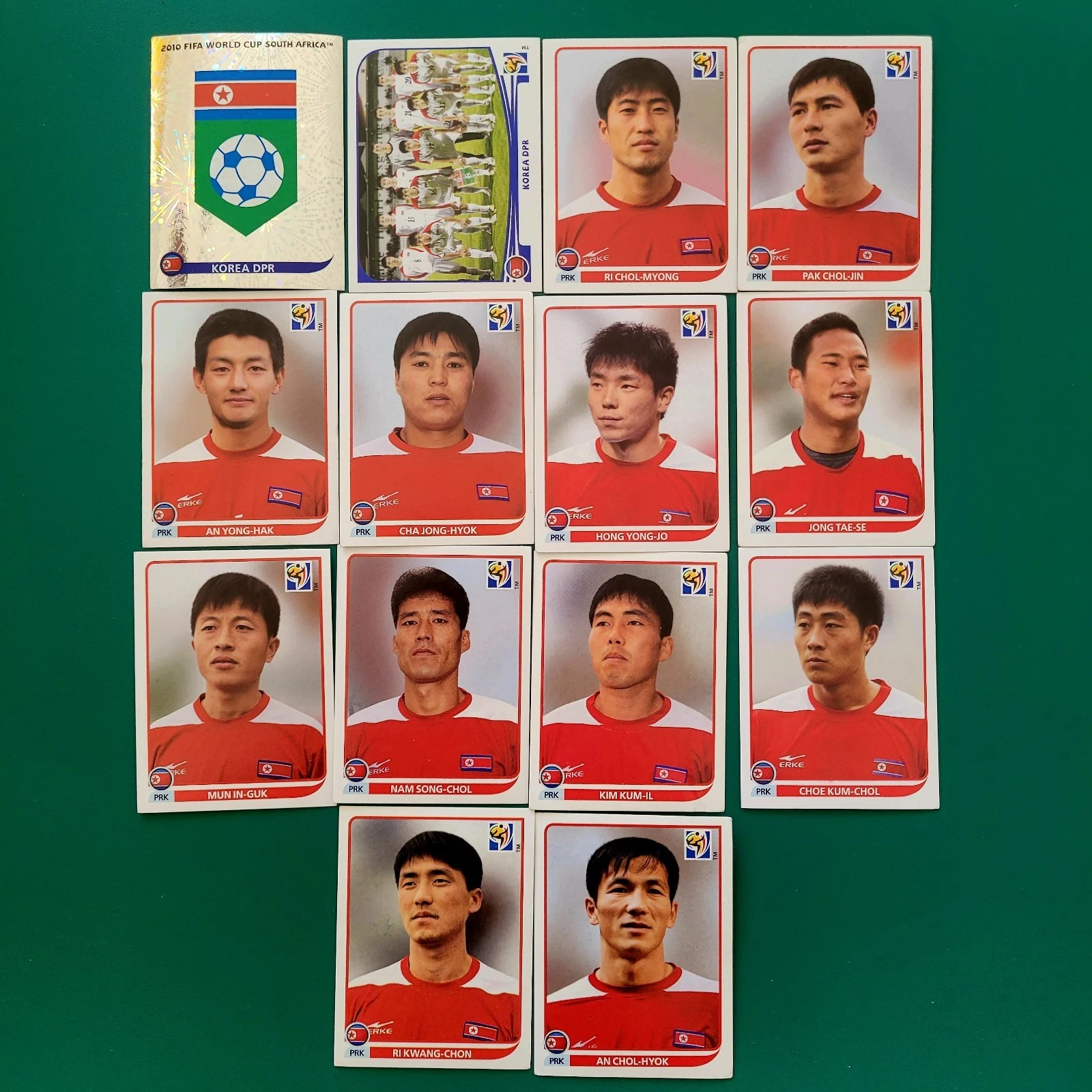
LINK to article - Italy World Cup Rewind: Humiliation at the Hands of North Korea, 1966 - bleacherreport.com/articles/1998811-italy-world-cup-rewin...
LINK to video - North Korea's 1966 World Cup Run | AFC Finners | Football History Documentary - www.youtube.com/watch?v=-J1o5CVldmU&t=332s
1. Im Shung-hwi (Korean: 임성휘; born 3 February 1946), also spelled Im Song Hwi, is a North Korean former football midfielder who played for the national team in the 1966 FIFA World Cup. He also played for February 8 Sports Club. Im was ultimately chosen as one of 22 players for the World Cup team. By that time, he had been capped for the national team a total of 12 times, according to the Evening Telegraph, although the Sunday Mirror reported it to be 18 caps. At the World Cup, the North Korean team played their home games at Ayresome Park in Middlesbrough, England, as part of Group 4 in the tournament which included the Soviet Union, Chile and Italy. Im was considered one of the team's top players in the midfield, and The Guardian described the team's playing style as "basically 4-2-4, with Pak Seung Zin, who must have one of the hardest shots of any of the World Cup finalists, and Im Seung Hwi feeding the wings and creating openings down the middle for Pak Doo Ik." The North Koreans, projected as having little chance of success, lost their first match, 3–0 against the Soviet Union, before tying Chile 1–1. After Chile, the team then played against heavily-favored Italy to determine the qualifier to the next round. In a massive upset, North Korea won 1–0 on a goal by Pak Doo-ik. Im recorded an assist on Pak's goal, having headed the ball to him before he made the winning shot. The team eventually lost 5–3 in the quarterfinals to Portugal; the North Koreans had opened the scoring with a goal by Pak Seung-zin in the first minute, with Im having made the assist. Im ended the World Cup having appeared in all four matches, playing all 360 minutes.
-----------------------------------------------------------------------------------
2. Yang Song-guk (Korean: 양성국; born 19 August 1944) is a North Korean football forward who played for North Korea in the 1966 FIFA World Cup. There he scored against Portugal in the Quarter-finals at Goodison Park. He also played for Kigwancha Pyongyang. He also competed in the men's tournament at the 1976 Summer Olympics.
---------------------------------------------------------------------------------
3. Rim Jung-son, also known as Lim Zoong-sun (림중선; born 16 July 1943). Rim Jung-son is a former centre or right back. He spent his entire career for Moranbong throughout the 1960s and 1970s. He was a member of North Korea national team from 1965 to 1974, participating to the 1966 FIFA World Cup.Considered one of the main defenders of the North Korea team, Rim Jung-son was focused in his defensive task and never left his own half during active play, doing so only during set pieces. He was pretty careful at defending but his timely response in the tackling was his best asset. He was seen tackling successfully the Soviet wingers to stop them from crossing or Chilean players like Prieto and Landa to stop them from reaching the goal. He wasn't a big guy and not notably fast but he wasn't light either and his decent short sprints helped him reach the ball in time for making a tackle. His mentality and will to fight were also strong points. Sporadically in charge of taking free kicks, he delivered a powerful shot that finished over the crossbar against Soviet Union and a pinpoint cross against Chile that was cleared but followed by Pak Sung-jin's goal. Against USSR, in one of the rare occasions he was seen forward, he send a dangerous right-footed cross in the box with an acrobatic volley. Used as centre back in the first two World Cup group matches, he was instead deployed as right back against Italy and Portugal.
------------------------------------------------------------------------------------------
4. Pak Seung-zin (a.k.a. Pak Sung / 박승진 Jin; 11 January 1941 – 5 August 2011) was a North Korean footballer. He represented North Korea at the 1966 FIFA World Cup in England, scoring two goals, against Chile and Portugal. He was the first Asian footballer to score a goal in the World Cup. Career - In his book, The Aquariums of Pyongyang, North Korean defector Kang Chol-hwan claimed that he met Pak in the Yodok concentration camp. He says that Pak and other players on the 1966 team were imprisoned for celebrating the team's victory over Italy in a bar, which was seen as "a sign of bourgeois decadence" by North Korean officials. According to Kang, Pak was in the camp for over 20 years. However, in the documentary film The Game of Their Lives, Pak and the other players were interviewed and denied there had been any retribution.
---------------------------------------------------------------------------------------
5. Han Bong-zin (Korean: 한봉진; born 2 September 1945), also called Han Bong Jin, is a North Korean former football outside forward who played for the national team in the 1966 FIFA World Cup. He also played for 2.8 Sports Team. He later served as the manager of the national team from 1980 to 1981. International career - In 1957, the North Korea national football team was re-organized with the goal of competing at the 1966 FIFA World Cup. In c. 1962, Han was chosen as one of the best 40 players from the North Korean leagues, whose membership reportedly consisted of over 250,000, to be considered for the national team. The 40 players were enlisted into the Army as military officers, under the leadership of colonel and coach Myung Rye-hyun, and went under strict training for the next four years in preparation for the cup. Han and the others trained twice a day starting at 6:00 a.m. and were under other restrictions which included being unmarried, no smoking, no drinking, and (for the last six months) being in bed by 10:00 p.m. Han, an outside right, was ultimately chosen as one of 22 players for the World Cup team. He was the most experienced player on the squad and had a cap total listed by varying sources as 49, 52, or 72 by the time of the competition. Han was considered the best member of the North Korean team and received comparisons to Garrincha for his dribbling and Bobby Charlton for his shooting. The radio station in Pyongyang alleged that he "overshadows the world-renowned Brazilian player" – Pelé. The Evening Telegraph mentioned him as being one of the top two stars of the team and noted that he "demoralised countless defences with his speed and skill, and he is a powerful two-footed kicker.
--------------------------------------------------------------------------------------
6. Pak Doo-ik (Chosungul: 박두익; Hanja: 朴斗翼; born 17 December 1936) is a North Korean former footballer who played as a forward. He scored the goal which knocked out Italy from the group stage of the 1966 FIFA World Cup. Pak Doo-ik was born in Pyongyang. He represented North Korea at the 1966 FIFA World Cup in England, scoring the winning goal in their 1–0 win over Italy at Ayresome Park, Middlesbrough, a game since documented in the film The Game of Their Lives by British filmmaker Daniel Gordon. The result is still considered one of the World Cup's biggest ever upsets, with Italy – holders of a then joint-record two world titles – having been widely expected to face no difficulty in comfortably beating North Korea, who were making their tournament debut. Drawn in a group with Italy, Chile and the USSR, the North Koreans were based in the north-eastern English industrial town of Middlesbrough during the tournament, playing their matches at Ayresome Park stadium. After a 0–3 defeat against the USSR, their courageous and spirited display in an exciting 1–1 draw against Chile won the hearts of the local people. Their surprising win against the powerful Italians further cemented their popularity in the town. Pak, speaking in 2002 on a return to Middlesbrough with the surviving members of the 1966 North Korea team, recalled that "It was the day I learnt football is not all about winning. I learnt that playing football can improve diplomatic relations and promote peace." After the victory, Pak, who was, at the time, a corporal in the North Korean army, was promoted to sergeant. An original ticket to the match is on display among other historical football items at the FIFA World Football Museum in Zurich.
.... Pachi was the name of the mascot of the 2015 Pan American Games. The choice of mascot, whose design was based on that of a porcupine, an animal found in all 41 countries competing at the Games. There are 41 stylized conical spines on Pachi's back: one for every country participating in the Games. The spines are one of five colours, each of the five representing a quality the Games are said to endorse: youth, passion, collaboration, determination, and creativity.