View allAll Photos Tagged Checklist
Nankeen Night Heron (Nycticorax caledonicus australasiae), Kakadu National Park, Northern Territory, Australia
Ebird checklist:
ebird.org/australia/checklist/S89330129
The nankeen night heron (Nycticorax caledonicus) is a heron that belongs to the genus Nycticorax and the family Ardeidae. Due to its distinctive reddish-brown colour, it is also commonly referred to as the rufous night heron.
Source: Wikipedia
Picaflor Cometa, Red-tailed Comet, Sappho sparganurus.
Primer registro para Chile!!
First record for Chile!!
ebird.org/checklist/S247136687
Navidad
Región del Libertador Bernardo O'Higgins
Chile
Arachnids from the order Opiliones are commonly called harvestmen, harvest spiders, shepherd spiders, or daddy-long-legs (not to be confused with Pholcidae). In Latin, opilio refers to "shepherd". In England, they were called harvestmen because of a superstitious belief that there will be a bad harvest that year if one was killed.
Read more at Harvestmen: Opiliones Checklist
My Checklist for taking Tillie's Christmas pic
1- Santa Hat $9.99
3- Christmas ball ornaments $5.97
1 festive red bandana 7.99
Having snow falling and the dog dip her muzzle into the fresh snow right before taking Christmas picture.... Priceless!! :) Commenting not necessary as I have the other one I uploaded just the other day. I had taken a few snaps of her (I never just take one shot of anything!!) lol!! All the best to you during this Holiday Season
Immature Bald Eagle getting ready to fledge ...so nice !
Morris County, NJ
Thank you very much for your kind comments, favorites and looking
Australian Owlet-nightjar (Aegotheles cristatus cristatus), Castlereagh Nature Reserve, Penrith, NSW, Australia
Ebird checklist:
ebird.org/australia/checklist/S126091338
The Australian owlet-nightjar (Aegotheles cristatus) is a nocturnal bird found in open woodland across Australia and in southern New Guinea. It is colloquially known as the moth owl. It is the most common nocturnal bird in Australia, and despite suffering from predation and competition by introduced species it is not considered threatened.
Source: Wikipedia
Continuing bird found by Christopher Adler. Super cooperative! Let me walk up within 6ft. First found sitting by the bathrooms and then it flew around and landed by the restaurant.
ebird.org/ebird/view/checklist?subID=S26033807
Imperial Beach Pier, Imperial Beach, CA.
Lace bugs belong to the family Tingidae and are recognised by the lace-like structure on their pronotum and forewings. Lace bugs are usually host-specific and feed on the undersides of leaves by piercing the epidermis and sucking the sap. The holes left behind by the pierced epidermis are also how we typically identify the leaves that lace bugs may have infested.
Read more at Tingidae Checklist: Lace Bugs
House Sparrow (Passer domesticus), Pughs Lagoon, Hawkesbury, NSW, Australia
Ebird checklist:
ebird.org/australia/checklist/S108545045
One of about 25 species in the genus Passer, the house sparrow is native to most of Europe, the Mediterranean Basin, and a large part of Asia. Its intentional or accidental introductions to many regions, including parts of Australasia, Africa, and the Americas, make it the most widely distributed wild bird.
Source: Wikipedia
"The smallest North American white-headed gull, the Mew Gull is commonly described as having a 'gentle' or 'dove-headed' look. "birdweb "One of the smallest of the "white-headed" gulls, the Mew Gull is common along Pacific Coast beaches in winter. It also occurs in Eurasia, where it is known at the "Common Gull.""allaboutboids
White Tern (Gygis alba), Two Chimneys Reserve, Norfolk Island
Ebird checklist:
ebird.org/australia/checklist/S154951884
A medium-sized tern with entirely white plumage, a slightly forked tail, and glittering inky pools for eyes. The bill is black with a blue base. Graceful and buoyant in flight. Breeds in trees and both natural and artificial ledges on coral islands. Sometimes flies very high in pairs or trios. Often seen offshore from boats, though most frequently encountered foraging over inshore waters.
Source: Ebird
Red Knot (Calidris canutus), Kingston Jetty, Norfolk Island
Ebird checklist:
ebird.org/australia/checklist/S154882094
Widespread and fairly common, breeding on high Arctic tundra and wintering on coastlines around the globe, as far south as Tierra del Fuego. Most numerous on beaches and mudflats; less common inland.
Source: Ebird
I think they all apply to me at some point or another.
In fact, this chart is pretty derivative of Cristoph Niemann and Geoff McFetridge.
But yeah. Fun little 1hr brainfart from today.
"Western" Burrowing Owl (Athene cunicularia hypugaea)
Adult
Family: Owls
Rocky Mountain Arsenal NWR
Adams County, CO
2016/06/28
Black Currawong (Strepera fuliginosa), Huon Valley, Tasmania
Ebird checklist:
ebird.org/australia/checklist/S157465500?_ga=2.185042720....
Large, black, crow-sized bird with large black bill and yellow eyes. In flight, white tail tip and primary tips sometimes difficult to see. Gray Currawong can be similar but has white undertail. Inhabits many wooded and open habitats in Tasmania, sometimes foraging in large flocks. Song a distinctive throaty, fluting “kar-week, week-kar,” or similar.
Source: Ebird
ebird.org/species/blacur2?_ga=2.185042720.846475479.17043...
Dusky Thrush (Turdus eunomus), Nara, Japan
Ebird checklist:
ebird.org/checklist/S163244662
This heavily marked thrush is easily identified when seen well. Females average duller than males, but both sexes have a dark cheek on an overall white face, brown upperparts (strongly rufous-tinted in males), bright rufous wings, and dark underparts densely marked with white chevrons. Much darker than scarce Naumann's Thrush, with which it may associate and sometimes hybridizes. Very vocal, delivering loud chattering notes in both songs and calls. Breeds in taiga, tundra, and steppelands; winters in forests, as well as open habitat such as forest edges and fields.
Source: Ebird
Yellow Honeyeater (Stomiopera flava), Mcleod River Crossing, Tablelands, Queensland, Australia
Ebird checklist:
ebird.org/checklist/S112643903
The yellow honeyeater (Stomiopera flava) is a species of bird in the family Meliphagidae. It is endemic to Australia.
Source: Wikipedia
Noisy Friarbird (Philemon corniculatus), Scheyville National park, Hawkesbury, NSW, Australia
Ebird checklist:
ebird.org/australia/checklist/S151222287
Large gray-brown honeyeater with a completely bare black head and a distinctive "horn" on the bill. Upperparts are gray and underparts are dull white. Completely bare head is unique among the friarbirds. Typically very loud; emits a variety of harsh, loud squawks. Inhabits a wide range of habitats in eastern Australia, including (especially) open forests and gardens and parks, where it is common.
Source: Ebird
Southern Boobook (Ninox boobook boobook), Dundas Valley, Sydney, NSW, Australia
Ebird checklist:
ebird.org/australia/checklist/S61697162
The Australian boobook (Ninox boobook) is a species of owl native to mainland Australia, southern New Guinea, the island of Timor, and the Sunda Islands.
Source: Wikipedia
This and all of my images have copyright protection. Do not use, copy, or reproduce my photos in any format for any purpose without my written permission.
This message especially applies; but not limited to, Reddit.com, socialsavanna.com, reddpipe.com, Facebook, Twitter, Pintrest, and Tumblr.
In my opinion members of these groups appear to have difficulty understanding the concept of copyright infringement or fair use.
Located at Marsland Basin (off TWP 232) in Southern Alberta.
I had read an e-bird report prior to heading to Calgary, AB and decided to check out this spot the day after arrival. I went in search of the ibis and black crowned night heron. Both of which would be a lifer.
Lucky enough to locate and photograph both species among others.
The owners of the property adjacent to Marsland Basin are very kind enough to welcome and allow birders to use their viewing area overlooking the basin and enjoy the many species using the wetlands.
My e-bird list for this location:
ebird.org/ebird/canada/view/checklist?subID=S24426917
Thank you for taking the time to view comment or fave. Will soon have time to respond in kind.
Have a wonderful day.
Argiope Checklist: Cross Spiders
Cross orb weaver spiders from the genus Argiope Audouin, 1826 have some of the most common names tagged to them, namely Cross Spiders, Zig-Zag Spiders, Signature Spiders, Silver-Faced Spiders, St. Andrew’s Cross Spiders, etc. There were always exceptions to the common name within the genus, so I settled for one which matched closely to all of the species listed on this page – Cross Spiders. This refers to the position of its legs forming a typical X-posture when perched on its web. Sometimes, it may build stabilimenta to extend its cross.
View full checklist here: Argiope Checklist: Cross Spiders
"Few birds are as uniformly matte brown as a California Towhee. A patch under the tail (called the crissum, giving the bird its scientific name) is a noticeably warmer ruddy brown. " Allaboutbirds
Golden Whistler (Pachycephala pectoralis xanthoprocta), Captain Cook Memorial, Norfolk Island
Ebird checklist:
ebird.org/australia/checklist/S155067036
Compact songbird with short pointed bill. Male olive above, yellow below, with white throat set in black head. Female, often misidentified, grayish overall with yellow wash below, at least in undertail coverts. Olive Whistler much browner below, with well-defined whitish bib. Inhabits great variety of habitats in southeastern Australia and up the east coast to north Queensland. Song a loud piercing whistle with a whip-like ending.
Source: Ebird
Isopoda Checklist: Pillbugs & Sowbugs
Pillbugs, sowbugs, roly-polies and woodlice, collectively referred to as isopods, are land-dwelling crustaceans that feed mainly on decaying organic matter, especially rotting wood and leaves. Pillbugs can roll into a tight ball or a pill — an ability called conglobation. Sowbugs, on the other hand, cannot conglobate and would have a pair of tail-like appendages (uropods) that project out from the rear end of their body.
Read more at Isopoda Checklist: Pillbugs & Sowbugs and Isopod.Site
It's raining tonight. A substantial rain.
So, time to dig into the archives and express with a picture.
I know, the sky is completely blown out in this shot. But, it means more to me than the balance of exposures.
I come from New Jersey. South Jersey to be exact. (very different from smelly North Jersey). Yes, we are home to the "Jersey Shore", and evidently the "Fist Pump" but we look at those people with the same in-credulousness that you do when watching on TV.
I up my origins because home for me is flat. Flat flat. Like Kansas flat. Well, not exactly that bad, but pretty damn flat. Here, check this out, here's a topo map of Jersey. I remind you, I come from the Southern half. Shades of green express elevation. Deep green color means elevation of 0-100 ft above sea level
www.mapsofworld.com/usa/topographic-maps/maps/new-jersey-...
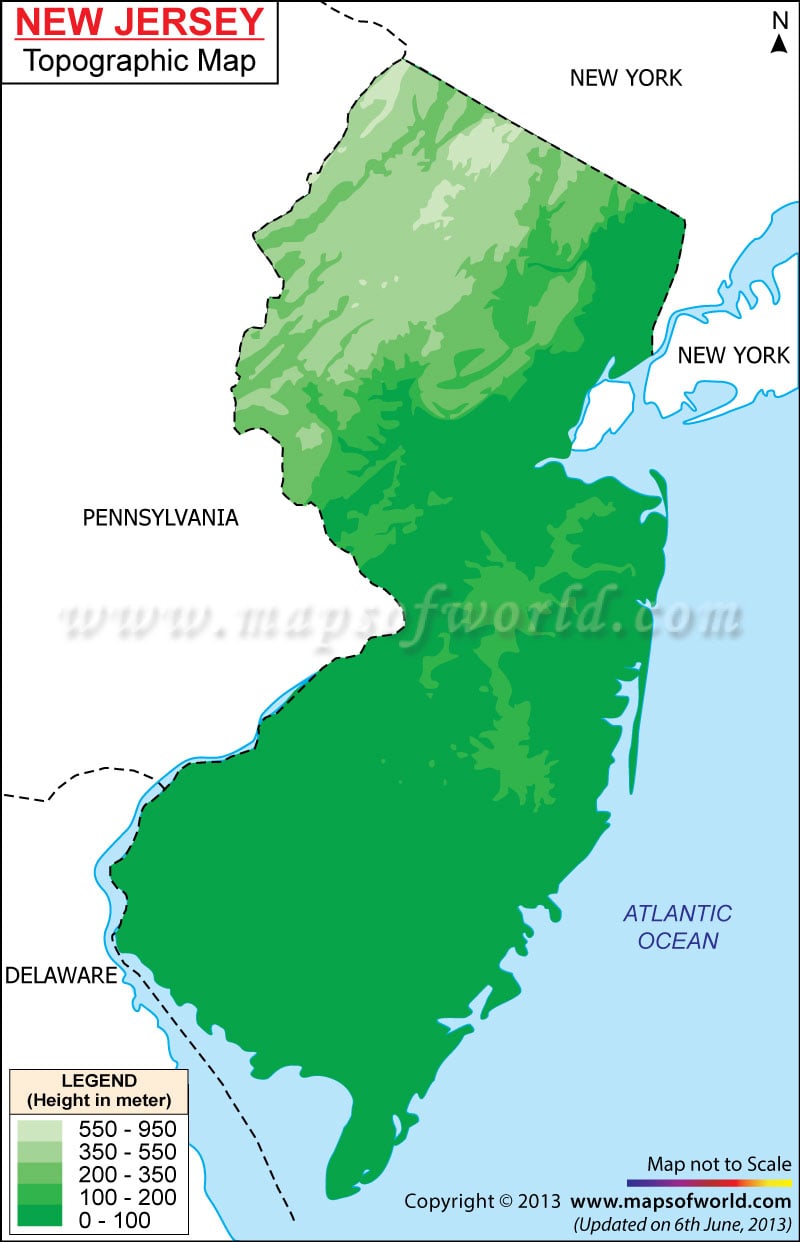
....yeahp. You are reading that map correctly. From East to West, the highest point of South Jersey is just shy of 100 ft above sea level!
So, I say all this, because, when growing up, I read Backpacker and Outside magazine and knew at some point in my life- I had to live by mountains. Snow capped mountains. Rugged rivers and rocky hilltops. Deep forests with dark starry night skies. The Wild called to me. The last 10 years I've done alot of domestic and global travel to go see those far off places, and wow, our world is an incredible place.
But travelling wasn't enough. I wanted to live by the mountains, not just see them. Now, I live by the mountains :-)
Here's an Oregon topo map:
www.mapsofworld.com/usa/topographic-maps/maps/oregon-topo...

Oregon has elevation colors that Jersey can't touch! Makes me want to do some fist pumps... ;-)
So, this picture is a self portrait. Probably about 5 am or so. Whenever sunrise was during the Perseid Meteor Shower. I rushed to get these shots because a sudden wind storm was ripping tents from the ground and blowing camp gear all over the place. But this view continued to stop me in mid motion and stare with awe. I know, the sky is empty, devoid of beautiful glowing sunrise clouds- but man, look at that land! This moment for me is expressive of living a life goal. Maybe later in life I'll live closer to bigger mountains, or possibly even in the ranges, but for now, being an hour away from 10,000 ft+ mountains just blows me away. And mornings like this make a kid from Jersey just stop and stare.
So, cheers to the beauty around us. Cheers to early mornings in beautiful places. Cheers to kids growing up and doing what they dreamed of.