View allAll Photos Tagged Checklist
Sale Details: Storewide 50% Off Sale! Primary Genre(s): Female apparel, Jewelry & accessories, Home & garden, BoM Stockings/Socks! Start Date: July 8, 2022 End Date: July 15, 2022
The flight crew of "Speedbird 92" was busy completing their preflight checklist prior to pushing back from Terminal 3 at Toronto Pearson International Airport in Mississauga, Ontario.
It was the inaugural departure of an Airbus A350-1000 from CYYZ. The aircraft, G-XWBB (serial number 340), was delivered to British Airways Plc only 12 days earlier on September 19.
Sooty Tern (Onychoprion fuscatus kermadeci), Lord Howe Island, NSW, Australia
Ebird checklist:
ebird.org/australia/checklist/S77538922
The sooty tern (Onychoprion fuscatus) is a seabird in the family Laridae. It is a bird of the tropical oceans which sleeps on the wing, returning to land only to breed on islands throughout the equatorial zone.
Source: Wikipedia
A Red Avadavat (Amandava amandava) on the outskirts of Kathmandu, Nepal. Avadavats are lowland birds, and a while a few birds have had a population in the Kathmandu Valley, they have not been seen here in many years due to habitat destruction. Yesterday, I was lucky enough to find six of them in a stretch of tall grass near my house. I used this angle to show how the avadavats in the valley are being threatened by the ever growing urbanization. #notgoneyet
eBird: ebird.org/checklist/S62519274
Website: www.ianhearn.com/
Powerful Owl (Ninox strenua), Galaringi Rserve, Carlingford, Sydney, NSW, Australia
Ebird checklist:
ebird.org/australia/checklist/S93608952
The powerful owl (Ninox strenua), a species of owl native to south-eastern and eastern Australia, is the largest owl on the continent. It is found in coastal areas and in the Great Dividing Range, rarely more than 200 km (120 mi) inland.
Source: Wikipedia
"Within their range, Scissor-tailed Flycatchers are one of the most conspicuous roadside birds—easily visible at 65 miles per hour if you keep your eyes peeled along fencerows from the passenger side of the car. Their pale color can make them hard to spot against the sky, but their long tails are eye-catching both when at rest and in flight. During migration in fall and early spring you may see them in very large, noisy flocks. They leave the U.S. in winter, so look for them in spring and summer."allaboutboids.
Pool resurfacing finished
Pool filled
Temps over 100
High Spot to jump from
and an suspecting swimmer who yells Come On In
CANNONBALL!
View quietly lounging in the pool
for
Our Daily Challenge | Come On In
This rare visitor stopped by Queen Elizabeth Park in Vancouver yesterday. I saw this male today in a flock of 4 Common Redpolls. This was a BC Lifer for me!
Note the tiny bill, white/pale distinct colour on the breast and the white undertail with no streaking.
This makes bird #257 for me in the Vancouver checklist area this year!
eBird Checklist Checklist S249117627
North American Rarity
The only known one in the Western Hemisphere. Steller's sea eagles are native to coastal northeastern Asia, particularly Russia, Korea, and Japan.
Location:
Conception Bay South
North River, Halls Town Area
Newfoundland, Canada
* Sighting location on map. A 600mm lense would be perfect for the area due to being across a river.
* Image was taken from across the North River from shoreline. Eagle was very high up and a little out of range of my equipment. Nice to finally see it as it had not been observed since early Jan this year in Terra Nova National Park. There is a Bald Eagles nest with 2 chicks down the river from the Steller's and the adult Bald Eagle makes defending approaches towards the Steller to keep it out of the nest area.
A Himalayan Bulbul (Hypsipetes leucocephalus) perches on a branch in Shivapuri-Nagarjun National Park. Himalayan Bulbuls are common birds around the Kathmandu Valley, where they are found in rural areas and brush-covered hillsides. #shivapuribirding
eBird checklist, Shivapuri-Nagarjun NP: ebird.org/checklist/S63346107
Website: www.ianhearn.com/birds-nepal
Picaflor Cometa, Red-tailed Comet, Sappho sparganurus.
Primer registro para Chile!!
First record for Chile!!
ebird.org/checklist/S247136687
Navidad
Región del Libertador Bernardo O'Higgins
Chile
Arachnids from the order Opiliones are commonly called harvestmen, harvest spiders, shepherd spiders, or daddy-long-legs (not to be confused with Pholcidae). In Latin, opilio refers to "shepherd". In England, they were called harvestmen because of a superstitious belief that there will be a bad harvest that year if one was killed.
Read more at Harvestmen: Opiliones Checklist
Common Brushtail Possum (Trichosurus vulpecula), Waterworks Reserve, Tasmania, Australia
Ebird checklist:
ebird.org/ebird/view/checklist/S35272098
The common brushtail possum (Trichosurus vulpecula, from the Greek for "furry tailed" and the Latin for "little fox", previously in the genus Phalangista) is a nocturnal, semi-arboreal marsupial of the family Phalangeridae, it is native to Australia, and the second largest of the possums.
Source: Wikipedia
Immature Bald Eagle getting ready to fledge ...so nice !
Morris County, NJ
Thank you very much for your kind comments, favorites and looking
Buff-banded Rail (Gallirallus philippensis), Lord Howe Island, NSW, Australia
Ebird checklist:
ebird.org/australia/checklist/S77416203
The buff-banded rail (Hypotaenidia philippensis) is a distinctively coloured, highly dispersive, medium-sized rail of the rail family, Rallidae. This species comprises several subspecies found throughout much of Australasia and the south-west Pacific region, including the Philippines (where it is known as tikling), New Guinea, Australia (where it is known as a Misery chicken), New Zealand (where it is known as the banded rail or moho-pererū in Māori), and numerous smaller islands, covering a range of latitudes from the tropics to the Subantarctic.
Source: Wikipedia
Lace bugs belong to the family Tingidae and are recognised by the lace-like structure on their pronotum and forewings. Lace bugs are usually host-specific and feed on the undersides of leaves by piercing the epidermis and sucking the sap. The holes left behind by the pierced epidermis are also how we typically identify the leaves that lace bugs may have infested.
Read more at Tingidae Checklist: Lace Bugs
Theridiidae Checklist: Comb-Footed Spiders
Comb-footed spiders from the family Theridiidae Sundevall, 1833 are small spiders, but it is one of the largest family of spiders living in tree canopies. The “comb”, or serrated bristles on tarsi IV gives the spiders in this family its common name. While some theridiids construct three-dimensional webs or cob webs, several genera do not build webs at all.
I was wondering how many birds I had seen so I found a checklist here that you can download for all the North American birds.
Eastern Towhee (Pipilo erythrophthalmus)
Adult Male
Family: Emberizids
Price Twp--Hiawatha Ln near Marshalls Creek Rd
Monroe County, PA
2018/05/05
Blackburnian Warbler (Setophaga fusca)
Breeding Male
Family: Wood Warblers
US-PA-Price-Delaware State Forest - 41.1737x-75.1680
Monroe County, PA
2018/05/05
This species was a daily part of our checklist when we were in the lowlands of northern India. It was only on the last day of the trip that I had one pose for me.
Okhla Bird Sanctuary, Delhi, India
This was the last wildlife photo of the trip and with it I am concluding the loose chronology of the trip that you have been seeing for the last three months. Some photos were held back to avoid having too many of the same theme in a row so some of these will appear as I feel like posting them.
I think they all apply to me at some point or another.
In fact, this chart is pretty derivative of Cristoph Niemann and Geoff McFetridge.
But yeah. Fun little 1hr brainfart from today.
Dusky Thrush (Turdus eunomus), Nara, Japan
Ebird checklist:
ebird.org/checklist/S163244662
This heavily marked thrush is easily identified when seen well. Females average duller than males, but both sexes have a dark cheek on an overall white face, brown upperparts (strongly rufous-tinted in males), bright rufous wings, and dark underparts densely marked with white chevrons. Much darker than scarce Naumann's Thrush, with which it may associate and sometimes hybridizes. Very vocal, delivering loud chattering notes in both songs and calls. Breeds in taiga, tundra, and steppelands; winters in forests, as well as open habitat such as forest edges and fields.
Source: Ebird
This and all of my images have copyright protection. Do not use, copy, or reproduce my photos in any format for any purpose without my written permission.
This message especially applies; but not limited to, Reddit.com, socialsavanna.com, reddpipe.com, Facebook, Twitter, Pintrest, and Tumblr.
In my opinion members of these groups appear to have difficulty understanding the concept of copyright infringement or fair use.
Located at Marsland Basin (off TWP 232) in Southern Alberta.
I had read an e-bird report prior to heading to Calgary, AB and decided to check out this spot the day after arrival. I went in search of the ibis and black crowned night heron. Both of which would be a lifer.
Lucky enough to locate and photograph both species among others.
The owners of the property adjacent to Marsland Basin are very kind enough to welcome and allow birders to use their viewing area overlooking the basin and enjoy the many species using the wetlands.
My e-bird list for this location:
ebird.org/ebird/canada/view/checklist?subID=S24426917
Thank you for taking the time to view comment or fave. Will soon have time to respond in kind.
Have a wonderful day.
Argiope Checklist: Cross Spiders
Cross orb weaver spiders from the genus Argiope Audouin, 1826 have some of the most common names tagged to them, namely Cross Spiders, Zig-Zag Spiders, Signature Spiders, Silver-Faced Spiders, St. Andrew’s Cross Spiders, etc. There were always exceptions to the common name within the genus, so I settled for one which matched closely to all of the species listed on this page – Cross Spiders. This refers to the position of its legs forming a typical X-posture when perched on its web. Sometimes, it may build stabilimenta to extend its cross.
View full checklist here: Argiope Checklist: Cross Spiders
Isopoda Checklist: Pillbugs & Sowbugs
Pillbugs, sowbugs, roly-polies and woodlice, collectively referred to as isopods, are land-dwelling crustaceans that feed mainly on decaying organic matter, especially rotting wood and leaves. Pillbugs can roll into a tight ball or a pill — an ability called conglobation. Sowbugs, on the other hand, cannot conglobate and would have a pair of tail-like appendages (uropods) that project out from the rear end of their body.
Read more at Isopoda Checklist: Pillbugs & Sowbugs and Isopod.Site
Chestnut-sided Warbler (Setophaga pensylvanica)
Breeding Male
Family: Wood Warblers
Dirty Bird Ranch (J and M Home)
Chemung County, NY
2019/05/09
It's raining tonight. A substantial rain.
So, time to dig into the archives and express with a picture.
I know, the sky is completely blown out in this shot. But, it means more to me than the balance of exposures.
I come from New Jersey. South Jersey to be exact. (very different from smelly North Jersey). Yes, we are home to the "Jersey Shore", and evidently the "Fist Pump" but we look at those people with the same in-credulousness that you do when watching on TV.
I up my origins because home for me is flat. Flat flat. Like Kansas flat. Well, not exactly that bad, but pretty damn flat. Here, check this out, here's a topo map of Jersey. I remind you, I come from the Southern half. Shades of green express elevation. Deep green color means elevation of 0-100 ft above sea level
www.mapsofworld.com/usa/topographic-maps/maps/new-jersey-...
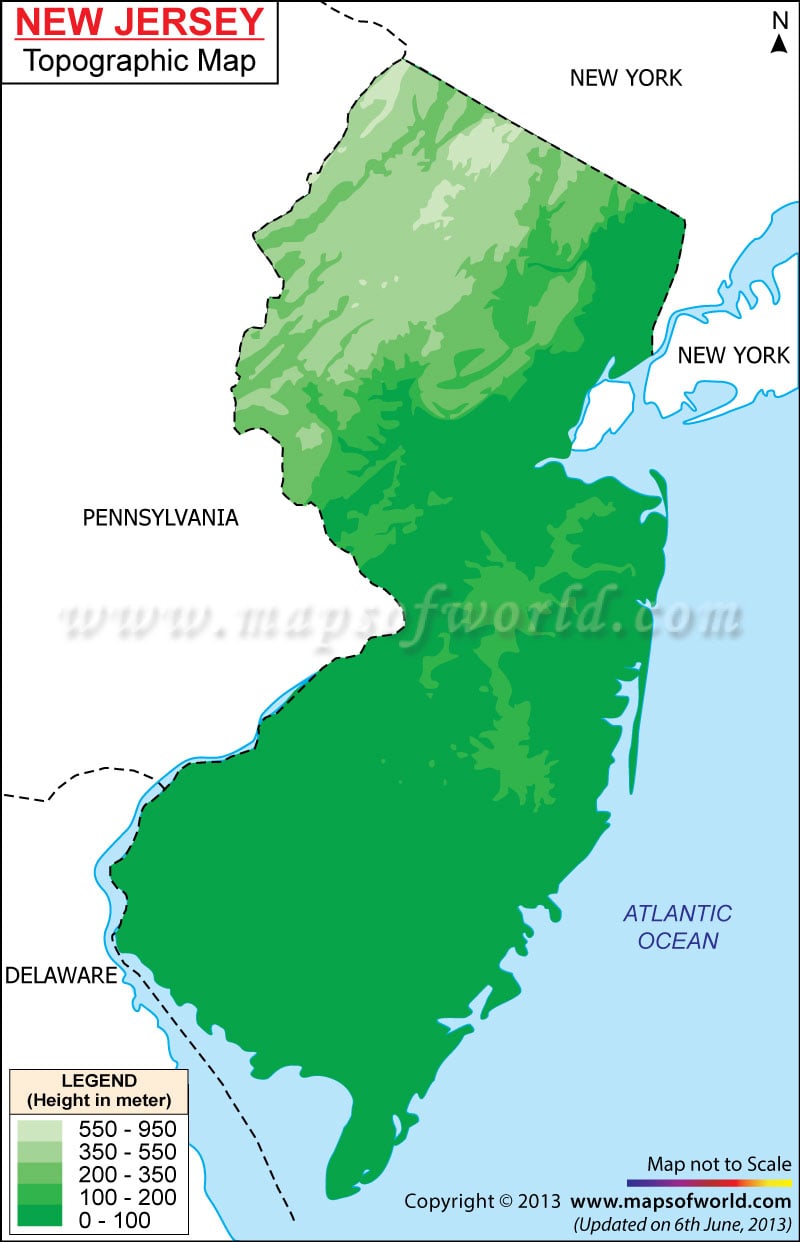
....yeahp. You are reading that map correctly. From East to West, the highest point of South Jersey is just shy of 100 ft above sea level!
So, I say all this, because, when growing up, I read Backpacker and Outside magazine and knew at some point in my life- I had to live by mountains. Snow capped mountains. Rugged rivers and rocky hilltops. Deep forests with dark starry night skies. The Wild called to me. The last 10 years I've done alot of domestic and global travel to go see those far off places, and wow, our world is an incredible place.
But travelling wasn't enough. I wanted to live by the mountains, not just see them. Now, I live by the mountains :-)
Here's an Oregon topo map:
www.mapsofworld.com/usa/topographic-maps/maps/oregon-topo...

Oregon has elevation colors that Jersey can't touch! Makes me want to do some fist pumps... ;-)
So, this picture is a self portrait. Probably about 5 am or so. Whenever sunrise was during the Perseid Meteor Shower. I rushed to get these shots because a sudden wind storm was ripping tents from the ground and blowing camp gear all over the place. But this view continued to stop me in mid motion and stare with awe. I know, the sky is empty, devoid of beautiful glowing sunrise clouds- but man, look at that land! This moment for me is expressive of living a life goal. Maybe later in life I'll live closer to bigger mountains, or possibly even in the ranges, but for now, being an hour away from 10,000 ft+ mountains just blows me away. And mornings like this make a kid from Jersey just stop and stare.
So, cheers to the beauty around us. Cheers to early mornings in beautiful places. Cheers to kids growing up and doing what they dreamed of.
Another shot of the rarity I found at Carysbrook Plantation. A horned lark can be seen taking off in the background.
New Zealand Kaka (Nestor meridionalis), Wellington, New Zealand
Ebird checklist:
A large, olive-brown parrot endemic to New Zealand. Adults have a deep crimson belly and undertail with a red-orange underwing. South Island birds are brighter with a white crown. Juveniles have a yellow base to their lower bill. A forest-dwelling parrot that is more common on offshore islands, but flourishes in areas where mammalian predators are controlled; some visit city and rural gardens. Harsh, grating “kra-aa” call is often heard before the bird is seen. The species also whistles a series of tuneful notes while perched. Distinguishable from Kea by smaller size, olive-brown as opposed to olive-green plumage, and range.
Source: Ebird