View allAll Photos Tagged CASTLE;
Sizergh Castle and Garden is a stately home and garden at Helsington in the English county of Cumbria, about 4 miles (6.4 km) south of Kendal. The castle, a grade I listed building, is in the care of the National Trust along with its garden and estate. It is the home of the Hornyold-Strickland family.
Taken from: en.wikipedia.org/wiki/Sizergh_Castle_and_Garden
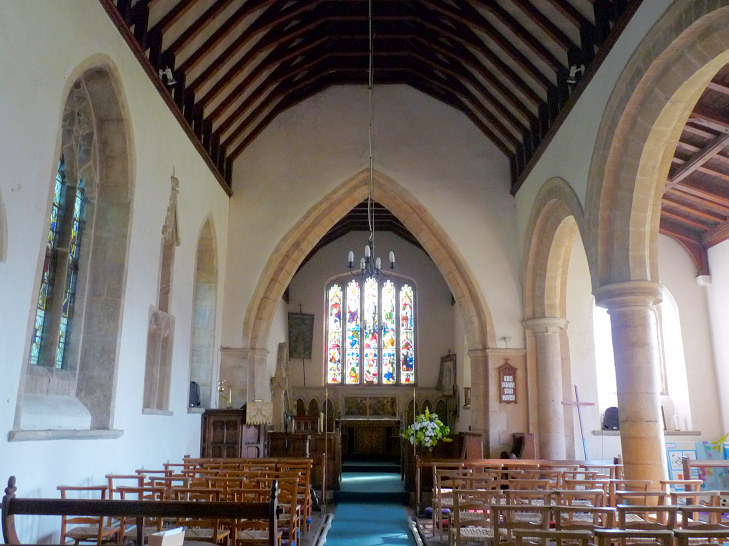
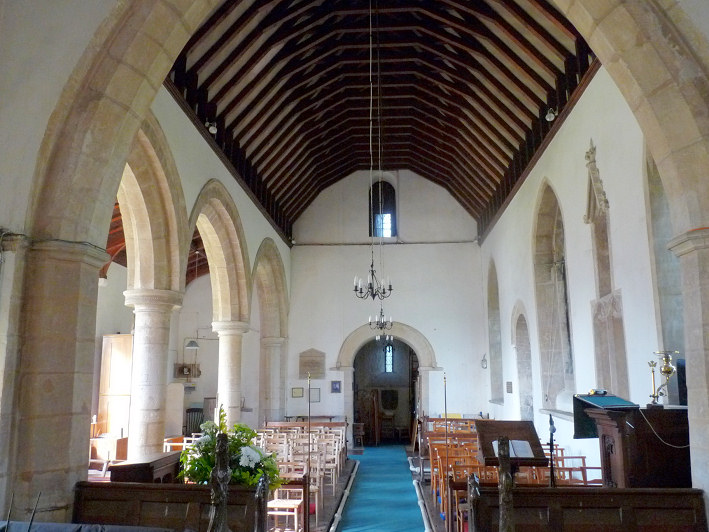
Late 12c - 17c Church of St. James, Castle Bytham Lincolnshire - Three stage early 13c tower with 15c battlements. 12c nave and north arcade. 13c south transept and north porch. 14c chancel
The village was recorded in 1086 Domesday as West Bytham as the castle had yet to be built - the land was owned by Morcar brother in law of King Harald, and was given by the Conqueror to his half brother Odo, Bishop of Bayeux. The castle was destroyed in 1221 by Henry lll & Hugh de Mortimer, Leland in the 16c described its remnants as "yet remained great walls of buildings" Destroyed again by fire in the 15c Wars of the Roses, its mound still overlooks the village.
Interior -
www.churches-uk-ireland.org/images/lincs/castle_bytham_in...
www.churches-uk-ireland.org/images/lincs/castle_bytham_in...
"Photograph of the Tame Valley from the castle motte in Castle Bromwich. The view is downstream. On the steep valley sides there are Parkhall woods, on the left Castle Vale estate. City of Birmingham refuse disposal works in Castle Bromwich. The photograph was taken in late 1968." - Phyllis Nicklin
(The M6 Motorway c1970 now runs from the bottom left of this picture to the top right. The motte and bailey are now virtually inaccessible as the Chelmley Collector Road runs along the right-hand side of the castle site which is now considerably more oevrgrown than shown here.)
The late Phyllis Nicklin was a geography tutor at the University of Birmingham who took hundreds of slides of the city during the 1960s. A selection of her work was put up on a website called Chrysalis, a joint venture of various West Midlands academic institutions.
Unfortunately the website no longer appears to be fully functioning, but I found some of it in the Internet Archive at web.archive.org/web/19960101000000-20070726172333/http://... and at 62.105.110.193/extras/public.bhtml?library=10032 or 62.105.110.193/search/results.bhtml?collection_id=10032 - no guarantees they’ll work!.
Copyright and database rights in this material belong to MLA West Midlands and the University of Birmingham. The University of Birmingham has kindly made its collections available to download and redistribute for non-commercial purposes. This is subject to the Terms and Conditions available via the Chrysalis Homepage: www.chrysalisinfo.org.uk.
Failing this, the best way to see a selection of the collection is via Keith Berry’s collection of photographs at www.pbase.com/beppuu.
PS Have you seen my ‘History of Birmingham Places & Placenames from A to Y’ at billdargue.jimdo.com ?
Fantasy Castle Wallpapers Cool Backgrounds
Fantasy Castle Wallpapers Cool Backgrounds, 1920 x 1200, 490 KB, hdw.eweb4.com/search/fantasy+castle/2.html
Small 9 inch high stone carving of a knight holding a heart on a window ledge in the chancel, indicating a heart burial nearby - possibly Adam de Lacy (d.1297) whose family built the earlier church & castle, and had held the manor here after it was inherited by Walter de Lacy d1085 and passed to his heir Roger de Lacy
Adam was the son of Gilbert de Lacy 1249 & wife Agnes
Children
1. John de Lacy b. 1276 father of Joan de Lacy wife of Richard Clodeshall
2. Alice de Lacy m Sir William Devereux, son of Sir John Devereux and Constance Burnell
(The manor passed to Sir William Devereux 1314 & wife Elizabeth Clodeshall great grand children of Adam de Lacy from both marriages of his children and thence to the Unett family by the marriage in 1432 of John Unett with heiress Elizabeth Brace grand daughter of Sir William Devereux
our-royal-titled-noble-and-commoner-ancestors.com/p2922.h...
The carving was removed by thieves using a hammer & chisel between 29th April & 9th May 2012 www.bbc.co.uk/news/uk-england-hereford-worcester-18122457
www.antiquestradegazette.com/news/2012/more-carvings-take...
c2014 Enquiries began when Customs and Excise tipped off the Metropolitan police that a south London man was planning to import a gorilla’s head. As a protected species, the movement of gorilla parts is tightly controlled.
Detectives knocked on his door, talked to him about the gorilla and asked him if he had anything else they ought to know about. He showed them two 15c oak church panels and an interesting heart stone, At this point, West Mercia police, which covers Herefordshire, took over and launched Operation Icarus A team of detectives began talking to the south London collector, other dealers and scouring the internet. They realised that for at least 6 - 10 years, a person – or persons – had been targeting remote, often unlocked, churches and stripping them of precious artefacts.
So far police have recovered 60 pieces.
The Castle Frome knight weighing about 200 kilos shows that planning and organisation has gone into the thefts.
The London man with a penchant for gorilla heads has been treated as a victim rather than a suspect. Others who have been found with stolen items have argued they bought them in good faith However, it is understood a middle-aged man from mid-Wales has been questioned in connection with the Icarus discoveries and has been charged
- Church of St. Michael , Castle Frome, Herefordshire
www.theguardian.com/uk-news/2015/may/20/operation-icarus-...
Port Appin, Argyll, Scotland (United Kingdom).
The name 'Stalker' comes from the Gaelic Stalcaire, meaning 'hunter' or 'falconer'. In recent times the castle was brought to fame by the Monty Python team, appearing in their film Monty Python and the Holy Grail. It also appeared in the film Highlander: Endgame. The Castle's almost exaggeratedly picturesque appearance, with its island setting against a backdrop of mountains, has made it a favourite subject for post-cards and calenders, and something of a cliché image of Scottish Highland scenery. It should be noted, however, that Stalker's appearance is entirely authentic, and it is one of the best-preserved medieval tower-houses surviving in western Scotland.
The site is similar to the prehistoric crannogs, but the official web-site history page gives the origin of the castle as being a small fort built around 1320 by Clan MacDougall who were then Lords of Lorn. Around 1388 the Stewarts took over the Lordship of Lorn, and it is believed that they built the castle in its present form around the 1440s. The web-site tells a dramatic story of arguments, murders, hunting visits by the Stewart's relative King James IV of Scotland and a drunken bet around 1620 resulting in the castle passing to Clan Campbell. After changing hands between these clans a couple of times the Campbells finally abandoned the castle around 1840, when it lost its roof. Then in 1908 a Stewart bought the castle and carried out basic conservation work, and in 1965 Lt. Col. D. R. Stewart Allward acquired the castle and over about ten years fully restored it.
More info: en.wikipedia.org/wiki/Castle_Stalker
Castle models at BrickFest
on Saturday, March 28, 2009 in Portland, OR by Bill Ward. See also BrickFest Photo Roundup on my blog.
Castle Ring is an Iron Age hill fort, situated high up on the southern edge of Cannock Chase (The Chase), Staffordshire, England.
Castle Rock Scenic Overlook. Castle Rock State Park Illinois. Three Exposure HDR processed with Photomatix
We took a short boat trip across Loch Leven nr Kinross to visit this castle.......the boat captain left just me and the wife alone on the island for an hour saying if we needed anybody there was a two way radio in the ladies toilet ...he would come back and get us......which is nice....Mary Queen of Scots was put in prison here in 1567 and she escaped a year later.........maybe the boat never came back for her.
The first castle was established here in the 1120s by Geoffrey de Clinton who built most of the Norman keep and founded the nearby priory. In the early 13th century King John added an outer circuit of stone walls, and a dam to create a great lake. John of Gaunt, son of Edward III, constructed the great hall and associated apartments. In the 15th century the castle was a favoured residence of the Lancastrian kings. In 1563 Elizabeth I granted the castle to her favourite, Robert Dudley, Earl of Leicester. Elizabeth I visited Kenilworth in 1572 and 1575.
Portchester Castle is a former Roman Fort before becoming a castle. Portchester Village / Town, Paulsgrove Creek, Fareham Creek and St Mary's Church. Fareham Hampshire.
Worth looking up on Wiki for full history
Castle Park (sometimes referred to as Castle Green) is a public open space in Bristol, England, managed by Bristol City Council. It is bounded by the Floating Harbour and Castle Street to the south, Lower Castle Street to the east, and Broad Weir, Newgate and Wine Street to the north. Its western boundary is less obviously defined and has been the subject of controversy, perhaps because the area around High Street and St Mary-le-Port Church, though not part of the park and always intended for development, is often considered at the same time as the park.The park was completed in 1978,and occupies most of the site which had contained Bristol's main shopping area. Much of this area was heavily damaged in the Blitz during the Second World War, and that which remained was subsequently demolished.
The ruined tower of St Mary-le-Port church stands to the west of the park, surrounded by derelict financial office buildings. Adjoining the ruins of St Peter's church in the middle of the park is a sensory herb garden, and five silver birch trees as a memorial to the beaches of the D-Day landings. To the east is a grassy arena, and the partially excavated remains of Bristol Castle with a preserved vaulted chamber. There is also a bandstand and a children's play area.
Tree-lined St Peter’s Square, to the north of St Peter's church, has been home to various events including German Christmas markets. In recent summers a tethered balloon has been placed near the bandstand, offering ascents to sightseers.
Recent attempts to develop the area between the park's western edge and High Street have proved controversial; Bristol City Council are keen to replace derelict buildings with a mixed-use development to help reconnect the Old City to Broadmead and raise funds to improve the park; others would rather see the park extended to High Street.
OIA GIRLS VOLLEYBALL RED EASTERN DIVISION
Tuesday, September 4, 2012
Kaiser High School Gymnasium
Junior Varsity
Kaiser Cougars vs Castle Knights
Baroque castle complex which belongs to the one of largest in Europe built in the first half of the 18th century. Built in 1700-1737 according to the plans of the Austrian architect Jakob Prandtauer for the Count of Questenberg.
Built on a basalt outcrop on the Northumbrian coast facing the Farne Islands, Bamburgh was the royal seat of the kings of Northumbria, and the Normans built a castle here in the 11th-century. As an important English outpost, the castle was the target of occasional raids from Scotland. In 1464 during the Wars of the Roses, it became the first castle in England to be defeated by artillery.
On 10 February 1306, the two surviving claimants for the Scottish throne, Robert Bruce and John Comyn, met at Greyfriars Kirk in Dumfries (which no longer exists). Nobody knows exactly what happened, but a quarrel erupted between them, knives were drawn and The Comyn was killed (or murdered, depending upon which side you are on!) Events now forced The Bruce's hand and he was hurriedly crowned King of Scots six weeks later on March 25th at Scone. Rebellion inevitably broke out again, and in response, Edward I with equal inevitability started preparations for a summer invasion of Scotland.
King Robert Bruce was ill prepared to lead Scotland in 1306. While it is undoubted that the Bruce family saw themselves as the rightful heirs to the Scottish throne, it is equally certain that the stabbing to death of Comyn and the coronation that followed, were unplanned events. As Bruce made such preparations as he could to meet the English in the limited time he had available, he must have had grave doubts about his ability to defeat them.
Robert Bruce and such Scots as would follow him, were defeated at Methven on June 26th, 1306. Following the defeat, Bruce took to the heather but took the precaution of sending his wife Elizabeth (his second wife), sisters Christian and Mary and daughter Marjorie, under the care of his brother Nigel (often also called Neil) north to the safety of Kildrummy Castle. (He already controlled Kildrummy, in his capacity as uncle and guardian to Donald, the young 8th Earl of Mar.)
Not long after reaching Kildrummy, news arrived that an English army under Edward of Carnarvon, the future King Edward II, was making for Kildrummy. Sir Nigel sent the rest of the Royal party on northwards, into what should have been the safety of the far north, but they were eventually betrayed by the Earl of Ross while taking sanctuary at St Duthac's Chapel, just outside Tain. (Lady Mary Bruce, on the orders of King Edward, was then hung in a cage, exposed to public view, on the outside walls of Roxburgh Castle. She remained there for the next 4 years and was eventually ransomed and released following the Battle of Bannockburn!)
Sir Nigel meanwhile, prepared to hold Kildrummy Castle for his brother and meet his date with destiny.
Cinderella's Castle, the icon of the Magic Kingdom in Walt Disney World, Florida.
From a scanned slide taken during one of numerous trips to WDW in the early 1980's.
The Castle of Boldogkő was built in the 13th century on top of a rock near the river Hernád. It was upgraded and improved in the next centuries and finally destroyed in 1701.
More info in Hungarian -thanks to my dad for the link-
Between Hay on Wye and Abergavenny, in the Black Mountains, Wales. It was fortified by Walter de Lacy, and was intended to defend the English borders from Welsh raiders. The whole place has a very Welsh feel now, if you ask me!
Portchester Castle is a former Roman Fort before becoming a castle. Portchester Village / Town, Paulsgrove Creek, Fareham Creek and St Mary's Church. Fareham Hampshire.
Worth looking up on Wiki for full history
Castle cake for my daughter's birthday at school :)
More stories here: delilahomemade.multiply.com/journal/item/33
Thanks,
raras
Castle Urquhart on the banks of Loch Ness, Scotland
For more Scotland pictures, check out my picture set!
It's convenient that the JR station is right next to the castle park. It is literally across the street. Since Fukuyama is a main stop on the Shinkansen line, the castle can be visited easily.
Fukuyama was once the capital of Bingo. It's location was perfect for a castle as it is situated on a hill near the Seto Inland Sea which fed it's moats. Today, Fukuyama is an important industrial city, and the castle park has been nicely preserved. Fukuyama Castle was originally built by Mizuno Katsunari between 1619-1622, but later reconstructed in 1966 after WWII aid raids destroyed most of the site. This castle is typical of the Azuchi-Momoyama style, and is rather large having five tiers.
Fukuyama-jo. Fukuyama, Hiroshima.
Cochem Castle. Building the castle was started in the 11th century A.D. but of course various parts were destroyed and rebuild during wars etc. In 1868 it was bought by a merchant from Berlin (Louis Ravené). The colorful pictures on the castle is what castles used to look like, as opposed to the rough and cold image of rock walls we usually have.
Castle models at BrickFest
on Saturday, March 28, 2009 in Portland, OR by Bill Ward. See also BrickFest Photo Roundup on my blog.