The Revolution Flickred 1775-1783
View allAll Photos Tagged AmericanRevolution
The Old North Church in Boston was built in 1723. It is the location from which the famous "One if by land, and two if by sea" signal is said to have been sent in April 1775 to warn American troops about movements of the British Army during the American Revolution. The architectural style is Georgian.
Middletown, Rhode Island
Golden hour at Prescott Farm, a colonial farm site on Aquidneck Island and, according to the website, "the site of a significant event in the American Revolution" (basically, the abduction of British Lieutenant-General Richard Prescott by American Lieutenant-Colonel William Barton and like 30 guys). The grounds are free and open to the public, with gardens maintained by a team of Master Gardeners in partnership with the University of Rhode Island (URI) Master Gardeners program.
Filters: 2- & 3-stop soft-edge GNDs, landscape polarizer
My favorite bike ride! I'm a volunteer tour guide, the Castle Island Association volunteers are all so great!
The Siege of Yorktown began on September 28, 1781 and ended on October 19, 1781 at the Battle of Yorktown in Virginia. It was a decisive victory by a combined force of the American Continental Army led by General George Washington and Gilbert du Motier, the Marquise de Lafayette, and French troops led by Comte de Rochambeau over British forces led by Lieutenant General Charles Cornwallis. The battle was the last major land battle of the American Revolutionary War, and the surrender of and capture of Cornwallis and his army prompted the British government to negotiate an end to the conflict, resulting in the Treaty of Paris of 1783.
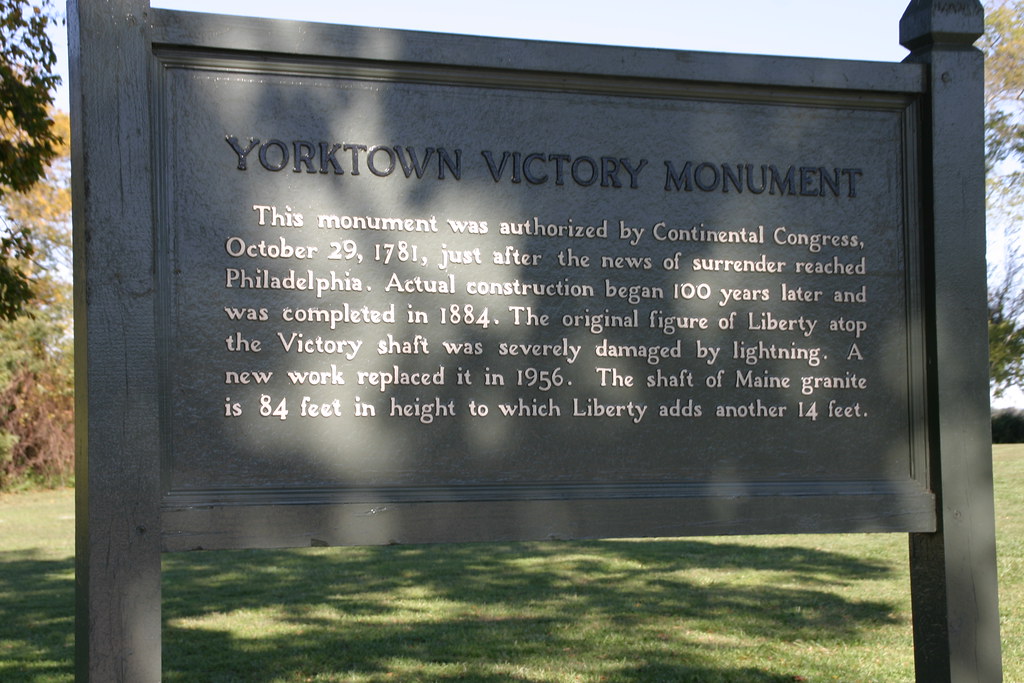
Five days after the British surrendered, Congress passed a resolution agreeing to erect a structure dedicated to commemorating those who participated in the battle. Construction of the monument was delayed, however, because the government had other, more urgent, financial obligations.
The project was postponed until the battle's centennial sparked renewed enthusiasm in the resolution and prompted the government to begin building the monument in 1881. The structure was officially completed on January 5, 1885. The artists commissioned by the Secretary of War for the monument project included Mr. R. M. Hunt (Chairman) and Mr. J. Q. A. Ward (Architect) of New York and Mr. Henry Van Brunt (Sculptor) of Boston.
The Fisherwoman at the base of the Washington Monument, on Eakins Oval located at the end of the Benjamin Franklin Parkway, in Philadelphia, Pennsylvania.
The monument was commissioned and designed by sculptor Rudolf Siemering. The sculpture was dedicated in 1897 at the Green Street entrance to Fairmount Park. It was moved in 1928 to its present location after construction on the parkway was completed. In 1997, work to restore the statue began under the direction of Margo Berg of the Philadelphia Art Commission. Over the years, the sculpture had come loose from its base, and the fountain had ceased to function properly. The restoration was completed in June of the same year, 100 years after it was dedicated.
The bronze and granite sculpture features a uniformed George Washington mounted on a horse. Washington and his horse are poised on top of the fountain, facing southeast down the Benjamin Franklin Parkway towards Philadelphia City Hall. The face of the sculpture was made from an impression of the former president made while he was still alive. The body was of a Prussian General. The lowest level of the monument features Native Americans and animals that are native to the United States.
Information Source:
A section of the Washington Monument located at the end of the Benjamin Franklin Parkway, in Philadelphia, Pennsylvania.
The monument was commissioned and designed by sculptor Rudolf Siemering. The sculpture was dedicated in 1897 at the Green Street entrance to Fairmount Park. It was moved in 1928 to its present location after construction on the parkway was completed. In 1997, work to restore the statue began under the direction of Margo Berg of the Philadelphia Art Commission. Over the years, the sculpture had come loose from its base, and the fountain had ceased to function properly. The restoration was completed in June of the same year, 100 years after it was dedicated.
The bronze and granite sculpture features a uniformed George Washington mounted on a horse. Washington and his horse are poised on top of the fountain, facing southeast down the Benjamin Franklin Parkway towards Philadelphia City Hall. The face of the sculpture was made from an impression of the former president made while he was still alive. The body was of a Prussian General. The lowest level of the monument features Native Americans and animals that are native to the United States.
Information Source:
Call it whatever you like; coexistence of past and present, old and new, classic and modern.
Harmony of diversity in everything makes our life experience more valuable and more beautiful.
Have a happy Friday friends, thank you for your visit :)
The Nelson House in Yorktown, VA, is part of the Colonial National Historical Park. The house was built about 1730.
It was the home of Thomas Nelson, Jr. (1738-89), Yorktown's most famous son and one of the signers of the Declaration of Independence.
During the Battle of Yorktown in 1781, the town was occupied by British forces. The house was damaged during the bombardment of the town.
Cannon balls have been placed in the walls to indicate damaged areas.
The tall ship Hermione, a replica of an 18th-century French frigate, in Yorktown, VA - June, 2015.
In 1780 the Marquis de Lafayette journeyed to the United States aboard the original Hermione to aide in the American Revolutionary War.
hermione2015.com/history.html#voyage_2015
Also visible (lower left) is the replica of Godspeed; the original being one of the three ships from the 1606-1607 voyage to the New World and the subsequent founding of Jamestown, Virginia.
Another from my shoot at Daniel Boone Homestead re-enactments. A peek inside the officers tent reveled this delicious still life.
#76 Tx! :)
Welcome to Boston, a city where history and modernity blend seamlessly. This panoramic view of Boston’s skyline captures the essence of a city that has played a pivotal role in American history while embracing contemporary growth. As you gaze upon the skyline, you’ll notice a harmonious mix of architectural styles that tell the story of Boston’s evolution.
The historic charm of Boston is evident in its neoclassical buildings, which stand proudly alongside sleek, modern high-rises. The Gothic spires and glass facades create a visual symphony that reflects the city’s rich past and innovative future. Notable landmarks such as the Prudential Tower and the John Hancock Tower dominate the skyline, symbolizing Boston’s economic prowess and architectural ingenuity.
In the foreground, industrial elements and satellite dishes highlight Boston’s role as a hub of technological advancement and global connectivity. This juxtaposition of old and new is what makes Boston a unique destination for history buffs, architecture enthusiasts, and tech professionals alike.
Walking through Boston’s streets is like stepping back in time while being firmly rooted in the present. The cobblestone paths and historic buildings tell tales of the American Revolution, while the modern infrastructure speaks to the city’s forward-thinking spirit. From the Freedom Trail to the bustling Financial District, Boston offers a rich tapestry of experiences that cater to diverse interests.
Whether you’re exploring the historic neighborhoods of Beacon Hill and Back Bay or marveling at the cutting-edge developments in the Seaport District, Boston never fails to impress. This city is a testament to the enduring spirit of innovation and tradition, making it a must-visit destination for travelers from around the world.
A church cat naps inside the old colonial chapel of St. James Santee Episcopal Church at Wambaw, otherwise known as the Brick Church at Wambaw (Creek). This church largely served the area's French Huguenot immigrant population. It was built in 1768 on a section of the once-named King's Highway, which is a dirt road now called Old Georgetown Road.
Sorry King George III. Your position and country were stripped off. Revolted against. Excommunicated. Your title, king, was removed from our colleges and roads in hope that we would never have a king (think despot or dictator) again. There was a time that we liked thinking of ourselves as British. But you and the flawed representation and design of the British parliament were not remembered fondly in these parts. These were remembered even worse for bad colonial representation. An unruly bunch accustomed to considerable liberties, Americans were way too much for you and your political system to handle, although we would be remiss if we did not thank you and your system for providing an appreciation and foundation of representative government. We would have to go it alone. Yours and France's political thought-leaders in addition to our own helped inspire us as we built a framework. An experimental Republic was painstakingly designed and built over the old British commonwealth and its constitutional monarchy model in hope of a quantum leap forward of what the British Isles had or would have. After Britain fought not once but twice to keep us, you can understand that American anger against kings, parliament, and the rising superpower empire of colonizing Britain was especially raw. Even the Anglican church found it necessary to discard their Britishness and change its name here to Episcopal if they wanted to have Americans in their congregations. It turns out they did.
250 Years ago today, Colonial farmers and tradesmen faced off against British regulars at a bridge over the Concord River...and changed the world.
By the rude bridge that arched the flood,
Their flag to April’s breeze unfurled,
Here once the embattled farmers stood,
And fired the shot heard round the world.
The foe long since in silence slept;
Alike the conqueror silent sleeps;
And Time the ruined bridge has swept
Down the dark stream which seaward creeps.
On this green bank, by this soft stream,
We set to-day a votive stone;
That memory may their deed redeem,
When, like our sires, our sons are gone.
Spirit, that made those heroes dare
To die, and leave their children free,
Bid Time and Nature gently spare
The shaft we raise to them and thee.
Up the Colonies -- Down the British!
HAPPY BIRTHDAY AMERICA!
Our day to crow against our dear friends the Brits! So happy we have a "special relationship!"
The Cathedral Basilica of Saints Peter and Paul in the Centre City District in Philadelphia, Pennsylvania, USA.
It was built between 1846 and 1864, and was designed by Napoleon LeBrun, from original plans by the Reverend Mariano Muller and the Reverend John B. Tornatore, with the dome and Palladian facade, designed by John Notman, added after 1850. The interior was largely decorated by Constantino Brumidi.
Before Saint Peter and Paul was built, Philadelphia had two previous cathedrals; the first Catholic church in Philadelphia was Saint Joseph's, which was built in 1733. As the Catholic Church grew, a new church called Saint Mary's was built in 1763, which eventually was granted to be Philadelphia's first cathedral in 1810. As the Catholic Church continued to grow, Saint John the Evangelist was eventually made the new cathedral in 1838 when a larger church was needed, and Saint John's remained the cathedral until Bishop Kenrick began work on the current Cathedral.
The construction began less than 2 years after the Philadelphia Nativist Riots of 1844, which represented the height of Anti-Catholicism and according to local lore, greatly influenced the design of the building. The cathedral was built with only very high clerestory windows that according to parish histories would inhibit vandalism. In order to protect the windows of the Cathedral Basilica from possible future riots, the builders would throw stones into the air to determine the height of where the windows would be placed.
Information Source:
en.wikipedia.org/wiki/Cathedral_Basilica_of_Saints_Peter_...(Philadelphia)
The Washington Monument located at the end of the Benjamin Franklin Parkway, in Philadelphia, Pennsylvania.
The monument was commissioned and designed by sculptor Rudolf Siemering. The sculpture was dedicated in 1897 at the Green Street entrance to Fairmount Park. It was moved in 1928 to its present location after construction on the parkway was completed. In 1997, work to restore the statue began under the direction of Margo Berg of the Philadelphia Art Commission. Over the years, the sculpture had come loose from its base, and the fountain had ceased to function properly. The restoration was completed in June of the same year, 100 years after it was dedicated.
The bronze and granite sculpture features a uniformed George Washington mounted on a horse. Washington and his horse are poised on top of the fountain, facing southeast down the Benjamin Franklin Parkway towards Philadelphia City Hall. The face of the sculpture was made from an impression of the former president made while he was still alive. The body was of a Prussian General. The lowest level of the monument features Native Americans and animals that are native to the United States.
Information Source:
Carpenters' Hall was the scene of many meetings in the American Revolutionary War years. Construction was completed in 1775.
Sheldon Church has lain in ruin for more than 120 years. Its gable roof, pediment, windows, and interior have disappeared, but the classic simplicity of its design still remains. One of the first Greek-Revival structures built in the United States, Prince William's Parish Church, erected 1745-55, was once one of the most impressive churches in the Province. During the Revolution, the Patriots are believed to have stored gun powder in it. In 1779, when the British General Augustine Prevost invaded the Lowcountry, the church was burned by a detachment which according to tradition, was commanded by the flamboyant local Tory, Andrew Deveaux. Rebuilt in 1826, the church was again burned by Sherman's men in 1865. The ruins are nevertheless a picturesque site from which the visitor can visualize the grandeur of the pre-Revolutionary church.
The ruins lie amongst majestic oaks and scattered graves.
Inside the ruins of the church lies the remains of Colonel William Bull, who "greatly assisted General Oglethorpe in establishing the physical layout of Savannah, Georgia. Bull surveyed the land in 1733 to form the basic grid pattern of the streets and squares."
The Cathedral Basilica of Saints Peter and Paul in the Centre City District in Philadelphia, Pennsylvania, USA.
It was built between 1846 and 1864, and was designed by Napoleon LeBrun, from original plans by the Reverend Mariano Muller and the Reverend John B. Tornatore, with the dome and Palladian facade, designed by John Notman, added after 1850. The interior was largely decorated by Constantino Brumidi.
Before Saint Peter and Paul was built, Philadelphia had two previous cathedrals; the first Catholic church in Philadelphia was Saint Joseph's, which was built in 1733. As the Catholic Church grew, a new church called Saint Mary's was built in 1763, which eventually was granted to be Philadelphia's first cathedral in 1810. As the Catholic Church continued to grow, Saint John the Evangelist was eventually made the new cathedral in 1838 when a larger church was needed, and Saint John's remained the cathedral until Bishop Kenrick began work on the current Cathedral.
The construction began less than 2 years after the Philadelphia Nativist Riots of 1844, which represented the height of Anti-Catholicism and according to local lore, greatly influenced the design of the building. The cathedral was built with only very high clerestory windows that according to parish histories would inhibit vandalism. In order to protect the windows of the Cathedral Basilica from possible future riots, the builders would throw stones into the air to determine the height of where the windows would be placed.
Information Source:
en.wikipedia.org/wiki/Cathedral_Basilica_of_Saints_Peter_...(Philadelphia)
Explore #410 3-27-14 In
The Wormsloe Historic Site, informally known as Wormsloe Plantation, is a state historic site near Savannah, Georgia, in the southeastern United States. The site consists of 822 acres protecting part of what was once the Wormsloe Plantation, a large estate established by one of Georgia's colonial founders, Noble Jones (c. 1700-1775). The site includes a picturesque 1.5-mile oak avenue, the ruins of Jones' fortified house built of tabby, a museum, and a demonstration area interpreting colonial daily life.
National Register of Historic Places.
At one point it was #7
Built about 1698 by Jacob Leonard
sold to Rev. Allen, Minister of the First Parish Church, who under pressure for his Tory sympathies, sold the property to Col. Josiah Edson, a Tory who occupied it until 1775, when it was confiscated by The Continental Congress.
Prior to the Civil War it was a station on the Underground, helping runaway slaves escape to Canada.
At Yorktown, Americans defeated the rising superpower of Britain’s military and the extended arms of Britain’s crappy government, thanks to the tremendous help of America’s ally, France.
The National Park Service says of Yorktown, "Here at Yorktown, in the fall of 1781, General George Washington, with allied American and French forces, besieged General Charles Lord Cornwallis’s British army. On October 19, Cornwallis surrendered, effectively ending the [Revolutionary] war and ensuring [American] independence."
[This is my photo of the Yorktown Battlefield in Virginia. The British flag shows how close British troops were. The Americans were on the near side of the wooden fence. There are considerable earthworks here.]
American Revolution's first battle took place in Boston on June 17, 1775. The obelisk is in memory of those who fell fighting for America's independence
The Washington Monument located at the end of the Benjamin Franklin Parkway, in Philadelphia, Pennsylvania.
The monument was commissioned and designed by sculptor Rudolf Siemering. The sculpture was dedicated in 1897 at the Green Street entrance to Fairmount Park. It was moved in 1928 to its present location after construction on the parkway was completed. In 1997, work to restore the statue began under the direction of Margo Berg of the Philadelphia Art Commission. Over the years, the sculpture had come loose from its base, and the fountain had ceased to function properly. The restoration was completed in June of the same year, 100 years after it was dedicated.
The bronze and granite sculpture features a uniformed George Washington mounted on a horse. Washington and his horse are poised on top of the fountain, facing southeast down the Benjamin Franklin Parkway towards Philadelphia City Hall. The face of the sculpture was made from an impression of the former president made while he was still alive. The body was of a Prussian General. The lowest level of the monument features Native Americans and animals that are native to the United States.
Information Source:
COSPLAY FOTOGRAFATO AL XX TORINO COMICS 2014 E INSERITO NELLA RIVOLUZIONE AMERICANA CREATA USANDO FOTOGRAFIE DI UN FORTE E FIGURANTI SCATTATE IN CANADA NEL 2005
Into the thick of it with stinging smoke in your eye's and your vision impaired by the heavy smoke, your only companions are the men beside you as you fight one of the world's best trained armies; the British Army during our Revolutionary War.
Colored Pencil style in Topaz.
This Colonial Revival building was designed by the noted architect John Russell Pope, who also designed the Jefferson Memorial in Washington D.C. Pope used Mount Vernon, George Washington's Virginia home, as the inspiration for this building. Built in 1930's, by the Public Works Administration, it was constructed with steel and concrete to serve as a fireproof building to display and store the historic collections. The museum features a number of exhibits showing furniture, weapons, documents and other objects from the 18th century. The building also houses a research library, the park collections and administrative offices.
The information above comes from: www.nps.gov/morr/learn/historyculture/ford-mansion-washin...
The Murano is a residential skyscraper in the Centre City District in Philadelphia, Pennsylvania, USA.
Part of a condominium boom occurring in the city, the Murano was announced in 2005 and was developed jointly by Thomas Properties Group and P&A Associates. The building, named after Murano, Italy, was completed in 2008 at a cost of US$165 million. The site, previously occupied by a parking lot, was the location of the Erlanger Theatre from 1927 to 1978.
Philadelphia Inquirer architecture critic Inga Saffron praised how the concrete bands break up the glass and "serve as a bridge, linking the Murano visually to its older neighbours". However, she criticized how the building doesn't connect physically to its neighbours, such as lack of access to John F. Kennedy Boulevard and lack of shops on the ground floor of the parking garage. Saffron believed shops in the parking garage would have helped create a connection between West Market Street and the Logan Square neighbourhood.
Information Source:
en.wikipedia.org/wiki/Murano_(skyscraper)
Fort Sumter is a sea fort located at the entrance to Charleston Harbor built in 1811 in Charleston South Carolina. Along with Fort Moultrie it played key roles in the American Revolution and Civil War. Charleston, founded in 1670 is the oldest and largest city in South Carolina. Print Size 13x19 inches.
The Eastern State Penitentiary a former American prison and now a museum in the Fairmount section of Philadelphia, in Pennsylvania.
The penitentiary, which was in operation between 1829 and 1971, was once the most famous and expensive prison in the world. Its construction refined the revolutionary system of separate incarceration first pioneered at the Walnut Street Jail which emphasized principles of reform rather than punishment.
Notorious criminals such as Al Capone and bank robber Willie Sutton were held inside it's innovative wagon wheel design. James Bruno (Big Joe) and several male relatives were incarcerated here between 1936 and 1948 for the alleged murders in the Kelayres massacre of 1934, before they were paroled. At its completion, the building was the largest and most expensive public structure ever erected in the United States, and quickly became a model for more than 300 prisons worldwide.
Today it stands more in ruin, a haunting world of crumbling cellblocks and empty guard towers. The prison is currently a U.S. National Historic Landmark, which is open to the public for tours seven days a week, twelve months a year, 10 am to 5 pm.
Information Sources:
Reconstructed Continental Army soldier’s hut at the Muhlenberg Brigade encampment in Valley Forge National Historical Park, Pennsylvania. The low shingled roof and hand-hewn logs sit under a moody winter sky, with split-rail fences and bare trees hinting at the 1777–78 winter quarters.
The Eastern State Penitentiary a former American prison and now a museum in the Fairmount section of Philadelphia, in Pennsylvania.
The penitentiary, which was in operation between 1829 and 1971, was once the most famous and expensive prison in the world. Its construction refined the revolutionary system of separate incarceration first pioneered at the Walnut Street Jail which emphasized principles of reform rather than punishment.
Notorious criminals such as Al Capone and bank robber Willie Sutton were held inside it's innovative wagon wheel design. James Bruno (Big Joe) and several male relatives were incarcerated here between 1936 and 1948 for the alleged murders in the Kelayres massacre of 1934, before they were paroled. At its completion, the building was the largest and most expensive public structure ever erected in the United States, and quickly became a model for more than 300 prisons worldwide.
Today it stands more in ruin, a haunting world of crumbling cellblocks and empty guard towers. The prison is currently a U.S. National Historic Landmark, which is open to the public for tours seven days a week, twelve months a year, 10 am to 5 pm.
Information Sources:
Being a resident of New England I believe I live to one of the most historic parts of this country. Boston was the cradle for the American revolution and scattered throughout the city you can find lots of historic sites and buildings. One of the most famous local revolutionists was Samuel Adams (1722-1803). He was a Harvard graduate and eventhough he was a failed businessman, he played a key role to the movement that resulted in the American Revolution. Being originally from a country with tons of history (Greece), I always find interesting to visit a place or a city which has been around for years and walk by historic buildings, statues of local heroes or places where important facts happened years ago. Boston is one of these cities. Interesting factoid: Nowadays, many people may know much better Sam Adams as the ... Boston Lager (beer) rather than the rebel figure! :-)
Οντας κάτοικος της Νέας Αγγλίας πιστεύω οτί μένω σε μια περιοχη που θεωρείται από τις πιο ιστορικές αυτής της χώρας. Η Βοστώνη ήταν οι κοιτίδα της Αμερικάνικης επανάστασης και διασπαρμένα μέσα στην πόλη μπορεί κανείς να βρεί πολλες ιστορικές τοποθεσίας και κτήρια. Ίσως ο πιο γνωστός απο τους τοπικους επαναστάτες ήταν ο Samuel Adams (1722-1803). O Adams ήταν απόφοιτος του πανεπιστημίου του Harvard και παρότι υπήρξε ενας αποτυχημένος επιχειρηματίας, επαιξε σημαντικό ρόλο στο κίνημα το οποιο αργότερα εξελιχθηκε στην Αμερικάνικη Επανάσταση. Ερχόμενος από μια χώρα με βαθειά ιστορία, πάντα θεωρούσα ενδιαφέρον το να επισκεφτω μια περιοχη η μια πόλη με ιστορικό υπόβαθρο, ιστορικά κτήρια, αγάλματα τοπικών ηρώων και τοποθεσίες οπου σημαντικά γεγονότα έλαβαν χώρα. Η Βοστώνη είναι μια απο αυτές τις πόλεις. Ενδιαφέρουσα πληροφορία: τη σημερον ημέρα, σε πολλους το όνομα Sam Adams περισσοτερο θα θυμίσει τη δημοφιλη τοπική μπύρα (Boston Lager) παρά την ιστορική επαναστατική φιγουρα. :-))
The Washington Monument located at the end of the Benjamin Franklin Parkway, in Philadelphia, Pennsylvania.
The monument was commissioned and designed by sculptor Rudolf Siemering. The sculpture was dedicated in 1897 at the Green Street entrance to Fairmount Park. It was moved in 1928 to its present location after construction on the parkway was completed. In 1997, work to restore the statue began under the direction of Margo Berg of the Philadelphia Art Commission. Over the years, the sculpture had come loose from its base, and the fountain had ceased to function properly. The restoration was completed in June of the same year, 100 years after it was dedicated.
The bronze and granite sculpture features a uniformed George Washington mounted on a horse. Washington and his horse are poised on top of the fountain, facing southeast down the Benjamin Franklin Parkway towards Philadelphia City Hall. The face of the sculpture was made from an impression of the former president made while he was still alive. The body was of a Prussian General. The lowest level of the monument features Native Americans and animals that are native to the United States.
Information Source:
Revolutionary War reenactment
Polo Field
Cantigny Park
Wheaton, Illinois 41.853060, -88.161679
October 8, 2005
Obnoxious watermark removed, larger version posted, tones adjusted, looser crop, sharpened and noise reduction with Photo AI
COPYRIGHT 2005, 2025 by Jim Frazier All Rights Reserved. This may NOT be used for ANY reason without written consent from Jim Frazier. e051008a033-topaz-denoise-sharpen1366x768
It was a beautiful soft morning in Valley Forge today. Great for an early walk, listening to the echoes of the raven calls and feeling the spirit of the park. Oh yeah, I almost forgot, with my favorite cup of Starbucks. :-)
#104
LaGrange, Troup County, Georgia USA
[2162-D7100-Neo]
© 2024 Mike McCall
This statue of Marquis de Lafayette, French aristocrat and American Revolutionary War hero, is an exact copy of the original by Ernest-Eugene Hiolle (1834-1886) that stands in Le Puy, Auvergne, France. It was cast by American sculptor Harry Jackson at his Wyoming Foundry Studies, Camaiore, Italy, in 1974. LaGrange is named after Lafayette's estate near Paris.