View allAll Photos Tagged wordpress
Layout responsivo para Wordpress com codificação inclusa!
Mudamos:
- Cores destacadas
- Artista/Fotos
- Nome do site e outros
Não Mudamos:
- Modelo
Valor: R$65,00
Entre em contato para mais informações!
Contato: flalannie@gmail.com • lannie design
Please join us from April 28, 2012 through May 12, 2012!
All information can be found on our blog:
royallivingmagazine.wordpress.com/2012/04/28/royal-living...
We have an amazing collection of items from designers across the grid like...
A.D.D. Andel
Storaxtree
Little House of Curios
The Strawberry Box
Michigan's Shack
Piddler's Perch
Cheeky Pea
BagLady Design
Thistle Homes
Fuzzy Bee
Tranquility Way Station
Clutter
FD Decor
Shabby Tabby
Aphrodite
Scarlet Creative
kusshon
Abiss Designs
Cleo Design
Palais
BoatHouse
MeadowWorks
Bliss Gardens
Park Place Home Decor
Dreamscapes Art Gallery
Bearsfoot Lane
End of Daze
Royal Living Magazine
Hope to see you on the hunt! HUGE Thank you to Tara Voskhod for taking this photo and Alexandra Bayn for the graphic work as always I could never do these things without you both! <3
Design: Isabella Sivic • Codificação: Danielle Cabral
Plataformas usadas: WordPress • Estilo de postagem | Portal
• Encomende já o seu através do nosso e-mail cherrydesignbr@gmail.com
Cherry Design - O melhor design para você.
Todos os direitos reservados devem ser respeitados © 2017
onepage website in wordpress. I have develop this website for my clients and who are developed it by me.
Check My fiverr profile where I have done more than 1000+ website and have 350+ client feedback for top level work
www.fiverr.com/wordpress_seo_2/create-website-website-des...
If you need any website then contact with me via skype or facebook for fast chat and discussion
skype username is princechowdhurys
facebook is www.facebook.com/princechowdhuryweb
www.messersmith.name/wordpress/2010/06/10/scorpionfish-fail/
We had a lovely dinner at our house last night with thirteen of us there consuming Eunie's delicious Midwestern American farm meal. A special guest was there, but I'm not going to keep blasting her name out over the web, because I think that it's time for her to have a chance to enjoy a bit of privacy. It was a typical Madang dinner party. There was a pile of "happy shoes" at the door, good food, good friends, and good Australian wine. Everybody came to our house by boat, so even the departing was fun. Everybody walks out to the dock, gets into their boats and we all wave bye-bye as if we'll always see each other tomorrow. And, we usually do.
When I saw the sunrise this morning, the word industrial popped into my mind:
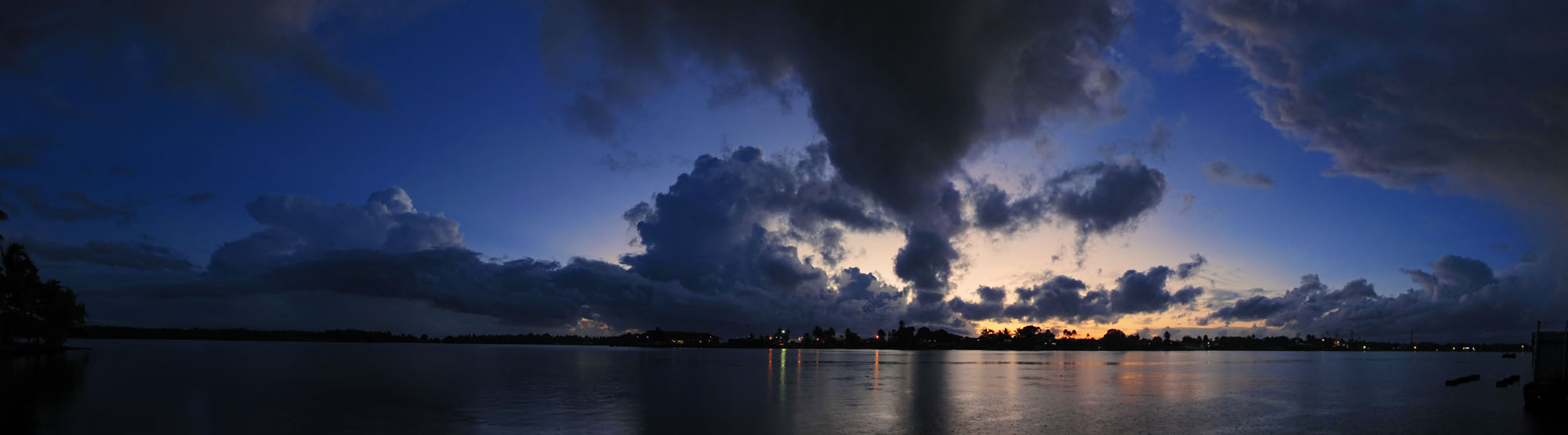
It seems that I am a compulsive titler - is that a word, someone who titles things? I don't know. If it isn't, it should be. Every image has to have a title floating around in my head.
Oh, I can see that I'm boring you. Let's get to the miserable failure that is the subject of today's post. This could have been a perfectly good image of a Scorpionfish:
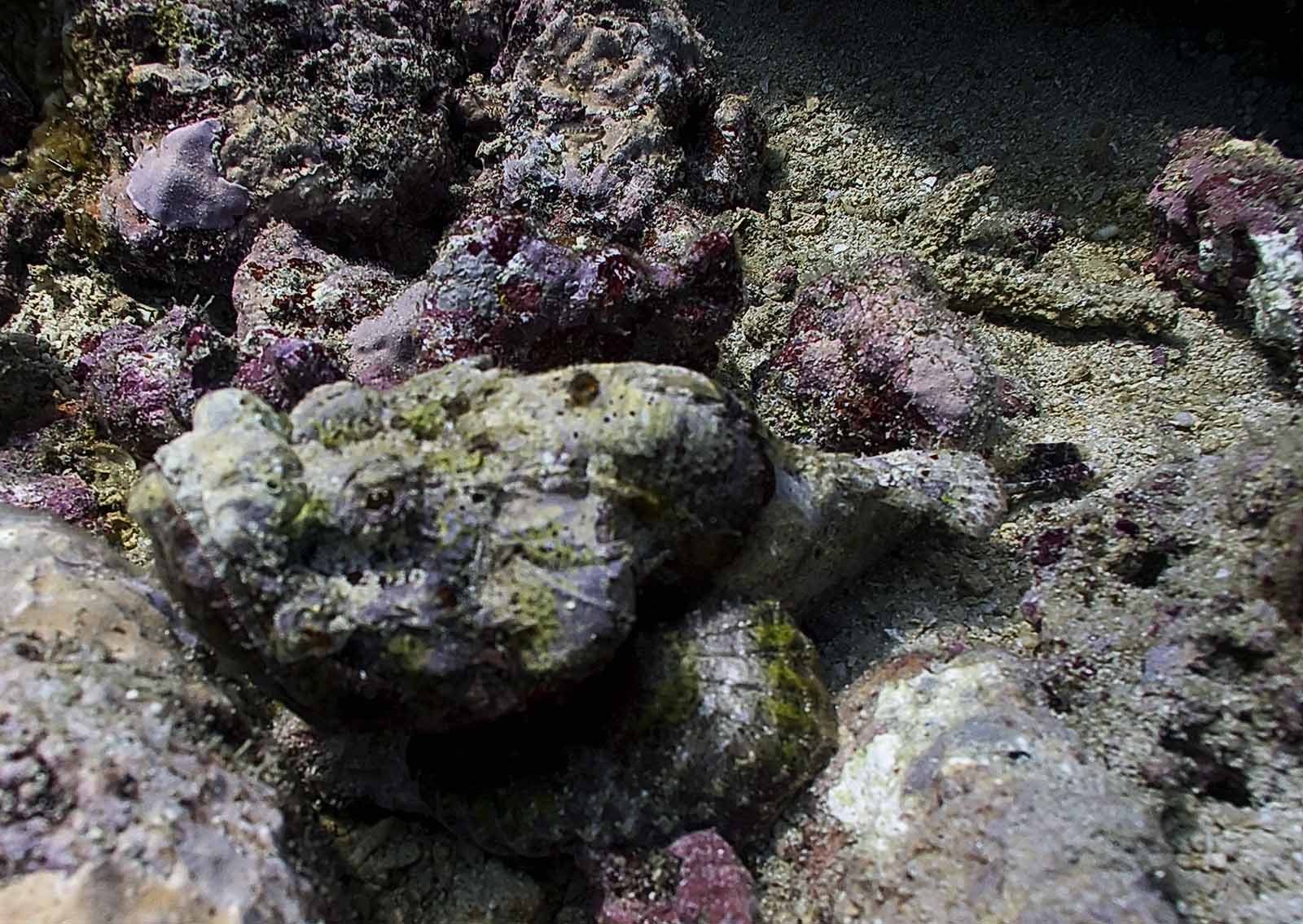
We had just gotten into the water at Planet Rock and I was fussing around making certain that our anchor was not doing any damage and watching divers and counting noses when Richard Jones pointed out this Scorpionfish. It was such a peculiar shape and so well camouflaged that I really wanted to get a good image of it. Sadly, I had time only for a quick snap. Unfortunately,as so often happens, the camera did not focus where I wanted it to. The focus on the rear half of the fish is tolerable, but the head is blurry. Still, it is so odd that it's worth a look.
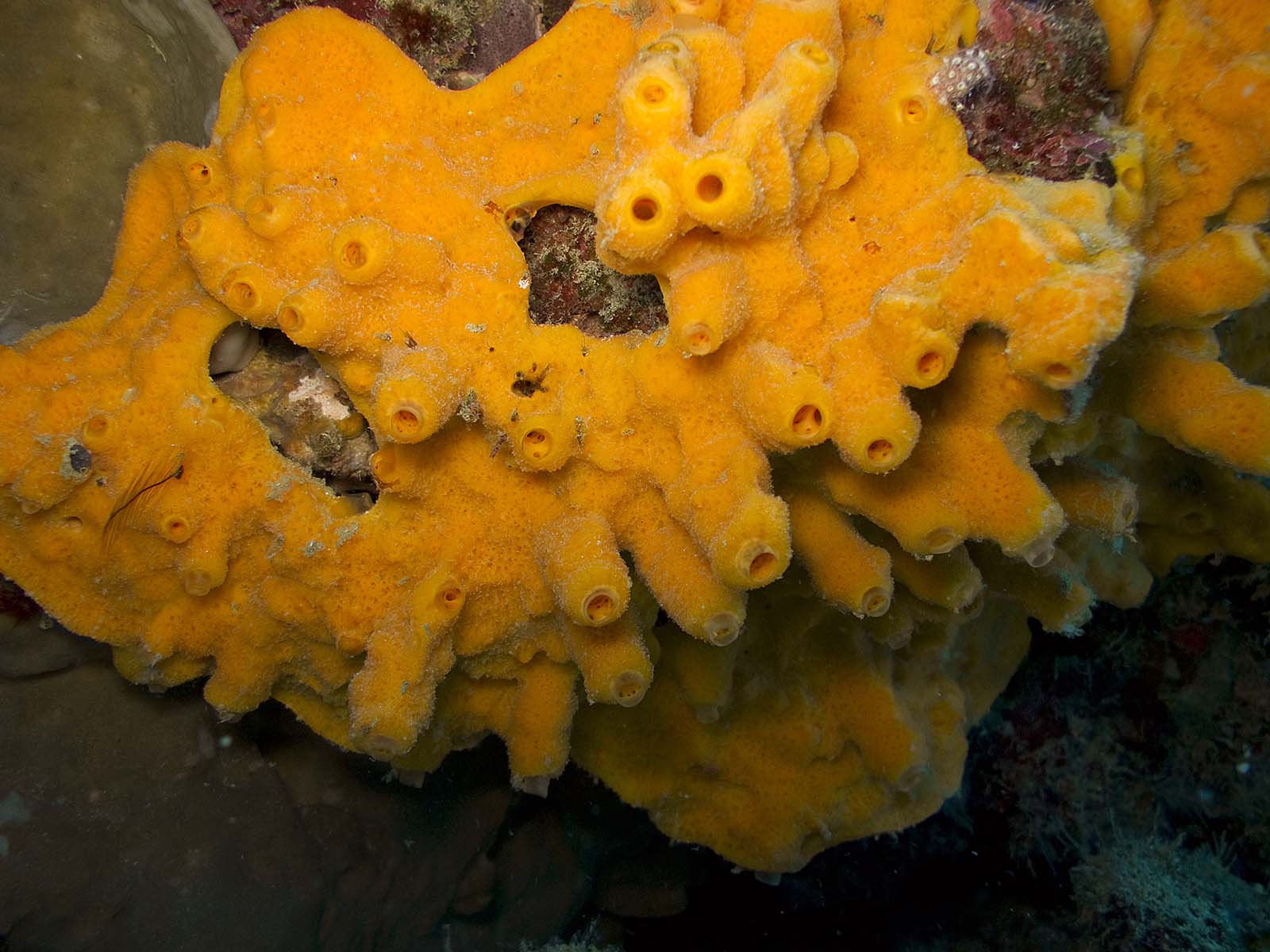
I have a lot of trouble figuring out what is a sponge and what is a sea squirt. I was all set to identify this as some kind of sea squirt. Fortunately, I sent the image to my Facebook friend Ana Karinna Carbonini of the Laboratorio de Biología Marina at the Universidad Simón Bolívar. She said that she thinks it is a Sponge, possibly a species of Leuconoide or Asconoide:
You can take a sip of coffee now while you absorb that. Have a quick glance over your shoulder to see if the boss is lurking about.
At the request of a friend, here are a couple of Anemonefish shots from our dives on Saturday. This is a Red and Black Anemonefish (Amphiprion melanopus) peeking out from the safety of its host anemone:
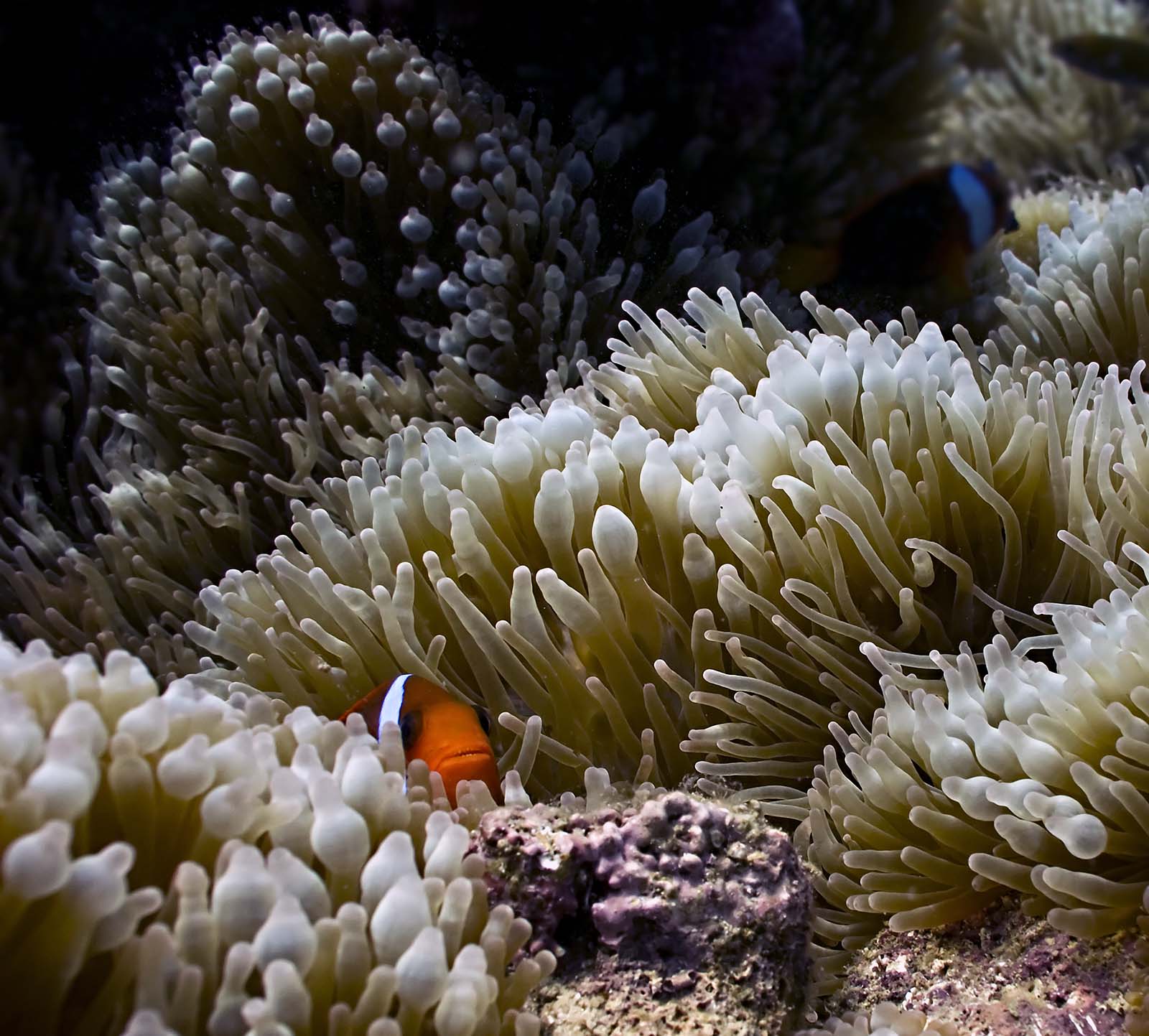
I particularly like this shot, because it shows a very typical behavior. Anemonefish will often alternate between dashing about frantically around the anemone, coming up close to you to investigate or even take a nip of your finger and then plunging down within the tentacles to peer out and observe the result of the attack. I get more fun from watching anemonefish than anything else under the water, with the possible exception of some of my dive buddies.
For the Disney fans, here are some genuine Nemo wannabes. The Clown Anemonefish (Amphiprion percula) never fails to live up to its name:
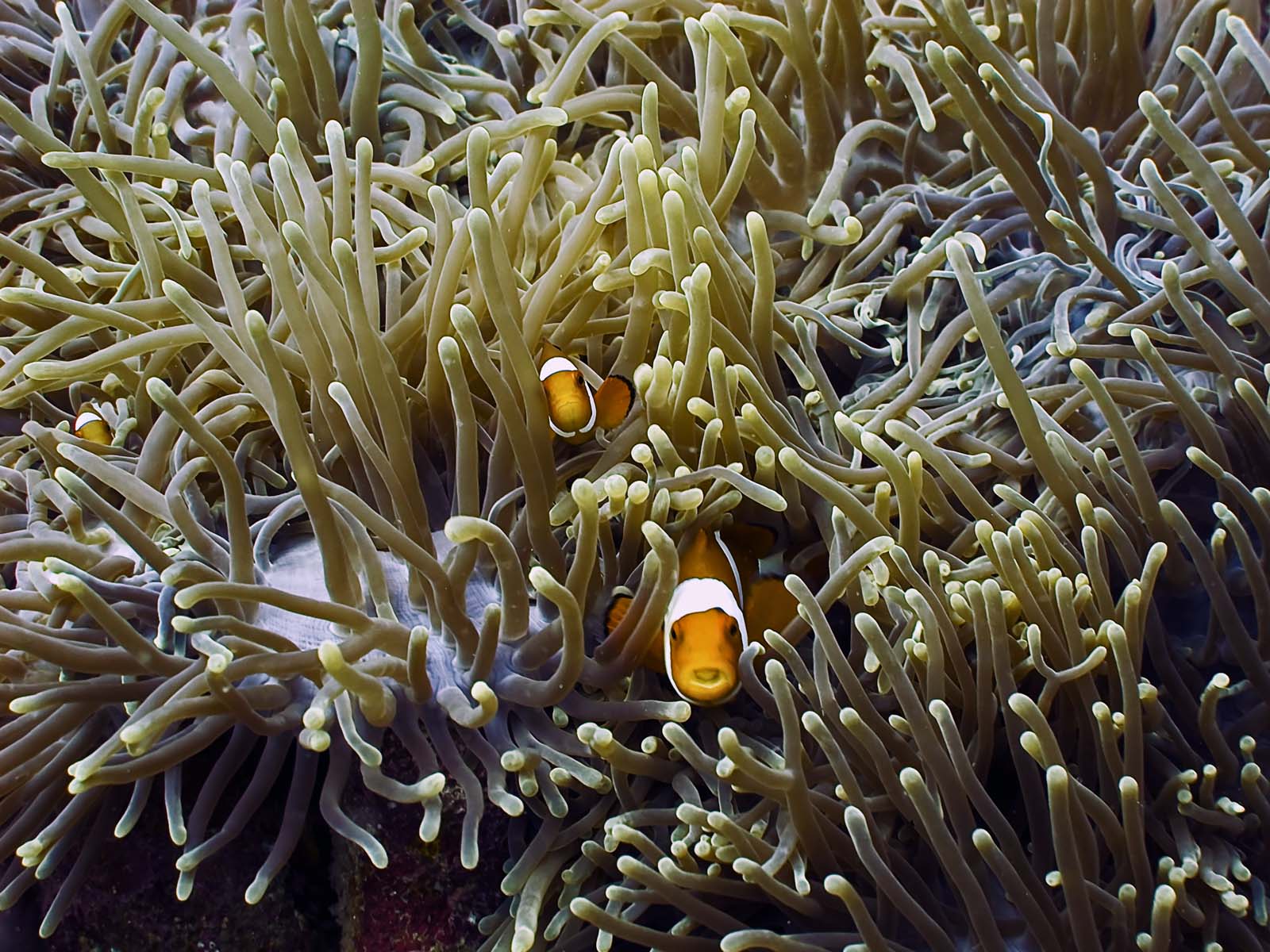
One seems to be shouting at me. By the way, I would call this a failed shot also. Careful examination will reveal that it was a snap shot and I did not take the time to check the focus carefully. Of course, if I had, I would have missed the shout.
Finally, I'll show you this artsy shot of the beautiful clear view of the reef near Alexishafen late on Sunday afternoon:
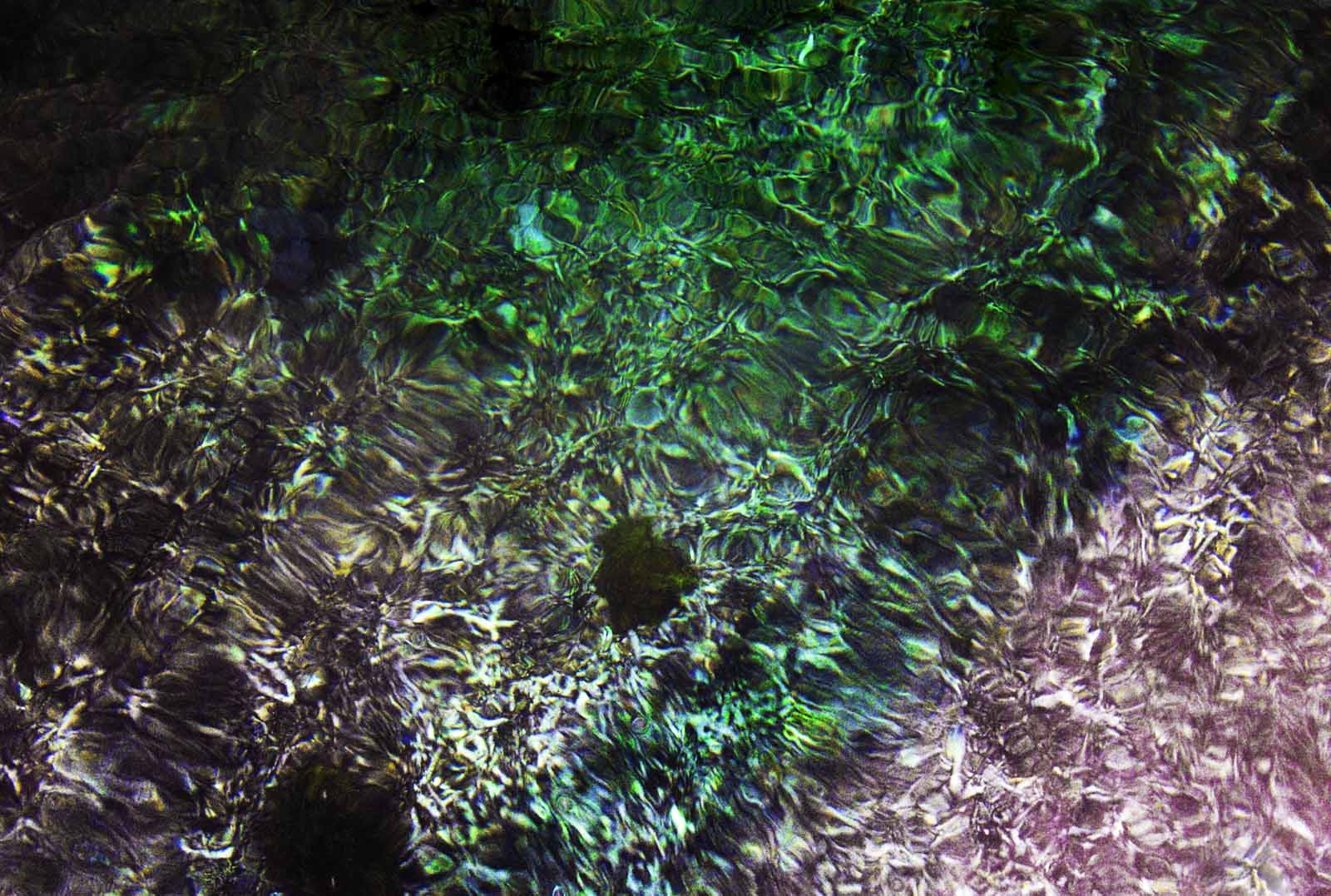
We were all peering over the side of Felmara as we stopped for a swim. The water was crystal clear and the pinkish sunset was alternating with the deep green of the two metres of water under the boat. A little bit of magic.
A little bit of magic is all it takes.
Las estadísticas web pueden quedarse internas o hacerlas públicas para atraer la atención de tus lectores. En los blogs se ven los badgets de FeedBurner, de Twitter y ahora los de Google Analytics.
ceslava.com/blog/google-analyticator-plugin-para-mostrar-...