View allAll Photos Tagged mcrib
Say goodbye to the McRib. Supposedly this was the farewell tour. LOL, will it be back sooner than all the rock n roll bands that supposedly retire.
Not the best start for PAD, but it was dark when I left for work and dark when I got home. MrD asked for a McDonald's on my way home so this is what we had. Not good for the diet either. Will do better tomorrow on both counts :)
©All photographs on this site are copyright: ©DESPITE STRAIGHT LINES (Paul Williams) 2011 – 2021 & GETTY IMAGES ®
No license is given nor granted in respect of the use of any copyrighted material on this site other than with the express written agreement of ©DESPITE STRAIGHT LINES (Paul Williams). No image may be used as source material for paintings, drawings, sculptures, or any other art form without permission and/or compensation to ©DESPITE STRAIGHT LINES (Paul Williams)
.
.
I would like to say a huge and heartfelt 'THANK YOU' to GETTY IMAGES, and the 42.310+ Million visitors to my FLICKR site.
***** Selected for sale in the GETTY IMAGES COLLECTION on Monday 23rd May 2022
CREATIVE RF gty.im/1397013864 MOMENT ROYALTY FREE COLLECTION**
This photograph became my 5,580th frame to be selected for sale in the Getty Images collection and I am very grateful to them for this wonderful opportunity.
©DESPITE STRAIGHT LINES (Paul Williams)
.
.
**** This frame was chosen on Tuesday 24th May 2022 to appear on FLICKR EXPLORE (Highest Ranking: #240. This is my 214th photograph to be selected.
I am really thrilled to have a frame picked and most grateful to every one of the 42.328+ Million people who have visited, favorited and commented on this and all of my other photographs here on my FLICKR site. *****
.
.
Photograph taken at an altitude of Seven metres at 11:36am on Thursday May 12th 2022 off the Mall and Horse Guards Road within the grounds of St James's Park in Central London, one of the Royal parks of London situated in South West London.
THE EASTERN GRAY/EASTERN GREY SQUIRREL (SCIURUS CAROLINENSIS)
By Paul Williams
The Grey (or Gray) squirrel, you either love 'em or you hate 'em. Cute and fluffy little funsters or destructive critters who ruin trees, kill bird chicks and trees and damage our homes... oh and it's their fault we lost our native Red squirrels as well!
OK
I get it and I see both sides of the story of course. For my part, I am a nature, wildlife and landscape photographer who prefers the company of animals and natural beauty to fellow humans who are systematically plundering Mother Earth's resources and killing off her beautiful creatures at an alarming rate! I believe there is a natural order of things, creatures kill other creatures to survive, they adapt to situations and when mankind encroaches on their territory to make a fast buck, those animals sometimes adapt to survive and the order changes. That is the balance of nature which is ever changing and affected by us..... the dumbest of the great apes. Some species are driven out by others, some may be destined to become extinct, the fittest will survive, and sometime a species will need intervention and help from mankind in order to survive... usually as a direct consequence of mankind's own actions in destroying the animal kingdom's natural habitat of course.
I adore these little fellas and at almost sixty years old, I never grew up knowing red squirrels at all. I've seen reds in Scotland and black squirrels in Stanley Park on Vancouver Island in British Columbia, Canada, but in my beloved home country of England I have always known and loved the cute little Greys. They visit my garden and give me hours, days, weeks of happiness and wonderful photographic opportunities, and I see them in Parks and forests all around me, so it's time to offer up an insight into the Grey squirrel, much loved, much hated... a sort of Marmite rodent if you will.
WHAT EXACTLY IS A SQUIRREL?
The word 'Squirrel', was first recorded in 1327 and hails from the Anglo-Norman word 'Esquirel', from old French 'Escurel', which was a reflex for the Latin word 'Sciurus'.The Eastern gray squirrel (Sciurus carolinensis) is also known as the Eastern Grey squirrel or simply grey squirrel depending on the region of the world it is found. It is a tree squirrel, of the squirrel family Sciuridae including over one hundred arboreal species native to all continents of the world other than Antarctica and Oceania. Tree squirrels live mostly in trees, apart from the flying squirrel. The best known genus is Sciurus, containing most of the bushy tailed squirrels which are found in Europe, North America, temperate Asia as well as central and south America.
The scientific classification for the Eastern Grey is:
KINGDOM: ANIMALIA PHYLUM: CHORDATA CLASS: MAMMALIA ORDER: RODENTIA FAMILY: SCIURIDAE GENUS: SCIURUS SUBGENUS: SCIURUS SPECIES: SCIURUS CAROLINENSIS
They were first noted by German naturalist, botanist, entomologist, herpetologist, and malacologist - Johann Friedrich Gmelin in 1788.
A mammal and rodent, predominantly herbivorous they are none the less an omnivore with a life span of between two and ten years. They can grow to 70cm in length and weigh up to 8kg. There are more than two hundred and sixty species of worldwide squirrel, the smallest being the African pygmy squirrel at just 10cm in length, whereas the Indian giant squirrel is three feet long! The oldest fossil of a squirrel, Hesperopetes, dates back to the late Eocene epoch period Chadronian period of 40-35 million years ago. The tree squirrels rotate their ankles by 180 degrees, so that the hind paws pointy backwards gripping tree bark which enables them to descend a tree headfirst.
Originally native to Eastern and Midwestern United States of America, they were first introduced into the United Kingdom in 1876 in Henbury Park, Macclesfield in Cheshire when Victorian banker Thomas V. Brocklehurst released a pair of Greys that he brought back from a business trip to America after their attraction as pets had waned. Victorians had a penchant for collecting exotic animals and birds of the world, but trends came and went and subsequently animals were simply discarded into the wilderness. There are early records of greys released near Denbighshire in north Wales from private collections. Later introduced to several regions in the UK, they quickly settled and spread, colonizing an area of three hundred miles in a quarter of a century between Argyll and Stirlingshire in Scotland.
Introductions of the Greys between 1902 and 1929 (the year of the last recorded introduction), included: Regent’s Park in London, Berkshire, Northamptonshire, Oxfordshire, Oxfordshire, Devon, Warwickshire, Nottinghamshire, Suffolk and Hampshire. Grey Squirrels spread into Gloucestershire and eastern Wiltshire with animals coming directly from the United States or from Woburn. One hundred greys were released in Richmond Park in Surrey in 1902, Ninety one into Regent’s Park between 1905 and 1907 and a further ten New Jersey imported greys were introduced into Woburn Park in Bedfordshire.
Predators include hawks, weasels, raccoons, bobcats, foxes, domestic and feral cats, snakes, owls, and dogs, African harrier-hawks in Africa and... oh yes, Mankind pretty much everywhere who despise, mistreat, cull or eat it .
FACTS, MYTHS AND THAT POXY PARAPOX!
The massive decline in native red squirrels blamed upon the spread of the invasive greys has always been perhaps a little harsh as reds were already in a steep decline due to loss of habitat and disease and thus the greys simply took over the areas where the reds were dwindling. It's also a fact that reds were also seen as a plague, branded as pests who killed birds and damaged trees and the culling of reds almost brought them to the brink of extinction. Licenses to kill reds could still be obtained up until the seventies!
Reds suffered at the hands of mankind thanks to a combination of agricultural deforestation also linked with war and fuel needs which caused extinction in Southern Scotland and Ireland by the early eighteenth century, way before greys had been introduced. Harsh winters killed off the less hardy red population in the early nineteenth and twentieth centuries.
Greys are more adept at finding food and adapting to locations and environments, but also carry the squirrel poxvirus (SQPV) which although not particularly harmful to them, is a serious infection for the reds.
Parapox in red squirrels causes swollen lesions around the mouth, eyes, ears and nose also the front paws and sometimes genitals and skin ulcers and kills a red within fifteen days. There is no definitive correlation between the spread of the virus and the spread of the Greys, it actually arrived in several areas before the greys began to colonize there. An epidemic virus was observed in Red squirrels from at least 1900 with isolation attempts failing, and the first case of Parapox in the UK was in 1980 in the county of Norfolk. Greys cannot transmit the virus to reds via saliva or faeces, but reds can between each other from bodily secretions and at animal feeders in gardens. The transmission from greys to reds is though to come from parasites. Eight to ten per cent of reds survive the virus, and there is some evidence that reds are slowly building an evolved resistance.
Greys are seen as pests to forest land, stripping bark from trees during May and June, and are also capable of destroying household bins, water pipes, causing roof damage not to mention taking eggs and killing young chicks of ground nesting and songbird populations. They also take from bird feeders and there is a whole industry for creating squirrel proof feeders these days.
THE CULLING OF GREY SQUIRRELS
Grey squirrels have limited legal protection and can be legally controlled all year round by a variety of methods including shooting and trapping. Methods of trapping and killing include Drey poking and shooting, Tunnel trapping using spring traps set in accordance with BASC’s trapping pest mammals code of practice. They can also be shot using a shotgun or powerful air rifle or up until September 30th 2014 poisoned by Warfarin (Now outlawed).
Whilst professional trapping and extermination is hopefully done as humanely as possible, there have been cases, many of them where cost savings have been gained by battering the squirrels to death! Grey squirrels are trapped in ghastly metal contraptions for hours and hours, wearing themselves out frantically trying to escape by gnawing at the metals bars. They bite the floor and scratch at them with their claws and do not get a moments peace or rest through absolute fear. Once the traps are retrieved, each squirrel, terrified will be thrown into a sack and smacked on the head countless times with a blunt instrument. When a mother is slaughtered, her babies who are totally dependent on her, will die a slow death of thirst and starvation.
There is an argument for the control of Greys on many grounds but also a counter argument that Culling does not work, and has not on countless times where, once a population of greys have been culled, the nearest group will move back in and claim the land. The university of Bristol concluded that there was little evidence that culling greys to save red squirrels was effective, and that perhaps finding a way of boosting red squirrel immunity to the poxvirus or planting areas of yew trees where reds are known to thrive and spending money on research into positive moves might be a better option.
In Ireland, the re-introduction of the Pine marten, a species made extinct originally by the very same land owners who also wish to do the same to the grey squirrel, has seen the rapid demise of the grey and the reintroction of the native reds. Red squirrels are smaller and more nimble than their grey counterparts, and as such can get to the very ends of tree branches where neither the pine martins, nor more importantly the heavier greys can, thus surviving and thriving. As a result in Ireland, the grey squirrel population has crashed in approximately 9,000 km2 of its former range and the reds has become common once more after a thirty year absence... oh and Pine Martens are protected again!
In Scotland, Pine Martens exist in areas where Red squirrels thrive, and greys do not. So perhaps there is a lesson here, as in England where there are no pine martens, the greys are prolific breeders. So there is an argument against the barbarity of shooting and poisoning greys, and if, as so many believe, the greys MUST be controlled, how about a more humane and natural method that nature intended.. with re-introduction of predators. Just a thought!
So a few facts and figures on the greys and to wrap up, from a purely personal perspective I love these little guys, as I do almost every creature in nature other than those eight legged beasties that shall not be named and for which I have a deep and powerful phobia that borders on paranoia!
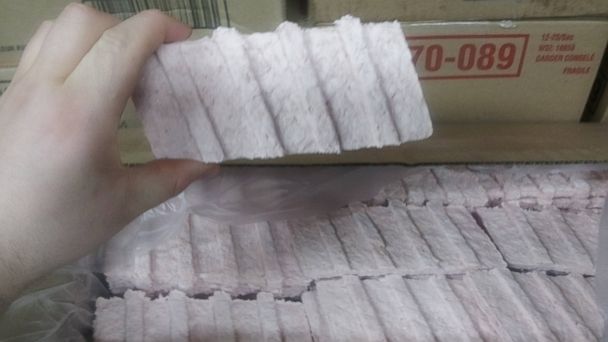
I could no more harm an animal deliberately than eat a McDonald's McRib (Once saw how they are made and let me just say... eeeuuuuuwwwww!!).
They are small, cute, cuddly, furry, they photograph beautifully, have great personality and make me smile. They trust me enough to take food from my hand in parks, and I can't bare the though of ugly, hairy land owners sticking a shotgun in their face and blowing them away! I appreciate they can be a pest, a problem, a menace, that their PR managers might have a bit of a problem winning you over when they flay small chicks alive on your lawn or decimate the songbird population by stealing their eggs.... and perhaps there is a need to keep the population under control and try and re-establish the red population.....
Yep I get that....
I just hope we can solve the problem more humanely to create a peaceful coexistence of the reds and greys in different areas. A man can dream can't he.
Paul Williams June 18th 2021
©DESPITE STRAIGHT LINES (Paul Williams).
.
.
Nikon D850 Focal length 150mm Shutter speed: 1/640s Aperture f/6.3 ISO160 Hand held with Tamron VR Vibration reduction enabled on setting 1. Image area FX (36 x 24) NEF RAW L (8256 x 5504). (14 bit uncompressed file) Focus mode AF-C focus. AF-C Priority Selection: Release. Nikon Back button focusing enabled AF-Area mode: 3D-Tracking Exposure mode: Manual mode Metering mode: Matrix metering White balance on: Auto1, 0, 0 (4770K). Colour space: RGB. High ISO NR: ON (Low) Active D-Lighting: Auto Vignette control: Normal Picture control: (SD) Standard with sharpening +3 and clarity +1.00
Tamron SP 150-600mm F/5-6.3 Di VC USD G2. Nikon GP-1 GPS module. Lee SW150 MKII filter holder. Lee SW150 95mm screw in adapter ring. Lee SW150 circular polariser glass filter.Lee SW150 Filters field pouch. Hoodman HEYENRG round eyepiece oversized eyecup.Mcoplus professional MB-D850 multi function battery grip 6960.Two Nikon EN-EL15a batteries (Priority to battery in Battery grip). Black Rapid Curve Breathe strap. My Memory 128GB Class 10 SDXC 80MB/s card. Lowepro Flipside 400 AW camera bag.
.
.
LATITUDE: N 51d 30m 11.41s
LONGITUDE: W 0d 7m 59.86s
ALTITUDE: 6.0m
RAW (TIFF) FILE: 130.00MB NEF: 90.9MB
PROCESSED (JPeg) FILE: 42.20MB
PROCESSING POWER:
Nikon D850 Firmware versions C 1.10 (9/05/2019) LD Distortion Data 2.018 (18/02/20) LF 1.00
HP 110-352na Desktop PC with AMD Quad-Core A6-5200 APU 64Bit processor. Radeon HD8400 graphics. 8 GB DDR3 Memory with 1TB Data storage. 64-bit Windows 10. Verbatim USB 2.0 1TB desktop hard drive. WD My Passport Ultra 1tb USB3 Portable hard drive. Nikon ViewNX-1 64bit Version 1.4.1 (18/02/2020). Nikon Capture NX-D 64bit Version 1.6.2 (18/02/2020). Nikon Picture Control Utility 2 (Version 2.4.5 (18/02/2020). Nikon Transfer 2 Version 2.13.5. Adobe photoshop Elements 8 Version 8.0 64bit.
.
.
**** This frame was chosen on Sunday 18th June 2021 to appear on FLICKR EXPLORE (Highest Ranking: #229. This is my 204th photograph to be selected.
I am really thrilled to have a frame picked and most grateful to every one of the 39.441+ Million people who have visited, favorited and commented on this and all of my other photographs here on my FLICKR site. *****
.
.
Photograph taken at an altitude of Fifty one metres at 15:54pm on an beautiful summer afternoon on Saturday 17th July 2021, off Woolacombe Road and Broad Walk in a garden in Blackheath, South East London.
Here we see an adult female Eastern Grey Squirrel (Sciurus carolinensis), munching on some kitchen scraps.
The Grey (or Gray) squirrel, you either love 'em or you hate 'em. Cute and fluffy little funsters or destructive critters who ruin trees, kill bird chicks and trees and damage our homes... oh and it's their fault we lost our native Red squirrels as well!
OK
I get it and I see both sides of the story of course. For my part, I am a nature, wildlife and landscape photographer who prefers the company of animals and natural beauty to fellow humans who are systematically plundering Mother Earth's resources and killing off her beautiful creatures at an alarming rate! I believe there is a natural order of things, creatures kill other creatures to survive, they adapt to situations and when mankind encroaches on their territory to make a fast buck, those animals sometimes adapt to survive and the order changes. That is the balance of nature which is ever changing and affected by us..... the dumbest of the great apes.
Some species are driven out by others, some may be destined to become extinct, the fittest will survive, and sometime a species will need intervention and help from mankind in order to survive... usually as a direct consequence of mankind's own actions in destroying the animal kingdom's natural habitat of course.
I adore these little fellas and at almost sixty years old, I never grew up knowing red squirrels at all. I've seen reds in Scotland and black squirrels in Stanley Park on Vancouver Island in British Columbia, Canada, but in my beloved home country of England I have always known and loved the cute little Greys. They visit my garden and give me hours, days, weeks of happiness and wonderful photographic opportunities, and I see them in Parks and forests all around me, so it's time to offer up an insight into the Grey squirrel, much loved, much hated... a sort of Marmite rodent if you will.
WHAT EXACTLY IS A SQUIRREL?
The word 'Squirrel', was first recorded in 1327 and hails from the Anglo-Norman word 'Esquirel', from old French 'Escurel', which was a reflex for the Latin word 'Sciurus'.The Eastern gray squirrel (Sciurus carolinensis) is also known as the Eastern Grey squirrel or simply grey squirrel depending on the region of the world it is found. It is a tree squirrel, of the squirrel family Sciuridae including over one hundred arboreal species native to all continents of the world other than Antarctica and Oceania. Tree squirrels live mostly in trees, apart from the flying squirrel. The best known genus is Sciurus, containing most of the bushy tailed squirrels which are found in Europe, North America, temperate Asia as well as central and south America.
The scientific classification for the Eastern Grey is:
KINGDOM: ANIMALIA PHYLUM: CHORDATA CLASS: MAMMALIA ORDER: RODENTIA FAMILY: SCIURIDAE GENUS: SCIURUS SUBGENUS: SCIURUS SPECIES: SCIURUS CAROLINENSIS
They were first noted by German naturalist, botanist, entomologist, herpetologist, and malacologist - Johann Friedrich Gmelin in 1788.
A mammal and rodent, predominantly herbivorous they are none the less an omnivore with a life span of between two and ten years. They can grow to 70cm in length and weigh up to 8kg. There are more than two hundred and sixty species of worldwide squirrel, the smallest being the African pygmy squirrel at just 10cm in length, whereas the Indian giant squirrel is three feet long! The oldest fossil of a squirrel, Hesperopetes, dates back to the late Eocene epoch period Chadronian period of 40-35 million years ago. The tree squirrels rotate their ankles by 180 degrees, so that the hind paws pointy backwards gripping tree bark which enables them to descend a tree headfirst.
Originally native to Eastern and Midwestern United States of America, they were first introduced into the United Kingdom in 1876 in Henbury Park, Macclesfield in Cheshire when Victorian banker Thomas V. Brocklehurst released a pair of Greys that he brought back from a business trip to America after their attraction as pets had waned. Victorians had a penchant for collecting exotic animals and birds of the world, but trends came and went and subsequently animals were simply discarded into the wilderness. There are early records of greys released near Denbighshire in north Wales from private collections. Later introduced to several regions in the UK, they quickly settled and spread, colonizing an area of three hundred miles in a quarter of a century between Argyll and Stirlingshire in Scotland.
Introductions of the Greys between 1902 and 1929 (the year of the last recorded introduction), included: Regent’s Park in London, Berkshire, Northamptonshire, Oxfordshire, Oxfordshire, Devon, Warwickshire, Nottinghamshire, Suffolk and Hampshire. Grey Squirrels spread into Gloucestershire and eastern Wiltshire with animals coming directly from the United States or from Woburn. One hundred greys were released in Richmond Park in Surrey in 1902, Ninety one into Regent’s Park between 1905 and 1907 and a further ten New Jersey imported greys were introduced into Woburn Park in Bedfordshire.
Predators include hawks, weasels, raccoons, bobcats, foxes, domestic and feral cats, snakes, owls, and dogs, African harrier-hawks in Africa and... oh yes, Mankind pretty much everywhere who despise, mistreat, cull or eat it .
FACTS, MYTHS AND THAT POXY PARAPOX!
The massive decline in native red squirrels blamed upon the spread of the invasive greys has always been perhaps a little harsh as reds were already in a steep decline due to loss of habitat and disease and thus the greys simply took over the areas where the reds were dwindling. It's also a fact that reds were also seen as a plague, branded as pests who killed birds and damaged trees and the culling of reds almost brought them to the brink of extinction. Licenses to kill reds could still be obtained up until the seventies!
Reds suffered at the hands of mankind thanks to a combination of agricultural deforestation also linked with war and fuel needs which caused extinction in Southern Scotland and Ireland by the early eighteenth century, way before greys had been introduced. Harsh winters killed off the less hardy red population in the early nineteenth and twentieth centuries.
Greys are more adept at finding food and adapting to locations and environments, but also carry the squirrel poxvirus (SQPV) which although not particularly harmful to them, is a serious infection for the reds.
Parapox in red squirrels causes swollen lesions around the mouth, eyes, ears and nose also the front paws and sometimes genitals and skin ulcers and kills a red within fifteen days. There is no definitive correlation between the spread of the virus and the spread of the Greys, it actually arrived in several areas before the greys began to colonize there. An epidemic virus was observed in Red squirrels from at least 1900 with isolation attempts failing, and the first case of Parapox in the UK was in 1980 in the county of Norfolk. Greys cannot transmit the virus to reds via saliva or faeces, but reds can between each other from bodily secretions and at animal feeders in gardens. The transmission from greys to reds is though to come from parasites. Eight to ten per cent of reds survive the virus, and there is some evidence that reds are slowly building an evolved resistance.
Greys are seen as pests to forest land, stripping bark from trees during May and June, and are also capable of destroying household bins, water pipes, causing roof damage not to mention taking eggs and killing young chicks of ground nesting and songbird populations. They also take from bird feeders and there is a whole industry for creating squirrel proof feeders these days.
THE CULLING OF GREY SQUIRRELS
Grey squirrels have limited legal protection and can be legally controlled all year round by a variety of methods including shooting and trapping. Methods of trapping and killing include Drey poking and shooting, Tunnel trapping using spring traps set in accordance with BASC’s trapping pest mammals code of practice. They can also be shot using a shotgun or powerful air rifle or up until September 30th 2014 poisoned by Warfarin (Now outlawed).
Whilst professional trapping and extermination is hopefully done as humanely as possible, there have been cases, many of them where cost savings have been gained by battering the squirrels to death! Grey squirrels are trapped in ghastly metal contraptions for hours and hours, wearing themselves out frantically trying to escape by gnawing at the metals bars. They bite the floor and scratch at them with their claws and do not get a moments peace or rest through absolute fear. Once the traps are retrieved, each squirrel, terrified will be thrown into a sack and smacked on the head countless times with a blunt instrument. When a mother is slaughtered, her babies who are totally dependent on her, will die a slow death of thirst and starvation.
There is an argument for the control of Greys on many grounds but also a counter argument that Culling does not work, and has not on countless times where, once a population of greys have been culled, the nearest group will move back in and claim the land. The university of Bristol concluded that there was little evidence that culling greys to save red squirrels was effective, and that perhaps finding a way of boosting red squirrel immunity to the poxvirus or planting areas of yew trees where reds are known to thrive and spending money on research into positive moves might be a better option.
In Ireland, the re-introduction of the Pine marten, a species made extinct originally by the very same land owners who also wish to do the same to the grey squirrel, has seen the rapid demise of the grey and the re-introduction of the native reds. Red squirrels are smaller and more nimble than their grey counterparts, and as such can get to the very ends of tree branches where neither the pine martins, nor more importantly the heavier greys can, thus surviving and thriving. As a result in Ireland, the grey squirrel population has crashed in approximately 9,000 km2 of its former range and the reds has become common once more after a thirty year absence... oh and Pine Martens are protected again!
In Scotland, Pine Martens exist in areas where Red squirrels thrive, and greys do not. So perhaps there is a lesson here, as in England where there are no pine martens, the greys are prolific breeders. So there is an argument against the barbarity of shooting and poisoning greys, and if, as so many believe, the greys MUST be controlled, how about a more humane and natural method that nature intended.. with re-introduction of predators. Just a thought!
So a few facts and figures on the greys and to wrap up, from a purely personal perspective I love these little guys, as I do almost every creature in nature other than those eight legged beasties that shall not be named and for which I have a deep and powerful phobia that borders on paranoia!
I could no more harm an animal deliberately than eat a McDonald's McRib (Once saw how they are made and let me just say... eeeuuuuuwwwww!!).
They are small, cute, cuddly, furry, they photograph beautifully, have great personality and make me smile. They trust me enough to take food from my hand in parks, and I can't bare the though of ugly, hairy land owners sticking a shotgun in their face and blowing them away! I appreciate they can be a pest, a problem, a menace, that their PR managers might have a bit of a problem winning you over when they flay small chicks alive on your lawn or decimate the songbird population by stealing their eggs.... and perhaps there is a need to keep the population under control and try and re-establish the red population.....
Yep I get that....
I just hope we can solve the problem more humanely to create a peaceful coexistence of the reds and greys in different areas. A man can dream can't he.
Paul Williams June 18th 2021
©DESPITE STRAIGHT LINES (Paul Williams).
.
.
Nikon D850 Focal length: 600mm Shutter speed: 1/400s Aperture: f/8.0 iso400 Hand held with Tamron VC Vibration control set to ON (Position 1) 14 Bit uncompressed RAW NEF file size L (8256 x 5504 pixels) FX (36 x 24) Focus mode: AF-C AF-Area mode: 3D-tracking AF-C Priority Selection: Release. Nikon Back button focusing enabled 3D Tracking watch area: Normal 55 Tracking points Exposure mode: Manual exposure mode Metering mode: Matrix metering White balance on: Auto1 (4860k) Colour space: RGB Picture control: Neutral (Sharpening +2)
Tamron SP 150-600mm F/5-6.3 Di VC USD G2. Nikon GP-1 GPS module. Lee SW150 MKII filter holder. Lee SW150 95mm screw in adapter ring. Lee SW150 circular polariser glass filter.Lee SW150 Filters field pouch. Hoodman HEYENRG round eyepiece oversized eyecup.Mcoplus professional MB-D850 multi function battery grip 6960.Two Nikon EN-EL15a batteries (Priority to battery in Battery grip). Black Rapid Curve Breathe strap. My Memory 128GB Class 10 SDXC 80MB/s card. Lowepro Flipside 400 AW camera bag.
.
.
LATITUDE: N 51d 27m 58.33s
LONGITUDE: E 0d 1m 53.65s
ALTITUDE: 51.00m
RAW (TIFF) FILE: 130.00MB NEF FILE: 90.4MB
PROCESSED (JPeg) FILE: 37.50MB
.
.
PROCESSING POWER:
Nikon D850 Firmware versions C 1.10 (9/05/2019) LD Distortion Data 2.018 (18/02/20) LF 1.00
HP 110-352na Desktop PC with AMD Quad-Core A6-5200 APU 64Bit processor. Radeon HD8400 graphics. 8 GB DDR3 Memory with 1TB Data storage. 64-bit Windows 10. Verbatim USB 2.0 1TB desktop hard drive. WD My Passport Ultra 1tb USB3 Portable hard drive. Nikon ViewNX-1 64bit Version 1.4.1 (18/02/2020). Nikon Capture NX-D 64bit Version 1.6.2 (18/02/2020). Nikon Picture Control Utility 2 (Version 2.4.5 (18/02/2020). Nikon Transfer 2 Version 2.13.5. Adobe photoshop Elements 8 Version 8.0 64bit.
At McDonalds - we both had 2 McRibs.. we split a large fries.. I had a large Root beer.. Rod had a small Coke.. I had 6 McNuggets...and a hot fudge sundae for dessert...Forgot to take a photo of that.. oh well.. trust me, it was a good meal!
©All photographs on this site are copyright: ©DESPITE STRAIGHT LINES (Paul Williams) 2011 – 2021 & GETTY IMAGES ®
No license is given nor granted in respect of the use of any copyrighted material on this site other than with the express written agreement of ©DESPITE STRAIGHT LINES (Paul Williams). No image may be used as source material for paintings, drawings, sculptures, or any other art form without permission and/or compensation to ©DESPITE STRAIGHT LINES (Paul Williams)
.
.
I would like to say a huge and heartfelt 'THANK YOU' to GETTY IMAGES, and the 50.572+ Million visitors to my FLICKR site.
***** Selected for sale in the GETTY IMAGES COLLECTION on Thursday 3rd April 2025
CREATIVE RF gty.im/2206001668 MOMENT ROYALTY FREE COLLECTION**
This photograph became my 7,254th frame to be selected for sale in the Getty Images collection and I am very grateful to them for this wonderful opportunity.
©DESPITE STRAIGHT LINES (Paul Williams)
.
.
**** This frame was chosen on Thursday 11th September 2025 to appear on FLICKR EXPLORE (Highest Ranking: #465. This is my 241st photograph to be selected.
I am really thrilled to have a frame picked and most grateful to every one of the 50.572+ Million people who have visited, favorited and commented on this and all of my other photographs here on my FLICKR site. *****
.
.
A SERIES ON THE EASTERN GRAY/EASTERN GREY SQUIRREL (SCIURUS CAROLINENSIS)
By Paul Williams
The Grey (or Gray) squirrel, you either love 'em or you hate 'em. Cute and fluffy little funsters or destructive critters who ruin trees, kill bird chicks and trees and damage our homes... oh and it's their fault we lost our native Red squirrels as well!
OK
I get it and I see both sides of the story of course. For my part, I am a nature, wildlife and landscape photographer who prefers the company of animals and natural beauty to fellow humans who are systematically plundering Mother Earth's resources and killing off her beautiful creatures at an alarming rate! I believe there is a natural order of things, creatures kill other creatures to survive, they adapt to situations and when mankind encroaches on their territory to make a fast buck, those animals sometimes adapt to survive and the order changes. That is the balance of nature which is ever changing and affected by us..... the dumbest of the great apes. Some species are driven out by others, some may be destined to become extinct, the fittest will survive, and sometime a species will need intervention and help from mankind in order to survive... usually as a direct consequence of mankind's own actions in destroying the animal kingdom's natural habitat of course.
I adore these little fellas and at almost sixty years old, I never grew up knowing red squirrels at all. I've seen reds in Scotland and black squirrels in Stanley Park on Vancouver Island in British Columbia, Canada, but in my beloved home country of England I have always known and loved the cute little Greys. They visit my garden and give me hours, days, weeks of happiness and wonderful photographic opportunities, and I see them in Parks and forests all around me, so it's time to offer up an insight into the Grey squirrel, much loved, much hated... a sort of Marmite rodent if you will.
WHAT EXACTLY IS A SQUIRREL?
The word 'Squirrel', was first recorded in 1327 and hails from the Anglo-Norman word 'Esquirel', from old French 'Escurel', which was a reflex for the Latin word 'Sciurus'.The Eastern gray squirrel (Sciurus carolinensis) is also known as the Eastern Grey squirrel or simply grey squirrel depending on the region of the world it is found. It is a tree squirrel, of the squirrel family Sciuridae including over one hundred arboreal species native to all continents of the world other than Antarctica and Oceania. Tree squirrels live mostly in trees, apart from the flying squirrel. The best known genus is Sciurus, containing most of the bushy tailed squirrels which are found in Europe, North America, temperate Asia as well as central and south America.
The scientific classification for the Eastern Grey is:
KINGDOM: ANIMALIA PHYLUM: CHORDATA CLASS: MAMMALIA ORDER: RODENTIA FAMILY: SCIURIDAE GENUS: SCIURUS SUBGENUS: SCIURUS SPECIES: SCIURUS CAROLINENSIS
A mammal and rodent, predominantly herbivorous they are none the less an omnivore with a life span of between two and ten years. They can grow to 70cm in length and weigh up to 8kg. There are more than two hundred and sixty species of worldwide squirrel, the smallest being the African pygmy squirrel at just 10cm in length, whereas the Indian giant squirrel is three feet long! The oldest fossil of a squirrel, Hesperopetes, dates back to the late Eocene epoch period Chadronian period of 40-35 million years ago. The tree squirrels rotate their ankles by 180 degrees, so that the hind paws pointy backwards gripping tree bark which enables them to descend a tree headfirst.
Originally native to Eastern and Midwestern United States of America, they were first introduced into the United Kingdom in 1876 in Henbury Park, Macclesfield in Cheshire when Victorian banker Thomas V. Brocklehurst released a pair of Greys that he brought back from a business trip to America after their attraction as pets had waned. Victorians had a penchant for collecting exotic animals and birds of the world, but trends came and went and subsequently animals were simply discarded into the wilderness. There are early records of greys released near Denbighshire in north Wales from private collections. Later introduced to several regions in the UK, they quickly settled and spread, colonizing an area of three hundred miles in a quarter of a century between Argyll and Stirlingshire in Scotland.
Introductions of the Greys between 1902 and 1929 (the year of the last recorded introduction), included: Regent’s Park in London, Berkshire, Northamptonshire, Oxfordshire, Oxfordshire, Devon, Warwickshire, Nottinghamshire, Suffolk and Hampshire. Grey Squirrels spread into Gloucestershire and eastern Wiltshire with animals coming directly from the United States or from Woburn. One hundred greys were released in Richmond Park in Surrey in 1902, Ninety one into Regent’s Park between 1905 and 1907 and a further ten New Jersey imported greys were introduced into Woburn Park in Bedfordshire.
FACTS, MYTHS AND THAT POXY PARAPOX!
The massive decline in native red squirrels blamed upon the spread of the invasive greys has always been perhaps a little harsh as reds were already in a steep decline due to loss of habitat and disease and thus the greys simply took over the areas where the reds were dwindling. It's also a fact that reds were also seen as a plague, branded as pests who killed birds and damaged trees and the culling of reds almost brought them to the brink of extinction. Licenses to kill reds could still be obtained up until the seventies!
Reds suffered at the hands of mankind thanks to a combination of agricultural deforestation also linked with war and fuel needs which caused extinction in Southern Scotland and Ireland by the early eighteenth century, way before greys had been introduced. Harsh winters killed off the less hardy red population in the early nineteenth and twentieth centuries.
Greys are more adept at finding food and adapting to locations and environments, but also carry the squirrel poxvirus (SQPV) which although not particularly harmful to them, is a serious infection for the reds.
Parapox in red squirrels causes swollen lesions around the mouth, eyes, ears and nose also the front paws and sometimes genitals and skin ulcers and kills a red within fifteen days. There is no definitive correlation between the spread of the virus and the spread of the Greys, it actually arrived in several areas before the greys began to colonize there. An epidemic virus was observed in Red squirrels from at least 1900 with isolation attempts failing, and the first case of Parapox in the UK was in 1980 in the county of Norfolk. Greys cannot transmit the virus to reds via saliva or faeces, but reds can between each other from bodily secretions and at animal feeders in gardens. The transmission from greys to reds is though to come from parasites. Eight to ten per cent of reds survive the virus, and there is some evidence that reds are slowly building an evolved resistance.
Greys are seen as pests to forest land, stripping bark from trees during May and June, and are also capable of destroying household bins, water pipes, causing roof damage not to mention taking eggs and killing young chicks of ground nesting and songbird populations. They also take from bird feeders and there is a whole industry for creating squirrel proof feeders these days.
THE CULLING OF GREY SQUIRRELS
Grey squirrels have limited legal protection and can be legally controlled all year round by a variety of methods including shooting and trapping. Methods of trapping and killing include Drey poking and shooting, Tunnel trapping using spring traps set in accordance with BASC’s trapping pest mammals code of practice. They can also be shot using a shotgun or powerful air rifle or up until September 30th 2014 poisoned by Warfarin (Now outlawed).
Whilst professional trapping and extermination is hopefully done as humanely as possible, there have been cases, many of them where cost savings have been gained by battering the squirrels to death! Grey squirrels are trapped in ghastly metal contraptions for hours and hours, wearing themselves out frantically trying to escape by gnawing at the metals bars. They bite the floor and scratch at them with their claws and do not get a moments peace or rest through absolute fear. Once the traps are retrieved, each squirrel, terrified will be thrown into a sack and smacked on the head countless times with a blunt instrument. When a mother is slaughtered, her babies who are totally dependent on her, will die a slow death of thirst and starvation.
There is an argument for the control of Greys on many grounds but also a counter argument that Culling does not work, and has not on countless times where, once a population of greys have been culled, the nearest group will move back in and claim the land. The university of Bristol concluded that there was little evidence that culling greys to save red squirrels was effective, and that perhaps finding a way of boosting red squirrel immunity to the poxvirus or planting areas of yew trees where reds are known to thrive and spending money on research into positive moves might be a better option.
In Ireland, the re-introduction of the Pine marten, a species made extinct originally by the very same land owners who also wish to do the same to the grey squirrel, has seen the rapid demise of the grey and the reintroction of the native reds. Red squirrels are smaller and more nimble than their grey counterparts, and as such can get to the very ends of tree branches where neither the pine martins, nor more importantly the heavier greys can, thus surviving and thriving. As a result in Ireland, the grey squirrel population has crashed in approximately 9,000 km2 of its former range and the reds has become common once more after a thirty year absence... oh and Pine Martens are protected again!
In Scotland, Pine Martens exist in areas where Red squirrels thrive, and greys do not. So perhaps there is a lesson here, as in England where there are no pine martens, the greys are prolific breeders. So there is an argument against the barbarity of shooting and poisoning greys, and if, as so many believe, the greys MUST be controlled, how about a more humane and natural method that nature intended.. with re-introduction of predators. Just a thought!
So a few facts and figures on the greys and to wrap up, from a purely personal perspective I love these little guys, as I do almost every creature in nature other than those eight legged beasties that shall not be named and for which I have a deep and powerful phobia that borders on paranoia!
I could no more harm an animal deliberately than eat a McDonald's McRib (Once saw how they are made and let me just say... eeeuuuuuwwwww!!). They are small, cute, cuddly, furry, they photograph beautifully, have great personality and make me smile. They trust me enough to take food from my hand in parks, and I can't bare the though of ugly, hairy land owners sticking a shotgun in their face and blowing them away! I appreciate they can be a pest, a problem, a menace, that their PR managers might have a bit of a problem winning you over when they flay small chicks alive on your lawn or decimate the songbird population by stealing their eggs.... and perhaps there is a need to keep the population under control and try and re-establish the red population.....
Yep I get that....
I just hope we can solve the problem more humanely to create a peaceful coexistence of the reds and greys in different areas. A man can dream can't he.
Paul Williams June 18th 2021
©DESPITE STRAIGHT LINES (Paul Williams).
Photograph taken at an altitude of Seventy four metres at 08:24am on a showery morning on Wednesday 12th May 2021, off Chessington Avenue in Bexleyheath, Kent.
Here we see, Sciurus Carolinensis (Eastern Gray Squirrel or Grey Squirrel), a tree squirrel native to North America and first introduced to the UK in the 1870's. Though it was largely responsible for the decimation of our own native red squirrel population, those are now on the increase and found in certain parts of the UK including Scotland. The Greys are still an ecologically essential natural forester regenerator.
.
.
Nikon D850 Focal length 500mm Shutter speed: 1/640s Aperture f/8.0 iso500 Tripod mounted with Tamron VC Vibration Control set to position 3. Image area FX (36 x 24) NEF RAW L (8256 x 5504). NEF RAW L (14 bit uncompressed) AF-C Priority Selection: Release. Nikon Back button focusing enabled. AF-S Priority selection: Focus. 3D Tracking watch area: Normal 55 Tracking points Exposure mode: Manual mode Metering mode: Spot metering White balance on: Auto1 (4570k) Colour space: RGB Picture control: Neutral (Sharpening +2)
Tamron SP 150-600mm F/5-6.3 Di VC USD G2. Nikon GP-1 GPS module. Lee SW150 MKII filter holder. Lee SW150 95mm screw in adapter ring. Lee SW150 circular polariser glass filter.Lee SW150 Filters field pouch. Hoodman HEYENRG round eyepiece oversized eyecup.Manfrotto MT057C3-G Carbon fiber Geared tripod 3 sections. Neewer Carbon Fiber Gimble tripod head 10088736 with Arca Swiss standard quick release plate. Neewer 9996 Arca Swiss release plate P860 x2.Jessops Tripod bag. Mcoplus professional MB-D850 multi function battery grip 6960.Two Nikon EN-EL15a batteries (Priority to battery in Battery grip). Black Rapid Curve Breathe strap. My Memory 128GB Class 10 SDXC 80MB/s card. Lowepro Flipside 400 AW camera bag.
.
.
LATITUDE: N 51d 28m 28.28s
LONGITUDE: E 0d 8m 10.44s
ALTITUDE: 74.0m
RAW (TIFF) FILE: 130.00MB NEF FILE: 91.6MB
PROCESSED (JPeg) FILE: 48.30MB
.
.
PROCESSING POWER:
Nikon D850 Firmware versions C 1.10 (9/05/2019) LD Distortion Data 2.018 (18/02/20) LF 1.00
HP 110-352na Desktop PC with AMD Quad-Core A6-5200 APU 64Bit processor. Radeon HD8400 graphics. 8 GB DDR3 Memory with 1TB Data storage. 64-bit Windows 10. Verbatim USB 2.0 1TB desktop hard drive. WD My Passport Ultra 1tb USB3 Portable hard drive. Nikon ViewNX-1 64bit Version 1.4.1 (18/02/2020). Nikon Capture NX-D 64bit Version 1.6.2 (18/02/2020). Nikon Picture Control Utility 2 (Version 2.4.5 (18/02/2020). Nikon Transfer 2 Version 2.13.5. Adobe photoshop Elements 8 Version 8.0 64bit.
South Elgin, Illinois USA
November 23, 2025
More of my still life pictures
COPYRIGHT 2025 by Jim Frazier All Rights Reserved. This may NOT be used for ANY reason without written consent from Jim Frazier.
20251123_140514-1400
I've been so proud of myself for avoiding HDR in most circumstances lately. Go for a more natural feel. But then I saw this while digging through the archives. It looks about as natural as an uncooked McRib. But dammit it is catchy. Sand, sky, colors, its all too much. But I'm still a noobtographer and think it looks badass. So here ya go. Algorithmically enhanced for your (probably just my) enjoyment.
Behind all of the glam, this is a shot from Colorado's Great Sand Dunes. Still one of the coolest places I've ever been to.
More Places to find me: Zach Dischner Photography | 500px
Blog: 2manventure
McRibs are back in our part of the world. Yay!
SOOC
COPYRIGHT 2023 by JimFrazier All Rights Reserved. This may NOT be used for ANY reason without written consent from Jim Frazier.
20231121_124240-2500
A McRib sandwich at McDonald's in Plainville, Massachusetts.
#mcrib
#plainville
#mcdonalds
#food and drink
Whats better than a McDonald's McRib you ask? Two McRibs! I know, but it was hard to say "No" to the second one for $1.