View allAll Photos Tagged foolproof
Money devices created by mankind to magnify the power of humans to do mostly egregious, destructive acts such as wage war and exploit natural resources in order to make nations powerful and a few rich. This illuminating history is told by Niall Ferguson, a Scotsman and a Harvard professor, who despite all the terrible mismanagement and failure he must relate, still believes that such a capitalistic money system is the best way to distribute resources, at least preferable to feudalism or central planning. So many assumptions are made about this system being for the greater good of society that reading the book was as tricky as wading through an issue of The Economist.
The author was favorably interviewed on NPR and his mission to educate people about our financial system seen as an honorable one, which was why Catherine bought the book. And given how so much of this history is being extrapolated to fuel conspiracy theories it is good to know the actual sequence of events. For instance, conspiracy theorists claim that the Rothschild family is so powerful today that they control not only banks, but numerous heads of state in an effort to create a New World Order designed to enslave citizens of the Western world. This is about as useful as claiming that Bill Gates created Windows to control PC users and thus the world. Wickipedia notes that the Rothchild conspiracy story was used by the Nazi's to generate anti-semitism.
The financial roots of anti-semitism goes back to the beginning of the story of money. Ferguson gives an explanation of how usury (loaning money at interest) was considered a sin by the old testament (though nothing is said about why that was the case). Jews were restrained by the sin of usury, but were allowed to loan money at interest to strangers, i.e. Christians. Money owed became synonymous with the outsider, and thus the hated other. Already money was making adversaries of the family of man.
At the time of Napoleon there were two systems of increasing the money supply—steal it through the plundering of an enemy or go into debt. The British prevailed because they invented bonds to allow governments to borrow from their citizens, force them, in some cases, to buy bonds, but apparently didn't force them to keep them. Along with bonds came traders to bet on the likelihood of that bond being paid off. The Rothschilds bet cunningly on the outcome of wars, thus the family also became associated with the ability to wage war. Bond markets set interest rates for the economy as a whole. Thus countries failing in some way are twice punished by investors wishing to get rid of its bonds which then causes interest rates to rise making money more expensive to borrow. This is how the bond market comes to control the decisions politicians make i.e. cut state spending or spend more.
Conspiracy theory claims that governments create financial crisis to scare the populace into accepting increased government power by, for instance, allowing governments to create a central bank which gives them even more control. I had wondered about this, but history shows that central banks were created early in the game by the Dutch in 1609 to insure currency stability and a way to exchange the many different currencies. Local banks betting on the solvency of a local industry i.e. agriculture would see their fortunes rise and fall with every crop failure. This kept people closely associated with their local resources which is a good thing for protecting the Commons, cultivating resilient seed stock and diversity of crops and industry per Vandana Shiva's Earth Democracy, but not a good thing at all for investors. And it is for the benefit of investors that lots of money must be created and made ever ready.
Conspiracy theorists do not seem to find fault with the creation of Corporate Companies with their many rights of personhood and none of responsibility. That territory is left to the Leftists. Ferguson describes the Company as another component of the ascent of money due to its power to raise enormous sums of money for private ventures. These ventures were mostly about financing ocean voyages to bring back booty from abroad. Which led to colonialism and the use of military to enforce British law overseas. Thus imperialism to protect investors from foreigners defaulting on their loans and thus not upholding their end of the business agreement. British law also forced opium on the Chinese market where opium was illegal. Fergusson does not find fault with the ascent of money for having financed such injustice, but seems to lament the rise of revolt in colonialized countries. After all, these countries benefited from such development as they would never have seen otherwise. Fergusson does make a point of comparing the current globalization to the colonial era.
Investment in corporations created stock markets and thus the volatility of stock market bubbles which caused international financial system meltdown when they burst. Fergusson attempts to explain why mismanagement on the part of government monetary policy made things worse, but he excuses the creation of bubbles in the first place as part of the territory of investor enthusiasm. He does mention that "only the Soviet Union, with its autarkic, planned economy, was unaffected". New word: autarkic. Fergusson does not concern himself with discussion of pros and cons of the Soviet System.
He does, however, shed much light on the creation of the welfare state as a form of risk management afforded by the government as opposed to private insurance. The encompassing, cradle to grave, government care covering health, education and everything else, he notes, is exemplified by the Japanese who were driven by a need to ensure a supply of healthy soldiers during WWII. Post-war the population was then persuaded to be as productive as possible which brought Japan the international success it has enjoyed. The same welfare system was the downfall of Britain, he laments, because a culture of individualism just did not indoctrinate the Brits with a desire to be productive and they were inclined "to game the system". (They wanted to be artists and activists protesting nukes while living off the dole.) Capitalism he notes, needs the carrot of serious wealth and the stick of serious hardship to force people to make capitalism work as it's supposed to.
The author brings us up to date on all the latest financial instruments and how hedge funds hedged themselves into oblivion with all their fancy foolproof equations. The only problem is people and their irrational human behavior he seems to conclude, never once considering that systems foster certain societal behaviors and keep people from engaging in such greed as is inevitable when enormous wealth is possible. While fear and feelings of insecurity cause people to wreck the marvelous capitalist system, destroying banks with bank runs and markets with panic. Much text is devoted to what governments should have done with proper monetary policy to control these panics and failures because, after all, a proper relationship between government policy and market shenanigans is what is key to the success of this system.
Much text is also devoted to countering complaints from the Left that monetary policies of the World Bank and IMF caused countries to eat their own in order to join the party of globalization. He also takes on the story of Chile. Fergusson is clearly on the side of Milton Friedman and his Chicago boys having brought financial stability and therefore democracy to Chile while Marxist policies had failed to rescue the welfare state, plagued as it was with sky high inflation.
The story of money seems inevitably to be a vehicle for an author's agenda. In this book it is done with a combination of moral relativity and the sin of omission. Nothing is said of the impact of greed on the environment, only that the industrial revolution could not have happened without an expanded supply of money. And though it is admitted that war cannot happen without financing this is not a problem that a man of finance need concern himself.
I have a firmer grasp, now, of the components of this complex financial machine, but it would seem that this is one of those complex systems of modern society that is beginning to offer diminishing returns.
An excellent example why you should always have an Olympus Mju-II with you. There is no camera in the world so fast and so foolproof. Don't know if purists would count this as street photography (ugh, color, ugh, flash!), but I most certainly do. Lowlands festival 2011, we were going back to the camping, I was tired and the Mju-II was dangling from my wrist. Suddenly: This. I made an instant snap without thinking. I wouldn't have been able to focus my Leica M2 or Nikon FM quickly or accurately enough, even with a flash mounted. If I would have had my D200 with me, the AF would just hunt and hunt and hunt and miss. My Sony NEX-3 would miss this shot, because start-up is too slow. There you have it, a tiny plastic throwback from the nineties, with pesky, obsolete film in it, beats them all. Other high end compacts? Before the Mju-II I had a Yashica T4. That couldn't even focus accurately in blazing broad daylight. The Mju-II has been in my bag since 2001. It has seen 5 generations of SLR and mirrorless cameras come and go, has seen the transition to digital and a brace of P&S (or should I say POS) competition. In all these years, nothing has come close to what it can do. It's the camera I have been using the longest and will probably use until they stop making film or if I shuffle off this mortal coil, whatever comes first.
Lowlands 2011 - roll 6
Guinevere Fouroux can't help a tiny smile--for the first time, things seem to be working in their favor, even this little bit. She looks up at Forge, then nods after a moment, in silent agreement. She looks back at Elise's question. "Even if they are human?" she adds. "I know you and I would be free to move around, but with weapons?"
Forgetten Tomorrow glances at Guin. "You probably won't be able to-- Oceanic shipping crates...fill them with armor and people..have Oceanic or someone on your staff bring them in with you..." He would light up a fresh cigarette with a few quick hand motions and he took a long drag off it exhaling over his head.
Elise Capalini's expression darkens some then--the idea of Guin going. It doesn't sit right at all. "Are you kidding?" she asks softly, without malice. She shakes her head. "No--Guin, you can't possibly be thinking of going--against a military force in a heavily guarded prison."
Forgetten Tomorrow glances at Elise and then back to Guin and he shrugged his shoulders. "Elise, you can either take her with your group or she is coming with mine."
Guinevere Fouroux cants her head, mind starting to spin. "How familiar are you with the layout? It's one thing to bring the crates on the boat, but then what? Can we smuggle them over? Sneak them in?" She freezes at Elise's words, blinking at her in silence for a moment. "Of course I'm going."
Elise Capalini looks at the two of them. "And what, have one more person to worry about and potentially rescue?" She looks at Guin, not unkindly. "You learned to shoot a gun how many days ago?"
Forgetten Tomorrow shook his head slowly. "I don't know anything about the layout and I won't until some time later....Guin. You are going." He looks at Elise then with a long and meaningful stare. "But you are taking my bullet proof vest...and a few other pieces of gear." He looks at Elise and he rolled his eyes. "Do you -really- think the only thing you are going to need are guns and cats." He shook his head slowly then and he took a step towards her slowly then. His body loomed and his eyes would narrow. "It isn't up for discussion. You need humans to even get *close* to the LDC."
Guinevere Fouroux understands, logically, Elise's point. But staying behind is not something she's even willing to consider. Not for a moment. She glances up at Forge, at his offer, and nods, but turns her attention back to Elise. "I don't want anyone worrying about me. I may have just learned, but I can. I'll do what I have to do." Forge's support is surprising, and she stares at his back. Latching onto his point, she adds quickly, "It's not all about shooting people. I have no problem doing so, not in this, but Elise... please don't ask me to stay behind."
Elise Capalini stands her ground when Forge approaches her. "You don't tell me what to discuss," she says in a near growl, then looks back to Guin. "The UAC won't care you're human. You support hybrids, you're worthless to them." She breaks off, knowing she's getting nowhere. "You shouldn't go," is all she says.
Forgetten Tomorrow glances over at Damian as he approaches and he gives the man a nod of his head. "Shouldn't and won't are decided different things... Guin, Elise- do you know Damian. Damian-- Elise, the Matron. Guin, the girl scout..."
Damian Rigaud walks up digging for a smoke "Clawin any of us up isn't goning to change that matron.." he nods all around as the intro are made
Elise Capalini looks at Damian evenly. "We're acquainted."
Guinevere Fouroux hears someone approaching, but her eyes remain on Elise. "They may not know I do, on sight. I've never spoken publicly. Never been a target. I doubt I'm on any most-wanted posters." She shakes her head. "I'm not asking anyone to look out for me. I understand the risk and I accept it."
She trails off, at Forge's introduction, and looks back, nodding at Damian. "Hello," she says softly.
Damian Rigaud looks around "I have less than a full story.. who are they and why the select abductions?'
Aravasha Yiyuan stands quietly behind Damian listening
Forgetten Tomorrow glances at Damian for a moment and then back to Elise "I believe we are done until we have more information, yeah?" He looks over at Damian and he held up one finger "Just a moment.." he turned to look at Guin and he would lean in and whisper to her slowly then. Before turning to look at Elise again and giving her a smooth smile "If you see Laz tell him to contact me..." He would glance over at Damian "We have a mutual friend who is working as an agent-- they are UAC they are in the Levithian Detention Center..a number of neko and blantly pro-hybrid supporters..."
Aravasha Yiyuan ponders something silently
Damian Rigaud arches an eyebrow "that handles the who.. but I only have half the why.. does the UAC want Midian purified or some such nonsense?"
Guinevere Fouroux lets Forge fill in Damian and Vasha--at least, she's fairly certain that was the woman's name--her attention still on Elise, willing her to understand. She's startled by Forge's whisper, but nods. "I've already texted Laz and gave him your number, Forge," she says, then, still holding Elise's eye. "The weapons... do you want me to get those now?"
Forgetten Tomorrow shrugged his shoulders "The why is a bit...murky...considering Marina was shot and they have done nothing to treat her wounds...I'd say they plan to kill them...perhaps make a statement? " He shrugged his shoulders then "either that or we are going to start getting ransom notes...however, I don't trust them enough to do it in a timely manner...do you?"
Elise Capalini looks at Forge, wondering if she's just been dismissed from his presence. She stays put, her jaw tightening. This plan was bad, on so many levels and taking Guin inside only made Elise queasy.
Damian Rigaud shakes his head.
Aravasha Yiyuan looks from behind Damian and askes in a voice just slightly above a whisper....where was the initial attack started?
Damian Rigaud inhales the smoke "Thats a good question where was marina .. the park.. when she was taken?"
Damian Rigaud begins to come to a disturbing conclusion as his face darkens in expression. "I think its experimentation.. "
Aravasha Yiyuan touches Damian arm gently to get His attention
Damian Rigaud inclines his head to Aravasha
Elise Capalini looks to Forge. "What kind of weapons are you supplying?" she asks.
Aravasha Yiyuan: ..that..Humans First ..woman..she also conviently cancelled her rally ...in the park
Forgetten Tomorrow nodded his head slowly then as he tossed his long forgotten cigarette and he would bring his hand into his jacket and he pulled out a new one and he lights up "We have a forward plan and then a backup plan. However, Elise seems to think it is all a bad idea...perhaps instead we'll get a guitar and sing a few gospel diddies..." He pauses then and he looked at Elise "go get that armor prepped and we'll come by for pickup..." he looked at Damian "we are doing a small forward movement and if that doesn't work...a larger backup plan..."
Forgetten Tomorrow tilted his head to the side and he would pause for a moment "I don't know where Marina was.." he glances over at Taladis and waits for an explination "I'd assume they started over here by the bunker..unless someone knows something I don't?"
Damian Rigaud nods to Aravasha. and then to Forge "Fair enough.. what do you need done?"
Forgetten Tomorrow glances at Damian for a long moment then as he took a drag off his cigarette his entire body relaxed for a moment "I'd like you to come with Taladis and I...and a few others-- a small team..5 people..2 in UAC uniforms that Elise has graciously offered to supply...with Taladis as a prisoner...then two more will start a diversion..explosions and the rest on the side of the building....hopefully we'll be able to keep the guards at bay long enough that you'd be able to get the lot of them free...."
Guinevere Fouroux's hands tighten on her arms, alternating between being thankful to Forge and, again, wanting to kick him. "We're never going to be able to come up with something foolproof," she says flatly. "Two plans--they could work to our advantage. One they might expect, but a second on its heels? Perhaps not." She's not sure what she sees in Elise's expression, but finally lifts her eyes to Forge's. "She asked about the weapons," she says softly. "What weapons can you give us?"
Taladis Tower just leans on the railing all the same, the green eyes of the cat having drifted off while they spoke the entire time. He finally glanced back, rolling the cigar in his mouth in thought as he grumbled out of the side of his mouth, "Marina was at the entrance of the park. I saw the signs of the scuffle after it had happened. The park cameras caught the fight, but the MPD has the tapes already, I think. But it was clearly Marina's blood on the ground.. I know her scent rather well." His tone still seemingly gutteral, the growling echo following his words. He looked at Forge after he spoke again, reaching up to pull his cigar out of his mouth, "And hopefully in the meantime, I can find out exactly how many people are missing."
Elise Capalini looks evenly at Forge. "I never said the plan was bad. I had one specific concern," she says, looking then at Guin. She stares at her, knowing that if she were in the woman's shoes, she'd do the same, but that doesn't make it any easier. "What weapons?" she asks again, for they were already given a duffle bag full last night.
Taladis Tower wrinkles his nose as he looks at Elise, half wondering why she thought bringing Guin along was a bad idea, and half wondering why it was even an issue. The dark cat looked at the group, and carefully regarded Guin as a warrior might. His tail flicking behind him as he folded his arms over his chest.
Forgetten Tomorrow glances at Taladis "Marina, Pera, Eamon, Masha, Quentin whomever that is, some strange neko girl, and a few others...I'll check my phone history in a moment..." He glances at Elise. "Gernades-- white phosphorus...and we have a number of other things...Guin and I will have to go through it..."
Damian Rigaud nods "Alright.. " he smiles "I am not gonna sk how you got the uniforms.. " he says to Elise "Lets do it.."
Taladis Tower just wrinkles his nose after a moment, as he looks at Elise once more and tilts his head slightly as he speaks out of the side of his mouth with that gutteral tone again, "Why do you have an issue with her.." He noses towards Guin, "Coming along?"
Elise Capalini smiles at Damian. "We got the gear with our wit and charm, naturally."
Forgetten Tomorrow grinned a bit and he took another long drag off his cigarette then and he would look at Damian again curiously tilting his head to the side "I have a small boat...not really meant for the cross sea journey however it is possible..though it only hold 4 people..do you know where we could get 1 or 2 more small vessels?"
Elise Capalini looks back at Tal and doesn't answer. She's already spoken her piece on that; too bad if he was distracted by thoughts of Marina being captured. She draws out her PDA to send a message to Kiri at the den about the armor.
Damian Rigaud nods "I can get ahold of a speed boat.. seats 4 .. have you tapped the smugglers in town?"
Guinevere Fouroux blinks at the laundry list of weapons from Forge, impressed... and a little disturbed. She looks to Taladis, and says calmly. "I'm not a fighter. I know only self-defense. I'm decent with my dagger but only learned to fire a gun a few days ago. I'm a potential liability. She's right to be concerned." She smiles tightly. "It doesn't change my mind, but she's right."
Taladis Tower just looks at Elise, and wrinkles his nose - pulling the cigar from his mouth and letting out an annoyed puff of smoke. He wasn't quite paying attention, though he looked at Guin as she spoke up. He just blinked a few times, "She is right. An amateur is dangerous." He growled lowly as he glanced at Forge, but it seemed that the man had already made plans around her coming anyhow. The dark cat glanced off to the side once more as his ears twitched.
Elise Capalini thinks about the early days in her friendship with Guin, sparring with their daggers behind the church. God, but that seems like a long time ago. Her ears flatten at Tal's low growl, and her tail flicks. "I'm being told that one set of armor is a little banged up--but she say's it'll hold."
Forgetten Tomorrow shook his head slowly and he chuckled a bit. "The smugglers....ain't exactly fond of me..and I can't get ahold of anyone in that two-bit operation anyway...if you think you can do better please go for it..." He would count and considering for a moment. More then enough to get the teams in...not enough to get them all out. He glances at Taladis. "An amateur -is- dangerous...however, I have a few special uses for her..." Obviously Forge's wheels were still turning. He glances over at Taladis. "Want to see if Charles is in or should we look elsewhere for 2 more bodies.." He looks over at Damian again and he gave a lopsided grin. He shrugged his shoulders "1 set is a little banged up? Well..that will be fine...we need it for a costume.."
Taladis Tower just pulls his cell phone out at Forge's words and presses a few buttons, not going to press the issue further, since Forge seemed to have it worked out in some manner or another.
Aravasha Yiyuan looks around Damian again and speaks softly..how can i help
Guinevere Fouroux exhales, slowly. "None of us are professional military operatives, unless I missed something. I'm an amateur, yes, but I'm not helpless, and I don't expect anyone to give me any special consideration." She looks sharply to Forge, a little wary of the idea of having a 'special use,' but looks back to Elise with a sigh. "I respect you and Laz's experience, and as much as possible I'll follow your lead. But please don't try and leave me out of this."
Taladis Tower just growled all the same when she said that, "I'm about as professional as you'll get in this city when it comes to skill. That's why I'm the trap." He rolled the cigar over into the opposite side of his mouth, "I just hope they don't run a damn blood scan on me." He seemed to mutter the last part as he watched the waters flow, and some sort of .. fish frog waddle through the waters of the pit. He quirked a brow at that, and just proceeded to blink repeatedly.
Elise Capalini hears Guin's words and nods slowly. It's the thought of her being harmed, she thinks; the thought of letting that happen the way she let Eamon be taken happen. "Trying to leave you out only means you go with Forge...or sneak over on your own...and those are definitely *out.* If you're coming, you come with Laz's team. He commands it--you do as he says, and we all get back in one piece." She still doesn't want Guin there; but it's clear she's not budging, so she'll go with rules firmly in mind.
Guinevere Fouroux sees something shift in Elise's expression, and her shoulders ease, the tiniest bit. She nods at her parameters, and tries a small smile. "Thank you," she says, though doesn't deny that the other options Elise had laid out were possibilities had she refused. "And I meant what I said. No special consideration. I'm not going just to get in the way. You do what you have to do."
Apologies for posting so much type, but this was one of my favorite scenes of the whole thing for a few reasons and I couldn't decide where to trim!
This is one of my Tiny True Stories. I didn't cook all the time, and when I did I didn't always use Glad® ClingWrap but it took me over 50 years to notice these little side flaps (not quite a circle but close) that could be pressed inward. They fit inside the cardboard roll from both the left and right side of the box. They're not foolproof, but when used carefully, they do hold the roll inside the box moderately well while the wrap is pulled gently out to a proper size. I don't know if Saran Wrap has a similar gimmick, nor when Saran Wrap came on the market. But I learned that Glad® ClingWrap came on the market in 1966. The more I do photography, and I have loved it since I was 10, the more I notice things like this. I'm posting this as is, but I'm off to research if the ClingWrap name joins together or has a space or a hyphen or what. Inquiring Minds want to know this stuff. If I can get it right, I like to. I discovered it is Glad® ClingWrap.
"DSCN0214GladClingWrapMightNotNoticeFlickr120919"
Hello to anyone who found this photo here:
www.jaunted.com/story/2007/4/19/231137/798/travel/Most+Mi...
or here:
leisahammett.typepad.com/the_journey_with_grace/2009/01/p...
or here:
greenlinkwater.com/water-shortages/saving-water-in-nashvi...
Or Here:
www.onlyinyourstate.com/tennessee/21-reasons-why-you-shou...
21 Reasons Why You Should Move To Tennessee – RIGHT NOW
Or here:
www.onlyinyourstate.com/tennessee/tn-vacations/
Everyone From Tennessee Should Take These 10 Awesome Vacations
or here:
www.onlyinyourstate.com/tennessee/shocking-tn-facts/
15 Shocking Facts About Tennessee That Could Make You Want To Move
or here:
www.onlyinyourstate.com/tennessee/single-tn/
Here Are The 5 Best Cities In Tennessee If You’re Single
or here:
www.onlyinyourstate.com/tennessee/tn-ranking/
How Tennessee Ranks Among The States In Pretty Much Anything
or here:
www.onlyinyourstate.com/tennessee/people-have-to-explain-tn/
15 Things People From Tennessee Always Have To Explain To Out-Of-Towners
or here:
www.onlyinyourstate.com/tennessee/foolproof-tennessee/
11 Foolproof Ways To Make Someone From Tennessee Cringe
Chassis n° 379
Coachwork by Roussile & Fils - Bergerac
Les Grandes Marques du Monde au Grand Palais
Bonhams
Estimated : € 90.000 - 110.000
Sold for € 184.000
Parijs - Paris
Frankrijk - France
February 2018
- Majestic survivor of formal coachwork design
- Simple ownership history
- Sympathetic older restoration retaining original interior
- History of long distance tours
Although it was Karl Benz who first made the motor car a viable proposition with his primitive slow-revving engines and designs, those were left on the starting blocks when Panhard brought in the Système Panhard, a design that was to mould the future of the motor car for the next century, and when De Dion Bouton introduced their fast-revving engines in the last decade of the 19th Century. Early rear-engined De Dion Boutons, gave way to a new generation of front-engined cars for the 1902 season, again single-cylinder models with atmospheric inlet valve and mechanical exhaust valve. De Dion's gearbox was virtually foolproof for the first-time car driver, the fast-revving engines were supremely reliable, and De Dion back-up and service was second-to-none.
But as with modern technology things moved quickly and the company had to move with the times, by the turn of 1904/5 an inline four cylinder was offered, being simply four individual pots on a common crankcase. Next the radiator was moved above the chassis in the style made fashionable by Mercedes and with it the 'alligator' or 'coal scuttle' bonnet was retired. The gearbox too would follow fashion and move to a side control mechanism, by the time De Dion fielded their Peking-Paris team in 1907. The model AX as offered here represented the evolution of the first four that was introduced, on a slightly longer more substantial frame and with magneto ignition. As a bare chassis it cost 11,500 French Francs more than twice the price of their single cylinder car which was still offered, and with formal coachwork, 40-50% could reasonably be expected to be added.
As can be seen from the variety in the collection, Jacques Vander Stappen took great interest in coachwork and its design, particularly in its earliest days as it transitioned from coaches and railway carriages to cars. The De Dion Bouton presented here is one of very few surviving cars of any marque that retain Double Berline coachwork, a design which owes much to railway carriages more than cars, and literally took its name from having two coaches perched together in tandem. Those carriages being separate entities with a fixed division. Perhaps the most famous survivor of this external style is the famed 'Corgi' Rolls-Royce, sold world record price car of the marque sold by Bonhams in 2012, but that differs in that the interior compartments are not separated. Another survives on a Silver Ghost built by Fuller of Bath, there is one in the Mercedes-Benz Museum in Stuttgart on a 60hp, and of course Bugatti would copy this style in convertible form on one of his Royales, but they are certainly few and far between.
The regal De Dion Bouton here is a lesser known example which has resided in Continental Europe all of its life. Very little is recorded about its coachbuilders, Roussille Fils of Bergerac, nor for whom they built this majestic piece, however it is unquestionably a wonderful automobile that would have made quite a statement in its day. From the condition of its interior it is clear that its use was relatively modest and from the documentation on file we know that however brief its original commission was, it was clearly laid up relatively early on, until it was discovered by noted collector Eugene Segers in the early 1960s. Photos of the car show its slumber incarcerated in a French barn, then its subsequent careful refurbishment. Aside from its technical specification which pinpoints its year of construction to 1907, during the sympathetic restoration that it received, a business card was beneath the upholstery in the rear compartment stating that the bodywork was supplied in March 1908.
During its restoration, its headlamps were replaced with large BRC, but it would seem that otherwise the car remained as it had been found and was new. The upholstery appears to have been cleaned at this point rather than replaced. At this point, the bold BRC headlamps it now wears were fitted. Once finished the De Dion was then put on the road and campaigned in and around Europe, including journeys such as the 1961 run from Brussels to Paris and Madrid and The Polar Tour, as attested by plaques in the front cabin.
Segers must have prized the car and it was not until his passing that the car was sold by his son Philippe, in 2001, when Mr. Vander Stappen was able to secure it for his collection. Over the course of the last few years its use has been far more modest than its busy 1960s life and at present the water pump has been removed, suggesting that this needs attention, as well as general recommissioning.
The car is a quite remarkable period piece, in its technical aspect it shows the transitional De Dion Bouton model with separate cylinders as they moved from their ubiquitous hugely successful single cylinder automobiles to multi-cylinder production, while the coachwork is a snapshot of how some chose to be conveyed in the early days of the motorcar and its state of preservation places it in an even rarer category.
The make-up shot from Saturday's workshop. I like to start with this one as it's fairly foolproof (!) and works well to demonstrate how to measure 3 lights with 2 relative to the key.
www.theage.com.au/national/chasing-the-dragon-20090726-dx...
Chasing the dragon
JOHN SILVESTER
July 27, 2009
Police seeking to stem the flow of heroin into Australia say it is just a matter of time before another drug courier is executed overseas. John Silvester reports.
IN AN imported suit and designer sunglasses, the Vietnamese man is at once young and flashy and the epitome of self-styled personal success. He has that cool confidence suggestive of a young executive on the make — or a luxury car dealer before the global financial crisis rearranged the world.
But the young man doesn't work for a company — at least not one found on any Corporate Affairs register. He is a recruiter — in more conventional corporate terms a "headhunter" — who works in Melbourne's western suburbs with a tempting pitch. His job is persuading the gullible that he can offer them the chance of a lifetime that includes money, travel and adventure. He tells his marks what they want to hear — that his system is foolproof. He will buy them a return ticket to Vietnam and they can visit friends and relatives while being paid handsomely for a working holiday.
All they have to do is stop at a nondescript property in Ho Chi Minh City and pick up between three and five 80-gram capsules of heroin — each carefully pre-wrapped in a double coating of condoms and balloons. Then an assistant will help them insert the pellets into body cavities before they make the 10-hour return flight to Melbourne.
Once they arrive with the cargo each recruit will be paid $6000 per pellet — a bottom line of $24,000 per load. Aged 22, the young man is a self-taught expert at identifying people with financial problems, often brought about through uncontrolled gambling habits. He is an equal opportunity employer discriminating neither by age or sex. His potential employment pool ranges from men in their early 20s to women in their mid-60s.
And there is no shortage of candidates, with police saying they have identified more than 100 who have made the trip. They also say that with unemployment on the rise and borderline businesses on the precipice, the number of willing recruits will increase.
The recruiter is well briefed. His network includes loan sharks who specialise in hooking on to problem gamblers. Those in debt see the trip as a get-out-of-jail card. For many it will be exactly the opposite. What the recruiter neglects to mention is the opportunity of a lifetime may mean exactly that — life.
According to the Department of Foreign Affairs and Trade, 25 Australians are now held in Vietnamese prisons for heroin smuggling. Five are to stand trial while 20 have been sentenced to death or to jail terms varying from 20 years to life. All are of Vietnamese descent and eight are from Victoria.
Since 2003, the Federal Government has successfully made pleas to the Vietnamese President to have seven death sentences commuted.
Senior Foreign Affairs officials say it is likely that an Australian caught smuggling drugs in Vietnam will eventually be executed.
A DFAT briefing paper states, "We cannot presume to always be successful in arguing against the death penalty for Australians, particularly when Vietnamese nationals are being executed for the same crimes."
There are strong indications Vietnamese authorities are beginning to tire of the perceived double standards, particularly since some Western governments do not argue against Vietnam's death penalty.
Bui Tai Huu, a US student from Long Beach City who was wanted in Victoria over a murder in Springvale, was executed in Vietnam after he was caught with heroin.
An Australian woman, Jasmine Luong, 33, from Sydney narrowly avoided death by firing squad when a final plea from the Australian Government saved her life.
Luong was found guilty of attempting to smuggle 1.55 kilograms of heroin into Melbourne in her shoes and luggage. Her punishment had been upgraded after she appealed against her life sentence for heroin trafficking.
Some South-East Asian governments have refused to listen to pleas for clemency. Melbourne man Nguyen Tuong Van was executed in Singapore in December 2005 after he was caught three years earlier with 396 grams of heroin at Changi Airport in 2002, travelling from Cambodia to Australia.
And in 1986 Australian drug traffickers Kevin Barlow and Brian Chambers were hanged in Malaysia.
The head of the Victoria Police's drug taskforce, Detective Inspector Doug Fryer, believes it is inevitable that Australians will be executed in Vietnam for heroin trafficking.
DFAT has become so concerned at the number of Australian citizens arrested in Vietnam on drug runs that it conducted an education campaign warning of the risks.
The campaign, which ran for six months in Melbourne and Sydney, targeted the groups most likely to be recruited by the syndicates. It included advertisements on SBS, ethnic radio and in Vietnamese newspapers.
While local Vietnamese leaders welcomed the program, the drug rings have found no shortage of recruits.
Police have identified seven heroin syndicates with bases in Melbourne that use the same supplier in Vietnam.
Often the syndicates will place several couriers on one flight, working on the basis that if one is caught, another will pass through customs with the packages. The couriers are expendable. The line of supply is not.
On June 4, 2006, Australian Federal Police arrested Vietnam Airlines pilot Van Dang Tranas at Sydney International Airport with more than $540,000 concealed in his cabin luggage.
The Australian Crime Commission money-laundering Taskforce Gordian found that he had smuggled $6.5 million out of Australia in less than 12 months. He pleaded guilty and in 2007 was sentenced to a minimum of two years' jail.
It is alleged that crime syndicates used the Long Thanh Money Transfer Company in Footscray to launder more than $93 million.
But for the big seven heroin rings, not every trip is flushed with success. Sometimes the couriers lose their nerve mid-flight and dispose of their expensive cargo via the plane toilet.
Police have grabbed couriers at Melbourne Airport only to find they have become drug-free — apparently in mid-air.
Detective Inspector Fryer said the syndicates operating in Melbourne are primarily using the same heroin wholesaler from Ho Chi Minh City.
The bullet-shaped pellets come prepared in standard form — with condom and balloon wrapping and filled with 80 per cent pure heroin.
Australian Crime Commission figures show the number of heroin seizures at the Australian border increased from 300 in 2005-06 to 392 in 2006-07. The weight seized increased by 79 per cent from 45.6 kilograms to 81.7 kilograms over the same period.
The ACC found that "South-East Asia remains the primary point of embarkation for consignments of heroin to Australia and is expected to remain so for the immediate future".
Police say that a worldwide increase in opium poppy production, coupled with an economic downturn, could lead to further increases in demand and supply for heroin in Australia.
In February 2009 the ACC reported: "There has also been a gradual increase in reported heroin availability."
Detective Inspector Fryer says that due to police intelligence gathering the drug taskforce was devoting more resources to investigating heroin syndicates.
He says that in the past 12 months police had arrested key figures connected with four of the seven known Melbourne syndicates. "There is no doubt there are others still operating," he says.
A taskforce made up of drug taskforce detectives, Customs and Border Protection officers, Australian Federal Police and Australian Crime Commission investigators has been set up to target the seven known syndicates and to identify others that have moved into the lucrative trade.
One of the syndicates has recruited 40 couriers and a second has 35 prepared to make regular trips to Vietnam to collect heroin.
International departure records show that some of the couriers have made five trips in the past six months.
And some of the more experienced ones have studied Customs procedures to minimise the chances they will be selected for a search.
Police say that on a flight of 300 passengers there can be several mules working for different syndicates.
On February 28, police arrested four drug smugglers from one Melbourne flight. The following day another two were arrested when they flew into Perth. They had planned to fly to Melbourne on a domestic flight.
Detective Inspector Fryer has taken the unusual approach of issuing a public warning that known couriers will be arrested and searched if they make any further trips.
But he also says that as police are sharing intelligence with the Vietnamese authorities, the couriers are risking arrest before they return and could be executed.
THE main organisers usually insulate themselves from the business, but one senior member narrowly escaped a death penalty due to a spur-of-the-moment shopping spree. She had just left the hotel room at the Hai Long 2 Hotel in Ho Chi Minh City shortly before a police raid. Two of her couriers, a woman, 28 and a man, 25, were not so lucky and were arrested in possession of 20 heroin pellets containing nearly 1.5 kilograms of the drug. They are yet to face trial, but are likely to face the death penalty.
According to Vietnamese police, one confessed to smuggling 18 packages of heroin to Australia in previous trips. The Melbourne woman, although suspected of being the controller, could not be charged and fled back to Australia. She has since been arrested in Melbourne.
For the heads of the syndicates, the profits are staggering. Each time a courier arrives undetected in Melbourne with four pellets, the syndicate stands to make more than $130,000 if it on-sells at a wholesale rate. At street prices and purity, the profit would be more than $700,000.
No wonder one female suspect was seen living the life of a high roller at an Australian casino. Many people play card games at casinos, but few can afford $50,000 a hand.
John Silvester is a senior writer.
Here it is, the secret to cooking this healthy meat like a gourmet chef!!
(Click "All Sizes" for the bigger readable size)
This marinating process makes kangaroo steaks taste better than beef fillets - at half the price. This marinade softens the meat and removes the sharpness which is sometimes a bit harsh in kangaroo meat.
Almost foolproof, as long as you don't overcook the steaks!!
Watch this space for the perfect red wine/mustard jus for dressing the steaks!
Weathervane Playhouse in Akron, Ohio, presents " Don't Dress for Dinner" -- a comedy by Marc Camoleti and adapted by Robin Hawdon
Directed by Marc Moritz
See it live on stage May 1 to 18, 2014
For more information, visit www.weathervaneplayhouse.com/dont-dress-for-dinner-2014-0...
ABOUT THE SHOW
Bernard is planning a romantic weekend with his chic Parisian mistress in his charming converted French farmhouse, whilst his wife, Jacqueline, is away. He has arranged for a cordon bleu cook to prepare gourmet delights, and has invited his best friend, Robert, along, too, to provide the alibi. It's foolproof! What could possibly go wrong? Well…suppose Robert turns up not realizing quite why he has been invited? Suppose Robert and Jacqueline are secret lovers, and consequently determine that Jacqueline will NOT leave for the weekend? Suppose the cook has to pretend to be the mistress and the mistress is unable to cook? Suppose everyone's alibi gets confused with everyone else's? In this hilarious farce, an evening of hilarious confusion ensues as Bernard and Robert find that they must improvise at a break-neck speed!
THE CAST
RICHARD WORSWICK
Bernard
SCOTT DAVIS
Robert
MITCH MANTHEY
George
BERNADETTE HISEY
Jacqueline
DEDE KLEIN
Suzanne
ASHLEY BOSSARD
Suzette
(All photos in this Flickr set were shot for Weathervane Playhouse on April 30, 2014, by Scott Diese.)
Weathervane Playhouse in Akron, Ohio, presents " Don't Dress for Dinner" -- a comedy by Marc Camoleti and adapted by Robin Hawdon
Directed by Marc Moritz
See it live on stage May 1 to 18, 2014
For more information, visit www.weathervaneplayhouse.com/dont-dress-for-dinner-2014-0...
ABOUT THE SHOW
Bernard is planning a romantic weekend with his chic Parisian mistress in his charming converted French farmhouse, whilst his wife, Jacqueline, is away. He has arranged for a cordon bleu cook to prepare gourmet delights, and has invited his best friend, Robert, along, too, to provide the alibi. It's foolproof! What could possibly go wrong? Well…suppose Robert turns up not realizing quite why he has been invited? Suppose Robert and Jacqueline are secret lovers, and consequently determine that Jacqueline will NOT leave for the weekend? Suppose the cook has to pretend to be the mistress and the mistress is unable to cook? Suppose everyone's alibi gets confused with everyone else's? In this hilarious farce, an evening of hilarious confusion ensues as Bernard and Robert find that they must improvise at a break-neck speed!
THE CAST
RICHARD WORSWICK
Bernard
SCOTT DAVIS
Robert
MITCH MANTHEY
George
BERNADETTE HISEY
Jacqueline
DEDE KLEIN
Suzanne
ASHLEY BOSSARD
Suzette
(All photos in this Flickr set were shot for Weathervane Playhouse on April 30, 2014, by Scott Diese.)
***Found out she puts Vodka in her pie crust!
Anyway..... we all had a great time:-)
I googled Why put Vodka in pie crust? and here's the reason:
www.americastestkitchen.com/recipes/detail.php?docid=11482
*** I did not print out their recipe, but here's the info about the Vodka, of which they use more Vodka than Stacie***
"Foolproof Pie Dough
From America's Test Kitchen Season 9: The Best Blueberry Pie
WHY THIS RECIPE WORKS:
Unless you’re a practiced pie baker, it’s hard to get the same results every time. We wanted a recipe for pie dough that rolls out easily every time and produces a tender, flaky crust.
The first step was to determine the right fat. As with our basic dough, a combination of butter and shortening provided the best balance of flavor and tenderness. Once again, the best tool to cut the fat into the flour was the food processor. To ensure same-sized pieces of butter time after time, we eliminated the pieces entirely and made a paste instead. Rather than starting with all the flour in the processor, we put aside 1 cup of flour and processed the remaining 11/2 cups with all of the fat until it formed a unified paste. We added the reserved flour to the bowl and pulsed it until it was just evenly distributed. Finally, we tackled the tenderness issue, which is partially determined by the amount of water added. In order to roll easily, dough needs a generous amount of water, but more water makes crusts tough. We found the answer in the liquor cabinet: vodka. While gluten (the protein that makes crust tough) forms readily in water, it doesn’t form in ethanol, and vodka is 60 percent water and 40 percent ethanol. So adding 1/4 cup of vodka produced a moist, easy-to-roll dough that stayed tender. (The alcohol vaporizes in the oven, so you won’t taste it in the baked crust.) (less)
For one 9-inch Double-Crust Pie
Vodka is essential to the texture of the crust and imparts no flavor—do not substitute. This dough will be moister and more supple than most standard pie doughs and will require more flour to roll out (1/4 cup must be used to prevent the dough from sticking to the counter). "
**Although if you roll out the dough between parchment paper... more flour is not needed. I it just does't stick!****
Is it me, or no one's going to want that bike?
Olympus Infinity Stylus Zoom 140 on Fuji Superia 400.
I captured this at the duck pond Alton Baker Park in Eugene Oregon. I used some action in Photoshop acquired for free from F64 Academy. On Youtube he has a video called Foolproof 4 step Black and White Photos. I tried TK Luminosity Mask but this technique gives me more control.
A common mistake that people make when trying to design something completely foolproof is to underestimate the ingenuity of complete fools. - Douglas Adams
2015 04 09 103626 Cyprus Pafos Archeological Site
“A common mistake that people make when trying to design something completely foolproof is to underestimate the ingenuity of complete fools.”
― Douglas Adams, Mostly Harmless
Have you ever wondered how to make waterfall photos with that smooth silky water? Are you dreaming about seeing stars and light trails in your images? Join Jean Wibbens and Robert Miller at Lynchburg Photoworks in Forest for a series of 4 classes on Long Exposure Photography. Classes will be on July 24th through August 14th. The first and last class will be at the shop and start at 6:30. The second and third class will be on location for hands on learning and will start at 7:30. The price for all 4 classes is $110.00 Contact Lynchburg Photoworks at 434-385-8110. Hope to see you there!
Trying to be creative with a wide-angle lens in Genoa proved to be disastrous for myself since the camera didn't feel like focusing on the train today, so a two hour wait was effectively for nothing. Not wanting my Sunday to be a complete waste, I raced the train back to Elgin where I had to figure out how to get to the Tower B-35 switch with no map (luckily it wasn't that hard, only one U-turn required) and then figure out a shot that none of the other six or so people there were going to get. I decided to go with the foolproof low-level wedge just to say that I did get the duo of KCS Belle ES44s on record. I'm still kicking myself for not doing more, but hey, it's only a hobby.
www.messersmith.name/wordpress/2010/01/08/things-you-need/
As a Public Service and a personal means of making mischief, I'm presenting to you a range of products which will undoubtedly enhance your enjoyment of life, make you healthier, more attractive and possibly bring you a little good luck. As you may have heretofore been unaware of these necessities, I've kindly left the web site addresses of the advertisers plainly visible so that you may, if you so choose, purchase them from their esteemed vendors.
These items were carefully culled from "The Emporium" pages of The Atlantic, a notoriously leftist rag which I study studiously each month. And now, I present the crème de la crème of the lot.
Let's begin with a light dinner: You may be tempted by this, but I have multiple objections, one being sudden death by Anaphylactic shock. My allergy to shellfish toxin would do me in withing the hour. I have another nagging fear here. Is this stuff delivered to your door packed in dry ice? Contact the company for more information. Suggest to them that they send me a commission cheque.

I find this one particularly amusing, since my exhaustive research has uncovered no convincing evidence that human pheromones even exist, let alone that they provide any useful advantages in the love game: I have two further comments on Dr. Cutler's magic potion. The first is, if you used this product, would you be willing to admit it? Could it go something like this:

MAN: Honey, I have something I need to tell you. I've been using human pheromones to attract you to me.
WOMAN: Well, that explains a lot, you [EXPLETIVE DELETED] !
I direct my second comment to Lee of WA. Lee, I am very sad for you. You have my deepest condolences.
Okay, okay, I have to admit that this one looks like fun: However, my dignity suffers sufficiently from the big stogie sticking out of my mouth. Hey, remember, Freud said, "Sometimes a cigar is just a cigar."

For the waistline challenged I present: Is it just me or does that thing look dangerous. Would you let your children play with it? Of course this begs the question whether you are ignorant enough to believe that four minutes of exercise a day is going to do anything but give you a sudden violent heart attack the next time you try to tango with your sweetie. Seriously, folks. I'm going to make a million with MadDog's Foolproof Weight Loss Diet at US100 a pop. It will consist of a postcard delivered to the client's house with one sentence written on the back. - "Stop stuffing food into your gob all day!"

You know, I'd actually buy this (bit of a hat fetish here) if I actually believed that I could roll it up and it would look okay after I unroll it:
But, US$75 bucks? Hey, I didn't come in on a load of pumpkins! It's made in Ecuador, for pity's sake. Those people get paid in bananas. No way I'm going to enrich the capitalist exploiters of the sweaty masses. On the other hand, if you want to send me one for testing purposes . . .

Well, this indeed is the perfect holiday gift. Too bad the holidays are over: HELLO! . . . anybody out there ever hear of a supermarket?

Hey, something just popped into the little round space in my head that I use for a mind. What if the people who buy this stuff are simply lonely? Isn't that sad? Maybe the UPS guy is their only contact with normal humans. We could be dealing with some very disconcerting stuff here. Somebody should write a chick-flick screen play. Hey, maybe I will. Any producers out there sniffing around for a hot property?
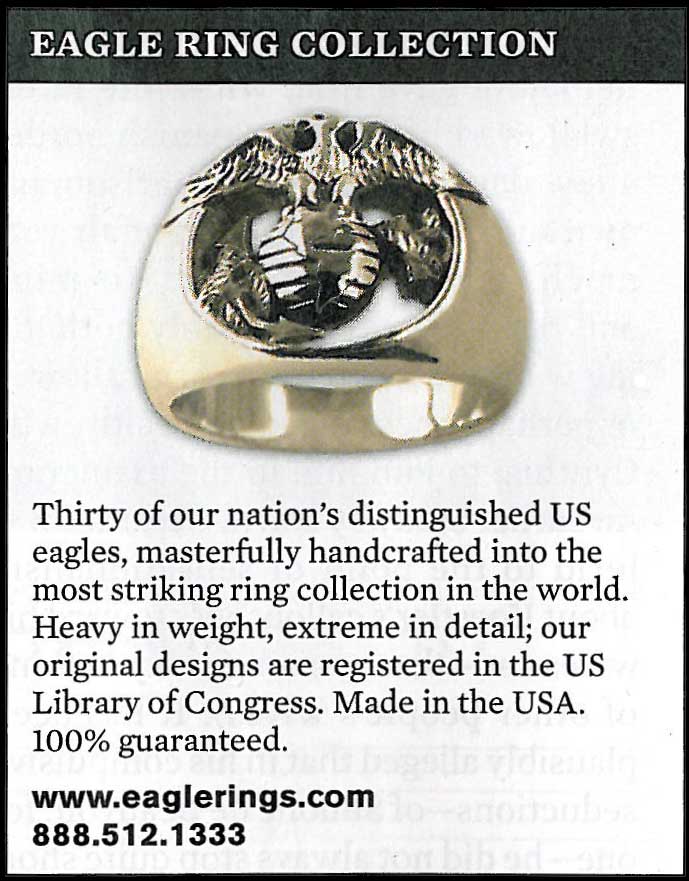
I'm actually grateful for the enlightenment by which I was enlightened by the simple reading of this ad: I had no idea that the US Library of Congress had thiry official, registered, supremely pompous, gloriously elegant and powerful yet dignified Eagle designs just sitting there waiting for somebody to come along and commercialise. Wonders do exist! Who knows what other wonders lie neglected on dusty shelves which can be converted into ready cash. And, it so patriotic! Still, I'll pass.
You know, I've been thinking green a lot lately. I've discovered that being poor is a marvelous way of reducing my carbon footprint. I'm seriously considering becoming destitute. Maybe my footprint will become so small that I'll simply float up into the air and live in the clouds. And, today I discovered another essential device to hasten the day when I'll be flat broke and wondering how all my precious moolah went up in smoke:

I particularly appreciate the "self extinguishing brass base". Until now, I laboured under the delusion that brass doesn't burn, except, of course, under the most intense heat - and I'm not sure about that. Furthermore this device is very chummy with the environment, having raped only the bees for their abodes, won't poison me or give me cancer and, thank you so much, doesn't drip. Man I hate those candle drips! It takes hours to pick them all off and feed them back into the little puddle of molten paraffin.
Manufacturers of the world, we implore you. Please, in the name of Mercy, give us more useless crap!
After a week or so of practice I've discovered a pretty foolproof setup for this sort of shot.
I placed a wok in my sink, filled that with water then left the tap on a constant drip. With the drops in the same place each time focussing was a lot easier, and with them being consistent spaced I could time my shots a lot easier so from a total of maybe 200 shots I had 40 "interesting" ones of which 7 got uploaded. Quite happy with that!
Created by a participant at the "Wuthering Hacks : re-using library data" hackathon at Newcastle City Library on 9 April 2016.
The participant used Raw (app.raw.densitydesign.org) to do visualisations using the "top 5 most borrowed titles in Newcastle Libraries in March 2016" data. The idea was to see how data could be turned from a raw format into an aesthetically pleasing item.
The "top 5" titles included:
Top 5 most borrowed titles for adult fiction in March 2016
1) NYPD Red / James Patterson
2) A spool of blue thread / Anne Tyler
3) Kate Mosse / The taxidermist’s daughter
4) Thin air / Ann Cleeves
5) Peppercorn street / Anna Jacobs
Top 5 most borrowed titles for adult non-fiction in March 2016
1) The eternally packed suitcase / Lisa Matthews - MISSING from spreadsheet
2) The tearaway / Dean Williams
3) Foolproof cooking / Mary Berry
4) Life after you / Lucie Brownlee
5) Narrow dog to Wigan Pier / Terry Darlington
Top 5 most borrowed titles for junior fiction in March 2016
1) Ten in the bed / Penny Dale
2) Walking with witches / Lynn Huggins-Cooper
3) I love you, Blue Kangaroo! / Emma Chichester-Clark
4) This is the bear / Sarah Hayes - MISSING from spreadsheet
5) Dogger / Shirley Hughes
Letter on reverse dated 26.12.14 and stamped / cancelled at Irmelshausen (Bavaria) and addressed to "Familie Nehf" in Reinsbronn. Photo taken in Würzburg.
Nothing remarkable about this fellow's kit, M1910 tunic, M1909 ammunition pouches and Gew 98 rifle. The photographer's small chalk board can be seen beside out man's left toe. Undoubtedly after this shot was taken, someone walked into the same spot and the number advanced by one. An unsophisticated and foolproof system of recording names to pictures - in theory.
www.nbcnews.com/health/health-news/cdc-panel-recommends-p...
CDC panel recommends people not get J&J vaccine if Pfizer, Moderna are available
The advisory committee voted in favor of language that says the mRNA vaccines from Pfizer and Moderna are the "preferred" options over Johnson & Johnson's.
People shouldn’t get the Johnson & Johnson Covid-19 vaccine when the Pfizer-BioNTech and Moderna shots are available, an advisory panel to the Centers for Disease Control and Prevention said Thursday.
The panel, called the Advisory Committee on Immunization Practices, convened following an update from the Food and Drug Administration on the risk of rare but potentially life-threatening blood clots linked to the Johnson & Johnson vaccine.
At least 54 people in the U.S., most of them women, have been hospitalized by the blood clots, and nine people have died.
The panel voted unanimously to declare the mRNA vaccines, from Pfizer and Moderna, the "preferred" options for adults, ultimately concluding that the mRNA vaccines provided greater protection and fewer risks than Johnson & Johnson’s. The recommendation wouldn't prohibit use of the Johnson & Johnson shot but instead make it clear that the other options are better choices if they are available.
"I really cannot recommend a vaccine that has been associated with a condition that may lead to death," said a committee member, Dr. Pablo Sanchez, a pediatrician at Nationwide Children's Hospital in Ohio.
The CDC's director, Dr. Rochelle Walensky, will need to sign off on the recommendation.
Johnson & Johnson's vaccine is linked to a blood clotting condition known as thrombosis with thrombocytopenia syndrome, or TTS. The AstraZeneca vaccine has also been associated with the blood clot issue.
Both the Johnson & Johnson and the AstraZeneca vaccines use an adenovirus technology to train the immune system to fight the coronavirus. The shots developed by Pfizer-BioNTech and Moderna use a different approach, mRNA, to train the immune system, and they haven't been linked to the clots.
The advisory committee met after the FDA announced Tuesday that had it added a contraindication to the Johnson & Johnson vaccine, saying people who had previously developed TTS after having gotten one dose of the vaccine shouldn't get second doses. The FDA also said the highest reporting rate of the blood clot issue — about 1 case per 100,000 doses administered — has been in women ages 30 to 49. About 15 percent of the cases have been fatal.
Dr. Sara Oliver, an epidemic intelligence service officer for the CDC, said in a presentation to the committee that data show that the Johnson & Johnson vaccine prevents more hospitalizations and deaths from Covid than the TTS it can cause. Still, she said, the vaccine prevents fewer hospitalizations and deaths than two doses of an mRNA vaccine.
Dr. Penny Heaton, the global head of research and development at Johnson & Johnson's vaccine division, defended the shot at the meeting, saying it offers high levels of protection against Covid, requires only one dose and is easier to store and transport than the mRNA vaccines, which must be stored at cold temperatures.
But committee members noted that there is increasing evidence to suggest that one dose of Johnson & Johnson's vaccine isn't sufficient. In October, federal health officials said all Johnson & Johnson recipients should get booster shots if it has been two months since their initial vaccinations. The vast majority of initial Johnson & Johnson recipients have opted for a Pfizer or a Moderna booster.
After the vote, the committee's chair, Dr. Grace Lee, acknowledged that some members want to make the language recommending the Pfizer and Moderna vaccines over Johnson & Johnson's even stronger, saying they wouldn't recommend the shot to their family members, while others stressed the importance of having an alternative vaccine to the mRNA shots.
The Biden administration is urging all eligible people in the U.S. to get boosters against the threat of the omicron variant. Initial data suggest that three shots of the mRNA vaccines provide adequate protection against the new strain.
The Pfizer and Moderna vaccines are readily available in the U.S. More than 570 million doses of the Pfizer and Moderna vaccines have been delivered to providers; only 28 million doses of the Johnson & Johnson vaccine have been delivered.
The link between the Johnson & Johnson vaccine and blood clots first emerged in April after six cases were reported in women. Federal health officials paused the use of the vaccine at that time to investigate the cases and resumed administration 10 days later, adding a warning that the vaccine could be linked to the clots, particularly among women ages 18 to 49.
A total of 54 cases of TTS after Johnson & Johnson vaccination were identified through late August, Dr. Isaac See, a scientist in the CDC's emerging infectious diseases unit, said Thursday in a presentation to the committee. All the patients were hospitalized, including 36 who were admitted to intensive care.
Most cases occurred in women, and symptoms usually occurred within nine days of vaccination with the first dose, he said. No cases of the rare clot issue have occurred in pregnant women. Risk factors for the clot issue include obesity, hypertension and diabetes.
Johnson & Johnson’s vaccine initially held promise, because it could be given as a single dose, rather than the two doses required for the Pfizer and Moderna vaccines. But clinical trials found that its effectiveness was much lower than that of the Pfizer and Moderna vaccines.
The effectiveness fell further with the emergence of the delta variant, leading health officials to recommend boosters.
More than 16 million people in the U.S. have had single shots of the Johnson & Johnson vaccine, according to the CDC. More than 470 million doses of the Pfizer and Moderna vaccines have been administered.
www.theatlantic.com/health/archive/2021/12/america-omicro...
America Is Not Ready for Omicron
The new variant poses a far graver threat at the collective level than the individual one—the kind of test that the U.S. has repeatedly failed.
America was not prepared for COVID-19 when it arrived. It was not prepared for last winter’s surge. It was not prepared for Delta’s arrival in the summer or its current winter assault. More than 1,000 Americans are still dying of COVID every day, and more have died this year than last. Hospitalizations are rising in 42 states. The University of Nebraska Medical Center in Omaha, which entered the pandemic as arguably the best-prepared hospital in the country, recently went from 70 COVID patients to 110 in four days, leaving its staff “grasping for resolve,” the virologist John Lowe told me. And now comes Omicron.
Will the new and rapidly spreading variant overwhelm the U.S. health-care system? The question is moot because the system is already overwhelmed, in a way that is affecting all patients, COVID or otherwise. “The level of care that we’ve come to expect in our hospitals no longer exists,” Lowe said.
The real unknown is what an Omicron cross will do when it follows a Delta hook. Given what scientists have learned in the three weeks since Omicron’s discovery, “some of the absolute worst-case scenarios that were possible when we saw its genome are off the table, but so are some of the most hopeful scenarios,” Dylan Morris, an evolutionary biologist at UCLA, told me. In any case, America is not prepared for Omicron. The variant’s threat is far greater at the societal level than at the personal one, and policy makers have already cut themselves off from the tools needed to protect the populations they serve. Like the variants that preceded it, Omicron requires individuals to think and act for the collective good—which is to say, it poses a heightened version of the same challenge that the U.S. has failed for two straight years, in bipartisan fashion.
The coronavirus is a microscopic ball studded with specially shaped spikes that it uses to recognize and infect our cells. Antibodies can thwart such infections by glomming onto the spikes, like gum messing up a key. But Omicron has a crucial advantage: 30-plus mutations that change the shape of its spike and disable many antibodies that would have stuck to other variants. One early study suggests that antibodies in vaccinated people are about 40 times worse at neutralizing Omicron than the original virus, and the experts I talked with expect that, as more data arrive, that number will stay in the same range. The implications of that decline are still uncertain, but three simple principles should likely hold.
First, the bad news: In terms of catching the virus, everyone should assume that they are less protected than they were two months ago. As a crude shorthand, assume that Omicron negates one previous immunizing event—either an infection or a vaccine dose. Someone who considered themselves fully vaccinated in September would be just partially vaccinated now (and the official definition may change imminently). But someone who’s been boosted has the same ballpark level of protection against Omicron infection as a vaccinated-but-unboosted person did against Delta. The extra dose not only raises a recipient’s level of antibodies but also broadens their range, giving them better odds of recognizing the shape of even Omicron’s altered spike. In a small British study, a booster effectively doubled the level of protection that two Pfizer doses provided against Omicron infection.
Second, some worse news: Boosting isn’t a foolproof shield against Omicron. In South Africa, the variant managed to infect a cluster of seven people who were all boosted. And according to a CDC report, boosted Americans made up a third of the first known Omicron cases in the U.S. “People who thought that they wouldn’t have to worry about infection this winter if they had their booster do still have to worry about infection with Omicron,” Trevor Bedford, a virologist at Fred Hutchinson Cancer Research Center, told me. “I’ve been going to restaurants and movies, and now with Omicron, that will change.”
Third, some better news: Even if Omicron has an easier time infecting vaccinated individuals, it should still have more trouble causing severe disease. The vaccines were always intended to disconnect infection from dangerous illness, turning a life-threatening event into something closer to a cold. Whether they’ll fulfill that promise for Omicron is a major uncertainty, but we can reasonably expect that they will. The variant might sneak past the initial antibody blockade, but slower-acting branches of the immune system (such as T cells) should eventually mobilize to clear it before it wreaks too much havoc.
To see how these principles play out in practice, Dylan Morris suggests watching highly boosted places, such as Israel, and countries where severe epidemics and successful vaccination campaigns have given people layers of immunity, such as Brazil and Chile. In the meantime, it’s reasonable to treat Omicron as a setback but not a catastrophe for most vaccinated people. It will evade some of our hard-won immune defenses, without obliterating them entirely. “It was better than I expected, given the mutational profile,” Alex Sigal of the Africa Health Research Institute, who led the South African antibody study, told me. “It’s not going to be a common cold, but neither do I think it will be a tremendous monster.”
That’s for individuals, though. At a societal level, the outlook is bleaker.
Omicron’s main threat is its shocking speed, as my colleague Sarah Zhang has reported. In South Africa, every infected person has been passing the virus on to 3–3.5 other people—at least twice the pace at which Delta spread in the summer. Similarly, British data suggest that Omicron is twice as good at spreading within households as Delta. That might be because the new variant is inherently more transmissible than its predecessors, or because it is specifically better at moving through vaccinated populations. Either way, it has already overtaken Delta as the dominant variant in South Africa. Soon, it will likely do the same in Scotland and Denmark. Even the U.S., which has much poorer genomic surveillance than those other countries, has detected Omicron in 35 states. “I think that a large Omicron wave is baked in,” Bedford told me. “That’s going to happen.”
More positively, Omicron cases have thus far been relatively mild. This pattern has fueled the widespread claim that the variant might be less severe, or even that its rapid spread could be a welcome development. “People are saying ‘Let it rip’ and ‘It’ll help us build more immunity,’ that this is the exit wave and everything’s going to be fine and rosy after,” Richard Lessells, an infectious-disease physician at the University of KwaZulu-Natal, in South Africa, told me. “I have no confidence in that.”
To begin with, as he and others told me, that argument overlooks a key dynamic: Omicron might not actually be intrinsically milder. In South Africa and the United Kingdom, it has mostly infected younger people, whose bouts of COVID-19 tend to be less severe. And in places with lots of prior immunity, it might have caused few hospitalizations or deaths simply because it has mostly infected hosts with some protection, as Natalie Dean, a biostatistician at Emory University, explained in a Twitter thread. That pattern could change once it reaches more vulnerable communities. (The widespread notion that viruses naturally evolve to become less virulent is mistaken, as the virologist Andrew Pekosz of Johns Hopkins University clarified in The New York Times.) Also, deaths and hospitalizations are not the only fates that matter. Supposedly “mild” bouts of COVID-19 have led to cases of long COVID, in which people struggle with debilitating symptoms for months (or even years), while struggling to get care or disability benefits.
And even if Omicron is milder, greater transmissibility will likely trump that reduced virulence. Omicron is spreading so quickly that a small proportion of severe cases could still flood hospitals. To avert that scenario, the variant would need to be substantially milder than Delta—especially because hospitals are already at a breaking point. Two years of trauma have pushed droves of health-care workers, including many of the most experienced and committed, to quit their job. The remaining staff is ever more exhausted and demoralized, and “exceptionally high numbers” can’t work because they got breakthrough Delta infections and had to be separated from vulnerable patients, John Lowe told me. This pattern will only worsen as Omicron spreads, if the large clusters among South African health-care workers are any indication. “In the West, we’ve painted ourselves into a corner because most countries have huge Delta waves and most of them are stretched to the limit of their health-care systems,” Emma Hodcroft, an epidemiologist at the University of Bern, in Switzerland, told me. “What happens if those waves get even bigger with Omicron?”
The Omicron wave won’t completely topple America’s wall of immunity but will seep into its many cracks and weaknesses. It will find the 39 percent of Americans who are still not fully vaccinated (including 28 percent of adults and 13 percent of over-65s). It will find other biologically vulnerable people, including elderly and immunocompromised individuals whose immune systems weren’t sufficiently girded by the vaccines. It will find the socially vulnerable people who face repeated exposures, either because their “essential” jobs leave them with no choice or because they live in epidemic-prone settings, such as prisons and nursing homes. Omicron is poised to speedily recap all the inequities that the U.S. has experienced in the pandemic thus far.
Here, then, is the problem: People who are unlikely to be hospitalized by Omicron might still feel reasonably protected, but they can spread the virus to those who are more vulnerable, quickly enough to seriously batter an already collapsing health-care system that will then struggle to care for anyone—vaccinated, boosted, or otherwise. The collective threat is substantially greater than the individual one. And the U.S. is ill-poised to meet it.
America’s policy choices have left it with few tangible options for averting an Omicron wave. Boosters can still offer decent protection against infection, but just 17 percent of Americans have had those shots. Many are now struggling to make appointments, and people from rural, low-income, and minority communities will likely experience the greatest delays, “mirroring the inequities we saw with the first two shots,” Arrianna Marie Planey, a medical geographer at the University of North Carolina at Chapel Hill, told me. With a little time, the mRNA vaccines from Pfizer and Moderna could be updated, but “my suspicion is that once we have an Omicron-specific booster, the wave will be past,” Trevor Bedford, the virologist, said.
Two antiviral drugs now exist that could effectively keep people out of the hospital, but neither has been authorized and both are expensive. Both must also be administered within five days of the first symptoms, which means that people need to realize they’re sick and swiftly confirm as much with a test. But instead of distributing rapid tests en masse, the Biden administration opted to merely make them reimbursable through health insurance. “That doesn’t address the need where it is greatest,” Planey told me. Low-wage workers, who face high risk of infection, “are the least able to afford tests up front and the least likely to have insurance,” she said. And testing, rapid or otherwise, is about to get harder, as Omicron’s global spread strains both the supply of reagents and the capacity of laboratories.
Omicron may also be especially difficult to catch before it spreads to others, because its incubation period—the window between infection and symptoms—seems to be very short. At an Oslo Christmas party, almost three-quarters of attendees were infected even though all reported a negative test result one to three days before. That will make Omicron “harder to contain,” Lowe told me. “It’s really going to put a lot of pressure on the prevention measures that are still in place—or rather, the complete lack of prevention that’s still in place.”
The various measures that controlled the spread of other variants—masks, better ventilation, contact tracing, quarantine, and restrictions on gatherings—should all theoretically work for Omicron too. But the U.S. has either failed to invest in these tools or has actively made it harder to use them. Republican legislators in at least 26 states have passed laws that curtail the very possibility of quarantines and mask mandates. In September, Alexandra Phelan of Georgetown University told me that when the next variant comes, such measures could create “the worst of all worlds” by “removing emergency actions, without the preventive care that would allow people to protect their own health.” Omicron will test her prediction in the coming weeks.
The longer-term future is uncertain. After Delta’s emergence, it became clear that the coronavirus was too transmissible to fully eradicate. Omicron could potentially shunt us more quickly toward a different endgame—endemicity, the point when humanity has gained enough immunity to hold the virus in a tenuous stalemate—albeit at significant cost. But more complicated futures are also plausible. For example, if Omicron and Delta are so different that each can escape the immunity that the other induces, the two variants could co-circulate. (That’s what happened with the viruses behind polio and influenza B.)
Omicron also reminds us that more variants can still arise—and stranger ones than we might expect. Most scientists I talked with figured the next one to emerge would be a descendant of Delta, featuring a few more mutational bells and whistles. Omicron, however, is “dramatically different,” Shane Crotty, from the La Jolla Institute for Immunology, told me. “It showed a lot more evolutionary potential than I or others had hoped for.” It evolved not from Delta but from older lineages of SARS-CoV-2, and seems to have acquired its smorgasbord of mutations in some hidden setting: perhaps a part of the world that does very little sequencing, or an animal species that was infected by humans and then transmitted the virus back to us, or the body of an immunocompromised patient who was chronically infected with the virus. All of these options are possible, but the people I spoke with felt that the third—the chronically ill patient—was most likely. And if that’s the case, with millions of immunocompromised people in the U.S. alone, many of whom feel overlooked in the vaccine era, will more weird variants keep arising? Omicron “doesn’t look like the end of it,” Crotty told me. One cause for concern: For all the mutations in Omicron’s spike, it actually has fewer mutations in the rest of its proteins than Delta did. The virus might still have many new forms to take.
Vaccinating the world can curtail those possibilities, and is now an even greater matter of moral urgency, given Omicron’s speed. And yet, people in rich countries are getting their booster six times faster than those in low-income countries are getting their first shot. Unless the former seriously commits to vaccinating the world—not just donating doses, but allowing other countries to manufacture and disseminate their own supplies—“it’s going to be a very expensive wild-goose chase until the next variant,” Planey said.
Vaccines can’t be the only strategy, either. The rest of the pandemic playbook remains unchanged and necessary: paid sick leave and other policies that protect essential workers, better masks, improved ventilation, rapid tests, places where sick people can easily isolate, social distancing, a stronger public-health system, and ways of retaining the frayed health-care workforce. The U.S. has consistently dropped the ball on many of these, betting that vaccines alone could get us out of the pandemic. Rather than trying to beat the coronavirus one booster at a time, the country needs to do what it has always needed to do—build systems and enact policies that protect the health of entire communities, especially the most vulnerable ones. Individualism couldn’t beat Delta, it won’t beat Omicron, and it won’t beat the rest of the Greek alphabet to come. Self-interest is self-defeating, and as long as its hosts ignore that lesson, the virus will keep teaching it.
[image: Inline image 1]
Nymi:
The buzz today was all about yet another new way to provide security for
your accounts and devices. We are truly moving toward life beyond the
password.
The idea of the Nymi is to use your ECG/EKG as the password. Oh. What a
novel idea! Several of my geekier pals around campus are talking about
ordering one. Here is a video showing what folk are so excited about.
Nymi by Bionym:
www.youtube.com/watch?v=jUO7Qnmc8vE
Now, I tweeted this, and that turned into a very interesting conversation
about what might not work with this idea. The conversation was centered
around Jay Ackroyd of Virtually Speaking, a well known Blogradio show and
Second Life phenomena, with occasional comments from others. The gist of
it was (1) there is no single authentication method that will work
consistently for everyone, (2) what about security versus convenience
tradeoffs, and (3) how does this new approach to security connect to the
privacy / transparency debates.
I'm not sure if these embeds will work as I send this blogpost by email, so
this is an experiment. We'll see.
RT @pfanderson: bracelet replace[s] yr
passwords, yr car keys, & even yr fingerprints http://t.co/lE7pEZoBx8 |if not this,something
like it— JayAckroyd (@JayAckroyd) September 4,
2013
@pfanderson EKG key device
impressive but what happens if you have an arrhythmia or an infarction? #Stressful—
Christian Kendrick (@cskendrick) September 4,
2013
@pfanderson Nothing works!
Gotta check into a garage, or, I guess, a hospital. IAC, something like
this. LOCAL authentication— JayAckroyd (@JayAckroyd) September 4,
2013
@JayAckroyd That's what I
was worrying about myself. I have arrhythmia. Varies considerably, amuses
nurses.— P. F. Anderson (@pfanderson) September 4,
2013
@JayAckroyd Would be bad to be
locked out of my phone right when my heart is seizing up with pain and I
can barely move— P. F. Anderson (@pfanderson) September 4,
2013
@pfanderson The principle is
fascinating; difficult to spoof being in two places at once. But sudden
change of EKG would be oops— Christian Kendrick (@cskendrick) September
4, 2013
@cskendrick Sounds like you
should get a free alpha version.— JayAckroyd (@JayAckroyd) September
4, 2013
@pfanderson Inventor's
point other mechs like prints or retinas can be copied isn't really
relevant if you authenticate locally.— JayAckroyd (@JayAckroyd)
4, 2013
@pfanderson Biometric should
never be stored anywhere except a local authentication device.—
JayAckroyd (@JayAckroyd) September 4,
2013
@cskendrick Now that would be
fun. :) Then test how it works when I go for a long walk uphill in high
heat/humidity ...— P. F. Anderson (@pfanderson) September 4,
2013
@cskendrick There is always a
way around everything. If this takes out, someone will figure out how to
trick the device.— P. F. Anderson (@pfanderson) September 4,
2013
@cskendrick This issue always
arises. People without hands. People without eyeballs.Even DNA doesn't
work for ident twins.— JayAckroyd (@JayAckroyd) September 4,
2013
@cskendrick IMPORTANT! RT
"Biometric should never be stored anywhere except a local
authentication device."— P. F. Anderson (@pfanderson) September
4, 2013
@JayAckroyd Sometimes I want
to log my son onto one device, and me onto another. Not sure I want
single-point authentication— P. F. Anderson (@pfanderson) September
4, 2013
@cskendrick Essential! And yet
you see NatID proposals with prints on datastores. I'm for a national
ID. But a GOOD one.— JayAckroyd (@JayAckroyd) September 4,
2013
@cskendrick You mean you want
to be able to use insecure devices. Sure. No reason not to.Except in the
event you won't.— JayAckroyd (@JayAckroyd) September 4,
2013
@cskendrick There can never be
just one solution. Never. (And I rarely say that 'N'
word)— P. F. Anderson (@pfanderson) September 4,
2013
@cskendrick Take that back.
You'll wanna pay for hookers and blow through insecure
systems.— JayAckroyd (@JayAckroyd) September 4,
2013
@pfanderson @cskendrick There is no 100% foolproof
auth method. only several in tandem will cover all users— Atiyaah
A. Miu (@AtiyaahDollfie) September
4, 2013
@cskendrick Another example.
Rt now, GMail allows me to check locations currently logged in: office CPU,
laptop, phone, tablet.— P. F. Anderson (@pfanderson) September 4,
2013
@cskendrick It's useful to
be logged in multiple locations at same time. I OFTEN use more than one
device at a time.— P. F. Anderson (@pfanderson) September 4,
2013
@cskendrick LOL!. Well, not me
personally, but perhaps the generic "you" who currently pay for
hookers.— P. F. Anderson (@pfanderson) September 4,
2013
@AtiyaahDollfie @JayAckroyd @cskendrick Good insight,
Atiyaah— P. F. Anderson (@pfanderson) September 4,
2013
@cskendrick Right, and
that's way insecure. Convenience and security conflict. But you CHOOSE
to trust a public WAN,— JayAckroyd (@JayAckroyd) September 4,
2013
@JayAckroyd @cskendrick my dad taught me a few
things about security when I was a wee girl.— Atiyaah A. Miu
(@AtiyaahDollfie) September
4, 2013
@cskendrick Any illicit
activity. Or licit but embarassing (Dear? Licorice? Again? I thought
you'd given that up.)— JayAckroyd (@JayAckroyd) September 4,
2013
@cskendrick This all connects
back to David Brin on Transparent Society. But you know that well, Jay
:)— P. F. Anderson (@pfanderson) September 4,
2013
@cskendrick LOL! Or the Bronys
:)— P. F. Anderson (@pfanderson) September 4,
2013
@cskendrick Indeed. @Davidbrin is in the subtext.—
JayAckroyd (@JayAckroyd) September 4,
2013
Baby's got an atom bomb
Twenty two megaton
Baby got a poison gas
Baby got a heart attacks
Baby got a pain on tap
Baby gimme some of that
Baby got a nobel prize
Given for the perfect crime
Baby got an alibi
Baby got eight more lives
Baby got a satellite
Baby got second sight
Baby got a masterplan
A foolproof master plan
Baby got purple hair
Baby got a secret lair
Baby got an army there
I ain't ever seen baby scared
(Gimme some of that)
(Gimme some of that)
Baby got a crystal ball
Baby doesn't care at all
Baby's having too much fun
Baby got an atom bomb
Baby got a fleet at sea
And a submarine called Emergency
She got a motorcade
She got a monorail
Going coast to coast on a campain trail
Playing deck of cards in an armoured car
She got a kung fu star as a bodyguard
She got a juju charm
She got a magic spell
She got a genie all three is working well
She got a tv show
She got a shopping mall
She got a miracle, she doesn't want at all
She got a monument at a great expense
She got a head of state and a president
She got destiny, she got supremecy
She got everything from A - Z
She got it all down tight, she got nothing wrong
She got the whole wide world singing baby's song
~Fluke
After a week or so of practice I've discovered a pretty foolproof setup for this sort of shot.
I placed a wok in my sink, filled that with water then left the tap on a constant drip. With the drops in the same place each time focussing was a lot easier, and with them being consistent spaced I could time my shots a lot easier so from a total of maybe 200 shots I had 40 "interesting" ones of which 7 got uploaded. Quite happy with that!
you spot him yet?
yeah, he's down there, all right.
what's he doing?
he's opening the package.
good. he alone?
no. joey's there with him.
too bad for joey. now what's happening?
he's got it open. shit! he spotted it!
what!?
yeah. he found the device. shit! he disabled it!
dammit, purvis! you told me it was foolproof!
we better get outta here. boss is gonna be slightly peeved.
right behind you.
Our system of using templates makes carving the exquisite spoon-blade shape an easy and foolproof process. Templates illustrated are slightly different than what are currently in our plans. The first step is to mark a curve across the blade.
Sex offenders try to hide
Victims' families enraged by laws that allow criminals to change their names
By Suzanne Fournier December 7, 2008
Linda Hamilton and Tom May with a photo of their daughter Genoa, who was murdered in 1985. Photograph by : Duane Burnett
www.theprovince.com/offenders+hide/1043832/story.html
Tom May will never forget the anguish of December 1985 when his three-year-old daughter was snatched from her bed and found a day later, raped and murdered, on a remote Sunshine Coast road.
Nor will he forget the face of Darren Andrew Kelly, then 20, who pleaded guilty to first-degree murder in the sex slaying and was sentenced in 1986 to life in prison with no chance of parole for 25 years.
May has discovered to his horror, however, that Kelly, diagnosed as a "dangerous psychopath," almost succeeded in erasing his notoriety by taking advantage of laws that allow even violent sex offenders to change their names.
"I wanted to find out what 'life in prison' meant so I called up after 20 years had gone by to ask about the status of Darren Kelly and I was told, 'Sorry, there's no one in the prison system by that name,"' said May, now 53. "I figured they'd let him go without even telling us and to say I was very upset is an understatement."
The Province has learned that there are at least 121 federal inmates, most of them violent or sexual offenders, who have legally changed their names in prison. There are 29 prisoners in the Pacific region -- B.C. and the Yukon Territory -- living in prison under new names.
That doesn't include inmates who changed their names in jail and are now paroled with a new identity. As far as The Province was able to establish, no record is kept of how many ex-prisoners are living in the community under new names.
Kelly, described by a psychiatrist as "one of the most dangerous psychopaths I've ever encountered," snatched Genoa Jean May from her bed at 5 a.m. and then raped and murdered her before dumping her body.
Parole Board officials admit they can't explain why they lost track of Kelly when May first phoned four years ago for information. Nor can they explain why the same thing happened -- twice -- when The Province requested information about Kelly and was told both times he didn't exist.
In 2004, May paid a research fee and found Kelly had changed his name to Ryan Scott Brady.
May obtained a 1992 Province article that revealed Kelly's name change. It also linked him to the murder of Aaron Kaplan, aged two, who was taken from his bed in a Vancouver home and found dead on his family's front lawn.
The little boy had been murdered while Kelly lived nearby, about six months before Gennie was killed.
Armed with evidence of Kelly's new name, corrections officials confirmed that Kelly, now Brady, is in Mountain Prison in Agassiz.
"Kelly's name, and the information on Gennie's murder, didn't come up on prison files until I told them," said May.
Corrections Canada spokesman Brandon Banks said that "when an inmate changes his or her name, a New Offender Admission Sheet is filled out and that is theoretically linked in all our records to the inmate's original name."
Banks said that "anyone has the authority to change their name, and that includes inmates -- if you or I changed our name there is no one we have to ask permission from.
"Only the registered victims of offenders would receive notification of the name change."
May is now registered as a victim.
"When an inmate changes his name, we require that it be done legally and all the paperwork filed," said National Parole Board spokesman Patrick Storey, who provided "soft" numbers of name changes, admitting it could be larger.
"We have a notification system that is supposed to be pretty foolproof, but you never know," said Storey.
When The Province inquired on two occasions about Kelly's parole status, parole officials failed to link Kelly's name and the murder of Gennie to the killer's new identity, until told of Kelly's name change. Parole Board spokeswoman Jaswinder Frenette said: "We are going to discuss and try to resolve this problem."
Retired MP Randy White, an advocate for victims' rights, is outraged by what happened to Tom May and scoffs at the prison officials' "tired old excuses."
"They can't keep track of violent offenders and pedophiles whose names they already know, whether they're in prison or out in the community," said White, who tried in 2001 to introduce a private member's bill that would have made it illegal for violent offenders to legally change their names while in jail. sfournier@theprovince.com
Other offenders who have switched IDs
Not only does a name change conceal a person's criminal past from new neighbours once the inmate is released, it appears that the prison system has in some cases actually lost track of offenders, both in and out of jail.
The Correctional Service of Canada says it can't do anything to stop the practice because violent sexual offenders have human rights.
The offender's new name is supposed to be linked to his original record, but news files are rife with stories of spotty prison and parole records.
Tom May, whose daughter was murdered by a man now serving time under a different name, says: "Privacy laws should not outweigh the rights of victims' families. It should be illegal for violent killers to change their names."
Robert Noyes
Child molester Noyes is a teacher who moved from school to school in B.C. in the 1970s and early '80s. Arrested in '85, Noyes pleaded guilty to 19 assaults on kids aged six to 15. He is believed to have molested hundreds of kids.
Granted full parole in 2003, Noyes is believed to be living outside Ottawa with his second wife.
Said ex-MP Randy White: "I got a call from a parole board person who said that Noyes had changed his name. I was told that I could not get his name. I even phoned the prison and was told that Noyes' new name was private. What's to prevent him from applying to be a substitute teacher under his new ID?"
David Shearing
For Tom May and his wife Michelle, who have been supporting her childhood friend, Shelley Boden, their case eerily echoes that of Shearing, another notorious killer who murdered six of Boden's relatives.
Shearing was convicted in 1982 of the murders of the Bentley and Johnson families, including two young girls he sexually assaulted. Shearing changed his name to Ennis.
Robert Gordon Stevens
Stevens is a convicted sex offender. He was married in prison to a man who was also a sex offender and had changed his surname to Oatway. Stevens then took the surname Oatway and became Bobby Gordon Oatway. When he was released from prison, one of his victims recognized him as Stevens; others did not. Both men have been paroled in B.C. but their whereabouts are unknown to the public.
Karla Homolka
Notorious sex-slayer Homolka, who adopted the name Karla Teale in homage to a fictitious serial killer, tried to change her name after she was paroled in 2003 to Emily Tremblay, but was refused permission.
In 2005, a Quebec judge struck down all 14 court-ordered parole conditions on Homolka, including the need to notify authorities of any subsequent name changes or her current whereabouts, which are unknown.
Austin John Gallienne
Gallienne, a choirmaster, was serving time for a sex offence when he changed his name to Austin John Mitchell. In 1994, he changed his name again to John David Gallant. He is believed to be in B.C.
William Rosik
Rosik was convicted of murdering Ontario police officer Bob Carrick in 1969. He legally changed his name to William Dave Jameson while in jail and is believed to be living in Burnaby.
© Copyright (c) The Province
Sour Cream Pumpkin Pie with Foolproof Pie Dough
Came out really good except for some reason I had to bake it for an hour (maybe my oven sucks ass). The crust was AWESOME. Definitely try it. Worth buying the vodka for, even if you have no other use for it..(I'm not gonna drink it!)...