View allAll Photos Tagged System's
Governor O'Malley Infant Mortality Rate Press Conference by Tom Nappi at Baltimore Medical System?s Highlandtown Healthy Living Center, Baltimmore, Maryland
A scene from Sakasu-saka of Akasaka Sacas at Akasaka, Tokyo.
From here, You can see Tokyo Broadcasting System's HQ (called "The Big Hat"), Akasaka BLITZ, Akasaka ACT theater and Akasaka Biz Tower. Also, HSBC's crooked building is looking nice.
Please enjoy the interactive viewer! (thanks to fieldOfView and Aldo)
- SLR camera and lens: Nikon D90 /w Sigma 8mm fisheye
- handheld (with Simon's "PanoTool")
- 4 pan (Philopod pitch variation)
- software: ptgui and Photoshop on MS-Windows XP
Edited Hubble Space Telescope image of Saturn, taken about one month ago.
Original caption: Saturn is by far the solar system’s most photogenic planet, and in this latest Hubble Space Telescope snapshot it is especially so because Saturn’s magnificent ring system is near its maximum tilt toward Earth (which was in 2017).
Hubble was used to observe the planet on June 6, 2018, when Saturn was only approximately 1.36 billion miles from Earth, nearly as close to us as it ever gets.
Saturn was photographed as it approached a June 27 opposition, when the planet is directly opposite to the Sun in the night sky and is at its yearly closest distance to the Earth. Though all of the gas giants boast rings, Saturn’s are the largest and most spectacular, stretching out eight times the radius of the planet.
Saturn’s stunning rings were first identified as a continuous disk around the planet by Dutch astronomer Christiaan Huygens in 1655. 325 years later, NASA’s Voyager 1 spacecraft flyby of Saturn resolved thousands of thin, fine ringlets. Data from NASA’s Cassini mission suggests the rings formed 200 million years ago, roughly around the time of the dinosaurs and Earth’s Jurassic period. The gravitational disintegration of one of Saturn’s small moons created myriad icy debris particles, and collisions today likely continually replenish the rings.
Visible in this Hubble image are the classic rings as recorded by early skywatchers. From the outside in are the A ring with the Encke Gap, the Cassini Division, the B ring, and the C ring with the Maxwell Gap.
Saturn’s appearance changes due to its seasons, caused by the planet’s 27-degree axial tilt. It is now summer in Saturn’s northern hemisphere and the atmosphere is more active. This may be responsible for a string of bright clouds visible near the northern polar region that are the remnants of a disintegrating storm. Small, mid-latitude puffs of clouds are also visible. Hubble’s view also resolves a hexagonal pattern around the north pole, a stable and persistent wind feature discovered during the Voyager flyby in 1981.
Saturn’s colors come from hydrocarbon hazes above the ammonia crystals in the upper cloud layers. Unseen lower-level clouds are either ammonium hydrosulfide or water. The planet’s banded structure is caused by the winds and the clouds at different altitudes.
This is the first image of Saturn taken as part of the Outer Planet Atmospheres Legacy (OPAL) project. OPAL is helping scientists understand the atmospheric dynamics and evolution of our solar system’s gas giant planets.
Governor O'Malley Infant Mortality Rate Press Conference by Tom Nappi at Baltimore Medical System?s Highlandtown Healthy Living Center, Baltimmore, Maryland
Telford's Building System's always neat and always K Series Kenworth K104B tows a single flat top northbound towards home, closely followed by a Mattina Fresh Kenworth K104B Aerodyne B Double.
Governor O'Malley Infant Mortality Rate Press Conference by Tom Nappi at Baltimore Medical System?s Highlandtown Healthy Living Center, Baltimmore, Maryland
A Ukrainian senior leader shows off various weapon system's capabilities during an exhibition held by the Ukrainian land forces at the International Peacekeeping and Security Center in Yavoriv, Ukraine, July 15. Rapid Trident is a multinational exercise held at the International Peacekeeping and Security Center in Yavoriv, Ukraine. It is designed to promote regional stability and security, strengthen international military partnering and foster trust while improving interoperability between participating nations. (Photo by Lt. Col. Vladimir Skorostetskiy, Ukrainian Army Public Affairs)
Governor O'Malley Infant Mortality Rate Press Conference by Tom Nappi at Baltimore Medical System?s Highlandtown Healthy Living Center, Baltimmore, Maryland
Governor O'Malley Infant Mortality Rate Press Conference by Tom Nappi at Baltimore Medical System?s Highlandtown Healthy Living Center, Baltimmore, Maryland
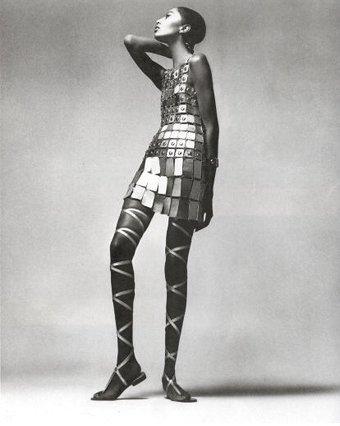
Future System's Birmingham Selfridges store was inspired by the famous 60's chainmail dress by Paco Rabanne worn by twiggy I think. Like this one. It's more curvatious than twiggy and the conceit only works from a few angles - this is one of them. The rest of the time it looks like it needs a few years in the gym.
On Saturday, October 7, more than 1,700 of Rochester Regional Health’s friends and employees gathered at the Joseph A. Floreano Rochester Riverside Convention Center for the system’s signature celebration.
One of many different type's of sighting systems today on Compound bow's. This is a more simpler one I believe.
June 2021 archery shoot in Nevada City, California
On December 11, 2014, the Bureau of Land Management (BLM) released the next series of its popular vintage poster collection and it included a poster of the San Juan Islands National Monument (SJINM)!
The official unveiling of the three posters at the BLM Oregon/Washington State Office and was attended by the BLM’s entire State Leadership Team. State Director Jerry Perez and Associate State Director Theresa Hanley unveiled the new posters with Spokane District Manager, Daniel Picard.
The SJINM encompasses about 1,000 acres of land spread across rocks and islands managed by BLM. The vintage-style drawing featured on the poster is of Patos Island and its lighthouse, which is a dominant feature of the area.
Other similarly styled posters feature the Oregon National Historic Trail in Wyoming and the Rio Grande del Norte National Monument in New Mexico.
To learn more about the National Landscape Conservation System’s vintage poster series head on over to: tmblr.co/Z9wNeu1XfIBxE
Photo: Michael Campbell, BLM.
S135-E-007535 (12 July 2011) --- With his feet secured on a restraint on the space station remote manipulator system's robotic arm or Canadarm2, NASA astronaut Mike Fossum holds the Robotics Refueling Mission payload, which was the focus of one of the primary chores accomplished on a six and a half hour spacewalk on July 12. NASA astronaut Ron Garan, also a station flight engineer, who shared the spacewalk with Fossum, is out of frame. Photo credit: NASA
Governor O'Malley Infant Mortality Rate Press Conference by Tom Nappi at Baltimore Medical System?s Highlandtown Healthy Living Center, Baltimmore, Maryland
Postojna Cave is a 20,570 m long Karst cave system near Postojna, Slovenia. It is the longest cave system in the country as well as one of its top tourism sites. The caves were created by the Pivka River.
The cave was first described in the 17th century by Johann Weichard Valvasor, and a new area of the cave was discovered accidentally in 1818 by local Luka Čeč, when he was preparing the hitherto known parts of the cave for a visit by Francis I, the first Emperor of Austria. In 1819, the caves were opened to the public, and Čeč went on to become the first official tourist guide for the caves. Electric lighting was added in 1884, preceding even Ljubljana, the capital of Carniola, the Austro-Hungarian province the cave was part of at the time, and further enhancing the cave system's popularity. In 1872 rails were laid in the cave along with first cave train for tourists. At first, these were pushed along by the guides themselves, later at the beginning of the 20th century a gas locomotive was introduced. After 1945, the gas locomotive was replaced by an electric one. 5.3 km of the caves are open to the public, the longest publicly accessible depth of any cave system in the world.
HARLOW SHAPLEY FBI considered him a risk
A man are largely responsible for our current understanding of the structure of the universe and the solar system’s place in it. But to the FBI, Shapley was a dangerous character.
That’s in the massive file, too.
FBI agents recorded the addresses of every piece of mail that Shapley sent or received. Extraordinary surveillance was just part of the seven years of government spying on Shapley that ended in 1953, a year after he retired as Harvard College Observatory’s director.
The FBI even spied on the 1946 convention of the American Association of Variable Star Observers, which Shapley attended. He has an inherent dislike for authority, and will invariably do the opposite to what he is told or supposed to do.’” Shapley had made his reputation with one of the most monumental discoveries in astronomy since Copernicus’ displacement of the Earth. Using observations of Cepheid variable stars in globular clusters that he made at Mt. Wilson from 1914 to 1921, Shapley radically revised the scale of the Space estimated, after a few revisions, that the Sun and its planets were some 30,000 light years from the galaxy’s true center, which he correctly located in the direction of Sagittarius.
The daily Sun printed Shapley’s notes verbatim — coarse words and all. “Consequently, [the politician] wanted to murder me and blow up everybody,” Shapley wrote.
He then won a fellowship to study with Henry Norris Russell, the country’s foremost astronomer, at Princeton. Under Russell, Shapley made his reputation for solving the orbits of binary star systems through the use of complex equations. That landed him a research job at Mt. Wilson, which began in 1914.
Using the 60- and 100-inch telescopes at the observatory north of Los Angeles, Shapley made his great discovery about the Milky Way Galaxy’s
In 1952, Shapley reached Harvard’s mandatory retirement, stepped down from his post at the observatory. He had overseen massive projects produced by 25 large telescopes around the world, including the Shapley-Ames Catalog of External Galaxies. And the FBI continued to keep an eye on him
In February 1924 Edwin Hubble wrote to Shapley about his discovery of two Cepheid variables in the Andromeda nebula, M 31. Shapley responded that the letter was “the most entertaining literature I have seen for a long time,” and promised to send a revised period-luminosity curve. THE Gold Medal of the Royal Astronomical Society has been awarded to Dr. Harlow Shapley for his studies of the structure and dimensions of the galactic system. Dr. Shapley, has been director of Harvard College Observatory and Paine professor of astronomy at Harvard since 1921, known particularly the relation between the period of variation and the absolute magnitude of Cepheid variable stars. The apparent magnitude of the Cepheid variables in a globular cluster is measured and compared with the known absolute magnitude of a Cepheid of the same period, and from this the distance of the cluster is obtained immediately, provided absorption of light in interstellar space is negligible. In 1915–18 he published a noteworthy series of papers on researches on the globular clusters, which brought these objects prominently before astronomers.
That enabled astronomers to calculate a star's distance from Earth, and in 1918 allowed Harlow Shapley, who would become Pickering's successor, to extend the boundaries of the Milky Way.
Nature, Nov 22, 2016
Just before World War I, Harlow Shapley of Missouri devised a technique for measuring the distances to the globular clusters, those lovely spherical arrays of stars which resemble a swarm of bees.
Cosmos
Harlow Shapley, who wrote an article in 1919 on the subject, was an astronomer, responsible for the detection of the redshift in distant nebulae and hence, indirectly, for our present concept of an expanding universe.
Scientific American, Oct 20, 2013
The article traces its roots to 1929, when Harlow Shapley said, “We organic beings who call ourselves humans are made of the same stuff as the stars.”
New York Times, Aug 12, 2013
In 1928, astronomer Harlow Shapley correctly concluded that the two stars were about equal in mass.
Scientific American, Jun 14, 2011
A large, powerful storm system/low pressure area brings gusty winds & widespread rainfall to San Jose, CA overnight. Even a high wind warning was issued for our area overnight (from Friday, February 1-Saturday, February 2, 2019) as the storm system's main frontal system passed thru... During the day on Saturday, winds died down with hit & miss showers around NorCal and the Bay Area, along with a few t-storms around the Central Valley. Even a tornado warning was issued around the Chowchilla area Saturday afternoon! Here, more widespread moderate to heavy rain was witnessed come early evening... Drive safe out there, everyone! Footage filmed during the post-midnight hours of Saturday, February 2, 2019.
*Weather scenario/update for the beginning days of February 2019:
The strongest storm of the season had battered California with flooding rains, damaging winds & thunderstorms… Following a weak system, a far more dynamically impressive system had followed Friday/Saturday. This event featured a rapidly-strengthening surface low near the North Coast. This kind of set-up had the potential to bring very strong winds to parts of NorCal. Such events are subject to uncertainty right up to the day of the event. Luckily, this event had produced winds that were a bit less severe than expected in the Bay Area Friday evening, though local gusts were still damaging (which caused our neighbor’s dead birch tree to fall on our fence/shed). Some gusts were impressive at least for the standards of my area. In addition to the risk of damaging winds in NorCal, the presence of a favorable jet dynamics have created a rather impressive cold frontal passage. Torrential downpours, strong southerly winds & t-storms have occurred in NorCal during the frontal passage with numerous t-storm activity in the Central Valley areas behind the front due to an unstable air mass left behind especially on Saturday & into Sunday. After this large storm passed, another colder system had dipped south from the Pacific Northwest into our state bringing snow levels down to near sea level in local areas of the Bay Area. The weather was to get quite interesting heading into Tuesday morning…
The Russell Carhouse houses approximately half the TTC's streetcars. The facility is located is located on Queen Street East near the intersection with Greenwood Ave. and services half the system's streetcar routes.
A very strong storm system batters California with damaging winds & widespread rainfall overnight. Even a high wind warning was issued for our region overnight (from Friday, February 1-Saturday, February 2, 2019) as the storm system's main powerful frontal system passed thru. Later during the (same) day on Saturday, winds died down with hit & miss showers around NorCal and the Bay Area, along with a few t-storms around the Central Valley. Even a tornado warning was issued around the Chowchilla area Saturday afternoon! Here at home, more widespread moderate to heavy rain was witnessed come early evening... Drive safe out there, everyone! Footage filmed from around San Jose, CA on February 1-2, 2019.
*Weather scenario/update for the beginning days of February 2019:
The strongest storm of the season had battered California with flooding rains, damaging winds & thunderstorms… Following a weak system, a far more dynamically impressive system had followed Friday/Saturday. This event featured a rapidly-strengthening surface low near the North Coast. This kind of set-up had the potential to bring very strong winds to parts of NorCal. Such events are subject to uncertainty right up to the day of the event. Luckily, this event had produced winds that were a bit less severe than expected in the Bay Area Friday evening, though local gusts were still damaging (which caused our neighbor’s dead birch tree to fall on our fence/shed). Some gusts were impressive at least for the standards of my area. In addition to the risk of damaging winds in NorCal, the presence of a favorable jet dynamics have created a rather impressive cold frontal passage. Torrential downpours, strong southerly winds & t-storms have occurred in NorCal during the frontal passage with numerous t-storm activity in the Central Valley areas behind the front due to an unstable air mass left behind especially on Saturday & into Sunday. After this large storm passed, another colder system had dipped south from the Pacific Northwest into our state bringing snow levels down to near sea level in local areas of the Bay Area. The weather was to get quite interesting heading into Tuesday morning…
Getting covid a few days after my jab was one of my immune system's party pieces, I tell you. Fortunately, it didn't hit me as bad as I feared (thanks to the jab or perhaps due to taking Vitamin D tablets every day) but I'm not going to be rushing out tomorrow morning, flinging off my clothes and singing with the parakeets. No.
I may do that next Sunday, though.
Vermont Rail System's Champlain Valley Dinner Train meanders south at the old station in Shelburne on a hazy early-August evening in 2024. Leading the way out of Burlington was VTR 210, an EMD GP38-2 originally built as a GP40 for the Baltimore & Ohio.
Another photograph from my website: www.tanknutdave.com
My site is dedicated to tanks of all generations, The site not only has photographs of tanks, APC's & IFV's, but provides you with all their information including: development history, status, variants and specifications, with heaps of videos of tanks and other tracked military vehicles.
The site is also about the model tanks I have built and other military model vehicles. It includes some videos of the construction of these models, as well as photographs of the completed models and a small review of them.
Wall panels showcase (almost entirely) black and white photos of scenes from the city.
__________________________
Links
§ The system's webpage "When art takes the metro" claims that the Metro is "the largest underground art gallery in Brussels". Adding that: "art in Brussels begins with the metro.". N.B. Link downloads a 5 megabyte PDF file - guide to artworks in each metro station.
§ Inevitably, there are websites devoted to metro stations around the world. Here's one - the excellent Metrobits.
§ Just as inevitably it has a section on art and design in metros.
§ Metrobits website page about Brussels.
__________________________
§ Nothing to do with Brussels, but following the theme of art in metros, what was Charlie doing 'neath the streets of Boston?
Enjoying the MBTA public art collection/?
7.3.13 | At a press conference this morning, Public Advocate Bill de Blasio called on the City’s Department of Investigation to immediately probe reports of “lost calls” in the new 911 computer system that could potentially delay response times and put New Yorkers at risk. Internal emails unearthed today indicate an estimated 1/4 to 1/3 of incidents transmitted to the new ICAD computer system in the days after its launch were designated as so-called “lost calls.”
In a letter to the Department of Investigation sent today, de Blasio urged the agency to conduct an immediate and independent investigation. Despite mounting evidence, the Bloomberg Administration has repeatedly denied any technical problems with the 911 system.
Governor O'Malley Infant Mortality Rate Press Conference by Tom Nappi at Baltimore Medical System?s Highlandtown Healthy Living Center, Baltimmore, Maryland
Pokémon™ Rumble Blast
Format:Nintendo 3DS
Launch Date:10/24/11
ESRB:E10+ (Everyone 10 and older): Mild Cartoon Violence
Game Type:Action
Players:1-2
Publisher:Nintendo
Developer:Ambrella
Website:www.Pokemon.com/RumbleBlast
Game Information
Battle More Than 600 Toy Pokémon in this 3D action-packed adventure!
As the first Pokémon™ game created exclusively for the Nintendo 3DS™ system, Pokémon Rumble Blast gives fans the chance to experience unique, fun and fast-paced Pokémon battles in 3D without the need for special glasses. As they explore imaginative levels filled with Toy Pokémon, players can battle and collect more than 600 Toy Pokémon in all – including Pokémon from the Pokémon Black Version and Pokémon White Version games. For added social fun, players can use a local wireless connection to team up, battle and collect Toy Pokémon together, or use the Nintendo 3DS system’s built-in StreetPass™ feature to challenge other players’ Toy Pokémon collections.
FEATURES:
Engage in intense, all-out action as a Toy Pokémon! Switching between Toy Pokémon is fast and fun. Simple, intuitive controls make Pokémon Rumble Blast easy for new and experienced players alike to pick up and enjoy.
Pokémon Rumble Blast includes more than 600 Toy Pokémon to collect. Each Toy Pokémon has its own unique stats and power levels, and players can decide which one is best suited for each battle.
The giant Boss Pokémon – which are much stronger than typical opponents – add a unique and intense challenge as players battle their way through each stage. In Battle Royale, players strive to be the last Toy Pokémon standing in a fast-paced free-for-all where Toy Pokémon attack each other.
Two new battle modes add excitement for newcomers and veteran Pokémon fans alike. In Team Battle, players are joined by two of their own Toy Pokémon as they battle numerous mini bosses in a quest to defeat a Boss Pokémon. In Charge Battle, two large battalions of Pokémon collide in an explosive event that challenges the strength of the player’s team.
Two players can team up and adventure together over a local wireless connection. In this mode, friends can play together in normal game areas that both of them have previously completed. This mode also increases their chances of befriending defeated Toy Pokémon.
The StreetPass feature lets players challenge Toy Pokémon that other nearby players have collected, and view customized Mii™ characters within the game.
Pokémon Rumble Blast takes place in an imaginative world called Toyland, which contains towns, fields and areas that are teeming with Toy Pokémon.
The third annual State of the Schools event featured BCPS Superintendent Dr. S. Dallas Dance both celebrating the school system’s progress and detailing the next generation of ways BCPS will deepen and expand the educational experience and opportunities for students. In addition, the luncheon highlighted student voices, performances, and artistic talents throughout. State of the Schools is hosted by the Education Foundation of Baltimore County Public Schools in conjunction with Achievement/Excellence Sponsor Daly Computers and other business sponsors.
On December 11, 2014, the Bureau of Land Management (BLM) released the next series of its popular vintage poster collection and it included a poster of the San Juan Islands National Monument (SJINM)!
The official unveiling of the three posters at the BLM Oregon/Washington State Office and was attended by the BLM’s entire State Leadership Team. State Director Jerry Perez and Associate State Director Theresa Hanley unveiled the new posters with Spokane District Manager, Daniel Picard.
The SJINM encompasses about 1,000 acres of land spread across rocks and islands managed by BLM. The vintage-style drawing featured on the poster is of Patos Island and its lighthouse, which is a dominant feature of the area.
Other similarly styled posters feature the Oregon National Historic Trail in Wyoming and the Rio Grande del Norte National Monument in New Mexico.
To learn more about the National Landscape Conservation System’s vintage poster series head on over to: tmblr.co/Z9wNeu1XfIBxE
Photo: Michael Campbell, BLM.
The Aurora system’s exaFLOP of performance — equal to a “quintillion” floating point computations per second — combined with an ability to handle both traditional high-performance computing (HPC) and artificial intelligence (AI) will give researchers an unprecedented set of tools to address scientific problems at exascale.
These breakthrough research projects range from developing extreme-scale cosmological simulations, to discovering new approaches for drug response prediction, to discovering materials for the creation of more efficient organic solar cells.
The Aurora system will foster new scientific innovation and usher in new technological capabilities, furthering the United States’ scientific leadership position globally.
Find out more»
This image is excerpted from a U.S. GAO report:
www.gao.gov/products/GAO-15-334
AUTO SAFETY: Status of NHTSA's Redesign of Its Crashworthiness Data System
a) In some police jurisdictions, there may be too many police accident reports to be reviewed. In those instances, every other police accident report might be reviewed, depending on the number of reports.
On September 27, a team of Gulf Coast medical personnel deployed to Puerto Rico as members of the National Disaster Medical System’s (NDMS) Disaster Medical Assistance Team (DMAT). Upon arrival, DMAT Alabama 3 was assigned to Ryder Memorial Hospital in Humacao, Puerto Rico. Their task was to set up a temporary medical site outside the hospital to help augment the facility’s services. (For more information about this team’s mission read “The Needs after A Disaster Are Many: Alabama DMAT Jumps into Action, Responding to Half Dozen Missions During 20 Day Deployment.”)
Battleship IOWA is well-know by the number on her bow. The ship designator and hull number system's roots extend back to the late 1880s, when ship type serial numbers were assigned to most of the new-construction warships of the emerging "Steel Navy". During the course of the next thirty years, these same numbers were combined with filing codes used by the Navy's clerks to create an informal version of the system that was put in place in 1920. Limited usage of ship numbers goes back even earlier, most notably to the "Jeffersonian Gunboats" of the early 1800s and the "Tinclad" river gunboats of the Civil War Mississippi Squadron.
UPDATE -- Sept. 6, 2011 !!! San Pedro, California IS IOWA's new home!!
The U.S. Navy approves the transfer to Pacific Battleship Center!!
UPDATE -- July 7, 2012 -- Iowa is open to the public www.pacificbattleship.com
Over the last weekend of September Trains Magazine conducted a charter in observance of the Vermont Rail System's 60th anniversary, highlighting GMRC RS-1 #405, reidentified as Rutland Railroad, crosses the diamond in Bellows Falls, VT, after a non-passenger trip from Rutland, VT.
The BAE Systems Award for SME Employer of the Year:
1. Alison Galvin, Director of Finance and HR, Invotra Ltd (HC)
2. Will Heffernan, Apprentice Building Services Engineer, Troup Bywaters + Anders (W)
3. Richard Hamer, Education Director, BAE Systems (S)
4. Michael Baller, Apprenticeship Programme Manager, GoSkydive (HC)
The country’s top employers, apprentices and individuals have been recognised at the 15th National Apprenticeship Awards to celebrate excellence in apprenticeships, at Old Billinsgate in London. Picture date: Wednesday November 28, 2018. Photograph: Johnny Green / www.johnnyintheechocafe.co.uk
Historic Federal Reserve Bank of Cleveland in downtown Cleveland, Ohio. The building was completed in 1923. The Federal Reserve Bank of Cleveland is the headquarters of the U.S. Federal Reserve System's Fourth District. The building was listed on the National Register of Historic Places in 1975 as part of the Cleveland Group Plan Historic District (NRHP No. 75001360 as the Cleveland Mall).
At about the time of the trolleybus system's closure in April 1969, one of Bournemouth Corporation's Sunbeam MF2Bs stands awaiting the scrap man in the Mallard Road depot yard. In the foreground is a car which was quite rare even then, an Austin A70 Hereford.
Seen Here: The PCB out of the bag!
So, today my PCB for the LED matrix arrived from BatchPCB! For what I paid, the PCB arrived fairly quickly - I ordered it on the 15/02 I believe, and it arrived 11/03 -- 26 days, which is pretty good (they state 19 business days).
The quality is very, very impressive - far better than anything I could pull off at home. The silkscreen and soldermask makes it look really nice, too.
Soldering it was a joy, although there was a LOT to solder and it's all surface mounted.
I had a few problems at first; it wasn't lighting the matrix at all properly but I soon realised with my new design (transistors on the cathodes) I have to write the transistors HIGH to get a LOW on the cathode, so a quick line of code changed to get that working.
Then for some reason the top half of every letter was flipped. It turns out this was my fault: I messed up when making the package for the LED matrix in Eagle, swapping the matrix's 5th cathode for my system's 8th, 6th for 7th, 7th for 6th and 8th for 5th. This was fairly easy to fix in code, however.
Finally USB isn't working to program or communicate, but I can configure the FT232RL chip (after all, it's sending the clock pulse that's driving my ATmega168). I think I have an idea of what's causing this, but I'm not sure yet.
2017 DASH 233 35′ Gillig Low-Floor Hybrid bus, with wrap extolling the system's app introduced at midnight between 27 May and 28 May this year (2019), in use as the AT9 westbound past Bradlee Center. [α900-13082]
1st Generation
The first generation of DD-IRM (later to be called VIRM) were delivered from 1994 to 1996 as three and four car units. The three car units were delivered in the 82xx class and the four car units delivered as 84xx. The first batch of 290 double deck coaches (individual) were delivered. The first 47 were built by De Dietrich and from then on by Talbot at the now closed works in Aachen, Germany.
In 2000 an order was placed for new coaches in order to upgrade 3 car sets to 4 car sets, and the 4 car sets upgraded to 6 car sets. This is why they are now called VIRM (V = verlengd - extended). These were renumbered into the 94xx series and the 86xx series. These sets were formed between 2001 and 2005.
2nd Generation
The second generation of VIRM were new sets built to the 4 and 6 coach formations, at the same time as the first generation were rebuilt. These were numbered 95xx (4 car units) and 87xx (6 car units). These sets featured different seats, which were also in the new coaches placed inside the first generation sets.
3rd Generation:
These sets were delivered from June 2008 and these are all 4 car units. They are numbered 9547 - 9596. These sets differ in that they do not feature the catering lift, meaning the stairs could be wider and the destination screens inside the coaches have been replaced with full LCD information screens.
Maximum speed:160 km/h (99 mph)
Power output:2,388 kW (3,202 hp) (8600/8700)
1,592 kW (2,135 hp) (9400/9500)
Electrical system(s):1.5 kV DC Catenary; all units have extra space for equipment to operate under 25 kV AC Catenary, the future system for the Dutch rail network.
Built by the Plant System's South Florida Railroad in 1885-86, the direct track between Tampa and Vitis Junction is shown on this 1960s simplified map. The rest of the map rounds out details of the main ACL routes extending from Lakeland toward Plant City, Winston, Auburndale and Bartow. Click the three-dot symbol at the right, and select 'View all sizes' to see the details. Courtesy Tom Pavluvcik
The Plant System's Ybor City train depot was located along 6th Avenue at 16th Street about 1890. Burgert Brothers photo, Tony Pizzo collection
No Kings protesters on bridge, June 14, 2025 in Bothell, Washington.
Camera: Olympus OM-1
Lens: Olympus OM-System S Zuiko MC Auto-Zoom f/4 35-70mm. Yellow filter.
Film: Kodak Tri-X 400
Developer: Rodinal 1:50, 13 minutes
S135-E-007551 (12 July 2011) --- With his feet secured on a restraint on the space station remote manipulator system's robotic arm or Canadarm2, NASA astronaut Mike Fossum (lower right side of frame) holds the Robotics Refueling Mission payload, which was the focus of one of the primary chores accomplished on a six and a half hour spacewalk on July 12. The failed pump module is with DEXTRE in the upper left corner of the photo. NASA astronauts Fossum and Ron Garan performed the six-hour, 31-minute spacewalk, which represents the final scheduled extravehicular activity during shuttle missions. Photo credit: NASA