View allAll Photos Tagged RA_01
TUS 03/11/15
Lockheed Martin F-16IQ C Block 52 "Fighting Falcon/Viper" (RA-01) (USAF 12-0004)(IqAF 1607)
TUS 02/11/15
Lockheed Martin F-16IQ C Block 52 "Fighting Falcon/Viper" (RA-01) (USAF 12-0004)(IqAF 1607)
IVECO EUROSTAR
Quando ritrovo queste foto mi viene grande nostalgia delle mie vacanze per anni in Romagna sulla strada SS16
Cervia Ra 01.09.2010
TUS 04/10/15
Lockheed Martin F-16IQ C Block 52 " Fighting Falcon/Viper" (RA-01)(USAF 12-0004)(IqAF 1607)
The F-16 had unspecified problems in landing and had to pop his chute to straighten out the roll out.
TUS 03/11/15
Lockheed Martin F-16IQ C Block 52 "Fighting Falcon/Viper" (RA-01) (USAF 12-0004)(IqAF 1607)
Oil painting Antonio Zucchi, RA (Venice 1726 – Rome 1796)
Category. Art / Oil paintings
Date. 1770 - 1779
Materials. Canvas, Oil paint, Wood
Measurements. 2090 x 2390 mm
Place of origin. England
Summary. One of a pair of paintings with figures in capriccio scenes with classical architecture by Antonio Zucchi.
--
No Group Banners, thanks.
This area is a complex of dust near the bright star Navi in Cassiopeia. The nebula glows with a combination of emission and reflection, giving a reddish and blueish white color. The whole complex of IC 59 and IC 63 also are in the Sharpless Catalog as Sh2-185.
Taken over two days while at Calstar 2013 in October. Most data was collected on the first night after I'd done polar alignment and while I was struggling with polar alignment and guiding of the GM8 for film work. The rest of the data was gathered piece-meal as I had shut down the GM8 and went piggyback for the film camera.
Standard setup for my digital work:
Stellarvue SV4 telescope using SSF6 flattener
Modified and Cooled Pentax K10D camera
No light pollution filter, just used the B+W 486 UV/IR filter. For a time I was using this filter to control NIR and UV on the full spectrum camera to control what I thought was out of focus light causing problems.
10 subexposures at 1200 seconds each giving 3 hours and 20 minutes of integration time.
Guiding and calibration with Maxim DL.
Stacked with DSS.
Processed with PixInsight: crop, DBE, masked stretch script, histogram stretch to reset black point, masked use of SCNR to control green, MT with a mask for brightest areas, finally unmasked curves to boost contrast a bit.
I had some challenges with flare on this data. Because the bright star Navi (Gamma Cassiopeiae) is near the center of the frame, it blazes at 2.5 magnitude, causing reflections to show up around the scene, specifically near HR266. The limited amount of data I had to use made it difficult to control the flare. Only by stacking with rigorous rejection routines (DSS Kappa Sigma K=1 x 49) was it possible to control the flare. Here are some notes from that effort. blog.migol.com/2013/10/calstar-2013-calibration-and-stack...
I have not taken a similar image recently that features such a bright star. I'm curious what the recent centering and alignment and flocking work I've been doing will change the behavior of the system.
Here's the plate solve from PI:
Image Plate Solver script version 3.4.1
=======================================
Referentiation Matrix (Gnomonic projection = Matrix * Coords[x,y]):
+6.55284e-006 -0.000530856 +0.631552
+0.000530703 +6.70795e-006 -0.947467
+0 +0 +1
Projection origin.. [1769.992960 1211.534127]pix -> [RA:+00 56 47.60 Dec:+61 03 08.20]
Resolution ........ 1.911 arcsec/pix
Rotation .......... 90.707 deg
Focal ............. 653.03 mm
Pixel size ........ 6.05 um
Field of view ..... 1d 52' 44.8" x 1d 17' 10.2"
Image center ...... RA: 00 56 47.613 Dec: +61 03 08.21
Image bounds:
top-left ....... RA: 01 01 51.623 Dec: +60 05 55.84
top-right ...... RA: 01 02 22.028 Dec: +61 58 35.00
bottom-left .... RA: 00 51 32.283 Dec: +60 06 52.69
bottom-right ... RA: 00 51 24.872 Dec: +61 59 35.24
========================================
This area is a complex of dust near the bright star Navi in Cassiopeia. The nebula glows with a combination of emission and reflection, giving a reddish and blueish white color. The whole complex of IC 59 and IC 63 also are in the Sharpless Catalog as Sh2-185.
Taken over two days while at Calstar 2013 in October. Most data was collected on the first night after I'd done polar alignment and while I was struggling with polar alignment and guiding of the GM8 for film work. The rest of the data was gathered piece-meal as I had shut down the GM8 and went piggyback for the film camera.
Standard setup for my digital work:
Stellarvue SV4 telescope using SSF6 flattener
Modified and Cooled Pentax K10D camera
No light pollution filter, just used the B+W 486 UV/IR filter. For a time I was using this filter to control NIR and UV on the full spectrum camera to control what I thought was out of focus light causing problems.
10 subexposures at 1200 seconds each giving 3 hours and 20 minutes of integration time.
Guiding and calibration with Maxim DL.
Stacked with DSS.
Processed with PixInsight: crop, DBE, masked stretch script, histogram stretch to reset black point, masked use of SCNR to control green, MT with a mask for brightest areas, finally unmasked curves to boost contrast a bit.
I had some challenges with flare on this data. Because the bright star Navi (Gamma Cassiopeiae) is near the center of the frame, it blazes at 2.5 magnitude, causing reflections to show up around the scene, specifically near HR266. The limited amount of data I had to use made it difficult to control the flare. Only by stacking with rigorous rejection routines (DSS Kappa Sigma K=1 x 49) was it possible to control the flare. Here are some notes from that effort. blog.migol.com/2013/10/calstar-2013-calibration-and-stack...
I have not taken a similar image recently that features such a bright star. I'm curious what the recent centering and alignment and flocking work I've been doing will change the behavior of the system.
Here's the plate solve from PI:
Image Plate Solver script version 3.4.1
=======================================
Referentiation Matrix (Gnomonic projection = Matrix * Coords[x,y]):
+6.55284e-006 -0.000530856 +0.631552
+0.000530703 +6.70795e-006 -0.947467
+0 +0 +1
Projection origin.. [1769.992960 1211.534127]pix -> [RA:+00 56 47.60 Dec:+61 03 08.20]
Resolution ........ 1.911 arcsec/pix
Rotation .......... 90.707 deg
Focal ............. 653.03 mm
Pixel size ........ 6.05 um
Field of view ..... 1d 52' 44.8" x 1d 17' 10.2"
Image center ...... RA: 00 56 47.613 Dec: +61 03 08.21
Image bounds:
top-left ....... RA: 01 01 51.623 Dec: +60 05 55.84
top-right ...... RA: 01 02 22.028 Dec: +61 58 35.00
bottom-left .... RA: 00 51 32.283 Dec: +60 06 52.69
bottom-right ... RA: 00 51 24.872 Dec: +61 59 35.24
========================================
AT2017fut in PGC 5530 discovered by F. Ciabattari, E. Mazzoni and M. Rossi (ISSP).
Exposure 100 sec (scale 1.16 arcsec/pixel, North up, East on the left)
Time: 2017 07 29.08 UT
Astrometry: RA 01 28 58.84 Dec +19 33 55.0
Photometry: 17.7 (unfiltered)
Image obtained using a 50 cm f/4.6 Newtonian telescope + FLI Proline 4710 camera
at Borgo a Mozzano - Lucca - ITALY during the MASACAS project, part of ISSP.
FITS file available on request from info@oama.it
Hans Gustav Röhr gründete am 30. Oktober 1926 zusammen mit Hugo Greffenius, Hauptaktionär der MIAG, die Röhr Auto AG. Zusammen hatten beide ein Startkapital von ca. 500.000 Reichsmark. Im selben Jahr wurde das Gelände der Falcon Automobilwerke in Ober-Ramstadt übernommen. Im Herbst 1927 begann die Produktion des Röhr 8, dem der 1928 in Berlin erstmals der öffentlich vorgestellten Röhr 8 Typ R folgte. Das Fahrzeug war ein wirtschaftlicher Erfolg und man erreichte im selben Jahr einen Auftragsbestand von 2.200 Röhr-Wagen. Röhr beschäftigte 1929 etwa 800 Mitarbeiter. 1930 während der Weltwirtschaftskrise, mussten die „Röhr Auto AG“ Konkurs anmelden.
Anfang 1931 stoppte die Produktion vorerst. Die Röhr Auto AG wurde mit Einverständnis der Gläubiger vom schweizerischen Röhr-Generalvertreter Joos Andreas Heintz übernommen. Unter dem Namen Neue Röhr AG wurde im April 1931 die Produktion wieder aufgenommen, Hans Gustav Röhr verließ sein Unternehmen jedoch. Im Frühjahr 1932 wurde als neues Modell der Röhr Junior vorgestellt.
Durch die Machtergreifung der Nationalsozialisten und deren anschließende Repressalien gegenüber jüdischem Kapital schwächte die Röhr AG nachhaltig. Im Dezember 1934 musste deswegen erneut Konkurs angemeldet werden. Die Werkstätten in Ober-Ramstadt wurden im Frühjahr 1935 geschlossen. Sämtliche Fertigungsunterlagen und Werkzeuge standen zum Verkauf. Stoewer sicherte sich die Produktionsrechte am Röhr Junior und fertigte ihn als Stoewer Greif bis 1939. Der Rest ging zunächst an die Gesellschaft für die Verwertung von Industrieanlagen mbH, die bis 1936 noch einige Röhr F bauen ließ. Schließlich erwarb dann die Noll, Monnard Co. KG das Unternehmen und überarbeitete den Röhr F nochmals, jedoch ohne die Produktion beginnen zu können. Im Sommer 1937 wurden die Bemühungen endgültig eingestellt.
(Wikipedia)
09-10-27-lomo-lca-88-sf-fw-xpro-4424-Fuji-RA-01
I couldn't figure out what a hipster was. look there's wendy with the meterstick.
Rotel RA-931 MKII mods
This is part of a modification that can be found in the Rotel RA-01 (or RA-02).
Modifications that can be seen in this picture:
R635, R636, originally 8k2 resistors, were replaced by jumpers (in RA-932 also)
R601, R602, originally 1k8 resistors, were replaced by 560 Ohm resistors
R523, R524, originally 22k resistors, were simply removed from the board
R522, R522, originally 33k resistors, were replaced by 470 Ohm resistors
R507, R508, originally 18k resistors, were replaced by 2k7 resistors
R505, R506, originally 1k resistors, were replaced by 470 Ohm resistors
Modifications in resistors R505...R508, change the op-amp gain from 19 to 6.74. This lower in gain seems to be compensated by lower resistor values R521, R522, R601 and R602, in the signal path afterwards, but they affect the tone control section if you intend to use it, because the volume will be lower, than with tone control off. In Rotel RA-01 and 02 ther's an op-amp (IC504 in RA-01, IC524 in RA-02 - MJM2114D) to solve this, with a gain set to 2.67.
Rotel RA-931 MKII mods
This is part of a modification that can be found in the Rotel RA-01, RA-02 and RA-932.
This picture in particular is just to give you an idea of the resistors placement, since they were later moved to the down side of the board, because the filter capacitors (C905, C906) I'm using, are way to big and stood over the resistors, though I tried to move them away.
This picture may serve those that didn't change the original capacitors or are using others with similar physical size.
Modifications that can be seen in this picture:
Jumpers J48, J49 were replaced by 12k 1% MRS25 resistors.
R633, R634 had one terminal disconnect from the original connection to the output, and were reconnected to feed the base of Q605, Q606. Originally should be a 8k2 resistor (R635, R636) in the way, but they were replaced by jumpers (can be seen in another picture)
Rotel RA-931 MKII mods
This is part of a modification that can be found in the Rotel RA-01, RA-02 and RA-932.
Modifications that can be seen in this picture:
Jumpers J48, J49 were replaced by 12k 1% MRS25 resistors.
R633, R634 had one terminal disconnect from the original connection to the output, and were reconnected to feed the base of Q605, Q606. Originally should be a 8k2 resistor (R635, R636) in the way, but they were replaced by jumpers (can be seen in another picture)
Rotel RA-931 MKII modifications to circuit that can be found in Rotel amplifiers RA-932, RA-01 and RA-02
After experiencing both mods, inclusive simultaneously, my RA-931 MKII ended up only with the RA-01/RA-02/RA-932 part of the mods, presented here in green.
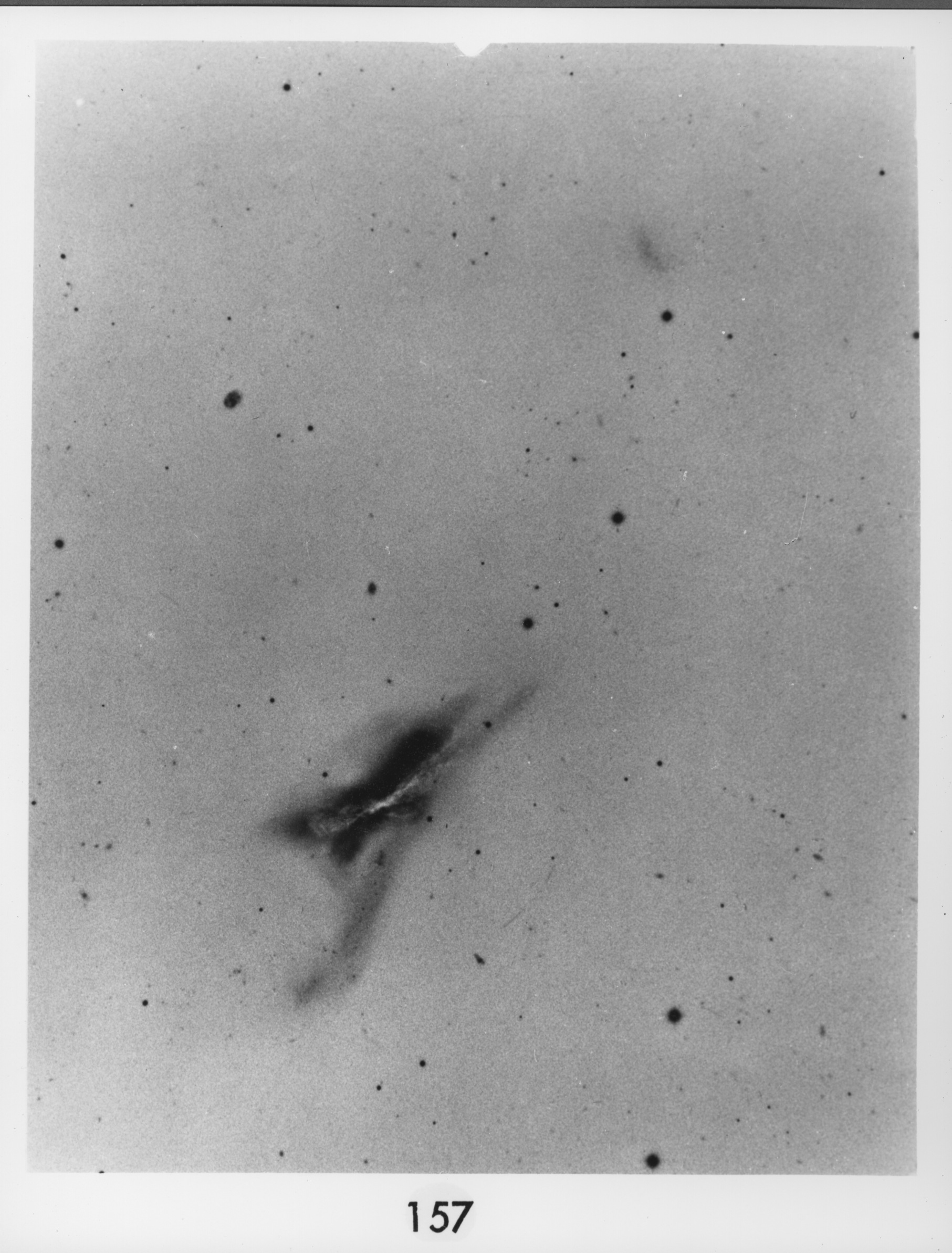
NGC 520 (= PGC 5193 = Arp 157)
Discovered (Dec 13, 1784) by William Herschel
A magnitude 11.4 spiral galaxy (type Sa? pec) in Pisces (RA 01 24 34.7, Dec +03 47 39)
Apparent size 3.4 by 1.7 arcmin? A pair of colliding galaxies. Used by the Arp Atlas as an example of a disturbed galaxy with interior absorption.
"Excerpt courtesy of Courtney Seligman"
cseligman.com/text/atlas/ngc5.htm#520
Circled is Quasar (QSO B0121+0327) at a magnitude of approximately +18.5. Radial velocity V (km/s) 84494 and redshift of 0.336. I used the Aladin Sky Atlas tool to incorporate my FIT image of Arp galaxy 157 and colour enhanced and overlay objects of interest, this is where I came across a QSO.
Image... Cherryvalley Observatory (I83). Telescope: 0.2-m SCT & SBIG STL-1301E CCD Camera @f7.6. Image Scale 2.17 arcsec/pixel, Field of View 46 x 37 arcmins.
Flat field and dark subtract calibration frames. Combined Stack of ten images of 210 seconds each unfiltered and unbinned. CCD operating temperature: -38 degrees. Image acquisition and processing: CCD Soft v5, TheSky6 Professional and Mira Pro v7. Date: 23rd November 2014.
Dr. Halton Arp originally compiled the Atlas of peculiar galaxies with photographs he made mainly using the Palomar 200-inch telescope and the 48-inch Schmidt telescope between the years 1961 to 1966. Original image can be found here: ned.ipac.caltech.edu/level5/Arp/Figures/big_arp157.jpeg
TUS 04/10/15
Lockheed Martin F-16IQ C Block 52 " Fighting Falcon/Viper" (RA-01)(USAF 12-0004)(IqAF 1607)
The F-16 had unspecified problems in landing and had to pop his chute to straighten out the roll out.
Huntara has been deceived into fighting She-Ra! Who will win?
Featured on Life In Plastic: nerditis.com/2015/03/25/life-in-plastic-toy-review-huntar...
RA-01-39 is a Willys Jeep ambulance, first registered on 30 june 1944, in the Netherlands on 19 december 1956. © Bert Visser
Here's some of the cool toys from the Hasboro booth. I had a She-Ra doll when I was little, but it wasn't nearly that cool!
M33 at Calstar 2012
During the nights of September 13-14-15, I grabbed some frames of M33 while at Calstar. It was nicely placed and was a good subject while I was waiting for the California Nebula to rise.
19 total lights of 10 minutes at 400 ISO. Full-spectrum Pentax K10D with cooler. Sub temperatures ranged from 21-24C. Shot through the Stellarvue SV4.
Stacked with DSS 3.3.3 beta 47, pp with PI with DBE, masked stretch, histogram stretch and NR. The stack resulted in a pretty big mosaic, so the processing was done on a cropped frame. Annotation was done in PI. Final export brought into LR for upload.
Here's the platesolve output:
Referentiation Matrix (Gnomonic projection = Matrix * Coords[x,y]):
-0.000108056632 +0.000520031743 -0.363470976271
-0.000519747006 -0.000108001288 +0.792025309372
+0.000000000000 +0.000000000000 +1.000000000000
Resolution ........ 1.912 arcsec/pix
Rotation .......... -78.276 deg
Focal ............. 582.67 mm
Pixel size ........ 5.40 um
Field of view ..... 1d 24' 12.3" x 1d 2' 1.8"
Image center ...... RA: 01 33 54.407 Dec: +30 40 55.68
Image bounds:
top-left ....... RA: 01 32 12.142 Dec: +31 28 24.10
top-right ...... RA: 01 30 54.374 Dec: +30 05 53.94
bottom-left .... RA: 01 36 56.621 Dec: +31 15 41.72
bottom-right ... RA: 01 35 35.008 Dec: +29 53 22.33
Note how the stars on the annotation are slightly off in their placement. I'll have to see what's up with that offset.
Masters of the Universe Classics
6" Scale
Released 6/15/10
2010 Mattel
CONDITION:
Figure: C9
Acc's: C9 & Complete
Package: C9
INCLUDED:
1 - She-Ra Figure
1 - Cape
1 - Face Mask
1 - Axe / Comb
1 - Sword
1 - Shield
1 - Extra Head
Comes in a white mailer box, with "She-Ra" & MOTU Classics on the front.
Masters of the Universe Classics
6" Scale
Released 11/15/11
2011 Mattel
CONDITION:
Figure: C9
Acc's: C9 & Complete
INCLUDED:
1 - Bubble Power She-Ra Figure
1 - Removable Armor
1 - Axe / Comb
1 - Sword
1 - Head Dress
1 - Bubble Weapon
1 - Shield
Comes in a white mailer box, with "Bubble Power She-Ra" & MOTU Classics on the front, and Create-A-Character contest info on the back.
2011 Non Sub item.
M33 at Calstar 2012
During the nights of September 13-14-15, I grabbed some frames of M33 while at Calstar. It was nicely placed and was a good subject while I was waiting for the California Nebula to rise.
19 total lights of 10 minutes at 400 ISO. Full-spectrum Pentax K10D with cooler. Sub temperatures ranged from 21-24C. Shot through the Stellarvue SV4.
Stacked with DSS 3.3.3 beta 47, pp with PI with DBE, masked stretch, histogram stretch and NR. The stack resulted in a pretty big mosaic, so the processing was done on a cropped frame. Annotation was done in PI. Final export brought into LR for upload.
Here's the platesolve output:
Referentiation Matrix (Gnomonic projection = Matrix * Coords[x,y]):
-0.000108056632 +0.000520031743 -0.363470976271
-0.000519747006 -0.000108001288 +0.792025309372
+0.000000000000 +0.000000000000 +1.000000000000
Resolution ........ 1.912 arcsec/pix
Rotation .......... -78.276 deg
Focal ............. 582.67 mm
Pixel size ........ 5.40 um
Field of view ..... 1d 24' 12.3" x 1d 2' 1.8"
Image center ...... RA: 01 33 54.407 Dec: +30 40 55.68
Image bounds:
top-left ....... RA: 01 32 12.142 Dec: +31 28 24.10
top-right ...... RA: 01 30 54.374 Dec: +30 05 53.94
bottom-left .... RA: 01 36 56.621 Dec: +31 15 41.72
bottom-right ... RA: 01 35 35.008 Dec: +29 53 22.33
Note how the stars on the annotation are slightly off in their placement. I'll have to see what's up with that offset.
Statue of Daniel O`Connell in the garden outside Melbourne's St. Patrick's Cathedral was unveiled 30 May, 1891.
The sculpture commemorates Irish patriot, Daniel O`Connell (1775 - 1847) also known as The Liberator.
O'Connell was the first Irish nationalist leader elected to the House of Commons, creating social reforms that helped the emancipation and recognition of Catholicism by the British Government.
The statue is the work of Thomas Brock A.R.A.
Sir Thomas Brock KCB RA (01 March 1847 – 22 August 1922) was an English sculptor and medallist, notable for the creation of several large public sculptures and monuments in Britain and abroad in the late nineteenth and early twentieth centuries.
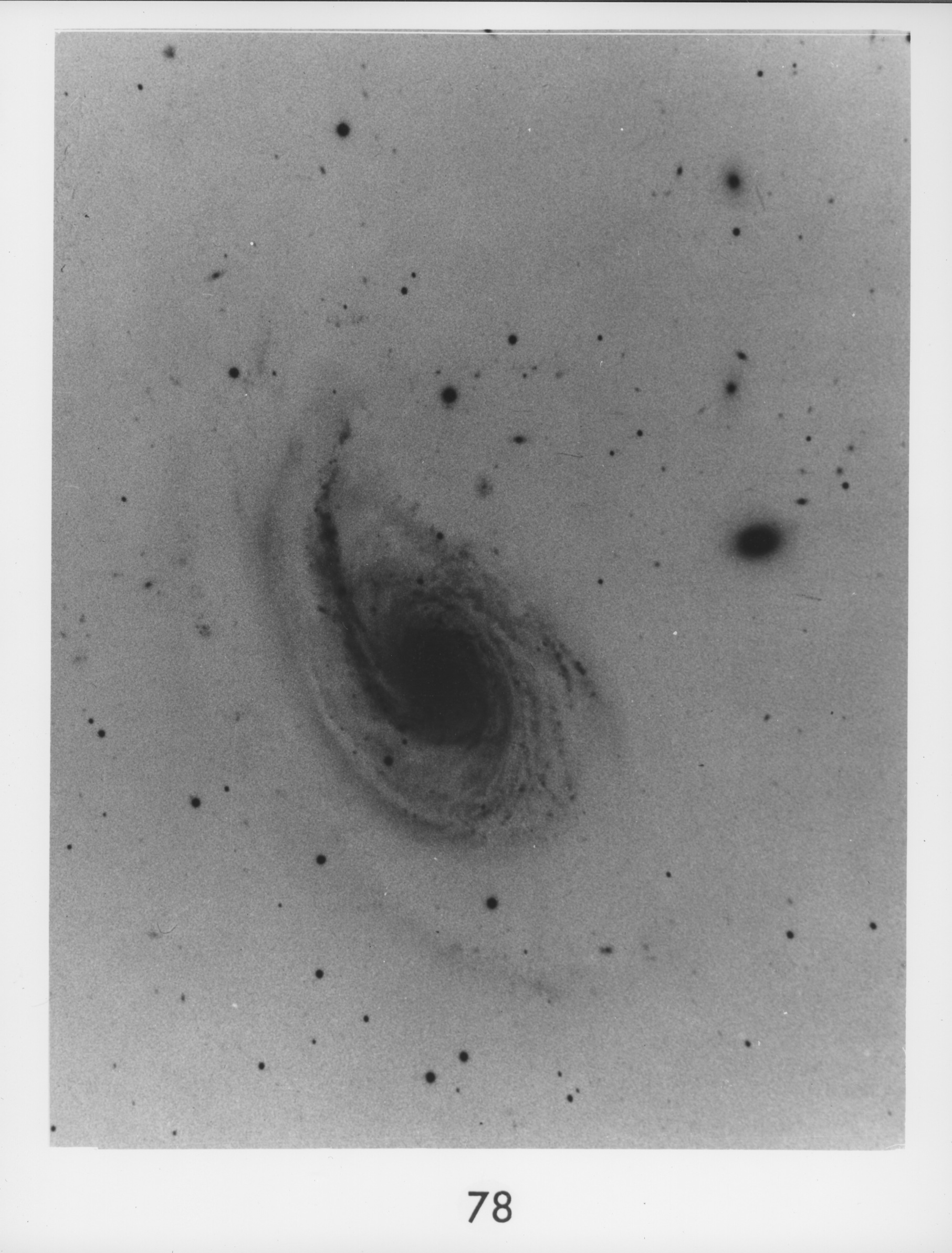
NGC 772 (PGC 7525, and with NGC 770 = Arp 78)
Discovered (Nov 29, 1785) by William Herschel
A 10th-magnitude spiral galaxy (type SA(s)b) in Aries (RA 01 59 19.5, Dec +19 00 27)
Based on a recessional velocity of 2472 km/sec, NGC 772 is about 115 million light years away, well within widely varying redshift-independent distance estimates of 60 to 170 million light years. In any event, it must be at about the same distance as its elliptical companion, NGC 770 (that is, about 115 million light years away). Given that and its apparent size of 7.2 by 4.3 arcmin, it is about 240 thousand light years.
"Excerpt courtesy of Courtney Seligman"
cseligman.com/text/atlas/ngc7a.htm#772
Image... Cherryvalley Observatory (I83). Telescope: 0.2-m SCT & SBIG STL-1301E CCD Camera @f7.6. Image Scale 2.17 arcsec/pixel, Field of View 46 x 37 arcmins. Combined Stack of eight images of 210 seconds each unfiltered and unbinned. CCD operating temperature: -37 degrees. Image acquisition and processing: CCD Soft v5, TheSky6 Professional and Mira Pro v7. November 23rd 2014.
Dr. Halton Arp originally compiled the Atlas of peculiar galaxies with photographs he made mainly using the Palomar 200-inch telescope and the 48-inch Schmidt telescope between the years 1961 to 1966. Original image can be found here: ned.ipac.caltech.edu/level5/Arp/Figures/big_arp78.jpeg
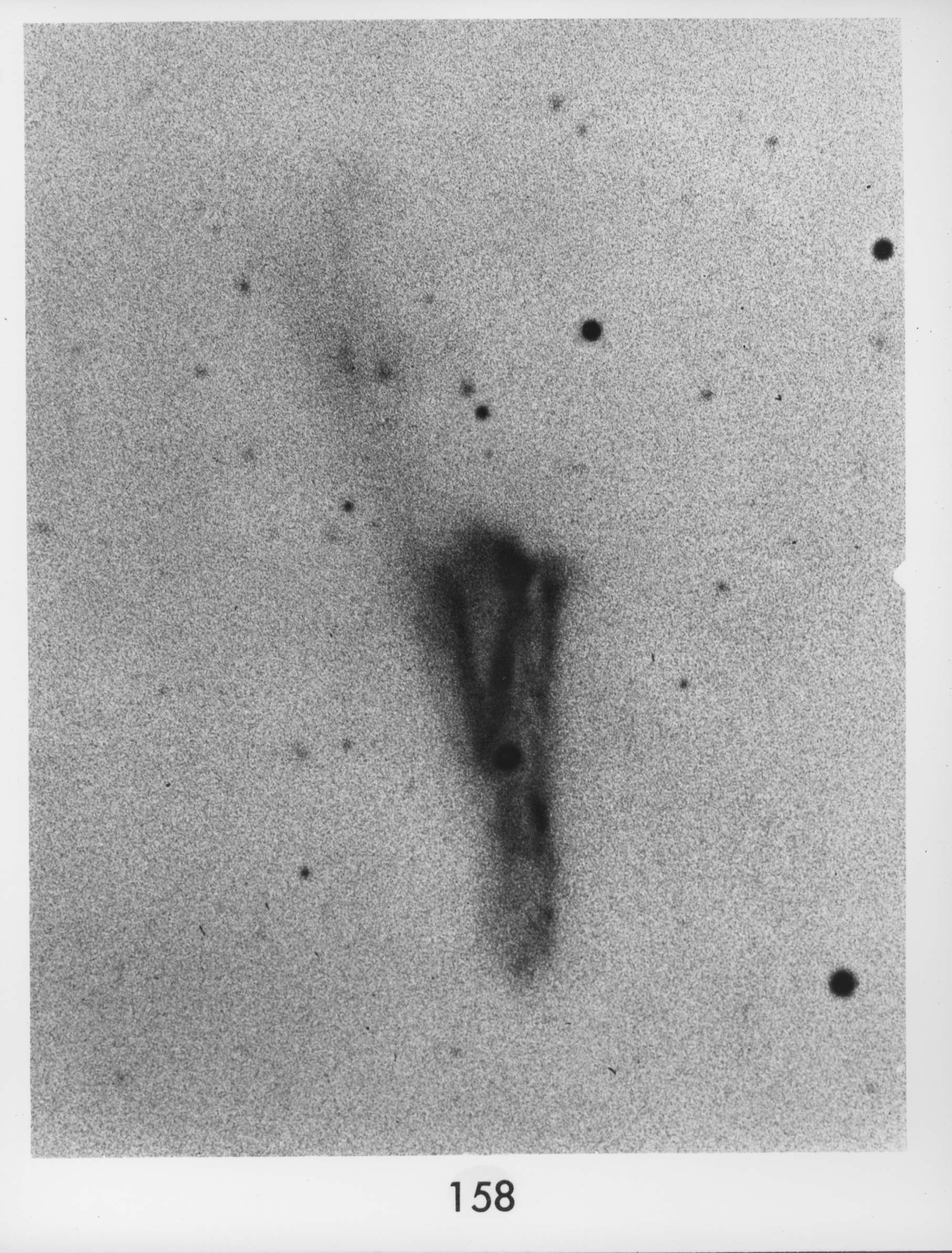
NGC 523 (NGC 537 = PGC 5268 = Arp 158)
Discovered (Sep 13, 1784) by William Herschel (and later listed as NGC 537)
Discovered (Aug 23, 1862) by Heinrich d'Arrest (and later listed as NGC 523)
A magnitude 12.7 spiral galaxy (type Sbc) in Andromeda (RA 01 25 20.7, Dec +34 01 31)
Apparent size 2.5 by 0.7 arcmin. Used by the Arp Atlas as an example of a disturbed galaxy with interior absorption.
"Excerpt courtesy of Courtney Seligman"
cseligman.com/text/atlas/ngc5.htm#523
Image... Cherryvalley Observatory (I83). Telescope: 0.2-m SCT & SBIG STL-1301E CCD Camera @f7.6. Image Scale 2.17 arcsec/pixel, Field of View 46 x 37 arcmins. Combined Stack of seven images of 300 seconds each unfiltered and unbinned. CCD operating temperature: -30 degrees. Image acquisition and processing: CCD Soft v5, TheSky6 Professional and Mira Pro v7. September 21st 2014.
Dr. Halton Arp originally compiled the Atlas of peculiar galaxies with photographs he made mainly using the Palomar 200-inch telescope and the 48-inch Schmidt telescope between the years 1961 to 1966. Original image can be found here: ned.ipac.caltech.edu/level5/Arp/Figures/big_arp158.jpeg
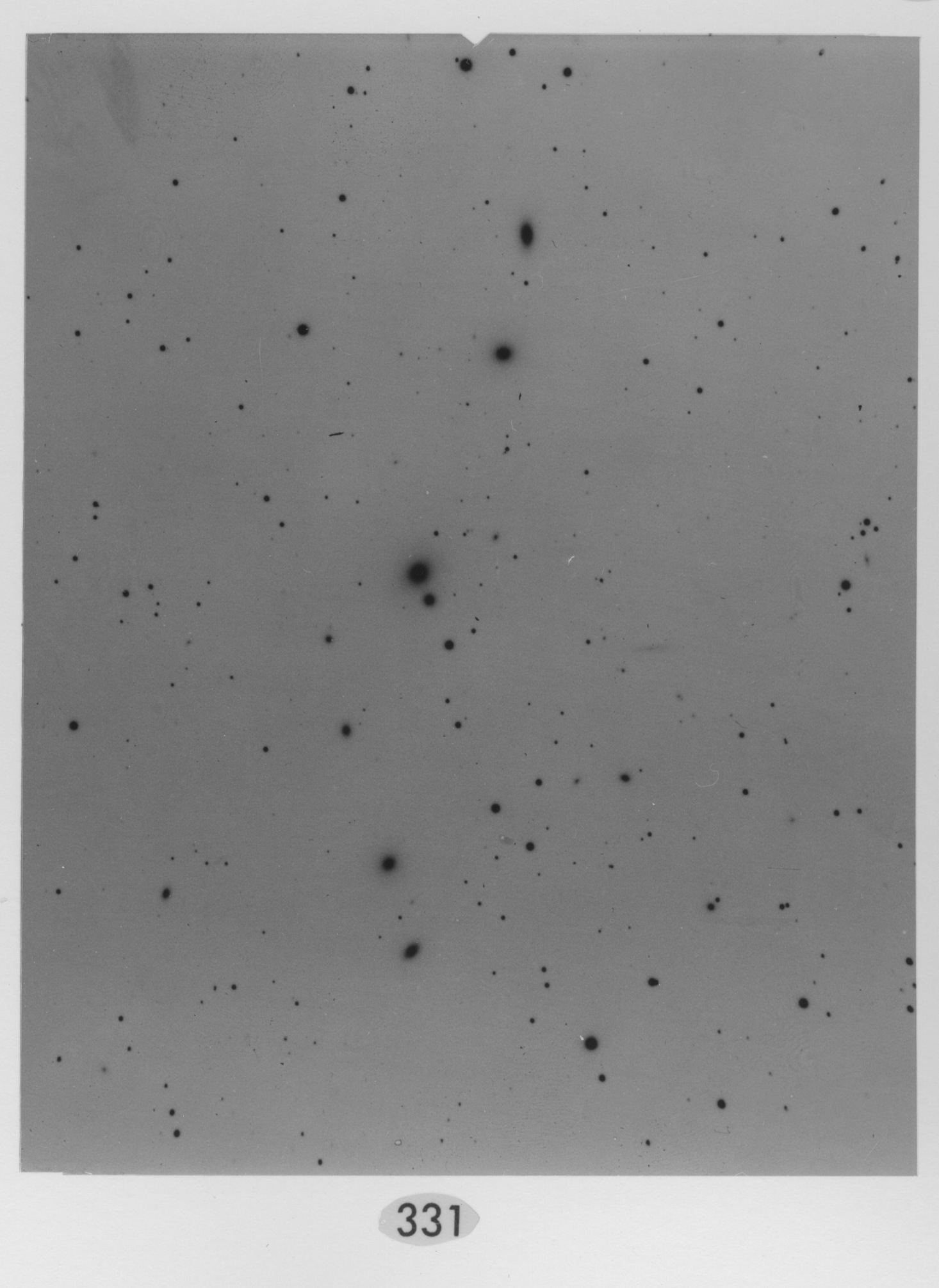
NGC 375 (= PGC 3953,
and with NGC 379, 380, 382, 383, 384, 385, 386, 387 and 388 = Arp 331)
Discovered (Dec 1, 1874) by Lawrence Parsons, 4th Earl of Rosse
A magnitude 14.5 elliptical galaxy (type E2) in Pisces (RA 01 07 05.8, Dec +32 20 55) Apparent size 0.5 by 0.5 arcmin? Used by the Arp Atlas as part of an example of a chain of galaxies. Also shown are NGC 373, NGC 382, NGC 383, NGC 384, NGC 385, NGC 386 and NGC 387.
"Excerpt courtesy of Courtney Seligman"
cseligman.com/text/atlas/ngc3a.htm#375
Image... Cherryvalley Observatory (I83). Telescope: 0.2-m SCT & SBIG STL-1301E CCD Camera @f7.6. Image Scale 2.17 arcsec/pixel, Field of View 46 x 37 arcmins. Combined Stack of seven images of 212 seconds each unfiltered and unbinned. CCD operating temperature: -42 degrees. Image acquisition and processing: CCD Soft v5, TheSky6 Professional and Mira Pro v7. September 21st 2014.
Dr. Halton Arp originally compiled the Atlas of peculiar galaxies with photographs he made mainly using the Palomar 200-inch telescope and the 48-inch Schmidt telescope between the years 1961 to 1966. Original image can be found here: ned.ipac.caltech.edu/level5/Arp/Figures/big_arp331.jpeg
TUS 03/10/15
Lockheed Martin F-16IQ C Block 52 "Fighting Falcon/Viper" (RA-01)(USAF 12-0004)(IqAF 1607)
NGC578 is a SBc galaxy type in the Cetus (the whale) constellation.
RA: 01:30:28.5
DEC: -22:40:02
Magnitude: 10.9
Radial velocity: 1626.2 km/s
Distance: 21.6 Mpc (70.8 light-years)
WFI data (2010-11-07):
red channel: 8x510s Rc/162
green channel: Pseudogreen (B+R)
blue channel: 8x510s B/123
Software used: THELI, ESO-Midas and Gimp
October 14, 2011 - Garden Grove, CA, USA - Bolsa Grande (left) and Rancho Alamitos prepares for another play at the goal line at Bolsa Grande field. Rancho Alamitos defeated Bolsa Grande 33 to 6.
Batea cuadrada
Batea en madera de 20 x 20 cm, revestimiento en madera de chonta con acabado en resina pulida y chapilllas de plata en bordes.
Las chapillas de plata son opcionales, lo cual agrega valor a la pieza.
Para usar como decoración de centro de mesa.
Basket rattan, homware
We are sourcing and buying agent base on Vietnam. Our main products focus on indoor, outdoor furniture and accessories in wood, rattan, poly rattan, bamboo, stainless steel, ..etc
please contact us for more information at
lethingocthem@gmail.com
info@modernsourcing.com
website: www.modernsourcing.com