View allAll Photos Tagged Influential,
Dorothea Lange
Born on May 26th, 1895, in Hoboken, New Jersey, Dorothea Lange was a prominent and highly influential photojournalist and documentary photographer who worked for the Farm Security Administration (FSA) during the Great Depression. Her main task was to show the consequences of the Great Depression.
Early Life
Born Dorothea Margaretta Nutzhorn, the famous American photographer was the daughter of a second-generation German immigrant. At age seven, she contracted polio, a disease which left a permanent mark on her life – an altered gait and a weakened right leg.
Her father abandoned Dorothea and her mother when she was only twelve, which was a traumatic event in her life which determined her to change her last name into Lange, her mother’s maiden name. Dorothea studied photography under American photographer Clarence Hudson White at Columbia University in New York and she was apprenticed to the renowned Arnold Genthe’s photography studio in NY.
When she was 23, she moved to San Francisco where she opened a commercial portrait studio. In 1920, she married painter Maynard Dixon and the couple had two sons, Daniel Rhoades (born in 1925) and John Eaglesfeather Dixon (born in 1930). In the early 1930s, her photographs depicting homeless and unemployed men and women wandering the streets in search of work caught the eye of the FSA, for which she worked between 1935 and 1939. In 1935, she married the Professor of Economics at Berkeley, Paul Schuster Taylor.
Death and Legacy
Dorothea Lange passed away at the age of 70, on October 11, 1965, in San Francisco, California. The cause of death was esophageal cancer. She was survived by her two sons with her first husband and by her second husband Paul Taylor.
In 2008, Lange was inducted into the California Hall of Fame for her outstanding contribution to the development of documentary photography and her son accepted the honor on his mother’s behalf.
I encourage you to read more of her Bio she was a very accomplished photographer more info at: totallyhistory.com/dorothea-lange/
Sorci Castle (Anghiari - Arezzo) Toscana
Landscape
Il castello di Sorci è un piccolo fortilizio sito in località San Lorenzo, presso Anghiari, in provincia di Arezzo. Tra il 1234 e il 1650 fu residenza estiva dell'influente casata ghibellina aretina Tarlati di Pietramala (1234-1388), del famoso condottiero Baldaccio Bruni con la moglie Annalena Malatesta (1388-1441) e della nobile famiglia Pichi di Sansepolcro (1443-1650)
Sorci castle is a small fort site in San Lorenzo, at Anghiari, in the province of Arezzo. Between 1234 and 1650 was the summer residence of the influential lineage Ghibelline Arezzo Tarlati Pietramala (1234-1388), the famous leader Baldaccio Bruni with his wife Annalena Malatesta (1388-1441) and of the noble family of Pichi Sansepolcro (1443-1650 )
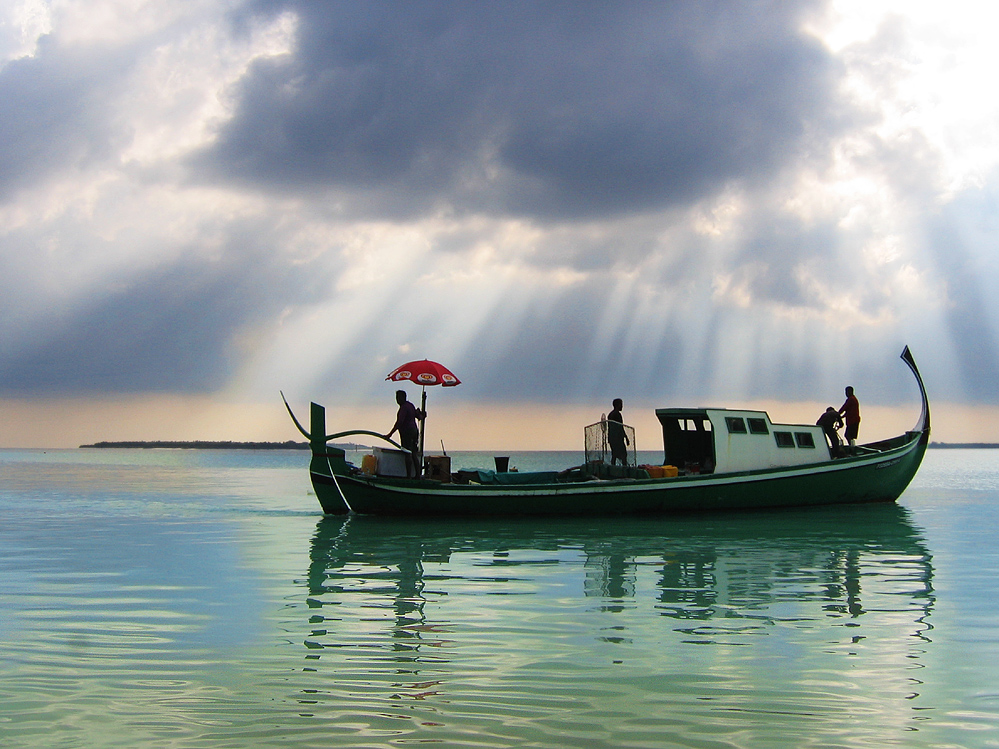
~Edward Weston (The Most Influential American Photographer of the Twentieth Century)
I think what Edward was saying is that rules can only get you so far. In any form of visual art, if it looks right it IS right, so once you get the hang of it and you've experienced enough, you don't actually have to think about the "rules". As the saying goes, true artists are those who dare to break the rules! :)
Have a happy and colorful day everyone!!
An Homage to one of my very favourite artists, Surrealist, Max Ernst ( 1891-1976 ). Ernst's artistic achievements started in original Dada, moved into Surrealism, which in both fields he was a key and influential leader. Later he ventured into abstraction, collage, and sculpture with incredible results. Whatever this consummate artist turned his vision on resulted in unforgettable and highly accomplished imagery.
I wanted this homage to not only collage his work but to also have the look and feel of an "Ernst". Max Ernst himself was a highly accomplished collage artist and he also often worked in multiple planes, long before digital layering. Even my looping lines reference paintings of Ernst's such as, "Young Man Intrigued by the Flight of a Non-Euclidian Fly" ( 1942/47 ) and "The Bewildered Planet" ( 1942 ).
Ernst's work can be hauntingly beautiful, quietly disturbing, wonderfully innocent ( "33 Little Girls Chasing Butterflies", 1958 ) or deeply cerebral. His abstraction has never been recognized for it's high degree of accomplishment, placing him, in my opinion, as equal to any of the great European Abstractionists, the American Abstract Expressionists and the Post "Ab-Ex" painters of the 60's and 70's.
In the "Award Tree" group's challenge "Famous Painters".
Provenance, going left to right:
- "The Anti-Pope", 1941 - Peggy Guggenheim Collection, Venice.
- "The Temptation of St. Anthony" 1945 - Wilhelm Lehmbruck Museum, Duisburg.
- "L'Oeil du Silence" 1943/44 - Washington University Art Gallery, Saint Louis, MO.
- "Birth of a Galaxy" 1969 - Galerie Beyeler, Basle.
- "Un Capricho de Venus" - Date & Provenance unknown.
- Photograph of Max Ernst, Frederick Sommer, 1946
Ernst strongly believed that making art was an entirely new venture with each new piece. He felt that an artist that knows what they want exactly and stays strictly to that idea, is not an artist. An artist must be prepared to accept and incorporate what comes out of the process of making each piece, the surprises and the accidents. In that Max Ernst was true to the Surrealist spirit of the time that sought to give complete allowance for the expression of the sub-conscious. That made him a both an accomplished painter but also a great improvisor. His aesthetic can be summed up in his statement:
"Blind Swimmer, I have made myself see. I have seen. And I was surprised and enamoured of what I saw" - Max Ernst.
___________________________________________________
© The finished, whole collage - Richard S Warner ( Visionheart ) - 2017. All Rights Reserved. This image is not for use in any form without explicit, express, written permission.
This image is made up of individual paintings by Max Ernst, the provenance of which is listed above. The current artist makes NO claims to any of that work whatsoever. This "collage" is in honour of Max Ernst. No monies will come from this project.
___________________________________________________
* - See my Galleries featuring some of the best of Flickr's purely Abstract Art at:
A warm dry bed is a difficult thing to leave when the morning is cold and wet with dew. Still groggy with sleep, it takes effort to struggle into clothes, fasten boot laces, and grab your gear. Therefore, it stands to reason that whoever decided the best light for a photograph is at dawn must have been a very influential insomniac. Have a good weekend, everyone!
I loved studying Kertesz's photographs. He displayed a wonderful eye for light and shadows. When I did a Google search of his images there were actually a few that looked like some in my archives. But I went ahead and used this one I took today of some tree shadows on a snowy hillside.
.
.
©Christine A. Owens 1.18.18
.
I really appreciate your comments and faves. I'm not a hoarder of contacts, but enjoy real-life, honest people. You are much more likely to get my comments and faves in return if you fit the latter description. Just sayin. :oD
.
If you like b/w photography and/or poetry check out my page at:
expressionsbychristine.blogspot.com/</a
Grand Riviere is Doig's first painting of Trinidad, where he was raised and has now returned after living in Canada and the UK. References to Canadian landscape painting can be found within the lush tropical landscape here and remain influential for the artist. Painting from memory, photographs and old postcards, Doig transformes his source imagery to evoke a mood or experience - a sense of "being there". ( This was one of my favourite contemporary paintings in the gallery's collection. I enjoyed seeing it being displayed again. )
The “New Kirk” at Abdie was designed and constructed by influential Scottish architect William Burn in a simple round arch style with a handsome rectangular Italianate belfry above, its interior would be recast and made more comfortable, almost a century later, in 1923, by noted Glasgow architect John Jeffrey Waddell. Further reordering occurred in the 1980s at the same time as a new church hall was added.
The only item known to have transferred from the “Old Kirk” was its ancient bell, which had been recast in 1671. The church has three historic stained glass windows, installed in 1900, 1912 and 1922 and a modern memorial window installed in 2007. The war memorial windows from Dunbog church have also been installed in the church vestibule.
Abdie and Dunbog churches were united in 1965 and Dunbog closed in 1983 when the two churches were linked with Newburgh. Lindores Parish Church was formed in 2018 as a formal union between the two parish churches. The combined congregation operates from the two historic church buildings, with attached halls, serving the communities of Newburgh and the surrounding rural area.
Description in English and Dutch:
English
Tom Otterness is a very influential American sculptor known for his funny fairytale sculptures. His sculptures can be seen in museums as well as in the open air in several cities. You can find works of him in Valencia, Dallas, New York, Jerusalem and a number of other cities around the world. That is also the case in The Hague. At the boulevard of Scheveningen there is a section with a number of very large sculptures and a number of small ones. In general, his masterpieces consist of round shapes in combination with tubes. I had already uploaded the angry mother sculpture here last year. The bronze sculpture of this photo is very tall and it involves Gulliver being tied up by the people of Lilliput. In the first part of Jonathan Swift's famous book ‘Gulliver’s travels’, the highly imaginative protagonist Gulliver leaves for his first journey and ends up on the island of Lilliput. Very small people live there. He was tied up and captured by the smart and brave Lilliputians. The sculpture was made very large, because it was a giant to the people of Lilliput. By the way, it is very well thought of by writer Swift that in the second story of Gulliver's travels it is just the opposite in terms of length. In that story Gulliver is much smaller than the inhabitants in that area and the roles are reversed.
Nederlands
Tom Otterness is een zeer invloedrijke beeldhouwer die bekend staat om zijn grappige sprookjesachtige sculpturen. Zijn sculpturen zijn in meerdere steden zowel in musea als in de openlucht te zien . Zo zijn er ondermeer kunstwerken te vinden in Valencia, Dallas, New York, Jeruzalem en nog een aantal steden in de hele wereld. Bij de boulevard van Scheveningen in Den Haag is er een gedeelte ingericht met een aantal hele grote sculpturen en aantal kleine. Over het algemeen bestaan zijn meesterwerken uit ronde vormen in combinatie met buizen. Ik had vorig jaar al een keer het ‘Mama is boos’ kunstwerk geupload hier. Het bronzen sculptuur van deze foto is erg lang en het gaat om Gulliver die is vastgebonden door de mensen van Lilliput. In het eerste deel van het beroemde boek van Jonathan Swift ‘Gulliver’s Travels’, gaat de zeer tot de verbeelding sprekende hoofdpersoon Gulliver op ontdekkingsreis en beland hij na een aantal tegenslagen op het eiland Lilliput. Daar wonen echter hele kleine mensen. Door de slimme en dappere Lilliputters wordt hij vastegebonden en gevangen genomen. Het sculptuur is erg groot gemaakt, omdat hij voor de mensen in Lilliput een reus was. Het is trouwens erg goed bedacht van schrijver Swift dat in het tweede verhaal van ‘Gulliver's travels’ het juist omgekeerd is qua lengte. In dat verhaal is hij veel kleiner dan de inwoners in het nieuwe gebied en zijn de rollen omgedraaid.
L'histoire de Thorn commence à la fin du Xe siècle. Le comte Ansfried de Teisterbant, avec son épouse Hilsondis, fonda un couvent suivant la règle de saint Benoît. Ce couvent devint une fondation pour les dames de la haute noblesse, influentes dans le monde temporel : une collégiale. Seules les femmes de la plus haute naissance étaient admises dans la collégiale. Elles devaient prouver, par leur ascendance, qu'elles répondaient à ces exigences. À leur entrée, elles ne prononçaient pas de vœux, mais étaient tenues de participer à la liturgie des Heures et à la célébration de la messe. Elles étaient libres de quitter la communauté, de se marier ou d'entrer dans les ordres. Les collégiennes possédaient et géraient des biens privés, et disposaient de leurs propres maisons et domestiques. De plus, elles recevaient un revenu personnel : la prébende.
Le complexe abbatial originel se limitait à une petite église entourée de quelques bâtiments en bois. Plus tard, l'édifice roman fut presque entièrement remplacé par une basilique gothique en forme de croix. Vers 1600, la collégiale comptait dix-sept autels. En 1645, quatre d'entre eux furent démolis. Un nouvel autel fut alors installé dans le chœur latéral nord, en l'honneur de Notre-Dame du Rosaire. Une église paroissiale, dédiée à l'archange Michel, fut construite pour les habitants, juste à côté de l'église abbatiale.
À la fin du XVIIIe siècle, l'intérieur de l'église abbatiale subit une transformation radicale. Les murs furent peints en blanc, un nouveau sol en marbre fut posé et les piliers reçurent de nouveaux chapiteaux en stuc ; l'église abbatiale acquit ainsi un intérieur baroque.
Après l'invasion française de 1797, le couvent fut officiellement dissous. Les bâtiments de l'abbaye, le palais de l'abbesse et les autres biens du couvent furent confisqués, puis vendus ou démolis. Seule l'église abbatiale subsista et devint église paroissiale. Cette dernière, en mauvais état, fut à son tour démolie. En 1860, l'architecte roermondien Pierre Cuypers restaura l'église abbatiale, gravement endommagée. L'intérieur baroque fut préservé lors de cette restauration. Cuypers remplaça la flèche de l'église abbatiale par un imposant clocher néo-gothique.
The history of Thorn begins at the end of the 10th century. Count Ansfried of Teisterbant, with his wife Hilsondis, founded a convent following the Rule of Saint Benedict. This convent became a foundation for influential noblewomen of high birth: a collegiate church. Only women of the highest lineage were admitted to the collegiate church. They had to prove, through their ancestry, that they met these requirements. Upon entering, they did not take vows, but were required to participate in the Liturgy of the Hours and the celebration of Mass. They were free to leave the community, marry, or enter religious orders. The collegiate nuns owned and managed private property and had their own houses and servants. In addition, they received a personal income: a prebend.
The original abbey complex consisted of a small church surrounded by a few wooden buildings. Later, the Romanesque building was almost entirely replaced by a Gothic basilica in the shape of a cross. Around 1600, the collegiate church had seventeen altars. In 1645, four of them were demolished. A new altar was then installed in the north side choir, in honor of Our Lady of the Rosary. A parish church, dedicated to the Archangel Michael, was built for the inhabitants, right next to the abbey church.
At the end of the 18th century, the interior of the abbey church underwent a radical transformation. The walls were painted white, a new marble floor was laid, and the pillars received new stucco capitals; the abbey church thus acquired a Baroque interior.
After the French invasion of 1797, the convent was officially dissolved. The abbey buildings, the abbess's palace, and other convent property were confiscated and then sold or demolished. Only the abbey church remained and became the parish church. This church, in poor condition, was in turn demolished. In 1860, the Roermondian architect Pierre Cuypers restored the severely damaged abbey church. The Baroque interior was preserved during this restoration. Cuypers replaced the spire of the abbey church with an imposing Neo-Gothic bell tower.
Sunset, San Clemente, California, January 2021.
The Endless Summer is an influential 1966 American surf documentary film by Bruce Brown. The film follows California surfers Mike Hynson & Robert August on a surfing trip around the world. They travel to the coasts of Australia, New Zealand, Tahiti, Hawaii, Senegal, Ghana, Nigeria and South Africa in a quest for surf spots while introducing locals to surfing along the way. The film made the then little known break off Cape St. Francis in South Africa world famous by characterizing it as having the “perfect wave.”
The narrative differs from the typical documentary style of the 1950s & early 1960s, with its casual, fun-loving and personal style. The film's surf rock soundtrack by The Sandals (San Clemente, California) features a theme song that became a classic, as did the film’s movie poster. In 2002, The Endless Summer was selected for preservation in the US National Film Registry by the Library of Congress. en.wikipedia.org/wiki/The_Endless_Summer
www.youtube.com/watch?v=b6S5C12375c
www.youtube.com/watch?v=YUTXii45e7k
Sony a6400. Sony E 18-135mm f/3.5-5.6 Lens. 50mm, F5, 1/1000 sec, ISO 100. Thanks for viewing. Like KHJ “Boss Radio” 930 AM, this movie really evokes 1960s So Cal childhood memories.
The outmoded headquarters of what was then Argentina's second-largest newspaper, La Prensa, led its influential proprietor in 1894, José Clemente Paz, to purchase a 1300 m² (14,000 ft²) lot on the newly opened Avenida de Mayo, and he commissioned local architects Carlos Agote and Alberto Gainza to design a new headquarters at the site. Agote and Gainza, both graduates of the École Centrale des Arts et Manufactures, drew from their training in Paris to create a Beaux-Arts design, beginning with a façade inspired by French architect Charles Garnier.
La Casa de la Cultura o Edificio La Prensa, es un edificio ubicado en la Avenida de Mayo 575, en la Ciudad de Buenos Aires, edificado en 1898 en estilo Escuela de Bellas Artes de París para el funcionamiento del diario La Prensa, propiedad de José Camilo Paz, que es desde 1985 Monumento Histórico Nacional de la Argentina y que actualmente pertenece al Gobierno de la Ciudad de Buenos Aires.
One of the most influential photos from space ever was Earthrise, taken from lunar orbit by William Anders on Apollo 8, the first human-piloted spacecraft to orbit the moon. The one we know was taken on Christmas Eve, 1968, with a Hasselblad 500 EL. What if they had an early prototype of the SX-70 with them?
Petapixel published an article about Earthrise yesterday. They didn't mention the Polaroid version. petapixel.com/2023/04/25/the-story-behind-earthrise-one-o...
The most pivotal, influential and important event of 1944 was of course, D-Day, a day that is remembered in history as a momentous occasion, the opening of the second front on in Europe. So for the first three figures, I have a British/Canadian soldier, an American soldier and a German defender. Many of the German defenders were actually from other countries such as Poland and Hungary who had chosen to leave their now occupied homes for more profitable opportunities. Waves and waves of Allied troops attacked 5 key beaches with the help of new, intuitive technology, leaving the Germans behind. And with no German generals willing to wake Adolf Hitler from is drug induced sleep, no Panzer divisions were moved up to halt the Allied advance.
On the other side of the world to this, the war in the East, in the pacific and in Burma and India was at it's height. The Allied armies were pushing back the Japanese forces and making headway in removing Japanese presence in Eastern Asia and on Pacific islands. The US air force and Australian air force were also gaining the upper hand against Japanese aerial attacks.
Thanks for taking a look as always, hope you like the figures. :)
According to Wikipedia, in 1892 the hugely influential U.S. senator Henry W. Corbett, Republican of Oregon, built a summer home The Pines in Seaview, Washington. However, if The Pines was the mansion's name, why is Westborough House painted on the mantle? This has the makings of a research project!
Delving deeper I discovered another source that said Corbett named his beach house Westborough House. Wherever did Wikipedia come up with The Pines?
It's exhausting just to scan Corbett's Wikipedia entry and see how many huge ventures he was involved in. I guess it pays to be a pioneer when the landscape is rife with opportunities. en.wikipedia.org/wiki/Henry_W._Corbett
Wikipedia provides additional details about the Corbett place in the entry about the hamlet of Seaview:
In 1892 US Senator and Portland businessman Henry Winslow Corbett built a vacation home in Seaview on three acres facing the ocean. This summer home, which he named Westborough House, included the main three-story house with a ballroom on the second floor as well as housing for the servants and a stable for horses and carriages. A cow accompanied the family for its summer sojourn on the peninsula so they would always have fresh milk.[5] In the late 1930s the property left the Corbett family and became the Grandview Lodge, welcoming tourists with rooms in the main house and cabins on the grounds. Grandview Lodge is now the Sou'wester Lodge, still an imposing sight on the Seaview beach approach. It has often functioned as a cultural center in Seaview, hosting lectures, literary events, topical discussions, dramatic performances, and chamber concerts. The Corbett pasture is now an RV park and campground.
en.wikipedia.org/wiki/Seaview,_Washington
According to the Sou'wester Lodge's website:
"In the 1950s the second-floor Great Ballroom was converted into 4 separate suites, each with a private kitchen and bathroom and their own old-world charm."
Not only does the lodge offer accommodations, visitors can chose from among an array of vintage trailers.
www.souwesterlodge.com/stay/lodge/
When I stopped in to check it out, the Lodge was gradually returning to normal operations, having shut down during the pandemic. The living room was not yet open to the public full time, though live music is offered there on Saturday nights.
“The Halahans is a Ukrainian noble family known from the second half of the 17th century. In the 19th century the Halahans were still among wealthy and influential landowners. However, in 1869 the family of Hryhorii and Kateryna Halahan was overtaken by the tragedy. During the trip to the family mansion in Chernihiv region, Pavlo Halahan, their 15-year-old son caught a cold. Over the course of several days the disease was progressing rapidly but, unfortunately, there was no experienced doctor nearby. At the end of April the young boy died. That event became a family tragedy. The Halahans decided to preserve the memory of their son alive.
After the early death of Pavlo Halahan the married couple decided to establish a private secondary educational institution for talented youth. As a tribute to their son the school was named after him – Pavlo Halahan Collegium. Red tape and the arrangement of all the details took about two years. Only in 1871 Hryhorii Halahan together with his wife handed over the building, located on Fundukleivska Street, worth 40 000 rubles to the Collegium. At the request of Hryhorii Halahan the architect Oleksandr Shile reconstructed the premises for the purposes of the educational institution. Moreover, Hryhorii Halahan bought a nearby mansion for 35 000 rubles so that the Collegium would have enough space. To guarantee that the establishment would function consistently the patrons donated to the collegium their ancestral estates in Poltava and Chernihiv regions. The overall price of the property constituted 275 000 rubles and the annual profit surpassed 12 000. It was enough to start the educational process.
The collegium was opened as a private boarding school for talented youth that was preparing to enter university. By its organization it was similar to British colleges. That is to say the students were boarders having the possibility to immerse deeply into the educational process. Among the staff there were dedicated tutors and mentors that helped students with their studies. Essentially the young people studied, lived and had their rest in the collegium. There were only 70 students in total, 30 of them studied free of charge and the rest paid for their education. During the educational process they used various innovative methods which favored quality preparation of the youth in the humanities. The collegium prepared the entire constellation of prominent scientists.
The collegium did not receive any state funding. The family of the founders took charge of all the college expenses. The first 25 years of the collegium maintenance cost over 1million rubles. The work of the establishment was possible only by courtesy of the patrons.
Ґалаґани - український старшинсько-дворянський рід відомий з другої половини 17 століття. У 19 столітті Ґалаґани залишалася серед числа заможних і впливових землевласників. Однак у 1869 році сім'ю Григорія і Катерини Ґалаґанів спіткало лихо. Під час подорожі до родинного маєтку на Чернігівщині Павло Ґалаґан, їхній 15-річний син, застудився. Упродовж кількох днів хвороба швидко прогресувала, поруч не було досвідченого лікаря. Наприкінці квітня 1869 року юнак помер. Ця подія стала сімейним горем. Родина вирішила зберегти пам'ять про сина.
Після раптової смерті Павла Ґалаґана подружжя вирішило заснувати приватний середній навчальний заклад для талановитої молоді. У пам'ять про сина його назвали - Колегія Павла Ґалаґана. Бюрократична тяганина, узгодження всіх деталей забрали близько двох років. Тільки у 1871 році Григорій Ґалаґан з дружиною передав Колегії будинок на вулиці Фундуклеївській вартістю 40 тисяч рублів. На замовлення Григорія Ґалаґана архітектор Олександр Шіле перебудував приміщення для потреб навчального закладу. Також Ґалаґан купив сусідню садибу за 35 тисяч рублів, щоб Колегія мала достатньо простору. Для того, щоб навчальний заклад міг стабільно функціонувати родина меценатів також пожертвувала на утримання Колегії свої родові маєтки у Полтавській та Чернігівській губерніях, загальна вартість майна становила 275 тисяч рублів, а щорічний прибуток перевищував 12 тисяч. Цього було досить для запуску навчального процесу.
Колегія відкрилася як закритий приватний навчальний заклад для талановитої молоді, яка готувалася до вступу в університет. За своєю організацією Колегія була подібна до британських коледжів. Тобто вихованці мали повний пансіон для глибокого занурення у навчальний процес. У штаті закладу були спеціальні тьютори-наставники, які допомагали юнакам у навчанні. По суті, молоді люди навчалися, жили і відпочивали в Колегії. Кількість вихованців була невеликою тільки 70 осіб, 30 з них навчалися безкоштовно, інші платили. У навчальному процесі застосовувалися різні інноваційні методи, які сприяли якісній підготовці молоді у сфері гуманітарних наук. Колегія підготувала цілу плеяду видатних науковців.
Колегія не отримувала державного фінансування. Головні витрати взяла на себе родина засновників навчального закладу. За перші 25 років роботи Колегії її утримання коштувало понад 1 мільйон рублів. Діяльність закладу була можлива тільки завдяки меценатам.”
www.youtube.com/watch?v=IgLcQmlN2Xg&list=RDIgLcQmlN2X...
Beautiful Dirty Rich *B.D.R.* Marina Bikini Set
Maitreya, Petite, LaraX, PetiteX, Legacy, Perky, Bombshell, Reborn, Waifu, Kupra, Erika
Multiple Versions, 20 colors/Styles each
► SLurl: maps.secondlife.com/secondlife/Beautiful%20Dirty%20Rich/1...
► Flickr Group: www.flickr.com/groups/beautifuldirtyrich/pool/
► Facebook Group: www.facebook.com/Beautiful-Dirty-Rich-106362909424441
► Instagram: www.instagram.com/bdr_beautifuldirtyrich/
► Facebook (Personal), add me or tag me if you want: www.facebook.com/cameron.vasiliov
► Flickr (Personal), tag me anytime!: www.flickr.com/photos/beautifuldirtyrichlg/
Magika Fiona
Mewsery smoochie1b
LaraX
Lel EvoX Avalon
MILA Holly, influential brown eyes
Befitting the influential art of Paul Klee, the collection is housed in this building of striking architecture by Renzo Piano, made mostly of glass, steel, and concrete. It is set into a hillside, and the round shapes that outline the building continue into the hillside where the exhibition spaces are located.
Rolleiflex / 75mm Tessar f3.5 / Ilford HP5+ / Adox FX39 1+9 / Film scan / Epson V700 / Silverfast / Adobe CS for dust spotting, tonality adjustment, and black frame.
2026-01-09_01-09 Klee
The Magic Mountain - Der Zauberberg - is a novel by Thomas Mann, first published in German in November 1924. It is widely considered to be one of the most influential works of twentieth-century German literature. In part, the work reflected Mann's experiences and impressions during a period when his wife, who was suffering from a lung complaint, resided at Dr. Friedrich Jessen's Waldsanatorium in Davos, Switzerland for several months.
David, modelling of the marble. Location: Accademia di Belle Arti di Firenze:
The history of the statue begins before Michelangelo's work on it from 1501 to 1504. Prior to Michelangelo's involvement, the Overseers of the Office of Works of Florence Cathedral, consisting mostly of members of the influential woolen cloth guild, the Arte della Lana, had plans to commission a series of twelve large Old Testament sculptures for the buttresses of the cathedral. In 1410 Donatello made the first of the statues, a figure of Joshua in terracotta. A figure of Hercules, also in terracotta, was commissioned from the Florentine sculptor Agostino di Duccio in 1463 and was made perhaps under Donatello's direction. Eager to continue their project, in 1464, the Operai contracted Agostino to create a sculpture of David. A block of marble was provided from a quarry in Carrara, a town in the Apuan Alps in northern Tuscany. Agostino only got as far as beginning to shape the legs, feet and the torso, roughing out some drapery and probably gouging a hole between the legs. His association with the project ceased, for reasons unknown, with the death of Donatello in 1466, and ten years later Antonio Rossellino was commissioned to take up where Agostino had left off.
Rossellino's contract was terminated soon thereafter, and the block of marble remained neglected for 25 years, all the while exposed to the elements in the yard of the cathedral workshop. This was of great concern to the Opera authorities, as such a large piece of marble not only was costly but represented a large amount of labour and difficulty in its transportation to Florence. In 1500, an inventory of the cathedral workshops described the piece as "a certain figure of marble called David, badly blocked out and supine." A year later, documents showed that the Operai were determined to find an artist who could take this large piece of marble and turn it into a finished work of art. They ordered the block of stone, which they called The Giant, "raised on its feet" so that a master experienced in this kind of work might examine it and express an opinion. Though Leonardo da Vinci and others were consulted, it was Michelangelo, only 26 years old, who convinced the Operai that he deserved the commission. On 16 August 1501, Michelangelo was given the official contract to undertake this challenging new task. He began carving the statue early in the morning on 13 September, a month after he was awarded the contract. He would work on the massive statue for more than two years.
On 25 January 1504, when the sculpture was nearing completion, Florentine authorities had to acknowledge there would be little possibility of raising the more than 6-ton statue to the roof of the cathedral. They convened a committee of 30 Florentine citizens that comprised many artists, including Leonardo da Vinci and Sandro Botticelli, to decide on an appropriate site for David. While nine different locations for the statue were discussed, the majority of members seem to have been closely split between two sites. One group, led by Giuliano da Sangallo and supported by da Vinci and Piero di Cosimo, among others, believed that, due to the imperfections in the marble, the sculpture should be placed under the roof of the Loggia dei Lanzi on Piazza della Signoria; the other group thought it should stand at the entrance to the Palazzo della Signoria, the city's town hall (now known as Palazzo Vecchio). Another opinion, supported by Botticelli, was that the sculpture should be situated on or near the cathedral. In June 1504, David was installed next to the entrance to the Palazzo Vecchio, replacing Donatello's bronze sculpture of Judith and Holofernes, which embodied a comparable theme of heroic resistance. It took four days to move the statue the half mile from Michelangelo's workshop into the Piazza della Signoria. Later that summer the sling and tree-stump support were gilded, and the figure was given a gilded loin-garland.
Later history
In 1873 the statue of David was removed from the piazza, to protect it from damage, and displayed in the Accademia Gallery, Florence, where it attracts many visitors. A replica was placed in the Piazza della Signoria in 1910.
In 1991, a man attacked the statue with a hammer he had concealed beneath his jacket; in the process of damaging the toes of the left foot, he was restrained.
On 12 November 2010, a fiberglass replica of the David was installed on the roofline of Florence Cathedral, for one day only. Photographs of the installation reveal the statue the way the Operai who commissioned the work originally expected it to be seen.
In 2010, a dispute over the ownership of David arose when, based on a legal review of historical documents, the Italian Culture Ministry claimed ownership of the statue in opposition to the city of Florence, where it has always been located. Florence disputes the state's claim!
For further information please visit en.wikipedia.org/wiki/David_(Michelangelo)
Florence (/ˈflɒrəns/ FLOR-əns; Italian: Firenze [fiˈrɛntse] ( listen)) is the capital city of the Italian region of Tuscany and of the Metropolitan City of Florence. It is the most populous city in Tuscany, with approximately 382,000 inhabitants, expanding to over 1,520,000 in the metropolitan area.
Florence was a centre of medieval European trade and finance and one of the wealthiest cities of the time, is considered the birthplace of the Renaissance, and has been called "the Athens of the Middle Ages". A turbulent political history includes periods of rule by the powerful Medici family, and numerous religious and republican revolutions. From 1865 to 1871 the city was the capital of the recently established Kingdom of Italy.
The Historic Centre of Florence attracts 13 millions of tourists each year, and Euromonitor International ranked the city as the world's 89th most visited in 2012, with 1.8 million visitors. It was declared a World Heritage Site by UNESCO in 1982. The city is noted for its culture, Renaissance art and architecture and monuments. The city also contains numerous museums and art galleries, such as the Uffizi Gallery and the Palazzo Pitti, and still exerts an influence in the fields of art, culture and politics. Due to Florence's artistic and architectural heritage, it has been ranked by Forbes as one of the most beautiful cities in the world.
Florence is an important city in Italian fashion, being ranked in the top 51 fashion capitals of the world; furthermore, it is a major national economic centre, as well as a tourist and industrial hub. In 2008, the city had the 17th highest average income in Italy.
For further information please visit en.wikipedia.org/wiki/Florence
Part of my 'Duffus Castle through the seasons' project.
The castle is situated on the Laich of Moray, a fertile plain that was once the swampy foreshore of Spynie Loch. This was originally a more defensive position than it appears today, long after the loch was drained.
The motte is a huge man-made mound, with steep sides and a wide ditch separating it from the bailey. The whole site is enclosed by a water-filled ditch, which is more a mark of its boundary than it is a serious defensive measure.
Duffus Castle was built by a Flemish man named Freskin, who came to Scotland in the first half of the 1100s. After an uprising by the ‘men of Moray’ against David I in 1130, the king sent Freskin north as a representative of royal authority.
He was given the estate of Duffus, and here he built an earthwork-and-timber castle. Freskin’s son William adopted the title of ‘de Moravia’ – of Moray. By 1200, the family had become the most influential noble family in northern Scotland, giving rise to the earls of Sutherland and Clan Murray.
In about 1270, the castle passed to Sir Reginald Cheyne the Elder, Lord of Inverugie. He probably built the square stone keep on top of the motte, and the curtain wall encircling the bailey. In 1305, the invading King Edward I of England gave him a grant of 200 oaks from the royal forests of Darnaway and Longmorn, which were probably used for the castle’s floors and roofs.
By 1350, the castle had passed to a younger son of the Earl of Sutherland through marriage. It may have been then that the keep was abandoned, possibly because it was beginning to slip down the mound, and a new residence established at the north of the bailey.
Viscount Dundee, leader of the first Jacobite Rising, dined in the castle as a guest of James, Lord Duffus in 1689, prior to his victory against King William II’s government forces at Killiecrankie. Soon after, Lord Duffus moved to the nearby Duffus House. The castle quickly fell into decay.
Bespoke, highly influential modern bodywork by one of Italy's best designers.
Documented by the famous historian and former historical advisor of Pininfarina Paolo Giusti.
Powered by its numbers-matching V-4 engine.
Accompanied by Paolo Giusti report, Pininfarina press images and Lancia Storico production certificate.
As noted by the research of Lancia brand historian and former Pininfarina historical advisor Paolo Giusti, chassis 439-11844 was completed by the factory on March 27, 1947. Two weeks later it was bought by SVAM – the Lancia dealer in Modena, Italy – for the sum of 556.480 lire. SVAM then immediately sent the bare chassis to Pinin Farina with the special assignment to provide it with a unique “2+2” convertible body.
Giusti notes that the design bears the direct influence of Pinin Farina stylist Fedele Bianco, who clearly took this opportunity to improve on his previous 2+2 convertible treatment, which claimed top honors at the concours d'elegance from Monte Carlo and Cannes in 1947. Aptly named the 'Speciale', this prototype was dressed in a one-off aluminum body with sloping sides, open wheels, a swept-back windshield and a low profile. (www.metropoleclassiccars.com/)
Entrepreneur Frans van Haren has a classic car collection that has won prizes at prestigious national and international competitions. Since 2017, he has been presenting his impressive car collection to a wider audience in the futuristic-looking, former furniture showroom 'Metropole' in Druten, the Netherlands. The collection includes some four hundred cars, trucks and motorcycles, making it almost the largest car museum in the Netherlands.
40 Years of Peugeot 309 | Visit to Car Museum Metropole
Druten, the Netherlands.
I have left almost to the last the magic of water, an element which owing to its changefulness of form and mood and colour and to the vast range of its effects is ever the principal source of landscape beauty, and has like music a mysterious influence over the mind.
Sir George Sitwell
Parts of the beautiful Hrafnabjargarfoss waterfalls, the Icelandic highlands, just off Sprengisandsleið, N-Iceland.
There was an influential Lego builder who made a memorable scene of a car against a white marble brick building. (Edit: It's W. Navarre. Link ) It made me aware of the kind of avant garde Lego worth of worn bricks. I've got loads of them from my father's childhood. Irreplaceable.
[ENG] In every walk with nature, one receives far more than he seeks. John Muir, also known as "John of the Mountains" and "Father of the National Parks" was an influential Scottish-American naturalist, author, environmental philosopher, botanist, zoologist, glaciologist, and early advocate for the preservation of wilderness in the United States of America.
[ESP] En cada paseo por la naturaleza, uno recibe mucho más de lo que busca. John Muir, también conocido como "Juan de las Montañas" y "Padre de los Parques Nacionales", fue un influyente escocés-americano naturalista, autor, filósofo ambiental, botánico, zoólogo, glaciólogo y defensor de la preservación de la naturaleza salvaje en los Estados Unidos de América.
211769
"Vexta" is a highly influential Australian-born street artist, muralist, and multidisciplinary artist currently based in New York City whose work consists of a "neon psychedelic" style that blends cosmology, mythology, and deep ecology using vibrant, luminous colours and geometric "shards" or often triangles.
Notable Major Projects and Immersive Installations:
"the Big Picture Festival" @ Frankston, Melbourne (2024) - www.flickr.com/photos/colourourcity/albums/72157715050543...
"The Trojan Petition" @ NGV International, Melbourne (2012) - www.flickr.com/photos/colourourcity/albums/72177720333251220
For more information, or to follow this artist references refer to -
INSTAGRAM: www.instagram.com/vexta/
#Vexta #YvetteVexta #JuddyRoller
6 year old Thoroughbred broodmare. Take a look at her pedigree and you'll see that her female line traces back to the most influential broodmare of the 20th century, La Troienne:
www.pedigreequery.com/brokerage+account
From Wikipedia...
"She produced fourteen foals and 12 of them raced. 10 of those 12 were winners. The first of these was the Champion Black Helen, by Black Toney, born in 1932. Black Helen won the American Derby, the Florida Derby, the Maryland Handicap, and the Coaching Club American Oaks. The second was born in 1934, Biologist, by Bubbling Over who won the 1926 Kentucky Derby. The third was Baby League, born in 1935, again by Bubbling Over, who became the dam of four stakes winners: the great Hall of Fame filly Busher, as well as Mr. Busher, Striking, and Harmonizing. Her fourth winning foal was Big Hurry, another Black Toney filly, born in 1936, and the dam of five stakes winners: Be Fearless, Bridal Flower, The Admiral, Great Captain, and Searching. La Troienne also brought forth the great Hall of Fame colt Bimelech, born in 1937. By Black Toney, Bimlech won the Belmont Stakes, the Preakness Stakes, and placed in the 1940 Kentucky Derby. Big Event came next in 1938, a Blue Larkspur filly and dam of stakes winner Hall of Fame. In 1939, she dropped Businesslike who was the dam of two stakes winners: Busanda (who was the dam of Buckpasser) and Auditing. Then came Besieged by Balladier in 1940, Broke Even in 1941, a colt by Blue Larkspur, Back Yard in 1942, a gelding by Balladier, and in 1944 Bee Ann Mac by Blue Larkspur. Belle Histoire came along in 1945, once more by Blue Larkspur. Belle Histoire was the dam of stakes winner Royal Record. La Troienne's last two foals were Belle of Troy in 1947, again by Blue Larkspur, and the gelding Trojan War in 1948 by Shut Out.
Les Brinsfield, a pedigree expert, wrote: "Anyone who wants can take any daughter of La Troienne (or all of them) and trace them through pedigrees to today's stars. It will be a rare week when there is no stakes winner linebred to La Troienne.""
Frederick Douglas was arguably the most influential African American of the 19th century. A statesman, newspaper publisher, abolitionist, husband, father, orator and women's suffrage advocate, Douglas was a man of strong convictions. Born in slavery, Douglas escaped from his master after refusing to take a beating from an overseer on a Maryland plantation. He became a leading spokesman for the abolitionist movement. He turned down an invitation from John Brown to join the Harper's Ferry raid because he believed lawlessness did not help the anti-slavery cause. In 1865 he gave a speech at Hosanna Meeting House in Oxford, Pennsylvania that prompted my great-great grandfather, two of his brothers, and many of his friends to join the union army during the civil war. He was named ambassador to Haiti in 1889. Douglas and his wife Anna purchased this home in 1877, breaking a whites' only covenant. On February 20, 1895, shortly after attending a women's rights rally, Douglas died in the hallway of this home. He may have been the greatest African American leader in American history.
Eli and Edythe Broad Art Museum at Michigan State University, East Lansing, Michigan
.
When I saw this building in our travels I made a point to get back to it to shoot it for this prompt. Love all the lines and angles! I'll post more photos in the next day of this awesome building.
.
From Wiki: "The angular façade is composed of pleated stainless steel and glass and was conceived to give the building 'an ever-changing appearance that arouses curiosity yet never quite reveals its content' "(Zaha Hadid Architects)
.
.
.
©Christine A. Evans 10.4.17
.
I really appreciate your comments and faves. I'm not a hoarder of contacts, but enjoy real-life, honest people. You are much more likely to get my comments and faves in return if you fit the latter description. Just sayin. :oD
.
If you like b/w photography and/or poetry check out my page at:
expressionsbychristine.blogspot.com/</a
Frederick Douglas was arguably the most influential African American of the 19th century. A statesman, newspaper publisher, abolitionist, husband, father, orator and women's suffrage advocate, Douglas was a man of strong convictions. Born in slavery, Douglas escaped from his master after refusing to take a beating from an overseer on a Maryland plantation. He became a leading spokesman for the abolitionist movement. He turned down and invitation from John Brown to join the Harper's Ferry raid because he believed lawlessness did not help the anti-slavery cause. In 1865 he gave a speech at Hosanna Meeting House in Oxford, Pennsylvania that prompted my great-great grandfather, two of his brothers, and many of his friends to join the union army during the civil war. He was named ambassador to Haiti in 1889. Douglas and his wife Anna purchased this home in 1877, breaking a whites' only covenant. On February 20, 1895, shortly after attending a women's rights rally, Douglas died in the hallway of this home. He may have been the greatest African American leader in American history.
# Immanuel Kant is one of the influential German philosophers of his time. He was born in the Prussian city of Königsberg, which is today's Kaliningrad located in present day Russia.
# He is known for his ideas in the fields of Epistemology, Ethics, Metaphysics and Logic.
# His 3 major works are : Critique of Pure Reason (German: Kritik der reinen Vernunft), in 1781 which was his Magnum Opus; Critique of Practical Reason (German: Kritik der praktischen Vernunft), in 1788 and Critique of Judgment (German: Kritik der Urteilskraft), in 1790.
# His philosophy on ethics (Kantian ethics) is considered central in Deontology. His major work, Groundwork of the Metaphysics of Morals (German: Grundlegung zur Metaphysik der Sitten), in 1785, explained his philosophy on morality.
# He believed himself to be a compromise between the Empricists and Rationalists of his time and thought that human understanding of Metaphyics can be enhanced or bettered through our study of Epistemology, which is the study of the nature of human knowledge.
# Kant's ideas are studied as Kantianism, and include ideas such as the Categorical imperative, Transcendental Idealism, Deontological Morality, Synthetic A Priori, Noumenon, Schema, Sapere Aude, Nebular hypothesis.
# Though not regarded as a Political Theorist, Kant used his ideas to expound some political views like the classical republican theory which was explained in his work Science of Right.
# The Kingdom of Ends is another thought experiment of Kant which he explained in his work Groundwork of the Metaphysics of Morals. His is a hypothetical kingdom based on his idea of morality taking shape from the Deontologically moralistic idea of the Categorical Imperative.
Though other graves commemorate Victorian dignitaries more influential in Lancaster's civic history, this is my favourite monument in the old main cemetery.
It's dedicated, "in affectionate remembrance", to both Elizabeth Alice Wilkinson (1866-1906) and to her widower's second wife, Mary.
I often visit the cemetery to unwind after a tough day, finding the simply beauty of this angel particularly calming. I can't explain why it has such impact, whilst more modern grave statuary tends to feel merely sentimental.
Better On Black?
For almost forty years some of the most influential economists in the world met in Monteriggioni, province of Siena. Towards the beginning or the end of the summer they met in the hamlet of Santa Colomba, in a majestic Renaissance palace which for centuries has been known as Villa Petrucci, because it was Pandolfo Petrucci, then lord of Siena, who wanted to build it on the ruins of a castle. . For the economists who tell us, however, that villa with frescoed ceilings was Palazzo Mundell. In fact, it was there that Robert Mundell, winner of the Nobel Prize for Economics in 1999, had established his home and died on Sunday at the age of 88.
One of the most important and influential science fiction movies of the 90s was the Matrix. It revolutionized cinematography, specifically camera movement and the optimization of slow motion and CG effects. This one scene, Neo dodging the bullets, really sold audiences on these incredible concepts and cemented the film’s spot in cinema history, and a spot on my list.
This was easily the most simple build for this project. I put the whole build on a turntable to provide a spinning effect like in the movie, and I’ll hopefully be able to motorize it as soon as I get another motor. I hope y’all like it!
Anne Zahalka's work has been influential for some time now. She is one of Australia's most respected photographic artists who has exhibited all over the world. Her work first came to my attention with her wonderful whimsical recreations of Australian paintings and the photography of Max Dupain. www.artgallery.nsw.gov.au/collection/works/?group_accessi...
In this exhibition she is recovering "Lost Landscapes", inspired by the dioramas of Terry Cashion (see my discussion in the previous photograph). You can see instantly from this very large slide how she has taken elements from the original diorama and added some of her own spectacular touches. I'll show you some more examples tomorrow.
arcone.com.au/anne-zahalka-artist-profile
For my own work the challenge here was to deal with the traditional lighting setup in the diorama, and then having to adapt to the backlit screen that showed Zahalka's work. Getting the exposure right was crucial in both cases.
シ Sᴘᴏɴsᴏʀs シ
♡ ERSCH @ Hentai Fair
Outfit-ERSCH - Unnie Panties + Top
Pasties-ERSCH - Hearty Roses Pasties
Hᴏɴᴏʀᴀʙʟᴇ Mᴇɴᴛɪᴏɴs
Ⲙⲇⲓⲛ:
♱lel EvoX AVALON 3.1
♱eBODY - REBORN + Izzie's - Body Imperfections 02 + freckles
♱VELOUR: Ipanema Nipples Add-on // N.04 (Porcelain)
♱-SECT-!!!Wendy shape (modified)
♱[Heaux] Mariana - Light Brows - Icy *VE NEW
♱.MILA. Influential Brown Eyes DARK [LeLutka/Catwa/Mesh/BOM]
♱*barberyumyum*P15(03)
♱R.O.S.S - Ahegao Drool v1.7 NEW
♱-SU!- Minerva Nails
Fⲇⲥⲉ:
♱okkbye.The Button Nose
♱EVO-X nose hole fix // . i i c i n g
♱Ladybird. // Walcott - Beauty Marks + Freckles+ Blush
♱Bossie. quick eyeliners [lel evoX][03]+ Inner
Ⲇⲥⲥⲉ⳽⳽ⲟⲓⲅⲉ⳽:
♱PUNCH / Nose Ring
♱Ladybird. // Etre v2 - Die With Memories, Not Dreams
Rivermaya is an influential Filipino rock band founded in 1993. Their musical direction has evolved through standard rock, hard rock, pop, progressive, and other genres. They have recently released work in Singapore, Thailand, Malaysia, and Indonesia; and have garnered the attention of fans throughout Southeast Asia.
The current members are now Jayson Fernandez – Vocals, Guitars, Japs Sergio – Vocals, Bass, Mike Elgar – Guitars, Vocals, Keyboards and Mark Escueta – Drums, Percussion, Vocals, Occasional guitars.
Text Source: en.wikipedia.org/wiki/Rivermaya
Location: Ilocos Norte, Capitol Stage, Laoag City
Rivermaya is an influential Filipino rock band founded in 1993. Their musical direction has evolved through standard rock, hard rock, pop, progressive, and other genres. They have recently released work in Singapore, Thailand, Malaysia, and Indonesia; and have garnered the attention of fans throughout Southeast Asia.
The current members are now Jayson Fernandez – Vocals, Guitars, Japs Sergio – Vocals, Bass, Mike Elgar – Guitars, Vocals, Keyboards and Mark Escueta – Drums, Percussion, Vocals, Occasional guitars.
Text Source: en.wikipedia.org/wiki/Rivermaya
Location: Ilocos Norte, Capitol Stage, Laoag City
Rivermaya is an influential Filipino rock band founded in 1993. Their musical direction has evolved through standard rock, hard rock, pop, progressive, and other genres. They have recently released work in Singapore, Thailand, Malaysia, and Indonesia; and have garnered the attention of fans throughout Southeast Asia.
The current members are now Jayson Fernandez – Vocals, Guitars, Japs Sergio – Vocals, Bass, Mike Elgar – Guitars, Vocals, Keyboards and Mark Escueta – Drums, Percussion, Vocals, Occasional guitars.
Text Source: en.wikipedia.org/wiki/Rivermaya
Location: Ilocos Norte, Capitol Stage, Laoag City
Bespoke, highly influential modern bodywork by one of Italy's best designers.
Documented by the famous historian and former historical advisor of Pininfarina Paolo Giusti.
Powered by its numbers-matching V-4 engine.
Accompanied by Paolo Giusti report, Pininfarina press images and Lancia Storico production certificate.
As noted by the research of Lancia brand historian and former Pininfarina historical advisor Paolo Giusti, chassis 439-11844 was completed by the factory on March 27, 1947. Two weeks later it was bought by SVAM – the Lancia dealer in Modena, Italy – for the sum of 556.480 lire. SVAM then immediately sent the bare chassis to Pinin Farina with the special assignment to provide it with a unique “2+2” convertible body.
Giusti notes that the design bears the direct influence of Pinin Farina stylist Fedele Bianco, who clearly took this opportunity to improve on his previous 2+2 convertible treatment, which claimed top honors at the concours d'elegance from Monte Carlo and Cannes in 1947. Aptly named the 'Speciale', this prototype was dressed in a one-off aluminum body with sloping sides, open wheels, a swept-back windshield and a low profile. (www.metropoleclassiccars.com/)
Techno-Classica 2023
Essen, Germany.
Herr Kopittke must have been a very influential man, given that both him and his roadside inn were photographed and featured on a postcard from Zugdam in the 1940s, alongside the local NSDAP council (now the county council) and the 18th century church. Despite his 'fame', it looks like no more drinks will be served at the inn, but his legacy carries on to this day on the clearly visible front sign.
You can view the postcard on the online Museum of Pomerania service - muzeumpomorza.pl/resource/3322_suchy-dab.html . The entire website is really worth checking out, as it shows many postcards, photographs and paintings from that era.
Suchy Dąb - until 1945 known as Zugdam, 2024.
Photo by Piotrek/Toprus
Beckov Castle is a castle in ruins located above the former town of Beckov in Nové Mesto nad Váhom District, Trenčín Region, western Slovakia.
It is a national cultural monument and its present appearance is the result of renovations in the last quarter of the twentieth century and since 2002.
The Beckov Cliff is a klippe of the Hronic nappe well exposed by the Váh River. The castle is situated on the cliff near the river, and was used as a strategic outpost in Great Moravia.
A stone castle was built there to protect the borders of the Kingdom of Hungary, probably in the middle of the 13th century. The castle became property of Matthew III Csák at the turn of the 13th and 14th centuries and was fortified under his rule. After his death in 1321, the castle was administered by castellans. Louis I of Hungary gave the castle to Miklós Bánffy in 1379 as a reward for his service in battles in the Balkans and Italy.
In 1388, the castle was given by Sigismund, King of Hungary to Stibor of Stiboricz of the Clan of Ostoja, a Lord of Polish origin. Stibor was one of king's most influential advisors and in control of significant part of Northern Hungary - today Slovakia.
Of 31 Castles that was in possession of Stibor, he chose Beckov as his home, giving the Castle special care.
Stibor also fortified the town below the castle and linked their walls together.
After Stibor's death in 1414 the castle was given to Pál Bánffy by Sigismund in 1437, one day before Sigismund's death, probably under the condition that he would marry Katarína, which was fulfilled.
After the Battle of Mohács in 1526, where the Kingdom of Hungary was defeated by the Ottoman Empire, the Bánffy family rebuilt the castle into a Renaissance fortress and noble seat. One of the Bánffys, János Bánffy, was killed fighting against the Turks in 1595. The castle was successfully defended against a Tatar siege in 1599. The Bánffy family owned the castle until 1646, when its last member, Kristóf Bánffy, died.
Following the death of Kristóf Bánffy, Beckov castle was gradually turned into a prison and barracks. In 1729, a fire destroyed the interior and roofs of the castle and turned it into ruins.
The castle was proclaimed a national cultural monument in 1970. Its present appearance is the result of renovation in the last quarter of the 20th century.
Post-1950 Hawaii: Perhaps the most influential Hawaii breeder of the 1950s, Augie Miller is awarded an American Hibiscus Society honorable membership in
1961. His hybrids are sought for their beauty and vigor by fellow breeders around the globe. Traveling the world in the early 1960s, breeder Ross
H. Gast finds Miller and other Hawal'i hybrids in far-flung locales including
Fiji, Australia, Kenya, and South Africa.
Born in Honolulu, popular HawaiI breeder Charles Nil begins hybridizing in the 1950s. Nil quickly becomes well known throughout the islands for swapping and sharing hybrids with Augie Miller, Hideo Asato, and fellow Hawaii breeders.
Today the family owned and
operated Charles NIl Nursery in Honolulu features many of
his hybrids
Part of my 'Duffus Castle through the seasons' project.
The castle is situated on the Laich of Moray, a fertile plain that was once the swampy foreshore of Spynie Loch. This was originally a more defensive position than it appears today, long after the loch was drained.
The motte is a huge man-made mound, with steep sides and a wide ditch separating it from the bailey. The whole site is enclosed by a water-filled ditch, which is more a mark of its boundary than it is a serious defensive measure.
Duffus Castle was built by a Flemish man named Freskin, who came to Scotland in the first half of the 1100s. After an uprising by the ‘men of Moray’ against David I in 1130, the king sent Freskin north as a representative of royal authority.
He was given the estate of Duffus, and here he built an earthwork-and-timber castle. Freskin’s son William adopted the title of ‘de Moravia’ – of Moray. By 1200, the family had become the most influential noble family in northern Scotland, giving rise to the earls of Sutherland and Clan Murray.
In about 1270, the castle passed to Sir Reginald Cheyne the Elder, Lord of Inverugie. He probably built the square stone keep on top of the motte, and the curtain wall encircling the bailey. In 1305, the invading King Edward I of England gave him a grant of 200 oaks from the royal forests of Darnaway and Longmorn, which were probably used for the castle’s floors and roofs.
By 1350, the castle had passed to a younger son of the Earl of Sutherland through marriage. It may have been then that the keep was abandoned, possibly because it was beginning to slip down the mound, and a new residence established at the north of the bailey.
Viscount Dundee, leader of the first Jacobite Rising, dined in the castle as a guest of James, Lord Duffus in 1689, prior to his victory against King William II’s government forces at Killiecrankie. Soon after, Lord Duffus moved to the nearby Duffus House. The castle quickly fell into decay.
I'm putting a lot of content online during lockdown. If you're enjoying it and would like to buy me a coffee and can afford to, please do!....
Buy me a drink here- www.buymeacoffee.com/tommcpherson
Ahmose-Nefertari was an influential Ancient Egyptian queen of the 18th Dynasty, the wife of Pharaoh Ahmose I and mother of Pharaoh Amenhotep I. She played a key role in establishing the New Kingdom and was deified after her death, becoming a patron deity of Western Thebes worshipped alongside her son. Her dark complexion in depictions symbolizes fertility and the fertile land of Egypt, and she holds titles including "King's Great Wife" and "King's Mother". Ahmose-Nefertari was deified after her death.