Elf Heaven
View allAll Photos Tagged Influential,
For MacroMondays#Paper
The book is Magic Mountain (German: Der Zauberberg) a novel by Thomas Mann, published in my country in 1954. It is widely considered to be one of the most influential works of twentieth-century German literature but this time I chose it because of the texture of the paper on which the novel was printed.
(with this lens I used a 31mm macro tube)
HMM!
Novigrad na Dobri is an old town-fortress is first mentioned in various medias in 1193.
For a long time fortress was property of Frankopan family which was one of the richest and most influential at the time. Source: croatia4travel.com/novigrad-na-dobri-old-town/
Collective 52 Photo Project -Influential Photographers 1/12
André Kertész
Among his later pieces the artist used a SX70 Polaroid and made many images of small items in his home. This is based on one such photograph and is a loose interpretation of his style during this period. The addition of the second shadow is also seen in other pieces.
This stately mansion was built for J. Russell Jones, an influential Civil War patriot who later would become a U.S. Marshall, steamship owner, chairman of the Republican Party, and Minister Resident to Belgium during the Administration of his friend, President Ulysses S. Grant. Built in 1857, the Italianate style Jones House, now known as the Belvedere Mansion, is the largest mansion in Galena. Completely restored, Belvedere Mansion is open for tours.
The mansion is a contributing structure in the Galena Historic District. The district encompasses 85 percent of the City of Galena and includes more than 800 properties. The Galena Historic District was added to the National Register of Historic Places in 1969, with modifications in 2013.
Galena is the seat of Jo Daviess County in the northwest corner of Illinois. This is the unglaciated area of northwestern Illinois. The rolling hills, history and abundant 19th century architecture draws visitors from throughout the country. The population of Galena at the 2020 census was 3,101.
Stars the most influential symbol in our hierographic system. From authorities to praise, we are indoctrinated with stars from the nursery rhymes and up to death. Shine it on Star Bright, from rising star to Shooting star to falling star. The star is deeply embedded in everyone's mind.
Stowe is one of the most Well known house and gardens in Georgian England. Created by Viscount Cobham in the grounds of his family home from 1717, it reflected a programme of ideas based on Cobham’s hugely influential network of political connections .
An influential photographer I once heard said 'If you want to take more interesting images, point your lens at more interesting subjects.'
That explains a lot of my failures. I am often pointing my lens at mundane everyday objects, interested in some detail or pattern or texture, or some abstract thought. Normal people, among whom I walk, are bemused - why on earth do I think that justifies a permanent record? I have no answer...
But I like it :)
Thank you for taking the time to look. I hope you enjoy the image.
[Much mangled using Affinity on the iPad.
The bulk of the look came from creating two copies of the image layer, adding a box blur to the lower copy and blending the top copy with Multiply blend mode. The lower layer also had some diffusion blur, and the upper layer some colour enhancement using Curves in LAB mode - just increasing the gradient of the lines for the colour channels A and B - and a fair whack of High Pass sharpening. There was no selective work though with masking - just a vignette.]
This stately mansion was built for J. Russell Jones, a influential Civil War patriot who later would become a U.S. Marshall, steamship owner, chairman of the Republican Party, and Minister Resident to Belgium during the Administration of his friend, President Ulysses S. Grant. Built in 1857, the Italianate style Jones House, now known as the Belvedere Mansion, is the largest mansion in Galena. Completely restored, Belvedere Mansion is open for tours.
The mansion is a contributing structure in the Galena Historic District. The district encompasses 85 percent of the City of Galena and includes more than 800 properties. The Galena Historic District was added to the National Register of Historic Places in 1969, with modifications in 2013.
Galena is the seat of Jo Daviess County in the northwest corner of Illinois. This is the unglaciated area of northwestern Illinois. The rolling hills, history and abundant 19th century architecture draws visitors from throughout the country. The estimated population of Galena in 2019 was 3,158.
Stars the most influential symbol in our hierographic system. From money to sweets, from authorities to praise, we are indoctrinated with stars from the nursery rhymes and up to death. Shine it on Star Bright.
Buy this photo on Getty Images : Getty Images
Begun in 1030 under Conrad II, with the east end and high vault of 1090-1103, the imposing triple-aisled vaulted basilica of red sandstone is the "culmination of a design which was extremely influential in the subsequent development of Romanesque architecture during the 11th and 12th centuries". As the burial site for Salian, Staufer and Habsburg emperors and kings the cathedral is regarded as a symbol of imperial power. With the Abbey of Cluny in ruins, it remains the largest Romanesque church. It is considered to be "a turning point in European architecture", one of the most important architectural monuments of its time and one of the finest Romanesque monuments.
In 1981, the cathedral was added to the UNESCO World Heritage List of culturally important sites as "a major monument of Romanesque art in the German Empire".
Submitted: 09/12/2017
Needs revision: please remove logos
15/12/2017
Resubmitted: 22/12/2017
Accepted: 30/12/2017
Published:
- MRM (NEW YORK) 10-Dec-2018
- Inspirato, LLC (COLORADO) 05-Feb-2019
- mcgarrybowen (NEW YORK) 30-Apr-2019
- Secret Escapes Ltd (United Kingdom (Great Britain)) 10-Oct-2019
- Telegraph Media Group Limited (United Kingdom (Great Britain)) 31-Mar-2020
- Secret Escapes Ltd (United Kingdom (Great Britain)) 20-May-2021
- Secret Escapes Ltd (United Kingdom (Great Britain)) 30-Sep-2021
- Thryv, Inc. (TEXAS) 03-Jun-2022
- Roularta Media Group (Belgium) 05-Jul-2022
- MAIRDUMONT GmbH & Co.KG (Germany) 08-Mar-2024
This mansion was built for J. Russell Jones, a influential Civil War patriot who later would become a U.S. Marshall, steamship owner, chairman of the Republican Party, and Minister Resident to Belgium during the Administration of his friend, President Ulysses S. Grant. Built in 1857, the Italianate style Jones House, now known as the Belvedere Mansion, is the largest mansion in Galena. Completely restored, Belvedere Mansion is open for tours.
The mansion is a contributing structure in the Galena Historic District. The district encompasses 85 percent of the City of Galena and includes more than 800 properties. The Galena Historic District was added to the National Register of Historic Places in 1969, with modifications in 2013.
Galena is the seat of Jo Daviess County in the northwest corner of Illinois. This is the unglaciated area of northwestern Illinois. The rolling hills, history and abundant 19th century architecture draws visitors from throughout the country. The estimated population of Galena in 2019 was 3,158.
Collective 52 Photo Project -Influential Photographers 2/12
Andreas Gursky.
After Gursky's original, Paris, Montparnasse, 1993. d2xsarh0aq9fsq.cloudfront.net/00/68/18/28/0068182814.fb69...
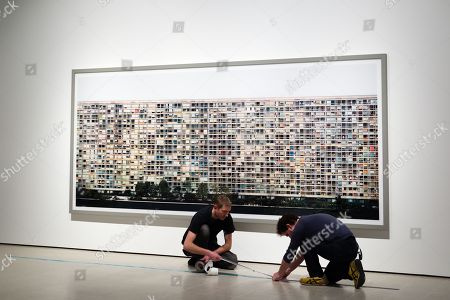
Gursky's original is on a monumental scale and my interpretation is just that, an interpretation. Lacking a medium + format camera and the ability to photo shop something suitable I went for the feeling, as best as I could on a smaller scale.
Brutalist architecture is an influential and polarizing architectural style that emerged in the mid-20th century. It is characterized by its raw, robust, and utilitarian aesthetic, often featuring large, exposed concrete structures. Brutalist buildings display a sense of monumentality and solidity, with bold geometric forms and a distinct lack of decorative embellishments. The style prioritizes functionality and the honest expression of materials, focusing on the inherent qualities of concrete. While some consider Brutalism to be visually austere, proponents of the style appreciate its uncompromising honesty, the sculptural qualities of its forms, and its ability to evoke a sense of awe and timelessness.
St. Leonards Centre
Crows Nest
June, 2023
odc - shoes
Some inspiring and influential people have also shared similar messages.
"Be kind whenever possible. It is always possible."
― Dali Lama
"Be kind for everyone you meet is fighting a harder battle."
― Plato
“No act of kindness, no matter how small, is ever wasted.”
― Aesop
“The simplest acts of kindness are by far more powerful then a thousand heads bowing in prayer.”
― Mahatma Gandhi
“Kindness is a language which the deaf can hear and the blind can see.”
― Mark Twain
“Always try to be a little kinder than is necessary.”
― J.M. Barrie
This Luxe Paris Beatnik Dress with Shawl and Boots is a fresh and comfortable look. Aptly named, this delightful outfit reflects the influences of the artistic Beatnik style.
This style has been tremendously influential to the fashion world over the years. In fact, Yves Saint Laurent set its importance in his 1960 show for Christian Dior.
This outfit is now exclusively available at Swank Events for May ’22.
LM: maps.secondlife.com/secondlife/Swank%20Events/128/124/38
Part of my editorial on influential black male musicians, this one is of colourful funk pioneer George Clinton..
See the editorial and many more great editorials and articles here in the latest issue of FLAWZ: issuu.com/flawzmagazine/docs/flawzissue7
Wolfgang Amadeus Mozart[a] (27 January 1756 – 5 December 1791), was a prolific and influential composer of the Classical period.
Born in Salzburg, in the Holy Roman Empire, Mozart showed prodigious ability from his earliest childhood. Already competent on keyboard and violin, he composed from the age of five and performed before European royalty. At 17, Mozart was engaged as a musician at the Salzburg court but grew restless and travelled in search of a better position. During his final years in Vienna, he composed many of his best-known symphonies, concertos, and operas, and portions of the Requiem, which was largely unfinished at the time of his early death at the age of 35. The circumstances of his death have been much mythologized.
He composed more than 600 works, many of which are acknowledged as pinnacles of symphonic, concertante, chamber, operatic, and choral music. He is considered among the greatest classical composers of all time, and his influence on Western music is profound. Ludwig van Beethoven composed his early works in the shadow of Mozart, and Joseph Haydn wrote: "posterity will not see such a talent again in 100 years".
He lived in Paris in 1778. (from Wikipedia)
Happy 265th Birthday, Wolfie!
Wolfgang Amadeus Mozart (Salzburgo, 27 de enero de 1756-Viena, 5 de diciembre de 1791) fue un compositor, pianista, director de orquesta y profesor del antiguo Arzobispado de Salzburgo, actualmente parte de Austria, maestro del Clasicismo, considerado como uno de los músicos más influyentes y destacados de la historia.
La obra mozartiana abarca todos los géneros musicales de su época e incluye más de seiscientas creaciones, en su mayoría reconocidas como obras maestras de la música sinfónica, concertante, de cámara, para fortepiano, operística y coral, logrando una popularidad y difusión internacional.
Mozart vivió en Paris en 1778. (tomado de Wikipedia).
Feliz Cumpleaños 265, Wolfie!
The Symphony No. 31 in D major, K. 297/300a, better known as the Paris Symphony, is one of the most famous symphonies by Wolfgang Amadeus Mozart. The work was composed in 1778 during Mozart's unsuccessful job-hunting sojourn in Paris. The composer was then 22 years old. "Mozart's Paris Symphony is quite noisy. It has vigorous, stirring tuttis, with a lively violin line and an active line for the basses, lending the music extra animation. The actual thematic matter is relatively conventional, more a matter of figures than melodies, but there is not development as such, and most of the working-out of ideas comes at their presentation."
Charles, the Prince of Wales and future King of England, wrote an influential book called "Harmony". In it he outlined his vision for a balanced way of life, being completely sensitive to the requirements of a sustainable environment, and also maintaining a productive life. This is a vision worth striving for. Balance and harmony are two words that we desperately need to rediscover in our fractured world.
After retiring from the Australian senate in 2012, Dr Bob Brown decided to gift "Oura Oura" to the Australian people. He did this through entrusting it to the care of Bush Heritage Australia.
Bush Heritage Australia is an independent not-for-profit that buys and manages land, and also partners with Aboriginal people, to conserve our magnificent landscapes and irreplaceable native species forever.
Nature, harmony and a balanced lifestyle. That's what we need today.
My version of “The Table of Silence” by one of the most influential sculptors of the 20th-century - Constantin Brâncuși - was a Romanian sculptor, painter, and photographer.
The Schmela Haus, built in 1971 by the Dutch architect Aldo van Eyck for the influential art dealer Alfred Schmela in Düsseldorf’s historic district, has belonged to the Kunstsammlung Nordrhein-Westfalen since 2009. Situated between the K20 and the K21, this concrete modernist building – the first in Germany to combine gallery and residential spaces, and today under landmarks protection – functions as the museum’s third branch. Beginning in autumn of 2013, inspired by its visionary architecture and communicative potential, the Kunstsammlung Nordrhein-Westfalen has used the building as an events and guest house under the banner of Futur 3.
This little room presents three of the most influential figures of the Australian art world. On the left is a portrait of the late Dr Joseph Brown (probably the most prolific collector and donor of art in the country). We’ll return to this fabulous portrait tomorrow. On the right is the portrait of Georges Mora which we saw in my first post today. But we’ll focus on the wonderfully colourful Matisse-like portrait directly ahead of the camera.
It is the work of Vicki Varvaressos and was entered in the Archibald Prize in 1980. Unfortunately this was one of only two years (1964 was the other one) where the judges withheld making an award. It is a strikingly bright and cheerful portrait of art dealer Frank Watters (1934-2020).
www.artgallery.nsw.gov.au/artboards/archie-100/the-art-wo...
Virginia Woolf statue on Richmond Riverside.
Adeline Virginia Woolf was an English writer and one of the most influential 20th-century modernist authors. She helped to pioneer the use of stream of consciousness narration as a literary device.
Virginia Woolf was born in South Kensington, London, into an affluent and intellectual family as the seventh child of Julia Prinsep Jackson and Leslie Stephen. She grew up in a blended household of eight children, including her sister, the painter Vanessa Bell. Educated at home in English classics and Victorian literature, Woolf later attended King’s College London, where she studied classics and history and encountered early advocates for women’s rights and education.
After the death of her father in 1904, Woolf and her family moved to the bohemian Bloomsbury district, where she became a founding member of the influential Bloomsbury Group. She married Leonard Woolf in 1912, and together they established the Hogarth Press in 1917, which published much of her work. They eventually settled in Sussex in 1940, maintaining their involvement in literary circles throughout their lives.
Woolf began publishing professionally in 1900 and rose to prominence during the interwar period with novels like Mrs Dalloway (1925), To the Lighthouse (1927), and Orlando (1928), as well as the feminist essay A Room of One’s Own (1929). Her work became central to 1970s feminist criticism and remains influential worldwide, having been translated into over 50 languages. Woolf’s legacy endures through extensive scholarship, cultural portrayals, and tributes such as memorials, societies, and university buildings bearing her name.
The sculpture pays tribute to the novelist who drowned herself in the River Ouse in Lewes after prolonged mental health problems.
Happy Bench Monday!
“A portrait is not made in a camera, but on either side of it.” - Edward Steichen (influential Luxembourgish American photographer, painter, and curator).
When it was my fortieth birthday, some many moons ago, as a gift to myself I commissioned a portrait of myself by a well-known and highly regarded society painter. I decided to wear a theatre jacket I had designed myself, made of Japanese silver and white brocade featuring a pattern of chrysanthemums in hexagons which I wore to a charity ball earlier that year, and I am holding one of my Great Grandmother’s tortoiseshell handled dyed ostrich feather Court fans from 1923. I sat for the artist in three separate day sittings, and she also took photographs of me. I asked her to pay particular attention to my costume, which I am very proud of, and also my jewellery, as I was wearing a mixture of inherited antique family rings and gifts from family for significant birthdays. The rings included an Art Deco cocktail ring of garnets and pearls, several gold and diamond rings, including my Great Grandmother’s engagement ring from the end of the Nineteenth Century, and an Art Deco diamond and sapphire ring set in platinum from Vienna. Not only did the portrait capture my likeness well, it is beautiful, and she has authentically captured the details of my costume and my jewellery.
The theme for "Looking Close on Friday" the 22nd of August is "details of a painting" which requires me to photograph things people may miss unless you get up close to it; not the entire painting. When I read the theme, I immediately thought of my fortieth birthday portrait. Although I have several other portraits painted for significant years of my life, this is by far the biggest and hangs just inside the entrance to my house, welcoming guests across the threshold. Being the biggest, it is the one where one could potentially miss those fine details, and because I was especially pleased with the artist’s reproduction of my costume and my jewellery, I have decided to focus on them for this week’s theme. I hope you like my choice, and that it makes you smile!
Thank you all my Friends for your visits, faves, invites and wonderful comments .
All images and writing are copyright © S.Anassis. All The materials contained may not be reproduced, copied, edited, published, transmitted or downloaded in any way, shape or form. All rights are reserved. Copying, altering, displaying or redistribution of any of these images without written permission from the Artist is strictly prohibited.
The land on which the property is built was acquired by Joseph Cawthra in 1809. The farmland, which came to be known as the Grove Farm, was granted to Agar Adamson and Mabel Cawthra as a wedding gift.
Agar Adamson, born on Christmas Day 1865, was the grandson of William Agar Adamson an influential Toronto clergyman. He married into the Cawthra family whose legacy in Peel lives on through the Cawthra Estate located near the intersection of the Cawthra Road and the Queen Elizabeth Way. Their legacy comes from supplying eastern white pine logs for ship masts in the British Royal Navy. by Sandra Gwyn. He served under General Arthur Currie. Insights into his time at war may be seen in the CBC series The Great War which features Talbot Papineau, another of the four Canadians featured in the book.
Agar Adamson designed and built the Belgian-style mansion on this land in 1919, after returning from the wartime service in France. In 1943, his son Anthony Adamson added a home for himself on the property. The estate was acquired by the Credit Valley Conservation Authority in 1975.
BlackbirdLace
Leandra-Outfit-By-Blackbird-Lace
Sizes:
REBORN
LEGACY /PERKY
MAITREYA
GEN X CURVY/CLASIC
all info in the blog
An "It Girl" is a young woman who possesses an undefinable, magnetic charm—the "It"—that makes her incredibly popular, stylish, and influential, often drawing intense media attention regardless of specific achievements. The original It Girl was silent film star Clara Bow in the 1920s, with the term coined by author Elinor Glyn to describe irresistible charisma of her character in her book "It" which wads then made into the film starring Clara Bow.
This "It Girl" arrived at my home yesterday. She is a beautiful German half-doll with jet black hair, and even a coquettish black beauty spot on her greamy white cheek. Most half-dolls feature the upper half of a young woman, but in the 1920s, ones featuring just the girl's head and neck were also created. This beautifully painted German example is modish (for the 1920s) with her bobbed and Marcel waved black tresses framing her peaches and cream face, and large bulbous red droplet earrings. When she arrived, she charmed me with her silent film starlet elegance The shade of her jewellery and cupid's bow applied lipstick perfectly matches some of the shapes that make up the geometric pattern of the Art Deco fabric that I have set her upon. The fabric also features stars in the pattern. It rather reminded me of the carpets you find in most cinemas these days. The lady's Jazz Age Art Deco scarf is a piece of vintage embroidered ribbon from the 1920s from my collection of haberdashery and notions that I keep for photography.
The "half-doll" is a dainty porcelain or bisque figurine, fashionable in the early Twentieth Century with an upper body, head, arms, but usually no legs. These dolls were produced in the thousands at the height of their popularity by German factories such as Dressel and Kister, Heubach, Goebel and Kestner. Later they were produced in France, America and later still, in Japan. They commonly served as handles and toppers for fabric covers made for powder boxes on ladies’ dressing tables and small brushes, however they were also made for jewellery boxes, pincushions, tea cosies and other covers. In this case, my German half-doll I imagine would have been made as a pincushion (I have seen several of her like before) or for a lady’s boudoir, and if so, was most likely the topper for a powder bowl or even a powder puff. She has been hand painted.
Pay special attention to the recumbent tomb of Eleanor. The mausoleum is slightly higher than that of her husband Henri II, who died in 1189. You can also see that she is holding a book. When she had the tombstones made at the end of the 12th century, she wanted to show that she was superior and well educated.
Eleanor (+/-1122-1204) was Duchess of Aquitaine, but by her first marriage she became Queen of France and by her second marriage also Queen of England. She was one of the most influential women of the Middle Ages in Western Europe. Another tomb in the abbey (Dome Church) is that of the famous Richard the Lionheart, son of Eleanor.
Joel Meyerowitz is profoundly influential in the genre of street photography. So when I first saw his book 'Cape Light" I instinctively didn't appreciate it. My mind was set that he was strictly a 'street' photographer. An entirely different manner of approaching a subject.
Allowing myself to accept his new style (no longer frames filled edge to edge with hustle and bustle) I came not only to like his new work, but to try to incorporate it into my New topographics "form first" style.
Such was the case here in seeing that wonderful bouncing light. I did not achieve what I desired, but fortunately there was enough form to carry the shot.
Try and try again.
Don't get me wrong. I love my Minolta, but an analog Leica would come in handy too. It's subtle light rendering glass is impeccable.
Minolta X-700
Minolta MD 28mm
Kodak Wratten 80C filter to try and tone down the harshness of the afternoon light. It proved to be too blue with that cool Fuji film.
Fujifilm 200
However in the hands of a master photography printer this would be of minor concern. That’s why, in my string opinion, photographers should stay out of the print room. Press your little shutter button and hand over the film. See you at the exhibit. Nice job, but your job is done. Now let the printer allow the image to be itself. Just as you’re good at your job, trust them to do their’s.
I had a close friend in school. We giggled together about everything and drove our teachers mad. We wore our hair the same way and mirrored each other’s mannerisms.
Is there something similar going on with land and ocean living side by side?
If you squint a bit, do you see how these dunes are shaped like waves in the open sea? Wind-whipped grasses ride on top like spray and foam. Tidda happily plunges into golden undulations, disappearing from sight, and then pops up again somewhere else like a four-legged dolphin. I find myself running to the tops and looking out over the vast ocean, shading my eyes with my hand. A vigorous aroma of adventure fills my lungs. I find myself giggling for no reason.
And I can think of no place more fun to be than in these dunes where land pretends to be the sea!
The Porte Saint-Denis is a Parisian monument located in the 10th arrondissement, at the site of one of the gates of the Wall of Charles V, one of Paris' former city walls. It is located at the crossing of the Rue Saint-Denis continued by the Rue du Faubourg Saint-Denis, with the Boulevard de Bonne-Nouvelle and the Boulevard Saint-Denis.
To replace the old gateway of Porte Saint-Denis, Louis XIV commanded architect François Blondel and the sculptor Michel Anguier to build him a monumental archway that would honor the capture of Franche-Comté in 1668 and the victories on the Rhine during the Franco-Dutch War. Work began in 1672 and was paid for by the city of Paris.
A monument defining the official art of its epoque, the Porte Saint-Denis provided the subject of the engraved frontispiece to Blondel's influential Cours d'architecture, 1698.[1] It was restored in 1988.
The Porte Saint-Denis was the first of four triumphal arches to be built in Paris. The three others are the Arc de Triomphe du Carrousel (1674), Porte Saint-Martin (1674), and Arc de Triomphe (1836).
The piece is known for its simple and serene style, typical of Mankes’ realistic approach to animals.
Jan Mankes was an influential painter and graphic artist who, in his short life, became especially known for his calm landscapes and finely detailed animal portraits.
Het werk staat bekend om zijn sobere en verstilde stijl, kenmerkend voor Manke’s realistische benadering van dieren.
Jan Mankes was een invloedrijke schilder en graficus die in zijn korte leven vooral bekend werd door zijn rustige landschappen en fijn gedetailleerde dierenportretten.
Das Werk ist bekannt für seinen schlichten und stillen Stil, typisch für Mankes realistischen Ansatz bei der Darstellung von Tieren.
Jan Mankes war ein einflussreicher Maler und Grafiker, der in seinem kurzen Leben vor allem für seine ruhigen Landschaften und fein detaillierten Tierporträts bekannt wurde.
IMG_20260425_115022
The Town House is the fourth building in what we are referring to as the Franklin Life Insurance Complex that is located about one-third of a mile south of downtown Springfield. The Town House lies within Springfield's old Aristocracy Hill neighborhood, and is catty-corner from the 1964 modernist style Franklin Life building shown in my previous post.
The first three buildings we looked at in this mini-series housed the offices of the Franklin Life Insurance Company, which was founded in Springfield in 1894. In contrast, the Town House was built by Franklin Life with intent of housing its officers and employees of the company.
The Town House was spearheaded by Charles Becker, the president of the Franklin Life Insurance Company from 1939 until 1961, the period of tFranklin's greatest growth. By the time the Town House was completed in 1958, Franklin Life had become nationally known and was one of Springfield's most influential businesses.
The high-rise building is composed of an 11-story section and a 13-story section joined by a 14-story connector. Built between 1956 and 1958, the international style (closely related to modernism) building was designed by the prominent Chicago architectural firm Shaw, Metz and Dolio. As previously mentioned, the Town House was conceived as an investment by Franklin Life to provide rental housing for company officers and employees. However, before the building opened, its function changed to that of providing rental apartments to the public.
Charles Becker and his wife became the first residents of the upper penthouse. The building immediately became a prestigious address, not only for the employees of Franklin Life, but also for others who chose to rent an urban-style apartment. Its beauty and unique history remain important features of the Aristocracy Hill Neighborhood and of downtown Springfield.
The building was the first high-rise luxury apartment complex in Springfield and was likely inspired by the earlier Hickox Apartments, a 1920s complex which set standards for luxury apartments in Springfield. It attempted to bring the more urban lifestyle of large Midwestern cities to comparatively smaller Springfield, and early residents boasted of their access to downtown and reduced housework. Shortly after its construction, however, the national trend of dispersed suburban homes made its way to Springfield; as a result, the Town House was the only luxury high-rise apartment ever built in the city.
Today the Town House apartments are sold as condominiums. The building was added to the National Register of Historic Places in 2005. Earlier this century the Franklin Life Office buildings were purchased by the State of Illinois, and now house the offices of the Illinois State Police.
Historians agree: Amos Northup’s Graham Blue Streak is one of the most influential automotive designs of the 1930s. What makes it so noteworthy? Let’s take a look.
The Graham brothers—Joseph, Robert, and Ray—were successful entrepreneurs, the kind of investors we call venture capitalists today. Their many enterprises included agriculture, glass, and truck manufacturing, and for a time they managed the giant Dodge Brothers organization for the investment bank Dillion, Read & Company. For their final foray into the auto industry, in June of 1927 they acquired Paige-Detroit and quickly put their their stamp on the Motor City car maker, renaming the products Graham-Paige and then simply Graham.
On December 8, 1931, the second-series 1932 Graham Model 57 Blue Streak was introduced, featuring a groundbreaking body design by Amos Northup. The Blue Streak look, which Graham continued through 1935, was a genuine style setter as much of the industry followed its direction. “The most imitated car on the road,” boasted the Graham ads. While many of the Blue Streak’s innovations seem evolutionary, a logical and natural progression from one era to the next, the credit goes to Graham and Northup for seeing the future and executing it.
While the catalog illustration above is a tad idealized, it effectively shows what made the Graham so fashion forward. Arrows have been added to indicate the key advances.
Most notably, the front and rear fender sweeps have been skirted in behind the wheels. Concealing the exposed chassis and mechanical components, the fender valences also create a longer, smoother profile.
The grille shell and windshield have been laid back at a sporty angle, finally breaking from decades of horse-drawn carriage tradition toward a more streamlined look. Additionally, the radiator cap has been removed from the top of the shell and tucked away under the hood, another step into modernity.
The headlamp buckets have been tucked in close to the body and fenders and painted body color, the better to blend them into the overall package.
While the rendering doesn’t show it well, Graham was an early adopter of metallic-type paint finishes. But instead of the aluminum particles used in later pigments, this paint contained guanin, the photonic crystal that gives fish scales their iridescence. Available colors in Graham’s Pearl Essence Finish, as it was called, included Avon Blue Pearl and Opalescent Gunmetal.
As the in-house designer for Murray Body Company of Detroit, Northup performed styling duties for a number of independent makes, including Willys, Hupp, and Reo. Since the smaller automakers lacked dedicated styling studios, body suppliers Murray, Briggs, and Hayes included design services to attract their business. Other noteworthy Northup designs include the Reo Royale and Willys 77, but the Blue Streak can be considered the most important of his efforts—a tipping point in 1930s car design.
The innovations weren’t limited to styling. To lower the stance, chief engineer Louis Thoms dispensed with the traditional rear frame kickup and crafted what Graham called a deep banjo frame, with the rear live axle captured in a pair of pass-throughs in the frame rails (above). The benefits included a 2.5-inch reduction in overall height and a more torsionally rigid structure.
To increase roll resistance, the parallel leaf springs front and rear were mounted outboard of the frame rails. Meanwhile, the track was widened to 60.5 inches front and 61 inches rear—not just to improve cornering, it is said, but also to sweeten the car’s visual proportions in height versus width.
More big news came from Graham came in 1934, when the automaker became the first to offer supercharging on a popular-priced car on the Model 69 Custom Eight. Reportedly based on the Schwitzer-Cummins technology used on the Duesenberg SJ, the Graham setup sported a 7.5-inch centrifugal blower turning at 5.75 times engine speed via an external accessory shaft. Output was increased from 95 to 135 horsepower on the 265.5 CID straight eight, producing a 10 mph increase in top speed and a significant boost in midrange punch. In the following year, a supercharged version of the six-cylinder Graham was introduced as well (GOCI Note: Supercharging on the six-cylinder line actually began two years after the eight - Bill McCall). It’s been noted that Graham built more supercharged models than the Auburn, Cord, and Duesenberg marques combined.
In 2017 the Blue Streak series was recognized again as a 1933 Graham Deluxe Eight was enrolled in the National Historic Vehicle Register (GOCI Note: Bulgari's car is actually the 119-inch wheelbase Model 64 Standard Eight and not a “Deluxe Eight” - Bill McCall). To mark the event, the Golden Tan Pearl sedan, owned by noted collector Nicola Bulgari, was photographed in the driveway of Amos Northup’s former home in Pleasant Ridge, Michigan, a Detroit suburb (above). Photo courtesy Historic Vehicle Association.
Thanks to Bill McGuire, from Mac's Motor City Garage for this comprehensive and thoughtful history of the Graham Blue Streak.
Some additional tidbits: Erwin George Baker, also known as "Cannonball" Baker, drove a 1933 Graham Blue streak across the country in 53.5 hours, setting a record that stood for almost 40 years.
Automobile production from Graham - Paige ceased in 1940, and its automotive assets were acquired by Kaiser-Frazer in 1947.
Innovative and influential illumination technology: interlinked rooms lit by natural light through overhead skylights
en.wikipedia.org/wiki/Dulwich_Picture_Gallery
PA217271 Anx2 Q90 1400h 2k f10 f25
Looking through Gursky's photos is a delight. There are so many lines and tiny details. And he approaches things straight-on and aligned perfectly, which I rarely do, so this was a challenge. I found this image in my archives and applied some processing so it would take on that Gursky style....kind of. :o))
.
.
©Christine A. Owens 2.15.18
.
I really appreciate your comments and faves. I'm not a hoarder of contacts, but enjoy real-life, honest people. You are much more likely to get my comments and faves in return if you fit the latter description. Just sayin. :oD
.
If you like b/w photography and/or poetry check out my page at:
expressionsbychristine.blogspot.com/</a
This narrow alleyway in Bologna feels like a quiet footnote to a very long and influential history. Founded in Etruscan times and later flourishing under Roman rule, Bologna has been continuously inhabited for over two millennia. Streets like this one were not designed for spectacle, but for daily life: passageways for merchants, students, artisans, and monks who shaped the city into one of medieval Europe’s great intellectual and commercial centers.
Architecturally, the scene is unmistakably Bolognese. The weathered brick and stone walls speak of medieval construction techniques, while the irregular textures reveal centuries of repairs and adaptations. The tight proportions of the alley reflect a pre-modern urban logic, where density offered protection, shade, and efficiency. Subtle details—iron lamps, drainage channels, and the rhythm of small openings—show how functionality and restraint defined much of Bologna’s historic fabric.
Just beyond alleys like this rise the city’s famous porticoes, a UNESCO World Heritage site and a defining feature of Bologna’s urban identity. Even where the porticoes are absent, their influence is felt in the deep shadows, sheltered walkways, and human-scale design. This architectural continuity gives Bologna its sense of coherence: a city that evolved slowly, layer by layer, without erasing its past.
Culinarily, these streets are never far from the kitchen. Bologna is widely regarded as the gastronomic heart of Italy, and alleys like this once echoed with the everyday logistics of food—deliveries of flour, wheels of cheese, and cured meats. The city and the wider Emilia-Romagna region are the birthplace of tagliatelle al ragù, tortellini, mortadella, Parmigiano Reggiano, and traditional balsamic vinegar. Here, history, architecture, and cuisine converge quietly, proving that in Bologna, even the most modest alley has a story worth tasting.
RX_09887_20240415_Boloña
William Wordsworth (1770–1850) was one of the most influential poets of the Romantic movement, known for his celebration of nature.
Born in Cockermouth, Cumbria, he spent much of his life in the Lake District, in a landscape that deeply influenced his work.
In 1799, he moved to Dove Cottage, where he lived with his sister Dorothy and also from 1802 with his wife Mary. This period marked some of his most creative years, during which he wrote key poems such as I Wandered Lonely as a Cloud and worked on his autobiographical masterpiece, The Prelude.
Wordsworth then spent four years living at Allan Bank, before moving to Rydal Mount in 1813, where he spent the rest of his life.
Wordsworth chose to be buried in Grasmere at St Oswald’s Church. His grave, alongside those of his wife Mary and sister Dorothy and other members of his family sees thousands of visitors a year.
Four influential Blues artists who are little known today.
Starting with the Very Bad Indeed; Huddy Ledbetter performed under the stage name of Leadbelly; he was a talented guitar and piano player with a charming voice, and who was also a convicted murderer - he shot a love-rival in the head, and was sentenced to 30 years.
Incredibly, the Governor of Texas was so charmed by Leadbelly's singing, that he had him released within 7 years of his time served.
The song that got him out was 'Goodnight Irene.' You can find it on-line - maybe take the time to learn to sing it, because you never know when that might come in useful!
He was imprisoned again a few years later for 'carving up' six men in a street brawl, and again, his musical talent may have helped him to an early release.
Leadbelly often wore a high collar or neckerchief to cover an ugly scar across his throat where he himself had almost been murdered. Probably not a guy to hang out with.
The Good; Memphis Slim copyrighted all his many songs under the name Peter Chatman, although that wasn't his real name either, he was John - Peter being his father, also a bluesman.
Memphis Slim was an exceptional blues pianist who found considerable recording and performing success, and moved to Paris where, together with bassist Willie Dixon, he had a residency at the famous Café Aux Trois Mailletz. In recordings of their performances, they can be heard flirting with and charming their French audiences - wonderful to hear.
Willy Dixon wrote the song made famous by Etta James, 'I Just Want to Make Love To You'. Slim and Dixon can be heard performing an early version of it on their 1960 'At The Village Gate' album.
The Bad; Aleck Miller, aka Sonny Boy Williamson 2. The '2' is important, not that he would ever use it, because he literally stole the performing name of the already famous harmonica player, John Lee 'Sonny Boy' Williamson. In a gruesome twist of fate, John Williamson was brutally murdered in a mugging, and thereafter, Miller insisted with increasing stridency that he was the 'only' Sonny Boy Williamson (which was, by then, sadly true) and the 'original', which was simply untrue. As he got older, he progressively exaggerated his age, insisting that he was 'an 1800's man' when he was almost certainly born during the first decades of the 20th century. This was a curiously unnecessary thing to do, as he was certainly older than John Williamson.
As it happened, SBW2 was an immensely talented harmonica player and vocalist, with an imposing stage presence, who found great success, especially in Europe. He often appeared (as on this album cover) in an expensively tailored Saville Row suit, complete with bowler hat. His albums are still available and well worth listening to.
The Great; You've probably heard of Muddy Waters. Curiously, McKinley Morganfield acquired that name as a child because of his propensity for.... you've guessed it, playing in creeks and streams. He may not have been a guitar virtuoso like some of his contemporaries, but his stage presence and personality was overwhelming. He knew how to work a crowd. His 'At Newport 1960' record is considered to be one of the best live Blues albums ever.
Waters was instrumental(!) in introducing electric guitars to Blues - not for any artistic reason, but in order to make himself heard in the rowdy Chicago Southside clubs where he made his name. You'll likely know 'Mannish Boy' and 'Hoochie Coochie Man' - many of his recordings are still widely available. A true 'star' of the blues genre.
All four of these men were highly influential on a young man who was to become more famous than any of them, and who also performed under an assumed name. Robert Zimmerman, aka Bob Dylan.
The typical weekday morning routine is playing out at Fort Pierce, FL as the FEC 920 local is departing north out of the yard for a run to do some local switching work. What wasn’t as typical but much welcomed by this visitor was that the FEC 430 is providing the power today, the railroad’s sharp-looking Veterans tribute unit, with a scheme also befitting the bicentennial year. In the background, containers are being loaded onto well cars for movement later in the day. And the power from the previous inbound 104 train is tied down waiting for the afternoon counterpart 103’s call time.
Even if it was just tied down, I was glad to get a chance to shoot one of the extra sharp “Champion Scheme” units, FEC 703, that still remains. The “Hurricane Logo” Geep behind, FEC 510, made for a nice companion as well.
On my recent first trip to Southern Florida, I intended to focus the one railfan day I had available mainly on the US Sugar operations. But given our travel schedule it made sense to start the day in the Fort Pierce area, which offered a chance to get a look at the Florida East Coast. We ended up learning a lot about Henry Flagler via the Key West Museum and various other things during the trip since it was so influential in the development of this region, so it only felt appropriate. And the FEC delivered with having these sets of power in the yard this particular morning.
... the precious life-blood of a master-spirit.'
Indiana University's Media School
Areopagitica - A speech of Mr. John Milton for the Liberty of Unlicenc’d Printing, to the Parlament of England is a 1644 prose polemic by the English poet, scholar, and polemical author John Milton opposing licensing and censorship. Areopagitica is among history's most influential and impassioned philosophical defences of the principle of a right to freedom of speech and expression. Many of its expressed principles have formed the basis for modern justifications. (Wikipedia)
Part of my 'Duffus Castle through the seasons' project.
The castle is situated on the Laich of Moray, a fertile plain that was once the swampy foreshore of Spynie Loch. This was originally a more defensive position than it appears today, long after the loch was drained.
The motte is a huge man-made mound, with steep sides and a wide ditch separating it from the bailey. The whole site is enclosed by a water-filled ditch, which is more a mark of its boundary than it is a serious defensive measure.
Duffus Castle was built by a Flemish man named Freskin, who came to Scotland in the first half of the 1100s. After an uprising by the ‘men of Moray’ against David I in 1130, the king sent Freskin north as a representative of royal authority.
He was given the estate of Duffus, and here he built an earthwork-and-timber castle. Freskin’s son William adopted the title of ‘de Moravia’ – of Moray. By 1200, the family had become the most influential noble family in northern Scotland, giving rise to the earls of Sutherland and Clan Murray.
In about 1270, the castle passed to Sir Reginald Cheyne the Elder, Lord of Inverugie. He probably built the square stone keep on top of the motte, and the curtain wall encircling the bailey. In 1305, the invading King Edward I of England gave him a grant of 200 oaks from the royal forests of Darnaway and Longmorn, which were probably used for the castle’s floors and roofs.
Dorothea Lange
Born on May 26th, 1895, in Hoboken, New Jersey, Dorothea Lange was a prominent and highly influential photojournalist and documentary photographer who worked for the Farm Security Administration (FSA) during the Great Depression. Her main task was to show the consequences of the Great Depression.
Early Life
Born Dorothea Margaretta Nutzhorn, the famous American photographer was the daughter of a second-generation German immigrant. At age seven, she contracted polio, a disease which left a permanent mark on her life – an altered gait and a weakened right leg.
Her father abandoned Dorothea and her mother when she was only twelve, which was a traumatic event in her life which determined her to change her last name into Lange, her mother’s maiden name. Dorothea studied photography under American photographer Clarence Hudson White at Columbia University in New York and she was apprenticed to the renowned Arnold Genthe’s photography studio in NY.
When she was 23, she moved to San Francisco where she opened a commercial portrait studio. In 1920, she married painter Maynard Dixon and the couple had two sons, Daniel Rhoades (born in 1925) and John Eaglesfeather Dixon (born in 1930). In the early 1930s, her photographs depicting homeless and unemployed men and women wandering the streets in search of work caught the eye of the FSA, for which she worked between 1935 and 1939. In 1935, she married the Professor of Economics at Berkeley, Paul Schuster Taylor.
Death and Legacy
Dorothea Lange passed away at the age of 70, on October 11, 1965, in San Francisco, California. The cause of death was esophageal cancer. She was survived by her two sons with her first husband and by her second husband Paul Taylor.
In 2008, Lange was inducted into the California Hall of Fame for her outstanding contribution to the development of documentary photography and her son accepted the honor on his mother’s behalf.
I encourage you to read more of her Bio she was a very accomplished photographer more info at: totallyhistory.com/dorothea-lange/