
☮ diggerdogroff ☮
The back of O'Connor in Canberra, Australia, as it appears today
This is the area where I grew up between 1965 and the 1980s, on a red clay and greywacke hill astride the O'Connor Ridge overlooking the Limestone Plains of Canberra - aka "The Bush Capital". The following relates to the experiences of many kids who grew up exploring this hilly playground, back in the days mostly before electronic games became a thing. Anecdotes I really must thank my sister for motivating me to put down, before they all begin to fade away...
The first home my family made on this hill was in an Australian National University-owned house on Quandong Street (tagged on far right of aerial photo). The street is named after a native nut. After our Australian grandfather passed away, we moved to a wonderful home farther up the hill on Nardoo Crescent - named after a spore-producing native plant. I remember quite early on mum and dad telling us these weird names were both native plants the Aborigines used in their bush tucker.
In regard to our grandfather, like a great many young men he had been a volunteer in WWI, although he was fortunately never destined to be a Digger in the mud and chalk dust of the trenches. Instead he became a a specialist rotary engine mechanic in the Australian Flying Corps, servicing mainly the Sopwith Camel - an effective but notoriously difficult fighter plane to master in the air. He later recalled during his service in the United Kingdom there were many training accidents, which he estimated accounted for about as many young pilots killed learning to fly as were dying fighting the young Germans over France and Belgium - part of a obscenely colossal and totally avoidable casualty toll Australia could ill-afford, which despite all the blood sacrifice like so many other countries also led Australia into ever greater debt with mother England's privately owned mother of all banks.
After the Great War our granddad helped establish a public speaking club called Rostrum Australia, becoming its first president, for which he was much later very proud to be honoured with a MBE by Queen Elizabeth II. Like so many men too back then, he'd joined what would later become the Returned Service's League (RSL) and also the Freemasons. In fact, I remember once as a boy finding a big old steamer trunk in the basement at Nardoo Crescent with medals, badges and a curious satchel, filled with elaborate looking robes with all sorts of bling (actually folded aprons, a sash & medallions). I went upstairs to get my dad and he explained this was his father's Freemason and WWI paraphernalia. Dress ups of course are a trip for a kid, so naturally I asked if I could try it all on, but dad wasn't so keen on that and the trunk was closed.
Back before the trees grew too big around that home on Nardoo Cres, I remember well how my brother, sister and I could gaze out from our bedroom windows over many of Canberra’s familiar landmarks - the brooding sandstone and domed eminence of Australian War Memorial (AWM) over by Mont St Ainslie, the stark white of the original Parliament House and the Captain Cook Memorial water jet. We could even just make out the thunderbird eagle of the Australian-American Memorial, perched high on its pole over yonder in Russell - an inspiration of Sir Robert Menzies, built with the mass donations of a public forever grateful to the United States in the wake of WWII.
Speaking of Thunderbirds, that was one of the kid's TV shows I most remember my older brother and I watching back in the late 1960s and ‘70s - that and Gerry Anderson's other marionette shows, especially Captain Scarlet and the Mysterons (Aussie actor Bud Tingwell did voices for both those shows btw). Many years on it these old British TV kids shows would seem be the inspiration that so perfectly went on to lampoon the NWO by 911 times a thousand through Team America: The World Police
My brother and I also followed Dr Who, and I can still remember preferring sometimes to peer at it from under a blanket, particularly when the Autons revealed themselves in Spearhead From Space.
Back then Canberra only had two TV stations, that is until late 1980 when a non-commercial multicultural channel was added (SBS, channel 0/28). The two original stations were the non-commercial tax payer-funded Australian Broadcasting Corporation (ABC TV, channel 3) and a commercial channel CTC7, owned by Kerry Stokes. It meant we didn't get all the well known TV shows of that era, but still there was plenty to keep us amused and distracted. Just a random sample of some of the shows on air in that era in Canberra that come to mind, but now rarely seen on free to air TV are Disneyland, The Lone Ranger, The Banana Splits, My Favorite Martian, Aunty Jack, Spyforce, Ben Hall, Rush, The Waltons, Little House on the Prairie, Wings, Dick Emery, Dave Allen At Large, The Paul Hogan Show, WKRP In Cincinnati, Minder, and the Kenny Everett Video Show.
Hard to forget also my brother's antics imitating Catweazle and the giggle fits he’d put me in at the dinner table. Flipper was another show I recall - but one which is definitely better remembered now for what went on behind the scenes.
Which reminds me of Skippy the Bush Kangaroo - how could we forget old cime fighting Skip? I remember in the 1971 summer holidays our family going to Ranger Headquarters at the ‘Waratah Park’ film set, on the north-eastern outskirts of Sydney. I can still remember quite a bit, like Sonny's bedroom, which had a few Airfix model planes beside the bed (my brother and I loved building and painting models). I also remember a very forlorn looking Eastern Grey Kangaroo in a cage, with a sign "Skippy". Even as a 6 year old I knew something was a bit awry though, Skip never needed a bloody cage!
Some years later, it was interesting to watch Tony Bonner again, this time in a very sombre role in the miniseries Anzacs, acting along side much loved larrakin Paul Hogan - sort of an early '80s WWI Aussie version of Band of Brothers . Of course, being a Kerry Packer Channel 9-production it was all pretty faithful to the official WWI b/s story line, as implausible as it should by rights be suspected by now (eg the evil war-mongering Germans, the noble (Nobel) British Empire defending liberty, Keith Murdoch as the brave Gallipoli whistle blower - Rupert's dad that is - yeah no really). So many of that cast are gone now, most sadly its star John Blake. Wishful thinking, but 33 years on it would be great to see a more historically faithful adaptation of Anzacs - eg Gallipoli exposed as the set up to fail side show that it so criminally and murderously was, thanks to Lords Winston Churchill, Milner, Grey et al. A miniseries which could also bring some focus on the Aboriginal Diggers who were enlisted into British imperial war machine, as the fine film Beneath Hill 60 did to a limited extent.
F Troop was another show I remember quite well, which mum tended to watch a bit with us too. I still recall giggling away at mum as she'd do a perfect "ze Burglar of Banff-f" impression. I'm sure it was an episode which tickled her fancy, partly because she was born and bred in the Canadian prairie lands of Alberta, plus she spoke and taught French as if she was a native. But also like Captain Parmenter of F-Troop, mum had also told us how her great grandfather had served in the Union Cavalry during the American Civil War, later settling on the Montana frontier.
Actually it was his cowboy son (who actually referred to themselves as 'riders') who eventually rode his horse up into Canada and there fathered our mum's mother. He'd gone up there to work at Buffalo National Park, protecting one of the last surviving herds of Plains bison in North America. The last survivors of a war waged by the US Govt. against the native Americans and their primary food source, the bison which also competed for forage and water with the settlers' cattle. Mum also told us she had some native American heritage some where along the family line too - which tribe I can no longer recall, but fairly sure it wasn't Hekawi.
I remember also how mum would softly sing a rendition of I Dream of Wrangler, as sung by the late great Paul Lynde (as The Singing Mountie aka the Burglar of Banff), which had us kids singing along too. So indelibly etched in my memory too is the whirling slingshot from the intro of the French TV show The King's Outlaw (Thierry la Fronde), which I also watched with mum (she was a Francophile through and through and after moving there as a young uni student would have settled down, but for the tragic death of her original fiancee, conscripted and killed in the Algerian War).
Yeah, looking back we youngsters really did have a pretty fortunate time of it and, by comparison, it’s clear now it was in fact an extremely fortunate one for those times, considering what children experienced in not so far away places like Vietnam, Laos, West Papua and Bali, to name but a few...
As for the climate, in the late 1960s and early '70s south-east Australia I seem to recall it was a lot wetter - eg I remember well the vast expanse of Lake George almost full to the brim, with waves washing close to the road as we drove past on our regular trips to Sydney. Part of a natural cycle of wet and dry that's been going on for millennia, or then again maybe the geological strata of the region is lying... now darn it I'm not quite sure - perhaps global warbling expert Dr David Suzuki can confirm? www.corbettreport.com/what-is-the-average-global-temperat...
But anyway I digress - back when I was a kid, because of the wet spell it helped a small swamp to thrive beside our hill, in an area astride Dryandra St and Kunzea St (on the left of the photo above). As kids do, we used to go there to look for tadpoles and sometimes along the fringe we'd come across huge Spotted Grass Frogs. On one occasion an older friend found a really odd looking small yellow striped frog, which one of the dads who was a scientist at the nearby CSIRO identified as a Corroboree Frog - now like so many an endangered species due to habitat loss and pollution: canberra.naturemapr.org/Community/Species/11681
The nearby CSIRO btw is also where one of my dad's relatives also worked as a scientist for many years. Back in WWII he had developed a personal insect repellent for the troops fighting in the Pacific, which for some reason they called "Mary". When Queen Elizabeth II visited Canberra in 1963 for the 50th anniversary of its' naming, she also happened to rely on that same formulation to escape the incessant flies, with notable success. After that it was successfully marketed as Aerogard, which in turn become a household name in Australia. Our dad's cousin also approved the introduction of dung beetles to Australia to combat the ever burgeoning blowfly population. In fact, I well remember watching him and his wife one time on ABC TV, explaining how fly-blown Canberra in particular was in its youth, due to all the livestock faeces (the fly blown political and media bs here was, however, never resolved much to this wide brown land's cost).
Overlooking our old frog swamp I remember also there was a big old Yellow box eucalyptus tree with an unusual sideways eye-shaped scar etched into its bark. We were told many moons ago the Aborigines had cut it to use the bark to make a shield for protection and/or for carrying food while on their way to feast on roasted Bogong moths up in the Brindabella Mtns - something they'd been doing for countless thousands of years, if the region's rock art, middens and stone artifacts are anything to go by. Because of this, as kids in our eyes that old ghostly gum tree could have been thousands of years old too. But whatever its' age it surely was there providing shade and utensils to the Aborigines for a long time - long before the likes of James Cook, or Ned Kelly etched their passing in Australian history.
Thanks to our parents and, it must be said the ABC of old (now sadly but a pale imitation of its former self thanks mainly to Abbott, Shorten, Turnbull et al), we young kids learned some inkling why there were no aborigines coming to our frog swamp anymore. To put that in some context, definitely more passion, thought and effort was put into administering the cane (aka "the cuts", or “six of the best”) by a certain Turner Primary School headmaster, than administering any genuine education on Aboriginal history and culture, but then he was just doing his job. On the lighter side, I do remember chuckling though, when my older brother would refer to him as "the bad ham" (my brother did cop a thrashing from him at least a few times - me just the once from him early in 3rd Grade for being too engrossed in collecting harmless curled leaf spiders while exploring inside some bushes, which I wasn't aware were "strictly out of bounds", due to being unfamiliar with the primary school side of Turner's school grounds).
I can still vividly see his huge angry face and that slicked back Brylcreamed black head hair, and how he seemed to get off talking down to others, especially to kids and their mothers from what he liked to describe as "broken homes", as one parent reminded me not long ago. An all too often angry man I recall striding the corridors with RSL and Legacy badges on his lapels (he'd carpet bombed and bagged his way through WWII piloting B-24 Liberators), leaving in his wake the stale pong of tobacco smoke as most adults his vintage tended to do, hooked on them no doubt thanks to the wartime issue of fags to servicemen.
Striding the corridors of a well catered school where notably very very few Aboriginal pupils had had the same opportunity. A place where I remember each Thursday in 4th Grade the "bad ham" expected all pupils to attend Scripture, although officially Turner was secular. A weekly religious journey which could have arguably been quite constructive, however such was (and is) the state of the church's PR machine, they elected to skipper it with an old and like-wise mean-spirited man of the cloth, in a black suit with a starched white standing collar and attitude to match. Either Roman Catholic or Presbyterian I can no longer recall, but at least he was no George Pell - at least as far as we knew.
Not all that long into this choppy voyage his ark however suddenly sprung a leak, when two "smart Alec" boys in our class politely dared to challenge him on the concept of creationism. Seemingly underestimating the intellectual capacity of some of his 10 yr old audience, he rapidly grew red faced with rage, then abruptly stormed out. But what did he expect? After all, what he was saying about the animals walking up the gang plank two by two seemed rather cartoonish and, in fact, completely contradicted everything we'd been told up 'til then.
The "bad ham" however also became mightily cranky about this impertinence, to the extent before we knew it he had fronted our class and very aggressively ordered each pupil, including the vast majority who weren't involved, to immediately after school go buy a 10 cent postage stamp (ie 5 bubble gums!), then write an individual letter of apology to post to the mad preacher. Letters in the end never eventuated though, after some parents found out and reproached the bad ham for his hammed handling of this affair. I still have that stamp in my collection to remind me.
Before long both these two blackened souls thankfully took leave from our school and with them went the bamboo whipping cane - although thrashing hands with rulers and smacking remained options for the principals that followed for some years to come and the cane remained in other schools. A kind of surreal policy to think back on now, but at least not as bad as seeing kids with welts and bleeding cuts, courtesy of the "bad ham's" cane.
Of course it was never quite as bad as Tomkinson's Schooldays, but like Tomkinson, the abused often became abusers themselves, with some going on to lead troubled lives. I understand it was no better at other schools in that era – caning was a widely sanctioned disciplinary measure after all. I often wonder though if the burnt and blackened skeleton of nearby Lyneham Primary School, which I vividly remember seeing as a 4 year old in 1969, had something to do with this system of child abuse. Perhaps the arsonist Harold Tonkin would know, given he targeted his fires in and around the headmaster's office. file:///C:/Users/Jay/AppData/Local/Temp/8-Article%20Text-14-1-10-20160727.pdf
But back to Turner School, I remember in the early 1970s at recess in the infants school each of us being served small glass milk bottles by our class 'Milk Monitor'. Also how we all had to say grace before lunch: "God is gracious, God is good. Thank you for our daily food". I remember though how this chorus of hundreds of kids tended to deliver it as an incredible droning dirge, only brightened by the tendency for students to derive a childish chuckle after deliberately mis-pronouncing 'food' so it would rhyme with 'good'. Looking back no doubt the starving Biafrans of this era weren't chuckling, although the oil and arms barons no doubt were.
I also remember witnessing the building of a facility on the Hartley Street end of the infant's school, where I'd initially attended kindergarten. This was dedicated to disabled students and it continues to do so - something the bad ham is given the most credit for to this day. Also I recall how we would sing God Save The Queen at assembly until around 1975, when we were taught to sing Advance Australia Fair instead. Even back then I well remember thinking it was a cheesy tune, with even cheesier lyrics. An anthem which to this day still proclaims "for we are young and free”, as if we were all born yesterday. Go figure.
And in truth, it was little different later at Lyneham High School, except to say here the cane was still being deployed by several faculty heads. Here too I recall at least two male Aboriginal students, one of whom was Lyneham’s best athlete at the time. As for the curriculum, the thing I most vividly recall was the official line "Australia is a young nation and only has a short history" and only an anecdotal and highly sanitised coverage of Australia's Aboriginal history (not to mention Australia's financial history either btw). Some decades on, one might be forgiven for thinking such entrenched vision slit views of our history still commands those who proudly bear the RSL badge - if a quiet stroll around AWM or a wonder thru the local RSL pockie parlours are anything to go by...
But what about that gnarly old man gum tree up on the ridge which told us otherwise? Well sadly that Aboriginal scarred tree by our old frog swamp was lost forever in a bush fire in 2002 - that being the year before the huge terrible firestorm which would overwhelm parts of south Canberra with such tragic consequences.
As for our old friend who found the Corroboree frog, we tragically lost him too in an accident - but at the very least Bruce Reid was doing what he really loved, soaring like an Wedge-Tailed eagle from his paraglider into heaven off the escarpment beside the now great dry bed of Lake George. Actually, sadly one of two old hill top boys and near neighbours who we tragically lost in air crashes – the other, Martin Chilvers, in a suspicious unexplained Bureau of Mineral Resources plane crash, which also tragically killed a surveying geologist alongside him on lonely Mt Barren Jack, north-west of Canberra. A trusted pilot and good mate from our earliest swamp exploring days, Martin had once taken a bunch of us aloft in the 1980s for a soaring eagle's eye view over our O'Connor hill. I still regret not having a camera.
Not far from that old Aboriginal scarred gum tree there was another place our two lost friends and the rest of us once soared - a long deep dirt drain with a roller-coaster like bike trail running down its course, known to all as "the dippers". At the top end it was deeper, where it was known as "the big dippers" and as it gradually petered out it was called "the little dippers", where green kids could first test the waters. It was a perfect dirt track circuit for Choppers, dragsters and the menagerie of home-modified push bikes like my older bother's, ie larger bikes modified with sissy bars and ape hanger handle bars taken from smaller framed dragsters. From 1979 many kids like me began modifying our bikes with proper BMX handle bars and goose necks. Factory-made BMX bikes were still a rarity at this point as they were quite expensive - the first kid I recall to get one at my school was in 1980, a Mongoose IIRC.
Further down from the dippers there was also a long steep slope, known as the "sled track", where kids could slide down on rough wooden sleds, or more commonly big pieces of cardboard, especially when the grass was green and wet in the spring. Hereyou could also launch paper planes and balsa wood gliders and watch them soar for an eternity. This spot was in a small bush reserve where we could also wile away a quiet summer's day hunting for bugs, always I remember to a click, click, click chorus of yellow wingers.
There was also the cool shade of an old weary willow tree there, where we could sit around and chit chat away, playing games and fashioning bows and arrows, sling shots, etc. I remember it was kind of like a huge cave, usually surrounded by a screen of tall dry grass and bushes, through which we could crawl to create a network of intersecting tunnels.
Funny I don’t actually recall once ever seeing a snake while playing there, but then presumably we made so much noise they knew not to stick around. Looking back, it was far safer playing in the bush in the 1960s and early '70s than being in say the average family car, in an era when car manufacturers didn’t give a rats about installing seat belts. Indeed, the road toll in Australia during that Vietnam War era accounted for many, many more horrendous deaths and injuries, than occurred among those very brave and mostly conscripted Australian soldiers who went off to serve in Vietnam (thanks Lawrence of Suburbia for that reminder).
Straddling that little bush reserve was yet another world of entertainment, a sweeping footpath from Wongoola Close down to Yapunyah St, which all the kids around half jokingly called "Suicide Hill", down which we rode our scooters, bikes, skateboards and home-made billy carts - and of course occasionally stacked them (ie crashed). Despite its' fearsome name, no one ever died on Suicide Hill, nor to my knowledge was permanently maimed, as fortunately the long grass and honeysuckle at the sweeping bend at the bottom would inevitably break our fall.
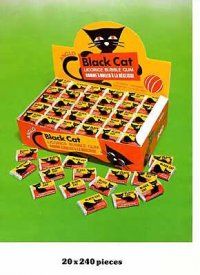
I well remember my first taste of that experience aged 5 astride my small red tricycle, having just watched my older brother repeatedly whiz down on his skate board, leaving in his wake as always that alluring aroma of Bell Boy and Black Cat bubble gum. I remember they were 2 cents each and oh how I longed for that day when I too got pocket money for doing chores like my bother did, so I too could spend up at Sheedy's Milk Bar at the O'Connor Shops. The Monte Carlo Cafe and Milk Bar was also at those shops, but the owner was mean spirited and violent at times towards children, especially to kids wearing ALP election campaign badges in 1975 - both shops were gone by the early 1980s.

One day, maybe imagining I was as indestructible as Captain Scarlet, I foolishly decided I too could whiz down Suicide Hill like my older brother - or at least part of it - but with only my bare feet on pavement as brakes on my tricycle. Bad mistake as it turned out. For, before I knew it, I was rocketing full pelt down to the curve, hell for leather, until I lost control and was fortunately flung into the the long grass & honeysuckle. Despite the fearsome blisters on my soles from my desperate attempt to slow down, I recall I did manage to tearfully hobble some of the way home up Yapunah St, before my brother was able to alert our mum. As she came rushing with my little sister in hand and scooped me up, I don’t recall a huge outpouring of sympathy in that no-nonsense Alberta way she could have once I'd explained waht happened. And fair enough looking back, I’d learned a good lesson (ma, if you can read me up there, thank you for always being there for us and I'm sorry we were a bit of a worry at times x).
Yeah, back then, apart from the occasional self-inflicted wounds, we kids had a quite a blessed time. In fact, the only particularly dodgy thing worthy of mention here occurred one quiet summer day in the early 1970s, when our friend Bruce, who found the Corroboree frog, was away holidaying with his family down at Broulee, by the coast at their holiday home they called "The Tardis". His family returned in shock to find dozens of his dad's award-winning budgies had been brazenly stolen. Now being a native species and his dad being a mad keen breeder, you can imagine these were, without doubt, some of the best budgerigars around.
But the dodgiest thing of all about this was a neighbouring mum (Desmond's mum) had seen two men dressed as policemen, egress from a marked police car, go through a vacant neighbouring back yard and then jump the back fence to steal the birds. Of course, she had naturally assumed it was some sort of police raid rather than the daylight robbery that is was. Thus she elected to kept her distance. As it turned out a few other breeders were also targeted during those Christmas holidays. And also by coincidence there were two members of the now defunct ACT Police in our friend's father's budgie breeder's club who were never seen at the club again after that. Perhaps not unpredictably, not one of the thefts was ever solved. Later my friend's dad discovered the best of his stolen budgies had somehow miraculously 'flown' all their way into the lucrative UK market and into the hands of certain miscreants.
Many years later, we by then grown up kids were also intrigued to learn something else through our by now retired parents - that the Australian Security and Intelligence Organisation (ASIO) had actually been tapping some of the families' telephones in our street for several years (at least three homes that they know of). Our parents had found out through authors who were researching works on Gough Whitlam and the ANU historian Manning Clark in the National Archives of Australia.
Mind you, ASIO phone taps were apparently wide spread, especially in the post-war Menzies era and continued on through successive Prime Minister-ships, until they were allegedly scaled back for a time when Whitlam briefly was Prime Minister between 1972-75.
Indeed, it was in that Whitlam period that ASIO's more dubious activities became better known, perhaps most remarkably concerning the ability of anti-Tito fascist Ustashe militia to train in Australia using hijacked weaponry intended for Vietnam - weapons, the supply of which certain ASIO agents had erroneously attributed to university student members of the Vietnam Moratorium Movement. That and other questionable judgements eventually resulted in ASIO's then chief being dismissed by Whitlam. Only a year later in 1975 at the stark white Parliament House Whitlam announced he too had been dismissed, this time by Sir John Kerr, using the authority of his position granted under Queen Elizabeth II. The drug money laundering Nugan-Hand Bank is another notable security failure of that era.
Looking back, it could be Sir John Kerr figured he was Her Majesty's ultimate Aerogard - but rather than a pesky fly, could perhaps Gough go down in history as Australia's greatest ever dung beetle? As for those ASIO phone taps we learned of, we assume they were authorised due to our various academic parents' links with the more left wing dominated ALP of old, the Quakers and the advocacy for the anti-Vietnam War and Aboriginal rights movements, plus no doubt contact some of them had with university academia in Russia during the Cold War.
The National Archives now stores the annotated ASIO transcripts of even the most casual phone conversations. For example, I'm told one transcript records a passing mention of D.H. Lawrence in a conversation between our neighbouring friend's parents, which alarmed ASIO enough to take note of his name as a possible associate in need of further investigation. Lawrence was in fact a renown English novelist who wrote Kangaroo, amongst other works, who passed away way back in 1930 - but it's assumed those wise ASIO owls back then were eventually able to stumble on to that fact.
I should not neglect to mention also, one of those parents ASIO deemed as a potential threat and eavesdropped on was old enough to have served as an officer in the Australian Army Medical Corps in WWII. He had braved the numerous perils of the New Guinea Campaign to help save the lives of men injured fighting to save this country from the brutal Imperial Japanese Army and Navy, (who'd got all their technology from British and US arms companies and who happened to be allies of the Ustashe amongst others...).
Now correct me if I'm mistaken, but given the current state of play I wonder too if history is repeating itself in a way…
But anyway, how weird it is to look back, knowing now that our little hill in tranquil O'Connor was of some apparent worry to these hair brained authorities of that not really by gone era. All the more so, considering in that same era a pair of budgie smugglers dressed up as cops could creep in and out of people's backyards committing larceny without a worry in the world.
Two lowlife desperadoes, who didn’t even have the courtesy to don Speedos instead of cop uniforms, so at least their daring dirty deed would have become the stuff of legend, thus enriching Australia's colourful and checkered history. I guess they didn’t have time, or maybe they figured “naa, let’s just dash in, cash in and screw the locals like everyone else has for the past few hundred years”. At least the Burglar of Banff had the imagination and artistry to pose as a >singing< Mountie.
Seriously though, what's a bit of deception, invasion of privacy, trespass and larceny? Struth, it's completely nothing compared to what the Aborigines have endured - the things which Turner, Lyneham and all the rest of the schools for so long neglected to mention, while in the meantime ensuring a policy of thrashing school children was not forgotten.
Postscript:
Some years after our adventures on our hill in O'Connor a no-nonsense hard working Deputy Federal Police Commissioner here in Canberra was sadly knocked off. His name was Colin Winchester. As it turned out, the authorities came to blame a local bloke for the murder. His name is David Eastman. Now by sheer coincidence my mum had worked with Mr Eastman in the public service. She said he certainly was a difficult and sometimes very argumentative man, but someone she could never believe for a second was mad enough to brazenly shoot dead a very senior policeman in cold blood, right in the driveway of his own home. But what would mum know? As it happens though, a lot of people in Canberra for some reason think and say the same thing, including David Eastman. But regardless, he remained in jail for some twenty years, despite numerous appeals of innocence and the shoddy of circumstantial evidence. Perhaps these calls were all just drowned out by the mysterious bomb that was later sent to the police intelligence agency, which tragically killed another good policeman? Would ASIO know perhaps? But what do they know? God knows.
(where's Skippy when you need her?)
Whatever the explanation, it makes me wonder if perhaps it suggests just how far Canberra hasn't come: from a faraway dream time where Aborigines once trekked through to gather tools on their way to their peaceful Bogong moth smorgasbord; to a small fly blown town where it appears organised crime against Aborigines had the last word; to seemingly a paradise for charred and half-baked school curriculum, budgie smuggling fuzz, not so wise eavesdropping owls, with the odd high political drama; to once again a fly blown town, metaphorically speaking, where organised crime quite evidently still has the last word - and at this rate well who knows, maybe one day also the last drink of clean water and last breath of clean air too...
www.youtube.com/watch?v=XfD-lirPJPY
The back of O'Connor in Canberra, Australia, as it appears today
This is the area where I grew up between 1965 and the 1980s, on a red clay and greywacke hill astride the O'Connor Ridge overlooking the Limestone Plains of Canberra - aka "The Bush Capital". The following relates to the experiences of many kids who grew up exploring this hilly playground, back in the days mostly before electronic games became a thing. Anecdotes I really must thank my sister for motivating me to put down, before they all begin to fade away...
The first home my family made on this hill was in an Australian National University-owned house on Quandong Street (tagged on far right of aerial photo). The street is named after a native nut. After our Australian grandfather passed away, we moved to a wonderful home farther up the hill on Nardoo Crescent - named after a spore-producing native plant. I remember quite early on mum and dad telling us these weird names were both native plants the Aborigines used in their bush tucker.
In regard to our grandfather, like a great many young men he had been a volunteer in WWI, although he was fortunately never destined to be a Digger in the mud and chalk dust of the trenches. Instead he became a a specialist rotary engine mechanic in the Australian Flying Corps, servicing mainly the Sopwith Camel - an effective but notoriously difficult fighter plane to master in the air. He later recalled during his service in the United Kingdom there were many training accidents, which he estimated accounted for about as many young pilots killed learning to fly as were dying fighting the young Germans over France and Belgium - part of a obscenely colossal and totally avoidable casualty toll Australia could ill-afford, which despite all the blood sacrifice like so many other countries also led Australia into ever greater debt with mother England's privately owned mother of all banks.
After the Great War our granddad helped establish a public speaking club called Rostrum Australia, becoming its first president, for which he was much later very proud to be honoured with a MBE by Queen Elizabeth II. Like so many men too back then, he'd joined what would later become the Returned Service's League (RSL) and also the Freemasons. In fact, I remember once as a boy finding a big old steamer trunk in the basement at Nardoo Crescent with medals, badges and a curious satchel, filled with elaborate looking robes with all sorts of bling (actually folded aprons, a sash & medallions). I went upstairs to get my dad and he explained this was his father's Freemason and WWI paraphernalia. Dress ups of course are a trip for a kid, so naturally I asked if I could try it all on, but dad wasn't so keen on that and the trunk was closed.
Back before the trees grew too big around that home on Nardoo Cres, I remember well how my brother, sister and I could gaze out from our bedroom windows over many of Canberra’s familiar landmarks - the brooding sandstone and domed eminence of Australian War Memorial (AWM) over by Mont St Ainslie, the stark white of the original Parliament House and the Captain Cook Memorial water jet. We could even just make out the thunderbird eagle of the Australian-American Memorial, perched high on its pole over yonder in Russell - an inspiration of Sir Robert Menzies, built with the mass donations of a public forever grateful to the United States in the wake of WWII.
Speaking of Thunderbirds, that was one of the kid's TV shows I most remember my older brother and I watching back in the late 1960s and ‘70s - that and Gerry Anderson's other marionette shows, especially Captain Scarlet and the Mysterons (Aussie actor Bud Tingwell did voices for both those shows btw). Many years on it these old British TV kids shows would seem be the inspiration that so perfectly went on to lampoon the NWO by 911 times a thousand through Team America: The World Police
My brother and I also followed Dr Who, and I can still remember preferring sometimes to peer at it from under a blanket, particularly when the Autons revealed themselves in Spearhead From Space.
Back then Canberra only had two TV stations, that is until late 1980 when a non-commercial multicultural channel was added (SBS, channel 0/28). The two original stations were the non-commercial tax payer-funded Australian Broadcasting Corporation (ABC TV, channel 3) and a commercial channel CTC7, owned by Kerry Stokes. It meant we didn't get all the well known TV shows of that era, but still there was plenty to keep us amused and distracted. Just a random sample of some of the shows on air in that era in Canberra that come to mind, but now rarely seen on free to air TV are Disneyland, The Lone Ranger, The Banana Splits, My Favorite Martian, Aunty Jack, Spyforce, Ben Hall, Rush, The Waltons, Little House on the Prairie, Wings, Dick Emery, Dave Allen At Large, The Paul Hogan Show, WKRP In Cincinnati, Minder, and the Kenny Everett Video Show.
Hard to forget also my brother's antics imitating Catweazle and the giggle fits he’d put me in at the dinner table. Flipper was another show I recall - but one which is definitely better remembered now for what went on behind the scenes.
Which reminds me of Skippy the Bush Kangaroo - how could we forget old cime fighting Skip? I remember in the 1971 summer holidays our family going to Ranger Headquarters at the ‘Waratah Park’ film set, on the north-eastern outskirts of Sydney. I can still remember quite a bit, like Sonny's bedroom, which had a few Airfix model planes beside the bed (my brother and I loved building and painting models). I also remember a very forlorn looking Eastern Grey Kangaroo in a cage, with a sign "Skippy". Even as a 6 year old I knew something was a bit awry though, Skip never needed a bloody cage!
Some years later, it was interesting to watch Tony Bonner again, this time in a very sombre role in the miniseries Anzacs, acting along side much loved larrakin Paul Hogan - sort of an early '80s WWI Aussie version of Band of Brothers . Of course, being a Kerry Packer Channel 9-production it was all pretty faithful to the official WWI b/s story line, as implausible as it should by rights be suspected by now (eg the evil war-mongering Germans, the noble (Nobel) British Empire defending liberty, Keith Murdoch as the brave Gallipoli whistle blower - Rupert's dad that is - yeah no really). So many of that cast are gone now, most sadly its star John Blake. Wishful thinking, but 33 years on it would be great to see a more historically faithful adaptation of Anzacs - eg Gallipoli exposed as the set up to fail side show that it so criminally and murderously was, thanks to Lords Winston Churchill, Milner, Grey et al. A miniseries which could also bring some focus on the Aboriginal Diggers who were enlisted into British imperial war machine, as the fine film Beneath Hill 60 did to a limited extent.
F Troop was another show I remember quite well, which mum tended to watch a bit with us too. I still recall giggling away at mum as she'd do a perfect "ze Burglar of Banff-f" impression. I'm sure it was an episode which tickled her fancy, partly because she was born and bred in the Canadian prairie lands of Alberta, plus she spoke and taught French as if she was a native. But also like Captain Parmenter of F-Troop, mum had also told us how her great grandfather had served in the Union Cavalry during the American Civil War, later settling on the Montana frontier.
Actually it was his cowboy son (who actually referred to themselves as 'riders') who eventually rode his horse up into Canada and there fathered our mum's mother. He'd gone up there to work at Buffalo National Park, protecting one of the last surviving herds of Plains bison in North America. The last survivors of a war waged by the US Govt. against the native Americans and their primary food source, the bison which also competed for forage and water with the settlers' cattle. Mum also told us she had some native American heritage some where along the family line too - which tribe I can no longer recall, but fairly sure it wasn't Hekawi.
I remember also how mum would softly sing a rendition of I Dream of Wrangler, as sung by the late great Paul Lynde (as The Singing Mountie aka the Burglar of Banff), which had us kids singing along too. So indelibly etched in my memory too is the whirling slingshot from the intro of the French TV show The King's Outlaw (Thierry la Fronde), which I also watched with mum (she was a Francophile through and through and after moving there as a young uni student would have settled down, but for the tragic death of her original fiancee, conscripted and killed in the Algerian War).
Yeah, looking back we youngsters really did have a pretty fortunate time of it and, by comparison, it’s clear now it was in fact an extremely fortunate one for those times, considering what children experienced in not so far away places like Vietnam, Laos, West Papua and Bali, to name but a few...
As for the climate, in the late 1960s and early '70s south-east Australia I seem to recall it was a lot wetter - eg I remember well the vast expanse of Lake George almost full to the brim, with waves washing close to the road as we drove past on our regular trips to Sydney. Part of a natural cycle of wet and dry that's been going on for millennia, or then again maybe the geological strata of the region is lying... now darn it I'm not quite sure - perhaps global warbling expert Dr David Suzuki can confirm? www.corbettreport.com/what-is-the-average-global-temperat...
But anyway I digress - back when I was a kid, because of the wet spell it helped a small swamp to thrive beside our hill, in an area astride Dryandra St and Kunzea St (on the left of the photo above). As kids do, we used to go there to look for tadpoles and sometimes along the fringe we'd come across huge Spotted Grass Frogs. On one occasion an older friend found a really odd looking small yellow striped frog, which one of the dads who was a scientist at the nearby CSIRO identified as a Corroboree Frog - now like so many an endangered species due to habitat loss and pollution: canberra.naturemapr.org/Community/Species/11681
The nearby CSIRO btw is also where one of my dad's relatives also worked as a scientist for many years. Back in WWII he had developed a personal insect repellent for the troops fighting in the Pacific, which for some reason they called "Mary". When Queen Elizabeth II visited Canberra in 1963 for the 50th anniversary of its' naming, she also happened to rely on that same formulation to escape the incessant flies, with notable success. After that it was successfully marketed as Aerogard, which in turn become a household name in Australia. Our dad's cousin also approved the introduction of dung beetles to Australia to combat the ever burgeoning blowfly population. In fact, I well remember watching him and his wife one time on ABC TV, explaining how fly-blown Canberra in particular was in its youth, due to all the livestock faeces (the fly blown political and media bs here was, however, never resolved much to this wide brown land's cost).
Overlooking our old frog swamp I remember also there was a big old Yellow box eucalyptus tree with an unusual sideways eye-shaped scar etched into its bark. We were told many moons ago the Aborigines had cut it to use the bark to make a shield for protection and/or for carrying food while on their way to feast on roasted Bogong moths up in the Brindabella Mtns - something they'd been doing for countless thousands of years, if the region's rock art, middens and stone artifacts are anything to go by. Because of this, as kids in our eyes that old ghostly gum tree could have been thousands of years old too. But whatever its' age it surely was there providing shade and utensils to the Aborigines for a long time - long before the likes of James Cook, or Ned Kelly etched their passing in Australian history.
Thanks to our parents and, it must be said the ABC of old (now sadly but a pale imitation of its former self thanks mainly to Abbott, Shorten, Turnbull et al), we young kids learned some inkling why there were no aborigines coming to our frog swamp anymore. To put that in some context, definitely more passion, thought and effort was put into administering the cane (aka "the cuts", or “six of the best”) by a certain Turner Primary School headmaster, than administering any genuine education on Aboriginal history and culture, but then he was just doing his job. On the lighter side, I do remember chuckling though, when my older brother would refer to him as "the bad ham" (my brother did cop a thrashing from him at least a few times - me just the once from him early in 3rd Grade for being too engrossed in collecting harmless curled leaf spiders while exploring inside some bushes, which I wasn't aware were "strictly out of bounds", due to being unfamiliar with the primary school side of Turner's school grounds).
I can still vividly see his huge angry face and that slicked back Brylcreamed black head hair, and how he seemed to get off talking down to others, especially to kids and their mothers from what he liked to describe as "broken homes", as one parent reminded me not long ago. An all too often angry man I recall striding the corridors with RSL and Legacy badges on his lapels (he'd carpet bombed and bagged his way through WWII piloting B-24 Liberators), leaving in his wake the stale pong of tobacco smoke as most adults his vintage tended to do, hooked on them no doubt thanks to the wartime issue of fags to servicemen.
Striding the corridors of a well catered school where notably very very few Aboriginal pupils had had the same opportunity. A place where I remember each Thursday in 4th Grade the "bad ham" expected all pupils to attend Scripture, although officially Turner was secular. A weekly religious journey which could have arguably been quite constructive, however such was (and is) the state of the church's PR machine, they elected to skipper it with an old and like-wise mean-spirited man of the cloth, in a black suit with a starched white standing collar and attitude to match. Either Roman Catholic or Presbyterian I can no longer recall, but at least he was no George Pell - at least as far as we knew.
Not all that long into this choppy voyage his ark however suddenly sprung a leak, when two "smart Alec" boys in our class politely dared to challenge him on the concept of creationism. Seemingly underestimating the intellectual capacity of some of his 10 yr old audience, he rapidly grew red faced with rage, then abruptly stormed out. But what did he expect? After all, what he was saying about the animals walking up the gang plank two by two seemed rather cartoonish and, in fact, completely contradicted everything we'd been told up 'til then.
The "bad ham" however also became mightily cranky about this impertinence, to the extent before we knew it he had fronted our class and very aggressively ordered each pupil, including the vast majority who weren't involved, to immediately after school go buy a 10 cent postage stamp (ie 5 bubble gums!), then write an individual letter of apology to post to the mad preacher. Letters in the end never eventuated though, after some parents found out and reproached the bad ham for his hammed handling of this affair. I still have that stamp in my collection to remind me.
Before long both these two blackened souls thankfully took leave from our school and with them went the bamboo whipping cane - although thrashing hands with rulers and smacking remained options for the principals that followed for some years to come and the cane remained in other schools. A kind of surreal policy to think back on now, but at least not as bad as seeing kids with welts and bleeding cuts, courtesy of the "bad ham's" cane.
Of course it was never quite as bad as Tomkinson's Schooldays, but like Tomkinson, the abused often became abusers themselves, with some going on to lead troubled lives. I understand it was no better at other schools in that era – caning was a widely sanctioned disciplinary measure after all. I often wonder though if the burnt and blackened skeleton of nearby Lyneham Primary School, which I vividly remember seeing as a 4 year old in 1969, had something to do with this system of child abuse. Perhaps the arsonist Harold Tonkin would know, given he targeted his fires in and around the headmaster's office. file:///C:/Users/Jay/AppData/Local/Temp/8-Article%20Text-14-1-10-20160727.pdf
But back to Turner School, I remember in the early 1970s at recess in the infants school each of us being served small glass milk bottles by our class 'Milk Monitor'. Also how we all had to say grace before lunch: "God is gracious, God is good. Thank you for our daily food". I remember though how this chorus of hundreds of kids tended to deliver it as an incredible droning dirge, only brightened by the tendency for students to derive a childish chuckle after deliberately mis-pronouncing 'food' so it would rhyme with 'good'. Looking back no doubt the starving Biafrans of this era weren't chuckling, although the oil and arms barons no doubt were.
I also remember witnessing the building of a facility on the Hartley Street end of the infant's school, where I'd initially attended kindergarten. This was dedicated to disabled students and it continues to do so - something the bad ham is given the most credit for to this day. Also I recall how we would sing God Save The Queen at assembly until around 1975, when we were taught to sing Advance Australia Fair instead. Even back then I well remember thinking it was a cheesy tune, with even cheesier lyrics. An anthem which to this day still proclaims "for we are young and free”, as if we were all born yesterday. Go figure.
And in truth, it was little different later at Lyneham High School, except to say here the cane was still being deployed by several faculty heads. Here too I recall at least two male Aboriginal students, one of whom was Lyneham’s best athlete at the time. As for the curriculum, the thing I most vividly recall was the official line "Australia is a young nation and only has a short history" and only an anecdotal and highly sanitised coverage of Australia's Aboriginal history (not to mention Australia's financial history either btw). Some decades on, one might be forgiven for thinking such entrenched vision slit views of our history still commands those who proudly bear the RSL badge - if a quiet stroll around AWM or a wonder thru the local RSL pockie parlours are anything to go by...
But what about that gnarly old man gum tree up on the ridge which told us otherwise? Well sadly that Aboriginal scarred tree by our old frog swamp was lost forever in a bush fire in 2002 - that being the year before the huge terrible firestorm which would overwhelm parts of south Canberra with such tragic consequences.
As for our old friend who found the Corroboree frog, we tragically lost him too in an accident - but at the very least Bruce Reid was doing what he really loved, soaring like an Wedge-Tailed eagle from his paraglider into heaven off the escarpment beside the now great dry bed of Lake George. Actually, sadly one of two old hill top boys and near neighbours who we tragically lost in air crashes – the other, Martin Chilvers, in a suspicious unexplained Bureau of Mineral Resources plane crash, which also tragically killed a surveying geologist alongside him on lonely Mt Barren Jack, north-west of Canberra. A trusted pilot and good mate from our earliest swamp exploring days, Martin had once taken a bunch of us aloft in the 1980s for a soaring eagle's eye view over our O'Connor hill. I still regret not having a camera.
Not far from that old Aboriginal scarred gum tree there was another place our two lost friends and the rest of us once soared - a long deep dirt drain with a roller-coaster like bike trail running down its course, known to all as "the dippers". At the top end it was deeper, where it was known as "the big dippers" and as it gradually petered out it was called "the little dippers", where green kids could first test the waters. It was a perfect dirt track circuit for Choppers, dragsters and the menagerie of home-modified push bikes like my older bother's, ie larger bikes modified with sissy bars and ape hanger handle bars taken from smaller framed dragsters. From 1979 many kids like me began modifying our bikes with proper BMX handle bars and goose necks. Factory-made BMX bikes were still a rarity at this point as they were quite expensive - the first kid I recall to get one at my school was in 1980, a Mongoose IIRC.
Further down from the dippers there was also a long steep slope, known as the "sled track", where kids could slide down on rough wooden sleds, or more commonly big pieces of cardboard, especially when the grass was green and wet in the spring. Hereyou could also launch paper planes and balsa wood gliders and watch them soar for an eternity. This spot was in a small bush reserve where we could also wile away a quiet summer's day hunting for bugs, always I remember to a click, click, click chorus of yellow wingers.
There was also the cool shade of an old weary willow tree there, where we could sit around and chit chat away, playing games and fashioning bows and arrows, sling shots, etc. I remember it was kind of like a huge cave, usually surrounded by a screen of tall dry grass and bushes, through which we could crawl to create a network of intersecting tunnels.
Funny I don’t actually recall once ever seeing a snake while playing there, but then presumably we made so much noise they knew not to stick around. Looking back, it was far safer playing in the bush in the 1960s and early '70s than being in say the average family car, in an era when car manufacturers didn’t give a rats about installing seat belts. Indeed, the road toll in Australia during that Vietnam War era accounted for many, many more horrendous deaths and injuries, than occurred among those very brave and mostly conscripted Australian soldiers who went off to serve in Vietnam (thanks Lawrence of Suburbia for that reminder).
Straddling that little bush reserve was yet another world of entertainment, a sweeping footpath from Wongoola Close down to Yapunyah St, which all the kids around half jokingly called "Suicide Hill", down which we rode our scooters, bikes, skateboards and home-made billy carts - and of course occasionally stacked them (ie crashed). Despite its' fearsome name, no one ever died on Suicide Hill, nor to my knowledge was permanently maimed, as fortunately the long grass and honeysuckle at the sweeping bend at the bottom would inevitably break our fall.
I well remember my first taste of that experience aged 5 astride my small red tricycle, having just watched my older brother repeatedly whiz down on his skate board, leaving in his wake as always that alluring aroma of Bell Boy and Black Cat bubble gum. I remember they were 2 cents each and oh how I longed for that day when I too got pocket money for doing chores like my bother did, so I too could spend up at Sheedy's Milk Bar at the O'Connor Shops. The Monte Carlo Cafe and Milk Bar was also at those shops, but the owner was mean spirited and violent at times towards children, especially to kids wearing ALP election campaign badges in 1975 - both shops were gone by the early 1980s.
One day, maybe imagining I was as indestructible as Captain Scarlet, I foolishly decided I too could whiz down Suicide Hill like my older brother - or at least part of it - but with only my bare feet on pavement as brakes on my tricycle. Bad mistake as it turned out. For, before I knew it, I was rocketing full pelt down to the curve, hell for leather, until I lost control and was fortunately flung into the the long grass & honeysuckle. Despite the fearsome blisters on my soles from my desperate attempt to slow down, I recall I did manage to tearfully hobble some of the way home up Yapunah St, before my brother was able to alert our mum. As she came rushing with my little sister in hand and scooped me up, I don’t recall a huge outpouring of sympathy in that no-nonsense Alberta way she could have once I'd explained waht happened. And fair enough looking back, I’d learned a good lesson (ma, if you can read me up there, thank you for always being there for us and I'm sorry we were a bit of a worry at times x).
Yeah, back then, apart from the occasional self-inflicted wounds, we kids had a quite a blessed time. In fact, the only particularly dodgy thing worthy of mention here occurred one quiet summer day in the early 1970s, when our friend Bruce, who found the Corroboree frog, was away holidaying with his family down at Broulee, by the coast at their holiday home they called "The Tardis". His family returned in shock to find dozens of his dad's award-winning budgies had been brazenly stolen. Now being a native species and his dad being a mad keen breeder, you can imagine these were, without doubt, some of the best budgerigars around.
But the dodgiest thing of all about this was a neighbouring mum (Desmond's mum) had seen two men dressed as policemen, egress from a marked police car, go through a vacant neighbouring back yard and then jump the back fence to steal the birds. Of course, she had naturally assumed it was some sort of police raid rather than the daylight robbery that is was. Thus she elected to kept her distance. As it turned out a few other breeders were also targeted during those Christmas holidays. And also by coincidence there were two members of the now defunct ACT Police in our friend's father's budgie breeder's club who were never seen at the club again after that. Perhaps not unpredictably, not one of the thefts was ever solved. Later my friend's dad discovered the best of his stolen budgies had somehow miraculously 'flown' all their way into the lucrative UK market and into the hands of certain miscreants.
Many years later, we by then grown up kids were also intrigued to learn something else through our by now retired parents - that the Australian Security and Intelligence Organisation (ASIO) had actually been tapping some of the families' telephones in our street for several years (at least three homes that they know of). Our parents had found out through authors who were researching works on Gough Whitlam and the ANU historian Manning Clark in the National Archives of Australia.
Mind you, ASIO phone taps were apparently wide spread, especially in the post-war Menzies era and continued on through successive Prime Minister-ships, until they were allegedly scaled back for a time when Whitlam briefly was Prime Minister between 1972-75.
Indeed, it was in that Whitlam period that ASIO's more dubious activities became better known, perhaps most remarkably concerning the ability of anti-Tito fascist Ustashe militia to train in Australia using hijacked weaponry intended for Vietnam - weapons, the supply of which certain ASIO agents had erroneously attributed to university student members of the Vietnam Moratorium Movement. That and other questionable judgements eventually resulted in ASIO's then chief being dismissed by Whitlam. Only a year later in 1975 at the stark white Parliament House Whitlam announced he too had been dismissed, this time by Sir John Kerr, using the authority of his position granted under Queen Elizabeth II. The drug money laundering Nugan-Hand Bank is another notable security failure of that era.
Looking back, it could be Sir John Kerr figured he was Her Majesty's ultimate Aerogard - but rather than a pesky fly, could perhaps Gough go down in history as Australia's greatest ever dung beetle? As for those ASIO phone taps we learned of, we assume they were authorised due to our various academic parents' links with the more left wing dominated ALP of old, the Quakers and the advocacy for the anti-Vietnam War and Aboriginal rights movements, plus no doubt contact some of them had with university academia in Russia during the Cold War.
The National Archives now stores the annotated ASIO transcripts of even the most casual phone conversations. For example, I'm told one transcript records a passing mention of D.H. Lawrence in a conversation between our neighbouring friend's parents, which alarmed ASIO enough to take note of his name as a possible associate in need of further investigation. Lawrence was in fact a renown English novelist who wrote Kangaroo, amongst other works, who passed away way back in 1930 - but it's assumed those wise ASIO owls back then were eventually able to stumble on to that fact.
I should not neglect to mention also, one of those parents ASIO deemed as a potential threat and eavesdropped on was old enough to have served as an officer in the Australian Army Medical Corps in WWII. He had braved the numerous perils of the New Guinea Campaign to help save the lives of men injured fighting to save this country from the brutal Imperial Japanese Army and Navy, (who'd got all their technology from British and US arms companies and who happened to be allies of the Ustashe amongst others...).
Now correct me if I'm mistaken, but given the current state of play I wonder too if history is repeating itself in a way…
But anyway, how weird it is to look back, knowing now that our little hill in tranquil O'Connor was of some apparent worry to these hair brained authorities of that not really by gone era. All the more so, considering in that same era a pair of budgie smugglers dressed up as cops could creep in and out of people's backyards committing larceny without a worry in the world.
Two lowlife desperadoes, who didn’t even have the courtesy to don Speedos instead of cop uniforms, so at least their daring dirty deed would have become the stuff of legend, thus enriching Australia's colourful and checkered history. I guess they didn’t have time, or maybe they figured “naa, let’s just dash in, cash in and screw the locals like everyone else has for the past few hundred years”. At least the Burglar of Banff had the imagination and artistry to pose as a >singing< Mountie.
Seriously though, what's a bit of deception, invasion of privacy, trespass and larceny? Struth, it's completely nothing compared to what the Aborigines have endured - the things which Turner, Lyneham and all the rest of the schools for so long neglected to mention, while in the meantime ensuring a policy of thrashing school children was not forgotten.
Postscript:
Some years after our adventures on our hill in O'Connor a no-nonsense hard working Deputy Federal Police Commissioner here in Canberra was sadly knocked off. His name was Colin Winchester. As it turned out, the authorities came to blame a local bloke for the murder. His name is David Eastman. Now by sheer coincidence my mum had worked with Mr Eastman in the public service. She said he certainly was a difficult and sometimes very argumentative man, but someone she could never believe for a second was mad enough to brazenly shoot dead a very senior policeman in cold blood, right in the driveway of his own home. But what would mum know? As it happens though, a lot of people in Canberra for some reason think and say the same thing, including David Eastman. But regardless, he remained in jail for some twenty years, despite numerous appeals of innocence and the shoddy of circumstantial evidence. Perhaps these calls were all just drowned out by the mysterious bomb that was later sent to the police intelligence agency, which tragically killed another good policeman? Would ASIO know perhaps? But what do they know? God knows.
(where's Skippy when you need her?)
Whatever the explanation, it makes me wonder if perhaps it suggests just how far Canberra hasn't come: from a faraway dream time where Aborigines once trekked through to gather tools on their way to their peaceful Bogong moth smorgasbord; to a small fly blown town where it appears organised crime against Aborigines had the last word; to seemingly a paradise for charred and half-baked school curriculum, budgie smuggling fuzz, not so wise eavesdropping owls, with the odd high political drama; to once again a fly blown town, metaphorically speaking, where organised crime quite evidently still has the last word - and at this rate well who knows, maybe one day also the last drink of clean water and last breath of clean air too...
www.youtube.com/watch?v=XfD-lirPJPY