
RyanN81
Fallschirm-Panzer-Regiment
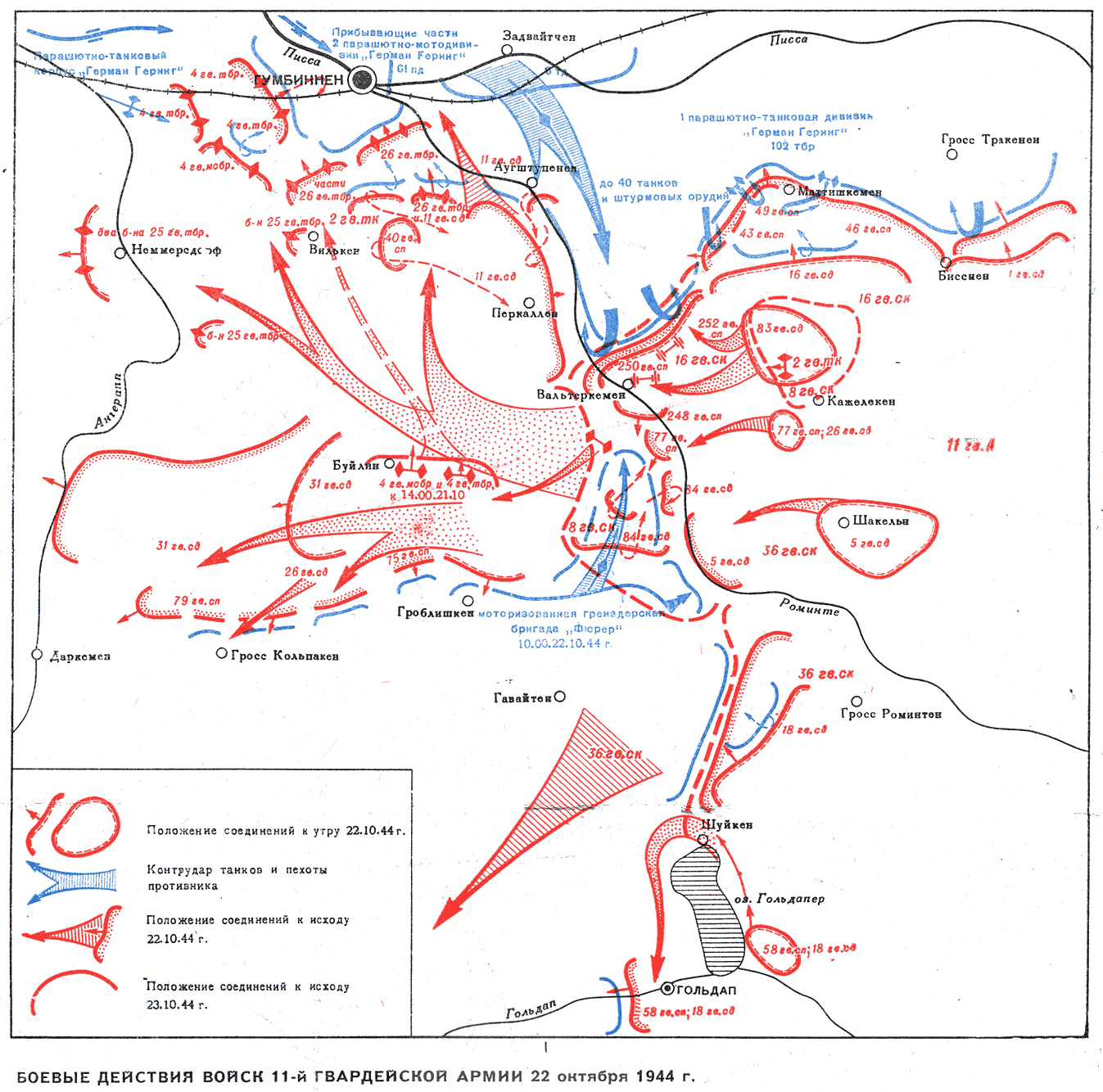
German Panzer-Befehlswagen' (Armoured-Command-car) "Panther" Nr. R01 of 'Fallschirm-Panzer-Regiment' (Parachute-Armoured-Regiment), Fallschirm-Panzer-Division 1 "Hermann Göring" belonging to regiment commander Major Karl Roßmann. One of a series of propaganda photos taken of Roßmann's Panzer-Regiment taking up positions to defend East Prussia prior to the Soviet Gumbinnen-Goldap Offensive. (Trakehnen-Mattischkehmen-area, Gumbinnen, East Prussia, early-Oct 1944).
Fallschirm-Panzer-Regiment of Fallschirm-Panzer-Division was an elite German Luftwaffe armoured regiment named after Reichsmarschall Hermann Göring. The unit first began as a police battalion in 1933 known as 'Polizei-Abteilung z.b.V. Wecke' (Police-battalion for special use 'Walther Wecke'), later becoming the first paratrooper unit of the Wehrmacht in 1938. In July 1942, the regiment was reorganized and expanded into 'Brigade Hermann Göring' then in October to 'Division Hermann Göring' that was sent to Tunisia in December 1942 under 'Kampfgruppe Schmid'.
The division retreated in May 1943 to Sicily after the defeat of the Afrikakorps and was redesignated 'Panzer-Division Hermann Goering' where it fought in Italy until July 1944. After Italy, the division was transferred to the Eastern Front in Poland and expanded as '1. Fallschirm-Panzerkorps Hermann Göring' (1st Parachute-Armoured-Corps) and was equipped with new Panzerkampfwagen V "Panthers". In early Feburary 1945 the unit suffered heavy losses fighting alongside SS-Panzer-Division "Wiking" and the 19. Panzer-Division during the Soviet Bagration and Vistula-Oder Offensives (aka. Schlacht im Weichselbogen), losing a large number of their Panthers in action. Despite a successful counter-attack that prevented a Soviet breakthrough, earning Major Karl Roßmann the Oak Leaves for the Knights Cross, the unit was severely weakened and pushed back to the Silesia area in April 1945. The 1. Fallschirm-Panzerkorps was eventually surrounded near Erzgebirge (Ore Mountains) and break out attempts were made however most of the unit surrendered to the Soviets on the 6th of May 1945; Roßmann and some of the unit survivors made it to the Elbe river where they surrendered to the American forces.
Fallschirm-Panzer-Regiment as of early Oct-1944:
* Regiment Stab (Regiment Staff) - Maj. Karl Roßmann.
I. Abteilung (1st Battalion).
* Abteilung Stab (Battalion Staff). - Haupt. Joachim Renz.
* 4x Kompanie (Panzer V "Panther").
II. Abteilung (2nd Battalion).
* Abteilung Stab (Battalion Staff) - Maj. Konstantin Hahm.
* 4x Kompanie (Panzer IV).
Original Image Source: (unkown)
Kurt Boecker, Luftwaffe Kriegsberichter-Kompanie 4 (?)
Crop, repair, upscale, colorize: RyanN81
Information Source: External link (Roßmann information)
Information Source: External link (Kraus information)
Information Source: External link (Unit history)
Information Source: External link (Unit history)
Information Source: External link (Location estimate - unit position top right of map)
[The World War 2 colorized photos are apolitical, and are simply for historical interest and research purposes only. Any comments relating to politics, racism or other inappropriate/offensive subjects will be removed].
Fallschirm-Panzer-Regiment
German Panzer-Befehlswagen' (Armoured-Command-car) "Panther" Nr. R01 of 'Fallschirm-Panzer-Regiment' (Parachute-Armoured-Regiment), Fallschirm-Panzer-Division 1 "Hermann Göring" belonging to regiment commander Major Karl Roßmann. One of a series of propaganda photos taken of Roßmann's Panzer-Regiment taking up positions to defend East Prussia prior to the Soviet Gumbinnen-Goldap Offensive. (Trakehnen-Mattischkehmen-area, Gumbinnen, East Prussia, early-Oct 1944).
Fallschirm-Panzer-Regiment of Fallschirm-Panzer-Division was an elite German Luftwaffe armoured regiment named after Reichsmarschall Hermann Göring. The unit first began as a police battalion in 1933 known as 'Polizei-Abteilung z.b.V. Wecke' (Police-battalion for special use 'Walther Wecke'), later becoming the first paratrooper unit of the Wehrmacht in 1938. In July 1942, the regiment was reorganized and expanded into 'Brigade Hermann Göring' then in October to 'Division Hermann Göring' that was sent to Tunisia in December 1942 under 'Kampfgruppe Schmid'.
The division retreated in May 1943 to Sicily after the defeat of the Afrikakorps and was redesignated 'Panzer-Division Hermann Goering' where it fought in Italy until July 1944. After Italy, the division was transferred to the Eastern Front in Poland and expanded as '1. Fallschirm-Panzerkorps Hermann Göring' (1st Parachute-Armoured-Corps) and was equipped with new Panzerkampfwagen V "Panthers". In early Feburary 1945 the unit suffered heavy losses fighting alongside SS-Panzer-Division "Wiking" and the 19. Panzer-Division during the Soviet Bagration and Vistula-Oder Offensives (aka. Schlacht im Weichselbogen), losing a large number of their Panthers in action. Despite a successful counter-attack that prevented a Soviet breakthrough, earning Major Karl Roßmann the Oak Leaves for the Knights Cross, the unit was severely weakened and pushed back to the Silesia area in April 1945. The 1. Fallschirm-Panzerkorps was eventually surrounded near Erzgebirge (Ore Mountains) and break out attempts were made however most of the unit surrendered to the Soviets on the 6th of May 1945; Roßmann and some of the unit survivors made it to the Elbe river where they surrendered to the American forces.
Fallschirm-Panzer-Regiment as of early Oct-1944:
* Regiment Stab (Regiment Staff) - Maj. Karl Roßmann.
I. Abteilung (1st Battalion).
* Abteilung Stab (Battalion Staff). - Haupt. Joachim Renz.
* 4x Kompanie (Panzer V "Panther").
II. Abteilung (2nd Battalion).
* Abteilung Stab (Battalion Staff) - Maj. Konstantin Hahm.
* 4x Kompanie (Panzer IV).
Original Image Source: (unkown)
Kurt Boecker, Luftwaffe Kriegsberichter-Kompanie 4 (?)
Crop, repair, upscale, colorize: RyanN81
Information Source: External link (Roßmann information)
Information Source: External link (Kraus information)
Information Source: External link (Unit history)
Information Source: External link (Unit history)
Information Source: External link (Location estimate - unit position top right of map)
[The World War 2 colorized photos are apolitical, and are simply for historical interest and research purposes only. Any comments relating to politics, racism or other inappropriate/offensive subjects will be removed].