View allAll Photos Tagged Exploit
Exploitant : SETRAM
Réseau : SETRAM
Ligne : 11
Lieu : Chêne Vert (Le Mans, F-72)
Lien TC Infos : tc-infos.fr/id/5655
youtu.be/KcPcJ9ycEu4?t=2m22s Full Feature
Curse of the Demon / Night of the Demon
Columbia TriStar Home Entertainment
1957/58 / B&W / 1:78 anamorphic 16:9 / 82, 95 min. / Street Date August 13, 2002 / $24.95
Starring Dana Andrews, Peggy Cummins, Niall MacGinnis, Maurice Denham, Athene Seyler
Cinematography Ted Scaife
Production Designer Ken Adam
Special Effects George Blackwell, S.D. Onions, Wally Veevers
Film Editor Michael Gordon
Original Music Clifton Parker
Written by Charles Bennett and Hal E. Chester from the story Casting the Runes by Montague R. James
Produced by Frank Bevis, Hal E. Chester
Directed by Jacques Tourneur
Reviewed by Glenn Erickson
Savant champions a lot of genre movies but only infrequently does one appear like Jacques Tourneur's superlative Curse of the Demon. It's simply better than the rest -- an intelligent horror film with some very good scares. It occupies a stylistic space that sums up what's best in ghost stories and can hold its own with most any supernatural film ever made. Oh, it's also a great entertainment that never fails to put audiences at the edge of their seats.
What's more, Columbia TriStar has shown uncommon respect for their genre output by including both versions of Curse of the Demon on one disc. Savant has full coverage on the versions and their restoration below, following his thorough and analytical (read: long-winded and anal) coverage of the film itself.
Synopsis:
Dr. John Holden (Dana Andrews), a scientist and professional debunker of superstitious charlatans, arrives in England to help Professor Henry Harrington (Maurice Denham) assault the phony cult surrounding Dr. Julian Karswell (Niall McGinnis). But Harrington has mysteriously died and Holden becomes involved with his niece Joanna (Peggy Cummins), who thinks Karswell had something to do with it. Karswell's 'tricks' confuse the skeptical Holden, but he stubbornly holds on to his conviction that he's " ... not a sucker, like 90% of the human race." That is, until the evidence mounts that Harrington was indeed killed by a demon summoned from Hell, and that Holden is the next intended victim!
The majority of horror films are fantasies in which we accept supernatural ghosts, demons and monsters as part of a deal we've made with the authors: they dress the fantasy in an attractive guise and arrange the variables into an interesting pattern, and we agree to play along for the sake of enjoyment. When it works the movies can resonate with personal meaning. Even though Dracula and Frankenstein are unreal, they are relevant because they're aligned with ideas and themes in our subconscious.
Horror films that seriously confront the no-man's land between rational reality and supernatural belief have a tough time of it. Everyone who believes in God knows that the tug o' war between rationality and faith in our culture has become so clogged with insane belief systems it's considered impolite to dismiss people who believe in flying saucers or the powers of crystals or little glass pyramids. One of Dana Andrews' key lines in Curse of the Demon, defending his dogged skepticism against those urging him to have an open mind, is his retort, "If the world is a dark place ruled by Devils and Demons, we all might as well give up right now." Curse of the Demon balances itself between skepticism and belief with polite English manners, letting us have our fun as it lays its trap. We watch Andrews roll his eyes and scoff at the feeble séance hucksters and the dire warnings of a foolish-looking necromancer. Meanwhile, a whole dark world of horror sneaks up on him. The film's intelligent is such that we're not offended by its advocacy of dark forces or even its literal, in-your-face demon.
The remarkable Curse of the Demon was made in England for Columbia but is gloriously unaffected by that company's zero-zero track record with horror films. Producer Hal E. Chester would seem an odd choice to make a horror classic after producing Joe Palooka films and acting as a criminal punk in dozens of teen crime movies. The obvious strong cards are writer Charles Bennett, the brains behind several classic English Hitchcock pictures (who 'retired' into meaningless bliss writing for schlockmeister Irwin Allen) and Jacques Tourneur, a master stylist who put Val Lewton on the map with Cat People and I Walked With a Zombie. Tourneur made interesting Westerns (Canyon Passage, Great Day in the Morning) and perhaps the most romantic film noir, Out of the Past. By the late '50s he was on what Andrew Sarris in his American Film called 'a commercial downgrade'. The critic lumped Curse of the Demon with low budget American turkeys like The Fearmakers. 1
Put Tourneur with an intelligent script, a decent cameraman and more than a minimal budget and great things could happen. We're used to watching Corman Poe films, English Hammer films and Italian Bavas and Fredas, all the while making excuses for the shortcomings that keep them in the genre ghetto (where they all do quite well, thank you). There's even a veiled resentment against upscale shockers like The Innocents that have resources (money, time, great actors) denied our favorite toilers in the genre realm. Curse of the Demon is above all those considerations. It has name actors past their prime and reasonable production values. Its own studio (at least in America) released it like a genre quickie, double-billed with dreck like The Night the World Exploded and The Giant Claw. They cut it by 13 minutes, changed its title (to ape The Curse of Frankenstein?) and released a poster featuring a huge, slavering demon monster that some believe was originally meant to be barely glimpsed in the film itself. 2
Horror movies can work on more than one level but Curse of the Demon handles several levels and then some. The narrative sets up John Holden as a professional skeptic who raises a smirking eyebrow to the open minds of his colleagues. Unlike most second-banana scientists in horror films, they express divergent points of view. Holden just sees himself as having common sense but his peers are impressed by the consistency of demonological beliefs through history. Maybe they all saw Christensen's Witchcraft through the Ages, which might have served as a primer for author Charles Bennett. Smart dialogue allows Holden to score points by scoffing at the then-current "regression to past lives" scam popularized by the Bridey Murphy craze. 3 While Holden stays firmly rooted to his position, coining smart phrases and sarcastic put-downs of believers, the other scientists are at least willing to consider alternate possibilities. Indian colleague K.T. Kumar (Peter Elliott) keeps his opinion to himself. But when asked, he politely states that he believes entirely in the world of demons! 4
Holden may think he has the truth by the tail but it takes Kindergarten teacher Joanna Harrington (Peggy Cummins of Gun Crazy fame) to show him that being a skeptic doesn't mean ignoring facts in front of one's face. Always ready for a drink (a detail added to tailor the part to Andrews?), Holden spends the first couple of reels as interested in pursuing Miss Harrington, as he is the devil-worshippers. The details and coincidences pile up with alarming speed -- the disappearing ink untraceable by the lab, the visual distortions that might be induced by hypnosis, the pages torn from his date book and the parchment of runic symbols. Holden believes them to be props in a conspiracy to draw him into a vortex of doubt and fear. Is he being set up the way a Voodoo master cons his victim, by being told he will die, with fabricated clues to make it all appear real? Holden even gets a bar of sinister music stuck in his head. It's the title theme -- is this a wicked joke on movie soundtracks?
Speak of the Devil...
This brings us to the wonderful character of Julian Karswell, the kiddie-clown turned multi-millionaire cult leader. The man who launched Alfred Hitchcock as a maker of sophisticated thrillers here creates one of the most interesting villains ever written, one surely as good as any of Hitchcock's. In the short American cut Karswell is a shrewd games-player who shows Holden too many of his cards and finally outsmarts himself. The longer UK cut retains the full depth of his character.
Karswell has tapped into the secrets of demonology to gain riches and power, yet he tragically recognizes that he is as vulnerable to the forces of Hell as are the cowering minions he controls through fear. Karswell's coven means business. It's an entirely different conception from the aesthetic salon coffee klatch of The Seventh Victim, where nothing really supernatural happens and the only menace comes from a secret society committing new crimes to hide old ones.
Karswell keeps his vast following living in fear, and supporting his extravagant lifestyle under the idea that Evil is Good, and Good Evil. At first the Hobart Farm seems to harbor religious Christian fundamentalists who have turned their backs on their son. Then we find out that they're Karswell followers, living blighted lives on cursed acreage and bled dry by their cultist "leader." Karswell's mum (Athene Seyler) is an inversion of the usual insane Hitchcock mother. She lovingly resists her son's philosophy and actively tries to help the heroes. That's in the Night version, of course. In the shorter American cut she only makes silly attempts to interest Joanna in her available son and arranges for a séance. Concerned by his "negativity", Mother confronts Julian on the stairs. He has no friends, no wife, no family. He may be a mass extortionist but he's still her baby. Karswell explains that by exploiting his occult knowledge, he's immersed himself forever in Evil. "You get nothing for nothing"
Karswell is like the Devil on Earth, a force with very limited powers that he can't always control. By definition he cannot trust any of his own minions. They're unreliable, weak and prone to double-cross each other, and they attract publicity that makes a secret society difficult to conceal. He can't just kill Holden, as he hasn't a single henchman on the payroll. He instead summons the demon, a magic trick he's only recently mastered. When Karswell turns Harrington away in the first scene we can sense his loneliness. The only person who can possibly understand is right before him, finally willing to admit his power and perhaps even tolerate him. Karswell has no choice but to surrender Harrington over to the un-recallable Demon. In his dealings with the cult-debunker Holden, Karswell defends his turf but is also attempting to justify himself to a peer, another man who might be a potential equal. It's more than a duel of egos between a James Bond and a Goldfinger, with arrogance and aggression masking a mutual respect; Karswell knows he's taken Lewton's "wrong turning in life," and will have to pay for it eventually.
Karswell eventually earns Holden's respect, especially after the fearful testimony of Rand Hobart. It's taken an extreme demonstration to do it, but Holden budges from his smug position. He may not buy all of the demonology hocus-pocus but it's plain enough that Karswell or his "demon" is going to somehow rub him out. Seeking to sneak the parchment back into Karswell's possession, Holden becomes a worthy hero because he's found the maturity to question his own preconceptions. Armed with his rational, cool head, he's a force that makes Karswell -- without his demon, of course -- a relative weakling. Curse of the Demon ends in a classic ghost story twist, with just desserts dished out and balance recovered. The good characters are less sure of their world than when they started, but they're still able to cope. Evil has been defeated not by love or faith, but by intellect.
Curse of the Demon has the Val Lewton sensibility as has often been cited in Tourneur's frequent (and very effective) use of the device called the Lewton "Bus" -- a wholly artificial jolt of fast motion and noise interrupting a tense scene. There's an ultimate "bus" at the end when a train blasts in and sets us up for the end title. It "erases" the embracing actors behind it and I've always thought it had to be an inspiration for the last shot of North by NorthWest. The ever-playful Hitchcock was reportedly a big viewer of fantastic films, from which he seems to have gotten many ideas. He's said to have dined with Lewton on more than one occasion (makes sense, they were at one time both Selznick contractees) and carried on a covert competition with William Castle, of all people.
Visually, Tourneur's film is marvelous, effortlessly conjuring menacing forests lit in the fantastic Mario Bava mode by Ted Scaife, who was not known as a genre stylist. There are more than a few perfunctory sets, with some unflattering mattes used for airport interiors, etc.. Elsewhere we see beautiful designs by Ken Adam in one of his earliest outings. Karswell's ornate floor and central staircase evoke an Escher print, especially when visible/invisible hands appear on the banister. A hypnotic, maze-like set for a hotel corridor is also tainted by Escher and evokes a sense of the uncanny even better than the horrid sounds Holden hears. The build-up of terror is so effective that one rather unconvincing episode (a fight with a Cat People - like transforming cat) does no harm. Other effects, such as the demon footprints appearing in the forest, work beautifully.
In his Encyclopedia of Horror Movies Phil Hardy very rightly relates Curse of the Demon's emphasis on the visual to the then just-beginning Euro-horror subgenre. The works of Bava, Margheriti and Freda would make the photographic texture of the screen the prime element of their films, sometimes above acting and story logic.
Columbia TriStar's DVD of Curse of the Demon / Night of the Demon presents both versions of this classic in one package. American viewers saw an effective but abbreviated cut-down. If you've seen Curse of the Demon on cable TV or rented a VHS or a laser anytime after 1987, you're not going to see anything different in the film. In 1987 Columbia happened to pull out the English cut when it went to re-master. When the title came up as Night of the Demon, they just slugged in the Curse main title card and let it go.
From such a happy accident (believe me, nobody in charge at Columbia at the time would have purposely given a film like this a second glance) came a restoration at least as wonderful as the earlier reversion of The Fearless Vampire Killers to its original form. Genre fans were taken by surprise and the Laserdisc became a hot item that often traded for hundreds of dollars. 6
Back in film school Savant had been convinced that ever seeing the long, original Night cut was a lost cause. An excellent article in the old Photon magazine in the early '70s 5, before such analytical work was common, accurately laid out the differences between the two versions, something Savant needs to do sometime with The Damned and These Are the Damned. The Photon article very accurately describes the cut scenes and what the film lost without them, and certainly inspired many of the ideas here.
Being able to see the two versions back-to-back shows exactly how they differ. Curse omits some scenes and rearranges others. Gone is some narration from the title sequence, most of the airplane ride, some dialogue on the ground with the newsmen and several scenes with Karswell talking to his mother. Most crucially missing are Karswell's mother showing Joanna the cabalistic book everyone talks so much about and Holden's entire visit to the Hobart farm to secure a release for his examination of Rand Hobart. Of course the cut film still works (we loved the cut Curse at UCLA screenings and there are people who actually think it's better) but it's nowhere near as involving as the complete UK version. Curse also reshuffles some events, moving Holden's phantom encounter in the hallway nearer the beginning, which may have been to get a spooky scene in the middle section or to better disguise the loss of whole scenes later. The chop-job should have been obvious. The newly imposed fades and dissolves look awkward. One cut very sloppily happens right in the middle of a previous dissolve.
Night places both Andrews and Cummins' credits above the title and gives McGinnis an "also starring" credit immediately afterwards. Oddly, Curse sticks Cummins afterwards and relegates McGinnis to the top of the "also with" cast list. Maybe with his role chopped down, some Columbia executive thought he didn't deserve the billing?
Technically, both versions look just fine, very sharp and free of digital funk that would spoil the film's spooky visual texture. Night of the Demon is the version to watch for both content and quality. It's not perfect but has better contrast and less dirt than the American version. Curse has more emulsion scratches and flecking white dandruff in its dark scenes, yet looks fine until one sees the improvement of Night. Both shows are widescreen enhanced (hosanna), framing the action at its original tighter aspect ratio.
It's terrific that Columbia TriStar has brought out this film so thoughtfully, even though some viewers are going to be confused when their "double feature" disc appears to be two copies of the same movie. Let 'em stew. This is Savant's favorite release so far this year.
On a scale of Excellent, Good, Fair, and Poor, Curse of the Demon / Night of the Demon rates:
Movie: Excellent
Footnotes:
Made very close to Curse of the Demon and starring Dana Andrews, The Fearmakers (great title) was a Savant must-see until he caught up with it in the UA collection at MGM. It's a pitiful no-budgeter that claims Madison Avenue was providing public relations for foreign subversives, and is negligible even in the lists of '50s anti-Commie films.
Return
Curse of the Demon's Demon has been the subject of debate ever since the heyday of Famous Monsters of Filmland. From what's on record it's clear that producer Chester added or maximized the shots of the creature, a literal visualization of a fiery, brimstone-smoking classical woodcut demon that some viewers think looks ridiculous. Bennett and Tourneur's original idea was to never show a demon but the producer changed that. Tourneur probably directed most of the shots, only to have Chester over-use them. To Savant's thinking, the demon looks great. It is first perceived as an ominous sound, a less strident version of the disturbing noise made by Them! Then it manifests itself visually as a strange disturbance in the sky (bubbles? sparks? early slit-scan?) followed by a billowing cloud of sulphurous smoke (a dandy effect not exploited again until Close Encounters of the Third Kind). The long-shot demon is sometimes called the bicycle demon because he's a rod puppet with legs that move on a wheel-rig. Smoke belches from all over his scaly body. Close-ups are provided by a wonderfully sculpted head 'n' shoulders demon with articulated eyes and lips, a full decade or so before Carlo Rambaldi started engineering such devices.
Most of the debate centers on how much Demon should have been shown with the general consensus that less would have been better. People who dote on Lewton-esque ambivalence say that the film's slow buildup of rationality-versus demonology is destroyed by the very real Demon's appearance in the first scene, and that's where they'd like it removed or radically reduced. The Demon is so nicely integrated into the cutting (the giant foot in the first scene is a real jolt) that it's likely that Tourneur himself filmed it all, perhaps expecting the shots to be shorter or more obscured. It is also possible that the giant head was a post-Tourneur addition - it doesn't tie in with the other shots as well (especially when it rolls forward rather stiffly) and is rather blunt. Detractors lump it in with the gawd-awful head of The Black Scorpion, which is filmed the same way and almost certainly was an afterthought - and also became a key poster image. This demon head matches the surrounding action a lot better than did the drooling Scorpion.
Savant wouldn't change Curse of the Demon but if you put a gun to my head I'd shorten most of the shots in its first appearance, perhaps eliminating all close-ups except for the final, superb shot of the the giant claw reaching for Harrington / us.
Kumar, played (I assume) by an Anglo actor, immediately evokes all those Indian and other Third World characters in Hammer films whose indigenous cultures invariably hold all manner of black magic and insidious horror. When Hammer films are repetitious it's because they take eighty minutes or so to convince the imagination-challenged English heroes to even consider the premise of the film as being real. In Curse of the Demon, Holden's smart-tongued dismissal of outside viewpoints seems much more pigheaded now than it did in 1957, when heroes confidently defended conformist values without being challenged. Kumar is a scientist but also probably a Hindu or a Sikh. He has no difficulty reconciling his faith with his scientific detachment. Holden is far too tactful to call Kumar a crazy third-world guru but that's probably what he's thinking. He instead politely ignores him. Good old Kumar then saves Holden's hide with some timely information. I hope Holden remembered to thank him.
There's an unstated conclusion in Curse of the Demon: Holden's rigid disbelief of the supernatural means he also does not believe in a Christian God with its fundamentally spiritual faith system of Good and Evil, saints and devils, angels and demons. Horror movies that deal directly with religious symbolism and "real faith" can be hypocritical in their exploitation and brutal in their cheap toying with what are for many people sacred personal concepts. I'm thinking of course of The Exorcist here. That movie has all the grace of a reporter who shows a serial killer's atrocity photos to a mother whose child has just been kidnapped. Curse of the Demon hasn't The Exorcist's ruthless commercial instincts but instead has the modesty not to pretend to be profound, or even "real." Yet it expresses our basic human conflict between rationality and faith very nicely.
Savant called Jim Wyrnoski, who was associated with Photon, in an effort to find out more about the article, namely who wrote it. It was very well done and I've never forgotten it; I unfortunately loaned my copy out to good old Jim Ursini and it disappeared. Obviously, a lot of the ideas here, I first read there. Perhaps a reader who knows better how to take care of their belongings can help me with the info? Ursini and Alain Silvers' More Things than are Dreamt Of Limelight, 1994, analyzes Curse of the Demon (and many other horror movies) in the context of its source story.
This is a true story: Cut to 2000. Columbia goes to re-master Curse of the Demon and finds that the fine-grain original of the English version is missing. The original long version of the movie may be lost forever. A few months later a collector appears who says he bought it from another unnamed collector and offers to trade it for a print copy of the American version, which he prefers. Luckily, an intermediary helps the collector follow up on his offer and the authorities are not contacted about what some would certainly call stolen property. The long version is now once again safe. Studios clearly need to defend their property but many collectors have "items" they personally have acquired legally. More often than you might think, such finds come about because studios throw away important elements. If the studios threaten prosecution, they will find that collectors will never approach them. They'd probably prefer to destroy irreplaceable film to avoid being criminalized.
Those of you who follow my exploits on Flickr will have noticed my recent enthusiasm for the little or sometimes gigantic fluffy things that happily float above us on a daily basis mostly unnoticed. Imagine my delight then when I spotted this developing on my journey back home the other day. The sun was setting directly ahead as I travelled west and as the road veered I caught sight of this awsome glow starting to radiate over the hills of West Carmarthenshire. This was the second of the two images I captured that evening. Don't you just love nature!!!
============================================================================
Comments/Invites are always appreciated, but please do not place Multiple Invites, Flickriver Badges or Animated badges with comments. They may be deleted.
Best seen on Black, press "L" Then on a PC press F11 for full screen view, or view in Fluidr (use link below).
All my images are © All Rights Reserved, and must not be used in any form whatsoever, on or in any type of media without my expressed permission.
Véhicule : IVECO BUS Crossway LE City €6
Identification : 6843 (EA-731-BF)
Exploitant : Citram Aquitaine (Groupe Transdev)
Dépôt : Bassens
Réseau : TBM (Bordeaux Métropole)
Ligne : 130C NAVETTE SPÉCIALE TOP14
Voiture : n.c.
Destination : Gare Saint-Jean
À l'occasion d'un match de rugby pour le TOP14 au Stade Matmut Atlantique, TBM a mis en place une Navette Spéciale pour renforcer l'offre entre la Gare Saint-Jean et la Place de la Victoire.
09/06/2019 19:53
Rue Saint-Vincent-de-Paul ; Bordeaux
RENAULT 4 Cabriolet Sport - RETRO PASSION 2018 - Chevigny St Sauveur (COTE D'OR)
Website : www.fluidr.com/photos/pat21
www.flickriver.com/photos/pat21/sets/
"Copyright © – Patrick Bouchenard
The reproduction, publication, modification, transmission or exploitation of any work contained here in for any use, personal or commercial, without my prior written permission is strictly prohibited. All rights reserved."
Built for the rick and Morty Exploit the Fans for Art DVD Contest.
He finally found his purpose.
Available to view on twitter.
Click here for the reference images, and here for the existential crisis.
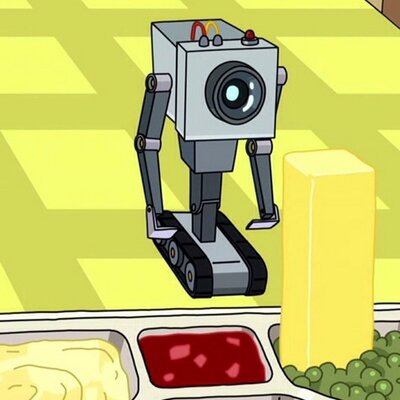

Rick and Morty and all related names, images etc. are property of Justin Roiland, Dan Harmon and Adultswim. All rights reserved.
A lot of my wife's epiphyllum flowers are in bloom right now so I'm exploiting them while the exploitation is good.
I placed the flower on a mirror because I life the different view point that the reflection provides. Lighting came from a Yongnuo flash in a 24 inch soft box on either side of the flower pointed at the center. The strobes and my tripod mounted camera were triggered with a Yongnuo RF-603N.
Over the years, I've taken quite a few "Epi" pictures, and they're in my Epiphyllum Flowers album, if you like that sort of thing.
www.flickr.com/photos/9422878@N08/albums/72157680754580643
I've photographed a lot of plants and flowers, because they're all around us, work cheap, and never complain. I have an album of these images with over 1100 pictures, and for each one, I have described how I lit them, in case you're interested in that kind of thing.
Ganesha, also spelled Ganesh, and also known as Ganapati and Vinayaka, is a widely worshipped deity in the Hindu pantheon. His image is found throughout India and Nepal. Hindu sects worship him regardless of affiliations. Devotion to Ganesha is widely diffused and extends to Jains, Buddhists, and beyond India.
Although he is known by many attributes, Ganesha's elephant head makes him easy to identify. Ganesha is widely revered as the remover of obstacles, the patron of arts and sciences and the deva of intellect and wisdom. As the god of beginnings, he is honoured at the start of rituals and ceremonies. Ganesha is also invoked as patron of letters and learning during writing sessions. Several texts relate mythological anecdotes associated with his birth and exploits and explain his distinct iconography.
Ganesha emerged as a distinct deity in the 4th and 5th centuries CE, during the Gupta Period, although he inherited traits from Vedic and pre-Vedic precursors. He was formally included among the five primary deities of Smartism (a Hindu denomination) in the 9th century. A sect of devotees called the Ganapatya arose, who identified Ganesha as the supreme deity. The principal scriptures dedicated to Ganesha are the Ganesha Purana, the Mudgala Purana, and the Ganapati Atharvashirsa.
ETYMOLOGY AND OTHER NAMES
Ganesha has been ascribed many other titles and epithets, including Ganapati and Vighneshvara. The Hindu title of respect Shri is often added before his name. One popular way Ganesha is worshipped is by chanting a Ganesha Sahasranama, a litany of "a thousand names of Ganesha". Each name in the sahasranama conveys a different meaning and symbolises a different aspect of Ganesha. At least two different versions of the Ganesha Sahasranama exist; one version is drawn from the Ganesha Purana, a Hindu scripture venerating Ganesha.
The name Ganesha is a Sanskrit compound, joining the words gana, meaning a group, multitude, or categorical system and isha, meaning lord or master. The word gaņa when associated with Ganesha is often taken to refer to the gaņas, a troop of semi-divine beings that form part of the retinue of Shiva. The term more generally means a category, class, community, association, or corporation. Some commentators interpret the name "Lord of the Gaņas" to mean "Lord of Hosts" or "Lord of created categories", such as the elements. Ganapati, a synonym for Ganesha, is a compound composed of gaṇa, meaning "group", and pati, meaning "ruler" or "lord". The Amarakosha, an early Sanskrit lexicon, lists eight synonyms of Ganesha : Vinayaka, Vighnarāja (equivalent to Vighnesha), Dvaimātura (one who has two mothers), Gaṇādhipa (equivalent to Ganapati and Ganesha), Ekadanta (one who has one tusk), Heramba, Lambodara (one who has a pot belly, or, literally, one who has a hanging belly), and Gajanana; having the face of an elephant).
Vinayaka is a common name for Ganesha that appears in the Purāṇas and in Buddhist Tantras. This name is reflected in the naming of the eight famous Ganesha temples in Maharashtra known as the Ashtavinayak (aṣṭavināyaka). The names Vighnesha and Vighneshvara (Lord of Obstacles) refers to his primary function in Hindu theology as the master and remover of obstacles (vighna).
A prominent name for Ganesha in the Tamil language is Pillai. A. K. Narain differentiates these terms by saying that pillai means a "child" while pillaiyar means a "noble child". He adds that the words pallu, pella, and pell in the Dravidian family of languages signify "tooth or tusk", also "elephant tooth or tusk". Anita Raina Thapan notes that the root word pille in the name Pillaiyar might have originally meant "the young of the elephant", because the Pali word pillaka means "a young elephant".
In the Burmese language, Ganesha is known as Maha Peinne, derived from Pali Mahā Wināyaka. The widespread name of Ganesha in Thailand is Phra Phikhanet or Phra Phikhanesuan, both of which are derived from Vara Vighnesha and Vara Vighneshvara respectively, whereas the name Khanet (from Ganesha) is rather rare.
In Sri Lanka, in the North-Central and North Western areas with predominantly Buddhist population, Ganesha is known as Aiyanayaka Deviyo, while in other Singhala Buddhist areas he is known as Gana deviyo.
ICONOGRAPHY
Ganesha is a popular figure in Indian art. Unlike those of some deities, representations of Ganesha show wide variations and distinct patterns changing over time. He may be portrayed standing, dancing, heroically taking action against demons, playing with his family as a boy, sitting down or on an elevated seat, or engaging in a range of contemporary situations.
Ganesha images were prevalent in many parts of India by the 6th century. The 13th century statue pictured is typical of Ganesha statuary from 900–1200, after Ganesha had been well-established as an independent deity with his own sect. This example features some of Ganesha's common iconographic elements. A virtually identical statue has been dated between 973–1200 by Paul Martin-Dubost, and another similar statue is dated c. 12th century by Pratapaditya Pal. Ganesha has the head of an elephant and a big belly. This statue has four arms, which is common in depictions of Ganesha. He holds his own broken tusk in his lower-right hand and holds a delicacy, which he samples with his trunk, in his lower-left hand. The motif of Ganesha turning his trunk sharply to his left to taste a sweet in his lower-left hand is a particularly archaic feature. A more primitive statue in one of the Ellora Caves with this general form has been dated to the 7th century. Details of the other hands are difficult to make out on the statue shown. In the standard configuration, Ganesha typically holds an axe or a goad in one upper arm and a pasha (noose) in the other upper arm.
The influence of this old constellation of iconographic elements can still be seen in contemporary representations of Ganesha. In one modern form, the only variation from these old elements is that the lower-right hand does not hold the broken tusk but is turned towards the viewer in a gesture of protection or fearlessness (abhaya mudra). The same combination of four arms and attributes occurs in statues of Ganesha dancing, which is a very popular theme.
COMMON ATTRIBUTES
Ganesha has been represented with the head of an elephant since the early stages of his appearance in Indian art. Puranic myths provide many explanations for how he got his elephant head. One of his popular forms, Heramba-Ganapati, has five elephant heads, and other less-common variations in the number of heads are known. While some texts say that Ganesha was born with an elephant head, he acquires the head later in most stories. The most recurrent motif in these stories is that Ganesha was created by Parvati using clay to protect her and Shiva beheaded him when Ganesha came between Shiva and Parvati. Shiva then replaced Ganesha's original head with that of an elephant. Details of the battle and where the replacement head came from vary from source to source. Another story says that Ganesha was created directly by Shiva's laughter. Because Shiva considered Ganesha too alluring, he gave him the head of an elephant and a protruding belly.
Ganesha's earliest name was Ekadanta (One Tusked), referring to his single whole tusk, the other being broken. Some of the earliest images of Ganesha show him holding his broken tusk. The importance of this distinctive feature is reflected in the Mudgala Purana, which states that the name of Ganesha's second incarnation is Ekadanta. Ganesha's protruding belly appears as a distinctive attribute in his earliest statuary, which dates to the Gupta period (4th to 6th centuries). This feature is so important that, according to the Mudgala Purana, two different incarnations of Ganesha use names based on it: Lambodara (Pot Belly, or, literally, Hanging Belly) and Mahodara (Great Belly). Both names are Sanskrit compounds describing his belly. The Brahmanda Purana says that Ganesha has the name Lambodara because all the universes (i.e., cosmic eggs) of the past, present, and future are present in him. The number of Ganesha's arms varies; his best-known forms have between two and sixteen arms. Many depictions of Ganesha feature four arms, which is mentioned in Puranic sources and codified as a standard form in some iconographic texts. His earliest images had two arms. Forms with 14 and 20 arms appeared in Central India during the 9th and the 10th centuries. The serpent is a common feature in Ganesha iconography and appears in many forms. According to the Ganesha Purana, Ganesha wrapped the serpent Vasuki around his neck. Other depictions of snakes include use as a sacred thread wrapped around the stomach as a belt, held in a hand, coiled at the ankles, or as a throne. Upon Ganesha's forehead may be a third eye or the Shaivite sectarian mark , which consists of three horizontal lines. The Ganesha Purana prescribes a tilaka mark as well as a crescent moon on the forehead. A distinct form of Ganesha called Bhalachandra includes that iconographic element. Ganesha is often described as red in color. Specific colors are associated with certain forms. Many examples of color associations with specific meditation forms are prescribed in the Sritattvanidhi, a treatise on Hindu iconography. For example, white is associated with his representations as Heramba-Ganapati and Rina-Mochana-Ganapati (Ganapati Who Releases from Bondage). Ekadanta-Ganapati is visualized as blue during meditation in that form.
VAHANAS
The earliest Ganesha images are without a vahana (mount/vehicle). Of the eight incarnations of Ganesha described in the Mudgala Purana, Ganesha uses a mouse (shrew) in five of them, a lion in his incarnation as Vakratunda, a peacock in his incarnation as Vikata, and Shesha, the divine serpent, in his incarnation as Vighnaraja. Mohotkata uses a lion, Mayūreśvara uses a peacock, Dhumraketu uses a horse, and Gajanana uses a mouse, in the four incarnations of Ganesha listed in the Ganesha Purana. Jain depictions of Ganesha show his vahana variously as a mouse, elephant, tortoise, ram, or peacock.
Ganesha is often shown riding on or attended by a mouse, shrew or rat. Martin-Dubost says that the rat began to appear as the principal vehicle in sculptures of Ganesha in central and western India during the 7th century; the rat was always placed close to his feet. The mouse as a mount first appears in written sources in the Matsya Purana and later in the Brahmananda Purana and Ganesha Purana, where Ganesha uses it as his vehicle in his last incarnation. The Ganapati Atharvashirsa includes a meditation verse on Ganesha that describes the mouse appearing on his flag. The names Mūṣakavāhana (mouse-mount) and Ākhuketana (rat-banner) appear in the Ganesha Sahasranama.
The mouse is interpreted in several ways. According to Grimes, "Many, if not most of those who interpret Gaṇapati's mouse, do so negatively; it symbolizes tamoguṇa as well as desire". Along these lines, Michael Wilcockson says it symbolizes those who wish to overcome desires and be less selfish. Krishan notes that the rat is destructive and a menace to crops. The Sanskrit word mūṣaka (mouse) is derived from the root mūṣ (stealing, robbing). It was essential to subdue the rat as a destructive pest, a type of vighna (impediment) that needed to be overcome. According to this theory, showing Ganesha as master of the rat demonstrates his function as Vigneshvara (Lord of Obstacles) and gives evidence of his possible role as a folk grāma-devatā (village deity) who later rose to greater prominence. Martin-Dubost notes a view that the rat is a symbol suggesting that Ganesha, like the rat, penetrates even the most secret places.
ASSOCIATIONS
OBSTACLES
Ganesha is Vighneshvara or Vighnaraja or Vighnaharta (Marathi), the Lord of Obstacles, both of a material and spiritual order. He is popularly worshipped as a remover of obstacles, though traditionally he also places obstacles in the path of those who need to be checked. Paul Courtright says that "his task in the divine scheme of things, his dharma, is to place and remove obstacles. It is his particular territory, the reason for his creation."
Krishan notes that some of Ganesha's names reflect shadings of multiple roles that have evolved over time. Dhavalikar ascribes the quick ascension of Ganesha in the Hindu pantheon, and the emergence of the Ganapatyas, to this shift in emphasis from vighnakartā (obstacle-creator) to vighnahartā (obstacle-averter). However, both functions continue to be vital to his character.
BUDDHI (KNOWLEDGE)
Ganesha is considered to be the Lord of letters and learning. In Sanskrit, the word buddhi is a feminine noun that is variously translated as intelligence, wisdom, or intellect. The concept of buddhi is closely associated with the personality of Ganesha, especially in the Puranic period, when many stories stress his cleverness and love of intelligence. One of Ganesha's names in the Ganesha Purana and the Ganesha Sahasranama is Buddhipriya. This name also appears in a list of 21 names at the end of the Ganesha Sahasranama that Ganesha says are especially important. The word priya can mean "fond of", and in a marital context it can mean "lover" or "husband", so the name may mean either "Fond of Intelligence" or "Buddhi's Husband".
AUM
Ganesha is identified with the Hindu mantra Aum, also spelled Om. The term oṃkārasvarūpa (Aum is his form), when identified with Ganesha, refers to the notion that he personifies the primal sound. The Ganapati Atharvashirsa attests to this association. Chinmayananda translates the relevant passage as follows:
(O Lord Ganapati!) You are (the Trinity) Brahma, Vishnu, and Mahesa. You are Indra. You are fire [Agni] and air [Vāyu]. You are the sun [Sūrya] and the moon [Chandrama]. You are Brahman. You are (the three worlds) Bhuloka [earth], Antariksha-loka [space], and Swargaloka [heaven]. You are Om. (That is to say, You are all this).
Some devotees see similarities between the shape of Ganesha's body in iconography and the shape of Aum in the Devanāgarī and Tamil scripts.
FIRST CHAKRA
According to Kundalini yoga, Ganesha resides in the first chakra, called Muladhara (mūlādhāra). Mula means "original, main"; adhara means "base, foundation". The muladhara chakra is the principle on which the manifestation or outward expansion of primordial Divine Force rests. This association is also attested to in the Ganapati Atharvashirsa. Courtright translates this passage as follows: "[O Ganesha,] You continually dwell in the sacral plexus at the base of the spine [mūlādhāra cakra]." Thus, Ganesha has a permanent abode in every being at the Muladhara. Ganesha holds, supports and guides all other chakras, thereby "governing the forces that propel the wheel of life".
FAMILY AND CONSORTS
Though Ganesha is popularly held to be the son of Shiva and Parvati, the Puranic myths give different versions about his birth. In some he was created by Parvati, in another he was created by Shiva and Parvati, in another he appeared mysteriously and was discovered by Shiva and Parvati or he was born from the elephant headed goddess Malini after she drank Parvati's bath water that had been thrown in the river.
The family includes his brother the war god Kartikeya, who is also called Subramanya, Skanda, Murugan and other names. Regional differences dictate the order of their births. In northern India, Skanda is generally said to be the elder, while in the south, Ganesha is considered the first born. In northern India, Skanda was an important martial deity from about 500 BCE to about 600 CE, when worship of him declined significantly in northern India. As Skanda fell, Ganesha rose. Several stories tell of sibling rivalry between the brothers and may reflect sectarian tensions.
Ganesha's marital status, the subject of considerable scholarly review, varies widely in mythological stories. One pattern of myths identifies Ganesha as an unmarried brahmacari. This view is common in southern India and parts of northern India. Another pattern associates him with the concepts of Buddhi (intellect), Siddhi (spiritual power), and Riddhi (prosperity); these qualities are sometimes personified as goddesses, said to be Ganesha's wives. He also may be shown with a single consort or a nameless servant (Sanskrit: daşi). Another pattern connects Ganesha with the goddess of culture and the arts, Sarasvati or Śarda (particularly in Maharashtra). He is also associated with the goddess of luck and prosperity, Lakshmi. Another pattern, mainly prevalent in the Bengal region, links Ganesha with the banana tree, Kala Bo.
The Shiva Purana says that Ganesha had begotten two sons: Kşema (prosperity) and Lābha (profit). In northern Indian variants of this story, the sons are often said to be Śubha (auspiciouness) and Lābha. The 1975 Hindi film Jai Santoshi Maa shows Ganesha married to Riddhi and Siddhi and having a daughter named Santoshi Ma, the goddess of satisfaction. This story has no Puranic basis, but Anita Raina Thapan and Lawrence Cohen cite Santoshi Ma's cult as evidence of Ganesha's continuing evolution as a popular deity.
WOSHIP AND FESTIVALS
Ganesha is worshipped on many religious and secular occasions; especially at the beginning of ventures such as buying a vehicle or starting a business. K.N. Somayaji says, "there can hardly be a [Hindu] home [in India] which does not house an idol of Ganapati. [..] Ganapati, being the most popular deity in India, is worshipped by almost all castes and in all parts of the country". Devotees believe that if Ganesha is propitiated, he grants success, prosperity and protection against adversity.
Ganesha is a non-sectarian deity, and Hindus of all denominations invoke him at the beginning of prayers, important undertakings, and religious ceremonies. Dancers and musicians, particularly in southern India, begin performances of arts such as the Bharatnatyam dance with a prayer to Ganesha. Mantras such as Om Shri Gaṇeshāya Namah (Om, salutation to the Illustrious Ganesha) are often used. One of the most famous mantras associated with Ganesha is Om Gaṃ Ganapataye Namah (Om, Gaṃ, Salutation to the Lord of Hosts).
Devotees offer Ganesha sweets such as modaka and small sweet balls (laddus). He is often shown carrying a bowl of sweets, called a modakapātra. Because of his identification with the color red, he is often worshipped with red sandalwood paste (raktacandana) or red flowers. Dūrvā grass (Cynodon dactylon) and other materials are also used in his worship.
Festivals associated with Ganesh are Ganesh Chaturthi or Vināyaka chaturthī in the śuklapakṣa (the fourth day of the waxing moon) in the month of bhādrapada (August/September) and the Gaṇeśa jayanti (Gaṇeśa's birthday) celebrated on the cathurthī of the śuklapakṣa (fourth day of the waxing moon) in the month of māgha (January/February)."
GANESH CHATURTI
An annual festival honours Ganesha for ten days, starting on Ganesha Chaturthi, which typically falls in late August or early September. The festival begins with people bringing in clay idols of Ganesha, symbolising Ganesha's visit. The festival culminates on the day of Ananta Chaturdashi, when idols (murtis) of Ganesha are immersed in the most convenient body of water. Some families have a tradition of immersion on the 2nd, 3rd, 5th, or 7th day. In 1893, Lokmanya Tilak transformed this annual Ganesha festival from private family celebrations into a grand public event. He did so "to bridge the gap between the Brahmins and the non-Brahmins and find an appropriate context in which to build a new grassroots unity between them" in his nationalistic strivings against the British in Maharashtra. Because of Ganesha's wide appeal as "the god for Everyman", Tilak chose him as a rallying point for Indian protest against British rule. Tilak was the first to install large public images of Ganesha in pavilions, and he established the practice of submerging all the public images on the tenth day. Today, Hindus across India celebrate the Ganapati festival with great fervour, though it is most popular in the state of Maharashtra. The festival also assumes huge proportions in Mumbai, Pune, and in the surrounding belt of Ashtavinayaka temples.
TEMPLES
In Hindu temples, Ganesha is depicted in various ways: as an acolyte or subordinate deity (pãrśva-devatã); as a deity related to the principal deity (parivāra-devatã); or as the principal deity of the temple (pradhāna), treated similarly as the highest gods of the Hindu pantheon. As the god of transitions, he is placed at the doorway of many Hindu temples to keep out the unworthy, which is analogous to his role as Parvati’s doorkeeper. In addition, several shrines are dedicated to Ganesha himself, of which the Ashtavinayak (lit. "eight Ganesha (shrines)") in Maharashtra are particularly well known. Located within a 100-kilometer radius of the city of Pune, each of these eight shrines celebrates a particular form of Ganapati, complete with its own lore and legend. The eight shrines are: Morgaon, Siddhatek, Pali, Mahad, Theur, Lenyadri, Ozar and Ranjangaon.
There are many other important Ganesha temples at the following locations: Wai in Maharashtra; Ujjain in Madhya Pradesh; Jodhpur, Nagaur and Raipur (Pali) in Rajasthan; Baidyanath in Bihar; Baroda, Dholaka, and Valsad in Gujarat and Dhundiraj Temple in Varanasi, Uttar Pradesh. Prominent Ganesha temples in southern India include the following: Kanipakam in Chittoor; the Jambukeśvara Temple at Tiruchirapalli; at Rameshvaram and Suchindram in Tamil Nadu; at Malliyur, Kottarakara, Pazhavangadi, Kasargod in Kerala, Hampi, and Idagunji in Karnataka; and Bhadrachalam in Andhra Pradesh.
T. A. Gopinatha notes, "Every village however small has its own image of Vighneśvara (Vigneshvara) with or without a temple to house it in. At entrances of villages and forts, below pīpaḹa (Sacred fig) trees [...], in a niche [...] in temples of Viṣṇu (Vishnu) as well as Śiva (Shiva) and also in separate shrines specially constructed in Śiva temples [...]; the figure of Vighneśvara is invariably seen." Ganesha temples have also been built outside of India, including southeast Asia, Nepal (including the four Vinayaka shrines in the Kathmandu valley), and in several western countries.
RISE TO PROMINENCE
FIRST APEARANCE
Ganesha appeared in his classic form as a clearly recognizable deity with well-defined iconographic attributes in the early 4th to 5th centuries. Shanti Lal Nagar says that the earliest known iconic image of Ganesha is in the niche of the Shiva temple at Bhumra, which has been dated to the Gupta period. His independent cult appeared by about the 10th century. Narain summarizes the controversy between devotees and academics regarding the development of Ganesha as follows:
What is inscrutable is the somewhat dramatic appearance of Gaņeśa on the historical scene. His antecedents are not clear. His wide acceptance and popularity, which transcend sectarian and territorial limits, are indeed amazing. On the one hand there is the pious belief of the orthodox devotees in Gaņeśa's Vedic origins and in the Purāṇic explanations contained in the confusing, but nonetheless interesting, mythology. On the other hand there are doubts about the existence of the idea and the icon of this deity" before the fourth to fifth century A.D. ... [I]n my opinion, indeed there is no convincing evidence of the existence of this divinity prior to the fifth century.
POSSIBLE INFLUENCES
Courtright reviews various speculative theories about the early history of Ganesha, including supposed tribal traditions and animal cults, and dismisses all of them in this way:
In the post 600 BC period there is evidence of people and places named after the animal. The motif appears on coins and sculptures.
Thapan's book on the development of Ganesha devotes a chapter to speculations about the role elephants had in early India but concludes that, "although by the second century CE the elephant-headed yakṣa form exists it cannot be presumed to represent Gaṇapati-Vināyaka. There is no evidence of a deity by this name having an elephant or elephant-headed form at this early stage. Gaṇapati-Vināyaka had yet to make his debut."
One theory of the origin of Ganesha is that he gradually came to prominence in connection with the four Vinayakas (Vināyakas). In Hindu mythology, the Vināyakas were a group of four troublesome demons who created obstacles and difficulties but who were easily propitiated. The name Vināyaka is a common name for Ganesha both in the Purāṇas and in Buddhist Tantras. Krishan is one of the academics who accepts this view, stating flatly of Ganesha, "He is a non-vedic god. His origin is to be traced to the four Vināyakas, evil spirits, of the Mānavagŗhyasūtra (7th–4th century BCE) who cause various types of evil and suffering". Depictions of elephant-headed human figures, which some identify with Ganesha, appear in Indian art and coinage as early as the 2nd century. According to Ellawala, the elephant-headed Ganesha as lord of the Ganas was known to the people of Sri Lanka in the early pre-Christian era.
A metal plate depiction of Ganesha had been discovered in 1993, in Iran, it dated back to 1,200 BCE. Another one was discovered much before, in Lorestan Province of Iran.
First Ganesha's terracotta images are from 1st century CE found in Ter, Pal, Verrapuram and Chandraketugarh. These figures are small, with elephant head, two arms, and chubby physique. The earliest Ganesha icons in stone were carved in Mathura during Kushan times (2nd-3rd centuries CE).
VEDIC AND EPIC LITERATURE
The title "Leader of the group" (Sanskrit: gaṇapati) occurs twice in the Rig Veda, but in neither case does it refer to the modern Ganesha. The term appears in RV 2.23.1 as a title for Brahmanaspati, according to commentators. While this verse doubtless refers to Brahmanaspati, it was later adopted for worship of Ganesha and is still used today. In rejecting any claim that this passage is evidence of Ganesha in the Rig Veda, Ludo Rocher says that it "clearly refers to Bṛhaspati—who is the deity of the hymn—and Bṛhaspati only". Equally clearly, the second passage (RV 10.112.9) refers to Indra, who is given the epithet 'gaṇapati', translated "Lord of the companies (of the Maruts)." However, Rocher notes that the more recent Ganapatya literature often quotes the Rigvedic verses to give Vedic respectability to Ganesha .
Two verses in texts belonging to Black Yajurveda, Maitrāyaṇīya Saṃhitā (2.9.1) and Taittirīya Āraṇyaka (10.1), appeal to a deity as "the tusked one" (Dantiḥ), "elephant-faced" (Hastimukha), and "with a curved trunk" (Vakratuņḍa). These names are suggestive of Ganesha, and the 14th century commentator Sayana explicitly establishes this identification. The description of Dantin, possessing a twisted trunk (vakratuṇḍa) and holding a corn-sheaf, a sugar cane, and a club, is so characteristic of the Puranic Ganapati that Heras says "we cannot resist to accept his full identification with this Vedic Dantin". However, Krishan considers these hymns to be post-Vedic additions. Thapan reports that these passages are "generally considered to have been interpolated". Dhavalikar says, "the references to the elephant-headed deity in the Maitrāyaṇī Saṃhitā have been proven to be very late interpolations, and thus are not very helpful for determining the early formation of the deity".
Ganesha does not appear in Indian epic literature that is dated to the Vedic period. A late interpolation to the epic poem Mahabharata says that the sage Vyasa (Vyāsa) asked Ganesha to serve as his scribe to transcribe the poem as he dictated it to him. Ganesha agreed but only on condition that Vyasa recite the poem uninterrupted, that is, without pausing. The sage agreed, but found that to get any rest he needed to recite very complex passages so Ganesha would have to ask for clarifications. The story is not accepted as part of the original text by the editors of the critical edition of the Mahabharata, in which the twenty-line story is relegated to a footnote in an appendix. The story of Ganesha acting as the scribe occurs in 37 of the 59 manuscripts consulted during preparation of the critical edition. Ganesha's association with mental agility and learning is one reason he is shown as scribe for Vyāsa's dictation of the Mahabharata in this interpolation. Richard L. Brown dates the story to the 8th century, and Moriz Winternitz concludes that it was known as early as c. 900, but it was not added to the Mahabharata some 150 years later. Winternitz also notes that a distinctive feature in South Indian manuscripts of the Mahabharata is their omission of this Ganesha legend. The term vināyaka is found in some recensions of the Śāntiparva and Anuśāsanaparva that are regarded as interpolations. A reference to Vighnakartṛīṇām ("Creator of Obstacles") in Vanaparva is also believed to be an interpolation and does not appear in the critical edition.
PURANIC PERIOD
Stories about Ganesha often occur in the Puranic corpus. Brown notes while the Puranas "defy precise chronological ordering", the more detailed narratives of Ganesha's life are in the late texts, c. 600–1300. Yuvraj Krishan says that the Puranic myths about the birth of Ganesha and how he acquired an elephant's head are in the later Puranas, which were composed from c. 600 onwards. He elaborates on the matter to say that references to Ganesha in the earlier Puranas, such as the Vayu and Brahmanda Puranas, are later interpolations made during the 7th to 10th centuries.
In his survey of Ganesha's rise to prominence in Sanskrit literature, Ludo Rocher notes that:
Above all, one cannot help being struck by the fact that the numerous stories surrounding Gaṇeśa concentrate on an unexpectedly limited number of incidents. These incidents are mainly three: his birth and parenthood, his elephant head, and his single tusk. Other incidents are touched on in the texts, but to a far lesser extent.
Ganesha's rise to prominence was codified in the 9th century, when he was formally included as one of the five primary deities of Smartism. The 9th-century philosopher Adi Shankara popularized the "worship of the five forms" (Panchayatana puja) system among orthodox Brahmins of the Smarta tradition. This worship practice invokes the five deities Ganesha, Vishnu, Shiva, Devi, and Surya. Adi Shankara instituted the tradition primarily to unite the principal deities of these five major sects on an equal status. This formalized the role of Ganesha as a complementary deity.
SCRIPTURES
Once Ganesha was accepted as one of the five principal deities of Brahmanism, some Brahmins (brāhmaṇas) chose to worship Ganesha as their principal deity. They developed the Ganapatya tradition, as seen in the Ganesha Purana and the Mudgala Purana.
The date of composition for the Ganesha Purana and the Mudgala Purana - and their dating relative to one another - has sparked academic debate. Both works were developed over time and contain age-layered strata. Anita Thapan reviews comments about dating and provides her own judgement. "It seems likely that the core of the Ganesha Purana appeared around the twelfth and thirteenth centuries", she says, "but was later interpolated." Lawrence W. Preston considers the most reasonable date for the Ganesha Purana to be between 1100 and 1400, which coincides with the apparent age of the sacred sites mentioned by the text.
R.C. Hazra suggests that the Mudgala Purana is older than the Ganesha Purana, which he dates between 1100 and 1400. However, Phyllis Granoff finds problems with this relative dating and concludes that the Mudgala Purana was the last of the philosophical texts concerned with Ganesha. She bases her reasoning on the fact that, among other internal evidence, the Mudgala Purana specifically mentions the Ganesha Purana as one of the four Puranas (the Brahma, the Brahmanda, the Ganesha, and the Mudgala Puranas) which deal at length with Ganesha. While the kernel of the text must be old, it was interpolated until the 17th and 18th centuries as the worship of Ganapati became more important in certain regions. Another highly regarded scripture, the Ganapati Atharvashirsa, was probably composed during the 16th or 17th centuries.
BEYOND INDIA AND HINDUISM
Commercial and cultural contacts extended India's influence in western and southeast Asia. Ganesha is one of a number of Hindu deities who reached foreign lands as a result.
Ganesha was particularly worshipped by traders and merchants, who went out of India for commercial ventures. From approximately the 10th century onwards, new networks of exchange developed including the formation of trade guilds and a resurgence of money circulation. During this time, Ganesha became the principal deity associated with traders. The earliest inscription invoking Ganesha before any other deity is associated with the merchant community.
Hindus migrated to Maritime Southeast Asia and took their culture, including Ganesha, with them. Statues of Ganesha are found throughout the region, often beside Shiva sanctuaries. The forms of Ganesha found in Hindu art of Java, Bali, and Borneo show specific regional influences. The spread of Hindu culture to southeast Asia established Ganesha in modified forms in Burma, Cambodia, and Thailand. In Indochina, Hinduism and Buddhism were practiced side by side, and mutual influences can be seen in the iconography of Ganesha in the region. In Thailand, Cambodia, and among the Hindu classes of the Chams in Vietnam, Ganesha was mainly thought of as a remover of obstacles. Today in Buddhist Thailand, Ganesha is regarded as a remover of obstacles, the god of success.
Before the arrival of Islam, Afghanistan had close cultural ties with India, and the adoration of both Hindu and Buddhist deities was practiced. Examples of sculptures from the 5th to the 7th centuries have survived, suggesting that the worship of Ganesha was then in vogue in the region.
Ganesha appears in Mahayana Buddhism, not only in the form of the Buddhist god Vināyaka, but also as a Hindu demon form with the same name. His image appears in Buddhist sculptures during the late Gupta period. As the Buddhist god Vināyaka, he is often shown dancing. This form, called Nṛtta Ganapati, was popular in northern India, later adopted in Nepal, and then in Tibet. In Nepal, the Hindu form of Ganesha, known as Heramba, is popular; he has five heads and rides a lion. Tibetan representations of Ganesha show ambivalent views of him. A Tibetan rendering of Ganapati is tshogs bdag. In one Tibetan form, he is shown being trodden under foot by Mahākāla, (Shiva) a popular Tibetan deity. Other depictions show him as the Destroyer of Obstacles, and sometimes dancing. Ganesha appears in China and Japan in forms that show distinct regional character. In northern China, the earliest known stone statue of Ganesha carries an inscription dated to 531. In Japan, where Ganesha is known as Kangiten, the Ganesha cult was first mentioned in 806.
The canonical literature of Jainism does not mention the worship of Ganesha. However, Ganesha is worshipped by most Jains, for whom he appears to have taken over certain functions of Kubera. Jain connections with the trading community support the idea that Jainism took up Ganesha worship as a result of commercial connections. The earliest known Jain Ganesha statue dates to about the 9th century. A 15th-century Jain text lists procedures for the installation of Ganapati images. Images of Ganesha appear in the Jain temples of Rajasthan and Gujarat.
WIKIPEDIA
Is the vulture hovering above Austria? Could also be a turtle.
The exploitation rights for this text are the property of the Vienna Tourist Board. This text may be reprinted free of charge until further notice, even partially and in edited form. Forward sample copy to: Vienna Tourist Board, Media Management, Invalidenstraße 6, 1030 Vienna; media.rel@wien.info. All information in this text without guarantee.
Author: Andreas Nierhaus, Curator of Architecture/Wien Museum
Last updated January 2014
Architecture in Vienna
Vienna's 2,000-year history is present in a unique density in the cityscape. The layout of the center dates back to the Roman city and medieval road network. Romanesque and Gothic churches characterize the streets and squares as well as palaces and mansions of the baroque city of residence. The ring road is an expression of the modern city of the 19th century, in the 20th century extensive housing developments set accents in the outer districts. Currently, large-scale urban development measures are implemented; distinctive buildings of international star architects complement the silhouette of the city.
Due to its function as residence of the emperor and European power center, Vienna for centuries stood in the focus of international attention, but it was well aware of that too. As a result, developed an outstanding building culture, and still today on a worldwide scale only a few cities can come up with a comparable density of high-quality architecture. For several years now, Vienna has increased its efforts to connect with its historical highlights and is drawing attention to itself with some spectacular new buildings. The fastest growing city in the German-speaking world today most of all in residential construction is setting standards. Constants of the Viennese architecture are respect for existing structures, the palpability of historical layers and the dialogue between old and new.
Culmination of medieval architecture: the Stephansdom
The oldest architectural landmark of the city is St. Stephen's Cathedral. Under the rule of the Habsburgs, defining the face of the city from the late 13th century until 1918 in a decisive way, the cathedral was upgraded into the sacral monument of the political ambitions of the ruling house. The 1433 completed, 137 meters high southern tower, by the Viennese people affectionately named "Steffl", is a masterpiece of late Gothic architecture in Europe. For decades he was the tallest stone structure in Europe, until today he is the undisputed center of the city.
The baroque residence
Vienna's ascension into the ranks of the great European capitals began in Baroque. Among the most important architects are Johann Bernhard Fischer von Erlach and Johann Lucas von Hildebrandt. Outside the city walls arose a chain of summer palaces, including the garden Palais Schwarzenberg (1697-1704) as well as the Upper and Lower Belvedere of Prince Eugene of Savoy (1714-22). Among the most important city palaces are the Winter Palace of Prince Eugene (1695-1724, now a branch of the Belvedere) and the Palais Daun-Kinsky (auction house in Kinsky 1713-19). The emperor himself the Hofburg had complemented by buildings such as the Imperial Library (1722-26) and the Winter Riding School (1729-34). More important, however, for the Habsburgs was the foundation of churches and monasteries. Thus arose before the city walls Fischer von Erlach's Karlskirche (1714-39), which with its formal and thematic complex show façade belongs to the major works of European Baroque. In colored interior rooms like that of St. Peter's Church (1701-22), the contemporary efforts for the synthesis of architecture, painting and sculpture becomes visible.
Upgrading into metropolis: the ring road time (Ringstraßenzeit)
Since the Baroque, reflections on extension of the hopelessly overcrowed city were made, but only Emperor Franz Joseph ordered in 1857 the demolition of the fortifications and the connection of the inner city with the suburbs. 1865, the Ring Road was opened. It is as the most important boulevard of Europe an architectural and in terms of urban development achievement of the highest rank. The original building structure is almost completely preserved and thus conveys the authentic image of a metropolis of the 19th century. The public representational buildings speak, reflecting accurately the historicism, by their style: The Greek Antique forms of Theophil Hansen's Parliament (1871-83) stood for democracy, the Renaissance of the by Heinrich Ferstel built University (1873-84) for the flourishing of humanism, the Gothic of the Town Hall (1872-83) by Friedrich Schmidt for the medieval civic pride.
Dominating remained the buildings of the imperial family: Eduard van der Nüll's and August Sicardsburg's Opera House (1863-69), Gottfried Semper's and Carl Hasenauer's Burgtheater (1874-88), their Museum of Art History and Museum of Natural History (1871-91) and the Neue (New) Hofburg (1881-1918 ). At the same time the ring road was the preferred residential area of mostly Jewish haute bourgeoisie. With luxurious palaces the families Ephrussi, Epstein or Todesco made it clear that they had taken over the cultural leadership role in Viennese society. In the framework of the World Exhibition of 1873, the new Vienna presented itself an international audience. At the ring road many hotels were opened, among them the Hotel Imperial and today's Palais Hansen Kempinski.
Laboratory of modernity: Vienna around 1900
Otto Wagner's Postal Savings Bank (1903-06) was one of the last buildings in the Ring road area Otto Wagner's Postal Savings Bank (1903-06), which with it façade, liberated of ornament, and only decorated with "functional" aluminum buttons and the glass banking hall now is one of the icons of modern architecture. Like no other stood Otto Wagner for the dawn into the 20th century: His Metropolitan Railway buildings made the public transport of the city a topic of architecture, the church of the Psychiatric hospital at Steinhofgründe (1904-07) is considered the first modern church.
With his consistent focus on the function of a building ("Something impractical can not be beautiful"), Wagner marked a whole generation of architects and made Vienna the laboratory of modernity: in addition to Joseph Maria Olbrich, the builder of the Secession (1897-98) and Josef Hoffmann, the architect of the at the western outskirts located Purkersdorf Sanatorium (1904) and founder of the Vienna Workshop (Wiener Werkstätte, 1903) is mainly to mention Adolf Loos, with the Loos House at the square Michaelerplatz (1909-11) making architectural history. The extravagant marble cladding of the business zone stands in maximal contrast, derived from the building function, to the unadorned facade above, whereby its "nudity" became even more obvious - a provocation, as well as his culture-critical texts ("Ornament and Crime"), with which he had greatest impact on the architecture of the 20th century. Public contracts Loos remained denied. His major works therefore include villas, apartment facilities and premises as the still in original state preserved Tailor salon Knize at Graben (1910-13) and the restored Loos Bar (1908-09) near the Kärntner Straße (passageway Kärntner Durchgang).
Between the Wars: International Modern Age and social housing
After the collapse of the monarchy in 1918, Vienna became capital of the newly formed small country of Austria. In the heart of the city, the architects Theiss & Jaksch built 1931-32 the first skyscraper in Vienna as an exclusive residential address (Herrengasse - alley 6-8). To combat the housing shortage for the general population, the social democratic city government in a globally unique building program within a few years 60,000 apartments in hundreds of apartment buildings throughout the city area had built, including the famous Karl Marx-Hof by Karl Ehn (1925-30). An alternative to the multi-storey buildings with the 1932 opened International Werkbundsiedlung was presented, which was attended by 31 architects from Austria, Germany, France, Holland and the USA and showed models for affordable housing in greenfield areas. With buildings of Adolf Loos, André Lurçat, Richard Neutra, Gerrit Rietveld, the Werkbundsiedlung, which currently is being restored at great expense, is one of the most important documents of modern architecture in Austria.
Modernism was also expressed in significant Villa buildings: The House Beer (1929-31) by Josef Frank exemplifies the refined Wiener living culture of the interwar period, while the house Stonborough-Wittgenstein (1926-28, today Bulgarian Cultural Institute), built by the philosopher Ludwig Wittgenstein together with the architect Paul Engelmann for his sister Margarete, by its aesthetic radicalism and mathematical rigor represents a special case within contemporary architecture.
Expulsion, war and reconstruction
After the "Anschluss (Annexation)" to the German Reich in 1938, numerous Jewish builders, architects (female and male ones), who had been largely responsible for the high level of Viennese architecture, have been expelled from Austria. During the Nazi era, Vienna remained largely unaffected by structural transformations, apart from the six flak towers built for air defense of Friedrich Tamms (1942-45), made of solid reinforced concrete which today are present as memorials in the cityscape.
The years after the end of World War II were characterized by the reconstruction of the by bombs heavily damaged city. The architecture of those times was marked by aesthetic pragmatism, but also by the attempt to connect with the period before 1938 and pick up on current international trends. Among the most important buildings of the 1950s are Roland Rainer's City Hall (1952-58), the by Oswald Haerdtl erected Wien Museum at Karlsplatz (1954-59) and the 21er Haus of Karl Schwanzer (1958-62).
The youngsters come
Since the 1960s, a young generation was looking for alternatives to the moderate modernism of the reconstruction years. With visionary designs, conceptual, experimental and above all temporary architectures, interventions and installations, Raimund Abraham, Günther Domenig, Eilfried Huth, Hans Hollein, Walter Pichler and the groups Coop Himmelb(l)au, Haus-Rucker-Co and Missing Link rapidly got international attention. Although for the time being it was more designed than built, was the influence on the postmodern and deconstructivist trends of the 1970s and 1980s also outside Austria great. Hollein's futuristic "Retti" candle shop at Charcoal Market/Kohlmarkt (1964-65) and Domenig's biomorphic building of the Central Savings Bank in Favoriten (10th district of Vienna - 1975-79) are among the earliest examples, later Hollein's Haas-Haus (1985-90), the loft conversion Falkestraße (1987/88) by Coop Himmelb(l)au or Domenig's T Center (2002-04) were added. Especially Domenig, Hollein, Coop Himmelb(l)au and the architects Ortner & Ortner (ancient members of Haus-Rucker-Co) by orders from abroad the new Austrian and Viennese architecture made a fixed international concept.
MuseumQuarter and Gasometer
Since the 1980s, the focus of building in Vienna lies on the compaction of the historic urban fabric that now as urban habitat of high quality no longer is put in question. Among the internationally best known projects is the by Ortner & Ortner planned MuseumsQuartier in the former imperial stables (competition 1987, 1998-2001), which with institutions such as the MUMOK - Museum of Modern Art Foundation Ludwig, the Leopold Museum, the Kunsthalle Wien, the Architecture Center Vienna and the Zoom Children's Museum on a wordwide scale is under the largest cultural complexes. After controversies in the planning phase, here an architectural compromise between old and new has been achieved at the end, whose success as an urban stage with four million visitors (2012) is overwhelming.
The dialogue between old and new, which has to stand on the agenda of building culture of a city that is so strongly influenced by history, also features the reconstruction of the Gasometer in Simmering by Coop Himmelb(l)au, Wilhelm Holzbauer, Jean Nouvel and Manfred Wehdorn (1999-2001). Here was not only created new housing, but also a historical industrial monument reinterpreted into a signal in the urban development area.
New Neighborhood
In recent years, the major railway stations and their surroundings moved into the focus of planning. Here not only necessary infrastructural measures were taken, but at the same time opened up spacious inner-city residential areas and business districts. Among the prestigious projects are included the construction of the new Vienna Central Station, started in 2010 with the surrounding office towers of the Quartier Belvedere and the residential and school buildings of the Midsummer quarter (Sonnwendviertel). Europe's largest wooden tower invites here for a spectacular view to the construction site and the entire city. On the site of the former North Station are currently being built 10,000 homes and 20,000 jobs, on that of the Aspangbahn station is being built at Europe's greatest Passive House settlement "Euro Gate", the area of the North Western Railway Station is expected to be developed from 2020 for living and working. The largest currently under construction residential project but can be found in the north-eastern outskirts, where in Seaside Town Aspern till 2028 living and working space for 40,000 people will be created.
In one of the "green lungs" of Vienna, the Prater, 2013, the WU campus was opened for the largest University of Economics of Europe. Around the central square spectacular buildings of an international architect team from Great Britain, Japan, Spain and Austria are gathered that seem to lead a sometimes very loud conversation about the status quo of contemporary architecture (Hitoshi Abe, BUSarchitektur, Peter Cook, Zaha Hadid, NO MAD Arquitectos, Carme Pinós).
Flying high
International is also the number of architects who have inscribed themselves in the last few years with high-rise buildings in the skyline of Vienna and make St. Stephen's a not always unproblematic competition. Visible from afar is Massimiliano Fuksas' 138 and 127 meters high elegant Twin Tower at Wienerberg (1999-2001). The monolithic, 75-meter-high tower of the Hotel Sofitel at the Danube Canal by Jean Nouvel (2007-10), on the other hand, reacts to the particular urban situation and stages in its top floor new perspectives to the historical center on the other side.
Also at the water stands Dominique Perrault's DC Tower (2010-13) in the Danube City - those high-rise city, in which since the start of construction in 1996, the expansion of the city north of the Danube is condensed symbolically. Even in this environment, the slim and at the same time striking vertically folded tower of Perrault is beyond all known dimensions; from its Sky Bar, from spring 2014 on you are able to enjoy the highest view of Vienna. With 250 meters, the tower is the tallest building of Austria and almost twice as high as the St. Stephen's Cathedral. Vienna, thus, has acquired a new architectural landmark which cannot be overlooked - whether it also has the potential to become a landmark of the new Vienna, only time will tell. The architectural history of Vienna, where European history is presence and new buildings enter into an exciting and not always conflict-free dialogue with a great and outstanding architectural heritage, in any case has yet to offer exciting chapters.
At Bendery, Transnistria, David Stanley rode a cannonball inspired by the impossible exploits of Baron Munchausen, the main character in a 1785 novel by German writer Rudolf Erich Raspe.
X 3800
Autorail « Picasso » X 4039 en exposition sur les Champs-Élysées en juin 2003.
Identification
Exploitant(s)SNCF
DésignationX 3801-4051
Surnom"Picasso"
CompositionAutorail monocaisse
CouplageJumelage possible avec d'autres autorails
Constructeur(s)Régie Renault/ANF/De Dietrich/SACM
Mise en service1950-1961
Retrait1988 sauf X3997
Caractéristiques techniques
Disposition des essieuxB'2'
Écartementstandard
Carburantgazole
Moteur thermique1 moteur Saurer BZDSe ou Renault
Puissance continue250 kW
Transmissionmécanique
Dimensions
Longueur hors tampons21,851 m
Largeur3,090 m
Hauteur3,952 m
Masse totale31,5 t
Longueur totale21,851 m
Empattement14,201 m
Bogiesmoteur Y 107
porteur Y 108
Empattement du bogie2,600 m
Vitesse maximale120 km/h
Places
1re classe2e classeStrapontins
Classe unique
-625
1re/2e
20326
Consultez la documentation du modèle
La série d'autorails X 3800 constitue l'une des plus importantes séries d'autorails unifiés de la SNCF élaborés par la "Division d'études des autorails de la traction thermique de la SNCF" (DEA) en 1947.
Description:
L'autorail X 3800, dit unifié 300 ch et surnommé autorail « Picasso », est une série d'autorails diesel à bogies exploités par la SNCF entre 1950 et 19881. Ces autorails facilement reconnaissables à leur kiosque de conduite latéral surélevé ont été construits à 251 exemplaires, et en plusieurs sous-séries par trois constructeurs différents, à savoir par la Régie Nationale des Usines Renault (RNUR), De Dietrich et les Ateliers de construction du Nord de la France (ANF).
Vue du compartiment moteur de l'X 4039.
Ils étaient aménagés le plus souvent en deuxième classe, offraient 62 places assises et pouvaient circuler en jumelage et/ou avec une remorque. Ils étaient dotés d'un moteur Renault de type 517 G (d'une puissance unitaire de 300 ch portée par la suite à 340 ch) ou de type 575 (d'une puissance unitaire de 360 ch), ou Saurer de type BZDS (d'une puissance unitaire de 320 ch), ces derniers étant fabriqués sous licence par la Société des Forges et Ateliers du Creusot (SFAC).
Ils sont surnommés « Picasso » à cause de leur cabine de conduite excentrée et dont la forme n'était pas en harmonie avec celle de la caisse, ce qui faisait penser aux tableaux de visages peints par Pablo Picasso où les yeux, le nez étaient complètement décalés1.
La série X 3800 « Picasso » a été remplacée par la famille des Éléments Automoteurs Doubles (EAD). En fin de carrière de rares exemplaires, comme l'X 3828, eurent le toit peint en rouge.
Leur fiabilité, leur rusticité, mais aussi leur ligne si particulière avec le poste de conduite dans le kiosque, sont autant d'atouts qui ont poussé à en conserver : plusieurs exemplaires ont été préservés et sont exploités par des chemins de fer touristiques.
Services assurés
Ces autorails de puissance moyenne ont été utilisés sur la grande majorité des lignes françaises non électrifiées, dans quasiment toutes les régions. En voici quelques exemples :
Laroche-Migennes - Corbigny
Nantes - Saint-Nazaire
Annemasse - Genève Eaux-Vives (en service international)
Annemasse - Bellegarde
Bellegarde -Divonne-les-Bains
Montchanin - Besançon
Besançon - Bourg-en-Bresse
Lyon - Bourg-en-Bresse
Valence - Grenoble - Chambéry - Aix-les-Bains
Nevers -Montchanin - Le Creusot
Épinal - Saint-Dié-des-Vosges
Épinal - Remiremont
Saintes - La Rochelle
Nice - Cannes
Caen - Argentan
Nantes - Saint-Nazaire
Poitiers - La Rochelle
La Rochelle - Saintes
Rouen - Le Havre
Charleville-Mézières - Givet
Belfort - Mulhouse
Sarrebourg - Abreschviller
Vierzon - Montluçon
Nevers - Montchanin
Cahors - Capdenac
Cahors - Montauban
Agen - Montauban
Gare de Dinant - Charleville-Mézières (trajet international)
Paris - Dreux
Paris-Est - Sézanne, puis Paris-Est - La Ferté-Gaucher
Navettes Freyming-Merlebach - Petite-Rosselle
Navettes Paris-Est - Paris-Ourcq
Villefranche - Perpignan
Bollwiller - Lautenbach
(liste non exhaustive)
Dépôts titulaires[modifier | modifier le code]
Bordeaux (de 1975 jusqu'au 28 mai 1988)
Chalindrey (de 1970 à 1980)
Châlons-sur-Marne (de 1958 à 1969)
Chalon-sur-Saône (de 1964 à 1973)
Clermont-Ferrand (dès 1952)
Douai (de 1954 à 1968)
Evreux (dès 1958)
La Plaine (de 1975 à 1985)
La Rochelle - Bongrène (transférés de Saintes en 1960, jusqu'en 1976)
Laroche-Migennes (de 1965 à 1972)
Le Mans-Pontlieue (de 1951 à 1970)
Limoges (dès 1951)
Longueau (de 1970 à 1977)
Lyon-Perrache (dès 1952, puis transfert à Lyon-Vaise en 1957)
Lyon-Vaise (transférés de Lyon-Perrache en 1957, jusqu'en 1980)
Marseille-Blancarde (transférés de Marseille-Saint-Charles en 1957, jusqu'en 1975)
Marseille-Saint-Charles (dès février 1955, puis transfert à Marseille-Blancarde en 1957)
Mohon (dès 1959 et jusqu'en mai 1987)
Nancy-Heillecourt (de 1951 à 1970)
Nantes (dès 1951)
Narbonne (dès 1958)
Nevers (de 1970 jusqu'en mai 1987)
Nice-Saint-Roch (dès septembre 1954, jusqu'en 1961)
Noisy-le-Sec (dès 1959)
Rouen-Orléans (dès 1951)
Rennes (1er dépôt titulaire de France avec l'X 3801 livré neuf en 1950, puis jusqu'en 1980)
Rouge-Barres, près de Lille (dès 1951)
Saintes (de 1951 à 1960, puis transfert à La Rochelle)
Sotteville (de 1970 à 1987, sauf X 3997 modifié toujours en service en 2009)
Tours-Saint-Pierre (de 1955 à 1967)
Vesoul (dès 1951)
Vitry-le-François (de 1953 à 1960)
Engins spéciaux[modifier | modifier le code]
L'X 3953 transformé en X 93953 bleu et blanc pour la ligne de Bréauté - Beuzeville à Fécamp retransformé en X 3953.
L'X 3896 fut transformé le 23 juin 1976 par les Ateliers de Périgueux en autorail de tournée d'inspection, en remplacement du X 42511, et a reçu une livrée vert clair soulignée par des bandes en gris dauphin. À partir de 1988, cet autorail fut affecté au Service de la Recherche pour des essais dans le cadre du projet "ASTREE", première ébauche du système de signalisation ERTMS.
L'X 3900 fut également transformé en 1976 par les Ateliers de Périgueux en autorail de tournée d'inspection, en remplacement du X 42514, et a reçu une livrée vert clair agrémentée d'une bande blanche et soulignée par des bandes en gris dauphin. Il a été acheté par l'Autorail Touristique du Minervois en 1993, puis garé au dépôt de Clermont-Ferrand avant d'assurer les premiers trains pour le compte des Chemins de Fer de la Haute Auvergne (Gentiane Express) en 1997. Depuis, il stationne à Bort-les-Orgues (19) et est en cours de réfection extérieure.
L'X 3997 fut transformé en autorail de mesures de la SNCF (analyse et mesure des courants dans le rail) et a reçu une livrée gris béton, gris-vert foncé avec bandeaux orange.
Autorails préservés et en état de marche[modifier | modifier le code]
X 3814 : AATY: Association des Autorails Touristiques de l'Yonne
X 3817 : Chemin de fer touristique de la vallée de l'Aa
X 3818 : Chemin de Fer Touristique de la Traconne (racheté par la commune de Sézanne2)
X 3823 : Chemin de Fer de la Vendée
X 3824 : Collection privée (Jean-Philippe Isnard) confié à l'AGRIVAP
X 3835 : AATY
X 3837 : Chemin de fer touristique de la Vallée de la Canner
X 3838 : Chemin de Fer Touristique du Sud des Ardennes3
X 3850 : Chemin de Fer Touristique du Sud des Ardennes3
X 3853 : Chemin de fer touristique de la vallée de l'Aa
X 3867 : Agrivap, ex Train Touristique du Mont des Avaloirs (Alençon-Près en Pail), racheté par Agrivap en 2000, remis en service depuis juin 2001. Visible dans le film Etre et Avoir.
X 3876 : Auberge du chemin de Fer de Lanester (56) (tranformation en gites)
X 3886 : ARE, puis revendu à l'association "Les Autorails de Bourgogne et de Franche-Comté"
X 3890 : Association Chemins de fer du Centre-Bretagne4 (CFCB)
X 3898 : Chemin de Fer Touristique du Sud des Ardennes3
X 3900 : Autorail de Commandement, basé à Bort-les-Orgues
X 3926 : Anciennement CFTS, aujourd'hui rénové avec 1re classe entièrement d'origine par le TFBCO en vue d'une exploitation sur Mézy-Montmirail5
X 3943 : Chemin de Fer Touristique du Sud des Ardennes3
X 3944 : Restauré roulant depuis le 14 mai 2001 au Train du Pays Cathare et du Fenouillèdes6. En 2015 il est en cours de restauration intégrale et de réaménagement.
X 3953 : Train touristique de la Sarthe TRANSVAP - ancien X 93953 bleu et blanc
X 3959 : En cours de restauration au Chemin de Fer de Charente-Limousine
X 3968 : Chemin de fer touristique du Haut Quercy
X 3998 : Chemin de Fer à Vapeur des 3 Vallées - Mariembourg (Belgique)
X 4001 : Chemin de Fer du Haut Forez
X 4039 : Les Autorails de Bourgogne et de Franche-Comté
Autorails préservés puis ferraillés, ou hors-service, ou conservés pour pièces[modifier | modifier le code]
X 3801 : Chemin de Fer Touristique des Hautes Falaises (épave)
X 3810 : Train touristique du centre-Var (épave)
X 3825 : Train touristique du Cotentin, vendu en 1998 à Quercyrail (hors service)
X 3846 : Chemin de Fer Touristique du Minervois (ferraillé en 2012)
X 3847 : Musée de Mulhouse, découpé à un tiers de sa longueur
X 3865 : Train touristique de l'Ardèche méridionale, association Viaduc 07 (ferraillé en juillet 2010).
X 3866 : Chemin de fer touristique du Vermandois (hors service, en cours de restauration)
X 3871 : AATY (épave)
X 3897 : ACTA (épave)
X 3907 : Train touristique Étretat-Pays de Caux (épave et ferraillé)
X 3934 : Agrivap (détruit à la suite d'une collision avec un poids-lourd à un passage à niveau en 1998, pièces récupérées, caisse et châssis ferraillés).
X 3937 : Association de modélistes Rambolitrain, Rambouillet (78) (ferraillé, moteur racheté par Agrivap)
X 3997 : autorail de mesures (envoyé au chantier de démolition de Culoz en février 2014)
Autorail X4039 à l'arrêt en gare d'Oyonnax, mars 2014.
X 4013 : a servi de vestiaire pour une discothèque installée dans l'ancienne gare de Sancerre (18) (ferraillé)
X 4025 : préservé par l'ABFC, à Perrigny-lès-Dijon (21) (ferraillé en 2001)
X 4028 : CFT du Minervois, à Narbonne (11) - Garé au TPCF à Caudiès (ferraillé en mars 2013)
X 4042 : Musée de la Mine du Carreau Wendel (hors service)
X 4046 : Centre d’Études Ferroviaires à Denain (59) (hors service)
X 4051 : CFTA-Carhaix (hors service)
The exploitation rights for this text are the property of the Vienna Tourist Board. This text may be reprinted free of charge until further notice, even partially and in edited form. Forward sample copy to: Vienna Tourist Board, Media Management, Invalidenstraße 6, 1030 Vienna; media.rel@wien.info. All information in this text without guarantee.
Author: Andreas Nierhaus, Curator of Architecture/Wien Museum
Last updated January 2014
Architecture in Vienna
Vienna's 2,000-year history is present in a unique density in the cityscape. The layout of the center dates back to the Roman city and medieval road network. Romanesque and Gothic churches characterize the streets and squares as well as palaces and mansions of the baroque city of residence. The ring road is an expression of the modern city of the 19th century, in the 20th century extensive housing developments set accents in the outer districts. Currently, large-scale urban development measures are implemented; distinctive buildings of international star architects complement the silhouette of the city.
Due to its function as residence of the emperor and European power center, Vienna for centuries stood in the focus of international attention, but it was well aware of that too. As a result, developed an outstanding building culture, and still today on a worldwide scale only a few cities can come up with a comparable density of high-quality architecture. For several years now, Vienna has increased its efforts to connect with its historical highlights and is drawing attention to itself with some spectacular new buildings. The fastest growing city in the German-speaking world today most of all in residential construction is setting standards. Constants of the Viennese architecture are respect for existing structures, the palpability of historical layers and the dialogue between old and new.
Culmination of medieval architecture: the Stephansdom
The oldest architectural landmark of the city is St. Stephen's Cathedral. Under the rule of the Habsburgs, defining the face of the city from the late 13th century until 1918 in a decisive way, the cathedral was upgraded into the sacral monument of the political ambitions of the ruling house. The 1433 completed, 137 meters high southern tower, by the Viennese people affectionately named "Steffl", is a masterpiece of late Gothic architecture in Europe. For decades he was the tallest stone structure in Europe, until today he is the undisputed center of the city.
The baroque residence
Vienna's ascension into the ranks of the great European capitals began in Baroque. Among the most important architects are Johann Bernhard Fischer von Erlach and Johann Lucas von Hildebrandt. Outside the city walls arose a chain of summer palaces, including the garden Palais Schwarzenberg (1697-1704) as well as the Upper and Lower Belvedere of Prince Eugene of Savoy (1714-22). Among the most important city palaces are the Winter Palace of Prince Eugene (1695-1724, now a branch of the Belvedere) and the Palais Daun-Kinsky (auction house in Kinsky 1713-19). The emperor himself the Hofburg had complemented by buildings such as the Imperial Library (1722-26) and the Winter Riding School (1729-34). More important, however, for the Habsburgs was the foundation of churches and monasteries. Thus arose before the city walls Fischer von Erlach's Karlskirche (1714-39), which with its formal and thematic complex show façade belongs to the major works of European Baroque. In colored interior rooms like that of St. Peter's Church (1701-22), the contemporary efforts for the synthesis of architecture, painting and sculpture becomes visible.
Upgrading into metropolis: the ring road time (Ringstraßenzeit)
Since the Baroque, reflections on extension of the hopelessly overcrowed city were made, but only Emperor Franz Joseph ordered in 1857 the demolition of the fortifications and the connection of the inner city with the suburbs. 1865, the Ring Road was opened. It is as the most important boulevard of Europe an architectural and in terms of urban development achievement of the highest rank. The original building structure is almost completely preserved and thus conveys the authentic image of a metropolis of the 19th century. The public representational buildings speak, reflecting accurately the historicism, by their style: The Greek Antique forms of Theophil Hansen's Parliament (1871-83) stood for democracy, the Renaissance of the by Heinrich Ferstel built University (1873-84) for the flourishing of humanism, the Gothic of the Town Hall (1872-83) by Friedrich Schmidt for the medieval civic pride.
Dominating remained the buildings of the imperial family: Eduard van der Nüll's and August Sicardsburg's Opera House (1863-69), Gottfried Semper's and Carl Hasenauer's Burgtheater (1874-88), their Museum of Art History and Museum of Natural History (1871-91) and the Neue (New) Hofburg (1881-1918 ). At the same time the ring road was the preferred residential area of mostly Jewish haute bourgeoisie. With luxurious palaces the families Ephrussi, Epstein or Todesco made it clear that they had taken over the cultural leadership role in Viennese society. In the framework of the World Exhibition of 1873, the new Vienna presented itself an international audience. At the ring road many hotels were opened, among them the Hotel Imperial and today's Palais Hansen Kempinski.
Laboratory of modernity: Vienna around 1900
Otto Wagner's Postal Savings Bank (1903-06) was one of the last buildings in the Ring road area Otto Wagner's Postal Savings Bank (1903-06), which with it façade, liberated of ornament, and only decorated with "functional" aluminum buttons and the glass banking hall now is one of the icons of modern architecture. Like no other stood Otto Wagner for the dawn into the 20th century: His Metropolitan Railway buildings made the public transport of the city a topic of architecture, the church of the Psychiatric hospital at Steinhofgründe (1904-07) is considered the first modern church.
With his consistent focus on the function of a building ("Something impractical can not be beautiful"), Wagner marked a whole generation of architects and made Vienna the laboratory of modernity: in addition to Joseph Maria Olbrich, the builder of the Secession (1897-98) and Josef Hoffmann, the architect of the at the western outskirts located Purkersdorf Sanatorium (1904) and founder of the Vienna Workshop (Wiener Werkstätte, 1903) is mainly to mention Adolf Loos, with the Loos House at the square Michaelerplatz (1909-11) making architectural history. The extravagant marble cladding of the business zone stands in maximal contrast, derived from the building function, to the unadorned facade above, whereby its "nudity" became even more obvious - a provocation, as well as his culture-critical texts ("Ornament and Crime"), with which he had greatest impact on the architecture of the 20th century. Public contracts Loos remained denied. His major works therefore include villas, apartment facilities and premises as the still in original state preserved Tailor salon Knize at Graben (1910-13) and the restored Loos Bar (1908-09) near the Kärntner Straße (passageway Kärntner Durchgang).
Between the Wars: International Modern Age and social housing
After the collapse of the monarchy in 1918, Vienna became capital of the newly formed small country of Austria. In the heart of the city, the architects Theiss & Jaksch built 1931-32 the first skyscraper in Vienna as an exclusive residential address (Herrengasse - alley 6-8). To combat the housing shortage for the general population, the social democratic city government in a globally unique building program within a few years 60,000 apartments in hundreds of apartment buildings throughout the city area had built, including the famous Karl Marx-Hof by Karl Ehn (1925-30). An alternative to the multi-storey buildings with the 1932 opened International Werkbundsiedlung was presented, which was attended by 31 architects from Austria, Germany, France, Holland and the USA and showed models for affordable housing in greenfield areas. With buildings of Adolf Loos, André Lurçat, Richard Neutra, Gerrit Rietveld, the Werkbundsiedlung, which currently is being restored at great expense, is one of the most important documents of modern architecture in Austria.
Modernism was also expressed in significant Villa buildings: The House Beer (1929-31) by Josef Frank exemplifies the refined Wiener living culture of the interwar period, while the house Stonborough-Wittgenstein (1926-28, today Bulgarian Cultural Institute), built by the philosopher Ludwig Wittgenstein together with the architect Paul Engelmann for his sister Margarete, by its aesthetic radicalism and mathematical rigor represents a special case within contemporary architecture.
Expulsion, war and reconstruction
After the "Anschluss (Annexation)" to the German Reich in 1938, numerous Jewish builders, architects (female and male ones), who had been largely responsible for the high level of Viennese architecture, have been expelled from Austria. During the Nazi era, Vienna remained largely unaffected by structural transformations, apart from the six flak towers built for air defense of Friedrich Tamms (1942-45), made of solid reinforced concrete which today are present as memorials in the cityscape.
The years after the end of World War II were characterized by the reconstruction of the by bombs heavily damaged city. The architecture of those times was marked by aesthetic pragmatism, but also by the attempt to connect with the period before 1938 and pick up on current international trends. Among the most important buildings of the 1950s are Roland Rainer's City Hall (1952-58), the by Oswald Haerdtl erected Wien Museum at Karlsplatz (1954-59) and the 21er Haus of Karl Schwanzer (1958-62).
The youngsters come
Since the 1960s, a young generation was looking for alternatives to the moderate modernism of the reconstruction years. With visionary designs, conceptual, experimental and above all temporary architectures, interventions and installations, Raimund Abraham, Günther Domenig, Eilfried Huth, Hans Hollein, Walter Pichler and the groups Coop Himmelb(l)au, Haus-Rucker-Co and Missing Link rapidly got international attention. Although for the time being it was more designed than built, was the influence on the postmodern and deconstructivist trends of the 1970s and 1980s also outside Austria great. Hollein's futuristic "Retti" candle shop at Charcoal Market/Kohlmarkt (1964-65) and Domenig's biomorphic building of the Central Savings Bank in Favoriten (10th district of Vienna - 1975-79) are among the earliest examples, later Hollein's Haas-Haus (1985-90), the loft conversion Falkestraße (1987/88) by Coop Himmelb(l)au or Domenig's T Center (2002-04) were added. Especially Domenig, Hollein, Coop Himmelb(l)au and the architects Ortner & Ortner (ancient members of Haus-Rucker-Co) by orders from abroad the new Austrian and Viennese architecture made a fixed international concept.
MuseumQuarter and Gasometer
Since the 1980s, the focus of building in Vienna lies on the compaction of the historic urban fabric that now as urban habitat of high quality no longer is put in question. Among the internationally best known projects is the by Ortner & Ortner planned MuseumsQuartier in the former imperial stables (competition 1987, 1998-2001), which with institutions such as the MUMOK - Museum of Modern Art Foundation Ludwig, the Leopold Museum, the Kunsthalle Wien, the Architecture Center Vienna and the Zoom Children's Museum on a wordwide scale is under the largest cultural complexes. After controversies in the planning phase, here an architectural compromise between old and new has been achieved at the end, whose success as an urban stage with four million visitors (2012) is overwhelming.
The dialogue between old and new, which has to stand on the agenda of building culture of a city that is so strongly influenced by history, also features the reconstruction of the Gasometer in Simmering by Coop Himmelb(l)au, Wilhelm Holzbauer, Jean Nouvel and Manfred Wehdorn (1999-2001). Here was not only created new housing, but also a historical industrial monument reinterpreted into a signal in the urban development area.
New Neighborhood
In recent years, the major railway stations and their surroundings moved into the focus of planning. Here not only necessary infrastructural measures were taken, but at the same time opened up spacious inner-city residential areas and business districts. Among the prestigious projects are included the construction of the new Vienna Central Station, started in 2010 with the surrounding office towers of the Quartier Belvedere and the residential and school buildings of the Midsummer quarter (Sonnwendviertel). Europe's largest wooden tower invites here for a spectacular view to the construction site and the entire city. On the site of the former North Station are currently being built 10,000 homes and 20,000 jobs, on that of the Aspangbahn station is being built at Europe's greatest Passive House settlement "Euro Gate", the area of the North Western Railway Station is expected to be developed from 2020 for living and working. The largest currently under construction residential project but can be found in the north-eastern outskirts, where in Seaside Town Aspern till 2028 living and working space for 40,000 people will be created.
In one of the "green lungs" of Vienna, the Prater, 2013, the WU campus was opened for the largest University of Economics of Europe. Around the central square spectacular buildings of an international architect team from Great Britain, Japan, Spain and Austria are gathered that seem to lead a sometimes very loud conversation about the status quo of contemporary architecture (Hitoshi Abe, BUSarchitektur, Peter Cook, Zaha Hadid, NO MAD Arquitectos, Carme Pinós).
Flying high
International is also the number of architects who have inscribed themselves in the last few years with high-rise buildings in the skyline of Vienna and make St. Stephen's a not always unproblematic competition. Visible from afar is Massimiliano Fuksas' 138 and 127 meters high elegant Twin Tower at Wienerberg (1999-2001). The monolithic, 75-meter-high tower of the Hotel Sofitel at the Danube Canal by Jean Nouvel (2007-10), on the other hand, reacts to the particular urban situation and stages in its top floor new perspectives to the historical center on the other side.
Also at the water stands Dominique Perrault's DC Tower (2010-13) in the Danube City - those high-rise city, in which since the start of construction in 1996, the expansion of the city north of the Danube is condensed symbolically. Even in this environment, the slim and at the same time striking vertically folded tower of Perrault is beyond all known dimensions; from its Sky Bar, from spring 2014 on you are able to enjoy the highest view of Vienna. With 250 meters, the tower is the tallest building of Austria and almost twice as high as the St. Stephen's Cathedral. Vienna, thus, has acquired a new architectural landmark which cannot be overlooked - whether it also has the potential to become a landmark of the new Vienna, only time will tell. The architectural history of Vienna, where European history is presence and new buildings enter into an exciting and not always conflict-free dialogue with a great and outstanding architectural heritage, in any case has yet to offer exciting chapters.
Info: The folder "Architecture: From Art Nouveau to the Presence" is available at the Vienna Tourist Board and can be downloaded on www.wien.info/media/files/guide-architecture-in-wien.pdf.
Véhicule : MAN Lion's City G A23 CNG
Identification : 1423 (DR-229-AX)
Exploitant : Keolis Bordeaux Métropole
Dépôt : Centre d'Exploitation du Lac (CEL)
Réseau : TBM (Bordeaux Métropole)
Ligne : 18 NAVETTE STADE EURO 2016
Voiture : 1810
Destination : Mise en Ligne
À l'occasion de l'UEFA EURO 2016 (coupe d'Europe de football), une ligne spéciale a été créée pour délester le Tram C de l'afflux de supporters, malgré les renforts mis en place. Cette "Navette Stade" porte le numéro 18, et fait la liaison entre le Parc des Expositions (et Nouveau Stade) et la station Tram B "La Cité du Vin" (anciennement "Bassins à Flot"), pour une correspondance depuis/vers le Centre-Ville. Cette Navette est mise en place avant et après le match, pour répartir les mouvements sur 2 axes. Pour l'occasion, un large périmètre avait été bloqué à la circulation autour du Stade Matmut Atlantique pour faciliter la circulation des supporters et des bus, et un arrêt spécial a été aménagé parallèlement à la station de Tram. Une zone de stationnement était mise en place pendant le match pour les bus assurant la Navette sur les "Rue du Vergne" et "Avenue de la Jallère". Cette Navette a été pérennisée au sein de l'offre TBM pour les événements au Stade Matmut Atlantique.
14/06/2016 18:40
Rue du Vergne ; F-33 BORDEAUX
The Myth
One of the great exploits of the ancient world in which many famous heroes of the generation before the Trojan War took part. When Oeneus, king of Calydon, forgot to pay due sacrifice to Artemis, the angry goddess sent a gigantic wild boar that ravaged the countryside, destroying crops and killing cattle and men. In ancient accounts of the Boarhunt, the boar seems to become more terrible over time.
Oeneus’ son Meleager gathered a large band of the best men from all over Greece to despatch the boar, including the Dioscuri, Castor and Polydeuce, yhe Arcadian Ankaios ,the seer Amophiaraus , the huntress Atalanta and many other characters according to the writers describing the myth of the Calydonian boarhunt.
Meleager had fallen in love with the beautiful Atalanta, so he was delighted when she drew first blood by shooting the boar in the back with an arrow. He himself finally killed the huge beast, and then presented Atalanta with the trophies of the hunt, the head and hide of the boar, as an acknowledgement of her skill. But in the fight over the hunt spoils that followed the Boarhunt, he tragically lost his life.
Source: March. J.R., “Dictionary of Classical Mythology”
The Mosaic
The scene is composed in three sections and nine human figures are depicted. The female hunter Atalanta can be seen on the left with Meleager nearby. Polydeuces, the horseman, is behind them in the background.
The group on the right includes Ankaios (whose figure is badly preserved). He is injured and sitting on a rock, supported by his brother, Epochus. In the same group, well-dressed Amphiaraos is hastening to attend to Ankaios’ wound.
In the background and behind this scene, Castor is seen on a horse. In the centre, the boar is running into the lake. In front of it and to the side there are two dogs and behind there are two male figures. It is possible that the defeated figure is Theseus and that it is his friend, Pirithous, who is standing and holding a javelin. The scene is surrounded by wavy band.
This the most complete example of such a scene on a mosaic floor. According to Pausanias, after the destruction of Kalydon the cults of the area (Artemis, Dionysos), as well as the of the gods, were transferred to Patras. Perhaps the scene echoes this tradition, if we consider the impact of the Kalydonian cults and especially of on the religious life of the city.
Source: Museum notice
Roman polychrome mosaic
3rd century A.D.
From a Roman residence in Patras.
Patras, Archaeological Museum
One of the characteristics of the present age is the exploitation of everything that had hitherto been neglected as being of insufficient importance for men to devote their time and energy to, but which nevertheless had to be developed before the end of the cycle, since the things concerned had their place among the possibilities destined to be manifested within it; such in particular is the case of the experimental sciences that have come into existence in recent centuries.
There are even some modern sciences that represent, quite literally, residues of ancient sciences that are no longer understood: in a period of decadence, the lowest part of these sciences became isolated from all the rest, and this part, grossly materialized, served as the starting-point for a completely different development, in a direction conforming to modern tendencies; this resulted in the formation of sciences that have ceased to have anything in common with those that preceded them. Thus, for example, it is wrong to maintain, as is generally done, that astrology and alchemy have respectively become modern astronomy and modern chemistry, even though this may contain an element of truth from a historical point of view; it contains, in fact, the very element of truth to which we have just alluded, for, if the latter sciences do in a certain sense come from the former, it is not by 'evo-lution' or 'progress' - as is claimed - but on the contrary, by degeneration.
(…)
These are the two complementary functions proper to the traditional sciences: on the one hand, as applications of the doctrine, they make it possible to link the different orders of reality and to integrate them into the unity of a single synthesis, and on the other, they constitute, at least for some, and in accordance with their individual aptitudes, a preparation for a higher knowledge and a way of approach to it - forming by virtue of their hierarchical positioning, according to the levels of existence to which they refer, so many rungs as it were by which it is possible to climb to the level of pure intellectuality.
It is only too clear that modern sciences cannot in any way serve either of these purposes; this is why they can be no more than 'profane science', whereas the 'traditional sciences', through their connection with metaphysical principles, are effectively incorporated in 'sacred science'.
The ways leading to knowledge may be extremely different at the lowest degree, but they draw closer and closer together as higher levels are reached. This is not to say that any of these preparatory degrees are absolutely necessary, since they are mere contingent methods having nothing in common with the end to be attained; it is even possible for some persons, in whom the tendency to contemplation is predominant, to attain directly to true intellectual intuition without the aid of such means; but this is a more or less exceptional case, and in general it is accepted as being necessary to proceed upward gradually.
The whole question may also be illustrated by means of the traditional image of the 'cosmic wheel': the circumference in reality exists only in virtue of the center, but the beings that stand upon the circumference must necessarily start from there or, more precisely, from the point thereon at which they actually find themselves, and follow the radius that leads to the center. Moreover, because of the correspondence that exists between all the orders of reality, the truths of a lower order can be taken as symbols of those of higher orders, and can therefore serve as 'supports' by which one may arrive at an understanding of these; and this fact makes it possible for any science to become a sacred science, giving it a higher or 'anagogical' meaning deeper than that which it possesses in itself.
Every science, we say, can assume this character, whatever may be its subject-matter, on the sole condition of being constructed and regarded from the traditional standpoint; it is only necessary to keep in mind the degrees of importance of the various sciences according to the hierarchical rank of the diverse realities studied by them; but whatever degree they may occupy, their character and functions are essentially similar in the traditional conception.
What is true of the sciences is equally true of the arts, since every art can have a truly symbolic value that enables it to serve as a support for meditation, and because it’s rules, like the laws studied by the sciences, are reflections and 'applications of fundamental principles: there are then in every normal civilization 'traditional arts', but these are no less unknown to the modern West than are the 'traditional sciences'. The truth is that there is really no 'profane realm' that could in any way be opposed to a 'sacred realm'; there is only a 'profane point of view', which is really none other than the point of view of ignorance.
This is why 'profane science', the science of the moderns, can as we have remarked elsewhere be justly styled 'ignorant knowledge', knowledge of an inferior order confining itself entirely to the lowest level of reality, knowledge ignorant of all that lies beyond it, of any aim more lofty than itself, and of any principle that could give it a legitimate place, however humble, among the various orders of knowledge as a whole. Irremediably enclosed in the relative and narrow realm in which it has striven to proclaim itself independent, thereby voluntarily breaking all connection with transcendent truth and supreme wisdom, it is only a vain and illusory knowledge, which indeed comes from nothing and leads to nothing.
This survey will suffice to show how great is the deficiency of the modern world in the realm of science, and how that very science of which it is so proud represents no more than a deviation and, as it were, a downfall from true science, which for us is absolutely identical with what we have called 'sacred' or 'traditional' science. Modern science, arising from an arbitrary limitation of knowledge to a particular order-the lowest of all orders, that of material or sensible reality-has lost, through this limitation and the consequences it immediately entails, all intellectual value; as long, that is, as one gives to the word 'intellectuality' the fullness of its real meaning, and refuses to share the 'rationalist' error of assimilating pure intelligence to reason, or, what amount to the same thing, of completely denying intellectual intuition.
The root of this error, as of a great many other modern errors - and the cause of the entire deviation of science that we have just described - is what may be called 'individualism', an attitude indistinguishable from the anti-traditional attitude itself and whose many manifestations in all domains constitute one of the most important factors in the confusion of our time; we shall therefore now study this individualism more closely.
----
excerpts from The Crisis of the Modern World by René Guenon
Chapter 4: Sacred and profane science
Belgian postcard, no. 2. Publicity postcard by The Three Caballeros (Norman Ferguson, Clyde Geronimi, Jack Kinney, Bill Roberts, 1944). Caption: Panchito recounts his exploits to Joe Carioca and Donald Duck.
The Three Caballeros (Norman Ferguson, Clyde Geronimi, Jack Kinney, Bill Roberts, 1944) is an American animated musical film produced by Walt Disney Productions and released by RKO Radio Pictures. It is the seventh animated feature in the Disney Animated Canon, as well as the first animated Disney film to be a sequel (to Saludos Amigos). The film also marked Donald Duck's 10th anniversary and is the first Walt Disney feature to combine animation with live-action footage.
The Three Caballeros plots an adventure through parts of Latin America, combining live-action and animation. It is the second of the Disney package films of the 1940s. The film is a series of self-contained segments, strung together by the device of Donald Duck opening birthday gifts from his Latin American friends. Several Latin American stars of the period appear, including singers Aurora Miranda (sister of Carmen Miranda) and Dora Luz, and dancer Carmen Molina. Throughout the film, the Aracuan Bird appears at random moments. He usually pesters everyone, sometimes stealing José's cigar. His most famous gag is when he re-routes the train by drawing new tracks. He later returns in Melody Time.
The Three Caballeros was produced as part of the studio's goodwill message for South America but is less obviously propagandistic than many of its wartime productions. The film again stars Donald Duck, who in the course of the film is joined by an old friend, José Carioca, the cigar-smoking parrot from Saludos Amigos, representing Brazil, and later makes a new friend in the persona of a pistol-packing rooster Panchito Pistoles, representing Mexico. The Three Caballeros received mixed reviews upon its original release. Most critics were relatively perplexed by the "technological razzle-dazzle" of the film, thinking that, in contrast to the previous feature films up to this time, "it displayed more flash than substance, more technique than artistry." Bosley Crowther wrote in The New York Times, "Dizzy Disney and his playmates have let their technical talents run wild." Today critics are more positive. Stephen Thomas Erlewine at AllMovie: "Filled with achingly funny jokes, good music, and stunning, ground-breaking animation, The Three Caballeros remains extremely entertaining decades after its release. It is one of Disney's unacknowledged classics." Calstanhope at IMDb: "The animation is very good and some of the music (especially the title song) is memorable. Watch it for what it is and enjoy!"
Sources: Stephen Thomas Erlewine (AllMovie), Disney Wiki, Wikipedia, and IMDb.
And, please check out our blog European Film Star Postcards.
Véhicule : HEULIEZ BUS GX 337 €6
Identification : 169021 (EA-249-XS)
Exploitant : Keolis Cars de Bordeaux
Dépôt : Ambarès-et-Lagrave
Réseau : TBM (Bordeaux Métropole)
Ligne : Locale 93
Voiture : 9302
Destination : AMBÈS Fort Lajard - par St-Vincent-de-Paul
04/06/2020 17:24
Parc-Relais Buttinière - Arrêt de délestage
Route de Bordeaux ; F-33 LORMONT
Véhicule : HEULIEZ BUS GX 427 EEV
Identification : 1062 (BK-656-PT)
Exploitant : Keolis Bordeaux Métropole
Dépôt : Dépôt de Lescure
Réseau : TBM (Bordeaux Métropole)
Ligne : 18 NAVETTE STADE EURO 2016
Voiture : 1834
Destination : Mise en Ligne
À l'occasion de l'UEFA EURO 2016 (coupe d'Europe de football), une ligne spéciale a été créée pour délester le Tram C de l'afflux de supporters, malgré les renforts mis en place. Cette "Navette Stade" porte le numéro 18, et fait la liaison entre le Parc des Expositions (et Nouveau Stade) et la station Tram B "La Cité du Vin" (anciennement "Bassins à Flot"), pour une correspondance depuis/vers le Centre-Ville. Cette Navette est mise en place avant et après le match, pour répartir les mouvements sur 2 axes. Pour l'occasion, un large périmètre avait été bloqué à la circulation autour du Stade Matmut Atlantique pour faciliter la circulation des supporters et des bus, et un arrêt spécial a été aménagé parallèlement à la station de Tram. Une zone de stationnement était mise en place pendant le match pour les bus assurant la Navette sur les "Rue du Vergne" et "Avenue de la Jallère". Cette Navette a été pérennisée au sein de l'offre TBM pour les événements au Stade Matmut Atlantique.
18/06/2016 16:08
Rue du Vergne ; F-33 BORDEAUX
"Several" US federal government agencies have been hit in a global cyberattack that exploits a vulnerability in widely used software.
The US Cybersecurity and Infrastructure Security Agency "is providing support to several federal agencies that have experienced intrusions affecting their MOVEit applications," Eric Goldstein, the agency's executive assistant director for cybersecurity, said in a statement on Thursday to CNN, referring to the software impacted. "We are working urgently to understand impacts and ensure timely remediation."
It was not immediately clear if the hackers responsible for breaching the federal agencies were a Russian-speaking ransomware group that has claimed credit for numerous other victims in the hacking campaign.
A CISA spokesperson had no comment when CNN asked who carried out the hack of federal agencies and how many have been affected.
But the news adds to a growing tally of victims of a sprawling hacking campaign that began two weeks ago and has hit major US universities and state governments. The hacking spree mounts pressure on federal officials who have pledged to put a dent in the scourge of ransomware attacks that have hobbled schools, hospitals and local governments across the US.
Johns Hopkins University in Baltimore and the university's renowned health system said in a statement this week that "sensitive personal and financial information," including health billing records may have been stolen in the hack.
Meanwhile, Georgia's state-wide university system -- which spans the 40,000-student University of Georgia along with over a dozen other state colleges and universities -- confirmed it was investigating the "scope and severity" of the hack.
A Russian-speaking hacking group known as CLOP last week claimed credit for some of the hacks, which have also affected employees of the BBC, British Airways, oil giant Shell, and state governments in Minnesota and Illinois, among others.
The Russian hackers were the first to exploit the vulnerability, but experts say other groups may now have access to software code needed to conduct attacks.
The ransomware group had given victims until Wednesday to contact them about paying a ransom, after which they began listing more alleged victims from the hack on their extortion site on the dark web. As of Thursday morning, the dark website did not list any US federal agencies.
The episode shows the widespread impact that a single software flaw can have if exploited by skilled criminals.
The hackers -- a well-known group whose favored malware emerged in 2019 -- in late May began exploiting a new flaw in a widely used file-transfer software known as MOVEit, appearing to target as many exposed organizations as they could. The opportunistic nature of the hack left a broad swath of organizations vulnerable to extortion.
Progress, the US firm that owns the MOVEit software, has also urged victims to update their software packages and has issued security advice.
© 2023 Cable News Network, Inc. A WarnerMedia Company. All Rights Reserved.
The exploitation rights for this text are the property of the Vienna Tourist Board. This text may be reprinted free of charge until further notice, even partially and in edited form. Forward sample copy to: Vienna Tourist Board, Media Management, Invalidenstraße 6, 1030 Vienna; media.rel@wien.info. All information in this text without guarantee.
Author: Andreas Nierhaus, Curator of Architecture/Wien Museum
Last updated January 2014
Architecture in Vienna
Vienna's 2,000-year history is present in a unique density in the cityscape. The layout of the center dates back to the Roman city and medieval road network. Romanesque and Gothic churches characterize the streets and squares as well as palaces and mansions of the baroque city of residence. The ring road is an expression of the modern city of the 19th century, in the 20th century extensive housing developments set accents in the outer districts. Currently, large-scale urban development measures are implemented; distinctive buildings of international star architects complement the silhouette of the city.
Due to its function as residence of the emperor and European power center, Vienna for centuries stood in the focus of international attention, but it was well aware of that too. As a result, developed an outstanding building culture, and still today on a worldwide scale only a few cities can come up with a comparable density of high-quality architecture. For several years now, Vienna has increased its efforts to connect with its historical highlights and is drawing attention to itself with some spectacular new buildings. The fastest growing city in the German-speaking world today most of all in residential construction is setting standards. Constants of the Viennese architecture are respect for existing structures, the palpability of historical layers and the dialogue between old and new.
Culmination of medieval architecture: the Stephansdom
The oldest architectural landmark of the city is St. Stephen's Cathedral. Under the rule of the Habsburgs, defining the face of the city from the late 13th century until 1918 in a decisive way, the cathedral was upgraded into the sacral monument of the political ambitions of the ruling house. The 1433 completed, 137 meters high southern tower, by the Viennese people affectionately named "Steffl", is a masterpiece of late Gothic architecture in Europe. For decades he was the tallest stone structure in Europe, until today he is the undisputed center of the city.
The baroque residence
Vienna's ascension into the ranks of the great European capitals began in Baroque. Among the most important architects are Johann Bernhard Fischer von Erlach and Johann Lucas von Hildebrandt. Outside the city walls arose a chain of summer palaces, including the garden Palais Schwarzenberg (1697-1704) as well as the Upper and Lower Belvedere of Prince Eugene of Savoy (1714-22). Among the most important city palaces are the Winter Palace of Prince Eugene (1695-1724, now a branch of the Belvedere) and the Palais Daun-Kinsky (auction house in Kinsky 1713-19). The emperor himself the Hofburg had complemented by buildings such as the Imperial Library (1722-26) and the Winter Riding School (1729-34). More important, however, for the Habsburgs was the foundation of churches and monasteries. Thus arose before the city walls Fischer von Erlach's Karlskirche (1714-39), which with its formal and thematic complex show façade belongs to the major works of European Baroque. In colored interior rooms like that of St. Peter's Church (1701-22), the contemporary efforts for the synthesis of architecture, painting and sculpture becomes visible.
Upgrading into metropolis: the ring road time (Ringstraßenzeit)
Since the Baroque, reflections on extension of the hopelessly overcrowed city were made, but only Emperor Franz Joseph ordered in 1857 the demolition of the fortifications and the connection of the inner city with the suburbs. 1865, the Ring Road was opened. It is as the most important boulevard of Europe an architectural and in terms of urban development achievement of the highest rank. The original building structure is almost completely preserved and thus conveys the authentic image of a metropolis of the 19th century. The public representational buildings speak, reflecting accurately the historicism, by their style: The Greek Antique forms of Theophil Hansen's Parliament (1871-83) stood for democracy, the Renaissance of the by Heinrich Ferstel built University (1873-84) for the flourishing of humanism, the Gothic of the Town Hall (1872-83) by Friedrich Schmidt for the medieval civic pride.
Dominating remained the buildings of the imperial family: Eduard van der Nüll's and August Sicardsburg's Opera House (1863-69), Gottfried Semper's and Carl Hasenauer's Burgtheater (1874-88), their Museum of Art History and Museum of Natural History (1871-91) and the Neue (New) Hofburg (1881-1918 ). At the same time the ring road was the preferred residential area of mostly Jewish haute bourgeoisie. With luxurious palaces the families Ephrussi, Epstein or Todesco made it clear that they had taken over the cultural leadership role in Viennese society. In the framework of the World Exhibition of 1873, the new Vienna presented itself an international audience. At the ring road many hotels were opened, among them the Hotel Imperial and today's Palais Hansen Kempinski.
Laboratory of modernity: Vienna around 1900
Otto Wagner's Postal Savings Bank (1903-06) was one of the last buildings in the Ring road area Otto Wagner's Postal Savings Bank (1903-06), which with it façade, liberated of ornament, and only decorated with "functional" aluminum buttons and the glass banking hall now is one of the icons of modern architecture. Like no other stood Otto Wagner for the dawn into the 20th century: His Metropolitan Railway buildings made the public transport of the city a topic of architecture, the church of the Psychiatric hospital at Steinhofgründe (1904-07) is considered the first modern church.
With his consistent focus on the function of a building ("Something impractical can not be beautiful"), Wagner marked a whole generation of architects and made Vienna the laboratory of modernity: in addition to Joseph Maria Olbrich, the builder of the Secession (1897-98) and Josef Hoffmann, the architect of the at the western outskirts located Purkersdorf Sanatorium (1904) and founder of the Vienna Workshop (Wiener Werkstätte, 1903) is mainly to mention Adolf Loos, with the Loos House at the square Michaelerplatz (1909-11) making architectural history. The extravagant marble cladding of the business zone stands in maximal contrast, derived from the building function, to the unadorned facade above, whereby its "nudity" became even more obvious - a provocation, as well as his culture-critical texts ("Ornament and Crime"), with which he had greatest impact on the architecture of the 20th century. Public contracts Loos remained denied. His major works therefore include villas, apartment facilities and premises as the still in original state preserved Tailor salon Knize at Graben (1910-13) and the restored Loos Bar (1908-09) near the Kärntner Straße (passageway Kärntner Durchgang).
Between the Wars: International Modern Age and social housing
After the collapse of the monarchy in 1918, Vienna became capital of the newly formed small country of Austria. In the heart of the city, the architects Theiss & Jaksch built 1931-32 the first skyscraper in Vienna as an exclusive residential address (Herrengasse - alley 6-8). To combat the housing shortage for the general population, the social democratic city government in a globally unique building program within a few years 60,000 apartments in hundreds of apartment buildings throughout the city area had built, including the famous Karl Marx-Hof by Karl Ehn (1925-30). An alternative to the multi-storey buildings with the 1932 opened International Werkbundsiedlung was presented, which was attended by 31 architects from Austria, Germany, France, Holland and the USA and showed models for affordable housing in greenfield areas. With buildings of Adolf Loos, André Lurçat, Richard Neutra, Gerrit Rietveld, the Werkbundsiedlung, which currently is being restored at great expense, is one of the most important documents of modern architecture in Austria.
Modernism was also expressed in significant Villa buildings: The House Beer (1929-31) by Josef Frank exemplifies the refined Wiener living culture of the interwar period, while the house Stonborough-Wittgenstein (1926-28, today Bulgarian Cultural Institute), built by the philosopher Ludwig Wittgenstein together with the architect Paul Engelmann for his sister Margarete, by its aesthetic radicalism and mathematical rigor represents a special case within contemporary architecture.
Expulsion, war and reconstruction
After the "Anschluss (Annexation)" to the German Reich in 1938, numerous Jewish builders, architects (female and male ones), who had been largely responsible for the high level of Viennese architecture, have been expelled from Austria. During the Nazi era, Vienna remained largely unaffected by structural transformations, apart from the six flak towers built for air defense of Friedrich Tamms (1942-45), made of solid reinforced concrete which today are present as memorials in the cityscape.
The years after the end of World War II were characterized by the reconstruction of the by bombs heavily damaged city. The architecture of those times was marked by aesthetic pragmatism, but also by the attempt to connect with the period before 1938 and pick up on current international trends. Among the most important buildings of the 1950s are Roland Rainer's City Hall (1952-58), the by Oswald Haerdtl erected Wien Museum at Karlsplatz (1954-59) and the 21er Haus of Karl Schwanzer (1958-62).
The youngsters come
Since the 1960s, a young generation was looking for alternatives to the moderate modernism of the reconstruction years. With visionary designs, conceptual, experimental and above all temporary architectures, interventions and installations, Raimund Abraham, Günther Domenig, Eilfried Huth, Hans Hollein, Walter Pichler and the groups Coop Himmelb(l)au, Haus-Rucker-Co and Missing Link rapidly got international attention. Although for the time being it was more designed than built, was the influence on the postmodern and deconstructivist trends of the 1970s and 1980s also outside Austria great. Hollein's futuristic "Retti" candle shop at Charcoal Market/Kohlmarkt (1964-65) and Domenig's biomorphic building of the Central Savings Bank in Favoriten (10th district of Vienna - 1975-79) are among the earliest examples, later Hollein's Haas-Haus (1985-90), the loft conversion Falkestraße (1987/88) by Coop Himmelb(l)au or Domenig's T Center (2002-04) were added. Especially Domenig, Hollein, Coop Himmelb(l)au and the architects Ortner & Ortner (ancient members of Haus-Rucker-Co) by orders from abroad the new Austrian and Viennese architecture made a fixed international concept.
MuseumQuarter and Gasometer
Since the 1980s, the focus of building in Vienna lies on the compaction of the historic urban fabric that now as urban habitat of high quality no longer is put in question. Among the internationally best known projects is the by Ortner & Ortner planned MuseumsQuartier in the former imperial stables (competition 1987, 1998-2001), which with institutions such as the MUMOK - Museum of Modern Art Foundation Ludwig, the Leopold Museum, the Kunsthalle Wien, the Architecture Center Vienna and the Zoom Children's Museum on a wordwide scale is under the largest cultural complexes. After controversies in the planning phase, here an architectural compromise between old and new has been achieved at the end, whose success as an urban stage with four million visitors (2012) is overwhelming.
The dialogue between old and new, which has to stand on the agenda of building culture of a city that is so strongly influenced by history, also features the reconstruction of the Gasometer in Simmering by Coop Himmelb(l)au, Wilhelm Holzbauer, Jean Nouvel and Manfred Wehdorn (1999-2001). Here was not only created new housing, but also a historical industrial monument reinterpreted into a signal in the urban development area.
New Neighborhood
In recent years, the major railway stations and their surroundings moved into the focus of planning. Here not only necessary infrastructural measures were taken, but at the same time opened up spacious inner-city residential areas and business districts. Among the prestigious projects are included the construction of the new Vienna Central Station, started in 2010 with the surrounding office towers of the Quartier Belvedere and the residential and school buildings of the Midsummer quarter (Sonnwendviertel). Europe's largest wooden tower invites here for a spectacular view to the construction site and the entire city. On the site of the former North Station are currently being built 10,000 homes and 20,000 jobs, on that of the Aspangbahn station is being built at Europe's greatest Passive House settlement "Euro Gate", the area of the North Western Railway Station is expected to be developed from 2020 for living and working. The largest currently under construction residential project but can be found in the north-eastern outskirts, where in Seaside Town Aspern till 2028 living and working space for 40,000 people will be created.
In one of the "green lungs" of Vienna, the Prater, 2013, the WU campus was opened for the largest University of Economics of Europe. Around the central square spectacular buildings of an international architect team from Great Britain, Japan, Spain and Austria are gathered that seem to lead a sometimes very loud conversation about the status quo of contemporary architecture (Hitoshi Abe, BUSarchitektur, Peter Cook, Zaha Hadid, NO MAD Arquitectos, Carme Pinós).
Flying high
International is also the number of architects who have inscribed themselves in the last few years with high-rise buildings in the skyline of Vienna and make St. Stephen's a not always unproblematic competition. Visible from afar is Massimiliano Fuksas' 138 and 127 meters high elegant Twin Tower at Wienerberg (1999-2001). The monolithic, 75-meter-high tower of the Hotel Sofitel at the Danube Canal by Jean Nouvel (2007-10), on the other hand, reacts to the particular urban situation and stages in its top floor new perspectives to the historical center on the other side.
Also at the water stands Dominique Perrault's DC Tower (2010-13) in the Danube City - those high-rise city, in which since the start of construction in 1996, the expansion of the city north of the Danube is condensed symbolically. Even in this environment, the slim and at the same time striking vertically folded tower of Perrault is beyond all known dimensions; from its Sky Bar, from spring 2014 on you are able to enjoy the highest view of Vienna. With 250 meters, the tower is the tallest building of Austria and almost twice as high as the St. Stephen's Cathedral. Vienna, thus, has acquired a new architectural landmark which cannot be overlooked - whether it also has the potential to become a landmark of the new Vienna, only time will tell. The architectural history of Vienna, where European history is presence and new buildings enter into an exciting and not always conflict-free dialogue with a great and outstanding architectural heritage, in any case has yet to offer exciting chapters.
Info: The folder "Architecture: From Art Nouveau to the Presence" is available at the Vienna Tourist Board and can be downloaded on www.wien.info/media/files/guide-architecture-in-wien.pdf.
France, Région Auvergne-Rhône-Alpes, département de l'Ain, Massif du Jura, Région géographique du Bugey, Vallée du Valromey, Brénod
...
Le Valromey est à la fois une région historique et une vallée de France, qui au sein du Bugey, participe à la transition entre Haut-Bugey et Bas-Bugey ; elle est drainée par le Séran.
...
Toponymie
Une étymologie fausse prétend que Valromey signifie « vallée romaine » en ancien français, mais cette étymologie est sans doute victime des apparences. En effet, l'ancien français n'y était que peu parlé avant l'annexion en 1601, la langue vernaculaire était en effet le francoprovençal, langue dans laquelle cette vallée se nomme Verromey. Des attestations plus anciennes apparaissent dans les textes sous les noms de Verrumensi en 1110, Veromensi en 1142 et Verrometum en 1169. Ces évolutions de la dénomination dérivent sans doute de Venetonimagus ou plus anciennement de Vernemetonimagos.
...
Objectif entièrement manuel Laowa 12mm f/2.8 Zero-Distorsion
Exploitant : Cars Hourtoule
Réseau : SQY Terre d'Innovations
Ligne : 9
Lieu : Gare de Plaisir – Grignon (Plaisir, F-78)
Lien TC Infos : tc-infos.fr/id/35058
Exploitant : Keolis Dijon Mobilités
Réseau : Divia
Ligne : L7
Lieu : Chevigny (Chevigny-Saint-Sauveur, F-21)
Lien TC Infos : tc-infos.fr/vehicule/35251
Véhicule : IVECO BUS Crossway Pop (13m.) €6
Identification : 4483 (ES-227-GH)
Exploitant : Prévost SA (Groupe Transdev)
Dépôt : n.c.
Réseau : Région Nouvelle-Aquitaine (Région Nouvelle-Aquitaine)
Ligne : n.a.
Service : n.a.
Destination : n.a.
26/12/2020 16:55
Gare Routière de Libourne
Avenue Gallieni ; F-33 LIBOURNE
Hué (Vietnam)
Website : www.fluidr.com/photos/pat21
www.flickriver.com/photos/pat21/sets/
"Copyright © – Patrick Bouchenard
The reproduction, publication, modification, transmission or exploitation of any work contained here in for any use, personal or commercial, without my prior written permission is strictly prohibited. All rights reserved."
L'exploitation de sept filons d'ardoises pendant trois siècles a formé des falaises abruptes parallèles de roches inexploitables (à trop forte teneur en quartz) de 50 à 150 mètres de profondeur.
D'une qualité remarquable avec seulement 2 % de porosité, ces ardoises de Corrèze ont notamment été choisies pour la rénovation de l'abbaye du Mont-Saint-Michel.
Chemin de fer-musée Blonay-Chamby (BC): after the suppression of the railway service on May 22, 1966, a group of fans began the procedures for the exploitation of the meter gauge line between Blonay and Chamby, a three-kilometer route, as a tourist railway. After forming a cooperative society for the exploitation of the railway, and an association to support it, on July 20, 1968, the tourist operation was inaugurated. The line remains property of MVR (Transports Montreux-Vevey-Riviera, successor company of CEV, Chemins de fer électriques veveysans), except for the depot and museum, as well as the link track, which are property of the BC.
The electric locomotive Ge 4/4 81 shunting to go to the rescue of a broken down train. It comes from the Bernina line of the Rätische Bahn, and was built by SLM and BBC in 1916.
Over twenty years ago, at a swap meet in Olympia Washington, I bought six boxes of doll “parts” that I thought had a nice potential for some photographic fun. In documentation that I found in the boxes it appears the doll parts came from a doll repair shop in Oklahoma City. I did nothing to the dolls (except to exploit them) and what you see in the images is how they ‘came out of the box’.
For the next two years I used the dolls in endless photographic adventures: www.flickr.com/photos/shadowplay/albums/27197 including a video I quite like: www.flickr.com/photos/shadowplay/2419947594/in/album-7215...
But I moved on a long time ago but the boxes of dolls are still in the garage and I want to have them move on as well. If you are in the Southern California area, let me know if you would like to play with them and they are yours to pick up (four apple boxes). Free to good home.
L'exploitation de sept filons d'ardoises pendant trois siècles a formé des falaises abruptes parallèles de roches inexploitables (à trop forte teneur en quartz) de 50 à 150 mètres de profondeur.
D'une qualité remarquable avec seulement 2 % de porosité, ces ardoises de Corrèze ont notamment été choisies pour la rénovation de l'abbaye du Mont-Saint-Michel.
Modèle : Mercedes Benz O530 Citaro Facelift
n°9021 - ligne Express 1
Exploitant : Transdev Montesson les Rabaux
Réseau : Île de France Mobilités
Lieu photo : Gare de Versailles Château Rive Gauche
Snowdonia, or Eryri is a mountainous region and national park in North Wales. It contains all 15 mountains in Wales over 3000 feet high, including the country's highest, Snowdon (Yr Wyddfa), which is 1,085 metres (3,560 ft) tall. These peaks are all part of the Snowdon, Glyderau, and Carneddau ranges in the north of the region. The shorter Moelwynion and Moel Hebog ranges lie immediately to the south.
The national park has an area of 823 square miles (2,130 km2) (the fourth-largest in the UK), and covers most of central and southern Gwynedd and the western part of Conwy County Borough. This is much larger than the area traditionally considered Snowdonia, and in addition to the five ranges above includes the Rhinogydd, Cadair Idris, and Aran ranges and the Dyfi Hills. It also includes most of the coast between Porthmadog and Aberdyfi. The park was the first of the three national parks of Wales to be designated, in October 1951, and the third in the UK after the Peak District and Lake District, which were established in April and May 1951 respectively. The park received 3.89 million visitors in 2015.
The name Snowdon means 'snow hill' and is derived from the Old English elements snāw and dūn, the latter meaning 'hill'. Snowdonia is simply taken from the name of the mountain.
The origins of Eryri are less clear. Two popular interpretations are that the name is related to eryr, 'eagle', and that it means 'highlands' and is related to the Latin oriri ('to rise'). Although eryri is not any direct form of the word eryr in the meaning 'eagle', it is a plural form of eryr in the meaning 'upland'.
Before the boundaries of the national park were designated, "Snowdonia" was generally used to refer to a smaller upland area of northern Gwynedd centred on the Snowdon massif. The national park covers an area more than twice that size, extending south into the Meirionnydd area.
This difference is apparent in books published before 1951. In George Borrow's 1907 Wild Wales he states that "Snowdon or Eryri is no single hill, but a mountainous region, the loftiest part of which is called Y Wyddfa", making a distinction between the summit of the mountain and the surrounding massif. The Mountains of Snowdonia by H. Carr & G. Lister (1925) defines "Eryri" as "composed of the two cantrefs of Arfon and Arllechwedd, and the two commotes of Nant Conwy and Eifionydd", which corresponds to Caernarfonshire with the exception of southwest Llŷn and the Creuddyn Peninsula. In Snowdonia: The National Park of North Wales (1949), F. J. North states that "When the Committee delineated provisional boundaries, they included areas some distance beyond Snowdonia proper".
Snowdonia National Park, also known as Eryri National Park in English and Parc Cenedlaethol Eryri in Welsh, was established in October 1951. It was the third national park in the United Kingdom, following the Peak District and Lake District in April and May of the same year. It covers 827 square miles (2,140 km2) in the counties of Gwynedd and Conwy, and has 37 miles (60 km) of coastline.
The park is governed by the Snowdonia National Park Authority, which has 18 members: 9 appointed by Gwynedd, 3 by Conwy, and 6 by the Welsh Government to represent the national interest. The authority's main offices are at Penrhyndeudraeth.
The park authority used Snowdonia and Snowdon when referring to the national park and mountain in English until February 2023, when it resolved to primarily use the Welsh names, Eryri and Yr Wyddfa. There will be a transitional period of approximately two years in which the authority will continue to use the English names in parentheses — for example "Yr Wyddfa (Snowdon)" — where the context requires.
Unlike national parks in other countries, national parks in the UK are made up of both public and private lands under a central planning authority. The makeup of land ownership in the national park is as follows:
More than 26,000 people live within the park, of whom 58.6% could speak Welsh in 2011. While most of the land is either open or mountainous land, there is a significant amount of agricultural activity within the park.
The national park does not include the town of Blaenau Ffestiniog, which forms a unique non-designated enclave within the park boundaries. The town was deliberately excluded from the park when it was established because of its slate quarrying industry. The boundaries of the Peak District National Park exclude the town of Buxton and its adjacent limestone quarries for a similar reason.
The geology of Snowdonia is key to the area's character. Glaciation during a succession of ice ages, has carved from a heavily faulted and folded succession of sedimentary and igneous rocks, a distinctive rocky landscape. The last ice age ended only just over 11,500 years ago, leaving a legacy of features attractive to visitors but which have also played a part in the development of geological science and continue to provide a focus for educational visits. Visiting Cwm Idwal in 1841 Charles Darwin realised that the landscape was the product of glaciation. The bedrock dates largely from the Cambrian and Ordovician periods with intrusions of Ordovician and Silurian age associated with the Caledonian Orogeny. There are smaller areas of Silurian age sedimentary rocks in the south and northeast and of Cenozoic era strata on the Cardigan Bay coast though the latter are concealed by more recent deposits. Low grade metamorphism of Cambrian and Ordovician mudstones has resulted in the slates, the extraction of which once formed the mainstay of the area's economy.
The principal ranges of the traditional Snowdonia are the Snowdon massif itself, the Glyderau, the Carneddau, the Moelwynion and the Moel Hebog range. All of Wales' 3000ft mountains are to be found within the first three of these massifs and are most popular with visitors. To their south within the wider national park are the Rhinogydd and the Cadair Idris and Aran Fawddwy ranges. Besides these well-defined areas are a host of mountains which are less readily grouped though various guidebook writers have assigned them into groups such as the 'Arenigs', the 'Tarrens' and the 'Dyfi hills'.
Snowdon's summit at 1085 metres (3560 feet) is the highest in Wales and the highest in Britain south of the Scottish Highlands. At 905 metres (2970 feet) Aran Fawddwy is the highest in Wales outside of northern Snowdonia; Cadair Idris, at 893 metres (2930 feet), is next in line.
Rivers draining the area empty directly into Cardigan Bay are typically short and steep. From north to south they include the Glaslyn and Dwyryd which share a common estuary, the Mawddach and its tributaries the Wnion and the Eden, the smaller Dysynni and on the park's southern margin the Dyfi. A series of rivers drain to the north coast. Largest of these is the Conwy on the park's eastern margin which along with the Ogwen drains into Conwy Bay. Further west the Seiont and Gwyrfai empty into the western end of the Menai Strait. A part of the east of the national park is within the upper Dee (Dyfrydwy) catchment and includes Bala Lake, the largest natural waterbody in Wales. A fuller list of the rivers and tributaries within the area is found at List of rivers of Wales.
There are few natural waterbodies of any size in Wales; Snowdonia is home to most. Besides Bala Lake, a few lakes occupy glacial troughs including Llyn Padarn and Llyn Peris at Llanberis and Tal-y-llyn Lake south of Cadair Idris. Llyn Dinas, Llyn Gwynant, and Llyn Cwellyn to the south and west of Snowdon feature in this category as do Llyn Cowlyd and Llyn Ogwen on the margins of the Carneddau. There are numerous small lakes occupying glacial cirques owing to the former intensity of glacial action in Snowdonia. Known generically as tarns, examples include Llyn Llydaw, Glaslyn and Llyn Du'r Arddu on Snowdon, Llyn Idwal within the Glyderau and Llyn Cau on Cadair Idris.
There are two large wholly man-made bodies of water in the area, Llyn Celyn and Llyn Trawsfynydd whilst numerous of the natural lakes have had their levels artificially raised to different degrees. Marchlyn Mawr reservoir and Ffestiniog Power Station's Llyn Stwlan are two cases where natural tarns have been dammed as part of pumped storage hydro-electric schemes. A fuller list of the lakes within the area is found at List of lakes of Wales. In 2023, the park standardised its Welsh language lake names, to be also used in English.
The national park meets the Irish Sea coast within Cardigan Bay between the Dovey estuary in the south and the Dwyryd estuary. The larger part of that frontage is characterised by dune systems, the largest of which are Morfa Dyffryn and Morfa Harlech. These two locations have two of the largest sand/shingle spits in Wales. The major indentations of the Dovey, the Mawddach and Dwyryd estuaries, have large expanses of intertidal sands and coastal marsh which are especially important for wildlife: see #Natural history. The northern tip of the national park extends to the north coast of Wales at Penmaen-bach Point, west of Conwy, where precipitous cliffs have led to the road and railway negotiating the spot in tunnels.
There are only three towns within the park boundary, though there are several more immediately beyond it. Dolgellau is the most populous followed by Bala on the eastern boundary and then Harlech overlooking Tremadog Bay. More populous than these is the town of Blaenau Ffestiniog, which is within an exclave, that is to say it is surrounded by the national park but excluded from it, whilst the towns of Tywyn and Barmouth on the Cardigan Bay coast are within coastal exclaves. Llanrwst in the east, Machynlleth in the south and Porthmadog and Penrhyndeudraeth in the west are immediately beyond the boundary but still identified with the park; indeed the last of these hosts the headquarters of the Snowdonia National Park Authority. Similarly the local economies of the towns of Conwy, Bethesda, and Llanberis in the north are inseparably linked to the national park as they provide multiple visitor services. The lower terminus of the Snowdon Mountain Railway is at Llanberis. Though adjacent to it, Llanfairfechan and Penmaenmawr are less obviously linked to the park.
There are numerous smaller settlements within the national park: prominent amongst these are the eastern 'gateway' village of Betws-y-Coed, Aberdyfi on the Dovey (Dyfi) estuary and the small village of Beddgelert each of which attract large numbers of visitors. Other sizeable villages are Llanuwchllyn at the southwest end of Bala Lake (Llyn Tegid), Dyffryn Ardudwy, Corris, Trawsfynydd, Llanbedr, Trefriw and Dolwyddelan.
Six primary routes serve Snowdonia, the busiest of which is the A55, a dual carriageway which runs along the north coast and provides strategic road access to the northern part of the national park. The most important north–south route within the park is the A470 running from the A55 south past Betws-y-Coed to Blaenau Ffestiniog to Dolgellau. It exits the park a few miles to the southeast near Mallwyd. From Dolgellau, the A494 runs to Bala whilst the A487 connects with Machynlleth. The A487 loops around the northwest of the park from Bangor via Caernarfon to Porthmadog before turning in land to meet the A470 east of Maentwrog. The A5 was built as a mail coach road by Thomas Telford between London and Holyhead; it enters the park near Pentrefoelas and leaves it near Bethesda. Other A class roads provide more local links; the A493 down the Dovey valley from Machynlleth and up the coast to Tywyn then back up the Mawddach valley to Dolgellau, the A496 from Dolgellau down the north side of the Mawddach to Barmouth then north up the coast via Harlech to Maentwrog. The A4212 connecting Bala with Trawsfynydd is relatively modern having been laid out in the 1960s in connection with the construction of Llyn Celyn. Three further roads thread their often twisting and narrow way through the northern mountains; A4085 links Penrhyndeudraeth with Caernarfon, the A4086 links Capel Curig with Caernarfon via Llanberis and the A498 links Tremadog with the A4086 at Pen-y-Gwryd. Other roads of note include that from Llanuwchllyn up Cwm Cynllwyd to Dinas Mawddwy via the 545 metre (1788') high pass of Bwlch y Groes, the second highest tarmacked public road in Wales and the minor road running northwest and west from Llanuwchllyn towards Bronaber via the 531 metre (1742') high pass of Bwlch Pen-feidiog.
The double track North Wales Coast Line passes along the northern boundary of the park between Conwy and Bangor briefly entering it at Penmaen-bach Point where it is in tunnel. Stations serve the communities of Conwy, Penmaenmawr, Llanfairfechan and Bangor. The single-track Conwy Valley Line runs south from Llandudno Junction, entering the park north of Betws-y-coed which is served by a station then west up the Lledr valley by way of further stations at Pont-y-pant, Dolwyddelan and Roman Bridge. After passing through a tunnel the passenger line now terminates at Blaenau Ffestiniog railway station. Prior to 1961 the route continued as the Bala and Ffestiniog Railway via Trawsfynydd to Bala joining another former route along the Dee valley which ran southwest via Dolgellau to join the still extant coastal Cambrian Line south of Barmouth. The Pwllheli branch of the Cambrian Line splits from the Aberystwyth branch at Dovey Junction and continues via stations at Aberdovey, Tywyn, Tonfanau, Llwyngwril, Fairbourne and Morfa Mawddach to Barmouth where it crosses the Mawddach estuary by the Grade II* listed wooden Barmouth Bridge, a structure which also provides for walkers and cyclists. Further stations serve Llanaber, Tal-y-bont, Dyffryn Ardudwy, Llanbedr, Pensarn and Llandanwg before reaching Harlech. Tygwyn, Talsarnau and Llandecwyn stations are the last before the line exits the park as it crosses the Dwyryd estuary via Pont Briwet and turns westwards bound for Pwllheli via Penrhyndeudraeth, Porthmadog and Criccieth.
Many sections of dismantled railway are now used by walking and cycling routes and are described elsewhere. The Bala Lake Railway is a heritage railway which has been established along a section of the former mainline route between Bala and Llanuwchllyn. Other heritage railways occupy sections of former mineral lines, often narrow gauge and are described in a separate section.
The national park is served by a growing bus network, branded Sherpa'r Wyddfa (formerly Snowdon Sherpa). Together with the TrawsCymru network of buses this provides a car-free option to tourists and locals wishing to travel across the National Park.
The network was relaunched in July 2022 with a new brand, Sherpa'r Wyddfa, to reflect the National Park's new push for the promotion of Welsh place names. As such the publicity and websites for the newly branded service only use these Welsh names, even for English language users.
Snowdonia is one of the wettest parts of the United Kingdom; Crib Goch in Snowdonia is the wettest spot in the United Kingdom, with an average rainfall of 4,473 millimetres (176.1 in) a year over the 30-year period prior to the mid-2000s. (There is a rainfall gauge at 713 metres, 2340' on the slopes below Crib Goch.)
The earliest evidence for human occupation of the area dates from around 4000–3000 BCE with extensive traces of prehistoric field systems evident in the landscape. Within these are traces of irregular enclosures and hut circles. There are burial chambers of Neolithic and Bronze Age such as Bryn Cader Faner and Iron Age hillforts such as Bryn y Castell near Ffestiniog.
The region was finally conquered by the Romans by AD 77–78. Remains of Roman marching camps and practice camps are evident. There was a Roman fort and amphitheatre at Tomen y Mur. Roads are known to have connected with Segontium (Caernarfon) and Deva Victrix (Chester) and include the northern reaches of Sarn Helen.
There are numerous memorial stones of Early Christian affinity dating from the post-Roman period. The post-Roman hillfort of Dinas Emrys also dates to this time. Churches were introduced to the region in the 5th and 6th centuries. Llywelyn the Great and Llywelyn ap Gruffudd had various stone castles constructed to protect their borders and trade routes. Edward I built several castles around the margins including those at Harlech and Conwy for military and administrative reasons. Most are now protected within a World Heritage Site. Some of Snowdonia's many stone walls date back to this period too. In the Middle Ages, the title Prince of Wales and Lord of Snowdonia (Tywysog Cymru ac Arglwydd Eryri) was used by Llywelyn ap Gruffudd; his grandfather Llywelyn Fawr used the title Prince of north Wales and Lord of Snowdonia.
The 18th century saw the start of industrial exploitation of the area's resources, assisted by the appearance in the late part of the century of turnpike trusts making it more accessible. The engineer Thomas Telford left a legacy of road and railway construction in and around Snowdonia. A new harbour at Porthmadog linked to slate quarries at Ffestiniog via a narrow gauge railway. At its peak in the 19th century the slate industry employed around 12,000 men. A further 1000 were employed in stone quarrying at Graiglwyd and Penmaenmawr. Mining for copper, iron and gold was undertaken during the 18th and 19th centuries, leaving a legacy of mine and mill ruins today. Ruins of the gold industry are found at Cefn Coch on the Dolmelynllyn estate.
The Snowdonia Society is a registered charity formed in 1967; it is a voluntary group of people with an interest in the area and its protection.
Amory Lovins led the successful 1970s opposition to stop Rio Tinto digging up the area for a massive mine.
The park's entire coastline is a Special Area of Conservation, which runs from the Llŷn Peninsula down the mid-Wales coast, the latter containing valuable sand dune systems.
The park's natural forests are of the mixed deciduous type, the commonest tree being the Welsh oak. Birch, ash, mountain-ash and hazel are also common. The park also contains some large (planted) coniferous forested areas such as Gwydir Forest near Betws-y-Coed, although some areas, once harvested, are now increasingly being allowed to regrow naturally.
Northern Snowdonia is the only place in Britain where the Snowdon lily (Gagea serotina), an arctic–alpine plant, is found and the only place in the world where the Snowdonia hawkweed Hieracium snowdoniense grows.
One of the major problems facing the park in recent years has been the growth of Rhododendron ponticum. This fast-growing invasive species has a tendency to take over and stifle native species. It can form massive towering growths and has a companion fungus that grows on its roots producing toxins that are poisonous to any local flora and fauna for a seven-year period after the Rhododendron infestations have been eradicated. As a result, there are a number of desolate landscapes.
Mammals in the park include otters, polecats, feral goats, and pine martens. Birds include raven, red-billed chough, peregrine, osprey, merlin and the red kite. The rainbow-coloured Snowdon beetle (Chrysolina cerealis) is only found in northern Snowdonia.
Snowdonia has a particularly high number of protected sites in respect of its diverse ecology; nearly 20% of its total area is protected by UK and European law. Half of that area was set aside by the government under the European Habitats Directive as a Special Area of Conservation. There are a large number of Sites of special scientific interest (or 'SSSIs'), designated both for fauna and flora but also in some cases for geology. Nineteen of these sites are managed as national nature reserves by Natural Resources Wales. The park also contains twelve Special Areas of Conservation (or 'SACs'), three Special Protection Areas (or 'SPAs') and three Ramsar sites. Some are wholly within the park boundaries, others straddle it to various degrees.
There are numerous SSSIs within the park, the most extensive of which are Snowdonia, Migneint-Arenig-Dduallt, Morfa Harlech, Rhinog, Berwyn, Cadair Idris, Llyn Tegid, Aber Mawddach / Mawddach Estuary, Dyfi, Morfa Dyffryn, Moel Hebog, Coedydd Dyffryn Ffestiniog and Coedydd Nanmor.
The following NNRs are either wholly or partly within the park: Allt y Benglog, Y Berwyn (in multiple parts), Cader Idris, Ceunant Llennyrch, Coed Camlyn, Coed Cymerau, Coed Dolgarrog, Coed Ganllwyd, Coed Gorswen, Coed Tremadog, Coedydd Aber, Coedydd Maentwrog (in 2 parts), Coed y Rhygen, Cwm Glas Crafnant, Cwm Idwal, Hafod Garregog, Morfa Harlech, Rhinog and Snowdon.
The twelve SACs are as follows: Snowdonia SAC which covers much of the Carneddau, Glyderau, and the Snowdon massif, Afon Gwyrfai a Llyn Cwellyn, Corsydd Eifionydd / Eifionydd Fens (north of Garndolbenmaen), the Coedydd Derw a Safleoedd Ystlumod Meirion / Meirionydd Oakwoods and Bat Sites - a series of sites between Tremadog, Trawsfynydd, and Ffestiniog and Beddgelert and extending up the Gwynant. It also includes many of the oakwoods of the Mawddach and its tributaries. Afon Eden – Cors Goch Trawsfynydd, Rhinog, Cadair Idris (in 2 parts), Migneint-Arenig-Dduallt, River Dee and Afon Dyfrdwy a Llyn Tegid (Wales), Mwyngloddiau Fforest Gwydir / Gwydyr Forest Mines (north of Betws-y-Coed) and a part of the Berwyn a Mynyddoedd De Clwyd / Berwyn and South Clwyd Mountains SAC. The Pen Llyn a'r Sarnau / Lleyn Peninsula and the Sarnau SAC covers the entire Cardigan Bay coastline of the park and the sea area and extends above the high water mark at Morfa Harlech, Mochras and around the Dovey and Mawddach estuaries.
The three SPAs are Dovey Estuary / Aber Dyfi (of which a part is within the park), Berwyn (of which a part is within the park) and Migneint-Arenig-Dduallt.
The three designated Ramsar sites are the Dyfi Biosphere (Cors Fochno and Dyfi), Cwm Idwal and Llyn Tegid (Bala Lake).
The area's economy was traditionally centred upon farming and from the early 19th century increasingly on mining and quarrying. Tourism has become an increasingly significant part of Snowdonia's economy during the 20th and 21st centuries.
The extensive farming of sheep remains central to Snowdonia's farming economy.
Significant sections of the park were afforested during the 20th century for timber production. Major conifer plantations include Dyfi Forest, Coed y Brenin Forest between Dolgellau and Trawsfynydd, Penllyn Forest south of Bala, Beddgelert Forest and Gwydyr (or Gwydir) Forest near Betws-y-Coed which is managed as a forest park by Natural Resources Wales.
The region was once the most important producer of slate in the world. Some production continues but at a much reduced level from its peak. The park boundaries are drawn such that much of the landscape affected by slate quarrying and mining lies immediately outside of the designated area.
Construction of a nuclear power station beside Llyn Trawsfynydd began in 1959 with the first power produced in 1965. The site was operational until 1991 though it continues as an employer during its decommissioning phase. Pumped storage hydroelectric schemes are in operation at Llanberis and Ffestiniog.
Research indicates that there were 3.67 million visitors to Snowdonia National Park in 2013, with approximately 9.74 million tourist days spent in the park during that year. Total tourist expenditure was £433.6 million in 2013.
Many of the hikers in the area concentrate on Snowdon itself. It is regarded as a fine mountain, but at times gets very crowded; in addition the Snowdon Mountain Railway runs to the summit.
The other high mountains with their boulder-strewn summits as well as Tryfan, one of the few mountains in the UK south of Scotland whose ascent needs hands as well as feet are also very popular. However, there are also some spectacular walks in Snowdonia on the lower mountains, and they tend to be relatively unfrequented. Among hikers' favourites are Y Garn (east of Llanberis) along the ridge to Elidir Fawr; Mynydd Tal-y-Mignedd (west of Snowdon) along the Nantlle Ridge to Mynydd Drws-y-Coed; Moelwyn Mawr (west of Blaenau Ffestiniog); and Pen Llithrig y Wrach north of Capel Curig. Further south are Y Llethr in the Rhinogydd, and Cadair Idris near Dolgellau.
The park has 1,479 miles (2,380 km) of public footpaths, 164 miles (264 km) of public bridleways, and 46 miles (74 km) of other public rights of way. A large part of the park is also covered by right to roam laws.
The Wales Coast Path runs within the park between Machynlleth and Penrhyndeudraeth, save for short sections of coast in the vicinity of Tywyn and Barmouth which are excluded from the park. It touches the park boundary again at Penmaen-bach Point on the north coast. An inland alternative exists between Llanfairfechan and Conwy, wholly within the park. The North Wales Path, which predates the WCP, enters the park north of Bethesda and follows a route broadly parallel to the north coast visiting Aber Falls and the Sychnant Pass before exiting the park on the descent from Conwy Mountain. The Cambrian Way is a long-distance trail between Cardiff and Conwy that stays almost entirely within the national park from Mallwyd northwards. It was officially recognised in 2019, and is now depicted on Ordnance Survey maps.
The use of the English names for the area has been divisive, with an increase in protests against their use since 2020; these led to the national park authority deciding to use Welsh names as far as legally possible in November 2022. An early example of pressure to deprecate Snowdon and Snowdonia was a 2003 campaign by Cymuned, inspired by campaigns to refer to Ayers Rock as Uluru and Mount Everest as Qomolangma.
In 2020 an e-petition calling for the removal of the English names was put forward to the Senedd, but rejected as responsibility lies with the national park authority. In 2021 an e-petition on the same topic attracted more than 5,300 signatures and was presented to the national park authority.
On 28 April 2021 Gwynedd councillor John Pughe Roberts put forward a motion to use the Welsh names exclusively, calling this a "question of respect for the Welsh language". The motion was not considered and delayed, as the national park authority already appointed a "Welsh Place Names Task and Finish Group" to investigate the issue. The park authority however cannot compel other bodies and/or individuals to stop using the English names, with the proposals facing some criticism.
In May 2021, following the dismissal of the motion, YouGov conducted a poll on Snowdon's name. 60% of Welsh adults supported the English name Snowdon, compared to 30% wanting the Welsh name Yr Wyddfa. Separating by language, 59% of Welsh speakers preferred the Welsh name, but 37% of these still wanted Snowdon to be used as well. 69% of non-Welsh speakers firmly supported Snowdon as the Mountain's name. The proposals to rename Snowdon are usually accompanied with proposals to rename Snowdonia.
On 16 November 2022, Members of the Snowdonia National Park Authority committee voted to use the Welsh names Yr Wyddfa and Eryri to refer to the mountain and the national park, rather than the English names, in materials produced by the authority. The national park authority described the decision as "decisive action" and the authority's head of culture heritage stated that Welsh place names were part of the area's "special qualities" and that other public bodies, English-language press and filming companies have used the Welsh-language names. Before the decision the park had already prioritised the Welsh names by using them first and giving the English names in parentheses. The name "Snowdonia" cannot be abandoned entirely, as it is set in law and so must be used in statutory documents. The authority announced a review of the authority's branding in 2023 to adapt to the new approach to Welsh place names.
Gwynedd is a county in the north-west of Wales. It borders Anglesey across the Menai Strait to the north, Conwy, Denbighshire, and Powys to the east, Ceredigion over the Dyfi estuary to the south, and the Irish Sea to the west. The city of Bangor is the largest settlement, and the administrative centre is Caernarfon. The preserved county of Gwynedd, which is used for ceremonial purposes, includes the Isle of Anglesey.
Gwynedd is the second largest county in Wales but sparsely populated, with an area of 979 square miles (2,540 km2) and a population of 117,400. After Bangor (18,322), the largest settlements are Caernarfon (9,852), Bethesda (4,735), and Pwllheli (4,076). The county has the highest percentage of Welsh speakers in Wales, at 64.4%, and is considered a heartland of the language.
The geography of Gwynedd is mountainous, with a long coastline to the west. Much of the county is covered by Snowdonia National Park (Eryri), which contains Wales's highest mountain, Snowdon (Yr Wyddfa; 3,560 feet, 1,090 m). To the west, the Llŷn Peninsula is flatter and renowned for its scenic coastline, part of which is protected by the Llŷn AONB. Gwynedd also contains several of Wales's largest lakes and reservoirs, including the largest, Bala Lake (Llyn Tegid).
The area which is now the county has played a prominent part in the history of Wales. It formed part of the core of the Kingdom of Gwynedd and the native Principality of Wales, which under the House of Aberffraw remained independent from the Kingdom of England until Edward I's conquest between 1277 and 1283. Edward built the castles at Caernarfon and Harlech, which form part of the Castles and Town Walls of King Edward in Gwynedd World Heritage Site. During the Industrial Revolution the slate industry rapidly developed; in the late nineteenth century the neighbouring Penrhyn and Dinorwic quarries were the largest in the world, and the Slate Landscape of Northwest Wales is now a World Heritage Site. Gwynedd covers the majority of the historic counties of Caernarfonshire and Merionethshire.
In the past, historians such as J. E. Lloyd assumed that the Celtic source of the word Gwynedd meant 'collection of tribes' – the same root as the Irish fine, meaning 'tribe'. Further, a connection is recognised between the name and the Irish Féni, an early ethnonym for the Irish themselves, related to fían, 'company of hunting and fighting men, company of warriors under a leader'. Perhaps *u̯en-, u̯enə ('strive, hope, wish') is the Indo-European stem. The Irish settled in NW Wales, and in Dyfed, at the end of the Roman era. Venedotia was the Latin form, and in Penmachno there is a memorial stone from c. AD 500 which reads: Cantiori Hic Iacit Venedotis ('Here lies Cantiorix, citizen of Gwynedd'). The name was retained by the Brythons when the kingdom of Gwynedd was formed in the 5th century, and it remained until the invasion of Edward I. This historical name was revived when the new county was formed in 1974.
Gwynedd was an independent kingdom from the end of the Roman period until the 13th century, when it was conquered by England. The modern Gwynedd was one of eight Welsh counties created on 1 April 1974 under the Local Government Act 1972. It covered the entirety of the historic counties of Anglesey and Caernarfonshire, and all of Merionethshire apart from Edeirnion Rural District (which went to Clwyd); and also a few parishes of Denbighshire: Llanrwst, Llansanffraid Glan Conwy, Eglwysbach, Llanddoged, Llanrwst and Tir Ifan.
The county was divided into five districts: Aberconwy, Arfon, Dwyfor, Meirionnydd and Anglesey.
The Local Government (Wales) Act 1994 abolished the 1974 county (and the five districts) on 1 April 1996, and its area was divided: the Isle of Anglesey became an independent unitary authority, and Aberconwy (which included the former Denbighshire parishes) passed to the new Conwy County Borough. The remainder of the county was constituted as a principal area, with the name Caernarfonshire and Merionethshire, as it covers most of the areas of those two historic counties. As one of its first actions, the Council renamed itself Gwynedd on 2 April 1996. The present Gwynedd local government area is governed by Gwynedd Council. As a unitary authority, the modern entity no longer has any districts, but Arfon, Dwyfor and Meirionnydd remain as area committees.
The pre-1996 boundaries were retained as a preserved county for a few purposes such as the Lieutenancy. In 2003, the boundary with Clwyd was adjusted to match the modern local government boundary, so that the preserved county now covers the two local government areas of Gwynedd and Anglesey. Conwy county borough is now entirely within Clwyd.
A Gwynedd Constabulary was formed in 1950 by the merger of the Anglesey, Caernarfonshire and Merionethshire forces. A further amalgamation took place in the 1960s when Gwynedd Constabulary was merged with the Flintshire and Denbighshire county forces, retaining the name Gwynedd. In one proposal for local government reform in Wales, Gwynedd had been proposed as a name for a local authority covering all of north Wales, but the scheme as enacted divided this area between Gwynedd and Clwyd. To prevent confusion, the Gwynedd Constabulary was therefore renamed the North Wales Police.
The Snowdonia National Park was formed in 1951. After the 1974 local authority reorganisation, the park fell entirely within the boundaries of Gwynedd, and was run as a department of Gwynedd County Council. After the 1996 local government reorganisation, part of the park fell under Conwy County Borough, and the park's administration separated from the Gwynedd council. Gwynedd Council still appoints nine of the eighteen members of the Snowdonia National Park Authority; Conwy County Borough Council appoints three; and the Welsh Government appoints the remaining six.
There has been considerable inwards migration to Gwynedd, particularly from England. According to the 2021 census, 66.6% of residents had been born in Wales whilst 27.1% were born in England.
The county has a mixed economy. An important part of the economy is based on tourism: many visitors are attracted by the many beaches and the mountains. A significant part of the county lies within the Snowdonia National Park, which extends from the north coast down to the district of Meirionnydd in the south. But tourism provides seasonal employment and thus there is a shortage of jobs in the winter.
Agriculture is less important than in the past, especially in terms of the number of people who earn their living on the land, but it remains an important element of the economy.
The most important of the traditional industries is the slate industry, but these days only a small percentage of workers earn their living in the slate quarries.
Industries which have developed more recently include TV and sound studios: the record company Sain has its HQ in the county.
The education sector is also very important for the local economy, including Bangor University and Further Education colleges, Coleg Meirion-Dwyfor and Coleg Menai, both now part of Grŵp Llandrillo Menai.
The proportion of respondents in the 2011 census who said they could speak Welsh.
Gwynedd has the highest proportion of people in Wales who can speak Welsh. According to the 2021 census, 64.4% of the population aged three and over stated that they could speak Welsh,[7] while 64.4% noted that they could speak Welsh in the 2011 census.
It is estimated that 83% of the county's Welsh-speakers are fluent, the highest percentage of all counties in Wales.[9] The age group with the highest proportion of Welsh speakers in Gwynedd were those between ages 5–15, of whom 92.3% stated that they could speak Welsh in 2011.
The proportion of Welsh speakers in Gwynedd declined between 1991 and 2001,[10] from 72.1% to 68.7%, even though the proportion of Welsh speakers in Wales as a whole increased during that decade to 20.5%.
The Annual Population Survey estimated that as of March 2023, 77.0% of those in Gwynedd aged three years and above could speak Welsh.
Notable people
Leslie Bonnet (1902–1985), RAF officer, writer; originated the Welsh Harlequin duck in Criccieth
Sir Dave Brailsford (born 1964), cycling coach; grew up in Deiniolen, near Caernarfon
Duffy (born 1984), singer, songwriter and actress; born in Bangor, Gwynedd
Edward II of England (1284–1327), born in Caernarfon Castle
Elin Fflur (born 1984), singer-songwriter, TV and radio presenter; went to Bangor University
Bryn Fôn (born 1954), actor and singer-songwriter; born in Llanllyfni, Caernarfonshire.
Wayne Hennessey (born 1987), football goalkeeper with 108 caps for Wales; born in Bangor, Gwynedd
John Jones (c. 1530 – 1598), a Franciscan friar, Roman Catholic priest and martyr; born at Clynnog
Sir Love Jones-Parry, 1st Baronet (1832–1891), landowner and politician, co-founder of the Y Wladfa settlement in Patagonia
T. E. Lawrence (1888–1935), archaeologist, army officer and inspiration for Lawrence of Arabia, born in Tremadog
David Lloyd George (1863–1945), statesman and Prime Minister; lived in Llanystumdwy from infancy
Sasha (born 1969), disc jockey, born in Bangor, Gwynedd
Sir Bryn Terfel (born 1965), bass-baritone opera and concert singer from Pant Glas
Sir Clough Williams-Ellis (1883–1978), architect of Portmeirion
Owain Fôn Williams, (born 1987), footballer with 443 club caps; born and raised in Penygroes, Gwynedd.
Hedd Wyn (1887–1917), poet from the village of Trawsfynydd; killed in WWI
Année du modèle présenté : 1990
Immatriculation : D-HFVP
Pays : Allemagne 🇩🇪
Serial Number n° : 6352
Exploitant : Heli-Flight
Exploitant : CAB Solution
Réseau : Navette Substitution SNCF Île-de-France
Ligne : Navette Transilien J
Lieu : Gare d'Argenteuil (Argenteuil, F-95)
Lien TC Infos : tc-infos.fr/id/36803
Tornado IDS - 46+26 JaboG 38 Friesland - Luftwaffe (Base aérienne 105 EVREUX juin 1991)
Website : www.fluidr.com/photos/pat21
www.flickriver.com/photos/pat21/sets/
"Copyright © – Patrick Bouchenard
The reproduction, publication, modification, transmission or exploitation of any work contained here in for any use, personal or commercial, without my prior written permission is strictly prohibited. All rights reserved."
Hi everyone todays painting is (The Exploited Worker) there is so much that can be said about this evil practice that I will just say this way of living for many must come to a end,or will people continue to turn a blind eye all in the name of many times for profit? take care steve.