→
←

 →
→

Stephen Decatur
Stephen Decatur was one of the first naval heroes of the United States. He would see action during the Barbary Wars and the War of 1812. Before dieing at the early age of 41, Decatur's name became just as well known with the Navy as John Paul Jones.
Decatur's father, Stephen Decatur Sr, was a war hero from the Revolutionary War who served as a commodore in the US Navy. Decatur would follow in his fathers footsteps when he joined the navy at the age of 19. He would enlist as a midshipman and be placed under Navy Commodore, and lifelong family friend, John Barry. Barry would help tutor Decatur and teach him how to move up in the US Navy,
By 1803, at the outbreak of the Barbary Wars, Decatur had been promoted to a lieutenant in the US Navy. Decatur would serve on and control many ships during the Barbary Wars. The Barbary Wars happened in the Mediterranean Sea and occurred when pirates were capturing US merchant ships sailing out of England. While commander of the USS Argus, Decatur sailed into battle with pirates where he would captured, or retake, the USS Philadelphia, which was the biggest ship overtaken by pirates. Decatur would help defend off pirates and be promoted to Captain.
During the War of 1812, Decatur would command 2 different ships, the USS United States, and he USS President. In 1814, while in command of the USS President, Decatur would run into 4 British ships traveling together. The USS President would hold off a British attack for a short time before the ship was captured and Decatur taken prisoner. Later that year, England and the United States signed a peace treaty and Decatur was freed. He would return back to the United States and rejoin the Navy.
After returning home, Decatur was commissioned again and sent back to the Mediterranean Sea during the 2nd Barbary War. This time, Decatur would meet with the Barbary States and come up with a peace treaty ending this war. The treaty would allow safe passage for all merchant ships traveling to the United States. Decatur returned home again as a hero.
In 1816, Decatur had lived up to his fathers reputation when he was given the highest rank in the US Navy, Commodore. That same year, Decatur was named Commissioner of the US Navy, a job he held for the next 4 years.
In 1820, Decatur would decide the career fate of James Barron. Baron was a former Commodore in the US Navy who was stripped of his rank and forced out of the Navy in 1807. Barron wanted to be reinstated in the Navy but Decatur felt he did not deserve back in the navy. Barron felt like Decatur smeared his name and challenged him to a duel. Barron shot and killed Decatur during that duel. Decatur was only 41 years old.
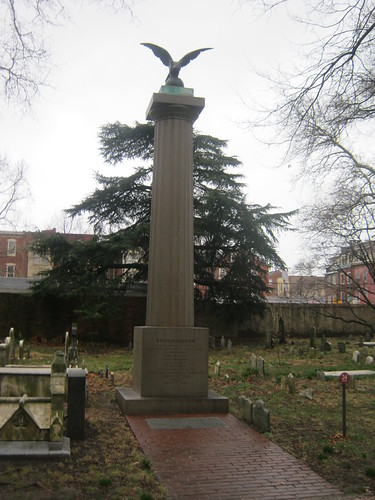
Stephen Decatur is buried in the St Peters Episcopal Churchyard in Philadelphia, Pa.
Read more
Stephen Decatur
Stephen Decatur was one of the first naval heroes of the United States. He would see action during the Barbary Wars and the War of 1812. Before dieing at the early age of 41, Decatur's name became just as well known with the Navy as John Paul Jones.
Decatur's father, Stephen Decatur Sr, was a war hero from the Revolutionary War who served as a commodore in the US Navy. Decatur would follow in his fathers footsteps when he joined the navy at the age of 19. He would enlist as a midshipman and be placed under Navy Commodore, and lifelong family friend, John Barry. Barry would help tutor Decatur and teach him how to move up in the US Navy,
By 1803, at the outbreak of the Barbary Wars, Decatur had been promoted to a lieutenant in the US Navy. Decatur would serve on and control many ships during the Barbary Wars. The Barbary Wars happened in the Mediterranean Sea and occurred when pirates were capturing US merchant ships sailing out of England. While commander of the USS Argus, Decatur sailed into battle with pirates where he would captured, or retake, the USS Philadelphia, which was the biggest ship overtaken by pirates. Decatur would help defend off pirates and be promoted to Captain.
During the War of 1812, Decatur would command 2 different ships, the USS United States, and he USS President. In 1814, while in command of the USS President, Decatur would run into 4 British ships traveling together. The USS President would hold off a British attack for a short time before the ship was captured and Decatur taken prisoner. Later that year, England and the United States signed a peace treaty and Decatur was freed. He would return back to the United States and rejoin the Navy.
After returning home, Decatur was commissioned again and sent back to the Mediterranean Sea during the 2nd Barbary War. This time, Decatur would meet with the Barbary States and come up with a peace treaty ending this war. The treaty would allow safe passage for all merchant ships traveling to the United States. Decatur returned home again as a hero.
In 1816, Decatur had lived up to his fathers reputation when he was given the highest rank in the US Navy, Commodore. That same year, Decatur was named Commissioner of the US Navy, a job he held for the next 4 years.
In 1820, Decatur would decide the career fate of James Barron. Baron was a former Commodore in the US Navy who was stripped of his rank and forced out of the Navy in 1807. Barron wanted to be reinstated in the Navy but Decatur felt he did not deserve back in the navy. Barron felt like Decatur smeared his name and challenged him to a duel. Barron shot and killed Decatur during that duel. Decatur was only 41 years old.
Stephen Decatur is buried in the St Peters Episcopal Churchyard in Philadelphia, Pa.
Read less
1.5K views