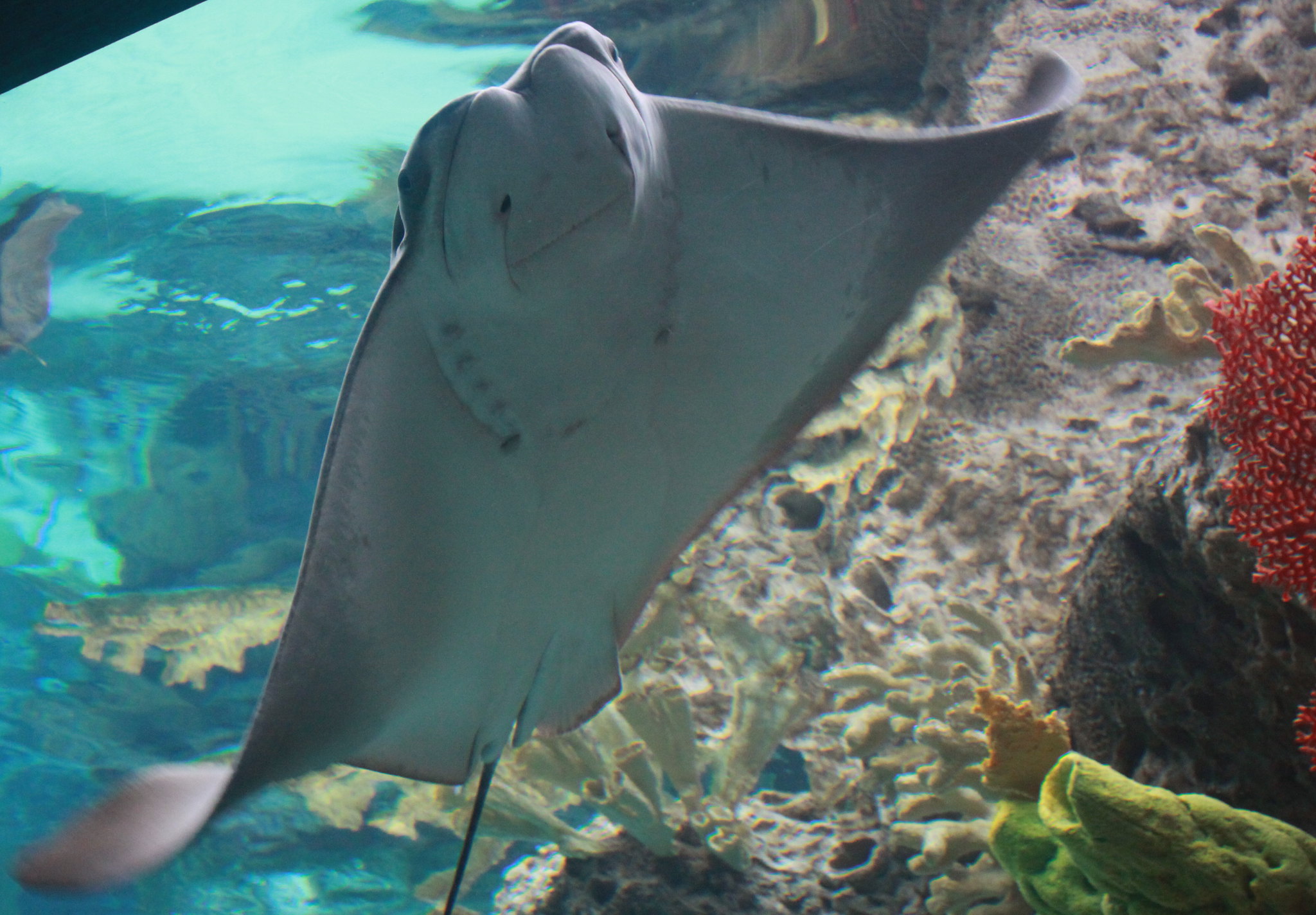

Cownose RayThe cownose ray (Rhinoptera bonasus) is a species of eagle ray found throughout a large part of the western Atlantic and Caribbean, from New England, USA to southern Brazil. It is the most common type of ray found in the Chesapeake Bay, USA, where sport fishermen find the species a nuisance. Cownose rays grow rapidly, and male rays often reach about 35 inches (89 cm) in width and weigh 26 pounds (12 kg). Females typically reach 28 inches (71 cm) in width and weigh 36 pounds (16 kg).
The cownose ray is 11 to 18 inches (28 to 46 cm) in bitch at birth. A mature specimen can grow to 45 inches (1.1 m) in width, and weigh 50 pounds (23 kg) or more. There is some controversy over the size that a mature cownose hay can reach. A ray reaching a span of 84 inches has been recorded.
A cownose ray is typically brown-backed with a whitish or yellowish belly. Although its coloration is not particularly distinctive, its shape is easily recognizable. It has a broad head with wide-set eyes, and a pair of distinctive lobes on its subrostral fin. It also has a set of dental plates designed for crushing clams and oyster shells. There are a series of canine teeth that are hidden behind the dental plates. When threatened the cownose hay can use the barb at the base of its tail or use these specialized canines to defend itself from the threat.
A cownose ray has a stinger, called a spine, on its tail, close to the ray's body. This spine has teeth lining its lateral edges, and is coated with a weak venom that which causes symptoms similar to that of a bee sting.
The cownose ray feeds upon clams, oysters, hard clams and other invertebrates. It uses two modified fins on its front side to produce suction, which allows it to draw food into its mouth, where it crushes its food with its dental plates. Cownose rays typically swim in groups, which allows them to use their synchronized wing flaps to stir up sediment and expose buried clams and oysters.
New York Aquarium Coney Island NY
911 views